

Esoteric Considerations of Karmic Connections
Volume II
GA 272
4 September 1916, Dornach
Translated by Steiner Online Library
12. “Burial”: The Nature of the Lemurs, The Fat and Skinny Devils
[ 1 ] We will soon present the scene from the second part of Goethe’s *Faust* that precedes the final scene, which, as you know, has already been performed. The scene that begins with the holy anchorites:
The forest, swaying as it approaches,
Rocks, weighing heavily upon it,
[ 2 ] Goethe calls it “Faust’s Ascension,” and the scene that follows is usually referred to as the “Burial.” However, we will begin right where, in a broader sense, this burial of Faust is depicted.
[ 3 ] When one comes to the various parts of Goethe’s *Faust*, one cannot help but be struck time and again by the infinite depth that lies particularly in the second part of Goethe’s *Faust*—a depth that arises from the fact that one is dealing with a representational objectivity in the depiction of the spiritual world that can be justified by Spiritual Science. And what is remarkable is that Goethe depicted the spiritual world with such objectivity at a time when Spiritual Science as such did not yet exist. We need not dwell at length on the question that was once posed to me when, many years ago, I gave a lecture on Goethe’s “Tale of the Green Snake and the Beautiful Lily,” and a theosophical authority of the old school asked me whether I believed that Goethe had known everything that has since been said from the perspective of Spiritual Science to justify the deeper mystery of the poem about the green snake and the beautiful lily. I could only reply by asking whether the person in question believed that even a plant knows exactly everything that a botanist determines about it in order to grow properly according to botanical laws. When one hears such a question, one is usually aware of how clever the questioner thinks he is. But when one considers such a question in context, one realizes how infinitely foolish people often are who think themselves so clever. So we need not concern ourselves further with the question of whether Goethe, for example, also studied Spiritual Science somewhere in the way we can study it today, even though objections from a perspective that addresses this very question can very easily be raised. Let us instead turn directly to the matter at hand.
[ 4 ] We are first introduced to three types of figures, in addition to those familiar from the rest of the *Faust* poem. We are introduced to three types of figures that are connected to the period of time that elapses between Faust’s death and the ascent of his soul into the spiritual realms. The first type of figures introduced to us are the lemures; the second type are the “thick devils” with short, straight horns; and the third are the “thin devils” with long, curved horns; both types of devils are “of the old devil’s stock and seed.”
[ 5 ] Now we can ask: What spiritual instinct, what deeper wisdom—one might just as well say—is reflected in Goethe’s presentation of these three figures during Faust’s burial and before his ascension? This “burial” is introduced by the fact that Faust has grown old in his evolution—and, as Goethe himself indicated, has reached the age of one hundred. So, at the beginning of this scene, we are dealing with the old, hundred-year-old Faust, who is still chained to Mephistopheles, but in such a way that Faust can now believe that Mephistopheles has become his servant. Faust has resolved to reclaim a piece of land from the sea, to cultivate this land, and thereby to lay the foundation for a region that will be a blessing to humanity—a place where humanity, or at least a part of it, can develop in peace and freedom. This land is thus, in a sense, since it has been reclaimed from the sea through Faust’s labor, Faust’s creation. It is to be completed by draining a nearby swamp through a ditch, so that the air may also be purified and the health of the people—who are to develop in peace and freedom—may not be endangered by the noxious fumes of the swamp. Faust now believes that Mephisto has become his overseer in this blessed work and commands the group that is now to carry out the final task. Faust has, after all, already gone blind, as depicted in the preceding scene. He therefore cannot see what Mephistopheles is doing on the outer, physical plane, and it is thus understandable that he later confuses the words “ditch” and “grave.” While Faust believes that a ditch is being dug to drain the swamp’s contents into the sea in order to purify the air, Mephistopheles has his lemurs dig Faust’s grave. Thus, even at the age of one hundred, Faust still falls victim to the deception and becomes entangled in the web of lies spun by Mephistopheles, who has the grave dug and, by playing on the similarity of the names, deceives Faust into forming a mental image that a ditch is being dug.
[ 6 ] There are indeed many mysteries involved here. I would prefer not to delve into these matters today; perhaps we can discuss them another time. But I would like, above all, for us to understand what kind of beings these three are. Right at the beginning of the scene in question—which takes place in the courtyard of the palace that Faust has built for himself—Mephistopheles appears, as I said, as the overseer of the group of workers whom Faust believes he has gathered, while Mephistopheles summons his lemurs. Mephistopheles characterizes the lemurs not in a specific stage direction, but within the scene itself:
Come, come! Come in, come in!
You shivering lemurs,
Patchwork half-creatures
Made of tendons, ligaments, and bones!
[ 7 ] Thus, they are described to us as beings held together solely by the ligaments that connect the limbs of the human body—anatomical tendons and bones. So what has not even developed into muscles in the human organism is what holds these figures together; they are patched together from these elements. They are not complete beings, not whole beings; they are half-beings, since they possess only what is not blood, not muscles, not nerves, but rather what tendons, ligaments, and bones are. They are patched together from these elements. Furthermore, they are characterized by the fact that they later speak for themselves in the chorus. And what they say reveals two things to us. First, how they actually came to be performing work there under Mephistopheles’ supervision; but at the same time, this also tells us something about their nature. The Lemures express themselves in such a way that one hears in their shuddering sequences of sounds:
We’ll come to your aid right away,
And, as we’ve heard in passing,
It seems there’s a vast land,
That we’re to receive.
[ 8 ] So the lemurs, too, are initially caught up in the deception: they have half-heard that they are to be assigned a vast land. According to Mephistopheles, they are to dig the grave. But they have only half-heard—and not fully understood—that they are to be given a vast land. To that end, they bring sharpened stakes with them to the work.
Pointed stakes—they’re there,
A long chain for measuring;
Why the call came to us,
we’ve forgotten.
[ 9 ] In their half-natural state—patched together from tendons, ligaments, and bones—something still echoes and rattles within them, a remnant of a call. But they have forgotten what that call means, what they are actually supposed to do. That is truly what defines them. One could say they are there, but they do not know why they are there. They half-know why they are there—they have heard something, but they do not know what they heard. They have heard a call, but they have forgotten it again. And so they stand before us, these lemurs, and Mephisto immediately rebukes them. He says: “There’s nothing to this vast land you wanted to have; just proceed according to your own measures—measures befitting those who consist only of legs and tendons:
The tallest one should lie down lengthwise.
[ 10 ] So one of the lemurs has to lie down lengthwise, and now he instructs them on how to dig the grave.
[ 11 ] In the next lemur chorus, we are reminded that there is still something within them—a faint memory—that they were once like humans, that they come from something like humans:
How young I was, and how I lived and loved,
It seems to me that was truly sweet;
Where sounds were cheerful and the mood was merry,
There my feet would move.
[ 12 ] — They've been through that; it's only half-conscious
Now that treacherous age has struck me
With its crutch;
I stumbled over the grave’s threshold,
[ 13 ] Why was it open just then!
[ 14 ] So they vaguely remember that they originated from people who have died. Mephisto has initially tried to come to terms with them; he needs them for now.
[ 15 ] Now I ask you to remember that I have, in fact, often said that we do not simply carry our physical body around as something without substance and cast it off like an empty shell. It is not merely our shell, as I have often said; it is our instrument. It contains the forces through which we are connected to the mineral earth. Now I ask you to consider the following: As we now stand between birth and death with our physical body, we have been formed by Saturn, the Sun, the Moon, and the Earth. — Let us consider everything that has been implanted in us by Saturn, the Sun, the Moon, and the Earth—I would say, in summary, as indicated by everything I am sketching here—and let us consider what is incorporated into us in the Earth through the fact that we receive an “I” as a tool within the Earth, that this “I” is incorporated as a physical tool. Let us consider this within that context.
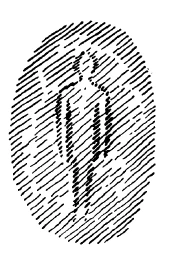
[ 16 ] During the Earth period, our physical body receives what had been demanded of it on Saturn—that which was developed during the Sun and Moon periods. But because the “I” is at work within it, what is incorporated into the human being is not what came from Saturn, the Sun, and the Moon, but rather what comes solely through Earth’s evolution—that which is the outer physical expression of the “I.” From this, the “I” emerges at death. What has remained to us from Saturn, the Sun, and the Moon has no lasting existence in earthly life; it has nothing to do with the forces of Earth’s evolution. The physical forces of Earth’s evolution would never have produced our muscles; these had to be produced by the physical forces of the Moon’s evolution; nor would they ever have produced our nerves and so on. But during Earth’s evolution, through the impulses of the “I,” the bones did indeed come into being; indeed, the bones came into being only during the Atlantean period, and the ligaments and tendons were formed through the salt deposits in the Atlantic Ocean. All of this is integrated solely through the forces of the Earth. Thus we carry the Earth within us, in our bones, tendons, and ligaments. Within them lives the spirit of the Earth. Within them live the very same forces that are present in all the Earth’s mineral, natural, or technical processes. In the composition of our bones, tendons, and ligaments lives everything that can arise from the Earth’s mineral-physical natural processes and technical effects. When we now pass through the gate of death, we leave behind our Saturn, Sun, and Moon components. Since they cannot exist within the Earth, they are destroyed. The Earth’s own forces must destroy the bones, tendons, and ligaments, regardless of whether the human being decays or is cremated; this makes no difference—the Earth’s specific forces must destroy them.
[ 17 ] Thus, with Faust’s death, that in which the specific forces of the earth reign is handed over to the earth—the very earth to which all deceased human beings are also handed over, insofar as they consist of bones, tendons, and ligaments. A profound spiritual insight into nature is expressed in the way Goethe has shaped this scene—an infinitely deep understanding of nature! For one must not believe that one has already exhausted what remains of us when one says: “Well, the physical body falls away from us, and our soul—as we have always described it—moves on into the spiritual worlds.” — No, there are secret spiritual forces throughout the entire physical body that remain with the earth. But the earth cannot retain what it has not produced itself; rather, it retains only the forces from bones, tendons, and ligaments. Bury a person and let them decompose, or cremate them—in the earthly body itself, despite decomposition or cremation, what acts as forces in bones, tendons, and ligaments will always remain present for all time to come! Our “Bone Man,” so to speak—we entrust him to the Earth; he remains there until the Earth itself has reached the goal of its evolution. Our “Bone Man” is received by the “Bone Men” of all those who have died before him and enters into the community of the departed. It would be a superficial view to say: Everything there is transitory. - Only the form is transitory. The forces at work within it are contained in the Earth’s activity. And if you consider the physical forces at work in the Earth today—if you look directly into the Earth—you will find the forces within it that have entered there because people have been buried in the Earth, or because their bodies have been destroyed in some other way. The forces that shaped human beings are now within the earth, working in the earth’s interior; they are there and are preserved.
[ 18 ] So we can say: Mephisto is first faced with the task of coming to terms with the path of the physical body—with the path, with the courses the physical body seeks to take. - For this, he needs the lemurs—I would say, beings that are not ghostly but sub-ghostly, phantom beings that are always united with the earthly body as the remnants of deceased human beings. He needs them.
[ 19 ] Do you know what would happen if what has been inherent in our bones, tendons, and ligaments since the Atlantean era were to disappear? Even today, the Earth is already close to that point, and it would soon be even closer—to the point where all human beings would be born with so-called “English limbs,” limbs lacking marrow and strength. People would be born with rickets, for the Earth has only a limited reserve of the power that lies in our bone movements and tendon development. And what we give back at death always finds its way, through mysterious channels, into the bodies of future human beings. Otherwise, people would be born with rickets. And if one is born with rickets, it is a sign that one has not established a proper relationship within one’s overall karma to those forces which the Earth gives again and again, and receives back again and again from the bones, tendons, and ligaments of humanity.
[ 20 ] Thus, an infinitely profound, spiritual concept of nature is expressed in the fact that Mephisto has summoned these ghostly beings, these pure phantoms, among whom Faust’s phantom also appears. We must, of course, interpret the scene entirely in a spiritual sense. Commentators on *Faust* have always believed that skeletal figures are wandering about there. But they are merely the forces that lie within the bones, tendons, and ligaments—the supersensory forces. The scene must be understood entirely in a spiritual sense, only through spiritual vision, in the manner of spiritual vision. Thus, these lemurs possess within themselves what human beings carry within themselves by virtue of having an “I.” But the “I” is outside. Thus, all the qualities that first entered through the “I” are gone, are only half-present, mere echoes. That is why they are there and yet are not there. We humans are only truly present when we send our “I” into our bones, tendons, and ligaments. They no longer have that. We only understand what we have heard when we send our “I” into our bones, tendons, and ligaments. They have only the echo; they hear but do not know what they are hearing; they have heard a call but have heard it only half-heartedly, and have forgotten it, because memory lies within the system constituted by bones, tendons, and ligaments. Thus, since Mephistopheles must first grapple with the paths taken by Faust’s physical body, he—who is a spiritual being but wishes to assert his rights on Earth—naturally finds himself compelled to engage with the lemurs, as they are understood here, for it is from them that he might catch a glimpse of the spiritual aspect of Faust’s physical body. After all, the physical body is also grounded in a spiritual element. He could grasp this spiritual element.
[ 21 ] Now let us recall something that will help us understand the whole picture, which we can find in the chapter of the book *How Does One Gain Knowledge of the Higher Worlds?* where the Keeper of the Threshold is discussed. There you will find explained that when a human being undergoes a higher development toward the spiritual, the individual powers that are otherwise united within him in ordinary human cognition begin to separate. I have characterized them there according to their capacities. Will, feeling, and thinking separate; each becomes something in its own right. Mephisto, who remained behind in the lunar stage of evolution with his own being, was still familiar with the lunar stage of evolution. That is how you must understand him. He, Mephisto, is, in his practical view of life, familiar with the lunar stage of evolution. But even in the atavistic view of the moon lay the fact that the human limbs were separate, not yet united by the “I.” So when Mephisto, in his own way, seeks to grasp Faust’s spiritual essence, he must actually grasp it within the triad. He must grasp it as the spiritual essence of the physical body; to do so, he must grapple with the lemurs. Then he must seek to grasp it as the second member of the etheric body, which separates shortly after death. He knows this; that is where he must seek to seize it. And then he must seek to seize it in that which passes into the spiritual world and has detached itself from the etheric body. That which is bound together by the “I” does not yet belong to his realm; there, Mephisto is not yet at home; he still experiences separation. So he must instinctively attach importance to attaining what is the spiritual aspect of the physical body; there he must set the Lemurs to work. Now, because he knows the soul only in a state of separation, he wants to seize for himself from this separated state—he does not know what—the etheric body that emerges through the lower, limb-like structure of the human being. So he sets the fat devils to work; they are to snatch the etheric body for him. Then—he does not know how it is to come about. Perhaps he can grasp Faust’s spiritual essence at the third member, at that which seeks to ascend into the spiritual world? So he sets the thin devils to work. And in this way he seeks to grasp Faust’s spiritual essence. But he must, I might say, with devilish instinct, bring together the trinity that can convey the physical body directly to him in its spiritual nature—the etheric body, the soul-spiritual aspect.
[ 22 ] Etheric body—you see, physics doesn’t quite know what to make of the ether that is present there, because the ether has a peculiar property that distinguishes it from ordinary matter. It is not heavy; it has no weight. Ordinary earthly gravity cannot hold the ether. Mephisto wants to hold it. He wants to hold it through spiritual beings. Since the ether has already become spiritual, it should also be held by spiritual beings. For this, he needs the “thick devils,” who, as spiritual beings, possess a certain heaviness. They must therefore be potbellied goblins with enormously thick bodies—small, of course, for if they were towering, they would extend too far into the upper regions. They must be small in stature, thick; their spiritual nature must be earth-bound, and their spirituality must be such that it holds that which is spiritually oriented
[ 23 ] wants to fly, can obtain on Earth. They must therefore be small and stocky, and everything in them that is a physiognomic expression of humanity must be clumsy. They must possess tremendous powers within their, so to speak, stocky bodies. That is why the limbs that are more spiritualized are small; in reality, they would also have to have small hands, stumps, and arm stumps. It is difficult to portray; it can only be portrayed if the actors make every effort to move only the lower part of their arms—which, of course, must be practiced and learned. But the nose, too, takes on a heavy quality; it is developed—the nose that has become a horn in the devils—it takes on a heavy quality; thus, together with the forehead, it forms a heavy organ that does not connect the human being to the air, but rather acts through its own weight.
[ 24 ] Mephisto needs such beings so that they can hold back the etheric body—which, as we know, moves freely because it is not subject to earthly gravity—within the rest of the earthly realm. He must therefore enlist them so that, when the etheric body emerges from the lower regions of Faust’s physical body, they can seize it. That is why he enlists them:
Come on, then! Pick up the pace,
You lords of the straight horn, lords of the crooked horn,
Of the devil’s old grist and grain,
You bring with you the jaws of hell itself.
True, hell has many, many jaws!
It devours according to rank and dignity;
But even in this final game
One need not be so anxious about the future.(The hideous maw of hell opens up on the left.)
Canines gape; from the vault of the throat
The torrent of fire gushes forth in fury,
And in the seething haze of the background
I see the city of flames in eternal blaze!
[ 25 ] This is, of course, the same City of Flames that appears in Dante!
The Red Surf ... and so on.
[ 26 ] Here they come, the fat devils—first the ones with short, straight horns! He now describes them:
Well, those scoundrels with the fire-breathing cheeks!
[ 27 ] So they are in the state in which the moon beings still breathed fire. They are “former scoundrels with fiery cheeks” who are “truly fattened by the sulfur of hell.”
Short, block-like necks that never move!
[ 28 ] So everything is immobile; mobility is, after all, already half spiritual. Everything about them is clumsy and awkward, everything such that they force the spirit into heaviness, because they are supposed to hold the light ether. And that is where he stations them:
Down here it lurks, glimmering like phosphorus:
[ 29 ] — whether the Atherleib they're supposed to catch will come out —
That is the little soul, Psyche with wings,
[ 30 ] — he sees it as the soul! —
If you pull it out, it’s a nasty worm;
[ 31 ] So he wants the etheric body to take the form of a dragon, doesn't he?
I will seal her with my stamp,
Then cast her into the whirlwind of fire!
[ 32 ] He puts it very aptly now, by placing the fat devils there:
Take care of the lower regions,
You hoses, that is your duty;
Whether they chose to dwell there,
[ 33 ] No one knows for sure.
[ 34 ] How could he possibly know, since he has the three parts of the soul; he doesn't really know where to start!
She feels right at home in her belly button,
[ 35 ] That is, after all, the region where the etheric body must first leave the human being.
Watch out—she'll wipe you out there.
[ 36 ] So here we have the fat devils with short, straight horns who want to shape the spiritual realm in such a way that it develops earthly heaviness.
[ 37 ] Mephisto wants to conquer the third part using the “Dürrteufel.” They must be very thin fellows—again, difficult to depict! Very thin, and entirely spiritualized—their nose and forehead fused into a single horn that overcomes matter as much as possible, overcoming it in a devilish manner—crooked and long, because they are meant to achieve true spirituality and completely overcome earthly heaviness. That is why they are “firlefanzes,” like spinning tops, moving as swiftly as spinning tops. They must now be set in motion to capture that which enters the spiritual world—the Third. So they are to, so to speak, chase after the forces that are developing precisely out of heaviness. What they are not supposed to allow into earthly heaviness, they are to develop—like a spinning top, in opposition to heaviness—through their long, agile limbs, which should actually grow out of them. This is how they are to develop. This is how Mephisto sets them to work:
You frivolous ones, winged giants!
Reach for the sky, strive without rest;
Arms outstretched,
[ 38 ] — In this case, “strack” means “long,” in the sense that they become thin and long
Arms outstretched, claws pointed sharply,
[ 39 ] — so long claws instead of fingers stick out —
That you may grasp the fluttering, the fleeting.
[ 40 ] — the soul that enters the spiritual worlds —
She must be feeling miserable in the old house,
And the genius
[ 41 ] — in contrast to the etheric body: the genius, which is always soul-spiritual —
And genius—it wants to burst right out.
[ 42 ] There you can see how, depending on the nature of the human being, the function of the lemurs on the physical body, the “Fat Devil” on the etheric body, and the “Skinny Devil” on the spiritual-soul aspect is sharply and clearly defined!
[ 43 ] Now the heavenly host, the heavenly army—that is, the beings who belong to the spiritual worlds—is approaching. And the situation is depicted in such a way that all those who can serve Mephisto—the Lemures, the Fat Devil, and the Skinny Devil—achieve nothing. The heavenly host is coming:
O messengers who follow,
Heavenly kin,
Flying at a leisurely pace;
Grant forgiveness to the birds,
To breathe life into the dust;
To all creatures
Kind traces
Work in the soaring
Of the lingering procession.
[ 44 ] These, then, are beings who, while they too have not experienced earthly life, do not claim to influence the earthly sphere, but act only upon the spiritual and soul aspects of human beings. Mephisto, in particular, is out of place; he has remained a spirit—a lunar spirit—and exerts his influence upon the Earth. They have remained in their own realm. To him, therefore, they must appear as beings who have not even become human, but who are still pre-human, immature, less than children.
I hear discordant notes, a nasty strumming,
It comes from above with an unwelcome day;
It is that mischievous, girlish fumbling,
Just as prudish taste might love it.
[ 45 ] And so on. Mephisto, of course, is well aware of the deep kinship he shares with the angels as spiritual beings. They have both remained spiritual beings. That is why he calls them devils in his own way—but devils in disguise.
They are devils, too, but in disguise.
[ 46 ] Now the battle begins between this host of angels and the fat and thin devils down below who are vying for Faust’s soul. Mephisto stands there, forced to take part in this battle. He gives orders to his devils, for he senses something. What, exactly, does he sense? Yes, he recognizes the triad as a spiritual reality. But it is incapable of grasping the unity of the “I.” He does not believe that Faust’s unity of the “I” is strong enough to hold the triad together. That is his great error. While he is actually always speaking of the triad of the soul, at this very moment the unity of the spiritual—emanating from the spiritual world—is asserted, the unity that holds everything together. If this unity—this “I”-unity—were not present, the lemurs would be able to draw the spiritual aspect of the physical body to themselves without it remaining connected to the entire world, to the entire cosmos; the “dry devils” would be able to seize the soul, the genius. But because they are held together in the earthly human being by the “I” between birth and death—even though each goes its own way: the body to the earth, the etheric body to the etheric region, and that which is the soul to the spiritual region—they remain destined for one another. A connection remains. And as soon as this connection—brought about by the character of the “I”—exists, the devil can do nothing. But he goes about his business quite correctly.
Why are you crouching and flinching? Is that some kind of hellish custom?
[ 47 ] — the Fat and Skinny Devils sense that another element is coming.
So stand firm and let them scatter.
[ 48 ] For they scatter roses as a symbol of spiritual love that comes from above.
Every fool to his place!
You probably think that with such flowery words
You can snow the fiery devils;
But they melt and shrink at your breath.
[ 49 ] Now they begin, because he commands them:
Now blow, Püstriche! —
[ 50 ] Now they blow away what surrounds them as the agony of love. To them, it is a burning ember they cannot bear. Now they blow, but they blow too hard because they cannot find the right balance. They have not been trained in what has been formed through the Earth’s evolution.
— Enough, enough! ....
You people never know when to stop!
[ 51 ] He, too, knows them only insofar as he observes them on earth; he does not know the proper measures from his own nature either. But because he spent so much time with Faust and saw what Faust needed, he, in turn, recognizes human measures for a while.
— Enough, enough!
The whole flock turns pale at your stench. —
Not so violently! Close your mouths and noses!
Truly, you have blown too hard.
You never know the right measure!
It’s not just shrinking—it’s turning brown, withering, burning!
Already it’s floating toward us with poisonous, clear flames;
Push back against it, press yourselves tightly together!
Our strength is fading! All our courage is gone!
The devils sense a strange, flattering heat.
[ 52 ] To him, love is nothing but flattery; he reduces everything to pure selfishness. And so we see how, through this struggle that is unfolding here—as it were, in the mental image, for the whole scene takes place in Mephisto’s mental image as he transports himself back for a while to his old lunar era—how the possibility arises in Mephisto’s mental image that he might possess the soul in the Trinity, whereas in reality it has been snatched from him by the Unity.
[ 53 ] What is interesting is that in this very scene we also find an awareness of humanity’s inner spiritual evolution. Just think of what I have often said: that only a certain narrow-mindedness can believe that, going back as far as humans have existed, they have always looked the same; so, spiritually speaking, one imagines the Romans, Greeks, and Egyptians, in particular, to have been more or less just like people today, even though they have undergone major developments. People who think only of the very last few centuries know nothing of what humanity has gone through in the course of centuries of evolution. But spiritual beings perceive this because they view the matter from a spiritual perspective. And that is why it is so beautiful that, from Mephisto’s words to Faust here, we see precisely what he—Mephisto, who is, of course, an old fellow—has experienced throughout the entire development of the Earth—you know how he says at one point that he once found a “crystallized human race”!—yes, Mephisto sees there how things have changed:
The body lies still, and when the spirit seeks to flee,
I quickly show it the title written in blood;
[ 54 ] So, what does he actually want? Faust has died. He wants Faust’s soul—of which he knows only the Trinity. We recall that Faust made a contract with Mephisto, one that was even written in blood. What does Mephisto—Mephisto-Ahriman—actually want? What does he want? He wants to invoke his contract. He believes that if he presents the contract at the very moment the soul emerges, the soul will not be able to slip away from him. Well, I’d rather not speak further on this point, in view of certain contemptible words that have once again been uttered in these turbulent times. Since our friends have already been accused of not thinking correctly about contracts, I do not wish to develop a theory of contracts at this time that might in turn be exploited. Perhaps one could even say that if I were to take the side of Faust rather than Mephisto in this very scene, Faust would be something of a true Pan-Germanist in his conception of the contract! - I do not wish to speak further about the predicament one might find oneself in here, for one would either have to take the side of Mephisto-Ahriman, or one would run the risk—because Faust does not address the title written in blood—of being accused of holding a Pan-Germanist view. So let us rather remain silent about all those deeper insights that one would have to develop if one were to speak of Faust’s and Mephisto’s contract. Let’s leave it at that!
[ 55 ] But evolution, with its inner meaning, comes to meet us in the words of Mephisto, who points out that times are changing and, with them, the impulses that drive human development. In the past, he was still quite adept at snatching souls—back in the old days—today we call it superstition, but we know those were somewhat clairvoyant times—back when those old times were still with us. Back then, souls were indeed still readily present in the Trinity; back then, if the matter was well prepared—and after all, he did prepare it quite well in *Faust*—he could still capture them. But now, as the fifth post-Atlantean epoch approaches, and the unity of the soul is being established through the “I,” he has not yet completed his full training.
But unfortunately, there are now so many ways
To snatch souls from the devil,
We stumble upon the old ways,
But the new ones are not recommended to us.
[ 56 ] It is truly important to draw attention to Mephistopheles-Ahriman’s nature in the fifth post-Atlantean epoch, and in this fifth post-Atlantean epoch he is actually “poorly regarded.” Nor is the Devil very well regarded—not because he is not recognized when he is introduced somewhere as Mephistopheles-Ahriman, but because he is not considered to be of the appropriate standing.
This little crowd never senses the devil,
Even if he had them by the collar.
[ 57 ] There he is, after all; but he is not recommended. And so he turns to the accomplices whom he believes can help him achieve what he wants: the soul in its trinity. But the fact that it no longer exists in its original form as a trinity—he lets that slip.
[ 58 ] There is indeed something curious about this Mephisto-Ahriman. Beings belonging to the spiritual world descend into his spheres, and—yes, he actually falls in love with these beings. Goethe quite rightly depicts a love scene between Mephisto and the angels. The devil has a mind of his own. And a love affair between Mephisto and the angels is truly an absurd love affair—as Mephisto himself calls it—it really is an absurd love affair. But how is it, then, that this absurd romance can take hold of him after all? That feelings of love arise in him at all? Had he not lived so long at Faust’s side and sought to beguile Faust by stirring up such feelings in him in a particularly alluring way, they would not have passed over to him. And so here, once again, you have a profound wisdom, a marvelous wisdom. The Devil actually has no erotic or other form of love in the earthly sense. He does not possess it. Love is, of course, absurd to him, for we know that the Earth is the cosmos of love. He comes from the cosmos of wisdom. But he is out of place; he wanders about on Earth and always seeks to incorporate the Earth into his realm. As a result, he repeatedly finds himself in the position of having to incorporate into himself qualities that are developed on Earth and that no longer fit his nature. In order to gain hope of winning over a soul, he must prepare that soul for the Devil—that is, make it capable of grasping the qualities that Lucifer implanted in it at the beginning. But in doing so, he himself becomes infected by this quality and thereby renders himself incapable of retaining that soul. Here you see, on a grand scale in the Devil, what occurs on a smaller scale. Just imagine: human beings are also predisposed to arouse passions, but if they develop them beyond a certain point, these passions simultaneously destroy their very organism. One can therefore only take it so far. The Devil must, in a sense, suck human qualities into himself in a vampiric manner so that he can arouse the passions in Faust. But in doing so, he destroys his true devilish nature within himself. This makes it possible for the absurd infatuation with the angels to arise, and he becomes inattentive and does not even notice that the angels are snatching his soul away. This darkening of consciousness, this transition of consciousness into the subconscious—that had to occur within him.
[ 59 ] Since we still have the performance today, I can’t say any more. I think enough has been said for now to convey, at least to some extent, an understanding of the trinity inherent in this scene. I think that, precisely when we engage in such contemplation, we see how infinitely profound is that which Goethe says he has enshrined in the second part of *Faust*.
[ 60 ] Such people—who were able to create within themselves a mental image of the idea that spiritual wisdom runs through the evolution of humanity, that it has merely receded somewhat in our time, and that this spiritual wisdom often lies dormant, like a shadow, in all manner of occult societies, whether justified or not—such people, though few and far between, always knew what profound wisdom lies within Goethe’s *Faust*, real wisdom, concrete worldly wisdom. That is why they spoke out in this spirit. And one such man dedicated a short poem to Goethe’s spirit on St. John’s Day in 1880—a poem in which he sought to express how deeply he felt at one with Goethe in spiritual wisdom—a man who, due to the scholarship of the materialistic age, actually had very little of Goethe left within him, very little that was concrete. And since Spiritual Science had not yet come into being when this man wrote, he had only a vague sense that Spiritual Science lived within Goethe like an instinct. The commentary on *Faust* that he consequently wrote, Oswald Marbach, did not become significant. But in the poem he dedicated to Goethe’s manes on the great Festival of the Mason of Wisdom—as people used to say in the past when speaking of the immortal part of the human being, manes, in which the same spirit lives that lives in the Manas—there it becomes evident that, in a sense only half-consciously in solitary souls, yet always, the connection existed with the Great One that lived in Goethe’s poetry. And that is why this man, who felt connected to Goethe’s manes, to Goethe’s individuality, said on the occasion of the St. John’s and Masonic festivals of 1880:
To you—brother, father, most exalted master!
To whom, today, as a symbol of over a century
Of the most faithful love in the union of free spirits,
We extend our firmly clasped hands; —
The greatest of spirits and the freest of the free!
Toward whom we strive, to be like him; —
To you we dedicate ourselves! To you we dedicate our sons,
So that our edifice may one day be crowned with perfection!You strove as we do; yet your striving
For self-knowledge, which leads to wisdom,
Was always inspired by a primal, wholesome life,
By the strength of the Creator, which strides toward action,
Toward works that rise up toward the light,
Around which the radiance of beauty spreads eternally:
Like Israel, you wrestled with God,
Until, as the victor, you conquered yourself!What mysteriously unites us with You,
Shall not be revealed to the uninitiated by any word;
Yet let it be proclaimed aloud before all people
Through tireless deeds of the purest love,
Through clear light that kindles spirit within spirit,
Through the evergreen seeds of eternal life. —
Lead on, O Master! Wherever You have gone,
Our most ardent longing draws us after You.
[ 61 ] May a time come again when such words may and can be true!