

The Art of Education
Methodology and Didactics
GA 294
23 August 1919, Stuttgart
Translate the original German text into any language:
Versions Available:
The Art of Education, tr. SOL
Dritter Vortrag
Third Lecture
[ 1 ] Ich habe gestern schon darauf aufmerksam gemacht, daß man beim Unterricht zunächst ausgehen sollte von einer gewissen künstlerischen Gestaltung, damit der ganze Mensch, vor allem mit dem Willensleben, beim Unterricht in Anspruch genommen wird. Aus solchen Auseinandersetzungen, wie wir sie hier gepflogen haben, werden Sie die Wichtigkeit einer solchen Maßnahme ohne weiteres einsehen, und Sie werden weiter einsehen, daß der Unterricht so gehandhabt werden muß, daß fortwährend darauf Rücksicht genommen wird, daß ein Totes, ein Ersterbendes im Menschen ist, das umgewandelt werden muß in ein neues Lebendiges. Wenn wir bloß betrachtend, also mit unserer Vorstellung, die bildhaft ist, herankommen an Natur- und sonstige Weltenwesen, so stehen wir mehr in einem Ersterbeprozeß drinnen; wenn wir mit unserem Willen an die Natur- und die Weltenwesen herankommen, stehen wir in einem Belebeprozeß drinnen. Wir werden also als Erzieher die Aufgabe haben, fortwährend Totes zu beleben, dem Tode Entgegengehendes im Menschen vor dem völligen Ersterben zu bewahren, ja, gewissermaßen zu befruchten mit dem, was wir aus dem Willen heraus als belebendes Element entwickeln können. Daher dürfen wir nicht davor zurückschrecken, schon beim Kinde mit einer gewissen künstlerischen Gestaltung des Unterrichts zu beginnen.
[ 1 ] I already pointed out yesterday that instruction should begin with a certain artistic approach, so that the whole person—especially the life of the will—is engaged during class. From discussions such as those we have had here, you will readily recognize the importance of such an approach, and you will further recognize that instruction must be conducted in such a way that constant consideration is given to the fact that there is something dead, something dying within the human being, which must be transformed into something new and alive. If we approach natural and other cosmic beings merely through observation—that is, with our mental image, which is pictorial—we are more deeply immersed in a process of dying; if we approach them with our will, we are immersed in a process of enlivening. As educators, therefore, we will have the task of continually bringing the dead to life, of preserving within the human being that which is moving toward death before it dies completely—indeed, in a sense, of fertilizing it with what we can develop out of our will as a life-giving element. Therefore, we must not shy away from beginning, even with children, to shape our teaching in a certain artistic way.
[ 2 ] Nun zerfällt ja alles, was künstlerisch an die Menschen herantritt, wieder in zwei Strömungen, in die plastisch-bildnerische Strömung und in die musikalisch-dichterische Strömung. Diese beiden Kunstgebiete des Plastisch-Bildnerischen und des Musikalisch-Dichterischen sind wirklich polarisch voneinander verschieden, obwohl sie sich gerade durch ihre polarische Verschiedenheit in einer höheren Synthese, in einer höheren Einheit gut finden können. Sie werden ja wissen, daß in der Weltenentwickelung sogar rassengemäß diese Zweiheit im Künstlerischen zum Ausdruck kommt. Sie brauchen sich nur an gewisse Auseinandersetzungen von Heinrich Heine zu erinnern, so werden Sie aufmerksam gemacht werden auf eine solche Zweiheit: daß alles, was vom Griechenvolke ausging oder mit diesem verwandt war, was also rassengemäß aus dem Wesen des griechischen Volkes herausgewachsen ist, im eminentesten Sinne die Veranlagung hat zur plastisch-bildnerischen Gestaltung der Welt, während alles, was aus dem jüdischen Element herausgewachsen ist, die besondere Veranlagung hat zu dem eigentlich musikalischen Element der Welt. Da finden Sie also auch rassenmäßig diese beiden Strömungen verteilt, und wer Empfänglichkeit für diese Dinge hat, wird sie in der Kunstgeschichte sehr gut verfolgen können. Natürlich entstehen immer wieder Bestrebungen, berechtigte Bestrebungen, die das Musikalische mit dem Plastisch-Bildnerischen vereinigen wollen. Sie könnten aber nur in der vollständig ausgebildeten Eurythmie wirklich völlig vereinigt werden, wo Musikalisches und Sichtbares eine Einheit werden kann — natürlich noch nicht in den Anfängen, in denen wir stecken, sondern in den Zielen, die sich die Eurythmie stellen muß. Es muß also in der ganzen harmonischen Menschennatur darauf Rücksicht genommen werden, daß ein Plastisch-Bildnerisches in ihr vorhanden ist, nach dem das Willensartige im Menschen hinneigt. Wie können wir nun diese Tendenz im Menschen, plastisch-bildnerisch zu werden, richtig charakterisieren?
[ 2 ] Now, everything that approaches people artistically can be divided into two currents: the plastic-visual current and the musical-poetic current. These two artistic realms—the plastic-visual and the musical-poetic—are truly polar opposites, although it is precisely through their polar opposition that they can find harmony in a higher synthesis, in a higher unity. You are surely aware that, in the course of world history, this duality in the arts is even expressed in terms of race. You need only recall certain writings by Heinrich Heine to be made aware of such a duality: that everything that originated with the Greek people or was related to them—that is, everything that, in racial terms, grew out of the essence of the Greek people—possesses, in the most eminent sense, a predisposition toward the sculptural and visual shaping of the world, whereas everything that grew out of the Jewish element possesses a special predisposition toward the truly musical element of the world. So you will find these two currents distributed along racial lines as well, and anyone who is receptive to these things will be able to trace them very clearly in the history of art. Of course, there are always efforts—justified efforts—to unite the musical with the sculptural and pictorial. But they could only be truly and completely united in fully developed eurythmy, where the musical and the visual can become one—not, of course, in the early stages in which we currently find ourselves, but in the goals that eurythmy must set for itself. We must therefore take into account, within the whole of harmonious human nature, that there is a sculptural-artistic element present in it toward which the volitional aspect of the human being tends. How, then, can we correctly characterize this tendency in human beings to become sculptural and artistic?
[ 3 ] Würden wir nur Verstandesmenschen sein, würden wir nur durch unser Vorstellen die Welt betrachten, dann würden wir allmählich wandelnde Leichname werden. Wir würden in der Tat hier auf der Erde den Eindruck ersterbender Wesenheiten machen. Nur dadurch, daß wir den Drang in uns fühlen, das in den Begriffen Ersterbende durch die Phantasie plastisch-bildnerisch zu beleben, retten wir uns vor diesem Ersterben. Sie müssen sich hüten, in abstrakter Weise vereinheitlichen zu wollen, wenn Sie richtige Erzieher sein wollen. Sie dürfen nun nicht sagen: Man sollte also das Ertötende im Menschen nicht ausbilden, man müsse vermeiden, die begriffliche, die vorstellende Welt im Menschen auszubilden. Das würde jedoch mit Bezug auf das Geistig-Seelische zu demselben Fehler führen, wie wenn Ärzte als große Pädagogen die Kulturentwickelung betrachteten und dann sagen würden: Die Knochen sind das Ersterbende im Menschen, also hüten wir den Menschen vor diesem Ersterbenden, versuchen wir, die Knochen lebendig, weich zu erhalten. Sie sehen, es würde die Ansicht solcher Ärzte die Menschen dazu bringen, alle rachitisch zu werden, so daß sie nicht ihre Aufgabe völlig erreichen können. Es ist immer ein falsches Prinzip, wenn man so vorgehen wollte, wie es viele Theosophen und Anthroposophen machen wollen, wenn von Ahriman und Luzifer und ihren Einflüssen auf die Menschheitsentwickelung gesprochen wird, die dann sagen: Das sind Dinge, welche die Menschennatur schädigen, also müsse man sich vor ihnen hüten. - Das würde aber dazu führen, den Menschen von allem auszuschließen, was ihn konstituieren soll. So kann man auch nicht die Ausbildung des vorstellungsmäßigen Elementes verhindern; man muß es ausbilden, aber man darf nie außer acht lassen, zu einer andern Zeit mit dem Plastisch-Bildnerischen an die Menschennatur heranzukommen. Dadurch ergibt sich die Einheit. Nicht dadurch ergibt sie sich, daß man das eine auslöscht, sondern indem man das eine neben dem andern entwickelt. In dieser Beziehung können die Menschen der heutigen Zeit noch nicht einheitlich denken. Daher kommt es denn auch, daß sie die Dreigliederung des sozialen Organismus nicht verstehen. Für das soziale Leben ist es nur richtig, wenn das geistige, das wirtschaftliche und das rechtliche Gebiet nebeneinander stehen und wenn die Einheit sich erst bildet und nicht dadurch zustande kommt, daß man sie abstrakt formt. Denken Sie nur, was es heißen würde, wenn die Leute sagen wollten: Weil der Kopf eine Einheit ist und der übrige Körper auch, so sollte es eigentlich den Menschen gar nicht geben; man sollte den Kopf aus dem übrigen Menschen herausbilden und sich in der Welt frei bewegen lassen! Man schafft der Natur nur nach, wenn man aus Einseitigkeiten das Ganze entstehen läßt.
[ 3 ] If we were merely rational beings, if we viewed the world solely through our mental images, then we would gradually become walking corpses. We would, in fact, give the impression here on Earth of beings on the verge of death. It is only by feeling the urge within us to bring to life—through imagination—that which is, in concepts, on the verge of death, that we save ourselves from this dying. You must be careful not to seek to unify things in an abstract way if you wish to be true educators. You must not now say: One should therefore not cultivate what is deadly in human beings; one must avoid cultivating the conceptual, the mental image world within human beings. However, with regard to the spiritual-soul aspect, this would lead to the same error as if doctors, acting as great educators, were to view cultural development and then say: ‘The bones are the first part of the human being to die, so let us protect people from this first-to-die aspect; let us try to keep the bones alive and supple.’ You see, the view of such doctors would lead people to become rickety, so that they could not fully fulfill their purpose. It is always a false principle to proceed as many Theosophists and Anthroposophists wish to do when speaking of Ahriman and Lucifer and their influences on human development—saying: “These are things that harm human nature, so we must guard against them.” - But that would lead to excluding human beings from everything that is meant to constitute them. Nor can one prevent the development of the imaginative element; one must develop it, but one must never neglect to approach human nature at another time through the plastic-artistic. This is how unity arises. It does not arise by eliminating one aspect, but by developing one aspect alongside the other. In this regard, people today are not yet capable of thinking in a unified way. This is why they do not understand the threefold structure of the social organism. For social life, it is only right that the spiritual, economic, and legal spheres stand side by side, and that unity first takes shape rather than being brought about by abstractly constructing it. Just imagine what it would mean if people were to say: Since the head is a unity and the rest of the body is as well, human beings should not actually exist at all; one should separate the head from the rest of the human being and let it move freely in the world! One imitates nature only when one allows the whole to emerge from its individual parts.
[ 4 ] So handelt es sich darum, daß man die eine Einseitigkeit entwickelt: vorstellungsmäßiges Erzogenwerden; die andere Einseitigkeit, das Plastisch-Bildnerische belebt dann das, was in dem bloßen Begriff entwickelt wird. Da handelt es sich darum, daß man nun, ohne die Naivität zu verlieren, in unserem Zeitalter, das immer das Bewußtsein vernichtet, diese Dinge in die Bewußtheit hinaufhebt. Man braucht die Naivität nicht zu verlieren, wenn man die Dinge konkret, nicht abstrakt gestaltet. Es wäre zum Beispiel unter allen Umständen sehr gut, wenn man möglichst früh in bezug auf das Plastisch-Bildnerische damit beginnen würde, das Kind in der Farbenwelt leben zu lassen, wenn man sich als Lehrer durchdringen würde mit dem, was Goethe in dem didaktischen Teil seiner Farbenlehre gibt. Worauf beruht dieser didaktische Teil der Goetheschen Farbenlehre? Er beruht darauf, daß Goethe immer jede einzelne Farbe mit einer Empfindungsnuance durchdringt. So betont er das Herausfordernde des Roten; er betont nicht nur das, was das Auge sieht, sondern was die Seele an dem Roten empfindet. Ebenso betont er das Stille, in sich Versunkene, das die Seele beim Blauen empfindet. Man kann, ohne daß man die Naivität durchbricht, das Kind so in die Farbenwelt hineinführen, daß lebendig die Empfindungsnuancen der Farbenwelt hervorgehen. Wenn dann dabei vielleicht zunächst recht starke Beschmutzungen eintreten, so wird es eine gute Maßnahme in der Erziehung sein, das Kind so weit zu bringen, daß es sich nicht mehr zu sehr beschmutzt.
[ 4 ] The point, then, is to develop one aspect: education through the imagination; the other aspect—the plastic and artistic—then brings to life what is developed in the mere concept. The point is that, without losing our naivety, we must—in our age, which constantly destroys consciousness—raise these things up into consciousness. There is no need to lose one’s naivety if one shapes things concretely rather than abstractly. For example, it would be very beneficial under all circumstances to begin as early as possible—in relation to the sculptural and artistic—by allowing the child to live within the world of colors, and for teachers to immerse themselves in what Goethe presents in the didactic section of his Theory of Colors. What is the basis of this didactic section of Goethe’s Theory of Colors? It is based on the fact that Goethe always imbues every single color with a nuance of feeling. Thus, he emphasizes the challenging quality of red; he emphasizes not only what the eye sees, but what the soul feels in red. Likewise, he emphasizes the quiet, introspective quality that the soul feels in blue. It is possible, without disrupting the child’s naivety, to introduce the child to the world of colors in such a way that the subtle nuances of sensation in the world of colors come vividly to life. If, in the process, the child perhaps gets quite dirty at first, it will be a good educational measure to guide the child to the point where he or she no longer gets too dirty.

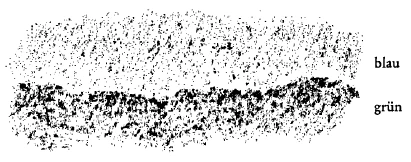
[ 5 ] Man fange möglichst früh damit an, das Kind mit Farben zusammenzubringen, wobei es gut wäre, auf der farbigen Fläche andere Farben aufzutragen, als auf der bloß weißen Fläche, und man versuche, solche Empfindungen im Kinde hervorzurufen, wie sie erst aus einer geisteswissenschaftlichen Auffassung der Farbenwelt entstehen können. Wenn man so arbeitet, wie ich mit einigen Freunden an der kleinen Kuppel des Dornacher Baues gearbeitet habe, dann bekommt man ein lebendiges Verhältnis zur Farbe. Man entdeckt dann, wenn man zum Beispiel Blau aufträgt, daß es in der blauen Farbe selbst liegt, damit alles zu charakterisieren, was Innerlichkeit ist. Also sagen wir, bei einem aus seiner Innerlichkeit sich bewegenden Engel wird man von selbst den Drang haben, ihn blau zu halten, weil die Nuancierung des Blauen, das Helldunkel des Blauen, in der Seele die Empfindung der Bewegung hervorruft, die aus dem Seelenhaften kommt. Die gelb-rötliche Farbe ruft in der Seele die Empfindung des Scheinens, des nach außen sich Offenbarenden hervor. Wenn also etwas aggressiv wirkt, wenn etwas mahnend vor uns auftritt, wenn der Engel uns etwas sagen will, wenn er aus seinem Hintergrunde zu uns sprechen will, dann drücken wir das durch die gelb-rötlichen Nuancen aus. In elementarer Weise kann man durchaus Kinder auf dieses Lebendig-Innerliche der Farben hinweisen. Dann muß man sich selber sehr stark damit durchdringen, daß das bloße Zeichnen schon etwas Unwahres hat. Das Wahrste ist das Empfinden aus der Farbe heraus, etwas unwahrer ist schon das Empfinden aus dem Helldunkel heraus, und das Unwahrste ist das Zeichnen. Das Zeichnen nähert sich als solches schon durchaus jenem abstrakten Element, das als Ersterbendes in der Natur vorhanden ist. Zeichnen sollten wir eigentlich nur so, daß wir uns dabei bewußt werden: wir zeichnen im wesentlichen das Tote. Mit Farben malen sollten wir so, daß wir uns dabei bewußt sind: wir rufen aus dem Toten das Lebendige hervor. — Was ist denn schließlich die Horizontlinie? Wenn wir einfach einen Bleistift nehmen und die Horizontlinie hinzeichnen, so ist das ein Abstraktes, ein Ertötendes, Unwahres gegenüber der Natur, die immer zwei Strömungen hat: das Tote und das Lebendige. Wir schälen die eine Strömung heraus und behaupten, das sei Natur. Wenn ich aber sage, ich sehe ein Grünes, und ich sehe ein Blaues, die sich voneinander scheiden, dann wächst die Horizontlinie aus dem Aneinandergrenzen der Farben heraus, dann sage ich eine Wahrheit. So werden Sie allmählich darauf kommen, daß die Form der Natur wirklich aus der Farbe heraus entsteht, daß daher das Zeichnen ein Abstrahierendes ist. Von solchen Dingen sollte man eine gute Vorstellung, eine gute Empfindung schon in dem heranwachsenden Kinde erzeugen, weil dies sein ganzes Seelenwesen belebt und in ein richtiges Verhältnis zur Außenwelt bringt. Daran krankt ja unsere Kultur, daß wir kein richtiges Verhältnis zur Außenwelt haben. Man braucht dabei durchaus nicht, ich möchte sagen, unterrichtend selbst wiederum einseitig zu werden. Es würde zum Beispiel ganz gut sein, wenn wir nach und nach die Möglichkeit entwickeln könnten, von dem bloßen abstrakt Künstlerischen, das der Mensch aus seiner Lust am Schönen hervorbringt, überzugehen zu dem konkret Künstlerischen, zu dem Kunstgewerblichen, denn gar sehr bedarf die Menschheit heute des Hineinstellens eines wirklich Kunstgewerblichen in das allgemeine Kulturdasein. Wir haben es doch tatsächlich im Laufe des 19. Jahrhunderts dahin gebracht, daß wir unsere Möbel für das Auge machen, zum Beispiel einen Stuhl für das Auge machen, während er den Charakter an sich tragen sollte, daß man ihn fühlt, wenn man darauf sitzt. Darnach soll er gestaltet sein. Man soll den Stuhl erfühlen, er soll nicht bloß schön sein, er soll den Charakter an sich tragen, daß ein Mensch darauf sitzen könne. Das ganze Zusammenwachsen des Gefühlssinnes mit dem Stuhl und sogar des geformten Gefühlssinnes — durch die Art, wie Armlehnen am Stuhle sind und so weiter, indem der Mensch seine Stütze an dem Stuhl sucht -, sollte an dem Stuhl zum Ausdruck kommen. Würde man daher Handfertigkeitsunterricht mit entschieden kunstgewerblichen Absichten in das Schulwesen einführen können, so würde man damit der Kultur einen großen Dienst erweisen. Denn bedenken Sie nur, wie es einem Menschen, der es mit der Menschheit aufrichtig meint, heute eine große Kultursorge macht, wenn wir sehen, wie zum Beispiel die Abstraktheiten von heute sie werden ja dann nicht eintreten, wenn wir unsere Absichten durchführen können -, wenn die Botokudenhaftigkeit der sozialistisch gesinnten Menschen von heute unsere Kultur überschwemmen wollen: Es wird dann kein Schönes mehr in der Kultur sein, nur noch Nützliches! Und wenn die Menschen auch von Schönem träumen - sie werden ja keine Empfindung dafür haben, daß wir, indem wir einer Sozialisierung entgegengehen, stärker als vorher die Notwendigkeit des Schönen werden betonen müssen. Das sollte eingesehen werden.
[ 5 ] One should begin as early as possible to introduce the child to colors, and it would be good to apply different colors to a colored surface than to a plain white surface, and to try to evoke in the child the kinds of sensations that can arise only from a understanding of the world of colors based on Spiritual Science. When one works as I did with some friends on the small dome of the Dornach building, one develops a living relationship with color. One then discovers, for example when applying blue, that it lies within the blue color itself to characterize everything that is inner life. So let’s say, in the case of an angel moving out of its inner life, one will naturally feel the urge to render it in blue, because the nuances of blue—its light and dark shades—evoke in the soul a sense of movement that arises from the soul itself. The yellow-reddish color evokes in the soul a sense of radiance, of something revealing itself outwardly. So when something appears aggressive, when something appears before us as a warning, when the angel wants to tell us something, when he wants to speak to us from his background, then we express this through the yellow-reddish nuances. In a very basic way, one can certainly point out this living, inner quality of colors to children. Then one must deeply imbue oneself with the realization that mere drawing already contains something untrue. The truest thing is the feeling that arises from color; the feeling that arises from light and dark is already somewhat less true; and the least true is drawing. Drawing, as such, already comes quite close to that abstract element that exists in nature as something that is dying. We should actually only draw in such a way that we become aware: we are essentially drawing the dead. We should paint with colors in such a way that we are aware: we are bringing forth the living from the dead. — What, after all, is the horizon line? If we simply take a pencil and draw the horizon line, that is an abstraction, a deadening, untrue element in relation to nature, which always has two currents: the dead and the living. We isolate one of these currents and claim that this is nature. But when I say, “I see a green, and I see a blue, which are distinct from one another,” then the horizon line emerges from the meeting of the colors; then I am speaking the truth. In this way, you will gradually come to realize that the form of nature truly arises from color, and that drawing, therefore, is an act of abstraction. One should cultivate a good mental image and a good sense of such things even in the growing child, because this enlivens the child’s entire soul and brings it into a proper relationship with the outside world. This is precisely what ails our culture: that we lack a proper relationship with the outside world. In doing so, one need not—I would say—become one-sided in one’s teaching. It would be quite good, for example, if we could gradually develop the ability to move from the purely abstract artistic—which people produce out of their love of beauty—to the concrete artistic, to the arts and crafts, for humanity today has a great need to incorporate genuine arts and crafts into general cultural life. After all, over the course of the 19th century, we have actually reached the point where we make our furniture for the eye—for example, making a chair for the eye—while it should possess the inherent quality that one feels it when sitting on it. It should be designed accordingly. One should be able to feel the chair; it should not merely be beautiful; it should possess the inherent quality that allows a person to sit on it. The entire process of the sensory experience growing together with the chair—and even the shaped sensory experience—through the way armrests are designed on the chair and so on, as a person seeks support from the chair—should be expressed in the chair itself. If, therefore, craft education with a clear focus on the arts and crafts could be introduced into the school system, it would be a great service to culture. For just consider how deeply concerned a person who is sincerely committed to humanity is today when we see, for example, the abstractions of our time—which, of course, will not come to pass if we can carry out our intentions—when the Botoku-like nature of today’s socialist-minded people seeks to overwhelm our culture: There will then be nothing beautiful left in culture, only the useful! And even if people dream of beauty—they will have no sense that, as we move toward socialization, we will have to emphasize the necessity of beauty even more strongly than before. This should be recognized.
[ 6 ] Es sollte also mit dem plastisch-bildnerischen Element im Unterricht nicht gespart werden. Ebensowenig aber sollte damit gespart werden, daß wirklich empfunden werde auch jenes dynamische Element, das in der Baukunst zum Ausdruck kommt. Man wird da sehr leicht in den Fehler verfallen können, daß man an die Kinder zu früh dieses oder jenes heranbringt. Aber in gewissem Sinne muß das sogar geschehen. Ich hatte an diejenigen Kinder ein paar Worte gerichtet, die als Münchener Ferienkinder in Dornach waren, 80 an der Zahl, und die bei Frau Kisseleff 12 Stunden Eurythmie gehabt haben und die dann das, was sie gelernt hatten, einem Teil ihrer Lehrerschaft und der Dornacher Anthroposophenschaft vorführen konnten. Die Kinder waren recht dabei, und nachdem die ganze Eurythmieaufführung, die außerdem auch noch aus Vorführungen unserer Dornacher Eurythmistinnen bestand, zu Ende war, kamen die Kinder heran und fragten: Hat denn auch unsere Vorstellung gefallen? — Sie hatten wirklich den Drang, auch etwas darzustellen; es war eine recht schöne Sache. Nun hatte ich auf Ersuchen der Persönlichkeiten, die das Ganze arrangiert hatten, ein paar Worte an die Kinder zu richten. Es war am Vorabend des Tages, an dem die Kinder wieder in die Münchener Gegend zurückgebracht werden sollten. Da sagte ich ausdrücklich: Ich sage jetzt etwas, was ihr jetzt noch nicht versteht. Erst in der Zukunft werdet ihr es verstehen. Aber merkt es euch, wenn ihr jetzt in der Zukunft das Wort «Seele» hört, denn ihr könnt es jetzt noch nicht verstehen. — Dieses Aufmerksammachen des Kindes auf etwas, was es noch nicht versteht, was erst ausreifen muß, das ist außerordentlich wichtig. Und falsch ist nur der Grundsatz, der heute so stark in den Vordergrund gerückt wird: Man solle dem Kinde nur das beibringen, was es schon versteht — ein Grundsatz, der alle Erziehung unlebendig macht. Denn lebendig wird eine Erziehung erst, wenn man das Aufgenommene eine Zeitlang im Untergrunde getragen hat und es dann nach einiger Zeit wieder heraufholt. Das ist für die Erziehung vom 7. bis 15. Jahre sehr wichtig; dann kann man sehr vieles in die Kinderseele hineinträufeln, was erst später verstanden werden kann. Daran bitte ich Sie, sich nicht zu stoßen, daß Sie über die Reife des Kindes hinausgehen und an etwas appellieren, was das Kind erst später verstehen kann. Der entgegengesetzte Grundsatz hat ein Ertötendes in unsere Pädagogik hineingebracht. Aber das Kind muß eben wissen, daß es warten muß. Dieses Gefühl kann man auch in ihm hervorrufen, daß es warten muß mit dem Verständnisse dessen, was es schon jetzt aufnimmt. Daher war es gar nicht so schlimm in älteren Zeiten, daß da die Kinder einfach lernen mußten \(1 \times 1 = 1\), \(2 \times 2 = 4\), \(3 \times 3 = 9\) und so weiter, statt daß sie es, wie heute, an der Rechenmaschine lernen. Dieser Grundsatz, das Verständnis des Kindes zurückzuschrauben, müßte durchbrochen werden. Es kann natürlich nur wieder mit dem nötigen Takt geschehen, denn man darf sich nicht zu weit von dem entfernen, was das Kind lieben kann; aber es kann sich mit recht vielem durchdringen, rein auf die Autorität des Unterrichtenden hin, wofür sein Verständnis erst später kommt.
[ 6 ] Therefore, the sculptural and visual elements should not be neglected in the classroom. Nor, however, should there be any neglect of ensuring that the dynamic element expressed in architecture is truly experienced. It is very easy to fall into the trap of introducing this or that to the children too early. But in a certain sense, this must even happen. I had addressed a few words to the children who were in Dornach as part of the Munich summer camp—80 in number—and who had taken 12 hours of eurythmy with Mrs. Kisseleff and were then able to demonstrate what they had learned to some of their teachers and the Dornach anthroposophical community. The children were really into it, and after the entire eurythmy performance—which also included demonstrations by our Dornach eurythmists—had come to an end, the children came up and asked, “Did you like our performance, too?”—They truly had the urge to perform something themselves; it was a really lovely experience. Now, at the request of the people who had arranged the whole event, I was to say a few words to the children. It was the evening before the day the children were to be taken back to the Munich area. So I said explicitly: “I’m going to say something now that you don’t yet understand. You will only understand it in the future.” But take note: when you hear the word ‘soul’ in the future, because you cannot understand it yet. — Drawing a child’s attention to something they do not yet understand—something that must first mature—is extraordinarily important. And the only principle that is wrong is the one that is so strongly emphasized today: that one should teach a child only what it already understands—a principle that renders all education lifeless. For education only comes alive when what has been taken in has been carried along in the background for a time and is then brought back to the surface after some time. This is very important for education from ages 7 to 15; then one can gently instill much into the child’s soul that can only be understood later. I ask you not to be put off by the idea that you might be going beyond the child’s current level of maturity and appealing to something the child can only understand later. The opposite principle has introduced a stifling element into our pedagogy. But the child simply must know that it has to wait. One can also instill in the child the sense that it must wait to fully understand what it is already absorbing. That is why it was not so bad in earlier times when children simply had to learn that \(1 \times 1 = 1\), \(2 \times 2 = 4\), \(3 \times 3 = 9\), and so on, rather than learning it on a calculator, as they do today. This principle of holding back the child’s understanding must be broken. Of course, this can only be done with the necessary tact, for one must not stray too far from what the child is capable of loving; but the child can grasp quite a lot based purely on the authority of the teacher, even if their understanding of it comes only later.
[ 7 ] Wenn Sie in dieser Weise das Plastisch-Bildnerische an das Kind heranbringen, so werden Sie sehen, daß Sie vieles von dem Ertötenden beleben können.
[ 7 ] If you introduce the child to the plastic and creative arts in this way, you will see that you can breathe life into much of what is otherwise dull.
[ 8 ] Das musikalische Element, das im Menschen ja lebt von seiner Geburt an und das, wie ich schon sagte, besonders in der Zeit des 3. und 4. Lebensjahres beim Kinde in einem Hang zum Tanzen zum Ausdruck kommt, ist von sich aus ein Willenselement, trägt Leben in sich. Aber so sonderbar das klingt, es ist wahr, es trägt zunächst so, wie es sich im Kinde auslebt, zu starkes Leben, betäubendes Leben in sich, Leben, welches das Bewußtsein leicht übertäubt. Die kindliche Entwickelung kommt durch das starke Musikalische sehr leicht in einen gewissen Betäubungszustand hinein. Daher muß man sagen: Das Erzieherische, das dann auftritt, wenn man das Musikalische verwendet, muß in einem fortwährenden Ineinanderharmonisieren des aus der Natur des Menschen herausquellenden Dionysischen durch das Apollinische bestehen. Während ein Ertötendes belebt werden muß durch das PlastischBildnerische, muß ein im höchsten Maße im Musikalischen Lebendiges herabgelähmt werden, damit es den Menschen im Musikalischen nicht zu stark affiziere. Das ist die Empfindung, mit der wir das Musikalische an die Kinder heranbringen sollen.
[ 8 ] The musical element, which lives within human beings from the moment of birth and which, as I have already said, finds expression in children—particularly between the ages of three and four—as a tendency to dance, is in and of itself an element of the will; it carries life within itself. But as strange as it may sound, it is true: as it manifests in the child, it initially carries within it a life that is too intense, a numbing life—a life that easily overwhelms consciousness. A child’s development can very easily slip into a certain state of numbness due to the intense musical element. Therefore, it must be said: The educational process that arises when music is used must consist of a continuous harmonization of the Dionysian—which springs from human nature—through the Apollonian. Just as what is numbing must be enlivened through the plastic and creative arts, so too must that which is supremely alive in music be tempered, so that it does not affect people too strongly through music. This is the sensibility with which we should introduce music to children.
[ 9 ] Nun handelt es sich darum, daß ja die menschliche Natur nach der einen oder andern Seite hin durch das Karma einseitig ausgebildet ist. Das wird insbesondere bei dem musikalischen Element bemerkt. Aber ich möchte sagen, es wird dort zu stark betont. Man sollte nicht zu stark betonen: Dies ist ein unmusikalisches Kind, dies ist ein musikalisches. Gewiß, die Tatsache liegt als solche vor, aber dieses nun zur Konsequenz zu benützen, das unmusikalische Kind von allem Musikalischen fernzuhalten und die musikalische Erziehung nur den musikalisch gearteten Kindern angedeihen zu lassen, ist etwas durchaus falsches; mindestens müßten auch die allerunmusikalischsten Kinder bei allem dabeisein, was musikalisch getan wird. Es ist ganz gewiß richtig, daß man musikalisch produzierend immer mehr und mehr nur diejenigen Kinder auftreten läßt, die wirklich musikalisch sind. Aber dabeisein, Empfänglichkeit entwickeln, das sollten auch die unmusikalischen Kinder; denn man wird bemerken, daß auch beim unmusikalischsten Kinde ein Rest von musikalischen Anlagen vorhanden ist, der nur recht tief sitzt und nur durch liebevolles Beikommen gehoben werden kann. Das sollte nie versäumt werden, denn es ist viel wahrer, als man glaubt, was in einem Shakespeareschen Stücke steht: «Der Mann, der nicht Musik hat in ihm selbst... taugt zu Verrat, zu Räuberei und Tücken... trau keinem solchen!» Das ist eine sehr gründliche Wahrheit. Daher sollte nichts versäumt werden, um das Musikalische selbst an diejenigen Kinder herankommen zu lassen, die zunächst als unmusikalisch gelten.
[ 9 ] The point is that human nature is shaped one way or another by karma. This is particularly noticeable in the musical element. But I would like to say that it is emphasized too strongly there. One should not emphasize too strongly: “This is an unmusical child; this is a musical one.” Certainly, the fact exists as such, but to use this as a reason to keep the unmusical child away from all things musical and to reserve musical education solely for children of a musical disposition is entirely wrong; at the very least, even the most unmusical children should be included in everything that is done musically. It is certainly true that, when it comes to musical performances, one increasingly allows only those children who are truly musical to perform. But even the unmusical children should be present and develop receptivity; for one will notice that even in the most unmusical child there is a remnant of musical aptitude, which is simply buried quite deep and can only be brought to the surface through loving encouragement. This should never be neglected, for what is written in a Shakespearean play is far truer than one might think: “The man who has no music within himself… is fit for treachery, robbery, and deceit… trust no such man!” This is a profound truth. Therefore, no effort should be spared to bring music to even those children who are initially considered unmusical.
[ 10 ] Es wird aber von der größten Wichtigkeit sein, gerade in sozialer Beziehung, daß das Musikalische auch in elementarer Weise gepflegt werde, so daß ohne eine betäubende Theorie aus elementaren Tatsachen des Musikalischen heraus die Kinder unterrichtet werden. Es sollten die Kinder eine deutliche Vorstellung vom elementaren Musikalischen bekommen, von den Harmonien, Melodien und so weiter, durch Verwendung von möglichst elementaren Tatsachen, durch das gehörmäßige Analysieren von Melodien und Harmonien, so daß man im Musikalischen ebenso elementar im Aufbau des ganzen Künstlerischen vorgeht, wie man auch im Bildnerisch-Plastischen vorgeht, wo man auch aus der Einzelheit heraufarbeitet. Dadurch wird das abgemildert werden, was in das Musikalische so stark hereinwirkt: der Dilettantismus, obwohl es durchaus nicht abzuweisen ist, daß auch der musikalische Dilettantismus eine gewisse Nützlichkeit in unserem sozialen Zusammenleben hat. Wir würden ohne ihn nicht gut vorwärtskommen können, er sollte sich aber nur auf die Empfangenden beschränken. Gerade dadurch aber würde es möglich sein, die musikalisch Produzierenden innerhalb unserer sozialen Ordnung zur richtigen Geltung kommen zu lassen. Denn nicht vergessen sollte werden, daß alles Plastisch-Bildnerische auf die Individualisierung der Menschen hinarbeitet, alles Musikalisch-Dichterische dagegen auf die Förderung des sozialen Lebens. Die Menschen kommen in einer Einheit zusammen durch das Musikalisch-Dichterische; sie individualisieren sich durch das Plastisch-Bildnerische. Die Individualität wird mehr aufrechterhalten durch das Plastisch-Bildnerische, die Sozietät mehr durch gemeinschaftliches Leben und Weben im Musikalischen und Dichterischen. Das Dichterische wird aus der Einsamkeit der Seele heraus erzeugt, nur dort; es wird verstanden durch die menschliche Gemeinschaft. Es ist kein Abstraktes, was man begründen will, sondern etwas durchaus Konkretes, wenn man sagt, daß der Mensch mit seinem dichterisch Geschaffenen sein Inneres aufschließt und daß diesem Inneren durch das Aufnehmen des Geschaffenen das tiefste Innere des andern Menschen wieder entgegenkommt. Daher sollte Freude vor allen Dingen und Verlangen gegenüber dem Musikalischen und Dichterischen im heranwachsenden Kinde erzogen werden. Beim Dichterischen sollte das Kind früh das wirklich Dichterische kennenlernen. Heute wächst der Mensch in eine soziale Ordnung hinein, in der er mit der Prosa der Sprache tyrannisiert wird. Es gibt heute unzählige Rezitatoren, welche die Menschen mit der Prosa tyrannisieren, indem sie das, was an einer Dichtung Prosa, rein Inhaltliches ist, in den Vordergrund stellen. Und wenn dann das Gedicht im Vortrag so gestaltet wird, daß die eigentlich inhaltliche Nuance die Hauptrolle spielt, so betrachtet man das heute als vollkommene Rezitation. Eine wirklich vollkommene Rezitation ist aber die, welche das musikalische Element besonders betont. — Ich habe bei den paar Worten, die ich den eurythmischen Vorstellungen manchmal voranstelle, öfter darauf aufmerksam gemacht, wie bei einem solchen Dichter wie Schiller ein Gedicht hervorgeht aus den Untergründen seiner Seele. Bei vielen seiner Gedichte hatte er zuerst eine allgemeine Melodie in der Seele waltend, und in diese allgemeine Melodie senkte er erst später gleichsam den Inhalt, die Worte hinein. Die allgemeine Melodie ist das, worin der Inhalt hängt, und das Dichterische erschöpft sich dann an der Formung des Sprachlichen, nicht in dem Inhaltlichen, sondern in dem Takt, in dem Rhythmus, in der Reimerhaltung, also in dem dem Dichterischen zugrunde liegenden Musikalischen. Ich sagte, daß man bei der heutigen Art der Rezitation die Menschen tyrannisiert, weil man immer tyrannisiert, wenn man nur auf die Prosa, auf den Inhalt einer Dichtung, den man ganz abstrakt nimmt, den Hauptwert legt. Geisteswissenschaftlich kommt man über die Tyrannis nur dadurch hinaus, daß, wie ich es immer versuche, eine Sache von den verschiedensten Gesichtspunkten dargestellt wird, so daß man, auch künstlerisch, die Begriffe flüssig erhält. Ich habe einmal meine besondere Freude gehabt, als mir einer unserer künstlerisch begabten Freunde sagte, daß man gewisse Vortragszyklen, rein durch ihren inneren Aufbau, in eine Symphonie umsetzen könnte. So etwas liegt auch tatsächlich gewissen Zyklen durch ihren Aufbau zugrunde. Nehmen Sie zum Beispiel jenen in Wien gehaltenen Zyklus über das Leben zwischen dem Tode und einer neuen Geburt, so werden Sie an ihm sehen können, daß Sie eine Symphonie daraus machen könnten. Das ist aus dem Grunde möglich, weil der geisteswissenschaftliche Vortrag nicht tyrannisch wirken, sondern den Willen der Menschen wekken soll. Wenn aber die Menschen an eine solche Sache herankommen wie an die «Kernpunkte der sozialen Frage», dann sagen sie, das wäre ihnen unverständlich. Es ist aber nicht unverständlich, sondern es ist ihnen die Art nur ungewohnt.
[ 10 ] However, it will be of the utmost importance, especially in a social context, that music be cultivated even at a basic level, so that children are taught based on fundamental musical principles—without being overwhelmed by theory—using basic musical concepts. Children should gain a clear mental image of the fundamentals of music—harmony, melody, and so on—through the use of the most basic musical concepts possible and through the aural analysis of melodies and harmonies, so that in music we proceed just as fundamentally in the development of the entire artistic process as we do in the visual and plastic arts, where we also build up from the details. This will mitigate what exerts such a strong influence on music: dilettantism—although it certainly cannot be denied that musical dilettantism also has a certain usefulness in our social life. We would not be able to make much progress without it, but it should be limited to the audience. It is precisely through this, however, that it would be possible to allow those who produce music to be properly valued within our social order. For we should not forget that everything in the plastic and visual arts works toward the individualization of human beings, whereas everything in music and poetry works toward the promotion of social life. People come together in unity through music and poetry; they individualize themselves through the plastic and visual arts. Individuality is sustained more by the plastic and visual arts, while sociality is sustained more by communal life and interaction through music and poetry. Poetry is born out of the solitude of the soul—and only there; it is understood through human community. It is not an abstract concept that one seeks to establish, but something thoroughly concrete, when one says that human beings open up their innermost selves through their poetic creations, and that, by receiving these creations, the deepest inner self of another human being responds in kind. Therefore, above all else, a love of and a longing for music and poetry should be cultivated in the growing child. As for poetry, the child should be introduced to what is truly poetic at an early age. Today, people grow up in a social order in which they are tyrannized by the prose of language. Today there are countless reciters who tyrannize people with prose by emphasizing the purely factual, content-based aspects of a poem. And when a poem is presented in such a way that the actual nuances of content play the leading role, this is regarded today as a perfect recitation. A truly perfect recitation, however, is one that particularly emphasizes the musical element. — In the few words I sometimes preface my eurythmy performances with, I have often drawn attention to how, in the case of a poet like Schiller, a poem emerges from the depths of his soul. In many of his poems, he first had a general melody reigning in his soul, and only later did he, as it were, set the content—the words—to this general melody. The general melody is what the content hangs upon, and the poetic then finds its fulfillment in the shaping of the language—not in the content itself, but in the meter, the rhythm, and the maintenance of rhyme—that is, in the musicality underlying the poetic. I said that today’s style of recitation tyrannizes people, because one always tyrannizes when one places the primary value solely on the prose, on the content of a poem, which is taken in a completely abstract manner. From a Spiritual Science perspective, the only way to transcend this tyranny is—as I always strive to do—to present a subject from the most diverse angles, so that the concepts remain fluid, even artistically. I once had a special joy when one of our artistically gifted friends told me that certain lecture cycles could be transformed into a symphony purely through their inner structure. Such a structure is, in fact, inherent in certain cycles. Take, for example, the cycle given in Vienna on life between death and a new birth; you will see that you could turn it into a symphony. This is possible because a Spiritual Science lecture is not meant to be overbearing, but rather to awaken people’s will. But when people approach a subject such as the “Key Points of the Social Question,” they say it is incomprehensible to them. Yet it is not incomprehensible; rather, they are simply unaccustomed to this style.
[ 11 ] Es ist daher außerordentlich wichtig, daß man bei jeglicher Dichtung das Kind aufmerksam macht auf das zugrunde liegende Musikalische. Daher sollte in der Einteilung des Unterrichts die Sache so gestaltet werden, daß das rezitatorische Element, das in die Schule hineingebracht wird, möglichst in die Nähe des musikalischen Elementes gebracht wird. Der musikalisch Unterrichtende sollte dem rezitierend Unterrichtenden möglichst nahestehen, so daß das eine dem andern unmittelbar folgt und so eine lebendige Verbindung zwischen beiden hergestellt wird. Es würde besonders gut sein, wenn der musikalisch Unterrichtende noch bei dem Rezitationsunterrichtenden dabei sein könnte und umgekehrt, so daß der eine noch immer auf die Zusammenhänge mit dem andern Unterricht hinweisen könnte. Dadurch würde gründlich ausgeschaltet werden, was gegenwärtig in unser Schulwesen noch so stark hineinspielt und was wirklich schauderhaft ist: die abstrakte Erklärung von Gedichten. Dieses abstrakte Erklären von Dichtungen, das hart an das Grammatikalische herangeführt wird, ist der Tod von allem, was auf das Kind wirken sollte. Das Interpretieren von Gedichten ist etwas ganz Furchtbares.
[ 11 ] It is therefore extremely important that, in the case of any piece of poetry, the child’s attention be drawn to the underlying musicality. For this reason, the structure of the lessons should be organized in such a way that the recitative element introduced into the school is brought as close as possible to the musical element. The music teacher should work as closely as possible with the recitation teacher, so that one follows the other immediately and a living connection is established between the two. It would be particularly beneficial if the music teacher could be present during recitation lessons and vice versa, so that one could continually point out the connections to the other subject. This would thoroughly eliminate what still plays such a major role in our school system today and is truly appalling: the abstract explanation of poems. This abstract explanation of poetry, which is closely tied to grammar, is the death of everything that should have an effect on the child. Interpreting poems is something truly dreadful.
[ 12 ] Nun werden Sie einwenden: Aber das Interpretieren ist doch notwendig, um das Gedicht zu verstehen! Dazu muß gesagt werden: Es muß der Unterricht als ein ganzer gestaltet werden. Darüber muß in der Wochenkonferenz der Lehrerschaft gesprochen werden. Diese und jene Gedichte kommen zur Rezitation. Dann muß von dem übrigen Unterricht aus das Nötige hineinfließen, was zum Verständnis einer Dichtung gehört. Es muß dafür gesorgt sein, daß das Kind zum Rezitationsunterricht das schon mitbringt, was zum Verständnis des Gedichtes notwendig ist. Man kann ganz gut — zum Beispiel, wenn man mit dem Kinde Schillers «Spaziergang» durchnehmen würde — das Kulturhistorische und das Psychologische, das mit dem Gedichte zusammenhängt, dem Kinde vortragen, aber nicht indem man an der Hand des Gedichtes von Zeile zu Zeile geht, sondern so, daß man das, was über dem Inhaltlichen liegt, dem Kinde vorbringt. In der Rezitationsstunde sollte lediglich Wert gelegt werden auf die künstlerische Mitteilung des Künstlerischen.
[ 12 ] Now you might object: But interpretation is necessary to understand the poem! To this it must be said: The lesson must be structured as a whole. This must be discussed at the weekly faculty meeting. Certain poems will be selected for recitation. Then, the necessary elements for understanding a poem must be woven into the rest of the curriculum. Care must be taken to ensure that the child already brings to the recitation lesson what is necessary for understanding the poem. It is perfectly possible—for example, when working through Schiller’s “Spaziergang” with a child—to present to the child the cultural-historical and psychological aspects related to the poem, but not by going through the poem line by line; rather, by presenting to the child what lies beyond the content itself. In the recitation lesson, the emphasis should be placed solely on the artistic expression of the artistic.
[ 13 ] Wenn man in dieser Weise das Künstlerische in seinen zwei Strömungen verwenden würde, um die menschliche Natur durchzuharmonisieren, dann würde man außerordentlich viel damit erreichen. Man muß nur bedenken, daß ein unendlich Wichtiges im Zusammengehen des Menschen mit der Welt erreicht wird, indem der Mensch singt. Singen ist ja an sich ein Nachbilden desjenigen, was schon in der Welt vorhanden ist. Indem der Mensch singt, bringt er zum Ausdruck die bedeutungsvolle Weisheit, aus der heraus die Welt gebaut ist. Aber man darf auch nicht vergessen, daß der Mensch im Singen das Kosmische der eigentlichen Tonfolge in Verbindung bringt mit dem menschlichen Wort. Daher kommt in den Gesang etwas Unnatürliches hinein. Das wird man schon empfinden können, wenn man das nicht Zusammengehörige des Tonlichen eines Gedichtes und des Inhaltlichen des Gedichtes auffassen wird. Es würde schon ein gewisser Fortschritt sein, wenn man den Versuch weiter ausbilden könnte, den wir ja jetzt angefangen haben; die Zeilen im bloßen Rezitativ zu halten und nur das Reimwort mit der Melodie zu beleben, so daß die Zeile im Rezitativ verfließt, das Reimwort ariengemäß gesungen wird. Dadurch würde eine reinliche Scheidung entstehen zwischen dem Tonlichen eines Gedichtes und dem Wortlichen, das ja den eigentlichen musikalischen Menschen stört.
[ 13 ] If one were to use the artistic in its two currents in this way to harmonize human nature, one would achieve an extraordinary great deal. One need only consider that something infinitely important is achieved in the union of the human being with the world through singing. Singing is, after all, in itself a re-creation of what already exists in the world. By singing, human beings express the profound wisdom upon which the world is built. But one must also not forget that, in singing, human beings connect the cosmic aspect of the actual sequence of tones with the human word. Hence, something unnatural enters into the song. One can already sense this when one perceives the lack of harmony between the musical elements of a poem and its content. It would already be a step forward if we could further develop the approach we have now begun: to keep the lines in a simple recitative and enliven only the rhyming word with melody, so that the line flows in recitative while the rhyming word is sung in the style of an aria. This would create a clear separation between the sound of a poem and its verbal content, which, after all, disturbs the truly musical person.
[ 14 ] Und wiederum, indem das Gehör des Menschen für das Musikalische ausgebildet wird, wird der Mensch dazu veranlaßt, das Musikalische der Welt selbst lebendig zu empfinden. Das ist von dem allergrößten Wert für den sich entwickelnden Menschen. Man darf nicht vergessen: Im Plastisch-Bildnerischen schauen wir die Schönheit an, leben sie; im Musikalischen werden wir selbst zur Schönheit. Das ist außerordentlich bedeutsam. Geht man in ältere Zeiten zurück, so findet man, in je ältere Zeiten man kommt, immer weniger von dem vorhanden, was wir eigentlich musikalisch nennen. Man kann die deutliche Empfindung haben, daß das Musikalische ein erst Werdendes ist, trotzdem manche Formen des Musikalischen wiederum schon im Absterben sind. Das beruht auf einer sehr bedeutsamen kosmischen Tatsache. In allem Plastisch-Bildnerischen war der Mensch ein Nachbildner der alten Himmelsordnung. Die höchste Nachbildung einer Welten-Himmelsordnung ist eine plastisch-bildnerische Nachbildung der Welt. Aber im Musikalischen ist der Mensch selbst schaffend. Da schafft er nicht aus dem, was schon vorhanden ist, sondern legt den Grund und Boden für das, was in Zukunft erst entstehen wird. Man kann sich natürlich ein gewisses Musikalisches dadurch schaffen, daß man zum Beispiel das Rauschen der Wasserwellen oder den Gesang der Nachtigallen nur musikalisch nachahmt. Aber das wirklich Musikalische und das wirklich Dichterische ist ein Neuschaffen, und aus diesem Neuschaffen heraus wird einmal die spätere Jupiter-, Venus- und Vulkanentwickelung entstehen. Wir retten gewissermaßen das, was noch entstehen soll, aus der vorhandenen Nullität seines Daseins in die Realität hinein, indem wir an das Musikalische anknüpfen.
[ 14 ] And again, as a person’s ear is trained to perceive music, they are led to experience the musicality of the world itself in a vivid way. This is of the utmost importance for the developing human being. We must not forget: In the plastic and visual arts, we behold beauty and live it; in music, we ourselves become beauty. This is extraordinarily significant. If we go back to earlier times, we find that the further back we go, the less there is of what we actually call “music.” One can have the distinct sense that the musical realm is still in the process of becoming, even though some forms of music are already in the process of dying out. This is based on a very significant cosmic fact. In all plastic and visual arts, human beings were imitators of the ancient celestial order. The highest imitation of a cosmic-celestial order is a plastic and visual representation of the world. But in music, human beings are creators in their own right. Here, they do not create from what already exists, but lay the foundation for what will only come into being in the future. Of course, one can create a certain kind of musicality by, for example, merely imitating the sound of water waves or the song of nightingales in a musical way. But what is truly musical and truly poetic is a new creation, and out of this new creation will one day arise the later developments of Jupiter, Venus, and Vulcan. In a sense, we rescue what is yet to come from the existing nothingness of its existence and bring it into reality by connecting with the musical.
[ 15 ] Indem wir so an die großen Tatsachen in der Welt anknüpfen, bekommen wir erst auch das richtige Verständnis für den Unterricht. Das kann ihm erst die richtige Weihe geben, so daß wirklich der Unterricht eine Art Gottesdienst werden könnte, indem er ein solcher Weihedienst wird.
[ 15 ] It is only by connecting in this way to the great realities of the world that we can truly gain a proper understanding of teaching. This alone can give it the proper consecration, so that teaching might truly become a kind of worship by becoming a consecrated service.
[ 16 ] Was ich so hinstelle, wird mehr oder weniger ein Ideal sein. Aber wir können doch das, was wir im Konkreten tun, in das Ideal einreihen. Wir sollten zum Beispiel eines nicht versäumen — wenn wir mit den Kindern, die wir unterrichten, nun auch, was ebenfalls geschehen wird, in die Berge, in die Felder gehen, wenn wir sie also in die Natur führen -, aber gegenüber diesem die Kinder in die Natur Führen sollten wir vor allem immer im Auge behalten, daß der naturkundliche Unterricht selbst nur in dasSchulgebäude hineingehört. Nehmen wir an, wir treten nun mit den Kindern in die Natur, wir lenken ihre Augen auf einen Stein oder auf eine Blume. Dabei sollten wir streng vermeiden, in der Natur draußen dasjenige anklingen zu lassen, was wir im Schulgebäude drinnen lehren. In der Natur draußen sollten wir die Kinder in ganz anderer Weise auf die Natur hinweisen als im Schulgebäude. Wir sollten das nie versäumen, sie darauf aufmerksam zu machen: Wir bringen euch ins Freie, damit ihr die Schönheit der Natur empfindet, und wir nehmen die Produkte der Natur hinein in das Schulhaus, damit wir euch drinnen die Natur zergliedern können. Daher sollten wir draußen den Kindern nie von dem sprechen, was wir ihnen drinnen zum Beispiel an den Pflanzen vorführen. Wir sollten den Unterschied hervorheben, daß es etwas anderes ist, die tote Natur im Klassenzimmer zu zergliedern, oder draußen die Natur in ihrer Schönheit zu betrachten. Dies sollten wir nebeneinanderstellen. Wer die Kinder in die Natur hinausführt, um ihnen draußen an einem Naturobjekt etwas zu exemplifizieren, was er im Klassenzimmer lehrt, der tut nicht etwas Richtiges. Man sollte schon in den Kindern eine Art Gefühl hervorrufen: Wir müssen leider die Natur zergliedern, wenn wir sie ins Klassenzimmer führen. Nur sollten dies die Kinder als eine Notwendigkeit empfinden, weil eben die Zerstörung von Natürlichem auch beim Aufbau des Menschen notwendig ist. Wir sollten durchaus nicht glauben, daß wir gut tun, wenn wir wissenschaftlich einen Käfer in der Natur draußen erklären. Die wissenschaftliche Erklärung des Käfers gehört ins Klassenzimmer! Freude an dem Käfer hervorrufen, Freude an seinem Laufen, an seiner Possierlichkeit, an seinem Verhältnis zur übrigen Natur, das sollten wir bewirken, wenn wir dieKinder ins Freie bringen. Und so sollten wir auch nicht versäumen, diese deutliche Empfindung in der Kinderseele hervorzurufen, daß im Musikalischen ein Schöpferisches vorhanden ist, ein über die Natur Hinausgehendes, und daß der Mensch selbst Mitschöpfer wird an der Natur, indem er das Musikalische entwickelt. Das wird natürlich sehr primitiv als Empfindung geformt werden müssen, aber es wird das erste sein, was gerade von dem willensartigen Element der Musik ausgehen muß: daß sich der Mensch im Kosmischen drinnen fühlt!
[ 16 ] What I’m presenting here will be, more or less, an ideal. But we can still incorporate what we do in practice into that ideal. For example, there is one thing we should not neglect—when we take the children we teach into the mountains and fields, which will certainly happen, that is, when we lead them into nature—but in contrast to this, when leading the children into nature, we should above all always keep in mind that natural history instruction itself belongs only within the school building. Let’s suppose we now go out into nature with the children and direct their attention to a stone or a flower. In doing so, we should strictly avoid alluding outdoors to what we teach inside the school building. Outdoors, we should draw the children’s attention to nature in a completely different way than we do inside the school building. We should never fail to point this out to them: We bring you outdoors so that you can experience the beauty of nature, and we bring the products of nature into the school building so that we can analyze nature indoors. Therefore, when we’re outdoors, we should never talk to the children about what we demonstrate to them indoors—for example, regarding plants. We should emphasize the difference: it is one thing to dissect inanimate nature in the classroom, and quite another to contemplate nature in all its beauty outdoors. We should present these two experiences side by side. Anyone who takes children out into nature to use a natural object as an example of something they teach in the classroom is not doing the right thing. We should instill a certain feeling in the children: Unfortunately, we must dissect nature when we bring it into the classroom. However, the children should perceive this as a necessity, because the destruction of the natural world is also necessary for the development of the human being. We should certainly not believe that we are doing the right thing when we scientifically explain a beetle out in nature. The scientific explanation of the beetle belongs in the classroom! We should aim to awaken a joy in the beetle—joy in its movement, in its playfulness, in its relationship to the rest of nature—when we take the children outdoors. And so we should also not fail to awaken in the child’s soul this clear sense that there is something creative in music—something that transcends nature—and that human beings themselves become co-creators of nature by developing music. Of course, this will have to take shape as a very primitive feeling, but it will be the first thing that must emanate precisely from the volitional element of music: that human beings feel at home within the cosmos!