

The Art of Education
Methodology and Didactics
GA 294
26 August 1919, Stuttgart
Translated by Steiner Online Library
Fifth Lecture
[ 1 ] Yesterday we discussed how the first class period should be conducted. Of course, I cannot describe every single step in detail, but I would like to outline the general flow of the lesson so that you can put it into practice.
[ 2 ] You have seen we have placed the greatest emphasis on the child first becoming aware of why he or she actually comes to school, and then moving on to the child becoming aware that he or she has hands; and after we have brought this to the child’s awareness, a certain kind of drawing should begin, and even a certain transition to something painterly, through which a sense of the beautiful and the less beautiful can then be developed. We have seen that what is developing here can also be observed in the sense of hearing, and that the first elements of musical sensibility regarding the beautiful and the less beautiful will follow from this.
[ 3 ] Let us now follow the lesson a little further on the next page. I assume that you have continued such exercises with pen and paint for some time. It is absolutely essential for instruction based on sound foundations that learning to write be preceded by a certain focus on drawing, so that, in a sense, writing is derived from drawing. And it is a further requirement that, in turn, reading the written word be derived from reading what has been written. So we will try to make the transition from drawing to writing, from writing to reading what is written, and from reading what is written to reading printed text. I am assuming that you have already reached the point where, through the drawing element, the child has gained some familiarity with mastering the round and straight lines needed for writing. From there, we would then attempt the transition back to what we have already discussed as the foundation of reading and writing instruction. Today, I will first try to show you in some detail how you can proceed.
[ 4 ] So, let’s assume the child has already learned to draw straight lines and circles with his or her little hand. Then try, first of all, to point out to the child that there is a series of letters. We started with the fish and the “f”; the order doesn’t matter. You don’t need to proceed alphabetically; I’m only doing so now to give you a sort of encyclopedic framework. Let’s see how we fare if we proceed in this way—developing writing and reading as they naturally flow from your own free, imaginative mind. I would first say to the child: “You know what a bath is”—and here I’d like to make a side note: in teaching, it is very important to be clever in a rational way—that is, to always have something in the background that contributes to education and instruction. It is good if you use the word “bath” in connection with what I am about to explain, so that the child, now that they are in school, is reminded of a bath, of washing in general, and of cleanliness. It is good to always have something like this in the background, without explicitly defining it or framing it as a lecture. It is good to choose examples in such a way that the child is compelled to think of something that can simultaneously contribute to a moral and aesthetic attitude. Then move on to say: Look, when grown-ups want to write down what a bath is, they write it down like this: BATH. So this is the image of what you express when you say “bath”—you’re referring to the bath. — Now I’ll have a number of students simply copy this down again, so that every time the children are given something like this, they’ll get the hang of it right away—that they grasp it not merely by looking at it, but with their whole being. Now I’ll say: Look, you’re starting to say “bath.” Let’s now clarify the beginning: B. — The child must be guided from pronouncing the entire word “BAD” to exhaling the initial sound, just as I demonstrated with the fish. And now it must be made clear to the child: Just as “BAD” is the symbol for the entire bath, so “B” is the symbol for the beginning of the word “BAD.”
[ 5 ] Now I point out to the child that this kind of beginning is also found in other words. I say: When you say “Band,” you start the same way; when you say “Bund”—what some women wear on their heads, a headband—“Bund,” you start it the same way. Then perhaps you’ve already seen a bear at the zoo: there, you start with the same breath; each of these words begins with the same breath. — In this way, I try to guide the child from the whole of the word to its beginning, to lead them to the mere sound or the letter; always developing an initial letter from within the word.
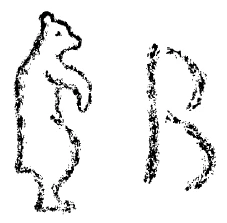
[ 6 ] The point is that you might want to try developing the initial letter yourself, starting with a meaningful approach based on drawing. You’ll be able to do this well if you simply use your imagination and tell yourself: The people who first saw animals that begin with “B”—such as beavers, bears, and the like—drew the animal’s back, the hind legs that are planted on the ground, and the front paws that are raised; they drew an animal standing upright, and the drawing evolved into the letter B. With any word, you’ll always find—and here you can let your imagination run wild, without needing to delve into cultural histories, which are incomplete anyway—that the initial letter is a drawing, an animal or plant form, or even an object. Historically, this is how it is: If you go back to the oldest forms of Egyptian writing, which was still a pictographic script, you will find imitations of such things everywhere in the letters. And it was during the transition from Egyptian to Phoenician culture that what might be called the “development from the image to the symbol for the sound” finally took place. We must let the child reenact this transition. Let us clarify this theoretically for our own understanding.
[ 7 ] In the early days of the development of writing, it was customary in Egypt to record every single thing that needed to be written down using pictographic writing—that is, by drawing it—though the drawings were made in such a way that one had to learn to keep them as simple as possible. Anyone who made a mistake while transcribing this pictographic writing—for example, if a sacred word was misspelled—was sentenced to death. So in ancient Egypt, matters related to writing were taken very, very seriously. But everything that constituted writing was, in the sense described, a picture. Then the culture passed on to the Phoenicians, who lived more in the outer world. There, they always retained the original image and applied that image to the sound. For example, I’d like to illustrate this—which also applies to Egyptian, since we can’t use Egyptian languages here—using a word that can most easily be reproduced in our language. The Egyptians realized that the sound “M” could be denoted by focusing primarily on the upper lip. Therefore, they took the symbol for “M” from the image of the upper lip. From this symbol emerged the letter we use for the beginning of the word “Mund” (mouth), which then came to be used for every such beginning—for everything that started with “M.” In this way, the pictorial word designation—by always taking the image of the beginning of the word—became a phonetic designation.
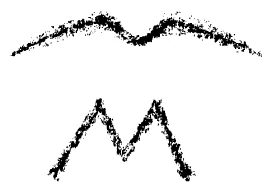
[ 8 ] This principle, which has been followed throughout the history of the development of writing, is also very useful in the classroom, and we are applying it here. That is to say, we will try to arrive at the letter through drawing: just as we arrive at the “f” from the fish with its two fins, so we arrive at the “B” from the bear that is dancing and standing upright; we move from the upper lip to the mouth, to the “M,” and in this way, through our imagination, we try to pave a path for the child from drawing to writing. - I said it is not necessary for you to delve into the cultural history of writing and search there for what you need. For what you find there will be of far less use to you in the classroom than what you discover through your own inner activity, through your own imagination. The activity you engage in when studying the cultural history of writing makes you so lifeless that you have a much less vibrant effect on your student than if you were to conceive of something like the letter B from the image of a bear yourself. This process of devising things for yourself refreshes you so much that what you wish to convey to your students comes across as far more vivid than if you were to first launch into cultural-historical digressions in order to glean something for your lessons. And it is in light of these two things that one must view life and teaching. For you must ask yourself: What is more important—having absorbed a cultural-historical fact painstakingly compiled and laboriously incorporated it into the lesson, or being so active in your own soul that you convey the invention you have made to the child through your own enthusiasm? — You will always experience joy—even if it is a rather quiet joy—when you transfer the form of an animal or plant, as you yourself have discovered it, onto the written word. And this joy that you yourself experience will live on in what you make of your student.
[ 9 ] Then one proceeds to point out to the child that what the child has been looking at as the beginning of a word also appears in the middle of words. So you should say to the child: “Look, you know what grows out in the fields or on the mountains, what is harvested in the fall, and what is used to make wine: the vine. Grown-ups spell ‘vine’ like this: REBE. Now think about it—if you say it very slowly: “Rebe”—there’s the same thing in the middle as was at the beginning of “BAR.” — You always write it in capital letters at first so that the child can see the visual similarity. This teaches the child that what they’ve learned as the beginning of a word can also be found in the middle of words. You continue to break the whole thing down for them.
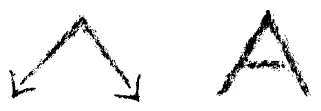
[ 10 ] You can see what matters most to us—who want to achieve a lively lesson, as opposed to a dull one—namely, that we always start with the whole. Just as in arithmetic we start with the sum, not the addends, and break down the sum, so too do we proceed here from the whole to the parts. This has the great advantage for education and teaching that we succeed in truly placing the child in the world in a living way; for the world is a whole, and the child remains in constant connection with the living whole when we proceed as I have indicated. If you let the child learn the individual letters from an image, the child will have a connection to living reality. But you must never fail to write down the letter forms as they emerge from an image, and you must always take care to explain the consonants as depictions of external things—but never the vowels. With the vowels, always assume that they reflect the human inner world and its relationship to the outside world. So, for example, if you try to teach the child the letter “A,” you will say to them: “Now create a mental image of the sun that you see in the morning.” Can any of you remember what you were doing when the sun rose in the morning?”—Now, perhaps one or two children will remember what they were doing. If that doesn’t happen—if none of them remembers—then you must help the child recall what they did, how they might have stood, or what they might have said when the sunrise was very beautiful: “Ah!” - You have to let this expression of a feeling take hold; you have to try to draw out of the feeling the resonance that sounds in the vowel. And then you have to try, first of all, to say: When you stood there like that and said “Ah!”, it’s as if a ray of sunlight had gone out from within you, as if from a corner of your mouth. What lives within you when you see the sunrise—you let that flow out of you like this (see drawing on the left) and bring it forth by saying “A.” But you don’t let it flow out completely; you hold some of it back, and that then becomes this symbol (see drawing on the right). You can try, for once, to give visual form to what lies in the breath of a vowel. This will yield drawings that can illustrate to you how the symbols for the vowels came into being. After all, vowels are scarce even in primitive cultures—including today’s primitive cultures. The languages of primitive cultures are very rich in consonants; they are such that people express much more in their consonants than we are familiar with. They sometimes click their tongues directly; they have all sorts of subtle techniques for expressing complex consonants, and in between, the vowel sounds only very softly. Among African peoples, you find sounds that are like the crack of a whip and so on; in contrast, their vowels are only faintly audible, and European travelers who visit such peoples usually make the vowels sound much louder than they actually do among these peoples.
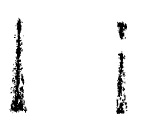
[ 11 ] So we can always draw out the inner sounds from drawing. For example, if you help the child realize—by appealing to their feelings—that they are in a situation like the following: Look, your brother or sister is coming toward you. They say something to you, and you don’t understand them right away. Then there comes a moment when you begin to understand them. How do you express that?—then another child will come forward, or the children will be led to the point where one of them says “iii.” In the indication of what has been understood lies the graphic form of the sound “I,” which is itself roughly expressed in the indication. In eurythmy, you have expressed this more clearly. So the simple stroke becomes the “i”—the simple stroke that should be thicker at the bottom and thinner at the top; instead, one simply draws the stroke and then expresses the thinning by adding the smaller symbol above it. In this way, one can draw out all the vowels from the form of the breath, from the form of respiration.
[ 12 ] In this way, you will be able to teach the child a kind of pictographic writing system to begin with. Then you need not hesitate to draw on certain mental images that also evoke, in the child’s perception, something of what has truly been lived through in the course of cultural development. In this way, you can teach the child the following. You say to the child: Look at the top of the house—how would you describe it? Roof! D! — But then you’d have to draw the D like this:  , which is awkward, so people changed it to:
 . Such mental images are inherent in writing, and you are certainly free to use them.

[ 13 ] But then people didn't want to write in such a complicated way; instead, they wanted to make it easier for themselves. That is why this character: , which was actually supposed to look like this —by now switching to lowercase letters, this symbol has become the lowercase d. — You can certainly develop existing letter forms in this way from such figures that you have taught the child to draw. In this way, by always discussing the transition from one form to another—and never teaching merely in the abstract—you will help the child progress so that they discover the actual transition from the form initially derived from drawing to the form that today’s letter actually has when it is written.
[ 14 ] Such things have, in fact, already been noticed by a few individuals—albeit quite a small number—today. There are educators who have already drawn attention to this: Writing should be derived from drawing. But they do it differently than what is called for here. In a sense, they immediately focus on the forms as they have ultimately taken shape; they take a form as it already is, so that they do not arrive at the “B” from the drawing of a sitting or dancing bear, but rather they take the “B” as it is now, break it down into individual strokes and lines:  and in this way seek to guide the child from drawing to writing. They do in the abstract what we attempt in the concrete. So, some educators have correctly recognized the practical aspect of allowing writing to emerge from drawing, but people are too deeply entrenched in the dead aspects of culture to be able to clearly grasp what is alive.
[ 15 ] I would also like to take this opportunity to point out to you that you must not be misled by looking at all sorts of current endeavors and saying: “This is already intended here, that is already intended there.” For you will always see that, from very deep within, this is not what is intended. But humanity is constantly driven to carry out such things. However, it will not be able to carry them out until it has incorporated Spiritual Science into its culture.
[ 16 ] In this way, we can always connect with people and their relationship to the environment by writing organically and teaching reading through the act of reading what has been written.
[ 17 ] Now, part of teaching—and we shouldn’t overlook this—is a certain longing to be completely free. And notice how freedom flows into this discussion of lesson preparation. It is intrinsically connected to freedom. For I would like to point out that you should not restrict your freedom by focusing on how writing originated during the transition from the Egyptians to the Phoenicians, but rather that you should strive to develop your own spiritual capacity. What can be done in this process can certainly be done by one teacher in one way and by another in another way. Not everyone can use a dancing bear; one might use something far better for the same purpose. What is ultimately achieved can be attained by one teacher just as easily as by another. But each one gives of themselves when they teach. Their freedom is fully preserved in the process. — The more teachers seek to preserve their freedom in this regard, the more they will be able to immerse themselves in their teaching, to devote themselves to it. This is something that has been almost completely lost in recent times. You can see it in one phenomenon.
[ 18 ] Some time ago, there was a discussion—the younger among you may not have witnessed it, but it caused quite a bit of trouble for the older ones who were of sound mind—about achieving something in the intellectual realm similar to the famous Imperial German “Reichstunke” in the material realm. As you know, it was often emphasized that all taverns—those that did not expect a particular influx of foreign visitors but relied solely on German patrons—should prepare a uniform sauce or dip. It was called the “Imperial German Sauce”; the aim was to standardize it. In the same way, there was a desire to standardize spelling—orthography. Now, when it comes to this subject, people have a very peculiar mindset. One can study this mindset through concrete examples. There is a very beautiful, tender relationship within German intellectual life—the one between Novalis and a female figure. This relationship is so beautiful because Novalis, after the woman in question had passed away, continued to live with her quite consciously even as she was already in the spiritual world, and he speaks of this coexistence with her by mourning her in an inner, meditative act of the soul. It is among the most beautiful and intimate things one can read in the history of German literature when one encounters this relationship between Novalis and this female figure. Now there is a very insightful—and, from this particular perspective, also interesting—strictly philological treatise by a German scholar on the relationship between Novalis and his beloved. In it, this tender, beautiful relationship is “set straight”; for it can be proven that this female figure died before she was able to write orthographically correctly. She made spelling mistakes in her letters! In short, the image of this figure, who was connected to Novalis, is presented in a rather philistine manner—all in the name of strict scientific rigor. The method of this “science” is so sound that anyone writing a dissertation that follows it deserves to have that dissertation graded with a “C”!—I merely wish to point out that people have already forgotten that Goethe, after all, was never able to spell correctly, that in reality he made mistakes throughout his entire life, especially in his youth. And yet he was still able to rise to the heights of Goethe’s greatness! And then there are the people who were close to him, whom he held in very high regard—indeed, their letters, as they are sometimes reproduced in facsimile today, would come out of a schoolteacher’s hand covered with nothing but red marks! They would receive a rather disparaging grade.
[ 19 ] This has to do with a rather restrictive aspect of our lives that should not play a role in the classroom or in education. However, a few decades ago, it did play such a role that the more discerning members of the teaching profession found it quite irritating. The goal was to establish a standardized German orthography—the famous Puttkamer orthography. This meant that the state not only exercised supervisory authority and administrative control extending all the way into the schools, but also legally mandated the orthography. And that’s exactly what happened! For, fundamentally speaking, through this Puttkam orthography we have lost much that could still draw our attention today to certain subtleties of the German language. Because people today are faced with abstract writing, much of what used to be alive in the German language is lost to them; it is lost to the so-called written language.
[ 20 ] The main thing, when it comes to such a matter, is to have the right attitude. Of course, one cannot simply allow any spelling to run rampant, but one can at least understand how the two extremes relate to this subject. If, after learning to write, people were able to write down what they hear from others or from themselves exactly as they hear it, they would write very differently. They would have very different spellings and would express their individuality very strongly. That would be extraordinarily interesting, but it would make communication more difficult. On the other hand, the fact is that we develop not only our individuality in human coexistence but also our social instincts and social feelings. The point here is that we simply smooth out much of what might reveal itself in our individuality in favor of what we are supposed to develop for the sake of living together with others. But we should have a sense of this fact, and this sense should be instilled in us from an early age—that we do such things only for social reasons. Therefore, as you guide writing instruction toward spelling instruction, you will have to start from a very specific set of feelings. You will have to draw the child’s attention to this again and again—I have already mentioned this from another perspective—that the child should have esteem and respect for adults, that the child is growing into a life that is already established and into which the child is to be accepted, and that the child must therefore take into account what is already there. From this perspective, one must try to introduce the child to something like spelling. In parallel with spelling instruction, one must develop in the child a sense of respect and reverence for what the elders have established. And one must not seek to teach spelling from some abstract principle—as if spelling were governed by a divine law (or, as Puttkamer might put it, a law of nature), emerging, as it were, from the Absolute—but rather one must cultivate in the child the sense that the elders, whom one is to respect, write in this way, and one must follow their example. — This will, of course, introduce a certain degree of variability into spelling; but it will not run rampant—rather, it will represent the growing child’s adaptation to the adults around them. And one should expect this adaptation. One should not seek to instill the belief that “this is right and that is wrong”—rather, one should only awaken the belief that “this is how grown-ups tend to write”—thus relying on living authority in this regard as well.
[ 21 ] That is what I meant when I said: We must make the transition from the child before the change of teeth to the child at sexual maturity—from imitation to authority. What I meant by this must be carried out in concrete detail in every instance—not by instilling authority in the child, but by acting in such a way that a sense of authority arises; that is, by teaching spelling in such a way that the entire process of spelling is based on what is called “authority,” as I have now explained.