

The Art of Education
Methodology and Didactics
GA 294
28 August 1919, Stuttgart
Translated by Steiner Online Library
Seventh Lecture
[ 1 ] You will encounter some difficulties with regard to teaching methods, which, by their very nature, your school will initially have in common with rural schools. City schools, which today lack particularly good methods or rely on overly elaborate ones—and thereby spoil some of the good that could already be found in these methods—have, on the other hand, the advantage of having teaching materials, particularly those for physics, chemistry, and natural history, available in sufficient quantities. After all, in elementary school pedagogy—just as in higher education and scientific research— While city schools have less effective teaching methods—though the good will of the new educators to develop effective methods should by no means be overlooked—they are, in contrast, well-supplied with teaching materials; rural schools, on the other hand, still sometimes have better teaching methods today—provided the teachers have not been too thoroughly corrupted by being sent from the city to the countryside—but are, in contrast, less well-equipped with teaching materials. Those who today are trying to grapple with contemporary issues and perspectives have no laboratories or experimental resources at their disposal, whereas those who have access to the more abundant experimental resources at universities and the like possess the least fruitful scientific methods. One must say, for example—since this circumstance has long prevailed in science: What might have become of Schopenhauer’s philosophy—since it is now, after all, merely a kind of philosophical dilettantism—if, for example, Schopenhauer had had at his disposal all the resources one has when serving as a lecturer at a university for an extended period, and how little of the Schopenhauerian spirit actually emanates today from university lecturers who have more abundant resources at their disposal!
[ 2 ] You will often have to draw on your ingenuity. You will have to make do with simple resources in many cases, whereas ordinary city schools have ample resources at their disposal. This may actually liven up your lessons, but it will also make teaching in various subjects quite a challenge for you. This will be particularly noticeable once the children are past the age of 9, at which point you can really only continue teaching if you have sufficient teaching materials at your disposal. You’ll have to substitute many things with drawings or simple, rudimentary painting—things that, under ideal conditions, would no longer be taught through drawing or painting, but rather through direct observation of the object itself.
[ 3 ] I made this remark at the outset because today I would like to speak to you about the transition in educational terms that must be taken into account as we approach the age of 9 with the children. We will only understand the curriculum at that point once we have trained ourselves pedagogically to the extent that we have grasped the essence of the individual between the ages of 7 and 15. I would like to illustrate for you, as teachers, what you will need to apply in this regard—in a slightly different, more elementary way, understandable to the children—in your lessons, especially when the children are between the ages of 9 and 10. For some children, this stage is reached even before the age of 9; for others, it occurs later, but on average, what I have to tell you today begins at the age of 9.
[ 4 ] As we approach this stage of life, we will need to recognize the necessity of incorporating natural history into the curriculum. Before that, natural history will be introduced to the children in a narrative manner, just as I spoke yesterday in the seminar about the relationships between the animal and plant worlds and human beings. Up until then, natural history will be introduced to the child primarily in a narrative and descriptive manner. However, actual natural history instruction will not really begin until after the Rubicon of the 9th year of life has been crossed.
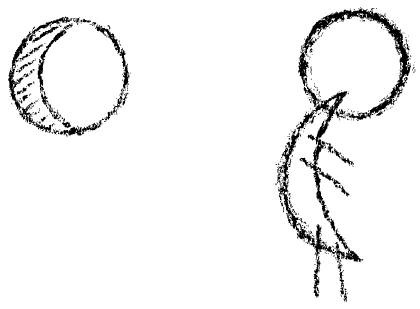
[ 5 ] It is therefore of great importance to realize that whatever one hopes to instill in a child through natural history instruction will be thoroughly undermined if one does not begin such instruction by exploring the nature of human beings. You may rightly say: When a child reaches the age of 9, there is still very little one can tell them about the natural history of humankind. Yet however little it may be, the little that can be taught to the child about humankind should be presented as preparation for all other natural history instruction. In doing so, you will need to understand that human beings represent, in a sense, a synthesis—a synthesis of all three kingdoms of nature—and that the other three kingdoms are synthesized within human beings at a higher level. You will not need to tell the child this explicitly, but through the course of your instruction, you will need to instill in the child a sense that human beings are such a synthesis of all the other kingdoms of nature. You will achieve this if you give the discussion of the human being the necessary emphasis, if, in the way you approach the subject of the human being, you evoke in the child an impression of the importance of the human being within the entire order of the world. You may begin, when the child is 9 years old, to describe the human form externally. You will draw the child’s attention to the main divisions of the human body—head, torso, and limbs—but in doing so, you will have to focus more on the external appearance and form. You would do well to use the drawing exercises you have previously practiced to help the child form a mental image of the most essential aspects of the human form: that the head is spherical, that it is slightly flattened on the underside, and that it rests on the torso at this point—in other words, that it is a sphere resting on the torso. It is good to evoke this mental image in the child. This simultaneously awakens emotional and volitional elements, for the child begins to view the head artistically, based on its spherical shape. This is important. In this way, you engage the whole person, not merely their intellect. Then, however, try to evoke in the child the idea that the torso is, in a sense, a fragment of the head. Try to evoke this in the child through a drawing by telling them: “The head is spherical. If you take a piece out of the sphere by cutting away this part (the hatched section of the drawing) and retaining the other part—so that, in a sense, the moon remains separate from the sun—then you obtain the most fundamental form of the torso.” — It would be helpful if you were to form a sphere out of wax or kneaded dough, cut off the hatched section, and retain the moon in its truly spherical shape, so that you can truly evoke in the child a mental image of a spherical fragment representing the human torso. And for the limbs, you should then evoke the mental image that they are simply attached to and integrated into the torso. The child may not be able to understand everything, but you should nevertheless strongly emphasize the mental image that the limbs are integrated into the human organism. You must not go any further at this point, for the limbs continue inward into the morphological structures of the human being and are connected there to the digestive and reproductive organs, which are merely an inward continuation of the limbs. But you must strongly evoke in the children a mental image of the human form. In this way, the child first gains a conceptual understanding of the human form.
[ 6 ] Then try to instill in the child a first, albeit still elementary and primitive, mental image of the world that perceiving it is tied to the head. You can tell the child: You have your eyes, your ears, your nose, and your mouth in your head. With your eyes you see, with your ears you hear, with your nose you smell, and with your mouth you taste. Most of what you know about the outside world, you know through your head. If you expand on this idea further, the child will develop a mental image of the head’s specific structure and function. Then try to help the child form a mental image of the torso by saying: “What you taste with your tongue goes into your torso as food; what you hear with your ears goes into your torso as sound.” - It is good to help children develop a mental image of the entire human organ system; so you should also suggest to the child that in the chest are the respiratory organs through which they breathe, and in the abdomen is the stomach through which they digest. It is good to suggest this to the child. And it is also good to have the child reflect on how the human limbs serve, on the one hand, as feet for walking and, on the other hand, as hands for free movement and work. And it is good to awaken in the child an understanding of the difference between the service that the feet render to the human body—by carrying it and enabling it to work at various places where it must live—and the service rendered, in contrast, by the arms and hands, with which a person does not have to carry their own body but can work freely. While the feet stand on the ground, the hands can be stretched out into the air to work. In short, the child should be made aware at an early age of the essential difference between the human legs and feet and the human arms and hands. The difference between the service performed by the feet and legs in carrying the human body and the service performed by the hands and arms in working not for the human body but for the world—this difference between the self-serving service of the feet and the selfless service of the hands in working for the human external world—should be instilled in the child emotionally at an early age.
[ 7 ] Thus, by deriving the concept from the form, we should teach the child as much as possible about human anatomy. Only then should we move on to the rest of natural history, beginning with the animal kingdom, It would be good if you could bring into the classroom—you’ll have to make do in some way—for example, an octopus, a mouse, a lamb, or even a horse, something from the realm of these mammals, and then perhaps a model of a human; well, you’d have plenty of human specimens—you’d only need to present one student as a human object to the others. Now you need to figure out how to proceed. You’ll start by trying to introduce the octopus to the students. You’ll tell them how it lives in the sea, describe what it looks like using a model or a drawing—in short, you’ll familiarize the children with the octopus. As you describe the octopus to the children, they will sense that you are describing it in a unique way. Perhaps only later—when you describe the mouse, for example—will the children realize how differently you described the mouse compared to the octopus. You must seek to develop this artistic sensibility in the children so that, by noticing how you describe the octopus differently from the mouse, they simultaneously gain a certain sense of the difference between these two animals. With the octopus, you must hint at this in such a way that the octopus seems to sense what is in its surroundings: If it senses anything dangerous in its environment, it immediately releases its dark ink to envelop itself in a cloud, thereby diverting whatever is approaching it. You can then explain many things to the child that will help them understand that when the octopus acts—whether it is protecting itself from enemies in any way or even feeding—it always acts in the same way that, for example, a human acts when eating or looking at something: When a human eats something, they experience taste—a sensation conveyed to them through their tongue, through their taste buds. And the human eye constantly feels the need to look into the light; by doing so, it can engage with the light. Because the human taste buds seek to taste, they take in what serves as nourishment. So describe the octopus in such a way that, through your description, the child senses the octopus’s sensitivity—its subtle perception of the things in its surroundings. You will have to craft an artistic description of the octopus so that the children can truly grasp it through this artistic portrayal.
[ 8 ] Then describe the mouse. Describe how it has a pointed snout, how the whiskers are immediately very noticeable on this pointed snout, and how the incisors protruding from both the top and bottom are also noticeable; You describe the mouse’s disproportionately large ears, then move on to its cylindrical body and its fine, velvety fur. Next, you move on to describing its limbs—the smaller front paws and the slightly larger hind paws—which enable the mouse to jump well. It also has a scaly tail that is less hairy. You point out to the child that when the mouse climbs somewhere or wants to grasp something with its front paws, it leans on its tail—which the mouse can use very effectively because it is more sensitive on the inside, due to the fact that it has scales rather than hair. In short, you try to describe the mouse to the child once again by artistically constructing its forms. And you will achieve this artistic construction when you evoke in the child a mental image of how, for all the activities for which the octopus needs parts not yet attached to its body, the mouse requires parts that are attached to its body. The octopus is sensitive through itself, through its body; therefore, it does not need ear flaps as large as the mouse’s. It interacts with its environment in such a way that it can take food into itself without the pointed snout that the mouse has. Nor does it need limbs as large and attached to the body as the mouse’s, because it can use its own body to move forward in the water. Summarize clearly what you wish to teach the child through artistic adaptation: that the octopus expresses itself less through its limbs and more through its body itself.
[ 9 ] I must first describe all of this to you so that you can then incorporate it into your lessons, because you need to be aware of what you will later—more unconsciously—need to bring into your artistically structured lessons. In short, describe the mouse in such a way that you gradually evoke in the child the feeling that: The mouse is entirely organized to use its limbs to serve the life of its body. Then make it clear to the child: After all, the lamb is also organized to use its limbs to serve the life of its body, and the horse, too, is organized so that, when living in the wild, it can use its limbs to serve the life of its body. For example, explain the following to the child: Look, the mouse has such pointy teeth; these teeth must be sharp and pointed, otherwise the mouse would not be able to gnaw on objects as it must in order to feed itself—and even to gnaw holes in which it can then live. But this means it must constantly wear down its teeth. But in the case of the mouse, its teeth—like our fingernails—constantly grow back from the inside out, so that the mouse continually receives a fresh supply of tooth substance from within. This is particularly evident in the teeth—which, after all, are organs attached to the rest of the organism—in that they are formed in such a way that the mouse’s body can live.
[ 10 ] So you have evoked in the child a strong mental image—albeit a rudimentary one—of the octopus, based on sensory experience, and you have further evoked in the child a strong mental image of the mouse’s anatomy. And now you move on again to the human anatomy. You make it clear to the child: If we now look for what in the human being most resembles the octopus, we are, strangely enough, led to the human head. It is the head that most resembles the octopus. It is a prejudice to think that people consider their head to be the most perfect part of themselves. The head is indeed very complex in structure, but it is actually nothing more than a transformed octopus; I mean, a transformed lower animal, for the human head relates to its surroundings in much the same way as lower animals relate to theirs. And in terms of its torso, the human being most closely resembles the higher animals: the mouse, the lamb, the horse. But while the octopus can sustain its entire life through its head, the human being could not. The head must be attached to the torso and rest upon it; it cannot move freely. The octopus, which is essentially nothing but a head, moves freely in the water. — You must help the children develop a sense of how lower animals are freely moving heads, though not yet as perfect as the human head. And you must awaken in the children a sense that higher animals consist mainly of a torso, and that nature has ingeniously designed their organs primarily to satisfy the needs of the torso—which is much less the case with humans; in terms of their torso, humans are less perfectly formed than higher animals.
[ 11 ] One must then instill in children a sense of what it is that makes human beings the most perfect in their outward form. This is true with regard to their limbs. If you trace the development of higher animals up to the monkey, you will find that the front limbs are not yet very different from the hind limbs, and that, in general, the four limbs essentially serve to support the torso, propel it forward, and so on. This marvelous differentiation of the limbs into feet and hands, into legs and arms, occurs only in humans and manifests itself in the gait, which is organized for an upright posture even in its embryonic stage, and in the posture, which is also organized for an upright stance from the very beginning. No other animal species is as perfectly designed as humans with regard to the thorough organization of the limbs.
[ 12 ] Then introduce a fairly vivid description of the human arms and hands: how they have been relieved of all the organism’s carrying duties, how the hands do not come into contact with the ground for physical purposes, how they have been reshaped to grasp objects and perform work. And then move on to the volitional-moral aspect. Evoke in the child—emotionally, not theoretically—a strong mental image: For example, you take a piece of chalk in your hand to write; you can only take the chalk in your hand because your hand has been reshaped to perform this task, because it no longer has to support the body. As far as the arms are concerned, an animal cannot be lazy, because it essentially has no arms. When we speak of a quadruped as a “monkey,” this is merely an imprecise way of speaking, for it actually has four arm-like legs and feet, and not four hands. For even though animals are ultimately designed for climbing, climbing is also something that serves the body, and their feet are reshaped to resemble hands so that they can support the body while climbing. — For what takes place within the human body, the hands and arms of humans have become, outwardly, the most beautiful symbol of human freedom! There is no more beautiful symbol of human freedom than the human arms and hands. Humans can work for their environment through their hands, and they can also—by nourishing themselves, by eating—work for themselves of their own free will through their hands.
[ 13 ] Thus, by describing the octopus, the mouse, the lamb, the horse, and human beings themselves, one gradually awakens in the child a strong sensory and emotional mental image that lower animals have a “head” character, higher animals a “torso” character, and human beings a “limb” character. Constantly teaching people that they are the most perfect beings in the world because of their heads only leads to ingrained arrogance. As a result, they unconsciously absorb a mental image of oneself being perfect through laziness and inertia. For humans know instinctively that the head is a slacker, that it rests on the shoulders, that it does not want to move through the world on its own, that it allows itself to be carried by the limbs. And it is not true that man is the truly perfect being because of his head—that lazy head—but rather because of his limbs, which are integrated into the world and its work. They make man more moral at his very core when they do not teach him that he is perfect because of his lazy head, but rather perfect because of his active limbs. For those beings that are nothing but head—like the lower animals—must move their heads themselves; and those beings that use their limbs only in the service of the torso—like the higher animals—are, precisely in comparison to human beings, the more imperfect beings because their limbs are less suited to free use than those of human beings; they are already bound to a certain purpose; they serve the torso in every respect. In humans, one pair of limbs—the hands—is placed entirely within the sphere of human freedom. You can instill in a person a healthy sense of the world only if you awaken in them a mental image that they are perfect because of their limbs, not because of their head. You can do this very well through a comparative description of the octopus, the mouse, the lamb, the horse, and human beings. In doing so, you will also realize at the same time that, whenever you describe anything in the natural world, you should never leave human beings out of the picture, for it is in human beings that all the activities of nature are united. That is why, whenever we describe anything in nature, we should always keep human beings in the background. That is also why, when we move on to natural history lessons with children after they reach the age of 9, we must begin with human beings.
[ 14 ] Anyone who observes a child will find that something happens to a person precisely between the ages of 9 and 10. It is not as clearly evident as the first signs of this process at an earlier stage of childhood. When the child begins to move its limbs more consciously, to walk—often even clumsily—and to use its arms and hands purposefully, that is roughly the point at which the child begins to become somewhat aware of its “I,” so that later it can recall events up to that point, but not what happened before. If you observe how, normally—though this varies from child to child—a person at this age begins to say “I,” even somewhat later because speech, that is, the volitional aspect, must first develop—then you can see that the emergence of self-consciousness in a person is clearly noticeable at this point, whereas the change that occurs around the age of nine in relation to a person’s self-consciousness is not as strongly noticeable. At that point, self-consciousness intensifies; one can observe that the child understands much more clearly what is said about the difference between the human being and the world around them. Before crossing the Rubicon of the ninth year of life, the child is still much more fused with the environment than after reaching this stage. Then the child distinguishes itself much more from its surroundings. Therefore, one can now begin to speak to the child about spiritual matters, and the child will no longer listen as if it did not understand as it did before reaching the age of nine. In short, the child’s self-awareness deepens and strengthens upon reaching the age of nine.
[ 15 ] Anyone who has a feel for such things will notice that, at this age, the child begins to use words in a much more inward way than before and becomes much more aware that words are something that arise from within. Today, when people are far more concerned with the external than with the internal, far too little attention is paid to this transition that occurs in the 9th and 10th years of life. The educator, however, must direct their attention to this transition. Therefore, you will be able to speak to the child with an entirely different underlying tone if you introduce natural history lessons—which must always compare human beings to the other kingdoms of nature—to the child only after this point in time. Whereas before—when human beings were still more closely connected to nature—we could only speak to the child about the subjects of natural science in a narrative form, we can now, after the age of nine, do so by placing the octopus, the mouse, the lamb, or the horse alongside the human being before the child, and we may also speak with the child about the connections to the human form. Previously, you would have encountered something incomprehensible to the child if you had tried to relate what pertains to the head to the octopus, if you had tried to relate what pertains to the torso to the mouse, and if you had sought in the human limbs what elevates human beings above the other kingdoms of nature. And you should now even make use of what the child’s particular age brings to you, for the reason that, even if you use natural science instruction as I have indicated, you will later instill very firm, unshakable moral concepts into the child’s soul. Moral concepts are not instilled in children by appealing to the intellect, but by appealing to feeling and will. But one will be able to appeal to feeling and will when one directs the child’s thoughts and feelings toward the fact that the child is fully human only when using their hands to work for the world, that in doing so they are the most perfect being, and that a relationship exists between the human head and the octopus, and between the human torso and the mouse, the sheep, or the horse. Through this feeling of being part of the natural order, the child also absorbs feelings that will later enable it to truly recognize itself as a human being.
[ 16 ] You can instill this particularly important moral element into a child’s soul if you make an effort to structure your natural history lessons in such a way that the child has no inkling that you are trying to teach him or her morality. But you will never instill even a trace of moralism in the children if you teach natural history independently of human beings—by describing the octopus in and of itself, the mouse or the lamb or the horse in and of themselves, and even human beings in and of themselves—while providing nothing but definitions of terms. For you can only describe human beings if you compose them from all the other organisms and activities of nature. What Schiller admired about Goethe was that Goethe’s view of nature, in a naive sense, consisted of composing human beings from all the individual elements of nature, as expressed in the beautiful letter from the early 1790s that Schiller wrote to Goethe. I have cited it time and again because it contains something that ought to be fully integrated into our culture: the awareness of the synthesis of all of nature within the human being. Goethe repeatedly expresses it this way: The human being is placed at the summit of nature and feels there once again as a whole of nature. Or, as Goethe also puts it: The whole rest of the world actually comes to consciousness within the human being. - If you go through my writings, you will find such sayings by Goethe quoted time and time again. I did not quote them because I liked them, but because such ideas should become part of the consciousness of our time. That is why I am always so sorry that one of the most significant pedagogical works has actually remained completely unknown—or at least unproductive—within the field of education itself. Schiller, in fact, learned sound pedagogy from Goethe’s “Naive Self-Education” and incorporated this pedagogy into his work *Letters on the Aesthetic Education of Man*. These letters contain an immense amount of fruitful pedagogical insight; one need only reflect on them and consistently develop the ideas they contain. Schiller, after all, arrived at this understanding through Goethe’s views. Just consider how Goethe—as it were, a piece of culture embedded in nature—opposed the educational principles of his surroundings from the very earliest childhood. Goethe could never separate human beings from their surroundings. He always viewed human beings in their connection with nature and felt, as a human being, at one with nature. That is why, for example, he did not take a liking to piano lessons as long as they were taught to him in complete isolation from human nature. He only began to take an interest in piano lessons when the movements of the individual fingers were explained to him, when he heard: “This is the ‘thumb,’ this is the ‘index finger,’ and so on,” and when he now knew how the thumb and the index finger are used when playing the piano. He always wanted the whole human being to be immersed in the whole of nature. And the other thing—I’ve already mentioned it: At the age of seven, he built his own altar to nature, using his father’s music stand, placing plants from his father’s herbarium and minerals on it, with a small incense candle on top; then he used a magnifying glass to focus the rays of the morning sun, thereby offering a sacrifice to the great God of Nature: a direct opposition to what he had otherwise been taught in his upbringing. Goethe always presented himself as a person who wanted to be educated in the way one should be educated in modern times. And because Goethe was like that—once he had first brought himself into line with this ideal—that is why Schiller was so taken with him, and Schiller then wrote in his Aesthetic Letters on education precisely what is contained in these letters.
[ 17 ] My old friend and teacher $Schröer once told me how, as a member of a middle school committee, he had to participate as an examiner in a test for prospective teachers, but he hadn’t been able to prepare at the same time what the future teachers were required to bring to this exam. So he decided to ask them about Schiller’s aesthetic letters. They were well-versed in all sorts of things—Plato and so on—but when Schröer began asking them about Schiller’s aesthetic letters, they revolted! And all over Vienna, people were saying: “Schröer tried to quiz the teachers on Schiller’s Aesthetic Letters during the exam, but nobody understands those! Those are things that are simply impossible to understand!”
[ 18 ] But if we wish to seek out some sound pedagogical principles—even if only in their rudimentary form—we must, for example, turn to Schiller’s *Letters on Aesthetic Education* and also to Jean Paul’s educational treatise *Levana*. This work, too, contains an immense amount of practical guidance for the field of education. In more recent times, things have certainly improved in some respects, but one cannot say that what could have emerged from Schiller’s aesthetic letters and Jean Paul’s educational treatise has been incorporated into pedagogy entirely unadulterated. Things are always placed on a different foundation.
[ 19 ] Today I have tried to give you an idea of how, based on a child’s age—around 9 years old—you can determine what educational approach is appropriate at that age. Tomorrow we will discuss how to use the ages of 14 and 15 to teach the child what is appropriate for their nature at that stage. In this way, we will gain insight into how the entire period between the ages of 7 and 15 is structured and what educators and teachers must do. From this, the curriculum will then take shape. Today, people ask the question in the abstract: How should we develop the child’s abilities? But we should be clear about this: One must first know the abilities of the developing human being if the abstract statement—“One must develop the child’s abilities”—is to have any concrete meaning.