

Knowledge of the Human Being
and Lesson Planning
GA 302
15 June 1921, Stuttgart
Translate the original German text into any language:
Versions Available:
Knowledge of the Human Being and Lesson Planning, tr. SOL
Vierter Vortrag
Fourth Lecture
[ 1 ] Es wird Ihnen aus den Betrachtungen, die wir angestellt haben, hervorgegangen sein, daß der Lehrer schon in seine ganzen Erwägungen eine genauere Erkenntnis auch des physisch-leiblichen Menschen einbeziehen muß. Und warum wir gerade jetzt solche scheinbar ferner liegenden Betrachtungen anstellen, das hat seinen Grund darin, daß wir in unserer Schule vor einer sehr bedeutungsvollen Aufgabe stehen, nämlich der, zu den eigentlichen Volksschulklassen die 10. Klasse hinzuzufügen, die dann doch schon reifere Knaben und Mädchen enthalten wird; und daß wir dabei dem Lebensalter gegenüberstehen, das besonders vorsichtig wird behandelt werden müssen. Ich möchte eigentlich in diesen Tagen noch dahin arbeiten, bei Ihnen eine gründliche Betrachtung hervorzurufen, gerade dieses kindlichen Lebensalters, das ja mit wichtigen Entwickelungszuständen zusammenhängt.
[ 1 ] It will have become clear to you from the observations we have made that the teacher must incorporate a more precise understanding of the physical, bodily human being into all of his or her considerations. And the reason we are making such seemingly distant observations right now is that we face a very significant task in our school: namely, to add the 10th grade to the regular elementary school classes, which will then include boys and girls who are already more mature; and that in doing so, we are dealing with an age group that must be treated with particular care. In the coming days, I would actually like to work toward prompting you to engage in a thorough examination of precisely this childhood stage, which is, after all, connected to important developmental phases.
[ 2 ] Nun können Sie sagen: Das geht nur diejenigen an, die mit diesen Kindern beschäftigt sind. — Aber das ist nicht richtig. Es ist schon so, daß unser Lehrerkollegium immer mehr und mehr zusammenwachsen muß zu einem ganzen Organismus; und da werden wir alle in einer gewissen Weise doch direkt oder indirekt beteiligt sein müssen an der Gesamterziehung der Kinder der Schule,
[ 2 ] Now you might say: This only concerns those who work with these children. — But that’s not true. It is true that our teaching staff must increasingly grow together into a single, cohesive unit; and in that process, we will all, in one way or another, have to be directly or indirectly involved in the overall education of the school’s children,
[ 3 ] Ich muß nur heute noch einiges vorausgehen lassen, ehe ich vor Ihnen die Anforderungen des 14., 15., 16. Jahres im kindlichen Lebensalter betrachten werde. Und wir werden ja dann auch in der gemeinschaftlichen Konferenz den Lehrplan gerade für die wichtige 10. Klasse auszuarbeiten haben.
[ 3 ] I just need to cover a few things today before I discuss with you the requirements for the 14th, 15th, and 16th years of a child’s life. And then, of course, we will also have to work out the curriculum for the important 10th grade during our joint conference.
[ 4 ] Nun, heute möchte ich dem noch einiges in dem Stile vorangehen lassen, in dem wir gestern und vorgestern begonnen haben. Ich möchte Ihnen zunächst noch einmal die Betrachtung des sogenannten Zusammenhanges des Geistig-Seelischen und des Physisch-Leiblichen beim Menschen, insbesondere beim Kinde, auf die Seele legen. Es ist ja das Geistig-Seelische in der allgemeinen Bildung heute fast nur in intellektueller Form vorhanden. Wir haben in unserem Kulturleben ein eigentlich lebendiges Geistesleben nicht. Und in denjenigen Gegenden Mitteleuropas, die noch vom Katholizismus durchsetzt sind, hat ja der Katholizismus unwahre Formen angenommen, so daß man auch da nicht sagen kann, daß da besonders viel Hilfe in bezug auf religiöse Vermittlung des Geisteslebens zustande kommt. Das evangelische Geistesleben ist ja mehr oder weniger ganz intellektualistisch geworden. Nun kann natürlich in unsere Schule das eigentliche Geistesleben nur dadurch hineinkommen, daß sich unsere Lehrerschaft eben aus Anthroposophen zusammensetzt. Dadurch, nicht durch das Lehren der Anthroposophie — unsere Schule darf eben nicht Weltanschauungsschule sein -, aber durch die ganze Art und Weise, wie sich unsere Lehrer verhalten, durch dasjenige, was sie in ihrer Seele tragen, wird wie durch seelische Imponderabilien das Geistig-Seelische in unsere Schule hineingetragen.
[ 4 ] Well, today I would like to continue along the lines we began yesterday and the day before. First, I would like to draw your attention once again to the so-called connection between the spiritual-soul aspect and the physical-bodily aspect in human beings, especially in children. After all, in general education today, the spiritual-soul aspect is present almost exclusively in intellectual form. We do not have a truly living spiritual life in our cultural life. And in those regions of Central Europe that are still permeated by Catholicism, Catholicism has taken on false forms, so that even there one cannot say that much help is being provided in terms of the religious transmission of spiritual life. Protestant spiritual life has, after all, become more or less entirely intellectualistic. Now, of course, true spiritual life can only find its way into our school because our teaching staff is composed of anthroposophists. Through this—not through the teaching of anthroposophy (our school must not be an ideological school)—but through the entire manner in which our teachers conduct themselves, through what they carry within their souls, the spiritual-soul aspect is carried into our school as if through spiritual imponderables.
[ 5 ] Wenn wir nun dasjenige treiben, was wir den Kindern auf den verschiedensten Gebieten beibringen müssen, also ich will sagen, was wir ihnen beibringen, während wir mit ihnen lesen oder ihnen das vermitteln, was zum Lesen führt, was wir ihnen beibringen als das Gedankliche im Rechnen, was wir ihnen beibringen auch in der Naturgeschichte oder Naturlehre — durch all das, was in Gedanken sich ausspricht, bringen wir eben Vorstellungen an sie heran. Und Vorstellungen an die Kinder heranbringen, das ist im Grunde eine ganz andere Betätigung gegenüber dem kindlichen Organismus, als diejenige ist, die sich ja allerdings in die anderen zum Teil hineinmischt, aber zum Teil selbständig getrieben wird. Nicht wahr, ganz selbständig wird das Körperlich-Leibliche getrieben bei Eurythmie, beim Musikunterricht, beim Turnunterricht, in einer gewissen Weise beim Instrumentalunterricht, nicht mehr aber beim Gesangunterricht. Natürlich ist alles nur relativ. Aber es ist durchaus polarisch verschieden, was wir in diesen Fächern an die Kinder heranbringen, auch was das Kind beim Lesen, beim Schreiben lernt, wo wir stark an die körperliche Tätigkeit appellieren, von den Fächern, wo dies viel weniger der Fall ist, etwa beim Rechnen, wo die körperliche Tätigkeit eine untergeordnete Rolle spielt; während gerade beim Schreiben die körperliche Betätigung eine sehr große Rolle spielt.
[ 5 ] Now, when we engage in the very activities we must teach children in a wide variety of areas, that is to say, what we teach them while reading with them or imparting what leads to reading, what we teach them in terms of the intellectual aspects of arithmetic, what we teach them in natural history or natural science—through all that is expressed in thought, we are conveying mental images to them. And presenting mental images to children is, in essence, a completely different kind of activity for the child’s organism than the one that, while it certainly intertwines with the others to some extent, is also carried out independently. Isn’t it true that the physical aspect is pursued entirely independently in eurythmy, in music lessons, in physical education, and to a certain extent in instrumental lessons—but no longer in singing lessons? Of course, everything is relative. But there is a distinct polar difference between what we introduce to the children in these subjects—including what the child learns in reading and writing, where we strongly appeal to physical activity—and the subjects where this is much less the case, such as arithmetic, where physical activity plays a subordinate role; whereas in writing, physical activity plays a very significant role.
[ 6 ] Nun, über alle diese Einzelheiten sollte eigentlich mancherlei gesprochen werden. Ich möchte nur am Schreiben anschaulich machen, inwiefern da die körperliche Tätigkeit eine Rolle spielt. Es gibt zwei Menschentypen in bezug auf das Schreiben — ich glaube, ich habe zu denjenigen, die schon länger hier sind, über dieses Faktum schon gesprochen -, es gibt also zwei Menschentypen. Der eine Menschentypus schreibt so, daß das Geschriebene gewissermaßen aus der Hand herausfließt. Es ist die Formung der Schrift förmlich im Handgelenk. Der kaufmännische Schreibunterricht insbesondere wird dahin erteilt, daß das Schreiben im Handgelenk ist. Und das ist im Grunde genommen alles, was für das Schreiben dann in Betracht kommt. Das ist bei dem einen Typus von Menschen so, daß sie veranlagt sind, so das Schreiben zu lernen. Der andere Typus ist daraufhin veranlagt, die Schriftzeichen sich anzuschauen. Er richtet den Blick immerfort auf seine Schrift und verhält sich zur eigenen Schrift, wenn auch leise, ästhetisch. Er sieht das an, was er schreibt, und er hat ein Behagen daran, wie seine Buchstaben sind. Es ist der malende Typus. Da ist das Schreiben nicht so stark im Handgelenk. Es gibt Menschen, die schreiben so, wie der Kaufmann schreibt; der malt gar nicht. Ich habe sogar eine merkwürdige Art der Unterweisung des Schreibens kennengelernt in einer Schule, die vorbereitend war für Kaufleute. Da wurden die Leute veranlaßt, fortwährend Schwünge zu machen, und dann nicht wahr, sie machten jeden Buchstaben aus einem bestimmten Schwung des Handgelenkes heraus — nahm die Schrift den Charakter an, daß alles darinnen schwunghaft war. Nun, ich erinnere Sie nur daran, daß das im äußersten Extrem zu etwas Furchtbarem führt. Sie werden manchmal schon Leute kennengelernt haben, die, bevor sie anfangen zu schreiben, mit der Feder in der Luft herumfuchteln, Schwünge ausführen, bevor sie ansetzen. Es ist das ein furchtbarer Zustand, wenn man diese Handgelenkschwünge im Extrem treibt.
[ 6 ] Well, there’s actually a lot that could be said about all these details. I’d just like to use writing as an example to illustrate the extent to which physical activity plays a role. There are two types of people when it comes to writing—I believe I’ve already discussed this fact with those of you who’ve been here for a while—so there are two types of people. One type writes in such a way that the written words flow, as it were, right out of the hand. The shaping of the handwriting literally takes place in the wrist. Commercial writing instruction, in particular, is taught in such a way that the writing is done with the wrist. And that is, essentially, all that matters when it comes to writing. This is the case with one type of person: they are predisposed to learn to write in this way. The other type is predisposed to look at the written characters. They constantly focus their gaze on their handwriting and, even if only subtly, relate to it aesthetically. They look at what they’re writing and take pleasure in the appearance of their letters. This is the “painting” type. For them, writing isn’t so much a matter of the wrist. There are people who write the way a businessperson does; they don’t “paint” at all. I even encountered a peculiar method of teaching handwriting at a school that prepared students for careers in business. There, students were instructed to make continuous sweeping motions, and—wouldn’t you know it—they formed every letter with a specific sweep of the wrist—so the handwriting took on a character where everything in it was sweeping and fluid. Well, I’ll just remind you that taken to the extreme, this leads to something terrible. You’ve probably met people who, before they start writing, wave their pen around in the air, making sweeping motions before they even put it to paper. It’s a terrible state of affairs when these wrist movements are taken to the extreme.
[ 7 ] Man sollte eigentlich das malende Schreiben an den Menschen herankommen lassen. Es ist das weit hygienischer, weit gesünder. Wenn man nun so schreibt, daß man zu gleicher Zeit das Auge auf seine Schrift gerichtet hält und ästhetisches Behagen hat an seinen Schriftzeichen, also malerisch schreibt, dann wird das Mechanische mehr in den Körper zurückgedrängt. Es schreibt nicht das Handgelenk, es schreibt mehr der innere Organismus. Und das ist außerordentlich wichtig, denn es wird viel mehr das Mechanische von der Peripherie abgelenkt und auf den ganzen Menschen zurückgelenkt. Sie werden auch bemerken: wenn es Ihnen gelingt, jemanden ganz gut auf dieses malende Schreiben hinzuführen, so lernt er zuletzt auch mit den Zehen schreiben. Und das wäre ein gewisser Triumph, wenn man es dahin bringen könnte, daß Buchstaben durch Haltung eines Bleistiftes zwischen der großen Zehe und der nächsten Zehe richtig geformt werden könnten. Ich meine nicht, daß das artistisch ausgebildet werden sollte; aber es ist darinnen dieses Übertragen der mechanischen Tätigkeit auf den ganzen Menschen.
[ 7 ] We should really bring “painterly” writing closer to people. It is far more wholesome, far healthier. If one writes in such a way that one keeps one’s eye focused on one’s handwriting at the same time and derives aesthetic pleasure from one’s characters—that is, writes in a painterly manner—then the mechanical aspect is pushed further back into the body. It is not the wrist that writes; rather, it is the inner organism. And this is extraordinarily important, because it diverts the mechanical aspect much more from the periphery and redirects it toward the whole person. You will also notice: if you succeed in guiding someone quite well toward this painterly style of writing, they will eventually even learn to write with their toes. And it would be something of a triumph if one could achieve the point where letters could be correctly formed by holding a pencil between the big toe and the next toe. I do not mean that this should be developed artistically; but inherent in it is this transfer of mechanical activity to the whole person.
[ 8 ] Nun, in dieser Beziehung sind ja die Menschen außerordentlich ungeschickt, sie können sich nicht einmal, wenn ihnen vom Waschtisch etwas herunterfällt, es mit den Zehen aufheben wie mit der Hand, und das müßten die Menschen doch wenigstens können. Das sieht grotesk aus, wenn man das sagt. Aber Sie werden verstehen, daß es auf etwas Bedeutsames hindeutet. Man müßte also das malende Schreiben pflegen, denn dadurch wird auf der einen Seite die eigentliche mechanische Tätigkeit in den Körper zurückgedrängt, und es wird an die Oberfläche heraufgebracht, außerhalb der Oberfläche herausgebracht die Beziehung des Menschen zum Geschriebenen. Es wird der Mensch in seine Umgebung hineingefügt. Der Mensch sollte sich eigentlich daran gewöhnen, alles, was er tut, auch zu sehen, es nicht bloß gedankenlos mitzumachen, sondern es zu sehen; und gedankenlos wird zumeist geschrieben.
[ 8 ] Well, in this regard, people are extraordinarily clumsy; they can’t even pick something up with their toes—as they would with their hands—if it falls off the sink, and surely people should at least be able to do that. It sounds grotesque when you put it that way. But you’ll understand that it points to something significant. So one should cultivate “painting-like” writing, because through this, on the one hand, the actual mechanical activity is pushed back into the body, and on the other hand, the relationship between the person and the written word is brought to the surface—and even beyond the surface. The person is integrated into their surroundings. People should actually get used to seeing everything they do—not merely going through the motions thoughtlessly, but actually seeing it; and writing is usually done thoughtlessly.
[ 9 ] Das Schreiben ist nun also eine solch verschiedenseitige Tätigkeit. Aber gerade deshalb wird man es in gewissem Sinne auch als etwas Bedeutsames im Unterricht betrachten können. Beim Rechnen kommt ja die eigentliche Schreibtätigkeit nicht in Betracht, weil der Mensch zu sehr in Anspruch genommen ist durch die Gedankenarbeit; da tritt die Schreibarbeit mehr oder weniger zurück.
[ 9 ] Writing is, then, an activity with many different aspects. But precisely for this reason, it can also be regarded, in a certain sense, as something significant in the classroom. In arithmetic, the actual act of writing does not come into play, because the student is too fully engaged in mental work; there, the act of writing takes a back seat to a greater or lesser extent.
[ 10 ] Nun müssen wir uns klar sein, was da eigentlich im Menschen vorgeht, wenn Sie mit dem Kinde etwas lesen. Es ist das allerdings — im Bilde - aber doch eben eine zunächst geistige Betätigung. Die setzt sich in die Körperlichkeit hinein fort. Und gerade bei denjenigen Dingen, die auf der gedanklichen, geistigen Tätigkeit beruhen, bei denen nimmt man feine Teile der menschlichen physischen Organisation ganz besonders in Anspruch. Sie können auch als Physiologe darauf kommen, wenn Sie sich ein Bild machen von dem tiefer gelegenen Teil des Gehirnes, von der weißen Masse, Diese ist eigentlich die vollkommener organisierte. Sie ist diejenige, die mehr auf das Funktionelle hingeht, während die oberflächliche graue Masse, die also beim Menschen ganz besonders ausgebildet ist, auf einer sehr zurückgebliebenen Stufe der Entwickelung steht; sie ist Nahrungsvermittlerin des Gehirns. Der Entwickelung nach ist nicht der Gehirnmantel das Vollkommenere, sondern die darunterliegenden Teile sind das Vollkommenere. Und wenn wir nun einem Kinde namentlich zu Beobachtendes beibringen, oder dasjenige, was es beim Lesen erlebt, so nehmen wir sehr stark seine Graugehirnmasse in Anspruch, und es findet ein feiner Stoffwechselprozeß im Menschen statt. Dieser feine Stoffwechselprozeß, der da im Menschen stattfindet, dehnt sich, wenn auch in einer sehr feinen Weise, auf den ganzen Organismus aus. Und gerade wenn wir meinen, das Kind am geistigsten zu beschäftigen, wirken wir eigentlich leiblich-physisch am allerstärksten auf dasselbe. Es ist ein Hineindrängen in den Stoffwechsel beim Beobachten, beim Lesen, beim Erzählenhören. Da ist das Kind außerordentlich stark in Anspruch genommen. Das ist dasjenige, was man nennen könnte: die Einprägung des Geistigen in die Leiblichkeit. Es ist eine Art Verkörperung desjenigen notwendig, was wir im Beobachten, im Erzählenhören entwickeln. Es muß sich etwas wie ein körperliches Phantom bilden, was sich in den ganzen Organismus eingliedert. Es ist im Organismus so, daß feine Salze abgesetzt werden. Man darf sich das nicht allzu grob vorstellen. Es wird dem ganzen Organismus ein Salzphantom eingegliedert, und es ist dann die Notwendigkeit vorhanden, daß das wiederum durch den Stoffwechsel aufgelöst wird.
[ 10 ] Now we need to be clear about what is actually going on inside a person when you read something with a child. It is, figuratively speaking—but nevertheless—primarily a mental activity. This activity extends into the physical realm. And it is precisely in those activities that are based on mental and intellectual processes that very subtle aspects of the human physical organization are particularly engaged. As a physiologist, you can also arrive at this conclusion if you form a picture of the deeper part of the brain, the white matter. This is actually the more perfectly organized part. It is the part that is more oriented toward function, whereas the superficial gray matter—which is particularly well-developed in humans—remains at a very primitive stage of development; it serves as the brain’s source of nourishment. In terms of development, it is not the cerebral cortex that is the more perfect, but rather the underlying parts that are the more perfect. And when we teach a child something specific to observe, or what they experience while reading, we place a very heavy demand on their gray matter, and a subtle metabolic process takes place within the human being. This subtle metabolic process taking place within the human being extends—albeit in a very subtle way—to the entire organism. And precisely when we think we are engaging the child in the most intellectual way, we are actually exerting the strongest physical influence on the child. It is an immersion into the metabolism that occurs during observation, reading, and listening to stories. The child is exceptionally heavily engaged in this process. This is what one might call the imprinting of the spiritual into the physical. A kind of embodiment is necessary of what we develop through observation and listening to stories. Something like a physical phantom must form, which integrates itself into the entire organism. Within the organism, subtle salts are deposited. One should not form a mental image of this in overly crude terms. A salt phantom is integrated into the entire organism, and it is then necessary for this to be dissolved again through metabolism.
[ 11 ] Das ist der Prozeß, den wir vollziehen beim Lesen oder beim Erzählenhören. Wir rufen schon, wenn wir glauben, Geistig-Seelisches in Anspruch zu nehmen, am meisten Stoffwechsel hervor im Unterricht. Und das ist eben im Unterricht durchaus zu berücksichtigen. Wir können daher nicht anders als dasjenige, was wir erzählen, oder was wir lesen lassen, so zu gestalten, daß es nach zwei Richtungen hin einwandfrei ist. Erstens einwandfrei dahingehend, daß wir das Erzählte und das Gelesene so gestalten, daß das Kind unbedingt ein gewisses Interesse daran hat, daß es alles mit einem gewissen Interesse verfolgt. Wenn dieses Interesse wirkt, wenn das Interesse in der Seele ist, ist es eine Art feines Lustgefühl. Das muß immer da sein. Dieses feine Lustgefühl drückt sich physisch in einer feinen Drüsenabsonderung aus, und durch diese Drüsenabsonderung wird das, was durch das Lesen, durch das Erzählenhören an Salzablagerung stattfand, aufgesogen. Wir müssen versuchen, die Kinder nicht zu langweilen, dem Kinde nicht etwas beizubringen, was es langweilt; denn es wird sonst kein Interessegefühl erweckt und dann wird das ungelöste Salz erzeugt und im Körper verteilt, und wir wirken eigentlich dahin, daß das Kind später allerlei Stoffwechselkrankheiten bekommt. Namentlich bei Mädchen ist besonders darauf Rücksicht zu nehmen. Die migräneartigen Zustände sind eine Folge davon, daß sie zu einseitig vollgepfropft werden mit allem möglichen, was sie lernen müssen, ohne daß es in eine solche Art von Erzählung gekleidet wird, an der sie eine Freude haben. Sie sind angefüllt mit kleinen Spießen, die sich nicht recht aufgelöst haben, mit der Tendenz zu solcher Spießbildung.
[ 11 ] This is the process we undergo when reading or listening to a story. It is precisely when we believe we are engaging our spiritual and soul aspects that we stimulate the most metabolism in the classroom. And this is something that must definitely be taken into account in the classroom. We therefore have no choice but to structure what we tell or what we have the children read in such a way that it is flawless in two respects. First, it must be flawless in the sense that we structure the narrative and the reading material so that the child is absolutely interested in it and follows everything with a certain degree of interest. When this interest takes effect, when the interest is in the soul, it is a kind of subtle feeling of pleasure. This must always be present. This subtle feeling of pleasure is physically expressed through a subtle glandular secretion, and through this secretion, the salt deposits that formed as a result of reading or listening to stories are absorbed. We must try not to bore the children, not to teach them anything that bores them; for otherwise, no sense of interest is aroused, and then undissolved salt is produced and distributed throughout the body, and we are actually contributing to the child later developing all sorts of metabolic diseases. Particular attention must be paid to this, especially with girls. Migraine-like conditions are a consequence of their being crammed too one-sidedly with all sorts of things they must learn, without these being clothed in the kind of narrative that brings them joy. They are filled with small deposits that have not quite dissolved, with a tendency toward the formation of such deposits.
[ 12 ] Es ist tatsächlich so, daß wir auf diese Dinge sehen müssen. Und dann, sehen Sie, kommt die eigentliche Misere, die eben darin liegt, daß wir zu so vielen Dingen doch nicht genügend Zeit haben. Es müßte dafür gesorgt werden, daß die zahlreichen Lesestücke, die in den heute gebräuchlichen Lesebüchern sind — die zum auf die Wand hinaufkriechen sind —, von uns nicht verwendet werden. Ich habe doch schon in den Klassen so verschiedene Lesebücher mit einer Auswahl von Lesestücken verwendet gesehen, die also fürchterlich sind. Wir dürfen nicht vergessen, daß wir die Kinder physisch für das ganze spätere Lebensalter zubereiten. Wenn wir ihnen solch ein triviales Zeug, wie es zumeist in den gebräuchlichen Lesebüchern steht, beibringen, ist es doch so, daß wir ihre feineren Organe nach dieser Richtung hin formen; und das Kind wird ein Philister statt ein vollständiger Mensch. Wir müssen wissen, wie sehr wir durch das Lesen, durch das Lesenlernen an der ganzen Heranbildung des Kindes arbeiten. Es kommt später wieder heraus. Daher würde ich Sie schon bitten, daß Sie versuchen, womöglich aus den Klassikern oder sonstwoher die Lesestücke zusammenzusuchen und selber das Lesematerial zusammenzustellen, nichts aus den gebräuchlichen Lesebüchern zu nehmen, die fast durch die Bank greulich sind. Die sollten eigentlich eine möglichst geringe Rolle spielen. Es ist natürlich viel unbequemer, sich die Sachen zusammenzusuchen, aber schließlich ist das doch notwendig, daß wir auf diese Dinge besonders Rücksicht nehmen; denn darin besteht ja die Aufgabe in unserer Waldorfschule, daß wir diese eigentlich methodischen Dinge anders machen, als sie sonst gemacht werden. Es handelt sich darum, daß wir beim Lesen und beim Erzählenanhören, auch wenn wir sonst Naturgeschichtliches vorbringen, darauf Rücksicht nehmen, daß nach diesen zwei Richtungen hin nichts Schädliches getan wird.
[ 12 ] It is indeed true that we must pay attention to these things. And then, you see, comes the real problem, which lies precisely in the fact that we simply do not have enough time for so many things. We must ensure that we do not use the numerous reading passages found in today’s standard readers—the kind that are so long they seem to crawl up the wall. I have already seen such a variety of readers used in classrooms, with selections of reading passages that are simply dreadful. We must not forget that we are physically preparing children for their entire future lives. If we teach them such trivial material as is usually found in standard readers, we are, in effect, shaping their finer faculties in that direction; and the child will become a philistine instead of a well-rounded human being. We must realize just how much we are contributing to the child’s overall development through reading and through the process of learning to read. It will show later on. Therefore, I would ask you to try, if possible, to select reading passages from the classics or elsewhere and to compile the reading material yourself, avoiding anything from the standard readers, which are almost without exception dreadful. Those should really play as minor a role as possible. Of course, it is much more inconvenient to gather the material yourself, but ultimately it is necessary that we pay special attention to these things; for this is precisely the task of our Waldorf school—to approach these essentially methodological matters differently than they are usually handled. The point is that when reading and listening to stories—even when we are otherwise presenting topics from natural history—we must ensure that nothing harmful is done in these two areas.
[ 13 ] In einem gewissen entgegengesetzten Sinn wirkt dann das Eurythmische, das Gesangliche; da findet ein ganz anderer organischer Prozeß statt. Bei all denjenigen Organen, die sich daran betätigen, sitzt nämlich das Geistige zunächst in den Organen drinnen. Wenn Sie das Kind eurythmisieren lassen, so kommt es in Bewegung und durch den Verlauf dieser Bewegung strömt das Geistige, das in den Gliedern ist, aus den Organen nach oben. Es ist eine Erlösung des Geistigen, wenn ich das Kind eurythmisieren oder singen lasse. Das Geistige, von dem die Glieder strotzen, wird herauserlöst. Das ist der reale Vorgang. Es ist also ein wirkliches Herausholen des Geistigen aus dem Kinde, was ich dabei vollbringe. Und das hat nun wiederum zur Folge, daß, wenn das Kind aufhört solche Übungen zu machen, das Geistige darauf wartet, um Verwendung zu finden. — Ich habe Ihnen dieses gestern in anderer Beziehung klargemacht. — Aber das Geistige wartet auch wiederum darauf, sich zu befestigen. Ich habe das Kind wirklich vergeistigt, indem ich es turnen, eurythmisieren oder singen lasse. Das Kind ist ein ganz anderes Wesen geworden; es hat viel mehr Geistiges in sich. Das will sich aber befestigen; das will beim Kinde bleiben; das dürfen wir nicht ableiten. Und da gibt es das einfachste Mittel: Wir bringen das Kind kurze Zeit, nachdem es eurythmisiert, geturnt oder gesungen hat, ein wenig zur Ruhe, Wir lassen die ganze Gruppe nur ein wenig ausruhen und versuchen, diese Ruhe, wenn es auch nur ein paar Minuten sein sollten, aufrechtzuerhalten. Je älter die Kinder sind, desto mehr ist das notwendig. Das sollten wir auch berücksichtigen, sonst ist am nächsten Tag doch nicht dasjenige vorhanden, was wir eigentlich brauchen. Es ist nicht gerade das ganz richtig, wenn man die Kinder wieder fortjagt, sondern man soll sie ein wenig in Ruhe sein lassen.
[ 13 ] Eurythmy and singing, on the other hand, have the opposite effect; a completely different organic process takes place there. In all the organs involved in these activities, the spiritual element is initially contained within the organs themselves. When you let a child practice eurythmy, the child begins to move, and through the course of this movement, the spiritual element present in the limbs flows upward from the organs. It is a liberation of the spiritual when I let a child practice eurythmy or sing. The spiritual element, which the limbs are brimming with, is released. That is the actual process. What I accomplish in doing this is therefore a genuine drawing out of the spiritual element from the child. And this, in turn, has the consequence that when the child stops doing such exercises, the spiritual element waits to be put to use. — I explained this to you yesterday in a different context. — But the spiritual aspect, in turn, is also waiting to take root. I have truly spiritualized the child by having it do gymnastics, eurythmy, or singing. The child has become a completely different being; it has much more of the spiritual within it. But this wants to take root; it wants to remain with the child; we must not allow it to be diverted. And there is a very simple way to do this: Shortly after the child has done eurythmy, gymnastics, or singing, we help the child settle down a little; we let the whole group rest just a little and try to maintain this calm, even if it’s only for a few minutes. The older the children are, the more necessary this becomes. We should also take this into account; otherwise, the very thing we actually need will not be present the next day. It is not exactly right to send the children off again right away; rather, we should let them rest a little.
[ 14 ] Bei all diesem bildet man im Grunde genommen ein Weltprinzip ab. Die Menschen machen ja alle möglichen Theorien über Materie und Geist. Aber beiden, Materie und Geist, liegt etwas Höheres zugrunde. Und man kann eigentlich sagen: Wenn dieses Höhere zur Ruhe gebracht wird, dann ist es Materie; wenn dieses Höhere in Bewegung gebracht wird, dann ist es Geist. Das können wir, weil es ein sehr hohes Prinzip ist, durchaus auf den Menschen übertragen. Der Mensch erschafft für dasjenige, was in dem Geistigen erlöst wird, auf die Art, wie ich es erzählt habe, ein Schema in sich durch die Ruhe. Das setzt sich ab, und er kann es dann brauchen. Es ist schon gut, so etwas überhaupt zu wissen, weil man dann alles mögliche auch noch bei anderen Dingen findet, um sich in entsprechender Weise den Kindern gegenüber zu benehmen.
[ 14 ] In all of this, one is essentially depicting a universal principle. People come up with all kinds of theories about matter and spirit. But underlying both—matter and spirit—is something higher. And one can actually say: When this higher principle is brought to rest, it is matter; when this higher principle is set in motion, it is spirit. Because it is a very high principle, we can certainly apply this to human beings. Through stillness, a person creates within themselves a framework—as I have described—for that which is redeemed in the spiritual realm. This framework takes shape, and the person can then make use of it. It is certainly good to know such things at all, because one can then find all sorts of parallels in other areas as well, enabling one to behave appropriately toward children.
[ 15 ] Nun handelt es sich darum, diese Dinge noch genauer anzuwenden. Wir haben in der Schule durcheinander Kinder, welche phantasiearm sind, und solche, welche etwas phantasiereicher sind. Wir brauchen dabei nicht gleich zu denken, daß nun die Hälfte der Schulkinder Dichter sind und die andere Hälfte keine Dichter sind. Man bemerkt das weniger an der eigentlichen Phantasietätigkeit als an der Entfaltung des Gedächtnisses. Das Gedächtnis ist ja sehr verwandt der Phantasietätigkeit. Denn wir haben Kinder -— und wir sollten das beobachten -, welche die Bilder desjenigen, was sie erlebt, gehört haben, rasch vergessen; die Bilder verschwinden leicht. Und andere Kinder haben wir, bei denen bleiben die Bilder, bilden sich geradezu zu selbständiger Macht aus, und sie kommen ungewollt fortwährend herauf. Es ist gut, zu beobachten, daß es diese zwei Typen gibt. Selbstverständlich gibt es alle möglichen Übergänge. Wenn wir phantasiereiche Kinder vor uns haben, dann bedeutet das nichts anderes, als daß sie ein Gedächtnis haben, das so wirkt, daß die Dinge verwandelt heraufkommen. Aber viel häufiger ist es, daß sie nicht verwandelt heraufkommen, sondern als Reminiszenzen heraufkommen, so daß die Kinder also Gefangene sind desjenigen, was sie aufgenommen haben. Und dann gibt es solche, bei denen alles wiederum verschwindet.
[ 15 ] The task now is to apply these ideas in even greater detail. In school, we have a mix of children who lack imagination and those who are somewhat more imaginative. We need not immediately assume that half of the schoolchildren are poets and the other half are not. This is less evident in the actual activity of the imagination than in the development of memory. Memory is, after all, closely related to the activity of the imagination. For we have children—and we should observe this—who quickly forget the images of what they have experienced or heard; the images fade easily. And then there are other children in whom the images remain, developing into a force of their own, and they constantly surface involuntarily. It is good to note that these two types exist. Of course, there are all kinds of transitions. When we have imaginative children before us, this means nothing other than that they have a memory that functions in such a way that things resurface in a transformed state. But it is much more common for them not to resurface in a transformed way, but rather as reminiscences, so that the children are, in a sense, prisoners of what they have absorbed. And then there are those in whom everything disappears again.
[ 16 ] Nun handelt es sich darum, daß wir diese Kindertypen in der entsprechenden Weise zu behandeln wissen. Wir haben ja wirklich die Möglichkeit, eine Kindergruppe in der mannigfaltigsten Weise zu beschäftigen, wenn wir uns eine Routine im besten Sinne des Wortes dafür aneignen, Routine im geistigen Sinn. Und da ist es gut, daß wir bei Kindern, die ein schlechtes Gedächtnis haben, die also die Bilder nicht heraufkriegen, versuchen, daß sie beim Lesen mehr beobachten, daß sie mehr auf das Zuhören des Erzählten Wert legen, während wir bei solchen Kindern, von denen wir sehen, daß sie geradezu Gefangene der Vorstellungen sind, die sie aufgenommen haben, mehr auf das Schreiben, auf das Üben, auf das In-Bewegung-Kommen Rücksicht nehmen. Also, wir sollten geradezu versuchen, eine größere Kindergruppe so zu beschäftigen, daß wir der einen Hälfte, der phantasiearmen Hälfte Gelegenheit geben, das Lesen und das Beobachten zu pflegen. -— Natürlich nur mehr, die Dinge sind ja alle relativ. — Bei den phantasiereicheren Kindern sollten wir das Malen, das Schreiben besonders pflegen.
[ 16 ] The point is that we need to know how to deal with these types of children in the appropriate way. We really do have the opportunity to engage a group of children in a wide variety of ways if we develop a routine for this—in the best sense of the word, a routine in the intellectual sense. And so it is good that, with children who have a poor memory—who, in other words, cannot bring the images to mind—we try to encourage them to observe more closely while reading and to place greater emphasis on listening to the story being told; whereas with those children whom we see are virtually prisoners of the mental images they have absorbed, we should focus more on writing, on practice, and on getting them moving. So, we should actively try to engage a larger group of children in such a way that we give one half—the half with less imagination—the opportunity to cultivate reading and observation. — Of course, only to a greater extent; after all, everything is relative. — With the children who have more vivid imaginations, we should place special emphasis on drawing and writing.
[ 17 ] Das können wir dann noch weiter ausdehnen. So ist es von ganz besonderer Wichtigkeit, daß man folgendes zum Beispiel beobachtet — wir können uns die Dinge nur allmählich aneignen, weil wir vor dem ersten Jahr nicht alles haben durchnehmen können -: es ist gut, bei phantasiearmen Kindern, also bei denjenigen Kindern, die ihre Bilder nicht leicht heraufbringen, darnach zu trachten, eurythmische Übungen mehr im Stehen machen zu lassen, also vorzugsweise mit den Armen. Bei den phantasiereicheren, die geplagt werden von ihren Vorstellungen, wird es besonders günstig sein, wenn wir den ganzen Körper in Bewegung bringen durch Laufen, Schreiten, Gehen. Da können wir auch durchaus nachhelfen, und das ist außerordentlich wichtig, daß wir solche Dinge wirklich auch beachten. Es ist auch noch das zu sagen, daß besonders das Konsonantische zu üben sehr gut ist für die Kinder, die phlegmatischer sind in bezug auf das Heraufbringen von Vorstellungen, die also die Vorstellungen weniger stark heraufbringen. Und bei denen, die geplagt werden von ihren Vorstellungen, ist es gut, viel Vokalisierendes eurythmisch üben zu lassen. Man kann beobachten, daß beim Vokalisieren der Kinder in der Tat das Heraufgeholtwerden der Vorstellungen aus dem Organismus gerade beruhigt wird, während sie beim Konsonantisieren heraufgeholt werden; so daß man diejenigen, die phantasiearm sind, die also nicht geplagt werden von ihren Vorstellungen, die leicht vergessen, konsonantisch eurythmisieren läßt, die anderen, die geplagt werden von ihren Vorstellungen, vokalisierend eurythmisieren läßt. Wenn man solche Sachen beachtet, kann man viel hineinbringen in eine Kindergruppe.
[ 17 ] We can expand on this even further. It is therefore of particular importance to observe the following, for example—we can only gradually assimilate these things because we were unable to cover everything before the child’s first year—: with children who lack imagination—that is, those who have difficulty conjuring up images—it is good to aim to have them do eurythmy exercises more while standing, that is, preferably with their arms. For the more imaginative children, who are overwhelmed by their own mental images, it will be particularly beneficial if we get their whole body moving through running, striding, and walking. We can certainly help them in this regard, and it is extremely important that we truly take such things into account. It should also be noted that practicing consonant sounds in particular is very beneficial for children who are more phlegmatic when it comes to conjuring up mental images—that is, those who have a harder time bringing these images to mind. And for those who are plagued by their mental images, it is good to have them practice a lot of vowel-based eurythmy. One can observe that when children vocalize, the process of bringing mental images up from the organism is actually calmed, whereas when they practice consonant sounds, these images are brought up; so that those who lack imagination—that is, those who are not troubled by their mental images and who forget easily—should be guided in eurythmy using vowels, while the others, who are troubled by their mental images, should be guided in eurythmy using consonants. If one pays attention to such things, one can contribute a great deal to a group of children.
[ 18 ] Dann möchte ich noch erwähnen, daß es auch für das Musikalische sehr gut ist, wenn man sich eine Vorstellung davon verschafft, wie die Kinder eben nach dieser Richtung beschaffen sind, ob phantasiearm, phantasiereich — also mit dieser Übertragung aufs Gedächtnis. Man beschäftigt dann die Kinder, wenn sie phantasiearm sind, also ihre Vorstellungen schwer heraufbringen können, damit, mehr instrumental das Musikalische zu pflegen, während man die Kinder, die phantasiereich sind, also von ihren Vorstellungen leicht geplagt werden, auch im Extrem, mehr singend beschäftigt. Es wäre ja ein Ideal, wenn wir es schon so einrichten könnten — wir brauchten natürlich die nötigen Räumlichkeiten —, daß wir die Kinder gleichzeitig musizierend und singend beschäftigen könnten. Wenn dies Doppelte, das so ungeheuer auf die Kinder wirken könnte, das Anhören des Musikalischen und das Betätigen des Musikalischen, durcheinanderwirkt, so wirkt es ungeheuer harmonisierend. Und man könnte es vielleicht auch dahin bringen, daß man mit dem abwechselte. Das wäre im Unterricht außerordentlich bedeutsam, wenn man die eine Hälfte singen und die andere Hälfte zuhören lassen könnte, und dann wieder umgekehrt. Das ist etwas, was außerordentlich wünschenswert wäre, was gepflegt werden sollte. Denn beim Zuhören des Musikalischen ist es so, daß vor allen Dingen heilend, hygienisch eingewirkt wird auf dasjenige, was der Kopf tun soll an dem menschlichen Organismus; beim selber Singen wird auf alles dasjenige heilend eingewirkt, was der Körper an dem Kopf tun soll. So würden die Menschen viel gesünder werden, wenn man alles das tun könnte, was man im Unterricht tun sollte.
[ 18 ] I would also like to mention that it is very beneficial for music education to gain a mental image of how children are disposed in this regard—whether they lack imagination or are rich in imagination—that is, in terms of how this relates to memory. If children lack imagination—that is, if they have difficulty conjuring up mental images—one should engage them in more instrumental musical activities, whereas children who are rich in imagination—that is, who are easily overwhelmed by their own mental images, even to an extreme degree—should be engaged more in singing. It would indeed be ideal if we could already arrange things—we would, of course, need the necessary space—so that we could engage the children in both playing music and singing at the same time. When these two elements—which could have such a tremendous effect on the children: listening to music and actively participating in it—interact, the result is incredibly harmonizing. And perhaps we could even arrange to alternate between the two. This would be extraordinarily significant in the classroom if we could have one half singing and the other half listening, and then vice versa. This is something that would be extremely desirable and should be cultivated. For when listening to music, it has, above all, a healing and restorative effect on what the head is supposed to do for the human organism; when singing oneself, it has a healing effect on everything the body is supposed to do for the head. Thus, people would become much healthier if one could do everything that should be done in the classroom.
[ 19 ] Wir sind uns eigentlich gar nicht stark genug bewußt, wie wir in der Menschheitsentwickelung zurückgekommen sind; die Menschen waren einmal so weit, daß sie die Kinder mehr oder weniger wild haben aufwachsen lassen; daß sie sie gar nicht besonders haben unterrichten lassen. Da hat man nicht eingegriffen in die Freiheit des Menschen, so in die Freiheit eingegriffen, wie wir das tun. Wir fangen an mit 6 Jahren in die Freiheit des Menschen einzugreifen, und müssen, was wir eben gerade dadurch verbrechen, was wir an Freiheit zerstören, dadurch wieder ausbessern, daß wir in der richtigen Weise erziehen. Wir müssen uns klar sein darüber, daß das Wie des Unterrichtens von uns verbessert werden muß, weil wir sonst einem furchtbaren Zustand entgegengehen. Die Leute mögen noch so stark feststellen, wie hoch die Kultur gekommen ist, wie wenig Analphabeten es gibt und so weiter - sie sind doch bloß Abdrücke, Automaten von dem, was in der Schule zubereitet worden ist.
[ 19 ] We are actually not nearly aware enough of how far we have regressed in human development; people once reached a point where they let children grow up more or less in the wild; where they did not have them educated in any particular way. Back then, people did not interfere with human freedom the way we do. We begin interfering with human freedom at age 6, and we must make up for what we are destroying—the very freedom we are taking away—by educating children in the right way. We must be clear that we need to improve the methods of teaching, because otherwise we are heading toward a terrible situation. People may emphasize as much as they like how advanced our culture has become, how few illiterate people there are, and so on—but they are merely impressions, automatons of what has been instilled in school.
[ 20 ] Das müssen wir auch vermeiden, daß wir in den Schulen bloß Abdrücke zubereiten. Wir müssen den Menschen trotzdem zu seiner Individualität kommen lassen. Besonders wichtig werden solche Dinge, wenn wir gewissermaßen künstliche Dinge entwickeln, also sagen wir bei allen Formen des auswendig Aufsagens. Das auswendig Aufsagen ist ja keine ganz einfache Sache. Das auswendig Aufsagen bedeutet einen Weg, der den Inhalt, den sich das Kind aneignet, von dem Geistig-Seelischen zum Leiblich-Physischen hinüberbringt. Es ist der Inhalt dem Kinde zuerst geistig-seelisch beigebracht worden. Es muß ja dasjenige verstehen, was es auswendig lernt, denn ich brauche nicht über das Auswendiglernen zu sprechen, wenn das Kind nicht einmal versteht, was es auswendig lernt. Zuerst ist also dieses Verstehen da. Aber indem es wirklich auswendig lernt, kommt es dazu, die Sache immer mehr mechanisch, leiblich-physisch zu machen. Und dies ist ein Weg, der den Inhalt des zu Lernenden zunächst ins Subjektive holt und ihn dann hinüberbringt ins Objektive. In dieser Sache muß man aber auch wahr sein. Man muß, indem dieser Inhalt in das Objektive hinübergeleitet wird, das Kind anhalten, sich selber zuzuhören. Man muß das Kind aufmerksam machen darauf, daß es sich selber etwas zuhört. Man muß es dazu bringen, daß es in demselben Maße, in dem der Inhalt hergesagt wird, immer mehr und mehr lernt, sich selbst zuzuhören. Das kann man dadurch erreichen, daß man das Kind anleitet, zum Beispiel die Laute, die es hervorbringt, wirklich bei sich selber zu unterscheiden. Man sagt zu dem Kinde: Es ist dasjenige, was du aufsagst, wie um dich herum, du kannst das auch hören. — Man muß probieren, daß man das dem Kinde beibringen kann, daß es sich selbst zuhört. Aber das allein genügt nicht. Da ist noch etwas ganz anderes notwendig. Man wird es niemals dazu bringen, daß das Kind richtig den Übergang findet zwischen dem Gedanklich-vorstellungsmäßig- oder Empfindungsgemäß-Haben des Inhaltes und dem Auswendiggelernten, wenn man nicht versucht, bevor das Auswendiglernen eintritt, die Sache sehr stark gefühlsmäßig dem Kinde beizubringen. Es darf einfach nichts bis zum Auswendiglernen getrieben werden, von dem das Kind nicht in allen Details ein deutliches Gefühl, eine scharfe Empfindung hat; und zwar vor allen Dingen eine Empfindung, die es ihm ermöglicht, sich in der richtigen Weise zu dem Inhalt zu verhalten.
[ 20 ] We must also avoid simply producing copies in schools. We must nevertheless allow people to develop their individuality. Such things become particularly important when we develop, so to speak, artificial methods—for example, in all forms of recitation from memory. Reciting from memory is, after all, not a simple matter. Reciting from memory is a process that transfers the content the child is assimilating from the spiritual-soul realm to the physical-bodily realm. The content has first been imparted to the child on a spiritual-soul level. The child must, of course, understand what it is memorizing, for there is no point in talking about memorization if the child does not even understand what it is memorizing. So this understanding comes first. But as the child truly learns by heart, it comes to perform the task in an increasingly mechanical, physical manner. And this is a process that first brings the content of what is to be learned into the subjective realm and then transfers it into the objective realm. In this matter, however, one must also be truthful. As this content is transferred into the objective realm, one must encourage the child to listen to itself. One must make the child aware that it is listening to itself. One must lead the child to learn, to an ever-greater extent, to listen to itself as the content is recited. This can be achieved by guiding the child, for example, to truly distinguish within itself the sounds it produces. One says to the child: “It is what you are reciting, just as it is all around you—you can hear that, too.” — One must try to teach the child to listen to itself. But that alone is not enough. Something else entirely is necessary. You will never get the child to make the right transition between having the content in their mind—as a thought, an image, or a feeling—and what has been memorized unless you try, before memorization begins, to impart the material to the child in a very deeply emotional way. Nothing should ever be pushed to the point of memorization unless the child has a clear sense and a keen feeling for it in every detail—and, above all, a feeling that enables the child to relate to the content in the right way.
[ 21 ] Betrachten wir einen extremen Fall. Denken wir an ein Gebet; da soll das Kind angehalten werden, wenn es ein Gebet lernen soll, beim Inhalt in eine Art verehrungsvolle Stimmung hineinzukommen. Und wir müssen dafür sorgen, daß das Kind zuerst in diese verehrungsvolle Stimmung kommt. Wir müssen davor zurückbeben, dem Kinde ein Gebet beizubringen, wenn wir ihm nicht zuerst die andachtsvolle Stimmung beibringen. Dabei darf das Kind dann niemals das Gebet aufsagen, ohne daß es die andachtsvolle Stimmung hat. Also wir sollen das Kind nicht ein niedliches, hübsches Gedicht aufsagen lassen, ohne daß wir ihm vorher das leise Lächeln, ein Erfreutsein und Entzücktsein erweckt haben; nicht es ihm befehlen, aber es an dem Inhalt selber erwecken. Und so in allem.
[ 21 ] Let us consider an extreme case. Think of a prayer; when a child is to learn a prayer, he or she should be encouraged to enter into a kind of reverent mood as he or she recites it. And we must ensure that the child first enters into this reverent mood. We must be wary of teaching a child a prayer if we have not first instilled in them a devout mood. Under no circumstances should the child recite the prayer without first being in that devout mood. So we should not have the child recite a cute, pretty poem without first having awakened in them a gentle smile, a sense of joy, and a feeling of delight; not by commanding them, but by allowing the content itself to awaken these feelings. And so it is with everything.
[ 22 ] Es ist nach und nach an der Menschheit furchtbar viel verdorben worden. Sie haben das vielleicht, da man ja in dieser Beziehung etwas vernünftiger geworden ist, nicht mehr so erlebt. Aber die Menschen, die heute älter sind, haben es erlebt, daß man sie hat zum Beispiel Dinge auswendig lernen lassen, die nie auswendig gelernt werden sollten. Geschichte ist so beigebracht worden, daß die Kinder sie auswendig gelernt haben. Ich habe noch gesehen, wie Gymnasiallehrer Kinder das Geschichtsbuch haben mitbringen lassen, dann ist ein Abschnitt gelesen worden, der dann abgefragt worden ist. Die Kinder haben ihn dann einfach auswendig gelernt. Ich habe gehört, es soll ein ausgezeichneter Schüler gesagt haben: Der Kar von Jerusalem. — Das hat sich tatsächlich ereignet, statt: Der Zar von Rußland - hat er gesagt: Der Kar von Jerusalem. - Das hat für ihn nichts ausgemacht, so stark war er im Hersagen drinnen. Dergleichen Dinge sind viele vorgekommen. Vieles von dem, was gerade zur Dekadenz geführt hat, kam von dieser Seite, daß die Dinge, wie Geographie und Geschichte, einfach haben auswendig gelernt werden müssen.
[ 22 ] Humanity has gradually been corrupted to a terrible extent. You may not have experienced this firsthand, since people have become a bit more reasonable in this regard. But older people today remember being made to memorize things, for example, that should never have been memorized. History was taught in such a way that children memorized it. I’ve even seen high school teachers have students bring their history books to class, then read a passage aloud and quiz them on it. The children would simply memorize it. I’ve heard that an excellent student is said to have answered: “The Kar of Jerusalem.”—That actually happened, instead of: ‘The Tsar of Russia’—he said, ‘The Kar of Jerusalem.’ It didn’t matter to him; he was so deeply immersed in rote recitation. Many such incidents have occurred. Much of what has led to decadence stemmed from this very fact—that subjects like geography and history simply had to be memorized.
[ 23 ] Es ist notwendig, daß das, was mit Recht auswendig gelernt wird, Gebete, Gedichte und so weiter in einer solchen Weise präpariert wird, daß der Gefühlsanteil, den das Kind nehmen muß, wenn es sich selber zuhört, da ist. Es muß geradezu das Kind beim Gebet das Gefühl haben: Du gehst jetzt über dich hinaus, du sagst etwas, wobei du über dich hinausgehst. —- Und so muß es bei allem Anmutigen und Schönen sein,
[ 23 ] It is essential that the material rightly memorized—prayers, poems, and so on—be prepared in such a way that the emotional element the child must experience when listening to themselves is present. When praying, the child must truly feel: “You are now transcending yourself; you are saying something that takes you beyond yourself.” —- And so it must be with everything graceful and beautiful,
[ 24 ] Das hat aber seine durchaus körperlich-physische Bedeutung, denn jedesmal, wenn wir dem Kinde etwas beibringen, was einen tragischen oder erhabenen Charakter hat, wirken wir im Grunde genommen auf seinen Stoffwechsel. Jedesmal, wenn wir dem Kinde etwas beibringen, was einen niedlichen, anmutigen Charakter hat, jedesmal dann wirken wir auf seinen Kopf, auf sein Sinnes-Nervensystem. Und wir können in dieser Beziehung hygienisch vorgehen. Wenn wir zum Beispiel ein Kind haben, das, sagen wir, sehr leichtfertig ist, das also immerfort Sensationen haben will, dann versuchen wir, dieses Kind dadurch zu kurieren, daß wir in ihm die Stimmung erzeugen, die es beim Auswendiglernen haben muß bei Erhabenem, Tragischem. Schon auf diese Weise kommen wir dann dem Kinde bei. Und wir müssen auf solche Dinge im Unterricht durchaus Rücksicht nehmen.
[ 24 ] But this has a very real, physical significance, because every time we teach a child something that has a tragic or sublime character, we are essentially influencing their metabolism. Every time we teach a child something that has a cute, graceful character, we are affecting their mind, their sensory-nervous system. And we can take a hygienic approach in this regard. If, for example, we have a child who is, let’s say, very frivolous—who is constantly seeking thrills—then we try to remedy this by creating within the child the state of mind required for memorizing sublime or tragic material. In this way alone, we are already helping the child. And we must certainly take such things into account in our teaching.
[ 25 ] Das alles werden Sie dann erreichen, wenn Sie selber in der richtigen Weise zum Unterricht stehen, das heißt, wenn Sie sich doch immer wiederum vor die Aufgabe stellen, zu versuchen, ab und zu geradezu meditativ sich innerlich, wenn auch kurz die Frage zu beantworten: Was gibst du eigentlich dem Menschen dadurch, daß du ihm Geschichte, Geographie und so weiter beibringst? — Sich aufklären über dasjenige, was man eigentlich tut, das ist für den Lehrer ganz besonders notwendig. Wir haben ja in der mannigfaltigsten Weise über dasjenige gesprochen, was man durch Geschichte, Geographie und so weiter dem Kinde zu sagen hat. Mit solchen Dingen muß man nicht zufrieden sein, wenn man sie weiß, sondern man muß sie sich kurz meditierend vor die Seele rufen. Weiß zum Beispiel der Eurythmielehrer, daß er den Geist aus den Gliedern des Kindes erlöst, weiß derjenige, der Lesen lehrt, daß er das Geistige verleiblicht, verkörpert, und macht er sich das immer klar, sieht er gewissermaßen, wie, wenn er falsch liest oder Langweiliges dem Kinde beibringt, das Kind immer mehr und mehr zu einer Stoffwechselkrankheit hinneigt, fühlt er, daß er den späteren Diabetiker erzeugt dadurch, daß er das Kind Langweiliges herunterlesen läßt: dann fühlt er die richtige Verantwortung. Sie erzeugen Diabetiker, Zuckerkranke, wenn Sie das Kind fortwährend über das Maß hinaus mit langweiligem Lesen beschäftigen. Sie erzeugen Menschen, die sich im Leben verlieren, wenn Sie den erlösten Geist sich nicht wieder beruhigen lassen nach einer körperlichen oder gesanglichen Übung.
[ 25 ] You will achieve all of this when you yourself adopt the right attitude toward teaching—that is, when you consistently set yourself the task of trying, from time to time, in an almost meditative way, to answer the question inwardly, even if only briefly: What are you actually giving a person by teaching them history, geography, and so on? — Gaining clarity about what one is actually doing is particularly necessary for the teacher. We have, after all, spoken in the most varied ways about what one has to say to the child through history, geography, and so on. One must not be content merely to know such things; rather, one must briefly call them to mind in a meditative way. Does the eurythmy teacher, for example, know that he is liberating the spirit from the child’s limbs? Does the one who teaches reading know that he is giving form to the spiritual, embodying it? and if they are always clear about this, they see, as it were, how—when they read incorrectly or teach the child tedious material—the child becomes increasingly prone to a metabolic disorder; they feel that they are creating a future diabetic by making the child read tedious material aloud: then they feel the true responsibility. You create diabetics when you constantly occupy the child with tedious reading beyond what is necessary. You create people who lose their way in life when you do not allow the liberated spirit to settle down again after a physical or vocal exercise.
[ 26 ] Das sind die Dinge, die bei dem Lehrer ganz besonders notwendig sind: sich zuweilen zu überlegen, was er eigentlich tut. Und es ist das nun durchaus nicht ein niederdrückendes Gefühl; denn der Lehrer, der viel mit Lesen zu tun hat, wird dadurch zum Gefühl kommen, daß er eigentlich fortwährend etwas verkörpert, daß er an der menschlichen Körperlichkeit arbeitet und damit Menschen stark oder schwach auch in bezug auf die Physis in die Welt setzt. Der Handarbeits- oder Handfertigkeitslehrer wird sich sagen können, er arbeitet ganz besonders am Geiste. Wenn wir in der richtigen Weise mit dem Kinde stricken und Dinge machen, die Sinn haben, oder durch Handfertigkeitsunterricht Dinge machen, die Sinn haben, dann arbeiten wir wirklich oftmals mehr am Geiste, als wenn wir den Kindern das beibringen, was man für das Geistige hält.
[ 26 ] These are the things that are especially necessary for a teacher: to occasionally reflect on what he is actually doing. And this is by no means a depressing feeling; for the teacher, who has a great deal to do with reading, will come to realize through this that he is actually constantly embodying something, that he is working on human physicality, and that in doing so he is sending people out into the world—whether strong or weak—even in terms of their physical constitution. The teacher of handicrafts or manual arts will be able to say that he works especially on the spirit. When we knit with the child in the right way and make things that have meaning, or when we make things that have meaning through manual arts instruction, then we are often truly working more on the spirit than when we teach children what is considered to be intellectual.
[ 27 ] Nach dieser Richtung kann man ja ganz besonders viel tun. Denn gegenwärtig liegt es ein bißchen schon in der Artung, daß die Kinder im Handarbeitsunterricht vieles verkehrt machen. Man kann nach dieser Richtung hin ganz besonders günstig wirken. Ich habe es doch gleich bemerkt, wie die Kinder bei uns in Dornach Kissen gestickt haben, kleine Polster, auf die das und das darauf gemacht wird. Man müßte dafür sorgen, daß das wirklich Kissen werden. Es ist doch kein Kissen, wenn man auf ein Pölsterchen etwas Beliebiges darauf stickt. Man muß es dem darauf Gestickten ansehen, daß man sich darauf legen kann, daß sich ein Ohr darauf legen kann. Die Kinder scheinen ganz besonders solche Hauben, die man auf Tee- und Kaffeekannen setzt, gerne zu machen. Aber sie müssen das dann so machen, daß das auch darauf eingerichtet ist. Wenn ich es unten aufmache, so muß das, was ich mit den Händen ausführe, sich in der Zeichnung fortsetzen. Ich muß der Zeichnung ansehen, daß es da aufgemacht werden muß. Das Kind ist durch die Verhältnisse so verdorben, daß es da unten, wo es aufgemacht werden soll, eine Zeichnung hinmacht, die so geht:
[ 27 ] There is a great deal that can be done in this area. After all, it’s somewhat common these days for children to make many mistakes in their needlework classes. We can have a particularly positive impact by focusing on this area. I noticed right away how the children here in Dornach were embroidering pillows—small cushions with this or that design on them. We need to make sure that they actually turn out to be pillows. It’s not really a pillow if you just embroider whatever you like onto a little cushion. You have to be able to tell from the embroidery that you can lie down on it, that you can rest your ear on it. The children seem to particularly enjoy making those little covers that you put on tea and coffee pots. But they have to make them in such a way that they’re actually designed for that purpose. When I open it up at the bottom, what I’m doing with my hands has to continue in the design. I have to be able to tell from the drawing that it needs to be opened there. The child is so spoiled by the circumstances that, down there where it’s supposed to be opened, they draw something that looks like this:
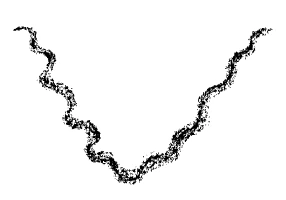
[ 28 ] Ja, das ist ja verkehrt. Man muß der Zeichnung ansehen, wo aufgemacht wird und wo zu ist, wo man nicht aufmachen kann. Ebenso ist es notwendig, daß das Kind wird unterscheiden lernen müssen, daß etwas, was um den Hals genommen wird, wenn es mit Bändchen benäht wird, so sein muß, daß das nach unten weiter wird und nach oben schmäler. Wenn ein Gürtel gemacht wird, so muß man es dem gleich ansehen, daß er sich nach beiden Seiten zugleich öffnet, daß in der Mitte die Zeichnung am breitesten ist. Es ist so, daß die Kinder sich überall in die Formen hineinfinden sollen.
[ 28 ] Yes, that’s wrong. You have to be able to tell from the drawing where it opens and where it closes, and where it cannot be opened. Likewise, it is necessary for the child to learn to distinguish that something worn around the neck, if sewn with ribbons, must be such that it widens toward the bottom and narrows toward the top. When making a belt, it must be immediately apparent that it opens on both sides at the same time, and that the pattern is widest in the middle. The point is that children should be able to grasp these shapes in every context.
[ 29 ] Gerade da kann ungeheuer viel bewirkt werden, und dabei erreichen Sie nur etwas, wenn Sie wirklich nicht auf das Auge hin arbeiten, sondern wenn Sie das im Gefühl erzeugen. Sie müssen das im Gefühl erzeugen, daß das Kind die Zeichnung so haben will, daß es gewissermaßen fühlt: es macht das unten auseinander und es drückt von oben, es strebt von oben nach unten. Man muß das ins Gefühl verwandeln; man muß in die Hand hineinbringen, was auch mit der Hand gearbeitet werden soll. Im Grund genommen ist der Mensch auch dabei durchaus ganz beteiligt mit seinem Wesen, und er denkt mit dem ganzen Leibe. Man muß also durchaus versuchen, daß da die Dinge gefühlt werden. Im Handarbeitsunterricht muß auf das Gefühl hingearbeitet werden. Es muß gewissermaßen das Kind, wenn es eine Ecke sticken soll, das Gefühl haben: Die Ecke muß so gestickt werden, daß ich, wenn ich dahinterfahre, nicht durch kann. - Wenn es anders ist, wenn man durch kann, dann muß dazu etwas gehören, dem man eben ansieht: da kann man durch. So muß es schon gemacht werden. Da kann der Handarbeitslehrer schon sagen: Ich mache die Sache so, indem ich gerade an der geistigen Betätigung des Kindes ganz besonders betätigt bin. Es braucht sich niemand durch irgendeine Partie des Unterrichtes zurückgesetzt fühlen.
[ 29 ] That is precisely where an immense amount can be achieved, and you will only succeed if you do not simply work with your eyes, but rather create it through feeling. You must create this through feeling, so that the child wants the drawing in such a way that, in a sense, they feel: it’s pulling apart from below and pushing down from above; it’s striving from above toward below. You must transform this into feeling; you must bring into the hand what is to be worked with the hand. Essentially, the person is fully engaged in this process with their whole being, and they think with their entire body. So one must definitely strive to ensure that these things are felt. In handicrafts class, the focus must be on developing this sense of feeling. In a sense, when a child is to embroider a corner, they must have the feeling: “This corner must be embroidered in such a way that when I try to go through it, I cannot pass through.” - If it’s different—if one can pass through—then there must be something that makes it obvious at a glance: “You can pass through here.” That’s how it must be done. Here, the handicrafts teacher can say: “I approach this task by focusing particularly on the child’s mental activity.” No one needs to feel sidelined by any part of the lesson.