

Fundamental Spiritual and Soul Forces
in the Art of Education
Spiritual Values in Education and Social Life
GA 305
21 August 1922, Oxford
Translate the original German text into any language:
Versions Available:
Fundamental Spiritual and Soul Forces in the Art of Education, tr. SOL
5. Die Erziehung der jüngeren Kinder: Der Lehrer als Erziehungskünstler I
5. The Education of Young Children: The Teacher as an Educator I
[ 1 ] Wie sich der Zahnwechsel beim Kinde um das 7. Jahr herum allmählich vollzieht, so ist das auch in einem noch höheren Grade mit dem großen Umschwung im körperlichen, seelischen und geistigen Organismus, von dem ich in dieser Darstellung gesprochen habe. Und daher muß auch bei Erziehung und Unterricht darauf Rücksicht genommen werden, daß das Kind aus einem nachahmenden Wesen allmählich ein solches wird, das auf die Autorität des Erziehenden, des Unterrichtenden hin sich heranbildet. Deshalb darf auch nicht ein schroffer Übergang gemacht werden in der Behandlung des Kindes um das 7. Jahr herum, also in dem Lebensalter, in dem man es zum Erziehen in die elementare Schule bekommt. Das weiter hier über den Anfang der Erziehung in der Elementarschule Gesagte muß in diesem Sinne aufgefaßt werden.
[ 1 ] Just as a child’s teeth gradually fall out and are replaced around the age of 7, so too—to an even greater degree—does the major transformation in the physical, emotional, and spiritual organism that I have discussed in this presentation. And therefore, in education and instruction, it must also be taken into account that the child gradually transforms from an imitative being into one who develops in accordance with the authority of the educator or teacher. For this reason, there must not be an abrupt transition in the way the child is treated around the age of 7—that is, at the age when the child enters elementary school for education. What is said here further on regarding the beginning of education in elementary school must be understood in this sense.
[ 2 ] In der Erziehungskunst, von der hier die Rede ist, soll alles darauf angelegt sein, dasjenige in seiner Entwickelung zu pflegen, was im Kinde veranlagt ist. Daher muß aller Unterricht in den Dienst der Erziehung gestellt sein. Eigentlich erzieht man, und den Unterricht benützt man gewissermaßen, um zu erziehen.
[ 2 ] In the art of education discussed here, everything should be geared toward nurturing, as it develops, the innate potential within the child. Therefore, all instruction must be placed at the service of education. In essence, one educates, and instruction is, so to speak, used as a means to educate.
[ 3 ] Das hier vertretene Erziehungsprinzip erfordert, daß das Kind im richtigen Lebensalter die richtige Orientierung im Leben ausbildet. Allein das ist nur in befriedigender Weise möglich, wenn man das Kind nicht von vornherein zu etwas Unnatürlichem in seiner Betätigung veranlaßt.
[ 3 ] The educational principle advocated here requires that the child develop the proper sense of direction in life at the appropriate age. However, this is only possible in a satisfactory manner if the child is not, from the outset, led to engage in activities that are unnatural to him or her.
[ 4 ] Es ist aber in einem gewissen Sinne etwas durchaus Unnatürliches, wenn man in der gegenwärtigen Zeit auf einer vorgerückten Zivilisationsstufe der Menschheit das Kind in seinem 6. oder 7. Lebensjahre unmittelbar veranlaßt, die Formen der Lesezeichen und des Schreibens nachzubilden, die üblich sind.
[ 4 ] However, in a certain sense, it is quite unnatural in this day and age—at this advanced stage of human civilization—to immediately require a child in his or her sixth or seventh year of life to imitate the conventional forms of reading and writing.
[ 5 ] Wenn man dasjenige in Betracht zieht, was man heute als Buchstaben hat für das Lesen und Schreiben, so muß man sich sagen, daß kein Zusammenhang besteht zwischen demjenigen, was das Kind in seinem 7. Jahre aus seiner Veranlagung heraus gestalten will, und diesen Buchstaben. Man bedenke, daß die Menschheit, als sie angefangen hat zu schreiben, sich malerischer Zeichen bedient hat, die eine Sache oder einen Vorgang der Außenwelt nachahmten; oder es wurde aus dem Willen heraus geschrieben so, daß die Schriftformen Willensvorgänge zum Ausdruck brachten, wie zum Beispiel bei der Keilschrift. Aus dem, was als Bilderschrift entstanden ist, entwickelten sich erst die ganz abstrakten Buchstabenformen, auf die heute das Auge geheftet wird oder die aus der schreibenden Hand heraus sich formen.
[ 5 ] When one considers the letters we use today for reading and writing, one must conclude that there is no connection between what a child, driven by his or her natural inclination, wants to create at the age of seven and these letters. Consider that when humanity first began to write, it used pictorial symbols that imitated an object or an event in the external world; or writing was done out of volition, such that the written forms expressed volitional processes, as in cuneiform, for example. It was only from what emerged as pictographic writing that the entirely abstract letter forms developed—the ones that catch the eye today or that take shape as they flow from the writing hand.
[ 6 ] Bringen wir dem ganz jungen Kinde diese Buchstaben bei, so fügen wir ihm etwas ganz Fremdes zu, was gar nicht seiner Natur entspricht. Wir müssen uns aber klar sein darüber, was das bedeutet, wenn wir etwas Fremdes in dasKind, in den ganzen kindlichen Organismus einfach hineinschieben. Es ist so, wie wenn wir das Kind frühzeitig daran gewöhnen würden, ganz enge Kleider zu tragen, die ihm nicht passen, und die dann seinen Organismus ruinieren. Heute, wo man, ich möchte sagen, nur oberflächlich beobachtet, sieht man eben nicht ein, was im späteren Alter an Hemmungen im eigenen Organismus da ist, einfach aus dem Grunde, weil man in falscher Weise mit dem Lesen und Schreiben an das Kind herangekommen ist.
[ 6 ] If we teach these letters to a very young child, we are imposing something completely foreign on them, something that does not correspond at all to their nature. But we must be clear about what it means when we simply force something foreign into the child, into the child’s entire organism. It is as if we were to accustom the child at an early age to wearing clothes that are far too tight, that do not fit, and that then ruin the child’s organism. Today, when people—I would say—observe only superficially, they simply do not realize what inhibitions will arise in the child’s own organism later in life, simply because the child was approached in the wrong way when it came to reading and writing.
[ 7 ] Erziehungskunst, die auf Menschenerkenntnis beruht, geht so vor, daß sie wirklich alles aus dem Kinde heraus entwickelt, nicht bloß sagt, es soll die Individualität entwickelt werden, sondern es auch wirklich tut. Das erreicht man dadurch, daß man zunächst überhaupt nicht vom Lesen ausgeht. Das Kind geht auch vom Zappeln aus, von Willensäußerungen, nicht vom Anschauen. Das Anschauen kommt erst später. Und so ist es nötig, nicht vom Lesen auszugehen, sondern vom Schreiben, aber das Schreiben auch so zu betreiben, daß es aus der ganzen Menschenwesenheit als etwas Selbstverständliches herauskommt. Daher beginnen wir mit dem Schreibunterricht, nicht mit dem Leseunterricht, und versuchen allmählich dasjenige, was das Kind in der Nachahmung selber entwickeln will durch seinen Willen, durch seine Hände, auch hinzuleiten zum Schreiben.
[ 7 ] The art of education, based on an understanding of human nature, proceeds in such a way that it truly brings out everything in the child; it does not merely say that the child’s individuality should be developed, but actually does so. This is achieved by not starting with reading at all. The child also begins with fidgeting and expressions of will, not with looking. Looking comes only later. And so it is necessary not to start with reading, but with writing—though writing must be approached in such a way that it emerges naturally from the child’s entire being. That is why we begin with writing instruction, not reading instruction, and gradually guide the child toward writing through what the child itself wishes to develop through imitation—using its own will and hands.
[ 8 ] Ich möchte es Ihnen anschaulich machen an einem Beispiel. Denken Sie sich, wir veranlassen das Kind dazu, das Wort «Fisch» zu sagen, und indem wir es dazu veranlassen, das Wort zu sagen, versuchen wir, mit ganz einfachen Linien die Form des Fisches ihm vor Augen zu führen, etwa so (es wird gezeichnet), daß wir in einfacher Weise so etwas dem Kinde vormalen, was die Form des Fisches imitiert, und dann auch versuchen, das von dem Kinde nachmalen zu lassen. Und dann bringen wir das Kind dazu, zu empfinden vom Wort «Fisch», das F. Vom «Fisch» gehen wir über zu F, und wir haben aus der Form des Fisches die Möglichkeit, nach und nach das F zu gestalten. Wir lassen also künstlerisch aus demjenigen, was aus der Anschauung in den Willen hineingeht, die Buchstabenform entstehen.
[ 8 ] I’d like to illustrate this with an example. Imagine we prompt the child to say the word “fish,” and as we prompt the child to say the word, we try to bring the shape of the fish to the child’s mind using very simple lines, something like this (a drawing is made), so that we sketch something for the child in a simple way that imitates the shape of the fish, and then we also try to have the child copy it. And then we lead the child to perceive the letter “F” from the word “fish.” From “fish” we move on to “F,” and the shape of the fish gives us the opportunity to gradually form the letter “F.” So we allow the letter form to emerge artistically from what passes from perception into the will.
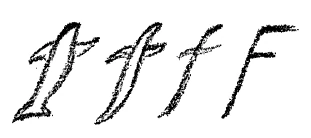
[ 9 ] Auf diese Weise bringen wir nicht ein fremdes F; das ist ein Dämon für das Kind, das ist etwas, was als ganz Fremdes in seinen Leib hineingestopft wird; wir bringen dasjenige, was das Kind auf dem Markte gesehen hat, aus dem Kinde heraus. Wir verwandeln das nach und nach in das F.
[ 9 ] In this way, we do not introduce an external “F”; that would be a demon to the child—something completely foreign forced into its body. Instead, we draw out from the child what it has seen at the market. We gradually transform that into the “F.”
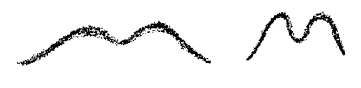
[ 10 ] Wir kommen dadurch nahe der Entstehung der Schrift, denn so, in ähnlicher Weise, ist auch die Schrift entstanden. Aber es ist nicht nötig, daß der Lehrer antiquarische Studien macht und gleichsam wiederholt dasjenige, wie die Bilderschrift entstanden ist, um nun wiederum das dem Kinde beizubringen. Das, um was es sich handelt, ist, eine lebendige Phantasie walten zu lassen, und das heute noch entstehen zu lassen, was vom Gegenstand, vom unmittelbaren Leben in die Buchstabenformen hineinführt. Sie werden da jede mögliche Gelegenheit haben, dem Kinde Buchstabenformen aus dem Leben heraus abzuleiten. Lassen Sie es M sprechen, lassen Sie es fühlen, wie das M auf den Lippen vibriert, und versuchen Sie ihm dann die Form der Lippe als Form beizubringen, dann werden Sie von dem M, das auf der Lippe vibriert, übergehen können nach und nach zu dem ZeichenM. Und so werden Sie, wenn Sie nicht intellektualistisch, sondern spirituell, imaginativ vorzugehen versuchen, alles aus dem Kinde herausholen können, was nach und nach dazu führt, daß das Kind schreiben lernt. Es lernt langsamer schreiben, als es heute oftmals schreiben lernt. Aber wenn dann die Eltern kommen und sagen: Mein Kind ist acht Jahre alt, neun Jahre alt, und kann noch nicht gut schreiben! — so müssen wir ihnen immer sagen: Alles dasjenige, was langsamer gelernt wird in einem gewissen Lebensalter, das lebt sich sicherer und gesunder in den Lebensorganismus hinein, als was hineingepfropft wird.
[ 10 ] This brings us close to the origins of writing, for writing, too, arose in a similar way. But it is not necessary for the teacher to engage in antiquarian studies and, as it were, repeat the story of how pictographic writing came into being in order to teach this to the child. What matters is to give free rein to a lively imagination and to allow what leads from the object, from immediate life, into the shapes of the letters to emerge even today. You will have every possible opportunity there to derive letter shapes for the child from life itself. Let the child say “M,” let them feel how the “M” vibrates on their lips, and then try to teach them the shape of the lips as a form; then you will be able to move gradually from the “M” that vibrates on the lips to the written letter “M.” And so, if you try to proceed not in an intellectualistic way but spiritually and imaginatively, you will be able to draw out of the child everything that gradually leads to the child learning to write. The child learns to write more slowly than is often the case today. But when parents come and say, “My child is eight or nine years old and still can’t write very well!”—we must always tell them: Everything that is learned more slowly at a certain age becomes more firmly and healthily integrated into the child’s organism than what is forced upon them.
[ 11 ] Wichtig ist dabei, daß auf diese Weise durchaus auch die Individualität des Lehrers zum Ausdrucke kommt. Da wir in der Waldorfschule schon viele Schüler haben, mußten wir Parallelklassen errichten, wir haben zwei 1. Klassen, zwei 2. und so weiter. Sie können, wenn Sie in die eine 1. Klasse kommen, sehen, wie da der Schreibunterricht aus dem Malen, aus dem Zeichnen herausgeholt wird, Sie können da sehen, wie die Lehrkraft das in einer gewissen Weise macht. Sagen wir, in der einen Klasse finden Sie, daß das gerade so gemacht wird, wie hier jetzt gezeigt worden ist. Sie gehen in die andere Klasse, in die 1. Klasse B hinein; Sie finden eine andere Lehrkraft; da wird derselbe Unterricht erteilt, Sie sehen aber etwas ganz anderes. Sie sehen, daß da die Lehrkraft die Kinder in einer Art eurythmischer Bewegung herumlaufen läßt, aus der eigenen Körperbewegung heraus die Form entstehen läßt. Und dasjenige, was das Kind abläuft, das wird dann als Buchstabe fixiert. Und so ist eine dritte Art, eine vierte Art und so weiter möglich. Sie können denselben Unterricht in den verschiedenen Parallelklassen in der verschiedensten Weise erteilt sehen. Warum? Ja, weil es nicht gleichgültig ist, ob eine Lehrkraft mit diesem "Temperament und eine andere Lehrkraft mit einem anderen Temperament den Unterricht erteilt. Nur dann, wenn der richtige Kontakt ist zwischen der Lehrkraft und der ganzen Klasse, kann der Unterricht heilsam sein. Daher muß jede Lehrkraft so, wie es ihr entspricht, den Unterricht erteilen. Aber so, wie das Leben in den verschiedensten Formen erscheinen kann, so kann auch ein Unterricht, eine Erziehung, die auf das Leben gebaut ist, in den verschiedensten Formen erscheinen.
[ 11 ] It is important to note that this approach also allows the teacher’s individuality to come to the fore. Since we already have many students at the Waldorf School, we’ve had to establish parallel classes; we have two first-grade classes, two second-grade classes, and so on. If you visit one of the first-grade classes, you can see how writing instruction is derived from painting and drawing; you can observe how the teacher approaches this in a particular way. Let’s say, in one class you find that it is done exactly as has just been demonstrated here. You go into the other class, first-grade class B; you find a different teacher; the same lesson is being taught there, but you see something entirely different. You see that there the teacher has the children running around in a kind of eurythmic movement, allowing the form to emerge from their own bodily movement. And whatever the child traces out is then fixed as a letter. And in this way, a third method, a fourth method, and so on are possible. You can see the same lesson being taught in very different ways in the various parallel classes. Why? Well, because it matters whether one teacher with this “temperament” and another teacher with a different temperament are teaching the lesson. Only when there is the right connection between the teacher and the entire class can the lesson be beneficial. Therefore, every teacher must teach in a way that suits them. But just as life can take on the most diverse forms, so too can a lesson—an education based on life—take on the most diverse forms.
[ 12 ] Wenn man pädagogische Grundsätze aufstellt, dann verlangt man, sie sollen befolgt werden. Man schreibt sie in ein Buch. Und derjenige ist ein guter Lehrer, der diese Grundsätze: 1, 2, 3 und so weiter befolgt. Nun, ich bin ganz davon überzeugt, wenn sich heute 12 oder sonst eine Anzahl von Menschen eben zusammensetzen — die Menschen sind heute alle furchtbar gescheit und klug -, sie bringen das wunderbarste Programm zusammen über dasjenige, was in der Erziehung geschehen soll: 1.,2.,3. und so weiter. Ich spreche nicht Hohn aus, ich meine das wirklich; man kann in abstrakten Grundsätzen das Wunderbarste ausdenken. Aber ob man dieses, was man ausgedacht hat, auch verwirklichen kann, das ist eine ganz andere Frage. Da kommt es auf das Leben an. Und beim Leben - ich frage Sie, in Ihnen allen ist Leben, Sie sind alle Menschen, aber Sie sehen doch alle anders aus. Keiner gleicht aufs Haar dem anderen. Das Leben vermannigfaltigt sich in der mannigfaltigsten Gestalt. Jeder trägt ein anderes Antlitz. Wenn man abstrakte Grundsätze aufstellt, geht man in die Schulklasse hinein, und überall möchte man wünschen, daß dasselbe gemacht werde. Wenn man aus dem Leben heraus Grundsätze aufstellt, weiß man, wie das Leben mannigfaltig ist, wie sich das eine in der allerverschiedensten Weise verwirklicht. Denn selbst die Neger müssen wir als Menschen ansehen, und in ihnen ist ja die menschliche Gestalt in einer ganz anderen Weise verwirklicht als in uns, zum Beispiel. Und so handelt es sich darum, daß jede Art von Pedanterie, aber auch jede Art von Schematismus ferngehalten werden muß, wenn Erziehungskunst als etwas Lebendiges aufgefaßt wird, was eben dadurch unterstützt wird, daß die Erziehungskunst zu einer wirklichen Kunst gemacht wird, der Lehrer zu einem Künstler gemacht wird. So sind wir in der Waldorfschule in der Lage, aus dem Künstlerischen heraus das Schreiben zu lehren. Dann läßt sich das Lesen nachher wie von selbst lernen. Es kommt etwas später als gewöhnlich, aber es läßt sich wie von selbst lernen.
[ 12 ] When you establish educational principles, you expect them to be followed. You write them down in a book. And a good teacher is one who follows these principles: 1, 2, 3, and so on. Well, I am completely convinced that if 12 people—or any number of people—were to get together today—people today are all incredibly smart and clever—they would come up with the most wonderful program for what should happen in education: 1, 2, 3, and so on. I’m not being sarcastic; I really mean it. You can come up with the most wonderful ideas in abstract principles. But whether you can actually put what you’ve come up with into practice is an entirely different question. That’s where life comes into play. And when it comes to life—I ask you: there is life within all of you; you are all human beings, yet you all look different. No two people are exactly alike. Life manifests itself in the most diverse forms. Everyone has a different face. When you establish abstract principles, you walk into a classroom, and you’d like to see the same thing done everywhere. When one establishes principles based on life itself, one knows how diverse life is, how each individual manifests itself in the most varied ways. For we must regard even Black people as human beings, and in them, after all, the human form is realized in a completely different way than in us, for example. And so the point is that every kind of pedantry, but also every kind of schematism, must be kept at bay if the art of education is to be understood as something living—a concept supported precisely by the fact that the art of education is made into a true art, and the teacher is made into an artist. Thus, in the Waldorf school, we are in a position to teach writing through artistic means. Then reading can be learned almost effortlessly afterward. It comes a little later than usual, but it can be learned almost effortlessly.
[ 13 ] Ist man unmittelbar so darinnen — und ich werde in den nächsten Tagen etwas von den Malereien unserer Kinder in der Waldorfschule zu zeigen haben -, ist man so darinnen, einerseits das bildnerische Element an das Kind heranzubringen, so handelt es sich für uns darum, nun auch möglichst früh das musikalische Element im Unterricht zu verwerten. Denn das musikalische Element, namentlich wenn weniger auf das Inhaltliche der Musik, als auf Rhythmus und Takt, und das Erfühlen von Rhythmus und Takt gesehen wird, wird eine gute Grundlage für die Stärke, für die Energie des Willens geben, namentlich wenn es im Beginne der Elementarschule schon in der richtigen Weise gepflegt wird. Und ich habe in der Einleitung zu der Eurythmievorstellung ja gesagt, daß wir auch die Eurythmie im Kindesunterricht einführen. Davon, gerade von der Eurythmie im Unterrichte, werde ich noch in einem späteren Vortrage zu sprechen haben. Zunächst wollte ich dieses mehr im einzelnen zeigen, wie der erste Unterricht als Erziehung herausgeholt wird auf künstlerische Weise, aus der Natur des Menschen selbst.
[ 13 ] Once we are fully immersed in this—and in the coming days I will have some of our children’s paintings from the Waldorf School to show—once we are so deeply engaged in introducing the visual arts to the child, our task is then to incorporate the musical element into the curriculum as early as possible. For the musical element—especially when the focus is less on the content of the music and more on rhythm and meter, and on developing a feel for rhythm and meter—provides a good foundation for strength and for the energy of the will, particularly if it is cultivated in the right way right from the start of elementary school. And as I mentioned in the introduction to the eurythmy demonstration, we also introduce eurythmy into children’s education. I will speak more about this—specifically about eurythmy in the classroom—in a later lecture. For now, I would like to illustrate in more detail how the first lessons are drawn out as education in an artistic way, from the very nature of the human being.
[ 14 ] Wir müssen berücksichtigen, daß das Kind in der ersten Zeit seiner Lebensepoche zwischen dem Zahnwechsel und der Geschlechtsreife vor allen Dingen noch nicht unterscheiden kann zwischen dem, was innerlich Mensch ist und demjenigen, was äußerlich Umgebung, Natur ist. Beides wächst noch für das Kind bis zum 9., 10. Jahre in eines zusammen. Das Kind fühlt innerlich dieses oder jenes. Es schaut äußerlich, sagen wir, einen Vorgang, die Sonne aufgehen oder dergleichen. Dieselben Kräfte, die es in sich vermutet, wenn ihm Unlust, Schmerz bereitet wird, vermutet es auch in Sonne und Mond, in Baum und Pflanze. Wir sollen dem Kinde das nicht ausreden. Wir sollen uns hineinversetzen in das kindliche Lebensalter, und ebenso in der Erziehung vor dem 9. Jahre alles behandeln, wie wenn eine Grenze noch nicht gezogen wäre zwischen dem Menschen-Inneren und dem Natur-Außen. Das können wir nur, wenn wir den Unterricht möglichst bildhaft gestalten, wenn wir die Pflanzen menschlich handeln lassen, sie mit der anderen Pflanze menschlich sprechen lassen, wenn wir die Sonne mit dem Mond sprechen lassen, wenn wir überall hinein das Menschliche versetzen. Man hat heute eine wahre Scheu vor dem sogenannten Anthropomorphismus. Aber dasjenige Kind, das den Anthropomorphismus in seinem Verhältnis zu der Umwelt nicht erlebt hat, dem fehlt ein Teil vom Menschsein im späteren Alter, und der Lehrer muß eine Neigung haben, sich nun auch so in die ganze Umgebung lebendig geistig-seelisch hineinzuversetzen, daß das Kind durchaus mitgehen kann vermöge dessen, was in ihm vorhanden ist.
[ 14 ] We must take into account that, during the early phase of this stage of life—between the change of teeth and sexual maturity—the child is, above all, still unable to distinguish between what is inwardly human and what is outwardly the environment or nature. For the child, both of these merge into one until the age of 9 or 10. The child feels this or that inwardly. Outwardly, let us say, the child observes a phenomenon—the sun rising or something similar. The same forces that the child senses within itself when it experiences displeasure or pain, it also senses in the sun and moon, in trees and plants. We should not talk the child out of this. We should put ourselves in the child’s shoes and, in education before the age of nine, treat everything as if no boundary had yet been drawn between the inner world of the human being and the outer world of nature. We can do this only if we make our lessons as vivid as possible, if we let the plants act in a human way, let them speak to one another as humans would, if we let the sun speak to the moon, and if we infuse everything with a human quality. Today there is a genuine aversion to so-called anthropomorphism. But the child who has not experienced anthropomorphism in their relationship to the environment will lack a part of their humanity in later life, and the teacher must have a disposition to immerse themselves so vividly, spiritually, and emotionally in the entire environment that the child can fully follow along by virtue of what is already present within them.
[ 15 ] Das allerdings setzt voraus, daß für den Lehrer ungeheuer viel geschehen ist, bevor er die Klasse betritt. Auf die Vorbereitung, die der Lehrer zu leisten hat, wird große Anforderung gestellt unter dem Einfluß des Erziehungsprinzipes, von dem wir gesprochen haben. Man muß möglichst viel vorher tun als Lehrer, um nachher möglichst die Zeit ausnützen zu können, in der man in der Klasse ist. Das lernt sich auch für den Lehrer nur langsam und allmählich. Und nur durch dieses langsame und allmähliche Lernen gelangt man dahin, die Individualität des Kindes wirklich zu berücksichtigen.
[ 15 ] This, however, presupposes that the teacher has done an enormous amount of work before entering the classroom. The preparation required of the teacher is very demanding under the influence of the educational principle we have discussed. As a teacher, one must do as much as possible in advance in order to make the best possible use of the time spent in the classroom. This is something that even teachers learn only slowly and gradually. And it is only through this slow and gradual learning that one is able to truly take the child’s individuality into account.
[ 16 ] Vielleicht darf ich dafür ein persönliches Beispiel anführen, Ich habe mich ja, bevor ich mich mit der Waldorfschule zu befassen hatte, lange Zeit früher mit allerlei Erziehungen befassen müssen. So wurde mir einmal, als ich selber noch jung war, ein Knabe zur Erziehung übertragen, der gegen sein 11. Jahr hin im Grunde genommen noch ganz unentwickelt war. Er hatte noch gar nichts gelernt. Als Probe für dasjenige, was er gelernt hatte, wurde mir ein Schulheft gegeben, in dem gezeigt wurde, was der Knabe beim letzten Examen, zu dem man ihn getrieben hatte, geleistet hatte. Darinnen war nur zu sehen ein großes Loch, das er mit dem Radiergummi ausradiert hatte, sonst nichts. Dabei hatte der Knabe wirklich pathologische Lebensgewohnheiten. Die ganze Familie, die nicht darauf angelegt war, den Knaben dem Handwerk zu übergeben — das mag ein Vorurteil sein, aber mit diesen Vorurteilen hat man ja natürlich im sozialen Leben zu rechnen -, die ganze Familie war unglücklich. Der Hausarzt war sich klar, aus dem Knaben könne nichts werden. Nun, ich bekam vier Kinder in dieser Familie zu erziehen. Die übrigen waren normal — diesen Knaben sollte ich miterziehen. Ich sagte: Ich werde den Versuch machen. Versprechen, daß dies oder jenes geschehe, kann man in einem solchen Falle ja nicht, aber es wird alles getan werden, was getan werden kann, nur muß man mir die Erziehung ganz vollständig in Freiheit überlassen. Allein die Mutter hatte ein Verständnis für diese Freiheit, die ich beanspruchte, so daß sogar der ganze Unterricht durchgekämpft werden mußte gegen die übrige Familie, außer der Mutter. Ich bekam aber schließlich den Unterricht. Und ich hatte nun nötig, möglichst wenig Zeit unmittelbar auf den Unterricht bei dem Knaben zu verwenden. Sagen wir, wenn ich etwa eine halbe Stunde unterrichtlich mich mit dem Knaben beschäftigen sollte, mußte ich mich drei Stunden vorher beschäftigen, um möglichst ökonomisch viel in den Unterricht hineinzuschieben. Ich mußte aber außerdem genau berechnen, in welche Tageszeit der Musikunterricht zum Beispiel geschoben wurde. Wenn das Kind überanstrengt wurde, wurde es gleich blaß, und man sah, wie seine Gesundheit herunterging. Aber, indem man die ganze pathologische Eigentümlichkeit des Kindes verstand, indem man wußte, was da auf die Hydrocephalie zu schieben war, war es möglich, nicht nur das Seelische des Kindes zu fördern, sondern es so weit vorwärts zu bringen, daß der Knabe nach einem und einem halben Jahre, nachdem er vorher nichts anderes gekonnt hatte, als ein großes Loch ausradieren in seinem Schulheft, das Gymnasium besuchen konnte. Und ich konnte ihm noch durch die Gymnasialklassen helfen, konnte ihn verfolgen bis ziemlich zum Ende des Gymnasiums. Unter dem Einflusse dieser Erziehung, dadurch also, daß man spirituell die Sache leitete, wurde der Kopf kleiner. Ich weiß, daß der Arzt vielleicht sagen wird: Der Kopf wäre auch so kleiner geworden. Gewiß, aber im Kleinerwerden mußte das Richtige seelisch und geistig geschehen. Der Betreffende ist dann ein ganz tüchtiger Arzt geworden. Er ist während des Krieges dann in seiner ärztlichen Tätigkeit gestorben, aber erst, nachdem er schon das 40. Jahr nahezu erreicht hatte.
[ 16 ] Perhaps I may cite a personal example to illustrate this. Before I became involved with the Waldorf School, I had, for a long time, had to deal with all sorts of educational approaches. For instance, when I was still young myself, I was once entrusted with the upbringing of a boy who, approaching his 11th year, was essentially still completely undeveloped. He hadn’t learned anything at all. As proof of what he had learned, I was given a school notebook showing what the boy had accomplished on the last exam he had been forced to take. All that could be seen in it was a large hole that he had erased with an eraser—nothing else. Moreover, the boy really did have pathological lifestyle habits. The entire family—which was not inclined to send the boy into a trade (that may be a prejudice, but such prejudices are, of course, to be expected in social life)—the entire family was unhappy. The family doctor was certain the boy would amount to nothing. Well, I was tasked with educating four children in this family. The others were normal—I was to help raise this boy as well. I said, “I’ll give it a try.” One can’t promise that this or that will happen in such a case, but everything that can be done will be done; I just need to be given complete freedom in his upbringing. Only the mother understood the freedom I was asking for, so that even the entire teaching process had to be fought for against the rest of the family, except for the mother. But I eventually got the teaching assignment. And I now needed to spend as little time as possible directly on teaching the boy. Let’s say that if I were to spend about half an hour teaching the boy, I had to prepare for three hours beforehand in order to pack as much as possible into the lesson as efficiently as possible. But I also had to calculate precisely at what time of day the music lessons, for example, would be scheduled. If the child was overworked, he would immediately turn pale, and one could see his health deteriorating. But by understanding the child’s entire pathological condition—by knowing what could be attributed to the hydrocephalus—it was possible not only to nurture the child’s emotional well-being but also to help him progress to the point where, after a year and a half—having previously been able to do nothing more than erase a large hole in his notebook—he was able to attend high school. And I was able to continue helping him through the high school grades, accompanying him almost to the very end of high school. Under the influence of this education—that is, by guiding the process spiritually—his head grew smaller. I know that a doctor might say: “His head would have grown smaller anyway.” Certainly, but as it grew smaller, the right kind of development had to take place emotionally and spiritually. The young man in question went on to become a very capable doctor. He died while serving as a doctor during the war, but only after he had nearly reached the age of 40.
[ 17 ] Es handelte sich eben da ganz besonders darum, durch eine genügende Vorbereitung für das Erziehen die Ökonomie des Unterrichts zu erreichen. Nun, das muß ein allgemeines Prinzip werden. Das wird innerhalb derjenigen Erziehungskunst angestrebt, von der ich hier sprechen will. Da hat man allerdings nötig, wenn in einem leben soll dasjenige, was dann auf das Kind übergehen soll in einer solchen Beschreibung, daß die ganze Natur lebendig wird, da hat man nötig, zuerst alles, was man vorbringt, so durcharbeitet zu haben, daß man gar keinen Kampf mehr mit dem Stoff hat, daß man alles darauf verwenden kann, durch die Kraft der eigenen Persönlichkeit das zu gestalten, was man an das Kind heranbringt. Und da wird man dann schon von selbst dazu kommen, daß einem aller Unterrichtsstoff bildhaft wird, so daß das Kind sich nicht bloß mit seinem Verstande, sondern mit seinem ganzen Menschen in den Unterrichtsstoff hineinlebt.
[ 17 ] The particular focus there was on achieving efficiency in teaching through adequate preparation for education. Well, that must become a general principle. This is the goal of the art of education I wish to discuss here. To do this, however, it is necessary—if what is to be passed on to the child is to come alive in such a way that the whole of nature comes to life—to have first worked through everything one presents so thoroughly that one no longer struggles with the material at all, so that one can devote all one’s energy to shaping, through the power of one’s own personality, what one brings to the child. And then one will naturally come to the point where all the lesson material becomes vivid and concrete, so that the child immerses themselves in the material not merely with their intellect, but with their whole being.
[ 18 ] Daher gehen wir hauptsächlich aus vom märchenhaften Erzählen, aber auch von erfundenen Erzählungen, die sich auf die Natur beziehen. Wir unterrichten eigentlich zunächst weder Sprache noch irgendeinen anderen Gegenstand, sondern wir lassen einfach die Welt vor dem Kinde bildhaft lebendig werden. Und solch ein Unterricht schließt sich in der besten Weise dann an dasjenige an, was nun auch aus der Bildhaftigkeit heraus zum Schreiben und zum Lesen führt.
[ 18 ] That is why we draw primarily on fairy-tale narratives, but also on fictional stories that relate to nature. In fact, at first we teach neither language nor any other subject; rather, we simply bring the world to life for the child through imagery. And this kind of instruction then ties in perfectly with what ultimately leads, through the power of imagery, to writing and reading.
[ 19 ] So bringen wir das Kind ungefähr zwischen dem 9. und 10. Jahre dazu, daß es sich schreibend ausdrücken kann, daß es auch lesen kann, soviel es heilsam ist für dieses Lebensalter, und wir erreichen damit jenen wichtigen Punkt im Leben des Kindes, auf den ich schon hingedeutet habe, der so zwischen dem 9. und 10. Jahre liegt.
[ 19 ] In this way, we enable the child—somewhere between the ages of 9 and 10—to express themselves in writing and to read to the extent that is beneficial for this age group, and we thereby reach that important point in the child’s life to which I have already alluded, which lies somewhere between the ages of 9 and 10.
[ 20 ] Dieser wichtige Punkt im Leben des Kindes offenbart sich ja auch im Äußeren des Menschen. Da tritt ein merkwürdiger Unterschied, eine merkwürdige Differenzierung zwischen Knaben und Mädchen ein. Ich werde noch davon zu sprechen haben, was das für eine Bedeutung hat in einer Schule, die Knaben und Mädchen untereinander hat, wie das die Waldorfschule hat. Man muß wissen, daß eine wichtige Differenzierung zwischen Knaben und Mädchen eintritt. So gegen das 10. Jahr hin fangen die Mädchen an, verhältnismäßig schneller zu wachsen als die Knaben. Die Knaben bleiben im Wachstum zurück. Die Mädchen überholen die Knaben im Wachstum. Wenn dann die Mädchen und die Knaben geschlechtsreif geworden sind, dann beginnen die Knaben wiederum die Mädchen zu überwachsen. Sie wachsen dann schneller sozusagen gerade in diesem Lebensalter.
[ 20 ] This important stage in a child’s life is also reflected in a person’s outward appearance. A remarkable difference, a remarkable differentiation, begins to emerge between boys and girls. I will have more to say about what this means in a school that has both boys and girls, as the Waldorf School does. It is important to know that a significant differentiation between boys and girls occurs. Around the age of 10, girls begin to grow relatively faster than boys. The boys lag behind in their growth. The girls outgrow the boys. Then, once the girls and boys have reached puberty, the boys begin to outgrow the girls again. They grow faster, so to speak, precisely at this age.
[ 21 ] Zwischen dem 9. und 10. Lebensjahr ist schon in der äußeren Differenzierung zwischen Knaben und Mädchen gezeigt, daß man da an einem wichtigen Lebensabschnitt ankommt. Der drückt sich darinnen aus, daß das Kind überhaupt unterscheiden lernt zwischen sich und der Natur. Vorher gibt es eigentlich gar keine Pflanze, sondern ein Wesen, das grün ist und rote Blumen hat, und in dem ein kleiner Geist drinnen ist, wie in ihm selber ein kleiner Geist drinnen ist. Pflanze, dieses Wesen, bekommt erst einen Sinn für das Kind gegen das 10. Jahr hin. Das muß man ihm nur nachfühlen können. Daher darf man den Unterricht erst gegen dieses Jahr hin so gestalten, daß man wie von einer äußeren Welt von der Umgebung spricht.
[ 21 ] Between the ages of 9 and 10, the outward physical differences between boys and girls already indicate that a child is entering an important stage of life. This is expressed in the fact that the child is learning to distinguish between itself and nature. Before that, there is not really a plant at all, but rather a being that is green and has red flowers, and within which there is a little spirit, just as there is a little spirit within the child itself. The plant—this being—only begins to make sense to the child around the age of 10. One must simply be able to empathize with this. Therefore, it is only toward this age that lessons should be structured in such a way that one speaks of the surroundings as if they were an external world.
[ 22 ] Dann kann man anfangen mit dem, was man gewöhnlich als die Schulgegenstände ansieht, zum Beispiel Pflanzenlehre. Aber gerade an der Pflanzenlehre kann ich veranschaulichen, wie man realistisch im besten Sinne des Wortes beim gestalteten Erziehen vorgehen muß. Wenn wir eine einzelne Pflanze zunächst einem Kinde vorführen, so handeln wir da ganz unnatürlich, denn das ist nichts Ganzes. Eine Pflanze, insbesondere wenn sie ausgerissen ist, ist nichts Ganzes. Die Menschen haben in unserer Zeit des Realismus, des Materialismus, wenig materiellen und naturalistischen Sinn, sonst würden sie das fühlen, was ich eben jetzt gesagt habe. Ist eine Pflanze ein Ganzes? Nein, wenn wir sie ausgerissen haben und hierher legen, so geht sie sehr bald zugrunde. Es ist nicht ihre Natur, ausgerissen zu sein. Sie ist nur etwas in dem Erdboden drinnen, mit dem Erdboden zusammen. Ein Stein ist etwas Ganzes für sich. Den kann ich überall hinlegen, er ist dasselbe. Eine Pflanze kann ich nicht überall hintragen; sie ist nicht mehr dasselbe. Sie ist nur unmittelbar dasjenige, was sie ist, mit dem Stammboden, mit den Kräften zusammen, die aus dem Boden heraussprießen, und mit all den Sonnenkräften, die gerade auf diesen Teil der Erde auffallen, da ist die Pflanze ein Ganzes. Eine Pflanze für sich zu betrachten, ist geradeso absurd, wie wenn wir ein Haar ausreißen und das Haar für sich betrachten, als ob es ein Ding für sich wäre. Das Haar entsteht ja gar nicht anders, als an einem Organismus und kann nur verstanden werden im Zusammenhang mit einem Organismus. Das heißt, man kann bei der Pflanzenlehre nicht ausgehen von der einzelnen Pflanze, namentlich nicht von der Pflanzenwesenheit, sondern von der Landschaft, dem Geographischen, von demjenigen, was die Erde an einem bestimmten Ort ist. Und im Zusammenhang mit der ganzen Erde muß Pflanzliches behandelt werden.
[ 22 ] Then one can begin with what is usually regarded as school subjects, such as botany. But it is precisely through botany that I can illustrate how one must proceed realistically—in the best sense of the word—in structured education. If we first show a child a single plant, we are acting quite unnaturally, for that is not a whole. A plant—especially when it has been pulled up—is not a whole. In our age of realism and materialism, people have little sense of the material and natural world; otherwise, they would feel what I have just said. Is a plant a whole? No, if we have pulled it out of the ground and placed it here, it will perish very soon. It is not in its nature to be uprooted. It is only something within the soil, united with the soil. A stone is a whole in and of itself. I can place it anywhere; it remains the same. I cannot carry a plant just anywhere; it is no longer the same. It is only immediately what it is—together with the soil around its roots, with the forces sprouting from the soil, and with all the solar forces that happen to fall on this particular part of the earth—that is when the plant is a whole. To consider a plant in isolation is just as absurd as if we were to pluck out a hair and consider the hair on its own, as if it were a thing in and of itself. After all, a hair comes into being only as part of an organism and can only be understood in connection with an organism. This means that in the study of plants, one cannot start from the individual plant—and certainly not from the plant’s essence—but rather from the landscape, the geographical context, and what the earth is like in a specific place. And plants must be considered in connection with the entire earth.
[ 23 ] Wenn wir von der Erde sprechen, sprechen wir als Physiker, höchstens noch als Geologen. Wir stellen uns vor: Die Erde ist eine abgeschlossene Totalität von physischen Kräften, mineralischen Kräften, und sie könnte auch existieren, wenn gar keine Pflanze, gar keine Tiere und gar keine Menschen darauf wären. Das ist aber ein Abstraktum. Die Erde, die der Physiker, der Geologe im Auge hat, die ist ein Abstraktum. Die gibt es eigentlich gar nicht in Wirklichkeit. Es gibt nur diejenige Erde, die überall bedeckt ist von Pflanzen. Wir müssen uns bewußt sein, wenn wir eben das Geologische beschreiben, daß wir ein wesenloses Abstraktum nur zur Bequemlichkeit unserer Intelligenz beschreiben. Dem Kinde soll man aber nicht von Anfang an dieses wesenlose Abstraktum beibringen, sondern den Kindern soll man die Erde als einen Organismus lebendig machen. Zunächst natürlich die Landschaft, die das Kind kennt; und dann, wie man ihm ein Tier zeigt, auf dem Haare sind, und man nicht, wenn es gar nichts von dem Tier wüßte, ihm ein Haar verständlich machen könnte, so muß man ihm die Erde als einen lebendigen Organismus auch lebendig machen und dann zeigen, wie auf der Erde die Pflanze west und webt. So also wird man Pflanzenlehre beibringen, indem man die Erde als ein Lebendiges, als einen Organismus ihm vorführt, zunächst das Stück Landschaft, das es kennt. Dadurch hat man natürlich auch ein Abstraktum, denn eine Landschaft ist nicht möglich ohne eine andere auf der Erde; aber man muß sich dann bewußt sein, daß man auch von etwas Mangelhaftem ausgehen muß. Aber trotzdem kann man nach und nach erwecken bei dem Kinde nun wiederum aus der ganzen Bildhaftigkeit heraus dasjenige, was man nötig hat, ihm die Pflanze beizubringen.
[ 23 ] When we speak of the Earth, we speak as physicists—or, at most, as geologists. Let’s create a mental image: The Earth is a self-contained totality of physical forces and mineral forces, and it could exist even if there were no plants, no animals, and no humans on it at all. But that is an abstraction. The Earth that the physicist or geologist has in mind is an abstraction. It does not actually exist in reality. There is only the Earth that is covered everywhere by plants. We must be aware, when we describe geological phenomena, that we are describing an insubstantial abstraction solely for the convenience of our intellect. However, we should not teach children this insubstantial abstraction from the very beginning; rather, we should bring the Earth to life for them as an organism. First, of course, the landscape that the child knows; and then, just as one shows a child an animal with fur—and one could not make the concept of a single hair understandable to the child if it knew nothing at all about the animal—so too must one bring the Earth to life as a living organism and then show how plants grow and thrive on it. Thus, botany is taught by presenting the Earth as a living entity, as an organism—beginning with the part of the landscape the child is familiar with. Of course, this also involves an abstract concept, for one landscape cannot exist without another on Earth; but one must then be aware that one must also start from something incomplete. Nevertheless, one can gradually awaken in the child—once again through the power of imagery—what is necessary to teach them about plants.
[ 24 ] Dadurch bringt man das Kind allmählich heran an die Außenwelt. Es bekommt das Kind ein Gefühl für den Begriff «Objektivität». Es lebt sich in das Irdische hinein. Das erreicht man am besten, wenn man das Kind in dieser natürlichen Art an die Pflanzenwelt heranführt.
[ 24 ] This gradually introduces the child to the outside world. The child develops a sense of the concept of “objectivity.” The child becomes attuned to the earthly realm. This is best achieved by introducing the child to the plant world in this natural way.
[ 25 ] Ganz anders muß es, und zwar etwas später, an die Tierwelt herangeführt werden. Wiederum, die einzelnen Tiere beschreiben, das ist etwas, was ganz unorganisch ist. Denn schließlich, man könnte doch fast sagen: Es ist ein reiner Zufall, daß ein Löwe ein Löwe, ein Kamel ein Kamel ist. Ja, an der Beobachtung des Löwen, wenn man ihn noch so gut abbildet oder sogar in der Menagerie dem Kinde vorführt, hat das Kind doch nur eine Zufallsbeobachtung; ebenso an dem Kamel. Diese Beobachtung hat gar keinen Sinn zunächst, wenn man auf das Lebendige ausgeht. Wie ist es mit dem Tiere? Nun, derjenige, der nun nicht mit abstrakter Intellektualität an das Tier herantritt, sondern mit bildhafter Anschauung, der findet in jedem Tiere ein Stück Mensch. Das eine Tier hat besonders stark die Beine ausgebildet, die beim Menschen dem Ganzen dienen. Das andere Tier hat die Sinnesorgane, ein Sinnesorgan im Extrem ausgebildet. Das eine Tier schnüffelt besonders; das andere Tier ist, wenn es in den Lüften ist, für die Augen besonders veranlagt. Und wenn wir die ganze Tierwelt zusammennehmen, so finden wir in Abstraktionen draußen verteilt als Tierwelt dasjenige, was in der Zusammenfassung den Menschen gibt. Wenn ich alle Tiere synthetisch zusammenfasse, so bekomme ich den Menschen. Irgendeine Eigenschaft, eine Fähigkeitsgruppe des Menschen ist einseitig äußerlich ausgebildet in einer Tierart. Wenn wir den Löwen studieren — wir brauchen das dem Kinde nicht so vorzuführen, wir können es ihm in einfachen Bildern vorführen -, so finden wir, daß insbesondere dasjenige, was im Menschen Brustorgane sind, Herzorgane, einseitig im Löwen ausgebildet ist. In der Kuh ist dasjenige, was im Menschen Verdauungsorgane sind, einseitig ausgebildet, und wenn ich dasjenige betrachte, was zum Beispiel in unserem Blute als weiße Blutkörperchen herumschwimmt, so bin ich auf die einfachsten, primitivsten Tiere gewiesen. Das ganze Tierreich bildet zusammen den Menschen, synthetisch, nicht summiert, aber synthetisch ineinander verwoben.
[ 25 ] Children must be introduced to the animal world in a completely different way—and somewhat later. Again, describing individual animals is something that is entirely disjointed. After all, one could almost say: It is pure chance that a lion is a lion and a camel is a camel. Yes, when observing a lion—no matter how well it is depicted or even presented to the child at the menagerie—the child is still merely making a chance observation; the same goes for the camel. At first, this observation has no meaning at all when viewed from the perspective of living beings. What about animals? Well, anyone who approaches an animal not with abstract intellectuality but with pictorial perception will find a piece of humanity in every animal. One animal has particularly well-developed legs, which in humans serve the whole body. Another animal has its sensory organs—one sensory organ in particular—developed to the extreme. One animal has a particularly keen sense of smell; another, when in flight, is particularly endowed with sight. And when we take the entire animal kingdom as a whole, we find, distributed in abstract forms throughout the animal world, that which, when synthesized, constitutes the human being. When I synthesize all animals, I arrive at the human being. A particular characteristic or group of abilities found in humans is developed in a one-sided, external form in a specific animal species. When we study the lion—we don’t need to demonstrate this to a child in this way; we can illustrate it with simple images—we find that, in particular, what in humans are the chest organs and heart organs are developed in a one-sided way in the lion. In the cow, what in humans are the digestive organs is developed in a one-sided way, and when I consider, for example, what floats around in our blood as white blood cells, I am directed to the simplest, most primitive animals. The entire animal kingdom together forms the human being—synthetically, not as a mere sum, but synthetically interwoven.
[ 26 ] Das ist etwas, was ich durchaus in primitiver, in einfacher Weise vor dem Kinde entwickeln kann. Selbst in sehr lebendiger Form kann ich dem Kinde so etwas bringen, indem ich auf die Eigenschaften des Löwen hinweise, wie sie kalmiert sein müssen, untertauchen müssen in das, was beim Menschen eine Individualität ist. Ja selbst was moralisch und seelisch beim Kamel lebt, kann man so bringen, daß man zeigt, wie das, was im Kamel lebt, untergeordnet sich in die Menschennatur hineinfügt. So daß der Mensch eine Synthese ist von Löwe, Adler, Affe, von Kamel, von Kuh und von allem. Das ganze Tierreich betrachtet man als auseinandergelegte Menschennatur.
[ 26 ] This is something I can certainly present to the child in a primitive, simple way. I can even convey this to the child in a very vivid way by pointing out the characteristics of the lion—how they must be subdued, must be absorbed into what constitutes individuality in human beings. Yes, even what lives in the camel morally and spiritually can be presented in such a way that one shows how what lives in the camel is subordinated and integrated into human nature. So that the human being is a synthesis of the lion, the eagle, the monkey, the camel, the cow, and everything else. The entire animal kingdom is viewed as human nature laid out in its various parts.
[ 27 ] Das ist die andere Seite, die das Kind dann im 11., 12. Jahre in sich aufnimmt. Nachdem es die Pflanzenwelt von sich abgesondert hat, die Empfindung des Objektiven der Pflanzenwelt, das Zusammenhängen der Pflanzenwelt mit der objektiven Erde in seiner Seele hat wirken lassen, lernt es die enge Beziehung der Tierwelt zum Menschen kennen, das Subjektive. Und so wird das Universum auf eine empfindungsgemäße Weise mit dem Menschen wiederum zusammengebracht. Das Unterscheidungsvermögen wird gerade dadurch in der richtigen Weise veranlagt. Das heißt, aus dem Lebendigen der Welt heraus das Kind erziehen.
[ 27 ] This is the other side that the child then takes in during the 11th and 12th years. After separating the plant world from itself—allowing the perception of the plant world’s objectivity and its connection to the objective earth to take effect in its soul—the child comes to know the close relationship between the animal world and human beings: the subjective aspect. And in this way, the universe is once again brought together with the human being in a way that corresponds to the child’s sensibility. It is precisely through this process that the child’s power of discernment is properly developed. In other words, the child is educated out of the living reality of the world.
[ 28 ] Dann werden wir sehen, daß sich dasjenige, das wir immer als Forderungen stellen, wie von selbst ergibt. Man kann lange in der abstrakten Pädagogik fordern: Du sollst das Gedächtnis des Kindes nicht überlasten. Es ist nicht gut, das Gedächtnis des Kindes zu überlasten. Das kann jeder aus der Abstraktion einsehen. Weniger klar sieht man aber ein, was Überlastung des Gedächtnisses bedeutet für das Leben des Menschen: dies, daß man im späteren Leben ihn mit Rheumatismus, Gicht beobachten kann. — Man dehnt das medizinische Beobachten leider nicht über den ganzen Lebenslauf des Menschen aus. Man kann manche Menschen mit Rheumatismus, mit Gicht beobachten, wozu sie gar nicht die Anlage hatten; man hat etwas, was als eine ganz spärliche Anlage vorhanden war, vielleicht nur dadurch heranerzogen, daß man das Gedächtnis viel überlastet hat, daß man zuviel hat erinnern müssen. Aber auch nicht zu wenig darf man das Gedächtnis belasten. Denn wenn man wieder zu wenig das Gedächtnis belastet, dann entstehen sehr leicht, namentlich schon zwischen dem 16. und 24. Jahre, empfindliche Zustände in dem physischen Organismus.
[ 28 ] Then we will see that what we always demand will follow naturally. One can go on for a long time in abstract pedagogy, insisting: “You must not overload the child’s memory. It is not good to overload the child’s memory.” Anyone can see this in the abstract. However, it is less clear what overloading the memory means for a person’s life: namely, that later in life one may observe them suffering from rheumatism or gout. — Unfortunately, medical observation is not extended to cover the entire course of a person’s life. One can observe some people with rheumatism or gout who had no predisposition to these conditions at all; what was present as a very slight predisposition may have been brought on simply by overloading the memory—by having to remember too much. But one must not place too little strain on the memory either. For if one places too little strain on the memory, sensitive conditions can very easily arise in the physical organism, particularly between the ages of 16 and 24.
[ 29 ] Und wie soll man die Waage halten zwischen zuviel und zuwenig an Gedächtnisbelastung? Indem man in der Weise, wie ich es geschildert habe, anschaulich bildhaft erzieht, nimmt sich nämlich das Kind so viel aus dem Unterricht, als es vertragen kann. Es entsteht ein Verhältnis wie zwischen dem Essen und Sattsein. Dadurch bekommt man allerdings verschieden fortgeschrittene Kinder, und man muß mit ihnen wiederum fertig werden, ohne daß man sie immer in dem Unterricht eine Klasse sitzen läßt. Aber man kann eine verhältnismäßig große Klasse vor sich haben, und das Kind ißt nicht mehr geistig, als es vertragen kann, wenn ich so sagen darf, weil der Organismus von selbst dasjenige zurückweist, was es nicht vertragen kann. Man rechnet also auf das Leben, so wie man auch aus dem Leben heraus selber unterrichtet und erzieht.
[ 29 ] And how does one strike a balance between overloading and underloading the memory? By teaching in a vivid, visual way, as I have described, the child absorbs as much from the lesson as it can handle. The relationship is similar to that between eating and feeling full. This does, however, result in children at different levels of advancement, and one must deal with them accordingly without always keeping them in the same grade level. But one can have a relatively large class, and the child does not “eat” more intellectually than it can handle—if I may put it that way—because the organism naturally rejects what it cannot handle. One thus builds upon life, just as one teaches and educates based on life itself.
[ 30 ] Früh ist das Kind bereits veranlagt für die ersten Elemente der Rechenkunst. Aber gerade bei der Rechenkunst kann man beobachten, wie nur allzuleicht ein intellektualistisches Element zu früh in das Kind hineinkommt. Rechnen als solches ist ja keinem Menschen in keinem Lebensalter ganz fremd. Es entwickelt sich aus der menschlichen Natur heraus, und es kann nicht eine solche Fremdheit zwischen den menschlichen Fähigkeiten und den Rechenoperationen eintreten wie zwischen diesen Fähigkeiten und den Buchstaben in einer folgenden Kultur. Aber dennoch, gerade darauf kommt ungeheuer viel an, daß der Rechenunterricht in richtiger Weise an das Kind herangebracht wird. Das kann im Grunde genommen nur derjenige beurteilen, der aus einer gewissen spirituellen Grundlage heraus das gesamte menschliche Leben beobachten kann.
[ 30 ] Even at an early age, a child is already predisposed to the first elements of arithmetic. But it is precisely in the art of arithmetic that one can observe how all too easily an intellectualistic element creeps into the child’s mind too early. Arithmetic as such is, after all, not entirely foreign to any human being at any age. It develops out of human nature, and there cannot be such a disconnect between human abilities and arithmetic operations as there is between these abilities and the letters of a subsequent culture. Nevertheless, it is of immense importance that arithmetic instruction be presented to the child in the proper way. Ultimately, this can only be judged by someone who is able to observe the entirety of human life from a certain spiritual foundation.
[ 31 ] Zwei Dinge liegen logisch scheinbar einander recht fern: Rechenunterricht und moralische Prinzipien. Man rückt gewöhnlich gar nicht den Rechenunterricht an die moralischen Prinzipien heran, weil man keinen logischen Zusammenhang zunächst findet. Aber für den, der nun nicht bloß logisch, sondern lebensvoll betrachtet, für den stellt sich die Sache so, daß das eine Kind, das in der richtigen Weise an das Rechnen herangebracht worden ist, ein ganz anderes moralisches Verantwortungsgefühl im späteren Alter hat, als dasjenige Kind, das nicht in der richtigen Weise an das Rechnen herangebracht worden ist. Und, es wird Ihnen vielleicht außerordentlich paradox erscheinen, aber da ich über Wirklichkeiten spreche, und nicht über dasjenige, was sich unser Zeitalter einbildet, so möchte ich, da die Wahrheit unserem Zeitalter oftmals paradox erscheint, auch nicht zurückschrecken vor solchen Paradoxien. Wenn wir nämlich verstanden hätten als Menschen, in den verflossenen Jahrzehnten die menschliche Seele in der richtigen Weise in den Rechenunterricht tauchen zu lassen, hätten wir heute keinen Bolschewismus im Osten von Europa. Das ist dasjenige, was sich ergibt, was man innerlich sieht: mit welchen Kräften diejenige Fähigkeit, die im Rechnen sich auslebt, sich verbindet mit dem, was auch das Moralische im Menschen ergreift.
[ 31 ] Two things seem, logically speaking, to be quite far apart: math instruction and moral principles. People usually do not even bring math instruction into the discussion of moral principles because, at first glance, they see no logical connection. But for those who look at this not merely logically but with a sense of life, the situation is such that a child who has been introduced to arithmetic in the right way will have a completely different sense of moral responsibility in later life than a child who has not been introduced to arithmetic in the right way. And, it may seem extremely paradoxical to you, but since I am speaking of realities—and not of what our age imagines—I do not wish to shy away from such paradoxes, especially since the truth often appears paradoxical to our age. For if we, as human beings, had understood in past decades how to properly immerse the human soul in arithmetic instruction, we would not have Bolshevism in Eastern Europe today. This is what emerges, what one sees inwardly: the forces through which the ability that finds expression in arithmetic connects with what also stirs the moral nature within the human being.
[ 32 ] Nun werden Sie vielleicht mich noch besser verstehen, wenn ich ein klein wenig das Prinzip des Rechenunterrichts Ihnen darlege. Heute geht doch vielfach das Rechnen davon aus, daß wir zunächst damit beginnen, daß wir eins zum anderen hinzufügen. Allein bedenken Sie, welche fremde Betätigung das für die menschliche Seele ist, daß man eine Erbse zu den anderen hinzufügt, und immer wenn etwas hinzugefügt ist, man wieder einen neuen Namen gibt. Der Übergang von eins zu zwei, dann wiederum zu drei, dieses Zählen ist ja etwas, was ganz wie willkürlich im Menschen als Tätigkeit sich vollzieht. Aber es gibt eine andere Möglichkeit, zu zählen. Wir finden diese Möglichkeit, wenn wir etwas in der menschlichen Kulturgeschichte zurückgehen. Denn ursprünglich wurde gar nicht so gezählt, daß man eine Erbse zu der anderen legte, Einheit zu Einheit hinzulegte, und dadurch etwas Neues entstand, was wenigstens zunächst für das Seelenleben außerordentlich wenig mit dem Vorhergehenden zu tun hat. Aber man zählte etwa in der folgenden Weise. Man sagte sich: Was man im Leben hat, ist immer ein Ganzes, das man als Ganzes aufzufassen hat, und es kann das Verschiedenste eben eine Einheit sein. Wenn ich einen Volkshaufen vor mir habe, so ist er zunächst eine Einheit. Wenn ich einen einzelnen Menschen vor mir habe, ist er auch eine Einheit. Die Einheit ist im Grunde genommen etwas ganz Relatives. Das berücksichtige ich, wenn ich nicht zähle 1, 2, 3, 4 und so fort, sondern wenn ich in der folgenden Weise zähle: und so weiter, wenn ich das Ganze gliedere, weil ich also von der Einheit ausgehe, und in der Einheit als Mannigfaltigkeit die Teile suche. Das ist auch die ursprüngliche Anschauung vom Zählen. Die Einheit war immer das Ganze, und in der Einheit suchte man erst die Zahlen. Man dachte sich nicht die Zahlen entstehend als 1 zu 1 hinzugefügt, sondern man dachte sich die Zahlen alle als in einer Einheit darinnen, aus der Einheit organisch hervorgehend.
[ 32 ] Now you may understand me even better if I explain the principle of arithmetic instruction to you just a little bit. Today, arithmetic is often based on the idea that we begin by adding one thing to another. But just consider what a foreign activity this is for the human soul—adding one pea to the others, and every time something is added, giving it a new name. The transition from one to two, then on to three—this counting is, after all, something that takes place quite arbitrarily as an activity within the human being. But there is another way to count. We find this alternative by looking back a bit in the history of human culture. For originally, people did not count by placing one pea next to another—adding one unit to another—and thereby creating something new that, at least initially, has very little to do with what came before in the life of the soul. Instead, they counted in roughly the following way. People would say to themselves: What one has in life is always a whole that must be understood as a whole, and the most diverse things can indeed constitute a single unit. If I have a crowd of people before me, it is, at first, a single unit. If I have a single person before me, that person is also a single unit. Unity is, in essence, something entirely relative. I take this into account when I do not count 1, 2, 3, 4, and so on, but when I count in the following way: and so on—when I break down the whole, because I thus start from unity and seek the parts within unity as multiplicity. This is also the original conception of counting. Unity has always been the whole, and it was within unity that people first sought the numbers. People did not conceive of numbers as arising through the addition of 1 to 1, but rather imagined all numbers as contained within a single unity, emerging organically from that unity.

[ 33 ] Das, angewendet auf den ganzen Rechenunterricht, gibt das Folgende: Sie werfen, statt daß Sie Erbse zu Erbse hinzulegen, einen Erbsenhaufen dem Kinde hin. (Es wird gezeichnet.) Der Erbsenhaufe ist das Ganze. Von dem geht man aus. Und jetzt bringt man etwa dem Kinde bei: Ich habe den Erbsenhaufen, oder, sagen wir, damit es für das Kind empfindlich anschaulich wird, einen Haufen von Äpfeln und 3 Kinder, vielleicht 3 Kinder von verschiedenem Alter, die verschieden stark zu essen haben, und wir wollen etwas tun, was mit dem Leben zusammenhängt. Was können wir da tun? Nun, wir können das tun, daß wir den Äpfelhaufen in einer gewissen Weise teilen, und daß wir dann den ganzen Haufen als Summe betrachten gleich den einzelnen Teilen, in die wir ihn aufgeteilt haben. Wir haben den Äpfelhaufen dort, und wir sagen: Wir haben 3 Teile, und bringen so dem Kinde bei, daß die Summe gleich ist den 3 Teilen. Summe = 3 Teile. Das heißt, wir gehen bei der Addition nicht von den einzelnen Teilen aus und haben nachher die Summe, sondern wir nehmen zuerst dieSumme und gehen zu den Teilen über. So gehen wir von dem Ganzen aus, und gehen zu den Addenden, zu den Teilen über, um auf diese Weise ein lebendiges Erfassen der Addition zu haben. Denn dasjenige, worauf es in der Addition ankommt, das ist immer die Summe, und die Teile, die Glieder sind dasjenige, was in der Summe in einer gewissen Weise drinnen sein muß.
[ 33 ] Applied to arithmetic instruction as a whole, this yields the following: Instead of placing peas one by one, you present the child with a pile of peas. (A drawing is provided.) The pile of peas represents the whole. This is the starting point. And now, for example, you teach the child: I have the pile of peas—or, let’s say, to make it vividly clear to the child, a pile of apples—and three children, perhaps three children of different ages who have different appetites, and we want to do something related to real life. What can we do here? Well, we can divide the pile of apples in a certain way, and then regard the whole pile as a sum equal to the individual parts into which we have divided it. We have the pile of apples there, and we say: We have three parts, and in this way we teach the child that the total is equal to the three parts. Total = 3 parts. This means that in addition, we do not start with the individual parts and then arrive at the total; rather, we start with the total and move on to the parts. In this way, we start with the whole and move on to the addends, to the parts, in order to gain a vivid understanding of addition. For what matters in addition is always the sum, and the parts—the components—are what must be contained within the sum in a certain way.
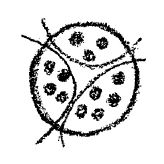
[ 34 ] So ist man in der Lage, das Kind heranzubringen an das Leben in der Art, daß es sich hineinfügt, Ganzheiten zu erfassen, nicht immer von dem Wenigen zu dem Mehr überzugehen. Und das übt einen außerordentlich starken Einfluß auf das ganze Seelenleben des Kindes. Wenn das Kind daran gewöhnt wird, hinzuzufügen, dann entsteht eben jene moralische Anlage, die vorzugsweise ausbildet das nach dem Begehrlichen Hingehen. Wenn von dem Ganzen zu den Teilen übergegangen wird, und wenn entsprechend so auch die Multiplikation ausgebildet wird, so bekommt das Kind die Neigung, nicht das Begehrliche so stark zu entwickeln, sondern es entwickelt dasjenige, was im Sinne der platonischen Weltanschauung genannt werden kann die Besonnenheit, die Mäßigkeit im edelsten Sinne des Wortes. Und es hängt innig zusammen dasjenige, was einem im Moralischen gefällt und mißfällt, mit der Art und Weise, wie man mit den Zahlen umzugehen gelernt hat. Zwischen dem Umgehen mit den Zahlen und den moralischen Ideen, Impulsen, scheint ja zunächst kein logischer Zusammenhang, so wenig, daß derjenige, der nur intellektualistisch denken will, darüber höhnen kann, wenn man davon spricht. Es kann ihm lächerlich vorkommen. Man begreift es auch ganz gut, wenn jemand lachen kann darüber, daß man beim Addieren von der Summe ausgehen soll, und nicht von dem Addenden. Aber wenn man die wirklichen Zusammenhänge im Leben ins Auge faßt, dann weiß man, daß die logisch entferntesten Dinge im wirklichen Dasein einander oftmals sehr nahe stehen.
[ 34 ] In this way, one is able to guide the child toward life in such a way that the child fits into it, grasps the whole, and does not always move from the few to the many. And this exerts an extraordinarily strong influence on the child’s entire inner life. If the child becomes accustomed to adding, then precisely that moral disposition arises which primarily fosters a tendency toward the desirable. When one moves from the whole to the parts, and when multiplication is taught accordingly, the child develops a tendency not to cultivate the desire for the desirable so strongly, but rather to develop what, in the sense of the Platonic worldview, can be called prudence—moderation in the noblest sense of the word. And there is a deep connection between what one finds morally pleasing or displeasing and the way one has learned to handle numbers. At first glance, there seems to be no logical connection between dealing with numbers and moral ideas and impulses—so little, in fact, that anyone who wishes to think purely in intellectual terms might scoff at the very mention of it. It may seem ridiculous to them. It is also quite understandable that someone might laugh at the idea that, when adding, one should start with the sum rather than the addends. But when one considers the real connections in life, one realizes that the things that seem most logically distant are often very close to one another in actual existence.
[ 35 ] So ist dasjenige, was sich herausarbeitet in der kindlichen Seele durch die Behandlung mit den Zahlen, von ungeheurer Wichtigkeit für die Art und Weise, wie das Kind uns dann entgegenkommt, wenn wir ihm moralische Beispiele vor die Seele führen wollen, an denen es Gefallen oder Mißfallen, Antipathie oder Sympathie mit dem Guten oder Bösen entwickeln soll. Wir werden ein Kind vorfinden, das empfänglichen Sinn hat für das Gute, wenn wir das Kind in der entsprechenden Weise behandelt haben, mit den Zahlen umzugehen.
[ 35 ] Thus, what develops in the child’s soul through exposure to numbers is of immense importance for the way the child responds to us when we seek to present moral examples to the child’s soul, through which the child is to develop a sense of approval or disapproval, antipathy or sympathy toward good and evil. We will find a child who has a receptive sensibility for the good if we have taught the child to handle numbers in the appropriate way.