

Educational Practice from the
Perspective of a Spiritual Scientific Knowledge
GA 306
18 April 1923, Dornach
Translate the original German text into any language:
Versions Available:
Educational Practice from the Perspective of a Spiritual Scientific Knowledge, tr. SOL
Vierter Vortrag
Fourth Lecture
[ 1 ] In den vorangehenden Betrachtungen habe ich versucht, hineinzuführen in dasjenige, was hier Menschenerkenntnis genannt wird. Einiges von dem, was noch fehlt, wird sich ja im Laufe der Betrachtungen noch ergeben. Und ich habe gesagt, daß diese Menschenerkenntnis eine solche ist, die nicht zur Theorie bloß führt, sondern die Instinkt des Menschen, allerdings durchseelter, durchgeistigter Instinkt des Menschen werden kann, so daß das in der Tat dann hineinführt auch in die lebendige Erziehungs- und Unterrichtspraxis. Man muß natürlich berücksichtigen, daß ja in Vorträgen gewissermaßen nur in einer Art von Gesten auf dasjenige hingedeutet werden kann, was dann diese Menschenerkenntnis für Unterrichts- und Erziehungspraxis wird. Aber es muß deshalb, weil diese Dinge gerade auf die Praxis abzielen, hier viel mehr in einer Art andeutender Weise gesprochen werden, als das heute sonst beliebt ist. Wenigstens ist man sich ja heute nicht bewußt, wie sehr dasjenige, was man in Worten schildern kann, überhaupt nur eine Art Andeutung bleibt, eine Art von Hinweis auf das, was dann im Leben viel vielseitiger ist, als man es in Worten andeuten kann.
[ 1 ] In the preceding reflections, I have attempted to provide an introduction to what is referred to here as the knowledge of human nature. Some of what is still missing will, of course, become clear as we proceed. And I have said that this understanding of the human being is one that does not merely lead to theory, but can become a human instinct—albeit a more deeply spiritualized, more deeply imbued with spirit human instinct—so that it then indeed leads into the living practice of education and teaching. Of course, one must take into account that in lectures, one can, so to speak, only allude—in a sort of gestural way—to what this understanding of human nature ultimately becomes in the practice of teaching and education. But precisely because these things are aimed at practice, they must be discussed here in a much more suggestive manner than is otherwise customary today. At the very least, people today are not aware of how much what can be described in words remains, in the end, merely a kind of hint—a kind of reference to what is, in life, far more multifaceted than can be suggested in words.
[ 2 ] Wenn wir beachten, wie das Kind im wesentlichen ein nachahmendes Wesen ist, wie das Kind gewissermaßen ein seelisches Sinnesorgan ist, das an seine Umgebung in einer leiblich-religiösen Weise hingegeben ist, so wird man für diesen Lebensabschnitt, also bis zum Zahnwechsel hin, im wesentlichen darauf zu sehen haben, daß alles in der Umgebung des Kindes wirklich so wirkt, daß das Kind es sinngemäß aufnehmen und in sich verarbeiten kann. Es wird daher vor allen Dingen auch darauf gesehen werden müssen, daß das Kind mit dem, was es sinngemäß aus seiner Umgebung sich aneignet, immer das Moralische seelisch-geistig sich mit aneignet; so daß wir bei dem Kinde, das an das Lebensalter des Zahnwechsels herantritt, eigentlich schon in bezug auf die wichtigsten Impulse des Lebens alles wie vorbereitet haben. Wenn man also das Kind ungefähr in der Zeit des Zahnwechsels in die Schule hereinbringt, dann hat man nicht etwa ein leeres, sondern ein vielbeschriebenes Blatt vor sich. Und wir werden ja gerade bei dieser mehr pädagogisch-didaktischen Betrachtung, die wir jetzt werden anzustellen haben, darauf zu sehen haben, wie nicht etwas Ursprüngliches in das Kind hereingebracht werden kann in der Zeit zwischen dem Zahnwechsel und der Geschlechtsreife, sondern wie man überall die Impulse, die in den ersten sieben Lebensjahren in das Kind hereingebracht worden sind, wird erkennen müssen und wie man ihnen diejenige Richtung wird geben müssen, welche das spätere Leben dann von dem Menschen verlangt. Deshalb wird es so stark darauf ankommen, daß gerade der Lehrende und Erziehende in einer feinsinnigen Weise hinzuschauen vermag auf alle Lebensregungen der Kinder. Denn in diesen Lebensregungen steckt schon sehr viel, wenn er die Kinder in die Schule bekommt. Und er muß dann diese Lebensregungen leiten und lenken; er muß sich nicht einfach vorsetzen: das ist richtig, das ist falsch, das sollst du tun, jenes sollst du tun; sondern er ist darauf angewiesen, die Kinder zu erkennen und ihre Lebensregungen weiterzuführen.
[ 2 ] If we consider that the child is essentially an imitative being, that the child is, in a sense, a spiritual sensory organ devoted to its surroundings in a physical-religious way, then for this stage of life, that is, up until the teeth are replaced, we must essentially ensure that everything in the child’s environment truly has an effect that allows the child to take it in meaningfully and process it within itself. Above all, therefore, we must ensure that, along with what the child meaningfully assimilates from its surroundings, it also always assimilates the moral aspect in a soul-spiritual way; so that by the time the child approaches the age of tooth replacement, we have in fact already prepared everything for it with regard to life’s most important impulses. So when a child enters school around the time of tooth replacement, we are faced not with a blank page, but with one that has already been extensively written upon. And it is precisely in this more pedagogical and didactic consideration that we must now undertake we must pay attention not to how something original can be introduced into the child during the period between the change of teeth and puberty, but rather to how we must recognize everywhere the impulses that were instilled in the child during the first seven years of life and how we must give them the direction that the person’s later life will then require. That is why it will be so crucial that the teacher and educator, in particular, be able to observe all the children’s life impulses with great sensitivity. For there is already a great deal contained within these life impulses by the time the children enter school. And they must then guide and direct these life impulses; they must not simply declare: “This is right, that is wrong; you should do this, you should do that.” Rather, they must get to know the children and carry their life impulses forward.
[ 3 ] Natürlich entsteht jetzt jene Frage, die wir in der Waldorfschule nicht praktisch in der Weise haben erproben können wie das, was für das kindliche Alter vom Zahnwechsel bis zur Geschlechtsreife zu tun ist. Die erste Zeit bis zum Zahnwechsel hin, von der Geburt ab, ist ja gewiß die allerwichtigste Erziehungsarbeit; allein da wir schon die allergrößte Schwierigkeit haben, Einrichtungen zu schaffen, welche für die Kinder taugen, nachdem sie das schulpflichtige Alter erreicht haben, können wir jetzt an einen Kindergarten noch nicht einmal denken - da wir jedes Jahr an die unteren Klassen eine neue Klasse für die älteren Kinder anzubauen haben; wir haben mit einem AchtklassenSchulunterricht in der Waldorfschule begonnen -, wir können nicht einmal daran denken, so etwas wie einen Kindergarten oder dergleichen als Vorbereitungsstufe für die Volksschule zu errichten. Diejenigen Menschen, die über solche Dinge oberflächlich denken, sind ja allerdings der Meinung, man brauche einen solchen Kindergarten nur zu errichten, dann könne es losgehen. So ist die Sache aber nicht. Was dazu notwendig ist, das ist eine außerordentlich ausführliche Gestaltung bis in alle Einzelheiten nun auch der Pädagogik und Didaktik für den Kindergarten. Und dem sich zu widmen ist gar nicht möglich, solange jedes Jahr eine neue Klasse an die Waldorfschule anzustükkeln ist.
[ 3 ] Of course, this raises the question that we have not been able to test in practice at the Waldorf School—namely, what should be done for children from the time their baby teeth fall out until they reach sexual maturity. The early years leading up to the change of teeth, starting from birth, are certainly the most important phase of educational work; but since we already face the greatest difficulty in creating facilities suitable for children once they have reached school age, we cannot even think of establishing a kindergarten at this time—since every year we have to add a new class for older children to the lower grades; we began with an eight-grade school program at the Waldorf School—we cannot even consider establishing something like a kindergarten or the like as a preparatory stage for elementary school. Those who think superficially about such matters are, of course, of the opinion that one need only establish such a kindergarten, and then one can get started. But that is not how it works. What is necessary is an extraordinarily detailed planning process—down to the finest details—of the pedagogy and didactics for the kindergarten. And it is simply not possible to devote oneself to this as long as a new class has to be tacked onto the Waldorf School every year.
[ 4 ] Der Ernst, der heute mit sogenannten Reformbewegungen verknüpft ist, der wird nur leider von den allerwenigsten Menschen in der richtigen Weise aufgefaßt. Denn die Reformbewegungen der Laien bestehen ja hauptsächlich darin, daß sie Forderungen aufstellen, Forderungen, die man ja sehr leicht aufstellen kann; es gibt nichts Leichteres heute, wo ja alle Menschen gescheit sind - ich meine das durchaus nicht ironisch, sondern im Ernst -, als Forderungen aufzustellen. Ja, eine tadellose Schulreform als Programm aufzustellen, dazu ist heute nur nötig, daß sich innerhalb unserer Zivilisation, die ja von Gescheitheit nur so strotzt, elf, zwölf Menschen finden, auch drei oder vier würden schon gescheit genug sein, die dann die Forderungen aufstellen, was zu geschehen hat: erstens, zweitens, drittens und so weiter. Da wird etwas außerordentlich Gescheites herauskommen, ich zweifle nicht daran. Die abstrakten Programme, die überall aufgestellt werden, sind außerordentlich gescheit. Man kann nämlich heute, weil die Menschen so intellektualistisch sind, sehr Gutes auf diese Weise - abstrakt äußerlich Gutes meine ich - in außerordentlicher Art zustande bringen. Aber für den, der die Dinge vom Leben aus beurteilt und nicht vom Standpunkte des intellektualistischen Denkens, nimmt sich das alles so aus, als wenn irgendwie Menschen nachdenken darüber, was ein ordentlicher Ofen in einem Zimmer zu leisten hat. Da werden sie natürlich eine ganze Reihe von kategorischen Imperativen anführen können, die der Ofen zu leisten hat: er muf das Zimmer warm machen, er darf nicht rauchig sein und so weiter. Die Paragraphen 1, 2 und 3 können sehr schön sein, aber wenn man nun das alles weiß: der Ofen soll warm sein, der Ofen soll nicht rauchen und so weiter, so kann man doch noch nicht das Einheizen eines Ofens handhaben; da muß man andere Dinge dazu lernen. Und je nach Lage des Zimmers und nach Lage vielleicht noch anderer Dinge wird es sich gar nicht möglich machen, in tadelloser Weise alle diese Forderungen zu erfüllen, die sehr gescheit aufgestellt werden können. Und so sind zumeist die Programme, die heute von den Reformbewegungen ausgehen; ungefähr so abstrakt sind sie wie das, was ich über den Ofen gesagt habe. Deshalb sind sie durchaus nicht zu bekämpfen, sie enthalten zweifellos viel Richtiges, aber, etwas anderes als ideal richtige Schulforderungen ist die Praxis einer wirklichen Schule. Da hat man es nicht zu tun mit etwas, was sein soll, sondern da hat man es zu tun mit einer bestimmten Anzahl von Kindern; da hat man es zu tun mit einer bestimmten Anzahl von - gestatten Sie mir, daß ich auch das erwähne, denn es kommt in Betracht -, mit einer bestimmten Anzahl von so und so begabten Lehrern. Mit alledem muß gerechnet werden. Im Abstrakten kann ein Reformprogramm aufgestellt werden; im Konkreten hat man nur eine Anzahl von bestimmt begabten Lehrern, für die sich vielleicht gar nicht die Möglichkeit ergibt, diese abstrakten Forderungen unbedingt zu erfüllen.
[ 4 ] The seriousness associated today with so-called reform movements is, unfortunately, understood correctly by only a very small number of people. For the reform movements of the laity consist mainly in making demands—demands that are, of course, very easy to make; there is nothing easier today, when everyone is so clever—and I mean this not at all ironically, but in all seriousness—than to make demands. Yes, to draw up a flawless school reform program, all that’s needed today is for eleven or twelve people to be found within our civilization—which, after all, is brimming with cleverness—though even three or four would be clever enough—who then set forth the demands for what must happen: first, second, third, and so on. Something extraordinarily clever will come of it; I have no doubt about that. The abstract programs that are drawn up everywhere are extraordinarily clever. For today, because people are so intellectualistic, one can achieve very good things in this way—I mean abstract, outwardly good things—in an extraordinary manner. But to someone who judges things from the perspective of life itself—and not from the standpoint of intellectualistic thinking—it all looks as if people are somehow pondering what a proper stove in a room is supposed to do. Of course, they’ll be able to cite a whole series of categorical imperatives that the stove must fulfill: it must heat the room, it mustn’t smoke, and so on. Paragraphs 1, 2, and 3 may be very well-formulated, but even if one knows all of this—that the stove should be warm, that the stove should not smoke, and so on—one still cannot manage the process of stoking a stove; one must learn other things to do so. And depending on the layout of the room and perhaps other factors, it may not even be possible to perfectly fulfill all these requirements, which can certainly be formulated very sensibly. And that is how most of the programs put forward by reform movements today are; they are about as abstract as what I said about the stove. That is why they should by no means be opposed—they undoubtedly contain much that is correct—but the practice of a real school is something other than ideally correct school requirements. Here we are not dealing with something that ought to be, but rather with a specific number of children; here we are dealing with a specific number of—allow me to mention this as well, for it is a factor—a specific number of teachers with such and such talents. All of this must be taken into account. In the abstract, a reform program can be drawn up; in practice, however, one has only a certain number of teachers with specific talents, for whom it may not even be possible to fully meet these abstract requirements.
[ 5 ] Diesen durchgreifenden Unterschied zwischen dem Leben und zwischen dem Intellektualismus, den begreift unsere Gegenwart aus einem ganz bestimmten Grunde nicht. Sie begreift ihn deshalb nicht, weil unsere Gegenwart tatsächlich sich daran gewöhnt hat, das Intellektualistische gar nicht mehr zu spüren und es am wenigsten dort zu spüren, wo es sich am allerintensivsten geltend macht. Derjenige, der wirklich heute weiß, wie groß der Unterschied zwischen Theorie und Praxis ist, der findet die schauderhaftesten, unpraktischsten Theorien im heutigen Geschäftsleben. Die heutige Struktur des Geschäftslebens ist in Wirklichkeit so theoretisch wie möglich eingerichtet. Nur greifen die Leute, die im Geschäftsleben drinnenstehen, mit robusten Händen zu; sie machen sich die Ellenbogen frei und setzen nur ihre theoretischen Dinge mit Brutalität oftmals durch. Da geht es dann eben so lange, bis das Geschäft zugrunde geht. Da kann man intellektualistisch sein. Aber da, wo das Leben anfängt, wirkliches Leben zu sein, wo einem etwas entgegengebracht wird wie in der Schule, dem gegenüber man nicht einfach zugreifen kann, sondern bei dem man gegebene Impulse hat, die weiterentwickelt werden müssen, da helfen einem die allerschönsten Theorien nichts, wenn nicht aus wirklich individuellster Menschenerkenntnis heraus praktisch geschaffen werden kann. Daher sind solche Köpfe, die so angefüllt sind mit allem möglichen theoretischen pädagogischen Wissen, wirklich am allerwenigsten für den praktischen Schulunterricht tauglich. Vieltauglicher sind da eigentlich noch die Instinktmenschen, die aus sich heraus, aus einer natürlichen Liebe heraus die Kinder erkennen können. Aber heute sind eben die Instinkte nicht mehr so sicher, daß man, ohne eine Leitung dieser Instinkte aus dem Geiste heraus gelten zu lassen, mit diesen Instinkten sehr weit kommt. Das Menschenleben ist heute kompliziert geworden, und das Instinktleben verlangt ein einfaches Menschenleben, ein Menschenleben, das fast hinunterreicht zur Einfachheit des tierischen Lebens. Das muß alles berücksichtigt werden, dann erst wird man in der richtigen Weise auf das hinsehen können, was hier als wirklich praktisch gemeinte Pädagogik und Didaktik angeschlagen wird.
[ 5 ] Our contemporary world fails to grasp this fundamental difference between life and intellectualism for a very specific reason. It fails to grasp it because our contemporary society has, in fact, become so accustomed to no longer sensing intellectualism at all—and least of all where it asserts itself most intensely. Anyone who truly understands today how great the difference between theory and practice is will find the most appalling, impractical theories in today’s business world. The current structure of business life is, in reality, organized as theoretically as possible. Yet the people immersed in business life grab hold with a firm hand; they elbow their way through and often brutally impose their theoretical ideas. This goes on until the business goes under. There, one can be intellectualistic. But where life begins to be real life—where one is presented with something, as in school, that cannot simply be grasped, but rather involves given impulses that must be further developed—there, even the most beautiful theories are of no help unless they can be practically applied based on the most deeply individual understanding of human nature. That is why people whose minds are so filled with all kinds of theoretical pedagogical knowledge are truly the least suited for practical school teaching. In fact, people who rely on instinct—who can understand children from within themselves, out of a natural love—are actually much more suited to this task. But today, instincts are no longer so reliable that one can get very far with them without allowing these instincts to be guided by the spirit. Human life has become complicated today, and instinctual life demands a simple human life—a human life that almost reaches down to the simplicity of animal life. All of this must be taken into account; only then will one be able to view in the right way what is presented here as truly practical pedagogy and didactics.
[ 6 ] Es ist ja in dieser Beziehung das Erziehungswesen mitgegangen mit dem allmählichen Hereintreten des Materialismus in unsere moderne Zivilisation. Das zeigt sich ja insbesondere dadurch, daß man gerade für das Alter bis zum Zahnwechsel hin, das eigentlich das allerwichtigste im Menschenleben ist, vielfach mechanische Methoden statt organischer Methoden eingeführt hat. Aber man muß sich klarmachen: das Kind ist bis zum Zahnwechsel darauf angelegt nachzuahmen. Dasjenige, was der spätere Ernst des Lebens fordert und der spätere Ernst des Lebens in Arbeit hineinverwebt, das wird beim Kinde, wie ich schon gestern erwähnte, als Spiel betätigt, aber als Spiel, das zunächst dem Kinde voller Ernst ist. Und der Unterschied zwischen dem Spiel des Kindes und der Arbeit des Lebens besteht lediglich darin, daß bei der Arbeit des Lebens zunächst das Einfügen in die äußere Zweckmäßigkeit der Welt in Betracht kommt, daß wir da hingegeben sein müssen an die äußere Zweckmäßigkeit der Welt. Und das Kind will dasjenige, was es in Betätigung umsetzt, aus seiner eigenen Natur heraus entwickeln, aus seinem Menschenleben heraus entwickeln. Das Spiel wirkt von innen nach außen; die Arbeit wirkt von außen nach innen. Darin besteht ja gerade die ungeheuer bedeutungsvolle Aufgabe der Volksschule, daß das Spiel allmählich in Arbeit übergeführt wird. Und kann man praktisch die große Frage beantworten: Wie wird das Spielen in Arbeiten umgewandelt?, dann beantwortet man eigentlich die Grundfrage der Volksschulerziehung.
[ 6 ] In this regard, the education system has, in fact, kept pace with the gradual encroachment of materialism into our modern civilization. This is particularly evident in the fact that, especially for the age up to the change of teeth—which is actually the most crucial period in human life—mechanical methods have often been introduced in place of organic ones. But we must realize this: until the teeth are replaced, the child is predisposed to imitate. What the later seriousness of life demands—and what the later seriousness of life weaves into work—is carried out by the child, as I mentioned yesterday, as play; but as play that is, at first, taken very seriously by the child. And the difference between a child’s play and the work of life consists solely in the fact that, in the work of life, adaptation to the external practicality of the world comes first—that we must submit to the external practicality of the world. Whereas the child wants to develop whatever it puts into practice out of its own nature, out of its human life. Play works from the inside out; work works from the outside in. This is precisely the immensely significant task of elementary school: to gradually transform play into work. And if one can practically answer the big question—How is play transformed into work?—then one has actually answered the fundamental question of elementary school education.
[ 7 ] Aber das Kind spielt im Nachahmen und will spielen im Nachahmen. Weil man sich nicht hineingefunden hat durch eine wirkliche, wahre Menschenerkenntnis in das kindliche Lebensalter, hat man aus den intellektualistischen Überlegungen der Erwachsenen heraus allerlei Spielartiges für die Kinder im Kindergarten ersonnen, das aber von den Erwachsenen eigentlich ausgedacht ist. Während die Kinder nachahmen wollen die Arbeit der Erwachsenen, erfindet man vielfach durch Stäbchenlegen, oder wie dergleichen Dinge heißen, besondere Dinge für die Kinder, die sie dann vollführen sollen und wodurch sie ganz abgebracht werden von demjenigen, was lebendig aus ihnen herausfließt und was die Arbeit der Erwachsenen eben nur nachahmen will. Sie werden daraus herausgeführt und werden durch allerlei mechanisch Ausgedachtes in Tätigkeitsfelder hineingebracht, die nicht für das kindliche Lebensalter sind. Besonders das 19. Jahrhundert war sehr erfindungsreich im Ausdenken von allen möglichen Kinderarbeiten für den Kindergarten, die man eigentlich nicht ausführen lassen sollte. Denn im Kindergarten kann es eigentlich nur darauf ankommen, daß das Kind sich anpaßt den paar Leuten, die den Kindergarten leiten, daß diese paar Leute naturgemäß sich benehmen und daß das Kind die Anregungen empfängt, das nachzuahmen, was diese paar Leute tun - daß man nicht extra von dem einen zum anderen Kinde geht und ihm vormacht: das oder jenes soll es tun. Denn das will es noch nicht befolgen, wovon man ihm sagt: Das sollst du tun. Es will nachahmen, was der Erwachsene tut. So ist es eben die Aufgabe für den Kindergarten, dasjenige, was die Arbeiten des Lebens sind, in solche Formen hineinzubringen, daß sie aus der Betätigung des Kindes ins Spiel fließen können. Man hat das Leben, die Arbeiten des Lebens hineinzuleiten in die Arbeiten des Kindergartens. Man hat nicht auszudenken Dinge, die eigentlich im Leben nur ausnahmsweise mal vorkommen und die eigentlich richtig nur angeeignet werden, wenn man sie dann im späteren Leben zu dem, was man in normaler Weise sich angeeignet hat, hinzulernen muß. So zum Beispiel kann man sehen, wie die Kinder dazu angehalten werden, in Papierblätter Schnitte hineinzumachen, dann allerlei rotes und blaues und gelbes Zeug da hindurchzustecken, so daß da drinnen aus buntem Papier Gewobenes entsteht. Was man damit erreicht, ist, daß man das Kind durch eine mechanisierende Tätigkeit abhält davon, in die normale Lebenstätigkeit hineinzukommen. Denn was man da mit den Fingern unmittelbar machen soll, das macht die normale Tätigkeit, indem man irgendeine Näh- oder Stickarbeit in primitiver Weise ausführen läßt. Die Dinge, die vom Kinde ausgeführt werden, müssen unmittelbar aus dem Leben genommen werden; sie dürfen nicht ersonnen werden von der intellektualistischen Kultur der Erwachsenen. Worauf es beim Kindergarten gerade ankommt, das ist, daß das Kind nachahmen muß das Leben.
[ 7 ] But the child plays by imitating and wants to play by imitating. Because we have not gained a true, genuine understanding of childhood through real, authentic insight into human nature, we have devised all sorts of “playful” activities for children in kindergarten based on the intellectualistic musings of adults—activities that are, in fact, conceived by adults. While children want to imitate the work of adults, people often invent special activities for children—such as “stick-laying” or whatever such things are called—which the children are then supposed to perform, and through which they are completely diverted from what flows vividly from within them and which simply seeks to imitate the work of adults. They are led away from this and, through all sorts of mechanically devised activities, are drawn into spheres of activity that are not appropriate for a child’s age. The 19th century, in particular, was very inventive in devising all kinds of children’s activities for kindergarten that really should not be carried out. For in kindergarten, the only thing that really matters is that the child adapts to the few people who run the kindergarten, that these few people behave naturally, and that the child receives the impulse to imitate what these few people do—that one does not go from one child to another and tell them: “You should do this or that.” For a child does not yet want to follow what is simply told to them: “You should do this.” They want to imitate what the adult does. Thus, it is precisely the task of the kindergarten to incorporate the activities of life into such forms that they can flow from the child’s own activity into play. One must incorporate life—the tasks of daily life—into the activities of the kindergarten. One should not invent things that actually occur only exceptionally in life and that are truly mastered only when, later in life, one must learn them in addition to what one has already acquired in the normal course of life. For example, one can see how children are encouraged to cut slits in sheets of paper and then thread all sorts of red, blue, and yellow materials through them, so that a woven pattern emerges from the colorful paper. What this achieves is that, through a mechanized activity, the child is prevented from engaging in normal life activities. For what the child is supposed to do directly with their fingers is achieved through normal activity by having them perform some form of sewing or embroidery in a primitive manner. The tasks performed by the child must be drawn directly from life; they must not be contrived by the intellectualistic culture of adults. What is particularly important in kindergarten is that the child must imitate life.
[ 8 ] Diese Arbeit, das Leben so zu gestalten, daß man vor dem Kinde dasjenige in richtiger Weise ausführt, was im Leben den Zwecken angepaßt ist, was beim Kinde angepaßt ist dem Hervorgehen aus dem Betätigtseinwollen des eigenen Organismus, das ist eine große Arbeit, eine ungeheuer bedeutungsvolle pädagogische Arbeit. Die Arbeit, Stäbchenlegen auszudenken oder solche Papierflechtarbeiten zu machen, die ist leicht zu machen. Aber die Arbeit, unser kompliziertes Leben nun wirklich so zu gestalten, wie das Kind es schon selber macht, indem der Knabe mit irgendwelchen Spaten oder dergleichen spielt und das Mädchen mit der Puppe spielt - richtig die menschliche Betätigung ins kindliche Spiel umsetzen und dies auch für die komplizierteren Betätigungen des Lebens zu finden: das ist es, was geleistet werden muß, und das ist eine lange Arbeit, für die heute noch fast gar keine Vorarbeiten da sind. Denn man muß sich klar sein darüber, daß in diesem Nachahmen, in dieser sinngemäßen Betätigung des Kindes, das Moralische und Geistige mit drinnensteckt und die künstlerische Anschauung mit drinnensteckt, aber ganz subjektiv, ganz im Kinde. Geben Sie dem Kinde ein Taschentuch oder einen Lappen, und knüpfen Sie diesen so, daß) er oben einen Kopf hat, unten ein Paar Beine, dann haben Sie ihm einen Bajazzo oder eine Puppe gemacht. Sie können dann noch mit Tintenklecksen Augen und Nase und Mund daranmachen oder besser das Kind selber machen lassen, und Sie werden sehen: ein gesundes Kind hat mit dieser Puppe seine große Freude. Denn dann kann es das, was sonst an der Puppe dran sein soll, ergänzen durch bildhaft nachahmende Seelentätigkeit. Es ist viel besser, wenn Sie aus einem Leinwandfetzen einem Kind eine Puppe machen, als wenn Sie ihm eine schöne Puppe geben, die womöglich noch mit der unmöglichsten Farbe die Backen angestrichen hat, die schön angezogen ist, die sogar, wenn man sie niederlegt, die Augen zumachen kann und dergleichen. Was tun Sie denn, wenn Sie dem Kind eine solche Puppe geben? Sie verhindern es, seine Seelentätigkeit zu entfalten; denn es muß seine Seelentätigkeit, diese wunderbar zarte, erwachende Phantasie, überall absperren, um ganz Bestimmtes, Schön-Geformtes ins Auge zu fassen. Sie trennen das Kind ganz von dem Leben, weil Sie seine Eigentätigkeit zurückhalten. Das ist dasjenige, was insbesondere für das Kind bis zum Zahnwechsel in Betracht kommt.
[ 8 ] This work—shaping one’s life in such a way that, in the presence of the child, one correctly carries out what is appropriate to life’s purposes, which in the child’s case corresponds to the emergence from the organism’s own desire to be active—is a great undertaking, an immensely significant pedagogical task. The task of coming up with ways to arrange sticks or making paper weaving projects is easy to do. But the work of truly shaping our complicated lives in the way the child already does it—where the boy plays with a spade or something similar and the girl plays with a doll—of correctly translating human activity into childlike play and finding this approach for the more complex activities of life as well: that is what must be accomplished, and it is a long-term endeavor for which there is still almost no preparatory work available today. For we must be clear that in this imitation, in this meaningful activity of the child, the moral and spiritual aspects are embedded, as is the artistic perspective—but entirely subjectively, entirely within the child. Give the child a handkerchief or a rag, and tie it so that it has a head at the top and a pair of legs at the bottom—then you have made a Bajazzo or a doll for the child. You can then add eyes, a nose, and a mouth with ink blots—or better yet, let the child do it themselves—and you’ll see: a healthy child takes great delight in this doll. For then the child can supplement what would otherwise be part of the doll through imaginative, imitative mental activity. It is much better to make a doll for a child out of a scrap of canvas than to give them a beautiful doll that may even have its cheeks painted in the most absurd color, is dressed beautifully, and can even close its eyes when laid down, and so on. What are you actually doing when you give a child such a doll? You prevent the child from developing their soul activity; for they must shut off their soul activity—this wonderfully delicate, awakening imagination—in every other area in order to focus on something very specific and beautifully formed. You completely separate the child from life because you are holding back their own activity. This is particularly relevant for children until they lose their baby teeth.
[ 9 ] Und wenn das Kind dann in die Schule hineinkommt, dann tritt einem eben das entgegen, daß das Kind am meisten Opposition hat gegen Lesen und Schreiben, wie ich es gestern gesagt habe. Denn nicht wahr, da ist ein Mann: er hat schwarze oder blonde Haare, er hat eine Stirne, Nase, Augen, hat Beine; er geht, greift, sagt etwas, er hat diese oder jene Gedankenkreise - das ist der Vater. Nun soll das Kind aber das Zeichen da - VATER - für den Vater halten. Es ist gar keine Veranlassung, daß das Kind das für den Vater hält. Nicht die geringste Veranlassung ist dazu da. Das Kind bringt Bildekräfte mit, die aus seinem Organismus herauswollen, mit denen es sich gebracht hat innerlich bis zur wunderbaren Formung des Gehirnes und dessen, was im Nervensystem sonst sich daranschließt; mit denen es sich gebracht hat bis zu jener wunderbaren Ausbildung der zweiten Zähne. Der Mensch sollte bescheiden werden und sollte sich fragen, was er da alles verstehen müßte, wenn er nur auf Grundlage der ersten Zähne die zweiten Zähne aus seiner Kunst heraus bilden sollte; was da für unbewußte Weisheit in alledem waltet! An diese unbewußte Weisheit in den Bildekräften war das Kind hingegeben. Das Kind lebt in Raum und Zeit - nun soll man das Kind zu Bedeutungen führen, wie sie im Lesen und Schreiben zutage treten. Man muß nicht das Kind einfach hinführen zu dem, was die vorgerückte Kultur in dieser Beziehung ausgebildet hat, man muß das Kind hinführen zu dem, was es selber aus seiner Wesenheit heraus will. Man muß es so an das Lesen und Schreiben heranführen, daß seine Bildekräfte, die bis zum 7. Jahr in ihm selbst gearbeitet haben, die sich jetzt freimachen und äußerliche seelische Betätigung werden, daß diese Bildekräfte eben sich betätigen.
[ 9 ] And when the child then starts school, what we encounter is precisely that the child is most resistant to reading and writing, as I said yesterday. After all, isn’t there a man: he has black or blond hair, he has a forehead, a nose, eyes, and legs; he walks, reaches out, says something, and has this or that train of thought—that is the father. But now the child is supposed to regard the symbol there—FATHER—as representing the father. There is absolutely no reason for the child to regard that as the father. There is not the slightest reason for it. The child brings with it formative powers that seek to emerge from its organism—powers with which it has developed internally to the point of the marvelous formation of the brain and all that is connected to it in the nervous system; with which it has developed to the point of that marvelous formation of the permanent teeth. Human beings should become humble and ask themselves what they would have to understand if they were to form the second set of teeth through their own art, based solely on the first set of teeth; what unconscious wisdom reigns in all of this! The child was surrendered to this unconscious wisdom in the formative forces. The child lives in space and time—now one must guide the child toward the meanings that emerge through reading and writing. One must not simply lead the child toward what advanced culture has developed in this regard; one must lead the child toward what the child itself desires from within its own being. One must introduce the child to reading and writing in such a way that its formative powers—which have been at work within the child until the age of seven and are now emerging to become outward spiritual activity—are allowed to express themselves.
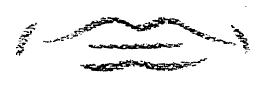
[ 10 ] Wenn Sie einem Kinde zunächst nicht Buchstaben oder selbst Worte hinschreiben, sondern ihm aus den auch in seiner Seele existierenden Bildekräften heraus dasjenige hinzeichnen, was hier so aussieht, dann werden Sie sehen, daß das Kind sich noch erinnert an etwas, was wirklich da ist, was es mit seinen Bildekräften schon erfaßt hat. Das Kind wird Ihnen sagen: Das ist ein Mund! Und jetzt können Sie das Kind nach und nach dazu führen, daß Sie ihm sagen: Nun sprich einmal Mmmund; laß das letzte weg. Sie führen das Kind dazu, nach und nach zu sagen mmm ... Und jetzt sagen Sie ihm: Nun wollen wir einmal dasjenige aufmalen, was du da gemacht hast. Wir haben was weggelassen:
[ 10 ] If, at first, you do not write down letters or even words for a child, but instead draw for the child—drawing from the imaginative powers that also exist within the child’s soul—what looks like this, then you will see that the child still remembers something that is truly there, something the child has already grasped with its imaginative powers. The child will say to you: “That’s a mouth!” And now you can gradually guide the child by saying: “Now say ‘Mmmouth’; leave out the last part.” You guide the child to gradually say “mmm...” And now you say to them: “Now let’s draw what you’ve made there. We’ve left something out:
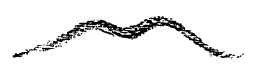
[ 11 ] haben wir gemalt. Und nun machen wir es einfacher:
[ 11 ] we drew it. And now let's make it easier:
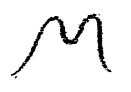
[ 12 ] Es ist ein M draus geworden.
[ 12 ] It turned out to be an M.
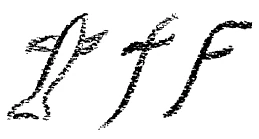
[ 13 ] Oder wir zeichnen dem Kinde so etwas auf (es wird gezeichnet): Das Kind wird sagen: Fisch ... Man wird dazu übergehen, F zu sagen. Machen wir das nun einfacher, diesen Fisch! Dann wird ein F daraus. Wir kriegen die abstrakten sogenannten Buchstaben überall aus den Bildern heraus.
[ 13 ] Or we draw something like this for the child (it is drawn): The child will say, “Fish...” We’ll then move on to saying “F.” Let’s simplify this fish! Then it becomes an “F.” We derive these abstract so-called letters from pictures everywhere.
[ 14 ] Da ist es nicht nötig, daß wir nun immer historisch zurückgehen, wie aus der Bilderschrift wirklich in solcher Weise unsere heutige Schrift entstanden ist. Das ist gar nicht nötig, wir brauchen nicht kulturhistorische Pädagogik zu treiben. Wir brauchen nur selber uns hineinzufinden, etwas durch die Phantasie beflügelt, dann werden wir in allen Sprachen die Möglichkeit finden, von charakteristischen Worten auszugehen, die wir ins Bild verwandeln können und aus denen heraus wir dann erst die Buchstaben gewinnen. So wenden wir uns an dasjenige, was das Kind will gerade im Zahnwechselalter und unmittelbar darnach. Und schon daraus ergibt sich für Sie, daß man zuerst aus dem zeichnenden Malen und dem malenden Zeichnen - denn für das Kind ist es gut, wenn es gleich Farben verwendet, es lebt ja in der Farbe, das weiß jeder, der das Kind kennt -, wenn man aus dem malenden Zeichnen zum Schreiben übergeht und erst aus dem Schreiben das Lesen gewinnt. Denn das Schreiben ist eine Betätigung des ganzen Menschen. Da muß die Hand in Betracht kommen, da muß sich der ganze Leib in irgendeiner Weise, wenn auch fein, einfügen, da ist der ganze Mensch daran beteiligt. Das hat noch etwas Konkretes, das Schreiben, das aus dem malenden Zeichnen herausgeholt wird. Das Lesen, nun, da sitzt man schon dabei, da ist man schon ein richtiger Duckmäuser, da strengt sich nur noch ein Teil des Menschen an, der Kopf. Das Lesen ist schon abstrakt geworden. Das muß nach und nach als eine Teilerscheinung aus dem Ganzen heraus entwickelt werden.
[ 14 ] It is not necessary for us to trace the history of how our modern writing system actually evolved from pictographic writing. That is not necessary at all; we do not need to engage in cultural-historical pedagogy. We need only find our way into it ourselves, inspired by our imagination; then we will find the possibility in all languages to start with characteristic words that we can transform into images, and from which we can then derive the letters. In this way, we address what the child wants, especially during the transition from baby to permanent teeth and immediately afterward. And from this alone it follows for you that one must first move from drawing-as-painting and painting-as-drawing—for it is good for the child to use colors right away; after all, the child lives in color, as anyone who knows a child is aware—and then, from painting-as-drawing, transition to writing, and only from writing derive reading. For writing is an activity that engages the whole person. The hand must be involved; the whole body must participate in some way—even if only subtly—and the whole person is engaged in the process. Writing, derived from drawing-as-painting, still has a concrete quality to it. Reading, on the other hand, involves sitting still—one becomes a real bookworm—and only one part of the person exerts effort: the head. Reading has already become abstract. It must gradually be developed as a partial manifestation derived from the whole.
[ 15 ] Bei diesen Dingen ist es heute außerordentlich schwer, im rein Naturgemäßen standzuhalten gegen die Vorurteile der Gegenwart. Denn wenn man anfängt, in einer solch ganz naturgemäßen Weise die Kinder zu unterrichten, dann lernen sie etwas später lesen, als man es heute verlangt. Wenn dann die Kinder von einer solchen Schule übertreten in eine andere Schule, dann können sie noch nicht soviel wie die Kinder der anderen Schule. Ja, aber es kommt doch gar nicht darauf an, was man sich aus dem materialistischen Kulturzeitalter für eine Vorstellung darüber gebildet hat, was das Kind mit acht Jahren können soll. Sondern es kommt darauf an, daß es vielleicht gar nicht gut ist für das Kind, wenn es zu früh lesen lernt. Denn da sperrt man auch wiederum für das spätere Leben etwas zu, wenn das Kind zu früh lesen lernt. Lernt das Kind zu früh lesen, dann führt man es zu früh in die Abstraktheit hinein. Und Sie würden unzählige spätere Sklerotiker beglücken für ihr Leben, wenn Sie ihnen nicht zu früh das Lesen beibrächten als Kinder. Denn diese Verhärtung des ganzen Organismus - ich nenne es populär so -, die in der mannigfaltigsten Form der Sklerose später auftritt, die kann man zurückverfolgen zu einer falschen Art, das Lesen beizubringen. Natürlich kommen diese Dinge auch noch von vielen anderen Sachen, aber darum handelt es sich, daß es diese Dinge durchaus gibt, daß ein naturgemäßer Unterricht vom Seelisch-Geistigen aus überall hygienisch auf den Leib wirkt. Erfassen Sie, wie Sie den Unterricht und die Erziehung gestalten sollen, so erfassen Sie zu gleicher Zeit, wie Sie dem Kinde die beste Gesundheit fürs Leben geben. Und Sie können ganz sicher sein: würden gesündere Methoden im heutigen Schulwesen herrschen, dann würde gar mancher vom männlichen Geschlecht nicht so früh mit einem Glatzkopf herumgehen, wie das sehr häufig der Fall ist!
[ 15 ] In these matters, it is extremely difficult today to remain true to what is purely natural in the face of contemporary prejudices. For when one begins to teach children in such a completely natural way, they learn to read a little later than is expected today. When children from such a school then transfer to another school, they may not yet be as proficient as the children at the other school. Yes, but it doesn’t really matter what mental images we’ve formed—based on the materialistic cultural era—about what a child should be able to do at age eight. Rather, what matters is that it may not be good for the child at all to learn to read too early. For when a child learns to read too early, one also closes off certain possibilities for their later life. If a child learns to read too early, one introduces them to abstraction too soon. And you would be doing countless future sufferers of sclerosis a great service for the rest of their lives if you did not teach them to read too early as children. For this hardening of the entire organism—as I call it in layman’s terms—which later manifests in the most varied forms of sclerosis, can be traced back to an incorrect method of teaching reading. Of course, these issues also stem from many other factors, but the point is that these factors do indeed exist, and that teaching that is in harmony with the soul and spirit has a wholesome, physical effect on the body in every respect. When you understand how to structure instruction and upbringing, you simultaneously understand how to give the child the best possible health for life. And you can be absolutely certain: if healthier methods prevailed in today’s school system, then many a young man would not be walking around with a bald head so early in life, as is very often the case!
[ 16 ] Diese Dinge, die eben darauf beruhen, daß man das Seelisch-Geistige überall fortwirken sieht im Leiblich-Physischen, werden eben gerade vom materialistischen Standpunkte aus viel zu wenig berücksichtigt. Und ich möchte es immer wieder betonen: Die Tragik des Materialismus besteht darin, daß er von den materiellen Vorgängen gar nichts mehr weiß, sondern sie nur ganz von außen betrachtet; daß} er gar nicht mehr weiß, wie ein Moralisches übergeht in ein Physisches. Man gewöhnt sich ja heute schon durch die Art und Weise, wie der Mensch behandelt - man könnte fast sagen mißhandelt - wird von der Wissenschaft, eine ganz falsche Vorstellung an. Denken Sie sich doch nur einmal: Wenn Sie heute Physiologie- oder Anatomiebücher aufschlagen, dann haben Sie gewisse Zeichnungen: das Knochensystem wird aufgezeichnet, das Nervensystem wird aufgezeichnet, das Blutzirkulationssystem wird aufgezeichnet. Ganz suggestiv wirkt das; man bekommt die Vorstellung, als ob der Mensch wirklich wiedergegeben wäre, wenn man das alles so aufzeichnet. Hier ist ja gar nicht das wiedergegeben, was der Mensch physisch-leiblich ist. Das ist ja höchstens 10 Prozent davon, denn 90 Prozent vom Menschen ist ja eine Flüssigkeitssäule. Er besteht ja zu 90 Prozent aus Flüssigkeit, die in ihm fortwährend fluktuiert, die man gar nicht so mit festen Konturen zeichnen kann. Nun, Sie werden sagen: die Physiologen wissen das! Gewiß, aber es bleibt in der Physiologie, es geht nicht über in die Lebenspraxis, weil schon die Zeichnungen suggestiv nach einer anderen Seite leiten. Aber wessen man sich noch weniger bewußt wird, das ist, daß wir ja nicht bloß - zum kleinsten Teil - ein fester Mensch sind, zum größten Teil ein Flüssigkeitsmensch sind, sondern daß wir auch in jedem Momente ein Luftmensch sind. Die Luft draußen ist im nächsten Moment in uns drinnen, die Luft in uns ist im nächsten Moment draußen. Ich bin ein Teil der ganzen Luftumgebung. Das ist fortwährend fluktuierend in mir. Und erst die Wärmezustände! In Wirklichkeit müssen wir den Menschen unterscheiden in den festen Menschen, den Flüssigkeitsmenschen, den Luftmenschen, den Wärmemenschen - das kann noch weitergehen, aber darauf wollen wir uns zunächst beschränken.
[ 16 ] These things—which are based precisely on the fact that one sees the soul-spiritual continuing to work everywhere within the physical-material—are given far too little consideration from a materialistic standpoint. And I would like to emphasize this again and again: The tragedy of materialism lies in the fact that it knows nothing at all about material processes anymore, but merely observes them entirely from the outside; that it no longer knows at all how something moral transitions into something physical. People today are already developing a completely false mental image simply through the way in which human beings are treated—one might almost say mistreated—by science. Just think about it for a moment: When you open physiology or anatomy textbooks today, you find certain diagrams: the skeletal system is depicted, the nervous system is depicted, the circulatory system is depicted. This has a very suggestive effect; one gets a mental image of the human being being truly represented when all of this is depicted in this way. But what is depicted here is not at all what a human being is physically and bodily. That is, at most, 10 percent of it, because 90 percent of a human being is a column of fluid. He consists of 90 percent fluid that constantly fluctuates within him—fluid that cannot be depicted with fixed contours at all. Now, you might say: Physiologists know that! Certainly, but it remains within the realm of physiology; it doesn’t carry over into everyday life, because even the drawings suggestively lead one in a different direction. But what we’re even less aware of is that we’re not merely—to a very small extent—a solid human being, and to a large extent a liquid human being, but that we’re also, at every moment, an air human being. The air outside is inside us the next moment; the air inside us is outside the next moment. I am a part of the entire atmosphere. This is constantly fluctuating within me. And then there are the states of heat! In reality, we must distinguish between the solid human, the liquid human, the air human, and the heat human—this could go even further, but let us limit ourselves to this for now.
[ 17 ] Daß man über diese Dinge ganz unsinnige, falsche Ansichten hat, das zeigt sich an dem Folgenden. Wenn das wirklich so wäre, wie es aufgezeichnet wird als Knochensystem, Nervensystem und so weiter, wo einfach alles in eine solche Zeichnung verwandelt wird, daß man immerfort versucht ist, den Menschen als bloßen festen Organismus vorzustellen - wenn das alles so wäre, wäre es kein Wunder, daß das moralische, das seelische Leben in diese festen Knochen, in diese starre Blutzirkulation nicht hineingehen kann: es hat gar nichts damit zu tun. Fangen Sie aber an, den Menschen wirklich jetzt auch als Flüssigkeitsmenschen, als Luftmenschen, zuletzt als Wärmemenschen vorzustellen, dann haben Sie ein feines Agens, eine feine Entität - zum Beispiel in den Wärmezuständen -, und dann werden Sie darauf kommen, wie in den physischen Wärmeverlauf allerdings die moralische Konstitution des Menschen hinein verlaufen kann. Wenn Sie die Wirklichkeit vorstellen, dann kommen Sie zu jener Einheit des Physischen und Moralischen. Und die muß man dann vor sich haben, wenn man den Menschen in seiner Entwickelung behandeln will die muß man durchaus vor sich haben.
[ 17 ] The fact that people hold completely nonsensical, false views about these things is evident from the following. If it were really as it is depicted—as a skeletal system, a nervous system, and so on, where simply everything is transformed into such a diagram that one is constantly tempted to create a mental image of the human being as a mere solid organism—if all that were true, it would be no wonder that moral and spiritual life cannot enter into these solid bones or this rigid blood circulation: it has nothing to do with that at all. But if you begin to truly form a mental image of the human being now also as a being of fluid, as a being of air, and finally as a being of heat, then you have a subtle agent, a subtle entity—for example, in the states of heat—and then you will come to realize how the moral constitution of the human being can indeed flow into the physical course of heat. When you create a mental image of reality, you arrive at that unity of the physical and the moral. And you must keep that in mind if you wish to address human beings in their development—you absolutely must keep that in mind.
[ 18 ] Also es kommt tatsächlich darauf an, daß wir auf den Menschen hinzuschauen vermögen, daß wir aus einem ganz anderen physiologisch-psychologischen Untergrund heraus den Weg zu dem Menschen finden, und dann ergibt sich, wie man diesen Menschen zu behandeln hat. Sonst entwickelt er die innere Opposition gegen dasjenige, was er eigentlich lernen soll, während angestrebt werden muß, daf3 er selbst hineinwächst in dasjenige, was er lernen soll. Und indem er hineinwächst, beginnt er selbstverständlich auch das, was er lernen soll, liebzuhaben. Er kann es aber nur dadurch liebgewinnen, daß er aus seinen eigenen Wesenskräften in die Sache hineinwächst.
[ 18 ] So it really comes down to our ability to look at the person, to find our way to that person from a completely different physiological and psychological foundation, and then it becomes clear how to treat that person. Otherwise, they develop an inner resistance to what they are actually supposed to learn, whereas the goal must be for them to grow into what they are supposed to learn on their own. And as they grow into it, they naturally begin to love what they are supposed to learn. But they can only come to love it by growing into it from their own inner forces.
[ 19 ] Am meisten schaden - und zwar gerade diesem Lebensalter gegenüber so vom 7., 8., 9. Jahr -, am meisten schaden die einseitigen Illusionen, diese fixen Ideen, die man sich macht: das oder jenes soll so oder so geschehen. Man ist zum Beispiel so ungeheuer stolz darauf, daß so im Laufe des 19. Jahrhunderts, aber schon im 18. Jahrhundert vorbereitet, die alte Buchstabiermethode übergegangen ist in die Lautiermethode und dann in die Normalwörtermethode beim Lesenlernen. Und weil sich die Leute heute schämen, das Alte irgendwie noch zu respektieren, so wird man ja heute kaum noch einen Menschen finden, der schwärmen würde für die alte Buchstabiermethode. Er wäre ein dummer Kerl nach Ansicht der Gegenwart, das gibt es ja nicht - also darf er nicht mehr schwärmen für die alte Buchstabiermethode. Die Lautiermethode, aber auch die Normalwörtermethode werden angewendet. Man ist sehr stolz auf die Lautiermethode, wo dem Kinde der Lautcharakter beigebracht wird. Das Kind lernt nicht: das ist ein P oder das ist ein N oder das ist ein R, sondern es lernt alles auszusprechen, so wie es im Worte drinnen lautet. Nun ja, das ist ganz gut. Die Normalwörtermethode ist auch gut, wo man manchmal von ganzen Sätzen ausgeht, wo man dem Kinde den Satz bildet, dann erst analysierend zu dem Worte und dem einzelnen Laut geht. Aber schlimm ist es, wenn diese Dinge schrullenhaft werden. Die Gründe für alle drei Methoden, sogar für die alte Buchstabiermethode, die Gründe sind alle gut, sind alle geistreich - es läßt sich nicht leugnen, daß die Dinge alle geistreich sind. Aber woher kommt es, daß sie geistreich sind? Das kommt von dem Folgenden. Denken Sie, Sie haben einen Menschen nach der Photographie gekannt und immer en face gesehen. Da haben Sie halt so irgendeine Vorstellung von dem Menschen. Jetzt kriegen Sie einmal ein Bild in die Hand, und es sagt einer: Das ist das Bild von dem Menschen. - Das Bild ist nun ein Profilbild. Sie werden sagen: Aber nein, das ist doch ein ganz falsches Bild! Der Mensch schaut ja ganz anders aus: hier das Bild en face, das ist das richtige Bild, das andere ist ganz falsch. - Es ist das Bild desselben Menschen in diesem Falle, aber es ist von der anderen Seite aufgenommen. Und so ist es im Leben immer - die Dinge im Leben müssen überall von den verschiedensten Seiten betrachtet werden. Man kann sich ja zwar in irgendeinen einseitigen Standpunkt verlieben, weil er sehr geistreich sein kann, man kann seine guten Gründe haben, man kann die Buchstabiermethode, die Lautiermethode, die Normalwörtermethode verteidigen, und der Gegner wird einen nicht widerlegen können, weil man ja nur an seine eigenen Gründe selbstverständlich glaubt. Das ist gut möglich, daß die besten Gründe vorgebracht werden, aber: es sind Einseitigkeiten. In der Lebenspraxis müssen die Dinge eben immer von den verschiedensten Seiten angegriffen werden.
[ 19 ] What is most harmful—especially for children of this age, around 7, 8, or 9 years old—are the one-sided illusions, these fixed ideas that one forms: this or that must happen in such and such a way. For example, people are so incredibly proud that, over the course of the 19th century—though the groundwork was laid as early as the 18th century—the old spelling method gave way to the phonetic method and then to the standard-word method for learning to read. And because people today are ashamed to still respect the old method in any way, you’ll hardly find anyone today who would rave about the old spelling method. He’d be considered a fool by today’s standards—that’s unthinkable—so he’s no longer allowed to rave about the old spelling method. Both the phonetic method and the standard-word method are used. People are very proud of the phonetic method, where children are taught the phonetic nature of sounds. The child doesn’t learn: “This is a P” or “This is an N” or “This is an R”; instead, they learn to pronounce everything exactly as it sounds within the word. Well, that’s quite good. The “normal words” method is also good; it sometimes starts with whole sentences, where the teacher forms a sentence for the child and only then analyzes it down to the individual words and sounds. But it’s bad when these methods become dogmatic. The rationale behind all three methods—even the old spelling method—is sound and ingenious; there’s no denying that they’re all ingenious. But where does this ingenuity come from? It comes from the following. Imagine you’ve known a person from a photograph and have always seen them face-on. You’ve formed a certain mental image of that person. Now you’re handed a picture, and someone says, “This is a picture of that person.” - The picture is a profile. You’ll say: “But no, that’s a completely wrong picture! The person looks completely different: here’s the front-facing picture—that’s the right one; the other one is completely wrong.” - In this case, it is a picture of the same person, but it was taken from the other side. And that’s how it always is in life—things in life must be viewed from all sorts of different angles. Of course, one can become attached to a one-sided point of view because it may be very clever; one may have good reasons; one may defend the spelling method, the phonetic method, or the standard-word method, and the opponent won’t be able to refute you because, naturally, you only believe in your own reasons. It’s quite possible that the best reasons are put forward, but they are one-sided. In practical life, things must always be approached from a wide variety of angles.
[ 20 ] Wenn man schon einmal aus dem malenden Zeichnen, dem zeichnenden Malen heraus die Formen gewonnen hat und wenn man dann übergegangen ist dazu, daß man allerdings jetzt ganz gut tut, eine Art Lautier- oder Wörtermethode zu pflegen, damit man das Kind nicht so sehr sich an die Einzelheiten verlieren läßt, sondern es hinlenkt zum Ganzen, so ist doch wiederum dem materialistischen Zeitalter eines abhanden gekommen, und das ist das Folgende: der Laut als solcher, das einzelne M, das einzelne P, das ist eben auch etwas. Und es kommt darauf an, daß, wenn der Laut im Wort drinnen ist, er schon den Weg nach der Außenwelt genommen hat, da ist er schon übergegangen in die materiell-physische Welt. Das, was wir in der Seele haben, sind nämlich die Laute als solche, und das hängt sehr stark ab von der Art und Weise, wie unsere Seele beschaffen ist. Indem wir buchstabieren, sprechen wir, wenn wir das M ausdrücken wollen, eigentlich EM. Der Grieche tat das nicht, der Grieche sprach MY. Das heißt: er setzte den Hilfsvokal nach dem Konsonanten, wir setzen ihn vorher. Wir bekommen den Laut heute in Mitteleuropa, indem wir vom Vokalischen zum Konsonantischen den Weg nehmen. Denselben Laut bekam man in Griechenland, indem man den umgekehrten Weg ging. Das weist hin auf die Seelenverfassung, die da zugrunde liegt.
[ 20 ] Once one has derived forms from painting-as-drawing and drawing-as-painting, and once one has then moved on—as is indeed quite advisable—to cultivating a sort of phonetic or word-based method, so that the child does not get too lost in the details but is instead guided toward the whole, something has nevertheless been lost to the materialistic age, and that is the following: the sound as such—the individual “M,” the individual “P”—is indeed something in itself. And it is crucial that, once the sound is contained within the word, it has already made its way into the external world; there it has already passed into the material-physical world. For what we have in our soul are, in fact, the sounds as such, and this depends very strongly on the nature of our soul. When we spell out a word, if we want to pronounce the “M,” we actually say “EM.” The Greeks did not do this; they said “MY.” That is to say: they placed the auxiliary vowel after the consonant, while we place it before it. Today in Central Europe, we produce the sound by moving from the vowel to the consonant. In Greece, the same sound was produced by taking the reverse path. This points to the underlying constitution of the soul.
[ 21 ] Das ist außerordentlich wichtig und bedeutsam. Denn derjenige, der nun nicht bloß auf das Äußerliche der Sprache schaut, wie nun die Sprache schon einmal geworden ist als Bedeutungssprache - unsere Sprachen sind ja fast alle Bedeutungssprachen, wir haben in den Worten kaum mehr etwas anderes als Zeichen für das, was draußen ist -, derjenige, der von da zurückgeht auf das Seelische, das in den Worten lebt, das überhaupt in der Sprache lebt, der kommt schon zurück zu dem sogenannten Laut. Denn alles Konsonantische hat einen ganz anderen Charakter als alles Vokalische. - Sie wissen: In bezug auf die Entstehung der Sprache gibt es ja die mannigfaltigsten Theorien. Es ist da wiederum so wie bei der Photographie. Unter anderem hat man ja zum Beispiel die «Wau-Wau»-Theorie. Sie besteht ja darin, daß man meint: dasjenige, was der Mensch sprachlich bildet, das ahmt er dem nach, was als Laut heraustönt aus Wesenheiten. Er ahmt nach dieses Wesenhafte. Er hört den Hund: Wau-Wau. Wenn er selbst glaubt, ein Ähnliches in seiner Seelenverfassung auszudrükken, so gebraucht er auch einen ähnlichen Laut. Es ist nichts dagegen einzuwenden. Es sind sehr viele Gründe für diese Wau-Wau-Theorie anzuführen, sehr geistreiche Gründe. Wenn man nur auf ihrem Boden stehenbleibt, sind sie nicht zu widerlegen. Aber das Leben besteht nicht in Begründung und Widerlegung, sondern das Leben besteht in lebendiger Bewegung, in Transformation, in lebendiger Metamorphose. Was an einer Stelle richtig ist, ist von einer anderen Stelle aus falsch, und umgekehrt. Das Leben muß in seiner ganzen Beweglichkeit erfaßt werden. - Sie wissen: es gibt eine andere Theorie, die der Wau-Wau-Theorie gegenübersteht und sie bekämpft. Da leitet man das Entstehen der Sprache davon her, daß so, wie wenn eine Glocke angeschlagen wird, das Metall eine bestimmte innere Konstitution hat und dieser oder jener Laut dann herauskommt, so sich der Mensch den Dingen gegenüber verhält. Es ist mehr ein Sichhereinfühlen in die Dinge, nicht ein äußeres Nachahmen, bei dieser Bim-Bam-Theorie. Sie ist wiederum durchaus richtig für gewisse Dinge. Man kann sagen, diese Theorie hat viel für sich, die Wau-Wau-Theorie auch. Aber die wirkliche Sprache entsteht nämlich weder auf dem BimBam-Weg noch auf dem Wau-Wau-Weg, sondern auf beide Arten und noch auf manche andere Art. Es sind Einseitigkeiten. Manches in unserer Sprache ist wirklich so gebildet, daß das Bim-Bam erfühlt ist, manches ist so, daß es Wau-Wau oder Muh-Muh nachgebildet ist. Es ist durchaus so: es sind beide Theorien richtig und manche andere auch noch. Es kommt aber darauf an, daß man das Leben erfaßt. Erfaßt man das Leben, dann wird man finden, daß die WauWau-Theorie mehr paßt für die Vokale, die Bim-Bam Theorie für die Konsonanten; aber wieder nicht ganz, es sind wieder nur Einseitigkeiten. Doch zuletzt kommt man darauf, zu erkennen - wie ich es schon in der kleinen Schrift «Die geistige Führung des Menschen und der Menschheit» angedeutet habe -, daß die Konsonanten in der Tat nachgebildet sind den äußeren Geschehnissen und den äußeren Formen der Dinge: sie bilden das F dem Fisch nach, das M dem Mund nach, oder das L dem Laufen nach und so weiter. Die Konsonanten sind schon so entstanden, daß sie in einem gewissen Sinne zu der BimBam-Theorie stimmen - aber nur feiner ausgestaltet müßte sie werden. Die Vokale aber sind Ausdrucksweisen, Offenbarungen für das Innere des Menschen. Da ahmt er nicht in der Form, die er dem Laut oder dem Buchstaben gibt, das Äußere nach, da ahmt er überhaupt zunächst nicht nach, sondern da drückt er seine Gefühle von Sympathie und Antipathie aus. Sein Gefühl von Freude oder Neugierde mit 7; von Staunen oder Verwunderung: A, ich bin erstaunt; Z, ich will etwas weg haben, was mich stört; U, ich fürchte mich; Ei, ich habe dich lieb. Alles dasjenige, was in den Vokalen liegt, das ist unmittelbare Offenbarung der seelischen Sympathien und Antipathien. Es entsteht zwar nicht durch Nachahmung, aber so: Der Mensch will sich äußern, will seine Sympathien und Antipathien äußern. Nun hört er an dem Hunde, wenn der Hund etwas Schreckhaftes erfassen will, Wau-Wau: da paßt er sich an, wenn sein Erlebnis ähnlich ist dem Wau-Wau des Hundes, und dergleichen. Es ist aber der Weg des Vokalisierens ein solcher von innen nach außen; es ist der Weg des Konsonantierens von außen nach innen, von dem Nachbilden. Schon im Laute bildet man nach. Sie werden das nachweisen können, wenn Sie auf Einzelheiten eingehen.
[ 21 ] This is extraordinarily important and significant. For whoever does not merely look at the outward form of language—as language has already become a language of meaning—our languages are, after all, almost all languages of meaning; in our words, we have hardly anything other than signs for what exists outside—whoever goes back from there to the spiritual aspect that lives in the words, that lives in language itself, returns to what is called the “sound.” For everything consonantal has a completely different character than everything vocalic. — As you know, there are the most diverse theories regarding the origin of language. It is, again, much like with photography. Among other things, there is, for example, the “woof-woof” theory. It holds that what humans form linguistically is an imitation of the sounds that emanate from beings. They imitate this essential nature. They hear the dog: woof-woof. When they themselves believe they are expressing something similar in their state of mind, they also use a similar sound. There is nothing wrong with that. There are many reasons to be cited in favor of this “Woof-Woof” theory—very ingenious reasons. If one remains solely on that ground, they cannot be refuted. But life does not consist of justification and refutation; rather, life consists of living movement, of transformation, of living metamorphosis. What is true in one context is false in another, and vice versa. Life must be grasped in all its fluidity. — As you know, there is another theory that stands in opposition to the “woof-woof” theory and challenges it. This theory traces the origin of language to the fact that, just as when a bell is struck—the metal has a certain internal constitution and this or that sound is produced—so, too, does the human being relate to things. This “Bim-Bam” theory involves more of an empathetic immersion into things than an external imitation. It, too, is entirely correct for certain things. One could say that this theory has much going for it, as does the “Wau-Wau” theory. But real language does not arise through the “bim-bam” method or the “wau-wau” method alone, but through both methods and many others as well. These are one-sided views. Some elements of our language are indeed formed in such a way that the “bim-bam” is sensed, while others are modeled on “wau-wau” or “muh-muh.” It is certainly true that both theories are correct, and so are some others. But what matters is that one grasps life. If one grasps life, one will find that the “Wau-Wau” theory fits better for the vowels, and the “Bim-Bam” theory for the consonants; but again, not entirely—these are still just one-sided views. Ultimately, however, one comes to realize—as I have already hinted at in the short treatise *The Spiritual Guidance of Man and Humanity*—that the consonants are in fact modeled after external events and the external forms of things: the “F” is modeled after the fish, the “M” after the mouth, the “L” after running, and so on. The consonants have indeed come into being in such a way that, in a certain sense, they accord with the BimBam theory—but it simply needs to be refined further. The vowels, however, are modes of expression, revelations of the inner self. Here, in the form he gives to the sound or the letter, he does not imitate the external; in fact, he does not imitate anything at all at first, but rather expresses his feelings of sympathy and antipathy. His feelings of joy or curiosity with 7; of amazement or wonder: A, I am amazed; Z, I want to get rid of something that bothers me; U, I am afraid; Ei, I love you. Everything contained in the vowels is a direct revelation of the soul’s sympathies and antipathies. It does not arise through imitation, but rather in this way: A person wants to express themselves, wants to express their sympathies and antipathies. Now they hear the dog—when the dog wants to convey something frightening—saying “woof-woof”; they adapt to this when their experience is similar to the dog’s “woof-woof,” and so on. However, the process of vocalization proceeds from the inside out; the process of consonant formation proceeds from the outside in—it is a matter of imitation. Imitation begins already in the sound itself. You will be able to demonstrate this if you go into detail.
[ 22 ] Sie werden aber dann sehen, weil das nur für die Laute gilt, nicht für Worte - es hängt nicht an der Seele -, daß es schon ein Fortführen des Wortes ist zum ursprünglichen Seelenzustand, wenn man dann auch in der Analyse so weit kommt, daß man dem Kinde Buchstaben beibringt. So daß man sagen kann: Man muß nur richtig erfassen dasjenige, was das Kind in einem bestimmten Lebensalter selber fordert, man wird dann im Grunde genommen lauter Buchstaben durcheinander anwenden, so wie ein ordentlicher Photograph - der einem ja meistens gerade dadurch lästig werden kann - auch den Betreffenden sich drehen läßt und ihn von allen Seiten photographiert; dann hat er ihn erst. So ist es auch notwendig, daß derjenige, der herankommen will an den Menschen, diesen Menschen eben von allen Seiten erfaßt. Mit der Normalwörtermethode erfaßt man nur das Körperlich-Leibliche. Mit der Lautiermethode kommt man schon dem Seelischen nahe, und - horribile dictu - ja, es ist schrecklich zu sagen: Mit der Buchstabiermethode kommt man ganz ins Seelische hinein. Das Letzte ist selbstverständlich heute noch Idiotismus, aber seelischer ist es zweifellos; nur ist es nicht unmittelbar anzuwenden. Man muß es mit einer gewissen pädagogischen Geschicklichkeit und Praxis, mit künstlerischer Pädagogik an das Kind heranbringen, so daß das Kind nicht dressiert wird, den Buchstaben konventionell auszusprechen, sondern daß es das Entstehen des Buchstabens erlebt, was ja in seinen Bildekräften liegt, was es da wirklich hat. Darauf kommt es an. Und dann werden wir sehen, daß es noch reichlich genügt, wenn wir auf diese Weise etwa bis nach dem 9. Jahr das Kind dazu bringen, daß es lesen kann. Es schadet nämlich gar nichts, wenn das Kind nicht früher lesen kann, denn es hat auf naturgemäße Weise das Lesen gelernt, wenn es in der eben geschilderten Art gelernt hat und etwa ein paar Monate über neun Jahre alt ist. Bei verschiedenen Kindern kann es etwas früher oder später sein.
[ 22 ] But you will then see—since this applies only to sounds, not to words (it is not tied to the soul)—that even teaching a child letters in analysis is already a continuation of the word back to the original state of the soul. So one can say: One need only correctly grasp what the child itself demands at a certain age; then, in essence, one will simply use a jumble of letters, just as a proper photographer—who can often become a nuisance precisely because of this—also has the subject turn around and photographs him from all sides; only then has he truly captured him. In the same way, it is necessary for anyone who wishes to approach a human being to grasp that person from all sides. With the standard vocabulary method, one grasps only the physical and bodily aspects. With the phonetic method, one already comes close to the soul, and—horribile dictu—yes, it is terrible to say: with the spelling method, one enters fully into the soul. The latter is, of course, still considered idiotic today, but it is undoubtedly more attuned to the soul; it simply cannot be applied directly. One must introduce it to the child with a certain pedagogical skill and practice, with artistic pedagogy, so that the child is not trained to pronounce the letter conventionally, but rather experiences the emergence of the letter—which lies within the child’s own imaginative powers, which the child truly possesses. That is what matters. And then we will see that it is still more than sufficient if, in this way, we enable the child to read by about the age of nine. For it does no harm at all if the child cannot read earlier, since the child has learned to read in a natural way if it has learned in the manner just described and is, say, a few months past nine years of age. For different children, this may be somewhat earlier or later.
[ 23 ] Da beginnt nämlich für das Kind dann ein kleinerer Lebensabschnitt. Die großen Lebensabschnitte sind die mehrmals genannten: von der Geburt bis zum Zahnwechsel, vom Zahnwechsel bis zur Geschlechtsreife, dann bis in die Zwanzigerjahre hinein. Aber da darf man dem heutigen Menschen ja überhaupt schon nicht mehr von Entwickelung reden! Heute geht es ja nicht, nicht wahr, daß man dann dem Menschen noch sagt: Du machst auch noch eine Entwickelung durch bis zu einem besonderen Reifezustand nach dem 21. Jahr. Das verletzt den heutigen Menschen, da - entwickelt er sich nicht mehr, da schreibt er Feuilletons. Man muß also heute schon etwas zurückhaltender sein, wenn man von den späteren Lebensaltern spricht. Aber es ist notwendig, daß man die großen Lebensabschnitte erfaßt als Erzieher und Unterrichter und dann auch die kleinen Abschnitte, die wiederum in den großen drinnenliegen. Da ist ein kleiner Abschnitt zwischen dem 9. und 10. Jahr, mehr gegen das 9. Jahr zu gelegen: da kommt das Kind dazu, sich immer mehr und mehr von seiner Umgebung zu unterscheiden. Da wird es eigentlich erst gewahr, daß es ein Ich ist. Vorher muß man daher dasjenige in der Erziehung und im Unterricht an das Kind heranbringen, wodurch es mit der Umgebung möglichst zusammenwächst; das Kind kann sich bis zu diesem Lebensalter gar nicht als Ich von der Umgebung unterscheiden. In dieser Beziehung herrschen ja allerdings die kuriosesten Ansichten. So zum Beispiel - denken Sie daran, daß Sie oftmals die Bemerkung hören können -: Wenn das Kind sich an eine Ecke stößt, fängt es an, die Ecke zu schlagen. Da kommt der intellektualistische Mensch und erklärt das so: schlagen tut man doch bloß, wenn man mit Bewußtsein wahrgenommen hat, was einen wiederum mit Bewußtsein gestoßen hat. Das ist die Definition des Kasus zum Schlagen - ja, bei solchen Definitionen möchte man immer wieder erinnern an das griechische Beispiel von der Definition: Was ist ein Mensch? Ein Mensch ist ein lebendiges Wesen, das zwei Beine und keine Federn hat. Das ist eine ganz richtige Definition. Sie führt ins alte Griechenland zurück. Ich will jetzt gar nicht darauf eingehen, daß unsere Physikdefinitionen heute nicht viel besser sind; man lehrt da auch oft die Kinder, daß ein Mensch ein Wesen ist, das auf zwei Beinen geht und keine Federn hat. Ein Bube, der etwas aufgeweckter war, dachte weiter nach über die Geschichte. Er fing sich einen Hahn, rupfte dem die Federn aus und brachte ihn in die Schule mit. Er zeigte den gerupften Hahn vor und sagte: Das ist ein Mensch! Das ist ein Wesen, das auf zwei Beinen geht und keine Federn hat. - Nun ja, Definitionen sind ja sehr nützlich, aber auch fast immer sehr einseitig. Es kommt aber darauf an, daß man sich unmittelbar ins Leben hineinfindet. Ich muß das immer wiederholen. Es handelt sich darum, daß man vor allen Dingen erfaßt, wie das Kind bis nach dem 9. Jahr sich gar nicht von seiner Umgebung richtig unterscheidet. Man kann also eigentlich nicht sagen: Das Kind stellt sich den Tisch als lebendig vor, wenn es ihn schlägt. Das fällt ihm gar nicht ein. Es schlägt aus dem Innern seines Wesens heraus. - Diesen Animismus gibt es gar nicht, dieses Beseelen von Unorganischem, das sich schon in die Kulturgeschichte eingeschlichen hat. Man ist ganz erstaunt, welche Phantasie die Gelehrten oft haben, wenn sie zum Beispiel glauben, daß der Mensch die Dinge beseele. Ganze Mythologien werden so erklärt. Es ist so, wie wenn diese Menschen, die so etwas sagen, noch keine primitiven Menschen kennengelernt hätten. Es fällt zum Beispiel keinem Bauern ein, der ja auch noch primitiv ist, die Naturerscheinungen zu beseelen. Es handelt sich darum, daß das Kind die Begriffe «Durchseelen, Beleben der Dinge» nicht hat. So wie es lebt, lebt eben alles, es träumt aber nicht das Kind dies bewußt hinein. Daher müssen Sie auch keinen Unterschied machen in Ihrem Beschreiben und Reden, wenn Sie die Umgebung beschreiben: Sie müssen die Pflanzen leben lassen, Sie müssen alles leben lassen; denn das Kind unterscheidet sich noch nicht als Ich von der Umgebung. Daher können Sie auch noch nicht in diesem kindlichen Lebensalter bis nach dem 9. Jahr mit irgend etwas an das Kind herankommen, was zum Beispiel eine schon intellektualistische Beschreibung ist. Sie müssen in voller Frische alles ins Bild verwandeln. Wo das Bild aufhört und die Beschreibung beginnt, da erreicht man gar nichts im 8., 9. Lebensjahr. Erst nachher ist dies möglich. Und dann handelt es sich wieder darum, daß man in der richtigen Weise sich hineinfindet in diese einzelnen Lebensabschnitte. Nur für bildhafte Darstellungen hat das Kind bis zum 9. Jahr hin überhaupt Verständnis; das andere geht so vorüber vor dem Auffassungsvermögen des Kindes wie vor dem Auge der Ton. Mit dem Zeitpunkte aber, der zwischen dem 9, und 10. Jahr liegt, können Sie dann anfangen, sagen wir, Pflanzen zu beschreiben. Da können Sie anfangen mit primitiven Beschreibungen des Pflanzenwesens; denn da unterscheidet sich das Kind allmählich von der Umgebung. Aber Sie können ihm noch nichts Mineralisches beschreiben; denn so stark ist sein Unterscheidungsvermögen noch nicht, daß es die große Differenz zwischen dem, was es innerlich erlebt, und dem Mineral schon auffassen könnte. Es hat jetzt erst die Möglichkeit, den Unterschied zwischen sich und der Pflanze aufzufassen. Dann können Sie allmählich übergehen zur Tierbeschreibung.
[ 23 ] That is when a smaller phase of life begins for the child. The major phases of life are those mentioned several times: from birth until the teeth fall out, from when the teeth fall out until sexual maturity, and then into the twenties. But of course, you can’t even talk about “development” to people today anymore! After all, it’s not acceptable today—is it?—to tell people: “You’re still going through a process of development until you reach a particular state of maturity after the age of 21.” That offends people today—after all, they don’t “develop” anymore; they write feature articles. So today, one must be a bit more cautious when speaking of later stages of life. But it is necessary for educators and teachers to grasp the major stages of life, as well as the smaller stages that are contained within the larger ones. There is a small stage between the ages of 9 and 10, closer to age 9: this is when the child begins to distinguish itself more and more from its surroundings. It is only then that the child actually becomes aware that it is an “I.” Before that, therefore, education and instruction must provide the child with what enables it to grow together with its surroundings as much as possible; up to this age, the child is simply unable to distinguish itself from its surroundings as a “self.” In this regard, however, the most curious views prevail. For example—think of how often you hear the remark—: When a child bumps into a corner, it starts hitting the corner. Then the intellectualist comes along and explains it this way: one only hits something when one has consciously perceived what, in turn, has consciously bumped into one. That is the definition of the case of hitting—yes, with such definitions one is always reminded of the Greek example of the definition: What is a human being? A human being is a living creature that has two legs and no feathers. That is a perfectly correct definition. It goes back to ancient Greece. I don’t even want to get into the fact that our physics definitions today aren’t much better; there, too, children are often taught that a human being is a creature that walks on two legs and has no feathers. A boy who was a bit more quick-witted thought further about the story. He caught a rooster, plucked its feathers, and brought it to school. He held up the plucked rooster and said, “This is a human being! This is a creature that walks on two legs and has no feathers.”—Well, definitions are certainly very useful, but they’re also almost always very one-sided. What matters, however, is that one finds one’s way directly into life. I must repeat this again and again. The point is that, above all, one must grasp how a child up to the age of nine does not really distinguish itself from its surroundings at all. So one cannot actually say: The child forms a mental image of the table as being alive when it hits it. That doesn’t even occur to the child. It strikes out from the very core of its being. — This animism doesn’t exist at all—this attribution of a soul to inorganic matter, which has already crept into cultural history. It’s quite astonishing what kind of imagination scholars often have when, for example, they believe that humans endow things with a soul. Entire mythologies are explained this way. It is as if the people who say such things had never encountered primitive peoples. For example, it would never occur to a farmer—who is, after all, still primitive—to ascribe a soul to natural phenomena. The point is that the child does not possess the concepts of “infusing a soul into things” or “bringing things to life.” Just as the child lives, so does everything else; yet the child does not consciously project this into its perceptions. Therefore, you need not make any distinction in your descriptions and speech when describing the surroundings: you must let the plants live, you must let everything live; for the child does not yet distinguish the “I” from the surroundings. That is why, at this early stage of life—up to the age of 9—you cannot yet reach the child with anything that is, for example, an already intellectualized description. You must transform everything into images with complete freshness. Where the image ends and the description begins, you achieve nothing at all in the 8th or 9th year of life. Only later is this possible. And then it is again a matter of finding your way into these individual stages of life in the right way. Up until the age of 9, the child has an understanding only for pictorial representations; everything else passes by the child’s comprehension just as sound passes before the eye. But around the time between the ages of 9 and 10, you can then begin, let’s say, to describe plants. There you can start with primitive descriptions of the nature of plants; for by then the child is gradually distinguishing itself from its surroundings. But you cannot yet describe minerals to the child; for its power of discrimination is not yet strong enough to grasp the great difference between what it experiences inwardly and the mineral itself. Only now does it have the ability to grasp the difference between itself and the plant. Then you can gradually move on to describing animals.
[ 24 ] Aber das muß eben so gemacht werden, daß das Ganze richtig drinnensteht im Leben. Wir haben heute die Botanik. Die sind wir geneigt, auch schon in die Schule hineinzutragen. Wir tun das aus einem gewissen Schlendrian heraus. Eigentlich ist es etwas Schreckliches, wenn wir das von der Botanik, was wir mit Recht haben als Erwachsener, in die Schule hineintragen. Denn was ist denn diese Botanik, die wir da haben? Sie ist eine systematische Anordnung von den Pflanzen, die man nach gewissen Gesichtspunkten findet. Da werden erst die Pilze, die Algen, die Hahnenfüße und so weiter beschrieben, so richtig nebeneinander. Ja, wenn man aber eine solche Wissenschaft ausbildet, die ja als Wissenschaft ganz gut ist, nun, dann ist das ungefähr so, wie wenn Sie einem Menschen die Haare ausreißen und nun eine Systematik ausbilden derjenigen Haarformen, die da hinter den Ohren wachsen, die da oben wachsen, an den Beinen wachsen, wie wenn Sie das alles systematisch anordneten. Sie werden eine hübsche Systematik herauskriegen, aber Sie verstehen nicht das Haarwesen dadurch. Man unterläßt daher, weil das einem zu nahe liegt, daß man das Haarwesen im Zusammenhang mit dem ganzen Menschen betrachten muß. Das Pflanzenwesen ist für sich auch nicht vorhanden, das Pflanzenwesen gehört zur Erde. Sie glauben, Sie könnten einen Goldregen, wenn Sie ihn betrachten, so wie er in der Botanik klassifiziert ist, verstehen! Ich habe nichts dagegen, daß er in der Botanik klassifiziert wird; Sie können aber nur dann, wenn Sie ihn auf den sonnigen Abhängen sehen und wenn Sie die Erdschichtung betrachten, die darunter ist, verstehen, warum er gelb ist: daß das aus der Farbe der darunterliegenden Erde ist! Da wird Ihnen die Pflanze wie das Haar, das aus dem Menschen heraussprießt. Die zunächst dem Kinde bekannte Erde mit den darauf befindlichen Pflanzen wird so ein Ganzes. Sie dürfen nicht an das Kind herangehen direkt mit dem, was aus der heutigen Botanik stammt, und dies hineintragen in die Schule. Auch da muß man aus dem Leben heraus die Pflanze und die Erde so beschreiben, wie man das Haar beschreibt, das aus dem Menschen herauswächst. Und so können Sie auch gar nicht die Pflanze beschreiben, ohne über den Sonnenschein, über das Klima, über die Erdenkonfiguration zu sprechen, wie es dem Kinde angemessen ist.
[ 24 ] But it has to be done in such a way that the whole thing is truly rooted in life. Today we have botany. We tend to bring that into school as well. We do this out of a certain kind of complacency. Actually, it’s a terrible thing when we bring what we rightly possess as adults—our understanding of botany—into the school. For what is this botany that we have? It is a systematic classification of plants, arranged according to certain criteria. First come the fungi, the algae, the buttercups, and so on, all lined up side by side. Yes, but if you were to develop such a science—which, as a science, is quite good—well, it would be roughly like pulling out a person’s hair and then developing a classification system for the different types of hair that grow behind the ears, on the top of the head, and on the legs—as if you were to arrange all of that systematically. You’ll end up with a nice classification system, but you won’t understand the nature of hair through it. People therefore fail to realize—because it’s too obvious—that the nature of hair must be considered in connection with the whole human being. The nature of plants doesn’t exist in isolation either; the nature of plants belongs to the Earth. You think you can understand a laburnum just by looking at it the way it’s classified in botany! I have no objection to its classification in botany; but only when you see it on the sunny slopes and observe the layers of earth beneath it can you understand why it is yellow: because that color comes from the earth beneath it! Then the plant will seem to you like the hair that sprouts from a human being. The earth, with the plants growing on it—which the child first comes to know—becomes a unified whole. You must not approach the child directly with what comes from modern botany and carry that into the school. Here, too, you must describe the plant and the earth from the perspective of everyday life, just as you would describe the hair growing from a person. And so you cannot describe the plant at all without speaking of sunlight, the climate, and the earth’s configuration—in a way that is appropriate for the child.
[ 25 ] Das Nebeneinanderbeschreiben der einzelnen Pflanzen, wie Sie es auch im Botanisieren haben, so daß man sagt: Man muß auch dem Kinde Anschauungsunterricht bieten - das ist dem Kinde nicht angemessen. Es handelt sich auch beim Anschauungsunterricht darum, was man es anschauen läßt. Das Kind hat ein instinktives Gefühl aus dem, was es in sich trägt für das Lebendige, das wahrhaft Wirkliche. Wenn Sie ihm mit dem Toten kommen, verletzen Sie dieses Lebendige, diesen Sinn für das wahrhaft Wirkliche im Kinde. Aber die Menschen haben heute wenig Sinn für die Differenzierungen des Seienden. Denken Sie nur einen Philosophen von heute, der über den Begriff des Seins nachdenkt. Dem wird es einerlei sein, ob er eine Bergkristallform oder eine Blüte als Beispiel eines Seienden nimmt. Denn beides ist da, man kann es herlegen, das sind existierende Dinge. Aber das ist ja gar nicht wahr! Die Dinge sind ja schon in bezug auf das Sein nicht gleichartig. Den Bergkristall können Sie in drei Jahren wieder nehmen: er ist durch seinen eigenen Bestand. Die Blüte ist ja gar nicht so, wie sie ist. Fine Blüte für sich ist ja eine Naturlüge; sie kann nur ein Sein haben auf der ganzen Pflanze. Sie müssen die ganze Pflanze beschreiben, wenn Sie die Berechtigung haben wollen, der Blüte ein Sein beizumessen. Die Blüte für sich genommen ist ein reales Abstraktum; der Bergkristall nicht. Aber man hat heute ganz das Gefühl verloren für solche Differenzierungen der Wirklichkeit. Das Kind hat dies noch instinktiv. Wenn Sie an das Kind etwas heranbringen, was nicht ein Ganzes ist, dann ist es unheimlich berührt im Innern. Das geht dem Menschen dann noch nach bis ins spätere Leben hinein. Sonst hätte der Tagore nicht beschrieben, welch unheimlichen Eindruck ihm das abgeschnittene Bein gemacht hat in seiner Kindheit. Das ist ja keine Wirklichkeit, ein Menschenbein, das hat ja nichts mehr zu tun mit der Wirklichkeit. Denn das Bein ist nur so lange ein Bein, als es am ganzen Organismus ist; wird es abgeschnitten, so hört es auf, ein Bein zu sein.
[ 25 ] Describing individual plants side by side, as is also done in botany, so that one says: “One must also offer the child visual instruction”—this is not appropriate for the child. Visual instruction is also about what one allows the child to observe. The child has an instinctive sense, rooted in what it carries within itself, for what is alive, for what is truly real. If you present the child with something dead, you injure this sense of life, this sense of what is truly real within the child. But people today have little sense for the nuances of existence. Just think of a philosopher today who reflects on the concept of being. It will make no difference to him whether he takes a rock crystal or a flower as an example of a being. For both are there; one can bring them out—they are existing things. But that is not true at all! Things are not the same in terms of being. You can pick up the rock crystal again in three years: it exists through its own persistence. The flower, however, is not at all what it appears to be. The flower in and of itself is, in fact, a “natural lie”; it can only have a mode of being within the context of the entire plant. You must describe the entire plant if you wish to have the right to attribute a mode of being to the flower. The flower taken on its own is a real abstraction; the rock crystal is not. But today people have completely lost their sense of such distinctions in reality. A child still possesses this instinctively. If you present a child with something that is not a whole, it is deeply unsettled inside. This continues to affect the person well into later life. Otherwise, Tagore would not have described the eerie impression the severed leg made on him in his childhood. A human leg is not reality; it has nothing to do with reality anymore. For the leg is only a leg as long as it is attached to the whole organism; once it is severed, it ceases to be a leg.
[ 26 ] Aber solche Dinge müssen einem gründlichst in Fleisch und Blut übergehen, damit wir alle Wirklichkeit so erfassen, daß wir überall ausgehen von der Totalität und nicht von dem Einzelnen. Das Einzelne könnten wir ja ganz falsch behandeln. So müssen wir bei der Botanik für das kindliche Alter von der ganzen Erde ausgehen und die Pflanzen gewissermaßen als die Haare betrachten, die da auf der Erde wachsen.
[ 26 ] But such things must become second nature to us in the most thorough way, so that we all grasp reality in such a way that we start from the totality everywhere, and not from the individual. After all, we could treat the individual in a completely wrong way. Thus, in botany, when teaching young children, we must start from the entire Earth and regard plants, so to speak, as the hair growing on the Earth.
[ 27 ] Und die Tiere - ja, zu den Tieren gewinnt das Kindüberhaupt kein Verhältnis, wenn Sie ihm das Nebeneinander entwickeln. Sie können da dem Kinde schon etwas mehr zumuten, weil das Behandeln des Tierischen ja erst eintritt im 10., 11. Lebensjahr. Dem Kinde die Tiere so nebeneinander beizubringen - gewiß, wissenschaftlich ist das ganz gut, aber wirklichkeitsgemäß ist es nicht. Wirklichkeitsgemäß ist nämlich, daß das ganze Tierreich ein ausgebreiteter Mensch ist. Nehmen Sie den Löwen: er ist die einseitige Ausbildung besonders der Brustorganisation. Nehmen Sie den Elefanten: die ganze Organisation ist auf die Verlängerung der Oberlippe hin ausgebildet; die Giraffe: die ganze Organisation ist auf die Verlängerung des Halses hin ausgebildet. Wenn Sie jedes Tier so begreifen, daß irgendein Organsystem des Menschen vereinseitigt ist im Tier, und dann die ganze Tierreihe überblicken bis zum Insekt, und noch weiter hinunter kann das durchgeführt werden bis zu den geologischen Tieren - Terebrateln sind im Grunde genommen keine geologischen Tiere -, dann kommen Sie dazu, sich zu sagen: Das ganze Tierreich ist ein fächerförmig auseinandergefalteter Mensch, und der Mensch ist seiner physischen Organisation nach die Zusammenfaltung des ganzen Tierreiches. Da bringen Sie in die richtige Entfernung vom Menschen - und auch wiederum richtig mit dem Menschen zusammen - dasjenige, was das Tierreich ist. Natürlich sage ich hier mit ein paar Worten etwas Abstraktes. Das müssen Sie sich umsetzen in Lebendiges, so daß Sie wirklich jede Tierform schildern können als eine einseitige Ausbildung eines menschlichen Organsystemes. Wenn Sie die nötige Kraft finden, vor den Kindern das lebendig zu schildern, so werden Sie sehen, wie die Kinder das rasch auffassen. Denn das wollen sie haben. Die Pflanzen werden angeknüpft an die Erde, wie wenn sie das Haar der Erde wären. Das Tier wird angeknüpft an den Menschen so, wie wenn der Mensch sich vereinseitigen würde, wie wenn er bald Arme, bald Beine, bald Nase und dergleichen, bald Oberleib wäre und dies dann Gestalt gewinnen würde: dann bekommt man die Gestalt der Tiere, des ganzen Tierreiches. So gelangt man wirklich dazu, den Unterricht so zu gestalten, daß er verwandt ist demjenigen, was in dem werdenden Menschen, dem Kinde selber lebt.
[ 27 ] And the animals—yes, the child develops absolutely no relationship with animals if you present them side by side. You can expect a little more from the child in this regard, because the child’s engagement with the animal world doesn’t really begin until the 10th or 11th year of life. Teaching the child about animals in this side-by-side manner—certainly, scientifically speaking, that’s quite good, but it’s not true to reality. For the reality is that the entire animal kingdom is a human being spread out. Take the lion: it is the one-sided development of the chest region in particular. Take the elephant: its entire organism is developed toward the elongation of the upper lip; the giraffe: its entire organism is developed toward the elongation of the neck. If you understand each animal in such a way that a certain organ system of the human being is developed in a one-sided manner within that animal, and then survey the entire animal kingdom down to the insects—and this can be extended even further down to the geological animals (though terebrates are, strictly speaking, not geological animals)—then you will find yourself saying: The entire animal kingdom is a human being unfolded like a fan, and the human being, in terms of physical organization, is the folding together of the entire animal kingdom. In this way, you place the animal kingdom at the proper distance from the human being—and yet, at the same time, correctly united with the human being. Of course, I am expressing something abstract here in just a few words. You must translate this into something living, so that you can truly describe every animal form as a one-sided development of a human organ system. If you find the necessary strength to describe this vividly to the children, you will see how quickly they grasp it. For that is what they want. Plants are connected to the earth as if they were the earth’s hair. Animals are connected to human beings as if the human being were to become one-sided—as if he were at times arms, at times legs, at times a nose and the like, at times the torso—and this were then to take on form: then one obtains the form of animals, of the entire animal kingdom. In this way, one truly succeeds in structuring the lesson so that it is akin to what lives within the developing human being, the child itself.
Fragenbeantwortungen
FAQs
[ 28 ] Zu einer Frage über den Religionsunterricht.
[ 28 ] Regarding a question about religious education.
[ 29 ] Es ist ein Mißverständnis dadurch entstanden, daß ja vorläufig geschildert worden ist, wie sich das Kind hinsichtlich seiner religiösen Impulse entwickelt. Es ist noch gar nicht in meinen Vorträgen vom Religionsunterricht gesprochen worden, weil ich ja heute überhaupt erst begonnen habe mit dem Pädagogisch-Didaktischen. Dasjenige, was von mir ausgeführt wurde, das ist, daß eine Art physisch-religiösen, ich sagte leiblich-religiösen Verhältnisses besteht zwischen dem Kinde und seiner Umgebung. So daß also dasjenige, was das Kind bis zum Zahnwechsel hin einfach durch seine Organisation übt, erst nach der Geschlechtsreife, etwa nach dem 14., 15. Jahr, ins Denken übergeht. Ich habe den Vergleich gebraucht, daß dasjenige, was zunächst auf eine leiblich-geistige Weise sich offenbart, gewissermaßen in einer Unterströmung fortfließt und dann für das Denken, durch welches die Religion beim Erwachsenen auftritt, erst im 15. Jahre ungefähr auftritt. Nun ist die Sache aber so, daß ja gerade bei einer naturgemäßen Pädagogik dasjenige, was in irgendeinem Lebensalter auftritt, sorgfältig vorbereitet werden muß in den früheren Lebensepochen. Und die didaktisch-pädagogische Frage, die nun daraus hervorgeht, ist diese: Wie ist mit Rücksicht auf diese Entwickelungsgesetze des Menschen der Religionsunterricht gerade in der Volksschule einzurichten? Das ist eine Frage, die den nächsten Vorträgen als Aufgabe mit unterliegen wird. Dasjenige, was ich schon voraus sagen möchte, ist nun dieses: Wir müssen uns klar sein, daß wirklich das religiöse Element dem Menschen angeboren ist, zur Menschennatur gehört. Das drückt sich dadurch ganz besonders aus, daß man eben diese religiöse Orientierung des Kindes, wie ich sie beschrieben habe, bis zum Zahnwechsel findet. Dasjenige, was wir nun durch die allgemeine Zivilisation als die Religion der Erwachsenen haben, ist natürlich eine solche, die in Vorstellungen lebt oder wenigstens ihren Inhalt durch Vorstellungen bekommt, die allerdings vor allen Dingen im Gemüt sich ausleben. Für diesen Vorstellungsinhalt wird der Mensch erst reif nach dem 14. Lebensjahr. Es bleibt uns gerade das volksschulmäßige Lebensalter für die wichtige Frage: Wie haben wir da nun den Religionsunterricht einzurichten? Da kommt in erster Linie in Frage: Worauf müssen wir in diesem Lebensalter vom 7. bis zum 14. Jahr vorzugsweise wirken? In der ersten Lebensepoche bis zum Zahnwechsel wirken wir als erzieherische Umgebung eigentlich auf das Leibliche. Nach der Geschlechtsreife wirken wir im Grunde genommen auf das Urteil, auf die Vorstellung. In der Zwischenperiode wirken wir nun gerade auf das Gemüt, das Gefühl. Daher ist auch notwendig, diese Periode einzuleiten damit, daß wir bei den Kindern, die in die Volksschule hineinkommen, mit Bildern anfangen. Die wirken nämlich gerade auf die Empfindung, auf das Gemüt. Die Vorstellung reift allmählich erst heran und wird vorbereitet für das richtige Lebensalter. Nun haben wir ebenso, wie ich es morgen für einzelne Lehrfächer ausführen werde, beim Religionsunterricht dafür zu sorgen, daß wir ihn vor allen Dingen ans Gemüt heranbringen. Und darum handelt es sich also: Was wirkt im Gemüt und auf das Gemüt? Ja, da wirkt vor allen Dingen dasjenige, was erlebt wird in Sympathien und Antipathien. Wenn wir nun bei dem Kinde gerade zwischen dem 7. und 14. Jahr solche Sympathien und Antipathien entwickeln, die da vorbereiten ein richtiges religiöses Urteil, dann tun wir das Rechte. Also sagen wir: Wir richten den Unterricht nicht so ein, daß wir überall Gebote obenan stellen «Du sollst dieses tun, Du sollst jenes nicht tun»; das taugt eben wiederum nicht, gerade für dieses kindliche Alter, sondern wir müssen den Unterricht so einrichten, daß das Kind Sympathie bekommt mit dem, was es tun soll. Das behalten wir für uns im Hintergrund, was es tun soll, aber wir stellen in Bildern dasjenige dar, was ihm auch in religiöser Beziehung in höherem und sehr gehobenem Sinne sympathisch einfließen soll. Wir versuchen, ihm Antipathie einzuflößen für dasjenige, was es eben nicht soll. Wir versuchen auf diese Weise auch gerade eben durch das Gemütsurteil immer an Hand des Bildes das Kind allmählich hinzuführen von dem Göttlich-Geistigen in der Natur durch das GöttlichGeistige im Menschen zu dem Aneignen des Göttlich-Geistigen. Aber das Ganze muß durch Gemüt und Gefühl gehen, gerade im volksschulmäßigen Alter. Also nicht dogmatisch und nicht gebotsmäßig, sondern durchaus das Gemüt, das Gefühl vorbereiten für dasjenige, was dann später in selbstgebildetem Urteil auftreten kann. Und wir werden ganz andere Erfolge erzielen gerade für die religiöse Orientierung des Menschen, als wenn wir in dem Lebensalter, in dem das Kind nicht empfänglich dafür ist, mit Geboten oder Glaubensartikeln kommen. Wenn wir ihm die Bilder vorweisen und dadurch vorbereiten dasjenige, worüber sich später der junge Mensch selber ein religiöses Urteil bilden soll, bereiten wir dem Menschen die Möglichkeit, dasjenige wirklich durch seine eigene Geistigkeit zu erfassen, was er als sein innerstes Wesen erfassen soll, nämlich die religiöse Orientierung. Wir lassen gewissermaßen dem Kinde die Freiheit, sich selber religiös zu orientieren, wenn wir ihm das Religiöse ans Gemüt heranbringen, also in Bildern das Religiöse darbieten, nicht in Glaubensartikeln oder in Geboten. Es ist von ungeheurer Bedeutung, wenn der Mensch dann nach der Geschlechtsreife bis in die Zwanzigerjahre hinein die Möglichkeit hat, das, was er erst im Gemüt, im Gefühl, ich möchte sagen mit einer gewissen Weite und Vielseitigkeit aufgenommen hat, aus sich selbst heraus zum Urteil erhebt. Er bringt sich dann selbst auf den Weg zum Göttlichen. Es ist ein großer Unterschied, ob das Kind in der Zeit, in der es auf Autorität eingestellt ist, durch die Autorität eine fest bestimmte Richtung bekommt oder ob es so geführt wird, daß es die religiöse Orientierung bei seinem Erzieher oder Lehrer sieht, daran bildhaftig sich hinaufrankt und dann später schöpfen kann daraus das «Du sollst», «Du sollst nicht». Nachdem es zuerst Gefallen oder Mißfallen gefunden hat an dem, was herauskommt als «Du sollst», «Du sollst nicht», nachdem es in bildhafter Naturanschauung erkennen gelernt hat, wie das Gemüt frei wird durch die Vorstellung eines göttlich-geistigen Webens in Natur und Geschichte, kommt es selber darauf, sich die Vorstellungen zu bilden. Es bekommt die Möglichkeit, die religiöse Erziehung aus dem Zentrum des Lebens zu bekommen, zu dem man erst mit der Geschlechtsreife herankommt. Also darum handelt es sich, aus diesen Untergründen, die aus Menschenerkenntnisgewonnen werden, das Spätere in richtiger Weise vorzubereiten. Ich habe es dargestellt in den Vorträgen, indem ich einen Vergleich gebraucht habe mit einem Fluß, der versinkt und weiter unten wieder hervorkommt. Der Mensch ist in den ersten 7 Jahren religiös eingestellt. Das tritt nun in die Tiefen des Gemütes hinein, wird ganz seelisch, kommt an die Außenfläche erst wiederum als Denken mit der Geschlechtsreife. Und nun müssen wir in die Tiefen seiner Seele hineinwirken durch eine uns persönliche Gemütsoffenbarung. Wir bereiten dadurch für das Kind vor, was es zum religiösen Menschen macht, während wir das verhindern, wenn wir ihm nicht die Möglichkeit bieten, aus dem eigenen Zentrum seines Wesens heraus die religiöse Orientierung zu gewinnen. Diese eigene religiöse Orientierung liegt im Menschenwesen. Sie muß nach dem 15. Jahr gewonnen werden. Wir müssen sie vorbereiten in richtiger Weise. Darum muß auch der Religionsunterricht gestaltet werden wie der andere Unterricht in diesem Lebensalter; er muß bildhaft aufs Gemüt wirken, muß dem Kinde Gefühlsanregungen geben. Bis in die Mathematik hinein kann man in jedes Unterrichtsfach einen religiösen Zug bringen. Und daß das der Fall ist, das werden diejenigen spüren, die einmal den Waldorfschulunterricht kennen. Da ist wirklich eigentlich in allen einzelnen Fächern Christentum darinnen, bis in die Mathematik hinein ist Christentum darinnen. Es liegt überall der religiöse Zug zugrunde. Nur eben sind wir ja wegen der heutigen Verhältnisse in die Notwendigkeit versetzt, den eigentlichen Religionsunterricht, weil wir keine Weltanschauungsschule sind, sondern eine pädagogische Schule, und weil wir eigentlich nur den Wert darauf legen, daß bei uns nach naturgemäßer Methodik gelehrt wird - wir haben Anthroposophie eben deshalb zugrunde gelegt, weil wir glauben, daß daraus eine wirklich richtige Pädagogik herausquillt, aber wir wollen nicht Anthroposophen dressieren in der Waldorfschule; deshalb ist es so, daß wir den katholischen Religionsunterricht von katholischen Pfarrern, den evangelischen Religionsunterricht von evangelischen Pfarrern erteilen lassen. Diejenigen, die nun von unseren Lehrern selber unterrichtet werden, das sind eigentlich die Kinder, die zumeist heute Dissidentenkinder wären, also keinen Religionsunterricht bekommen würden. Es ist eine überraschende Tatsache, daß das die weitaus größte Majorität der Waldorfschulkinder ist. Die kommen nun alle zu dem sogenannten freien Religionsunterricht, der im Grunde genommen nur dasjenige dann zusammenfaßt, was den ganzen Unterricht doch eigentlich beherrscht. Dieser freie Religionsunterricht, der macht uns eigentlich recht viel Sorge. Wir stehen in bezug auf diesen Unterricht in einem ganz besonderen Verhältnis zur Schule. Wir betrachten alle übrigen Fächer als dasjenige, was durch anthroposophische Forschung als notwendige pädagogisch-didaktische Methodik da sein muß. Den freien religiösen Unterricht erteilen wir selbst, indem wir uns ebenso fühlen in der Schule drinnen stehend wie der katholische und evangelische Religionslehrer. Den erteilen wir als Fremde drinnen. Wir wollen nicht eine Weltanschauungs- oder Konfessionsschule haben, auch nicht in anthroposophischem Sinne, aber schließlich wird natürlich gerade die anthroposophische Methodik recht fruchtbar in diesem freien Religionsunterricht, in dem nicht etwa Anthroposophie gelehrt wird, sondern in dem so gearbeitet wird, wie ich es jetzt methodisch charakterisiert habe. Man wendet allerlei ein gegen diesen freien Religionsunterricht, zum Beispiel, daß so furchtbar viele Kinder von dem anderen Religionsunterricht hinüberlaufen zu dem freien. Das macht sehr viele Schwierigkeiten, weil wir einen Religionslehrer nach dem anderen anstellen mußten und nicht mehr genügend Leute haben dafür. Wir können nichts dafür, daß die Kinder hinüberlaufen, von dem anderen Religionsunterricht fortlaufen. Das liegt nur darinnen, daß die anderen eben nicht die Methodik haben, die in unserem Religionsunterricht drinnen ist. Uns kommt es auch beim Religionsunterricht auf die richtige Pädagogik an.
[ 29 ] A misunderstanding has arisen because I have so far described how the child develops in terms of its religious impulses. I have not yet spoken at all in my lectures about religious instruction, because I have only just begun today to address pedagogical and didactic matters. What I have explained is that a kind of physical-religious—I said bodily-religious—relationship exists between the child and its environment. Thus, what the child simply experiences through its physical constitution up until the change of teeth only transitions into thinking after sexual maturity, around the age of 14 or 15. I used the analogy that what initially reveals itself in a physical-spiritual way flows on, as it were, in an undercurrent and then emerges for thinking—through which religion manifests itself in adults—only around the age of 15. Now, however, the fact is that, particularly in a pedagogy based on nature, whatever emerges at any stage of life must be carefully prepared for in the earlier stages of life. And the didactic-pedagogical question that arises from this is this: How should religious education be structured in elementary school, specifically, in light of these laws of human development? This is a question that will underlie the upcoming lectures. What I would like to say in advance is this: We must be clear that the religious element is truly innate in human beings; it is part of human nature. This is expressed particularly clearly by the fact that this very religious orientation of the child, as I have described it, persists until the child’s teeth begin to fall out. What we now have, through general civilization, as the religion of adults is, of course, one that lives in mental images—or at least derives its content from mental images—which, however, are lived out primarily in the mind. A person does not become mature enough for this conceptual content until after the age of 14. It is precisely the elementary school age that presents us with the important question: How should we organize religious instruction at this stage? The primary question is: What should we focus on during this age range, from 7 to 14 years old? In the first stage of life, up until the change of teeth, we, as the educational environment, actually focus on the physical aspect. After puberty, we essentially focus on judgment and mental images. In the intervening period, we focus specifically on the soul and feelings. That is why it is also necessary to begin this period by using images with children as they enter elementary school. These images, in fact, appeal directly to the child’s sensibility and soul. The mental image matures gradually and is prepared for the appropriate age. Now, just as I will explain tomorrow with regard to individual subjects, we must ensure in religious education that we address the child’s feelings above all else. And this is what it comes down to: What influences the child’s feelings and acts upon them? Indeed, what influences them most of all is what is experienced through sympathies and antipathies. If we now develop such sympathies and antipathies in the child—particularly between the ages of 7 and 14—that prepare the way for a sound religious judgment, then we are doing the right thing. So we say: We do not structure the lessons in such a way that we place commandments at the forefront everywhere—“You shall do this, you shall not do that”; that simply does not work, especially for this age group. Rather, we must structure the lessons so that the child develops a sense of sympathy for what they are supposed to do. We keep what the child is supposed to do in the background, but we present in images that which is to flow into the child in a sympathetic way—even in a religious context—in a higher and very elevated sense. We try to instill in the child an aversion to that which it is not supposed to do. In this way, and precisely through the child’s emotional judgment, guided by the image, we strive to gradually lead the child from the divine-spiritual in nature, through the divine-spiritual in human beings, to the internalization of the divine-spiritual. But the entire process must take place through the child’s emotions and feelings, especially at the elementary school age. So not dogmatically or through commandments, but rather by thoroughly preparing the mind and feelings for what may later emerge through the child’s own formed judgment. And we will achieve entirely different results, especially regarding the child’s religious orientation, than if we were to present commandments or articles of faith at an age when the child is not receptive to them. When we present these images to the child and thereby prepare them for what the young person will later form a religious judgment about on their own, we give the individual the opportunity to truly grasp—through their own spirituality—that which they are meant to grasp as their innermost being: namely, religious orientation. In a sense, we give the child the freedom to find their own religious orientation when we bring the religious to their heart—that is, when we present the religious through images, not through articles of faith or commandments. It is of immense importance that, after reaching puberty and well into their twenties, a person has the opportunity to elevate to a judgment—arising from within themselves—that which they have first taken in through their soul, through their feelings—I would say with a certain breadth and versatility. They then set themselves on the path toward the divine. There is a great difference between whether a child, during the period when he or she is attuned to authority, is given a strictly defined direction by that authority, or whether the child is guided in such a way that he or she sees the religious orientation in his or her educator or teacher, climbs toward it figuratively, and can later draw from it the “Thou shalt” and “Thou shalt not.” After first finding approval or disapproval in what emerges as “You shall” and “You shall not,” and after learning through a pictorial view of nature how the soul is set free by the mental image of a divine-spiritual weaving in nature and history, the child comes to form these mental images on its own. It gains the opportunity to receive religious education from the very center of life, which one only approaches upon reaching sexual maturity. This, then, is what it is all about: preparing for what comes later in the right way, based on these foundations derived from an understanding of human nature. I have illustrated this in my lectures by using a comparison with a river that sinks underground and reemerges further downstream. During the first seven years, a person is religiously inclined. This now sinks into the depths of the soul, becomes entirely spiritual, and only resurfaces as thinking with the onset of puberty. And now we must work into the depths of the child’s soul through a personal revelation of our own inner life. In this way, we prepare the child for what makes them a religious person, whereas we hinder this process if we do not offer them the opportunity to gain a religious orientation from the very center of their being. This inner religious orientation is inherent in the human being. It must be developed after the age of 15. We must prepare the ground for it in the right way. That is why religious education must be structured like other subjects at this age; it must speak to the soul through imagery and stir the child’s emotions. Even in mathematics, a religious element can be woven into every subject. And those who have experienced Waldorf education will sense that this is indeed the case. Christianity is truly present in every single subject—even in mathematics, Christianity is present. The religious element underlies everything. However, due to current circumstances, we are compelled—since we are not a school based on a particular worldview but rather a pedagogical school, and since we place value only on teaching according to natural methods—to handle religious instruction in this way. We have based our approach on anthroposophy precisely because we believe that a truly sound pedagogy springs from it, but we do not want to indoctrinate children in anthroposophy at the Waldorf School; that is why we have Catholic religious education taught by Catholic priests and Protestant religious education taught by Protestant pastors. The children who are taught by our own teachers are, in fact, those who would mostly be considered “dissident” children today—that is, children who would not receive any religious education at all. It is a surprising fact that this constitutes by far the largest majority of Waldorf school children. They all attend what is called “free religious education,” which, in essence, simply brings together what actually underlies the entire curriculum. This “free religious education” is actually a source of considerable concern for us. We have a very special relationship with the school regarding this instruction. We regard all other subjects as those that, according to anthroposophical research, must be present as necessary pedagogical and didactic methodologies. We teach the free religious instruction ourselves, feeling just as much a part of the school as the Catholic and Protestant religious education teachers. We teach it as outsiders within the school. We do not want to have a school based on a particular worldview or denomination, not even in the anthroposophical sense; but ultimately, of course, it is precisely the anthroposophical methodology that proves quite fruitful in this free religious education, in which anthroposophy is not taught as such, but rather the work is carried out in the way I have just described methodologically. All sorts of objections are raised against this free religious education, for example, that an awful lot of children are switching from the other religious education classes to the free ones. This causes a great many difficulties because we’ve had to hire one religious education teacher after another and no longer have enough people for the job. We can’t help it if the children are switching over, running away from the other religious education classes. This is simply because the others do not have the methodology that is inherent in our religious education. For us, the right pedagogy is also essential in religious education.
[ 30 ] Auf eine weitere Frage.
[ 30 ] In response to another question.
[ 31 ] Das Charakteristische der Waldorfschule soll sein, alle Fragen vom Gesichtspunkte der Pädagogik aus zu betrachten, also auch den Religionsunterricht. Nun wird aber gerade Herr Pfarrer X. zugeben, daß die beiden angeführten Richtungen: die Frage der Ersetzung des Religionsunterrichts durch moralischen Unterricht und die konfessionelle Schule, daß die von ganz anderen Gesichtspunkten aus aufgeworfen werden. Vor allen Dingen die Ersetzung des Religionsunterrichtes durch den Moralunterricht wird von denjenigen Menschen aufgeworfen, welche überhaupt in der Zivilisation die Religion beseitigen wollen, welche die Religion als etwas mehr überflüssig Gewordenes halten. Die wollen natürlich keine Religion, sondern Moralunterricht. Auf der anderen Seite geht natürlich aus dem Hinneigen zu den dogmatischen Konfessionen die Sehnsucht hervor, die Schule konfessionell zu gestalten. Das sind aber keine pädagogischen Gesichtspunkte. Aber damit man auch etwas Präzises verbindet mit dem, was da Pädagogik genannt werden muß, möchte ich sagen: Was ist denn eigentlich der pädagogische Gesichtspunkt? Der pädagogische Gesichtspunkt kann nur der sein, vorauszusetzen, daß der Mensch, wie es ja selbstverständlich ist, zunächst in seinem kindlichen oder jugendlichen Lebensalter nicht ein ganzer Mensch ist, sondern erst einer werden muß; daß man erst Mensch wird im Verlauf des Lebens. Man muß also alle menschlichen Anlagen zur Ausbildung bringen. Das ist zuletzt die abstrakteste Form des pädagogischen Gesichtspunktes. Wenn nun jemand vom pädagogischen Standpunkte aus spricht und sagt, aus der Menschenerkenntnis, die zugrunde liegt der Pädagogik, daß das Kind überhaupt schon religiös eingestellt zur Welt kommt, daß es in den ersten 7 Lebensjahren sogar seine Leiblichkeit religiös eingestellt hat, dann muß es einem vorkommen, daß, wenn man den Religionsunterricht ersetzen will durch Moralunterricht, wie wenn man ein physisches Glied des Menschen, ein Bein, nicht ausbilden wollte, weil man zu der Ansicht übergehen würde: der Mensch braucht alles, aber nicht die Beine auszubilden. Das weglassen zu wollen, was zum Menschen gehört, das kann entspringen einem Fanatismus, aber niemals einer Pädagogik. Insofern hier überall pädagogische Grundsätze verfochten werden, pädagogische Impulse ins Auge gefaßt werden, folgt die Notwendigkeit des Religionsunterrichtes durchaus vom pädagogischen Gesichtspunkte. Daher haben wir, wie ich schon sagte, für diejenigen Kinder, die sonst konfessionslos wären, also keinen Religionsunterricht hätten nach dem Württembergischen Schulgesetz, den freien Religionsunterricht eingerichtet. Dadurch haben wir gar keine Kinder in der Waldorfschule ohne Religionsunterricht; denn in den freien Religionsunterricht kommen diese alle. Wir haben dadurch die Möglichkeit, gerade wiederum das religiöse Leben in die Schule zurückzuführen. Das wird vielleicht die beste religiöse Erneuerung sein, wenn man davon spricht, das religiöse Leben in der Schule richtig zu pflegen, wenn man es dahin bringt, dasjenige, was heute als religionslose Aufklärung wirkt, dadurch zu bekämpfen, daß man einfach appelliert an die ursprüngliche religiöse Anlage des Menschen. Ich betrachte das als eine Art von Erfolg in der Waldorfschule, daß wir die Dissidentenkinder auf diese Weise zum Religionsunterricht gebracht haben. Die katholischen und evangelischen Kinder wären ja zu ihrem Religionsunterricht gekommen, aber es war wirklich nicht so leicht, diejenige Form zu finden, die nun allen andern Kindern wiederum Religionsunterricht zuwendet. Das ist vom pädagogischen Standpunkte aus angestrebt worden bei uns.
[ 31 ] The defining characteristic of the Waldorf school is said to be that it approaches all issues from a pedagogical perspective—including religious education. Now, however, Pastor X himself will admit that the two issues raised—the question of replacing religious instruction with moral instruction and that of denominational schools—are raised from entirely different perspectives. Above all, the idea of replacing religious instruction with moral instruction is raised by those who wish to eliminate religion from civilization altogether—those who consider religion to have become something superfluous. Naturally, they do not want religion, but rather moral instruction. On the other hand, the inclination toward dogmatic denominations naturally gives rise to a desire to make schools denominational. However, these are not pedagogical considerations. But so that we may associate something precise with what must be called pedagogy, I would like to ask: What, in fact, is the pedagogical perspective? The pedagogical perspective can only be the assumption that human beings—as is self-evident—are not yet fully formed individuals in their childhood or adolescence, but must first become so; that one only becomes a fully formed human being in the course of one’s life. One must therefore nurture all human potential. This is, ultimately, the most abstract form of the pedagogical perspective. Now, if someone speaks from an educational standpoint and says—based on the understanding of human nature that underlies pedagogy—that the child is already born with a religious disposition toward the world, that in the first seven years of life even its physicality is religiously oriented, then it must seem to one that, if one wants to replace religious instruction with moral instruction, it is as if one were to refuse to develop a physical limb of the human body, a leg, because one would come to believe that a person needs to develop everything except their legs. To want to omit what belongs to a human being can stem from fanaticism, but never from pedagogy. Insofar as pedagogical principles are championed here and pedagogical impulses are taken into account, the necessity of religious education follows entirely from a pedagogical perspective. That is why, as I have already said, we have established optional religious education for those children who would otherwise be non-denominational—that is, who would have no religious education under the Württemberg School Law. As a result, there are no children in the Waldorf school without religious education; for they all attend the optional religious education classes. This gives us the opportunity to bring religious life back into the school. This may well be the best form of religious renewal—if we are to speak of properly cultivating religious life in the school—by countering what today appears as secular enlightenment through a simple appeal to the human being’s innate religious disposition. I regard it as a kind of success for the Waldorf School that we have brought the “dissident” children to religious education in this way. The Catholic and Protestant children would, of course, have attended their own religious education classes, but it really was not so easy to find the form that would now turn all the other children toward religious education as well. This is what we have strived for from a pedagogical standpoint.