

Educational Practice from the
Perspective of a Spiritual Scientific Knowledge
GA 306
19 April 1923, Dornach
Translated by Steiner Online Library
Fifth Lecture
[ 1 ] In teaching and educational practice for children between approximately age 7 and age 14, the most important consideration is the ability to orient oneself correctly toward the child’s emotional life and within that emotional life. The real challenge here is for the teacher to be able to form the right vivid mental images that can guide them through the delicate transitions that are characteristic of this particular period in a child’s life.
[ 2 ] Once the child enters school, the earlier physical-religious mood—as I have called it—still lingers; the longing to to perceive everything that is going on in their surroundings, and this perception—which then turns into imitation—combines with the child’s attentiveness to the way the self-evident authority of the teacher and educator influences them. It must certainly be the case at this stage of childhood that what is true is not what one has examined for its truth, but rather what the natural authority declares to be true. And likewise, something must be untrue for the very reason that the natural authority deems it untrue. The same applies to beauty and ugliness, and likewise to good and evil. One can only arrive at a truly independent, free judgment regarding right and wrong, good and evil, beautiful and ugly later in life if, at this age, one has been able to look up to a self-evident authority with such deep reverence in regard to these matters. Of course, this must not be an imposed authority; it must not be an externally established authority. At the very least, if—for external social reasons—the authority must be one that is imposed and externally established, the child must not be aware of this. Through the entire orientation of their feelings and sensibilities, the child must receive from the personality of the teacher and educator precisely the impression that they look up to this person as the appropriate authority. And one must preserve this delicate authoritative relationship at all costs, especially between the ages of 7 and 9—and generally between the start of elementary school and the age of 9. It must be maintained for a long time, but it then modifies itself between the ages of 9 and 10.
[ 3 ] Now, something else coincides with the child’s natural immersion in authority. It coincides with the fact that, in the first stage of life—up until the child loses its baby teeth—the child was a sensory being, in a sense an entire sensory organ; but a sensory organ in which the will was at work at every stage of life. It may seem strange to you that I say: a sensory organ in which the will is at work. But this only seems strange to you because modern physiology—and the popular views that have emerged from it—are, in fact, quite inadequate. Today, people generally do not think of the will when they think of the eye, for example. But even with the eye, it is the case that the volitional aspect brings about the inner image, and nothing else. In every sense organ, the volitional aspect creates the inner image. The sense organ, being passive, initially has only the task of exposing itself—or the human being—to the external world; yet an inner activity takes place within every sense organ, and this activity is of a volitional nature. And this volitional aspect works intensely in the child throughout the entire body right up until the change of teeth. Then this volitional aspect remains present. And between entering elementary school and around the age of 9, this volitional aspect initially tolerates only that it be introduced to all things in nature and in human life in a wholly human, pictorial way. That is why, for example, we work in such a way that we do not introduce an aestheticizing element, but rather an artistic one, especially in the very first lessons; that we, for instance, let the child work with colors right from the very beginning, even though this can sometimes be quite inconvenient in the classroom. But we let the child work with colors because in doing so, the child follows its own imaginative powers in juxtaposing colors—finding satisfaction in placing color next to color, not in a meaningful way, but in an instinctive, intuitive way. The child develops a wonderful, instinctive way of placing colors side by side. And one can already see how to guide this juxtaposition of colors into drawing—and how, from drawing, one can then develop writing.
[ 4 ] But the child remains completely unable to understand why anyone would want to explain anything to him during these years. He has absolutely no understanding of that. If you try to explain something to them during these years, they become unresponsive—it simply doesn’t work. But it works wonderfully if, instead of explaining everything you want to convey to the child, you tell them stories; if you use words and mental images to paint a picture; if you infuse rhythm into the entire way you teach the child. If music isn’t confined to music alone, but if musicality is also present in the entire structure of the lesson—if meter, rhythm, and even an inner musicality can prevail in the lesson—then the child develops a subtle understanding of it. But the child would, for example, resist it if one were to try to describe what one conveys to the child in terms of human feeling and will; that is, if one were to try to describe “human beings” to the child between the time of entering elementary school and the age of nine, for instance. The child would resist this terribly; it simply could not bear it. However, treating everything—right down to inorganic natural beings—in a human way is precisely what the child’s inner being actually demands at this stage.
[ 5 ] Now, this “horror”—if one might call it that—of describing human beings actually persists until around the age of 12. We can quite effectively put into practice what I said yesterday between the ages of 9 and 12. As I explained yesterday, we can teach the child about the plant world by describing it as the hair that grows on the earth; but we must stick to figurative descriptions. We can also introduce the animal world to the child in such a way that, in a manner appropriate to the child, we conceive of each animal form as a part of a human being that is developed in a one-sided way. However, we must not yet move on to describing human beings themselves at this stage. We can even quite effectively guide the child’s learning by speaking of the human limbs and applying these limbs—in a one-sided form—to this or that animal form, but the child does not yet understand the synthesis that makes up the human being. It is only around the age of 12 that the child begins to feel the longing to synthesize the entire animal kingdom into the human being. And this can then be pursued in the classes designed for the age group between 11 and 12 years old.
[ 6 ] Therein lies an apparent contradiction, but life is, after all, full of contradictions. The apparent contradiction is that one should first describe the entire animal kingdom as if it were a spread-out human being. But it is indeed correct to do so before describing human beings themselves as spatial forms in the summary. The child must, so to speak, first gain a sense that everything human, in a one-sided way, inhabits the entire earth, and that the animal world, in its individual specimens, is humanity in a one-sided way. And then the child must experience that great moment when one summarizes for them how everything that is spread out in the animal world is concentrated in the human being. This is what matters in teaching: that the child is truly allowed to experience these decisive moments of life. That is, that the child is allowed to let this sink into their soul: the essence and synthetic synthesis of the entire animal world is, on a higher level, the human being as a physical human being.
[ 7 ] What matters at this stage of life is not that we teach the child this or that piece of knowledge step by step, but rather that we allow the child to truly experience the decisive moments of life—that we enable the child to truly surmount, if I may say so, certain “mountains” of human life that lie precisely within childhood. This has a lasting effect on the rest of the child’s life. And it is certainly true that, given the way our era has developed scientifically, it has very little capacity to look so intimately at human life and the human being. Otherwise, the things that are arising within today’s civilization—and especially within today’s spiritual life—would not be arising at all. Just consider something I emphasized in the very first lecture: Up until the age of seven, the soul is at work in all the physical processes that later find their expression in the change of teeth. And I used the following analogy: If we have a solution here and a sediment forms down below, the denser substance is the sediment; the finer substance remains on top—and each now exists on its own. Up until the change of teeth around the age of seven, the two were still together. We say: The physical body and the etheric body, the coarser body and the finer body, were still one. Now the physical body has separated itself, and the etheric human being now functions independently.
[ 8 ] Yes, but it can happen that too much of the soul is absorbed into the physical body by the human being. After all, some part of the soul must always remain, for throughout their entire life, human beings must have their physical body animated and imbued with spirit. However, too much of the soul-spiritual may remain behind, while there is too little up above: then you have a human being who has too much of the soul in his physical body and a soul-spiritual being that is too thin; something that should already be in the soul-spiritual realm has remained behind in the physical body. And you see, this is a situation that occurs with extraordinary frequency! But this provides the true insight into how soul contents—which, let’s say, should be present as soul contents between the ages of 7 and 14—remain lodged in the physical body. There you have an exact understanding of this. But in order to gain this precise insight, it is precisely necessary to truly know the human being in terms of both their coarser and finer nature. In other words, it is absolutely necessary to have a physiology that still contains a sufficient amount of the psychological, and a psychology that is not abstract psychology but contains a sufficient amount of physiology. One must see how the physical-bodily relates to the soul, and how the soul-spiritual relates to the physical-bodily; one must see through this.
[ 9 ] If one fails to grasp this, one has only an amateurish physiology, not a true physiology, and one also has an amateurish psychology, not a true psychology. And because of this failure to understand human nature, today’s scientific community does indeed have an amateurish psychology and an amateurish physiology. That is to say, it has something that can be composed of the interaction between psychological amateurism and physiological amateurism. This results in “amateurism squared,” and that is what is then called—psychoanalysis. This is precisely the secret behind the origin of psychoanalysis: that it arises from an amateurish physiology and an amateurish psychology, which interact with one another like two numbers that, when multiplied together, yield a square. That is precisely how “dilettantism squared” comes about. Dilettantish psychology multiplied by dilettantish physiology = psychoanalysis. I am certainly not saying this to cast aspersions on psychoanalysis, for things cannot be any different given the scientific conditions of our time, since humanity has passed through an era in which psychology has become too thin and physiology too thick. And when one views things in this way, instead of a genuine science emerging, physiology is always chemically separated from what should be a unified solution. It is a metaphor, but you will understand it.
[ 10 ] Well, the fact is that we must be clear about how the true human being develops and how we must pay particular attention to the stages of life, especially in children.
[ 11 ] It is precisely at this age, between 9 and 12 years old, that the child is receptive to everything that is presented to them from the outside in the form of images. Up until about the age of 9, the child wants to participate in creating the image; at that stage, the child does not allow images to simply come to them. One must always work alongside the child in such a lively way that what the teacher does and what the child does together actually form an image. The work itself must already be an image. It does not matter whether one is working with images or something else; the work itself—the lesson—must be an image. Then, between the ages of 9 and 10, the child develops a special sensitivity to external imagery. This can now be introduced, and it provides the opportunity to present the plant and animal worlds to the child in the right way, insofar as imagery is alive within them. Imagery must be introduced precisely in the plant and animal worlds. And the more one is able to depict in a pictorial way what is presented in our botanical textbooks to the third power of non-pictoriality, the better a teacher one is, especially for children between the ages of 9 and 12. Bringing everything into the picture—that is, after all, what can provide such infinite inner satisfaction. For when one brings the plant world, in all its forms, into the pictures, one must be co-creative.
[ 12 ] This co-creative aspect—that is precisely what is now striving to make its way into our civilization more than ever! One experiences it every moment today: people who are in the midst of life come to you in utter despair because they cannot grasp anything visual. This simply points back to the fact that these people’s childhoods were not spent in the right way. The world, of course, finds it easy to laugh at our claim that a human being consists of a physical body, an etheric body, an astral body, and an “I.” The world finds it easy to laugh at this, because if you take everything that is currently known from mainstream science and then judge such a concept, you can’t help but laugh at it. If one does not delve into the matter, one can only laugh—one understands quite well why people laugh at it. But it is precisely from the serious entanglements of culture that the urge should arise to seek what cannot be found anywhere else; this is indeed the case with many things—they cannot be found anywhere else. And of course there is plenty to laugh about when one says: The physical body is born at birth, and there it develops through that physical religiosity, that imitation, until the change of teeth; the etheric body and everything else is still at work within it. These are the forces that work within it on a spiritual-soul level. With the change of teeth, the etheric body is born; it then works independently within the human being. The astral body is not born until sexual maturity; then the astral body, too, works independently within the human being. And the “I”—and one must say this today with a certain degree of reserve—the “I” is not truly born until after the age of 20. This is the very thing about which it is best to remain wisely silent when speaking to people who are in their early academic years. But it is, after all, the truth. There is no other way around it; that is simply how it is.
[ 13 ] Well, if one is unaware of the differences between the four entirely distinct aspects of the human being, one will initially regard this as nonsense—or at least as something utterly superfluous. But it is not superfluous at all if one understands the full nature of the human being. You see, the physical has as its most principal characteristic that it exerts pressure—I could also say that it fills space. That it exerts pressure. It exerts pressure on other objects, pushing them along; it exerts pressure on us ourselves. We experience this pressure through the sense of touch. The physical exerts pressure. — The ethereal—yes, there is something quite peculiar about this ethereal aspect. After all, for science over the past 40 to 50 years, the ether has actually been a curious phenomenon. If one were to recite all the theories about the ether that have been put forward regarding its nature, well, we wouldn’t finish anytime soon—to the point where, even today, a whole number of people claim: the ether is, in essence, really just mathematics and mechanics existing in space, which are essentially nothing more than lines. Yes, essentially, for many, the ether consists, in terms of its content, of flying-around differential quotients; in any case, it is something calculated. Well, at any rate, a great deal of thought has been given to this ether. That is certainly commendable, but nothing about the ether emerges from this approach. One must realize that the ether possesses the opposite property to pressure. For it sucks; the ether is the suction force. By its very nature, it always seeks to destroy spatial matter and remove it from space. That is the essence of the ether. Where physical matter exerts pressure, the ether sucks. Physical matter fills space; the ether expels matter from space. For it is, in fact, negative matter—but negative in a qualitative sense, not a quantitative one.
[ 14 ] The same is true of the human etheric body. We live between the physical body and the etheric body in such a way that we are constantly destroying and rebuilding ourselves. The ether continually destroys our matter, while the physical body restores it. This, however—and I mention this only in passing—contradicts the law of conservation of energy, which is so popular today. But the fact is that this law of conservation of energy contradicts the inner essence of the human being, the truth. It applies only to the inorganic world in the strict sense of the word. For the organic world, it applies only to the extent that it is filled with inorganic matter; this law applies to the iron particles in blood serum, but not to the entire human being. There is a constant oscillation between the forces of the ether—which absorb and destroy us—and the restoration of the physical body.
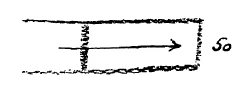
[ 15 ] The thing about the astral body is that it not only absorbs space, but—curiously enough—it also absorbs time. For it has a certain retroactive quality. The astral body is retroactive. I can make this very clear to you right now using the example of a human being. Just imagine for a moment that you have become an older person, about 50 years old. Indeed, forces are constantly at work in your astral body that take you back to the times of your past earthly life, back to the time before puberty. In your astral body, you do not actually experience this 50-year-old. In reality, you experience the 11-, 12-, 13-, and 14-year-old. That person shines into you because the astral body takes you back. That is the mystery of life. We actually grow old only in relation to the physical body and the etheric body and its oscillations. The astral body is what constantly takes us back to earlier stages of life. There, we are still more mature children. All of us together are still more mature children through our astral body. So if we mentally image our life’s course as a tube, and we are 50 years old here, then our more mature childhood—precisely because the astral body leads us back—radiates its essence right into our fifties. In the astral realm, one always lives in a retrograde manner—but this retrograde life only becomes independent with the onset of sexual maturity. If one recognizes this in all its seriousness, then one naturally wants to preserve for the children, throughout their entire lives, what one instills in them during their school-age years. One wants to preserve that for them. For what you instill in the child at that time lives on with them throughout their entire life, because the astral body always acts retroactively. For everything you accomplish with the child during their compulsory schooling years, the entire course of human life actually lies before you—even if the person lives to be 90 years old. This is what gives “pedagogy of disposition” its true responsibility. For it is this responsibility that enables one to truly understand what one is doing. And one only comes to understand this when one truly comes to know such connections in life.
[ 16 ] Well, once you understand this, you will no longer simply say: “Teach the child only what it already understands.” For, in terms of human nature, it is actually a terrible thing to teach a child only what it already understands. And those textbooks and pedagogical manuals for teachers that were written under the influence of this kind of narrow focus on the concrete are exasperatingly trivial. They always seek to lower themselves to the child’s level and treat things only in such a way that the child can already grasp every detail. In doing so, they rob the child of something immense; anyone who understands the connection between a child’s life and the whole of human existence can see this. Suppose a child has taken in something that it cannot yet understand at the age of eight simply because it loves its teacher and educator, and because what the teacher says seems true, beautiful, and good to the child. Love for the teacher—that sympathy—is the vehicle for absorption; one is not truly ready, let’s say, until the age of 35 to understand this matter. —It is difficult for modern people to accept such a notion, because they refuse to admit that for some things one does not become ready until the age of 35, but it is nevertheless true: One only becomes mature for whatever one has absorbed out of love for the teacher by the age of 35. Then one has an experience through the reflective power of the astral body. Something wells up from within; it appears like a mirror image; in reality, it is a return to childlikeness. It is like a rising in insight. You are 35 years old, you have come of age—and from the depths of the soul something emerges: Only now do you truly understand what you took in back then, when you were eight years old. And this ability to understand something that has long lived within you—that has lived within you out of love—is something immensely refreshing in life. We can give this refreshment to the child’s life if we preserve our authority over them in such a way that the vehicle between them and us is love, is sympathy—and we give the child what they cannot yet perceive or understand, but what must first grow within them over the course of their life.
[ 17 ] The very person who always wants to present only what the child understands is completely unaware of these connections. But the opposite is also entirely wrong and inappropriate. Anyone who understands human nature will never, as an educator or teacher, utter the phrase: “You don’t understand that yet!”—it must never happen that one is ever led to say to a child, at any age: “You don’t understand that yet.” For there will always be a form in which one can express what the child wants to know, provided one has the right relationship with the child. One simply has to find that form. And one finds this form when one makes the kind of pedagogy referred to here an instinctive way of life. One simply finds the appropriate form at the very moment one needs it. And above all, one then finds the possibility of not giving the child sharply defined mental images. For it is terrible to work out all mental images for the child so clearly that they become rigid. If one does that, it is as if one were clamping the child’s little hand into an iron glove, so that it can no longer grow. We must never teach the child ready-made mental images, but only those that can grow, that can change—mental images that have a life of their own.
[ 18 ] If, then, we stick to the pictorial and creative aspects until around the age of 12, we will not be tempted to present the child with sharply defined, in a sense rigid, conceptual figures. For it is as if we were forcing a small child’s little hand into an iron glove, so that it can no longer grow. And what I have outlined as teaching does not give any reason to force things into rigid conceptual forms, but rather to shape them with words, with the hand, on the blackboard or wherever else, to paint vividly with a brush in paint, to draw, and so on. But the awareness is always there: it is flexible in itself, and it must remain flexible; for one must know that something develops in the child only around the age of 12—and very close to the age of 12—and that is the sense of the concept of causality.
[ 19 ] Children have no concept of causality at all until around the age of 12. They see what is in motion—what are dynamic mental images. They observe and perceive what is present as pictorial or musical, but the concept of causality makes no sense to them until around the age of 12. Therefore, what we teach the child until around the age of 12 must be free from the concept of causality. Only then can we expect the child to grasp the general relationships between causes and effects. From that point on, the child actually begins to think for itself; until then, it has only pictorial representations. For what is already beginning to emerge is what will fully emerge with sexual maturity: the intellectual, judgmental life, which is linked to thinking in the narrower sense—whereas life between the change of teeth and sexual maturity is linked to feeling, and life before the change of teeth is linked to the will unfolding within, which at this age is not governed by thoughts but by imitation of what the child encounters physically. But along with what the child encounters physically, the moral and spiritual aspects also become firmly rooted in the child’s physical being. Therefore, it is also impossible to teach a child anything that requires an understanding of causality between the ages of 10 and 11—and in most cases, even between the ages of 11 and 12. One should therefore begin teaching about the mineral world only around the age of 12. And physical concepts should also be introduced only around this age, after they have essentially been prepared beforehand. Only then is the child ready to absorb such concepts. The child can grasp everything related to the inorganic realm in the sense of a causal concept only around the age of 12. Of course, everything must be prepared beforehand, but not through concepts of causality; rather, what will later be grasped through these concepts of causality must be prepared in images that do not involve the concept of causality. The child must, so to speak, have a subject matter to which it can apply these concepts of causality. That is one aspect.
[ 20 ] On the other hand, you cannot help children younger than 12 years of age to grasp the connections within a story. Instead, you should present them with individual character portraits that either inspire approval through their kindness, truthfulness, or similar qualities, or inspire disapproval through the opposite. History must also be grounded in approval and disapproval, in the life of feelings and emotions: complete pictures of events and personalities, but pictures that are kept flexible in the sense I have indicated. On the other hand, causal connections between earlier and later events—you can only teach these to the child once this “retroactive” aspect of the astral body begins to shine within them, which then becomes more pronounced after the age of 14. Around the age of 12, the child enters into this retrospective aspect, and one can then begin to appeal to the concept of causality in history as well.
[ 21 ] Essentially, one is setting the child up for something quite terrible in life if one considers the concept of causality and the intellectual judgment associated with it. For you see: at first, there is only the etheric body. Around the age of 12, the astral body slowly begins to take shape; it is then fully formed upon reaching sexual maturity—but before that, only the etheric body is present. If you instill judgments of “yes” and “no” in the child at that stage, or allow the child to internalize concepts, then these things enter the etheric body rather than the astral body. But what else does the astral body carry? Consider this: you will be able to deduce it from the fact of sexual maturity—the astral body is the bearer of human love. It is, of course, already at work in the child beforehand, but it has not yet been fully developed. As a result, you are then implanting “yes” and “no,” the critical judgment, into the etheric body instead of the astral body. If you implant it into the astral body at the right time, then you add to the judgment—and even to the criticism—the power of love, the power of goodwill. If you commit the misdeed of making the child critical too early, of conditioning it to “yes” and “no” too early, then you cram this “yes” and “no,” this criticism, into the etheric body. This is not benevolent: it is absorbing, it is actually malevolent, and it has a destructive effect. You do this to the child when you teach it the “yes” or “no” judgment too early—and a “yes” or “no” judgment is always rooted in the concept of causality. One looks at the completed process; one looks at the personality as it is vividly portrayed. When, in the course of history, one connects later events with earlier ones in successive epochs, one judges, one rejects, one accepts. The “yes” and “no” are always present there, and ultimately one ends up with precisely that which is actually a resistance against what confronts one as a judgment in the world. One does not receive the judgments of others with love, but with a destructive force lying within oneself, if one develops the power of judgment too early. From such things, one can truly see how crucial it is to do the right thing at the right time during one’s school-age years.
[ 22 ] And just consider for a moment the transition in this regard from animal to human. You judge an animal by its form. The form itself already reveals what the animal does; you look at what the animal does. With humans, one must seek the causa, the cause. Yes, you see, because a child does not become mature enough to seek the causa until around the age of 12, there must also come a point where the animal world is synthetically synthesized into the totality of the human being. The point here is to present this to the child as an experience—one that inner nature demands become an experience at a specific time.
[ 23 ] But you must admit: there is a truly immense transformation in a child’s nature between the loss of baby teeth and sexual maturity. In a sense, the child’s soul travels the path from the very inside to the outside. Just consider that, up until around the age of 12, a child cannot bear to have human nature described to them. Then they begin to tolerate this—conceptually and imaginatively—and to see themselves reflected in the mirror of the world. They can endure and accept themselves when one describes what it means to be human. It is truly a complete reversal of human nature from the change of teeth to sexual maturity.
[ 24 ] Now, within this period lies a very important life transition. For most children, it occurs between the ages of 9 and 10; however, this varies from child to child, and for some children it extends beyond the age of 10. At this point, every child experiences a phase where they instinctively and unconsciously face a kind of life mystery. This turning inward and outward, this realization that one is a “self” and that the world exists outside—which until now had been intertwined—is something the child does not experience consciously, but rather through the inner doubts and restlessness that arise. Physically, this is expressed in that, at this stage of life, breathing actually begins to properly integrate with blood circulation. A balance is established here. The appropriate ratio between pulse and breaths is established for the individual. That is the physical counterpart; the psychological-spiritual aspect is that the child now, at this stage of life, needs us—as teachers and educators—more than ever. An appeal is made—not in the form of a question, but rather as a kind of behavior—to the teacher or educator precisely at this stage of life.
[ 25 ] We must now acquire the pedagogical skill to correctly assess, in each individual case, the great question of life that the child now wishes to pose to us, based on the child’s manner. What, then, is this question of life? Well, you see, up to this point in life, the natural relationship of authority has actually developed in such a way that, as a teacher and educator, one is the world to the child. For the child, the stars move because the child knows that his or her educator knows that the stars move. Everything is simply good and evil, beautiful and ugly, true and false, because that is how the teacher and educator perceives it. Everything that comes from the world must, in a certain sense, pass through the teacher and educator; that is the only healthy relationship. Between the ages of 9 and 10, sometimes a little later, the question arises in the child’s soul—not in terms of concepts and mental images, but in feeling and sensation: “Yes, where does the teacher and educator get all this from?” For then, if I may speak figuratively, this teacher and educator suddenly begins to become transparent. One “wants to see behind him the world that lives behind him.” Here he must stand his ground; here, in the face of what the child brings forth, he must maintain within the child the conviction that he is truly connected to the past, to the world; that he truly carries truth, beauty, and goodness within himself. There, the child’s unconscious nature tests the teacher in a truly unprecedented way, I would say. It tests him to see whether he truly carries the world within himself, whether he has been worthy, up to this point, of being the child’s representative of the entire cosmos.
[ 26 ] And yet again, this cannot be put into words. If one were to demonstrate this even slightly in a theoretical way—through reasoning or the like—then the unconscious nature of the child, because it makes no sense of causality, would perceive this as a weakness, not as a strength of the teacher; merely as a weakness. For everything that must first be proven already lives weakly in the soul; that which lives strongly in the soul does not need to be proven in the first place. The same is true in cultural development. I do not wish to pass judgment on the substance of the matter at this point, but I would like to draw your attention to the dynamic aspect of it: Up until a certain point in the Middle Ages, people knew what the Lord’s Supper meant. At that time, they had not yet been seized by the need to prove it. Then, suddenly, people began to feel the need to prove the Lord’s Supper. For anyone who sees through this, it’s merely proof that people simply no longer knew anything about the Lord’s Supper. —For you don’t prove that someone is a thief when you’ve seen him, but only when you haven’t seen him; if you’ve seen him, you simply call him a thief. Proving always refers to what one does not know, but never to what one truly knows through the facts of life itself. That is why it is so absurd when people seek a connection between formal logic and reality. It is much like someone seeking an inner connection between the path that leads to a mountain and the mountain itself. For the path exists so that I may reach the mountain; that is where the mountain begins. Logic exists only to lead one to reality; reality begins only where logic ends.
[ 27 ] Yes, knowing these things for oneself is of fundamental importance. So one must not fall into the trap of trying to prove to the child, at this crucial point in life, that one is the true representative of the world. Instead, one must now, through a new way of behaving, instill in the child the immediate, intuitive conviction: Yes, he knows much more than we had previously thought! When the child realizes: the teacher is capable of growing; he hasn’t shown the child all his facets yet; he hasn’t revealed his full potential—and now he might say something to the child in complete confidence that surprises the child, so that the child unconsciously senses it, pricks up their ears at the new insight they’ve gained from the teacher—then the right relationship has been established. So one must hold something back—above all, be able to hold it back for this very moment—so that, as a teacher, one can rise to the occasion in the child’s presence. For this is the solution to an important riddle of life at this juncture: that one can rise to the occasion for the child, for the child’s perception, that one suddenly rises above oneself. This is the comfort and strength one must give the child at this point, because the child already approaches the teacher—toward whom it has developed the necessary sympathy and love—with this very request. The other teachers, however, will simply have the bitter experience of seeing their authority gradually fade away and vanish as the child reaches the age between 9 and 10; for then it is no longer there. Then these teachers will resort to the dreadful attempt of trying to prove everything to the child, and the like.
[ 28 ] Yes, and once you’ve developed a sense for such reflections on life, you’ll come to realize other things as well. You see, the individual things you introduce to the child must be thoroughly interconnected. Now, as I told you: we let the child paint in whatever way comes from their own creative powers—not with pencils, of course, but with real paints. Then I notice: the child lives with the colors. Little by little, for the child—you just have to have a sense yourself that this is how it is—blue becomes something that recedes, moving into the distance; yellow and red become something that draws near. This is something that becomes very evident in the child as early as the 7th or 8th year, provided one does not torment the child at this age with some kind of rigidly structured drawing or painting. Of course, if one makes the child paint houses and trees as they are in reality, it doesn’t work. But if you let the child follow their own lead, so that they have the feeling: wherever I move my hand, that’s where the color goes—the substance of the color is only a secondary matter—then the color comes alive beneath their fingers, and it wants to continue on somewhere—if you achieve this, you cultivate something very meaningful in the child’s soul: color perspective. The child gets the feeling that the reddish yellow is coming closer, that the blue-violet is receding farther and farther. In this way, one works out from the intense experience what one will later develop with the child: perspective, which is then expressed through lines. It is terribly harmful to teach perspective to a child at a later age if they have not first been taught a kind of intense color perspective. This leads to a terrible alienation of the human being when they become accustomed to mastering quantitative perspective without first having mastered the intense, qualitative perspective inherent in color perspective.
[ 29 ] And this is where the broader connections come into play. If you prevent the child from fully immersing themselves in the world of color, the child will never learn to read at the proper pace. Always bearing in mind the caveat I mentioned yesterday: It is not a matter of teaching the child to read as quickly as possible at the very beginning. But the child develops flexible mental images, flexible sensations, and flexible acts of will from these color perceptions. Everything in the soul becomes more supple. Perhaps, because of everything required here—developing reading through painting-like drawing and drawing-like painting—it will take you longer to introduce reading to the child. But at the age when it really matters, it is then possible to truly teach the child to read properly, without the skill being too fleetingly rooted in the body—or in the whole person—as can sometimes be the case, and without it being rooted too deeply within the person, so that every letter literally carves a groove into the child’s being.
[ 30 ] What matters is that, in the right sphere, one possesses within oneself what the soul-spiritual realm comprehends. One must never judge by the standard that says: “Why should the child learn to draw like that? It will never need it in life!” That means looking only at the outward appearance. In fact, the child needs it immensely, and one must understand something of the spiritual nature of the human being if one wants to grasp the connections that are necessary for the child. Just as the phrase “you don’t understand that” should not be used, there should never be any skepticism about what the child needs or does not need. What the child needs should flow from the laws of human nature. If it flows from there, then one instinctively does the right thing. Then one isn’t at all disheartened if the child forgets some of what it has taken in. For then things pass from knowledge into skill. And it is so important that we possess these things as skills later on. We will not possess them as skills if we are overloaded with knowledge. It is necessary to know these things and to truly incorporate them into educational practice—to ensure that we commit to memory only as much as is required by social life, since there is no point in overloading the memory.
[ 31 ] And this brings us to those questions of practical life that arise primarily from the relationship of the individual human being to the social entity that surrounds them—to the national entity, the social entity of all humanity, and so on. For we must also take great care not to violate the essence of human nature when we seek to incorporate social demands coming from outside into educational practice.
Question and Answer
[ 32 ] On musical education (in response to a question about music lessons for a 17-year-old girl).
[ 33 ] The essential point, after all, is what Mr. Baumann has pointed out: that precisely with the onset of puberty and in the years that follow, a certain musical judgment takes the place of an earlier musical sensibility and musical experience. Musical judgment then emerges. This is, of course, very clearly evident in the phenomena that Mr. Baumann has characterized. A certain degree of self-observation sets in among the children—an observation of their own singing—which in turn enables them to use their voices more consciously and so on. This must now also be cultivated methodically. But then it becomes very apparent that, starting precisely at this age, that natural musical memory begins to wane somewhat, so that from this age onward, children must exert more effort to retain musical material in their memory. This is something that must be given special attention in instruction. While children lead a natural, effortless life in music until puberty—retaining things very easily—those who previously had excellent retention sometimes begin to experience difficulties in retaining information; that is, not so much in acquiring it, but in retaining it. This must be addressed. One must try to repeat things not immediately one after another, but frequently. In particular, what stands out strongly at this age—and psychologically there is a very subtle, intimate difference underlying this—is that, whereas previously instrumental music and vocal music merged into one, these two aspects become very clearly distinguished from one another starting around the ages of 16 and 17. One listens much more consciously to the instrument; from this age onward, one also listens much more consciously to instrumental music. One gains a greater understanding of instrumental music than before. Previously, the instrument sang along, so to speak; afterward, one hears the instruments; listening and singing are then two distinct processes, even if they proceed in parallel. The distinctive feature lies in this relationship that then develops between singing and understanding the instrument. Teaching methods must therefore be adapted accordingly. It is important not to begin with theoretical music at all before this age, but rather to engage in music practically and to link whatever one wishes to observe theoretically to the immediate practical activity; and then, gradually—precisely at this age—to make the transition to judging music rationally as well. What Mr. Baumann hinted at last—that one can teach children certain aspects of self-awareness through their musical expression—is absolutely correct. And while, for example, when—as we do in Waldorf schools—we encourage older children to engage in artistic activities, allowing them to create all sorts of things, and while we can perceive the children’s individual characteristics right from the start in what they produce artistically —there is something distinct about what different children create in art; indeed, something quite different—in music, however, one cannot initially address what is unique to each child. That only becomes apparent once the child has reached this stage of life. Then, of course, one can—particularly by drawing on the child’s already more intensely emerging inclinations toward this or that musical direction—guide the child to avoid one-sidedness. So if a child particularly loves a certain kind of music—let’s say, for example, that in our present-day civilization there are very many children for whom it is almost a given that they will become devoted Wagnerians— One must counteract this, because what is actually happening is that the musical is being absorbed too strongly through emotion rather than through the inner shaping of the music itself—I don’t mean to say anything against Wagner—so, in a sense, the musical slips too far into the emotional life. One must then lift it back up. The musician can also tell this by the quality of the voice. The voice sounds different in a child in whom the musical aspect slips too far into emotion than in a child who hears the shaping of the tones and has a true understanding of the plasticity in music. This stage of life is particularly important for working in the right way to foster a proper musical feeling and understanding. Of course, it must be taken into account that, until puberty, one inevitably stands beside the children as an authority figure. At that stage, one does not yet have the opportunity to observe these aspects in the child. Later on, one no longer stands beside the child as an authority figure, but rather through the weight one can give to one’s own judgment on the child’s behalf. Until puberty, whatever the teacher considers right is right, and whatever the teacher considers wrong is wrong—simply because the teacher considers it right or wrong. After puberty, one must provide justification—including musical justification. That is why it is very important that, precisely when there is a reason to continue music instruction into this period, one really delves deeply into justifying the judgments one draws upon. —Yes, one could talk about this topic all night long if one wanted to.
[ 34 ] Question: Isn't it a lie to ask a child about something you already know?
[ 35 ] There is something very interesting underlying this. When I ask someone about something, the premise is that I want the answer because I don’t know it yet. Now, when I ask a child about something, I already know the answer, so I am telling a lie. — Now, teaching is very much about the imponderables. You see, it is sometimes absolutely necessary to realize this. I often use an example to illustrate this: When teaching religion in a visual way, one can, when discussing the concept of immortality, use an image in the following manner. One tells oneself: You want to teach the child—who cannot yet understand any conceptual discussions—something about immortality in a visual way. You are a smart teacher, and the child is not very bright; so, drawing on my own intelligence, I create an image. I do this by saying: “Look at the butterfly chrysalis; when it’s ready, the chrysalis opens, and then the beautiful butterfly flies out.” Just as the butterfly flies out of the chrysalis, so does the immortal soul fly out of the body when a person dies. This is what is taught to the child. Fine, but one will notice that if one teaches the child this from this perspective, it will not make a very strong impression on the child. For the teacher, in his cleverness, naturally does not believe in the image himself, but merely uses it to explain the question of immortality to the “stupid” child. But there is another approach: believing in the image oneself. And here I can say: If one is not terribly clever but is in touch with reality, one believes in it oneself. Then one takes the image in such a way that one says to oneself: It is not I who am making the comparison, but the world order itself has presented this image; what is expressed in the butterfly’s emergence from its cocoon—on a lower level—truly embodies and symbolizes what is present in the immortality of the soul. I can believe in that. Notice the difference: When I believe in my own images myself—with everything that lies in my words—and when I teach them to the child, the teacher’s attitude influences the child. You can find an infinite number of such examples. And so the intangible factors also play a role in the interesting question that has just been raised. It is not a matter of the teacher holding the view: “I know this, the child does not, and I am asking this as if I wanted to know.” Isn’t it true that there is a great difference between, for example, asking the child about the Battle of Zabern—and I know the answer, but the child does not—or the child also knows it; the untruth lies in the fact that I ask while I already know the answer. However, I can still have the attitude that I am nevertheless interested in the child’s answer, and I ask the questions primarily with the intention of finding out exactly what the child thinks about the matter. Then I truly do not know what the child will say. The child explains things to me in a nuanced way. And if I set for myself—as I have often emphasized in my lectures—the ideal that no wise person is so clever that they cannot learn something from an infant—indeed, no matter how advanced one may be in science, an infant’s cry can teach one a great deal—then, as a teacher, one can actually learn how to teach from every answer the child gives, provided one asks the question with this mindset. One certainly cannot extract from every answer a child gives simply what one wants to hear—what one already knows—but rather one can come to know what the child is telling you. Then one will also ask the question correctly. Then, for example, one will very often phrase the question this way: “What do you think about that?”—Even in the way the question is phrased, there will be an indication that you, as a teacher, are curious about what the child will answer. It is truly the case that much depends on the intangible factors at play between child and teacher. If one understands the subconscious life as it is developed in the child, one will discover many other things as well. This is also where the issue of dishonesty in the classroom comes into play—if one wants to put it bluntly—when the teacher stands in front of the class and teaches from a textbook or relies on notes they’ve jotted down. Yes, isn’t that right? Under certain circumstances, this can be very convenient for the teacher. But for the lesson itself, it’s actually terrible; terrible precisely because the child is constantly forming a judgment in his subconscious when the teacher stands in the classroom presenting the material in this way. The child’s subconscious asks: Why should I know what he doesn’t know? I’m expected to know what he’s reading to me from his book. - You see, this is an even greater falsehood that enters the classroom in this way than through asking questions. Even when dictating practice sentences, one should be careful not to dictate directly from the book. If one pays attention to what is going on inside the child, and the child realizes that the teacher is genuinely interested in him or her and is not asking the question out of a desire to deceive, then the situation is entirely different. In this way, one will truly succeed in eliminating all deception from the question-and-answer relationship between teacher and child.