

Anthroposophical Pedagogy
and its Prerequisites
GA 309
15 April 1924, Bern
Translated by Steiner Online Library
Third Lecture
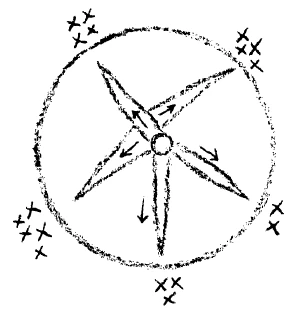
[ 1 ] I have repeatedly pointed out in previous lectures that it is essential for educators and teachers to direct their attention, above all, to those life transitions and metamorphoses that occur with the change of teeth and the onset of puberty. Attention to these matters is usually not fully developed because people today are accustomed to focusing solely on the gross, external manifestations of human nature according to so-called laws of nature, whereas what is of concern to the educator arises from the innermost core, from the innermost center of the human being, and, in turn, what the educator does also works its way into the innermost center of the human being. And so it is necessary, during this turning point in life that occurs with the change of teeth, to pay very special attention to how the soul itself becomes something entirely different.
[ 2 ] One need only take a close look at a single aspect of this realm of the psyche: memory, the ability to recall. This memory, this ability to recall, is fundamentally quite different in a child until the time of tooth replacement than it is later on. However, in humans, these transitions are naturally slow and gradual, and such a single, fixed point in time is, so to speak, only an approximation. But what is taking place must be considered very carefully, precisely because this point in time, so to speak, falls right in the middle of development. For when one observes this in a very young child, one finds that the child’s memory—its ability to recall—is actually what one might call a habitual mode of behavior of the soul. When a child remembers something during the first stage of life up to the time of tooth replacement, this remembering is a kind of habit or skill; so that one can say: Just as I have learned to perform a certain task—for example, writing—I do many things out of a certain suppleness of my physical constitution that I have gradually acquired. - Or observe a person as they attempt to do something in childhood, and you will see that the concept of habit can be derived from this. One can see the way in which the person has become accustomed to moving their limbs in one way or another. This becomes habit; this becomes dexterity. And so, even within the child’s finer constitution, dexterity becomes the soul’s response to what the child has done through imitation. What the child has done today by imitation, it does again tomorrow and the day after; it does this not only in relation to external physical actions but extends into the very innermost essence of the body. This becomes memory. It is not like what memory becomes later, after the teeth have been replaced. After the teeth have been replaced, the spiritual-soul aspect separates from the body and emancipates itself, as I have said before. Only then does an incorporeal image content—a pictorial representation of what has been experienced in the soul—come into being within the human being. And time and again, whether the person encounters the same object or event externally, or when an inner impulse arises to evoke the image as such, this image is evoked as such. The child has no image for its memory; it does not yet bring forth an image. After the change of teeth, an experienced concept or an experienced mental image reappears as a remembered concept or a remembered mental image; before the change of teeth, one lives in habits that are not internalized as images. This is connected to the whole of a person’s life beyond this stage of the change of teeth.
[ 3 ] If one observes human beings in their development using the means of inner contemplation—the eye of the soul and the ear of the soul—that were discussed yesterday, one sees that human beings do not consist solely of this physical body that the outer eyes see and that the hands can grasp, but also of supersensible members. I already drew attention yesterday to the first supersensible human being, so to speak, within the physical-sensory human being: this is the etheric human being. But we also have a third aspect of human nature—one need not take offense at the terms; terminology must exist everywhere—we have the astral body of the human being, which develops the capacity for sensation. The plant also has an etheric body; the animal shares an astral body with the human being and possesses the capacity for sensation. As the crown of earthly creation, as a being that stands alone, the human being has, as a fourth component, the “I” organization. These four components of human nature are now completely distinct from one another. But they are not distinguished in ordinary observation, because they interact with one another, and because ordinary observation actually only extends as far as some manifestation of human nature arising from the etheric body, the astral body, or the “I.” Without truly knowing these things, teaching and education are, in fact, not possible. It is even difficult to bring oneself to utter such a statement today, because it seems grotesque—even paradoxical—to the vast majority of civilized people today. But it is simply the truth; once a genuine, unbiased understanding of human nature has been acquired, there is nothing that can be objected to in such a matter.
[ 4 ] Now, what is particularly distinctive is precisely how human nature functions through the etheric, astral, and ego organizations. This must be taken into account in education and teaching. As you know, we come to know the physical body when we carry out the kinds of observations we are accustomed to making on living human beings or even on corpses, and when we use the intellect—which is linked to the brain—to make sense of what we perceive through the senses. But this is not how one comes to know the higher aspects of human nature. These elude mere sensory observation as well as the intellect. With a way of thinking rooted in the ordinary laws of nature, one cannot, for example, gain access to the etheric body. Therefore, teacher training and university education should not only incorporate methods that enable people to observe merely the physical body—and to do so with an intellect bound to the brain— but—in order to develop a certain ability to truly perceive, for example, the way the etheric body manifests itself in human beings—a completely different kind of seminar and university education would be required. This would be necessary both for teachers in all fields and, in particular, for physicians. And this would consist, first and foremost, in learning to sculpt truly from within, out of the unfolding of human nature, so that one would be able to create forms based on their inner laws. You see, the form of a muscle, the form of a bone, is not understood if one tries to grasp it the way it is done in today’s anatomy and physiology. Forms are only understood when one grasps them through a sense of form. Yes, but then something immediately arises that, for people today, is regarded as bordering on madness. But Copernicanism, too, was once regarded as half-madness, and a certain church community considered the Copernican doctrine, right up until the year 1828, to be something nonsensical that must be forbidden to the faithful. — The matter at hand is as follows.
[ 5 ] Let us consider the physical body: for example, it is heavy, it has weight, and it is subject to gravity. The etheric body is not subject to gravity; on the contrary, it constantly strives to move away, to disperse into the vastness of the universe. It does so immediately after death. The first experience after death is to experience the dispersion of the etheric body. One thus experiences that the physical body follows the laws of the earth entirely when it is laid to rest in the grave; or when it is cremated, it burns just as any other body burns according to physical laws. This is not the case with the etheric body. The etheric body strives away from the earth just as the physical body strives toward the earth. And this striving away is not a random striving in all directions or a uniform striving. But here comes what seems grotesque, yet is true—a true perception for the observation I have spoken of.
[ 6 ] If you consider the Earth’s orbit: out there we find one cluster of stars, then another, then one that is different again, and so on—there are specific clusters of stars everywhere. It is these clusters of stars that attract the human etheric body, drawing it out into the vastness of space. Let’s assume he were there—drawn schematically—then the etheric body is drawn toward this star cluster, which exerts a strong influence; it wants to move out strongly. It is drawn less strongly toward this star cluster, and toward other star clusters it is drawn differently, so that the etheric body is not pulled equally in all directions, but is pulled differently in different directions. What emerges is not an expanding sphere, but rather, as the etheric body seeks to expand, what arises is that which the cosmic forces emanating from the stars can shape into a specific human form, as long as we live on Earth and carry the etheric body within us. We see how, in a thigh, that which forms the muscle comes from the stars, just as that which forms the bone comes from the stars. One need only learn how forms can arise from the most diverse directions of the cosmos. One must be able to take modeling clay and form a shape in which, let us say, the cosmic force acts lengthwise, but in such a way that, with a certain force, the shape rounds off sooner than with other forces. The shapes that round off sooner result in round bones, while the others result in tubular bones.
[ 7 ] And so, as a sculptor, one must actually develop a sense of the world. This sense was originally present in humanity’s instinctive consciousness. And while it was expressed quite clearly in the Oriental art of prehistoric millennia, we can also trace it in Greek art. Just think how today’s naturalistic artists are often at a loss when faced with the forms of the Greek human figure in sculpture. Why are they at a loss? Because they believe the Greeks worked from models. They have the impression that the Greeks were able to observe human beings from every angle. But the Greeks still had a sense of how the human being emerges from the cosmos, how the cosmos itself shapes the human being. When the Greeks created a Venus de Milo—which drives today’s sculptors to despair—they incorporated into the human form, at least in part, that which emerges from the cosmos, a form only slightly disturbed by earthly development. So the point is that one must realize: If one wishes to recreate human beings in accordance with nature, one cannot slavishly adhere to the models—the kind of models placed in studios today—and slavishly shape human beings after them. One must be able to turn to the great cosmic sculptor, who creates form out of what can become a sense of space for human beings. This must first be developed: a sense of space!
[ 8 ] People usually think you can draw a line through a person—a line through their outstretched arms like this, and a line like that (he draws). These are the three spatial dimensions. People slavishly map the human figure onto these three spatial dimensions. It’s all abstraction. If I draw a true line through a person, I have entirely different forces pulling this way, entirely different ones that way, and so on, extending into all parts of space. This geometric space—which has become “Kantian space,” about which Kant offered such unfortunate definitions and theories, a purely contrived figment of the imagination—is in reality an organism that possesses different forces in every direction. Because human beings develop only their coarse senses, they do not develop this subtle sense of space. One can have this in every direction. If one allows it to take effect, then the human being truly comes into being. The human being comes into being sculpturally out of inner feeling. And if one has a feeling for this tactile handling of the soft, malleable mass, then this handling of the soft, malleable mass provides the basis for understanding the etheric body, just as the intellect—which is bound to the brain—and the sense organs provide the basis for understanding the physical body.
[ 9 ] The point is that one must first establish the method of cognition: namely, plastic perception, which is always linked in some way to plastic inner activity. Otherwise, human cognition stops at the physical body, for the etheric body is not to be grasped in concepts but in images, which one can only comprehend if one can, in a certain way, recreate them as they are in the cosmos.
[ 10 ] Then we come to what constitutes the next link in the human being. How do things stand today? On the one hand, there are the prevailing scientific views and their proponents, who authoritatively teach modern humanity what is correct. Standing isolated in the world are the anthroposophists, whose souls have been distorted, who also speak of the existence of an etheric body and an astral body. They recount what there is to be said about the etheric body and the astral body. People accustomed to scientific thinking want to grasp the astral body with the same thinking and the same methods as they use for the physical body. That is not possible. The astral body manifests itself in the physical body; its manifestation in the physical body can be understood according to the laws of nature. But the astral body itself, in terms of its inner nature and activity, cannot be understood according to the laws of nature. One can understand the astral body if one possesses not only an external but also an inner understanding of music—as was also present in the East, subdued during the Greek era, and no longer present at all in more recent times. Just as the etheric body acts out of cosmic plasticity, so the astral body acts out of cosmic music, out of cosmic melodies. In the astral body, only the meter is earthly; rhythm and melody arise entirely from the cosmos. And the astral body consists of rhythm and melody. One cannot approach the astral body with what has been derived from the laws of nature, but must approach it with what one acquires through an inner understanding of music. Then one will find, for example, that when a third is played: there is something present that is experienced and felt by the human being as if it were within them. Hence, there can still be a major third and a minor third. In this way, a considerable difference can be brought about in human emotional life through this structure of the scale. This is still something inner. When we come to the fifth, it is experienced on the surface; this is precisely a boundary for the human being; there the human being feels as if they were just barely still within it. When they reach the sixth or the seventh, they feel as if the sixth or seventh were trying to move outside of them. In the fifth, they step outside themselves, and as they enter the sixth and seventh, they come to perceive what is happening in the sixth or seventh as something external, whereas they perceive the third as something eminently internal. This is the active astral body—the musician within every human being—that imitates the music of the worlds. And everything that is within the human being is, in turn, active within the human being and takes shape in the human form. This is something that, once one is able to approach such a contemplation at all, can have a truly shattering effect on one’s understanding of the world.
[ 11 ] You see, what passes from the astral body into the physical form—but which is not already grounded in cosmic plasticity, rather arises from the musical impulse flowing through the human being from the astral body—can also be studied directly; one must simply approach the human being with an understanding of music, just as one previously approached them with an understanding of plasticity when studying the effects of the etheric body. If you take the part of the human organism that begins at the shoulder blades and extends down to the arms, this is an effect of the “prim,” the fundamental tone, that lives within the human being; and when you come to the “second,” it is located in the upper arm. These things become apparent through eurythmy. Moving on to the forearm, we have the “third”; in music, we have the major and minor thirds. As we move on to the third interval, we find two bones in the forearm; this pattern continues all the way down into the fingers. It may look like a figure of speech; but through genuine observation of the human being by Spiritual Science, it can be understood as clearly as a mathematician understands a mathematical problem. It is not something brought about by shoddy mysticism, but rather something that can be understood with precision. Thus, in order to grasp these things, seminary and medical education would actually have to be based on an inner understanding of music—that inner understanding of music which, with full deliberation, must return to what was the Eastern understanding of music even before the time of the Greeks. We can only understand Oriental architecture if we understand how religious perception has been imprinted into its form. Just as musical art expresses itself only through temporal experiences, so does architecture through spatial ones. One must understand human beings in the same way with regard to their etheric and astral bodies. And the life of feeling, the life of passion, cannot be understood by attempting to grasp it “psychologically”—as they say—according to the laws of nature, but only by approaching human beings with the same soul forms that one perceives in music. A time will come when people will no longer speak as today’s psychologists or teachers of the soul do about any pathological sensation; rather, when a pathological sensation is present, they will speak as one would about an out-of-tune piano: in musical terms.
[ 12 ] Do not think that anthroposophy itself cannot recognize where the difficulty in understanding it lies at the present time; I can certainly understand that there are many people who, at first glance, consider something like what I have described here to be fanciful, even borderline insane. But unfortunately, what is considered reasonable today is simply not enough to understand the human being; rather, one must go beyond to a broader form of reason.
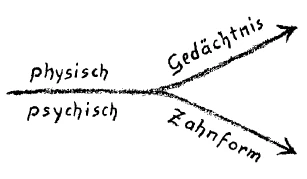
[ 13 ] In this regard, people today are quite peculiar in the way they approach anthroposophy. They cannot even form a mental image of what might, for the time being, be beyond their comprehension—and that, in reality, their comprehension cannot even begin to grasp it. I recently came across a very interesting book. Maeterlinck wrote a book—it has also been published in German—and it includes a chapter about me that concludes in a strange and terribly humorous way. He says: When you read Steiner’s books, the first chapters are logically sound, thoroughly well-considered, and scientifically structured. But then, when you read beyond the first chapters, you enter into something where you have to think that the author has gone mad.” — Maeterlinck is perfectly entitled to that opinion. Why shouldn’t he be allowed to have the impression: “He was a smart man while writing the first chapters; he went mad while writing the following chapters.” — But now consider reality. Well, Maeterlinck finds that in his books the first chapters are sensible, but in the subsequent chapters the author goes mad. Now here must be the strange fact: He writes books one after another, and in the first chapters he acts sensible, in the following ones he acts mad, then sensible again, then mad again, and so on. Just think how grotesque it is when one disregards reality in this way. People don’t even notice—when such rightly famous writers write this way—just how much madness is contained within it. It is precisely in the works of such enlightened minds as Maeterlinck that one can study how difficult it is today to approach reality. One must speak, on the basis of anthroposophy, of a reality that is regarded today as unreal.
[ 14 ] Now we come to the “I” organization. The point is this: This “I” organization can first be studied in its essential nature—just as the astral body is studied in music—through language. So one might say that everyone—including doctors and teachers (though teachers already acknowledge this)—must limit themselves to the current form of language. Can they then also understand the inner configuration of language? No, that is possible only for those who do not view language as what our mechanisms have made of it, but rather as something in which the genius of language acts spiritually as a living force. This is possible for those who train themselves to understand the way in which a word is configured. There is an extraordinary and immense amount of wisdom in words. Human beings do not do justice to this wisdom at all. The entire character of human beings is revealed in the way they form a word. One can recognize the distinctive character of peoples from their language. Take, for example, the word “head.” It is originally connected to the round shape found in cabbage, which is also called a “cabbage head.” The word for “head” is derived from its shape. This reflects a completely different state of the “I” than, for example, the Romance word “testa,” which comes from the act of bearing witness or testifying. Thus, the word was formed intuitively from a completely different source.
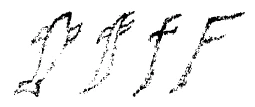
[ 15 ] When one understands language in this inner way, one looks into how the “I” organization functions. There are regions where lightning is not called “Blitz” but “Himlizzer.” These are people who say “Himlizzer”—they see not the simple, rapid flash of lightning, but its serpentine, segmented form. Those who say “lightning” see the flash; those who say “Himlizzer” see the lightning formed in this zigzag pattern. Thus, in accordance with their “I,” human beings actually live within language. However, as civilized people of today, they have stepped outside of language; language has become abstract. I am not saying that anyone who understands language in this way already possesses an inner clairvoyant consciousness through which they can look into beings that are similar to the human “I” organization; but one sets out on the path to looking into these beings when one accompanies speech with inner understanding.
[ 16 ] Thus, both at medical schools and at teacher training colleges, education should be conducted in the manner required when one is inwardly striving to create a vivid artistic effect—when artistic expression can be driven by a sense of space, an inner understanding of music, and an inner understanding of language. Now you will say: The lecture halls are already so empty; in the end, the seminars would become just as empty if all of that were included. Where would that lead? — There is a constant push to extend the duration of medical studies. If this continues with the current method, it will even lead to students not completing their medical studies until they are 60 years old! This does not stem from internal conditions, but rather from the fact that these internal conditions are not being met. If one does not move from abstract concepts to plastic understanding, to musical understanding, to an understanding of the world through language, then—if one remains stuck at the level of abstract understanding—the horizon becomes infinite; one can go on and on because one never reaches a boundary from which one can survey the whole. Through the inner understanding that arises when a vivid and musical grasp is added, the individual—because they become more rational inwardly—will truly not be delayed in their educational journey, but rather accelerated inwardly. In this way, we will develop a methodical training program for educators based on this inner process, one that educates both teachers and those who have a particularly important role to play in today’s pedagogy: physicians.
[ 17 ] Now that we have seen in the introductory lectures how the way people are raised and educated is connected to their overall state of health, it is immediately clear that a true pedagogy cannot develop without taking genuine medicine into account. It is quite impossible; the person must simply be able to be assessed according to their state of health and illness by the one who educates and instructs them; otherwise, the result is what one already senses: One already feels that a doctor is necessary in school. One feels this strongly and brings in a doctor from outside. But that is the worst method one could choose. — What is the doctor’s relationship to the children? He does not know them; nor does he know the mistakes made, for example, by the teacher, and so on. The only possibility is to practice a form of pedagogy that incorporates enough medical knowledge so that the teacher can constantly discern the healing or harmful effects of his or her actions on the child. But simply sending a doctor into the school from outside does not constitute a reform, even if one says the doctor is necessary. If the training of doctors is as it is today, doctors do not know what to do when they are sent into the school. In this regard, one must simply become familiar with that training if one is striving for a pedagogical art grounded in an understanding of humanity. - People shy away from speaking these things aloud precisely because they know how difficult they are to grasp and comprehend. But it is a mistake to believe that one can understand human beings using a few concepts derived from a natural-scientific worldview, and recognizing this is one of the essential conditions for the development of the art of education.
[ 18 ] Only when one holds such views will one be able to understand how radically human nature is affected by what happens, for example, during the period of tooth replacement, when memory actually becomes pictorial, no longer attached to the physical body but now attached to the etheric body. For what is the actual cause of the emergence of the second set of teeth? It is the fact that, until the change of teeth, the etheric body is closely—very closely—connected to the physical body. Then it separates somewhat; if it did not separate, we would get new teeth every seven years. For modern people, who wear out their teeth so quickly, this would indeed be necessary; I think dentists would certainly find themselves with a different line of work. Once the etheric body has separated, what previously acted within the physical body now acts in a soul-related way. For those who can observe such things, this is evident when they look into a child’s mouth without the child noticing. It is always best when the child does not notice it. That is why experimental psychology has so little success—because the child is so aware of it. One sees the child’s second set of teeth: they are formed from the etheric body and then become the plastic image of memory. From the configuration of the teeth, one can observe what kind of memory the etheric body has predisposed the child to. The teeth cannot be altered; one can file down a bit here or there, but one cannot change their fundamental structure. It would be possible to alter them somewhat if medicine were organized as Professor Römer has outlined in his treatise on dentistry—based precisely on the anthroposophical insights he has made his own—and something could indeed be done even after the permanent teeth have formed. But let us leave that aside. That which remains primarily in the soul—the formation of memory—can, when separated from the physical organization, when the etheric body stands on its own, set educators and teachers on the right track. Isn’t it true that, up until the change of teeth, there is a unity of the soul-spiritual and the physical-etheric? That which was physical and interacted with the psychic is expressed in the form of the teeth. What previously contributed to the formation of the tooth’s shape separates itself in an ideal intensification of power, becoming the formation of memory, fidelity of memory, and so on.
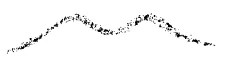
[ 19 ] When one looks deeply into human nature in this way, one can observe many things and incorporate them into education and teaching. Above all, when one is deeply imbued with such an understanding of human nature—when one observes human beings—one gains, in terms of didactics and pedagogy, that which truly inspires one from within, that which fills one with inner enthusiasm as a teacher, and that which translates into one’s teaching practice. What is based on rules found in pedagogical manuals is an abstract inner activity of the soul; what one gains from genuine anthroposophical understanding of human nature flows into action, into will; it becomes the impulse behind what the teacher actually accomplishes in the classroom. As a teacher, one is spiritually organized through a living understanding of human nature, whereas what arises from a purely scientific worldview may indeed provide very clever knowledge of what to do with a child, but one cannot actually do it because it does not enter into the physical teacher’s dexterity and lively application of the living spirit. And if one can enliven this within oneself through a genuine understanding of human nature, then one notices how this etheric body truly becomes free after the change of teeth, how there is a need arising from within the child to receive everything in images, for inwardly it wants to become an image. In the first stage of life, up to the change of teeth, impressions do not want to become images, but rather habits and skills; memory itself was habit and dexterity. The child wants to imitate what it has seen through its movements; it does not want to create an image. Then one can observe how perception changes; then the child wants to feel within itself what are true soul images; therefore, one must now bring everything into the realm of imagery in the classroom. The teacher must himself understand this process of making everything into images.
[ 20 ] But as soon as we begin to examine the facts, we immediately encounter contradictions. Children are to be taught to read and write; when they start school, it is taken for granted that one must begin with reading and that writing must be linked to it. But consider: what are the symbols we make with our hands on paper today when we write to express the meaning of something that lives in our souls? And what do the letters in books have to do with an original sense of imagery? How were these things taught to us? What on earth does this symbol “A”—which is supposed to be taught to a child—or even this symbol “a” have to do with the sound “A”? At first, absolutely nothing. There is no connection between this symbol and the sound “A.” In the times when writing first emerged, it was something entirely different. In certain regions, the symbols were pictorial. A kind of—even if it later became conventional—pictorial art was created: drawings that imitated the sensation, the process, in a certain way, so that one truly had something on paper that reflected what lived in the soul. That is why, when more primitive people came across these strange symbols—which, of course, seem strange to children—that we now call written characters, they had a very peculiar effect on them. When the civilized Europeans arrived among the Native Americans in the Americas, the Native Americans were particularly struck by these symbols that people were making on paper, through which they objectified themselves. The Native Americans could not comprehend this; they regarded it as the work of the devil, as little demons. They feared these little symbols as if they were demons; they considered the Europeans to be black magicians. Whenever one does not understand someone, one considers them a black magician.
[ 21 ] Now look at it this way: I know that amazement is expressed by letting out the sound “A.” It is only natural, then, for a person to try to imitate this “A” with their whole body and to express it with this gesture of both arms. Now try it yourself. (Both arms raised diagonally upward.) That already forms an “A”! And if you start with the child’s sense of wonder and begin teaching drawing as painting, then you can incorporate inner experience and outer experience into drawing as painting and painting as drawing.
[ 22 ] Consider the following: I remind the child of a fish and encourage the child—even if it’s uncomfortable—to draw the fish. You have to take more care here than you would otherwise have liked to in a more comfortable way. You have the child draw the fish so that the head is here and the rest of the body there. The child draws the fish; now it has produced a symbol through drawing-while-painting, through painting-while-drawing. Now let the child say the word “fish.” The child says F-ish. Now have them omit the “isch.” They have transitioned from “Fisch” to its first sound, “F.” Now the child understands how such pictographic writing came about, how it developed and later evolved into written language.
[ 23 ] One aspect has been imitated, while the other has been omitted. This gives rise to the symbol for the sound. One does not need to conduct studies to discern these things from the way events have unfolded. This is not strictly necessary for the teacher. He can do so only if he develops these insights through intuition—indeed, through imagination.
[ 24 ] For example, he sees the mouth; he tries to get the children to draw the upper lip, so that they end up drawing the upper lip. Now he guides them to say the word “mouth.” If you now omit the “and,” you are left with the “M.” In this way, you can derive all written characters from reality. And the child remains in a state of constant liveliness. Here, the child is first taught to write by allowing the abstract symbols of modern civilization to develop from the concrete. When you introduce the child to writing in this way, the child is engaged as a whole person. If you have the child read right away, the mental processes are engaged only abstractly; you are engaging only a part of the human being. If you begin with writing, you involve the hand; the whole person must become active. This ensures that instruction, when it arises from writing—namely, writing that develops out of drawing-as-forming and forming-as-drawing—reaches the whole person. Then one moves on to learning to read, so that what has been developed from the whole person through drawing-as-painting and painting-as-drawing can then truly be understood with the mind. This means it will take a little longer to learn to write and read; yet this approach also takes into account the much healthier development for the entire earthly life, from birth to death.
[ 25 ] This is the case when the conduct of the lesson flows from a genuine understanding of human nature. This, through its own power, becomes the method in the school. This is precisely what lives today in the aspirations that yearn for a different art of education—but its true essence can only be found if one does not shy away from truly engaging with a full understanding of the human being—body, soul, and spirit.
FAQ
Question: Can the harmful effects of parenting mistakes be overcome in adulthood?
[ 26 ] Certainly, an adult can overcome pathogens that were instilled in them during childhood; but the real point is that adults can be spared this effort if they are raised properly. Of course, it is a different matter if, let’s say, one is raised in childhood in such a way that, through the psychological realm, the seeds of gout, for example, are planted within a person. If one does not develop gout, one can do something other than devote oneself to treating gout in one’s forties. That is certainly more pleasant! Just consider those people who suffer from such conditions—all the things they have to deal with! Of course, everything that can eliminate these conditions must then be done—but that does not touch upon the actual pedagogical question. It seems to me that it must be absolutely clear from the outset that, if one recognizes the connections on a psychological and spiritual level, one must educate in such a way that the body does not develop such predispositions through upbringing. Any predisposition that is latent in this way must, if it manifests later in life, naturally be treated with physical therapy, and one should not place too much stock in psychological or spiritual remedies applied in old age. It takes a great deal; in particular, such seeds that are so deeply rooted in the organism—such as those acquired through upbringing—are extraordinarily difficult to eradicate, although, like all pathological conditions, they must be combated.
Question: Doesn't the child have any innate ability to counteract the negative effects of upbringing?
[ 27 ] That’s quite a challenge. It is precisely in a well-run school that such balancing forces are truly developed. The seeds may sprout, but they may not. In reality, however, these forces must be drawn out of the child’s innate abilities. Question: How should left-handed children be introduced to writing?
[ 28 ] In the case of a left-hander, it is indeed necessary to do everything possible to convert him into a right-hander. Only when one sees in practice that this is not at all successful should one, of course, continue working with the left-handedness. But the only desirable course of action is to convert such left-handers into right-handers; and this will generally succeed, particularly with regard to writing—specifically, cursive writing. In general, of course, it is necessary to observe such a child—whom one is trying to convert from left-handed to right-handed—very closely; observing, in particular, how easily—at a certain stage, after efforts have been made for some time to convert left-handedness to right-handedness—certain lapses in concentration occur; that the child, under certain circumstances, may constantly stumble in their thinking due to thinking too quickly, and the like. One must pay careful attention to this and then specifically draw the children’s attention to such things, because the connection between the development of the arm and hand and the development of the speech center is far more essential to the development of the whole person than is generally thought; and many other factors influence whether a child is left- or right-handed.
Question: Is it a good idea to have children ages 10 to 12 practice writing in mirror writing?
[ 29 ] I cannot understand why it should actually be considered advisable to teach a child aged 10 to 12 to read and write in mirror writing. I cannot imagine that this could be desirable in any aspect of life. The fact is that when one ascends to spiritual vision, one generally receives a mirror image of everything that still remains as an aftereffect from physical life. It is certainly true that when one carries a written text up into the spiritual world, one has a mirror image of it up there. Let’s take an example: Someone attempted—I want to speak quite frankly and freely about these things—to address a human being who has passed through death, a personality living in the afterlife, and in order to make sense of what one experiences with this personality, one would need some written text from physical life for comparison. Then this writing, which one otherwise knows, appears just as it is written—as if one were reading it in mirror writing. What is written in the physical world in the normal way is transformed, when one looks into the spiritual realm, into a mirror image of itself. If one were to artificially teach a child to write in mirror writing, one would be doing a great deal to make the child alienated from reality—above all, to make the child alienated from the use of its own mind. One should not do this; under certain circumstances, it could result in significant psychological and spiritual disturbances. Anthroposophical education, in particular, is concerned not with leading people up into a fantasy world, but with preparing them for physical life. Teaching a child to write and read in mirror writing could tear the child away from physical life.
Question: Why is the writing direction in European languages from left to right, in Hebrew from right to left, and in Chinese from top to bottom?
[ 30 ] As for the direction of writing—from left to right and so on—this takes us into the very depths of cultural history. At most, only a brief hint can be given. The point is that in earlier times of human development, people possessed an instinctive way of seeing; they did not, in fact, perceive physical phenomena as intensely as they do today, but rather the spiritual aspect living within those physical phenomena. People usually do not realize clearly enough how differently human beings viewed the world in ancient times compared to today. People so easily imagine that an ancient Greek, for example, looked up at the sky and saw the blue—since the southern blue is even more intense than the northern blue—with the same beauty as a modern Greek sees it. That is not the case. The Greek eye could not yet have had such a vivid impression of the blue. This can be demonstrated by the word that is missing from the Greek language. The Greeks perceived everything in shades tending more toward red and yellow; they saw the sky as more greenish than bluish. The entire inner life of human beings, insofar as it also depends on the senses, has changed over the course of time. - Because Hebrew can rightly be called one of those languages that have a living connection to the original human script, it has preserved precisely this feature: the direction of writing from right to left, which has survived among us only in arithmetic—a practice we indeed also possess as an ancient legacy in our era of civilization—a legacy far older than our handwriting—but one we simply do not notice. When you add or subtract—that is, when you do arithmetic—which stems from an Eastern perspective—you do indeed write the numbers from left to right at first, but the nature of the numbers themselves requires that you perform the calculation from right to left. From this, you can clearly see how our number system has much older origins than our writing system. That is essentially what can be said about it. If you then consider Chinese writing: Well, there you need only take into account the entire character of Chinese culture, which is structured in such a way that, instead of what we experience so vividly in the cosmos or from the cosmos—the orbiting around the Earth, the direction from left to right or from right to left—the Chinese do not perceive it that way in their sensibility. For them, the direction from bottom to top or from top to bottom is the oldest direction into which human feeling can project itself.
Question: Regarding religious education.
[ 31 ] I have already mentioned that at the Waldorf School we have arranged things so that religious instruction for Catholic children is provided by a Catholic priest and for Protestant children by a pastor, and that we provide a non-denominational religious education only to those children whose parents request it. For these children, it was first necessary to develop a specific pedagogical and didactic approach for religious education. The respective teachers are responsible for conducting the Catholic and Protestant instruction. What is taught in our non-denominational religious education is subject to exactly the same principles as the rest of the curriculum, insofar as it is based on spiritual understanding of human nature. Religious education is structured in such a way that, above all, it aims to allow the child to develop—in the second stage of life—what is naturally present in the first stage of life, in a spiritual and soulful way. I have explained how, in the first stage of life, the child’s body relates to its surroundings in a naturally religious way. This then recedes into the soul as the body becomes emancipated, and one must now reawaken this devotion to the surroundings in the soul and spirit. This is best achieved by trying, above all, to develop in the child a feeling for what is conveyed to them through fairy tales and legends. Above all, the aim is to try to awaken in the child a sense of gratitude for existence and for the beauties the world offers. If one is able to awaken this gratitude, it will gradually give way to a feeling of love. From this, morality can develop.
Question: On the pedagogical and didactic treatment of the temperaments.
[ 32 ] The sanguine child is characterized by an innate tendency to leap from one impression to another; he cannot hold his attention on a single impression for long, yet he absorbs that impression vividly. In fact, the best way to deal with this child is for the teacher and educator to first try to accommodate this particular trait. One tries to maintain the same pace as the child jumps from one impression to the next; and then tries to take it a step further, so that—faster than the child’s sanguine temperament actually demands new impressions—one provides the child with such new impressions, impressions that interest the child quite a bit, until a moment comes when something stirs within the child. One will always notice that something stirs within the child, leading it to the realization: one should not move forward so quickly; one should linger a little longer on a single impression. Once one has brought the child to the point where the sanguine child has, so to speak, become “over-sanguine”—that is, once the child has sensed this—one will very easily discover that, in fact, when one points out to this sanguine child: “Actually, one wanted to move forward faster than the child can keep up,” one will gradually notice—of course, such things must be carried out with great consistency—how healing one can gradually be to the sanguine child. In general, when dealing with a child’s temperament, one must bear in mind that as a teacher or educator, one must handle matters in such a way that one corrects like with like; that one has a correct impression of the child’s particular nature, and that one then corrects like with like by intensifying the activities. It all comes down to the teacher and educator truly being able to put themselves in the children’s shoes, to become one with them: to be sanguine with the sanguine child, choleric with the choleric child, melancholic with the melancholic child, and phlegmatic with the phlegmatic child. The phlegmatic child is best guided by becoming phlegmatic with him or her, thereby helping the child become aware of his or her own temperament through phlegmatic self-awareness. One will find that rules are of little use; rather, this school practice is about being able to become choleric, phlegmatic, and so on with the child. — It is necessary to be able to transcend one’s own pronounced temperament as a teacher. A teacher who always has the same angry expression and is constantly snapping at the children, or who is sanguine and acts on that in school, will not be able to attune to the child’s temperament. Being able to do so, however, is more important than any rules one might otherwise lay down.
Question: What is the anthroposophical approach to the use of dialect in elementary school, specifically for the lower or upper grades?
[ 33 ] Wherever a dialect is spoken, it is generally of extraordinary importance to cultivate it in school; otherwise, the child develops an abstract relationship to a language that is foreign to him, while he maintains a concrete relationship to the dialect. One should first develop, from the dialect, those elements found in what might be called the standard language—from the dialect, which is usually more vibrant and richer in its inner life. When a child lives in a dialect, failing to respect that dialect and introducing the child to another language robs the child of some of that vibrant connection to the inner genius of language.
Question: Does it matter whether a child is introduced to multiple languages before or after losing their baby teeth?
[ 34 ] At the Waldorf School, we begin cultivating not only German but also English and French with the children as soon as they enter school; this way, starting from the time their baby teeth begin to fall out, the child immediately finds their way into the other languages. The child finds it easiest to do so at this age because inner plasticity is at its peak. It is questionable whether it is good for the child to learn different languages side by side before losing their baby teeth, for the reason that the inner connection with language is something extraordinarily good. The whole person—body, soul, and spirit—becomes connected to language. After all, the child wants to educate itself through language. If the child learns all kinds of languages at once, this education can become too fragmented.