

The Educational Value
of Understanding Human Nature
GA 310
19 July 1924, Arnheim
Translate the original German text into any language:
Versions Available:
The Educational Value of Understanding Human Nature, tr. SOL
Dritter Vortrag
Third Lecture
[ 1 ] Schon aus den Bemerkungen, die ich im Laufe der letzten zwei Tage hier gemacht habe, haben Sie entnehmen können, daß ein wesentlicher Unterschied vorhanden ist in der inneren Konstitution des menschlichen Wesens in den einzelnen Lebensaltern. Man beachtet dies ja durchaus auch heute nach den gegenwärtigen psychologischen, physiologischen Anschauungen. Man hat diese Differenzierungen in den Lebensaltern bis zum Zahnwechsel hin, dann bis zur Geschlechtsreife und wieder von der Geschlechtsreife bis in die Zwanzigerjahre hinein. Aber die Differenzierungen sind ja tiefergehende, als man heute schon einmal nach den gewöhnlichen, zwar vorzüglichen, aber nicht ausreichenden Anschauungen gewinnen kann. Und es wird sich jetzt darum handeln, diese Differenzierungen in den menschlichen Lebensaltern einmal von jenem Gesichtspunkte aus zu betrachten, den die Geisteswissenschaft zutage fördert. Da wird Ihnen manches, was Ihnen bekannt ist, wieder erscheinen, allein, ich möchte sagen, in eine tiefere Betrachtung eben eingetaucht.
[ 1 ] You have already been able to gather from the remarks I have made here over the past two days that there is a significant difference in the inner constitution of the human being at different stages of life. This is certainly recognized today as well, in accordance with current psychological and physiological views. These distinctions are recognized in the stages of life up to the change of teeth, then up to sexual maturity, and again from sexual maturity into one’s twenties. But these distinctions run much deeper than can be grasped today based on the conventional views—which, while excellent, are not sufficient. And our task now will be to examine these distinctions in the stages of human life from the perspective that Spiritual Science brings to light. Much of what is already familiar to you will reappear, though—I would say—immersed in a deeper contemplation.
[ 2 ] Wenn das Kind aus dem Embryonalzustand in die äußere Welt tritt, also, wenn wir ein äußeres Merkmal nehmen wollen, herantritt an den äußeren Atmungsprozeß, dann ist es ja schon physiologisch zunächst darauf angewiesen, nicht unmittelbar von der äußeren Welt aufgenommen zu werden; denn es bekommt naturgemäß die Muttermilch, also nicht schon Nahrungsmittel, die aus der äußeren Welt aufgenommen werden, sondern solche, die aus derselben Quelle herstammen, aus der das Kind selber stammt. Nun betrachtet man ja heute Substanzen, die einem in der Welt entgegentreten, mehr oder weniger nur nach ihren äußeren chemischen, physischen Eigenschaften, nicht nach den feineren Eigenschaften, die sie durch ihren geistigen Inhalt haben. Man betrachtet ja heute alles in dieser Weise. Und mit einer solchen Betrachtungsweise, die nicht abgekanzelt werden soll, sondern in ihrer Berechtigung durchaus anerkannt werden soll, ist man aber doch, weil man einmal das Äußere betrachten wollte, das in früheren Zivilisationen nicht so betrachtet werden konnte, zu einer starken Veräußerlichung gekommen. Man betrachtet heute alle Dinge so, daß man, wenn ich vergleichsweise sprechen darf, sagt: Ich betrachte den Tod, das Sterben; es sterben die Pflanzen, es sterben die Tiere, es sterben die Menschen. — Aber es frägt sich doch, ob das Sterben, das Aufhören der einem zunächst entgegentretenden Lebensformen bei allen drei Arten von Lebewesen derselbe Vorgang ist oder ob er sich nur äußerlich so zeigt. Man kann den Vergleich gebrauchen: Wenn ich ein Messer habe, so ist es doch ein Unterschied, ob ich damit Speisen schneiden oder rasieren soll; immer ist es ein Messer, aber seine Eigenschaften als Messer müssen weiter differenziert werden. Solche Differenzierung wird heute für viele Dinge nicht gemacht. Es wird in bezug auf das Sterben nicht die Differenzierung gemacht, ob als Pflanze, als Tier oder als Mensch.
[ 2 ] When the child emerges from the embryonic state into the external world—that is, if we take an external characteristic, such as the process of external respiration—it is, physiologically speaking, initially dependent on not being immediately absorbed by the external world; for it naturally receives breast milk—that is, not yet food taken in from the external world, but rather food that originates from the same source from which the child itself originates. Today, however, we tend to view substances we encounter in the world more or less solely in terms of their external chemical and physical properties, rather than in terms of the finer qualities they possess through their spiritual content. Indeed, everything is viewed in this way today. And with such an approach—which is not to be dismissed, but rather its validity must be fully acknowledged—we have nevertheless arrived at a strong externalization, precisely because we sought to observe the external aspects that could not be observed in this way in earlier civilizations. Today, people view all things in such a way that—if I may speak in comparative terms—they say: I observe death, the process of dying; plants die, animals die, human beings die. — But the question arises as to whether dying—the cessation of the forms of life that first meet the eye—is the same process for all three kinds of living beings, or whether it merely appears that way on the surface. One can use the following comparison: If I have a knife, there is still a difference between using it to cut food and using it to shave; it is always a knife, but its properties as a knife must be further differentiated. Such differentiation is not made today for many things. With regard to dying, no distinction is made between a plant, an animal, or a human being.
[ 3 ] Das tritt einem auch auf andern Gebieten entgegen. Es gibt Menschen, die in einer gewissen Beziehung Naturphilosophen sein wollen und davon reden, indem sie durchaus idealistisch, sogar spirituell sein wollen: Auch Pflanzen können beseelt sein, können eine Seele haben. — Und sie untersuchen dann äußerlich die Merkmale an den Pflanzen, die dafür sprechen, daß Pflanzen etwas Seelisches haben. Sie betrachten solche Pflanzen, die, wenn Insekten in ihre Nähe kommen, gewissermaßen ihre Blätter öffnen, das Insekt fängt sich, indem es durch den Geruch dessen, was in der Pflanze ist, angezogen wird; dann klappen sie, wie zum Beispiel die Venus-Fliegenfalle, ihre Blätter zu, und das Insekt ist gefangen. Man betrachtet das als eine Art von Beseeltheit der Pflanzen. Ja, ich kenne noch eine andere Art von Wesen, das mit derselben Art wirkt. Es wird irgendwo aufgestellt gefunden werden; wenn eine Maus in seine Nähe kommt, fühlt sie sich durch den Geruch irgendwelcher für sie schmackhafter Nahrungsmittel angezogen, beginnt davon zu fressen, und — flugs! fällt die Sache zu: eine Mausefalle. Man könnte, wenn man dieselbe Denkoperation wie bei den Pflanzen vornimmt, von der Mausefalle sagen, sie sei beseelt.
[ 3 ] This also occurs in other areas. There are people who, in a certain sense, want to be natural philosophers and speak of this by seeking to be thoroughly idealistic, even spiritual: Plants, too, can be animated, can have a soul. — And they then examine the external characteristics of plants that suggest plants possess something spiritual. They observe plants that, when insects come near them, open their leaves, as it were; the insect is trapped because it is attracted by the scent of what is inside the plant; then, like the Venus flytrap, for example, they snap their leaves shut, and the insect is trapped. This is regarded as a kind of animacy in plants. Yes, I know of another kind of creature that functions in the same way. It can be found set up somewhere; when a mouse comes near it, it is attracted by the smell of some food that is tasty to it, begins to eat it, and—in a flash!—the thing snaps shut: a mousetrap. If one applies the same line of reasoning as with plants, one could say that the mousetrap is animated.
[ 4 ] Diese Art des Denkens, die man ja in gewisser Beziehung anerkennen kann, führt aber nicht in gewisse Tiefen hinein, sondern bleibt doch mehr oder weniger am Oberflächlichen haften. Wenn man aber Menschenerkenntnis erringen will,muß man durchaus in die volle Tiefe der Menschennatur eindringen. Dann muß man auch die Möglichkeit haben, auf das, was gegenüber einer äußerlichen Betrachtungsweise paradox erscheint, wirklich unbefangen hinschauen zu können. Dazu ist aber schon notwendig, einmal auf das hinzublicken, was die volle Menschenorganisation ausmacht.
[ 4 ] This way of thinking, which one can certainly acknowledge to a certain extent, does not, however, lead to any real depth, but rather remains more or less stuck on the surface. If one wishes to gain insight into human nature, however, one must absolutely penetrate to the very depths of human nature. Then one must also be able to look truly impartially at what appears paradoxical from an external perspective. To do this, however, it is necessary to first consider what constitutes the full human constitution.
[ 5 ] Da haben wir zunächst im Menschen den eigentlichen physischen Organismus. Den hat der Mensch gemeinschaftlich mit allen Erdenwesen, vor allen Dingen mit den mineralischen Wesen. Dann aber haben wir im Menschen von dem physischen Organismus deutlich unterschieden den ätherischen Organismus. Ihn hat der Mensch nicht mit den Mineralien gemeinschaftlich, sondern nur mit der Pflanzenwelt. Aber ein Wesen, das nur ätherischen Organismus hat, würde niemals zur Empfindung, zum inneren Bewußtsein kommen. Da hat der Mensch nun wieder — es sieht das wie eine äußerliche Gliederung aus, aber wir werden im Laufe der Vorträge sehen, wie innerlich das sein kann seinen astralischen Organismus, den er mit der Tierwelt gemeinschaftlich hat. Außerdem hat er noch seine Ich-Organisation, die sich in der Tierwelt nicht findet, und die ihm allein innerhalb der Erdenwesen eigen ist. Was man so betrachtet, ist aber keineswegs bloß ein äußeres Schema; das hat auch, wenn man zum Beispiel vom ÄAther- oder Lebensleib spricht, nichts zu tun mit dem, was eine abgetane Naturwissenschaft «Lebenskraft», «Vitalkraft» und so weiter nannte, sondern es ist ein Ergebnis von Beobachtungen. Denn wenn man das Kind bis zum Zahnwechsel betrachtet, so ist die Entwickelung des Kindes vorzugsweise von seinem physischen Organismus abhängig. Der physische Organismus muß sich zunächst der Außenwelt anpassen. Aber er kann es nicht gleich, er kann es nicht einmal im gröbsten physischen Sinne gleich. Er kann, weil er dasjenige in sich enthält, was der Mensch sich mitgebracht hat aus der geistigen Welt, in der er im vorirdischen Dasein war, nicht einmal gleich ohne weiteres die Stoffe der Außenwelt aufnehmen; er muß sie in der Muttermilch vorbereitet aufnehmen. Er muß sozusagen bei dem bleiben, was ihm zunächst gleichartig ist. Er muß erst in die Außenwelt hineinwachsen. Und der Abschluß dieses Hineinwachsens des physischen Organismus in die Außenwelt ist das Erscheinen der zweiten Zähne um das 7. Lebensjahr herum. Das ist gewissermaßen der Schlußpunkt des Hineinwachsens des physischen Organismus des Kindes in die Außenwelt.
[ 5 ] First, we have the actual physical organism in human beings. Human beings share this with all earthly beings, above all with mineral beings. But then, clearly distinct from the physical organism, we have the etheric organism in human beings. Human beings do not share this with minerals, but only with the plant kingdom. But a being that possessed only an etheric organism would never be able to experience sensation or inner consciousness. Here, then, human beings have—though it may appear to be an external division—their astral organism, which they share with the animal kingdom; as we will see in the course of these lectures, this can be deeply inner in nature. In addition, humans possess their “I” organization, which is not found in the animal kingdom and is unique to them among earthly beings. Viewed in this way, however, this is by no means merely an external schema; even when speaking, for example, of the etheric or Life-Body, this has nothing to do with what an outdated natural science called “life force,” “vital force,” and so on, but is rather the result of observations. For if one observes a child up to the time of tooth replacement, the child’s development depends primarily on its physical organism. The physical organism must first adapt to the external world. But it cannot do so immediately; it cannot even do so in the most basic physical sense. Because it contains within itself what the human being brought with them from the spiritual world in which they existed in their pre-earthly life, it cannot even readily absorb the substances of the external world; it must absorb them in a prepared form through the mother’s milk. It must, so to speak, remain with what is initially of a similar nature to itself. It must first grow into the external world. And the culmination of this process of the physical organism growing into the external world is the appearance of the second set of teeth around the age of 7. This is, in a sense, the culmination of the child’s physical organism growing into the external world.
[ 6 ] Während dieser Zeit aber, in welcher die Organisation vorzugsweise auf die Herausgestaltung des Knochengerüstes gerichtet ist, hat das Kind Interesse nur für Gewisses in der Außenwelt, nicht für alles. Es hat nur Interesse für das, was man nennen kann: Gesten, Gebärden, Bewegungsverhältnisse. Nun müssen Sie bedenken, daß ja das Bewußtsein des Kindes zuerst traumhaft, dämmerhaft ist, daß es ganz dumpf zuerst wahrnimmt, und erst allmählich lichtet sich das Wahrnehmungsvermögen. Aber im wesentlichen bleibt es so, daß das Kind während der Zeit zwischen der Geburt und dem Zahnwechsel mit seiner Wahrnehmung an allem haftet, was Gesten, Gebärden, Bewegungsverhältnisse sind, und so daran haftet, daß es in dem Augenblick, wo es eine Bewegung wahrnimmt, den inneren Drang fühlt, sie nachzuahmen. Es besteht ein ganz bestimmtes Entwickelungsgesetz der menschlichen Natur, das ich in der folgenden Weise charakterisieren kann.
[ 6 ] During this period, however, when the child’s development is primarily focused on the formation of the skeletal structure, the child is interested only in certain aspects of the external world, not in everything. The child is interested only in what might be called gestures, signs, and patterns of movement. Now you must bear in mind that the child’s consciousness is at first dreamlike and hazy, that its perceptions are initially quite dull, and only gradually does its capacity for perception become clearer. But essentially, the fact remains that during the period between birth and the loss of baby teeth, the child’s perception clings to everything that constitutes gestures, movements, and patterns of motion—and clings to them so strongly that the moment it perceives a movement, it feels an inner urge to imitate it. There is a very specific law of development in human nature, which I can characterize as follows.
[ 7 ] Indem der Mensch hereinwächst in die physisch-irdische Welt, entwickelt sich sein Inneres so, daß diese Entwickelung zunächst ausgeht von der Geste, von der Gebärde, von Bewegungsverhältnissen. Im Inneren des Organismus entwickelt sich aus den Bewegungsverhältnissen heraus die Sprache, und aus der Sprache heraus entwickelt sich der Gedanke. Das liegt wie ein tief bedeutsames Gesetz der menschlichen Entwickelung zugrunde. Alles was im Laute, in der Sprache zutage tritt, ist, vermittelt durch das Innere der menschlichen Organisation, Resultat von Gesten. Wenn Sie Ihre Aufmerksamkeit darauf richten, wie ein Kind, indem es nicht nur sprechen lernt, sondern auch, sagen wir, gehen, auftreten lernt, dann können Sie beobachten, wie das eine Kind stärker auftritt mit dem Hinterfuß, mit der Ferse, ein anderes mehr mit den Zehen auftritt. Sie können Kinder beobachten, welche, indem sie gehen lernen, mehr die Tendenz haben, ihre Beine vorwärtszubringen, bei anderen können Sie bemerken, wie sie mehr die Tendenz haben, gewissermaßen sich festzuhalten zwischen zwei Schritten. Es ist ungeheuer interessant, ein Kind gehen lernen zu sehen. Das muß man beobachten lernen. Aber noch viel interessanter ist es und noch viel weniger wird es berücksichtigt, ein Kind greifen lernen, seine Hände bewegen lernen anzusehen. Es gibt Kinder, die bewegen, wenn sie irgend etwas haben wollen, ihre Hände so, daß die Finger eben in Bewegung kommen; andere halten die Finger ruhig und greifen mit ruhig gehaltenen Fingern zu. Es gibt Kinder, welche die Hand und den Arm ausstrecken und dabei den Oberkörper festhalten; andere gibt es, die gleich mit dem Oberkörper nachgehen der Bewegung des Armes und der Hand. Ich habe ein Kind kennengelernt, als es ganz klein war, wenn es in seinem Stühlchen etwas vom Tische entfernt war und auf dem Tische eine Speise stand, zu der es hinwollte, dann «ruderte» es hin; da war der ganze Körper in Bewegung. Das konnte überhaupt keine Bewegung mit den Armen und Händen machen, ohne daß der ganze Körper in Bewegung kam.
[ 7 ] As a human being grows into the physical, earthly world, their inner being develops in such a way that this development initially arises from gestures, movements, and patterns of motion. Within the organism, language develops out of these patterns of movement, and thought develops out of language. This lies at the foundation of human development as a profoundly significant law. Everything that manifests itself in sound and language is, mediated through the inner workings of the human organism, the result of gestures. If you focus your attention on how a child, while learning not only to speak but also, let’s say, to walk, learns to move, then you can observe how one child tends to step more strongly with the back of the foot, with the heel, while another tends to step more with the toes. You can observe children who, as they learn to walk, tend more to move their legs forward, while with others you may notice how they tend, so to speak, to pause between two steps. It is incredibly interesting to watch a child learn to walk. One must learn to observe this. But it is even more interesting—and yet much less often taken into account—to watch a child learn to grasp and learn to move their hands. There are children who, when they want something, move their hands in such a way that their fingers start moving; others keep their fingers still and reach for objects with their fingers held steady. There are children who extend their hand and arm while keeping their upper body still; others immediately follow the movement of their arm and hand with their upper body. I met a child when he was very young; if he was sitting in his high chair some distance from the table and there was a dish on the table that he wanted to reach, he would “paddle” toward it—his whole body was in motion. He could not make any movement with his arms and hands at all without his entire body moving as well.
[ 8 ] Darauf muß man zuerst beim Kinde hinschauen, denn das ist die innerlichste Lebensregung zunächst, die allerursprünglichste Lebensregung, wie ein Kind sich bewegt. Und in diesem Sich-Bewegen tritt sogleich die Tendenz auf, an den andern sich anzuschmiegen: eine solche Bewegung so auszuführen, wie sie Vater oder Mutter oder die sonstigen Mitglieder der Familie ausführen. Das Nachahmungsprinzip tritt in der Geste, in der Gebärde zutage. Denn alle Gebärde ist als erstes in der menschlichen Entwickelung vorhanden. Und die Gebärde setzt sich innerlich um in die besondere Einrichtung des menschlichen physischen, seelischen und geistigen Organismus, und sie setzt sich um in die Sprache. Wer das beobachten kann, weiß ganz genau: ein Kind spricht so, daß die Sätze wie gehackt aussehen, wenn es mit den Fersen auftritt; ein Kind spricht so, daß die Sätze ineinander übergehen, wenn es mit den Zehen auftritt; ein Kind hat den Sinn, das Vokalische zu betonen, wenn es mit den Fingern leichter greift; ein Kind ist so, daß es mehr für die Betonung des Konsonantischen veranlagt ist, wenn es mit dem ganzen Arm nachhilft beim Greifen. In der Sprache bekommt man genau einen Abdruck davon, wofür das Kind veranlagt ist. Und die Welt verstehen, sie sinngemäß, gedankengemäß verstehen, das entwikkelt sich wieder aus der Sprache heraus. Der Gedanke bringt nicht die Sprache hervor, sondern die Sprache den Gedanken. So ist es in der Kulturentwickelung mit der ganzen Menschheit, erst haben die Menschen gesprochen, dann gedacht. So ist es auch beim Kinde, erst lernt es aus der Bewegung heraus sprechen, artikulieren, dann erst schlüpft aus der Sprache heraus das Denken. Daher werden wir diese Reihenfolge als etwas Wichtiges ansehen müssen: Geste-Sprache- Gedanke oder Denken.
[ 8 ] This is the first thing to look for in a child, for the way a child moves is, at first, the most inner impulse of life, the most primordial impulse of life. And in this movement, the tendency to cling to others immediately emerges: to perform such a movement just as the father or mother or other family members do. The principle of imitation manifests itself in gestures and body language. For gestures are the very first form of expression to appear in human development. And these gestures are internally transformed into the specific structure of the human physical, psychological, and spiritual organism, and they are transformed into language. Anyone who observes this knows quite clearly: a child speaks in such a way that the sentences seem choppy when the child steps with the heels; a child speaks in such a way that the sentences flow into one another when the child steps with the toes; a child tends to emphasize the vowels when the child grasps more lightly with the fingers; a child is more inclined to emphasize consonants when it uses its whole arm to assist in grasping. In speech, one gets a precise reflection of what the child is predisposed toward. And understanding the world—understanding it in terms of meaning and thought—develops, in turn, out of language. Thought does not give rise to language; rather, language gives rise to thought. This is true of the cultural development of all humanity: first, people spoke; then they thought. The same is true for the child: first, the child learns to speak and articulate through movement; only then does thinking emerge from language. Therefore, we must regard this sequence as something important: gesture—language—thought.
[ 9 ] Alles das hat wieder in der ersten Lebensepoche des Kindes bis zum Zahnwechsel hin seinen ganz besonderen Charakter. Wenn das Kind so nach und nach im 1., 2., 3., 4. Lebensjahre in die Welt hereinwächst, so wächst es eben durch die Geste in die Welt herein, und alles ist von der Geste abhängig. Ich möchte sagen, das Sprechen, das Denken geschieht im hohen Grade unbewußt; es richtet sich einfach nach der Geste, nach dem ersten. Daher können wir approximativ sagen: In der Zeit vom 1. bis 7. Jahre ist das Leben des Kindes in der Geste vorherrschend - aber Geste im weitesten Sinne, und Geste, die beim Kinde lebt in der Nachahmung. Das müssen wir in der Erziehung scharf berücksichtigen; denn eigentlich nimmt das Kind bis zum Zahnwechsel nichts anderes auf als die Geste, schließt sich ab gegen alles andere. Wenn wir zum Kinde sagen: Mache das so, mache jenes so, — so hört es das eigentlich nicht, beobachtet es nicht. Nur wenn wir uns selber hinstellen und es ihm vormachen, macht es das nach. Denn es arbeitet das Kind nach der Art, wie ich selber meine Finger bewege, oder schaut etwas nach der Art an, wie ich es anschaue, nicht nach dem, was ich ihm sage. Es macht alles nach. Das ist das Geheimnis der kindlichen Entwickelung in der Zeit bis zum Zahnwechsel, daß es ganz in der Imitation lebt, ganz in der Nachahmung dessen, was ihm im allerumfassendsten Sinne äußerlich als Geste entgegentritt. Daher die Überraschungen, die sich ergeben, wenn man dieses kindliche Alter zum Erziehen vor sich hat. Da kam einmal ein Vater zu mir und sagte: Was soll ich nur machen? Es ist etwas ganz Schreckliches, mein Junge hat gestohlen. - Ich sagte: Wir wollen erst untersuchen, ob er wirklich stiehlt; was hat er denn getan? — Und der Vater erzählte, daß der Junge aus dem Schrank Geld genommen hat, sich dafür Bonbons gekauft und sie unter die andern Jungens verteilt hat. Ich sagte: Das ist wahrscheinlich der Schrank, an dem der Junge oft gesehen hat, wie die Mutter dort Geld herausnahm, um einzukaufen; das macht der Junge selbstverständlich nach. — Und so lag auch die Sache. Ich sagte weiter: Aber das ist nicht gestohlen, sondern das liegt im selbstverständlichen Entwickelungsprinzip des Jungen bis zum Zahnwechsel, daß er nachmacht, was er sieht; das muß er so machen. - Man muß also in der Gegenwart des Kindes alles vermeiden, was ein Kind nicht nachmachen soll. Dadurch erzieht man es. Wenn man sagt: Du sollst das tun oder nicht tun, — so übt das überhaupt bis zum Zahnwechsel noch gar keinen Einfluß auf das Kind aus. Es wirkt höchstens, wenn man es in die Geste kleidet, indem man sagt: Sieh einmal, du hast jetzt etwas getan, das würde ich nie tun! — weil dies gleichsam eine verkleidete Geste ist.
[ 9 ] All of this takes on its own very special character during the child’s first stage of life, up until the change of teeth. As the child gradually grows into the world during the first, second, third, and fourth years of life, it does so precisely through gesture, and everything depends on gesture. I would say that speaking and thinking occur to a high degree unconsciously; they are simply guided by gesture, by the immediate. Therefore, we can say, roughly speaking: From ages 1 to 7, the child’s life is dominated by gesture—but gesture in the broadest sense, and gesture that lives in the child through imitation. We must take this keenly into account in education; for, in fact, until the child’s teeth change, it absorbs nothing but gestures and shuts itself off from everything else. When we say to the child, “Do this this way, do that that way”—it does not actually hear it or observe it. Only when we stand there ourselves and demonstrate it to the child will the child imitate it. For the child acts according to the way I myself move my fingers, or looks at something in the way I look at it—not according to what I tell the child. It imitates everything. That is the secret of a child’s development during the period leading up to the change of teeth: it lives entirely through imitation, entirely through copying what it encounters externally as a gesture in the most all-encompassing sense. Hence the surprises that arise when one is faced with this childhood stage in the process of raising a child. Once, a father came to me and said: “What on earth am I supposed to do? “Something terrible has happened—my son has stolen something.” I said, “Let’s first find out if he’s really stealing; what did he do, exactly?” And the father explained that the boy had taken money from the cabinet, bought candy with it, and shared it with the other boys. I said: “That’s probably the cabinet where the boy has often seen his mother take money out to go shopping; naturally, the boy is imitating that.” — And that was indeed the case. I went on to say: “But that isn’t stealing; rather, it’s part of the boy’s natural developmental process—up until his teeth fall out—that he imitates what he sees; he has to do it that way.” - So, in the child’s presence, one must avoid everything that a child should not imitate. That is how one educates him. If one says, “You should do this or not do that”—this has absolutely no influence on the child at all until his teeth have fallen out. It has an effect, if at all, only when you clothe it in a gesture by saying: “Look, you’ve just done something I would never do!”—because this is, as it were, a gesture in disguise.
[ 10 ] Darauf kommt es an, daß man mit seinem ganzen Menschen durchschaut, wie das Kind bis zum Zahnwechsel ein nachahmendes Wesen ist. In dieser Zeit besteht nämlich ein gewisser innerer Zusammenhang zwischen dem Kinde und der Umgebung, der handelnden Umgebung, der sich später verliert. Denn so sonderbar und paradox es für die heutigen Menschen klingt, die gar nicht an Geistiges in der Wirklichkeit, sondern nur in der Abstraktion denken, so ist es doch so, daß das ganze Verhältnis des Kindes zur Geste, zur Gebärde der Umgebung einen naturhaft-religiösen Charakter hat. Das Kind ist durch seinen physischen Leib hingegeben an alles, was Gebärde ist; es kann gar nicht anders, als sich daran hingeben. Was wir später mit der Seele, noch später mit dem Geiste tun: uns an das Göttliche, also an das wiederum vergeistigte Äußerliche hinzugeben, das tut das Kind mit seinem physischen Körper, indem es sich in die Bewegung bringt. Es ist eigentlich ganz in Religion getaucht, mit seinen guten und schlechten Eigenschaften. Uns bleibt später nur das Seelisch-Geistige zurück, das das Kind auch in seinem physischen Organismus hat. Wenn daher neben dem Kinde ein bärenartiger oder ein löwenartiger Vater lebt, der oft jähzornig wird und in der Gegenwart des Kindes seine Emotionen auslebt, so muß man sich klar sein: von dem, was da in den Emotionen lebt, innerlich, versteht das Kind noch nichts; aber an dem, was es da sieht, erlebt es etwas, was nicht moralisch ist. Dieses Kind schaut mit dem Jähzorn zugleich das Moralische an, unbewußt; so daß es nicht nur das äußere Bild der Geste hat, sondern den ganzen moralischen Wert der Geste nimmt es mit auf. Wenn ich eine jähzornige Gebärde mache, so geht diese bis in die Blutorganisation des Kindes über, und wenn sich diese Gebärden wiederholen, so werden sie Ausdruck in der Blutzirkulation des Kindes. Es wird so organisiert in seinem physischen Leibe, wie ich mich gebärdenhaft in seiner Umgebung verhalte. Oder wenn ich mich in der Nähe des Kindes nicht liebevoll verhalte, wenn ich, ohne daß ich das Kind beachte, etwas vollbringe, was nur dem Alter entspricht, und mir nicht stetig bewußt bin, daß ich das Kind in meiner Umgebung habe, dann kann der Fall eintreten, daß das Kind sich liebevoll an etwas hingibt, was nicht kindlich, sondern nur alterswert ist, und dementsprechend wird dann sein physischer Leib organisiert. Wer mit den Anforderungen, von denen ich gesprochen habe, den ganzen Lebenslauf des Menschen von der Geburt bis zum Tode betrachtet, der sieht, daß ein Kind, demgegenüber man sich so benommen hat, wenn man es auch solche, nur für das Alter angemessene Dinge nachahmen ließ, dann später vom 50. Jahre an in die Sklerose verfällt. Man muß das in seinem ganzen Zusammenhange einsehen können. Krankheiten, die im Alter auftreten, sind oft nur die Folge von Erziehungsfehlern, die im allerkindlichsten Alter gemacht werden.
[ 10 ] What matters is that one understands with one’s whole being how a child, up until the time of tooth replacement, is an imitative being. During this period, there is in fact a certain inner connection between the child and its environment—the active environment—which is later lost. For as strange and paradoxical as it may sound to people today—who do not think of the spiritual at all in reality, but only in abstraction—it is nevertheless true that the child’s entire relationship to the gestures and movements of its surroundings has a natural, religious character. Through its physical body, the child is devoted to everything that is gesture; it cannot help but devote itself to it. What we later do with the soul, and even later with the spirit—surrendering ourselves to the divine, that is, to the external world re-spiritualized—the child does with its physical body by setting itself in motion. It is, in fact, completely immersed in religion, with all its good and bad qualities. Later on, all that remains for us is the soul-spiritual aspect, which the child also possesses within its physical organism. Therefore, if a bear-like or lion-like father lives alongside the child—one who often flies into a rage and acts out his emotions in the child’s presence—we must be clear about this: the child does not yet understand, inwardly, what lies within those emotions; but in what it sees, it experiences something that is not moral. This child unconsciously perceives the moral aspect along with the outburst of anger; thus, it not only takes in the outward image of the gesture but also absorbs the gesture’s entire moral value. When I make an angry gesture, it permeates the child’s blood system, and if these gestures are repeated, they find expression in the child’s blood circulation. The child’s physical body becomes organized in the same way that I behave gesturally in its presence. Or if I do not behave lovingly in the child’s presence, if I, without paying attention to the child, do something that is appropriate only for my own age, and am not constantly aware that the child is in my presence, then it may happen that the child devotes itself lovingly to something that is not childlike but only appropriate for my age, and its physical body will be organized accordingly. Anyone who considers the entire course of human life—from birth to death—in light of the requirements I have spoken of will see that a child who was treated in this way—even if allowed to imitate things appropriate only for their age—will later, from the age of 50 onward, succumb to sclerosis. One must be able to understand this within its full context. Illnesses that arise in old age are often merely the consequence of errors in upbringing made during the very earliest childhood.
[ 11 ] Daher darf eine Erziehung, die wirklich auf Menschenerkenntnis begründet ist, auf den ganzen Menschen sehen, von der Geburt bis zum Tode. Und das ist das Wesentliche anthroposophischer Erkenntnis, daß man auf den ganzen Menschen hinsieht. Dann kommt man auch dahinter, wie ein viel stärkerer Zusammenhang besteht zwischen dem Kinde und der Umgebung. Ich möchte sagen, die Seele des Kindes geht noch heraus in die Umgebung, erlebt die Umgebung intim mit, und zwar in einem viel stärkeren Zusammenhange als im späteren Lebensalter. In dieser Beziehung steht das Kind - nur vergeistigt, verseelischt — dem Tier noch sehr nahe; das Tier hat das alles nur gröber, aber es hat auch den Zusammenhang mit der Umgebung. Daher sind ja manche Erscheinungen in der letzten Zeit, weil man auf die Einzelheiten der Dinge nicht eingehen kann, so unerklärlich gewesen, so zum Beispiel die «rechnenden Pferde», die ja so großes Aufsehen in der neueren Zeit gemacht haben, wo Pferde einfache Rechenoperationen durch das Stampfen mit den Beinen ausführten. Die berühmten Elberfelder Pferde habe ich nicht gesehen, dagegen das Pferd des Herrn von Osten. Das machte auch nette Rechenkünste. Herr von Osten fragte zum Beispiel: Wieviel sind 7 + 5? - und fing dann an zu zählen, von 1 ab, und das Pferd stampfte dann beim Resultat 12 mit dem Fuße auf. Es konnte also addieren, subtrahieren und so weiter. Nun gab es einen Privatdozenten, der dies Problem studierte und ein Buch darüber schrieb, das außerordentlich interessant ist. Er geht darin von der Anschauung aus, daß das Pferd gewisse kleine Gesten, die der Herr von Osten mache, der immer neben dem Pferde steht, sieht. Und er meint: Wenn also der Herr von Osten zählt, 7 + 5, bis 12, und das Pferd bei 12 aufstampft, so mache der Herr von Osten bei 12 dann eine ganz feine Miene, die das Pferd bemerke, und daher stampfe es auf. Es müsse alles, so meint er, auf ein Anschauliches zurückgeführt werden. — Aber nun wirft er noch die Frage auf: Warum siehst denn du nicht diese Geste, die der Herr von Osten so fein macht, daß das Pferd sie sieht und bei 12 aufstampft? Und da sagt der Privatdozent: Diese Gesten sind so fein, daß ich als Mensch sie nicht sehen kann. - Woraus man den Schluß ziehen kann, daß ein Roß mehr sieht als ein Privatdozent. Aber dies stimmte für mich durchaus nicht. Denn ich sah dieses Wunder des intelligenten Pferdes, den klugen Hans, daneben den Herrn von Osten in seinem langen Mantel. Und ich sah nun: in seiner rechten Manteltasche hatte er lauter Zuckerstücke, und während er seine Experimente mit dem Pferde machte, ging aus seiner Tasche immer ein Stück Zucker nach dem andern zu dem Pferde hin; so daß im Inneren des Pferdes das Gefühl entstand, da geht Süßigkeit aus von dem Herrn von Osten. Dadurch stellt sich eine Art von Liebe her zwischen dem Herrn und dem Pferd. Und nur wenn das vorhanden ist, wenn also gewissermaßen das Innere des Pferdes eingeschaltet ist in das Innere des Herrn von Osten durch den Strom von Süßigkeit, der da fließt, dann «rechnet» das Pferd, indem es tatsächlich etwas aufnimmt — nun nicht durch Mienen, sondern durch das, was Herr von Osten denkt. Er denkt: 547 =12, und das Pferd ist für die Aufnahme dieses Gedankens suggeriert und bildet tatsächlich einen Abdruck davon. Denn man kann tatsächlich sehen: das Pferd und der Herr sind seelisch ineinander eingeschaltet; die vermitteln sich gegenseitig etwas, wenn sie eingeschaltet sind durch die Süßigkeit. So also hat das Tier noch diese feinere Beziehung zur Umgebung, die noch von außen aufgestachelt werden kann, wie in diesem Falle durch den Zucker.
[ 11 ] Therefore, an education that is truly grounded in an understanding of the human being must take into account the whole person, from birth to death. And that is the essence of anthroposophical insight: that one looks at the whole person. Then one also comes to understand how a much stronger connection exists between the child and its environment. I would say that the child’s soul still reaches out into its surroundings, intimately experiencing them—and in a much stronger connection than in later life. In this respect, the child—only spiritualized and endowed with a soul—is still very close to the animal; the animal experiences all this in a coarser way, but it, too, has this connection with its surroundings. That is why some recent phenomena—because we cannot go into the details of things—have been so inexplicable, such as the “calculating horses,” which have caused such a sensation in recent times, where horses performed simple arithmetic operations by stamping their hooves. I have not seen the famous Elberfeld horses, but I did see Mr. von Osten’s horse. It also displayed some nice arithmetic skills. Mr. von Osten would ask, for example, “What is 7 + 5?”—and then begin counting from 1, and the horse would stamp its foot when the result was 12. So it could add, subtract, and so on. Now there was a private lecturer who studied this problem and wrote a book about it that is extraordinarily interesting. In it, he proceeds from the assumption that the horse sees certain small gestures made by Mr. von Osten, who always stands next to the horse. And he argues: If, then, Mr. von Osten counts—7 + 5, up to 12—and the horse stamps its foot at 12, then Mr. von Osten must make a very subtle expression at 12 that the horse notices, and that is why it stamps its foot. Everything, he argues, must be traced back to something tangible. — But then he raises another question: Why don’t you see this gesture that Mr. von Osten makes so subtly that the horse sees it and stamps its foot at 12? And the private lecturer replies: These gestures are so subtle that I, as a human being, cannot see them. — From which one might conclude that a horse sees more than a private lecturer. But this was by no means true for me. For I saw this marvel of an intelligent horse, Clever Hans, and next to him Mr. von Osten in his long coat. And I saw then: in his right coat pocket he had nothing but sugar cubes, and while he was conducting his experiments with the horse, one sugar cube after another kept coming out of his pocket toward the horse; so that inside the horse the feeling arose that sweetness was emanating from Mr. von Osten. Through this, a kind of love is established between the gentleman and the horse. And only when this is present—that is, when, so to speak, the horse’s inner being is connected to Mr. von Osten’s inner being through the flow of sweetness—does the horse “calculate” by actually absorbing something—not through facial expressions, but through what Mr. von Osten is thinking. He thinks: 547 = 12, and the horse is primed to receive this thought and actually forms an impression of it. For one can indeed see: the horse and the gentleman are spiritually attuned to one another; they convey something to one another when they are attuned through the sweetness. Thus, the animal still has this more subtle relationship with its surroundings, which can still be stimulated from the outside, as in this case by the sugar.
[ 12 ] Eine solche Beziehung zur Umwelt ist auch noch in einer feinen Art beim Kinde vorhanden. Sie lebt im Kinde und sollte beachtet werden. Daher kann zum Beispiel die Kindergartenerziehung niemals auf etwas anderem beruhen als auf dem Nachahmungsprinzip. Man muß sich mit den Kindern hinsetzen und ihnen die Dinge, die sie tun sollen, wirklich selber vormachen, so daß das Kind nur nachzuahmen braucht. Alles Erziehen und Unterrichten vor dem Zahnwechsel muß auf das Nachahmungsprinzip gestellt sein.
[ 12 ] Such a relationship with the environment is still present in children, albeit in a subtle way. It lives within the child and should be taken into account. Therefore, for example, kindergarten education can never be based on anything other than the principle of imitation. One must sit down with the children and actually demonstrate to them the things they are supposed to do, so that the child need only imitate. All education and instruction before the child’s teeth fall out must be based on the principle of imitation.
[ 13 ] Ganz anders wird es mit dem Kinde, wenn es den Zahnwechsel überdauert. Da wird sein seelisches Leben ganz anders. Es wird so, daß das Kind nicht mehr bloß die einzelnen Gesten wahrnimmt, sondern die Art und Weise, wie die Gesten zusammenstimmen. Während es vorher zum Beispiel nur ein Gefühl hatte für eine bestimmte Linie, bekommt es jetzt ein Gefühl für ein Zusammenstimmen, für das, wo etwas symmetrisch ist. Das Gefühl für das Zusammenstimmen und Nichtzusammenstimmen tritt auf, und das Kind bekommt dann in seiner Seele die Möglichkeit, Bildhaftes wahrzunehmen. In dem Augenblick aber, wo das Bildhafte wahrgenommen wird, tritt das Interesse für die Sprache ein. In den ersten sieben Lebensjahren ist das Interesse für die Geste, für das Bewegungshafte vorhanden; in der Zeit vom 7. bis 14. Jahre das Interesse für alles, was bildhaft ist, und die Sprache ist das vorzüglichste Bildhafte. Das Interesse des Kindes geht nach dem Zahnwechsel von der Geste an die Sprache über. Und in der Zeit, in der wir das Kind in der Volksschule haben, also zwischen Zahnwechsel und Geschlechtsreife, können wir vorzugsweise durch alles wirken, was in der Sprache liegt, aber auch durch alles, was moralisch in der Sprache liegt. Denn gerade so, wie das Kind in der Geste vorher sich religiös verhalten hat zur Umwelt, verhält es sich jetzt — das Religiöse verfeinert sich allmählich in das Seelische - moralisch zu allem, was ihm in der Sprache entgegentritt.
[ 13 ] Things are quite different for the child once it has gone through the process of losing its baby teeth. Its inner life changes completely. It reaches a point where the child no longer perceives merely individual gestures, but rather the way in which gestures harmonize with one another. Whereas before, for example, the child had only a sense of a particular line, it now develops a sense of harmony—of where something is symmetrical. This sense of harmony and disharmony emerges, and the child then gains the capacity within its soul to perceive imagery. But the moment the visual is perceived, an interest in language arises. During the first seven years of life, the interest lies in gesture and movement; from ages 7 to 14, the interest lies in everything that is visual, and language is the most exquisite form of the visual. After the child’s teeth have fallen out, their interest shifts from gesture to language. And during the time the child is in elementary school—that is, between the loss of baby teeth and puberty—we can work on them primarily through everything inherent in language, but also through everything of a moral nature contained within language. For just as the child previously behaved in a religious manner toward the environment through gesture, so now—as the religious aspect gradually refines itself into the spiritual—the child behaves morally toward everything it encounters in language.
[ 14 ] Nun müssen wir lernen, in diesem Lebensalter durch die Sprache auf das Kind zu wirken. Alles aber, was durch die Sprache wirken soll, muß durch die selbstverständliche Autorität wirken. Was ich dem Kinde durch die Sprache für ein Bild beibringen will, dafür muß ich ihm selbstverständliche Autorität sein, Geradeso wie man der Vormacher sein muß für das kleine Kind bis zum Zahnwechsel, so muß man das menschliche Vorbild werden für das Kind zwischen Zahnwechsel und Geschlechtsreife. Das heißt, es hat gar keinen Sinn, in diesem Lebensalter für das Kind etwas zu begründen, ihm Gründe zu sagen, so daß es irgendwie einsehen soll, daß es etwas tun oder lassen soll, weil es begründet oder unbegründet ist. Daran hört das Kind vorbei. Daß es so ist, muß man nur einsehen. Geradeso wie das Kind im frühesten menschlichen Lebensalter nur die Geste beobachtet, so beachtet es zwischen Zahnwechsel und Geschlechtsreife nur das, was ich ihm als Mensch bin. Das Kind muß zum Beispiel das Moralische in diesem Lebensalter so lernen, daß es dasjenige als gut ansieht, was die selbstverständliche Erzieherautorität als gut durch die Sprache bezeichnet; es muß als böse ansehen, was auch diese Autorität als böse ansieht. Das Kind muß lernen: Gut ist, was meine Autorität macht; böse ist, was meine Autorität nicht macht; beziehungsweise wovon meine Autorität sagt, daß es gut ist, das ist gut, und wovon sie sagt, daß es böse ist, das ist böse. — Sie werden mir nicht zumuten, daß ich, der ich vor 30 Jahren meine «Philosophie der Freiheit» geschrieben habe, auftreten will für das einzig und allein seligmachende Autoritätsprinzip. Aber gerade dann, wenn man das Wesen der Freiheit kennt, weiß man auch, daß das Kind zwischen Zahnwechsel und Geschlechtsreife durch die Natur des Menschen darauf angewiesen ist, einer selbstverständlichen Autorität gegenüberzustehen. Alles ist Erziehungsfehler, was nicht dieses Verhältnis des Kindes zur selbstverständlichen Autorität der Erzieher- und Lehrerpersönlichkeit in sich schließt. Das Kind muß die Richtschnur für alles, was es tun oder lassen soll, denken oder nicht denken soll, fühlen oder nicht fühlen soll, in dem sehen, was ihm durch die Sprache von seiten des Lehrers und Erziehers zufließt. Daher hat es keinen Sinn, in diesem Lebensalter ihm etwas durch den Intellekt beibringen zu wollen. Alles muß in dieser Zeit auf das Gefühl hin orientiert sein; denn das Gefühl nimmt das Bildhafte auf, und auf das Bildhafte, auf das Zusammenstimmen von Einzelheiten hin ist das Kind in diesem Lebensalter organisiert. Daher kann also das Moralische zum Beispiel nicht so an das Kind herantreten, daß man Gebote aufstellt: Das sollst du tun, jenes sollst du nicht tun! - Das wirkt nicht. Aber es wirkt, wenn das Kind durch die Art, wie man zu ihm spricht, in seiner inneren Seelenverfassung das haben kann, daß ihm das Gute gefällt, das Böse mißfällt. Das Kind ist zwischen Zahnwechsel und Geschlechtsreife ein Ästhetiker, und man muß dafür sorgen, daß es Wohlgefallen hat am Guten, Mißfallen am Bösen. Dann reift es auch im Moralischen am besten heran.
[ 14 ] Now we must learn to influence the child through language at this stage of life. But everything that is to have an effect through language must do so through natural authority. In order to teach the child a certain concept through language, I must be a source of natural authority for the child—just as one must be a role model for the young child until the child’s teeth fall out, so one must become a human role model for the child between the loss of baby teeth and puberty. This means it makes no sense at all, at this stage of life, to justify anything to the child or give them reasons so that they might somehow come to understand that they should do or refrain from doing something because it is justified or unjustified. The child is not receptive to that. One simply has to accept that this is the case. Just as the child, in the earliest stages of human life, observes only gestures, so too, between the loss of baby teeth and puberty, the child pays attention only to what I am to the child as a human being. For example, the child must learn morality at this stage of life in such a way that it regards as good whatever the natural authority of the educator designates as good through language; it must regard as evil whatever this authority also regards as evil. The child must learn: What my authority does is good; what my authority does not do is evil; or, to put it another way, what my authority says is good is good, and what it says is evil is evil. — You will not expect me—who wrote my *Philosophy of Freedom* thirty years ago—to advocate for the sole and only salvific principle of authority. But precisely when one understands the nature of freedom, one also knows that, between the loss of baby teeth and sexual maturity, the child—by human nature—is dependent on facing a self-evident authority. Anything that does not encompass this relationship between the child and the self-evident authority of the educator and teacher is a failure in education. The child must see the guiding principle for everything it should or should not do, think or not think, feel or not feel, in what is conveyed to it through the language of the teacher and educator. Therefore, it makes no sense to try to teach the child anything through the intellect at this age. Everything during this period must be oriented toward feeling; for feeling takes in the pictorial, and the child at this age is organized toward the pictorial, toward the harmony of details. Therefore, for example, moral instruction cannot be presented to the child by establishing commandments: “You shall do this; you shall not do that!”—That does not work. But it does work when, through the way one speaks to the child, the child’s inner state of mind is such that the child finds pleasure in what is good and displeasure in what is evil. Between the loss of baby teeth and puberty, the child is an aesthete, and one must ensure that the child takes pleasure in what is good and finds displeasure in what is evil. Then the child will also mature best in moral terms.
[ 15 ] Und wiederum aufrichtig, innerlich aufrichtig muß man in dieser bildhaften Arbeit neben dem Kinde sein. Dazu aber gehört, daß man von allem, was man tut, tief innerlich durchdrungen ist. Das ist man nicht, wenn man nur ein klein wenig neben dem Kinde steht, sofort mit dem Gefühl da ist: Du bist ja riesig gescheit — das Kind ist riesig dumm. — Das verdirbt alle Erziehung, verdirbt auch beim Kinde das Autoritätsgefühl. Was soll ich denn in das Bild verwandeln, das ich da an das Kind heranbringen will? Ich habe dazu folgendes Beispiel zur Versinnlichung gewählt.
[ 15 ] And once again, one must be sincere—sincerely so, from the heart—in this imaginative work alongside the child. But this requires that one be deeply and inwardly imbued with everything one does. This is not the case if one stands just a little way away from the child and immediately feels: “You’re so incredibly smart—the child is incredibly stupid.” This ruins all education and also destroys the child’s sense of authority. What, then, should I transform into the image that I wish to present to the child? I have chosen the following example to illustrate this concept.
[ 16 ] Man kann dem Kinde nicht wie dem erwachsenen Menschen von der Unsterblichkeit der Seele sprechen; aber man muß die Unsterblichkeit der Seele an das Kind herantragen, nur muß sie zum Bilde werden, und man muß - es kann eine Stunde dauern — das folgende Bild ausgestalten. Man kann dem Kinde klarmachen, was eine Schmetterlingspuppe ist und ihm sagen: Da fliegt später der fertige Schmetterling aus; die Puppe enthielt schon den Schmetterling, er war nur noch nicht sichtbar, er war noch nicht so weit, daß er ausfliegen konnte, aber er war schon darinnen. - Nun kann man weitergehen und sagen: In ähnlicher Weise enthält der menschliche Körper schon die Seele, nur ist sie nicht sichtbar; im Tode aber fliegt die Seele aus dem Körper aus; der Unterschied zwischen Mensch und Schmetterling ist nur der, daß der Schmetterling sichtbar ist, die menschliche Seele nicht. - In dieser Weise kann man dem Kinde von der Unsterblichkeit der Seele sprechen, so daß es, seinem Lebensalter angemessen, durchaus eine richtige Vorstellung von der Unsterblichkeit bekommt. Nur darf man dann aber nicht so neben dem Kinde stehen, daß man sich sagt: Ich bin gescheit, bin Philosoph und beweise mir die Unsterblichkeit aus dem Denken heraus; das Kind ist naiv, ist dumm, und ich forme mir eben das Bild von dem herauskriechenden Schmetterling. - Wenn man so denkt, geht man am Kinde vorüber; dann hat das Kind nichts davon. Da gibt es nur eine Möglichkeit: Man muß selbst an das Bild glauben, man muß nicht gescheiter sein wollen als das Kind; man muß genau so gläubig neben dem Kinde stehen. Wie kann man das? — Wer Anthroposoph, Geisteswissenschafter ist, der weiß: das Auskriechen des Schmetterlings aus der Puppe ist selbst ein von den Göttern der Welt hingestelltes Bild für die Unsterblichkeit der Menschenseele. Er denkt nie anders, als daß die Götter hineingezeichnet haben in die Welt dieses Bild des auskriechenden Schmetterlings für die Unsterblichkeit der Menschenseele; er hat eine Naturanschauung, die geistig ist, und kann dem Kinde klarmachen, daß es so ist. Er sieht in allen niederen Stufen des Vorganges die abstrakt gewordenen höheren Vorgänge. Wenn ich nicht die Vorstellung habe, daß das Kind dumm ist und ich gescheit bin, sondern wenn ich vor dem Kinde mit dem Bewußtsein stehe, daß das so ist in der Welt und das Kind an etwas heranführe, woran ich selbst am allerintensivsten glaube, dann gibt es ein imponderables Verhältnis und das Kind kommt wirklich in der Erziehung vorwärts. Da laufen in das Erziehungsverhältnis fortwährend moralische Imponderabilien ein. Und darauf kommt es an.
[ 16 ] You cannot speak to a child about the immortality of the soul in the same way you would to an adult; but you must convey the concept of the immortality of the soul to the child—only it must take the form of an image, and you must—it may take an hour—develop the following image. One can explain to the child what a butterfly chrysalis is and tell them: “Later, the fully formed butterfly will fly out of there; the chrysalis already contained the butterfly—it just wasn’t visible yet; it wasn’t ready to fly out, but it was already inside.” - Now one can go further and say: In a similar way, the human body already contains the soul, only it is not visible; but at death, the soul flies out of the body; the difference between a human being and a butterfly is simply that the butterfly is visible, while the human soul is not. - In this way, one can speak to a child about the immortality of the soul, so that the child, in a manner appropriate to his or her age, gains a perfectly accurate mental image of immortality. But one must not stand beside the child thinking: “I am intelligent, I am a philosopher, and I prove the immortality of the soul to myself through reasoning; the child is naive, is foolish, and I will simply form the image of the butterfly emerging from the cocoon.” - If one thinks this way, one misses the mark with the child; then the child gains nothing from it. There is only one possibility: One must believe in the image oneself; one must not seek to be wiser than the child; one must stand beside the child with exactly the same faith. How can one do that? — Anyone who is an anthroposophist, a scholar of the Spiritual Sciences, knows this: the butterfly emerging from the chrysalis is itself an image placed in the world by the gods to symbolize the immortality of the human soul. They never think otherwise than that the gods have inscribed into the world this image of the butterfly emerging from its chrysalis as a symbol of the immortality of the human soul; they have a spiritual view of nature and can make it clear to the child that this is so. They see in all the lower stages of the process the higher processes that have become abstract. If I do not hold the mental image that the child is stupid and I am smart, but instead stand before the child with the awareness that this is how the world works and introduce the child to something in which I myself believe most intensely, then an imponderable relationship is formed, and the child truly makes progress in their education. Moral imponderables are constantly at play in the educational relationship. And that is what matters.
[ 17 ] Wenn man dies durchschaut, wird man im erzieherischen Unterricht, in der unterrichtenden Erziehung aus der ganzen Gesinnung heraus überall darauf kommen, wie es sich mit dem Richtigen verhält. Nehmen wir ein Beispiel. Wie muß das Kind lesen und schreiben lernen? Es ist ja eigentlich eine viel größere Misere damit verbunden als man, da man ja das Lesen- und Schreibenlernen als eine Notwendigkeit ansieht, mit brutalem Menschensinn gewöhnlich meint. Man sieht es als eine Notwendigkeit ein, also muß das Kind unter allen Umständen dazu dressiert werden, lesen und schreiben zu lernen. Aber bedenken Sie, was das für das Kind heißt! Die Menschen haben nicht die Neigung, wenn sie einmal erwachsen sind, sich in die kindliche Seele hineinzuversetzen, was das Kind erlebt, wenn es lesen und schreiben lernt. Da haben wir in unserer heutigen Zivilisation Buchstaben, a, b, c und so weiter; sie stehen in gewissen Bildern vor uns. Ja, das Kind hat den Laut «ah». Wann gebraucht es ihn? Der Laut ist ihm Ausdruck einer inneren Seelenverfassung. Es gebraucht diesen Laut, wenn es in Bewunderung, in Erstaunen oder in einer ähnlichen Seelenverfassung vor etwas steht. Den Laut versteht es; der hängt mit der menschlichen Natur zusammen. Oder es hat den Laut «eh». Wann gebraucht es diesen? Wenn es andeuten will: Da ist etwas an mich herangetreten, was ich erlebt habe, was in meine Natur eingreift. Wenn mich jemand sticht, sage ich «eh!». Und so ist es auch mit den Konsonanten. Jeder Laut entspricht einer Lebensäußerung; die Konsonanten ahmen eine äußere Welt nach, die Vokale drücken das aus, was man in der Seele innerlich erlebt. - Die Sprachlehre, die Philologie, kommt heute nur in den ersten Elementen auf so etwas. Die gelehrtesten Sprachforscher haben darüber nachgedacht, wie im Laufe der menschlichen Entwickelung die Sprache zustande gekommen sein könnte. Da gibt es zwei Theorien. Die eine vertritt die Anschauung, daß die Sprache zustande komme aus dem, was die Seele erlebt, wie es schon beim Tier in der primitivsten Form auftritt, daß irgendein inneres Seelenerlebnis herauskommt: «muh-muh», was die Kuh erlebt; was der Hund erlebt: «wau-wau». Und so würde in Komplikation das, was im Menschen die artikulierte Sprache wird, aus diesem Drängen des Inneren, Empfindungen zur Gestaltung zu bringen, hervorgehen. Man nennt diese Anschauung etwas humoristisch die «Wauwau-Theorie». Die andere Anschauung geht davon aus, daß man im Sprachlaute nachahmt, was äußerlich sich vollzieht. Wenn die Glocke tönt, so kann man in der Sprache nachahmen, was in der Glocke drinnen vorgeht: «bimbambimbam». Da versucht man nachzuahmen, was äußerlich vorgeht. Das ist diejenige Theorie, die in der Sprache alles auf Anklingen, auf Imitation der äußeren Geschehnisse zurückführt, die «Bimbam-Theorie». So stehen sich diese zwei Theorien gegenüber. Ich meine es gar nicht humoristisch, denn in Wirklichkeit sind beide richtig: die WauwauTheorie ist für den Vokalismus richtig, die Blmbam-Theorie für den Konsonantismus. -— Wir lernen, indem wir die Gesten in die Laute umsetzen, im Inneren äußere Vorgänge nachzuahmen durch die Konsonanten, und innere Seelenerlebnisse auszugestalten in den Vokalen. Inneres und Äußeres fließt in der Sprache zusammen. Das ist der menschlichen Natur homogen, das versteht sie.
[ 17 ] Once one sees through this, one will, in educational instruction—in teaching-as-education—come to understand from one’s whole mindset what is truly right. Let’s take an example. How should a child learn to read and write? In reality, there is a much greater tragedy associated with this than one might usually assume—based on a crude, human-centered perspective—since learning to read and write is viewed as a necessity. It is recognized as a necessity, so the child must be trained under all circumstances to learn to read and write. But consider what this means for the child! Once they’ve become adults, people aren’t inclined to put themselves in the child’s shoes and imagine what the child experiences when learning to read and write. In our modern civilization, we have letters—a, b, c, and so on—which appear before us in certain forms. Yes, the child has the sound “ah.” When does the child use it? For the child, this sound is an expression of an inner state of mind. It uses this sound when it stands before something in admiration, in amazement, or in a similar state of mind. It understands this sound; it is connected to human nature. Or it has the sound “eh.” When does it use this one? When it wants to indicate: Something has approached me, something I have experienced, something that affects my very nature. If someone stings me, I say “eh!” And so it is with the consonants as well. Every sound corresponds to an expression of life; the consonants mimic the external world, while the vowels express what is experienced inwardly in the soul. — Linguistics, or philology, today touches upon such matters only in its most basic elements. The most learned linguists have pondered how language might have come into being in the course of human evolution. There are two theories. One holds the view that language arises from what the soul experiences, as is already evident in animals in its most primitive form—that some inner soul experience finds expression: “moo-moo,” which is what the cow experiences; what the dog experiences: “woof-woof.” And so, through a process of complication, what becomes articulated language in humans would emerge from this inner urge to give form to sensations. This view is somewhat humorously referred to as the “woof-woof theory.” The other view assumes that we imitate in speech sounds what is taking place externally. When a bell rings, we can imitate in speech what is happening inside the bell: “bimbambimbam.” Here, we attempt to imitate what is happening externally. This is the theory that attributes everything in language to resonance—to the imitation of external events—the “Bimbam Theory.” Thus, these two theories stand in opposition to one another. I do not mean this in a humorous way at all, for in reality both are correct: the “Wauwau Theory” is correct for vowel sounds, and the “Bimbam Theory” for consonant sounds. — We learn by translating gestures into sounds, by imitating external processes internally through consonants, and by expressing inner emotional experiences through vowels. The inner and the outer converge in language. This is inherent in human nature; it is something we understand.
[ 18 ] Wir bekommen das Kind in die Volksschule herein. Durch seine innere Organisation ist es ein sprechendes Wesen geworden. Nun soll es plötzlich einen Zusammenhang erleben - ich sage, indem ich meine Worte genau abwäge, nicht erkennen, sondern erleben -, einen Zusammenhang zwischen dem Erstaunen, Verwundern «ah» und diesem dämonischen Zeichen a. Das ist ihm etwas ganz Fremdes. Es soll lernen, etwas, was ihm ganz ferne liegt, in Zusammenhang zu bringen mit dem «ah!». Das ist für die kindliche Seelenverfassung etwas ganz Unmögliches. Das Kind fühlt sich wie gerädert, wenn wir von unseren heutigen Buchstabenformen ausgehen.
[ 18 ] We are bringing the child into elementary school. Through its inner organization, the child has become a speaking being. Now it is suddenly expected to experience a connection—and I say this, weighing my words carefully, not merely to recognize but to experience—a connection between the astonishment, the sense of wonder “ah,” and this demonic symbol “a.” This is something entirely foreign to the child. It is expected to learn to relate something that is completely alien to it to the “ah!” This is something entirely impossible for the child’s state of mind. The child feels utterly overwhelmed when we start from our modern letter forms.
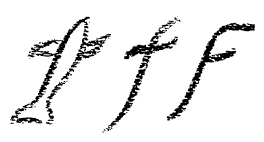
[ 19 ] Aber man kann da etwas bedenken. Was wir heute als Buchstaben haben, war ja nicht immer da. Sehen wir auf diejenigen älteren Völker, die eine Bilderschrift gehabt haben: sie haben in Bildern, die schon etwas zu tun hatten mit dem, was ausgesprochen worden ist, das Auszudrückende versinnlicht. Sie hatten nicht solche Buchstaben wie wir, sondern Bilder, die einen Bezug hatten zu dem, was sie bedeuteten. Dasselbe könnte auch in einer gewissen Weise auf die Keilschrift angewendet werden. Das waren die Zeiten, in denen man noch, wenn man etwas fixierte, ein menschliches Verhältnis dazu hatte. Heute haben wir das nicht. Beim Kinde muß man wieder darauf zurückgehen. Doch da handelt es sich nicht darum, daß man nun Kulturgeschichte studiert und auf die Formen zurückgeht, die einmal in der Bilderschrift vorhanden waren, sondern man bringe, um zu brauchbaren Bildern zu kommen, vor allem seine Lehrer-, seine Erzieherphantasie etwas in Schwung. Die muß man allerdings haben, denn ohne sie kann man nicht Lehrer oder Erzieher sein. Daher muß schon immer, wenn es sich um die Charakteristik von etwas handelt, was aus dem Anthroposophischen hervorgeht, auf Enthusiasmus, auf Begeisterung hingewiesen werden. — Ich bin immer wenig erbaut, wenn ich zum Beispiel in unserer Waldorfschule in eine Klasse hineinkomme und beim Lehrer oder bei der Lehrerin merke, sie sind müde, sie unterrichten aus einer gewissen Verfassung der Müdigkeit heraus. Ja, das kann man doch überhaupt nicht! Man kann doch nicht müde sein, man kann doch nur enthusiasmiert sein, mit seinem ganzen Menschen dabei sein, wenn man unterrichtet. Es ist ganz falsch, müde zu sein, wenn man unterrichten will; das muß man sich für anderes aufbewahren. —- Es handelt sich also durchaus darum, daß man als Lehrer auch seine Phantasie in Schwung bringen kann. Was heißt das? Ich appelliere zunächst beim Kinde an etwas, was es auf dem Markt oder sonst irgendwo gesehen hat, zum Beispiel einen Fisch. Ich bringe es dazu, daß es zunächst, indem ich es sogar Farben benutzen lasse, einen Fisch malend zeichnet, zeichnend malt. Habe ich es dazu gebracht, so lasse ich es dann das Wort «Fisch» sagen, dieses Wort nicht schnell heraussprechend, sondern «F-i-sch». Ich leite es dann an, nur den Anfang des Wortes Fisch, «F...», zu sagen und ich bilde allmählich die Fischgestalt in dieses fisch-ähnliche Zeichen um, indem ich das Kind gleichzeitig dazu bringe, «F» zu sagen: das F ist da!
[ 19 ] But there is something to consider here. What we know today as letters did not always exist. Let us look at those ancient peoples who used pictographic writing: they expressed their ideas through images that were already related in some way to what was being spoken. They did not have letters like ours, but rather pictures that were related to what they signified. The same could also be applied, in a certain sense, to cuneiform writing. Those were times when, when something was recorded, people still had a human connection to it. Today we do not have that. With children, we must return to this. However, this does not mean studying cultural history and reverting to the forms that once existed in pictographic writing; rather, in order to arrive at useful images, one must above all stimulate one’s imagination as a teacher and educator. One must certainly possess this imagination, for without it one cannot be a teacher or educator. That is why, whenever we are characterizing something that arises from anthroposophy, we must always point to enthusiasm and inspiration. — I am never particularly inspired, for example, when I walk into a classroom at our Waldorf school and notice that the teacher is tired, teaching from a certain state of weariness. Yes, you simply can’t do that! You can’t be tired; you can only be enthusiastic, fully present with your whole being when you’re teaching. It’s completely wrong to be tired when you want to teach; you have to save that for other things. — So it’s definitely a matter of teachers being able to get their imagination going. What does that mean? First, I draw the child’s attention to something they’ve seen at the market or somewhere else—for example, a fish. I guide them so that, at first—even letting them use colors—they draw a fish by painting, and paint by drawing. Once I’ve guided them to do this, I then have them say the word “fish,” not by blurting it out quickly, but “F-i-sh.” I then guide the child to say only the beginning of the word “fish,” “F…,” and I gradually transform this fish-like symbol into the shape of a fish while simultaneously encouraging the child to say “F”: the “F” is there!
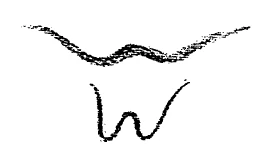
[ 20 ] Oder ich lasse das Kind sagen: «Welle», bringe ihm bei, was eine Welle ist (siehe Zeichnung). Ich lasse das Kind dies wiederum malen, bringe es dazu, den Anfang des Wortes Welle zu sagen: «W...», und ich verwandle dann die Wellenzeichnung in das W.
[ 20 ] Or I have the child say, “Wave,” and teach him what a wave is (see drawing). I then have the child draw a wave, encourage him to say the beginning of the word “wave”: “W...,” and I then turn the drawing of the wave into the letter W.
[ 21 ] Indem ich dies immer weiter ausbilde, hole ich aus dem malenden Zeichnen und dem zeichnenden Malen die Schriftzeichen heraus, wie sie auch entstanden sind. Ich bringe nicht das Kind in ein Zivilisationsstadium hinein, das mit ihm noch nichts gemeinschaftlich hat, sondern ich führe es so, daß niemals sein Verhältnis zur Außenwelt abreißt. Da muß man, wenn man nicht gerade Kulturgeschichte studieren will denn aus der Bilderschrift ist die heutige Schrift entstanden, aber Kulturgeschichte studieren braucht man gar nicht -, man muß nur seine Phantasie in Schwung bringen; denn dann bringt man das Kind dazu, aus dem malenden Zeichnen das Schreiben zu gestalten.
[ 21 ] By continuing to develop this further, I extract the written characters from painting-as-drawing and drawing-as-painting, just as they originally arose. I do not bring the child into a stage of civilization that has nothing in common with him yet; rather, I guide him in such a way that his connection to the outside world is never severed. To do this—unless one specifically wants to study cultural history (since today’s writing evolved from pictographic writing, though one doesn’t actually need to study cultural history)—one need only set one’s imagination in motion; for then one can guide the child to develop writing from painting-like drawing.
[ 22 ] Nun muß man nicht nur darauf Wert legen, daß man damit etwas Geistreiches getan hat, daß man eine neue Methode hat. Man muß darauf Wert legen, wie das Kind innerlich in anderes hineinwächst, wenn fortwährend seine Seelenbetätigung angeregt wird. Es wächst nicht hinein, wenn es gestoßen wird, so daß es fortwährend in fremde Verhältnisse zur Umgebung hineinkommt. Daß man auf das Innere des Kindes wirkt, darauf kommt es an.
[ 22 ] Now, one must not merely emphasize that one has done something ingenious, that one has a new method. One must focus on how the child grows inwardly into other things when its soul activity is continually stimulated. It does not grow into them if it is pushed, so that it continually enters into alien relationships with its surroundings. What matters is that one works on the child’s inner being.
[ 23 ] Was ist denn heute Prinzip? Es ist zwar heute schon wieder etwas überholt, aber es liegt noch nicht weit zurück, da gab man den Mädchen «schöne» Puppen, mit richtigen Haaren und so weiter, schließlich sogar solche, die, wenn man sie hinlegte, die Augen schließen konnten, Puppen mit schönen Gesichtern und so weiter. Sie sind natürlich trotzdem scheußlich, weil sie unkünstlerisch sind, aber die Zivilisation nennt sie schön. Aber was sind das für Puppen? Es sind solche, an denen sich die Phantasie des Kindes gar nicht mehr betätigen kann. Nun mache man die Sache anders. Man binde ein Taschentuch so zusammen, daß eine Figur mit Armen und Beinen entsteht, dann mache man mit Tintenklecksen Augen, mit roter Tinte vielleicht auch noch einen Mund; dann hat das Kind daran seine Phantasie zu entfalten, wenn es dies sich als einen Menschen vorstellen soll. So etwas wirkt ungeheuer lebendig auf das Kind, weil es ihm die Möglichkeit bietet, seine Phantasie in Schwung zu bringen. Man muß es natürlich erst selber machen. Aber diese Möglichkeit muß man dem Kinde verschaffen, und dies ist schon im Spielalter zu machen. Daher sind alle die Dinge, die nicht die Phantasie des Kindes in Schwung bringen, als Spielzeuge verderblich. — Ich sagte, heute ist man schon wieder über die schönen Puppen hinaus; denn heute gibt man dem Kinde Affen oder Bären. Da kann sich die Phantasie allerdings nicht in menschlicher Weise daran erbauen. Aber gerade solche Erscheinungen, wenn einem die Kinder entgegenkommen und man ihnen einen Bären gibt, den sie so hätscheln können, das zeigt, wie fern unsere Zivilisation demjenigen steht, was Hineinschauen in das Innere der menschlichen Natur ist. Und es ist ganz merkwürdig, wie Kinder dieses Innere der Menschennatur auf selbstverständlich künstlerische Weise ausgestalten können.
[ 23 ] What, then, is the principle today? It’s true that it’s already a bit outdated today, but it wasn’t that long ago that girls were given “beautiful” dolls—with real hair and so on—and eventually even ones that could close their eyes when laid down, dolls with beautiful faces and so on. Of course, they’re still hideous because they lack artistic merit, but civilization calls them beautiful. But what kind of dolls are these? They’re the kind that leave no room at all for a child’s imagination. Now let’s do it differently. Tie a handkerchief together so that it forms a figure with arms and legs; then make eyes with ink blots, and perhaps even a mouth with red ink; then the child has to use its imagination to bring it to life when it is asked to create a mental image of this as a person. Something like this has an incredibly vivid effect on the child because it offers the child the opportunity to set its imagination in motion. Of course, you have to do it yourself first. But you must provide the child with this opportunity, and this should be done as early as the play age. Therefore, all things that do not stimulate the child’s imagination are harmful as toys. — I said that today we’ve already moved beyond beautiful dolls; for today we give children monkeys or bears. The imagination certainly cannot build upon these in a human way. But precisely such instances—when children come to you and you give them a bear they can cuddle—show just how far our civilization stands from what it means to look into the innermost core of human nature. And it is quite remarkable how children can give form to this inner core of human nature in a naturally artistic way.
[ 24 ] Wir haben dazu in der Waldorfschule den Übergang des gewöhnlichen Unterrichtes in eine Art Kunstunterricht eingerichtet. Also abgesehen davon, daß wir überhaupt nicht damit beginnen, die Kinder schreiben zu lehren, sondern sie malend zeichnen und zeichnend malen - man könnte auch sagen, «patzen» lassen, man muß dann die Klasse hinterher reinigen lassen, was vielleicht etwas unbequem ist; ich werde dann morgen auch sagen, wie man vom Schreiben zum Lesen übergeht -, abgesehen davon, führen wir auch das Kind möglichst in das Künstlerische hinein, in die Handhabung kleiner plastischer Arbeiten, ohne daß wir das Kind auf etwas anderes bringen, als was es aus seinem Inneren heraus aus der Form machen will. Da stellen sich ganz merkwürdige Dinge ein. Eines zum Beispiel will ich anführen, das bei älteren Kindern in wunderbarer Weise auftritt.
[ 24 ] To this end, we have structured the transition from regular instruction to a kind of art class at the Waldorf School. So, aside from the fact that we don’t start by teaching the children to write at all, but rather let them paint while drawing and draw while painting—one could also say we let them “make a mess”; you then have to have the classroom cleaned afterward, which is perhaps a bit inconvenient; I’ll also explain tomorrow how we transition from writing to reading—aside from that, we also introduce the child to the artistic realm as much as possible, to working with small sculptural pieces, without directing the child toward anything other than what they want to create from within themselves. This gives rise to some very curious phenomena. I’d like to cite one example, for instance, that occurs in a wonderful way with older children.
[ 25 ] Wir haben ja Menschenerkenntnis verhältnismäßig bald als Unterrichtsgegenstand, so für die zehn-, elfjährigen Kinder. Sie lernen da erkennen, wie Knochen geformt, gebaut sind, wie Knochen einander tragen und so weiter. Und gerade künstlerisch lernen das die Kinder, nicht intellektualistisch. Nun hat das Kind ein paar solcher Stunden gehabt, in denen es eine Anschauung von dem Bau der menschlichen Knochen bekommen hat, von der Dynamik der Knochen, von dem Sich-Tragen. Jetzt geht man hinüber in die Werkstätte, wo die Kinder plastische Gestalten formen, und sieht dem, was das Kind macht, sogleich an: es hat etwas von den Knochen gelernt. Nicht daß es die Knochenformen nachahmte, sondern wie sich die Seele in Bewegung setzt, innerlich, das drückt sich darin aus, wie es jetzt seine Formen macht. Vorher ist es auch darauf gekommen, zum Beispiel kleine Behälter zu fertigen; die Kinder kommen ganz von selber darauf, solche schalenartigen Dinge zu machen. Die werden aus der Natur des Kindes heraus ganz anders, bevor es einen solchen Unterricht bekommen hat, und nachher, wenn das Erlebnis tatsächlich so ist, wie es sein soll. Aber man muß dann die Menschenkunde auch so vorbringen, daß sie in den ganzen Menschen übergeht. Heute ist das schwierig.
[ 25 ] We introduce the study of the human form relatively early on as a subject of instruction, for children around ten or eleven years old. There, they learn to recognize how bones are shaped and structured, how bones support one another, and so on. And the children learn this specifically through artistic means, not in an intellectualistic way. Now the child has had a few such lessons in which they have gained an understanding of the structure of human bones, the dynamics of the bones, and how they support one another. Now we move over to the workshop, where the children are sculpting figures, and we can immediately see from what the child is making that they have learned something about bones. Not that they are imitating the shapes of bones, but rather how the soul sets itself in motion, inwardly—this is expressed in the way they now create their forms. Previously, they also came up with the idea of making small containers, for example; the children come up with the idea of making such bowl-like objects all on their own. These take on a completely different character, stemming from the child’s nature, before they have received such instruction, and afterward, when the experience is truly as it should be. But one must then present the study of human nature in such a way that it permeates the whole person. Today, that is difficult.
[ 26 ] Wenn jemand so viel, wie ich, in Ateliers herumgekommen ist und gesehen hat, wie die Leute gemalt und gebildhauert haben, so weiß er auch, daß heute kaum ein Bildhauer etwas macht ohne ein Modell; er muß eine Menschenform vor sich haben, wenn er sie modellieren will. Das wäre für einen griechischen Künstler ein Unsinn gewesen. Er hat allerdings in den öffentlichen Spielen die Menschenform kennengelernt, aber er empfand innerlich die menschliche Form. Er wußte aus dem, wie er es in sich fühlte - und dieses Gefühl verkörperte er ohne Modell -, er wußte den Unterschied, wie ein Arm ist, wenn er den Arm vorstreckt, wenn er den Zeigefinger auch noch vorstreckt und dergleichen. Dieses Gefühl verkörperte er dann in die Form hinein. Aber wenn Sie heute Menschenkunde so lehren, wie es einmal üblich ist, so wird da eben nach Abbildungen oder Zeichnungen der eine Knochen neben den andern hingestellt, ein Muskel wird neben dem andern beschrieben, und man bekommt keinen Eindruck davon, wie alles gegenseitig sich verhält. - Bei uns wissen die Kinder, wenn sie einen Wirbelknochen der Rückenmarkssäule haben, wie er dem Kopfknochen ähnlich ist; sie bekommen ein Gefühl dafür, wie die Transformation der Knochen ist. Dann aber leben sie in den menschlichen Formen drinnen und haben dann auch den Drang, das wieder künstlerisch auszudrükken. Da geht es in das Leben hinein, da bleibt es nicht äußerlich.
[ 26 ] If someone has spent as much time as I have in studios and seen how people paint and sculpt, then they also know that today hardly any sculptor creates anything without a model; they must have a human form in front of them if they want to model it. That would have been nonsense to a Greek artist. He did, of course, become familiar with the human form through public performances, but he sensed the human form intuitively. He knew from how he felt it within himself—and he embodied this feeling without a model—he knew the difference in how an arm looks when it is extended, when the index finger is also extended, and so on. He then embodied this feeling into the form. But if you teach human anatomy today as is customary, you simply place one bone next to another based on illustrations or drawings, describe one muscle next to another, and you get no sense of how everything relates to one another. - With us, when children study a vertebra from the spinal column, they recognize how it resembles the skull; they develop a sense of how bones transform. Then they become immersed in the human form and feel the urge to express this artistically. This brings it into life; it does not remain merely external.
[ 27 ] Daher ist es meine große Sehnsucht und auch meine Forderung als Leiter der Waldorfschule, daß womöglich alles, was Wissenschaft ist — ich schätze diese Wissenschaft, keiner kann sie so hoch schätzen wie ich -, aber alles, was fixierte, in Büchern fixierte Wissenschaft ist, sollte aus dem Schulunterricht herausgelassen werden. Man mag es außerhalb der Schule treiben,wenn man das nicht bezähmen kann; aber ich würde sonst rasend werden können, wenn ich einen Lehrer oder eine Lehrerin mit einem Buche vor der Klasse stehen sehen würde. Beim Unterricht muß alles innerlich sein, muß alles selbstverständlich sein. Wie lehrt man heute zum Beispiel Botanik? Wir haben Botanikbücher; die sind Wiedergaben wissenschaftlicher Anschauungen, aber sie gehören nicht in die Schule hinein, wo man Kinder zwischen dem Zahnwechsel und der Geschlechtsreife hat. Die Literatur, die man als Lehrer braucht, muß eben auch erst wieder herauswachsen aus den lebendigen Erziehungsprinzipien, von denen ich hier sprechen will.
[ 27 ] Therefore, it is my deepest desire—and also my demand as the director of the Waldorf School—that, as far as possible, everything that constitutes science—I value this science; no one can value it as highly as I do—but everything that is fixed, fixed in books, should be excluded from school instruction. One may pursue it outside of school if one cannot rein it in; but I would otherwise go mad if I saw a teacher standing in front of the class with a book. In teaching, everything must come from within; everything must be self-evident. How, for example, is botany taught today? We have botany textbooks; they are reproductions of scientific views, but they do not belong in school, where children are between the stages of losing their baby teeth and reaching sexual maturity. The literature that a teacher needs must, in fact, grow once again out of the living principles of education of which I wish to speak here.
[ 28 ] So handelt es sich wirklich darum, daß nun in dem ganzen Habitus, in dem seelischen, geistigen und körperlichen Habitus des Lehrers das Zusammengewachsensein mit der Welt drinnen ist. Dann kann er auf die Kinder wirken, dann ist er für sie die selbstverständliche Autorität zwischen Zahnwechsel und Geschlechtsreife. Immer kommt es darauf an, daß man hineingewachsen ist in das Erleben und daß alles lebendig übergeht auf das Leben. Das ist der große Grundsatz, den man heute in der Erziehung haben muß. Dann ist der Zusammenhang mit der Klasse da und damit dasjenige, was als imponderable Stimmung da sein muß.
[ 28 ] So it really is a matter of the teacher’s entire being—their emotional, spiritual, and physical being—being deeply rooted in the world. Only then can they have an impact on the children; only then are they the natural authority figure for them during the period between losing their baby teeth and reaching puberty. It always comes down to having grown into the experience and ensuring that everything flows vividly into life. That is the fundamental principle that must guide education today. Then the connection with the class is established, and with it that which must be present as an intangible atmosphere.
Fragenbeantwortung
Q&A
[ 29 ] Frage: Es gibt Erwachsene, die auf der Stufe des nachahmenden Kindes stehengeblieben zu sein scheinen. Wie ist das?
[ 29 ] Question: There are adults who seem to have remained at the stage of the imitative child. How is that possible?
[ 30 ] Dr.Steiner: Auf jeder Stufe, auf welcher die menschliche Entwikkelung sich abspielt, ist es möglich, daß der Mensch stehenbleibt. Wenn man so die Stufen der Entwickelung schildert - nehmen wir jetzt zu dem, was wir heute anführen konnten, noch hinzu die Embryonalzeit, dann diejenige bis zum Zahnwechsel, und dann die Zeit bis zur Geschlechtsreife -, dann haben wir diejenigen Epochen angegeben, welche in einem voll entwickelten Menschenleben sich ausgestalten können. Aber vor ganz kurzer Zeit nun hat der Zusammenhang unserer anthroposophischen Entwickelung ergeben, daß es sich darum handelte, heilpädagogische Vorträge zu halten, dabei anzuknüpfen an ganz bestimmte Fälle von Kindern, die in ihrer Entwickelung entweder zurückgeblieben oder nach irgendeiner Seite hin abnorm entwickelt sind. Wir haben das dann so eingerichtet, daß wir von dem Klinisch-Therapeutischen Institut von Frau Dr. Wegman in Arlesheim einzelne Fälle, die dort behandelt werden, pädagogisch medizinisch, hygienisch und so weiter vorgeführt haben. Unter diesen Fällen befand sich auch ein solcher, den ein Kind aufwies, das fast ein Jahr alt ist, auch die Größe eines Kindes von einem Jahre ungefähr hat, aber in seiner ganzen physischen Ausgestaltung absolut in dem Stadium eines, man könnte etwa sagen, sieben- bis achtmonatigen Embryo stehengeblieben ist. Wenn Sie nur die Umrisse jenes Kindes zeichnen und dabei nicht recht deutlich die schon etwas mehr ausmodellierten Gliedmaßen zeichnen, sondern sie nur andeuten, aber die Kopfform deutlich zeichnen, wie sie bei diesem Jungen vorhanden ist, und dann, wenn Sie die Zeichnung so obenhin anschauen, keine Ahnung haben, daß dies ein Junge von fast einem Jahre ist, dann werden Sie glauben, daß es ein Embryo sei, weil dieser Junge in vielen Dingen die Konstitution desEmbryonalen nach der Geburt beibehalten hat.
[ 30 ] Dr. Steiner: At every stage of human development, it is possible for a person to come to a standstill. When we describe the stages of development in this way—if we now add to what we were able to discuss today the embryonic period, then the period up to the change of teeth, and then the period up to sexual maturity—we have identified the epochs that can unfold in a fully developed human life. But very recently, the context of our anthroposophical development has revealed that the task at hand was to give lectures on curative education, drawing on specific cases of children who are either developmentally delayed or exhibit abnormal development in some respect. We then arranged things so that we presented individual cases—treated at Dr. Wegman’s Clinical-Therapeutic Institute in Arlesheim—from the perspectives of pedagogy, medicine, hygiene, and so on. Among these cases was one involving a child who is nearly one year old and is also approximately the size of a one-year-old, but whose entire physical development has remained at the stage of, one might say, a seven- to eight-month-old embryo. If you were to sketch only the outline of that child—without drawing the limbs, which are already somewhat more developed, very clearly, but merely hinting at them— but clearly draw the shape of the head as it appears in this boy, and then, if you glance at the drawing from above, have no idea that this is a boy who is nearly one year old, you will believe that it is an embryo, because this boy has retained the embryonic constitution in many respects even after birth.
[ 31 ] Jede Lebensstufe, also auch die embryonale, kann in eine spätere hineingetragen werden. Denn die aufeinanderfolgenden Entwickelungsstadien sind so, daß sozusagen bei jedem neuen Stadium das alte sich verwandelt und Neues dazukommt. Nehmen Sie nur das ganz genau, was ich gesagt habe in bezug auf die naturhaft-religiöse Hingabe des Kindes an die Umgebung vor dem Zahnwechsel, dann haben Sie da das Naturhaft-Religiöse, das sich später umwandelt in das Seelische, und Sie haben das ästhetische Stadium als ein zweites hinzukommend. Nun kommen sehr viele Kinder vor, die in das zweite Stadium das erste hineintragen, und das zweite bleibt dann kümmerlich. Aber das kann noch weitergehen: das schon verkörperte Stadium kann in jedem andern auftreten; dann wird in spätere Stadien das ursprüngliche hineingetragen werden. Und es braucht gar nicht einmal für die Oberflächlichkeit des Lebens so sehr stark bemerkbar zu sein, daß gewissermaßen ein früheres Stadium geblieben ist für ein späteres, wenn nicht ein besonders spätes Alter eine solche Erscheinung aufweist. Aber das kommt also vor, daß frühere Stadien in spätere hineingetragen werden.
[ 31 ] Every stage of life, including the embryonic stage, can be carried over into a later one. This is because the successive stages of development are such that, so to speak, at each new stage the old is transformed and something new is added. If you take very precisely what I have said regarding the child’s natural-religious devotion to its surroundings before the change of teeth, then you have there the natural-religious aspect, which later transforms into the soul-related, and you have the aesthetic stage added as a second one. Now, there are many children who carry the first stage into the second, and the second stage then remains stunted. But this can go even further: the stage that has already been embodied can appear in any other stage; then, in later stages, the original stage will be carried into them. And it need not even be particularly noticeable in the superficiality of life that, so to speak, an earlier stage has remained within a later one, unless such a phenomenon manifests itself at a particularly late age. But it does happen that earlier stages are carried over into later ones.
[ 32 ] Nehmen Sie die Sache bei einem niederen Naturreich. Die ausgewachsene, voll entwickelte gewöhnliche Pflanze hat Wurzel, Stengel mit Blättern, dann die grünen Laubblätter konzentriert zum Kelch, dann kommen die Blumenblätter, Staubgefäße, Pistill, Stempel und so weiter. Aber es gibt ja nun Pflanzen, die es nicht bis zur Blüte bringen, die auf der Stufe des Krautes, der grünen Blätter zurückbleiben und Früchte nur in unentwickelter Form ausbilden. Wie weit bleibt zum Beispiel ein Farnkraut zurück gegenüber einem Hahnenfuß! Bei den Pflanzen führt das nicht zur Abnormität. Aber beim Menschen haben wir nur die eine Art Mensch. Dann bleibt der Mensch durch sein ganzes Leben hindurch ein nachahmendes Wesen oder ein solches, das unter . Autorität stehen muß. Denn wir können es im Leben nicht nur mit solchen Menschen zu tun haben, die nachahmende Wesen bleiben, sondern auch mit solchen, die in bezug auf ihre realen Eigenschaften in dem Stadium bleiben, das voll entwickelt wird zwischen Zahnwechsel und Geschlechtsreife. Diese Menschen sind sogar sehr häufig; da pflanzt sich dieses Stadium in das spätere Leben hinein fort. Die Leute kommen dann für das, was sie im späteren Leben haben, nicht viel weiter, als daß das später Auftretende nur in einem eingeschränkten Maße herauskommt; aber die Menschen bleiben dann immer auf der Stufe der Autorität. - Wenn es das nicht gäbe, dann gäbe es auch nicht die heute noch bestehende Neigung zu Sektenbildungen und so weiter; denn die Sektenverbindungen beruhen darauf, daß man nicht selber zu denken braucht, sondern den andern denken läßt und ihm folgt. Aber auf gewissen Gebieten des Lebens stehen die allermeisten Menschen in dem Stadium der Autorität. Wenn es sich zum Beispiel darum handelt, über irgendeine Frage wissenschaftlicher Natur zu urteilen, so bemühen sich die Menschen nicht darum, Einsichten zu haben, sondern sie fragen: Wo ist der, der es wissen muß, der an irgendeiner Universität in einer Fakultät lehrt? - Da haben Sie das Autoritätsprinzip. Aber auch bei den Kranken ist das Autoritätsprinzip, wenn auch berechtigt, in stärkstem Maße ausgebildet. Und in juristischen Fragen zum Beispiel will kein Mensch heute selbständig urteilen; da geht man zum Advokaten, der weiß es, da bleibt man immer auf dem Standpunkte von 8,9 Jahren stehen. Und dann ist dieser Advokat manchmal selber nicht viel älter. Wenn man ihm Fragen stellt, nimmt er wieder ein Gesetzbuch oder eine Mappe herunter, und da hat man dann wieder eine Autorität. Die Dinge sind so, daß jedes Stadium in ein späteres hineinkommen kann.
[ 32 ] Consider a lower kingdom of nature. The mature, fully developed ordinary plant has a root, a stem with leaves, then green foliage concentrated into a calyx, followed by the petals, stamens, pistil, stigma, and so on. But there are, of course, plants that do not reach the flowering stage, that remain at the stage of the herb, the green leaves, and form fruit only in an undeveloped form. How far behind, for example, is a fern compared to a buttercup! In plants, this does not lead to abnormality. But in the case of human beings, there is only one type of human. Then, throughout their entire life, a person remains an imitative being or one who must be under . authority. For in life we may encounter not only people who remain imitative beings, but also those who, in terms of their actual characteristics, remain at the stage that is fully developed between the loss of baby teeth and sexual maturity. Such people are, in fact, very common; this stage carries over into their later life. These people then do not progress much further in terms of what they possess in later life, so that what emerges later comes to the fore only to a limited extent; yet they always remain at the level of authority. - If this were not the case, then the tendency toward the formation of sects and the like—which still exists today—would not exist either; for sectarian affiliations are based on the fact that one does not need to think for oneself, but rather lets others do the thinking and follows them. But in certain areas of life, the vast majority of people remain at the stage of authority. For example, when it comes to judging some scientific question, people do not strive to gain insights for themselves, but instead ask: “Where is the person who must know this, who teaches in a department at some university?”—There you have the principle of authority. But even among the sick, the principle of authority—though justified—is highly developed. And in legal matters, for example, no one today wants to judge for themselves; they go to a lawyer who knows the law, and there they always remain at the level of an 8- or 9-year-old. And sometimes this lawyer isn’t much older himself. When you ask him questions, he pulls out a law book or a folder, and there you have an authority figure once again. The reality is that every stage can merge into a later one.
[ 33 ] Die Anthroposophische Gesellschaft sollte eigentlich nur aus Menschen bestehen, die über das Autoritative hinauswachsen, die gar kein Autoritätsprinzip anerkennen, sondern nur wirkliche Einsicht. Das können sich die Menschen draußen so wenig denken, daß sie immer sagen: Die Anthroposophie beruht auf Autorität. — Aber gerade das Entgegengesetzte ist der Fall, über das Autoritätsprinzip soll hinausgewachsen werden durch diejenige Art von Einsichten, die in der Anthroposophie gepflegt werden. Da handelt es sich darum, daß der Mensch jedes winzige Partikel von Einsichten aufgreife, damit er die verschiedenen Stadien durchlaufen kann.
[ 33 ] The Anthroposophical Society was actually intended to consist only of people who have transcended authority, who do not recognize any principle of authority at all, but only true insight. People on the outside find this so hard to conceive that they always say: Anthroposophy is based on authority. — But the exact opposite is true: the goal is to transcend the principle of authority through the very kind of insights cultivated in anthroposophy. The point is for a person to take up every tiny particle of insight so that they can pass through the various stages.
[ 34 ] Frage: Warum ist, von der Anthroposophie aus angesehen, die Unsterblichkeit kein Glaube, sondern ein Wissen?
[ 34 ] Question: Why, from the perspective of anthroposophy, is immortality not a matter of faith but a matter of knowledge?
[ 35 ] Dr.Steiner: Die Anthroposophie schreitet fort von der äußeren Erkenntnis des Menschen zu der inneren Erkenntnis des Menschen. Von den Menschen zum Beispiel, die hier sind und seit langem Vorträge gehört haben, ist nicht der physische Leib geblieben, sondern nur der ätherische Leib. Bis zu dem dringt Anthroposophie vor; so kann man also sagen, was von der Geburt bis zum Tode geht. Die andere Wissenschaft täuscht sich darüber. Vom Ätherleibe zu sprechen, ist ebensowenig ein Glaube, wie man in bezug auf den physischen Leib als von einem Glauben spricht. DenÄtherleib erkennt man durch die Imagination. Geht man in anthroposophischer Erkenntnis weiter, so lernt man durch die Inspiration erkennen, wie der astralische Leib des Menschen weiter fortlebt nach dem Tode.
[ 35 ] Dr. Steiner: Anthroposophy progresses from the outer understanding of the human being to the inner understanding of the human being. For example, of the people who are here and have been attending lectures for a long time, it is not the physical body that remains, but only the etheric body. Anthroposophy penetrates as far as that; thus, one can speak of what extends from birth to death. Conventional science is mistaken about this. Speaking of the etheric body is no more a matter of faith than speaking of the physical body is. The etheric body is perceived through imagination. If one proceeds further in anthroposophical knowledge, one learns through inspiration to recognize how the human astral body continues to live on after death.
[ 36 ] Der heutige Glaubensbegriff ist nicht einmal so alt wie das Christentum. Er kam erst auf, als man abkam von dem, was als Geistiges beobachtet werden kann.
[ 36 ] The modern concept of faith is not even as old as Christianity itself. It only emerged when people began to move away from what can be observed as spiritual.