

The Art of Education
Based on Understanding Human Nature
GA 311
16 August 1924, Torquay
Translate the original German text into any language:
Versions Available:
The Art of Education Based on Understanding Human Nature, tr. SOL
Fünfter Vortrag
Fifth Lecture
[ 1 ] Wenn man einem Kinde etwas beibringen will, muß man schon etwas von dem eigentlichen Wesen der Sache verstehen, um nicht sich im Unterrichte und in der Erziehung in Dingen zu bewegen, die dem Leben fernliegen. Alles, was dem Leben naheliegt, kann man verstehen. Man könnte auch sagen: Was man in Wirklichkeit versteht, muß dem Leben naheliegen. Die Abstraktionen liegen dem Leben nicht nahe.
[ 1 ] If one wants to teach a child something, one must already understand something of the true nature of the matter, so as not to focus, in teaching and upbringing, on things that are far removed from life. Everything that is close to life can be understood. One could also say: What one truly understands must be close to life. Abstractions are not close to life.
[ 2 ] Nun ist es heute so, daß der Lehrende, der Erziehende, von gewissen Dingen von vornherein nur Abstraktionen hat, daß er mit gewissen Dingen dem Leben nicht nahesteht. Das macht für die Erziehung und den Unterricht die allergrößten Schwierigkeiten. Bedenken Sie nur das Folgende: Sie wollen einmal darüber nachdenken, wie Sie dazu gekommen sind, Dinge zu zählen; was eigentlich damit getan ist, daß Sie zählen. Sie werden wahrscheinlich finden, daß der Faden Ihrer Untersuchungen irgendwo abreißt, daß Sie wohl Zählen gelernt haben, aber nicht recht eigentlich wissen, was Sie tun mit dem Zählen.
[ 2 ] The fact is that today, teachers and educators often have only abstract notions of certain things from the outset; they are not closely connected to real life when it comes to certain matters. This creates the greatest difficulties for education and instruction. Just consider the following: Try to think about how you came to count things; what it actually means when you count. You will probably find that the thread of your inquiry breaks off somewhere—that you have learned to count, but do not really know what you are doing when you count.
[ 3 ] Nun werden allerlei Theorien für die Pädagogik ersonnen, wie man den Begriff der Zahl, wie man das Zählen einem Kinde beibringen soll, und gewöhnlich richtet man sich dann auch nach solchen Theorien. Wenn man damit auch äußerlich Erfolge erzielen kann, an den ganzen Menschen kommt man mit diesem Zählen oder mit solchen Dingen, die dem Leben fernliegen, nicht heran. Die neuere Zeit hat ja gerade dadurch bewiesen, wie sie in Abstraktionen lebt, daß sie solche Dinge wie die Rechenmaschine für den Unterricht erfunden hat. Im kaufmännischen Büro mögen die Leute Rechenmaschinen benützen, wie sie wollen, das geht uns jetzt nichts an, aber im Unterricht verhindert die Rechenmaschine, die sich ausschließlich an den Kopf wendet, von vorneherein, daß man in einer wesensgemäßen Weise mit der Zahl an das Kind herankommt.
[ 3 ] Now all sorts of theories are devised for pedagogy—on how to teach a child the concept of numbers and how to teach counting—and people usually follow these theories. Even if this approach yields outward success, it fails to reach the whole person—this kind of counting, or other such matters that are remote from real life, simply cannot do so. Modern times have, in fact, demonstrated precisely how much they live in abstractions by inventing things like the calculator for classroom use. People in commercial offices may use calculators as they please—that is none of our concern—but in the classroom, the calculator, which appeals exclusively to the intellect, prevents from the outset an approach to numbers that is appropriate to the child’s nature.
[ 4 ] Es handelt sich darum, daß man das Zählen wirklich aus dem Leben heraus gewinnt. Dabei wird vor allen Dingen wichtig sein, daß man von vornherein weiß, es kann sich gar nicht darum handeln, daß das Kind restlos alles versteht, was man ihm beibringt. Das Kind muß vieles auf Autorität aufnehmen, aber es muß es naturgemäß, sachgemäß aufnehmen.
[ 4 ] The point is to truly draw counting from real life. Above all, it will be important to realize from the outset that it cannot possibly be expected that the child will fully understand everything that is taught to him or her. The child must accept much on authority, but must do so naturally and appropriately.
[ 5 ] Daher können Sie finden, daß das, was ich Ihnen nun über das Beibringen des Zählens sagen werde, vielleicht noch schwierig ist für das Kind. Aber das schadet nichts. Es ist außerordentlich bedeutsam, daß im Leben des Menschen solche Momente eintreten, wo man sich im 30., 40. Jahre sagt: Jetzt verstehe ich etwas, was ich damals im 8. oder 9. Jahre oder sogar noch früher in mich auf Autorität hin aufgenommen habe. - Das belebt. Wer dagegen all die Dinge betrachtet, die man heute als Anschauungsunterricht in den Unterricht einführen will, der kann tatsächlich ins Verzweifeln geraten, wie trivial die Dinge gemacht werden, um sie, wie man sagt, dem Verständnis des Kindes näherzubringen.
[ 5 ] Therefore, you may find that what I am about to tell you regarding teaching children to count might still be difficult for a child. But that’s all right. It is extremely significant that there are moments in a person’s life—perhaps in one’s 30s or 40s—when one says to oneself: “Now I understand something that I absorbed back then, at age 8 or 9—or even earlier—on the authority of others.”—That is invigorating. On the other hand, anyone who considers all the things that people today want to introduce into the classroom as “visual instruction” may indeed be driven to despair by how trivial these things are made in order to, as they say, make them more accessible to the child’s understanding.
[ 6 ] Denken Sie einmal, Sie nehmen selbst das kleinste Kind, das sich noch recht ungeschickt dabei benimmt, und Sie sagen ihm: Sieh einmal, du stehst jetzt da. Hier nehme ich ein Stück Holz. Da habe ich ein Messer. Ich zerschneide nun dieses Stück Holz. Kann ich das auch mit dir machen? - Da wird das Kind doch selber darauf kommen, daß ich das mit ihm nicht machen kann. Und nun kann ich dem Kinde sagen: Sieh einmal, wenn ich das Holz zerschneiden kann, dann ist das Holz also nicht so wie du, und du nicht so wie das Holz, denn dich kann ich nicht zerschneiden. Es ist also ein Unterschied zwischen dir und dem Holz. Der Unterschied besteht darinnen, daß du eine Einheit bist. Das Holz ist keine Einheit. Du bist eine Einheit. Dich kann ich nicht zerschneiden. Dasjenige, was du bist, deshalb, weil ich dich nicht zerschneiden kann, das nenne ich eine Einheit.
[ 6 ] Just imagine: you take even the smallest child—one who’s still quite clumsy at this—and you say to him: “Look, you’re standing there now. Here, I’ll take a piece of wood. And here’s a knife.” Now I’m going to cut this piece of wood. Can I do that to you, too?”—The child will realize on its own that I can’t do that to it. And now I can say to the child: “Look, if I can cut the wood, then the wood isn’t like you, and you aren’t like the wood, because I can’t cut you. So there’s a difference between you and the wood.” The difference lies in the fact that you are a unity. The wood is not a unity. You are a unity. I cannot cut you up. That which you are—precisely because I cannot cut you up—is what I call a unity.
[ 7 ] Nun, man wird jetzt allmählich dazu übergehen, dem Kinde ein Zeichen für diese Einheit beizubringen. Man macht einen Strich: I. Man bringt also dem Kinde bei, daß es eine Einheit ist, und man macht dafür diesen Strich.
[ 7 ] Now, we will gradually begin to teach the child a symbol for this unit. We draw a line: I. We thus teach the child that it is a unit, and we draw this line to represent it.
[ 8 ] Nun kann man abgehen von dem Holz und dem Vergleiche mit dem Kinde, und kann jetzt zu dem Kind sagen: Sieh einmal, da hast du deine rechte Hand, da hast du auch deine linke Hand. Und man wird dem Kinde beibringen können: Wenn du nur diese eine Hand hättest, dann könnte sich diese eine Hand überall hin bewegen, wie du selber. Aber wenn du so weitergehst, dann kannst du dir nicht begegnen, du kannst dich nicht angreifen. Wenn sich aber diese Hand und diese Hand bewegen, dann können sie sich angreifen, dann können sie zusammenkommen. Das ist etwas anderes, als wenn du bloß allein gehst. Weil du allein gehst, bist du eine Einheit. Aber die eine Hand kann der anderen Hand begegnen. Das ist nicht mehr eine Einheit, das ist eine Zweiheit. Siehst du, du bist einer, aber du hast zwei Hände. Das bezeichnest du dann so: II.
[ 8 ] Now we can move on from the wood and the comparison with the child, and say to the child: Look, there’s your right hand, and there’s your left hand, too. And you’ll be able to teach the child: If you had only this one hand, then this one hand could move anywhere, just like you yourself. But if you keep going like this, then you can’t meet yourself; you can’t touch yourself. But when this hand and that hand move, then they can touch each other; then they can come together. That’s different from when you’re just walking alone. Because you’re walking alone, you’re a unity. But one hand can meet the other hand. That’s no longer a unity; that’s a duality. You see, you’re one, but you have two hands. You can describe that like this: II.
[ 9 ] Auf diese Weise bringen Sie den Begriff der Einheit und der Zweiheit aus dem Kinde selbst heraus zustande.
[ 9 ] In this way, you bring about the concept of unity and duality from within the child itself.
[ 10 ] Nun gehen Sie weiter, rufen ein zweites Kind heraus und sagen: Wenn ihr aber geht, könnt ihr euch auch begegnen, könnt ihr euch auch berühren. Ihr seid eine Zweiheit. Es kann aber noch einer dazukommen. Das kann bei den Händen nicht der Fall sein. So kann man übergehen beim Kinde zur Dreiheit: III.
[ 10 ] Now continue, call out a second child, and say: “But when you walk, you can also meet each other; you can also touch each other. You are a pair. But another one can join you. That cannot be the case with hands.” This is how you can move on to the concept of a trio with the child: III.
[ 11 ] Auf diese Weise kann man aus dem, was der Mensch selber ist, die Zahl ableiten: Man kommt vom Menschen zu der Zahl. Der Mensch ist etwas Lebendiges, nichts Abstraktes.
[ 11 ] In this way, one can derive the number from what a human being is: one goes from the human being to the number. A human being is a living thing, not something abstract.
[ 12 ] Und man kann übergehen und sagen: Sieh einmal, du hast noch irgendwo eine Zweiheit. - Man treibt das so lange, bis das Kind zu seinen beiden Beinen und Füßen kommt. Jetzt sagt man: Aber du hast schon des Nachbars Hund gesehen, ist der auch nur auf zwei Füßen? - Dann wird das Kind dazu kommen, in den vier Strichen IIII das sich Aufstützen von des Nachbars Hund kennenzulernen, und es wird so aus dem Leben heraus allmählich die Zahl aufbauen lernen.
[ 12 ] And you can go on to say: Look, you still have some kind of duality somewhere. - You keep doing this until the child comes to understand its two legs and feet. Then you say: “But you’ve already seen the neighbor’s dog—does it walk on just two legs, too?” - Then the child will come to recognize, in the four lines IIII, the way the neighbor’s dog supports itself, and in this way will gradually learn to construct the number from real-life experience.
[ 13 ] Da ist es nun gut, wenn der Lehrer wieder überall offene Augen hat und alles mit Verständnis anschaut. So könnte ganz gut, weil man zuerst, wie es Ja auch natürlich ist, diese sogenannten römischen Zahlen anfängt zu schreiben - denn das ist dasjenige, was das Kind selbstverständlich gleich auffaßt - nun der Übergang gefunden werden von der Vier mit Hilfe der Hand zu der Fünf: V. Da wird man dem Kinde sagen: Das ist so, wenn du das (den Daumen) zurückhältst, so kannst du diese vier so benützen wie der Hund: IIII. Dann aber kommt noch der Daumen dazu, jetzt sind es fünf: V.
[ 13 ] So it’s good when the teacher keeps an open mind and looks at everything with understanding. This could work quite well, because one first—as is only natural—begins to write these so-called Roman numerals—since that is what the child naturally grasps right away—and then the transition can be made from the four, using the hand, to the five: V. Then one tells the child: This is how it works—if you hold that one (the thumb) back, you can use these four like this: IIII. But then the thumb is added, and now there are five: V.
[ 14 ] Ich stand einmal einem Lehrer gegenüber, der in der Erklärung der römischen Zahlen bis zu vier gekommen war, aber nicht darauf kommen konnte, warum es den Römern eingefallen ist, nun nicht fünf Striche nebeneinander zu machen, sondern dieses Zeichen V zu machen für die Fünf. Bis zu IIII konnte er es ganz gut bringen. Da sagte ich: Nun, machen wir es einmal so, legen wir die fünf Finger so auseinander, daß sie zwei Reihen bilden, und dann haben wir es: Da haben wir in der römischen Fünf die Hand drinnen. Das ist auch die Entstehung der römischen Fünf. Die Hand ist da drinnen.
[ 14 ] I once found myself talking to a teacher who had gotten as far as four in his explanation of Roman numerals, but couldn’t figure out why the Romans decided not to simply draw five lines side by side, but instead to use this symbol, V, for the number five. He had managed to explain things quite well up to IIII. So I said: Well, let’s try it this way—let’s spread our five fingers apart so that they form two rows, and then we’ve got it: There’s our hand inside the Roman five. That’s also how the Roman five came to be. The hand is right there inside it.
[ 15 ] In einem so kurzen Kurs kann man natürlich nur das Prinzip erklären. Aber auf diese Weise bekommt man die Möglichkeit, die Zahl selber unmittelbar aus dem Leben abzulesen. Und dann erst, wenn man in dieser Weise unmittelbar aus dem Leben die Zahl herausgewirkt hat, versucht man, das Zählen durch Anführen der Zahlen nacheinander durchzunehmen. Aber man versuche dieses so durchzunehmen, daß es den Kindern nicht gleichgültig bleibt. Ehe man ihm sagt: Jetzt sage mir einmal die Zahlen hintereinander auf: 1, 2, 3, 4, 5, 6, 7, 8, 9 und so weiter, - gehe man zunächst vom Rhythmus aus. Sagen wir, wir gehen von 1 zu 2 = 1 2, 1 2, 1 2; wir lassen das Kind stärker auftreten bei dem 2, gehen zu 3 auch so ins Rhythmische hinüber = 1 2 3, 1 2 3. Auf diese Weise legen wir den Rhythmus in die Zahlenreihe hinein und bilden so auch die Fähigkeit beim Kiinde, die Dinge zusammenzufassen. Wir gelangen so wirklich in einer naturgemäßen Weise dazu, dem Kinde aus dem Wesen der Zahl heraus die Zahlen beizubringen.
[ 15 ] In such a short course, of course, one can only explain the principle. But this approach gives children the opportunity to grasp numbers directly from real-life experiences. And only then—once they have derived the numbers directly from real life in this way—should one attempt to practice counting by reciting the numbers one after another. But try to do this in a way that doesn’t leave the children indifferent. Before you tell them, “Now recite the numbers one after another: 1, 2, 3, 4, 5, 6, 7, 8, 9, and so on,” start with the rhythm. Let’s say we move from 1 to 2 = 1 2, 1 2, 1 2; we have the child emphasize the 2 more strongly, and then move on to 3 in the same rhythmic way = 1 2 3, 1 2 3. In this way, we embed the rhythm into the sequence of numbers and thereby also develop the child’s ability to synthesize concepts. In this way, we truly succeed, in a natural manner, in teaching the child numbers based on the very nature of numbers.
[ 16 ] Der Mensch glaubt gewöhnlich, er habe die Zahlen ausgedacht, indem er immer eins zum andern hinzugefügt hat. Das ist aber gar nicht wahr, der Kopf zählt überhaupt nicht. Man glaubt im gewöhnlichen Leben gar nicht, welch ein merkwürdiges, unnützes Organ für das Erdenleben dieser menschliche Kopf eigentlich ist. Er ist zur Schönheit da, gewiß, weil das Antlitz den anderen gefällt. Er hat noch mancherlei andere Tugenden, aber zu den geistigen Tätigkeiten ist er eigentlich gar nicht so stark da, denn dasjenige, was er geistig in sich hat, führt immer zurück in das frühere Erdenleben; er ist das umgestaltete frühere Erdenleben. Und einen richtigen Sinn hat es eigentlich nur dann für den Menschen, einen Kopf zu haben, wenn er etwas weiß von seinen früheren Erdenleben. Alles andere kommt gar nicht aus dem Kopf. Wir zählen nämlich in Wirklichkeit im Unterbewußten nach den Fingern. In Wirklichkeit zählen wir 1-10 an den Fingern und 11, 12, 13, 14 an den Zehen weiter. Das sieht man zwar nicht, aber man macht das so bis 20. Und dasjenige, was man im Körper auf diese Weise tut, das spiegelt sich im Kopfe nur ab. Der Kopf schaut nur bei allem zu. Der Kopf im Menschen ist wirklich nur ein Spiegelungsapparat von dem, was der Körper macht. Der Körper denkt, zählt; der Kopf ist nur ein Zuschauer.
[ 16 ] People usually believe that they invented numbers by repeatedly adding one to another. But that is not true at all; the mind does not count at all. In everyday life, people have no idea what a strange, useless organ this human mind actually is for earthly life. It exists for beauty, certainly, because the face pleases others. It has many other virtues as well, but it is not actually all that well-suited for intellectual activities, for whatever it possesses intellectually always leads back to a previous earthly life; it is that previous earthly life transformed. And for a human being, having a head really only makes sense if he knows something about his past earthly lives. Everything else does not come from the head at all. For in reality, we count on our fingers in the subconscious. In reality, we count 1–10 on our fingers and continue with 11, 12, 13, 14 on our toes. You can’t see it, but that’s how you count up to 20. And what you do in the body in this way is merely reflected in the head. The head merely observes everything. The human head is really just a mirror of what the body does. The body thinks and counts; the head is merely a spectator.
[ 17 ] Dieser Kopf hat eine merkwürdige Ähnlichkeit mit etwas anderem. Wenn Sie hier ein Auto haben (es wird gezeichnet) und Sie sitzen bequem darinnen, so tun Sie gar nichts, der Chauffeur da vorne muß sich plagen. Sie sitzen drinnen und werden durch die Welt gefahren. So ist es auch mit dem Kopf; der plagt sich nicht, der ist einfach auf Ihrem Körper, läßt sich ruhig durch die Welt tragen und schaut allem zu. Dasjenige, was getan wird im geistigen Leben, das wird alles vom Körper aus gemacht. Mathematisiert wird vom Körper aus, gedacht wird auch vom Körper aus, gefühlt wird auch vom Körper aus. - Die Rechenmaschine entspringt eben dem Irrtum, als ob der Mensch mit dem Kopf rechnete. Man bringt dann dem Kinde mit der Rechenmaschine die Rechnungen bei, das heißt, man strengt seinen Kopf an, und der Kopf strengt dann damit den Körper an, denn rechnen muß doch der Körper. Man berücksichtigt nicht, daß der Körper rechnen muß. Das ist wichtig. Deshalb ist es richtig, daß man das Kind mit den Fingern und auch mit den Zehen zählen läßt, wie es überhaupt ganz gut wäre, wenn man möglichste Geschicklichkeit bei den Kindern herausfordern würde. Es ist zum Beispiel nichts besser im Leben, als wenn man den Menschen im ganzen geschickt macht! Das kann man nicht durch Sport; der macht nicht eigentlich geschickt. Aber geschickt macht es zum Beispiel, wenn man den Menschen einen Griffel zwischen der großen und der nächsten Zehe halten läßt und ihn schreiben lernen läßt mit dem Fuß, Ziffern schreiben läßt mit dem Fuß. Das ist etwas, was durchaus Bedeutung haben kann, weil in Wahrheit der Mensch mit seinem ganzen Körper seelendurchdrungen, geistdurchdrungen ist. Der Kopf ist der sich anlehnende und nichtstuende Fahrende, währenddem der Körper überall der Chauffeur ist; der muß alles tun.
[ 17 ] This head bears a curious resemblance to something else. If you have a car here (it’s drawn) and you’re sitting comfortably inside it, you don’t do a thing—the driver up front is the one who has to work hard. You sit inside and are driven through the world. It’s the same with the head; it doesn’t exert itself—it’s simply on your body, letting itself be carried calmly through the world and watching everything. Everything that is done in intellectual life is done by the body. Mathematical calculations are performed by the body, thinking is done by the body, and feeling is done by the body as well. - The calculator stems precisely from the misconception that people calculate with their heads. When children are taught arithmetic using a calculator, they strain their heads, and their heads in turn strain the body, because it is the body that must actually do the calculating. People fail to take into account that the body must do the calculating. That is important. That is why it is right to let children count with their fingers and also with their toes—and indeed, it would be quite good if we encouraged children to develop as much dexterity as possible. For example, there is nothing better in life than making people dexterous in every way! This cannot be achieved through sports; sports do not actually make one dexterous. But it does foster dexterity, for example, when you have a person hold a stylus between the big toe and the next toe and teach them to write with their foot—to write numbers with their foot. This is something that can be quite significant, because in truth, a person’s entire body is permeated by the soul and the spirit. The head is the passenger who leans back and does nothing, while the body is the driver everywhere; it must do everything.
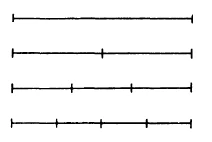
[ 18 ] Und so muß man von den verschiedensten Seiten her versuchen, dasjenige, was das Kind als Zählen lernen soll, aufzubauen. So ist es wichtig, daß man, wenn man eine Zeitlang so gearbeitet hat, auch dazu kommt, das Zählen nicht bloß durch Zulegen von einem zum anderen - das ist sogar das allerwenigst wichtigste Zählen - hervorruft, sondern man bringt dem Kinde bei: Das ist die Einheit. Jetzt teilt man das ab (siehe Zeichnung): Das ist die Zweiheit. Es ist da nicht eine Ein! heit neben die andere gelegt zur Zweiheit, sondern da ist die Zweiheit aus der Einheit hervorgegangen. Das ist die Einheit (siehe oben), das ist nun die Dreiheit. Auf diese Weise kann man die Vorstellung hervorrufen, daß die Einheit eigentlich das Umfassende ist, dasjenige, was die Zweiheit, die Dreiheit, die Vierheit zusammenfaßt. Wenn man auf diese Weise zählen lernt (siehe Schema) 1, 2, 3, 4, und so weiter, werden die Begriffe des Kindes lebendig. Dadurch entsteht in dem Kinde ein innerliches Durchdringen des Zahlenmäßigen.
[ 18 ] And so one must try, from a wide variety of angles, to build up what the child is supposed to learn as counting. So it is important that, after working this way for a while, one also moves beyond eliciting counting merely by adding one to another—which is, in fact, the least important form of counting—and instead teaches the child: This is the unit. Now we divide it off (see drawing): This is the duality. It is not a case of placing one “unity” next to another to form a “two,” but rather the “two” has emerged from the “unity.” This is the “unity” (see above); this is now the “three.” In this way, one can evoke a mental image of the unit as the all-encompassing concept, the very thing that encompasses the duality, the trinity, and the quaternity. When one learns to count in this way (see diagram)—1, 2, 3, 4, and so on—the child’s concepts come alive. This gives rise to an inner understanding of numerical relationships within the child.
[ 19 ] In gewissen Zeiten des Altertums hat man überhaupt unsere Begriffe des Zählens, wo immer nur eine Bohne neben die andere gelegt oder eine Kugel an der Rechenmaschine neben die andere gesetzt wird, gar nicht so gekannt, sondern man hat eben gesagt: Die Einheit ist das größte; jedes zwei ist nur die Hälfte davon und so weiter. Auf diese Weise kommen Sie in das Wesen des Zählens hinein, anschaulich, am Außending. Man soll das Denken des Kindes immer nur am Außending, am Anschaulichen entwickeln, die Abstraktion möglichst fernhalten.
[ 19 ] In certain periods of antiquity, people were not at all familiar with our concepts of counting—where one simply places one bean next to another or sets one bead next to another on an abacus—but instead simply said: The unit is the largest; every “two” is only half of it, and so on. In this way, you get to the essence of counting—concretely, through external objects. A child’s thinking should always be developed solely through external objects and concrete examples, keeping abstraction at bay as much as possible.
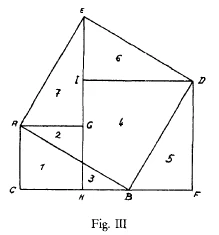
[ 20 ] Das Kind bekommt dann nach und nach die Möglichkeit, die Zahlenreihe zu haben bis zu einem gewissen Grade, meinetwillen zuerst bis 20, dann 100 und so weiter. Aber man gehe auf diese Weise vor, um dem Kinde das Zählen lebendig beizubringen. Ein Kind kann dann zählen. Wirklich zählen soll das Kind zuerst lernen - ich sage das ausdrücklich -, nicht gleich rechnen, sondern zählen. Das Kind soll zählen können, bevor man ans Rechnen geht.
[ 20 ] The child is then gradually given the opportunity to work through the number sequence up to a certain point—let’s say, first up to 20, then 100, and so on. But one should proceed in this way in order to teach the child to count in a lively, engaging way. A child can then count. The child should first learn to really count—I say this explicitly—not arithmetic right away, but counting. The child should be able to count before moving on to arithmetic.
[ 21 ] Wenn man nun dem Kinde das Zählen nahegebracht hat, so wird es sich darum handeln, ans Rechnen heranzudringen. Auch das Rechnen muß aus dem Lebendigen herausgeholt werden. Das Lebendige ist immer ein Ganzes und als Ganzes zuerst gegeben. Man verübt Schlechtes an dem Menschen, wenn man ihn dazu veranlaßt, immer aus den Teilen ein Ganzes zusammenzusetzen, wenn man ihn nicht dazu erzieht, auf ein Ganzes hinzuschauen und dieses Ganze dann in Teile zu gliedern. Dadurch, daß man das Kind veranlaßt, auf ein Ganzes hinzuschauen, es zu gliedern und zu teilen, dadurch führt man das Kind an das Lebendige heran.
[ 21 ] Once the child has been introduced to counting, the next step is to approach arithmetic. Arithmetic, too, must be drawn from the living. The living is always a whole and is first given as a whole. One does a disservice to a person by causing them to always assemble a whole from parts, rather than teaching them to look at a whole and then break that whole down into parts. By encouraging the child to look at a whole, to structure it, and to divide it, one introduces the child to the living world.
[ 22 ] Man bemerkt ja vieles nicht, was die materialistische Zeit eigentlich mit Bezug auf die Menschheitskultur getrieben hat. Heute wird man gar keinen besonderen Anstoß daran nehmen, sondern es als etwas Selbstverständliches betrachten, Kinder mit dem Baukasten spielen zu lassen, einzelne Steinchen zu haben und aus denen so ein Gebäude zusammenzusetzen. Das ist von vornherein ein Wegführen des Kindes vom Lebendigen. Das Kind hat aus seiner Wesenheit heraus gar nicht das Bedürfnis, aus Teilen ein Ganzes zusammenzusetzen. Das Kind hat viele andere, allerdings unbequemere Bedürfnisse. Das Kind hat, wenn es nur einmal darauf kommt, gleich das Bedürfnis, wenn man ihm eine Uhr gibt, sie gleich zu zerteilen, das Ganze in die Teile zu zerlegen, und das entspricht viel mehr der Wesenheit des Menschen, nachzusehen, wie sich ein Ganzes in die Teile gliedert.
[ 22 ] One often fails to notice much of what the materialistic era has actually done to human culture. Today, people don’t even bat an eye at it; instead, they take it for granted to let children play with building blocks—to have individual blocks and assemble a structure out of them. From the very beginning, this leads the child away from what is alive. By its very nature, the child has no need to assemble a whole from parts. The child has many other, albeit more inconvenient, needs. If the child is ever given a watch, for example, it immediately feels the urge to take it apart, to break the whole down into its parts—and this corresponds much more to the human nature: to observe how a whole is structured into its parts.
[ 23 ] Das ist dasjenige, was nun auch beim Rechenunterricht berücksichtigt werden muß. Daß das auf die ganze Kultur einen Einfluß hat, mögen Sie aus folgendem Beispiel ersehen.
[ 23 ] This is precisely what must now also be taken into account in math instruction. You can see from the following example that this has an impact on culture as a whole.
[ 24 ] So bis ins 13., 14. Jahrhundert herein legte man gar keinen so großen Wert darauf, im menschlichen Denken ein Ganzes aus seinen Teilen zusammenzusetzen. Das kam erst später auf. Der Baumeister baute viel mehr aus der Idee des Ganzen heraus und gliederte in die Teile, als daß er aus Teilen ein Gebäude zusammengesetzt hätte. Das Zusammensetzen aus Teilen kam eigentlich erst später in die Menschheitszivilisation hinein. Und das hat dann dazu geführt, daß die Menschen überhaupt angefangen haben, alles aus kleinsten Teilen sich zusammengesetzt zu denken. Daraus kam die atomistische Theorie in der Physik. Die kommt nur aus der Erziehung. Unsere hohen Gelehrten würden gar nicht so sprechen von diesen winzigen kleinen Karikaturen von Dämonen - denn es sind Karikaturen von Dämonen -, von den Atomen, wenn man sich nicht in der Erziehung daran gewöhnt hätte, aus Teilen alles zusammenzusetzen. So ist der Atomismus gekommen. Wir kritisieren heute den Atomismus; aber eigentlich sind die Kritiken ziemlich überflüssig, weil die Menschen nicht loskommen von dem, was sie sich seit vier bis fünf Jahrhunderten angewöhnt haben verkehrt zu denken: Statt von dem Ganzen in die Teile hinein zu denken, von den Teilen auf das Ganze zu denken.
[ 24 ] Well into the 13th and 14th centuries, people did not place much emphasis on assembling a whole from its parts in human thought. That only emerged later. The master builder constructed much more by starting from the idea of the whole and breaking it down into parts than by assembling a building from parts. The concept of assembling from parts actually did not enter human civilization until later. And that led people to begin thinking of everything as composed of the tiniest parts. This gave rise to the atomic theory in physics. It stems solely from education. Our eminent scholars would not speak at all in such terms about these tiny caricatures of demons—for they are caricatures of demons—about atoms, if we had not become accustomed in our education to assembling everything from parts. That is how atomism came about. Today we criticize atomism; but in reality, such criticism is quite superfluous, because people cannot break free from what they have become accustomed to thinking incorrectly over the past four to five centuries: thinking from the parts toward the whole, rather than from the whole into the parts.
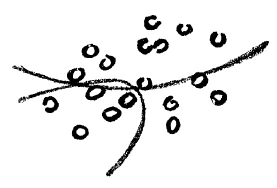
[ 25 ] Das ist etwas, was man sich besonders beim Rechenunterricht sagen sollte. Wenn Sie von ferne auf einen Wald zugehen, haben Sie doch zuerst den Wald, und dann erst, wenn Sie nahe kommen, gliedern Sie den Wald in die einzelnen Bäume. So müssen Sie auch beim Rechnen vorgehen. Sie haben ja niemals in Ihrer Börse, sagen wir, 1, 2, 3, 4, 5, sondern Sie haben einen Haufen Geldstücke. Sie haben die 5 zusammen. Das ist ein Ganzes. Das haben Sie zuerst. Sie haben auch gar nicht, wenn Sie sich eine Erbsensuppe kochen, 1, 2, 3, 4, 5 bis 30, 40 Erbsen, sondern Sie haben einen Haufen. Sie haben auch nicht, wenn Sie ein Körbchen Äpfel haben, 1, 2, 3, 4, 5, 6, 7 und so weiter Äpfel, sondern einen Haufen Äpfel in Ihrem Körbchen. Sie haben ein Ganzes. Was geht es uns zunächst an, wieviel wir haben, wir haben einen Haufen Äpfel (es wird gezeichnet). Jetzt kommen wir mit diesem Haufen Äpfel nach Hause. Drei Kinder sind da. Wir wollen zunächst gar nicht darauf ausgehen, die Teilung gleich so vorzunehmen, daß jedes das gleiche bekommt. Vielleicht ist das eine Kind klein, das andere groß. Wir greifen hinein, geben dem größeren Kind einen größeren Haufen, dem kleineren Kind einen kleineren Haufen; wir gliedern den Haufen Äpfel, den wir haben, in drei Teile.
[ 25 ] This is something you should keep in mind, especially when teaching math. When you approach a forest from a distance, you first see the forest as a whole, and only when you get closer do you break it down into individual trees. That’s how you must proceed with arithmetic as well. After all, you never have, say, 1, 2, 3, 4, 5 in your wallet—instead, you have a pile of coins. You have the 5 together. That’s a whole. That’s what you have at first. Likewise, when you cook a pot of pea soup, you don’t have 1, 2, 3, 4, 5, all the way up to 30 or 40 peas—you have a pile of them. Nor, when you have a basket of apples, do you have 1, 2, 3, 4, 5, 6, 7, and so on—individual apples—but rather a pile of apples in your basket. You have a whole. What does it matter to us at first how many we have? We have a pile of apples (it is drawn). Now we’re taking this pile of apples home. There are three children there. At first, we don’t even want to assume that we’ll divide them right away so that each child gets the same amount. Maybe one child is small and the other is big. We reach in, give the bigger child a bigger pile and the smaller child a smaller pile; we divide the pile of apples we have into three parts.
[ 26 ] Beim Teilen ist es ohnehin so eine merkwürdige Geschichte! Da hatte einmal eine Mutter ein großes Stück Brot und sagte zu dem einen Kind, das Heinrich hieß: Du mußt jetzt teilen, aber christlich teilen. - Da fragte der Heinrich: Was heißt denn das, christlich teilen? - Nun ja, sagte die Mutter, du mußt das Brot in ein kleineres und ein größeres Stück schneiden, das größere gibst du deiner Schwester Anna, du behältst das kleinere. - Darauf sagte Heinrich: Nein, dann soll nur die Anna christlich teilen!
[ 26 ] Sharing is such a strange thing anyway! Once upon a time, a mother had a large piece of bread and said to one of her children, whose name was Heinrich: “Now you must share it, but share it in a Christian way.” - Then Heinrich asked, “What does it mean to share in a Christian way?” - “Well,” said the mother, “you have to cut the bread into a smaller piece and a larger piece; give the larger one to your sister Anna, and keep the smaller one for yourself.” - To that, Heinrich replied, “No, then let Anna be the one to share in a Christian way!”
[ 27 ] Da muß man noch andere Begriffe zu Hilfe nehmen. Wir machen das so, daß wir zum Beispiel dem einen Kind das geben (siehe Abgrenzung bei der Zeichnung), dem zweiten Kind diesen Haufen und dem dritten Kind diesen Haufen. Damit wir es ordentlich überschauen können, zählen wir zunächst den ganzen Haufen, denn zählen kann das Kind schon. Es sind 18 Äpfel. Jetzt habe ich es zu zählen. Wieviel hat das erste Kind? 5. Wieviel hat das zweite Kind? 5. Wieviel hat das dritte Kind? 8.
[ 27 ] We need to use other concepts to help us here. We do this by, for example, giving one child this (see the division in the drawing), the second child this pile, and the third child this pile. So that we can keep track of everything clearly, we first count the entire pile, since the child already knows how to count. There are 18 apples. Now I have to count them. How many does the first child have? 5. How many does the second child have? 5. How many does the third child have? 8.
[ 28 ] Somit bin ich vom Ganzen ausgegangen, vom ganzen Haufen Äpfel, und habe ihn in drei Teile aufgeteilt.
[ 28 ] So I started with the whole thing—the whole pile of apples—and divided it into three parts.
[ 29 ] Sehr häufig macht man es im Unterricht so, daß man sagt: Du hast 5 und noch einmal 5 und 8; die zählst du zusammen, dann gibt das 18. Da gehen Sie vom Einzelnen aus und kommen zum Ganzen. Aber das gibt dem Kind tote Begriffe, keine lebendigen Begriffe. Gehen Sie vom Ganzen aus, von den 18, und teilen Sie es auf in die Summanden, so bekommen Sie die Addition.
[ 29 ] Very often in class, teachers say: “You have 5, then another 5, and 8; add them together, and that makes 18.” This approach starts with the individual parts and moves toward the whole. But this gives the child dead concepts, not living ones. If you start with the whole—the 18—and break it down into its addends, that’s how you get the addition.
[ 30 ] Unterrichten Sie also nicht so, daß Sie ausgehen von dem einzelnen Addenden oder Summanden, sondern gehen Sie von der Summe aus - die ist das Ganze - und gliedern Sie sie in die einzelnen Addenden. Dann können Sie dazu kommen, nun zu sagen: Aber ich kann jetzt auch anders aufteilen. Ich kann so teilen ... ich habe nun andere Addenden, das Ganze bleibt immer gleich. Dadurch, daß Sie die Addition nicht so nehmen, wie man sie sehr häufig nimmt, indem man zuerst die Addenden hat und dann die Summe, sondern zuerst die Summe gibt und dann die Addenden, kommen Sie zu ganz lebendigen, beweglichen Begriffen. Sie kommen auch darauf, daß da, wo es nur auf die Zahl ankommt, das Ganze eben etwas Gleichbleibendes ist; die einzelnen Summanden, Addenden, können sich ändern. Dieses Eigentümliche der Zahl, daß man sich die Addenden in verschiedener Art gruppiert denken kann, das kommt dabei sehr schön heraus.
[ 30 ] So don’t teach by starting with the individual addends or summands; instead, start with the sum—which is the whole—and break it down into the individual addends. Then you can go on to say: But now I can also break it down differently. “I can divide it this way… I now have different addends, but the whole always remains the same.” By approaching addition not as it is very often approached—starting with the addends and then the sum—but by starting with the sum and then the addends, you arrive at very lively, flexible concepts. You also realize that where only the number matters, the whole is simply something that remains constant; the individual summands—the addends—can change. This peculiar characteristic of numbers—that one can conceive of the addends grouped in various ways—comes across very clearly in this process.
[ 31 ] Dann können Sie übergehen und sagen: Wenn aber etwas nicht nur Zahl ist, sondern die Zahl in sich hat, wie der Mensch, dann kann man nicht in verschiedener Weise teilen. So zum Beispiel wenn Sie den menschlichen Rumpf nehmen und dasjenige, was daran hängt, Kopf, Arme und Füße, da können Sie nicht in beliebiger Weise das Ganze aufteilen, da können Sie nicht sagen: Ich schneide den einen Fuß so heraus, die Hand so heraus und so weiter, sondern das ist in bestimmter Weise schon von der Natur aus gegliedert.
[ 31 ] Then you can go on to say: But if something is not merely a number, but contains the number within itself—as a human being does—then it cannot be divided in various ways. For example, if you take the human torso and the parts attached to it—the head, arms, and feet—you cannot divide the whole in any arbitrary way; you cannot say, “I’ll cut out one foot this way, the hand that way, and so on,” but rather it is already structured in a specific way by nature.
[ 32 ] Wo es bloß auf das Zählen ankommt, da ist nicht von der Natur aus gegliedert, da kann ich in verschiedener Weise aufteilen.
[ 32 ] Where it is merely a matter of counting, there is no natural structure, so I can divide it up in various ways.
[ 33 ] Das ist dasjenige, wodurch Sie überhaupt die Möglichkeit bekommen, Leben und lebendiges Fließen in den Unterricht hineinzubringen. Alle Pedanterie fällt heraus aus dem Unterricht, und Sie werden sehen, es kommt etwas in den Unterricht hinein, was das Kind außerordentlich gut braucht: Es kommt in gesundem Sinne, nicht in kindischem Sinne, Humor in den Unterricht hinein. Und Humor muß in den Unterricht hineinkommen.
[ 33 ] This is what gives you the opportunity to bring life and a lively flow into the classroom. All pedantry falls away from the lesson, and you will see that something enters the lesson that the child needs very much: humor enters the lesson—in a healthy sense, not in a childish sense. And humor must enter the lesson.
[ 34 ] Übersetzen Sie das Wort «Humor» gut; das wird immer im Unterricht mißverstanden!
[ 34 ] Make sure to translate the word “humor” correctly; it’s always misunderstood in class!
[ 35 ] So müssen Sie überhaupt im Unterricht vorgehen: Überall von dem Ganzen ausgehen. Nehmen Sie einmal an, Sie wollen, ganz aus dem Leben heraus, folgendes machen. Die Mutter hat das Mariechen geschickt, Äpfel zu holen. Das Mariechen hat 25 Äpfel bekommen. Das hat die Kaufmannsfrau auf einen Zettel aufgeschrieben. Das Mariechen kommt nach Hause und bringt nur 10 Äpfel. Die Tatsache liegt vor, die ist aus dem Leben: Das Mariechen hat 25 Äpfel bekommen und hat nur 10 nach Hause gebracht. Das Mariechen ist ein ehrliches Mariechen, hat wirklich keinen einzigen Apfel auf dem Wege aufgegessen, hat aber doch nur 10 Äpfel nach Hause gebracht. Jetzt kommt jemand nachgelaufen, der auch ehrlich ist, und bringt alle die Äpfel nach, die das Mariechen auf dem Weg verloren hat. Jetzt wird die Frage entstehen: Wieviel bringt der nach? Man sieht ihn erst von ferne kommen. Jetzt will man vorher wissen, wieviele er nachbringt. Nun, das Mariechen ist angekommen, 10 Äpfel hat es gebracht, 25 hatte es bekommen, das sieht man auf dem Zettel, auf dem die Frau es aufgeschrieben hat. Es hat also 15 Äpfel verloren.
[ 35 ] This is how you should proceed in class: Always start from the whole. Suppose, for example, you want to do the following, based entirely on real-life situations. The mother sent little Marie to get some apples. Little Marie received 25 apples. The shopkeeper’s wife wrote this down on a piece of paper. Little Marie comes home and brings only 10 apples. Here is the fact, taken from real life: Mariechen received 25 apples and brought only 10 home. Mariechen is an honest girl; she really didn’t eat a single apple on the way, but she still only brought 10 apples home. Now someone else comes running along—who is also honest—and brings back all the apples that Mariechen lost along the way. Now the question arises: How many will he bring? You can see him coming from a distance. Now you want to know in advance how many he’s bringing. Well, Mariechen has arrived; she brought 10 apples, and she had received 25—you can see that on the note the woman wrote down. So she lost 15 apples.
[ 36 ] Sehen Sie, jetzt haben Sie die Rechnung gemacht. Gewöhnlich macht man es so: Etwas ist gegeben, man soll etwas abziehen, und dann bleibt etwas übrig. Aber im Leben - Sie werden sich davon überzeugen - kommt es viel häufiger vor, daß man dasjenige, was man ursprünglich bekommen hat, und dasjenige, was übriggeblieben ist, weiß, und man muß dasjenige, was verlorengegangen ist, aufsuchen. Man soll also die Subtraktion, damit man die Sache lebendig treibt, so machen, daß man vom Minuend und vom Rest ausgeht, und den Subtrahend sucht; nicht vom Minuend und Subtrahend ausgehen und den Rest suchen. Das ist tot. Lebendig ist es, vom Minuend und vom Rest auszugehen und den Subtrahenden zu suchen. Dadurch bekommen Sie Leben in den Unterricht hinein.
[ 36 ] You see, now you’ve done the calculation. Usually, it’s done this way: You’re given something, you’re supposed to subtract something, and then something remains. But in life—as you’ll see for yourself—it’s much more common to know what you originally had and what’s left over, and to have to find what’s been lost. So, to make the process come alive, you should perform the subtraction by starting with the minuend and the remainder and seeking the subtrahend; not by starting with the minuend and the subtrahend and seeking the remainder. That’s lifeless. It comes alive when you start with the minuend and the remainder and seek the subtrahend. That’s how you bring life into your lessons.
[ 37 ] Sie werden das schon sehen, wenn Sie die Sache von der Mutter und dem Mariechen ins Auge fassen und den, der den Subtrahenden bringt. Das Mariechen hat vom Minuend den Subtrahend verloren, und das will man so rechtfertigen, daß man von dem, der da nachkommt, den man herankommen sieht, wissen will, wieviel er bringen muß. Da kommt in die ganze Subtraktion Leben, wirkliches Leben hinein. Wenn man nur danach fragt: Wieviel bleibt übrig - bringt das nur Totes in die Seele des Kindes hinein. Sie müssen immer darauf bedacht sein, überall das Lebendige, nicht das Tote in das Kind hineinzubringen.
[ 37 ] You'll see what I mean if you consider the example of the mother and Mariechen and the one who brings the subtrahend. Mariechen has lost the subtrahend from the minuend, and the way to justify this is to ask the one who is coming next—whom you can see approaching—how much he must bring. That’s when real life comes into the whole subtraction. If you simply ask, “How much is left over?”—that brings only lifelessness into the child’s soul. You must always be mindful to instill the living, not the lifeless, into the child.
[ 38 ] Und so können Sie dann weitergehen. Sie können die Multiplikation so treiben, daß Sie sagen: Das Ganze, das Produkt ist vorhanden; wie kann man finden, wievielmal irgend etwas in diesem Produkt drinnensteckt? Sehen Sie, da kommen Sie auf Lebendiges. Denken Sie einmal, wie tot es ist, wenn Sie sagen: Ich teile mir diese ganze Gruppe von Menschen ab, da sind drei, da sind noch einmal drei und so weiter, und ich frage jetzt: wievielmal drei sind da? - Das ist tot, da ist kein Leben drinnen.
[ 38 ] And so you can continue from there. You can approach multiplication by saying: The whole, the product, is given; how can you figure out how many times something appears in that product? You see, that’s where you get to something alive. Just think how lifeless it is when you say: I’m dividing up this whole group of people—there are three here, another three there, and so on—and now I ask: how many times three are there?—That’s lifeless; there’s no life in it.
[ 39 ] Wenn ich umgekehrt vorgehe und das Ganze nehme und frage, wie oft irgendeine Gruppe drinnen stecke, dann kann ich Leben hineinbringen. Ich kann zum Beispiel zu den Kindern so sagen: Seht, ihr seid hier in der Klasse eine gewisse Zahl. Zählen wir es ab. Ihr seid 45. Jetzt suche ich mir 5 heraus, 1, 2, 3, 4, 5, die stelle ich da her. Nun lasse ich abzählen, wievielmal sind diese 5 da drinnen in diesen 45? Sehen Sie, da gehe ich wieder aufs Ganze, nicht in den Teil. Wieviel solcher Fünfer-Gruppen kann ich noch machen? Da komme ich darauf, es sind noch acht Fünfer-Gruppen da drinnen. Also ich mache die Sache umgekehrt, gehe vom Ganzen aus, vom Produkt, und suche, wie oft ein Faktor da drinnen steckt. Dadurch belebe ich mir die Rechnungsarten und gehe vor allen Dingen vom Anschaulichen aus. Und darauf kommt es an, daß wir das Denken nie, nie, nie loslösen von dem Anschaulichen, sonst kommt an das Kind früh der Intellektualismus, die Abstraktion heran, und wir verderben das ganze Kind. Wir machen es trocken, und außerdem züchten wir in ihm - wir werden noch sprechen von der geistig-seelisch-physischen Erziehung -, wir züchten in ihm die Austrocknung auch des physischen Leibes, die Sklerose.
[ 39 ] If I take the opposite approach—taking the whole group and asking how often any given group appears within it—then I can bring the lesson to life. For example, I can say to the children: “Look, there are a certain number of you here in the class. Let’s count them.” There are 45 of you. Now I’ll pick out 5—1, 2, 3, 4, 5—and put them over there. Now I’ll have you count: how many times do these 5 appear within these 45? You see, I’m looking at the whole again, not the part. How many more groups of five can I make? That leads me to realize there are still eight groups of five in there. So I do it the other way around: I start with the whole—the product—and figure out how many times a factor appears in it. This way, I bring the different types of calculations to life and, above all, start from the concrete. And this is what matters: that we never, never, never detach thinking from the concrete; otherwise, intellectualism and abstraction will take hold of the child too early, and we will ruin the whole child. We make them dry, and moreover, we foster in them—we will speak later of spiritual, soul, and physical education—we foster in them the drying up of the physical body as well, sclerosis.
[ 40 ] Wiederum hängt viel davon ab, daß wir so rechnen lehren, wie es hier beobachtet worden ist, damit der Mensch im Alter noch beweglich bleibt, noch geschickt ist. Wenn Sie am menschlichen Körper, so wie ich es beschrieben habe, zählen lehren, 1, 2, 3, 4, 5, 6, 7, 8, 9, 10 und dann weiter mit den Zehen - ja es wäre schon ganz gut, wenn man die Kinder gewöhnen würde, bis 20 wirklich mit Fingern und Zehen zu zählen, nicht mit der Rechenmaschine -, wenn Sie das die Kinder lehren, dann werden Sie sehen, durch dieses kindliche Meditieren - denn wenn man an den Fingern zählt, wenn man mit den Zehen zählt, so muß man auch an die Finger und Zehen denken, das ist ein Meditieren über den eigenen Körper, und zwar ein gesundes Meditieren -, da bringt man Leben hinein in den Körper. Man ist dann im Alter mit den Gliedern noch geschickt; sie behaupten sich, weil sie am ganzen Organismus das Zählen gelernt haben. Wenn man nur mit dem Kopfe denkt, nicht mit den Gliedern und dem übrigen Organismus denkt, dann können sie sich später auch nicht behaupten, und man kriegt die Gicht.
[ 40 ] Once again, much depends on teaching children to count as has been observed here, so that they remain agile and dexterous even in old age. If you teach them to count using the human body as I have described—1, 2, 3, 4, 5, 6, 7, 8, 9, 10, and then continue with the toes—yes, it would be quite good to get children accustomed to actually counting to 20 with their fingers and toes, not with a calculator—if you teach children this, then you will see that through this childlike meditation —for when one counts on one’s fingers, when one counts with one’s toes, one must also think about the fingers and toes; this is a form of meditation on one’s own body, and indeed a healthy form of meditation—one brings life into the body. Then, in old age, one’s limbs remain agile; they hold their own because they have learned to count through the entire organism. If one thinks only with the head—and not with the limbs and the rest of the organism—then later on they cannot hold their own, and one develops gout.
[ 41 ] Wie man aus dem Anschaulichen heraus, nicht aus dem, was man heute oftmals «Anschauungsunterricht» nennt, alles in Erziehung und Unterricht besorgen muß, das möchte ich Ihnen nun an einem bestimmten Fall zeigen, der ja tatsächlich im Unterricht eine ganz besondere Rolle spielen kann. Es ist der Fall des pythagoreischen Lehrsatzes, den Sie ja wohl alle kennen, wenn Sie unterrichten werden, den Sie vielleicht schon in einer ähnlichen Weise durchschaut haben, aber wir wollen ihn heute doch noch besprechen. Sehen Sie, der pythagoreische Lehrsatz bedeutet etwas, was man sich tatsächlich im Unterrichte so als ein Ziel hinstellen kann für die Geometrie. Man kann schon die Geometrie so aufbauen, daß man sagt: Man will alles so gestalten, daß sie gipfelt in dem pythagoreischen Lehrsatz, daß das Quadrat der Hypotenuse eines rechtwinkligen Dreiecks gleich ist der Summe der beiden Kathetenquadrate. Es ist etwas ganz Grandioses, wenn man das so recht ins Auge faßt.
[ 41 ] I would now like to show you, using a specific example—one that can indeed play a very special role in the classroom—how everything in education and instruction must be derived from the concrete, rather than from what is often called “concrete instruction” today. It is the case of the Pythagorean theorem, which you are all surely familiar with if you are going to teach, and which you may already have grasped in a similar way, but let us discuss it today nonetheless. You see, the Pythagorean theorem represents something that can indeed be set as a goal for geometry in the classroom. One can structure geometry in such a way that one says: We want to organize everything so that it culminates in the Pythagorean theorem—that the square of the hypotenuse of a right triangle is equal to the sum of the squares of the two legs. It’s truly magnificent when you really take that in.
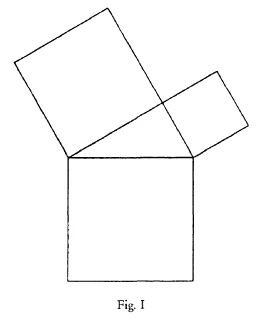
[ 42 ] Ich habe einmal einer Dame, die dazumal schon älter war, weil sie das so liebte, Geometrie beibringen sollen. Ich weiß nicht, ob sie alles vergessen hatte - aber vermutlich hatte sie nicht viel gelernt gehabt in den Mädchenerziehungsinstituten, in denen man so als Mädchen erzogen wird -, jedenfalls wußte sie nichts von Geometrie. Ich fing nun an und gipfelte das Ganze bis zum pythagoreischen Lehrsatz hin. Nun hatte der pythagoreische Lehrsatz für die Dame in der Tat etwas außerordentlich Frappierendes. Man ist nur gewöhnt an dieses Frappierende. Aber nicht wahr, man soll einfach das verstehen, daß, wenn ich hier ein rechtwinkliges Dreieck habe (es wird gezeichnet), die Fläche, die als Quadrat über der Hypotenuse errichtet wird, gleich ist der Summe dieser beiden Quadratflächen über den Katheten (Fig. I). Daß, wenn ich also Kartoffeln pflanze, und sie überall in den gleichen Entfernungen anordne, ich, wenn ich dieses Feld und dieses zusammen mit Kartoffeln bepflanze, genau soviel Kartoffeln anpflanzen werde, wie hier auf diesem Felde. Das ist etwas Frappierendes, etwas ganz Frappierendes, und wenn man es so ansieht, kann man es nicht eigentlich durchschauen.
[ 42 ] I was once asked to teach geometry to a lady who was already quite elderly at the time, simply because she loved it so much. I don’t know if she had forgotten everything—but she probably hadn’t learned much at the girls’ schools, where girls are educated in that way—in any case, she knew nothing about geometry. So I began and worked my way up to the Pythagorean theorem. Now, the Pythagorean theorem was indeed something extraordinarily striking to the lady. One is simply accustomed to this striking quality. But isn’t it true that one should simply understand that, if I have a right-angled triangle here (it is drawn), the area formed by the square on the hypotenuse is equal to the sum of the areas of the two squares on the legs (Fig. I). That is, if I plant potatoes and arrange them at equal distances everywhere, then when I plant this field and that one with potatoes, I will plant exactly as many potatoes as there are here in this field. That is something striking, something quite striking, and when you look at it that way, you can’t really grasp it.
[ 43 ] Und gerade das, daß man es nicht durchschauen kann, daß es etwas so Wunderbares ist, sollte man zum inneren Beleben des Seelischen im Unterricht benutzen; man sollte darauf bauen, daß man da etwas nicht so furchtbar Durchsichtiges hat, das man doch immer wieder zugeben muß. Man möchte sagen, beim pythagoreischen Lehrsatz ist es so: Man kann an ihn glauben, aber man muß den Glauben immer gleich wieder verlieren. Man muß immer von neuem wieder daran glauben, daß das Hypotenusenquadrat gleich ist der Summe der beiden Kathetenquadrate.
[ 43 ] And it is precisely the fact that one cannot fully grasp it—that it is something so wondrous—that should be used in the classroom to enliven the soul; one should rely on the fact that one is not dealing with something so terribly transparent that one is forced to admit it time and again. One might say that with the Pythagorean theorem, it is like this: One can believe in it, but one must lose that belief immediately afterward. One must believe anew, time and again, that the square of the hypotenuse is equal to the sum of the squares of the two legs.
[ 44 ] Nun kann man ja allerlei Beweise finden, und der Beweis sollte eigentlich ganz anschaulich geliefert werden. Er ist leicht zu liefern, solange das Dreieck gleichschenklig ist. Wenn Sie hier ein gleichschenklig-rechtwinkliges Dreieck haben (es wird gezeichnet, Fig. II), so ist dieses hier die eine Kathete, dies ist die andere Kathete, das ist die Hypotenuse. Das, was ich jetzt orange zeichne (1, 2, 3, 4), ist das Quadrat über der Hypotenuse. Das, was ich blau zeichne, sind die Quadrate über den beiden Katheten (2, 5; 4, 6).
[ 44 ] Now, one can certainly find all sorts of proofs, and the proof should actually be presented quite clearly. It is easy to provide, as long as the triangle is isosceles. If you have an isosceles right triangle here (it is drawn in Fig. II), then this is one leg, this is the other leg, and this is the hypotenuse. What I am now drawing in orange (1, 2, 3, 4) is the square on the hypotenuse. What I’m drawing in blue are the squares on the two legs (2, 5; 4, 6).
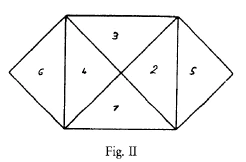
[ 45 ] Nun ist es wiederum so, wenn ich in der richtigen Weise hier über diesen beiden blauen Feldern (2, 5; 4, 6) Kartoffeln anpflanze, bekomme ich gleich viel, wie wenn ich in dem orangen Feld (1, 2, 3, 4) Kartoffeln anpflanze. Das orange Feld ist das Quadrat über der Hypotenuse, die beiden blauen Felder (2, 5; 4, 6) sind die Quadrate über den beiden Katheten.
[ 45 ] Now, if I plant potatoes here in the correct way in these two blue fields (2, 5; 4, 6), I will get the same amount as if I planted potatoes in the orange field (1, 2, 3, 4). The orange square is the square on the hypotenuse, and the two blue squares (2, 5; 4, 6) are the squares on the two legs.
[ 46 ] Nun können Sie ja den Beweis einfach machen, indem Sie sagen: Die zwei Stücke (2, 4) von den beiden blauen Quadraten, die fallen da (ins Hypotenusenquadrat) herein, die sind schon drinnen. Das da (5) können Sie hier heraufsetzen (auf 3). Wenn Sie sich das Ganze ausschneiden, können Sie das Stück (6) hier darauflegen (auf 1), und Sie haben es gleich. Also, da ist die Sache ganz durchsichtig, wenn man ein sogenanntes rechtwinklig-gleichschenkliges Dreieck hat. Aber hat man nicht ein rechtwinklig-gleichschenkliges Dreieck, sondern eines von verschiedenen Seiten (wie Fig. ID), da kann man das Folgende machen: Zeichnen Sie sich dieses Dreieck noch einmal heraus (Fig. II: ABC). Zeichnen Sie jetzt das Quadrat über der Hypotenuse ABDE. Nun können Sie in folgender Weise zeichnen: Sie können das Dreieck ABC, das Sie hier haben, hier daran zeichnen: BDF. Dann können Sie dieses Dreieck ABC, respektive dieses BDF, was dasselbe ist, noch einmal hierher zeichnen: AEG. Dadurch, daß Sie dieses Dreieck hier noch einmal haben, können Sie sich das Quadrat über dieser einen Kathete so herzeichnen (rot) CAGH. Jetzt ist das, was ich rot gezeichnet habe, das Quadrat über der einen Kathete (CAGH).
[ 46 ] Now you can easily prove this by saying: The two pieces (2, 4) from the two blue squares that fall inside (the hypotenuse square) are already inside. You can move that one (5) up here (to 3). If you cut out the whole thing, you can place the piece (6) on top of this (on 1), and you’ll have it right away. So, the matter is quite straightforward when you have what’s called a right-angled isosceles triangle. But if you don’t have a right-angled isosceles triangle, but rather one with different sides (as in Fig. ID), you can do the following: Draw this triangle again (Fig. II: ABC). Now draw the square over the hypotenuse ABDE. Now you can draw as follows: You can draw the triangle ABC that you have here onto this: BDF. Then you can draw this triangle ABC—or rather, this BDF, which is the same thing—again here: AEG. Since you now have this triangle here again, you can draw the square over this one leg like this (in red): CAGH. Now, what I’ve drawn in red is the square over that one leg (CAGH).
[ 47 ] Ich kann nun auch, wie Sie sehen, das Dreieck hierher zeichnen: DEI. Hier habe ich es auch. Dann habe ich in dem, was ich hier jetzt grün zeichne, das Quadrat über der anderen Kathete: DIHF; dann habe ich da zwei, das Quadrat über der einen Kathete, das Quadrat über der anderen Kathete. Ich benutze nur bei dem einen diese Kathete AG, bei dem anderen diese Kathete DI. Die Dreiecke sind da (AEG) und da (DEI); aber gleich (das heißt kongruent). Wo habe ich das Quadrat über der Hypotenuse? Das will ich nun violett hineinzeichnen, damit wir es gut unterscheiden können: ABDE. Das Quadrat über der Hypotenuse habe ich hier. Jetzt soll ich an der Figur selber zeigen, daß rot (1, 2) und grün (3, 4, 5) zusammen violett (2, 4, 6, 7) gibt.
[ 47 ] As you can see, I can now also draw the triangle here: DEI. Here it is. Then, in what I’m now drawing in green here, I have the square above the other cathetus: DIHF; then I have two of them there—the square above one cathetus and the square above the other cathetus. I’m just using this cathetus AG for one and this cathetus DI for the other. The triangles are here (AEG) and there (DEI); but they’re the same (that is, congruent). Where do I have the square on the hypotenuse? I’ll draw that in purple so we can tell them apart clearly: ABDE. I have the square on the hypotenuse here. Now I need to show on the figure itself that red (1, 2) and green (3, 4, 5) together give purple (2, 4, 6, 7).
[ 48 ] Nun werden Sie ja leicht einsehen können: Ich nehme dieses rote Quadrat (1, 2) hier zuerst; dasjenige, was die beiden Quadrate gemeinschaftlich haben (2), das fällt ja übereinander. Nun kommt da noch das Stück vom grünen Quadrat (4) herein. So habe ich also diese Figur (2, 4), die Sie da gezeichnet sehen und die nichts anderes ist als ein Stück von dem violetten Quadrat ABDE, richtig ein Stück von dem violetten Quadrat. Dieses Stück von dem violetten Quadrat ABDE enthält dieses Stück von dem roten Quadrat (2); bleibt davon nur noch der Zipfel hier übrig (1); den enthält es noch nicht. Aber außerdem enthält diese Figur diesen Zipfel von dem grünen Quadrat (4). Jetzt muß ich nur noch darauf kommen, das unterzubringen, was mir da übriggeblieben ist (1, 3, 5).
[ 48 ] Now you can easily see: I’ll start with this red square (1, 2) here; the part that both squares have in common (2) overlaps. Now the piece from the green square (4) comes into play. So I have this figure (2, 4), which you see drawn there and which is nothing other than a piece of the purple square ABDE—yes, a piece of the purple square. This piece of the purple square ABDE contains this piece of the red square (2); only this corner here (1) remains; it does not yet contain that. But this figure also contains this corner of the green square (4). Now I just have to figure out how to fit in what’s left over (1, 3, 5).
[ 49 ] Nun müssen Sie einmal sehen: Da ist Ihnen ein Stückchen vom roten Quadrat übriggeblieben (1), da ein Stückchen vom grünen Quadrat (3), und da ist Ihnen dieses ganze Dreieck (5) übriggeblieben, das auch zum grünen Quadrat DIHF gehört. Jetzt nehmen Sie das, was Sie hier haben, was Ihnen da noch übriggeblieben ist, und setzen es da an; dasjenige, was Ihnen hier noch übriggeblieben ist (5), nehmen Sie und setzen es da an (6). Jetzt haben Sie auch noch die Zipfel da (1, 3). Wenn Sie das ausschneiden, kommen Sie richtig darauf, daß diese beiden Flächen (1, 3) in diese Fläche (7) hineingefallen sind. Es kann natürlich noch deutlicher gezeichnet werden, aber ich denke, Sie werden die Sache durchschauen. Es handelt sich jetzt nur noch darum, daß es sich durch die Sprache noch näher mitteilt. Auf diese Weise haben Sie einfach durch das Flächen-Übereinanderlegen gezeigt, daß der pythagoreische Lehrsatz richtig ist. Wenn Sie gerade diese Art des Übereinanderlegens nehmen, so werden Sie etwas finden. Sie werden zwar sehen, wenn Sie die Sache ausschneiden, statt daß Sie es aufzeichnen, daß sie sehr leicht überschaubar ist; trotzdem, wenn Sie später darüber nachdenken, wird es Ihnen wieder entfallen. Sie müssen es immer wieder von neuem suchen. Sie können es sich nicht ganz gut im Gedächtnis merken, daher muß man es immer wieder aufs neue suchen. Und das ist gut. Das ist nämlich ganz gut. Das entspricht dem pythagoreischen Lehrsatz. Man soll immer wieder von neuem darauf kommen. Daß man ihn einsieht, soll man immer wieder vergessen. Das entspricht dem Frappierenden, was der pythagoreische Lehrsatz hat. Dadurch bekommen Sie das Lebendige in die Sache hinein. Sie werden schon sehen, wenn Sie dieses von den Schülern wieder und wieder machen lassen, die müssen es herausdrucksen. Sie kommen nicht gleich wieder darauf, sie müssen jedesmal nachdenken. Das entspricht aber dem InnerlichLebendigen des pythagoreischen Lehrsatzes. Es ist gar nicht gut, wenn man den pythagoreischen Lehrsatz so beweist, daß er platt philiströs einzusehen ist; es ist viel besser, daß man ihn immer wieder vergißt und immer wieder von neuem suchen muß. Das entspricht dem Frappierenden, daß es doch etwas Sonderbares ist, daß das Hypotenusenquadrat gleich ist der Summe der beiden Kathetenquadrate.
[ 49 ] Now take a look: You have a small piece left over from the red square (1), a small piece from the green square (3), and this entire triangle (5) left over, which also belongs to the green square DIHF. Now take what you have here—what’s left over there—and place it there; take what’s left over here (5) and place it there (6). Now you also have the corners left over here (1, 3). If you cut those out, you’ll see clearly that these two areas (1, 3) have fallen into this area (7). Of course, it could be drawn even more clearly, but I think you’ll get the idea. It’s now just a matter of explaining it more precisely through language. In this way, simply by superimposing the areas, you have shown that the Pythagorean theorem is correct. If you use precisely this method of superimposition, you will discover something. Although you’ll see—if you cut it out rather than drawing it—that it’s very easy to grasp, nevertheless, when you think about it later, you’ll forget it again. You have to search for it again and again. You can’t quite commit it to memory, so you have to search for it anew time and again. And that’s good. In fact, that’s quite good. It corresponds to the Pythagorean theorem. One should arrive at it again and again anew. Even after understanding it, one should keep forgetting it. This corresponds to the striking quality of the Pythagorean theorem. This is what brings the living essence into the matter. You’ll see—if you have the students do this over and over again, they’ll have to work it out for themselves. They won’t come up with it right away; they’ll have to think it through each time. But this corresponds to the inner vitality of the Pythagorean theorem. It is not at all good to prove the Pythagorean theorem in such a way that it can be understood in a flat, philistine manner; it is much better to forget it again and again and have to search for it anew each time. This corresponds to the striking aspect of the theorem—that it is, after all, something remarkable that the square of the hypotenuse is equal to the sum of the squares of the two legs.
[ 50 ] Nun können Sie ganz gut mit elf- oder zwölfjährigen Kindern die Geometrie so weit bringen, daß Sie den pythagoreischen Lehrsatz in einem solchen Flächenvergleich erklären; die Kinder werden eine ungeheure Freude haben, wenn sie das eingesehen haben, und sie bekommen Eifer. Das hat sie gefreut. Jetzt wollen sie es immer wieder machen, besonders, wenn man sie es ausschneiden läßt. Es wird nur ein paar intellektualistische Taugenichtse geben, die sich das ganz gut merken, die es immer wieder zustande bringen. Die meisten, vernünftigeren Kinder, werden immer wieder sich verschneiden und daran herumdrucksen, bis sie herausbekommen, wie es sein muß. Das entspricht aber dem Wunderbaren des pythagoreischen Lehrsatzes, und man soll nicht aus diesem Wunderbaren herauskommen, sondern drinnen stehenbleiben.
[ 50 ] Now, you can quite effectively teach geometry to eleven- or twelve-year-old children to the point where you can explain the Pythagorean theorem using a comparison of areas; the children will be absolutely delighted once they’ve grasped it, and they’ll become enthusiastic. That made them happy. Now they’ll want to do it over and over again, especially if you let them cut it out. There will only be a few intellectualized good-for-nothings who remember it quite well and manage to do it time and again. Most children—the more sensible ones—will keep cutting the pieces the wrong way and fiddling with them until they figure out how it’s supposed to be done. But this is precisely what makes the Pythagorean theorem so wonderful, and one shouldn’t try to escape this wonder—one should remain immersed in it.