

Spiritual Science and Medicine
GA 312
3 April 1920, Dornach
Translated by Steiner Online Library
Fourteenth Lecture
[ 1 ] For a long time, I’ve actually been thinking about what to do with the chapter in this lecture series—which, given the limited time available, I will only be able to touch upon briefly today—and whether it should be presented or not. I will do so anyway, even though one always sees, time and again, how easily one is misunderstood when dealing with such matters. For you see, on the one hand, certain people have long sought to point out that the ideas presented within anthroposophy are nothing but confused nonsense, and have launched their attacks from this perspective. Now the opinion seems to be emerging that one can no longer do this, that these ideas give too strong an impression of being precisely in line with what can be gleaned from the ancient mysteries through subsequent research—and so they concoct another objection, claiming that I am a traitor to the mysteries. One will always find a way to frame things appropriately from one perspective or another. If one can no longer say that the ideas are false, then one at least claims that it is very wrong to express them.
[ 2 ] Well, what I would like to say first of all here today is this: One must be clear about the fact that a purely physical view of the human being really takes into account only a small part of the human being—and, as one might reasonably conclude, for the reason that within the human being there is this etheric body, this astral body, and this “I,” which are constantly active within the human organism of their own accord, which are constantly working on the human organism, and which, of course, completely elude external physical assessment—I say “assessment” today explicitly in view of what I am about to explain. But that does not preclude the possibility that, with good will, a person can train themselves to acquire something that might be called: clairvoyance incorporated into the intellect and the power of judgment. One will not yet advance to a form of clairvoyance that truly involves vivid images, but one will arrive at a mode of judgment that can at least establish a strong and valid relationship with clairvoyant perceptions.
[ 3 ] Now you must consider the following: The “I”—if we assume, so to speak, that it begins with another human being—works upon the human being, and given the state of human development in the present era, this “I” works above all on the human physical body. In today’s humanity, the “I” still has relatively little ability to control even the etheric body. In childhood, the etheric body is still controlled by the “I” in a relatively dull and unconscious manner. Later, this control ceases. Only in those individuals who retain a strong imagination for later life is there also a very strong influence of the “I” on the etheric body. But in general, among people who become rational and dryly intellectual, there is a strong influence of the “I” on the physical body and a weak one on the etheric body.
[ 4 ] If you simply create a clear mental image of what I refer to here as an influence on the physical body, you will not be very far from being able to imagine that this “I” is at work on the entire physical organization, extending a kind of framework. It is truly incorporated into our physical body like a fine framework. This fine framework, which is incorporated into the physical body and can be regarded as a kind of phantom of the human being, is constantly present within the human being. A person carries around with them a framework simply imprinted upon them by their “I” organization—a very fine framework that is, however, integrated into the physical body from the forces of the etheric body. But in the course of their life, human beings gradually lose the power to consciously integrate it, and so, in a semi-conscious, dreamlike state, it remains present in imaginative creation.
[ 5 ] Now you will easily see that this framework, which the “I” builds into the human organism, is actually, to a certain degree, a foreign body. It is, to a certain degree, a foreign body. The human organism also has a constant tendency to resist this framework. And it strives, particularly every night while sleeping, to destroy this framework. Now, even though we perceive little of this framework in everyday life, we must not forget that this framework has a constant tendency to, so to speak, disintegrate and fragment within the organism, and that it thereby continually becomes the mysterious cause of inflammation in the organism.
[ 6 ] It is very important to realize that the “I” truly creates a kind of phantom within the human organism, against which the human organism defends itself as it would against a foreign body, and that this foreign body also has a constant tendency to fragment within the human physical organization—to disintegrate, so to speak—and to continually break away from the human organism. Now you gain, so to speak, a discerning view of this framework within a human being simply by studying the human eye from a psychophysiological perspective. For everything that takes place between the eye and the external world—or, through the eye, between the soul and the external world—represents this erection of a framework, I might say, in its purest form; and in such a way that between the two—between the actual “I” framework and what arises through the eye’s interaction with the environment—there exists a relationship that I have studied extensively, particularly in blind or visually impaired people. Here one can very well compare the mutual relationship between the phantom that is normal for most people—which is simply incorporated into the organism through seeing—and that phantom which is the actual consequence of “I” activity within the organism.
[ 7 ] If I wanted to express graphically what is happening here, I could say: Through seeing, through the act of seeing, a phantom is incorporated into the organism—a framework that behaves in such a way that the other framework, which is incorporated through the actual “I” process, lies a little deeper, simply more inward (see drawing on page 267, white and yellow). That which lies further inward exhibits a clear indication of physical forces. It is, in fact, an almost physical phantom that is organized by the “I”—a real framework; but that which is conveyed by the eye itself is still ether. And it is interesting to see how, in nearsighted people, these two draw closer together—how the white, which I have drawn here, approaches the other, the yellow—and how, in farsighted people, the white moves outward, this white framework. In short, if you study the structure of a person’s eyes, you will be able to arrive at a discerning understanding of the etheric body—the etheric body that is then similar to what I have just described as a framework. There is no better way to train yourself to grasp something of a person’s etheric body than by paying attention to the structure of their eyes. The rest will fall into place on its own. If you make it a habit to observe whether a person is looking near or far, and allow this to sink in, then such a habit will cultivate in you the receptivity needed to perceive the etheric body. If you then support this process through meditation—if you meditate on it—it will no longer be so difficult for you to move from the devoted observation of what is evoked in a person through the structure of their eyes to a perception of the etheric body.
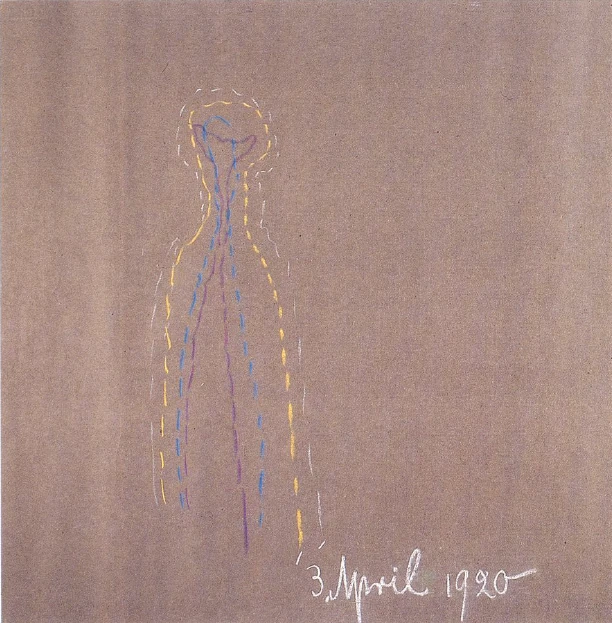
[ 8 ] Now you will see for yourself what follows. This process, which is related to the structure of the eye, is always present in humans, and it is a normal phenomenon associated with something that can occur abnormally. It is normal in everyday life, and something similar occurs in all inflammations, in all inflammatory conditions. So you can truly say that the excessive formation of this structure—which in the physical body is similar to the etheric body—gives rise to inflammations and to everything else that occurs as a result of inflammatory conditions. You can help yourself by slightly intensifying what is dawning on you as a conviction by taking formic acid, which originates from the animal kingdom, and trying to apply it externally. You will be able to study this application best by doing the following. Try to obtain formic acid in the highest dilution; in other words, try to administer formic acid in the highest dilution to people through baths. If you do this—administering formic acid in the highest dilution to people through baths—you will be faced with a consolidation of this yellow substance here (see drawing on page 267), a consolidation of this framework. You will thus achieve the consolidation of this framework, but in such a way that, through the formic acid used in this manner, you bring the “I” into harmony with this framework, so that this framework is permeated by the “I.” In this way, if a person is prone to inflammation, you can counteract the inflammation, for this framework is only prone to inflammatory decay when it is not properly permeated by the “I,” not properly subdued by it, since the “I” and this framework belong together. You can bring them together through the application of formic acid in a bath, as just described, but in a highly diluted state, because that is when the powers of formic acid are most effectively brought into play.
[ 9 ] Now, if you’re going to get involved in this sort of thing, you’ll have to do a little symptomatology. Specifically, you’ll need to observe whether you’re dealing with inflammatory conditions that occur simultaneously in people prone to obesity. For only when both sets of symptoms are present—on the one hand, a tendency toward inflammation, and on the other, a tendency toward obesity, which points to a certain complex of symptoms—will you truly be able to achieve positive results through external treatment, that is, through the treatment with animal formic acid just described. You will always achieve exceptionally good results if you have reasonable grounds to suspect that this framework has broken down—which you can deduce from various other symptoms to be discussed later—and if, at the same time, you are dealing with a person who has a strong tendency toward obesity. This is what must be taken into account.
[ 10 ] For you see, Spiritual Science knows something here that, quite simply, comes as a great shock to people today; it knows that what must take place in the human organism in order for the eyes to develop as they must in human evolution—naturally, over the course of humanity’s long evolutionary history— is actually an inflammatory process that is continuously pulled back toward the normal state—that is, one that has not reached the point of outbreak. Imagine the same processes at work in an inflammatory reaction, but held back, slowed down, and compressed—then you have the process of the human eye’s formation within the human organism. So that you can even gain an impression of a person—whether they are prone to inflammatory conditions or not—simply by looking at their eyes. You will be able to see this in their eyes if you train yourself to do so. Indeed, the experiences we can have with human vision are intimately connected with observations of the human etheric body. And when we speak of the existence of the etheric body, of perceiving the etheric body, there is, of course, that inner process which leads to true clairvoyance—a process that is achieved through meditation. But there is also an educational process from the outside. When we strive to see natural processes in the right way, we come to form a conception of these things based on our judgment. You see, the actual clairvoyant organs must, of course, be developed from within; but judgment is developed through the external world. If we develop our judgment more intimately through the external world, this judgment complements the otherwise more inward process of meditation—the process that moves from the inside out.
[ 11 ] Now you might rightly ask: Well, can’t we then also observe all of this in the animal kingdom? — Well, the fact is that it is very difficult to grasp what human beings are really all about by observing the animal kingdom. I have often emphasized in public lectures what I would now like to emphasize here, I might say, more precisely. You see, people think: the eye is the eye, an organ is an organ, the lung is the lung, the liver is the liver, and so on. — But that is not true. The human eye is the organ that also occurs in animals as an eye, but it is modified by the fact that the “I” is integrated into it. The same is true of all the other organs. And what happens within the organ—which plays the most significant role, especially in sick people—is determined more by this interpenetration with the “I” than by what occurs in the animal kingdom in organs not permeated by the “I.” This is what is consistently given far too little consideration, and people are such that, in this area, they really cannot stop judging, over and over again: Here I have a knife; a knife is a knife, so I define one as a knife and the other as a knife in terms of how it came into being. — Yes, but if one knife is a table knife and the other a razor, then it is impossible to insist that a knife is simply a knife. The same applies when one comes along and says: The human eye and the animal eye are explained in the same way. — It is simply absurd to seek the explanatory principle in mere outward appearance, and in particular, it leads nowhere if one then bases a study on mere outward appearance. This line of study, based on the animal realm, then prevents one from properly studying certain conditions in humans, because they only truly appear before the eye of the soul when one is aware that, in humans, it is precisely the organs located at the periphery that are most deeply permeated by the “I” and shaped by the “I.”
[ 12 ] Well, the human ear is structured in a completely different way than the eye. This human ear can also be comprehended, and one can train oneself to perceive it with discernment in a similar way to how one can train oneself to perceive the eye with discernment, thereby drawing closer to the clairvoyance of the etheric body. One can train oneself to view the fact correctly that a human being is endowed with an ear just as an animal is, but that this ear—this structure of the ear—is then permeated by the human ego-organization. If one then studies the formation of the ear, one comes to realize that this formation is connected in a similar way to something located more toward the center of the human organism, just as the formation of the eyes in the etheric body is connected to something located more toward the periphery. One comes to direct one’s powers of observation, so to speak, toward the formation of the ear, and arrives at the conclusion that the “I” also has something to do with the process of ear formation, just as it has something to do with the process of eye formation. The “I,” too, integrates a framework into the organism that is somewhat different from the one characterized earlier. Related to this framework that is integrated there is the whole within the organism that underlies the formation of the ear. So that I can sketch another framework here, which I will draw in blue; it lies more inward than the yellow one, extends into the limbs with less organizing power than the other one—one that, I would say, if it were removed from the human being, would not have arms and legs, but only arm stumps and leg stumps. It is, so to speak, a framework that has remained at the childhood stage of development. It is also much less differentiated toward the head than the other framework. But again, we find that this framework corresponds to the organizing forces underlying the formation of the human ear and the entire process of hearing. I would like to indicate this, in relation to this white area here (see drawing on page 267), by using a violet color. This framework also has a certain peculiarity in the human organism. This framework can, in a sense, become abnormal if the ego exerts too strong an influence—but specifically when the ego exerts too strong an influence internally. Earlier, we discussed the case where it exerted too strong an influence on the surface.
[ 13 ] Again, use the following as a guide to study this topic thoroughly. Consider some symptomatology once more and look at people who tend toward extreme thinness—or even just a slight tendency toward thinness—and who have no tendency toward fat accumulation; you will then find that in such people, the ego exerts too strong an inward influence and reinforces this framework. But this framework has a different characteristic compared to the earlier one; it has the characteristic of proliferating inwardly. While the first framework has a tendency to disintegrate, to fragment, this framework has a tendency to proliferate inwardly. It must be developed in two specific directions. It must be developed in such a way that it does not proliferate—that the “I” does not, so to speak, seep out—for proliferation or disintegration is always connected to the fact that the “I” is not properly situated within this framework, that the “I” seeps out of the framework. If the ego flickers out of this framework and is strong enough to sustain itself within the organism, then psychological and physical consequences arise: the psychological consequence being hypochondria, and the physical consequence being constipation or related symptoms.
[ 14 ] This is one side of the story. But it may also be that the ego is too weak to hold itself together when it flickers out of there, that it, so to speak, shatters as an ego—not because its correlate, the physical framework, gives such cause for shattering, but because it itself gives cause for shattering. Just think what a peculiar phenomenon we have here! In a sense, we have the phenomenon that the “I” is so weak that fragments of it become embedded in the organism. It is also the case that fragments become embedded because the “I” is weak. These fragments become embedded for the reason that when a person organized in this way falls asleep, they are unable to fully take with them what flickers out. It remains in the organism and proliferates as the soul-ego within. These organisms, which have these proliferations of the soul-ego—which then manifest particularly strongly during sleep—are the people who are prone to the formation of tumors. This is an infinitely important process that we are observing here. People who are prone to the formation of tumors are those who, for this reason, do not sleep properly, because fragments of the ego remain in their organism when they fall asleep. One is then confronted with these ego fragments, which are the actual causes of tumors—including malignant ones—and which are connected to the entire complex of symptoms I have just listed. It really is as if, on the one hand, there were hypochondria and constipation, and on the other hand, if the organism cannot help itself by the person becoming hypochondriacal and constipated, then the organism proliferates internally and the most malignant tumors arise. We will have to speak further about this; for now, let us simply consider the principle.
[ 15 ] You can also see for yourself that this is indeed the case by considering what I told you earlier from a different perspective. I told you earlier that you can address the initial formation processes by applying animal formic acid, finely dispersed, externally in baths. Try taking the same animal formic acid, diluted in an appropriate preparation, internally, and observe the effect it will have, particularly on thin people—how it counteracts the tendency toward tumor formation in thin people and influences the tumors themselves.
[ 16 ] These are things that must certainly be observed on the macroscopic level, but they also clearly demonstrate how one should develop this macroscopic perspective—to view the entire human constitution as a whole, everything that is relevant to the organization and constitution of the human being, and what then becomes apparent in the sick person. This also gives one a proper understanding of how to distinguish between the effects of external remedies and those of internal remedies. It is precisely when one traces the same remedy’s effects both externally and internally that one gains the most interesting insights. And once again, Spiritual Science reveals something that is immensely illuminating with regard to this second part of the human constitution. This is that, in fact, all our ear-forming forces follow the same path as those forces which, ultimately, if they are allowed to run too far, if they go too far, lead to internal tumor formations. For the fact that we have an ear formation within us is based on a process that is normalized by the tumor-forming force being held back at the right place. The ear is a tumor within the human being, but one that has expanded toward the normal state. In the developmental process, the formation of the eye is related to the inflammatory process, while the formation of the ear is related to the tumor-forming process. This is indeed a marvelous relationship in human beings between health and illness: that we are actually dealing with the same processes in both health and illness—the same processes that proceed at their proper speed in one case and at an improper speed in the other. If you eliminate the inflammatory process in nature, no being can see. Beings see simply because the inflammatory process is active throughout nature. But it has a certain speed. If it is given the wrong speed, then it becomes the pathological inflammatory process in humans. Likewise, the tumor-forming, proliferative process has its significance in nature at the correct speed. If you eliminate it, no being in the world can hear. If you give it the wrong speed, you get everything that occurs in the formation of myomas, carcinomas, and sarcomas. We will discuss these matters further.
[ 17 ] Anyone who is not actually able to trace every disease process, as it were, back to its healthy counterpart cannot properly integrate it into the human organism. For this human organism is based precisely on the fact that certain processes, which are scattered peripherally throughout nature, are internalized centrally. Instead of many things that are emphasized in our physiology, we should focus on other things. They are indeed considered, but they are not given the great significance they deserve. For example, you can observe quite macroscopically—I would even say trivially—how the skin is spread over the body, but how it then invaginates everywhere and, in its extensions, lines the inner parts. This is something of extraordinary significance—this reversal of functions, as it occurs, for example, from the cheeks, from the outer parts of the face, through the inversion over the lips toward the inside. Here, in fact, one still sees in the external human form the rudiments of what one ought to study properly in embryology, where everything is actually based on invaginations and inversions. And it is precisely by studying such things—by simply observing the difference in reaction when, say, formic acid is applied externally to the skin and internally to the mucous membranes—if one were to take note of the subtle difference that arises there, it would be immensely significant. For everything I have described to you here is, in essence, merely a detailed elaboration of what occurs in a fundamental way, as I have just characterized it. Then, when one conducts such studies, one encounters the entire diversity of the human organism’s outward, ethereal inversion and its inward centralization—which are polar opposites.
[ 18 ] Well, this comes into play in the following context. If you now ask again: To whom does what I have described here as the second phantom correspond? — I will tell you: What I have drawn for you as the blue phantom is a physical framework within the organism that simply has a tendency to proliferate (see drawing on page 267). The normal state is connected to the development of the ear. Now, when studying the human being, train yourself in such a way that you learn to observe the structure of the ear—specifically, to take in the entire internalization of the ear’s structure and, at the same time, the structure of vision. For consider that the process of seeing takes place in the etheric realm, while the process of hearing takes place in the air. This is a significant difference. Everything that is situated lower down in the series of ponderables and imponderables is connected to what, in human beings, is located more centrally within the organism. Everything that is more closely connected to the etheric is connected to what is situated more toward the outside, at the periphery of the human being.
[ 19 ] In what I have drawn here in purple (see drawing on page 267), there is, in fact, nothing less than a hint of what lives in the human astral body. If you train yourself—specifically through the structure of the ear—to observe human beings with regard to their capacity for judgment, you will acquire a kind of substitute for clairvoyance into the astral body. Learning to observe through sight trains you to observe the etheric body; learning to observe through hearing trains you to observe the astral body.
[ 20 ] Once again, one can make very interesting observations when looking into the eyes of people who have become deaf or were born deaf, and deeper connections within nature are revealed in the process. Just try observing how people born deaf—if they had not been born deaf—would be prone to the most terrible tumors even in childhood. These are, of course, aids that nature creates, and they already point toward what need no longer be comprehended within the individual human organism between birth and death, but rather what now extends into what must be comprehended in repeated earthly lives, for it is there that it first finds its balance. These phenomena, when traced to a certain degree, lead precisely to the point where one arrives at an understanding of repeated earthly lives.
[ 21 ] If you now try to stimulate a person peripherally, you will always reinforce what I described in the first characterization by outlining the relationships between the “I” and its framework. If you deem it necessary to strengthen this “I” in a person, you can take either an educational or a therapeutic approach. You will always find—when you observe a tendency toward irritability—that you need to strengthen the ego activity in the person so that this ego activity simply integrates properly into their phantom, into their framework; for the framework does not disintegrate when the ego integrates in the proper way.
[ 22 ] Now, a significant strengthening of this “I” activity—which fits very well into this framework—is brought about, for example, by having people take baths to which very finely diluted rosemary juice is added—the juice extracted from rosemary leaves. This stimulation, which comes from the periphery through the rosemary juice, is such that, in a sense, the ego can work on what is approaching the person through the finely dispersed rosemary juice. For it is then that quite remarkable things occur.
[ 23 ] If you consider the human eye as it is integrated into the human organism, the process of vision actually rests on the fact that the “I” can penetrate that which has been drawn out of the human organism. There is, in fact, far less of an animal process within the eye; everything has been reduced to the organic level, and the process of seeing is based on the fact that the human being himself—the inner, soul-spiritual human being—penetrates that which is not animal in nature, so that he can, in a sense, identify with what is outside, not merely with what is within. If you identify with the muscle, you identify from within with the process of human formation; if you identify with the eye, you are actually identifying with the external world. That is why I once referred to such an organ as a “gulf” into which the external world reaches. A piece of the external world is simply pushed in like a gulf into the organism, and it is, once again, a fatal error when such things are not taken into account at all in our sensory physiology, for this is precisely what gives rise to those silly fairy tales about subjectivity and so on. The fact that—don’t you see—objectivity is pushed in, and that within this pushed-in objectivity we participate in a process of the external world—this is not taken into account at all today. For centuries—or at least one and a half centuries—all manner of sensory physiology has been built upon the subjective, because people do not consider that the external world is advanced inward in its “waves,” and that we participate in it through our senses. If you understand this correctly, you will also understand correctly how something from the outside can have an effect in this fine-grained process. If this here is the skin with its pores and all the processes that take place in connection with the pores (see drawing on page 278), if there are finely dispersed droplets of rosemary in a bath, then you will easily see that an interaction arises between the skin and the finely dispersed rosemary droplets—if I may call them that—something is brought about that is similar to this; a stimulation of the sensory process is brought about. This stimulating sensory process acts upon the human “I,” so that it integrates itself into its structure. And one can even go so far as to say—if done correctly—that, for example—applied at just the right time, of course, not when it is already too late—if the scalp is supported by this stimulating process of the finely dispersed rosemary droplets in the liquid, they can already combat the peripheral process of hair loss. It just has to be done the right way. So, something is at work on the surface, at the periphery of the human organism.

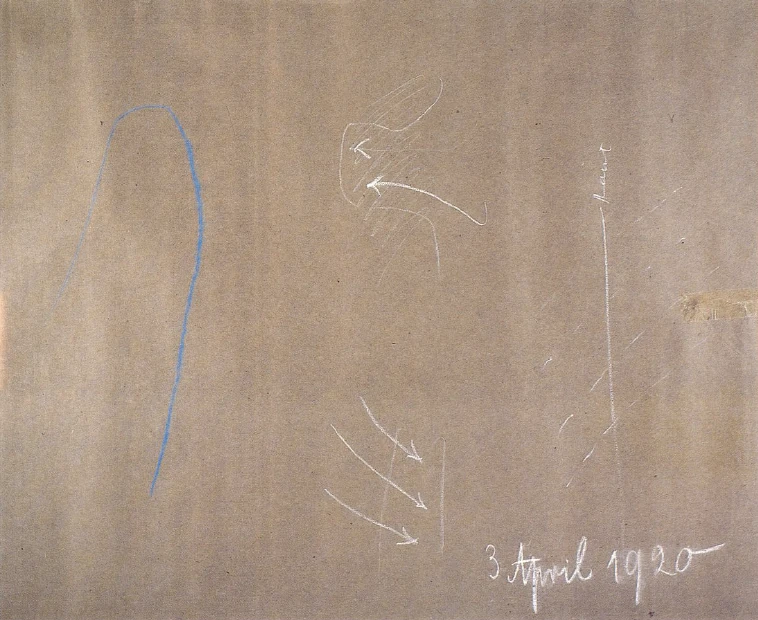
[ 24 ] Now let us suppose that this orderly interaction between the “I” and the human organism is disrupted from the outside. The “I” is, after all, not merely a point, but a point that exerts an influence in all directions. And this influence actually means that the formative power of the entire human organism—the “I”-organizing power—spreads throughout the entire human organism and permeates everything. Now consider: if an external disturbance occurs at any point, such that this interplay between the “I” and the human organizing power is disrupted from the outside, then it will be necessary to summon to that spot something that comes from the astral organization—which is a level lower than the “I” organization—and which permeates the human organism from the astral organization in such a way that it becomes easier for the “I” to develop its healing powers at the very spot where an external insult occurs. If you wish to say to the astral body—which, as I have described, lies more inwardly, as is already evident in its phantom—‘Come here; you have work to do; you must come to its aid’—then do so not by giving a bath, but by applying arnica to a woolen cloth and placing a proper arnica compress on the affected area. By applying this arnica compress to something sprained or similar—where the external injury is located, which weakens the ego’s power of action—you call to the astral body from within: “Come here, help the ego.” And then you have something that exerts a balancing effect on the surface, on the periphery of the human being.
[ 25 ] But this does, in fact, provide a basis for comparing this external world in its various substances—to what extent it assists the periphery with its substances that are highly prone to spreading, and how one must use these substances that tend to spread in a therapeutic manner to support the ego, and to what extent one must use other substances—including arnica in particular—to strengthen the astral body, which in turn indirectly supports the “I.” One can’t really understand the effect of such substances in any other way than by calling upon the “I” and the astral body for help. You see, this is something that can serve as the very foundation for a theory of the external and internal treatment of disease.