

Spiritual Science and Medicine
GA 312
7 April 1920, Dornach
Translated by Steiner Online Library
Eighteenth Lecture
[ 1 ] I believe it is necessary for our studies in the natural sciences and medicine to incorporate what might be called a return to the true origins of pathological phenomena. In recent times, there has been an increasingly strong tendency to disregard the actual origins and to focus instead on what takes place on the surface. And this fixation on the surface is why, in conventional medicine and conventional pathology today, when one begins to read or hear a description of any type of disease, one is usually told what kind of bacillus actually causes the disease—that is, what has invaded the human organism. Now, of course, it is terribly easy to dismiss objections to this invasion by lower organisms for the simple reason that it is no longer necessary to point out that these lower organisms are present. Since they actually manifest in a specific form for various diseases, it is also quite understandable that this specific form is pointed out and that a direct connection is demonstrated between a form of disease and this specific bacterial form.
[ 2 ] Now, even at a purely superficial level, this entire perspective gives rise to an error, which consists in the fact that it actually distracts one entirely from what is primary. For just consider this: if, in the course of any illness, large numbers of bacteria appear in any part of the body, it is only natural that these bacteria will cause symptoms—just as any foreign body in the organism causes symptoms—and that, as a result of the presence of these bacteria, all sorts of inflammations will occur. If one now attributes everything to the activity of these bacteria, one is in fact directing attention only to what the bacteria themselves are doing. In doing so, however, one diverts this attention from the actual origin of the disease. For every time lower organisms find a suitable environment for their development within the organism, that very suitable environment has already been created by the actual primary causes. Attention must finally be directed toward this realm of primary causes. To this end, I must once again lead you back to the lines of reasoning we have already pursued, which deserve our brief attention once more.
[ 3 ] Consider once again the area of the Earth covered by plants—that is, the sum of everything that constitutes the Earth’s vegetation. We must be clear that all of this vegetation on Earth—as it grows outward from the Earth into outer space—is not merely sent out from the Earth into outer space, but is drawn outward by forces; that is to say, as we have already heard, forces are at work everywhere here that are just as much a part of plant growth as the forces that act from the Earth into the plant. There is a constant interaction between the forces acting from the Earth into the plant and the forces acting on the plant from the cosmos beyond Earth. Now, what does this mode of action—which is, in fact, constantly present in our surroundings—consist of? If it were to happen that these forces acting in from the cosmos were to find full expression—that is, if they were able to fully take hold of the plant—and if the planets did not ensure that these forces could also withdraw again, so that they do not fully encompass the plant, then the plant, as it grows from the stem toward the flower and the seed, would always have a tendency to become an animal. The tendency toward becoming an animal is present. What acts in from the cosmos is counteracted, on the other hand, by the tendency within the plant—arising from the earth—to suppress its plant nature and to mineralize within that plant nature.
[ 4 ] So I would like to point out that, in fact, plant life strikes a balance between the tendency toward salinization—the accumulation of minerals in plant tissue—mineralization, and self-ignition—that is, becoming an animal. This is something that is constantly present in the external natural world.
[ 5 ] But what I have just described to you is also constantly present, internalized, and centralized within the human organism itself. Because it has lungs, the human organism is a veritable miniature Earth, and everything that acts from the lungs works downward in the human organism just as the forces that flow from the Earth into the plant organism work upward from the Earth into the plant organism. And everything that, through breathing and heart activity, contributes to the internal metabolism of the lungs and so on, acts in the same way as this cosmic force outside (see illustration on page 330).
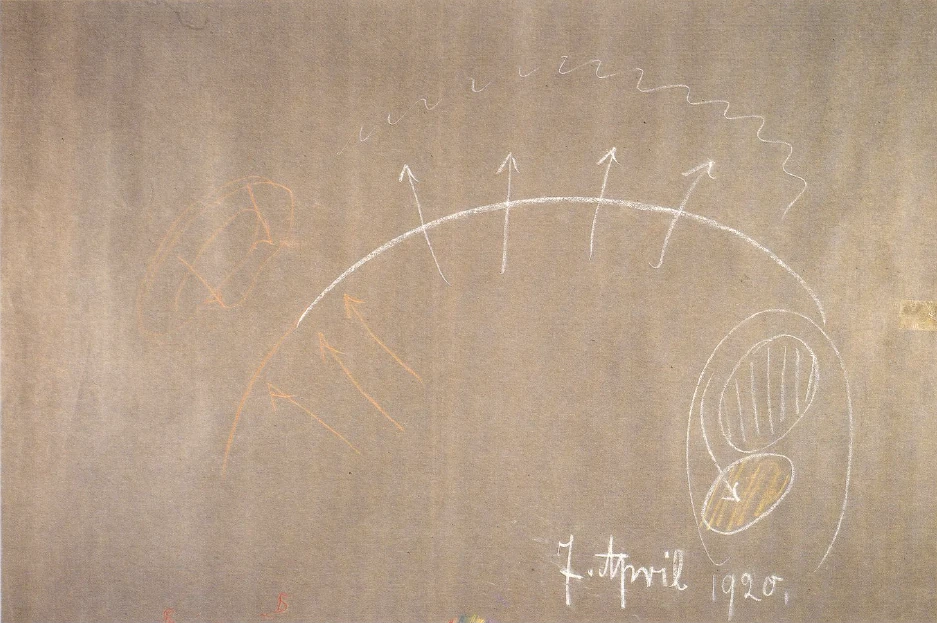
[ 6 ] Now there is a necessity within the human organism. There is a necessity that everything which ultimately concentrates from the organism in the activity of the heart be kept separate from that which organizes itself, ultimately concentrating in the internal metabolism of the lungs. These two activities must not interact with one another in any other way than by having, so to speak—if I may use the expression—an etheric diaphragm or an astral diaphragm between them. These two activities must be kept separate. And we must ask the question: Does this diaphragm—I am using the word only to suggest an image—actually exist? Is there such a diaphragm that prevents the activities of the head, throat, and lungs from mixing with those of the abdomen and chest in any way other than through the external respiratory rhythm? — This diaphragm does exist, and it is the external respiratory rhythm itself. And this brings us to the harmony between the upper and lower human beings. What is called rhythmic activity in the human being—this rhythmic quivering, which is physically expressed outwardly in the respiratory rhythm—this physical quivering extends all the way into etheric and astral activity and keeps the earthly forces of the upper human being, which are still concentrated in the lungs, and the heavenly forces of the lower human being—which, through the activity that finds its expression in the heart, act from below upward, just as they act in the cosmos from the periphery toward the center of the Earth.
[ 7 ] Now imagine that the rhythm in question is not functioning properly; in that case, the diaphragm—which I am using here as a metaphor, since it is not physically present but is brought about precisely by the interplay of rhythms—is not functioning properly. Then something can occur that is analogous to the earth’s activity being too strong for the plants. If the earth’s salting activity were too strong for the plants, the plants would become too mineral-like. Then what happens is that, in a sense, the etheric plant—which is incorporated into the lungs and grows out of them, just as the physical plant grows out of the earth—becomes, so to speak, the cause of, let’s say, pulmonary fibrosis. So we do indeed find that this tendency toward mineralization in plants can become too strong in the human organism as well.
[ 8 ] But the tendency toward animalization can also become too strong. When the tendency toward animalization becomes too strong, a sphere is created within the organism—in the upper part of the organism—that should not be there. A sphere is created in which these organs are embedded, as if in an etheric sphere, and which is conducive to what must not be encouraged in the organism: the life of small plant animals. A sphere is created there that is conducive to the small plant animals. We need not concern ourselves with where they come from. What must concern us is what creates a favorable sphere of life for them. This favorable sphere of life must not exist. It must act within the organism in such a way that its activity extends throughout the entire organism. It must not arise here as a separate, enclosed sphere. If it extends throughout the entire organism, it sustains the life of the entire organism. If it asserts itself as a small, enclosed sphere, it becomes the environment for the living conditions of tiny plant-animals, which we can then detect in everything—or at least in much of what causes illness in the higher human being.
[ 9 ] Thus, by tracing back to rhythmic activity and its disruption, we must seek to establish a specific sphere—rather than the general sphere that pervades the organism—and thereby solve the mystery of the influence of bacteria on the human organism. But without going back to the mental causes, one cannot solve this mystery.
[ 10 ] Exactly what is happening here with regard to plant life—and I am referring here primarily to the outer realm of the Earth—is also taking place in the outer realm of the Earth with regard to the external life of animals and human beings themselves. There, too, certain forces from the extraterrestrial cosmos act upon humans and animals from the outside, counteracting the forces that come from within (see illustration on page 330, orange). The forces that come from within the Earth are localized in humans in certain organs of the upper body, while the forces that flow in from the outside are localized in humans in organs belonging to the lower abdomen. Again, if I may put it this way, a dividing wall must be created between these two processes under consideration here. The normal regulation of this separation is effected by the activity of the spleen. Here, too, we see the rhythm at work in the human organism. Only this rhythm is now different from the respiratory rhythm. The respiratory rhythm occurs in small oscillations and continues throughout a person’s entire life; it must be in order so that diseases of the upper region—or those diseases that relate solely to the upper part of the human body—do not arise. For there can also be diseases in the upper part of the human body that are caused from below, since digestion extends upward as well as downward. This distinction must be made. We cannot think of the human being as schematically divided into parts, but rather as individual parts that interpenetrate one another. Yet there must be a dividing wall between what acts from above—as if coming from the earth—and what acts upward from below—as if coming from the heavenly realm. In fact, we send the forces of our lower self to meet the forces coming from our upper self, and there must be a regular rhythm for each individual human being between the two, which is expressed in the proper balance between waking and sleeping. Every time we are awake, one phase of this rhythm is present in a certain way; when we sleep, the other phase of this rhythm is present. Within this rhythm of waking-sleeping, waking-sleeping, other rhythmic processes are arranged—acting like smaller crests of the rhythm—which are brought about simply by the fact that even in the waking state we wake with our upper self and sleep with our lower self. There is a continuous rhythmic activity between the upper and lower human beings, which is, I would say, captured only in larger rhythms through the alternation of waking and sleeping.
[ 11 ] Now imagine that this boundary—which exists in this particular rhythm between the upper and lower human beings—is breached. What happens then? What usually happens is that the upper activity of the human being breaks through from above into the lower abdomen. An etheric breakthrough then takes place. That which is meant to be active only in the upper body of the human being penetrates into the lower abdomen. A breakthrough of finer forces takes place. But because a breakthrough of finer forces occurs in the lower abdomen, a sphere is created there that is not meant to be there—one that is meant to be spread throughout the entire human being, not localized in the lower abdomen. As a consequence of such a breakthrough, a kind of poisoning—intoxication of the lower abdomen—even occurs. The functions of the lower abdomen can no longer be carried out properly when the functions of the upper body occur in this way. Moreover, what is created here as a new sphere is an atmosphere primarily suited to lower organisms of an animal-plant nature. And so you can say the following. You can say: The breakthrough from above triggers in the human being what becomes abdominal typhoid fever. Because such an atmosphere—localized in the lower abdomen—arises as a concomitant phenomenon, conditions are created that serve as the typhoid bacillus’s habitat.
[ 12 ] You have clearly distinguished between what is primary and what is secondary, and if you continue to make such a clear distinction—let’s say, between what is primary and what is secondary—then you will also tell yourself: One must distinguish between what are the underlying causes of such a disease and what arises, for example, as inflammatory phenomena simply due to the presence of this entire host of intestinal fauna or flora, especially in the small intestine. Everything that physically occurs in the small intestine, including the bacilli—we need not discuss their origin here, for they cannot vegetate and become animate there unless the proper environment is created for them— everything that occurs there as an activity of these vegetative-animal or animal-vegetative entities—all of this is a reaction to the process by which the higher activity breaks through into the lower activity of the human organism. All of this is already a consequence. So the task will be to seek the healing process not by addressing the secondary, but by addressing the primary. We will discuss this further, for these matters can really only be discussed if one is able to trace them back to their true causes. This is almost entirely impossible for today’s conventional medicine—official conventional medicine—because it excludes any perspective that moves from the material process to the spiritual process. But everything material is based on the spiritual. You will be able to easily form a picture of the clinical picture—let’s say, specifically of abdominal typhus—if you keep in mind what has just been explained here. Just consider that this disease is very often associated with catarrhal symptoms in the lungs, as well as with disturbances of consciousness. The catarrhal symptoms in the lungs arise because what occurs in the lower human being is withdrawn from the upper human being. Once the breakthrough has occurred, what happens in the lower human being is no longer contained within the upper human being. Similarly, the organs that mediate consciousness in the upper human being can no longer function properly once the breakthrough of what should mediate their activity has occurred into the lower human being. The entire picture of abdominal typhus comes before your soul when you truly take this primary causality into account.
[ 13 ] I would like to say that what one otherwise always views only from the outside—the cohesion of external, unrelated symptoms—presents itself in such a way that one could, I would say, depict it through one’s existential relationships. Of course, under certain circumstances, this can have such a powerful effect on a person’s subconscious that a real urge arises within them to first—I would say—objectify it prophetically, before it imprints itself onto the organism itself. Then the person will feel the urge to paint what eludes them in their upper body onto the wall with blue splashes of color, and what eludes them in their lower body with red splashes of color. If there is an individual walking around who feels called to be an artist rather than a tailor or a shoemaker, but who has learned little about the technique of painting, then you may observe that, if this individual is strong enough, robust enough at the same time—which does not require outward robustness—to suppress lower-abdominal ailments that are constantly threatening to arise, they will project these abdominal ailments onto the wall instead of internalizing them. You can find the products of this peculiar activity in Expressionist painting. Look for the artist’s physical state regarding their abdomen in much of what comes to light in Expressionist paintings, in all that stands out in the red and yellow colors. And from all that is blue-violet within, try to form a verse about the person’s condition in the upper body, in the lungs, or in all that moves rhythmically upward toward the head in connection with lung activity. Then, when you delve into such things, you will also find a remarkable harmony between what a person does in general and how they are internally organized. You will develop a certain intuition, based on the way a person lives their life, to form a picture of how their body functions. For in fact, it is entirely wrong to believe that the soul activity a person engages in within the outer world—through their entire demeanor and all their actions—depends merely on their nervous system. It depends on the whole person. It is a reflection of the whole person. One can arrive at an intuitive understanding of this simply by observing a child to see what this intellectual being is actually like, how he or she is striving toward later life—if one considers, for example, how someone who is condemned to to bear all the impairments of stunted growth in later life, simply demonstrates in childhood that whatever prevents him from rising upward causes him to carry himself in a clumsy, forceful manner. From the way a child carries himself—whether relatively lightly or with great force—you can form an intuitive mental image of how he will grow. Numerous similar phenomena point out to us how the entire gesture, the entire manner of human behavior, is nothing other than an interaction—set in motion—between the inner components of the human organism.
[ 14 ] It would certainly be desirable for such topics to be included in medical school curricula. After all, consider that the most favorable conditions for these subjects exist there. When one is a young person in one’s early twenties, one has the greatest possible opportunity to immerse oneself in such matters. Once one reaches one’s thirties, one has lost this ability. It is no longer so easy to find one’s way into these matters. One can educate oneself and train very hard to attune oneself to such intuitions. One can also, through certain innate capacities that have remained despite the devastating conditioning of our secondary and, in particular, our higher education—by returning to those active forces that have remained from childhood—train oneself to develop such a perspective on the human being. But if proper emphasis were placed on the more intimate, three-dimensional anatomy and physiology in medical education, it would be of immense help in the overall treatment of humanity.
[ 15 ] Thus, those diseases that can occur epidemically—even though they have primary causes in humans of the nature described—must also be viewed in terms of their primary causes. For all those people who, for example, are prone to disturbances in their head-chest rhythm—which is the coarsest aspect of the respiratory rhythm—there is a predisposition to be strongly affected by certain atmospheric phenomena, as well as certain non-terrestrial phenomena. Others, who are from the outset healthily constituted with regard to their respiratory system, are able to resist such influences. Consider, for example—I’ll single out one point: it is, of course, always the case that other causes can also interfere, but one can still understand what is at stake when the matter is described in this way—imagine, for instance, that one were to encounter a winter in which solar activity—I am not referring here to the effect of light, but to solar activity itself—is strongly influenced by the outer planets Mars, Jupiter, and Saturn. Such a winter constellation has a different effect than when solar activity comes into play on its own due to the distant positions of Mars, Jupiter, and Saturn. When such a winter occurs—you can already notice it in the atmospheric phenomena, which are different from what they usually are—it exerts a strong influence on predisposed individuals regarding the rhythmic activity that runs between the chest and the head and finds its most pronounced expression in the act of breathing. One might say: The tendency to regulate this rhythm is significantly strengthened by such a cosmic constellation in people who, for example, were born into healthy circumstances and are robust in their inner constitution. Externally, they may be very frail. In such individuals, there is a very strongly regulated breathing rhythm, and accordingly, the head-chest rhythm is also strongly regulated overall. Such an internally stabilized rhythm cannot be easily influenced by external factors. It would take significant disturbances to affect it. But for those whose rhythm is already irregular in a certain way, an influence such as the one I have described has an extraordinarily strong effect, for the already impaired rhythm tends to become even more impaired, and all those people who then appear with such predispositions in those parts of the world where this celestial constellation has a particular effect are, for example, the candidates for what is known as influenza and the flu. These conditions must certainly be present if the specific conditions for something like influenza and the flu are to be created.
[ 16 ] In contrast, a somewhat more complicated situation exists in another case. Of course, all human rhythmic activity is such that, although each individual rhythm forms a unit in itself, the continuous rhythm of breathing is its most pronounced expression, and the rhythm that is then influenced by the sleep-wake cycle—all of these together again form a unit within the entire human rhythmic system. And it can happen that, as the upper rhythm—the head-chest rhythm—weakens, the lower rhythm asserts itself relatively too strongly. Then, when the upper rhythm becomes too weak—that is, when it has already strayed from its proper position—it tends to become even more irregular under the influence of the lower rhythm; and then the lower rhythm, which originates in the activity of the spleen and other functions we will discuss later, exerts too strong an upward influence, and this creates the conditions for what might be called a hypertrophy of the upper digestive process, with all its associated consequences. And in turn, a particularly favorable environment is created for the living conditions of certain lower organisms. The overall picture that then emerges is that inflammatory and paralytic symptoms creep into the upper organism, but that in this upper organism even the beginnings of organic malformations and organic neoplasms appear—in short, we have the clinical picture of diphtheria. It is, I would say, a kind of breakthrough from the bottom up, in contrast to the typhus breakthrough, which occurs from the top down, and it is essentially caused by what I have described.
[ 17 ] Of course, in all these matters, one must also take a person’s age into account. Just consider that during a person’s childhood, the entire interplay between the upper and lower human beings—and thus also the mediating rhythmic activity—must be quite different from what it is in later life. During childhood, for example, the upper human being must exert a much stronger influence on the lower human being than in later life. In reality, the child “thinks” more than the adult. As strange as it may sound, it is nevertheless true—only that the child’s thoughts do not become conscious but enter the organism and manifest themselves in its growth and form. This is particularly strong in the first years of life, when the activity of thinking is directed toward the formative forces of the body. When the body no longer needs to use as much of these formative forces for itself, it, so to speak, stores them up, and they become the fundamental forces of memory. Memory therefore always emerges only when the organism makes less use of the formative forces. For the forces that underlie this organically are the transformed growth and formative forces, which are particularly heavily drawn upon for the shaping of the organism in the first years of life. Everything is fundamentally based on metamorphosis. What appears to us as spiritual is merely the re-spiritualized form of that which previously acted more physically, where the spirit has entered into matter. It must therefore seem understandable that strong defensive forces must be present, especially in the child, against many things that occur in the lower abdomen. After all, it is precisely in the lower abdomen that what is heavenly—and thus extraterrestrial—manifests itself. Consider, for instance, that there is a particular constellation in the extraterrestrial realm, brought about by the position of the Sun relative to other planets, which acts in such a way that a strong reflection of these stellar constellations arises in the human lower abdomen. What will be the consequence? In adults, where—I would say—the rhythmic activity between the upper and lower human beings has already settled to a certain degree, this will make little difference. In the child, however, a strong defense will have to take place against whatever from the cosmos seeks to be reflected in the lower abdomen. So if a particular cosmic constellation strongly affects a child’s lower abdomen, the child’s upper human being must defend itself with extraordinary intensity. This convulsive exertion of forces—which should not actually be exerted so strongly in the child’s upper human being—results in epidemic cerebrospinal meningitis. So here you can truly gain insight into the way in which these things are sent into the human being from nature beyond the human realm. I would say that if you keep this in mind as the foundation of your observations, you can paint the entire picture of meningitis, right down to the stiffness of the neck muscles. For because such a strain on the upper human being occurs in the child, inflammatory phenomena are bound to arise in the upper organs, in the membranes surrounding the spinal cord or the brain, which then act in such a way that they bring about the other symptoms.
[ 18 ] It is absolutely essential, above all, to sharpen our perception of this interconnectedness of the human being—first, with regard to the interaction of his own physical members, and second, with regard to the interaction of what is within him with nature beyond the human realm and even with extraterrestrial nature. Of course, I certainly do not want such things—particularly horoscope-making and the like, which I consider in many respects, as it appears today, to be utter nonsense—to get out of hand, but it is enough simply to be aware of where such things come from. We will see, in particular, how this awareness is necessary for the healing process. For what really matters here is not so much whether we can say: “The square aspect between this star and that star causes this or that.” — That may be useful to us under certain circumstances for a cosmic diagnosis, but that is not what matters; what matters is that one can heal. So tomorrow we will move on from our discussion today to a consideration of those substances in non-human nature that are defensive substances—substances containing defensive forces against whatever is sent into the human organism in this way. In this regard, it would be necessary for this understanding of the higher human and the lower human to occupy a greater place in medical science, for I believe that the power of this understanding would give rise to cooperation among physicians in the interest of human health. When a physician specializes, he loses interest in the whole human being. Now, I do not mean to say that doctors should not specialize, because the techniques that emerge over time simply bring about these specializations to a certain degree. But when specialization occurs, then, I would say, the collaboration—the socialization—among the specializing doctors should become greater and greater.
[ 19 ] This becomes evident when one considers something like the condition that was also asked about—I mean pyorrhoea alveolaris, the suppuration of the alveolar ridge. When this occurs, one is actually always dealing not merely with a localized condition—as some believe—but with, at the very least, a predisposition of the entire organism that is simply localized to the dental region. If, for example, it were to become standard practice for dentists who notice the onset of this condition to somehow ensure that other physicians consider the following: “The person in question, in whom this suppuration has occurred, is, with a certain degree of probability, a candidate for diabetes,” then a great deal of good could be accomplished. For what we have already characterized to a certain extent—what manifests itself in diabetes—is actually, as long as it remains in the higher human being, easily treatable: the germ of pyorrhocea alveolaris. This is precisely what is taken into account far too little: that the lower human being can spill over into the upper human being, resulting in an inappropriate depletion or enrichment of either the lower or the upper human being. If the tendency toward an inflammatory state initially arises in the upper human, one form of the disease occurs; if it arises in the lower human, the opposite, polar form of the disease occurs. This is of such tremendous importance.
[ 20 ] It will therefore seem quite understandable that the entire etheric body—which, after all, contains the human being’s growth forces—must function differently in childhood than in later life. In childhood, the etheric body must intervene much more in physical functions. It must have organs in which it has, so to speak, direct points of contact. This is particularly necessary during fetal life, when the etheric body must have direct points of contact in order to act upon the physical body. But this is also the case in early childhood, when not only are forms being shaped, but growth is taking place, and the plastic force must be exercised simultaneously with this growth and continuous expansion. Therefore, organs such as the thymus gland—and to a certain extent even the thyroid gland—are necessary; these organs fulfill their most important functions during childhood, after which they undergo regression and, if they are overly influenced by physical forces during this process, degenerate.
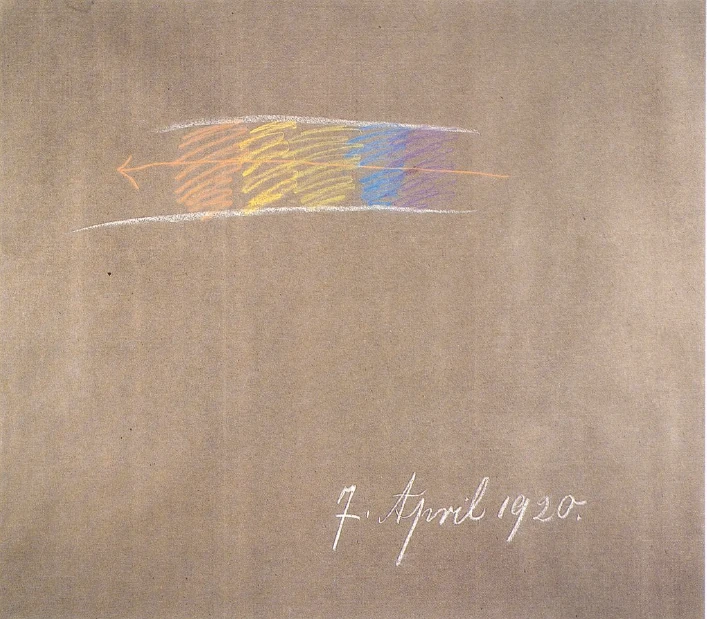
[ 21 ] It is simply necessary that, during childhood, a strong chemical process take place within the organism, which is later replaced to a greater extent by thermal effects. I would like to say that human beings go through a process in their lives that is symbolized by the spectrum itself—and cannot be symbolized any more clearly—by looking first at the more chemical part of the spectrum (blue, violet), then at the light part of the spectrum (green, yellow), and finally at the heat part of the spectrum (red). Human beings undergo a process of organization that essentially follows this direction (see diagram on page 344). In childhood, they rely more on chemically active processes, then transition to light-active processes, and later to heat-active processes. The organs that enable the etheric body to promote chemical processes in the physical body are glands such as the thyroid, the thymus, and the adrenal glands. Therefore, because chemical processes are, in a certain sense, bound to these organs, the human incarnation is closely linked to the activity of these organs—that is, to the underlying etheric activity. Among the functions of the adrenal glands, for example, is this one: whether they make a person look pale or rosy-cheeked, and so on. If the adrenal glands degenerate, this must be reflected in the coloration of the skin. You need only recall so-called Addison’s disease, which is based on a degeneration of the adrenal glands, where the person turns brown, and you will be able to gain a deep insight into these connections. All of this points to a certain chemical nature of the organism. This is what is particularly relevant during fetal life, whereas the effects of light become more significant for life, let’s say, from the age of fourteen onward. Then those activities that are relevant to thermal life come more into play.
[ 22 ] Herein lies an important—an extraordinarily important—insight into the course of human life in general. It is indeed the case that childhood, and especially fetal life, represents a kind of predominantly “salt” process, while middle life—though closer to childhood— is more of a mercurial process, and later life, in the sense I have just described, is a kind of sulfur process; that is to say, one must pay the most attention to the salt process in childhood, to the mercurial process in middle age, and to the sulfuric or phosphoric processes in later life, and these must be regulated. If you consider that this triad is also present in the human organism—organized chemistry, organized light processes, organized heat processes, organized salt processes, and mercurial and sulfur processes—you will also gain a mental image of how life as a whole actually exerts an organizing influence on the human being. One’s way of life—and by this I do not mean merely diet, but the entirety of human activity—has a chemicalizing effect on the child, deeply penetrating the organism. The—I would say—stronger light process has such a profound effect on the entire organism of a very young person that it lays the seed for everything that can also lead to psychological disturbances. I would say that it is during adolescence that one is most receptive to impressions from the outside world. Whether, at this stage of life, we are strongly confronted by an external reality that is illogically structured or one that is logically structured has great significance for the entire psychological constitution of our later life. We will continue discussing these matters tomorrow, specifically the pathological aspects we discussed today, and then move on to the therapeutic aspects.