

The Educational Value
of Understanding Human Nature
GA 313
18 April 1921, Dornach
Translate the original German text into any language:
Versions Available:
Spiritual-Scientific Perspectives on Therapy, tr. SOL
Neunter Vortrag
Ninth Lecture
[ 1 ] Dasjenige, was ich Ihnen heute mit Bezug auf die Eurythmie zu sagen habe, das ist so, daß es durchaus wird im einzelnen immer durchschaut werden müssen mit den Kenntnissen, die Sie in physiologischer Beziehung und sonst haben. Wie das zu geschehen hat, das wird sich Ihnen schon, möchte ich sagen, wie von selbst ergeben. Aber gerade wenn wir in einen solchen geistig-leiblichen Prozeß hineinschauen wie den, der beim Eurythmisieren stattfindet, so können wir gar nicht anders als auf tiefere geistig-physische Zusammenhänge auch hinweisen. Und da möchte ich Sie nun auf das Folgende aufmerksam machen.
[ 1 ] What I have to say to you today regarding eurythmy is this: it will certainly have to be understood in detail using the knowledge you have in physiology and other fields. How this is to be done, I would say, will become clear to you quite naturally. But precisely when we look into a spiritual-physical process such as the one that takes place during eurythmy, we cannot help but point out deeper spiritual-physical connections as well. And here I would like to draw your attention to the following.
[ 2 ] Wir müssen zunächst schauen auf jenen außermenschlichen Weltprozeß, den man gewöhnlich nur verfolgt in bezug auf seine Details und den man nicht verfolgt in bezug auf dasjenige, was eigentlich innerlich tätig ist. Bedenken Sie doch nur, daß Erdenbildung in Wirklichkeit heißt: Es wirkt eine Bildungstendenz von der Planetensphäre aus herein, und außerdem geschieht von demjenigen, was noch außerhalb der Planetensphäre liegt, eine Bildung in die Erde herein, fortwährende strahlende, sich in den einzelnen Kraftentitäten ausdrückende, gegen die Erde her strahlende kosmische Kräfte.
[ 2 ] We must first turn our attention to that extra-human world process which is usually observed only in terms of its details and not in terms of what is actually at work within it. Just consider that the formation of the Earth actually means this: a formative tendency is at work from the planetary sphere, and in addition, a formative process is taking place within the Earth from that which lies beyond the planetary sphere—continuous, radiant cosmic forces expressed in the individual force entities and radiating toward the Earth.
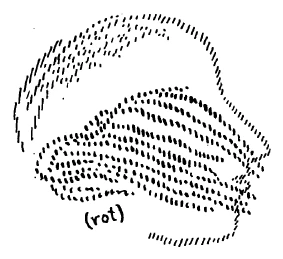
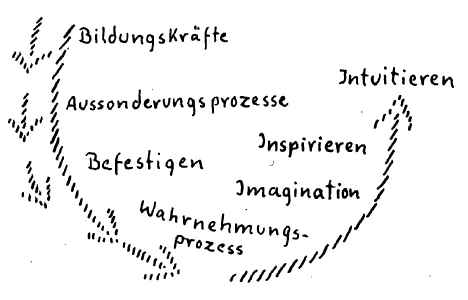
[ 3 ] Diese kosmischen Kräfte können wir jetzt in diesem Zusammenhange so auffassen - obwohl sie alles dasjenige, was ich früher über die Strahlen gesagt habe, wiederum in sich schließen können -, so ins Auge fassen, daß wir sagen, sie wirken gegen das Zentrum zu und bilden eigentlich dasjenige, was auf der Erde und in der Erde ist, von außen her. Es ist schon einmal so, daß zum Beispiel wirklich die gesamte Metallität der Erde, die gesamten Metalle nicht aus irgendwelchen Kräften aus dem Erdinneren heraus im wesentlichen gebildet werden, sondern daß sie wirklich von dem Kosmos herein in die Erde eingesetzt werden. Wir können nun diese Kräfte, die da durch den Äther wirken — nicht etwa von den Planeten aus, da würden sie wiederum zentral wirken, die Planeten sind gerade dazu da, um sie zu modifizieren, die Planetensphäre ist es -, diese Kräfte können wir die Bildungskräfte nennen, die von außen her wirkenden Bildungskräfte. Gerade in diesem Zusammenhange bitte ich Sie, diese Sache zu fassen: Bildungskräfte. Ihnen stehen diejenigen Kräfte entgegen, welche beim Menschen und in der Erde diese Bildungskräfte aufnehmen und befestigen, sie gewissermaßen um einen Mittelpunkt herum versammeln, so daß eben die Erde entstehen kann. Also diese Kräfte, die da befestigen, können wir nennen die Kräfte des Befestigens (siehe Zeichnung sowie Schema S. 159). Im Menschen sind sie als solche Kräfte vorhanden, die plastisch die Organe bilden, während die anderen Kräfte, die Bildungskräfte, diejenigen sind, die mehr die Organe aus der geistig-ätherischen Welt in die physische Welt hereinschieben. Das ist ein Prozeß, der ja in dem Gegensatz zwischen den Schiebekräften des Magnesiums und den Fluorkräften, die abrunden, ich möchte sagen eben mit Händen zu greifen ist. Aber wiederum ist es so ein Prozeß, der sich überall darlebt: Bei den Zähnen tritt er auf von unten nach oben und sich oben rundend, aber er tritt auch auf von vorn nach rückwärts, von rückwärts nach vorn, von oben nach unten, sich nach unten hin rundend. Und Sie können diesen Prozeß zum Beispiel, ich möchte sagen wiederum mit Händen greifen, wenn Sie sich vorstellen, daß mit der Tendenz, ein Kugeliges nach vorn zu schieben, von außen nach innen, da etwas sich bildet, und daß dem sich entgegenstellt ein Kugelbildungsprozeß (siehe Zeichnung, rot), von unten nach oben. Und zwischen diesen beiden Prozessen drinnen liegt nun dasjenige, was das Vermittelnde ist, also Absonderungsprozesse, wiederum das Aufnehmen des Abgesonderten von anderen und so weiter, dasjenige, was man im weitesten Sinne Absonderungsprozesse nennen kann; denn schließlich ist auch das Aufnehmen beruhend auf einer Absonderung nach innen, die wiederum resorbiert wird. Also dazwischen liegt wiederum dasjenige, was man Aussonderungsprozesse am besten nennen kann.
[ 3 ] In this context, we can now understand these cosmic forces—even though they may in turn encompass everything I have previously said about the rays—in such a way that we say they act toward the center and actually form, from the outside, that which is on and within the Earth. For one thing, it is true, for example, that the Earth’s entire metallic composition—all of its metals—is not essentially formed by any forces originating from within the Earth, but rather that they are truly brought into the Earth from the cosmos. We can now call these forces that act through the ether—not from the planets, for then they would again act centrally; the planets are there precisely to modify them—the planetary sphere is what does this—we can call these forces the formative forces, the formative forces acting from the outside. It is precisely in this context that I ask you to grasp this concept: formative forces. Opposing them are those forces which, in human beings and in the Earth, receive and consolidate these formative forces, gathering them, as it were, around a central point, so that the Earth itself can come into being. So we can call these consolidating forces the forces of consolidation (see drawing and diagram on p. 159). In the human being, they are present as forces that plastically form the organs, while the other forces—the formative forces—are those that, to a greater extent, push the organs from the spiritual-etheric world into the physical world. This is a process that is, in fact, palpable in the contrast between the pushing forces of magnesium and the fluorine forces that round off—I would say it is something you can almost grasp with your hands. But again, it is a process that manifests everywhere: in the teeth, it occurs from the bottom up, rounding off at the top, but it also occurs from front to back, from back to front, and from top to bottom, rounding off toward the bottom. And you can, for example, grasp this process—I would say, once again, quite tangibly—if you have a mental image of it, with the tendency to push a spherical form forward, from the outside in, something is formed, and that this is countered by a process of spherical formation (see drawing, red), from the bottom up. And between these two processes lies what acts as the mediating factor—that is, processes of separation, the absorption of what has been separated from others, and so on—what can be called, in the broadest sense, processes of separation; for ultimately, absorption, too, is based on an inward separation, which is in turn reabsorbed. So in between lies, once again, what can best be called processes of elimination.
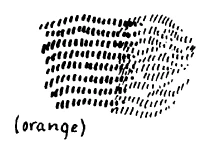
[ 4 ] Solch einen Aussonderungsprozeß können Sie wiederum mit Händen greifen, wenn Sie sich hier denken, daß auf der einen Seite dasjenige liegt, was den Kohlenstoff fortwährend aussondern will (siehe Zeichnung, orange), und dasjenige, was ihn wiederum aufnimmt in der Kohlensäurebildung (weiß) durch die Atmung von vorne. Dann setzt sich da hinunter ein solcher Aussonderungsprozeß fort. Und wenn Sie noch weiter herunterkommen in den Stoffwechsel-Gliedmaßenprozeß, dann haben Sie richtig einen Befestigungsprozeß. Aber dieser Befestigungsprozeß ist auch vorhanden nach der anderen Richtung. Sie können das verfolgen da, wo Sie wiederum, ich möchte sagen es mit Händen greifen können, wenn Sie daran gehen das Auge zu betrachten, es wird von außen herein gebildet, das zeigt Ihnen schon die Embryologie, aber es wird von innen her befestigt. Es wird die Bildung verinnerlicht. Darauf beruht ja die Entstehung des Auges. Es wird verinnerlicht (siehe Zeichnung, orange), so daß wir diesen Befestigungsprozeß, indem wir zu dem Geistig-Seelischen vorschreiten im Menschen, also zu den Organen des Geistig-Seelischen, zu den Sinnesorganen, sich vergeistigend haben, sich wirklich verseelend, vergeistigend haben in der Wahrnehmung. Das ist gewissermaßen der heruntersteigende Prozeß, der bis zur Organbildung führt (siehe Zeichnung S$. 156 und Schema S. 159). Dann finden wir am untersten Ende den Wahrnehmungsprozeß, das gegenständliche Wahrnehmen (siehe ebenda). Bildet sich das weiter aus, entwickelt es sich so weiter, dann wird das Wahrnehmen gegen das Befestigen zu, wenn es bewußt wird am Befestigen, zur Imagination. Wenn die Imagination sich weiter entwickelt und bewußt wird gegen den Aussonderungsprozeß zu, wird sie zum Inspirieren. Und wenn das Inspirieren sich weiter entwickelt gegen den Bildungsprozeß zu und da bewußt an den Bildungsprozeß heranstößt, also die Bildung durchschaut, dann wird sie zum Intuitieren (sieh ebenda). Man kann entwickeln diese Stufenfolge des seelischen Lebens von dem gegenständlichen Wahrnehmen zum Imaginieren, zum Inspirieren, zum Intuitieren.
[ 4 ] You can really grasp such a separation process if you imagine that, on one side, there is that which constantly seeks to separate out the carbon (see diagram, orange), and that which, in turn, reabsorbs it in the formation of carbon dioxide (white) through respiration, starting from the beginning. Then this process of elimination continues further down. And if you go even further down into the metabolic processes of the limbs, you’ll find a process of fixation. But this process of fixation also occurs in the opposite direction. You can observe this where—I would say—you can almost touch it with your hands: when you consider the eye, it is formed from the outside in—as embryology already shows you—but it is consolidated from the inside out. The formation is internalized. This is, after all, the basis for the development of the eye. It is internalized (see drawing, orange), so that as we proceed toward the spiritual-soul aspect in the human being—that is, toward the organs of the spiritual-soul, toward the sense organs—this fixation process is spiritualizing itself, truly becoming soulful and spiritualizing itself in perception. This is, so to speak, the descending process that leads to organ formation (see drawing, p. 156, and diagram, p. 159). Then, at the very bottom, we find the process of perception, concrete perception (see ibid.). If this continues to develop, perception moves toward consolidation; when it becomes conscious of this consolidation, it becomes imagination. When imagination develops further and becomes conscious of the process of differentiation, it becomes inspiration. And when inspiration develops further toward the process of formation and, in doing so, consciously engages with the process of formation—that is, penetrates to the heart of formation—it becomes intuition (see ibid.). One can trace this sequence of stages in the life of the soul from concrete perception to imagination, to inspiration, to intuition.
Bildungskräfte: Intuitieren
Aussonderungsprozesse: Inspirieren
Befestigen: Imagination Wahrnehmungen
Educational Forces: Intuition
Selection Processes: Inspiration
Consolidation: Imagination and Perceptions
[ 5 ] Aber diesem Prozeß, den man da entwickelt im Seelischen, liegt ja der Werdeprozeß zugrunde. Er ist nur, wie Sie hier auch sehen, die Umkehrung des Werdeprozesses. Man tritt dem Gewordenen entgegen und steigt wiederum hinauf ins Werden in umgekehrter Richtung. Das Bilden geht in absteigender Richtung. Man steigt in umgekehrter Richtung hinauf, man schreitet dem Werden entgegen, so daß das, was man als Wahrnehmen und Erkenntniskräfte in Imagination, Inspiration, Intuition ausbildet, immer seine Gegenwirkung hat in den schöpferischen Kräften, die sich in den Bildekräften, in den Aussonderungsprozessen, in den Befestigungsprozessen ausdrücken.
[ 5 ] But this process that is unfolding in the soul is, after all, based on the process of becoming. It is, as you can see here, merely the reversal of the process of becoming. One moves toward what has already become and ascends once more into becoming in the opposite direction. Formation proceeds in a descending direction. One ascends in the opposite direction, moving toward becoming, so that what one develops as powers of perception and cognition in imagination, inspiration, and intuition always finds its counteraction in the creative forces expressed in the formative powers, in the processes of separation, and in the processes of consolidation.
[ 6 ] Sie werden daraus ersehen, daß im menschlichen Organismus dasjenige in umgekehrter Richtung tätig ist beim Schaffen, beim Entstehen, in das man hineinsteigt, wenn man sich im Erkennen aufschwingt. Sie werden daraus sehen, daß es wirklich so ist, daß dasjenige, was wir in der Imagination erreichen, dieselben Kräfte sind, die ohne unser Bewußtsein in den Wachstumserscheinungen, in den plastischen Wachstumserscheinungen sich geltend machen. Wenn wir aufsteigen zur Inspiration, so kommen wir an die Kräfte heran, die von außen herein bei der Atmung den Menschen inspirieren, beim Atmen den Menschen durchbilden, die sich da in die plastischen Kräfte, als sie gewissermaßen durcharbeitend, hineingestalten. Und wenn wir zum Intuitieren aufsteigen, so steigen wir eigentlich zu dem Agens auf, das sich in unseren plastischen Formen als die substantielle Wesenheit von der Außenwelt herein begibt.
[ 6 ] You will see from this that, in the human organism, the force that acts in the opposite direction—in creation, in becoming—is the one we enter into when we rise up in cognition. You will see from this that it is indeed true that what we attain in imagination are the very same forces that, without our awareness, make themselves felt in the phenomena of growth, in the plastic phenomena of growth. When we ascend to inspiration, we approach the forces that enter from the outside and inspire the human being through breathing, shaping the human being as they breathe—forces that, as it were, work their way through and take shape within the plastic forces. And when we ascend to intuition, we actually ascend to the agent that enters from the external world into our plastic forms as the substantial essence.
[ 7 ] Sie sehen also, wir fassen da den Menschen, aus dem Kosmos heraus sich gestaltend, und wenn wir jetzt unsere Kenntnisse anwenden, die wir uns erworben haben in irgendeiner Weise durch Anatomie oder Physiologie, und sie durchleuchten mit dem, was uns da gegeben ist, dann fangen wir an, die Organe und ihre Funktionen zu verstehen. Es ist das also ein Hinweis auf das Verstehen der Organe und ihrer Funktionen, so daß in demjenigen, was plastisch immer wirkt am Menschen, was den Menschen normal, ich möchte sagen durchplastiziert, auf der anderen Seite - nehmen Sie Jetzt den gestrigen Vortrag zu Hilfe -, auf der anderen Seite lebt in den konsonantierenden Bewegungen, die ja gerade unbewußte Imaginationskräfte, wie ich gestern sagte, nämlich eine Art Durchströmen des Organismus hervorrufen. Sie durchschauen da also, wie das konsonantierende Eurythmisieren mangelnde Bildekräfte im Menschen, mangelnde plastische Kräfte ergreift und sie in die richtige Plastik überführt.
[ 7 ] So you see, we are considering the human being as a being that takes shape out of the cosmos, and when we now apply the knowledge we have acquired in one way or another through anatomy or physiology, and examine it in light of what has been given to us, then we begin to understand the organs and their functions. This, then, is a pointer toward understanding the organs and their functions, so that in what always works plastically in the human being—what makes the human being normal, I would say “permeated with form”—on the other hand—referring now to yesterday’s lecture—on the other hand, it lives in the consonant movements, which, as I said yesterday, evoke precisely unconscious powers of imagination, namely a kind of flow through the organism. So you can see here how consonant eurythmy takes hold of a person’s lacking formative powers—their lacking plastic powers—and transforms them into the proper plasticity.
[ 8 ] Nehmen wir also ein Kind und sehen wir, daß eine mangelhafte Plastik vorliegt, daß die Plastik zu stark wuchert. Was heißt das: die Plastik wuchert zu stark? Das heißt, die Plastik wirkt zentrifugal, macht den Kopf groß, indem sie zentrifugal wirkt, und läßt ihn, weil er zu groß wird, nicht dazu kommen, sich in der richtigen Weise mit imaginierenden Kräften zu durchdringen. Die muß man zuführen. Also lasse man das Kind eurythmisieren in konsonantischer Weise.
[ 8 ] So let’s take a child and observe that there is a defect in the plasticity, that the plasticity is growing too rapidly. What does it mean for the plasticity to be growing too rapidly? It means that the plasticity acts centrifugally, making the head large through this centrifugal action, and—because the head becomes too large—prevents it from becoming properly imbued with imaginative forces. These must be introduced. Therefore, let the child practice eurythmy in a consonant manner.
[ 9 ] Es liegt da eine Frage vor über «einen zwei Jahre alten, sonst scheinbar gesunden Knaben mit großem Kopf, der jedoch kein Wasserkopf ist».
[ 9 ] There is a case described here of “a two-year-old boy who is otherwise apparently healthy but has a large head, which is not, however, hydrocephalus.”
[ 10 ] Sie haben tatsächlich im konsonantierenden Eurythmisieren, das richtig angewendet wird, das Gegenmittel, um dem beizukommen. Hier kommen wir eben auf die Stelle, wo eine gründliche Beobachtung des Morphologischen, des tieferen Morphologischen gerade hinweist auf die eurythmisierende Behandlung.
[ 10 ] In fact, properly applied eurythmy—with its emphasis on consonance—is the antidote to this. This is precisely where a thorough observation of the morphological, the deeper morphological, points directly to eurythmy as a treatment.
[ 11 ] Oder: «Ein zwölfdreiviertel Jahre alter Knabe, dessen Längenwuchs auffallend zurückgeblieben ist, organisch ohne Befund, jedoch Würmerbesitzer, intelligent, aber geistig schnell ermüdbar.» — Ein außerordentlich interessanter Symptomenkomplex, alles darauf hinweisend, daß nicht genügend imaginative Kräfte da sind, daß die plastischen Organkräfte wuchern, weil nicht genügend innere plastische Kräfte, seelisch plastische Kräfte da sind. Die seelisch plastischen Kräfte sind es ja nun auch, die die Parasiten zerstören. Es ist also kein Wunder, daß, wenn sie zu wenig da sind, das ein Würmerbesitzer ist. Also lasse man ihn konsonantierend eurythmisieren, und man hat das Gegenmittel gegeben.
[ 11 ] Or: “A twelve-and-three-quarters-year-old boy whose height is noticeably stunted, with no organic findings, but who has worms; intelligent, but mentally prone to fatigue.” — An extraordinarily interesting complex of symptoms, all pointing to a lack of imaginative powers, to the unchecked proliferation of the plastic organ forces because there are insufficient inner plastic forces—psychic plastic forces. It is, after all, these psychic plastic forces that destroy the parasites. It is therefore no wonder that, when these forces are insufficient, the person is infested with worms. So let him receive eurythmy therapy that harmonizes his consonants, and the antidote will have been administered.
[ 12 ] Diese Zusammenhänge, die weisen Sie ja direkt darauf hin, wo Sie mit der Eurythmie einzugreifen haben. Denn wenn diese Erscheinungen etwas, ich möchte sagen kaschiert auftreten, dann kann selbst noch bei solchen kaschierten Fällen die Eurythmie außerordentlich günstig wirken, insbesondere wenn man dann noch in einer materiell therapeutischen Weise der Sache entgegenkommt.
[ 12 ] These connections directly point out where you need to intervene with eurythmy. For if these symptoms appear—I would say—in a concealed manner, then even in such concealed cases, eurythmy can have an extraordinarily beneficial effect, especially if one also addresses the issue through material therapeutic means.
[ 13 ] So zum Beispiel ist mir eine interessante Frage vorgelegt worden. Es ist natürlich, daß ich diese Frage im Prinzip zu beantworten habe. Wenn irgendwelche Komplikationen eintreten, so könnten dann bei der speziellen Sache diese Komplikationen besonders berücksichtigt werden; aber wenn auch irgend etwas anderes kombiniert werden muß mit der Sache, so ist dennoch die Sache von der einen Seite her mit dem, was da charakterisiert werden kann, durchaus getroffen:
[ 13 ] For example, an interesting question has been brought to my attention. It is natural that I must answer this question in principle. If any complications arise, then these complications could be taken into special consideration in this particular case; but even if something else must be combined with the matter, the matter is nevertheless fully addressed from one perspective by what can be characterized there:
[ 14 ] «Ich habe ein fünfjähriges Kind als Patient, das bei den Unruhen durch Schußverletzung viel Blut verloren hat; vor zwei Jahren stellte sich eine Deformierung der Gelenke ein. Dinge, die später zu Bleichsucht und dergleichen bei Erwachsenen führen. Wie wäre dem therapeutisch beizukommen’’»
[ 14 ] “I have a five-year-old patient who lost a lot of blood from a gunshot wound during the riots; two years ago, he developed joint deformities. These are conditions that later lead to anemia and similar ailments in adults. How might this be treated?”
[ 15 ] Da haben Sie Gelenkdeformation. Das ist ein Schon-nach-außenWirken der plastischen Kräfte, die nicht mehr im Innern bleiben können, die also schon nach außen strahlen, so daß sie den Menschen verlassen, statt daß sie im Innern wirken würden. Die werden im eminentesten Sinne zurückgestrahlt gerade durch die Anwendung des konsonantischen Eurythmisierens. Denn Sie rufen ja im konsonantischen Eurythmisieren eben die wirksamen, die objektiv wirksamen Imaginationen hervor, die Deformierungen ausgleichen. In der Zukunft - darauf ist schon bei der Fragestellung ganz richtig hingewiesen worden - werden die Menschen überhaupt in der mannigfaltigsten Weise zu Deformierungen neigen, weil sie nicht mehr mit den unwillkürlich wirksamen Kräften die normalisierende Gestalt werden bilden können. Der Mensch wird frei; er wird sogar frei werden nach und nach in bezug auf die Bildung seiner eigenen Gestalt, aber er muß dann mit der Freiheit etwas anfangen können. Er muß also übergehen zu dem Erzeugen von Imaginationen, die dem Deformieren immer entgegenwirken.
[ 15 ] There you have joint deformation. This is a outward-directed action of the plastic forces, which can no longer remain within; they are already radiating outward, so that they leave the person instead of acting from within. These forces are reflected back in the most profound sense precisely through the practice of consonant eurythmy. For in consonant eurythmy, you evoke precisely those effective—objectively effective—imaginations that counteract these deformations. In the future—as has already been quite correctly pointed out in the question—people will generally be prone to deformities in the most varied ways, because they will no longer be able to form a normalizing form with the forces that act involuntarily. Human beings will become free; they will even gradually become free with regard to the formation of their own form, but they must then be able to make use of that freedom. They must therefore transition to creating imaginations that always counteract deformation.
[ 16 ] Nun das andere, sehen Sie, hier haben wir es zu tun mit mangelhafter objektiver Imagination; wir können es auch zu tun haben mit mangelhafter objektiver Inspiration, was sich dann äußert durch - wenn ich so sagen darf - Deformierung des rhythmischen Systems. Diese Deformierung des rhythmischen Systems, die drückt sich ja ganz besonders dadurch aus, daß die objektive Inspiration, die nach innen geht, nicht in der richtigen Weise entgegenkommt dem Zirkulationsrhythmus. Und da wirkt man normalisierend, wenn man das vokalisierende Eurythmisieren anwendet. Dieses vokalisierende Eurythmisieren wirkt ebenso auf Unregelmäßigkeiten im Innern, die eben nicht von morphologischen Veränderungen begleitet sind, wie das konsonantierende Eurythmisieren eben auf Deformierungen oder auf Neigungen zu Deformierungen wirkt.
[ 16 ] Now, on the other hand, you see, here we are dealing with a lack of objective imagination; we may also be dealing with a lack of objective inspiration, which then manifests itself—if I may put it that way—as a distortion of the rhythmic system. This distortion of the rhythmic system is expressed quite particularly in the fact that the objective inspiration, which flows inward, does not correspond properly to the rhythm of circulation. And one can have a normalizing effect by applying vocalizing eurythmy. This vocalizing eurythmy acts just as effectively on internal irregularities—which are not accompanied by morphological changes—as consonant-based eurythmy acts on deformations or tendencies toward deformations.
[ 17 ] Ich sagte früher, daß es ja allerdings notwendig sein kann, so etwas zu unterstützen, wenn es in besonders radikaler Weise auftritt, wie bei der Deformierung der Gelenke, die wir gerade jetzt besprochen haben. Da ist es dann notwendig, daß man therapeutisch zu Hilfe kommt dem Prozeß des konsonantierenden Eurythmisierens, der also so wirkt, daß er durch diese Imagination namentlich anregt die innere Atmung der von außen nach innen gehenden, jenseits der Darmwände nach innen zu gelegenen Organe: Lunge, Nieren, Leber und so weiter. Es ist ja schon einmal so, wenn man konsonantierend eurythmisiert, dann beginnen besonders der Hinterkopf, die Lunge, die Leber, die Nieren ein Funkeln und Funkensprühen, das tatsächlich etwas ist, was zeigt, wie die Reaktion, die geistig-seelische Reaktion ist auf dasjenige, was im Konsonantieren außen gemacht wird. Der ganze Mensch wird in diesen Organen ein leuchtendes Wesen, und den Bewegungen, die ausgeführt werden, setzen sich immer Leuchtebewegungen im Innern entgegen, und insbesondere bei gewissen konsonantierenden Bewegungen entsteht, ich möchte sagen eine ganze Leuchtenachbildung des Absonderungsprozesses der Niere. Man bekommt gewissermaßen ein Bild des ganzen Absonderungsprozesses der Niere in diesem Leuchteprozeß, der da auftritt durch das konsonantierende Eurythmisieren. Und das wirkt dann hinüber in die unbewußten Imaginationen, und der ganze Prozeß, wo diese Partie so zu leuchten beginnt, das ist ja derselbe Prozeß, den ich speziell als den unter dem Einflusse des Cuprum geschildert habe; es ist derselbe Prozeß. Und hier ist auch der Ort, wo man gerade den Arzt darauf hinweisen kann, daß es ja auch Menschen gibt, die gewisse Krankheitsformen haben. Gestern wurden sie mir erst wiederum, ich möchte sagen entgegengetragen, diese Krankheitsformen, indem mir jedenfalls von einer gewissen Seite her außerordentlich bewunderte Zeichnungen gebracht wurden, bemalte Zeichnungen, von denen gefragt worden ist, ob sie nun ganz besonders okkultistisch sind. Sie sind natürlich okkultistisch in einer gewissen Weise, aber es ist außerordentlich schwer, zu den Leuten über diese Dinge zu reden, denn solche Dinge, die sind objektiv fixiertes Nierenleuchten, sie sind objektiv fixierter Ausharnungsprozeß. Bei diesem Ausharnungsprozeß, wenn er in abnormer Weise bei gewissen krankhaft angelegten Menschen zum Leuchteprozeß wird, wenn also eine gewisse Stockung der Harnabsonderung eintritt - also eine reine Stoffwechselkrankheit —, beginnen dann die Nieren zu leuchten, und wenn dieses besondere, nach innen gewendete Hellsehen eintritt, dann fangen die Leute an, wild zu zeichnen. Das wird immer schön, äußerlich im formalen Sinne immer schön. Die aufgetragenen Farben werden immer schön. Natürlich sind die Leute nicht zufrieden, wenn man ihnen sagt: Ja, da hast du etwas sehr Schönes gemalt, das ist nämlich deine abgestaute Harnabsonderung. — Ich kann Ihnen die Versicherung geben, daß abgestaute Harnabsonderung und verhaltene Geschlechtssehnsuchten, die ja auch in einer gewissen Weise in Unregelmäßigkeiten des Stoffwechsels münden, einem entgegengehalten werden von besonders mystischen Naturen als tief mystische Zeichnungen und Malereien, und daß man in vielem, was in dieser Art in der Welt auftritt, Symptome sehen soll für gerade noch erträgliche Krankheitsabnormitäten der Menschen.
[ 17 ] I said earlier that it may indeed be necessary to support such a process when it manifests in a particularly radical way, as in the case of joint deformities, which we have just been discussing. In such cases, it is necessary to provide therapeutic support for the process of consonant-based eurythmy, which works by stimulating—through this imagination—the inner respiration of the organs that extend from the outside inward and are located beyond the intestinal walls: the lungs, kidneys, liver, and so on. Indeed, when one performs consonant-based eurythmy, the back of the head, the lungs, the liver, and the kidneys in particular begin to sparkle and shower with sparks—a phenomenon that truly demonstrates the spiritual-psychic reaction to what is being done externally through consonant-based eurythmy. The whole human being becomes a luminous being within these organs, and the movements that are performed are always met by luminous movements within; and especially with certain consonant-based movements, I would say, a complete luminous representation of the kidney’s excretory process arises. In a sense, one gains a picture of the entire excretory process of the kidney in this luminous process that occurs through consonant-based eurythmy. And this then carries over into the unconscious imaginations, and the entire process in which this part begins to glow in this way is, after all, the very same process that I have specifically described as occurring under the influence of Cuprum; it is the same process. And this is also the point where one can point out to the physician that there are indeed people who suffer from certain forms of illness. Just yesterday, these forms of illness were once again—I might say, thrust upon me—when I was brought, from a certain quarter, drawings that are greatly admired: painted drawings about which it was asked whether they are particularly occult in nature. They are, of course, occult in a certain sense, but it is extremely difficult to talk to people about these things, for such phenomena—which are objectively recorded kidney luminescence—are objectively recorded processes of urination. In this process of urination, when it abnormally transforms into a process of glowing in certain people with a predisposition to illness—that is, when a certain stagnation of urine secretion occurs—in other words, a purely metabolic disease—the kidneys begin to glow; and when this particular, inward-turned clairvoyance sets in, people begin to draw wildly. The result is always beautiful—externally, in a formal sense, always beautiful. The applied colors always turn out beautifully. Of course, people aren’t satisfied when you tell them: “Yes, you’ve painted something very beautiful there; that is, in fact, your stagnant urine secretion.” — I can assure you that accumulated urine and repressed sexual desires—which, after all, also lead in a certain way to metabolic irregularities—are presented to one by particularly mystical individuals as deeply mystical drawings and paintings, and that much of what appears in the world in this manner is to be seen as symptoms of barely tolerable pathological abnormalities in human beings.
[ 18 ] Sie sehen, anthroposophisch orientierte Geisteswissenschaft ist nicht in dem Sinne Mystik, wie viele Menschen das verstehen, denn sie gibt sich keinen Illusionen hin über solche Dinge, wie sie eben charakterisiert worden sind. Sie erforscht im Gegenteil gerade solche Dinge. Aber die Leute nehmen einem das übel. Sie nehmen mir schon übel, daß ich in den öffentlichen Vorträgen so weit gegangen bin anzudeuten, daß zum Beispiel - wenn auch die Sachen nicht gezeichnet wurden, sondern poetisch sich auslebten -, die schöne Poesie der Mechthild von Magdeburg oder der heiligen Therese die Abbilder sind, also die Inspirationsreflexe sind von demjenigen, was Prozesse sind, die durch zurückgehaltene Sexualität entstehen. Natürlich ist es den Leuten dann nicht angenehm, wenn man ihnen eine Mechthild von Magdeburg oder eine heilige Therese schildert: ja, das sind eben Persönlichkeiten mit einer starken Sexualität, die sie aber gerade deshalb, weil sie ihnen zu stark wurde, zurückgehalten haben; dadurch entstehen gewisse Stoffwechsel-Zirkulationsprozesse, auf diese hin finden Reaktionen statt, die so auftreten, daß sie dann fixiert werden in sehr schönen Dichtungen. Ja, das Phänomen in einem höheren Sinne betrachtet, führt außerordentlich tief hinein in die Geheimnisse des Daseins. Aber man muß sich eben hinaufschwingen können zu einer solchen Auffassung. Und deshalb muß man schon auch etwas wenigstens ahnen von diesen eigentümlichen Prozessen, die als innere Prozesse aufleuchten, wenn äußerlich eurythmisiert wird. Und namentlich dann, wenn dasjenige, was nun innerlich in die Dichtung hineingeheimnißt ist, eurythmisiert wird, so wie ich Ihnen das gestern gezeigt habe, wenn vorgelesen wird ein schönes Gedicht, danach eurythmisiert wird in entsprechender Weise, so wie wir es gestern gesehen haben, konsonantierend oder vokalisierend, dann kreuzt sich das eben noch mit dem anderen, dann tritt hinzu zu dem, was da äußerlich in Bewegungen ausgeführt wird, auch beim Eurythmisierenden ein innerliches stummes Sprechen. Und wenn der Prozeß nun nicht ausgeschwült wird in schwülen Dichtungen, sondern wenn der Prozeß einfach so verläuft, daß er der Begleiter, der eurythmische Begleitprozeß ist von schönen Dichtungen, dann ist dasjenige, was im Menschen vorgeht, eben nicht ein solches Aufzeichnen von Mystischem, sondern es ist ein durchaus den Menschen gesundmachender Prozeß, so daß man sagen kann: Wenn man eurythmisieren läßt geradeso, daß man immer den Patienten aufmerksam macht, höre gut zu, bringe dir stark zum Bewußtsein den gehörten Laut, den gehörten Satzzusammenhang, nach dem du die Eurythmie machst — dann wird man ihn aufsteigen lassen gerade zu den äußeren Bildungskräften, zu den objektiv intuitierenden Kräften. Und man wird gut tun, wenn man auf alles dasjenige wirken will, was sich im Menschen findet als Rest von dem, was nicht mehr sich abgespielt hat zwischen Geburt und Tod, sondern was der Materialismus Vererbung nennt, wovon aber ein großer Teil eben aus dem präexistenten geistig-seelischen Leben mitgebracht ist, wenn man also wirken will auf dasjenige, was man angeborene Fehler, Defekte und so weiter nennen kann, dann wird man gut tun, insbesondere im jugendlichen Alter immer wieder und wiederum so durch die Eurythmie zu wirken, daß man den Eurythmisierenden immer wieder auffordert, mache dir ganz klar dasjenige, was du im Äußeren hörst. Dadurch werden ja auch vertrieben alle diejenigen Tendenzen, die das innerlich fixieren wollen, was etwa da entstehen will in so etwas wie das mystische Zeichnen oder mystische Dichten. Es wird ja gerade das angeschlossen an das äußere schöne Gedicht. Es ist der umgekehrte Prozeß. Ein richtiger Mystiker weiß, daß dasjenige, was der Mensch als gerade Abnormes an Schönem reflektiert, daß das immer eine bedenkliche Seite hat. Dagegen, wenn dasjenige, was in der Außenwelt schön ist, innerlich erlebt wird, dann kann man nicht sagen, daß es sich einem als besonders großartig schönes Gebilde darstellt; im Gegenteil, es schematisiert sich, es wird abstrakt dadurch, aber abstrakt als Zeichnung, so wie eine Zeichnung abstrakt ist. Aber das ist gerade das Gesunde, das ist das Erwünschte. Und nicht wahr, es wäre ja dieser schöne historische Prozeß nicht hervorgetreten - aber wenn zum Beispiel die Mechthild von Magdeburg veranlaßt worden wäre, nach guten Gedichten zu eurythmisieren, dann wäre sie bewahrt geblieben vor ihrem ganzen mystischen Schicksal. Man kann natürlich, wenn man an diesen Punkt kommt, sagen: Da kommt man an einen Punkt, wo gewissermaßen das Gute und das Böse in einer gewissen Weise aufhört. Da kommt man in die amoralische Nietzsche-Sphäre, in das Jenseits von Gut und Böse, und man kann ja natürlich nicht so philiströs sein, daß man sagt, es sollen alle Mechthilds von Magdeburg mit Stumpf und Stiel ausgetilgt werden. Aber auf der anderen Seite können Sie schon sicher sein, daß wiederum von den übersinnlichen Welten aus gut gesorgt wird, daß, wenn der Mensch das auch nicht gerade wuchern läßt, dann eben trotzdem die entsprechenden Zusammenhänge mit der übersinnlichen Welt bleiben.
[ 18 ] You see, anthroposophically oriented Spiritual Science is not mysticism in the sense that many people understand it, for it harbors no illusions about the kinds of things that have just been described. On the contrary, it investigates precisely such things. But people hold that against me. They already hold it against me that I went so far in my public lectures as to suggest that, for example—even if these things were not depicted but expressed poetically—the beautiful poetry of Mechthild of Magdeburg or Saint Teresa are reflections, that is, inspirational echoes, of processes arising from repressed sexuality. Of course, people don’t like it when you describe to them a Mechthild of Magdeburg or a Saint Teresa: yes, these are indeed personalities with a strong sexuality, which they repressed precisely because it became too strong for them; this gives rise to certain metabolic and circulatory processes, and reactions occur in response to these that manifest in such a way that they are then fixed in very beautiful poetry. Yes, when viewed in a higher sense, this phenomenon leads extraordinarily deep into the mysteries of existence. But one must be able to rise to such a perspective. And that is why one must at least have some inkling of these peculiar processes that shine forth as inner processes when eurythmy is performed externally. And especially when that which is now inwardly enshrined in the poem is expressed through eurythmy—as I showed you yesterday—when a beautiful poem is read aloud, and is then eurythmized in a corresponding manner—as we saw yesterday, through consonantization or vocalization—then this intersects with the other; and in addition to what is being performed externally in movements, an inner, silent speech also arises within the eurythmist. And if this process is not indulged in through overly sentimental poetry, but rather if it simply unfolds as the accompanying, eurythmic process that complements beautiful poetry, then what takes place within the person is not merely a recording of the mystical, but rather a process that is thoroughly healing for the person, so that one can say: If one practices eurythmy in such a way that one always draws the patient’s attention to listening carefully, to bringing the heard sound and the heard sentence structure—according to which one performs the eurythmy—strongly into consciousness, then one will allow it to rise directly to the outer formative forces, to the objectively intuitive forces. And one would do well, if one wishes to influence all that which is found within the human being as a remnant of what no longer took place between birth and death—but which materialism calls heredity, though a large part of it is in fact brought over from the pre-existing spiritual-soul life—if, that is, one wishes to influence what one might call congenital defects, defects, and so on—then one would do well, especially during adolescence, to work through eurythmy again and again in such a way that one repeatedly urges the eurythmist: “Make perfectly clear to yourself what you hear externally.” This also dispels all those tendencies that seek to fix internally what might arise in something like mystical drawing or mystical poetry. It is precisely this that is connected to the beautiful external poem. It is the reverse process. A true mystic knows that whatever a person perceives as an abnormal form of beauty always has a questionable side. In contrast, when what is beautiful in the outer world is experienced inwardly, one cannot say that it presents itself as a particularly magnificent, beautiful form; on the contrary, it becomes schematized, it becomes abstract through this process—but abstract in the sense of a drawing, just as a drawing is abstract. But that is precisely what is healthy; that is what is desirable. And isn’t it true that this beautiful historical process would not have come about—but if, for example, Mechthild of Magdeburg had been prompted to perform eurythmy to good poems, then she would have been spared her entire mystical destiny. Of course, when one reaches this point, one can say: There one reaches a point where, in a sense, good and evil cease to exist in a certain way. There one enters the amoral Nietzschean sphere, the realm beyond good and evil, and one certainly cannot be so philistine as to say that all the Mechthilds of Magdeburg should be eradicated root and branch. But on the other hand, you can be certain that the supersensible worlds will see to it that, even if people do not exactly let this run rampant, the corresponding connections with the supersensible world will nevertheless remain.
[ 19 ] Nun möchte ich noch auf ein paar Dinge eingehen, die vielleicht doch noch einiges aufklären können, trotzdem ja unsere Zeit schon sehr vorgeschritten ist. Ich möchte da zunächst namentlich auf die Frage eingehen:
[ 19 ] Now I would like to address a few points that might still shed some light on the matter, even though we are already quite far along. First, I would like to specifically address the following question:
[ 20 ] «Könnten die therapeutischen Eurythmie-Übungen nicht durch rationelle Atem-Übungen unterstützt werden? Es braucht ja nicht gleich Hatha-Joga zu sein.»
[ 20 ] “Couldn’t therapeutic eurythmy exercises be supported by rational breathing exercises? It doesn’t necessarily have to be Hatha yoga.”
[ 21 ] Nun, dazu habe ich das Folgende zu bemerken: Rationelle Atemübungen zur Unterstützung der Eurythmie-Übungen, die sind für unsere Zeit bei der gegenwärtigen, in der nun einmal eingeschlagenen Richtung immer weitergehenden Menschennatur nur in der folgenden Weise zu behandeln. Man wird nämlich bemerken, daß unter dem Einflusse namentlich des vokalisierenden Eurythmisierens von selbst eine Tendenz zur Änderung des Atmungs-Rhythmus entsteht. Das wird man bemerken. Und nun steht man eben vor der Unbequemlichkeit, daß man hier nicht schablonisieren soll, nicht irgend etwas im allgemeinen sagen soll, sondern daß man dasjenige, was man tun soll, erst beobachten soll. Man soll sich im einzelnen individuellen Fall damit befassen, die Atmung eines Menschen, dem man nach sonstigem Befunde mit vokalisierendem Eurythmisieren heilend helfen will, diese Atmungs-Änderung zu beobachten, und dann soll man ihn darauf aufmerksam machen, daß er bewußt diese Tendenz nun fortsetzt. Denn wir sind nicht mehr Menschen, wie es die alten Orientalen waren, die den umgekehrten Weg gehen können, durch vorgeschriebenes Atmen den ganzen Menschen wiederum zu beeinflussen. Das ist etwas, was unter allen Umständen, wenn es so oder so vorgeschrieben wird, zu inneren Schocks führt, und was eigentlich vermieden werden sollte. Wir müssen eben lernen, dasjenige zu beobachten, was uns die Eurythmie, namentlich die vokalisierende Eurythmie lehrt über ihren eigenen Einfluß auf den Atmungsprozeß. Und dann können wir bewußt fortsetzen dasjenige, was im einzelnen Falle eurythmisch auftritt. Sie werden da nämlich durchaus sehen, daß dieser Prozeß, dieser Atmungsprozeß in einer gewissen Weise individuell, das heißt verschieden für die verschiedenen Menschen, eben fortgesetzt wird.
[ 21 ] Well, I have the following to say about this: Rational breathing exercises to support eurythmy exercises can be approached in our time—given the current direction in which human nature is increasingly moving—only in the following way. One will notice, in fact, that under the influence of vocal eurythmy in particular, a tendency toward a change in the breathing rhythm arises of its own accord. One will notice this. And now one faces the difficulty that one should not apply a one-size-fits-all approach here, nor make generalizations, but rather should first observe what needs to be done. In each individual case, one should observe the change in the breathing of a person whom, based on other findings, one intends to help through therapeutic vocal eurythmy, and then one should draw their attention to the fact that they should now consciously continue this tendency. For we are no longer people like the ancient Orientals, who could take the opposite path—influencing the whole person once again through prescribed breathing. This is something that, under any circumstances, if prescribed in one way or another, leads to inner shocks and should actually be avoided. We must simply learn to observe what eurythmy—specifically vocal eurythmy—teaches us about its own influence on the breathing process. And then we can consciously continue what occurs eurythmically in each individual case. For you will see there that this process—the breathing process—continues in a certain way that is individual, that is, different for different people.
[ 22 ] Nun, das, meine verehrten Freunde, sind ungefähr diejenigen Dinge, die sich noch beantworten lassen. Es ist keine rechte Möglichkeit vorhanden, auf einiges, was ja allerdings noch stecken geblieben ist, einzugehen wegen der Kürze der Zeit. Am Schlusse möchte ich Ihnen nur mit ein paar Worten sagen, meine lieben Freunde, daß Sie sich darauf gefaßt machen müssen, daß von Ihren medizinischen Kollegen in der Welt nicht minder der Kampf ausgehen wird, sobald sie in einer starken Weise gewahr werden, daß sich da irgend etwas von unserer Art geltend macht, und daß Sie schon brauchen die ÜberzeugungsDurchschlagskraft, welche dasjenige, was Ihnen entgegentreten wird, wird ablähmen können. Es darf einen natürlich niemals das, was sich da entgegensetzt, dazu veranlassen, die Dinge zu unterlassen, aber wir dürfen uns auch über all diejenigen Kräfte, die wir als antagonistische aufrufen, eben durchaus keinen Illusionen hingeben.
[ 22 ] Well, my dear friends, those are roughly the questions that can still be answered. Due to time constraints, there is no real opportunity to address some of the other issues that have, admittedly, still been left unresolved. In closing, I would just like to say a few words to you, my dear friends: you must be prepared for the fact that your medical colleagues around the world will wage no less of a struggle as soon as they become keenly aware that something of our kind is making its presence felt, and that you will need the persuasive power capable of countering whatever opposition you face. Of course, one must never allow opposition to deter one from taking action, but we must also harbor absolutely no illusions about all those forces we are calling upon as antagonists.
[ 23 ] Auch am Ende dieses Kursus wiederum möchte ich sagen, daß es durchaus von mir überall eingehalten wird, daß ich, um die Bewegung so, wie sie Jetzt inauguriert werden soll auf dem medizinischen Felde, möglich zu machen, selber mich Patienten gegenüber nicht unmittelbar in Heilungsprozesse einmischen werde, sondern nur besprechend, diskutierend, ratend mit Ärzten selber, so daß Sie ja immer in der Lage sein können, zurückzuweisen dasjenige, was etwa darauf hinginge, daß ich selber in irgendeiner Weise in das Kurieren eingreifen wollte in unberechtigter Art. Das ist dasjenige, was ich schon am Schlusse des letzten Kursus gesagt habe. Es wird einem ja auch das namentlich — das kann schon nicht verschwiegen werden — von anthroposophischer Seite außerordentlich schwer gemacht, weil die Menschen natürlich mit allen möglichen Zumutungen nach dieser Richtung kommen. Es ist ja durchaus auch das der Fall, daß in Anthroposophen auch die Tendenz liegt, nicht etwa über den Egoismus hinaus zu kommen, sondern manchmal noch egoistischer zu werden, als die normalen Menschen sind, und dann wird es einem gegebenenfalls wirklich ganz gleichgültig, höchst gleichgültig, was das Heil der Bewegung ist, daß das Heil der Bewegung darauf beruht, daß nicht im einzelnen Fall dasjenige ausgeführt werden soll, was die Außenwelt eben als «Kurpfuscherei» bezeichnet, sondern daß der Gesundungsprozeß der ganzen Medizin vor sich gehen soll, und daß der nicht gestört werden soll durch dasjenige, was der Einzelne vielleicht manchmal aus seinen persönlichen Aspirationen heraus eben für Anforderungen stellt. Es wird einem das sehr schwer, aber es muß in dieser Richtung durchgeführt werden, denn wir werden nur dann gerade auf diesem Gebiete durchkommen können, wenn wir der Außenwelt entgegenhalten können, was auch sonst in unserer anthroposophischen Bewegung der Fall ist, insofern sie mit Verständnis getrieben wird, nicht verballhornt wird von den Unverständigen -, wir müssen in der Lage sein, einfach dadurch, daß wir wissen, was in der anthroposophischen Bewegung vorgeht, zu sagen: Das, was da gesagt wird, ist ganz gewiß eine Lüge, ist ganz gewiß erfunden. - Das müssen wir in gewissen Fällen eben einfach immer sagen können. Das können wir aber sagen, wenn wir innerlich in all dasjenige, ich möchte sagen eingeweiht sind, was in solchen Dingen besteht, auf die ich hier aufmerksam gemacht habe, daß ich nicht in Heilungsprozesse direkt eingreife, sondern daß zum Heilen gegenüber den Patienten eben diejenigen da sind, die als Ärzte innerhalb unserer anthroposophischen Bewegung funktionieren.
[ 23 ] Once again, as this course draws to a close, I would like to state that I strictly adhere to the principle that—in order to make possible the movement that is now to be inaugurated in the medical field—I myself will not directly intervene in patients’ healing processes, but will instead limit myself to advising, discussing, and advising with the doctors themselves, so that you will always be in a position to reject anything that might suggest that I myself wish to intervene in the treatment in any way that is unwarranted. This is what I already said at the end of the last course. It is, after all—and this cannot be denied—made exceptionally difficult for one from the anthroposophical side, because people naturally come with all sorts of unreasonable demands in this regard. It is certainly also the case that among anthroposophists there is a tendency not to transcend egoism, but sometimes to become even more egotistical than ordinary people are; and then one may, under certain circumstances, become truly indifferent to extremely indifferent to the well-being of the movement—that the well-being of the movement depends not on carrying out, in individual cases, what the outside world calls “quackery,” but on allowing the healing process of medicine as a whole to take its course, and that this process should not be disrupted by the demands that an individual might sometimes make out of personal aspirations. This is very difficult, but it must be carried out in this direction, for we will only be able to succeed in this very area if we can counter the outside world with what is otherwise the case in our anthroposophical movement—insofar as it is pursued with understanding and is not distorted by the uninformed— we must be able—simply by knowing what is happening within the anthroposophical movement—to say: What is being said there is most certainly a lie; it is most certainly fabricated. - In certain cases, we simply must always be able to say that. But we can say that if we are inwardly, so to speak, initiated into all that constitutes the matters I have drawn attention to here—namely, that I do not intervene directly in healing processes, but that those who function as physicians within our anthroposophical movement are the ones who are there to heal the patients.
[ 24 ] Indem ich das noch sagen mußte, möchte ich nichts anderes mehr hinzufügen als das, daß gerade in Ihnen diese Anregungen, die ja gerade bei diesem Kurse oftmals nur in Andeutungen stecken bleiben mußten wegen der Kürze der Zeit, daß diese Anregungen in Ihnen sich weiter verarbeiten mögen, und daß sie wirksam werden in der entsprechenden Weise zum Heile der Menschheit. Wir werden hoffentlich Gelegenheit haben, dasjenige, was wir jetzt zweimal begonnen haben, auf irgendeine Art weiter zu führen, und wollen uns wenigstens bemühen, es in irgendeiner Art weiter zu führen. Mit diesem Wunsche schließe ich diese Betrachtungen ab, meine lieben Freunde, und ich hoffe, daß nach all diesen Richtungen hin unsere Taten unseren Wünschen entsprechen mögen. Es war ein sehr befriedigendes Gefühl, Sie hier zu sehen. Es wird ein befriedigendes Gefühl sein, zurückzudenken an die Tage, die Sie hier gerade zur Bereicherung der medizinischen Wissenschaft haben verbringen wollen, und die Gedanken, die uns zusammenhalten sollen, werden Sie auf den Wegen begleiten, meine lieben Freunde, auf denen Sie wandeln werden, um dasjenige in die Tat umzusetzen, was wir hier versuchten, in Gedanken zunächst anzuregen.
[ 24 ] Since I had to say this, I would like to add nothing more than this: May these insights—which, due to time constraints, often had to remain merely hints during this course—continue to take shape within you, and may they take effect in the appropriate way for the healing of humanity. We hope to have the opportunity to continue in some way what we have now begun twice, and we will at least strive to carry it forward in some way. With this hope, I conclude these reflections, my dear friends, and I hope that in all these respects our actions may correspond to our wishes. It was a very satisfying feeling to see you here. It will be a satisfying feeling to look back on the days you have chosen to spend here for the enrichment of medical science, and the thoughts that are meant to bind us together will accompany you, my dear friends, on the paths you will walk to put into practice what we have sought here to inspire, at least in thought.