

Physiological Therapeutics
based on Spiritual Science
GA 314
2 January 1924, Dornach
Translated by Steiner Online Library
Therapy III
[ 1 ] Now I would like to address a few more of the questions that have been submitted to me, and it seems to me that some of them are still particularly important to you.
[ 2 ] The question of gonorrhea: Here, too, if one wants to understand what actually needs to be done, it is necessary to study the nature of the matter. It seems to me, however, that in this very area people are all too quick to settle for simply saying: infection, infection, and infection again. That is, after all, what is actually said. Certainly, with these and similar diseases, there is a truly extraordinarily high and strong risk of infection; but the knowledge of infection is actually the least likely to lead to the discovery of curative remedies. It simply doesn’t get you very far to know that the condition is contagious. The only thing that follows from that is, of course, that one takes precautions to reduce the risk of infection. That is something that goes without saying. But it is still good, especially in such matters, to delve into the very essence of the issue at hand.
[ 3 ] Well, one must be clear about the fact that the human organism is truly a self-contained system, and that, to a greater or lesser degree, everything outside the human organism is toxic to it. So, in fact, everything outside the human organism is a toxin. However, there are certain adaptations in which, so to speak, the effect—which would otherwise be a toxic effect—is isolated. And this isolation of an effect—which would otherwise be a toxic effect—occurs specifically for the realization of etheric and astral impulses when female and male seed unite. It also occurs in numerous other cases, but especially when female and male seed unite. The effect is eminently toxic when the two polar opposites unite. Thus, the effect is eminently toxic, but it is isolated and, in this isolation, exposed to the forces of the cosmos, which can even be described in detail. It is the concentrated forces of the sun and moon to which that which arises from the union is then exposed.
[ 4 ] This exposure is only possible if there is, in fact, only an interaction between the male and female seeds. With any substance other than female seed—that is, any substance produced in organs other than the female reproductive organs—the male seed releases a toxin that is useless both within the human organism and in the outside world. Conversely, the female seed, with every substance except that secreted by the male sexual organ, releases a toxin that cannot be processed. This toxin is, in essence—albeit in a transformed state—sometimes the toxin of syphilis, sometimes the toxin of gonorrhea. And thus we are dealing with diseases that are fundamentally different from the syphilitic diseases we have discussed. We are dealing with the production of toxins that cannot withstand exposure, neither within the human organism nor beyond it.
[ 5 ] Well, such substances are essentially also tremendously potent infectious agents. They are, in fact, the carriers of the tiniest parasites—hypermicroscopic organisms. And this is the effect we are dealing with—namely, an interaction between the astral and etheric organizations in the male and female, which then, as it works its way down into the physical realm, produces these corresponding toxins. That is the essential point. The risk of infection is secondary. It is always present, precisely because this is how the strongest toxins possible for the organ are produced.
[ 6 ] I believe it is extremely important that such things be understood once and for all, so that we do not—as it were—continue to view these phenomena in the same way that the entire reproduction of the human race was once viewed, by tracing the entire human race, into the distant future of the Earth, back to Eve’s ovary. That is, of course, a very simplistic view. One also takes the easy way out when one says: This disease is contagious; the infected person is in turn infected, and one naturally ends up in the realm of the indefinite, but one arrives at no real understanding. But if one arrives at the kind of understanding I have just hinted at, then one naturally asks the following question. Then one asks: How, then, can we address the effects that arise in the human organism under the influence of this poison?
[ 7 ] One must therefore create something to which this poison can be exposed, just as, for example, the fertilized female germ can be exposed to the universe. One must, so to speak, create an atmosphere—an atmosphere within the astral-etheric organism—that possesses a certain absorptive capacity, not for the poison, which is then excreted, but for the poison-producing forces in the astral and etheric realms.
[ 8 ] And now, especially with such matters, it is often the case that one allows the healing forces to work together from two directions, and one will truly be able to achieve a positive outcome in such a case by administering a preparation—such as some kind of carbonated alkali— an alkali carbonate, and then applies strong, oily eucalyptus poultices locally, allowing both to work together. This will most certainly lead to a healing that, while perhaps slow, will be thorough. For the alkali carbonates essentially work by creating, so to speak, a specialized etheric body out of the human being’s entire etheric body; and the eucalyptus extract works by flowing through this created etheric body in an astral manner. In this way, one actually creates an atmosphere around the genital tract that absorbs the toxin-producing forces. That is what one can bear in mind in this context.
[ 9 ] Would anyone like to say something about this right now? All of these things aren't really meant to be discussed, but rather to be tried out. They will prove themselves. Now I'd like to address specifically a question I found here, and that is:
Can a patient who has become addicted to morphine due to severe asthma be successfully weaned off morphine using the method developed by the Clinical-Therapeutic Institute
[ 10 ] the agents used in Stuttgart—citric acid, Prunus spinosa, and Nicotiana tabacum—treat?
[ 11 ] Asthma is a difficult condition because it is essentially based on the fact that exhalation—the exhalation flow—encounters resistance as it passes through the airways. It gets caught, so to speak. This is something that is very clearly visible in the astral organism.
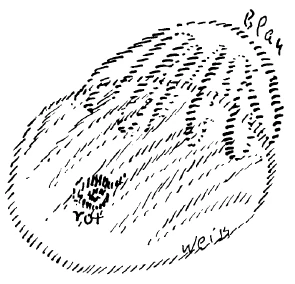
[ 12 ] Of course, it’s always a bit problematic to put these things down in writing, but since you are all anthroposophists, you will naturally take these things as they are meant. So, in the outflowing stream of air, one can actually see something like hooks emerging from the human astral body, into which the air current pushes itself (see drawing) . That is the finding. And this precisely attests to the fact that asthma is truly a specific form of illness that lies right on the borderline of purely psychological illnesses—by which I do not mean so-called mental illnesses, but rather those illnesses that are connected to psychological life. Mental illnesses do not necessarily have to be connected to psychological life; they can simply be physical illnesses, in which the psychological aspect is merely a symptom. So the so-called mental illnesses should in most cases not be called mental illnesses at all, because they are almost always actual organic diseases that find a psychological counterpart—simply a shadow image—and that is merely a symptom. The best way to treat so-called mental illnesses is to determine, based on the physical findings as a complex of symptoms, whether a kidney disease, liver disease, or a truly organic brain disease is present. By “psychological disorders,” however, I mean those in which, for example, genuinely psychological effects are at the root—such as the effects of shock or anxiety and the like—that is, where psychological causes are present. And in the case of asthma, it is indeed true that one often has to go back very far to identify the psychological causes.
[ 13 ] When one has lived as long as I have, one has certainly encountered asthma cases of the most varied kinds, and I must say that often, when dealing with asthma cases, if one looks back to find the cause—aside from karmic factors, that is—the triggering cause, one must even go back to embryonic life. And the external causes are, in fact, often truly rooted in embryonic life. They stem from the mother having experienced shocks or distress that recurred irregularly throughout her pregnancy. Such things have an extraordinarily strong effect on the entire mucous membrane system of the respiratory tract, and it is from this that, already during the embryonic period, the causes arise for what later “manifests itself” in asthmatic symptoms.
[ 14 ] However, the following is of particular importance when it comes to asthmatic symptoms: Asthma manifests itself in very different ways, depending on the individual, and much depends on whether one can truly and effectively combat the other consequences of asthma that exist within the organism. This strengthens the organism enough so that it can later take action on its own to combat the asthma. And so I would now like to outline the possibilities for addressing these issues, given that this is indeed a matter of an irregular movement of the astral body in the bronchial-pulmonary region.
[ 15 ] There is, in fact, something—I would say—quite subtle underlying this, just as asthma is, in general, a subtle disease. If one examines a person with asthma using—if I may say so—occult perception, one finds that, above all else, what I would like to call the organism’s inner appetite is suppressed.
[ 16 ] Let’s first clarify this concept of the organism’s “inner appetite.” One actually only comes across this concept of the organism’s inner appetite when observing very young children. They don’t really taste things just with their tongues. I’ve always told educators this: small children don’t just taste with their tongues; they actually taste with their entire organism. The entire organism is something like a delicate organ of taste. It’s just that later on, this tasting becomes localized, so to speak, around the palate, tongue, and so on. This differentiation, which occurs relatively early, is, however, only partial. In the subconscious realm, a person tastes—and thus generates this inner experience of appetite—through their entire organism. Quite simply, the entire organism possesses that driving force which we call appetite.
[ 17 ] Well, isn’t it true that just as there is a loss of appetite in the isolated main extract that is experienced there, so too—and this is particularly the case to a high degree in asthmatics—is there a loss of appetite throughout the entire organism. And in asthmatics, a loss of appetite affecting the entire organism sets in; they have absolutely no desire to absorb the nutrients they consume—specifically those that enter the bloodstream. They even have an aversion—though they are unaware of it because it is an unconscious, internal reaction—particularly toward cooked foods. This can be observed quite clearly from external symptoms that appear in their daily life. This must be addressed first. One must first restore the body’s ability to have an appetite.
[ 18 ] It is generally a good thing to know how to treat an organism in which one believes one can observe a lack of appetite—that is, a disruption of the proper connection between the etheric organism and the astral organism—for that is what a lack of appetite means. Now, it is good to know what is beneficial in such cases. And it is always beneficial to provide the organism with the correct dosage of what can be obtained in the form of tannic acid—for example, from sage leaves, walnut leaves, oak bark, or willow bark—in short, I mean, when one introduces to the human organism that amount of tannic acid which perhaps corresponds to the first decimal place—expressed as a percentage. That is what is particularly important for the astral body in such a case. It is stimulated to extend its activity to the etheric body when one supplies it with this tannic acid. The etheric body, however, does not respond to this. Thus, one merely causes disorder if one supplies tannic acid in an unbalanced manner. On the other hand, one must also address the etheric body. And this is achieved, for example, by making a leaf extract from Veronica officinalis—this speedwell—and extracting specifically the bitter substances from it, those bitter substances found in such plants—they can also be obtained from other plants, wherever these bitter extractives are present— and then one administers them alternately—for my part, one in the morning and the other in the evening—and one can then regulate the rhythm between the astral and etheric bodies and in this way initiate the healing process. If one then instructs the patient, with great patience, not to lie in bed at all for weeks on end, but to sleep in a chair, and when he tries to fall asleep, to meditate on his breathing in his mind—that is, to see or feel in his mind: inhalation, expansion of the breath, exhalation—to breathe very consciously as they fall asleep; when they wake up, have them begin again immediately, breathing consciously for a few minutes. If one strengthens one’s moral powers in this way by applying them to one’s own organism—namely, to breathing— but in such a way that one can apply them unwaveringly—in any situation other than sleeping in a chair, particularly when lying down, it is entirely impossible for the patient to carry this out—and then uses this as the third phase of the treatment, there is hope that asthma itself can be addressed even in very late stages of development. Morphine dependence is, after all, merely a secondary effect; it can then be eliminated. One must then attempt to combat the morphine dependence.
[ 19 ] Now, another interesting case that has been brought to my attention. However, I would like to emphasize explicitly that, of course, there are more or less problematic aspects to these cases when one does not see the patient in question. It is simply that I would like to say that the case should ideally be reconstructed, but let us briefly describe what we have here with this forty-five-year-old postal clerk, who, as a result of something, suffered a nervous breakdown, then—as it seems—initially became insomniac and entered a state where the patient can no longer control himself, where the mind thinks on its own—that is, automatically. That was probably the first stage. Then this stage seems to have transitioned into another, in which he developed tremors in his limbs after two years, as well as convulsive episodes, presumably in his limbs as well.
[ 20 ] In such a case, the most important thing is to realize that the entire condition does not lie in organs other than those that, through the ego-organization and the astral organization, exert a directing influence on the human will system. The system of the will is what matters. And the irregularities and abnormalities of the system of the will are already at work in this peculiar surrender to automatic thought processes. This has nothing to do with thoughts themselves; it has to do with the will that underlies the development of thought. Everything, however, is directed toward working deep within the lower subconscious in order to actually form the will within the purely metabolic-limb organism, to draw it out of the rhythmic organism, to draw it out of the nervous-sensory organism. Thus, there is actually a tendency toward the displacement of the entire physical and etheric organs of the will toward the lower organism.
[ 21 ] You would certainly have been able to clearly perceive what I am saying in such a case, even from outward symptoms, if you had had the opportunity, let’s say, to observe this postal clerk at some point in time, and then again two years later; You would thus notice that, over the course of those two years, the relationship between the lower lip and the upper lip has changed. Two years ago, it might have seemed to you that there was a certain, not entirely harmonious relationship in the movement of the upper lip relative to the lower lip—that one has the feeling that they do not fit together as well as they do in normal people—and after two years, this discrepancy would have become more pronounced. The lower lip will have continued its erratic movements more than the upper lip. You will be able to observe such things. You will also be able to observe a similar interplay between the legs and the arms in terms of movements that do not coordinate.
[ 22 ] The point is that in such a case, medication and physical therapy should be combined with, let’s say, psychological treatment through therapeutic eurythmy. These two approaches must be combined here, and this case is actually a typical example of that.
[ 23 ] In such a case, use horsetail baths with a fairly strong concentration of horsetail, which will provide you with the necessary silica. Horsetail does indeed contain a very high percentage of silicic acid, so use horsetail baths, and through these baths you will be able to bring about a significant strengthening of the ego organization. But this is only present under the influence of the bath. There is a constant danger that it will disappear again after a short time. It will be encouraged to become something lasting if you then have the patient vocalize using therapeutic eurythmy—simply vocalize—for one hour after the bath has ended. In this way, you stimulate what was initially only predisposed during the horsetail bath. And then you can hope, in this manner—above all from the periphery, from the limb system—to combat the condition. One must simply try everywhere to find the point from which one can combat these things.
[ 24 ] Now, I've been thinking about this other case, which is very interesting; it's just not presented very clearly. It says here:
A lupus-like, progressively spreading growth of the mucous membrane on the palate, causing difficulty swallowing, in a 37-year-old female patient who had stage II or III pulmonary tuberculosis seven years ago, which has since largely resolved. She underwent surgery for gallstones, which were not present.
[ 25 ] I would have liked to know what happened immediately after the surgery for gallstones that weren't even there!
Suffers from digestive tract disorders and bloating, which have been alleviated through therapeutic eurythmy S-exercises and have recently been minimal; has been experiencing severe distress for years. Could a successfully performed I-exercise have caused the lupus? What should be done?
[ 26 ] Do you think this is really something similar to lupus?
It could also be scurvy; it just looks that way.
[ 27 ] One need not assume that. In reality, it can really only be a matter of the plastic power of the ethereal organism simply not extending sufficiently into the peripheral tracts. It simply cannot be anything else. And this would have to be addressed by simply injecting bee venom—perhaps in a sixth decimal dilution—and making the process a total one, which arises from the fact that the bee venom very strongly stimulates the etheric body to absorb astral forces in a way that is truly directed toward the entire human organism.
[ 28 ] Bee venom is a very interesting substance. What underlies bee venom is truly a system of forces that also underlies the entire structure of the human organism. What actually takes place in the beehive—between the production of bee venom from the bees’ food and everything the bee ingests, and the formation of the wax cells in the honeycomb—is, not for the individual bee but for the entire beehive, remarkably similar to the organic processes in the human organism. Namely, if one follows the bees from the moment they alight on the flowers until they return to the hive, secrete the products they bring with them, and then construct the cells, one observes an activity within the beehive that is truly, in its innermost essence—in terms of the “I,” the astral, and etheric—that is very similar to what occurs in the processes taking place internally in the brain when a human being perceives, then takes substances into the powers of perception, and penetrates all the way into the formation—into this remarkable formation of the bone cells. One sees in the honeycombs something that has remained soft, something that has remained different from what has become bone cells, and one sees human perception in the bee sitting on the flower. So that, in fact, the entire human organism, in its activity, is encompassed in what lies between the bees’ sucking on the flower and the production of the wax cells.
[ 29 ] Underlying the whole of this, as the organizing principle coming from the spiritual realm, is bee venom. So that when you can see that the organic effect is, so to speak, breaking off at the periphery—and does not want to penetrate into the periphery—you can always do a great deal of good with bee or wasp venom, and then support the effect of the injection from within by making a liquid paste of honey and milk, which you then administer as a daily dietary supplement.
[ 30 ] This is something that truly presents itself in such a way that one can see the organism, which has contracted in on itself and exhibits such abnormal symptoms at various peripheral sites, is in turn exerting its effect—on the one hand under the influence of the insect venom entering the circulatory system, and on the other hand under the influence of that which is substantially akin to milk and honey—developing and spreading throughout the organism. This is what I believe can already be recommended in such a case.
[ 31 ] Now I would like to discuss the issue that, it seems, is also close to your heart. That is the issue of nervous system disorders, spinal cord disorders, and so on.
[ 32 ] Of all nervous disorders, diseases of the spinal cord are, of course, the most difficult to treat. The other nervous disorders are much easier to treat. But one would be much better able to treat so-called nervous disorders if one took into account that within the nerve, the nerve tract, and the nervous system in general, there exists a substance that constantly tends toward disintegration. Unlike in other parts of the organism, there is nothing in the nerve—no constructive, sprouting forces, no forces of growth—but rather, what is present throughout the nerve is that which tends toward the “I”-organization, in that it actually always seeks to separate and disintegrate. It must simply be continuously prevented from disintegrating. The moment the ego-organization is not strong enough to prevent the nerves from crumbling, a wide variety of symptoms actually arise. Depending on whether it is the ego organization or the astral organization that is not strong enough, either actual nervous disorders arise—if the astral organization is not strong enough—or, if the ego organization is not strong enough, various forms of neuralgia or various conditions with semi-psychic symptoms and so on arise.
[ 33 ] Now one must simply understand how to influence the nervous system in such a way that, so to speak, a kind of phantom of the astral and ego organisms appears within the nervous system. This actually occurs when one attempts to introduce the effects of silicic acid into the entire nervous system—that is, when there is already a severe nervous disorder, not just a partial one. This is, so to speak, something like a postulate: to introduce silicic acid into the nervous system.
[ 34 ] Now, provided there are no particular obstacles or inhibitions, silicic acid enters the nervous system because there is indeed an extraordinarily strong affinity between the structure of the human nervous system and the arnica substance. This affinity is already very strong. And if you administer arnica injections—in high potencies, of course, such as the fifteenth, twenty-fifth, or even thirtieth potency—you will find in most cases that the arnica injection has the effect of causing the patient to spontaneously feel the urge and impulse to do something about their nervous condition. For one must always bring it to the point where the patient suddenly realizes: What is in my nerves is being relieved by some remedy, and I can now make use of my ego-organism and my astral organism. In this case, it is a matter of relief. In a person with a nervous disorder, the ego-organism and the astral organism are intensely occupied with the nervous process. One must introduce something into the nervous process that mimics the ego-organism and the astral organism. And this is precisely what that remarkable configuration found in arnica does—arnica, which is in fact a mixtum compositum of all manner of things, truly a kind of microcosmic imitation of all manner of macrocosmic phenomena. The arnica substance does this to a very special degree.
[ 35 ] Just think about everything that happens there. First, there is the silicic acid found in Arnica montana. That is the basic substance. It is incredibly sensitive—a profoundly significant reagent for all kinds of cosmic influences. Silicic acid is an extraordinarily sensitive reagent for everything that acts upon the Earth. Then, in Arnica montana, there is always a tendency to transmit these subtle silicic acid—one might say—perceptions of the cosmos and to mold them plastically into the potassium salts and also the calcium salts, which are distributed in Arnica montana in a wonderful way.
[ 36 ] Now imagine the entire effect that I described earlier with regard to tannic acid; this effect on the astral organism is also present in arnica. So that what is now carried in from the cosmos—imprinted, as it were, plastically by silicic acid in the potassium-calcium salts—is carried directly into the organism through the tannic acid content of arnica. Then, as if by a miracle, the arnica substance simultaneously develops a sedative, so that the person does not feel the distress caused by the intrusion of a foreign substance into the physical counterpart of the astral body. For there is something camphor-like within the arnica substance. So it contains its own sedative. Furthermore, the arnica substance—wonderfully embedded in gum and similar substances—contains protein, which gives it an affinity for the etheric body. And then there are phosphorous compounds within it, namely essential oils, through which the whole is structured in such a way that it directly becomes a phantom of the human “I”-organism. |
[ 37 ] Therefore, administer a substance derived from Arnica montana in the correct dosage—but by injection, since other substances will not be as effective when administered by injection—and you will generally observe, at least initially, a strong effect on the nervous system. The process is proceeding correctly when you notice that the patient now feels stronger and believes he will be able to overcome the condition on his own. This feeling must be evoked. If this does not occur, then, alternating with Arnica montana, use whatever supports the patient by further stimulating the effect of Arnica montana on the respiratory side; in other words, alternate with a fairly high-concentration formic acid injection. You will see that the desired effect can then occur.
[ 38 ] If you cannot achieve this, then it is, of course, necessary to prepare a highly potent extract from the part of the nervous system—whether in the brain or the spinal cord—where the actual source of the disease can be identified, and then inject this in place of formic acid, alternating it with arnica. So, for example, if you suspect that the neurological disorder originates in, say, the visual cortex, then take the secretion from the quadrigeminal plate or a similar structure in an animal, extract it, prepare it in a fairly high potency, and inject it to support Arnica montana. Let the support go precisely where it is needed. These are things one must always observe.
[ 39 ] However, particularly in successful Arnica montana treatments, a mild toxic effect occurs—indeed, it is expected to occur—that can be perceived in some way. But you will always find that this mild toxic effect can be neutralized by alkalis taken per os in some form. I believe that what I have described here actually contains something very essential regarding what should be done in cases of nervous disorders, including spinal cord disorders, which could only be diagnosed at the right stage, and in which we should break the habit of that medical misconduct that is so rampant, particularly in Western Europe, whereby almost all cases of tabes dorsalis are attributed to some syphilitic cause. It is utter nonsense. And if one obstructs one’s clear view of the matter from the outset, one will naturally be unable to come to terms with this perspective. Most spinal cord disorders do not stem from any syphilitic causes at all, but rather from common colds—which seem harmless to most people—in the gastric or other abdominal regions, that is, in the abdominal region in general, or from the spine itself having been exposed to a cold at some point. It is simply that, well, given the well-known social conditions of the past decades, the purely external complication of syphilis and spinal cord disease very often occurred together, and attention was thus diverted, so that the correct course of action—namely, treating the consequences of syphilis separately and those of spinal cord disease through the methods I have just described—was not taken. It should actually always be regarded and treated as a neurological disorder, just as I have described.
[ 40 ] Now, the interesting thing is that when nervous disorders are still localized in the digestive tract or even in the stomach and do not extend beyond the digestive organs, the same result can be achieved—and this is particularly interesting—by using Chamomilla instead of Arnica montana, treating it in the same way by injection, and keeping everything else the same. And this is interesting because it shows—since Chamomilla is almost completely lacking in silicic acid—that silicic acid is only necessary when the nervous system extends beyond the digestive tract. Silicic acid is absent. On the other hand, sulfur is present, which is essentially beneficial when it comes to stimulating the etheric body in the digestive system.
[ 41 ] Now a few more questions have come up, but we don't have time to discuss them in detail: “What is the nature of nearsightedness and farsightedness?”
[ 42 ] Don’t you think there’s a way to influence these conditions therapeutically? The causes are obvious, after all, and you don’t ask about them in these matters. You mean, how one could influence them therapeutically—whether they can be cured by mere medical remedies? It will be possible to cure both nearsightedness and farsightedness, and thereby also prevent them, because you’re quite right—glaucoma is, of course, closely linked to farsightedness. People who aren’t farsighted don’t easily develop glaucoma. But a cure through medication—which is indeed possible—will only succeed if treatment is initiated perhaps even before the age of three. One must therefore recognize the predisposition to nearsightedness or farsightedness in a child very early on. Then, highly potentized Belladonna can be very effective. But one must actually notice it before the child has fully learned to speak and walk. Once the organism has reached the stage of physical development it has attained—once it has learned to walk, stand, and speak—the entire tendency toward the formation of the crystalline lens and the vitreous body, which underlie hyperopia and myopia, is already present. And since this is a purely mechanical, formal process, it is difficult to do anything about it. On the other hand, as long as the eye can still be influenced by what is unformed in the child’s wriggling movements, in the still-uncoordinated arm movements, and so on—and as long as a very inner experience, permeated by a certain sense of feeling and a certain sensation, is brought about by highly potentized Belladonna—one might think that something can be done there. But it will probably not be easy to make such observations. That is what needs to be said about it.
[ 43 ] Unfortunately, we must now conclude these remarks. I hope that we will be able to resume them again at an appropriate time. It will always give us a very special sense of satisfaction here when we can, so to speak, incorporate into the announced medical university activities the opportunity to offer the doctors something of value when they attend such gatherings. I hope that this can indeed be arranged again and again in the future, in one way or another. Essentially, however, it will also be possible for those friends who remain in contact with the Dornach School to receive, from time to time—and we will ensure that this is done properly—information on various topics in response to their questions. So, if you send questions to the administration, Dr. Wegman, we will provide answers together—though not, of course, in the supplement to *Goetheanum*, but in a format that is intended solely for doctors. But I believe we should set things up so that when someone asks a question, the answer reaches our anthroposophical physicians in general, because it is always of interest to everyone, and this is how we will make the best progress. We will try to initiate communication with the physicians in this way as well, from here in Dornach.
Dr. Palmer: Dear Dr. Steiner, Please allow me, on behalf of my colleagues, to express our heartfelt thanks for the fact that, despite the heavy workload you faced over the Christmas holidays, you still found the time to devote a few hours to us as well. We who work at the Clinical-Therapeutic Institute in Stuttgart know all too well how much we need these hours, and we would like to ask you to continue supporting us with your advice and to extend your assistance to us.
[ 44 ] The only thing I would have wished for was that there could have been more hours. But no matter how much Dr. Wegman and I thought it through, we couldn't come up with more than these three hours. As I said, I would have liked there to have been more hours; but hopefully another time!