

Remedial Education Course
GA 317
27 June 1924, Dornach
Translate the original German text into any language:
Versions Available:
Remedial Education Course, tr. SOL
Dritter Vortrag
Third Lecture
[ 1 ] Nun, meine lieben Freunde, wir haben gesprochen vom Zusammenhang von ätherischem, physischem, astralischem Leib und Ich-Organisation, wie er sich darstellen kann, dieser Zusammenhang, beim sogenannten abnormen Kinde. Aus dem, was ich gestern auseinandersetzte über die eigentümliche Art, wie der Ätherleib abnorm gestaltet sein kann durch eine nicht entsprechende Einfügung in das allgemeine Gedankensystem des Weltenäthers, haben wir uns versucht auseinanderzusetzen, daß dies, was da eintritt, nach den verschiedenen Seiten hin unregelmäßig sein kann. Wenn Sie dies begreifen können, werden Sie auch im Verlaufe der Vorträge vielleicht eine Überzeugung mitnehmen können; das ist diese: Man wird im einzelnen die Behandlungsmethode fast jeder kindlichen Individualität gegenüber finden müssen, wenn man eine allgemeine Seelenstimmung ins Erziehen hineinträgt. Aber man muß etwas wissen zunächst, und das Wesentliche ist dieses, daß eigentlich die gesamte heutige Psychiatrie von den sogenannten Seelenerkrankungen der Methode nach nichts wissen kann. Wenn man die Dinge kennt, wird man zu den Behandlungsmethoden im einzelnen kommen. Daher ist es viel weniger wichtig, daß Sie Maßregeln für das einzelne bekommen, sondern besonders wichtig ist es, daß Sie im Prinzipe einsehen, daß auch auf diesem Felde eine gesunde Pathologie, eine gesunde Diagnose von selbst sich in das Therapeutische hinein entwickelt.
[ 1 ] Well, my dear friends, we have spoken about the relationship between the etheric, physical, and astral bodies and the “I” organization, and how this relationship can manifest itself in what is known as an “abnormal” child. Based on what I explained yesterday regarding the peculiar way in which the etheric body can be abnormally formed due to an inappropriate integration into the general thought system of the world ether, we have attempted to understand that what occurs here can be irregular in various respects. If you can grasp this, you may also come to a conviction as the lectures progress; namely, that one will have to find a specific treatment method for almost every individual child when bringing a general spiritual attitude into their upbringing. But one must first know something, and the essential point is this: in terms of method, modern psychiatry as a whole actually knows nothing about so-called mental illnesses. Once one understands these things, one will arrive at specific treatment methods. Therefore, it is far less important that you receive specific guidelines for individual cases; rather, it is particularly important that you grasp the principle that, in this field as well, a sound pathology and a sound diagnosis naturally develop into the therapeutic process.
[ 2 ] Nun liegt es ja bei vielen sogenannten Geisteskrankheiten so, daß man sie aus Gründen, die Sie auch im Laufe dieser Vorträge einsehen können, nicht mehr heilen kann, oder wenigstens nur unter äußerst schwierigen Verhältnissen heilen könnte, selbst wenn man auch das Geisteswissenschaftliche berücksichtigen könnte. Dazu würde man eigene Sanatorien brauchen für diese Geisteskranken,wo man erwachsene Geisteskranke — wenn auch außerordentlich schwer — heilen könnte; ich meine Kranke besonderer Art, besonders solche Fälle, die uns für das kindliche Alter wichtig sind. Andererseits werden Sie sehen, daß man durch eine richtige pädagogische Behandlung im kindlichen Alter durchaus helfen kann. Und wir werden sehen, daß dasjenige, was auch zu dem Schwersten gehört, wenn man es bei dem Erwachsenen vorliegen hat, zum Beispiel die Epilepsie, eigentlich in frühem Kindheitsstadium viel Aussicht hat, ausgebessert oder gar weggebracht zu werden, wenn man die Sache nur richtig ansehen kann. Man kommt dann schon im einzelnen individuellen Falle zu den Maßregeln, wenn man das Prinzip des Überganges kennt von dem, was zugrunde liegt, zu dem, was man tun soll. Aber man muß eben wissen, was der Erkrankung zugrunde liegt.
[ 2 ] Now, the fact is that with many so-called mental illnesses, for reasons that you will come to understand in the course of these lectures, they can no longer be cured—or at least could only be cured under extremely difficult circumstances—even if one were able to take Spiritual Science into account. To do so, one would need special sanatoriums for these mentally ill patients, where adult patients—albeit with extraordinary difficulty—could be cured; I am referring to patients of a particular kind, especially those cases that are important to us in relation to childhood. On the other hand, you will see that proper pedagogical treatment during childhood can certainly help. And we will see that even the most severe conditions—such as epilepsy, for example—when they occur in adults, actually have a good chance of being improved or even eliminated in early childhood if one can only view the matter correctly. One can then determine the appropriate measures for each individual case if one understands the principle of transition from the underlying cause to the necessary course of action. But one must know what lies at the root of the illness.
[ 3 ] Nun, sehen Sie, daß man das mit der heutigen Psychiatrie nicht wissen kann, das beruht darauf, daß man heute gar keine Ahnung hat, daß es so etwas wie eine besondere Ich-Organisation oder einen besonderen astralischen Leib gibt, sogar den Ätherleib leugnet man heute noch vielfach. Ich bestehe nicht auf Namen, aber wenn gewisse Leute aus der Theorie heraus von gewissen Begriffen sprechen wie Driesch, so erkennen sie den Ätherleib nicht, weil sie sich davor fürchten. Aber immerhin vom Physischen aus dringt zu der Erkenntnis des OrganischÄtherischen die heutige Wissenschaft schon vor. Nun ist das Wichtige, was man nicht wissen kann, wenn man vom astralischen Leib und der Ich-Organisation nichts weiß, dieses: Nehmen Sie einmal zuerst den Zusammenhang zwischen physischem Leib und ätherischem Leib. Er bleibt aufrechterhalten das ganze Leben hindurch, von der Konzeption, vom Embryonalzustand bis zum Tode, denn er geht durch alle Schlafzustände hindurch. Dagegen wird durch jeden Schlaf hindurch unterbrochen der Zusammenhang mit astralischem Leib und IchOrganisation.
[ 3 ] Well, you see, it’s impossible to know this through modern psychiatry, because today people have absolutely no idea that there is such a thing as a specific “I”-organization or a specific astral body; in fact, even the etheric body is still widely denied today. I don’t insist on specific names, but when certain people—like Driesch—speak of certain concepts based on theory, they fail to recognize the etheric body because they are afraid of it. Nevertheless, modern science is already making inroads toward an understanding of the organic-etheric realm, starting from the physical. Now, the important thing—which one cannot know if one knows nothing about the astral body and the “I”-organization—is this: First, consider the connection between the physical body and the etheric body. It is maintained throughout one’s entire life, from conception, through the embryonic stage, to death, for it persists through all states of sleep. In contrast, the connection with the astral body and the “I”-organization is interrupted during every sleep.
[ 4 ] Die Art und Weise, wie sich nun die Ich-Organisation und der astralische Leib im Wachzustande im physischen Leib und Ätherleib verhalten, muß richtig angesehen werden, wenn man überhaupt einen realen Begriff über sogenannte Geisteskranke haben will. Es ist unerläßlich, daß man diese Eingliederung des astralischen Leibes und des Ichs in den physischen Leib und ätherischen Leib ihrem Wesen nach kennt, wenn man überhaupt einen vernünftigen Gedanken fassen will über eine sogenannte Geisteskrankheit. Nun, sehen Sie, gewöhnlich glauben auch die Anthroposophen — nicht weil die Anthroposophie, die sehr präzise in ihren Formulierungen vorgeht, dazu Veranlassung gibt, aber weil man eben alte Denkgewohnheiten hat -, gewöhnlich glauben auch die Anthroposophen: wenn der Mensch aufwacht, gehen halt sein astralischer Leib und die Ich-Organisation über in den physischen und ätherischen Leib, verbinden sich so, wie sich Wasserstoff und Sauerstoff verbinden. So ist es nicht. Wenn man die Sache hellseherisch anschaut, so ist es so (siehe Tafel 4): wenn man hier den physischen Leib, hier den ätherischen Leib hat, so kommt der astralische Leib allerdings hinein und auch die Ich-Organisation kommt hinein; das kommt alles hinein und man sieht diesen Übergang. Aber dieser Übergang, der also darin besteht, daß der astralische Leib und die Ich-Organisation den physischen und Ätherleib ergreifen, das ist nicht alles. Und hier beginnt eben, möchte ich sagen, eine Tatsache des menschlichen Lebens, die von außerordentlicher Wichtigkeit ist.
[ 4 ] The way in which the “I” organization and the astral body relate to the physical body and the etheric body during the waking state must be properly understood if one is to have any real understanding of so-called mentally ill people. It is essential to understand the nature of this integration of the astral body and the “I” into the physical and etheric bodies if one is to form any reasonable conception of so-called mental illness. Now, you see, even anthroposophists usually believe—not because anthroposophy, which is very precise in its formulations, gives cause for this, but simply because people have old habits of thought—even anthroposophists usually believe: when a person wakes up, their astral body and the “I” organization simply pass into the physical and etheric bodies, combining in the same way that hydrogen and oxygen combine. That is not the case. If one observes the matter clairvoyantly, this is how it is (see Plate 4): when one has the physical body here and the etheric body here, the astral body does indeed enter, and the “I”-organization also enters; all of this enters, and one can see this transition. But this transition—which consists in the astral body and the “I”-organization taking hold of the physical and etheric bodies—is not the whole story. And here, I would say, begins a fact of human life that is of extraordinary importance.
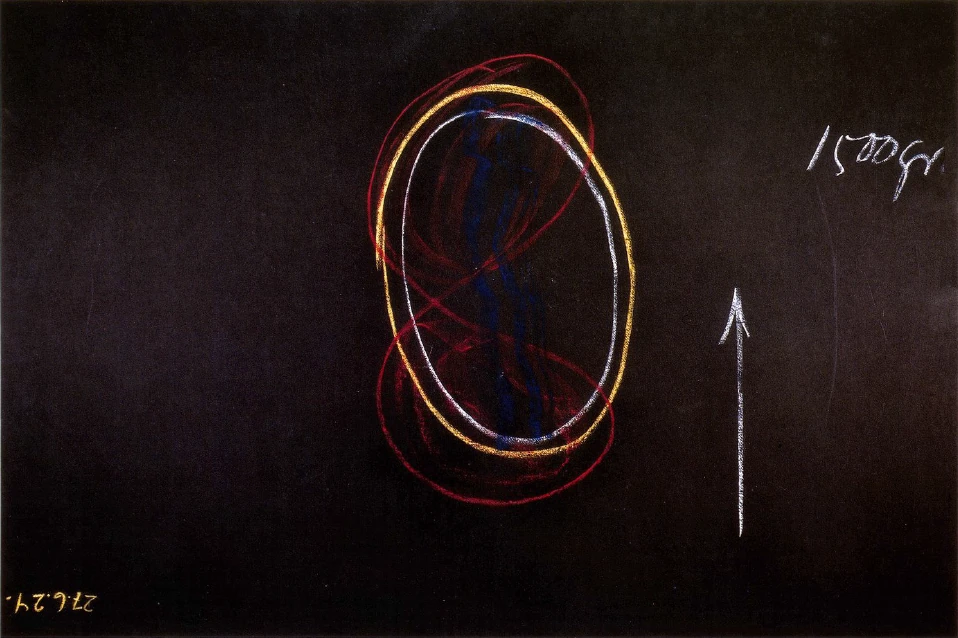
[ 5 ] Gehen wir zunächst zur Ich-Organisation. Die Ich-Organisation ergreift nicht bloß den ätherischen und den physischen Leib, wenn sie zurückgeht beim Aufwachen, sondern sie ergreift im menschlichen Leibe die äußere Welt, die Kräfte der äußeren Welt. Was heißt das? Nun stellen Sie sich vor, wir haben die Schwerkraft, die so wirkt (siehe Tafel 4). Innerhalb der Richtung der Schwerkraft stehen wir ja auf recht, wenn wir wachen. Stellen Sie sich einfach die Schwerkraft als solche vor, die da wirkt, also die Richtung der Gewichtskräfte. Nun gibt es zwei Vorstellungen; machen wir uns das recht klar: die eine könnte darin bestehen, daß das Ich - sehen wir zunächst vom ätherischen Leibe ab — den physischen Leib ergreift, der physische Leib fügt sich dann der Schwerkraft, nicht wahr, wir stellen uns in die Schwerkraft hinein, wenn wir gehen, wir müssen das Gleichgewicht aufsuchen und so weiter. Das wäre die eine Vorstellung: wir ergreifen im Aufwachen mit dem Ich den physischen Leib; der physische Leib, der ist schwer und unterliegt dem Gewichte der Erde, und jetzt unterliegen wir mit unserem physischen Leib dem Gewichte der Erde und haben dadurch mittelbar eine Beziehung zur physischen Schwerkraft. Das ist die eine Möglichkeit. Es ist gerade so, wie wenn ich mit dem Gewichte des Buches eine mittelbare Beziehung zur Schwerkraft habe, indem ich das Buch ergreife. Das ist die eine Vorstellung; die ist falsch, unrichtig. Die andere Vorstellung ist diese: das Ich schlüpft hinein in den physischen Leib, ergreift den physischen Leib, aber schlüpft so weit hinein, daß es den physischen Leib unschwer macht; der physische Leib verliert, indem das Ich hineinschlüpft, seine Schwerkraft. Wenn ich also als wacher Mensch aufrecht stehe, so ist für mein Bewußtsein, für das Ich selbst, für die Ich-Organisation, die auch im Wärmeorganismus ihren physischen Ausdruck hat, die Schwerkraft überwunden. Es ist keine Möglichkeit vorhanden, in mittelbare Beziehung zur Schwerkraft zu treten. Das Ich tritt in unmittelbare Beziehung, stellt sich als Ich in die Schwerkraft hinein, schaltet also den physischen Leib aus. Das ist dasjenige, um was es sich handelt. Sie stellen sich fortwährend in die wirkliche Schwerkraft der Erde hinein mit der Ich-Organisation, wenn Sie gehen, nicht auf dem Umwege durch den physischen Leib, Sie treten in unmittelbare Beziehung zu dem Tellurischen.
[ 5 ] Let us first turn to the “I” organization. When it withdraws upon waking, the “I” organization does not merely take hold of the etheric and physical bodies, but also takes hold of the external world—the forces of the external world—within the human body. What does that mean? Now imagine we have gravity acting in this way (see Plate 4). When we are awake, we stand upright in the direction of gravity. Simply create a mental image of gravity as it acts—that is, the direction of the gravitational forces. Now there are two mental images; let’s make this quite clear: one might consist in the fact that the “I”—leaving aside the etheric body for the moment—takes hold of the physical body; the physical body then submits to gravity, doesn’t it? We place ourselves within the force of gravity when we walk; we have to find our balance, and so on. That would be one mental image: upon waking, we take hold of the physical body with the “I”; the physical body is heavy and subject to the Earth’s gravitational pull, and now, with our physical body, we are subject to the Earth’s gravitational pull and thereby have an indirect relationship to physical gravity. That is one possibility. It is just as if I have an indirect relationship to gravity through the weight of the book when I pick up the book. That is one mental image; it is false, incorrect. The other mental image is this: the “I” slips into the physical body, takes hold of the physical body, but slips in so far that it makes the physical body weightless; and as the “I” slips into it, the physical body loses its gravity. So when I stand upright as a waking human being, gravity is overcome for my consciousness, for the “I” itself, for the “I”-organization, which also finds its physical expression in the thermal organism. There is no possibility of entering into an indirect relationship with gravity. The “I” enters into a direct relationship, places itself as the “I” within gravity, and thus bypasses the physical body. That is what this is all about. You continually place yourselves within the Earth’s actual gravity with the “I”-organization when you walk—not indirectly through the physical body—but by entering into a direct relationship with the telluric force.
[ 6 ] Ebenso ist es mit dem Ätherleib. Auch der Ätherleib ist in Kräfte eingeschaltet. Nehmen wir eine von diesen Kräften. Ich habe oft darauf aufmerksam gemacht, wir unterliegen, indem wir als Mensch auf der Erde herumgehen, einem sehr starken Auftrieb. Wir haben unser Gehirn; das ist durchschnittlich 1500 Gramm schwer. Wenn diese Schwere von 1500 Gramm auf die Basis unseres Gehirns mit den feinen Adern drücken würde, würden diese sofort zerquetscht werden. Es drückt eben nicht, es schwimmt in Wahrheit in dem Gehirnwasser. Dadurch erleidet es einen Auftrieb, es verliert soviel von seinem Gewicht, als die verdrängte Wassermasse Gewicht hat. Diese verdrängte Wassermasse hat ein Gewicht, das ungefähr 20 Gramm weniger ist als das Gewicht des Gehirns selbst, so daß das Gehirn nur mit einem Gewichte von 20 Gramm auf seine Unterlage drückt. Wir haben also ein schweres Gehirn, das aber nicht hinuntergedrückt wird, sondern einen Auftrieb hat. In diesem Auftrieb leben wir darinnen, unser Ätherleib lebt darinnen. Aber indem wir hineinschlüpfen mit unserer IchOrganisation in unseren Ätherleib, stehen wir nicht mittelbar in dem Auftrieb darinnen, sondern direkt mit der Ich-Organisation. Mit allen Kräften der Erde, mit der ganzen physischen Welt steht unsere menschliche Organisation in Beziehung, und zwar in direkter unmittelbarer Beziehung, nicht in indirekter Beziehung.
[ 6 ] The same is true of the etheric body. The etheric body, too, is involved in forces. Let us consider one of these forces. I have often pointed out that, as human beings walking on Earth, we are subject to a very strong upward force. We have our brain, which weighs an average of 1,500 grams. If this weight of 1,500 grams were to press down on the base of our brain through the fine blood vessels, they would be crushed immediately. But it does not press down; in fact, it floats in the cerebrospinal fluid. As a result, it experiences buoyancy and loses an amount of weight equal to the weight of the displaced fluid. This displaced water has a weight that is approximately 20 grams less than the weight of the brain itself, so that the brain exerts a pressure of only 20 grams on its base. We therefore have a heavy brain, but it is not pressed down; rather, it experiences buoyancy. We live within this buoyancy; our etheric body lives within it. But as we slip into our etheric body with our “I”-organization, we do not stand indirectly within that buoyancy, but directly with the “I”-organization. Our human organization stands in relation to all the forces of the Earth, to the entire physical world—and indeed in a direct, immediate relationship, not an indirect one.
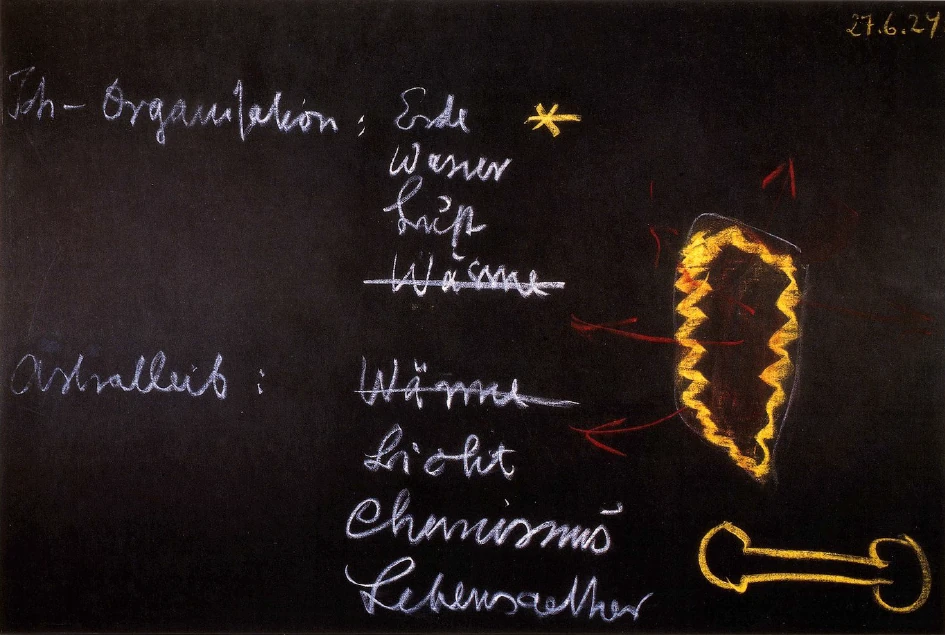
[ 7 ] Nun, sehen Sie, womit steht da unsere Ich-Organisation in Beziehung? Da steht unsere Ich-Organisation erstens in Beziehung zur Schwerkraft, das heißt zu dem Irdischen. Denn, meine lieben Freunde, das, was die Physiker Materie nennen, das gibt es ja nicht. In Wirklichkeit existieren nur Kräfte, und die Kräfte sind durchaus ähnlich wie zum Beispiel die Schwerkraft — es gibt natürlich noch andere Kräfte, gewisse elektrische Kräfte, magnetische Kräfte -, mit allen steht die Ich-Organisation in unmittelbarer Beziehung und ist während des ganzen Wachzustandes im normalen Menschen darinnen. Wir können sagen, alles dasjenige, was wir unter Erde umfassen, das sind diese Kräfte. Alles dasjenige, was wir unter Wasser umfassen, was im Gleichgewichtszustande ist, mit dem steht die Ich-Organisation in unmittelbarer Verbindung. Alles, was luftförmig ist - nicht wahr, wir müssen in der Physik neben der gewöhnlichen Mechanik auch eine Hydromechanik, eine Aeromechanik lernen, weil die Gleichgewichtsprozesse und meteorologischen Prozesse in der Luft ihre besondere Formung haben -, mit dem steht die Ich-Organisation in unmittelbarer Verbindung. Dann steht die Ich-Organisation noch in Verbindung mit einem Teile des allgemeinen Wärmezustandes, mit einem Teile der allgemeinen Wärmekräfte, durch den wir immer durchgehen, wenn wir in der physischen Welt leben. (Siehe Tafel 5):
[ 7 ] Well, see, what is our “I”-organization related to? First of all, our “I”-organization is related to gravity—that is, to the earthly realm. For, my dear friends, what physicists call “matter” does not actually exist. In reality, only forces exist, and these forces are quite similar to, for example, gravity—there are, of course, other forces as well, such as certain electrical and magnetic forces—and the “I-organization” is in direct relationship with all of them and is present within the normal human being throughout the entire waking state. We can say that everything we associate with the earth consists of these forces. Everything we find beneath the earth’s surface—that which is in a state of equilibrium—is in direct connection with the “I”-organization. Everything that is gaseous—after all, in physics we must study not only ordinary mechanics but also hydromechanics and aeromechanics, because equilibrium processes and meteorological processes in the air take on their own specific forms—is in direct connection with the “I” organization. Furthermore, the “I” organization is connected to a part of the general thermal state, to a part of the general thermal forces, through which we always pass when we are in the live in the physical world. (See Plate 5):
| Ich-Organisation: | Erde |
| Wasser | |
| Luft | |
| Astralleib: | |
| Licht | |
| Chemismus | |
| Lebensäther |
| Ego-Organization: | Earth |
| Water | |
| Air | |
| Astral Body: | |
| Light | |
| Chemism | |
| Life Ether |
[ 8 ] Ich durchstreiche «Wärme», weil es nur ein Teil ist. - Wir wachen auf und stellen uns als Geist mit unserer Ich-Organisation in die Welt der irdischen Kräfte hinein. Unsere Beziehung ist in Wirklichkeit nicht eine physisch vermittelte, sondern eine magische. Nur daß diese nur räumlich ausgeübt werden kann, rein räumlich begrenzt durch die Grenzen unseres Organismus. Wenn Sie anfangen zu begreifen, daß die Beziehung unserer Ich-Organisation nicht eine physische, sondern eine magische ist, dann haben Sie sehr viel gewonnen.
[ 8 ] I cross out “warmth” because it is only one part. — We awaken and place ourselves, as spirits with our “I” organization, into the world of earthly forces. Our relationship is, in reality, not a physically mediated one, but a magical one. It is just that this relationship can only be exercised spatially, purely limited by the boundaries of our organism. When you begin to understand that the relationship of our “I”-organization is not a physical one but a magical one, then you have gained a great deal.
[ 9 ] Wenn wir jetzt zum Astralleib gehen: der Astralleib steht nun auch nicht etwa bloß durch den Ätherleib, sondern in unmittelbarer Beziehung zu gewissen Kräften, die auf uns wirken, wenn wir im Wachzustand sind. Nun, das ist wiederum ein Teil der Wärmekraft; die Wärme nämlich wirkt mit einem Teil auf den physischen Organismus und mit einem Teil auf den Ätherorganismus zurück. Dann ist der astralische Leib in unmittelbarer Beziehung zu den Lichtkräften. Aber da müssen Sie wissen, daß Lichtkräfte für Geisteswissenschaft etwas anderes sind als das, was die Physik heute darunter versteht. Wir wollen nicht auf Theorien eingehen, aber nicht wahr, dem, was die Welt rings um uns herum in Beleuchtung wahrnehmen kann, dem liegt natürlich etwas zugrunde, und zwar im Äther, so daß wir schon sagen können: Licht ist eine Ätherkraft. - Wir sprechen nun in der gewöhnlichen Wissenschaft heute von dem Licht, als in dem Beleuchteten enthalten. Geisteswissenschaft spricht so vom Licht: sie nennt Licht auch dasjenige, was andern Sinneswahrnehmungen zugrunde liegt, wie zum Beispiel das Licht der Tonwahrnehmungen. Wenn wir Tonwahrnehmungen haben, so ist die äußere Physik überhaupt nur versucht, als von dem äußeren Korrelat der Tonwahrnehmung, von der bewegten Luft zu reden. Die bewegte Luft ist nur das Medium des wirklichen Tonelementes. Das wirkliche Tonelement ist ein Ätherisches, und die Vibration der Luft ist nur die Wirkung dieses ätherischen Vibrierens. Licht lebt auch in der Geruchswahrnehmung. Kurz, für alle Wahrnehmungen liegt zugrunde ein viel Allgemeineres als Licht, als was man in der Physik heute Licht nennt. Es ist gewiß irreführend, das gebe ich Ihnen zu, daß so vom Licht gesprochen wird. Denn im Grunde genommen hat man so vom Lichte gesprochen in der alten Geisteswissenschaft bis zum 12., 13. nachchristlichen Jahrhundert. Dann hat sich das Verständnis dafür verloren, und man hat versucht, andere Ausdrücke anzuwenden, die aber noch unverständlicher sind. Deshalb sind die Bücher über Alchimie, die auf das 12. Jahrhundert folgen, so unverständlich. Für Sie ist von Bedeutung, daß man dies Licht nennt. Mit diesem Licht nun steht der astralische Leib in Verbindung mit alldem, was den Sinneswahrnehmungen unterliegt auf der Erde, nicht auf dem Umweg durch den Ätherleib, sondern direkt in Beziehung. Das ist ganz besonders interessant. Draußen lebt das Licht im Äther, aber wir haben auch Ätherisches in uns. Das Licht wirkt auf den Ätherleib. Aber mit diesem Licht, das in uns ist, kommen wir beim Aufwachen nicht allein in Beziehung, sondern mit Umgehung dieses Lichtes gliedern wir uns in das äußerlich strömende Licht ein. Ebenso ist es auch mit dem äußern, durch die Welt wirkenden Chemismus. Auch in den Chemismus gliedern wir uns ein auf eine unmittelbare Art. Und das ist besonders wichtig, denn damit wird gesagt, daß derMensch wachend in eine Art kosmischen Chemismus eingegliedert ist. Nun kennt unsere heutige Wissenschaft nur den leblosen Chemismus, höchstens ein bißchen den organischen Chemismus, aber sie kennt gar nicht jenen Chemismus, der ein allgemeiner Weltenchemismus ist. In den gliedern wir uns ein, wenn wir aufwachen. Und ebenso gliedern wir uns ein in das allgemeine Weltenleben, in den Lebensäther; alles unmittelbar.
[ 9 ] If we now turn to the astral body: the astral body is not merely connected to the etheric body, but stands in a direct relationship to certain forces that act upon us when we are awake. Well, this, in turn, is part of thermal energy; for heat acts in part upon the physical organism and in part upon the etheric organism. Then the astral body stands in direct relation to the forces of light. But you must understand that, in Spiritual Science, the forces of light are something different from what physics understands by the term today. We do not wish to go into theories, but isn’t it true that what the world around us perceives as illumination is naturally based on something—namely, in the ether—so that we can already say: Light is an etheric force. —In ordinary science today, we speak of light as being contained within what is illuminated. Spiritual Science speaks of light in this way: it also calls light that which underlies other sensory perceptions, such as the light of sound perceptions. When we have sound perceptions, conventional physics is generally tempted to speak only of the external correlate of sound perception—namely, moving air. Moving air is merely the medium of the actual sound element. The actual sound element is an ethereal one, and the vibration of the air is merely the effect of this ethereal vibration. Light also lives within the perception of smell. In short, underlying all perceptions is something far more general than light—than what is called “light” in physics today. It is certainly misleading—I admit that—to speak of light in this way. For, strictly speaking, this is how light was spoken of in ancient Spiritual Science up until the 12th and 13th centuries A.D. Then the understanding of it was lost, and attempts were made to use other terms, which, however, are even more incomprehensible. That is why the books on alchemy written after the 12th century are so incomprehensible. What is important for you to know is that this is called “light.” Through this light, the astral body is connected to everything that underlies sensory perceptions on Earth—not indirectly through the etheric body, but directly. This is particularly interesting. Outwardly, the light lives in the ether, but we also have an etheric element within us. The light acts upon the etheric body. But upon waking, we do not merely come into contact with this light within us; rather, bypassing this inner light, we integrate ourselves into the light streaming from without. The same is true of the external chemism that acts throughout the world. We also integrate ourselves into chemistry in a direct way. And this is particularly important, for it implies that, upon waking, the human being is integrated into a kind of cosmic chemistry. Now, our modern science knows only lifeless chemistry—at most, a little bit of organic chemistry—but it knows nothing at all of that chemistry which is a general cosmic chemistry. We become part of it when we wake up. And in the same way, we become part of the universal life of the world, of the life-ether; all of this happens directly.
[ 10 ] Und das, was ich Ihnen jetzt skizziert habe, das muß erreicht werden, wenn der Mensch so, wie ich es geschildert habe, nach und nach seinen zweiten Körper aus dem ersten aufbaut und auch den dritten aufbaut. Das alles muß erreicht werden, indem der Mensch in sich untertaucht, mit Durchdringung seines eigenen Wesens, in die irdisch-kosmischen Agenzien hinein. Er muß die Welt ergreifen können durch sich. Wir haben heute in unserer Wissenschaft noch eine solche Sache nur ganz klar auf einem einzigen Gebiet, wo in der Tat die Physik in ähnlicher Art vorgeht, wie man es auf vielen Gebieten wünschen könnte. Das ist die Augenorganisation.
[ 10 ] And what I have just outlined for you must be achieved if the human being, as I have described, gradually builds up his second body from the first and also builds up the third. All of this must be achieved by the human being diving deep within themselves, penetrating their own being, and entering into the earthly-cosmic forces. They must be able to grasp the world through themselves. In our science today, we have such a process clearly defined in only one field, where physics, in fact, proceeds in a manner similar to what one might wish for in many other fields. That is the organization of the eye.
[ 11 ] Denken Sie, wenn man das Auge betrachtet, richtig wie ein knüppeldicker Physiker, wie eine physische Vorrichtung, ein physikalisches Instrument: man zeichnet ins Auge hinein genau dieselben Figuren, wenn man das Auge begreifen will, von Lichtbrechung durch die Linse, Bildung des objektiven Bildes und so weiter, nur daß man nicht übergehen kann zu der Art, wie das Seelische in das Physikalische eingreift. Aber das Ganze ist furchtbar interessant. Denn nun hat man, wenn man so physikalisch vorgeht, diese ganze Zeichnung da vor sich, und jetzt stockt man, jetzt will man durch das Gehirn hindurch an das Seelische heran. Schauen Sie sich einmal diese drolligen philosophischen Purzelbäume an, alle diese interessanten, aber in der Tat blitzzdummen Theorien vom psychophysischen Parallelismus oder von der Wechselwirkung. In Wahrheit kommen eben im Auge die Ich-Organisation und der astralische Leib unmittelbar an das, was wir physisch zeichnen, heran, ergreifen innerhalb des Auges das Physische. Für das Auge ist man also nahe daran, den richtigen Tatbestand zu ergreifen, weil man dazu genötigt ist durch diese eigentümliche Absonderung des Auges, weil das Auge fast nach außen liegt und in der embryonalen Entwickelung von außen eingebaut wird. Beim Auge macht man das. Das ist aber beim ganzen Menschen der Fall. Man müßte den ganzen Menschen innerlich physikalisch, geist-physikalisch erfassen, so daß man zu den irdischen Kräften auch die flüchtigen Lichtkräfte hinzufügen kann. Man müßte innerhalb der menschlichen Organisation dasjenige, was eigentlich aus der Umgebung heraus am Menschen da vorhanden ist und was vom Menschen so unmittelbar ergriffen wird, das physikalisch Konstruierte, das müßte man erkennen.
[ 11 ] Think about it this way: when you look at the eye—just like a thick-as-a-club physicist would—as a physical device, a physical instrument: one draws exactly the same figures inside the eye—if one wants to understand the eye—depicting the refraction of light through the lens, the formation of the objective image, and so on—except that one cannot move on to the way in which the psychological intervenes in the physical. But the whole thing is terribly interesting. For now, when one proceeds in this physical manner, one has this entire diagram right there in front of one, and now one hesitates; now one wants to reach the spiritual realm by passing through the brain. Just take a look at these comical philosophical somersaults—all these interesting but, in fact, utterly foolish theories of psychophysical parallelism or interaction. In truth, it is precisely in the eye that the “I”-organization and the astral body come into direct contact with what we physically depict, grasping the physical within the eye. With the eye, then, we come close to grasping the true state of affairs because we are compelled to do so by this peculiar structure of the eye—because the eye lies almost on the outside and is incorporated from the outside during embryonic development. This is what happens with the eye. But the same is true for the whole human being. One would have to grasp the whole human being internally—physically and spiritually-physically—so that one can add the fleeting forces of light to the earthly forces. Within the human organism, one would have to recognize that which is actually present in the human being from the surrounding environment and which is so directly perceived by the human being—that which is physically constructed.
[ 12 ] Wie kann nun aber die Sache in abnormen Zuständen liegen? Im abnormen Zustande kann tatsächlich irgend etwas, irgendein Organ es kann nicht der ganze Organismus sein — so liegen, daß der Mensch keine Möglichkeit hat, durch dieses Organ hindurch den Anschluß an die Außenwelt unmittelbar zu finden. Ein Organ kann sozusagen sich in den Weg stellen, so daß der Mensch durch dieses Organ nicht den Anschluß an die Außenwelt findet. Was muß dann eintreten? Nehmen Sie irgendein Organ (siehe Tafel 5, rechts), die Lunge meinetwegen, die Lunge stellt sich so hinein in den menschlichen Organismus, daß der Mensch, wenn er aufwacht, nicht den Anschluß an die Außenwelt findet. Nehmen Sie aber an, der Mensch schläft, und es tritt da während des Schlafes etwas in der Lunge auf, was die Lunge so organisiert, daß der Mensch, wenn er nun aufwachen würde, untertauchen würde in die Lunge, aber nicht in die Außenwelt heraus könnte. Dann ist sein Ich und astralischer Leib für die Lungenorganisation genötigt, sich in die Lunge hineinzupressen, aber sie können nicht wieder herauskommen. Denn die Sache muß so sein, daß der Mensch mit seinem Astralleib untertaucht, aber wieder heraus kann nach allen Seiten in die Welt hinein. Die Lunge muß bloß den Übergang darstellen können. Nun liefert sie den Übergang nicht, sondern hält Astralleib und Ich fest, das heißt, würde sie festhalten, wenn der Mensch aufwachen würde. Das Unglück ist, daß er unter solchen Umständen auf jeden Fall aufwacht, weil dasjenige, was in die Lunge eintritt, durch den besonderen Chemismus eine Infiltration irgendeines Stoffes in feiner Verteilung ist. Die so verlegte Organisation füllt irgendein feiner Stoff aus, der besondere Affinität zur Lunge hat. Dann ist die Lunge unregelmäßig, und der Mensch wacht infolgedessen auf. Aber wie? Er wacht auf, aber ohne daß er das Bewußtsein kriegt. Daß man das Bewußtsein kriegt, dazu ist es notwendig, daß man herauskommt. Man bekommt das Bewußtsein, wenn man durchgedrungen ist. Wenn man bloß hineingekommen ist, wacht man auf; wenn man durchdringt, bekommt man das Bewußtsein. Man bleibt darin stehen, man bleibt darin stecken, und es setzt sich der Schlaf, der gesunde Bewußtseinslosigkeit ist, in die kranke Bewußtseinslosigkeit fort, das heißt, der Mensch wacht zwar auf, kriegt aber nicht das Bewußtsein.
[ 12 ] But how can this situation arise in abnormal conditions? In an abnormal condition, something—any organ, though it cannot be the entire organism—may be in such a state that the person has no way of establishing a direct connection to the outside world through that organ. An organ can, so to speak, stand in the way, so that the person cannot establish a connection to the outside world through that organ. What must happen then? Take any organ (see Plate 5, right)—the lungs, for example; the lungs are positioned within the human organism in such a way that when the person wakes up, they cannot establish a connection to the outside world. But suppose a person is asleep, and something occurs in the lungs during sleep that organizes them in such a way that, if the person were to wake up now, they would be submerged in the lungs but unable to emerge into the outside world. Then their ego and astral body are compelled by the lung’s organization to press themselves into the lungs, but they cannot come out again. For it must be the case that the person submerges with their astral body but can emerge again in all directions into the world. The lungs must simply be able to provide the passage. Now, they do not provide the passage but hold the astral body and the “I” fast—that is to say, they would hold them fast if the person were to wake up. The problem is that under such circumstances, the person wakes up in any case, because what enters the lungs—due to the specific chemical composition—is an infiltration of some substance in a fine dispersion. The displaced tissue is filled with some fine substance that has a special affinity for the lungs. Then the lungs become irregular, and as a result, the person wakes up. But how? He wakes up, yet without regaining consciousness. To regain consciousness, it is necessary to emerge from it. One regains consciousness when one has penetrated through. If one has merely entered, one wakes up; if one penetrates through, one regains consciousness. One remains stuck there, and sleep—which is healthy unconsciousness—continues into pathological unconsciousness; that is, although the person wakes up, they do not regain consciousness.
[ 13 ] Sie sehen, man schildert nach der einen Seite genau aus dem Innern heraus den Zustand des Epileptikers. Die Epilepsie ist so, und ist insbesondere im kindlichen Alter so, wie ich es geschildert habe. So daß also gesagt werden muß: Was liegt bei einem Epileptiker eigentlich vor? — Bei einem Epileptiker liegt das vor, daß er mit seiner IchOrganisation und seinem astralischen Leib zwar in den physischen und Ätherleib untertauchen kann, daß er aber auf der andern Seite nicht herauskommt in die physische Welt, daß er darinnen festgehalten wird. Nun denken Sie sich doch, wie ist es denn da eigentlich, wenn nun da der astralische Leib hineingeht, sagen wir in die Lunge, da drinnen festgehalten wird, da nicht wieder heraus kann? So wird er ja an der Oberfläche der Lunge gepreßt. Der astralische Leib und die IchOrganisation werden da gepreßt, stauen sich da. Sehen Sie, deshalb entsteht in einem solchen Falle unter der Oberfläche der Organe eine Stauung der Ich-Organisation und des astralischen Leibes. Das tritt in der Außenwelt als Krampf auf. Das sind Krämpfe. Jedesmal, wenn Krampf auftritt, findet eine innere Stauung an der Oberfläche irgendeines Organs statt. Diese Stauungen sind ja vorzugsweise in den Gehirnpartien vorhanden — und wir wissen ja, wie sich die Gehirnpartien zu den andern verhalten -, können aber durchaus darin bestehen, daß sich in Leber oder Lunge etwas staut und die Gehirnstauung nur eine Projektion, ein schwächeres Abbild ist. Jedesmal, wenn ein Krampf vorliegt, bemerkt man diese Stauung der Ich-Organisation und des astralischen Leibes innerhalb eines Organs. Und dann ist man erst auf der wahren Ursache der epileptischen Krämpfe, für die man sonst nichts hat als die äußere Deskriptive. Man kann nicht diesen Zustand wirklich kennenlernen, wenn man nicht in der Lage ist, von physischem und AÄtherleib aufzurücken zu Ich und astralischem Leib. Sonst hat man keinen Inhalt, wenn man von Krämpfen spricht, wenn man nicht weiß, daß da an der Oberfläche Astralleib und Ich-Organisation furchtbar zusammengeschoppt sind. Sie können nicht heraus, drängen dann nach außen und werden zurückgehalten.
[ 13 ] As you can see, on the one hand, the condition of the epileptic is described precisely from within. Epilepsy is—and is especially so in childhood—as I have described it. So we must ask: What is actually happening in an epileptic? — What is actually happening in an epileptic is that, while their ego-organization and astral body can indeed submerge into the physical and etheric bodies, they are unable to emerge back into the physical world—they are held captive within it. Now just imagine: what is it actually like when the astral body enters—say, the lung—and is held there, unable to come out again? It is pressed against the surface of the lung. The astral body and the ego-organization are pressed there and become congested. You see, that is why, in such a case, a congestion of the “I”-organization and the astral body arises beneath the surface of the organs. This manifests in the outer world as a spasm. These are spasms. Every time a spasm occurs, an internal congestion takes place on the surface of some organ. These congestions are primarily found in the regions of the brain—and we know, of course, how the brain regions relate to the others—but they may well consist of something becoming congested in the liver or lungs, with the cerebral congestion being merely a projection, a weaker reflection. Every time a spasm occurs, one observes this congestion of the “I”-organization and the astral body within an organ. And only then does one arrive at the true cause of epileptic spasms, for which one otherwise has nothing but an external, descriptive account. One cannot truly understand this condition unless one is able to ascend from the physical and etheric bodies to the “I” and the astral body. Otherwise, one has no real understanding when speaking of convulsions if one does not know that, on the surface, the astral body and the “I” organization are terribly jumbled together. They cannot escape, so they press outward and are held back.
[ 14 ] Wenn Sie nun dasjenige nehmen, was wir da auseinandergesetzt haben, dann werden Sie sich von selbst sagen: Was tue ich nun, wenn im kindlichen Lebensalter die Symptome der Epilepsie vorliegen, Bewußtseinsausfälle mit Krämpfen verknüpft oder ihre Ersatzerscheinungen, von denen wir noch sprechen werden? Was kann man tun im einzelnen Fall? - Im einzelnen Fall muß man sozusagen aus dem Instinkte heraus probieren. Man probiert zunächst, ob die Bewußtseinsstörungen sehr verwandt sind, wie es bei manchen Epileptikern durchaus der Fall ist, den Erscheinungen des gewöhnlichen Schwindels. Es treten die Schwindelerscheinungen auf. Man wird sie beim Kinde bemerken in der Anlage. Man wird sich klar sein können, wenn, sagen wir, die Bewußtseinsausfälle nur kurz sind, dafür aber stark bemerkbare Schwindelerscheinungen auftreten, wo es irgendwie fehlt. Es wird hier fehlen: die Ich-Organisation und der astralische Leib kommen nicht in unmittelbare Beziehung zu den Gleichgewichtskräften. Da müssen Sie zunächst erforschen, ob bei irgendeinem Kinde das vorliegt, daß die Ich-Organisation und der astralische Leib nicht in die richtige Beziehung zu den Gleichgewichtskräften kommen. Jetzt lassen Sie es turnen oder eurythmisieren, indem Sie beim Turnen oder Eurythmisieren ihm immer äußere Gegenstände geben, die bekannten Hanteln (siehe Tafel 5, unten) oder dergleichen, lassen es namentlich Gleichgewichtsübungen machen, lassen es diese Gleichgewichtsübungen machen im Lebensalter zwischen Zahnwechsel und Geschlechtsreife. Dann wird das Kind noch die Möglichkeit haben, daß es, wenn Sie ihm zwei gleichschwere Hanteln geben - die müssen aber apothekermäßig ausgewogen sein — und lassen es hanteln und eurythmische Bewegungen oder sonstige Turnbewegungen mit Hanteln machen, dann werden Sie eines getan haben. Jetzt geben Sie in die linke Hand eine Hantel, welcheleichter ist als die in der rechten, lassen es wieder turnen, dann in die rechte Hand eine leichtere Hantel als in die linke, lassen es wieder turnen, dann binden Sie ihm etwas, was schwer ist, es braucht nicht besonders schwer zu sein, an das eine Bein an, lassen es damit gehen, daß es gewahr wird die Kraft, die da am Bein zieht. Wenn es gewöhnlich geht, wird es nicht gewahr die Kraft; es muß sich aber mit der Ich-Organisation hineinversetzen und es wird es gleich gewahr, wenn Sie ihm etwas anhängen. Dann hängen Sie das Gewicht an das andere Bein an, dann veranlassen Sie es, die Sache mehr geistig zu machen, veranlassen Sie es zu spüren, sich hineinzudenken in die Bewegungen, in die Streckbewegung des linken Armes, in die Streckbewegung des rechten Armes, in die Streckbewegung beider Arme; lassen es bewußt wahrnehmen die Schwere, indem Sie es ein Bein aufheben lassen, das andere stehen lassen. Kurz, Sie machen in diesen Fällen, wo Sie durch die Schwindelanfälle merken: in die irdischen Kräfte geht es nicht recht herein, solche Bewegungen, in denen das Kind genötigt ist, die äußere Gleichgewichtslage beherrschen zu lernen. Ebenso wird man es dazu bringen, epileptische und epileptoide Kinder zu behandeln, wenn man sie in die andern Kräfte sich einfügen läßt.
[ 14 ] If you now take what we have discussed here, you will naturally ask yourself: What should I do if symptoms of epilepsy are present in childhood—losses of consciousness associated with convulsions or their substitute symptoms, which we will discuss later? What can be done in each individual case? — In each individual case, one must, so to speak, proceed by instinct. One first tries to determine whether the disturbances of consciousness are very similar—as is certainly the case with some epileptics—to the symptoms of ordinary vertigo. The symptoms of vertigo occur. One will notice them in the child in their early stages. One will be able to discern this if, let’s say, the lapses in consciousness are only brief, but strongly noticeable symptoms of dizziness occur where something is somehow lacking. What is missing here is this: the ego organization and the astral body do not enter into a direct relationship with the forces of balance. You must first investigate whether this is the case with any child—that the ego organization and the astral body do not establish the proper relationship with the forces of balance. Now have the child do gymnastics or eurythmy, always providing them with external objects during these activities—such as the familiar dumbbells (see Plate 5, below) or similar items—and have them perform balance exercises in particular; have them do these balance exercises during the period between the loss of baby teeth and puberty. Then the child will still have the opportunity: if you give them two dumbbells of equal weight—though they must be precisely balanced, as in a pharmacy—and have them lift them while performing eurythmic movements or other gymnastic exercises with the dumbbells, then you will have accomplished something. Now place a dumbbell in the left hand that is lighter than the one in the right, have the child exercise again; then place a lighter dumbbell in the right hand than in the left, have the child exercise again; then tie something heavy—it doesn’t have to be particularly heavy—to one leg, and have the child walk with it so that they become aware of the force pulling on the leg. When they walk normally, they are not aware of the force; but they must engage their sense of self, and they will become aware of it immediately when you attach something to them. Then attach the weight to the other leg; then encourage them to approach the task more mentally, encourage them to feel and think their way into the movements—the extension of the left arm, the extension of the right arm, the extension of both arms; let it consciously perceive the heaviness by having it lift one leg while keeping the other on the ground. In short, in these cases—where you notice through the dizzy spells that the child is not fully engaging with earthly forces—you should have the child perform movements in which it is compelled to learn to master its external balance. Similarly, one will be led to treat children with epilepsy and epileptoid conditions by allowing them to integrate into the other forces.
[ 15 ] Nun, nicht wahr, bis hierher geht es ja noch. Sie werden schon etwas erreichen bei manchen Epileptikern, bei denen Sie etwa sehen, daß sie namentlich ein gestörtes Zirkulationssystem haben, daß der Säfteumlauf eigentlich die Erscheinungen bewirkt. Wenn Sie also wahrnehmen, daß mit den epileptischen Anfällen, wenn sie als Krämpfe oder auch noch als Schwindelanfälle auftreten, da besondere Übelkeitsempfindungen verbunden sind, dann hat man es zu tun mit dem Nichteinfügen-Können ins Wasserelement. Dann wird man gut tun, wenn man dem Kinde möglichst bemerkbar macht das wäßrige Element, bevor es in den Organismus aufgenommen wird, wenn man versucht, dem Kinde die Speisen so vorzubereiten, daß es die Speisen stark spürt. ÄAußerlich könnte man etwas erreichen, wenn man es schwimmen lernen lassen könnte. Schwimmenlernen ist für Epileptiker ein sehr gutes Mittel, nur muß man verständig hinschauen auf das, um was es sich handelt.
[ 15 ] Well, isn’t that right? So far, so good. You will certainly achieve some results with certain epileptics in whom you observe, for example, that they have a disturbed circulatory system—that the circulation of bodily fluids is actually what causes the symptoms. So if you notice that the epileptic seizures—whether they occur as convulsions or even as episodes of dizziness—are accompanied by a particular sensation of nausea, then you are dealing with an inability to integrate with the water element. In such cases, it is advisable to make the child as aware as possible of the water element before it is absorbed into the organism, by preparing the child’s food in such a way that the child can strongly sense it. Externally, one might achieve some benefit by teaching the child to swim. Learning to swim is a very good remedy for people with epilepsy, but one must carefully consider the specific circumstances involved.
[ 16 ] Für die eigentlichen Bewußtseinstrübungen, die auftreten, aber ohne daß der Betreffende starke Übelkeiten hat, sind dann sorgfältig regulierte Atemübungen nicht schlecht, um die Verbindung mit der Luft herzustellen. Und für den richtigen Zusammenhang mit der Wärme ist es nötig, daß man besonders epileptische Kinder daran gewöhnt, daß sie die Wärme fühlen. Das heißt, wenn es schon bei gewöhnlichen Kindern etwas Schauderhaftes ist, wenn man sie halb nackt herumgehen läßt mit unbedeckten Unterschenkeln, was ja sehr häufig die Ursache ist von Blinddarmreizungen, sogar Blinddarmentzündungen im späteren Lebensalter — die Leute wissen das nicht -, so ist das bei epileptischen Kindern durchaus Gift. Epileptische Kinder sollte man so anziehen, daß sie immer etwas neigen zum Schwitzen, so daß das Schwitzen immer ein bißchen im Status nascendi vorhanden ist, daß sie ein bißchen zu warm angezogen sind. Das ist eigentlich Therapie. All dieses schreckliche Reden von Abhärtung führt dazu, daß die Leute als Kinder furchtbar abgehärtet werden, und die Ergebnisse dieser Abhärtung bestehen darinnen, daß, wenn sie nachher alt geworden sind, sie nicht einmal über einen sonnenbeschienenen Marktplatz gehen können, ohne in die Knie zu sinken. Man ist nicht abgehärtet, wenn man nicht unbeschadet über einen sonnenbeschienenen Marktplatz gehen kann. Sie sollen nur sehen die Herren, wie sie den Zylinder abnehmen, wenn sie über einen sonnenbeschienenen Marktplatz gehen und fortwährend in die Knie sinken wollen. Das sind in der Regel die Lebensergebnisse der heutigen Abhärtungen.
[ 16 ] For the actual clouding of consciousness that occurs—but without the person experiencing severe nausea—carefully regulated breathing exercises are helpful in establishing a connection with the air. And to ensure a proper connection with warmth, it is necessary to accustom children with epilepsy in particular to feeling warmth. That is to say, while it is already somewhat alarming even for ordinary children to let them walk around half-naked with their lower legs uncovered—which is, in fact, very often the cause of appendicitis, and even appendicitis in later life (though people are unaware of this)—this is downright toxic for children with epilepsy. Children with epilepsy should be dressed in such a way that they are always slightly inclined to sweat, so that sweating is always present to a small degree in its nascent stage, meaning they are dressed a little too warmly. This is actually a form of therapy. All this terrible talk of “hardening” leads to children being terribly hardened, and the result of this hardening is that, when they grow old, they cannot even walk across a sunlit marketplace without collapsing to their knees. You’re not hardened if you can’t walk across a sunlit marketplace unscathed. Just watch these gentlemen, gentlemen, as they take off their top hats when they walk across a sunlit marketplace and keep wanting to sink to their knees. These are, as a rule, the consequences of today’s “hardening” practices.
[ 17 ] Nun damit sind wir hauptsächlich auf die Dinge eingegangen, welche gerade im kindlichen Alter die Ich-Organisation noch hineinleiten in die Elemente, in die sie hineingeleitet werden muß. Hier beginnt aber schon das Gebiet, wo unmittelbar an das Pädagogische der Arzt herantreten muß. Denn bei diesen Dingen, da können wir, wenn epileptische Erscheinungen da sind, eben nur auf dem Wege des Heilmittels der Sache beikommen, und wir müssen auch nicht zurückschrecken, auf dem Wege des Heilmittels der Sache beizukommen. Sobald die epileptischen Erscheinungen verknüpft sind, namentlich mit demjenigen, mit dem sie verknüpft werden, wenn der astralische Leib in der Hauptsache dabei engagiert ist, wenn also die oberen, die ätherischen Elemente aufhalten das Durchdringen des astralischen Leibes in die Außenwelt, dann müssen wir ja auf diese Elemente im Menschen drinnen selber wirken. Und da handelt es sich darum, daß wir wirklich den Weg finden, aber vor allen Dingen zuerst erkennen, ob der astralische Leib engagiert ist oder nicht.
[ 17 ] So far, we have mainly addressed the factors that, particularly during childhood, guide the organization of the ego into the elements into which it must be guided. But this is already the realm where the physician must directly engage with the pedagogical aspect. For in these matters, when epileptic symptoms are present, we can only address the issue through the use of remedies, and we must not shy away from addressing the issue through the use of remedies. As soon as the epileptic symptoms are linked—particularly to that with which they are linked—when the astral body is primarily involved, that is, when the higher, etheric elements are preventing the astral body from penetrating the external world, then we must indeed act upon these elements within the human being themselves. And the point here is that we must truly find the way—but above all, first determine whether the astral body is involved or not.
[ 18 ] Und wie erkennen wir, ob der astralische Leib engagiert ist? Nun, wer viel epileptische oder epileptoid veranlagte Kinder beobachtet hat, wird zwei voneinander sehr verschiedene Zustände bemerken. Das eine sind diejenigen Zustände, wo, ich möchte sagen, gegenüber einer moralischen Beurteilung das Kind nicht herausfordernd ist, weil das Kind sich in das, was man jedem Kinde in moralischer Beziehung beibringen will, hineinfügt. Wenn man es also mit epileptischen oder epileptoiden Kindern zu tun hat, die sich leicht in die moralische Weltordnung hineinfügen, kann man vielleicht bei dem stehenbleiben, was ich gesagt habe. Wenn man es aber zu tun hat mit solchen Kindern, die unzugänglich werden für das Moralische, die also zum Beispiel leicht gewalttätig werden in ihren Anfällen — denn die epileptischen Anfälle können sich dadurch maskieren, daß zum Beispiel Gewalttätigkeiten beim Kinde auftreten, an die oftmals keine Erinnerung vorhanden ist -, wenn dies eintritt, daß also moralisch erscheinende Defekte auftreten, dann handelt es sich darum, daß man im kindlichen Alter noch mit wirklichen Heilmitteln eingreift, so daß man tatsächlich also die Epilepsie zum Beispiel versucht zu bekämpfen mit den Mitteln, die überhaupt gebräuchlich oder von uns angegeben werden in gewisser Beziehung, wie Schwefel oder Belladonna, und hier eine regelmäßige Therapie einleitet. Nun, über diesen mehr medizinischen Teil werden wir noch sprechen. Ich möchte heute nur hinweisen darauf, wie man aus den äußeren Anschauungen übergehen muß von der mehr pädagogischen Behandlung in die mehr medizinische Behandlung. Und bei gewissen epileptischen Kindern wird es sich durchaus darum handeln, daß man sogar, weil sie ja ganz gut in die äußere Welt eingeschaltet sind, vermeiden muß die äußere Übung und vorzugsweise durch innere Therapie zu wirken hat.
[ 18 ] And how do we recognize whether the astral body is engaged? Well, anyone who has observed many children with epilepsy or an epileptoid disposition will notice two very different states. One set consists of those states in which—I would say—the child does not pose a challenge to moral judgment, because the child conforms to what one seeks to teach every child in moral terms. So when dealing with epileptic or epileptoid children who readily conform to the moral order of the world, one might perhaps stop at what I have said. But when dealing with children who become impervious to moral principles—who, for example, easily become violent during their seizures—since epileptic seizures can be masked by acts of violence on the part of the child, of which the child often has no memory—when this occurs, that is, when defects of a moral nature appear, then the point is to intervene during childhood with genuine remedies, so that one actually attempts, for example, to combat epilepsy with the remedies that are generally used or that we recommend in certain contexts—such as sulfur or belladonna—and initiates a regular course of treatment. Well, we will discuss this more medical aspect later. Today I would simply like to point out how one must transition, based on external observations, from a more pedagogical approach to a more medical one. And in the case of certain children with epilepsy, it will certainly be necessary—precisely because they are quite well integrated into the external world—to avoid external exercises and to work primarily through internal therapy.
[ 19 ] Nun ist hier zu gleicher Zeit der Punkt, wo die epileptischen Erscheinungen ganz sukzessive übergehen in andere Erscheinungen. Ich habe gestern davon gesprochen, daß Gedanken eigentlich nicht falsch sein können, und jetzt habe ich fortwährend davon gesprochen, von dieser Art und Weise, wie der Mensch sich die Gedanken eingliedert. Solch eine Erscheinung, daß der Astralleib sich staut in der Lunge, beruht darauf, daß der Gedanke der Lunge nicht richtig eingegliedert ist. Also das sind alles Gedankendefekte. Die treten ein, wenn wir nicht imstande sind, beim Heruntersteigen unseren Organismus in der richtigen Weise zu beherrschen, daß wir ihn das zweite Mal aufbauen können. Aber wir bringen auch das Willensmäßige, das auf die einzelnen Organe verteilt ist, aus unserem früheren Erdenleben mit. Wenn nun die Gedanken überhaupt nicht falsch sein können, sondern immer richtig sind, sie nur verzerrt durch unseren Organismus in uns erscheinen, dadurch also auch Organe verzerrt aufbauen können, so ist es beim Willen, wie er aus dem vorirdischen Dasein ins irdische Dasein eintritt, so, daß er kaum richtig sein kann. Er kommt in völliger Unsicherheit an und muß sich im Gedankensystem aufbauen. Beim Gedankensystem ist es so, daß esin der Welt nirgends unrichtig ist, beim Willenssystem ist es so, daß es kaum irgendwie richtig ist, ohne daß der Mensch etwas dazu tut. Der Mensch bringt unter allen Umständen ein unrichtiges Willenssystem in die Welt herein. Und das bewirkt, daß wir niemals in die Welt, indem wir physische Menschen werden, mit Moralität heruntersteigen. Die Moralität müssen wir uns erst nach und nach erwerben. Das, was Moralität war für unsere frühere Inkarnation, das haben wir gebraucht zwischen Tod und neuer Geburt, wo wir beschäftigt waren mit unserem weisheitsvollen Bauen, das haben wir längst verschwitzt; die Moral müssen wir uns immer in jedem einzelnen Erdenleben neu erwerben. Das heißt, jetzt tritt etwas sehr bedeutungsvolles ein: jetzt müssen wir, indem wir aus dem vorirdischen Dasein amoralisch hereinkommen, in unserem Willen Sinn entwickeln; wir kommen mit unserem Willen herein in unsere Organe, wir müssen in unserem Willen Sinn entwickeln für dasjenige, was uns moralisch entgegengebracht wird.
[ 19 ] Now, this is also the point where the epileptic symptoms gradually give way to other symptoms. Yesterday I spoke about how thoughts cannot actually be wrong, and now I have been speaking continuously about this way in which human beings integrate their thoughts. A phenomenon such as the astral body becoming congested in the lungs is due to the fact that the thought of the lungs is not properly integrated. So these are all defects of thought. They occur when we are unable, as we descend, to control our organism in the right way so that we can rebuild it the second time around. But we also bring with us from our previous earthly life the volitional aspect that is distributed among the individual organs. Now, if thoughts cannot be wrong at all—but are always correct—and merely appear distorted within us due to our organism, and can thus also lead to the distorted development of organs, then the will, as it enters earthly existence from pre-earthly existence, can hardly be correct. It arrives in a state of complete uncertainty and must develop itself within the thought system. With the system of thought, it is the case that it is nowhere in the world incorrect; with the system of will, it is the case that it can hardly be correct in any way unless the human being does something about it. Under all circumstances, the human being brings an incorrect system of will into the world. And this means that we never descend into the world—by becoming physical human beings—with morality. We must first acquire morality little by little. What constituted morality in our previous incarnation—which we needed between death and rebirth, when we were engaged in our wise building—we have long since lost; we must always reacquire morality anew in every single earthly life. This means that something very significant is now taking place: now, as we enter from our pre-earthly existence in an amoral state, we must develop a sense within our will; we enter our physical bodies with our will, and we must develop a sense within our will for what is presented to us morally.
[ 20 ] Da ist es außerordentlich wunderbar, wie mit dem Sprechenlernen die moralischen Impulse in das Kind hineinfließen. Deshalb ist es uns von so ungeheurer Bedeutung, zu erkennen, daß das Imitieren bis in die intimsten Dinge hineingeht. Daß das beachtet wird, ist sehr bedeutsam: denn wenn die Erzieher und Eltern in der Umgebung des Kindes unmoralisch sind, unmoralisch reden, so wird nicht die äußere Handlung, sondern der unmoralische Gehalt in der tiefen Innenorganisation des Kindes mit imitiert. Da handelt es sich also darum, daß wir auch mit der Außenwelt in Beziehung treten, aber auf dem Umwege durch den ganzen Organismus, nicht durch einzelne Organe. Und wenn da eine Stauung auftritt, dann tritt diese Stauung auf dadurch, daß wir, während wir vorher nicht mit unseren Gedanken überall herauskommen, hier nicht mit unserem Willen herauskommen. Und das tritt in den moralischen Defekten zutage. Jetzt sehen Sie die inneren Ursachen der moralischen Defekte, wenn im ganzen menschlichen Organismus sich staut dasjenige, was aus dem vorirdischen Dasein hereinkommt und durchstoßen und sich durchfinden soll, wenn es den Durchgang zur moralischen Beurteilung unserer Umwelt finden soll. Wir müssen die Moral unserer Umwelt aufnehmen können. Das können wir unter Umständen nicht, wenn unsere geistig-seelische Organisation sich staut, wenn wir darinnen steckenbleiben - in der physischen Organisation -, wenn wir nicht durchkommen mit unserer geistig-seelischen Organisation.
[ 20 ] It is truly remarkable how, as a child learns to speak, moral impulses flow into the child. That is why it is of such immense importance for us to recognize that imitation extends even into the most intimate aspects of a child’s being. It is very significant that this be taken into account: for if the educators and parents in the child’s environment are immoral or speak immorally, it is not the outward action but the immoral content that is imitated and absorbed into the child’s deep inner organization. So the point is that we also relate to the outside world, but indirectly through the entire organism, not through individual organs. And when a blockage occurs, it arises because—just as we previously could not project our thoughts everywhere—we are unable to project our will here. And this manifests itself in moral defects. Now you can see the inner causes of moral defects: when what comes from pre-earthly existence—which is meant to break through and find its way—becomes blocked within the entire human organism, preventing it from finding its passage to the moral judgment of our environment. We must be able to assimilate the morality of our environment. Under certain circumstances, we cannot do this if our spiritual-soul organization becomes blocked, if we get stuck within it—within the physical organization—if we cannot break through with our spiritual-soul organization.
[ 21 ] Nun, sehen Sie, da handelt es sich darum, daß man in der Tat ganz auf moralischem Gebiete steht. Nur muß das auch in der richtigen Weise erkannt werden. Sie werden, wenn Sie es mit eigentlichen epileptischen Erscheinungen zu tun haben, das aus den Symptomen, die ich angeführt habe, Schwindelanfälle, Bewußtseinsauslöschung und so weiter, das werden Sie aus solchen Erscheinungen, die am Menschen auftreten, vorübergehend auftreten, diagnostizieren müssen. Wollen Sie im moralischen Gebiete moralische Defekte erkennen, dann müssen Sie nicht an die vorübergehenden Symptome denken, sondern an die bleibenden Symptome.
[ 21 ] Well, you see, the point is that we are, in fact, dealing entirely with the moral realm. But this must also be recognized in the right way. When you are dealing with actual epileptic manifestations—as indicated by the symptoms I have mentioned, such as dizzy spells, loss of consciousness, and so on—you will have to diagnose them based on such phenomena that occur in humans, even if only temporarily. If you wish to recognize moral defects in the moral realm, then you must not focus on the temporary symptoms, but rather on the lasting symptoms.
[ 22 ] Die hauptsächlichsten Störungen, wodurch können sie auftreten? Natürlich ist alles im Karma bedingt; man muß von zwei Seiten sprechen, von der Beschaffenheit, mit der der Mensch auftritt, und von seiner karmischen Bedingtheit. Nun denken Sie sich einmal, der Embryo lagert so im Organismus, daß er hier zusammengedrückt wird, daß das Gehirn zu schmal gebildet wird für die ganze übrige Organisation. Jetzt haben Sie dies zu beachten: während der kindlichen Entwickelung durch das zu schmal entwickelte Gehirn haben Sie jene Strahlungen von dem Gehirn, die gerade wichtig sind vom siebenten bis zum vierzehnten Lebensjahre, dadurch gestört und gestaut, weil von dem, was hier sich staut, ein Abbild eintritt in der Milzfunktion. Was ist die Folge? Die Folge dieses Stauens ist, daß das Kind keine innerliche Sympathie entwickelt für irgend etwas, was ein moralisches Urteil ist; es fehlt ihm die Sympathie dafür. Wie für einen Farbenblinden die Farben nicht da sind, so sind für gewisse Kinder die moralischen Impulse, die in unserem Sprechen, in unseren Ermahnungen liegen, nicht da. Das Kind wird dadurch moralblind. Und wir haben dann die Aufgabe, diese Moralblindheit zu beheben. — Wir werden also an äußeren Deformationen, wenn wir sorgfältig vorgehen, immer ein wunderbares Symptom haben können. Und man wird immer gar vieles finden, was gegen diese scharlatanhafte Betätigung aller Phrenologie eingewendet wird, aber zur Beurteilung von moralischen Defekten sollte eigentlich von jedem eine echte Phrenologie schon studiert werden. Denn es ist schon interessant, zu sehen, daß moralische Defekte, die mit dem Karma zusammenhängen, daß diese so starke Kräfte sind, wo karmische Immoralität ist, daß sie unweigerlich in Deformationen des physischen Organismus auftreten.
[ 22 ] What are the main disturbances, and how can they arise? Of course, everything is determined by karma; one must consider two aspects: the nature with which a person presents themselves, and their karmic conditioning. Now imagine that the embryo is positioned within the organism in such a way that it is compressed here, so that the brain develops too narrow for the rest of the organism. Now you must bear this in mind: during childhood development, because of the underdeveloped brain, the brain’s radiations—which are particularly important from the seventh to the fourteenth year of life—are disrupted and blocked, because what becomes blocked here is reflected in the function of the spleen. What is the consequence? The consequence of this blockage is that the child does not develop any inner sympathy for anything that constitutes a moral judgment; the child lacks sympathy for it. Just as colors are absent for a color-blind person, so too are the moral impulses—which lie in our speech and our admonitions—absent for certain children. The child thereby becomes morally blind. And it is then our task to remedy this moral blindness. — Thus, if we proceed carefully, we will always be able to find a remarkable symptom in external deformities. And one will always find many arguments raised against the charlatanism of all phrenology, but to assess moral defects, everyone should actually study genuine phrenology. For it is indeed interesting to see that moral defects related to karma—that these are such powerful forces where karmic immorality exists—inevitably manifest as deformities of the physical organism.
[ 23 ] Aber auf der andern Seite sind gerade auf diesem Gebiete heilpädagogische Versuche außerordentlich angezeigt, und man wird, wenn man die gestern erwähnten Eigenschaften mitbringt, diesen inneren Mut und dieses Sich-Stellen vor Entscheidungen, seinen Ermahnungen, die man dann braucht, eben auch die nötige innere Kraft geben können. Innere Kraft braucht man dazu. Daß Heilung eintreten kann, das habe ich öfter schon an einem bestimmten Beispiel klargemacht. Sehen Sie, ein ganz bekannter deutscher Dichter ließ sich einmal phrenologisieren von einem Sachverständigen. Er war schon ein berühmter Dichter. Und der Phrenologe, der gedacht hat, allerlei Interessantes zu finden, wurde plötzlich leichenblaß, als er eine bestimmte Stelle betastete, und da getraute er sich nicht weiterzureden, während er sonst bei interessanten Dingen immer redselig war. Der Dichter fing an zu lachen und sagte: Ich weiß schon, Sie haben den Diebssinn entdeckt; den habe ich stark gehabt! - Er hatte entdeckt, daß der Betreffende ein Kleptoman hätte werden können. Nun hat er die Kleptomanie in Dichtkunst umgewandelt.
[ 23 ] But on the other hand, experiments in curative education are particularly appropriate in this very field, and if one possesses the qualities mentioned yesterday—that inner courage and the willingness to face decisions—one will also be able to draw the necessary inner strength from the reminders one then needs. Inner strength is needed for this. I have often made it clear through a specific example that healing can take place. You see, a very well-known German poet once had his head examined by a phrenologist. He was already a famous poet. And the phrenologist, who had expected to find all sorts of interesting things, suddenly turned deathly pale when he felt a certain spot, and he didn’t dare say another word, even though he was usually quite talkative when it came to interesting matters. The poet began to laugh and said, “I know—you’ve discovered the ‘thief’s instinct’; I’ve had that in spades!”—He had discovered that the man in question could have become a kleptomaniac. Now he has transformed that kleptomania into poetry.
[ 24 ] Da ist eben das, wo man die Dinge so anfassen muß, wie ich es gestern erklärt habe; und man darf tatsächlich schon von vorneherein diese Dinge nicht so beurteilen, wie man sie sonst beurteilt. Denn sehen Sie, es ist ja so: wenn man dem Menschen gegenübersteht, so hat er seine menschlichen Eigenschaften nach zwei Polen hin hauptsächlich ausgebildet, nach dem Pol des mehr Gedanklich-Vorstellungsmäßigen und nach dem Pol des Willensmäßigen. Ja, das Vorstellungsmäßige ist krank, wenn es nicht ein Dieb ist, und zwar ein ganz ausgiebiger Dieb. Die Hirn-Vorstellungsorganisation muß ein furchtbarer Dieb sein, nicht Moral anwenden auf das, was sie aufnehmen soll. Sie muß den Sinn haben, sich alles anzueignen. Das ist der eine Pol. Und man ist eben geneigt, entweder zur Epilepsie oder zu irgend etwas, wenn man nicht nach allen Seiten hin mit der Vorstellungsorganisation grapst. Aber das darf um Gottes Willen nicht hinunterschlüpfen in die Willensorganisation! Die muß zurückhaltend sein, sie muß empfänglich sein, sie muß einen Sinn haben für Mein und Dein, der erst am äußeren Leben entwickelt wird. Denken Sie: die Tiere, die mehr im Vorstellungsleben leben als die Menschen, die würden fortwährend verhungern, wenn sie nicht den Sinn hätten, sich alles anzueignen. Diese Dinge muß man durchschauen. Das darf nicht in die Willensorganisation hinunterschlüpfen, das muß in der feinen Vorstellungsart bleiben. Wenn ich so sagen darf, wenn die astrale Infiltration unseres Gehirns, die ganz berechtigt ist, sich alles anzueignen, hinunterschlüpft bis in die Stoffwechsel-Gliedmaßenorganisation oder in das rhythmische System hinein, dann entsteht im Willen als Tendenz dasjenige, was in der Vorstellungsorganisation da sein muß: es entsteht dieser Drang, sich alles anzueignen. Er kann in verhältnismäßig harmlosem Sinne auftreten, was Sie dann beobachten können, wenn ein Kind anfängt, alles was es findet, aufzuheben und sich eine Sammlung davon anzulegen. Natürlich, man bekämpft solche Dinge fortwährend; deshalb treten sie nicht so kraß auf. Man muß sich angewöhnen, die Anlage dazu zu sehen. Gewiß, das Kind bringt es gewöhnlich nicht dazu, weil man anfängt, es durchzuprügeln. Aber darauf muß man sorgfältig aufpassen, ob das Kind diese Neigung hat, irgendwie Dinge sich zurückzulegen, sich zusammenzulegen, und man muß eine Empfindung dafür haben, wo das Krankhafte beginnt. Es beginnt das Krankhafte, wenn es über ein gewisses Maß hinausgeht. Die Philistrosität hat vieles, aber hat kein Urteil darüber, wenn nicht gerade eine Veranlassung dazu vorliegt, wieviel man sammeln darf. Man kann ein grandioser Philister sein und Postmarken sammeln, da ist die Sammelwut mehr unschädlich. Wenn sie aber beim Kinde auftritt im Nachahmen, dann deutet das darauf, daß das Kind das heruntergerutscht hat, dieses Sich-Aneignen, in die Willenssphäre. Da handelt es sich wirklich darum, daß Sie sorgfältig sehen, wenn es sich um karmisch-moralische Defekte handelt in der Kleptomanie, daß Sie es sehen aus den Zusammenhängen heraus, die ich gestern geschildert habe, und aus einer solchen Seelenverfassung heraus an das Kind herankommen, indem Sie möglichst wirksam moralisch erziehen mit einer ungeheuren inneren Lebendigkeit, nicht mit Lässigkeit. Mit innerer Lebendigkeit erfindet man Geschichten, wodurch dasjenige, was das Kind tut, im Leben ad absurdum geführt wird. Man erzählt ihm einen Fall von Stehlen und macht das wiederum und immer wiederum. Das greift tatsächlich in das Karma ein.
[ 24 ] That is precisely where one must approach things as I explained yesterday; and, in fact, from the very beginning, one must not judge these things the way one normally does. For you see, the fact is this: when one faces a human being, one finds that their human qualities have developed primarily toward two poles—the pole of the more intellectual and imaginative, and the pole of the volitional. Indeed, the imaginative aspect is diseased, if not a thief—and a very prolific thief at that. The brain’s imaginative organization must be a terrible thief; it must not apply morality to what it is meant to take in. It must have the purpose of appropriating everything. That is one pole. And one is simply inclined toward either epilepsy or something else if one does not explore every direction with the imaginative organization. But for heaven’s sake, this must not slip down into the volitional organization! The will must be restrained; it must be receptive; it must have a sense of “mine” and “yours,” which is only developed through external life. Think about it: animals, which live more in the realm of imagination than humans do, would constantly starve if they did not have the impulse to appropriate everything. One must see through these things. This must not slip down into the organization of the will; it must remain within the subtle realm of imagination. If I may put it this way, when the astral infiltration of our brain—which is entirely justified in appropriating everything—slips down into the metabolic-limb organization or into the rhythmic system, then a tendency arises in the will that must be present in the imaginative organization: this urge to appropriate everything arises. It can manifest in a relatively harmless way, which you can observe when a child begins to pick up everything it finds and start a collection of it. Of course, we constantly combat such things; that is why they do not appear so blatantly. One must get into the habit of recognizing the predisposition toward this. Certainly, the child usually does not act on it because one begins to beat the child. But one must pay close attention to whether the child has this tendency to set things aside or hoard them in some way, and one must have a sense of where the pathological aspect begins. The pathological aspect begins when it goes beyond a certain limit. Philistinism has many facets, but it lacks judgment regarding how much one is allowed to collect, unless there is a specific reason to do so. One can be a grandiose philistine and collect postage stamps; in that case, the collecting mania is more harmless. But when it occurs in a child as imitation, then this indicates that the child has carried this act of appropriation down into the sphere of the will. The real issue here is that you must carefully discern whether kleptomania stems from karmic-moral defects, that you must view it within the context I described yesterday, and approach the child from such a state of mind by providing moral education as effectively as possible with tremendous inner vitality—not with indifference. With inner vitality, one invents stories that reduce what the child does in life to absurdity. One tells the child a story about stealing and repeats it again and again. This actually intervenes in the karma.
[ 25 ] Da wirkt man auf dem Wege des Heilpädagogischen, das im Moralischen stehenbleiben kann, wenn man wirklich ganz dabei ist, wenn man sich ganz individuell interessiert, wie die Dinge gemacht werden. Jeder Kleptomane ist außerordentlich interessant. Es sind ihm bis in die Zehenspitzen, bis in die Fingerspitzen die Vorstellungseigenschaften hineingerutscht. Das muß man natürlich wissen, wenn man ihn erziehen will. Man muß in die Erzählungen unter Umständen Gesten hineinflechten, die der Kleptomane gern macht. Man versetzt sich ganz in diesen Fall hinein, erfindet Legenden, Märchen, in denen diese Dinge ad absurdum geführt werden.
[ 25 ] Here one works through the approach of curative education, which can remain within the realm of morality if one is truly fully engaged, if one takes a genuine, individual interest in how things are done. Every kleptomaniac is extraordinarily interesting. Imaginative traits have seeped into him right down to the tips of his toes and fingers. Of course, one must be aware of this if one wants to educate him. Under certain circumstances, one must weave into the stories gestures that the kleptomaniac likes to make. One puts oneself completely in this situation, inventing legends and fairy tales in which these things are taken to absurd extremes.
[ 26 ] Denken Sie nach, wir werden auch Kleptomanen vorführen, denken Sie die Dinge immer weiter durch, Sie werden sehen, gerade dadurch kommen Sie auf diesem Gebiet durch die Diagnostik in die Therapie hinein.
[ 26 ] Think about it—we’ll also be presenting cases of kleptomania. Keep thinking things through, and you’ll see that this is precisely how you’ll move from diagnosis to therapy in this field.