

Remedial Education Course
GA 317
27 June 1924, Dornach
Translated by Steiner Online Library
Third Lecture
[ 1 ] Well, my dear friends, we have spoken about the relationship between the etheric, physical, and astral bodies and the “I” organization, and how this relationship can manifest itself in what is known as an “abnormal” child. Based on what I explained yesterday regarding the peculiar way in which the etheric body can be abnormally formed due to an inappropriate integration into the general thought system of the world ether, we have attempted to understand that what occurs here can be irregular in various respects. If you can grasp this, you may also come to a conviction as the lectures progress; namely, that one will have to find a specific treatment method for almost every individual child when bringing a general spiritual attitude into their upbringing. But one must first know something, and the essential point is this: in terms of method, modern psychiatry as a whole actually knows nothing about so-called mental illnesses. Once one understands these things, one will arrive at specific treatment methods. Therefore, it is far less important that you receive specific guidelines for individual cases; rather, it is particularly important that you grasp the principle that, in this field as well, a sound pathology and a sound diagnosis naturally develop into the therapeutic process.
[ 2 ] Now, the fact is that with many so-called mental illnesses, for reasons that you will come to understand in the course of these lectures, they can no longer be cured—or at least could only be cured under extremely difficult circumstances—even if one were able to take Spiritual Science into account. To do so, one would need special sanatoriums for these mentally ill patients, where adult patients—albeit with extraordinary difficulty—could be cured; I am referring to patients of a particular kind, especially those cases that are important to us in relation to childhood. On the other hand, you will see that proper pedagogical treatment during childhood can certainly help. And we will see that even the most severe conditions—such as epilepsy, for example—when they occur in adults, actually have a good chance of being improved or even eliminated in early childhood if one can only view the matter correctly. One can then determine the appropriate measures for each individual case if one understands the principle of transition from the underlying cause to the necessary course of action. But one must know what lies at the root of the illness.
[ 3 ] Well, you see, it’s impossible to know this through modern psychiatry, because today people have absolutely no idea that there is such a thing as a specific “I”-organization or a specific astral body; in fact, even the etheric body is still widely denied today. I don’t insist on specific names, but when certain people—like Driesch—speak of certain concepts based on theory, they fail to recognize the etheric body because they are afraid of it. Nevertheless, modern science is already making inroads toward an understanding of the organic-etheric realm, starting from the physical. Now, the important thing—which one cannot know if one knows nothing about the astral body and the “I”-organization—is this: First, consider the connection between the physical body and the etheric body. It is maintained throughout one’s entire life, from conception, through the embryonic stage, to death, for it persists through all states of sleep. In contrast, the connection with the astral body and the “I”-organization is interrupted during every sleep.
[ 4 ] The way in which the “I” organization and the astral body relate to the physical body and the etheric body during the waking state must be properly understood if one is to have any real understanding of so-called mentally ill people. It is essential to understand the nature of this integration of the astral body and the “I” into the physical and etheric bodies if one is to form any reasonable conception of so-called mental illness. Now, you see, even anthroposophists usually believe—not because anthroposophy, which is very precise in its formulations, gives cause for this, but simply because people have old habits of thought—even anthroposophists usually believe: when a person wakes up, their astral body and the “I” organization simply pass into the physical and etheric bodies, combining in the same way that hydrogen and oxygen combine. That is not the case. If one observes the matter clairvoyantly, this is how it is (see Plate 4): when one has the physical body here and the etheric body here, the astral body does indeed enter, and the “I”-organization also enters; all of this enters, and one can see this transition. But this transition—which consists in the astral body and the “I”-organization taking hold of the physical and etheric bodies—is not the whole story. And here, I would say, begins a fact of human life that is of extraordinary importance.
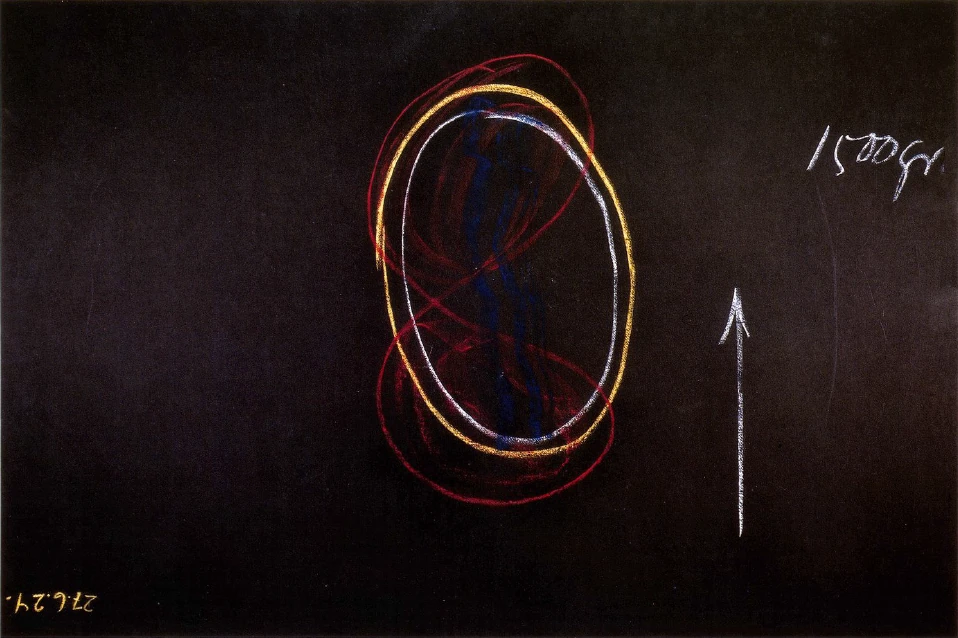
[ 5 ] Let us first turn to the “I” organization. When it withdraws upon waking, the “I” organization does not merely take hold of the etheric and physical bodies, but also takes hold of the external world—the forces of the external world—within the human body. What does that mean? Now imagine we have gravity acting in this way (see Plate 4). When we are awake, we stand upright in the direction of gravity. Simply create a mental image of gravity as it acts—that is, the direction of the gravitational forces. Now there are two mental images; let’s make this quite clear: one might consist in the fact that the “I”—leaving aside the etheric body for the moment—takes hold of the physical body; the physical body then submits to gravity, doesn’t it? We place ourselves within the force of gravity when we walk; we have to find our balance, and so on. That would be one mental image: upon waking, we take hold of the physical body with the “I”; the physical body is heavy and subject to the Earth’s gravitational pull, and now, with our physical body, we are subject to the Earth’s gravitational pull and thereby have an indirect relationship to physical gravity. That is one possibility. It is just as if I have an indirect relationship to gravity through the weight of the book when I pick up the book. That is one mental image; it is false, incorrect. The other mental image is this: the “I” slips into the physical body, takes hold of the physical body, but slips in so far that it makes the physical body weightless; and as the “I” slips into it, the physical body loses its gravity. So when I stand upright as a waking human being, gravity is overcome for my consciousness, for the “I” itself, for the “I”-organization, which also finds its physical expression in the thermal organism. There is no possibility of entering into an indirect relationship with gravity. The “I” enters into a direct relationship, places itself as the “I” within gravity, and thus bypasses the physical body. That is what this is all about. You continually place yourselves within the Earth’s actual gravity with the “I”-organization when you walk—not indirectly through the physical body—but by entering into a direct relationship with the telluric force.
[ 6 ] The same is true of the etheric body. The etheric body, too, is involved in forces. Let us consider one of these forces. I have often pointed out that, as human beings walking on Earth, we are subject to a very strong upward force. We have our brain, which weighs an average of 1,500 grams. If this weight of 1,500 grams were to press down on the base of our brain through the fine blood vessels, they would be crushed immediately. But it does not press down; in fact, it floats in the cerebrospinal fluid. As a result, it experiences buoyancy and loses an amount of weight equal to the weight of the displaced fluid. This displaced water has a weight that is approximately 20 grams less than the weight of the brain itself, so that the brain exerts a pressure of only 20 grams on its base. We therefore have a heavy brain, but it is not pressed down; rather, it experiences buoyancy. We live within this buoyancy; our etheric body lives within it. But as we slip into our etheric body with our “I”-organization, we do not stand indirectly within that buoyancy, but directly with the “I”-organization. Our human organization stands in relation to all the forces of the Earth, to the entire physical world—and indeed in a direct, immediate relationship, not an indirect one.
[ 7 ] Well, see, what is our “I”-organization related to? First of all, our “I”-organization is related to gravity—that is, to the earthly realm. For, my dear friends, what physicists call “matter” does not actually exist. In reality, only forces exist, and these forces are quite similar to, for example, gravity—there are, of course, other forces as well, such as certain electrical and magnetic forces—and the “I-organization” is in direct relationship with all of them and is present within the normal human being throughout the entire waking state. We can say that everything we associate with the earth consists of these forces. Everything we find beneath the earth’s surface—that which is in a state of equilibrium—is in direct connection with the “I”-organization. Everything that is gaseous—after all, in physics we must study not only ordinary mechanics but also hydromechanics and aeromechanics, because equilibrium processes and meteorological processes in the air take on their own specific forms—is in direct connection with the “I” organization. Furthermore, the “I” organization is connected to a part of the general thermal state, to a part of the general thermal forces, through which we always pass when we are in the live in the physical world. (See Plate 5):
| Ego-Organization: | Earth |
| Water | |
| Air | |
| Astral Body: | |
| Light | |
| Chemism | |
| Life Ether |
[ 8 ] I cross out “warmth” because it is only one part. — We awaken and place ourselves, as spirits with our “I” organization, into the world of earthly forces. Our relationship is, in reality, not a physically mediated one, but a magical one. It is just that this relationship can only be exercised spatially, purely limited by the boundaries of our organism. When you begin to understand that the relationship of our “I”-organization is not a physical one but a magical one, then you have gained a great deal.
[ 9 ] If we now turn to the astral body: the astral body is not merely connected to the etheric body, but stands in a direct relationship to certain forces that act upon us when we are awake. Well, this, in turn, is part of thermal energy; for heat acts in part upon the physical organism and in part upon the etheric organism. Then the astral body stands in direct relation to the forces of light. But you must understand that, in Spiritual Science, the forces of light are something different from what physics understands by the term today. We do not wish to go into theories, but isn’t it true that what the world around us perceives as illumination is naturally based on something—namely, in the ether—so that we can already say: Light is an etheric force. —In ordinary science today, we speak of light as being contained within what is illuminated. Spiritual Science speaks of light in this way: it also calls light that which underlies other sensory perceptions, such as the light of sound perceptions. When we have sound perceptions, conventional physics is generally tempted to speak only of the external correlate of sound perception—namely, moving air. Moving air is merely the medium of the actual sound element. The actual sound element is an ethereal one, and the vibration of the air is merely the effect of this ethereal vibration. Light also lives within the perception of smell. In short, underlying all perceptions is something far more general than light—than what is called “light” in physics today. It is certainly misleading—I admit that—to speak of light in this way. For, strictly speaking, this is how light was spoken of in ancient Spiritual Science up until the 12th and 13th centuries A.D. Then the understanding of it was lost, and attempts were made to use other terms, which, however, are even more incomprehensible. That is why the books on alchemy written after the 12th century are so incomprehensible. What is important for you to know is that this is called “light.” Through this light, the astral body is connected to everything that underlies sensory perceptions on Earth—not indirectly through the etheric body, but directly. This is particularly interesting. Outwardly, the light lives in the ether, but we also have an etheric element within us. The light acts upon the etheric body. But upon waking, we do not merely come into contact with this light within us; rather, bypassing this inner light, we integrate ourselves into the light streaming from without. The same is true of the external chemism that acts throughout the world. We also integrate ourselves into chemistry in a direct way. And this is particularly important, for it implies that, upon waking, the human being is integrated into a kind of cosmic chemistry. Now, our modern science knows only lifeless chemistry—at most, a little bit of organic chemistry—but it knows nothing at all of that chemistry which is a general cosmic chemistry. We become part of it when we wake up. And in the same way, we become part of the universal life of the world, of the life-ether; all of this happens directly.
[ 10 ] And what I have just outlined for you must be achieved if the human being, as I have described, gradually builds up his second body from the first and also builds up the third. All of this must be achieved by the human being diving deep within themselves, penetrating their own being, and entering into the earthly-cosmic forces. They must be able to grasp the world through themselves. In our science today, we have such a process clearly defined in only one field, where physics, in fact, proceeds in a manner similar to what one might wish for in many other fields. That is the organization of the eye.
[ 11 ] Think about it this way: when you look at the eye—just like a thick-as-a-club physicist would—as a physical device, a physical instrument: one draws exactly the same figures inside the eye—if one wants to understand the eye—depicting the refraction of light through the lens, the formation of the objective image, and so on—except that one cannot move on to the way in which the psychological intervenes in the physical. But the whole thing is terribly interesting. For now, when one proceeds in this physical manner, one has this entire diagram right there in front of one, and now one hesitates; now one wants to reach the spiritual realm by passing through the brain. Just take a look at these comical philosophical somersaults—all these interesting but, in fact, utterly foolish theories of psychophysical parallelism or interaction. In truth, it is precisely in the eye that the “I”-organization and the astral body come into direct contact with what we physically depict, grasping the physical within the eye. With the eye, then, we come close to grasping the true state of affairs because we are compelled to do so by this peculiar structure of the eye—because the eye lies almost on the outside and is incorporated from the outside during embryonic development. This is what happens with the eye. But the same is true for the whole human being. One would have to grasp the whole human being internally—physically and spiritually-physically—so that one can add the fleeting forces of light to the earthly forces. Within the human organism, one would have to recognize that which is actually present in the human being from the surrounding environment and which is so directly perceived by the human being—that which is physically constructed.
[ 12 ] But how can this situation arise in abnormal conditions? In an abnormal condition, something—any organ, though it cannot be the entire organism—may be in such a state that the person has no way of establishing a direct connection to the outside world through that organ. An organ can, so to speak, stand in the way, so that the person cannot establish a connection to the outside world through that organ. What must happen then? Take any organ (see Plate 5, right)—the lungs, for example; the lungs are positioned within the human organism in such a way that when the person wakes up, they cannot establish a connection to the outside world. But suppose a person is asleep, and something occurs in the lungs during sleep that organizes them in such a way that, if the person were to wake up now, they would be submerged in the lungs but unable to emerge into the outside world. Then their ego and astral body are compelled by the lung’s organization to press themselves into the lungs, but they cannot come out again. For it must be the case that the person submerges with their astral body but can emerge again in all directions into the world. The lungs must simply be able to provide the passage. Now, they do not provide the passage but hold the astral body and the “I” fast—that is to say, they would hold them fast if the person were to wake up. The problem is that under such circumstances, the person wakes up in any case, because what enters the lungs—due to the specific chemical composition—is an infiltration of some substance in a fine dispersion. The displaced tissue is filled with some fine substance that has a special affinity for the lungs. Then the lungs become irregular, and as a result, the person wakes up. But how? He wakes up, yet without regaining consciousness. To regain consciousness, it is necessary to emerge from it. One regains consciousness when one has penetrated through. If one has merely entered, one wakes up; if one penetrates through, one regains consciousness. One remains stuck there, and sleep—which is healthy unconsciousness—continues into pathological unconsciousness; that is, although the person wakes up, they do not regain consciousness.
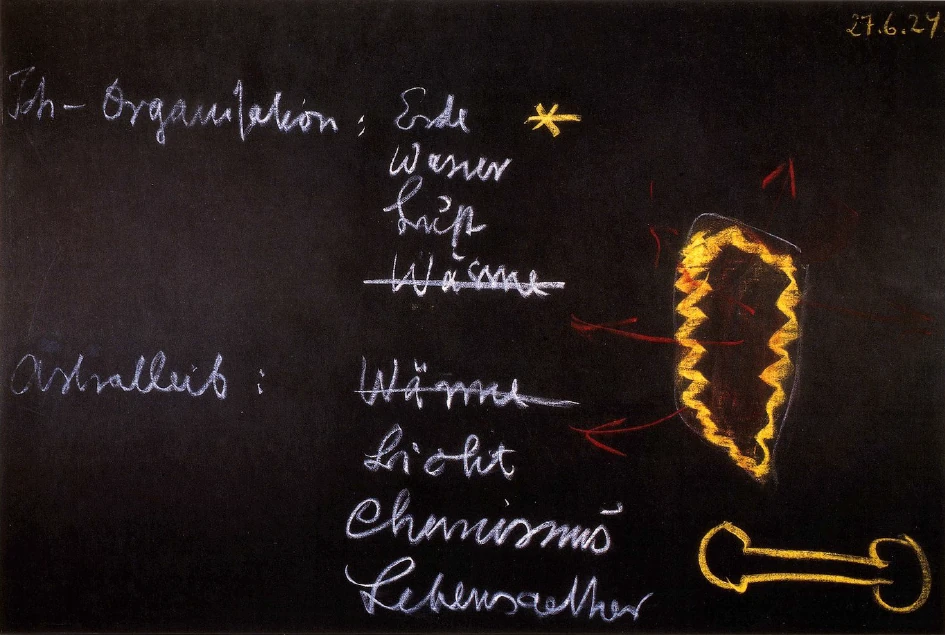
[ 13 ] As you can see, on the one hand, the condition of the epileptic is described precisely from within. Epilepsy is—and is especially so in childhood—as I have described it. So we must ask: What is actually happening in an epileptic? — What is actually happening in an epileptic is that, while their ego-organization and astral body can indeed submerge into the physical and etheric bodies, they are unable to emerge back into the physical world—they are held captive within it. Now just imagine: what is it actually like when the astral body enters—say, the lung—and is held there, unable to come out again? It is pressed against the surface of the lung. The astral body and the ego-organization are pressed there and become congested. You see, that is why, in such a case, a congestion of the “I”-organization and the astral body arises beneath the surface of the organs. This manifests in the outer world as a spasm. These are spasms. Every time a spasm occurs, an internal congestion takes place on the surface of some organ. These congestions are primarily found in the regions of the brain—and we know, of course, how the brain regions relate to the others—but they may well consist of something becoming congested in the liver or lungs, with the cerebral congestion being merely a projection, a weaker reflection. Every time a spasm occurs, one observes this congestion of the “I”-organization and the astral body within an organ. And only then does one arrive at the true cause of epileptic spasms, for which one otherwise has nothing but an external, descriptive account. One cannot truly understand this condition unless one is able to ascend from the physical and etheric bodies to the “I” and the astral body. Otherwise, one has no real understanding when speaking of convulsions if one does not know that, on the surface, the astral body and the “I” organization are terribly jumbled together. They cannot escape, so they press outward and are held back.
[ 14 ] If you now take what we have discussed here, you will naturally ask yourself: What should I do if symptoms of epilepsy are present in childhood—losses of consciousness associated with convulsions or their substitute symptoms, which we will discuss later? What can be done in each individual case? — In each individual case, one must, so to speak, proceed by instinct. One first tries to determine whether the disturbances of consciousness are very similar—as is certainly the case with some epileptics—to the symptoms of ordinary vertigo. The symptoms of vertigo occur. One will notice them in the child in their early stages. One will be able to discern this if, let’s say, the lapses in consciousness are only brief, but strongly noticeable symptoms of dizziness occur where something is somehow lacking. What is missing here is this: the ego organization and the astral body do not enter into a direct relationship with the forces of balance. You must first investigate whether this is the case with any child—that the ego organization and the astral body do not establish the proper relationship with the forces of balance. Now have the child do gymnastics or eurythmy, always providing them with external objects during these activities—such as the familiar dumbbells (see Plate 5, below) or similar items—and have them perform balance exercises in particular; have them do these balance exercises during the period between the loss of baby teeth and puberty. Then the child will still have the opportunity: if you give them two dumbbells of equal weight—though they must be precisely balanced, as in a pharmacy—and have them lift them while performing eurythmic movements or other gymnastic exercises with the dumbbells, then you will have accomplished something. Now place a dumbbell in the left hand that is lighter than the one in the right, have the child exercise again; then place a lighter dumbbell in the right hand than in the left, have the child exercise again; then tie something heavy—it doesn’t have to be particularly heavy—to one leg, and have the child walk with it so that they become aware of the force pulling on the leg. When they walk normally, they are not aware of the force; but they must engage their sense of self, and they will become aware of it immediately when you attach something to them. Then attach the weight to the other leg; then encourage them to approach the task more mentally, encourage them to feel and think their way into the movements—the extension of the left arm, the extension of the right arm, the extension of both arms; let it consciously perceive the heaviness by having it lift one leg while keeping the other on the ground. In short, in these cases—where you notice through the dizzy spells that the child is not fully engaging with earthly forces—you should have the child perform movements in which it is compelled to learn to master its external balance. Similarly, one will be led to treat children with epilepsy and epileptoid conditions by allowing them to integrate into the other forces.
[ 15 ] Well, isn’t that right? So far, so good. You will certainly achieve some results with certain epileptics in whom you observe, for example, that they have a disturbed circulatory system—that the circulation of bodily fluids is actually what causes the symptoms. So if you notice that the epileptic seizures—whether they occur as convulsions or even as episodes of dizziness—are accompanied by a particular sensation of nausea, then you are dealing with an inability to integrate with the water element. In such cases, it is advisable to make the child as aware as possible of the water element before it is absorbed into the organism, by preparing the child’s food in such a way that the child can strongly sense it. Externally, one might achieve some benefit by teaching the child to swim. Learning to swim is a very good remedy for people with epilepsy, but one must carefully consider the specific circumstances involved.
[ 16 ] For the actual clouding of consciousness that occurs—but without the person experiencing severe nausea—carefully regulated breathing exercises are helpful in establishing a connection with the air. And to ensure a proper connection with warmth, it is necessary to accustom children with epilepsy in particular to feeling warmth. That is to say, while it is already somewhat alarming even for ordinary children to let them walk around half-naked with their lower legs uncovered—which is, in fact, very often the cause of appendicitis, and even appendicitis in later life (though people are unaware of this)—this is downright toxic for children with epilepsy. Children with epilepsy should be dressed in such a way that they are always slightly inclined to sweat, so that sweating is always present to a small degree in its nascent stage, meaning they are dressed a little too warmly. This is actually a form of therapy. All this terrible talk of “hardening” leads to children being terribly hardened, and the result of this hardening is that, when they grow old, they cannot even walk across a sunlit marketplace without collapsing to their knees. You’re not hardened if you can’t walk across a sunlit marketplace unscathed. Just watch these gentlemen, gentlemen, as they take off their top hats when they walk across a sunlit marketplace and keep wanting to sink to their knees. These are, as a rule, the consequences of today’s “hardening” practices.
[ 17 ] So far, we have mainly addressed the factors that, particularly during childhood, guide the organization of the ego into the elements into which it must be guided. But this is already the realm where the physician must directly engage with the pedagogical aspect. For in these matters, when epileptic symptoms are present, we can only address the issue through the use of remedies, and we must not shy away from addressing the issue through the use of remedies. As soon as the epileptic symptoms are linked—particularly to that with which they are linked—when the astral body is primarily involved, that is, when the higher, etheric elements are preventing the astral body from penetrating the external world, then we must indeed act upon these elements within the human being themselves. And the point here is that we must truly find the way—but above all, first determine whether the astral body is involved or not.
[ 18 ] And how do we recognize whether the astral body is engaged? Well, anyone who has observed many children with epilepsy or an epileptoid disposition will notice two very different states. One set consists of those states in which—I would say—the child does not pose a challenge to moral judgment, because the child conforms to what one seeks to teach every child in moral terms. So when dealing with epileptic or epileptoid children who readily conform to the moral order of the world, one might perhaps stop at what I have said. But when dealing with children who become impervious to moral principles—who, for example, easily become violent during their seizures—since epileptic seizures can be masked by acts of violence on the part of the child, of which the child often has no memory—when this occurs, that is, when defects of a moral nature appear, then the point is to intervene during childhood with genuine remedies, so that one actually attempts, for example, to combat epilepsy with the remedies that are generally used or that we recommend in certain contexts—such as sulfur or belladonna—and initiates a regular course of treatment. Well, we will discuss this more medical aspect later. Today I would simply like to point out how one must transition, based on external observations, from a more pedagogical approach to a more medical one. And in the case of certain children with epilepsy, it will certainly be necessary—precisely because they are quite well integrated into the external world—to avoid external exercises and to work primarily through internal therapy.
[ 19 ] Now, this is also the point where the epileptic symptoms gradually give way to other symptoms. Yesterday I spoke about how thoughts cannot actually be wrong, and now I have been speaking continuously about this way in which human beings integrate their thoughts. A phenomenon such as the astral body becoming congested in the lungs is due to the fact that the thought of the lungs is not properly integrated. So these are all defects of thought. They occur when we are unable, as we descend, to control our organism in the right way so that we can rebuild it the second time around. But we also bring with us from our previous earthly life the volitional aspect that is distributed among the individual organs. Now, if thoughts cannot be wrong at all—but are always correct—and merely appear distorted within us due to our organism, and can thus also lead to the distorted development of organs, then the will, as it enters earthly existence from pre-earthly existence, can hardly be correct. It arrives in a state of complete uncertainty and must develop itself within the thought system. With the system of thought, it is the case that it is nowhere in the world incorrect; with the system of will, it is the case that it can hardly be correct in any way unless the human being does something about it. Under all circumstances, the human being brings an incorrect system of will into the world. And this means that we never descend into the world—by becoming physical human beings—with morality. We must first acquire morality little by little. What constituted morality in our previous incarnation—which we needed between death and rebirth, when we were engaged in our wise building—we have long since lost; we must always reacquire morality anew in every single earthly life. This means that something very significant is now taking place: now, as we enter from our pre-earthly existence in an amoral state, we must develop a sense within our will; we enter our physical bodies with our will, and we must develop a sense within our will for what is presented to us morally.
[ 20 ] It is truly remarkable how, as a child learns to speak, moral impulses flow into the child. That is why it is of such immense importance for us to recognize that imitation extends even into the most intimate aspects of a child’s being. It is very significant that this be taken into account: for if the educators and parents in the child’s environment are immoral or speak immorally, it is not the outward action but the immoral content that is imitated and absorbed into the child’s deep inner organization. So the point is that we also relate to the outside world, but indirectly through the entire organism, not through individual organs. And when a blockage occurs, it arises because—just as we previously could not project our thoughts everywhere—we are unable to project our will here. And this manifests itself in moral defects. Now you can see the inner causes of moral defects: when what comes from pre-earthly existence—which is meant to break through and find its way—becomes blocked within the entire human organism, preventing it from finding its passage to the moral judgment of our environment. We must be able to assimilate the morality of our environment. Under certain circumstances, we cannot do this if our spiritual-soul organization becomes blocked, if we get stuck within it—within the physical organization—if we cannot break through with our spiritual-soul organization.
[ 21 ] Well, you see, the point is that we are, in fact, dealing entirely with the moral realm. But this must also be recognized in the right way. When you are dealing with actual epileptic manifestations—as indicated by the symptoms I have mentioned, such as dizzy spells, loss of consciousness, and so on—you will have to diagnose them based on such phenomena that occur in humans, even if only temporarily. If you wish to recognize moral defects in the moral realm, then you must not focus on the temporary symptoms, but rather on the lasting symptoms.
[ 22 ] What are the main disturbances, and how can they arise? Of course, everything is determined by karma; one must consider two aspects: the nature with which a person presents themselves, and their karmic conditioning. Now imagine that the embryo is positioned within the organism in such a way that it is compressed here, so that the brain develops too narrow for the rest of the organism. Now you must bear this in mind: during childhood development, because of the underdeveloped brain, the brain’s radiations—which are particularly important from the seventh to the fourteenth year of life—are disrupted and blocked, because what becomes blocked here is reflected in the function of the spleen. What is the consequence? The consequence of this blockage is that the child does not develop any inner sympathy for anything that constitutes a moral judgment; the child lacks sympathy for it. Just as colors are absent for a color-blind person, so too are the moral impulses—which lie in our speech and our admonitions—absent for certain children. The child thereby becomes morally blind. And it is then our task to remedy this moral blindness. — Thus, if we proceed carefully, we will always be able to find a remarkable symptom in external deformities. And one will always find many arguments raised against the charlatanism of all phrenology, but to assess moral defects, everyone should actually study genuine phrenology. For it is indeed interesting to see that moral defects related to karma—that these are such powerful forces where karmic immorality exists—inevitably manifest as deformities of the physical organism.
[ 23 ] But on the other hand, experiments in curative education are particularly appropriate in this very field, and if one possesses the qualities mentioned yesterday—that inner courage and the willingness to face decisions—one will also be able to draw the necessary inner strength from the reminders one then needs. Inner strength is needed for this. I have often made it clear through a specific example that healing can take place. You see, a very well-known German poet once had his head examined by a phrenologist. He was already a famous poet. And the phrenologist, who had expected to find all sorts of interesting things, suddenly turned deathly pale when he felt a certain spot, and he didn’t dare say another word, even though he was usually quite talkative when it came to interesting matters. The poet began to laugh and said, “I know—you’ve discovered the ‘thief’s instinct’; I’ve had that in spades!”—He had discovered that the man in question could have become a kleptomaniac. Now he has transformed that kleptomania into poetry.
[ 24 ] That is precisely where one must approach things as I explained yesterday; and, in fact, from the very beginning, one must not judge these things the way one normally does. For you see, the fact is this: when one faces a human being, one finds that their human qualities have developed primarily toward two poles—the pole of the more intellectual and imaginative, and the pole of the volitional. Indeed, the imaginative aspect is diseased, if not a thief—and a very prolific thief at that. The brain’s imaginative organization must be a terrible thief; it must not apply morality to what it is meant to take in. It must have the purpose of appropriating everything. That is one pole. And one is simply inclined toward either epilepsy or something else if one does not explore every direction with the imaginative organization. But for heaven’s sake, this must not slip down into the volitional organization! The will must be restrained; it must be receptive; it must have a sense of “mine” and “yours,” which is only developed through external life. Think about it: animals, which live more in the realm of imagination than humans do, would constantly starve if they did not have the impulse to appropriate everything. One must see through these things. This must not slip down into the organization of the will; it must remain within the subtle realm of imagination. If I may put it this way, when the astral infiltration of our brain—which is entirely justified in appropriating everything—slips down into the metabolic-limb organization or into the rhythmic system, then a tendency arises in the will that must be present in the imaginative organization: this urge to appropriate everything arises. It can manifest in a relatively harmless way, which you can observe when a child begins to pick up everything it finds and start a collection of it. Of course, we constantly combat such things; that is why they do not appear so blatantly. One must get into the habit of recognizing the predisposition toward this. Certainly, the child usually does not act on it because one begins to beat the child. But one must pay close attention to whether the child has this tendency to set things aside or hoard them in some way, and one must have a sense of where the pathological aspect begins. The pathological aspect begins when it goes beyond a certain limit. Philistinism has many facets, but it lacks judgment regarding how much one is allowed to collect, unless there is a specific reason to do so. One can be a grandiose philistine and collect postage stamps; in that case, the collecting mania is more harmless. But when it occurs in a child as imitation, then this indicates that the child has carried this act of appropriation down into the sphere of the will. The real issue here is that you must carefully discern whether kleptomania stems from karmic-moral defects, that you must view it within the context I described yesterday, and approach the child from such a state of mind by providing moral education as effectively as possible with tremendous inner vitality—not with indifference. With inner vitality, one invents stories that reduce what the child does in life to absurdity. One tells the child a story about stealing and repeats it again and again. This actually intervenes in the karma.
[ 25 ] Here one works through the approach of curative education, which can remain within the realm of morality if one is truly fully engaged, if one takes a genuine, individual interest in how things are done. Every kleptomaniac is extraordinarily interesting. Imaginative traits have seeped into him right down to the tips of his toes and fingers. Of course, one must be aware of this if one wants to educate him. Under certain circumstances, one must weave into the stories gestures that the kleptomaniac likes to make. One puts oneself completely in this situation, inventing legends and fairy tales in which these things are taken to absurd extremes.
[ 26 ] Think about it—we’ll also be presenting cases of kleptomania. Keep thinking things through, and you’ll see that this is precisely how you’ll move from diagnosis to therapy in this field.