

Remedial Education Course
GA 317
6 July 1924, Dornach
Translate the original German text into any language:
Versions Available:
Remedial Education Course, tr. SOL
Elfter Vortrag
Eleventh Lecture
[ 1 ] Nun wollen wir noch die Fälle besprechen, die gestern nicht zur Sprache gekommen sind. Es war noch ein jüngeres Mädchen von zehn Jahren da, das litt an Gedächtnisschwund. Es ist erst in der zweiten Schulklasse. Es hat Wucherungen im Nasenrachenraum; das hängt zusammen mit dem zu starken ätherischen Wuchern in der Blasengegend, das sein Spiegelbild hat im Kopf. Bei dem Mädchen konnte man ja tatsächlich auf den physischen Ursprung der Minderwertigkeit kommen. Das Mädchen ist zehn Jahre alt, ist also in einem Stadium, von dem ich immer angebe, daß es besonders wichtig ist, wie sich der Erzieher zu einem solchen Kinde verhält.
[ 1 ] Now let’s discuss the cases that weren’t addressed yesterday. There was also a younger girl, ten years old, who suffered from memory loss. She is only in second grade. She has growths in the nasopharynx; which is related to excessive etheric growth in the bladder region, which has its counterpart in the head. In this girl’s case, one could indeed trace the physical origin of her developmental delay. The girl is ten years old, and is therefore at a stage where, as I always emphasize, the educator’s attitude toward such a child is particularly important.
[ 2 ] Nun natürlich hat das Mädchen alle Antezedenzien, die zu diesem Zeitpunkte hinführen, ja verschlafen. Die entzündlichen Erscheinungen in der Nähe der Blasengegend, die ihr Spiegelbild im oberen Organismus haben, die zeigen ja ganz deutlich, daß sich der Ätherleib in dem Organismus nicht in richtiger Weise einlebt, weil das Zusammenarbeiten mit dem Astralleib eben nicht ordentlich stattfinden kann. Sie müssen nun natürlich immer ins Auge fassen, daß alles dasjenige, was so vor sich geht, wenn es sich ausdrückt im seelischen Organismus, daß es dann in der feineren Organisation begründet ist, daß also sozusagen die grobe Organisation nicht auf die Spur führen kann. Natürlich kann man leichter etwas in der oberen Organisation bemerken als in der unteren Organisation. Aber wenn man einem solchen Kinde, dessen ÄÄtherleib durch den defekten Astralleib nicht ordentlich funktioniert, so daß nicht hineindringt in die Organisation dasjenige, was es aufnimmt, wenn man einem solchen Kinde beikommen will, so handelt es sich darum, daß man möglichst das, was Eindruck machen soll auf das Kind, verstärkt, daß man mit starken Eindrücken für ein solches Kind arbeitet. Sie müssen das bedenken: das Gedächtnis hängt ja an einer ordentlichen Organisierung von physischem Leib und Ätherleib. Der Astralleib und das Ich nehmen ja nicht mit dasjenige, was von Eindrücken erinnerungsmäßig festgehalten wird. Träume treten ja auch erst auf, wenn eine teilweise Einlagerung des Astralleibes und des Ich in den physischen und Ätherleib stattfindet. Also für das Ich und die astralische Organisation ist ja eigentlich alles vom Einschlafen bis zum Aufwachen vergessen. Es lagert in dem, was im Bette übrigbleibt. Wenn nun das, was da übrigbleibt, nicht ordentlich organisiert ist, so einverleibt es sich nicht die Reste, die Überbleibsel der Eindrücke, und es wird sich in einem solchen Falle darum handeln, daß man zunächst starke Eindrücke hervorruft, um die obere in der unteren Organisation, ich meine das Ich und den Astralleib im Ätherleib und physischen Leib zur tatkräftigen Wirksamkeit zu bringen.
[ 2 ] Now, of course, the girl has completely overlooked all the antecedents leading up to this point. The inflammatory symptoms near the bladder region, which have their counterpart in the upper organism, clearly show that the etheric body is not properly integrating into the organism because the interaction with the astral body simply cannot take place properly. Of course, you must always bear in mind that everything that takes place in this way—when it expresses itself in the soul organism—is rooted in the finer organization; thus, so to speak, the gross organization cannot provide a clue. Naturally, it is easier to notice something in the higher organization than in the lower organization. But if one wishes to help such a child—whose etheric body does not function properly due to a defective astral body, so that what the child takes in does not penetrate the organism—then the task is to intensify, as much as possible, the impressions intended for the child and to work with strong impressions for such a child. You must bear this in mind: memory, after all, depends on the proper organization of the physical body and the etheric body. The astral body and the “I” do not, in fact, take with them what is retained in memory from impressions. Dreams, after all, only occur when the astral body and the ego are partially embedded in the physical and etheric bodies. So for the ego and the astral organization, everything from falling asleep to waking up is actually forgotten. It remains stored in what is left behind in bed. Now, if what remains there is not properly organized, it does not incorporate the remnants, the residues of the impressions; and in such a case, the first step is to evoke strong impressions in order to bring the higher organization—that is, the “I” and the astral body—into active operation within the lower organization, namely the etheric and physical bodies.
[ 3 ] Nun weiß ich nicht, ob es schon versucht worden ist, sein Gedächtnis nach einfachen Volksmelodien zu prüfen?
[ 3 ] Now, I don't know if anyone has ever tried testing one's memory using simple folk melodies?
Dr. Ilse Knauer: Das geht leichter.
Dr. Ilse Knauer: It's easier that way.
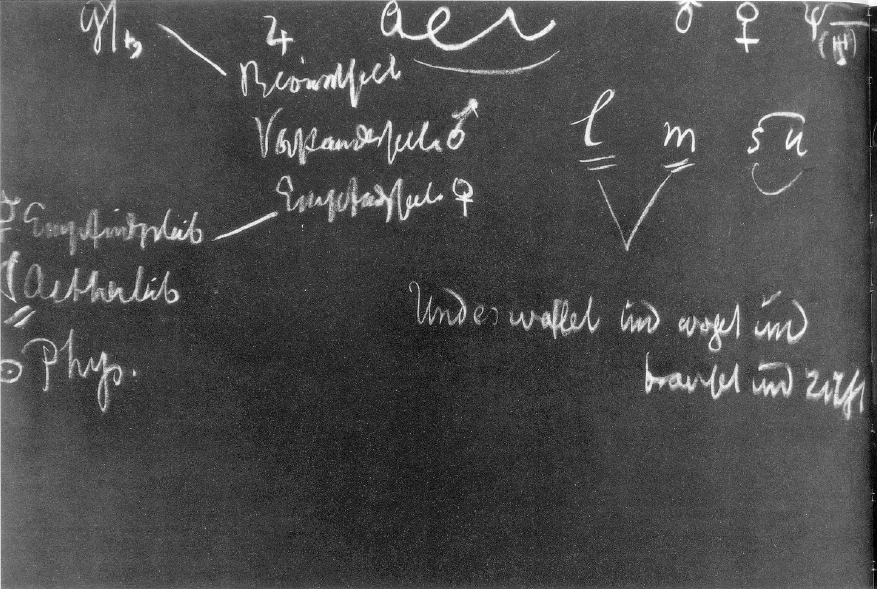
[ 4 ] So versuche man einmal auf der Grundlage dieser vorhandenen Eindrucksfähigkeit weiterzuarbeiten, von da ausgehend zum Beispiel die Aufmerksamkeit zu lenken auf solche kleinen Gedichte, in denen ein bestimmtes Motiv nach je drei Zeilen immer wiederkehrt, so daß das Kind einen starken Rhythmuseindruck empfängt und damit dann der Zeitpunkt heranrückt, in dem man auch rhythmenlose Eindrücke an das Kind heranbringen kann. Es ist nicht anzunehmen, daß der Zeitpunkt, in dem man etwas erreichen kann in diesem Falle, kürzer sein wird als drei bis vier Jahre, bis zur Geschlechtsreife. Wenn nach diesen Gesichtspunkten gearbeitet wird bis zu diesem Zeitpunkte, namentlich wo rhythmische Eindrücke wirken können, und von da aus das andere erarbeitet wird, kann man erzieherisch etwas erreichen. Die Therapie haben wir schon festgestellt: es sollte Umschläge bekommen mit Berberis vulgaris zehn Prozent und Heileurythmie L M S-U (Tafel 13).
[ 4 ] So let us try to continue working on the basis of this existing receptivity, using it as a starting point, for example, to direct attention to those short poems in which a certain motif recurs every three lines, so that the child receives a strong sense of rhythm, and thus the time approaches when one can also introduce non-rhythmic impressions to the child. It is unlikely that the time required to achieve results in this case will be less than three to four years, until sexual maturity. If one works according to these principles up to that point—particularly where rhythmic impressions can take effect—and builds upon that foundation to develop other aspects, one can achieve educational results. We have already established the therapy: the child should receive compresses containing 10 percent Berberis vulgaris and therapeutic eurythmy LMS-U (Table 13).
[ 5 ] Sie sehen ja: es ist auch da die Anschauung zugrunde liegend, daß das Gestaltende, das sich Anschmiegende in die Beweglichkeit des Astralleibes hineinkommt, dem M entgegenkommt. DasM ist dasjenige, was, wie ich Ihnen gesagt habe, den ganzen Organismus in die Ausatmung hineinlegt, so daß sich dadurch astralische und ätherische Organisation begegnen sollen. Das S ist dazu da, um den Astralleib in eine starke, lebendige Tätigkeit zu versetzen, aber doch so, daß er an sich hält, und dazu ist dann das U. Diese Dinge ergeben sich dann im unmittelbaren Anblicke, wir rufen sie hier wiederum zurück. Daß das Kind Umschläge mit Berberis vulgaris erhält, das beruht darauf, daß wir nötig haben, die entzündlichen Ursachen zu neutralisieren, und das kann auf diese Weise geschehen.
[ 5 ] As you can see, the underlying concept here is that the formative, the clinging element enters into the mobility of the astral body and meets the M. M is that which, as I have told you, places the entire organism into the exhalation, so that the astral and etheric organizations may thus meet. S is there to set the astral body into a strong, lively activity, but in such a way that it remains true to itself, and that is what U is for. These things become clear upon direct observation; we are recalling them here once again. The reason the child receives compresses with *Berberis vulgaris* is that we need to neutralize the inflammatory causes, and this can be achieved in this way.
[ 6 ] Dann haben wir gehabt einen sechzehnjährigen Jungen, der Kleptomane war, der genau ein Bild des kleptomanen Knaben abgibt, der hier vorgeführt worden ist. Da haben Sie in der Vorführung das allerbeste Beispiel gehabt. Er ist typisch genau so zu behandeln. Man wird nur sehen müssen, ob die Eindrücke, die man ihm gibt, an dieses oder jenes anknüpfen können. Es kann, je nachdem was die Kinder vorher als Erziehung genossen haben, Verschiedenes sein.
[ 6 ] Then we had a sixteen-year-old boy who was a kleptomaniac—he was the spitting image of the kleptomaniac boy presented here. You saw the very best example of this in the presentation. He should be treated in exactly the same way. We’ll just have to see whether the impressions we give him can build on this or that. Depending on the kind of upbringing the children have had previously, it could be different things.
[ 7 ] Nun bleibt das Kind aus Stuttgart, das eigentlich ein zappeliges Kind ist. Es ist ein schläfriges, zurückgebliebenes Kind. Es ist noch nicht alt, es hat nicht sprechen gelernt, es ist in alle dem zurückgeblieben, was gerade in der ersten Lebensepoche heranerzogen werden soll. Es ist also sehr leicht zu begreifen, woran es bei diesem Kinde fehlt: es griff nicht hinein in das Imitationsprinzip, es biß nicht an auf das Imitieren. Das heißt mit andern Worten: es kann seine Organe vom Ich und Astralleib aus nicht in Bewegung bringen. Es ist ein außerordentlich liebenswürdiges Kind, aber es kann die Ruhesehnsucht seines physischen Leibes eigentlich außerordentlich schwer überwinden. Nun wird das Kind so behandelt werden müssen, daß es zunächst einmal Toneurythmie treibt. So wird es vorwärtsgebracht werden können. Ich kann nur das Ideale an der Sache angeben. Wenn es in ordentlicher Weise Toneurythmie treibt, so kann es zunächst dahin kommen, daß es in seinem Astralleib so angeregt wird, daß der Rhythmus dann den Ätherleib ergreift.
[ 7 ] Now there is the child from Stuttgart, who is actually a restless child. He is a sleepy, developmentally delayed child. He is not yet old; he has not learned to speak; he has fallen behind in everything that is supposed to be learned during the first stage of life. It is therefore very easy to understand what this child lacks: it did not engage with the principle of imitation; it did not take to imitating. In other words: it cannot set its organs in motion from the “I” and the astral body. It is an exceptionally endearing child, but it actually finds it extremely difficult to overcome its physical body’s longing for rest. Now, the child will have to be treated in such a way that, first of all, it practices tone eurythmy. In this way, it will be able to make progress. I can only describe the ideal in this matter. If it practices tone eurythmy properly, it can initially reach a point where its astral body is stimulated to such an extent that the rhythm then takes hold of the etheric body.
[ 8 ] Dann handelt es sich darum, daß man das Kind nachsprechen läßt rhythmische Sätze, so daß das Kind wirklich in den Ton hineinfällt: «Und es wallet und woget und brauset und zischt.» Nun handelt es sich darum, daß man so etwas: «Und es wallet...» mit dem Kinde sachgemäß langsam durchnimmt, langsam hin und rückwärts. Ich sage in diesem Falle absichtlich «wallet» statt «siedet», weil es zu therapeutischem Zwecke verwendet wird. Immer so langsam vor- und rückwärts. Und womöglich macht man das jetzt auch bei folgendem Lautzusammenhang. Das Kind ist innerlich aufzuwecken auf diese Weise, daß wir es in die Verwunderung bringen: A intonieren lassen, dann E I, dann zurück IEA-AEI-IEA und so weiter. So weckt man solch ein Kind allmählich auf, und es wird da doch durch das Nachahmungsprinzip wiederholen. Sie müssen nur das Kind einzeln vornehmen und danach trachten, daß in alledem, was Sie durchnehmen, Imitation liegt, immer das Kind in einem kurzen Zeitpunkt nachintonieren lassen.
[ 8 ] The point is to have the child repeat rhythmic phrases so that the child truly gets into the rhythm: “And it surges and swells and roars and hisses.” Now the point is to go through something like “And it surges...” with the child properly and slowly, slowly back and forth. In this case, I deliberately say “surges” instead of “boils” because it is used for therapeutic purposes. Always so slowly back and forth. And if possible, do the same with the following sequence of sounds. The child’s inner awareness is to be awakened in this way, so that we evoke a sense of wonder in them: have them intonate “A,” then “E I,” then back again “IEA-AEI-IEA,” and so on. This is how you gradually awaken such a child, and through the principle of imitation, the child will repeat it. You simply need to work with the child individually and ensure that imitation is present in everything you go through, always letting the child repeat the sounds shortly afterward.
[ 9 ] Dann würde es sich darum handeln, daß man bei diesem Kinde auch therapeutisch vorgeht, und zwar so, daß man zusammenwirken läßt ein Auseinandertreibendes, etwas, was die Substantialität des Organismus in den Umfang treibt, ein Zentrifugales — das ist immer die Hypophyse, aber das Kind ist ja eigentlich nicht so, daß man Hypophyse auf es anwenden muß, wie man sie anwendet, wenn man es zu tun hat mit rachitischen Kindern, bei denen man mit der Hypophyse auf das Auseinandergehen wirken will, sondern es handelt sich darum, daß man auch das gegenteilige Prinzip, das Zentripetale, in Anwendung bringt, was mit der Hypophyse zusammen die Tendenz hat, den menschlichen Organismus aus dem Substantiellen heraus aufzubauen, und das ist entweder Carbo vegetabilis oder Carbo animalis. Es würde sich darum handeln, Carbo animalis anzuwenden und dieses zu alternieren, so daß man das Formprinzip in der Carbo animalis hat, und das andere Mal das Organisationsprinzip, das ins Wachstum schießen läßt, daß man das in der Hypophysis cerebri hat.
[ 9 ] Then the approach would be to treat this child therapeutically, specifically by allowing a divergent force—something that drives the organism’s substance outward—a centrifugal force—to act. This is always the pituitary gland, but the child is not actually in a condition where one must apply the pituitary gland to it in the same way when dealing with rickets-afflicted children, in whom one seeks to use the pituitary gland to promote expansion—but rather, it involves applying the opposite principle, the centripetal force, which, together with the pituitary gland, tends to build up the human organism from the substantial level, and that is either Carbo vegetabilis or Carbo animalis. The approach would be to use Carbo animalis and alternate it, so that one time one has the formative principle in Carbo animalis, and the next time the organizational principle that stimulates growth, which is found in the pituitary gland.
[ 10 ] Nun natürlich, für den Anfang eines solchen Erziehungsinstitutes ist ja die Hauptsache, daß diejenigen, die daran teilnehmen, alles dasjenige, was sie vornehmen, beobachten. Es handelt sich schon darum, daß man mit einer gewissen inneren Vertrauenskraft die Sache leitet. Sehen Sie, bei diesem Kinde wird das Schlimmste nicht das Kind sein bei dem werden Sie bald Fortschritte bemerken -, aber das Schlimmste sind in einem solchen Fall die Eltern, die Mutter, die ganz gewiß die Meinung hat, daß man schnell Wunder wirken soll. Nun habe ich sogar gehört, daß die Mutter mit will mit dem Kinde,
[ 10 ] Well, of course, when starting such an educational institution, the most important thing is that those involved pay close attention to everything they do. It is a matter of managing the situation with a certain inner sense of confidence. You see, with this child, the worst part won’t be the child—you’ll soon notice progress with him—but the worst part in a case like this is the parents, the mother, who is absolutely convinced that miracles should happen quickly. Now, I’ve even heard that the mother wants to go with the child,
Zwischenruf: Sie bringt es nur hin.
Interjection: She's the only one who can pull it off.
[ 11 ] Nun, das ist schon eine Erleichterung, wenn man die Mutter nicht da Tafel 13 bei hat. Aber jedenfalls muß man in einem solchen Falle mit einer gewissen Zähigkeit sich aufrechterhalten gegen die begreiflichen, aber zuweilen furchtbar unverständigen Forderungen der Eltern, die nicht wissen und auch nicht wissen können, was bei einem solchen Kinde notwendig ist.
[ 11 ] Well, it’s certainly a relief when your mother isn’t there with you on Plate 13. But in any case, in such a situation, one must stand firm with a certain tenacity against the understandable—but at times terribly misguided—demands of the parents, who do not know, nor can they know, what such a child needs.
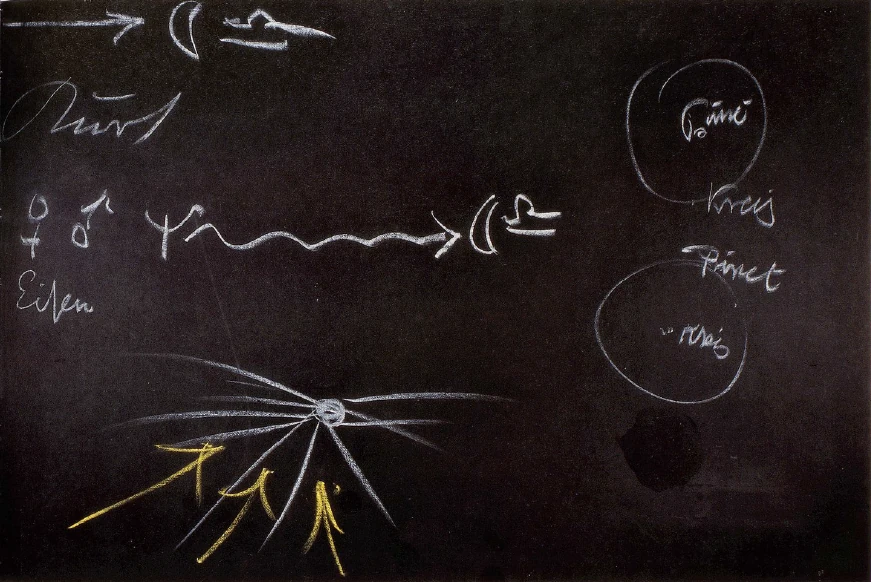
[ 12 ] Nun, nicht wahr, ist es bei einem solchen Kinde ganz gut, wenn man es auch physisch in jene abwechselnden Lagen bringt, die durch so etwas angedeutet sind wie AEI-IEA und so weiter. Und das können Sie sehr gut dadurch hervorrufen, daß Sie es abwechselnd und verhältnismäßig kurz in mäßig warmes Wasser bringen und dann ihm eine mäßige Dusche geben. Dadurch bringen Sie in Lebendigkeit dasjenige, was in Lebendigkeit kommen soll. Es wird überhaupt, wenn Sie sehen, daß die Abnormität sich in Trägheit auslebt, diese letztere Maßregel immer von einer guten Wirkung sein, nur daß man sie nicht übertreibt. Man darf aber auch keine Angst davor haben, wenn die Kinder unmittelbar, nachdem man begonnen hat mit einer solchen Badekur, etwas aufgeregt werden. Das geht vorüber. Die Reaktion kommt schon, es stellt sich allmählich ins Richtige hinein.
[ 12 ] Well, isn't it true that with a child like this, it's quite beneficial to physically place them in those alternating positions indicated by terms such as AEI-IEA and so on? And you can achieve this very well by alternately immersing the child for relatively short periods in moderately warm water and then giving him a moderate shower. In this way, you bring to life what is meant to come to life. In general, if you see that the abnormality is manifesting as lethargy, this measure will always have a beneficial effect—provided, of course, that you do not overdo it. However, you should not be alarmed if the children become somewhat agitated immediately after you begin such a bathing regimen. This will pass. The reaction will come, and things will gradually fall into place.
[ 13 ] Nun ist noch Kurt H. zu besprechen. Der Kurt H., der sieht alles in Farben. Das ist der Junge, der kein Geld hat-ich habe ihn jetztschon vor mir. Bei diesem Jungen liegt ein Grundphänomen vor, das ist nämlich so: er kann nicht recht an die äußere Welt herankommen, er bleibt in sich stecken. Ich muß Ihnen dieses Phänomen so erklären, daß es ganz plastisch erklärt wird. Er kann nicht hinein in die Außenwelt, dadurch stößt er fortwährend von innen her mit seiner Ich-Organisation an seinen eigenen Astralleib heran und hat eine innere Ungeschicklichkeit dadurch, vielleicht besser gesagt, eine innere Schlampigkeit. Und dieses geht Hand in Hand damit, daß er eine feine Empfindlichkeit entwikkelt bei diesem Anstoßen an seinen Astralleib und daß er dadurch etwas hat von einem feinen Menschen. Das hängt zusammen mit dem Farbensehen. Er sieht sie, weil er wachend in seinem eigenen Astralleib leben kann. Nun ist es so bei ihm, daß er erzogen werden kann nur dadurch, daß man die Dinge, die immer mehr sich ausbilden werden, schaut: eine gewisse leise Sehnsucht nach Idealen, dabei aber wieder ein Zurückzucken, so ein Nicht-Zurechtkommen mit der Welt. Nun wird alles davon abhängen, daß man gerade bei diesem Jungen, der ganz so unterrichtet werden kann, wie die Waldorfschul-Methodik ist, daß man das naturgemäße Vertrauen zu ihm faßt. Es kann eigentlich gerade mit diesem Jungen kaum etwas anderes gemacht werden. Nicht wahr, der Junge hat die Eigentümlichkeit, daß er etwa so schreibt (siehe Tafel 14, links). Nun gehen Sie daran, sorgfältig darauf zu achten, daß der Junge eine fein modellierte Handschrift aus seiner jetzigen herausbekommt, dann werden Sie schon sehen, dann wird er schon in seiner ganzen inneren Konstitution umgewandelt erscheinen. Wenn Renommagebestrebungen auftreten, so versuchen Sie sofort, das aus dem Vertrauen heraus, das er zu Ihnen gewonnen hat, ad absurdum zu führen durch irgend etwas.
[ 13 ] Now we must discuss Kurt H. Kurt H., who sees everything in colors. That’s the boy who has no money—I can picture him right now. This boy exhibits a fundamental phenomenon, which is this: he cannot quite connect with the external world; he remains trapped within himself. I must explain this phenomenon to you in a way that makes it very vivid. He cannot enter the external world; as a result, he constantly pushes against his own astral body from within with his ego organization, and this gives him an inner clumsiness—or perhaps it would be better to say, an inner sloppiness. And this goes hand in hand with the fact that he develops a subtle sensitivity through this contact with his astral body, and that as a result he possesses something of a refined person. This is connected to his perception of colors. He sees them because he is able to live awake within his own astral body. Now, in his case, he can be educated only by observing the qualities that will increasingly develop in him: a certain quiet longing for ideals, yet at the same time a shrinking back—a sense of not quite fitting in with the world. Now everything will depend on having natural trust in this particular boy—who can be taught exactly according to the Waldorf school methodology. In fact, there is hardly anything else that can be done with this boy. Isn’t it true that the boy has the peculiarity of writing something like this (see Plate 14, left)? Now set about carefully ensuring that the boy develops a finely formed handwriting from his current style; then you will see—he will appear transformed in his entire inner constitution. If attempts at showmanship arise, try immediately—drawing on the trust he has gained in you—to reduce them to absurdity through some means.
[ 14 ] Nun sprach ich gestern von den Albinos. Ich führte die Betrachtung so weit, daß ich sagte: Wir müssen nun den kosmischen Impuls finden, der da wirken kann. — Nun, da können wir ja zunächst die Fachpersönlichkeit für solche kosmische Konstellationen einmal fragen, ob ihr bei diesem oder andern Horoskopen etwas Besonderes aufgefallen ist, das diese Albinos gemeinsam hätten.
[ 14 ] Yesterday I spoke about albinos. I took the discussion so far as to say: We must now find the cosmic impulse that can be at work here. — Well, we can start by asking the expert on such cosmic constellations whether she has noticed anything special in this or other horoscopes that these albinos might have in common.
Zu Dr. Elisabeth Vreede:
About Dr. Elisabeth Vreede:
[ 15 ] Ist Ihnen aufgefallen, daß unter den äußeren Planeten Uranus und Neptun stark hervortreten?
[ 15 ] Have you noticed that, among the outer planets, Uranus and Neptune stand out prominently?
Dr. Elisabeth Vreede: Ja, da sind viele Aspekte. Sonst könnte ich nichts über die Horoskope sagen.
Dr. Elisabeth Vreede: Yes, there are many aspects to it. Otherwise, I wouldn't be able to say anything about horoscopes.
[ 16 ] Ich frage absichtlich Sie, weil Sie oftmals nachdenken über Horoskope und eigentlich wahrscheinlich solche Dinge oftmals im Kopfe gehabt haben. Ich habe zunächst von Ihnen nur diese zwei. Da es sich um ein neues Gebiet handelt, ist es das Beste, in dieser Sache ganz heuristisch vorzugehen, Es gibt eine Menge anderer Dinge noch, die in Betracht kommen, aber man hat zunächst zu berücksichtigen das Folgende noch.
[ 16 ] I’m asking you specifically because you often think about horoscopes and have probably had such things on your mind quite often. For now, I only have these two from you. Since this is a new area, it’s best to take a completely heuristic approach to this matter. There are a lot of other things to consider as well, but for now, we need to take the following into account as well.
[ 17 ] Nehmen Sie den Menschen einmal. Wir gliedern ihn ja, indem wir auf diejenige Gliederung schauen, welche mehr vom ätherischen Prinzip aus die ganze Wesenheit organisiert, wir gliedern ihn ja in den physischen Leib, den ätherischen Leib, den Empfindungsleib, den wir in Zusammenhang bringen mit der Empfindungsseele, die Verstandesseele, was die Griechen Krattseele nennen, die Bewußtseinsseele, und hier kommen wir zu Geistselbst, Lebensgeist und Geistesmensch. Nun sehen Sie, wenn man diese Glieder der menschlichen Natur ansieht, so stellen sie sich zunächst heraus als etwas, was in relativer Selbständigkeit betrachtet werden muß und den Menschen zusammensetzt. Aber eigentlich ist die Zusammensetzung bei jedem Menschen eine andere: Der eine hat ein bißchen mehr Kraft im Ätherleib, dafür weniger im physischen Leib, der andere ein bißchen mehr Kraft in der Bewußtseinsseele und so weiter, das hängt zusammen. In alldem steckt dann ja der Mensch mit seiner eigentlichen Individualität drinnen, die durch die wiederholten Erdenleben durchgeht, der diesen ganzen Zusammenhang erst vom Freiheitsprinzip aus in eine individuelle Regulierung bringen muß. Aber dasjenige, was vom Kosmischen herkommt, hängt so am Menschen, daß dem Physischen entspricht die stärkste Sonnenwirkung (siehe Tafel 13), die überhaupt auf die Menschen einen starken Einfluß hat. Dem ätherischen Leibe entsprechen die stärksten Mondwirkungen, dem Empfindungsleib die stärksten Merkurwirkungen, der Empfindungsseele die stärksten Venuswirkungen. Der Verstandesseele entsprechen die stärksten Marswirkungen, der Bewußtseinsseele die Jupiterwirkungen, dem Geistselbst der Saturn. Und das, was heute beim Menschen noch nicht entwickelt ist, das kommt im Uranus und Neptun zur Geltung, das sind ja die Vagabunden, die sich unserem Planetensystem später zugesellt haben, bei ihnen haben wir also die planetarischen Einflüsse zu suchen, die eigentlich unter normalen Verhältnissen auf die Geburtskonstellation nicht einen sehr star ken Einfluß haben.
[ 17 ] Take the human being, for example. We divide him, after all, by looking at the structure that organizes the entire being more from the perspective of the etheric principle, we divide them into the physical body, the etheric body, the sensory body—which we associate with the sensory soul—the intellectual soul, what the Greeks call the “kratt” soul, the conscious soul, and here we come to the Spirit-Self, the Life-Spirit, and the Spirit-Man. Now you see, when one looks at these members of human nature, they initially appear as something that must be considered in relative independence and that constitutes the human being. But in reality, the composition is different for every human being: one person has a little more strength in the etheric body but less in the physical body; another has a little more strength in the soul of consciousness, and so on—these aspects are interconnected. Within all of this lies the human being with his true individuality, which passes through repeated earthly lives and must bring this entire interconnection into an individual balance based on the principle of freedom. But that which comes from the cosmos is so connected to the human being that the physical body corresponds to the strongest solar influence (see Plate 13), which exerts a powerful influence on human beings in general. The etheric body corresponds to the strongest lunar influences; the feeling body to the strongest Mercurial influences; and the feeling soul to the strongest Venusian influences. The intellectual soul corresponds to the strongest Martian influences; the conscious soul to the Jovian influences; and the Spirit-Self to Saturn. And what is not yet developed in human beings today comes into play through Uranus and Neptune—these are, after all, the “vagabonds” that joined our planetary system later on; it is in them, then, that we must seek the planetary influences that, under normal circumstances, do not exert a very strong influence on the natal chart.
| Geistesmensch | ♆ Neptun |
| Lebensgeist | ♅ Uranus |
| Geistselbst | ♄ Saturn |
| Bewußtseinsseele | ♃ Jupiter |
| Verstandesseele | ♀ Venus |
| Empfindungsseele | ♂ Mars |
| Empfindungsleib | ☿ Merkur |
| Ätherleib | ☾ Mond |
| Physischer Leib | ○ Sonne |
| Spirit-Man | ♆ Neptune |
| Life-Spirit | ♅ Uranus |
| Spirit-Self | ♄ Saturn |
| Consciousness Soul | ♃ Jupiter |
| Intellect Soul | ♀ Venus |
| Feeling Soul | ♂ Mars |
| Feeling Body | ☿ Mercury |
| Etheric Body | ☾ Moon |
| Physical Body | ○ Sun |
[ 19 ] Nun wissen Sie ja aus andern anthroposophischen Vorträgen, wie stark der Einfluß des Mondes auf dem Umwege durch den menschlichen Ätherleib ist. Er hängt ja zusammen mit dem gesamten Vererbungsprinzip. Er prägt diesem Modell des physischen Leibes von den Eltern aus alle möglichen Kräfte ein. Dieser Mondeinfluß gibt von der frühesten embryonalen Kindheitsentwickelung aus die ganze Richtung eigentlich an.
[ 19 ] Now, as you know from other anthroposophical lectures, the Moon’s influence is very strong, acting indirectly through the human etheric body. It is, after all, connected to the entire principle of heredity. It imprints all manner of forces onto this model of the physical body, derived from the parents. This lunar influence actually sets the entire course of development from the very earliest stages of embryonic and childhood development.
[ 20 ] Nun denken Sie einmal, daß ja beim Menschen eine solche Konstellation da sein kann, daß dieser Impuls vom Monde aus möglichst stark oder wenigstens hinlänglich stark ist, so daß der Mensch etwas mitbekommt auf dem Wege der Vererbung, was ihn gewissermaßen herunterzieht in die Stoffwechselorganisation. Es kann aber auch so sein, daß von den Mondeinflüssen etwas weggerissen wird, daß dasjenige, was nicht will die Mondeinflüsse, was auf der andern Seite liegt, nämlich Uranus und Neptun, daß das heranzieht dasjenige, was eigentlich im Mondbereiche sein soll. Es können auch andere Konstellationen sein. Aber bei diesen Kindern liegt eben diese Konstellation vor, und bei ihnen ist es schon so, daß man an dem, was sich im Horoskop zeigt, sieht, worum es sich handelt.
[ 20 ] Now consider that in human beings there can be a constellation in which this impulse from the Moon is as strong as possible—or at least sufficiently strong—so that the person inherits something that, in a sense, pulls them down into the metabolic organization. But it can also be the case that something is torn away from the lunar influences, so that what resists the lunar influences—what lies on the other side, namely Uranus and Neptune—draws toward itself what is actually supposed to belong to the lunar realm. There may also be other constellations. But with these children, this particular constellation is present, and in their case, one can already see from what appears in the horoscope what the issue is.
[ 21 ] Nehmen wir das eine Horoskop, dann finden Sie hier — das kann Ihnen aufgefallen sein - Uranus mit Venus und Mars in diesem Bereich. Nicht wahr, Sie brauchen dabei nicht über die Trigonstellung hinauszugehen. Hier finden Sie Mars, Venus und Uranus. Und wenn Sie den Mars nehmen, so steht er hier sogar bei diesem Kinde, das 1909 geboren ist, in vollständiger Opposition zum Monde. Der Mars also, der bei sich hat in der Nähe Venus und Uranus, er steht selber in starker Opposition zum Monde. Hier ist der Mond, da ist der Mars. Der Mars schleppt den Uranus und die Venus in seiner Nähe mit (siehe Tafel 13/14, oben).
[ 21 ] If we take this one horoscope, you’ll find here—as you may have noticed—Uranus with Venus and Mars in this area. Isn’t that right? You don’t need to look beyond the trine aspect here. Here you’ll find Mars, Venus, and Uranus. And if you look at Mars, it’s actually in exact opposition to the Moon for this child, who was born in 1909. So Mars, which has Venus and Uranus nearby, is itself in strong opposition to the Moon. Here is the Moon; there is Mars. Mars draws Uranus and Venus along with it (see Plate 13/14, top).
[ 22 ] Nun mache ich Sie noch auf etwas aufmerksam: Der Mond steht vor der Waage zu gleicher Zeit, hat also durch den Tierkreis einen möglichst geringen Halt, schwankt, ist also selber ein Schwachmatikus in dieser Stunde; sein Einfluß wird ihm aber noch dadurch abgenommen, daß der Mars, der den luziferischen Einfluß mit sich schleppt, mit ihm in Opposition steht.
[ 22 ] Now I would like to draw your attention to something else: The Moon is on the cusp of Libra at this very moment; thus, its hold on the zodiac is as weak as possible, and it wavers—making it a weak influence in itself at this hour; however, its influence is further diminished by the fact that Mars, which carries the Luciferic influence with it, is in opposition to it.
[ 23 ] Jetzt schauen wir uns das Horoskop des jüngeren Kindes an, da haben Sie die Sache so: Sie haben Venus und Uranus und Mars wiederum in einem Gebiete, so daß sie einander nahe liegen, nur diesen Umfang des Himmels umfassen sie. Sie stehen wieder einander nahe. Bei dem einen haben wir gesehen, daß sie in Opposition zum Monde stehen und zugleich, daß der Mond in der Waage steht. Jetzt fassen wir das zweite Horoskop an, da haben wir Mars, Venus, Uranus wiederum in der Nachbarschaft, genau so wie es früher war. Schauen wir nach dem Mars, so finden wir da keine völlige, aber doch schon fast eine Opposition zum Monde. Also das jüngere Kind erreicht nicht eine so völlige Opposition zum Monde, aber es ist eine annähernde Opposition zum Monde da. Aber das Eigentümlichste ist, wenn wir den Mond aufsuchen, so finden wir ihn wiederum in der Waage, fast in Opposition zum Mars, der Uranus und Venus mit sich schleppt. Nun, das ist also wiederum in der Waage. Es muß nicht so sein, aber hier haben Sie auch keine ordentlichen Geburtsdaten. Da ist der Mond in der Waage und hier auch.
[ 23 ] Now let’s look at the younger child’s horoscope; here’s the situation: Venus, Uranus, and Mars are again in the same region, so that they are close to one another—they encompass only this portion of the sky. They are close to one another once more. In the first chart, we saw that they are in opposition to the Moon and, at the same time, that the Moon is in Libra. Now let’s look at the second horoscope; there we have Mars, Venus, and Uranus again in close proximity, just as they were before. If we look at Mars, we find not a complete, but nearly a full opposition to the Moon. So the younger child does not reach such a complete opposition to the Moon, but there is an approximate opposition to the Moon. But the most peculiar thing is that when we look for the Moon, we find it again in Libra, almost in opposition to Mars, which is dragging Uranus and Venus along with it. Well, so that’s in Libra again. It doesn’t have to be that way, but here, too, you don’t have accurate birth dates. The Moon is in Libra there, and here as well.
Dr. Elisabeth Vreede: Auffällig ist, daß bei beiden dieselbe Konstellation ist zwischen Mond und Neptun.
Dr. Elisabeth Vreede: It is striking that both have the same aspect between the Moon and Neptune.
[ 24 ] Das müßte für sich erklärt werden. Horoskope müssen individuell interpretiert werden. Daß hier eine solche Ähnlichkeit herauskommt, ist nicht zu verwundern, das sind ja Geschwister. Daß bei dem älteren Kinde eine stärkere Opposition ist als bei dem jüngeren, das schon beeinflußt ist durch das ältere, ist wiederum nicht verwunderlich. Aber es handelt sich hier darum, daß man eine ganz durchschaubare Konstellation herausbekommt, die, wenn man sie interpretiert, dazu führt: der Mars, der der Träger von Eisen ist, er verselbständigt sich gegenüber dem Fortpflanzungsprinzip, gegenüber dem Mond, bringt vor allen Dingen dasjenige, was dem Menschen schon durch das Venusprinzip zukommt, all das, was zusammenhängt mit der Liebe, das bringt er ab von seiner eigentlichen Aufgabe, reißt es heraus aus der eigentlichen Aufgabe, läßt es nicht in Zusammenhang mit dem, was in der Fortpflanzung ist und dann im Wachstum. Und wir sehen daher dann heraufrücken dasjenige, was im Unterleib leben sollte und im Zusammenhang mit den Wachstumskräften steht, in die Kopforganisation, und finden, daß dadurch im Wachstum drinnen das Eisen fehlen muß, dagegen alles dasjenige, was zusammenhängt mit der Bekämpfung des Eisens, der Sulfur, im Übermaß vorhanden sein muß.
[ 24 ] This would have to be explained on its own. Horoscopes must be interpreted on an individual basis. It’s not surprising that such a similarity emerges here—after all, they are siblings. The fact that the older child has a stronger opposition than the younger one—who is already influenced by the older sibling—is, in turn, not surprising. But the point here is that we are seeing a very clear constellation emerge which, when interpreted, leads to the following: Mars, the bearer of iron, becomes independent of the reproductive principle—of the Moon—and, above all, diverts from its proper task that which already belongs to the human being through the Venus principle—everything connected with love; it tears it away from its proper task, does not allow it to remain connected to what pertains to reproduction and then to growth. And so we see what should be living in the lower abdomen—and is connected to the forces of growth—moving upward into the head, and we find that as a result, iron must be lacking in the growth process, whereas everything connected with counteracting iron—sulfur—must be present in excess.
[ 25 ] Also man hat es schon zu tun mit einer außerordentlich starken Präponderation des Willens und hat vor allen Dingen darauf zu sehen, daß beim Erziehen die Sinnes-Nervenorganisation, die im ganzen labil ist, möglichst zart behandelt wird. Das beruht eigentlich auf Handgriffen. Man muß bei solchen Kindern die Sinnes-Nervenorganisation ganz zart behandeln, also vor allem versuchen, die Augen nicht für das Lesen und dergleichen anzustrengen, sondern allen Unterricht ohne das Schauen mit den Augen, ohne Lesen zu erteilen. Dagegen die Augen gewöhnen an Farbeindrücke, die schwach voneinander abweichen, namentlich in Übergängen die Regenbogenfarben langsam ineinander übergehen lassen und das Kind durch Blicke folgen lassen. Nun, das wären Maßnahmen, die man ergreifen könnte.
[ 25 ] So we are indeed dealing with an extraordinarily strong predominance of the will, and must above all ensure that, in the course of education, the sensory-nervous system—which is generally unstable—is treated as gently as possible. This actually comes down to specific methods. With such children, one must treat the sensory-nervous system very gently; that is, one must above all try not to strain their eyes with reading and the like, but rather conduct all instruction without requiring them to look with their eyes or read. On the other hand, one should accustom the eyes to color impressions that differ only slightly from one another—specifically, by allowing the colors of the rainbow to blend slowly into one another during transitions and having the child follow them with their gaze. Well, these are measures that could be taken.
[ 26 ] Will man in die Organisation noch therapeutisch eingreifen, dann kann ich bis heute nur dieses sagen, daß nach der Geschlechtsreife die Sachen nicht mehr sehr wirksam sein können. Aber das kann Ihnen einen wichtigen Fingerzeig geben, denn das eine Kind ist 1909, das andere 1921 geboren, und die Wirkungen können hier in ihrer Verschiedenheit gut beobachtet werden. Es wird sich darum handeln, daß man ein solches Kind tatsächlich in starke Eisenstrahlungen von der Stoffwechsel-Gliedmaßenorganisation aus hineinbringt. Diese starke Eisenstrahlung können Sie nur erreichen, wenn Sie Pyrit staubförmig gestalten, diesen Pyrit möglichst aufsickern lassen auf eine Fläche, durch die die Eisenstrahlungen wenig durchgehen, zum Beispiel eine Glasfläche - aber das können Sie nicht verwenden in diesem Falle. So müssen Sie versuchen, ein möglichst fettgetränktes, reines Papier zu verwenden, am besten wäre ein ganz dünnes pergamentartiges Papier, aber es muß dünn sein, daß es sich anschmiegt an den Leib. Das gewöhnliche Leinen-Lumpenpapier ist nicht gut zu verwenden dazu. Darauf müßte man Tannenharz oder so etwas verstreichen und den Staub vom Pyrit darauf sickern lassen. Dadurch wird man das Eisen zur Strahlung nach innen bringen. Das muß man die Beine entlang und auf die Schulterblätter legen und dann versuchen, wiederum einen ziehenden Umschlag, etwa einen Cochleariaumschlag auf die Stirne zu legen. Wenn man es in der Zeit namentlich anwendet auf den Organismus, wo der Zahnwechsel sich vollzieht - wo also ganz starke Strömungen und Gegenströmungen sich vollziehen -, so kann es sein, daß man die Labilität bei einem solchen Kinde durchaus bekämpfen kann.
[ 26 ] If one still wishes to intervene therapeutically in the organization, then all I can say at this point is that after sexual maturity, such interventions can no longer be very effective. But this can give you an important clue, because one child was born in 1909 and the other in 1921, and the differences in the effects can be clearly observed here. The key will be to actually expose such a child to strong iron radiation originating from the metabolic-limb system. You can only achieve this strong iron radiation by reducing pyrite to a powder, allowing this pyrite to settle as much as possible onto a surface through which the iron radiation passes only minimally—for example, a glass surface—but you cannot use that in this case. So you must try to use paper that is as heavily oil-soaked and pure as possible; the best would be a very thin, parchment-like paper, but it must be thin enough to cling to the body. Ordinary linen rag paper is not suitable for this purpose. You would need to spread fir resin or something similar on it and let the pyrite dust seep into it. This will draw the iron inward to radiate. You must place this along the legs and on the shoulder blades and then try, in turn, to apply a drawing poultice—such as a Cochlearia poultice—to the forehead. If one applies this specifically to the part of the organism where tooth replacement is taking place—where very strong currents and countercurrents are at work—it may be possible to effectively combat the instability in such a child.
[ 27 ] Das würde eben dasjenige sein, was bei diesen Dingen herauskommt. Aber es muß das Problem selbstverständlich weiter verfolgt werden; denn bis jetzt hat die Welt ja mit Albinos nichts weiter getan, als daß sie in Schaubuden vorgeführt werden, wo sie erklären: Ich bin etwas dick, habe weiße Haare, bei Tag sehe ich nichts, bei Nacht sehe ich besser. - In dieser Form werden die Albinos vorgeführt und man weiß nicht viel, da auf solche Dinge sich die Wissenschaft der Gegenwart nicht einläßt. Sobald man aber darauf kommt, auf solche eklatanten Dinge, wie ich sie angeführt habe, wird schon klar werden, daß der kosmische Einfluß ein sehr starker ist, wenn eine völlige Unregelmäßigkeit in der Zusammenlagerung der Glieder in der menschlichen Organisation auftritt.
[ 27 ] That would be exactly what comes out of these matters. But of course the problem must be investigated further; for so far, the world has done nothing more with albinos than put them on display in sideshows, where they explain: “I’m a bit overweight, I have white hair, I can’t see anything during the day, but I see better at night.” - This is how albinos are presented, and not much is known about them, since modern science does not concern itself with such matters. But as soon as one considers such striking phenomena as I have described, it will become clear that the cosmic influence is a very powerful one when a complete irregularity occurs in the arrangement of the limbs within the human organism.
[ 28 ] Nun bitte ich Sie noch das als Frage zu stellen, was Sie gerne als Frage stellen würden.
[ 28 ] Now I'd like to ask you to ask whatever question you'd like to ask.
Frage: Daß wir in diese Situation gekommen sind, Fragen zu stellen, beruht darauf, daß Dr. Lehrs zu Frau Dr. Wegman ging und namentlich in einer andern Veranlassung fragen wollte. Er hat gefunden, daß die Stimmung der Teilnehmer nicht die richtige sei.
Question: The reason we have found ourselves in this situation—having to ask questions—is that Dr. Lehr went to see Dr. Wegman and wanted to ask her a specific question on another matter. He felt that the participants were not in the right frame of mind.
[ 29 ] Es ist aber gar nicht nötig, die Zeit damit zu verlieren, daß wir die Sache erörtern, sie liegt viel einfacher. Dr. Lehrs ist zu mir gekommen und hat mir erklärt, daß unter den Lauensteiner Teilnehmern die Stimmung war, sie wollten etwas unternehmen in der anthroposophischen Bewegung, was ein Allererstes darstellt, eine Mission, eine Mission, die erst beginnt, und die damit verbunden sein müßte, daß vor allen Dingen erörtert sein müßten die karmischen Zusammenhänge zwischen denjenigen, die eine solche Sache machen und dergleichen.
[ 29 ] But there’s really no need to waste time discussing the matter; it’s much simpler than that. Dr. Lehrs came to see me and explained that the mood among the Lauenstein participants was that they wanted to undertake something within the anthroposophical movement—something that represents a very first step, a mission, a mission that is just beginning—and that this would require, above all, a discussion of the karmic connections between those who undertake such a task and so on.
Lehrs schüttelt den Kopf.
Lehrs shakes his head.
[ 30 ] Nun ja, wollen wir den Hauptwert darauf legen, daß Lehrs sagte: Sie haben die Meinung, daß etwas ganz Grundlegendes beginnen müsse und ich sagte darauf, da wird es sich vor allem darum handeln, daß wirklich gelernt wird, was in diesem Kurs vorkommt. Wenn man nicht zufrieden sein würde mit diesem Kurs und beim Abstrakten stehenbleiben würde, zum Beispiel eine ganz neue Bewegung zu organisieren, dann würde man ja etwas tun, was aus dem, was bei uns längst getrieben worden ist, herauswächst. So würde man vor der Gefahr des Größenwahns stehen. Damit aber die teilweise berechtigten Untergründe recht zur Geltung kommen würden, sagte ich: Sie sollen Fragen stellen. - Das ist doch so, daß Lehrs zu mir kam und sagte, daß dieses grundlegende Neue in der Welt aufsprießen müsse, daß der Lauenstein selber im Mittelpunkt der Welt stehen müsse — das alles hat die Veranlassung dazu gegeben, ist es nicht so? — Na, es ist ja nicht so schlimm. Jetzt ist es am besten, wir stellen konkrete Fragen, und denken über das andere gar nicht nach.
[ 30 ] Well, let’s focus on the fact that Lehrs said: “You believe that something completely fundamental must begin,” and I replied that the main concern will be ensuring that students truly learn what is covered in this course. If one were not satisfied with this course and were to remain at the abstract level—for example, by organizing an entirely new movement—then one would be doing something that grows out of what we have long been engaged in. That would expose one to the danger of megalomania. But so that the partly justified underlying concerns might be properly addressed, I said: “You should ask questions.” - The fact is, Lehrs came to me and said that this fundamentally new thing must spring up in the world, that Lauenstein itself must be at the center of the world—all of that provided the impetus for this, didn’t it? —Well, it’s not that bad. Now it’s best if we ask concrete questions and don’t think about the rest at all.
Albrecht Strobschein stellt eine Frage, wie das Lauensteiner Institut zusammenhängt mit der Tatsache, daß Trüper als erster die Erziehung minderwertiger Kinder inauguriert habe?
Albrecht Strobschein asks how the Lauenstein Institute is connected to the fact that Trüper was the first to pioneer the education of children with disabilities?
[ 31 ] Was meinen Sie, daß dieser Mann sich mit diesen Kindern zuerst be schäftigt hat? Dasjenige, was da angedeutet wird, das darf nicht auf die Spitze getrieben werden. Das, um was es sich handeln kann bei der Erziehung minderwertiger Kinder: ich glaube nicht, daß die schon verhältnismäßig sehr früh mit gewissem Erfolge aufgetretenen Erziehungsinstitute für minderwertige Kinder in Hannover von diesem Manne beeinflußt gewesen sein können. Die Aufnahme der Erziehung minderwertiger Kinder datiert viel weiter zurück. Dasjenige, was immer gefehlt hat, das ist gerade dasjenige, was möglich macht, in die ganze Wesenheit solcher Kinder hineinzuschauen. Man kommt ja nicht auf die einfachsten Dinge, meine lieben Freunde, wenn man das Anthroposophische bei der Betrachtung nicht hat. Auf der andern Seite liefert gerade der Mensch die allertiefsten Einblicke in die Anthroposophie als solche.
[ 31 ] What do you think this man was doing with these children at first? What is implied here must not be taken to extremes. What may be at issue here regarding the education of children with special needs: I do not believe that the educational institutions for children with special needs in Hanover—which had already achieved a certain degree of success relatively early on—could have been influenced by this man. The practice of educating children with special needs dates back much further. What has always been lacking is precisely what makes it possible to look into the very essence of such children. One cannot even grasp the simplest things, my dear friends, if one does not have the anthroposophical perspective in one’s consideration. On the other hand, it is precisely the human being who provides the very deepest insights into anthroposophy as such.
[ 32 ] Bedenken Sie doch nur einmal, wenn man heute die Goethesche Metamorphosenlehre ansieht, wie sie durch Goethe hat werden können, der ein gescheiter Mensch war. Sie ist ja eine völlige Abstraktion, wie etwas, das überall Ansätze hat, das aber überall schon dabei stehenbleiben muß, zu zeigen, wie das Blatt in der Blüte lebt, wie sich ein Blütenblatt umwandelt in ein Staubblatt, also eine ganz elementare Metamorphose ins Auge faßt, beim Tier und Menschen dabei stehenbleibt, die Umwandelung der Wirbelknochen in Schädelknochen scheu anzuführen, Überall ist man über das Elementare nicht hinausgegangen. Ich selber war erschüttert, ich sagte mir: Ist denn nicht Goethe aufgegangen — daran krankte ich in den achtziger Jahren -, daß das ganze Gehirn die Umwandelung eines einzigen Gehirnganglions ist? Geistig konnte ich schauen, daß es ihm aufgegangen war. Dann aber fiel mir erst auf seine Zurückhaltung, das auszusagen, was ihm aufgegangen war. Als ich nach Weimar kam, fand ich in einem mit Bleistift geschriebenen Notizbüchlein die Notiz: Das Gehirn ist ein transformiertes Hauptganglion. — Das ist erst in den neunziger Jahren durch meine Bemühungen gedruckt worden. In den neunziger Jahren ist ja plötzlich ein ganz neuer Schriftsteller aufgetreten: Goethe wurde sozusagen der fruchtbarste Schriftsteller am Ende des 19. Jahrhunderts.
[ 32 ] Just consider, when looking at Goethe’s theory of metamorphosis today, how it could have come about through Goethe, who was an intelligent man. It is, after all, a complete abstraction—like something that has hints of everything but must stop short everywhere—attempting to show how the leaf lives within the flower, how a petal transforms into a stamen, thus grasping a very elementary metamorphosis, yet stopping short when it comes to animals and humans, timidly mentioning the transformation of vertebral bones into skull bones, Nowhere has one gone beyond the elementary. I myself was shaken; I said to myself: Did it not occur to Goethe—this was what troubled me in the 1880s—that the entire brain is the transformation of a single cerebral ganglion? Intellectually, I could see that it had occurred to him. But only then did I notice his reluctance to articulate what had occurred to him. When I arrived in Weimar, I found the following note in a small notebook written in pencil: “The brain is a transformed main ganglion.”—This was not published until the 1890s, thanks to my efforts. In the 1890s, a whole new writer suddenly emerged: Goethe became, so to speak, the most prolific writer at the end of the 19th century.
[ 33 ] Denken Sie nur, welch weiter Weg von der Goetheschen Metamorphosenlehre hin ist zu jener Metamorphosenlehre, die dadurch eintritt, daß Sie hier ein einjähriges normales Kind zu dem metamorphosisch umgebildet finden, was da vor einigen Tagen als Riesenembryo vor Ihnen gelegen hat. Das ist die retardierende Metamorphose, das Zurückhalten des Embryonalzustandes.
[ 33 ] Just think what a long way it is from Goethe’s theory of metamorphosis to that theory of metamorphosis which arises when you find a normal one-year-old child here, metamorphosed into what lay before you a few days ago as a giant embryo. This is retarded metamorphosis—the prolongation of the embryonic state.
[ 34 ] Aber das erlangen Sie als Einsicht, meine lieben Freunde, wenn Sie gerade diese Meditation immer wieder und wieder machen, die ich Ihnen gestern gegeben habe, indem ich Ihnen sagte: Hier ist ein Kreis, hier ist ein Punkt, da ist der Kreis Punkt, da ist der Punkt Kreis und so weiter (siehe Tafel 14). Lassen Sie immer wieder und wiederum in Ihrer Meditation den Punkt in den Kreis hineinschlüpfen, den Punkt zum Kreise sich ausdehnen, und spüren Sie dabei das Entstehen der Gliedmaßen-Stoffwechselorganisation aus der Kopforganisation. Bringen Sie es bis dahin, daß Sie den Kopf empfinden, wenn Sie sich sagen: Der Punkt ist Punkt, der Kreis ist Kreis. — Spüren Sie, daß Sie vom Kopf heruntergleiten zum Stoffwechselsystem, wenn Sie sich sagen: Der Punkt ist Kreis, der Kreis ist Punkt —, das Umgekehrte. Dann werden Sie die ausgebildete Metamorphosenlehre darinnen haben und Sie werden sich sagen können: Durch diese ganze Art des Denkens, die hervorruft die Anthroposophie, wird es erst möglich, in die Minderwertigkeit der Kinder eine Anschauung hineinzubringen. Das haben wir in diesen Vorträgen versucht.
[ 34 ] But you will come to understand this, my dear friends, if you practice this very meditation again and again—the one I gave you yesterday when I said: Here is a circle, here is a point; here is the circle-point, here is the point-circle, and so on (see Plate 14). In your meditation, let the point slip into the circle again and again, let the point expand into the circle, and as you do so, feel the emergence of the metabolic organization of the limbs from the organization of the head. Take it so far that you sense the head when you say to yourself: “The point is a point, the circle is a circle.” — Feel yourself gliding down from the head toward the metabolic system as you tell yourself: “The point is a circle, the circle is a point”—the reverse. Then you will have the fully developed theory of metamorphosis within you, and you will be able to say to yourself: It is only through this entire way of thinking, which anthroposophy brings about, that it becomes possible to bring a perspective into the inferiority of children. That is what we have attempted in these lectures.
[ 35 ] Nun ist, wenn man wirken will, nicht gut, sich das Karma so vorzustellen, das man sagt: Da ist ein Engel, der hat den Strohschein hingestellt, der andere Engel hat den Pickert hingesetzt, ein anderer Engel hat den Löffler hingesetzt. Dann hat ein Engel noch die etwas widerspenstige Dr. Knauer hingesetzt, ein besonders gütiger Engel hat dann noch das Fräulein Becker hineingebracht, wir fühlen uns von fünf Engeln so zusammengesetzt. — Das ist, wenn man wirken will, gar nicht die richtige Auffassung von Karma, in die man eintreten soll. Sondern die richtige Auffassung ist diese, daß man eben aufsucht die Enthusiasmusimpulse, die auf das fortwirkende Karma hinzielen. Da können Sie die Frage stellen: Welche Antezedenzien sind in Jena da, die wir aufgreifen können, an die wir uns anschließen können? - Denn natürlich, wenn man in ein möbliertes Haus einzieht, so wird man nicht die Möbel alle herausschmeißen, sondern man wird in manchen Fällen, wenn es geht - und hier geht es - sich fragen: Wie benutzt man dasjenige, was schon drin ist? - Und so kann es auch nur sein, daß Sie sich fragen: Wie benutzt man dasjenige, was schon drin ist?
[ 35 ] Now, if one wants to have an effect, it is not good to have a mental image of karma in such a way that one says: There is one angel who placed the straw spoon there, another angel who placed the pickert there, and yet another angel who placed the spoon there. Then another angel placed the somewhat wayward Dr. Knauer there, and a particularly kind angel brought Miss Becker in as well—we feel as though we’ve been put together by five angels. — If you want to make an impact, that’s not at all the right understanding of karma to adopt. Rather, the correct understanding is this: that you seek out the impulses of enthusiasm that are directed toward karma that continues to have an effect. Then you can ask the question: What precedents are there in Jena that we can take up, that we can align ourselves with? - For of course, when you move into a furnished house, you don’t throw out all the furniture; rather, in some cases—if possible—and here it is possible—you’ll ask yourself: How can I make use of what’s already there? - And so it can only be that you ask yourself: How can I make use of what’s already there?
[ 36 ] Nun wissen Sie, daß in Jena die Merkwürdigkeit vorliegt, daß aus ganz ähnlichen Jugendveranlagungen heraus, aus religiös-spirituellen Tendenzen — aber das Spirituelle methodisch vorstellenden Lebenstendenzen - sich einmal der deutsche Abt Hildebrand wandte nach Rom und der Papst Gregor der Siebente wurde, daß er von Rom aus einen starken Einfluß nach der Richtung hin nahm, von der aus alles organisiert wurde. Wir haben da einen starken römischen Impuls, der sich von Rom nach Europa ergießt, durch den ins Römische umgesetzten Cluniazenser-Impuls. Das studieren Sie einmal. Das Merkwürdige ist dies, daß diese selbe Individualität im darauffolgenden Leben getrieben wird nach Jena und als Ernst Haeckel wieder erscheint. Das ist gerade so, als wenn im Menschen selber die Abbauprinzipien in regulärer Weise eingreifen in die Aufbauprinzipien. Dadurch haben Sie in diesem Jena eine Strahlung, die entgegenläuft ganz klar der römischen Strömung. Den Begegnungspunkt haben Sie da (siehe Tafel 14, unten).
[ 36 ] Now you know that in Jena there is a curious phenomenon: starting from very similar youthful dispositions—from religious and spiritual tendencies — but tendencies of life that methodically embody the spiritual—the German abbot Hildebrand turned toward Rome and became Pope Gregory VII, exerting a powerful influence from Rome in the very direction from which everything was organized. Here we have a strong Roman impulse pouring from Rome into Europe, through the Cluniac impulse that had been transformed into the Roman tradition. You should study that sometime. What is remarkable is that this very same individuality is driven in its subsequent life to Jena and reappears as Ernst Haeckel. It is precisely as if, within the human being himself, the principles of dissolution were regularly intervening in the principles of construction. As a result, you have in Jena a radiance that quite clearly runs counter to the Roman current. There you have the point of convergence (see Plate 14, below).
[ 37 ] Und als Ernst Haeckel bei seinem sechzigsten Geburtstag in Jena gesprochen hat, zunächst im Zoologischen Institut, konnte man den Eindruck haben, daß der alte Hildebrand aufgestanden ist. Er hatte ganz dieselbe Sprechweise, er redete ganz wie dieser: mit leise umflorter Stimme, die Worte immer so wägend wie jemand, der, trotzdem er viel gesprochen hat, doch noch immer des Sprechens nicht ganz mächtig ist. Und das Kuriose ist: der Abt Hildebrand, der ja nur die Miene des strengen Papstes hatte — er zeigte einfach das Organ der Kirche -, er hatte die Eigentümlichkeit, daß er gern Dinge erzählte, bei denen die andern nicht so stark, aber doch recht wohlgefällig lächelten. Es war nun wunderschön, wie Haeckel in die Stimmung verfiel beim Diner, gerade die Schnurren aus seinem Leben zu erzählen zwischen den einzelnen Gängen, die den andern die Zunge lösten und sie zum Lächeln brachten. Es ist so, daß er dazumal durch sein ganzes Verhalten als Sechzigjähriger kindlich lächelnd, herausfordernd, die andern alle aus dem Konzept brachte. Ich erinnere mich noch, wie drollig es war, als Oscar Hertwig seine Rede nun in hochschwangerem Zustande trug und sie nicht gebären konnte, während Haeckel noch immer Schnurren erzählte.
[ 37 ] And when Ernst Haeckel spoke in Jena on his sixtieth birthday—first at the Zoological Institute—one could have been under the impression that old Hildebrand had risen from the dead. He had exactly the same manner of speaking; he spoke just like him: with a softly veiled voice, his words always as deliberate as those of someone who, despite having spoken a great deal, is still not entirely in command of speech. And the curious thing is: Abbot Hildebrand, who, after all, merely had the demeanor of a stern pope—he simply represented the Church—had the peculiar habit of telling stories that made others smile, not very strongly, but quite pleasantly. It was truly wonderful how Haeckel got into the spirit of things at dinner, telling precisely those amusing anecdotes from his life between courses that loosened everyone’s tongues and made them smile. The fact is that back then, through his entire demeanor—as a sixty-year-old with a childlike smile and a defiant air—he threw everyone else off balance. I still remember how amusing it was when Oscar Hertwig, heavily pregnant, delivered his speech but couldn’t bring it to a close, while Haeckel was still telling his anecdotes.
[ 38 ] Ja, das ist nun so, daß ich meine, daß Sie aus diesem, was ich für eine gewisse esoterische Unterlage gegeben habe, noch etwas Besonderes dadurch erreichen könnten, daß Sie sich die Rede beschaffen würden, die Haeckel gehalten hat im Zoologischen Institut bei seinem sechzigsten Geburtstag. Sie war nicht lang, aber sie war persönlich und hat etwas außerordentlich Objektives. Und dann stellen Sie dagegen die Rede, die der Professor Gärtner gehalten hat, der durchaus die Tendenz hatte, Haeckel nicht als etwas, was in der Weltgeschichte irgend etwas bedeutet, gelten zu lassen, der ausdrücklich sagte, das ist etwas, was wir außer acht lassen, der immer mit Wohlbehagen nur sprach nicht von Haeckel als vom Schöpfer der «Natürlichen Schöpfungsgeschichte», sondern der ausdrücklich sagte: Das ist etwas, was wir außer acht lassen können, aber wir wollen hervorheben, wieviel Vorträge der Kollege Haeckel gehalten hat, daß er mehr Vorträge gehalten hat, als alle andern zusammen, was sich sonderbar ausnimmt, daß die andern Kollegen so wenig Vorträge gehalten haben, daß dasjenige, was Haeckel gemacht hat, nicht zusammen gekriegt würde von der ganzen Jenaer Medizinisch-Naturwissenschaftlichen Gesellschaft! -— Er war ein philiströser Knopf. Es war urkomisch, diese Rede da einschlagen zu hören von diesem Mann. Wenn Sie Haeckels Rede nehmen, so haben Sie so etwas frisch Lebendiges, dann kommt hereingetragen das Schafott, dann kommt der Kollege Gärtner und köpft. Und der Physiologe, der ein katholischer Kleriker war, schaut betrübt zu, denn teilnehmen mußten sie alle. Aber da drin den Haeckel zu sehen, wie er verjugendlichend wirkte! Es war auch die Studentenschaft an diesem Tage geistreich geworden. Man sah sehr viele, und die Studenten waren merkwürdig imaginativ. Verschaffen Sie sich doch nur einmal ein Büchelchen, wo all die Lieder drinnen stehen, die alle gesungen worden sind im Laufe dieses Tages, wie da vorkommt in kauziger Weise, wie ein Archäopteryx an einer Kirchturmspitze seinen Schnabel wetzt — und stellen Sie sich dabei vor all das jugendfrische Leben. Das ist wieder zur Meditation zu empfehlen, dann stehen Sie darin in dem, wie Jena dasteht in der europäischen Geistesentwickelung. - Nun werde ich, damit die Sache einen Abschluß hat, morgen um neun Uhr den letzten Vortrag vor Ihnen halten.
[ 38 ] Yes, the fact is that I believe you could gain something particularly valuable from what I have provided as a kind of esoteric foundation by obtaining the speech Haeckel delivered at the Zoological Institute on his sixtieth birthday. It wasn’t long, but it was personal and has something extraordinarily objective about it. And then compare that with the speech given by Professor Gärtner, who was quite inclined not to regard Haeckel as someone of any significance in world history, who explicitly said, “That is something we can disregard,” who always took great pleasure in speaking not of Haeckel as the creator of the *Natural History of Creation*, but who explicitly stated: “This is something we can disregard, but let us emphasize how many lectures our colleague Haeckel has given—that he has given more lectures than all the others combined, which seems strange, given that the other colleagues have given so few lectures that what Haeckel has accomplished could not be matched by the entire Jena Society for Medicine and Natural Sciences!” — He was a philistine little man. It was hilarious to hear this speech delivered by that man. If you take Haeckel’s speech, you have something so fresh and lively; then the scaffold is carried in, then colleague Gärtner comes and beheads him. And the physiologist, who was a Catholic cleric, watches sadly, for they all had to participate. But to see Haeckel in there, how he had a rejuvenating effect! The student body had also become witty that day. There were a great many of them, and the students were remarkably imaginative. Just get yourself a little booklet containing all the songs that were sung throughout the day—such as the one that describes, in a whimsical way, how an Archaeopteryx sharpens its beak on the spire of a church tower—and create a mental image of all that youthful vitality as you read it. This, too, is worth pondering, for it places you within the context of Jena’s role in the development of European thought. — Now, to bring this matter to a close, I will deliver the final lecture to you tomorrow at nine o’clock.