

Remedial Education Course
GA 317
2 July 1924, Dornach
Translated by Steiner Online Library
Seventh Lecture
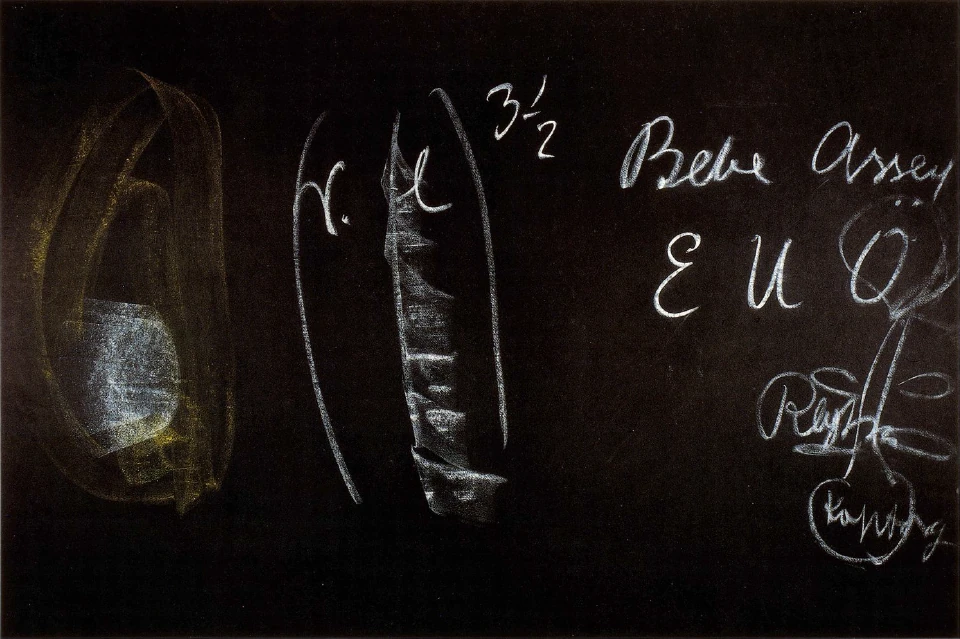
[ 1 ] To avoid one thing getting mixed up with another, I would like to discuss yesterday’s case in more detail. The point is that the boy exhibits another peculiar series of psychological phenomena. When he arrived, he had already begun to talk about this—he mentioned that he had a little spirit on the index finger of his right hand. He consistently called it “Bebe Assey.” He conversed with this spirit just as one would converse with a living being. He spoke to it—didn’t he?—so he conversed with it and regarded it entirely as a real being. Furthermore, it had the peculiarity of transforming itself, much like what used to happen in werewolf stories. He would transform suddenly. For example, he would create a mental image of himself as a lion for a while, and then he would behave exactly like a lion, roaring and all. Did he undergo other transformations as well? His favorite animal was a lion. You can already see from this that he was not in harmony with his astral body, with which he was supposed to merge into the physical body. Remnants remained. For this Bebe Assey is, of course, a remnant of his astral body—and such things can happen that, when a fragment of the astral body hangs out, it becomes animated by an objective elemental being. In this process, the object and subject merge completely, flowing together. What is important for the educator to understand is that the astral body cannot fully enter the physical body due to the hardened physical constitution. If you were to withdraw your astral body from the physical body—if it were not fully pulsating within the physical body—it would indeed manifest in all manner of transformed forms, in animal-like shapes. For the animal form is what the astral body manifests when it is, albeit nearby or only half or three-quarters connected to the physical or etheric body, yet in a certain sense independent of them. All these phenomena are particularly characteristic of this boy, and they show that it is quite difficult to establish the proper harmony between the astral body, the etheric body, and the physical body in his case.
[ 2 ] Now let’s consider another child; let’s go over the medical history. The mother states that the child was born four weeks late. During the first four months of her pregnancy, the mother was acting in a play and, at times, did a lot of jumping. Later on, she suffered a blow. At three months old, the child had a feeding disorder. It wasn’t until age two that it was able to stand. During the first four years, it was apathetic but had a voracious appetite. The first sound it uttered was the letter “R,” which is a rare occurrence. It always cried with an “R” sound. Until the age of four, it only babbled single words. Then it was given speech exercises to say sentences forward and backward. This was done on my advice. As it began to learn to speak, it developed motor restlessness. It sleeps little, has trouble falling asleep, and is very agitated and tired in the evenings. It cannot fall asleep. It is voracious when it comes to eating.
[ 3 ] Now, if you were to look at a boy like this, you wouldn’t be able to tell how old he is. The boy is now six and three-quarters years old—almost seven. You can see from this that he is behind in the development of his entire physical constitution. The only noticeable sign is that his head is a little too large. The boy is behind in his overall development. From this you can see that precisely during the stage of life we call the first life epoch—from birth until the teeth are replaced—when the physical organism should be active, the physical organism is actually not active. Here you must recall what I said about the physical organism in the first life epoch. That is the organism that is actually inherited. The organism he possessed during this epoch of his life—that is the organism he has inherited. Only now is his “I”-organism emerging, and it, too, lacks the predisposition to deviate significantly from his first one. For now his etheric body is active, and in this boy, the etheric body has adapted exceptionally strongly to the model body of the first seven years. He is behind in his tooth replacement. He has not yet begun to lose his baby teeth. So we can also observe in him that he is behind in this regard as well.
[ 4 ] Now we must first consider the objective findings. We have a relatively very weak astral body and a weak sense of self that cannot assert itself against the inherited organism. But the inherited organism, too, has remained small. It remains doubtful whether this is true, for what is stated here—that the child was born four weeks late—need not necessarily be accurate. If this is the case, then it is the result of the child having remained too small. It remained an embryo longer because it had remained too small, because it was not fully formed at the end of the ten lunar months. Now we must ask ourselves: where does all this come from? And here we have the explanation: during the first four months of pregnancy, the mother was involved in theater. An activity that, in the context in which it took place, was certainly carried out with a certain enthusiasm and dedication. This is an independent troupe that devotes itself to the cause with enthusiasm; there is an extraordinarily strong strain on the mother’s astral body, which simply shapes this astral body in such a way that, since it cannot do much in terms of physical growth, it focuses its activity on the realm of intellectual capacity. And so the process of intellectualization begins already during the formation of the astral body in the embryonic period. We are therefore dealing with an inferiority that is already conditioned by the embryonic period.
[ 5 ] The question now is how to treat such a child, who is developmentally delayed in every respect. As you can see, the astral body remains completely powerless; during the first four years, the boy is apathetic, developing nothing but the purely animal instincts of the physical organism; he is voracious and slow to learn to speak. Yes, look—now he’s saying the letter R first.
About the boy:
[ 6 ] Say: Robert is running.
The boy says it in a deep, rumbling voice.
[ 7 ] You see, it is entirely oriented toward the R. Don’t forget how an entire life is expressed in such a manifestation. Look at the mother during the embryonic period, how she moves on the stage; immerse yourself in the character of the R—as the R is characterized in the eurythmy course as the rotating force—and you will find the mother’s theatrical performance continuing to unfold in its language. Everything else recedes into the background because this aspect is so predominant. One really gains an extraordinarily deep insight into the interrelationships that one must master if one wants to gain complete clarity about these matters.
[ 8 ] Well, in the early years, the human being—composed of a metabolic body and a limb body—was supposed to be governed by a strong astral body and ego. But the astral body is weak; it does not govern this, and therefore there are two aspects of it that you must take into account. You see—I don’t know if all of you were present at those lectures where I explained the true significance of the human brain—through everything that a person carries within their organism, the entire human organism is subject to both building up and breaking down. Breakdown is always associated with waste products. Waste products are the residual traces of this breakdown. Now take the head: breakdown occurs there, for the soul’s intellectual and emotional activity is based solely on this breakdown, insofar as it uses the head as its supporting organ. Due to the weak astral body, this breakdown occurs in such a way that the process itself is irregular. The breakdown products are not regularly removed; they remain in place, and, in particular, they do not harden to the extent that they should. Without this being a case of actual hydrocephalus, we are dealing with a head that contains a brain that is too soft. Now consider the mirror image of the brain: the intestinal contents. These, too, cannot be in order—nor will they be. Bowel function can never have been normal. Irregular brain activity and irregular bowel function will, especially in children, run entirely parallel to one another. If you were to say from the outset, “Well, I’ll regulate his bowel function”—that alone will not regulate his brain activity! Medical intervention is necessary if one wishes to bring them into harmony through regulation.
[ 9 ] He also exhibits a certain lack of clarity in his psychological interaction with the outside world. Just try asking him to do something he understands: he’ll give you a little grin, but he doesn’t really take it in. Well, let’s discuss the rest of this case. I just want to say that these speech exercises began with him as early as age four, and that you must know that whenever one does speech exercises—repeating them forward and backward—one thereby exerts a regulating influence on the relationship between the etheric body and the astral body. What was done back then was aimed at achieving a harmonious interaction between the astral body and the etheric body.
[ 10 ] The task now is to help him clearly perceive his physical constitution. For it is through perception, so to speak, that the growth force of the physical constitution becomes ingrained. Therefore, one must do therapeutic eurythmy exercises with him that help him sense his own physical constitution. The letter E is particularly well-suited for this, because it allows the person to connect with their own physical constitution; the same is true of the letters U and OÖ. OÖ is used for regulation. U and E are there to help the child sense their own inner self. For anything that leads to an understanding of one’s own organism can be helpful in this case. What else have we been doing? Eurythmy therapy and speech exercises. He also paints with the group. Of course he needs to paint; he’s already reaching school age. Even if he’s making slow progress, he will still make progress.
The next child is led in.
[ 11 ] I met this boy on a trip. Well, he’s actually a relatively difficult child. He’s eleven years old. You’ll hear in a moment what this is all about. He’s an only child. The birth was reportedly normal, but the mother is said to have led an unhealthy lifestyle during pregnancy and to have consumed alcohol. His development during the first three years is said to have proceeded without any particular abnormalities. We’ll discuss that later. Things cannot have been exactly as described, because at the age of three, the child suddenly fell ill with a high fever and had a seizure during the night; which was brief. These seizures have been very frequent ever since, usually at night as well, and later occurred on average once every three months—exactly the characteristic symptoms of convulsions that we have discussed—and the seizures began occurring from the age of four onward. Until then, the organism is not yet developed enough to repel the astral organization—that is, for certain organ walls to repel the astral organization. During these convulsive episodes, complete loss of consciousness occurs. We have also found that this is generally the case. He then experiences violent convulsions, specifically on the left side of his body, and his eyes roll to the left; afterward, he is very exhausted and often vomits.
[ 12 ] You can see from this that, by the age of three, the walls of his organs no longer allow the astral organization to pass through, and that this is what causes the convulsions. These spasms—for the reasons I have explained—are linked to a loss of consciousness. However, in his case, after some time, the astral organization does break through the walls to a certain degree, so that he first makes a subconscious, semi-conscious effort. This effort lasts as long as the spasm itself. Once he has overcome them, there is a certain emptiness in his organism compared to before, and this irregularity manifests itself in his violent twitching.
[ 13 ] Now you know that the left half of the body is somewhat weaker than the right. Therefore, in such a case, the astral body—which wants to be freed once the spasm has ended—will seek to retreat to the weaker part of the organism (see Plate 10, center), which manifests itself in the eye turning to the left. Now, according to doctors in Jena, he is said to have had encephalitis—a year ago, in January?— at that time he had a severe seizure, following prior stomach problems and a fever. So here we have a severe seizure triggered by an upset stomach. Fourteen days later, after the child had already recovered, left-sided paralysis set in in the arms and legs—a very characteristic symptom, but one that can be explained quite simply. For you see, the child always, after having gone through these exertions, wants to force its way through the astral body, and afterward, having done so, senses the void lying behind the point of penetration; then it experiences twitching and allows its astral body to veer to the left.
[ 14 ] However, there is one thing to keep in mind. Within the human organism, everything that enters the organism from the outside—that is, everything that is not produced by the organism itself after it has penetrated the organism—is, in fact, a toxin. So if you have an organism (see Plate 10) and there is a shift in the astral organization from right to left—and this continues, as it naturally can when it is severe, into the etheric organization, where it then affects the physical organization—then a slight infiltration of poison occurs toward the left side of the body. Such a toxic infiltration manifests externally as the symptom of paralysis. The child was then treated with massage, and the paralysis improved after three months. A slight weakness remained. This slight weakness is already visible in him.
Turning to the boy:
[ 15 ] Take it like this! — You see, he's clumsy with his left hand.
[ 16 ] Since January 1923, the nature of the seizures has changed significantly. They now last only a very short time and usually occur nine hours after falling asleep. The child then suddenly cries out, wakes up, and stands up. At the same time, it can be observed that there is severe bloating in the intestines, a characteristic symptom. Currently, a seizure occurs almost every week, but no longer involves disturbances of consciousness. There are no longer any twitches. The convulsions subside, and he jumps up. Now, you see, a balancer injection was administered in 1924, but without any success. Most recently, he was treated with Calcium lacticum. He falls asleep late and often talks in his sleep, especially if he has eaten late. He has a good appetite but dislikes fruit, acidic foods, and vegetables; on the other hand, he has a preference for meat. His digestion is now quite good; he used to suffer from constipation; he tires easily. He has a very vivid imagination; he is very trusting of everyone, but shows no particular affection for anyone, not even his parents. He has a short temper, but loves animals and plants. The defining characteristic must be that he talks a great deal. This belongs in the medical history. It is a genuine need for him; he has to do it, just like anything else. He has made himself so noticeable that you have essentially observed everything about him.
[ 17 ] You see, this child also has that—only we are dealing with a stage in which the second body has long since been formed; the body that is not the model body has long since been formed, he is, after all, eleven years old—and we are also dealing with the fact that the model organism has already fallen into decline because the mother lived an unhealthy lifestyle during pregnancy and drank a lot of alcohol. It is even very likely, judging by the way the boy presents himself, that the first model body was already extremely irregular. It is certainly reasonable to assume—though this is not stated here—that the birth may even have occurred two weeks early because the mother did not maintain her organism in such a way that it could serve as a true environment where the embryo could develop fully in every respect. This is especially true when alcohol is consumed during pregnancy. Now it is stated here that the child’s development in the first three years was unremarkable. But I suspect rather that one simply lacked the disposition to observe finer details. In any case, the child must have felt the need to speak relatively early on, because the astral and ego organizations were, in effect, protruding out of the throat or mouth. He must always have had difficulty keeping these impulses in check. A certain nervous agitation, which manifests outwardly, which to a certain extent rejects the principle of imitation, and which emphasizes the inner organic impulses in development—this must have been present during the first three years.
[ 18 ] Then, especially as the child approaches the age of three and a half—halfway through the first seven years of life, the first life stage—we see particularly pronounced repercussions resulting from the fact that, during the first seven years, the ego and the astral body are unable to function properly due to the organization of the head. Then these organs—which are now developing slowly and gradually, since they are fully formed by age seven—will emerge stunted. Now, why have they emerged stunted in this case? Because the child did not fully complete the embryonic period. The organs would have become much more fully formed and well-shaped if the child had fully completed the embryonic period. Now, however, there is no fully formed model. Therefore, precisely during this crucial period—at three and a half years of age, when the organs are increasingly taking shape—even then the model fails; a predisposition develops whereby the astral body—which now seeks to penetrate the walls of the organs throughout the entire organism—if it cannot pass through, results in all the symptoms that have been discussed. It should also seem understandable to you that in such a case, a disturbance in the functioning of the stomach and intestines is bound to occur. For if this astral body does not properly direct the currents from the head toward the limbs, then the intestinal system—and the digestive system in general—remains weak: the ego organization is not properly integrated into it.
[ 19 ] Now consider this weak digestive system, specifically the one that is deficient in vitality: the “I”-organization is not properly integrated into it. This weak digestive system cannot tolerate what is precisely required to function within the digestive system.
[ 20 ] The situation is this: when we look at a plant, the root exerts its corresponding effect on the head organization, while the herb exerts its effect on the rhythmic organization (see Plate 10, right). That which develops as a fruit or flower exerts its effect on the intestinal organization, on the digestive organization. There is therefore no connection between the weakly developed digestive system and what develops upward. On the other hand, you will understand that because this astral body lies freely within the entire abdomen—without actually becoming integrated into the digestive system—this astral body, which as such has a strong affinity for meat in every human being, gives rise to a preference for meat here. There is also an aversion to acid, but this, too, is understandable. For acids have a particularly strong effect on the astral body. And when the astral body has properly integrated into the organism, it transfers its acidic effect to the physical organism. But if it has not properly integrated, it remains raw and sensitive to acidic effects. In such cases, one can see quite clearly how the organism actually functions, for with such an irregularity, one need not be at all surprised when indigestion occurs. But an upset stomach is merely a symptom indicating that this irregularity, which I have discussed, is present in the metabolism. Yet this irregularity constitutes the entire disease; the symptoms arise from it, and, of course, such an upset stomach can always trigger a new episode.
[ 21 ] Since January 1923, we have observed a significant change in the nature of the seizures: they are brief, occur nine hours after falling asleep, and the child cries out and wakes up. It can be observed that there is severe bloating in the intestines, and currently one episode occurs each week. This is something that at first appears alarming, but which, on the other hand, also has a comforting aspect. For it indicates a kind of recovery, a natural improvement. It is a crisis that is discharging internally; it has set in, though it progresses slowly—but nothing else was to be expected. Why do these things occur nine hours after falling asleep? Because that is when the astral body begins once again to make its way back into the physical body. This is still difficult for it; it cannot enter, and it must continually submerge and be pushed back. You can form a mental image of the following: getting up, screaming. Whereas, once the astral body is fully integrated into the entire physical organism, these symptoms subside more easily throughout the day. The occurrence of severe bloating stems from the fact that the astral body has not yet been fully integrated into the intestinal system. This relative independence of the astral body is the source of everything that appears as particularly characteristic in the soul life: his constant chattering, his slight excitability, and his vivid imagination. The question now arises as to what should be done in such a case.
[ 22 ] Well, you see, in such a case, the most important thing is to deprive the astral body—which acts very independently—of any opportunity to develop forces that hinder its adaptation to the etheric body and the physical body. Well, as soon as the child behaves the way he did today, you can see what the first measure must be: you must take his toys away. The very fact that he has these toys is poison for his soul. Above all, he must only be allowed to stimulate his imagination with things that nature has not yet fully formed. He must be encouraged to paint as much as possible, but above all to shape and carve forms. He should therefore simply be given a piece of wood and encouraged to shape this piece into the form of a human being. This will be the educational approach that must be taken with him at first. One must avoid introducing him to things that are already finished. One must try to have him do many things himself, so that his limbs are set in motion. We have not yet made these arrangements; that is what is still necessary for him.
[ 23 ] Now, this boy has a peculiarity in that one cannot say: it is a specific organ that does not allow the astral body to pass through—rather, it is actually the totality of all organs that is uniformly structured in this way. Hence, too, the ease with which it can be deformed. But this causes the astral body, when it submerges, to shift toward the left, weaker side. As a result, there is always a risk that symptoms of paralysis will occur on the left side. At this age, they do no harm if they are mild; in fact, they can lead to strengthening.
[ 24 ] It would therefore be advisable to take precisely what he must have a strong aversion to because of his constitution—that is, anything containing fruit acid—and add it in the smallest possible dose to the other foods he enjoys, so that he ingests it along with those foods during digestion. So, simply put, before giving him meat, add something containing fruit acid to the dish in which he eats his meat. He must get used to eating very small amounts of compote along with his meat.
[ 25 ] So the point is to really begin instruction using a sensible method, as is done in Waldorf schools—regardless of how quickly the child progresses—or rather, the child must continue with the instruction. Eurythmy exercises for him will consist of not limiting oneself to individual letters, but rather doing everything that particularly sets the limbs in motion, so as to encourage the limbs’ striving to shape the astral body. As the boy is now, he himself helps to make progress.
[ 26 ] On the other hand, a child like the one described above is exceptionally difficult to deal with because one is dealing with a sort of little demon. Just imagine: to the same extent that the child remains small in terms of its physical body, to that same extent its astral body grows larger without adapting to the physical organization. Now the child actually becomes an actor in its astral body without even realizing it. If one could train the child in a balanced way—if, for example, one were to use not a single person for acting lessons but an entire faculty, and assign detailed tasks to that faculty—then one could train this child, who remains a little rascal, to teach the actors the “R” sound and related sounds. Despite its apparent calm, it is extraordinarily agitated. Therefore, you are faced with a kind of demonic being; there is a true supersensory being within this little Robert. It is like this: what was sitting there in front of you—that little, dwarfish-looking tot—has a certain spark within it. In contrast, there is the powerful actor who does all sorts of somersaults, cartwheels, and so on, even as the boy walks around quite casually. So you are dealing with a child who is extraordinarily difficult to get through to. Anything you try with the physical body—with the exception of therapeutic eurythmy and speech exercises, which target the physical body and affect the intellectual—would only cater to the mercurial astral body. But you cannot reach the person through the physical body. On the contrary. You might end up like the sorcerer’s apprentice when he splits the broom, resulting in two brooms. If you manage to get close, you could easily end up doing something that further increases this mobility. The point is that you are dealing with an extraordinarily mobile astral body.
[ 27 ] How, then, should education be organized? Education must be organized in such a way that one does the opposite of what is very often done. Very often, when teaching a child, great emphasis is placed on dramatic intensification. With this child, the key is to follow any climaxes in the lesson with a period of calm. But this principle must be extended to all instruction. And so one must have the patience to properly stimulate this child’s attention—since the child knows nothing of what is taking place in its astral body—anything that corresponds to a healthy imagination could be beneficial to this organism. So invent the most wonderful, most vivid stories; become an imaginative poet in this child’s presence. And when, by building up a story to a high level of vividness—when you have fully immersed yourself in this subconscious astral organization—you have reached that point, then try to scale things back. Then try first to make fun of something that happened, so that the fun is spoiled. You pin something on the hero who has accomplished the whole story, who has inspired the child. Say: “Well, if he does something like that, then he’ll always have to blow his nose”—something that allows you to make fun of what represents the highest climax—and then you keep going until the whole thing has dissolved into a bubble; but not in a way that spoils the child’s joy—this revelation that it’s just a bubble must also take place joyfully. And throughout this entire process, as you respond, the astral body continually tends to adapt to the physical body. So if you have the patience to engage with such a child in this way—by becoming a poet yourself in the process, and then satirizing yourself within the poetry so that nothing remains—then you can ensure that by the age of nine or ten, the child begins to develop in a natural way. That would be an extraordinary achievement. As a result, this excessively fantastical overall organism—which was already formed during the embryonic period—would be transformed back. The things that are already there would disappear through what you do. The most ineffective approach to such phenomena is to tackle the phenomena directly. Weaning the child off the “R” would be just as impossible as it would have been for an actor in Weimar—even though he was not a child. He never said “Freunderl,” but emphasized every syllable; he had developed this principle of emphasizing everything to a particular degree. He said: “Fréundérl,” “Köpfchén,” “Kíndleín.” One cannot address such phenomena directly. Trying to wean the child off the “R” sound would be a misguided effort. It only makes the child empty, lazy, and careless. On the other hand, the tendency toward the “R” sound will disappear on its own if you do the things I have discussed.