

Remedial Education Course
GA 317
1 July 1924, Dornach
Translated by Steiner Online Library
Sixth Lecture
[ 1 ] My dear friends, I would like to view today as an opportunity to use this day as an example that can then be expanded upon in various ways. First, to give us a foundation for our discussion, I would like to go over Sandroe’s medical history.
[ 2 ] The boy has been here since September 11, 1923; he arrived here at the age of nine. During her pregnancy, the mother felt very well and took a trip through Spain in her fifth month. The birth was very difficult; he had to be turned and delivered with forceps. The boy was doing very well during his first year, so no one even suspected an abnormality. When he was six months old, he once lay in the sun for a very long time, and as a result of this prolonged exposure to the sun, he experienced a sort of fainting spell followed by a fever. He was breastfed for only three months. Then, from the age of nine months until he was three years old, he ate very poorly. At that time, he wouldn’t eat anything at all. During his second summer, his parents noticed that his eyes were changing and becoming less clear. And even in his second year, he still could not speak or walk, and he usually began screaming for no apparent reason at four o’clock in the morning. He developed the habit—a habit we must always keep in mind—of sucking his thumb. Because of this, he was given cardboard braces on his elbows, and at night he had to wear aluminum bells on his hand. He wore them for three years. After that, his development continued to lag behind. At age five, he still could not speak coherently. Now the period of tooth replacement is beginning. It starts at age seven; the central incisors have been replaced, but not all of the upper ones yet. — Has he lost any more teeth? He’s gotten one more tooth. Is that one front tooth still missing? — It’s in now. The other one was already well-developed back then. The mother states that his father also developed late and went through the tooth-changing phase very late as well. Now, when he first arrived, he was frail; he weighed 24 kilograms. He has delicate bones. His hands and feet are very large in proportion to his body. His hands are very clumsy. All physical findings are normal. We have since observed him becoming progressively more restless and difficult. He eats somewhat without manners. His bodily functions are normal. Since January 1924, he has become considerably calmer and more sociable. He began to take an interest in the outside world, and it filled him with wonder. What we had sought to bring about has occurred: developing attention to the outside world—not merely intellectual attention, but above all emotional attention to the things of the outside world. Things in the outside world fill him with wonder. The point is that intellectual attention cannot have a therapeutic effect; rather, one must engage the feelings and the will when paying attention to the outside world. He is becoming trusting toward people, and while at first he passed people by rather indifferently, he now recognizes them. It is difficult to get him to take action. He does not enjoy what he does, yet by January he had learned a little of the useful activity of knitting. The point is to introduce the child to an activity that, on the one hand, encourages mechanical movement and, on the other hand, requires him to be attentive; for one can lose stitches while knitting. His favorite toy is a car or a sled. He can talk for hours about nothing but his car; this is something that echoes what I discussed yesterday. He is quickly learning to speak and understand German. Well, that was the immediate observation.
[ 3 ] Well, if you take a look at the boy—come here, Sandroe!—you’ll notice all sorts of things. First and foremost, I’d like to draw your attention to the fact that the lower half of his face is very well-developed: look at the shape of his nose and the area around his mouth. His mouth is slightly open, which is caused by the development of his teeth—and this must not be overlooked, because these things are closely connected to his entire mental and spiritual constitution. And one must not say the opposite here—that the mouth is open because of the dental structure; rather, this stems from common causes, namely that the lower human cannot be fully controlled by the upper human. As you look at this, you will notice many things. Let us form the mental image that this is the seat of the power of the upper human being—the sensory-nervous human being. This part influences the rest of the human being. For in the first stage of life, this is the part that is most highly developed and possesses the greatest powers—powers it brings with it from the embryonic stage, when it possesses the most highly developed powers. Everything else is, so to speak, dependent on this. While the lower part forms directly from the constitution of the mother’s body, everything else is indirectly dependent on what forms here. That which forms here as the jaw system, as the limb system—and the jaw system is also part of it; that is the limb system—is completely integrated into the head system. Here, the head system is not strong enough to fully integrate the limb system; therefore, external forces exert too strong an influence on the limb system. If you have a well-formed person with a harmonious structure of the lower part of the head, then you must create a mental image in which the nervous system is the master of the metabolic-limb system. Then external forces do not exert an excessive influence. If the head is not capable of controlling the rest of the system, then external forces exert too strong an influence on the rest of the system. In particular, you can see this in the fact that the arms do not have the proportions—nor do the legs—that they would have if they were integrated, but they are overdeveloped because too many external forces are acting upon them. He takes it with a sense of humor. I believe Dr. Bockholt asked him why he had his mouth open. He said, “So the flies can come in.” He firmly holds this view. All of this, first and foremost, pertains to the upper part of the organization.
[ 4 ] You can now observe that the head is somewhat narrow on both sides here (at the front) and is compressed straight backward. There you have, once again, the narrow-headedness here. This indicates that the intellectual system is not strongly influenced by the will. This part (the back of the head) indicates that it is strongly influenced by the will; this part of the head (the front of the head) is the one that is accessible to external influences only through sensory perception, whereas the back of the head is accessible to all kinds of external influences, so that what later becomes strongly evident in the arms and legs already begins here. The brain enlarges; the brain expands in the back of the head.
[ 5 ] In a certain sense, observing such a child is very interesting. Sandroe is already more interesting than many normal children, although many normal children are more pleasant. Here (in the front) lies primarily that part of the brain—and indeed the entire central nervous system—which receives its substances from the rest of the organism. This is where that which, in terms of substance—not in terms of forces—derives entirely from external nourishment is deposited. In contrast, here (at the back) begins that which, in terms of substance, does not derive from nourishment but must be taken in through respiration, through the senses, and so on—that which is of cosmic origin. The back of the head is, in terms of substance, already of cosmic origin.
[ 6 ] Because the head is compressed here (at the front)—which points to a purely mechanical injury during birth or in the embryonic stage—it is likely that a purely mechanical injury is present here, in which case you can look to nothing other than karma, since it is not rooted in hereditary forces—because the head is compressed here, he is inclined to absorb too little substance from the food. In general, he has no inclination to process food immediately, because the receptive part (at the front) is insufficient for this food, so that you can simply see from the external shape of the head that he must lack appetite at certain times. This is where the insufficient accumulation of what is absorbed through food begins.
[ 7 ] The lack of control exerted over the entire limb system affects the entire respiratory system. It is poorly controlled and tends to puff out. This is related to the overall development of the lower jaw. The child takes in a lot of air—too much air. But because the child takes in too much air, substantial matter accumulates excessively here and in the limbs. Consequently, the primary issue with such a child is that inhalation is not in the proper balance with exhalation. In relation to exhalation, inhalation is too strong. As a result, the child is unable to produce sufficient carbon dioxide internally. Consequently, the child has too little carbon dioxide.
[ 8 ] But you can also see there that in a person with low carbon dioxide levels, the limb system is overdeveloped. Everything rooted in the motor system is connected to this. Over the course of a person’s life, the motor system must gradually become a servant to what lies within the intellectual system.
Dr. Steiner says to the child:
[ 9 ] Now stop for a moment, come over here, do this.
Dr. Steiner shows him how to reach for something. He doesn't do it.
[ 10 ] That’s okay; we don’t have to force him to do it. You can see that he’s having a hard time doing it. From all this, you can see that he lacks the necessary strength to properly control his metabolic-limb system. If he could control it, he would raise his arm correctly.
[ 11 ] Well, this is related to the fact that he has delayed tooth development, for proper tooth replacement must be connected to the coordinated interaction of the sensory-nervous system and the metabolic-limb system, which must provide what underlies tooth replacement. All these phenomena are closely interrelated.
[ 12 ] What is the result? The result is that at first, when the boy was born and his metabolic-limb system was not yet fully developed—as is the case with any child—he was able to control it well in the early stages. One did not even notice that there was anything abnormal about him. Only over time, as he grew out of it, did the abnormality begin to become apparent. Therefore, one could have expected that he would develop relatively late in all those areas that depend on the upper system’s control of the lower system: learning to speak and walk. In the early years, of course, the proper approach would have been to take this into careful consideration—for example, with this boy, to have begun very early on, when he was not yet able to walk, simply by moving his limbs in a eurythmic manner, that is, by beginning with therapeutic eurythmy. Had one begun this way, the movements performed in the limbs would have been reflected in the nervous-sensory organism, and during the time when everything was still malleable, even the shape of the head would have expanded. After all, one can achieve a great deal in the formation of the head through movement exercises applied to the child at an early age, and one must be immensely glad when one can achieve so much in the formation of the head. Here—as demonstrated on the child—it is difficult where the head and the skull bones are constricted by external forces; here it is difficult for the head to enlarge.
[ 13 ] During my time as a teacher, I had a student who was a troubled boy, aged eleven and a half. His parents and the family doctor—whom I wrote about in the sixth chapter of my *Lebensgang*—were at a loss as to how to deal with this troubled boy. The boy had to learn a trade. That was a terrible prospect. Except for the mother, who remained calm, everyone else was beside themselves, for it was considered shameful in a respectable middle-class family to send a boy into a trade. It was not my place to discuss any of this. On top of everything else, the boy had hydrocephalus, and I had made it a condition that he be placed entirely in my care. The situation was this: the boy had recently taken the exam for one of the first grades of elementary school. All he had accomplished there was to rub a large hole into a notebook with a big eraser. He also had the strange habit of refusing to eat anything at the table, yet he would eat the potato peels thrown into the trash can with great pleasure. After a year and a half, he was able to attend the first grade of high school. This was due to the fact that his limb movements were actively managed, which caused the hydrocephalus to disappear. His head has become smaller, and that is a sign that success is possible.
[ 14 ] The head, which is confined here within the skull bones compressed by an external injury, will have difficulty expanding, but it would still have been possible to achieve something.
[ 15 ] This raises the question for us: What is the most significant characteristic of the boy in terms of his upbringing? — The most significant characteristic is that he must bring his spiritual and soul nature into a body whose physical faculties have not been developed harmoniously. Karmic entanglements underlie this. Believe it or not, the boy is a genius. What do I mean by that?—he doesn’t understand it—I mean that, based on his karmic antecedents, he could be one. But there is an abnormality insofar as, under the present circumstances into which he was bound to be born, he has not been able to develop what is present according to his antecedents. The choice of his parents is a factor. In a certain sense, it is a difficult one. And so he views the world through difficult physical conditions, which he has initially stiffened and hardened because the forces of the upper and lower human beings do not interact harmoniously. We are dealing with a hardening of the organism. When he wakes up, the astral body and the “I” organization cannot properly submerge. They encounter something like a rock-like nature of the organism. Now, all the attention we direct toward the world depends on our ability to engage with the physical-bodily realm in the right way through our spiritual-soul aspects. In people who cannot do this—even when it comes to superficial matters—there remains, at first, a certain clumsiness. A remnant of an inability to intervene, I must say, is now evident in the vast majority of people. I find—please forgive the harsh word—that most people are extremely clumsy. People do not become skilled; they have a hard time becoming so. When I look around at the eight hundred children we have at the Waldorf School, one cannot say that a large percentage of them is characterized by great dexterity. You will notice everywhere that this infusion of the astral body and the “I” organization into the physical organization is lacking in most people, because we are living in the height of the intellectualist age. Our mindset intervenes only in the skeletal system, no longer in the muscular system. The person who wants to use their bones therefore does not become dexterous. The intellectual is only capable of influencing the skeletal system and its mobility, but it must do so with the help of the muscles. However, the ability of the astral body and the “I”-organization to permeate the muscular system is extremely limited. This stems from the fact that the age as such lacks a deeply religious, sincerely religious character. The denominations do not truly foster religion. The development of muscles attached to the bones depends on the presence of great role models in the world. Even if a person can only look up to role models in thought, an interplay between the muscular and skeletal systems develops. This boy’s lack of interest was therefore particularly pronounced from the very beginning.
[ 16 ] But you see: this is completely true of this boy—that thoughts are not altered. For the thoughts a person produces cannot, as such, be wrong. The only question is whether a person produces them at the right moment, or whether they produce too many or too few. They are reflections of the external etheric constitution. When asked why he keeps his mouth open, he replies: “So the flies can fly in.” — That is incredibly clever, but it is a thought that has been applied incorrectly. If he were to apply it later, in the context of a machine to be invented, this thought could become a magnificent inventor’s idea. Thoughts are always correct, for they are contained within the thought constitution of the world ether.
[ 17 ] The essential point is that there is a certain possibility of connecting the spiritual-soul aspect to the outside world in the proper way through the physical body. The key here is to work with such a child in two distinct ways. With such a boy, the approach is to present as few impressions as possible and to try to help him make associations between these few impressions. Everything taught to him should be presented in as few elements as possible, so that it is clear and easy to grasp. Things become clear by making them clear, by taking care—and this applies not only to him but will also prove true for the other children—that what the children are to do is accompanied by things that arouse their attention. For children who cannot step outside their bodies, who cannot bring their soul into their physical being, and who cannot master their physical selves, the key is for us to give them the opportunity to develop as much interest as possible. Let’s suppose we start painting (see Plate 9). Above all, we will be careful not to become anxious when the children—and this also happens in Waldorf schools, forgive the harsh expression—make a mess. If we insist that everything is always perfectly clean, if we insist that everything remains clean whenever the children leave the classroom, that is a false principle. We must pay less attention to that; instead, we must focus on this: the teacher’s keen attention must be directed toward ensuring that the children accompany every movement, everything they do, with a certain degree of attentiveness. This requires being fully present while teaching, and with these children in particular—more so than with others—it is essential to be fully present during instruction, striving above all to avoid thoughtlessness through this presence.
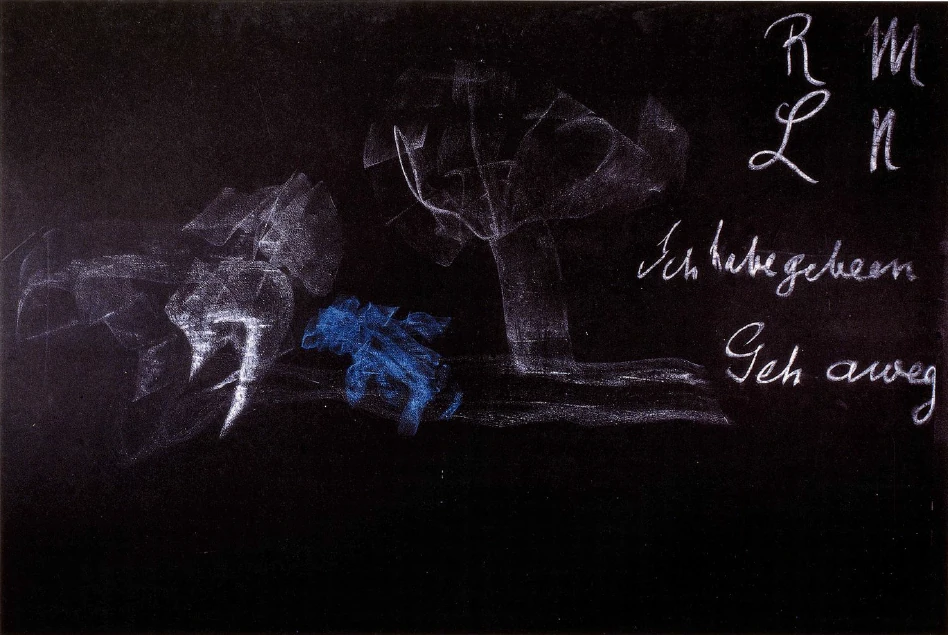
[ 18 ] Look, now take the brush, and now stroke it across the paper. If you accompany the entire process in this way with whatever captures your attention, then you have achieved a great deal. You’ll see that even well into the twelfth, thirteenth, and fourteenth years, much can still be accomplished in terms of developing the organism’s flexibility. When you carry out these activities, you must be able to say: “Look, there’s the tree; now draw the tree standing out there” (see Plate 9). You’re completely immersed in the moment. Look, here comes the little horse running. — At the same time, you point out the colors. Now Mussolini, the little dog, comes toward the little horse. The little dog barks at the little horse, and the little horse starts moving its legs like this. — You try to follow the whole scene with as much liveliness as possible. This liveliness, which carries something spiritual, truly rubs off on the children. If you want to influence children in this way, you must cultivate enthusiasm and temperament. If one is dull in dealing with the child, if one always wants to sit, if one does not want to stand up, if one is not inclined to move about as much as possible oneself, then one cannot educate. It is not a matter of being able to apply particularly calculated tricks, but of doing, on a case-by-case basis, whatever the situation calls for.
[ 19 ] Then, with these children, one should not fail to engage in as much conversation as possible. He did not address this point earlier. Now he is addressing it. You can see how thoroughly he goes into it. Do you remember how you once told me that a little horse had arrived? Tell me, how big is the little horse? Have you led the little horse around yet? — Yes, the little horse is always running around at Sonnenhof. It likes to lie in the grass. — Is it in the stable when it rains? Is there a big horse there too? — Yes, his name is Markis. - When you spend time with him, he’s already participating in the conversation, whereas before he used to yell at you. It’s extraordinarily interesting that when we first got him, he spoke only English. Now he’s picked up German relatively quickly. You can see in him, as in a fine example, how language has poured itself into his etheric body and physical body. But the organization of language is more firmly established in him than in other children. Therefore, he will be a wonderful subject for studying how the organization of language is structured internally. He doesn’t say, “I have been—,” but rather, “I have given.” - He is finding his way into the German language through the structure of the English language. He says things like this a lot: “Go away.” - And you can see from the way the English language has taken root in him just how rigid his body has become. When you consider that he talks a lot—that you have a lot of conversation with him—you’ll see that there is more resistance to overcome than with other children. For what he has already learned becomes terribly ingrained. But by bringing life into him—constantly infusing new life into him—the rigidity within him becomes flexible; if you can get him to say, “I have been—,” then he has overcome a great deal. Then he has brought about flexibility within himself. This should not be achieved through rote memorization, but through the tireless continuation of conversation. Above all, such a child must realize that one is interested in him, that one takes part in what he does. One asks such a child about what he needs to know, based on what he has undertaken. One shows interest in what he has experienced. This is of great importance.
[ 20 ] Now you just need to imagine how therapeutic eurythmy can affect a boy like that. Let’s say: he’s doing the “L” in a circle. “R” stands for rotation—something is turning—and that already contains the element of movement. Most of you, who are attending the eurythmy class, also know what the letter L signifies. Just think of the formative powers the tongue develops when forming the L. That is why L is the letter that indicates the act of nestling, of immersing oneself in something. He needs to make his organism more supple in order to immerse himself in something. Now, if you consider that in such a boy the inhalation process, as I have explained, predominates over the exhalation process, then you will have to say to yourselves: We must ensure that the exhalation process is stimulated as much as possible through active participation; this takes place in the “M.” That is the exhalation sound. When it is produced eurythmically, the entire limb system comes to its aid. In N lies the return to the intellectual. So one will perform RLMN. — But you see here as well: when one surveys a situation, the fact is that one knows what one has to do. One must know the nature of the sound. In eurythmy, one must be fully immersed in it; on the other hand, one must also actually look into the physical organization. Both are things that can be learned, yet they are completely absent from contemporary pedagogy.
[ 21 ] With a boy like this, of course, one must take even greater care to ensure that he can learn to write through drawing. Therefore, it is important to begin instruction with drawing in the manner I have indicated.
[ 22 ] From all this you can see that the astral body and the “I” organization do not penetrate into this physical body and etheric body. We must come to their aid. Therefore, one must also intervene therapeutically. What must be supported? The nervous system, insofar as it is the foundation for the astral body and the “I” organization. How can this be achieved? We must first act upon the nervous system. How is this done? We have three primary ways to treat people therapeutically: orally, by injection, and through baths or washings. When you administer something internally to a person, what does it affect? Essentially, the metabolic system. You can count on the fact that administering something will simply affect the metabolic system. If you want to affect the rhythmic system, then you must inject; if you want to affect the nervous system, then you must approach it from the outside—you must administer baths or washings. Arsenic has a strong effect on the mobility of the astral body—insofar as the astral body seeks to submerge itself—and also on the form of the astral body. You can see in people undergoing arsenic treatments how their astral body slips into their physical body. So for a child like this, where the goal is to bring about harmony between the astral body, the etheric body, and the physical body, arsenic baths are exactly what is needed. A certain amount of Levicow water with a specific percentage concentration should be used for bathing; this acts on the nervous system and strengthens the astral body. Now, since the influence of the head system on the rest of the body is too weak, it is necessary to provide additional support. One can support the flow that goes from the head to the lower organization—which is particularly strong in the early years of life but also persists between the change of teeth and puberty, and is even stronger at the end of this period than in the seventh, ninth, or eleventh years—one can support this flow in such a child so that there is correspondence between the metabolic system and the nervous system, by administering the secretion of the pituitary gland. We take the secretion of the pituitary gland—which we produce—; it has the property of counteracting these energy flows and acting harmonizingly from the head down on the limb system. Thus, the treatment will consist of pituitary gland extract, arsenic baths, and therapeutic eurythmy, in the manner I have described. When these elements work together, progress can be made with such a boy.
[ 23 ] But you see, it is precisely in situations like this that we must emphasize the importance of being fully present in what we do. Especially when educating and teaching such children, one must be fully present. And the anthroposophical movement will provide opportunities to be deeply engaged in these things—provided, of course, that one has the disposition to be as fully engaged as possible in everything. Yet there are many obstacles to this. It can sometimes be a bit painful to visit anthroposophical communities or gatherings. There is sometimes such a leaden heaviness there. You can’t get people to loosen up. There’s a leaden heaviness; when you start a discussion, no one opens their mouth because even their tongues are as heavy as lead. People pull a “face all the way down to their stomachs.” They are so unwilling to lighten up or laugh!
[ 24 ] Above all, what does it take to raise such children? Not a leaden seriousness, but humor—real humor, a sense of life’s humor. No matter how clever the methods, one will not be able to raise such children without the necessary sense of humor in life. So there will have to be room within the anthroposophical movement for a sense of flexibility. I don’t want to dwell on this too much. But it is truly the case that I am least understood when, if I am asked—in connection with one calamity or another—what we should do, I reply: Have enthusiasm. Having enthusiasm—that is what matters. — And enthusiasm is precisely what matters when it comes to children who are abnormal.
[ 25 ] That is what I wanted to tell you today.