

Cooperation Between Doctors and Pastoral Caregivers
Pastoral Medicine Course
GA 318
18 September 1924, Dornach
Translate the original German text into any language:
Versions Available:
Pastoral Medicine Course, tr. SOL
Elfter Vortrag
Eleventh Lecture
[ 1 ] Meine lieben Freunde! Pastoralmedizin, wie sie hier gedacht wird, kann ja im Grunde genommen nur angesehen werden als etwas, was wiederum herausgeholt wird aus spirituellem Erkennen, spirituellem Forschen und das wieder einen Sinn bekommt, wenn überhaupt das Bewußtsein in die Menschheit gelegt wird, daß Spirituelles positiv wirksame Kräfte enthält. Denn in der Zeit, die den Materialismus entwickelt und ausgestaltet hat, ist es ja nicht denkbar, daß man sich zu dem Spirituellen so gestellt hätte, daß man darin irgend etwas, was nun auch einer Behandlung wert ist, gesehen hätte. Dies allerdings, auf das Geistige hinzuschauen, zu suchen gerade im Geistigen diejenigen Möglichkeiten, die zu Heilwerten führen, das war im eminentesten Sinne da innerhalb der alten Mysterienerkenntnis, und es wird sich dasjenige, was wir zur Abrundung unserer Betrachtungen noch werden zu besprechen haben, heute anschließen dürfen an eine Art Anknüpfung der medizinischen Strömung, die nun hier ausgehen soll vom Goetheanum, an altes Mysterienwesen.
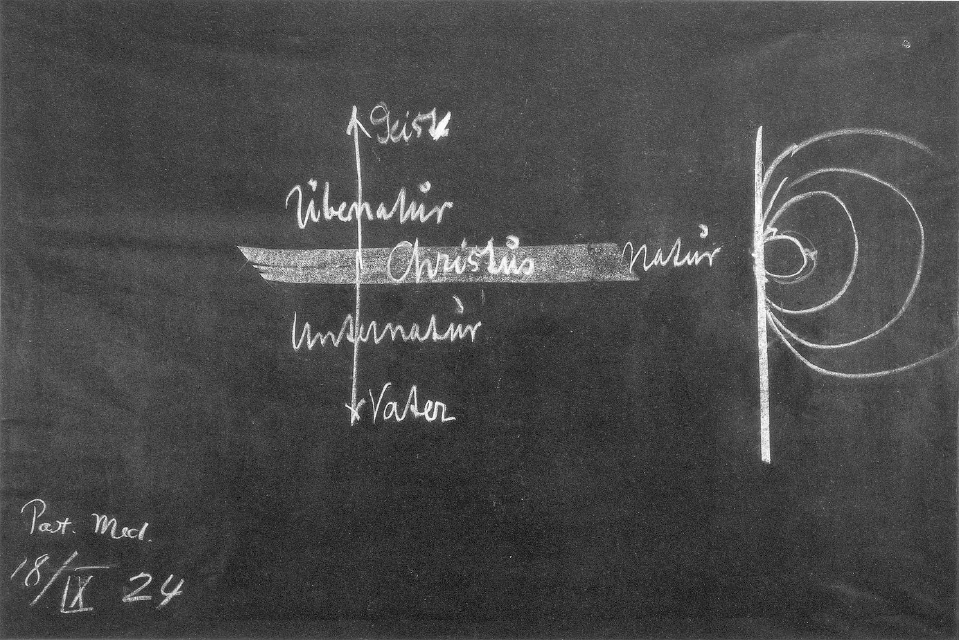
[ 1 ] My dear friends! Pastoral medicine, as conceived here, can essentially be viewed only as something that is derived from spiritual insight and spiritual research—and that regains its meaning only when humanity becomes aware, if at all, that the spiritual realm contains positively effective forces. For in the era that developed and shaped materialism, it is inconceivable that one would have approached the spiritual in such a way as to have seen in it anything worthy of treatment. This, however—looking toward the spiritual, seeking precisely within the spiritual those possibilities that lead to healing—was present in the most eminent sense within the ancient mystery knowledge; and what we will yet have to discuss to round out our considerations may be linked today to a kind of connection between the medical movement—which is now to emanate from the Goetheanum—and the ancient mystery traditions.
[ 2 ] Es ist in der Tat am richtigsten die Sache aufgefaßt im historischen Zusammenhang, wenn das, was hier gewollt wird, in Anknüpfung gedacht wird an allerdings ganz andersgeartete Forschungsmethoden, aber an Forschungsmethoden und an das künstlerische Heilverfahren im alten Mysterienwesen. Nun werden Sie selbstverständlich, meine lieben Freunde, dasjenige, was dieser kurze Kursus über Pastoralmedizin geboten hat, nur als eine Anregung gewissermaßen im ersten Kapitel zu betrachten haben, und als den Beginn des Ausbaues einer Pastoralmedizin, die immer weiter und weitergehen wird durch die Arbeit, die hier von Frau Dr. Wegman und mir geleistet zu werden hat.
[ 2 ] It is indeed most accurate to view the matter in its historical context, when what is intended here is considered in connection with research methods—admittedly of a completely different nature—but nonetheless research methods and the artistic healing practices of the ancient mystery cults. Now, of course, my dear friends, you will have to regard what this short course on pastoral medicine has offered merely as a starting point, so to speak, in the first chapter, and as the beginning of the development of a pastoral medicine that will continue to expand further and further through the work that Dr. Wegman and I are to carry out here.
[ 3 ] Nun, meine lieben Freunde, möchte ich da zunächst darauf aufmerksam machen, wie die Initiaten der alten Mysterien beschrieben den Weg ihrer Initiation, jenen Weg, der insbesondere dort gegangen worden ist, wo die Mysterien eingelaufen sind in die Heilmysterien. Im Grunde genommen waren alle Mysterien verbunden mit Heilmysterien, aber die einen mehr, die anderen weniger. Es waren alle damit verbunden, weil man Heilen eben als in Zusammenhang stehend mit der ganzen menschlichen Zivilisationsentwickelung ansah. Das hat tiefere Gründe. Der Mensch der alten Zeit sagte sich: Wenn die menschliche Individualität herunterkommt aus geistigen Welten in die physische Erdenwelt durch Konzeption und Geburt, dann tritt das Geistig-Seelische in jene Verwandlung ein, durch die es einen Menschenleib physisch gestalten kann. Wir haben beschrieben, wie diese Gestaltung in den ersten sieben Lebensjahren zum erstenmal durch die Individualität geschieht, währenddem der Menschenleib zuerst durch die Vererbung empfangen wird, derjenige Menschenleib, der im Laufe von sieben bis acht Jahren ganz abgestreift wird.
[ 3 ] Now, my dear friends, I would first like to draw your attention to how the initiates of the ancient mysteries described the path of their initiation—that path which was followed especially where the mysteries merged with the healing mysteries. Essentially, all mysteries were connected to healing mysteries, though some more so than others. They were all connected to them because healing was viewed as being related to the entire development of human civilization. There are deeper reasons for this. People in ancient times said to themselves: When the human individuality descends from the spiritual worlds into the physical world of the Earth through conception and birth, then the spiritual-soul aspect undergoes that transformation through which it can physically shape a human body. We have described how this shaping takes place for the first time through the individuality during the first seven years of life, whereas the human body is initially received through heredity—the very body that is completely shed over the course of seven to eight years.
[ 4 ] So stellte man in recht strengem Sinne vor in den alten Mysterien das Hineinkommen des Menschen aus geistigen Welten in das PhysischSinnliche. Aber man hatte überall das Bewußtsein, daß der Mensch sich nicht so mit seinem physischen Leib verbindet, von vorneherein sich nicht so mit seinem physischen Leib verbindet, wie es eigentlich ganz ursprünglich — wenn ich mich des Ausdruckes bedienen darf — vorgesehen war von den geistigen Mächten, die jenen Teil der Welt lenken, dem die Menschheit angehört. Man hat namentlich demjenigen Teil der Kräfte im Menschen, die durch die Vererbung hineinkommen, immer zugeschrieben, daß sie durch eine Anomalie der gesamten Entwickelung in einem gewissen Sinne überwältigen die Kräfte, die sich der Mensch durch seine Individualität aus vorigen Erdenleben mitbringt. Man hat keine rechte Harmonie gesehen darin, man hat gerade gesagt: Würde ein vollständiges Zusammenklingen des Geistig-Seelischen mit dem Physisch-Leiblichen im Erdenmenschen vorhanden sein, dann würde erstens der Tod nicht die Gestalt haben, die er hat, zweitens aber auch nicht in einem solchen Sinne Krankheit eintreten, wie sie eintritt. Krankheit und Tod betrachtete man als diejenigen Symptome, welche zeigen, daß der Mensch allerdings mehr mit der physischen Erdenwelt zu tun hat, als ursprünglich ihm vorgezeichnet war. Das ist, wenn sie auch heute nicht mehr voll verstanden werden kann, doch eine außerordentlich tiefe Idee, in der viel, viel Wahrheit steckt. Denn es ist wirklich so, daß in dem Moment, wo der Mensch nur ein wenig zu einer höheren Bewußtseinsstufe kommt, er sogleich merkt: der Tod zum Beispiel hat eine ganz andere Gestalt. Er nimmt sich mehr als eine Metamorphose aus denn als das Ende einer Lebensphase und so weiter.
[ 4 ] Thus, in the ancient mysteries, the entry of the human being from the spiritual worlds into the physical-sensory realm was conceived in a rather strict sense. But there was a widespread awareness that human beings do not unite with their physical bodies in this way—that from the very beginning they do not unite with their physical bodies as was actually, in the very beginning—if I may use that expression—intended by the spiritual powers that govern that part of the world to which humanity belongs. In particular, it has always been attributed to that part of the forces within the human being that enter through heredity that, due to an anomaly in the overall development, they in a certain sense overwhelm the forces that the human being brings with them through their individuality from previous earthly lives. No true harmony was seen in this; it was explicitly stated: If there were a complete harmony between the spiritual-soul aspects and the physical-bodily aspects in the earthly human being, then, first of all, death would not take the form it does, and secondly, illness would not occur in the way it does. Illness and death were regarded as symptoms indicating that human beings are, in fact, more closely connected to the physical earthly world than was originally intended for them. Although this idea can no longer be fully understood today, it is nonetheless an extraordinarily profound concept containing a great deal of truth. For it is truly the case that the moment a person ascends even slightly to a higher level of consciousness, they immediately realize: death, for example, takes on a completely different form. It appears more like a metamorphosis than the end of a phase of life, and so on.
[ 5 ] Dadurch aber war für das ganze alte Bewußtsein das Erziehen des Menschen nahegerückt an das Heilen, und der ganze Erziehungsvorgang wurde eigentlich in sehr alten Zeiten der Menschheitsentwickelung als ein generelles Heilen aufgefaßt. Dadurch war dasjenige, was Mensch an Mensch zu tun hatte, von vorneherein in einem gewissen Sinne medizinisch gedacht, und damit war dann verbunden das Bewußtsein, das sich in den alten Mysterien verknüpfte mit dem Arzt- und mit dem Priesterberuf, die beide zu tun haben sollten mit dem Heilen der Menschen auf Erden. Arzt und Priester waren ja zumeist in alten Zeiten in einer Person vereinigt, ein Vorgang, der eben nur beim alten instinktiven Bewußtsein da sein konnte, der heute nicht da sein kann, wenigstens nicht als regelmäßige Einrichtung. Es war mit diesem Bewußtsein von der Bedeutung des Heilens, das auch im normalen Leben da sein mußte, für jeden Menschen dann verbunden, daß er nach jener Metamorphose, die die Menschen durch den Tod durchmachen, vorzugsweise also in dem Leben zwischen Tod und neuer Geburt, von jenen Seelen, die auf Erden Ärzte oder Priester waren, auf den Weg zur Sonne gewiesen wurde. Die erste Anleitung, um den Sonnenweg nach dem Tode zu finden, den jeder finden muß, weil dort ein Teil desjenigen absolviert wird, was absolviert werden muß zwischen Tod und einer neuen Geburt, die ersten Schritte — so wurde es vorgestellt in alten Zeiten - mußte der Mensch, der durch die Pforte des Todes geschritten war, gewiesen bekommen von dem Arzt oder dem Priester. Das alles aber war eingetaucht in die tiefste Mysterienweisheit. Mysterienweisheit, die wir nur heute anders anschauen müssen, weil die alten Methoden für uns nicht mehr geeignet sind, die aber durchaus im heutigen Zeitpunkt einer Erneuerung wiederum fähig sind, jener Erneuerung, die eben hier versucht werden soll.
[ 5 ] As a result, however, for the entire ancient consciousness, the education of human beings was closely linked to healing, and the entire educational process was, in fact, understood in the very early stages of human development as a form of general healing. Consequently, what one human being had to do for another was, from the very beginning, conceived in a certain sense as a medical act; and linked to this was the consciousness that, in the ancient mysteries, was associated with the professions of physician and priest—both of which were meant to be concerned with the healing of human beings on earth. In ancient times, doctors and priests were, after all, usually united in a single person—a phenomenon that could only exist within the ancient, instinctive consciousness and cannot exist today, at least not as a regular institution. This awareness of the significance of healing—which also had to be present in everyday life for every human being—was linked to the belief that, following the metamorphosis that human beings undergo through death—that is, primarily in the life between death and a new birth—those souls who had been doctors or priests on earth were guided onto the path to the Sun. The first guidance for finding the path to the Sun after death—which everyone must find, because part of what must be accomplished between death and a new birth takes place there—the first steps—as it was depicted in ancient times—had to be shown to the person who had passed through the gate of death by the physician or the priest. All of this, however, was steeped in the deepest mystery wisdom. Mystery wisdom that we must simply view differently today, because the old methods are no longer suitable for us, but which is certainly capable of renewal at this present time—the very renewal that is to be attempted here.
[ 6 ] Nun, meine lieben Freunde, wenn ein alter Initiat seine Initiation beschrieben hat, so hat er gesagt: Er wurde, nachdem er die Schwelle überschritten hatte, zuerst bekanntgemacht mit der Wirkung der Elemente, und Elemente nannte man in alten Zeiten dasjenige, was wir heute Aggregatzustände nennen würden: das Feste, das man als Erde bezeichnete, alles Flüssige, das man als Wasser bezeichnete, alles Luftförmige, das man als Luft bezeichnete und alles Gasförmige einschloß, und alles Wärmeartige, das man dem Wärmeäther zuschrieb, das bezeichnete man als Elemente. Das ist etwas, wovon der moderne Physiker sagt: Das gibt es gar nicht. — Für ihn gibt es diese vier Elemente nicht. Es gibt für ihn eine Anzahl von siebzig bis achtzig Elemente, die haben Eigenschaften. Unter gewissen Verhältnissen der Welt ist das eine flüssig, das andere fest oder gasförmig. Der Wärmezustand kommt allen zu. Aber das, was man als Elemente in den alten Zeiten geschildert hat, das gibt es heute nicht. Das sind bloß Eigenschaften von den Realitäten, das sind keine Wirklichkeiten. Ja nun, aber dasjenige, was man heute Elemente nennt, sind eigentlich nur Wirklichkeiten innerhalb der ganz groben physischen Welt, und dasjenige, was in alten Zeiten Elemente genannt wurde, das faßte man so auf, daß man dadurch nicht in die Materie hineinkam, sondern in das Weben und Leben der Materie.
[ 6 ] Well, my dear friends, when an ancient initiate described his initiation, he said: After crossing the threshold, he was first introduced to the effects of the elements—and in ancient times, the term “elements” referred to what we would today call states of matter: the solid, which was called earth; everything liquid, which was called water; everything air-like, which was called air and included everything gaseous; and everything heat-like, which was attributed to the heat ether—these were designated as elements. This is something about which the modern physicist says: “That doesn’t exist at all.”—For him, these four elements do not exist. For him, there are between seventy and eighty elements, each with its own properties. Under certain conditions in the world, one is liquid, another solid, or gaseous. The state of heat is common to all of them. But what was described as “elements” in ancient times does not exist today. These are merely properties of realities; they are not realities in and of themselves. Well, yes, but what we call elements today are actually only realities within the very coarse physical world, and what was called elements in ancient times was understood in such a way that it did not lead one into matter itself, but rather into the weaving and life of matter.
[ 7 ] Sehen Sie, es war weniger bedeutsam einem alten Arzt, ob irgend etwas die eine oder die andere Substanz ist, mit diesem oder jenem äußeren Namen. Es hat natürlich eine Wichtigkeit, aber die kommt erst heraus, wenn man die andere Wichtigkeit, die das Weben und Leben des Materiellen betrifft, ins Auge faßt. Und so kann man irgendeine Substanz nehmen draußen an dem Orte, wo sie in Verwitterung begriffen ist. Da legte der alte Arzt eigentlich einen ganz besonderen Wert darauf, daß eben in dem ganzen Erdenprozeß die Substanz, die er dort nimmt, dem Verwitterungsprozeß ausgesetzt ist, oder er sah besonders darauf, daß er irgendeine Substanz nicht einfach aus dem Mineralreich gewann, wenn sie auch aus dem Pflanzenreich zu gewinnen ist. Er sah also überall auf die Stellung, die in lebender Tätigkeit das Substantielle im Weltenprozeß hat. Will man das durchschauen, dann braucht man aber diese Gliederung nach den vier Elementen, denn dann ist einem vor allen Dingen an einer Substanz wichtig, bei welcher Temperatur sie Erde wird, das heißt, bei welcher Temperatur sie fest wird, oder flüssig wird, oder Wasser oder Luft wird. Das war das Wichtige in alten Zeiten, hinzuschauen auf dasjenige, was im Weltenprozeßß vorgehen muß, damit irgendeine bestimmte Substanz eine bestimmte Form hat. Das war das erste. Darnach beurteilte man erst die Substanz. Heute geht man erst von der Substanz aus, damals ging man aus von dem Prozeß. Und jede Substanz ist ja nur ein festgehaltener Prozeß, auf irgendeiner Stufe festgehaltener Prozeß. Man war von dem ganzen Weben und Leben im Materiellen vor allen Dingen durchdrungen. Und so beschrieb der Initiat, daß er zunächst eingeführt wurde in jenes Schauen, durch das er das Weben und Leben des Substantiellen so schauen konnte, daß es ihm als ein Gewebe der vier Elemente erschien. Das war das erste.
[ 7 ] You see, it mattered less to an old doctor whether a substance was one thing or another, with this or that external name. Of course, it has its importance, but that only becomes apparent when one considers the other importance—the one concerning the weaving and life of the material world. And so one can take any substance from the outdoors, from a place where it is undergoing weathering. The old doctor actually attached great importance to the fact that, within the entire earthly process, the substance he took from there was exposed to the process of weathering; or rather, he was particularly careful not to simply extract a substance from the mineral kingdom if it could also be obtained from the plant kingdom. He thus looked everywhere at the role that the substantial plays in the world process through living activity. If one wants to understand this, however, one needs this classification according to the four elements, for then what is most important about a substance is at what temperature it becomes earth—that is, at what temperature it becomes solid, or liquid, or water, or air. That was what mattered in ancient times: to look at what must take place in the world process so that a particular substance might take on a particular form. That was the first step. Only then did one assess the substance itself. Today we start with the substance; back then, we started with the process. And every substance is, after all, merely a process frozen in time—a process frozen at some stage. Above all, one was permeated by the entire weaving and life within the material realm. And so the initiate described how he was first introduced to that vision through which he could perceive the weaving and life of the substantial in such a way that it appeared to him as a fabric of the four elements. That was the first thing.
[ 8 ] Das zweite aber, was jeder erzählte und was für ihn die zweite Stufe darstellte, das war, daß er sagte: Er wurde dahin geführt, wo er die «oberen und unteren Götter» kennenlernen konnte. — Was heißt das, da hineingeführt zu werden, wo man die oberen und unteren Götter kennenlernen kann? Ja, sehen Sie, meine lieben Freunde, das haben wir eigentlich schon beschrieben, nur haben wir es in moderner Form beschrieben. Ich sagte Ihnen, wenn das Geistig-Seelische so tief in den physischen Leib und in den ätherischen Leib hinunterzieht, daß der physische Leib und der ätherische Leib das Geistig-Seelische überwältigen, dann entsteht Pathologisches, Pathologisches durch eine Verirrung des Geistig-Seelischen ins Physisch-Leibliche. Da entsteht Pathologisches. In dem Augenblick, wo eben das geschieht, steigt der Mensch tiefer in sich hinein, als er beim gewöhnlichen Aufwachen hineinsteigen sollte, hineinsteigen sollte während des Wachens in seinen physischen Organismus, und er kommt nach unten mit außermenschlichen, unternatürlichen Wirkungen zusammen. Denn nur wenn wir in normaler Relation sind zwischen unserer geistig-seelischen und physisch-leiblichen Organisation, leben wir im Natürlichen. In dem Augenblick, wo wir tiefer hineintauchen, intensiver hineintauchen in unsere physische Leiblichkeit, kommen wir mit dem Unternatürlichen in Beziehung. Da kommen wir mit dem in Beziehung, worinnen Elementarwesen, Wesen höherer Hierarchien auf verschiedenen Stufen ihrer Entwickelung mit hereinwirken in den Menschen. Und das ist eben einfach eine Tatsache: man kommt mit den Göttern in Beziehung, die unterhalb der Naturwirkungen ihre Tätigkeit entfalten.
[ 8 ] But the second thing everyone described—and which represented the second stage for them—was that they said they were led to a place where they could get to know the “upper and lower gods.” — What does it mean to be led to a place where one can come to know the upper and lower gods? Well, you see, my dear friends, we have actually already described this, only we described it in a modern form. I told you that when the spiritual-soul aspect descends so deeply into the physical body and the etheric body that the physical body and the etheric body overwhelm the spiritual-soul aspect, then something pathological arises—something pathological resulting from a deviation of the spiritual-soul aspect into the physical-bodily realm. That is when something pathological arises. The moment this happens, the human being descends deeper into themselves than they should during ordinary waking, deeper than they should into their physical organism while awake, and they encounter subhuman, subnatural forces. For only when we maintain a normal relationship between our spiritual-soul and physical-bodily organizations do we live within the natural order. The moment we delve deeper, more intensely into our physical body, we come into contact with the subnatural. There we come into contact with that in which elemental beings and beings of higher hierarchies, at various stages of their development, interact within the human being. And that is simply a fact: one comes into contact with the gods who unfold their activity beneath the forces of nature.
[ 9 ] Wie hätte also ein alter Initiat auch sagen können, wenn er einen mehr neutralen Ausdruck gebraucht hätte, der die Sache verhüllt darstellte, weil ihn niemand verstand als wieder Initiaten, wie hätte er sagen können: Er sei hinuntergeführt worden zu den unteren Göttern? — Er hätte sagen können: Ich habe die Natur der menschlichen Krankheiten kennengelernt, denn die führt zu den unteren Göttern.
[ 9 ] So how might an ancient initiate have put it, had he used a more neutral expression that veiled the matter—since no one but other initiates understood him—how might he have said: “I was led down to the lower gods”? — He could have said: “I have come to know the nature of human illnesses, for that leads to the lower gods.”
[ 10 ] Nehmen wir das andere, das ja in dem Sinne, wie ich das auch an der Grenze des Pathologischen und Normalen gezeigt habe: in des Heiligen Leben hineinführen kann, wo das Geistig-Seelische herausgeht, mehr herausgeht als es herausgehen sollte, sozusagen den Schlafzustand belebt. Das kennenzulernen bezeichnete der alte Initiat als sein Zusammensein mit den oberen Göttern. So daß man also hat, schematisch gedacht, was der Richtigkeit entspricht: Natur, Unternatur, Übernatur (siehe Zeichnung). Das Visionäre, das schauende Leben, das Leben, das den Menschen in die geistige Welt einführt, das nannte der Initiat: Zusammensein mit den oberen Göttern.
[ 10 ] Let us consider the other aspect, which—as I have also shown at the boundary between the pathological and the normal—can lead into the life of the sacred, where the spiritual-psychic emerges, emerges more than it should, animating, so to speak, the state of sleep. The ancient initiate described this experience as his communion with the higher gods. Thus, schematically speaking, we have what corresponds to the truth: nature, sub-nature, and super-nature (see diagram). The visionary, contemplative life—the life that introduces the human being into the spiritual world—is what the initiate called communion with the higher gods.

[ 11 ] Nun bekommt man sehr leicht, meine lieben Freunde, wenn so geredet wird von den oberen und unteren Göttern eine falsche Vorstellung über die Rangordnung. Sehen Sie, Sie müssen sich die Sache so vorstellen. Wenn ich einfach sage: Natur, Unternatur, Übernatur, Krankheit, visionäres Leben, dann bin ich versucht, die unteren Götter als die untergeordneten auch anzusehen. Aber sehen Sie, so ist die Sache nicht. In Wirklichkeit ist die Sache so: Stellen wir uns vor, hier hätten wir die Natur, und nach oben führt es zu einem Kreis, nach unten führt es zu einem Kreis (siehe Zeichnung), und das, was wir hier oben finden, vereinigt sich nach der anderen Seite mit dem unteren. Zeichnen wir den Kreis größer, so bekommen wir dieses, zeichnen wir ihn noch größer, so bekommen wir dieses, noch größer, bekommen wir dieses, und wenn wir ihn immer größer machen, so bekommen wir zuletzt eine Gerade. Hier ein Stück Kreis, der fortgeht, aber nachdem er ins Unendliche hineingegangen ist, zurückkommt von der anderen Seite. Das bezeugt, daß diese Bezeichnung als untere und obere Götter nicht so aufzufassen ist als eine Rangordnung, sondern nur als die verschiedene Art, wie sie an die Menschen herankommen, daß sie aber als durchaus gleicher Rangordnung miteinander wirkend und im unendlichen Fernpunkt zusammenstrebend gedacht worden sind. Deshalb war alles, was Krankheit und Sehertum war, in alten Zeiten so angesehen, daß, wenn es der Mensch durchschaut, er in die geistige Welt hineinschaut. Eine Art, die geistige Welt zu durchschauen, ist diese: wirklich bekannt zu werden mit Krankheit und Sehertum. Dies aufgefaßt, gibt uns zu gleicher Zeit die Möglichkeit, das, was da in alten Zeiten im Bewußtsein der Menschen vorhanden war, in die neuere Zeit hineinzunehmen. Denn fragen wir uns innerhalb des modernen Bewußtseins: Was läßt sich mit dem Gebiet der unteren Götter in unserem modernen Bewußtsein identifizieren? — Sehen Sie, dasjenige, was wir, wenn wir die göttliche Dreifaltigkeit vorstellen, den Vater nennen, das ist dasjenige, was im eminentesten Sinne der Unternatur angehört. Der Vater, er gehört der Unternatur an, und wie haben wir uns im Sinne einer wirklichen geistigen Auffassung in der Erkenntnis zu diesem Vatergott zu stellen?
[ 11 ] Now, my dear friends, when people speak in this way about the higher and lower gods, it is very easy to get a wrong mental image of the hierarchy. You see, you have to create a mental image of it this way. If I simply say: nature, sub-nature, super-nature, illness, visionary life—then I am tempted to view the lower gods as subordinate as well. But you see, that is not how it is. In reality, it is like this: Let’s imagine we have nature here, and it leads upward to a circle and downward to a circle (see drawing), and what we find up here unites with what is below on the other side. If we draw the circle larger, we get this; if we draw it even larger, we get this; even larger, we get this; and if we keep making it larger and larger, we eventually end up with a straight line. Here is a segment of a circle that extends outward, but after it has gone into infinity, it returns from the other side. This demonstrates that the terms “lower” and “upper” gods should not be understood as denoting a hierarchy, but only as the different ways in which they approach human beings; they are to be conceived as acting together on an entirely equal footing and converging at the infinite vanishing point. That is why everything related to illness and seership was held in such high regard in ancient times that, when a person penetrates to the heart of these phenomena, they gaze into the spiritual world. One way to penetrate the spiritual world is this: to become truly acquainted with illness and seership. Understanding this gives us, at the same time, the opportunity to incorporate into the modern era what was present in people’s consciousness in ancient times. For let us ask ourselves within the context of modern consciousness: What in our modern consciousness can be identified with the realm of the lower gods? — You see, that which we call the Father when we create a mental image of the divine Trinity is that which, in the most eminent sense, belongs to the lower nature. The Father belongs to the lower nature, and how are we to position ourselves in our understanding toward this Father-God in the sense of a true spiritual conception?
[ 12 ] Nun, meine lieben Freunde, wir schauen hin auf den Menschen, wir schauen den Menschen an in seinem tagwachenden Zustande, wir schauen ihn an in seinem nachtschlafenden Zustande, wir vergleichen beide Zustände. Sehen wir den Menschen im vollen Wachen an, so können wir wissen, dann ist er so, wie er in der physischen Welt eingegliedert ist in die Ordnung dieser physischen Welt. Denn so, wie sich die Erde einmal herausgegliedert hat aus den Vorstadien, wie sie auf dem Wege ist nach einer weiteren Evolution, so muß er erkannt werden aus Saturn, Sonne, Mond. Im Wachzustand gehört er in dieser Beziehung zur Erde, steht naturgemäß in der Erde drinnen. Er steht auf dem Niveau der Natur im Wachzustande drinnen.
[ 12 ] Now, my dear friends, we look at human beings; we observe them in their waking state, we observe them in their sleeping state, and we compare these two states. When we observe a human being in a fully awake state, we can see that he is then integrated into the order of the physical world just as he is in that world. For just as the Earth once emerged from its earlier stages and is now on the path toward further evolution, so must he be understood in relation to Saturn, the Sun, and the Moon. In the waking state, in this respect, he belongs to the Earth; he is naturally situated within the Earth. In the waking state, he stands on the level of nature.
[ 13 ] Nicht so, wenn der Mensch im Schlafe ist. Wenn der Mensch im Schlafe ist, meine lieben Freunde, da liegt im Bette physischer Leib und Ätherleib, da ist außer dem physischen Leib und Ätherleib der Astralleib und das Ich. Aber schauen wir uns den physischen Leib und Ätherleib an. Was hat denn da dieses Stück Mensch, das da in physischem Leib und Ätherleib daliegt? Dasjenige hat es, allerdings in vorgerückterem Zustande, was es in der alten Saturnentwickelung, in der alten Sonnenentwickelung empfangen hat. Das ist weitergeschritten. Aber jetzt im Schlaf hat der Mensch seine Weiterentwickelung des Saturn- und Sonnendaseins, er hat gar nicht sein Mondendasein in dem, was da im Bette liegt, darinnen. Das hat er gar nicht drinnen. So daß wir sagen müssen: indem die Natur fortgeschritten ist, ist sie hinausgegangen vom Monden- zum Erdendasein. Aber indem der Mensch den Schlafzustand nötig hat, bewahrt die Natur unter sich im schlafenden Menschen eine Unternatur, eine Natur, die eigentlich nur während der Saturn- und Sonnenzeit war. Das ist die Unternatur. Das liegt allen Wesen dadurch, daß ein Menschengeschlecht da ist, zugrunde. Der Mensch taucht wirklich in die Unternatur im Schlafzustande unter, und aus diesem Untertauchen -ich habe es Ihnen ja schon gezeigt in den verflossenen Tagen dieses Kursus — tauchen wieder die Krankheiten herauf. Da ist das Gebiet des Vatergottes. Wir tauchen schlafend in das Gebiet des Vatergottes ein, in die Unternatur tauchen wir ein, in das Gebiet des Vaters.
[ 13 ] This is not the case when a person is asleep. When a person is asleep, my dear friends, the physical body and the etheric body lie in bed; apart from the physical body and the etheric body, there are the astral body and the “I.” But let us look at the physical body and the etheric body. What, then, does this part of the human being—lying there in the physical and etheric bodies—possess? It possesses, albeit in a more advanced state, what it received during the ancient Saturn evolution and the ancient Sun evolution. This has progressed further. But now, during sleep, the human being undergoes the further development of the Saturn and Sun stages of existence; the Lunar stage of existence is not at all present in what lies there in the bed. It is not present there at all. So we must say: as nature has progressed, it has moved from the Lunar to the Earthly stage of existence. But because human beings need the state of sleep, nature preserves within the sleeping human being a “sub-nature”—a nature that actually existed only during the Saturn and Sun eras. This is the sub-nature. It underlies all beings by virtue of the existence of the human race. The human being truly plunges into the sub-nature during the state of sleep, and from this plunge—as I have already shown you in the past few days of this course—illnesses emerge again. There lies the realm of the Father God. While sleeping, we plunge into the realm of the Father God; we plunge into the sub-nature, into the realm of the Father.
[ 14 ] Nehmen wir das Sehertum des Menschen, so stellt das eigentlich dar eine Durchleuchtung jener Glieder der menschlichen Wesenheit, die im Schlafe aus dem physischen und Ätherleibe heraußen sind, des Ichs und des astralischen Leibes. Wird der Mensch wissend darinnen, dann ist das der entgegengesetzte Zustand des Krankseins, der andere Pol des Krankseins. Und der Mensch ist eingetaucht in das Gebiet des Geistes mit seinem astralischen Leib und Ich.
[ 14 ] If we consider human clairvoyance, it actually represents a penetration into those parts of the human being that, during sleep, are outside the physical and etheric bodies: the “I” and the astral body. When a person becomes conscious within this state, it is the opposite of illness—the other pole of illness. And the person is immersed in the realm of the spirit with their astral body and “I.”
[ 15 ] So sehen wir, daß der Mensch in seiner Erdenorganisation sich herausreißen kann aus der Natur nach zwei Richtungen hin, nach der Richtung der Unternatur zum Vater, nach der Richtung zur Übernatur zum Geiste, und der Christus ist seit dem Mysterium von Golgatha der Vermittler von beiden Welten, der Durchgeistiger des Naturdaseins, der Durchgeistiger des normalen Menschendaseins, der immer da die Harmonie hervorzurufen hat zwischen Unternatur und Übernatur. Die Unternatur wird ja im normalen Verlauf des Schlafens und Wachens immer wieder ausgeglichen. Die Übernatur wird ausgeglichen bei jenen Sehern, die immer die Möglichkeit haben, ins gewöhnliche Menschenleben zurückzukehren nach ihrer Willkür. Ist der Mensch im Aufwachen nicht imstande, das, was er in der Unternatur erlebt hat, auszugleichen, so kommt die Krankheit, die sich im physischen und ätherischen Leib auslebt. Ist der Mensch nicht imstande, dasjenige, was er sehend erleben kann im Gebiete des Geistes, hineinzubringen in den vollen Wachzustand, in den naturgemäßen Verlauf seines Erdenlebens, so kommen die Seelen- oder Geisteskrankheiten zustande und somit der andere Pol.
[ 15 ] Thus we see that human beings, in their earthly constitution, can break away from nature in two directions: toward the sub-natural, toward the Father, and toward the super-natural, toward the Spirit, and since the Mystery of Golgotha, Christ has been the mediator between these two worlds, the one who spiritualizes natural existence, the one who spiritualizes normal human existence, who must always bring about harmony between the sub-natural and the super-natural. The sub-natural is, after all, constantly balanced out in the normal course of sleep and wakefulness. The supernatural is balanced in those seers who always have the ability to return to ordinary human life at will. If, upon waking, a person is unable to balance what they have experienced in the subnatural realm, illness arises, manifesting itself in the physical and etheric bodies. If a person is unable to bring what they can experience through vision in the realm of the spirit into the full waking state—into the natural course of their earthly life—then soul or mental illnesses arise, and thus the other pole.
[ 16 ] Nun nehmen wir einmal die physische Krankheit. Was geschieht, wenn der Heilungsprozeß eintritt? Der Mensch wird von dem Erleben der Unternatur zum Erleben der Natur geführt, von dem Vater zu Christus, denn der Christus ist das geistige Leben in der Natur. Von dem Vater zu Christus, und das tut im wesentlichen der Arzt. Im wesentlichen ist es des Arztes Aufgabe, zu erkennen, wie der von der Unternatur befallene Mensch zu Christus zurückgebracht wird, nachdem der Vater, wenn wir es bildlich ausdrücken, die Herrschaft an Christus, den Sohn abgegeben hat. Das ist eben dasjenige, was in einer mehr modernen Sprache die Mysterienweisheit ausdrücken würde. Man würde sagen: der Initiat wird geführt, nachdem er hier auf Erden ein richtiges Christus-Bewußtsein hat, auf der einen Seite zum Vater, auf der anderen Seite zum Geist. Und vom Vater her, indem er sich bewußt wird, wie der Weg da ist, auf dem geleitet werden muß vom Vater zum Christus, auf diesem Wege liegen alle Heilungsprozesse.
[ 16 ] Now let us consider physical illness. What happens when the healing process begins? The human being is led from the experience of the lower nature to the experience of nature, from the Father to Christ, for Christ is the spiritual life within nature. From the Father to Christ—and this is essentially what the physician does. Essentially, it is the physician’s task to recognize how a person afflicted by sub-nature is brought back to Christ after the Father—to put it figuratively—has handed over dominion to Christ, the Son. This is precisely what the wisdom of the Mysteries would express in more modern language. One might say: once the initiate has attained true Christ-consciousness here on earth, he is guided, on the one hand, toward the Father, and on the other, toward the Spirit. And coming from the Father—as he becomes aware of the path by which one must be guided from the Father to Christ—all healing processes lie along this path.
[ 17 ] Und hier beginnt das moderne Mysterium, meine lieben Freunde, das Mysterium, das die große Weltenprobe abgibt für wirkliche Arzneiwissenschaft. Und darauf muß ich am Ende des Kursus über Pastoralmedizin hindeuten, damit daraus dasjenige erfließen soll, was zunächst als Gesundung in den Arzt einziehen soll. Nehmen wir einmal an, der Arzt lernt, so wie wir es angedeutet haben in diesem Kursus, nach und nach diese einzelnen Heilungsprozesse, indem er kennenlernt die defekten Organe, kennenlernt dasjenige, was draußen im Reiche der Natur entsprechend den Organen wirkt mit dem Geiste versehen, so daß wir den Geist in den Menschenkörper als den Heilenden einführen. Er lernt, wie man es in diesem Fall, wie man es in jenem Fall macht. Das alles verbindet sich in ihm zu einem Gesamtwissen. Aber indem er in dem wirklichen Wissen vorgerückt ist, ist es anders, als indem man vorrückt in dem heutigen Wissen. Wenn Sie heute eine pathologische Anatomie oder eine Heilmittellehre in die Hand nehmen und sie gründlich studieren, sind Sie am Ende nur insoferne weiter als am Anfang, indem Sie das ganze Ding in sich haben — wenn Sie es in sich haben -, aber weitergedrungen mit jedem Kapitel sind Sie nicht in Ihrer gesamten menschlichen Haltung. Aber das ist das Wesen des Gesamtwissens, daß man mit seiner gesamten menschlichen Haltung weiterkommt.
[ 17 ] And this is where the modern mystery begins, my dear friends—the mystery that serves as the great test for true medical science. And I must point this out at the end of this course on pastoral medicine, so that what is to flow from it may first take root in the physician as healing. Let us suppose that the physician, as we have indicated in this course, gradually learns these individual healing processes by becoming acquainted with the diseased organs and with that which acts in the realm of nature in correspondence to the organs, imbued with the spirit, so that we introduce the spirit into the human body as the healer. He learns how to proceed in this case and how to proceed in that case. All of this coalesces within him into a comprehensive body of knowledge. But advancing through true knowledge is different from advancing through today’s knowledge. If you pick up a textbook on pathological anatomy or pharmacology today and study it thoroughly, in the end you are only further along than at the beginning insofar as you have the whole thing within you—if you have it within you—but you have not advanced in your overall human attitude with each chapter. But that is the essence of comprehensive knowledge: that one advances with one’s entire human attitude.
[ 18 ] Wenn Sie in diesem Sinne Medizin aufnehmen, wie es hier gemeint war in diesem Kursus über Pastoralmedizin, so kommen Sie Schritt für Schritt weiter. Und dasjenige, was sich Ihnen zuletzt als ein Resultat ergibt, das, meine lieben Freunde, ist nichts Geringeres, als daß Sie sich sagen: Jetzt, nachdem ich das ganze medizinische Wissen hinter mir habe, sehe ich ein alles dasjenige, was beim Mysterium von Golgatha vorgegangen ist, bis zu demjenigen Momente, wo der Christus durch die Todespforte auf Golgatha gegangen ist. Sie verstehen den Gang des Christus vom Vater zu dem Golgathatode hin. Das ist das Mysterium. Man glaubt zunächst nicht, daß das eine mit dem anderen verbunden ist, aber es ist verbunden. Es ist so verbunden, daß Sie wirklich gerade durch das Hineinschauen in das Heilverfahren begreifen, was da geschehen ist im Kosmos, daß der Vater den Sohn geschickt hat, damit er durch den Tod auf Golgatha durchgegangen ist; und in dem, was im Tode auf Golgatha geschehen ist, meine lieben Freunde, sehen Sie dann nicht einen Tod, sondern ein Zusammenwirken von allem, was geschehen ist in dem Tod, der kein Tod ist, sondern der die Überwindung des Todes ist, der die Heilung des ganzen Menschenwesens ist. Das ist der Gang des Arztes vom Vater zum Sohn, bis dieser auf Golgatha stirbt. Alle einzelnen Heilerkenntnisse bringen einen immer ein Stück weiter, um das zuletzt zu begreifen.
[ 18 ] If you approach medicine in this spirit—as intended in this course on pastoral medicine—you will make progress step by step. And what ultimately emerges as a result for you, my dear friends, is nothing less than this: Now that I have all this medical knowledge behind me, I can see everything that took place in the Mystery of Golgotha, right up to the moment when Christ passed through the gate of death on Golgotha. You understand Christ’s journey from the Father toward the death on Golgotha. That is the Mystery. At first one does not believe that one thing is connected to the other, but it is connected. It is so connected that it is precisely by looking into the healing process that you truly grasp what happened in the cosmos—that the Father sent the Son so that He might pass through death on Golgotha; and in what happened in the death on Golgotha, my dear friends, you then see not a death, but a interplay of everything that took place in that death—which is not death, but the overcoming of death, the healing of the entire human being. This is the path of the Healer from the Father to the Son, until the Son dies on Golgotha. Each individual insight into healing takes one a little further toward ultimately comprehending this.
[ 19 ] Pastoralmedizin ist nicht nur dasjenige, was der Pastor und der Arzt zusammen ausüben sollen, das ist nicht allein dieses, sondern Pastoralmedizin ist dasjenige, was zunächst zusammenzubringen ist, damit durch den Arzt der eine Teil des Mysteriums von Golgatha wirklich durchschaut werden kann. Das ist der Gipfelpunkt, der Kulminationspunkt der Medizin, alles Kranksein der Menschen zu begreifen, damit man das Mysterium von Golgatha bis zum Tode hin als den großen Heilungsprozeß einsehen kann. Pathologie der sich entwikkelnden Menschheit, Therapie: das Sterben auf dem Kreuze — es wird im Zusammenhang angesehen werden, wenn wirkliche Medizin da ist.
[ 19 ] Pastoral medicine is not merely what the pastor and the physician are to practice together; it is not limited to that alone. Rather, pastoral medicine is what must first be brought together so that, through the physician, one aspect of the Mystery of Golgotha can truly be understood. This is the pinnacle, the culmination of medicine: to comprehend all human illness so that one can recognize the Mystery of Golgotha, right up to death, as the great healing process. The pathology of evolving humanity, the therapy: dying on the cross—these will be viewed in context when true medicine is present.
[ 20 ] Der Priester hat zu verfolgen alles dasjenige, was erlebt wird vom Menschen, wenn er aus dem Leibe herauskommt in die andere Welt hinein, die die Welt des Geistes ist. Dadurch wird der Priester immer mehr und mehr bekannt mit demjenigen, was des Menschen Verwandtschaft mit dem Geiste, mit dem Spiritus Sanctus ist, mit dem durchaus Heiligen Geiste. Und sein Weg ist der, die Vermittlung zu übernehmen zwischen dem Geiste und dem Sohne, dem Christus, darinnen die Theologie auszubilden, den Weg zu finden von Christus zum Geiste, vom Geist zum Christus. Wieder kann man eine Summe von Erkenntnissen, von Lebensinhalten erwerben über diesen Weg, den man die Menschen zu führen hat vom Geist zu Christus, von Christus zum Geist. Und gipfeln muß dieser Weg darin, daß die einzelnen Etappen der Theologie dem Menschen verständlich machen, welches der Weg des Christus für die Menschheit war nach dem Durchgang durch den Tod auf Golgatha, der der große Heilungsprozeß war. So daß jetzt die Frage entsteht: Was wird durch diesen Heilungsprozeß als Fähigkeit im Menschen erzeugt, damit er in die geistige Welt einrücken könne? — Dadurch gipfelt alles dasjenige, was Theologie sein soll, in dem Erfassen desjenigen, was mit der Christus-Individualität geschieht, nachdem sie durch den Tod auf Golgatha gegangen ist.
[ 20 ] The priest must explore everything that a person experiences when he leaves the body and enters the other world, which is the world of the Spirit. Through this, the priest becomes increasingly familiar with the relationship between the human being and the Spirit, the Holy Spirit, the utterly Holy Spirit. And his path is to serve as a mediator between the Spirit and the Son, Christ, to develop theology within this context, and to find the path from Christ to the Spirit, and from the Spirit to Christ. Once again, one can acquire a wealth of insights and meaning in life through this path, along which one must lead people from the Spirit to Christ, and from Christ to the Spirit. And this path must culminate in the individual stages of theology making it clear to people what Christ’s path for humanity was after His passage through death on Golgotha—which was the great healing process. Thus the question now arises: What capacity is created within the human being through this healing process, enabling him to enter the spiritual world? — Through this, everything that theology is meant to be culminates in the comprehension of what happens to the Christ Individuality after it has passed through death on Golgotha.
[ 21 ] Des Christus Weg nach Golgatha: die höchste Kulmination des Arztweges. Des Christus Weg von Golgatha weiter: die höchste Kulmination des Priesterweges.
[ 21 ] Christ’s path to Golgotha: the highest culmination of the path of the physician. Christ’s path beyond Golgotha: the highest culmination of the path of the priest.
[ 22 ] Wiederum scheint es namentlich vielen Theologen der neueren Zeit so, als ob beide Dinge gar nicht zusammengehörten. Denn es gibt ja heute Theologen, die überhaupt nichts vom auferstandenen Geist und weiterwirkenden Christus wissen wollen. Aber wenn wir im Sinne einer Erneuerung der Mysterien sprechen, dann kommt das Ereignis von Golgatha, das Mysterium von Golgatha hinein und dann können wir sagen, die alte Formel, welche der Initiat hatte für seinen Initiatenweg, und die da lautete: Ich bin geführt worden durch die Elemente, und dann zu den unteren und zu den oberen Göttern -, diese Formel muß für den modernen Initiaten heißen: Ich bin geführt worden durch dasjenige, was die Elemente auflöst in ihren Vorgängen die Elemente sind jetzt die chemischen Elemente, die achtzig, sie lösen sich in Vorgänge auf - und ich werde weitergeführt, indem ich zum Vater nach unten, zum Geiste nach oben gehe und die Wirksamkeit des Christus auf beiden Wegen wahrnehme.
[ 22 ] Once again, it seems—particularly to many modern theologians—as if these two things do not belong together at all. For there are theologians today who want to know absolutely nothing about the risen Spirit and the Christ who continues to work. But when we speak in terms of a renewal of the mysteries, then the event of Golgotha—the mystery of Golgotha—comes into play, and then we can say that the old formula which the initiate used for his path of initiation—which went: “I have been guided through the elements, and then to the lower and upper gods”—this formula must now read for the modern initiate: “I have been guided through that which dissolves the elements into their processes—the elements are now the chemical elements, the eighty; they dissolve into processes—and I am led onward as I go downward to the Father and upward to the Spirit, perceiving the activity of Christ on both paths.”
[ 23 ] Und wenn Sie für Ihre esoterische Vertiefung, meine lieben Freunde, eine Zusammenfassung dieses Kursus aus der Pastoralmedizin mitnehmen wollen, dann nehmen Sie mit die Worte, die da lauten:
[ 23 ] And if, for the sake of your esoteric study, my dear friends, you wish to take with you a summary of this course in pastoral medicine, then take with you these words, which read as follows:
Ich werde gehen den Weg,
Der die Elemente in Geschehen löst
Und mich führt nach unten zum Vater
Der die Krankheit schickt zum Ausgleich des Karma
Und mich führt nach oben zum Geiste
Der die Seele in Irrtum zum Erwerb der Freiheit leitet
Christus führt nach unten und nach oben
Harmonisch Geistesmensch in Erdenmenschen zeugend.
I will walk the path,
That dissolves the elements into action
And leads me downward to the Father
Who sends illness to balance karma
And leads me upward to the Spirit
Who guides the soul through error toward the attainment of freedom
Christ leads downward and upward
Harmoniously bringing forth the Spirit-Man within earthly humans.

[ 24 ] Werden Sie ganz durchdrungen von dem, was in dieser Skizzen meditation liegt, dann werden Sie lebendig im Geiste mitgenommen haben, was ich geben wollte in diesem Kursus für Pastoralmedizin.
[ 24 ] If you allow yourself to be fully imbued with what lies in this meditative sketch, then you will have taken to heart, in spirit, what I sought to convey in this course on pastoral medicine.
[ 25 ] Ansprache an die Mediziner (ohne Beisein der Priester)
[ 25 ] Address to the Medical Professionals (without the presence of priests)
[ 26 ] Meine lieben Freunde! Indem Sie hier an diesem Kursus mit den Theologen zusammen teilgenommen haben, konnte ja einmal entwickelt werden dasjenige, was in dem heutigen Menschheitsbewußtsein bei Theologen und Medizinern harmonisch zusammenklingen soll. Es gibt gerade dann, wenn man im Bewußtsein voll das verarbeitet, was Haltung dieses Kursus war, es gibt das zweifellos für dieses Bewußtsein eine gewisse Konsequenz, meine lieben Freunde, die Konsequenz, daß im Arbeiten für Menschenheil Arzt und Priester koordiniert sein müssen. Keinesfalls darf dasjenige Verhältnis bestehen, das den Arzt subordiniert dem Priester, nicht ihm völlig koordiniert. Dieses Bewußtsein muß der Arzt immer mehr und mehr entwickeln. Und das gehört zu demjenigen, was er als das Aspirantentum der neuen medizinischen Esoterik aufzufassen hat. Nur dann, wenn der Arzt sich weiß neben dem Priester in voller Gleichgeltung, dann wird er auch zur geistigen Welt so stehen können, wie er stehen soll. Daher mußte dasjenige, was für Euch, meine lieben Freunde, aus diesem Kursus folgen soll, das sein, daß Ihr das Bild vor Euch hinstellt seelisch: Für den Priester der Opferkelch, für den Arzt der Merkurstab. Und im Besitz des Merkurstabes muß sich der esoterische Arzt wieder fühlen lernen. Das ist etwas, was er neben dem Priester allein zu wissen hat. Denn nur dadurch, daß das völlig gewußt wird, kann jene edle Begeisterung in der Arztseele entstehen, die da notwendig ist, wenn der Arzt wirklich praktizierender Arzt, Heiler in der Welt sein will. Ja, meine lieben Freunde, das gibt Euch allein die Möglichkeit, hinzuarbeiten zu derjenigen Stellung, die Ihr aus der anthroposophischen Bewegung heraus - ich spreche jetzt hauptsächlich zu den praktischen Ärzten — erringen sollt. Das soll Euer Bewußtsein werden. Von diesem Bewußtseinsgesichtspunkte aus sollt Ihr arbeiten, um zustande zu bringen im Anschluß an dasjenige, was ja von Seiten der Sektion, der Medizinischen Sektion, nur Anregung sein kann, sollt Ihr arbeiten an demjenigen, was zustande bringen kann eine wirkliche Ärzteschaft, die aus der Anthroposophie heraus arbeitet, wie gearbeitet wird in der Priesterschaft aus der Anthroposophie heraus. Aber Ihr müßt Euch bewußt sein, gerade wenn Ihr das Verhältnis der Koordination betrachtet, daß es heute noch viel schwerer ist, anthroposophischer Arzt zu sein, als anthroposophischer Priester zu sein. Denn bedenkt allein, der anthroposophische Priester tritt vor die Welt hin, ohne daß er irgendwie abhängig bleibt von irgendwelchen äußeren priesterlichen Mächten. Der Arzt, der praktizierender Arzt sein will, muß anerkannt sein, muß sein von der Außenwelt anerkanntes Studium hinter sich haben. Er ist also von vorneherein nicht in der Lage, so, wie unsere Priester in einer Priestergemeinschaft vor die Welt hintreten, in einer Ärztegemeinschaft hintreten zu können. Dennoch, diese Gemeinschaft ist möglich. Diese Gemeinschaft muß in den Herzen derjenigen, die sich ehrlich anschließen wollen an die Heilpraktik des Goetheanums, ausgeübt werden. Sie muß im Grunde genommen viel innerlicher sein, als der Zusammenhalt in der Priesterschaft ist. Sie muß mit einem ganz bestimmten Bewußtsein diejenigen, die da im Sinne der Anthroposophie als Ärzte wirken wollen, verbinden mit dem Quell dieser Wirksamkeit hier am Goetheanum. Zu erstreben einen solchen Quell der Wirksamkeit hier am Goetheanum für das Medizinische, das ist das Sinnen und Trachten der Zusammenarbeit von Frau Dr. Wegman und mir. Und nur in dem Sichanschließen an dasjenige, was hier Quell sein soll, nur in dem Bewußtsein der Zusammengehörigkeit kann eigentlich der Sinn dessen liegen, was Heiler mitnehmen aus dem Medizinischen Kurs an der Medizinischen Sektion am Goetheanum: Reales Zusammengehörigkeitsgefühl mit demjenigen, was von dem angedeuteten Zentrum ausgehen soll. Und so darf ich wohl am Schluß gerade zu Euch, meine lieben Freunde, sagen: Suchet den Weg, der in diesem Sinne den Zusammenschluß der praktischen Ärzteschaft darstellt. Suchet den Weg zu diesem Zusammenschluß. Ihr werdet ihn finden. Und es wird unsere Sorge am Goetheanum sein, daß Ihr ihn finder.
[ 26 ] My dear friends! By participating here in this course together with the theologians, it has indeed been possible to develop what should resonate harmoniously in the consciousness of humanity today among theologians and physicians. Precisely when one fully internalizes in one’s consciousness the spirit of this course, there is undoubtedly a certain consequence for this consciousness, my dear friends—the consequence that, in working for human healing, the physician and the priest must be in harmony. Under no circumstances should there be a relationship in which the physician is subordinate to the priest, rather than fully coordinated with him. The physician must develop this awareness more and more. And this is part of what he must understand as the path of initiation into the new medical esotericism. Only when the physician knows himself to be on a fully equal footing with the priest will he also be able to relate to the spiritual world as he ought to. Therefore, what should follow for you, my dear friends, from this course is that you should visualize the following in your minds: for the priest, the chalice of sacrifice; for the physician, the caduceus. And the esoteric physician must learn to feel himself once again in possession of the caduceus. This is something he alone, alongside the priest, must know. For only through the full realization of this can that noble enthusiasm arise in the physician’s soul which is necessary if the physician truly wishes to be a practicing physician, a healer in the world. Yes, my dear friends, this alone gives you the opportunity to work toward the position that you are to attain through the anthroposophical movement—I am speaking now mainly to practicing physicians. This is to become your consciousness. From this perspective of consciousness, you should work to bring about—following what, on the part of the Section, the Medical Section, can only serve as a stimulus—you should work toward what can bring about a true medical profession that works from within anthroposophy, just as the priesthood works from within anthroposophy. But you must be aware—especially when you consider the relationship of coordination—that it is still much more difficult today to be an anthroposophical physician than to be an anthroposophical priest. For just consider this: the anthroposophical priest steps out into the world without remaining in any way dependent on any external priestly authorities. The physician who wishes to be a practicing physician must be recognized; he must have completed a course of study recognized by the outside world. He is therefore, from the outset, unable to present himself to the world as our priests do within a priestly community—that is, within a medical community. Nevertheless, this community is possible. This community must be cultivated in the hearts of those who sincerely wish to align themselves with the healing practice of the Goetheanum. It must, in essence, be far more inner than the cohesion found within the priesthood. It must, with a very specific awareness, connect those who wish to work as physicians in the spirit of anthroposophy to the source of this efficacy here at the Goetheanum. To strive for such a source of effectiveness here at the Goetheanum for the field of medicine—that is the intention and aim of the collaboration between Dr. Wegman and myself. And only in connecting with that which is to be the source here, only in the awareness of belonging, can the true meaning lie in what healers take away from the Medical Course at the Medical Section of the Goetheanum: A genuine sense of belonging to that which is to emanate from the center I have indicated. And so, in conclusion, I may well say to you, my dear friends: Seek the path that, in this sense, represents the unification of the practicing medical profession. Seek the path to this unification. You will find it. And it will be our concern here at the Goetheanum to ensure that you find it.
[ 27 ] Daß damit ein erster Schritt getan werde, ist von Frau Dr. Wegman und mir Veranlassung genommen worden, zunächst einen ersten esoterischen Impuls dadurch zu geben, daß ein durchaus erweiterbarer esoterischer Kern geschaffen worden ist, der, wie gesagt, durchaus erweiterbar ist, der aber aus guten Gründen zunächst nur aus einer Anzahl von praktischen Ärzten besteht, welche ihrerseits jene Angelobung geleistet haben, die für das esoterisch-medizinische Wirken notwendig ist. Dieser Kern besteht aus den praktischen Ärzten: Dr. Walter, Dr. Bockholt, Dr. Zeylmans, Dr. Glas, Dr. Schickler, Dr. Knauer, Dr. Kolisko. Zwei andere Persönlichkeiten sind noch in Aussicht genommen, die sind jetzt nicht hier. - Da aber der Zusammenschluß real erfolgen sollte, nicht bloß durch Ernennung, so konnte zunächst dieser Zusammenschluß nur innerhalb dieser sieben Persönlichkeiten geschehen, die sich mit all ihrem menschlichen Tun in den Dienst der von hier in der Zukunft ausgehenden medizinischen Ideen stellen werden und die damit die Einleitung geben zu jener esoterisch-medizinischen Strömung, die allmählich vom Goetheanum ausgehen soll.
[ 27 ] Since this represents a first step, Dr. Wegman and I have taken the initiative to to provide an initial esoteric impetus by creating an esoteric core that is certainly expandable—one which, as mentioned, is certainly expandable, but which, for good reasons, initially consists only of a number of practicing physicians who, for their part, have taken the oath necessary for esoteric-medical practice. This core consists of the following practicing physicians: Dr. Walter, Dr. Bockholt, Dr. Zeylmans, Dr. Glas, Dr. Schickler, Dr. Knauer, and Dr. Kolisko. Two other individuals are still being considered; they are not here at the moment. - However, since the association was to be a genuine union—not merely a matter of appointment—this association could initially take place only among these seven individuals, who will dedicate all their human endeavors to the service of the medical ideas that will emanate from here in the future and who will thereby initiate that esoteric-medical movement that is to gradually emanate from the Goetheanum.
[ 28 ] Meine lieben Freunde, esoterische Maßnahmen liegen in bestimmten Untergründen eben begründet. Niemand braucht sich übergangen zu fühlen, denn der Kreis ist erweiterbar, und es wird jeder, der der Medizinischen Sektion angehört, als auf dem Weg in diesen Kreis betrachtet, insofern er ein praktizierender Arzt ist. Es muß sich aber die Leitung der Medizinischen Sektion, die nun auch die Leitung dieses medizinischen Kreises ist, vorbehalten, jeweilig den Zeitpunkt anzugeben für die einzelnen Mitglieder der Sektion, wann durch sie eine Erweiterung dieses Kreises eintreten kann. Dieser Kreis ist zunächst gebildet worden in vollständigem Einvernehmen zwischen Frau Dr. Wegman und mir und umfaßt diese Personen: Dr. Walter, Dr. Bockholt, Dr. Glas, Dr. Zeylmans, Dr. Schickler, Dr. Knauer, Dr. Kolisko.
[ 28 ] My dear friends, esoteric measures are rooted in certain underlying principles. No one need feel left out, for the circle can be expanded, and anyone who belongs to the Medical Section is considered to be on the path to joining this circle, provided they are a practicing physician. However, the leadership of the Medical Section—which now also serves as the leadership of this medical circle—must reserve the right to specify, for each individual member of the Section, the appropriate time at which an expansion of this circle can take place through them. This circle was initially formed in full agreement between Dr. Wegman and myself and includes the following individuals: Dr. Walter, Dr. Bockholt, Dr. Glas, Dr. Zeylmans, Dr. Schickler, Dr. Knauer, Dr. Kolisko.
[ 29 ] Hoffen wir, daß alles sich so entwickelt, daß dieser Kreis immer mehr und mehr erweitert werden kann. Denn in der Leitung dieses Kreises wird die Erfüllung jener Absichten liegen, die verbunden sind mit allem, was auf medizinischem Gebiet hier geschieht, die vor allen Dingen durchstrahlen dasjenige, was ich Ihnen, meine lieben Freunde, vermitteln wollte in diesem Kursus über Pastoralmedizin. Er hat sich von selbst so gestaltet, daß er mehr für Ärzte als für Priester gehalten worden ist, obwohl zunächst die Priesterschaft die äußere Anregung dazu gegeben hat. Aber diese Gestaltung ist ja dadurch gekommen, daß gerade für die Ärzteschaft, die aus Anthroposophie heraus arbeitet, erst die Mittel und
[ 29 ] Let us hope that everything develops in such a way that this circle can be expanded more and more. For the fulfillment of those intentions—which are connected to everything taking place here in the field of medicine and which, above all, permeate what I, my dear friends, sought to convey to you in this course on pastoral medicine—will lie in the leadership of this circle. The course has naturally taken such a form that it has been conducted more for physicians than for priests, even though the priesthood initially provided the external impetus for it. But this structure arose precisely because it is the medical profession—working from a foundation of anthroposophy—that first has the means and
[ 30 ] Wege geschaffen werden müssen, welche sie zu einem Zusammenschluß führen können, der schwierig ist, während er verhältnismäßig leicht war innerhalb der Priesterschaft. Innerhalb der Priesterschaft ist es leichter möglich, daß durch einzelne Persönlichkeiten auch Schwächerstehende gehalten werden können. Innerhalb der Ärzteschaft wäre das aus dem Grunde unmöglich, weil in einem viel höheren Sinne, als es beim Priester der Fall ist, der Arzt auf seine eigene Persönlichkeit gestellt ist. Den wirklichen Priester hält der Kultus. Der Kultus stellt ihn hin vor die Welt. Und er ist das, was er ist, im Grunde genommen dadurch, daß durch seine Persönlichkeit der Geist wirkt, der im Kultus ist. Der Arzt muß in Beziehung stehen mit den Menschen. Er muß eingehen können von seiner Person aus auf alles Menschliche. Er muß die starke Kraft in sich selber fühlen, Götterwirken - denn Götterwirken ist es, was in der Gesundheit des Menschen sich auslebt -, Götterwirken in die Welt hereinzutragen. Er muß mit seiner Person völlig für seine Mission eintreten. Sein ganzer Arztdienst, sein ganzer Heilerdienst ist in jedem einzelnen Fall sich modifizierender, individueller Kultus. Und, meine lieben Freunde, im höchsten Sinne zu wissen, daß Arztdienst Gottesdienst ist, das wird die Grundlage, das Fundament abgeben für dasjenige, was Euch den Weg finden lassen wird, wirklich dasjenige in die Welt zu bringen mit richtiger Gesinnung, was hier vom Goetheanum aus angestrebt wird.
[ 30 ] Ways must be found to lead them toward a union that is difficult to achieve, whereas it was relatively easy within the priesthood. Within the priesthood, it is easier for even the weakest members to be sustained by individual personalities. Within the medical profession, this would be impossible for the simple reason that, in a much greater sense than is the case with a priest, the physician relies on his own personality. The true priest is sustained by the religious rite. The rite presents him to the world. And he is what he is, fundamentally speaking, because the Spirit present in the rite works through his personality. The physician must be in relationship with people. He must be able to respond to everything human from his own person. He must feel within himself the powerful force—the work of the gods, for it is the work of the gods that finds its fulfillment in human health—and carry this work of the gods into the world. He must commit himself entirely, as a person, to his mission. His entire medical practice, his entire healing ministry, is a form of worship that is modified and individualized in every single case. And, my dear friends, to know in the highest sense that medical practice is divine service—this will provide the basis, the foundation, for what will enable you to find the path to truly bring into the world, with the right attitude, what is being strived for here from the Goetheanum.
[ 31 ] Möge so dasjenige, was ich habe sagen wollen in diesem Kursus über Pastoralmedizin, von Euren Herzen aufgenommen werden. Möge es wohlgefällig aufgenommen werden, daß diejenigen, die hier zunächst als Mitglieder des esoterischen Kernes haben miteinander verbunden werden können, möge immer weiter und weiter in diesem Sinne gewirkt werden. Dann wird auch dasjenige, was ich legen wollte keimhaft in diesen Kursus über Pastoralmedizin, durch Eure Herzen, durch Euren Sinn, durch Euren Geist in der Welt wirken.
[ 31 ] May what I have sought to convey in this course on pastoral medicine be received by your hearts. May it be received with favor, so that those who have been able to unite here initially as members of the esoteric core may continue to work further and further in this spirit. Then what I sought to plant as a seed in this course on pastoral medicine will also take effect in the world through your hearts, through your minds, and through your spirits.
[ 32 ] Das ist es ja, was vom Goetheanum aus als das beste geschehen kann: Menschen zu finden, die draußen in der Welt stehen auf den verschiedensten Gebieten menschlichen Wirkens, und deren Intentionen immerzu ein Echo desjenigen sind, was gesagt wird, gewirkt werden soll hier vom Goetheanum aus. Tut Ihr das auf Eurem Gebiet, dann wird ein Band der Zusammengehörigkeit, goetheanischer Geist Eure Herzen und Seelen verbinden und wir werden zum Menschenheil Früchte immerzu auferstehen sehen, dann, wenn Ihr den Weg immer wieder und wieder findet hierher zum Goetheanum. Denn alles, was hier getan wird, ist ja doch immer nur Fragment, immer nur ein Teil, immer zunächst Anfangskapitel. Je mehr wir hoffen können, daß das Anregung dafür ist, daß der Einzelne mehr und mehr davon mitnimmt, desto mehr erreicht es sein Ziel. Das ist das, was ich Euch bitte, als dasjenige, was ich Euch sagen möchte, mit auf den Weg zu nehmen. Und damit möchte ich mit einem innigen Herzensgruß an Euch alle diesen Kursus über Pastoralmedizin zum Abschluß gebracht haben.
[ 32 ] That is precisely what can best come out of the Goetheanum: finding people out in the world who are active in the most diverse fields of human endeavor, and whose intentions are always an echo of what is said and intended to be accomplished here at the Goetheanum. If you do this in your own field, then a bond of togetherness—the Goethean spirit—will unite your hearts and souls, and we will continually see fruits of human salvation arise whenever you find your way here to the Goetheanum again and again. For everything that is done here is, after all, always only a fragment, always only a part, always, at first, a beginning chapter. The more we can hope that this serves as an inspiration, so that each individual takes more and more of it with them, the more it will achieve its goal. This is what I ask you to take with you on your journey—as the message I wish to convey to you. And with that, I would like to bring this course on pastoral medicine to a close with a heartfelt greeting to all of you.