

Naturalistic Observation, Experimentation, Mathematics
and the Stages of Knowledge in Spiritual Science
GA 324
21 March 1921, Stuttgart
Translated by Steiner Online Library
Fifth Lecture
[ 1 ] I have attempted to show how one ascends to supersensible forms of knowledge and how, through these supersensible forms of knowledge, one gains access—in a certain sense—to that which can only be fully revealed through these very forms of knowledge. I have shown how one can develop imaginative cognition and, with the help of this imaginative cognition, on the one hand first understand what takes place in the human sensory process, but also how, through this form of imaginative cognition, one learns to attune oneself to the essence of the vegetative realm—the plant world of the Earth as a whole—just as one otherwise learns to attune oneself through mathematics to the physical -mineral phenomena of the world. And I then pointed out that by continuing these exercises in a certain way toward higher knowledge—moving from imaginative mental images to inspired mental images—one can open up a special inner experience that can now be understood in relation to what I call the rhythmic system in the human being.
[ 2 ] I would like to characterize the entire problem once more from the following perspective. Anyone who attempts to immerse themselves in what encompasses human rhythmic behavior will—precisely when they approach the task honestly and with sincerity toward themselves— will see that the processes taking place there simply cannot be grasped in the same way that physical processes are grasped through mathematical understanding, nor can they be grasped through what I have called “imaginative mental image.” For everything that lies within the sensory system—which, as I described last time, develops in the nervous system over the course of life, and through which the panorama of life comes into being even with developed, imaginative cognition—all of this, when it comes down to it, merely clarifies the organization of the senses and the nervous system.
[ 3 ] The organization of the senses can indeed be understood if one possesses the capacity for imaginative mental images. It has already been noted by the external natural sciences that no sense can actually be understood if one attempts to explain it by reducing it to human organization or to any form of organization whatsoever. If you study what individual researchers have said regarding this problem, you will find that the facts—both those of external phylogeny and those of embryology—have clearly pointed to this, ontogeny, that one must actually understand, for example, something like the eye as a formation originating from outside, so that the morphology—the structure—of the eye cannot be understood in the same sense from within the human organism as, say, the morphology—the form—of the liver or the stomach, but must be understood as having arisen through external influences. But what makes this external imprinting on the human organism—or on the organism in general—as comprehensible as mathematics makes physical facts comprehensible is imaginative cognition.
[ 4 ] Based on these considerations, you will now also find it understandable that, in essence, we have only an incomplete physiology of the senses in conventional science. I have always been reluctant, before I could develop this physiology of the senses—which is to be attained through imaginative cognition—to attempt to survey the world of the human senses in the way it is done in our conventional physiologies and also in psychologies. I have always found that what our physiology and psychology offer to explain the senses is, in essence, applied only very imperfectly—for example, to the sense of hearing or the sense of sight. Psychological considerations, in particular, are deficient in this regard. People are always talking about this: How is the human sense generally constructed? — After providing a general description of the characteristics of the senses, they then specify details for the individual senses. But it doesn’t occur to them that what is usually said—particularly in our psychological theories—is really only applicable in such a concise way to the sense of touch, and not to any other sense. There is always something amiss with these theories when, apart from the sense of touch, one attempts to apply them to another sense without further ado. This becomes immediately apparent when one realizes that these physiological and psychological theories of the senses rely solely on ordinary logical reasoning to summarize the facts revealed by external empirical research. But for those who then proceed with true precision, it becomes clear that it is simply not possible to make do with this logical synthesis of the facts of sensory life. Only when one attempts to grasp each individual sense through imaginative cognition—and I was thereby compelled to expand the number of senses to twelve because I had to conceive of them in this way—only when one grasps each individual sense not merely intellectually but imaginatively, does one arrive at the individual configuration of each individual sense. One then understands how each individual sense is, in itself, constructed within the human being from certain entities, from certain qualities of the external world. One has reached a point where it becomes evident—though only to those who wish to see it—how the transition takes place, how the bridge is built from what I have called here “clairvoyant research” to what is given in external empirical observation.
[ 5 ] One could certainly say that, for common sense—if it does not wish to go beyond a certain point—there is initially no reason to engage in clairvoyant research. But one must actually take issue with this: that a careful, conscientious analysis and examination of the given facts will ultimately reach its limits if one relies solely on ordinary sensory observation and then on ordinary, combinatory reasoning alone. — One cannot resolve the problems. They leave an unresolved residue. One must therefore develop this reasoning mind further into imaginative perception. And part of what first becomes accessible through this imaginative perception is the individual structure of the individual human senses; furthermore, what becomes accessible is the gradual formation of the human nervous system.
[ 6 ] But there is something else at play here as well. I would like to explain myself through a brief story on this subject. I was once present at a meeting of an association that was then called the Giordano Bruno Society, where a staunch materialist thinker first analyzed the physiology of the brain and then believed that, by having analyzed the physiology of the brain, he had already sufficiently explained the association of mental images—indeed, everything that takes place in the life of the imagination— sufficiently explained. He outlined the mental images he had gained about the various parts of the brain—how one is assigned to sight, another to hearing, and so on—and then attempted to show how, perhaps in the spirit of the early brain researcher Meynert, one might arrive at the conclusion that through the connecting pathways, external forms could be derived for linking individual sensory impressions and individual mental images, and so on. - Anyone who wishes to learn more about this view can, of course, read up on the research of the psychiatrist Meynert, which remains extraordinarily significant even today—I would say it is still important even for our own time. - Now, after the brain had been presented in this way—I would say with a materialistic undertone, but in a thoroughly insightful manner—not so much as a mediator but rather as the generator of mental life, a man appeared who was just as staunch a Herbartian as the previous materialist and physiologist had been. And he said something along these lines: “Yes, you have now outlined for us the individual parts of the brain, their connections, and so on. We Herbartians—the philosophical Herbartians—could actually make the same diagrams. I could draw the same thing. Only I would never think of them as brain regions or nerve pathways; rather, I would draw the mental images directly like this, and I would then draw the purely imaginative mental forces that move from one mass of mental images to another. “The drawing actually turns out exactly the same,” he said, “whether I, as a Herbartian, draw the mental processes, or you, as a physiologist, draw the parts of the brain and their connections.” — And it was indeed interesting to see how one person sketched the same things—well, I’m drawing schematically now—and the other then sketched his own. The drawings did not differ at all. It’s just that one refers directly to mental life, which he symbolizes in this way, and the other refers to brain processes, which he also symbolizes in this way. In this way, the two then debated the issue; of course, they did not convince one another, but they were actually drawing two completely different things in exactly the same way.
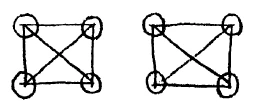
[ 7 ] It was, in essence, an extraordinarily characteristic epiphany precisely because one actually arrives at this point when, for example, following Herbart’s method—though one can, incidentally, do it in other ways as well—one attempts to symbolically illustrate the life of the imagination through drawings; one actually ends up with something similar to what one obtains when mapping out brain processes and brain regions. Where does this come from? You see, this only becomes clear through a mental image, when one looks back at the panorama of one’s life and sees how the soul life becomes independent; how, in fact, that which is grasped in the so-called etheric body is actually organized—and, to a certain extent, had already been organized at birth—into what the brain is. Then it is no longer surprising that the brain, in its formation, becomes similar to that which organizes itself within it. But one can only gain a true insight into these things when one can observe how the soul organizes itself in the brain. And just as some will ultimately find that, if a person can paint to some extent, what they paint resembles what they depict—because their mental image continues to work through their painting and creates the resemblance—so, too, what arises in the brain, or rather in the entire nervous system, as a result of the soul’s creative activity, resembles that creative activity itself or the soul’s content. But what takes place there as an activity—what is formed within the nervous system—can only be understood if one tells oneself: In reality, the entire nervous system is something that, in its actual emergence and development, is an expression of a reality that unfolds just as realistically as one perceives it in the act of imagining.
[ 8 ] So what happens is that one simply has to say to oneself: The brain, or the nervous system in general, are indeed external physical formations. But as they are, one can really only understand them if one conceives of them as imaginations that have become physical. So what the researcher of the spirit generally calls “imagination” is not something that does not exist in the empirically given world; rather, it is certainly present in the empirically given world in the form of an image, and this sometimes manifests itself—I would say—in such a grotesque, strange way, as in the case of these two people, one of whom was a physiologist and the other a philosopher, and who depicted these things in the same way.
[ 9 ] But there is something else at play here. I have already referred to the research of the psychiatrist, physiologist, and psychologist Theodor Ziehen. Theodor Ziehen seeks to explain the life of the imagination in such a way that he essentially replaces it entirely with brain activity. His explanation essentially consists of nothing more than this: he examines the life of the imagination, then considers the brain and the nervous system from an anatomical and physiological perspective, and—to the extent possible given the current state of empirical research—identifies the processes he believes are at work in the brain for any given imaginative process, or for memory, and so on. But I have pointed out that Theodor Ziehen is compelled, with this explanation—which is indeed very significant for the life of the mental image and brain activity—to stop short of the life of emotion and also the life of the will. You can follow this in Theodor Ziehen’s Physiological Psychology. There is, however, a shortcoming in this psychology. If Theodor Ziehen were to consider how, despite everything—which does indeed seem so compelling in the explanation of the life of the imagination through the processes of brain activity— one does not, in fact, fully encompass the formations of the brain and so on, but rather that one needs—I would say—to introduce an artistic principle, which is nothing other than the outward expression of the imaginative—then his explanation of the life of the imagination through the brain would not be able to fully satisfy him either. And when he wants to move on to the world of feeling, everything, so to speak, fails him. At that point, he no longer even speaks of being able to explain anything at all. That is why he attaches what is called “emotional emphasis” to mental images. That is, of course, just a word if one gets no further than that very word. He says: Yes, in certain cases we do not merely have mental images, but emotionally emphasized mental images. — He arrives at this conclusion because he cannot, after all, locate what emotion is within the brain as part of the life of the imagination, and on the other hand, he has nothing that enables him to assign something organic-physical to the life of emotion in the same way that he assigns the brain-nervous system to the life of the imagination.
[ 10 ] When it comes to the life of the brain and nerves, it is simply easier for this very reason, because, after all, researchers of Theodor Ziehen’s ilk are, for the most part, extraordinarily intelligent—both in terms of their intellectual understanding and their mathematical conception of the natural world as a whole. I say this, of course, without irony; I mean exactly what I say. Today, in science, we have applied an extraordinary degree of acumen in this direction, and it would become clear to you—if you were, so to speak, to decide to familiarize yourself more closely with the entire course of the anthroposophical movement—that I myself am by no means in favor of dilettantish rambling about all sorts of abstruse, nebulous anthroposophical mental images while arrogantly rejecting what is established in modern science—especially if one does not know what is established in modern science well enough to be able to acknowledge its full significance. I firmly hold the view that one can only make an anthroposophical judgment about modern science once one knows it. I do, however, know how much I have, in essence, had to suffer over time at the hands of those anthroposophists who, without having the slightest idea of the significance and purpose of modern science, have repeatedly lashed out at this science and believed that they could pass judgment on what has been developed through careful, conscientious methods simply by having picked up a few anthroposophical clichés. We must, of course, move well beyond this stage.
[ 11 ] Well, what we actually have here is this: One begins, at least initially, by constructing the relationships that exist between the life of the imagination and the life of the nerves and senses. But a residue remains. In a certain sense, this residue eludes our attention. For one gradually drifts from intellectual, logical, and mathematical construction into a realm where things become indeterminate—that is, one realizes: this is how the senses are, this is how the senses extend into the nervous system—and then one would actually have to proceed further into mental images. Yet every person has, to a certain degree, a vague sense of the transformation of sharply defined, mathematically constructible figures into that which, for example, cannot be grasped mathematically, but which becomes clearly evident in the structure of the brain and nervous system; and because one has this sense, one says to oneself: We will eventually gain access to those aspects of sensory and nervous life that elude direct, purely mathematical construction. One substitutes, so to speak, a distant ideal for what can, in fact, already be attained if one simply admits: In principle, purely intellectual cognition cannot plunge into this world of the senses and nervous life; rather, what is required is simply the transformation of such intellectual construction into the apprehension of an image—one that can be attained just as fully and consciously as a mathematical figure, but which does not dissolve into the realm of mathematics. I am referring precisely to the imaginative.
[ 12 ] You see, some of you may find it helpful—at least to some extent—when trying to form a clear mental image of how ordinary analytical geometry relates to so-called synthetic geometry. I would like to say just a few words about this. In analytic geometry, we actually do the following. We consider some equation y = f(x) or another equation, and if we remain within the usual coordinate system, we tell ourselves that every x corresponds to a y, and we locate the endpoints of the ordinates as those points that result from our equation. What is actually happening here? We must realize that when we deal with the equation, we do so in such a way that, within what we are handling in the equation, we always have in mind something that lies outside of it—namely, what we are ultimately seeking. Ultimately, we are seeking the curve. But the curve itself is not contained within the equation. The equation contains the ordinates and the abscissas. We are actually proceeding in such a way that we construct outside the curve, and that we then regard what we have at the ends of the ordinates as the points that belong to the curve. In analytical geometry, our equation does not actually take us into the curve itself, into the geometric figure. This is something immensely significant, when understood in the epistemological sense: that when we engage in analytic geometry, we perform operations that we then seek out again in space, but that with everything we calculate there, we actually remain outside the consideration of geometric figures. This is something one must grasp for the simple reason that one then arrives at an entirely different mental image when one moves from analytic geometry to projective or synthetic geometry. As most of you will know, in that context one no longer works with calculations, but essentially works only with the intersection of lines and the projection of figures, and thereby—at least initially, in an approximate sense—moves from merely calculating around the geometric figures to entering into these geometric figures themselves. This becomes clear when you look at how, in synthetic geometry, for example, one proves that a straight line does not have two infinitely distant points, but only one infinitely distant point, so that if one continues in this direction—I would say, “from the back”— — which can be understood quite well geometrically — one comes back again, so that a straight line has only one point at infinite distance. In the case of a plane, one has only one boundary line at infinite distance. In the case of the entire space, one has only one boundary plane.
[ 13 ] I just want to mention that these mental images cannot be arrived at analytically. It’s simply not possible. If one already has synthetic-geometric mental images, one might imagine that one could arrive at them. But one cannot arrive at them; only synthetic geometry provides them. Synthetic geometry shows one that one can indeed enter into geometric structures, which analytical geometry cannot. And as one gradually makes one’s way out of mere analytical geometry and into projective or synthetic geometry, one acquires a sense of how the curve itself contains within it the elements of bending, curving, and so on—elements that are, after all, only given externally in analytical geometry. One thus moves from the surroundings of the line—and also from the surroundings of the spatial figure—into the inner structure of the spatial figure, and through this one gains the opportunity to establish a first step toward the transition from purely mathematical mental image—which is, after all, present in the most eminent sense in analytic geometry—to imaginative mental image. Of course, imaginative thinking is not yet present in synthetic, projective geometry, but one approaches it, and this—when experienced inwardly—is an extraordinarily significant experience, one that can become downright decisive for the recognition of the imaginative element and also for confirming the path of spiritual research in the direction of truly gaining a mental image of this imaginative element. I must say I felt a deep sense of sympathy when, in the memoirs of Moriz Benedikt—a contemporary natural scientist and physician who is actually quite competent, though his memoirs are so unsympathetic because they are smug and haughty—I found a passage that seems to me to express a very true point, where he says he sorely misses, among medical professionals, the grounding provided by the study of mathematics. Now, it would of course be exceptionally good if physicians had more mathematical training, but with regard to these matters, we do indeed have to acknowledge certain shortcomings in our current educational system. On the other hand, however, from my own perspective, when I read Moriz Benedikt’s memoirs, I could not help but say: Even if medical students had the best mathematical mental images, they would by no means be able, with these mathematical mental images alone, to account for the structure found, for example, in the sensory system and the nervous system. One must therefore move toward this transformation of mathematical thinking, toward this imaginative cognition. Only then does the relevant nervous or sensory structure present itself to the mental image just as the physical-mineral structure otherwise presents itself to mathematical imagination.
[ 14 ] These are all things that can show you how, indeed everywhere, I would say, the doors are wide open in contemporary science to enter into what spiritual research has to offer; and once we are able to delve a little into the actual medical-therapeutic aspects over the next few days, you will see how incredibly wide these doors are open for spiritual research to enter into that which, after all, does not reveal itself to ordinary research. But if one continues along this path and does not wish to go beyond imaginative mental images in the way I intend to describe tomorrow—that is, if one does not wish to advance to inspired mental images— then one simply does not arrive at any possibility of recognizing anything in the human organism other than the nervous-sensory system—even approximately as strongly—as an imprint, as, so to speak, the realization of something spiritual-psychic, such that two people with completely opposing ways of thinking could draw these structures in a similar way. It is only through an inspired mental image that one is directed toward the human rhythmic system, which primarily encompasses the respiratory process and the blood circulation process. Only then can one tolerate—if I may put it this way—that outwardly almost complete lack of resemblance between the physical form and the spiritual-psychic. In fact, the life of feeling belongs just as directly to the rhythmic system as the life of mental images belongs to the nervous-sensory system. But in the nervous-sensory system, we have, in a certain sense, an external physical reflection of the mental image. In the rhythmic system, what presents itself to external sensory-empirical research bears hardly any resemblance to the soul aspect of feeling. Precisely because this is the case, external research does not even occur to the fact that this resemblance nevertheless exists, but that it is revealed only when one arrives at a mode of imagination different from that of mere figurative thought. And there, as I already indicated yesterday, one approaches a quest for knowledge that was pursued in a more primitive, more instinctive manner in the yoga system of the ancient Indians.
[ 15 ] Among all those who practice this system of yoga—which, as I have already indicated, must by no means be revived, because it is no longer at all suited to modern human beings and their changed constitution—you see the effort to replace the ordinary, normal, yet largely unconscious breathing process with a regulated one that is brought more fully into consciousness. One inhales in a different way than one usually breathes—normally and unconsciously. One holds one’s breath so that one is aware of how long one is holding it. One exhales in a specific manner. At best, our spiritual life today can be supported by such a breathing process. But we cannot practice it today in the same way that this process was carried out with special emphasis in ancient India by those who sought to attain something like the magnificent, powerful philosophy of Vedanta or the philosophical foundations of the Vedas. That would contradict the very nature of the modern human constitution. But one can still learn from this rhythmic process, which becomes conscious through the deliberate alteration of normal breathing by the will. In a certain sense, what otherwise takes place in the natural course of life is elevated into the conscious life of the will. So one breathes—that is, one carries out, in a certain sense, consciously everything that takes place during breathing in the human life process. But by carrying it out consciously, the entire content of consciousness is fundamentally transformed. Just as one incorporates what exists in the external world into one’s own organism through breathing itself, so too, when the breathing process is consciously shaped in the way I have described, one incorporates something spiritual and psychological into one’s own organism.
[ 16 ] Just consider the following. When we look at the entire human organism—if we do not stop at abstractions but seek to move toward total reality—we cannot say: what is inside our skin is merely us alone. We have within us what constitutes the process of breathing—whether it is just beginning or already underway: the transformation of oxygen and so on. But what is now within us was previously outside, belonged to the world, and what we now have within us will, once we have exhaled, belong to the world once again. In a certain sense, as soon as we transition to this rhythmic system, we are no longer organically individualized in the same way we have in our mental image when we consider only the non-air-related aspects of our organic constitution within our skin. When a person becomes fully aware that they actually change their air composition quite rapidly—sometimes the air is outside, sometimes it is inside, and so on—they can really only feel as a finger would feel as a limb of our organism, if it could attain consciousness. It cannot say, “I am something independent”—it can only feel itself as a limb of our human organism. This is how we must feel as a breathing organism. We are integrated into our cosmic environment precisely through this breathing organism, and the only reason we do not consider this integration is because we carry out this rhythmic organization as a self-evident, almost unconscious activity. When this is brought to consciousness through the yoga process, one realizes that one does not merely inhale material air and incorporate it into oneself, but that with the air one also inhales spiritual and soul elements and incorporates them into oneself. In exhaling, one in turn releases spiritual and soul elements back into the external world. One comes to know not only one’s physical connection to the cosmic environment, but also one’s spiritual and psychological connection to it. One transforms the entire rhythmic process into something into which a spiritual-psychic element is integrated. Just as the cosmic environment is integrated into the process of imagination, so too does one integrate a spiritual-psychic element into the breathing process, which is otherwise an inner, physical, organic process. As a result, however, this transformed yogic breathing process becomes—I would say—a form of knowledge with a more pantheistic character, one that less strongly individualizes the individual entities, and a different consciousness takes shape in the Indian than the ordinary consciousness. He finds himself in a different state of consciousness, in which he is, so to speak, surrendered to the world. Through this, however, he develops an objective relationship to what is otherwise his ordinary life of imagination, by, so to speak, shifting his consciousness down into the respiratory-rhythmic system as a whole. Previously, he lived within the nervous-sensory system, which is given as a sum of perceptions. Now he experiences himself—one does not know what one experiences, but as soon as it becomes objective, it appears as a perception, and thus he learns to recognize that in which he otherwise lives as perception—now he experiences himself, I might say, one level deeper within the rhythmic system. When one becomes acquainted with this inner process of experience, one understands in a new way that which breathes through the Vedas—which, in Vedanta philosophy, is not only shaped differently from how it is presented in Western education, but is also experienced directly, arising from the very experience given to that consciousness which has, in fact, shifted into the process of breathing.
[ 17 ] Now, when one delves deeper into this breathing process, one arrives at something else. But I would like to mention that only after I have more precisely elaborated on what I already hinted at the day before yesterday. I said that this yoga process is no longer relevant to us, and that the human organism has advanced since then. In our age, we can no longer immerse ourselves in the yoga process, simply because we are so strongly organized intellectually today, because our mental images—I would say—possess so much rigidity—figuratively speaking—that we would pour far more energy into the respiratory system than the Indian, with his softer mental images, ever did. Today, it would mean that a person would, in a certain sense, numb themselves or otherwise disrupt their rhythmic system if they were to approach the yoga process in the same way as the Indian. We can proceed, as I have already indicated and as I will describe in more detail later, from the imitation of the power of memory to the cultivation of the process of forgetting. By entering into this abyss—into the process of forgetting—we take hold of the breath from above and can then leave it as it is. We do not need to reshape it. We can leave it as it is, and that is the right thing for modern people. But we radiate, so to speak, into the respiratory system through artificial forgetting. We shift our consciousness into that same region, only with greater awareness, even more permeated by will than the ancient Indian was able to do.
[ 18 ] Through this, one experiences the possibility of now recognizing this rhythmic system as belonging to human emotional life. Then, when one acquires the ability in this realm to still imagine—that is, when one acquires the ability to have inspired mental images— then there is no longer any necessity for the external sensory form to resemble the psychological form—just as the brain’s structure resembles the interconnection of mental images—but the external sensory form can, in essence, be so different from the psychological form that the ordinary physiologist does not even notice the connection, as is the case with Theodor Ziehen. - But by viewing the world in a much more spiritual way, by viewing the world in a purely spiritual manner, one does notice how one can consciously immerse oneself in the rhythmic system precisely through one’s emotional life, and one then perceives the direct connection between the emotional life and this rhythmic system. But from this it will become clear to you—and with this I come back to what I touched on earlier—that simply in earlier times —after all, the Indians are merely the most representative people of what the earlier stages of human development had produced—the kind of knowledge people sought in order to go beyond the immediate perception of the world in everyday life was rooted in emotional life. It was certainly a life of imagination, but it was immersed in the life of feeling; it was permeated by feeling. The modern researcher speaks only of an emphasis on feeling. What the ancient yogi experienced—and indeed what anyone who lived within ancient cultures experienced—was an immersion in the life of feeling, but not in such a way that the vagueness of emotional life set in; rather, the full clarity of the life of the imagination was truly present, and yet feeling was not only not extinguished but even arose more intensely than in ordinary everyday life, and everything that in everyday life was, I might say, perceived as sober and prosaic was permeated by it. As they underwent a metamorphosis and deepened at the same time, the mental images took on different forms, and so these transformed mental images became imbued with such emotional content that the will was directly stirred by this emotional content, and the “old man” accomplished something that we accomplish today in a more abstract form when we use something we carry within our soul to sketch or paint. Such experiences within the yoga system were lived so intensely inwardly that it was only natural not to stop at mere drawing or painting, but to transform them into external symbolism created through external objects.
[ 19 ] Here lies the psychological origin of everything that appeared as ritual acts in ancient cultures. One must grasp inwardly what drove human beings to perform ritual acts, and one comes to understand how ancient people came to perform these acts—not out of childishness, but out of their own way of perceiving the world— to perform ritual acts and to see something real in them, because he knew that what he imagined in the practice of his cult was, shaped from within, that which essentially springs from a state of awareness in which the human being no longer stands apart but is connected to reality. He imprinted upon the cult that which the world had first imprinted upon him. As he had progressed in his understanding, he said to himself: Now, just as the physical breath from the surrounding cosmos lives within me, the spiritual essence of the world lives within me in my transformed process of consciousness, and as I, in turn, represent in an external form—in the ritual act—that which first took shape within me from the spiritual cosmos, I perform an act; I place before me an object that has a direct relationship to the spiritual content of the cosmos. Thus, the outer ritual object stood before this person of ancient culture in its symbolic form, so that he sensed in it the connection with the spiritual essences of the cosmos that he had first experienced in his cognition. And he now knew how something is concentrated—in a comprehensible way—within the ritual object or the ritual act, such that it does not exhaust itself in the external form that I have before me, but rather that spiritual-soul forces, which otherwise dwell in the cosmos, dwell within the ritual act as it unfolds.
[ 20 ] What I am telling you took place in the souls of those people who, in a natural way, formed the ancient cults out of their own insight. One can only gain a psychological understanding of these cults by opening oneself to inspired insight. These things simply cannot be explained in the superficial way that is generally done. One must delve deeply into the human being’s essence and ask how the various activities of the human organism developed in succession, so that such things could arise in those ages—just as, for example, ritual practices arose in a particular age. For what are today considered ritual acts are actually frozen remnants of what took shape in ancient times; and this is why it is so difficult for people today to understand the justification for ritual, since they can rightly no longer say to themselves that this kind of relationship to the external world is still justified today.
[ 21 ] But we can also see in other respects how the spiritual realm has been at work throughout the course of human development. What underlies the creation of a ritual object or the performance of a ritual act is an inner, deeply imbued insight, attained in the way I have described. However, as humanity has continued to develop, something else has come into play. Today, it still lies more or less in the unconscious. But what I have already described—which becomes particularly evident when one advances to imaginative insight, namely that the nervous system, the nervous organization, emerges from the soul-spiritual—this, too, develops in the course of human history. And we must say that, especially since the middle of the 15th century, humanity—in its representative members—has simply become such that this thoroughly instinctive incorporation of the soul-spiritual into the nervous system has become stronger than it was in the past. We simply have a stronger intellect today. This is plain to see when one studies Plato and Aristotle. Today we have a differently organized intellect. I have described this in my Riddles of Philosophy based on the history of philosophy itself. We engage our intellect in a different way. We are simply reworking what has been strengthened and shaped more intensely on the soul level in the course of evolution. But precisely because it has been shaped more intensely, it has also become more independent. Humanity’s consciousness—including its philosophical consciousness—has not yet fully taken notice of this growing independence of the intellect vis-à-vis the human nervous system. And because—I would say—human beings today have become stronger inwardly, because they organize their nervous-sensory system more thoroughly from the soul-spiritual realm, they feel the need to apply this more intense intellectual activity to the external world. Just as in ancient times people applied the knowledge—the knowledge gained inwardly—to the creation of ritual objects and the performance of ritual acts, just as they strove to carry what they had recognized out into what they did, so in more recent times people have developed a longing to satisfy this independent, now stronger intellect in the external world as well—to draw something from the external world to which the intellect can apply itself without first being sustained by inner life. The intellect wants something in which it can live as the elevated cosmic element once did in the ritual object and the ritual act. It wants to have something before it that it can set forth in a way that is the opposite of how the ritual act was achieved.
[ 22 ] That—please bear with the paradox, but psychologically this is how it is—what is being strived for here, where, in a sense, what is experienced inwardly is brought to the fore, where only the intellect seeks to organize the movements so that it may live within the object, just as the cosmic once was meant to live within the cult object—that is the scientific apparatus used for experimentation, and the experiment is that in which modern man, moving toward the opposite pole, satisfies the intellect—which has grown stronger—just as he once satisfied his cosmic feeling in the ritual apparatus and in the ritual act. These are the opposite poles. In relation to an ancient, instinctive culture of clairvoyance, it was the impulse to externalize the inner cosmic experience in the ritual object and the ritual act. What the modern intellect—which has become more intense—is, seeks to manifest itself externally in composed movements that are separate from all inner life, in which nothing subjective lives, but which are nevertheless composed precisely from the subjective insights the intellect has attained through experimentation. As strange as it may seem to you that, from the same underlying foundations, cult emerges on the one hand and experimentation on the other, once one comprehends the total human being, one will also be able to arrive at an understanding of these polarities. On this basis, let us continue our discussion tomorrow.