

Naturalistic Observation, Experimentation, Mathematics
and the Stages of Knowledge in Spiritual Science
GA 324
22 March 1921, Stuttgart
Translated by Steiner Online Library
Sixth Lecture
[ 1 ] So far, I have spoken of those supersensible faculties of cognition that I refer to as “imaginative cognition” and “inspired cognition.” Today, I would like to begin by saying a few words about how to attain these faculties of cognition. Of course, I can only touch on the general principles and specific details here. You will find a detailed account in my book How Does One Attain Knowledge of the Higher Worlds?. But today I will emphasize precisely what is important in the context I have set out to address in these lectures. What I have described to you, so to speak, as imagination—in terms of its inner nature within the perception of the world—can be attained by, as I have already indicated, reproducing the process of memory on a different level. The essence of the process of memory lies in its ability to retain what approaches the human being in external experience. The process of memory retains this in a pictorial way.
[ 2 ] The point is that we must first reach some understanding regarding certain characteristics of the ordinary process of memory, from which—yes—pure memory, that which can be called “memory” in the true sense of the word even in everyday life, must first be distilled. Memory has, for one thing, the peculiarity that it tends to alter what has been experienced. Perhaps I need not elaborate on this further, since most of you are likely well aware of how one can sometimes be driven to despair when trying to tell someone something, and as you tell the story, you can clearly hear for yourself what has actually become of what you experienced as it passed through your memory. Even in everyday life, a certain degree of self-discipline is required if one wishes to strive more and more toward pure memory—toward the ability to truly have things at one’s fingertips in the form of an image, so that the image is a faithful reproduction of what was experienced. But one should also be able to distinguish between what, in relation to memory, is the legitimate activity of the imagination—one that works toward the artistic—and what constitutes the falsification of experiences. It is surely sufficient, for now, to point out that the difference between working toward imaginative activity and working toward the falsification of memories must lie in subjective experience, if one wishes to maintain a healthy state of mind at all. One must be fully aware of how one reshapes things in the imagination, and how that which does not take place through such arbitrariness—that which, I might say, takes place as if through a kind of inner, self-evident spiritual affinity—must become ever truer, ever more faithful. But one will, I would say, both from the positive side—the inclination toward imaginative activity—as well as from all those forces that are at work in distorting and reshaping memories, one can recognize from all of this, when studied psychologically, that even when what lives in the powers of memory is recorded in a proper form, something can be shaped out of it that need no longer be mere memory. One can also point out that some mystical experiences are, at their core, essentially distorted memory images; yet one can gain a great deal from the study of such distorted memory images, which then appear as quite serious mystical experiences. What concerns us at this moment is that, through what I have already indicated, one can achieve a transformation of the very same soul force that lives in memory into something else. However, this metamorphosis must take place in such a way that the original power of memory is not thereby driven toward falsification, but rather that this original power of memory—by learning to transform it into something else—is all the more driven toward inner fidelity and truthfulness. I have said that if one continually strives to bring into one’s consciousness easily comprehensible mental images—which one can assemble from their individual parts and then survey just as easily and arbitrarily as mathematical ones—and if one brings such mental images into one’s consciousness, retains them there, and rests upon them, but not in such a way that one is, say, fascinated by them, but rather in such a way that at every moment one oneself evokes this state of resting with inner volition, then one gradually comes to transform the process of memory into something else that one did not know before. As I said, more detailed information can be found in the book mentioned and also in my Outline of Esoteric Science.
[ 3 ] If one continues with such exercises long enough—how long is necessary varies from person to person—and if one is able to devote sufficient inner soul energy to them, then one eventually comes to experience images that, in terms of their formal, inner soul experience, are quite similar to memories, but are not memories in terms of their content. And gradually one has acquired the ability to live within such imaginations, which one initially creates oneself. Then this ability gives way to another: imaginations arise within the soul, and one can truly—if one simply persists— I would say, the mathematical state of mind I have spoken of—to be perfectly clear at any time as to whether one is being deceived by some mental image, whether one is succumbing to suggestion or autosuggestion, or whether one is indeed in that state of mind with complete inner freedom of will. One comes to have mental images with the formal character of a memory image, only progressively more intense. I expressly note that, at first, these imaginative mental images have the character of recollections. They are only enriched—so to speak, imbued with a more intense experience—through inspiration. At first, they certainly have the character of recollections, except that one knows that what they contain does not relate to any experiences one has gone through since birth. They express something just as vividly as memories express these personal experiences. They refer to something objective. But one knows quite precisely that this objective reality is by no means contained within the sphere that one otherwise surveys through memories. At first, however, one also has a clear awareness of this: in these imaginations, one has something that possesses a strong inner reality. Yet at the same time, one is fully aware that one is dealing with images—admittedly images of some kind of reality, but still images.
[ 4 ] The point is to gain insight into what is particularly necessary for mental images—specifically, if they are to be pure—namely, that they not be permeated by anything foreign. I will now describe the process from an external perspective—it is not possible to present everything in detail in just a few lectures. One gains, so to speak, an insight into how the mental image is formed from external experience, how it, in a certain sense, passes into the organism, how it—to put it quite abstractly—continues to exist there, and how it can be retrieved as a memory image. One notices that a certain interdependence exists between what lives in our memories and the physical states of the human organism. Right down to the physical states, we are, after all, dependent on the human organism with regard to our memories. In a sense, one entrusts what one has experienced to one’s own organism, and one could now describe in detail what fates these entrusted images of experiences undergo within the human organism. But that in itself would be a chapter in Spiritual Science. But no matter how much our organism may be involved in absorbing what then lives on as memory, no matter how much it may be involved in the content, it must not be involved to the extent that it adds anything substantive to the memories if the memories are to be pure and true. Once the mental images of the experience have been formed, nothing else of a substantive nature may flow into the memories.
[ 5 ] Anyone who is fully aware of this fact in the life of memory can indeed distinguish—and knows what it means—when images arise in their consciousness that have the usual formal character of memory images, but whose content does not relate at all to anything personally experienced, and which, at first glance, is completely different from everything personally experienced. But in this very experience of the imagination itself, it becomes clear how necessary it is to strengthen the actual psychological power, to reinforce it more and more. For what must one actually do? Whereas otherwise our established mental organization takes on—as that which is organized—the mental images we have formed in the course of life and mediates memory, —in other words, so that, if I may put it this way, the mental images formed in life do not sink into the abyss but are held back by our mental organization so that they can be reflected back at the moment of recollection—this must not be the case with imagined mental images. We must be able to catch these through purely inner, spiritual forces. To do this, it is necessary that we acquire what makes us stronger than we usually are in regard to catching such mental images, to holding onto such mental images. Now there are various means for this, which I have described in the books mentioned. But I would like to point out one thing to you, and from what I am about to say, you will recognize the connections that exist between various demands of life—which must simply arise from anthroposophical Spiritual Science—and the fundamental conditions of this anthroposophical research.
[ 6 ] Anyone who approaches the external world in such a way that they first allow the sensory impressions of the external world—the phenomena, as one might say—to reach them, and who then uses their intellect to speculate about these phenomena in all sorts of ways—which can indeed sometimes be extraordinarily interesting—will hardly find the strength for a mental image. In this regard, certain developments in recent intellectual life were downright designed to suppress the power of imagination. For when one begins not merely to connect the phenomena of the external world—which unfold in the mineral-physical realm—with the intellect, using the intellect merely as a means to link the phenomena together, but when one begins to search, starting from the phenomena, for all manner of things that is supposed to lie behind them and that one wishes to construct, then one actually destroys one’s imaginative capacity.
[ 7 ] Perhaps I may use an analogy. You have, after all, more or less engaged with what, in the spirit of Goethe’s worldview, might be called phenomenalism. Even in conducting his experiments and making his observations, Goethe employs reason in a different way than it has often been used, particularly in the recent phase of modern thought. Goethe employs reason in much the same way as we—and here comes the comparison I wish to make—apply it when reading. We read in such a way that we form a whole out of the individual letters, and that, when we have a line before us, for example, and have succeeded in grasping a whole internally with our consciousness through the individual letters and words, we have then solved the riddle that this line presented to us. It would never occur to us to say, for instance: Here is a B, an r, a 0, a t. I want to look at the B. This B, as such, doesn’t tell me anything in particular. Because it tells me nothing, I must search for what actually lies behind this B, and there I might come to realize that behind this B lies some mysterious otherworldly element that makes an impression on me and that the B conveys to me. - I don’t do that; instead, I look at the letters here and form a whole out of them: I read. Goethe approaches the phenomena of the external world in this way. He doesn’t take just any light phenomenon and philosophize about what vibrational states might lie behind it in some otherworldly realm. He does not use his intellect to speculate on what might lie behind the phenomena, but rather uses this intellect precisely for the same purpose for which we use it when we piece the letters together. Thus, he uses the intellect merely as a means to group the phenomena so that, in their combination, they can be read as if by themselves. Goethe thus uses reason in relation to the external physical-mineral-phenomenological world—I would say—as a cosmic means of reading. He does not speak at all of any “thing-in-itself”; he does not speak at all of anything that must be sought behind the phenomena and that lies behind them. Through this, however, starting from the primordial phenomenon, he arrives at a faithful understanding of the phenomena—which can be compared, for example, to the letters of the mineral-physical world—all the way to the more complex phenomena, which he either seeks in observation or constructs through experimentation. He interprets what is spread out in space and time and deliberately refrains from using his intellect to seek anything behind the phenomena; rather, he uses it either to observe the phenomena in such a way that they illuminate one another and express themselves as a whole, or to conduct experiments and devise experimental setups. For him, reason is nothing other than, first, that which designs the experimental setup, and second, that which brings the individual phenomena together so that the phenomena themselves can then reveal their meaning. By adopting such a way of viewing the phenomena—and making it more and more one’s own—and by striving, in this conception of the external world, to go even beyond Goethe—for he stood, after all, at the beginning of such a way of thinking—one acquires a certain sense of belonging, even an experience of oneness with the phenomena. One immerses oneself in the phenomena in a much more intense way than is the case when one immediately employs the intellect to, in effect, pierce through the phenomena and search behind them for all sorts of things that are, in the end, merely contrived. Of course, what I am saying always applies only to the contrived elements themselves.
[ 8 ] The point is to train oneself in phenomenology, to train oneself in a pure fusion with the phenomena of the external world, so that one gradually develops a very specific sense of this fusion. Once one has, in this way, internalized this fusion with the phenomena as such, and then recalls such phenomena of the external world, what emerges in one’s memory above all is a fully saturated image—while one clearly notices that the mental images of most people in our contemporary culture are extraordinarily strongly bound to verbal concepts. As one gains the ability to avoid clinging to verbal concepts—which, after all, essentially shape memory only in such a way that they force the ultimate connection out of us, as if from the subconscious into consciousness—the more one comes to have a vivid, pictorial memory; the more one comes, for example, —let’s say, when as a boyish good-for-nothing you played this or that game, or engaged in this or that prank—that you truly see yourself in the image doing it, tugging at the other person—you see yourself grabbing the other person by the earlobe, giving him a slap, and so on— when it’s not just faded memories that surface, but actually sharply defined images—yet one retains the same inner freedom in relation to them as one does toward ordinary mental images of memories—and when one notices how, through such recollection, one’s interest in the outside world grows, how, I’d like to say, that intimate coexistence with all sorts of small details of the outside world in these images penetrates our consciousness—not because these are our memories, but because they arise—I’d like to say, as objectively as any other experience—won’t you understand me when I use such expressions? This happens because our language today simply does not yet provide generally usable words, and because people try, through all sorts of grotesque words, to point out precisely what is at stake here—: when we are able to feel as though we can caress such memories or terribly annoy them, when the inner life becomes as vivid in such visual memories as it can be—as it does when the experience of the external world itself is present—then we have strengthened the power we need to hold imaginative mental images in our consciousness in the proper way.
[ 9 ] And then one can set about doing the exercise again and again—to dispel such imaginings—so that, in a sense, one repeatedly immerses oneself in empty consciousness. It is an exercise that also strongly awakens a sense of inner freedom: when one deliberately brings such mental images into consciousness, then removes them again, and in this way evokes a kind of inner rhythm in meditation, in concentration, and in the formation and removal of mental images. In doing so, one evokes a strong inner flexibility of the soul—the exact opposite of the state of mind found in psychopaths of any kind. It is truly the exact opposite, and those who compare what I have just described here to any kind of psychopathic condition merely demonstrate that they have no mental image of the matter.
[ 10 ] When one then comes to reinforce forgetting in this way—that is, when one is able to consciously and willfully carry out internally the very same activity that is otherwise performed involuntarily in the process of forgetting—only then does one realize how what one previously knew is an image of reality—it is imagination—is now filled with what reveals to us: that which appears in the image is reality, spiritual reality. One has arrived at that abyss from which, as it were, spiritual reality—which is, after all, integrated into all external, physical-sensory reality—shines out toward us from the other side of existence. So you see that it is actually necessary, first of all, to clearly grasp the meaning of the external world—the meaning one must possess in order to adopt the correct attitude toward these imaginations. Anyone who merely wishes to speculate about phenomena—to pierce through them, as it were, and to speculate about what lies behind them, which is supposed to be the true reality—will find their ability to hold onto imaginations and to deal with them weakened.
[ 11 ] When one now comes to transition to the inspired life—that is, to experience the reality of the spiritual world in the same way that one otherwise experiences the physical world through one’s external senses—then that peculiar phenomenon arises that makes one say: Yes, only now do you actually understand what memory means. Memory actually means that the mental images you have gained from your experiences sink into your organism and there—in a figurative sense, though the comparison is a kind of technical term; it is more than a mere comparison—function like a mirror in relation to the objects situated before it.
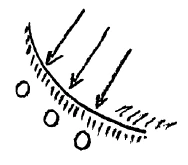
[ 12 ] The mental image is retained by the organism, whereas the mirror, in contrast, is bound to always reflect whatever is in front of it. Thus, humans have the ability to transform the reflection into an arbitrary one—that is, to have the organism as a whole, and above all the nervous system, reflect back what they have entrusted to their memory. Through this, we can say, what has been taken in as mental images by the organism is retained in such a way that one cannot see beyond it, just as one cannot see behind a mirror. One does indeed get the impression: When you look inward at your memories, you must tell yourself that the very fact that you have a memory prevents you from immersing yourself in your inner self. You cannot enter your inner self, just as you cannot get behind the mirror with your vision of the reflected objects.
[ 13 ] It is precisely what I am telling you, expressed, of course, through comparisons. But the comparisons do, in fact, represent the “facts of the matter,” and—you see—this becomes evident in that, at the very moment when, through inspiration, the imaginations reveal themselves to one as images of a spiritual reality, the “mirror” ceases to exist for these imaginations. Now, when the mental image rises to the level of inspired vision, the possibility of seeing through oneself begins, and only then does one’s inner self appear in what is actually its spiritual aspect. But what does one come to know there? Well, when one reads such mystics—let’s say Saint Teresa, Mechthild of Magdeburg, and so on—one often encounters, and from a certain point of view quite rightly so, extraordinarily beautiful mental images that can evoke a truly devotional mood. For those who are now beginning to see through what I have just spoken of here, precisely such mystical visions cease to be what they very often are for the nebulous mystic. For those who arrive at this inner vision not through states that are, in essence, abnormal—as are found in such mystics—but through the development of their cognitive faculties, as I have described, reaches this inner vision—such a person learns not only to describe what he experiences in the moment, as Mechthild of Magdeburg or Saint Teresa and others do, but also to recognize the inner nature of the human organism. No matter how sober this may seem to the nebulous mystics—what I am now setting in place of their mystical, nebulous images—it is nonetheless the truth toward which one must actually strive if one wishes to attain true knowledge, rather than intoxication in inner mysticism. One now learns to recognize—because the mirror is gone—one learns to look inward at the lungs, the diaphragm, the liver, and the stomach. One learns to recognize the human organism from within, and in doing so one also comes to realize how, fundamentally speaking, mystics such as Mechthild of Magdeburg or Saint Teresa, too—though through certain abnormal states—beheld the inner world, only that for them this inner world was shrouded in all manner of mists as they gazed upon it. They then describe this mist, which the true researcher of the spirit must penetrate.

[ 14 ] It is, of course, something—I would say—shocking for a person who cannot relate to such things if, hypothetically speaking, someone were to read aloud a sublime chapter from Mechthild of Magdeburg, and a true spiritual researcher were then to say to that person: “Yes, you can really see that when you come to look inward at your liver or your kidney.” — But it’s no use; that’s just how it is. To those who would prefer to see things differently, I say: That’s how it appears. — But for those who see through the whole matter, this is precisely where the true relationship to the actual mysteries of the world begins. For they now learn to recognize from which deep foundations of existence precisely that which is this human organism has emerged, and they come to realize how little one knows about the human liver, the human kidney—not to mention other organs—if one merely cuts open a corpse or, for that matter, cuts open a living person during surgery and views this human organism from only one side. It is indeed entirely possible not only to understand the human organism from this outer, material perspective, but also to understand it from within. Only then do you have spiritual entities in your consciousness—and you even have such spiritual entities in your consciousness that show you that the human being, as he stands there with his organism, is by no means a being standing entirely alone in the world, one that can be comprehended if you think of him as enclosed within his skin. Rather, fundamentally speaking—albeit in a somewhat different sense—the situation is such that through this kind of insight one discovers that just as the oxygen I now have within me was outside me a moment ago and is now at work within me, so too—albeit extended over long periods of time—is that which functions within me as my internal organization, as my liver, my kidneys, and so on: it is shaped from the cosmos and is connected to the cosmos. I must look to the cosmos and its constitution if I want to understand what lives in the liver, kidneys, stomach, and so on, just as I must look to the cosmos with its air if I want to understand what, in fact, is the substance that works in my lungs, then carries all sorts of things on into my blood circulation, and so on. When one advances in this way through true spiritual research, one does not merely come to know, for example, some narrowly defined images of individual human organs; rather, one learns to recognize connections—one observes the connections between the human organism and the cosmos.
[ 15 ] Now it is of the utmost importance not to overlook one thing: that we arrive at an experience which I can only, I would say, present to you here in a simple, symbolic way through this image. If we take together what we have been considering in these days and hours, we can form the following mental images. Our senses are, in a certain sense—as I have said—channels through which the external world, with all its events, flows into us. But these senses then extend into our inner being, and I have described to you how a person comes to gradually perceive subjectively this activity—which, after all, exists in relation to what lies deeper within than the senses—this activity that has been acting on the nervous system since birth, shaping and forming it—how a person experiences it subjectively as a retrospective view of life, as a panorama of life, how they discover there, in the configuration of the nervous system, that this nervous system itself represents the externally realized, physically and sensually realized images of that which is actually soul-spiritual, so that one can say: one experiences imagination, and one then experiences how imagination plays itself out in the formation of the nervous substance. Of course, this is not to be taken in a literal sense, because the nervous substance has already been shaped before birth. I will return to this tomorrow. But essentially, what I am saying holds true. So we can say: Yes, the activity continues there; one notices quite clearly how the activity continues there. It is the activity that, so to speak, carves itself into the nervous system. For those parts of the nervous system that are fully developed, this carving involves a process of traversing the nerve pathways; for those parts that are still malleable—particularly during childhood—it is a genuine process of shaping, a formation that still arises from the imaginations. This is contrasted by the rest of the human organism—which I will discuss later—namely, that which serves as the support for the muscles, the bones, and so on, or other supports for the nervous system: the entirety of the organic tissue. But then one can experience the following, and to make this experience even clearer to you, I would like to speak to you about the following.
[ 16 ] I once gave a lecture for the Anthroposophical Society on what I had referred to in my lectures as “Anthroposophy.” At that time, I presented as much of this anthroposophy as had emerged from my spiritual research. There was then a demand for these lectures to be printed, and I set about writing them down. In the process of writing them down, however, something else emerged. Not that anything in what had been presented initially had been changed, but it simply became necessary to add a few things that provided further explanations. But it also became necessary to formulate the material even more precisely. That took a year. Then another opportunity arose. The Society’s General Assembly was held once again. At that time, people said that the “anthroposophical” lectures should indeed be sold at the General Assembly, so they had to be completed. I had then announced a different lecture series for this next General Assembly and sent the first sheets of this Anthroposophy to the printer. They were printed immediately. I thought I would now be able to continue writing. I did continue writing for a while. But it became increasingly necessary to add more to the more detailed explanations. It all ended with a whole number of sheets having been printed. I had written up to that point. One sheet turned out such that the sixteen pages were no longer filled; instead, I believe only thirteen or fourteen were filled. The others were blank, and I was supposed to keep writing. In the meantime, it had become clear to me—there were other reasons for all of this as well, but I want to mention one of the reasons that led to this event, specifically in relation to what we’re discussing here—the time came when I said to myself: “In order to truly bring this matter to a conclusion as I ought to and wish to have it now, a year later, it is necessary to develop more precisely a certain mode of thinking—a specific elaboration of imaginative, inspired cognition—and to apply this mode of cognition specifically to these anthroposophical questions.” So I set about doing something negative first: setting aside the entire “Anthroposophy.” It still lies there today, just as it was printed back then—many sheets already—and I thought I would first really explore the continuation. Then I became thoroughly acquainted with something I would now like to describe to you. I can only describe it to you schematically. But what I am describing schematically to you is a vast sum of inner experiences that are, in fact, methods of knowledge in the study of the human being.
[ 17 ] It became increasingly clear, in fact, that anthroposophy, as it was originally intended, can only be brought to completion when one comes to see, through inner contemplation, how what one truly perceives in inner vision as a spiritual-soul activity at work within the nervous system can be continued to the point where one reaches a certain point internally —the point is actually a line lying in a vertical direction, but I want to present the matter here only schematically; for certain phenomena, the point lies higher up, then lower down, and so on; it may not be possible to describe this in detail during these lectures, I simply wish to provide, so to speak, a cross-section of the whole—until one reaches this point where one then clearly perceives that the entire spiritual-soul activity advancing from the outside toward the inside—which one grasps through imagination and inspiration—intersects. But as it intersects, one is then no longer free in the exercise of this activity. One is, of course, not entirely free beforehand either, as I have described. Now one becomes even less free. One notices that the whole process undergoes a change. One becomes increasingly constrained within imaginative-inspired mental images. To put it concretely: when one grasps, in imaginative-inspired mental image, that which is sensory perception and its intellectual continuation for the eye—and thereby arrives at the imagination of the organ of sight—that is, when one comes to grasp the organ of sight through imagination that is inspired from within—then this activity continues inward; a crossing occurs here, and then, with the activity by which one has just encompassed the eye here, one encompasses another organ. It is essentially the kidney.
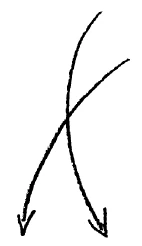
[ 18 ] And so on for the other organs. Whenever one continues this imaginative, inspired activity into the inner being of the human being, one finds that one, as it were, encompasses with this inspired imagination those things that are already fully formed organs—at least completely formed in their structure by the time a human being is born—and thus advances toward a true inner vision of the human organism. It is a very particular difficulty, and since at that time I was not only supposed to finish writing the book but also to give another series of lectures—which in turn required further research—you can imagine that it was not easy to complete this work using the method I had developed back then—it has been many years now.
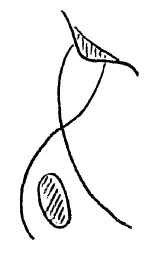
[ 19 ] I just need to mention that the difficulty lies in the fact that, at first, one is constantly set back. This true continuation is something that requires a great deal of inner strength to sustain if one is to succeed. One must, in fact, resolve again and again—I would say—to strengthen and intensify the power of mental images, of the inner work within the soul, in relation to love for external nature. Otherwise, one is easily and simply pushed back. You notice that you are turning inward, but you are pushed back again and again, and instead of what I would call this “inner contemplation,” you actually end up with something that is not quite right. You must overcome what develops there as a kind of pushback.
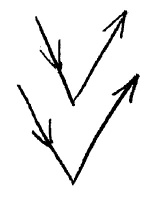
[ 20 ] Well, I wanted to tell you this story so that you can see that the spiritual researcher is already able to point out those moments when he is grappling with certain problems in spiritual research. Unfortunately, in the years that followed the event I described, my time has been so filled with all sorts of things—especially in recent years—that what I would have to describe as a particularly necessary, indeed indispensable, task—the completion of this Anthroposophy—has not been possible. For every time there is even the slightest prospect that Anthroposophy might be further advanced, I am called upon for this or that; then this or that becomes necessary; then this or that meeting must be held in this or that area of our current work. These are all things that are, of course, necessary in their own right. But there is certainly work to be done, especially as the number of people working with us on anthroposophical and social tasks continues to grow, so that the few individuals who today at the Center are actually forced to expend energy they do not really have might, first of all, be able to develop their abilities through fruitful work, and secondly, so that they might be relieved of some of their burden—which they very much need! We have a very great need to address, in particular, all that which is unobjective—that which plays out in such matters as you can observe right now during your current visit, that which comes to light through such scoundrels as are now asserting themselves all around us as slanderers—but which nevertheless necessitates a defense in our present time, when people who wish to be free are so easily influenced by such negations of life—it would indeed be necessary for us to receive support in what is required to develop the anthroposophical worldview and to allow anthroposophical thought to flow into social life. You see, if you create a mental image of how, in this way, what is essentially perceived up here—in a form, I might say, held more firmly in abstraction—weaves itself down into an organ, into the embrace of an organ that is already concretely present, then you will also be able to appreciate that there is indeed something in such an insight into the human organism that can build a bridge to practical activities, which must have their foundation in the contemplation of the human being and his relationship to the world. I have already drawn your attention in another context to how one learns to perceive—simply by cultivating imagination within oneself—not only the sensory sphere and its extension into the nervous system, but also the plant world. By progressing to inspiration and then being able to unfold such spiritual research, one first comes to know all the forces at work in the animal world. But one also comes to know many other things that find only their outer, physical-sensory expression in the animal world. One learns to recognize the nature of the respiratory system and to understand the outer form of this respiratory system based on these relationships. This external form of the respiratory and circulatory systems is not, in its external configuration, as directly similar to the life of the imagination as the nervous system is—which, as I showed you here yesterday, is so similar that two people standing at different vantage points could draw similar pictures. By coming to know, in parallel, the external world in its various realms and the human being from within—and tomorrow I will add what this inner understanding contributes to a deeper insight into the entire human being and nature—and when one comes to know the human being in this way in relation to their surroundings, a great many relationships between the human being and their environment are revealed. Above all, for example, this opens up the possibility of gaining insight in this way into the nature of an organ and its connection to what exists outside in the realm of nature, and thereby finding a rational path from a spiritualized physiology to a genuine therapy. This offers the opportunity to re-cultivate what was once gained through an instinctive, inner contemplation. I have spoken of the yoga system, and I could cite other, older systems through which the connection between the human being and the environment was viewed in an instinctive, childlike way. In essence, therapeutic guidelines still stem from this era; though perhaps somewhat modified today, they remain among the most fruitful in therapy. Shaping therapy in the way we need it will only be possible through the Spiritual Sciences, and by gaining insight into the connection between the human organs and the cosmos, what will truly emerge is a form of medicine based not merely on external experimentation but on inner contemplation.
[ 21 ] I just wanted to cite this as an example of how Spiritual Science must have a stimulating effect on the individual sciences. Just how necessary this is today is evident from the fact that, on the other hand, external, empirical research—which has certainly not been idle, but has in its own way achieved magnificent results within the scope of what was possible on its own ground—is raising questions everywhere. Take, for example, external physiology, external pathology, and so on; the questions are everywhere. Anyone who studies these matters today with a clear mind knows that the questions are there. They demand answers, just as they ultimately do in the realm of external life. The great questions are there. They demand answers. Well then, Spiritual Science does not wish to overlook the great and triumphant achievements found in the other sciences. But it also seeks, for its part, to study the questions that arise from them, and it seeks, for its part, as precisely as can be taught in the other sciences, to set out on the path toward solving that which—even for sensory-empirical research—can ultimately be found only through spiritual research! More on this tomorrow.