

Naturalistic Observation, Experimentation, Mathematics
and the Stages of Knowledge in Spiritual Science
GA 324
23 March 1921, Stuttgart
Translated by Steiner Online Library
Seventh Lecture
[ 1 ] It is, of course, due to time constraints that I have been able to present only a very brief, sketchy overview of some of the points I have raised here regarding the very broad topic of these lectures—and, in particular, that I have been able to merely hint at certain implications. The aim is simply to offer a few suggestions regarding mental images that, I would say, lie at the threshold of anthroposophical Spiritual Science, and you will surely have gained a clear sense from what has been presented that everything touched upon here certainly requires further elaboration.
[ 2 ] I have spoken of what, through a certain inner work of the human soul, connects to everyday human cognition and also to ordinary scientific cognition as special kinds of knowledge, and I have called the two kinds of knowledge I spoke of initially “imaginative knowledge” and “inspired knowledge.” Yesterday I attempted to show how, through this interplay of imaginative and inspired cognition—while taking into account a certain experience that I described yesterday as a kind of inner intersection of consciousness—an understanding of the human being can arise in connection with the understanding of the environment. Now, if what one experiences in relation to this inspired, imaginative cognition is further developed through the continuation of certain exercises—which you will find described in my books—then something arises for which, in a certain sense, there is already a name in ordinary life—and this is quite significant— for the person engaged in higher spiritual practice, there arises that which he can call “intuition” in exactly the same sense as he speaks of imaginations and inspiration. “Intuition” is, after all, a word that is already used in everyday life to describe a kind of insight that is admittedly not sharply defined but rather more intuitive. However, this intuition—which is very often spoken of and which is a vague kind of insight—is not what the researcher of the spiritual world means when he, for his part, speaks of intuition, although there is certainly good reason to conceive of the undeveloped, vague nature of ordinary mental images as a kind of preliminary stage to what is attained in true intuition. True intuition, however, is a mode of imagination and a state of mind—and here again I must draw on mathematical thinking—that is just as thoroughly permeated by inner clarity of consciousness as mathematical thinking itself. This intuition, in particular, is attained through a continuation of what I have called the exercises for attaining forgetfulness. These exercises must be continued in such a way that forgetting becomes a kind of selfless self-forgetfulness. When these exercises are then continued systematically and precisely, what arises is precisely what the researcher of the spirit calls intuition in this higher sense. It is the very kind of cognition into which inspired imagination ultimately flows.
[ 3 ] Before I continue with my arguments, I must emphasize the following to avoid any misunderstandings. I can easily imagine that someone might raise a certain objection to what I presented yesterday. I can assure you that anyone who proceeds conscientiously as a researcher of the spiritual realm will always raise such potential objections themselves. This is precisely what must be characteristic of the spiritual research referred to here: that, I would say, with every step one takes forward, one always pays extraordinary attention to where objections might arise from and how these objections can be addressed. I can easily imagine the objection that someone might say: Well, what was said yesterday about this experience of a crossroads when looking inward, about this grasping of the inner organization of the human being, could very well be based on an illusion. For the researcher of the spiritual realm, as understood here—who, as you have clearly seen, must not be a dilettante in terms of external scientific rigor—will of course know something about the inner organization of the human being from ordinary anatomy and physiology, and one might then easily believe that he is succumbing to certain forms of self-deception by incorporating into his inner vision what he already knows from external science. — Well, all forms of self-deception are something that the spiritual researcher fully incorporates into the course of his path, and the objection that might be raised here is resolved by the fact that what one perceives in this inner contemplation of the human organism is entirely different from what one can know through external anatomy or external physiology. What one perceives as inner organization is, after all, something one could call the contemplation of the spiritualized human inner being. The only thing in which ordinary physiology and anatomy can help one is, I would say, a kind of mathematical point. At most, it provides a point of reference through which one can more easily relate what one actually has in the soul—a completely independent spiritual perception gained through observation, which thus has a content determined in and of itself—to the corresponding organ, if, for example, it pertains to the lungs, when one already knows something about the lungs through external physiology and anatomy, rather than when one knows nothing about them — through which, if it is, for example, the inner structure corresponding to the lung, one will be able to relate it more easily to the lung if one already knows something about the lung through external physiology and anatomy than if one knows nothing about it. In contrast, the two things—the content of the inner intuition of the nature of the lung and what one knows from external physiology and anatomy—are two entirely different types of content that must be brought together only retrospectively; they demonstrate precisely how, even at this stage of cognition, the relationship between what is grasped internally through mathematics and what is given in external observation—in the physical-mineral realm—is repeatedly established.
[ 4 ] The same distinction that exists between what is grasped internally through mathematics and what is given in external perception also exists between what one attains in the realm of inspired imagination and what one comes to know from another source through external research. Of course, it must be assumed throughout that there is absolute inner clarity of consciousness. If we now ascend further from inspired imagination to intuition, something similar emerges to what became apparent at the beginning of our consideration. There we said to ourselves: Through the senses, the external world with its events reaches in like waves, so that we construct within the senses just as we construct the external world with our mathematical lines and figures. — There is thus a penetration, a truly essential penetration of the external world into our inner spatial organization on this one side of our human body. When now everything I have described comes, so to speak, to intuition on the other side, one has a similar experience. One has the experience that, above all, one now knows that everything one experiences within the human being is something that is, in and of itself, inexplicable—or perhaps, to put it better, fundamentally unfinished. When one comes to know oneself through intuition, one remains, as long as one stays with this self-knowledge, fundamentally quite unsatisfied. In inspired imagination, when it extends to self-knowledge, a certain satisfaction does arise. One learns to recognize what rhythmic systems are within the human being. This is a difficult process of recognition. It is a process of recognition that one can never truly complete, because it essentially leads into infinite developments. But in this process of recognition, one at least has the inner awareness: You come to know yourself in your connection with the world; you can develop very specific, concrete insights—as I mentioned yesterday—for example, regarding the relationship of the healthy organism to the cosmic environment, but also regarding the relationship of the diseased organism to the cosmic environment; and through this, you can, in a certain way, penetrate into the human inner being itself.
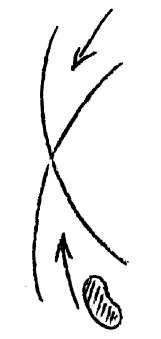
[ 5 ] I would also like to mention here something I already brought up during the previous course here. Through this inspired imagination, for example, one can gain insight into how the human organism must actually function in order to accommodate something like a sense organ. Now, the human organism is, in a sense, predisposed outwardly toward this sense organ. This human organism manifests itself by sending a certain—if I may use the term—system of forces to each individual sense. One can, however, discover that on the other side—beyond the intersection that exists for this system of forces in relation to any given sense—similar tendencies arise in abnormal cases, so that what normally turns out to be properly organized for sensory perception appears, so to speak, in the wrong place, such that such a system of forces is incorporated into some human organ that is not meant to be a sensory organ, that is meant to have some other organization. This incorporation of a force system into a different location—that is, in a sense, the metamorphic appearance of a force system that is rooted in a specific part of the human organism but manifests in another—causes abnormality in the human organism. And this particular abnormality, of which I have spoken here, results in the formation of a tumor at the site where such a displaced force system occurs. In this way, one comes to truly discover within the organism, in more complex conditions, that which Goethe always sought in his theory of metamorphosis for simpler conditions. One comes to recognize how that which, as a ratio of force growth, is justified on the one hand—that is, in a certain metamorphic form—becomes, on the other hand, the cause of a disease. If one is now able to identify which external forces in the human environment, in the realms of nature, are related to those forces that underlie, for example, the sensory organization—I have said: When one surveys the sensory organization through imaginative cognition, and inspiration is added to this, one then surveys the matter from within as well; and when one surveys the sensory organization, one can also survey the vegetative organization, one gains an insight into the relationship between the inner organization and the outer organization—if one finds what in the outer world corresponds to this sensory organization, and if one finds the correct relationship for it, then one gains an insight into the remedy for a pathologically metamorphosed configuration of forces.
[ 6 ] Here you can see how what I have described to you does not expand into the blue of the imagination—without any fantasy—in order to, let’s say, attain a nebulous mysticism that can give a person a certain spiritual pleasure. That is actually foreign to the anthroposophically oriented Spiritual Science referred to here. This Spiritual Science seeks to penetrate seriously and precisely into the real conditions of the world. While one might still describe much of what can be achieved in this way today—and this must certainly be acknowledged as justified—as being in a very early stage, some of what I presented, for example, to doctors and medical students on pathological and therapeutic topics in last spring’s course—which I will be continuing shortly—made an impression that I believe was plausible to the audience. It also gave the impression that there is something here that can complement and enrich external observation and experimentation by examining inner conditions, the nature of the natural world, and the essence of the world in general, and which should certainly be regarded by our contemporaries as an effort to find that for which external science often presents us only with questions, without offering any possibility within the field of external science to find at least transparent answers to these questions.
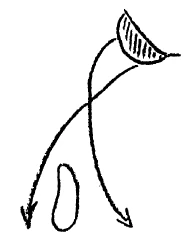
[ 7 ] If one now proceeds further in this process of recognition—which must be maintained everywhere, not abstractly, but through a concrete grasp of the spiritual-real—one first comes to say to oneself: On the other side of human organization lies something similar to the way the external world penetrates the sensory organization. — I said: When one arrives at self-knowledge through intuition, what is given through intuition as self-knowledge inevitably proves to be something incomplete, and one understands it only when one realizes that here, on the other side, the inverse relationship exists in a similar way as it does on the one side with the sensory organization. The senses are, so to speak, gulfs into which the external world, with its laws, extends. On the other hand, the situation is such that the whole human being—who, after all, becomes a sensory organ in intuition—now extends into the spiritual world. There, the external world extends into the human being; here, the human being extends into the external world—albeit into the spiritual external world. That is why it is also the case here that, while the human being up there—I have explained this in relation to the organization of the eyes—has a certain active relationship to the depth dimension, in intuition, at first, insofar as he remains within this intuition in self-knowledge, he acquires a certain relationship to the height dimension.

[ 8 ] The result is something quite analogous to sensory perception, only in reverse. It follows that through intuition, the human being places himself within the spiritual world as a whole. Just as the external sensory world penetrates through the senses, so does the human being consciously place himself within the spiritual world through intuition, and this conscious placement is felt by the human being in the same way that he feels himself, through sensation, in relation to the external world in perception. And this feeling of being within the spiritual world—the obscure experience of standing within the external spiritual world—is what we call intuition in everyday life. This intuition is imbued with bright clarity when one strives for the kind of insight I have described. From this, however, you can surmise that, in a sense, perception lies on one side of the human relationship to the external world. On the other side, we also have something indefinite for perception that must first be processed. Just as perception is processed by the intellect, by reason, and one then finds laws within perception, so too is there something on the other side that initially stands in just as indefinite a relationship to the human being as perception does, but which must then be dealt with, must be permeated by the inner, insight now attained—just as external perception formerly had to be penetrated by mathematization; in short, by the inner insight to be attained through ordinary experience.
[ 9 ] What one initially experiences in ordinary life, in an intuition that is still undefined, is the experience of faith. Just as one pole of the human being, which turns toward the external sensory world, has the experience of perception, so the whole human being, through its dark immersion in the spiritual world, has the experience of faith; and just as perception can be illuminated by intellect and reason, so too can that which lies in the vague, dim experience of faith be illuminated by ever-advancing knowledge, and what was an experience of faith then becomes a scientific result, just as perception becomes a scientific result through the work carried out at the other pole. This is how things stand. What I am describing to you here is indeed an ascent toward transforming the ordinary experience of faith, through inner spiritual work, into an experience of knowledge and insight. For the one who ascends into these realms, transforming the experience of faith into an experience of insight is, at first, quite similar to facing a perception and processing it with what has been achieved through mathematics or some other form of logic. You see, these things are intrinsically interconnected, and what I am presenting to you here is by no means something contrived; rather, it is a description of what can be experienced by human beings just as they experience the development from childhood—when one does not yet use intellect and reason—to that stage of life when one does indeed use intellect and reason.
[ 10 ] Now, however, all these experiences are connected to others. For example, the following is connected to them. At the very moment one advances to inspired insight, one already has—as I have described to you—this panorama of one’s life, which extends back to very early childhood, sometimes even to birth. One has thus gained an inner vision. But only when inspired insight sets in does this inspired insight—which is, in a sense, a further development of forgetting—bring about what I must characterize as a complete erasure of the environment that was previously perceived through the senses. Thus a state arises in which one’s own inner self—specifically, the temporal inner self extending back to birth—becomes the object, and in which one, feeling oneself subjectively—though initially as if inwardly empty—actually perceives oneself in the external world, not within one’s own body, but in the external world. Only when one has managed—I would say—to achieve this intensified forgetting, whereby the external world perceived through the senses is truly erased for the moments of cognition, does what I must characterize in the following way come about through the connection of this experience with what has been intuitively attained.
[ 11 ] One has gone through the process of imagination. One knows that it refers to something. But one must be absolutely clear that it first appears as an image, that although it refers to reality, what we initially have present in our consciousness is only the image. As one progresses through inspiration, one moves from the pictorial to the corresponding spiritual-real. Once one has reached the moment when external sensory perception is completely extinguished through inspiration, a content emerges that can truly reveal itself only now. The content that emerges corresponds to our existence before birth—or, better said, before conception. We now learn to look into our human, soul-spiritual being as it was before it took possession of a physical organization out of the stream of heredity. Thus, the imagination fills with a real-spiritual content that represents our prenatal life. Characterized in this way, it certainly still seems somewhat paradoxical to many people today. Yet one can do no more than point out precisely the point in the process of knowledge where such a view of the human being’s spiritual-soul self arises—where, in other words, what is otherwise called the question of immortality actually acquires a truly real substance for the first time. At that point, however, a more precise insight into the other pole of the human organism also emerges. If one penetrates, in the manner I have described, what was at first intuitive belief—and elevates it to knowledge—then the possibility arises of relating the imaginations, albeit in a different way than was the case with what I have just described, to the conditions after death. In short, what I would like to call the eternal in the human being becomes a vision. And if intuition develops to the point to which it is fully capable of reaching, then, in a sense, one first develops the true “I” inwardly; and within this true “I,” what I always refer to in anthroposophical Spiritual Science as the knowledge of repeated earthly lives then becomes vividly clear—though I can only hint at this here. The realization that one was a spiritual-soul being before conception, that one will be a spiritual-soul being after death—this realization arises from inspired imagination. The realization of repeated earthly lives arises only from the added intuition.
[ 12 ] Likewise, it is only when one has ventured into this realm that one truly discovers the full significance of waking up, falling asleep, and the state of sleep in general. Through the deepening that cognition undergoes at the pole of perception, one discovers, so to speak, that which is otherwise unconscious as the experience of falling asleep. And then, at the other pole—the pole of intuition—one discovers the experience of waking up. Between the two lies the experience of sleep. I would like to characterize this in the following way. I would like to say: When a person falls asleep with their ordinary consciousness, a state sets in in which consciousness is completely subdued and dampened. This empty consciousness, in which a person lives between falling asleep and waking up, gives them a perception of a state about which they can know nothing from their own subjective point of view. The state one is in during inspired imagination is quite similar. Just as in sleep, the senses are silent, and the impulses of the will are silent. Just as in sleep, that which participates in human subjective activity is silent; this is also the case in this inspired imagination. The difference from sleep is that during sleep consciousness is empty, whereas in this state of inspired imagination consciousness is filled; one actually has inner experiences independent of sensory perception and volitional impulses, thus, in a sense, engaging in a kind of waking sleep and thereby being enabled to study the life of sleep.
[ 13 ] There is something else connected to these experiences that I will address only briefly—I was able to point this out this morning in the history seminar—namely, that it is precisely those experiences I have just described here that cause all historical problems to become, in a sense, new. You may have already given this some thought, or it is easy to reflect on the fact that what we today call “history” in the scientific sense has its precursors only in historians such as Herodotus and others; that our historiography actually only came into being when a particular culture of reason emerged—one that also finds its special fulfillment in experimentation—so that one can say: What, on the one hand, finds particular satisfaction in experimentation from a scientific perspective finds satisfaction, on the other hand, in what we today call external historiography, the science of history. — This historical science proceeds—rightly so, from its own standpoint—in a historical-empirical manner, collecting data and attempting to piece together a picture of the course of history from these empirical data. Yet one can always object to such a historical interpretation of the empirical facts of human development by pointing out that things could just as easily have unfolded differently; and this morning I actually used the expression for example, Dante could somehow have died as a boy, and we would then certainly face the possibility that what we experience externally and empirically in our historical view of Dante—at least as it presents itself to us through Dante—could not actually be contained within our perspective. Indeed, extraordinary difficulties arise for those who do not content themselves with internally formulated tirades of knowledge, but who truly strive for insight, when contemplating historical development.
[ 14 ] For example, people study the Reformation based on external, historical-empirical facts. But—I cannot list all the individual examples here; there isn’t enough time—you can quite easily gather the facts in a philosophical or other context—it certainly cannot be dismissed out of hand: If, for example, the monk Luther had died young, I would like to know what a historiography of the kind we have today—as purely external, empirical historiography—would record! Something quite different from what is recorded today. This gives rise to very serious difficulties for a characterization of historical understanding. And it is certainly a matter of recognizing that it is entirely justified to say: Anyone who now sets out to engage in the philosophy of history—whether seeking to explain the course of historical events, as he can empirically trace them, or who, following the pattern of the “Strindbergiade,” seeks to discover a kind of intentionality—one must, of course, object that he would find such intentionality or an inner, ideal necessity even in what would have unfolded in place of what we regard today as the Reformation, had the monk Luther died as a young boy and, for all I care, the other reformers not existed either.
[ 15 ] These matters must be considered very carefully, and the field of external, empirical-historical observation simply does not offer any way to deal with them. But an observation of human development at the level of such understanding as I have described to you here does reveal something else. It reveals, for example—and I will give a concrete example—that around the middle of the 4th century A.D., forces were at work in European civilization that would evidently present themselves quite differently to external historical research if, in the period that elapsed between Constantine and Julian the Apostate, there had been a figure as powerful for contemplation as Dante. There is a problem here—I admit quite openly that I have not yet resolved this problem, but it can be explored further—there is a problem of a very concrete nature. I have not yet resolved it insofar as I cannot tell you today whether important documents, important documents—particularly from the period around, say, 340 or 350—have vanished as a result of some event, so that we know nothing about the most important figures in external history, or whether it is simply the case that such an important figure died in his youth or that many such important figures perished during that very turbulent, very war-torn period. What is clear, however, is that forces were at work during this period that cannot be traced through external history today; indeed, tracing them through external history could depend solely on the fortunate circumstance that some documents might still be discovered in this or that monastery. For the spiritual researcher, however, there is no doubt whatsoever that these forces are at work, that they exist, and here the spiritual researcher proves his worth in a realm of historical observation where he is no longer at all dependent on abstracting historical forces from external circumstances.
[ 16 ] When one looks at Dante—when one becomes acquainted with him, gets to know him intimately, seeks to bring him back to life within one’s own soul, and also familiarizes oneself with the prevailing and emerging forces of Dante’s time—that is an external understanding. What the spiritual researcher strives for regarding Dante’s era will, admittedly, take on a somewhat different form than what can be derived solely from external documents, from the Commedia, and so on. But one can, of course, quite rightly object that he himself might confuse what he gains through external perception with what he possesses through inner intuition. But where inner intuition works in such a way that one knows quite precisely—in any given era, such as the one described—that external events do not at all correspond to inner processes, there spiritual forces are truly at work; then the matter unfolds in such a way that one describes history —I have already described this very part of history once for a certain circle of listeners—by focusing solely on the forces perceived inwardly. Once one has contemplated these forces inwardly, one comes to realize that they can live within one or permeate one. And here, for this era, the situation is such that it would have to be a miracle of inner insight if one could imagine which forces were actually at work, for example, in Julian the Apostate—that is, something that, for that time, can only be pursued spiritually.
[ 17 ] One reaches a level of historical perspective from which one can say that one directly perceives the primordial spiritual forces of historical development, and one senses an explanation for the development of humanity precisely in those areas where the external—whether in written sources or through people who have not fully lived out their potential—has been lost, where one must supplement external history with what has been perceived inwardly. It is precisely in this result of insight that what first announces itself—and what then justifiably leads one to speak of the spiritual-essential behind those phenomena that are part of historical development—begins to emerge. This is the point from which one ascends to speak of such entities as I described in my little book The Spiritual Guidance of the Individual and of Humanity. Such a presentation, as cultivated in my little book The Spiritual Guidance of the Individual and of Humanity, must absolutely be preceded by this conception of something historical that does not actually exist along the external historical path. Only then does one feel justified—if one wishes to be a person who is inwardly responsible for one’s own knowledge—in saying, precisely on the basis of this insight: It is possible to ascend from sound common sense—in the manner I have repeatedly characterized—to that which constitutes such active forces.
[ 18 ] Now, of course, you will object that only someone who has arrived at such a perspective could speak of such entities as I describe them in The Spiritual Guidance of the Individual and of Humanity. By emphasizing that he speaks from this perspective, he can indeed speak only at this stage of understanding; but there is another factor that is important to consider: If we approach history honestly at all, with an insight into the facts; if we are reasonable enough and sufficiently trained in philosophy to realize what doubts and mysteries are presented to us by external historical development—when we honestly confront this— then, in relation to external history, one arrives at all sorts of points at an inner experience similar to that of the astronomer who predicted Neptune based on gravitational forces. The discovery of the entities in question is, in essence, a very similar event in the spiritual realm to that of the astronomer Leverrier, who calculated Neptune’s orbit in advance. He did not simply piece together the scientific result from the external, historical-empirical facts—whether in a positivist manner or a skeptical one, by rejecting simple correlations—but rather traced the given data according to their true qualities and said to himself: Something must be at work here. — Just as the astronomer said to himself when observing Uranus: “It does not move as it should according to the forces I already know; there must be something else at work that influences the system of these forces”—so, at all manner of points in historical analysis, the truly conscientious researcher comes to recognize how forces intervene there. He perceives the intervention of these forces much like someone who, say, finds a shell of limestone or flint somewhere in the rock and, simply based on the appearance of this flint shell, does not say to himself: “This flint shell has crystallized from the mineral environment”—but rather he says to himself: “It was once filled; its shape is determined by some animal; the animal is no longer there, but one can form a mental image of this animal.” —And if some being were to come along who had lived at the time when the animal lived and was inside the shell, and were to describe what the animal was like, then such a witness to the animal—with his account—would relate to the person holding the shell, which is a clear imprint of it, in the same way as the spiritual researcher who speaks from inner insight to the person who simply presents the external facts to his common sense and, based on their configuration, concludes: “There must be something in there.” - Only the spiritual researcher can tell him what is in it. But the person who engages with it through observation can certainly verify, using sound logic, factual logic, and common sense based on the form before him, exactly what the spiritual researcher tells him.
[ 19 ] It is not necessary to blindly believe the spiritual researcher. Certainly, spiritual research is required to discover such things as I have described in The Spiritual Guidance of the Individual and of Humanity. But once this is presented, the spiritual researcher must openly concede to anyone who then examines the facts—the facts that the spiritual researcher seeks to explain based on what he calls the higher beings—to anyone who observes the external facts and can gather everything that is in any way accessible to him; he must concede to that person: “You can and may certainly call me out if you find anything that contradicts the external consequences that must occur if my view were correct.” —
[ 20 ] Such things have, in fact, occurred repeatedly within our circle of friends—let’s say, with interpretations of the Gospels derived purely from spiritual research. They have also occurred in cases such as the one cited this morning. I have, of course, studied a wide range of literature. However, the work cited this morning by Dr. Stein regarding the date of Christ’s death was, until today, unknown to me by its author. I have never seen it. But this is, of course, not something that can be cited in external, objective reasoning; I am only mentioning it here in passing. Such things have, however, certainly occurred within our circle—verifications that can indeed be regarded as objective. And this is precisely why this purely subjective degree of conviction, which many of our friends possess through their active involvement in Spiritual Science, is not based on blind faith, but on their firsthand experience of this very work of Spiritual Science, and that is why those who have been actively involved in Spiritual Science for many years speak in a different tone than those who speak merely from a theoretical standpoint.
[ 21 ] These are things which, I believe, clearly demonstrate how closely connected to the development of humanity is what I would like to call the current state of science and knowledge. Certainly, everything has its precursors. Experimentation, too, has its precursors. But everything that constituted experimentation prior to the most recent epoch of human history is, after all, something primitive compared to the sophisticated experimentation we are engaged in today. This sophisticated form of experimentation, when one takes it in—I would say—as an inner experience, certainly has something that, in turn, demands that what is gained in the experiment—in this experiment, which is constructed by the intellect—is already evident in the experimental setup: what one experiences is not experienced in the experiment itself, but in the act of experimenting, in the process of setting up the experiment—that this triggers something in the soul which, in turn, makes spiritual knowledge necessary. We have shifted our understanding away from mere observation and into the realm of experimentation. If one experiences how what one learns through an experiment differs from what one learns through mere observation, then one feels an urge, on the other hand, to move from ordinary self-perception to the elevated self-perception that is found in the path of knowledge as I have described it. These things are interconnected. I would like to say that the urge—which, I believe, should be indispensable today to the truly knowing person—the urge toward the other side of experimentation, is historically rooted in a fundamental relationship to experimentation itself. And the scientific results we gain from external nature actually pose the questions to us in many respects. And whether one obtains the correct answer depends to a great extent on asking the right questions.
[ 22 ] What is often presented to us by modern natural science is, for the spiritual researcher, essentially nothing more than a question. Whether one takes what is presented, say, in modern astronomy, or what is presented in modern chemical theories—when one takes these insights to heart—the question inevitably arises: How do these processes relate to what is happening within human beings themselves? It is precisely from the scientific findings that have arisen through the extension of observation into experimentation that questions arise, on the other hand, concerning the relationship of the human being to the world. And so one will often find that modern scientific thinking presents the problems of the Spiritual Science to those who experience this scientific approach—rather than merely theorizing about it—so that they have no choice but to move from the questions that arise to the problems of the Spiritual Science. In 1859, Darwin may have stopped at what he presented in such an extraordinarily thorough and, to a certain extent, even meticulous account. For those who study these matters in retrospect, however, what he believes to be a scientific result becomes a question.
[ 23 ] And then the experience one has in the experiment helps. But on the other hand, one comes to recognize the intrinsic nature of mathematics. If one investigates what mathematics is actually applicable to in such a way that an intrinsically satisfying insight arises from this application, then everything comes together: the essence of observation, the essence of mathematizing, the essence of what is gained through mathematics, and the essence of understanding nature. But what is it that one experiences in the experiment? What arises from the fact that one feels compelled to gain such an understanding of all this—an understanding that may well venture into historical understanding as well? One will be inclined to seek everywhere such connections whose threads are not, in fact, present within the material of contemporary science. But if one grasps what brings order to this context, one senses—as I have indicated to you today—that higher entities, purely spiritual-soul entities, reveal themselves within oneself, rising from human knowledge of nature up to historical understanding. And when one reaches this point, the gateway to the contemplation of the spiritual world—which is independent in itself—also opens.
[ 24 ] Ladies and gentlemen! I am well aware of just how many shortcomings these sketchy, aphoristic lectures must have. But I have chosen to present a broader overview—rather than a lecture on a narrowly defined topic—even though many details had to remain unfilled, so that you might gain some insight into what the process of Spiritual Science knowledge, as understood here, actually consists of and what it aims at, and so that you might also gain a sense that what is being sought here is not something arbitrary, amateurish, or fanciful, but rather—especially with regard to its method—something that strives for the utmost precision that we possess in the realm of science. For the fact that mathematics is as precise as it is stems solely from the fact that we, in a sense, experience this mathematical reality inwardly. And just as people in the Platonic era knew why the phrase “God geometrizes” was needed as a motto for the school—knowing that those who entered it had, in a certain sense, been prepared in geometry and mathematics—so too does modern Spiritual Science know why it employs this “mathematizing,” illuminated by inner, bright clarity, as the defining characteristic of what it actually seeks. If you have gained the impression that, particularly in terms of method, the approach of this anthroposophically oriented Spiritual Science is something one can engage with in some way and reflect upon—to the point of asking: Can any enrichment flow from this to our other sciences? —not to belittle them, but rather to bring them to their true value precisely through this—if we have achieved this through these aphoristic and, as I know, in some respects very inadequate lectures, then the intentions I sought to underpin these aphoristic reflections have indeed been fulfilled.