The Emergence of Natural Science
in World History
and its Subsequent Development
GA 326
6 January 1923, Dornach
Translate the original German text into any language:
Versions Available:
The Emergence of Natural Science, tr. SOL
Neunter Vortrag
Ninth Lecture
[ 1 ] Es liegt ja in der Natur der Sache, daß der Gegenstand eines solchen Vortragszyklus, wie es dieser ist, eigentlich unerschöpflich ist, daß die Dinge erweitert und vor allem vertieft werden können. Aber da doch einmal leider ein Abschluß gemacht werden muß, so muß man sich damit begnügen, Richtlinien und Andeutungen zu geben. Daher werde ich natürlich auch heute nur die schon gegebenen spärlichen Richtlinien und Andeutungen so ergänzen können, daß das Bild wenigstens in einem gewissen Sinne einen Abschluß bietet.
[ 1 ] It is, of course, in the nature of things that the subject matter of a lecture series such as this one is, in fact, inexhaustible, and that the topics can be expanded upon and, above all, explored in greater depth. But since, unfortunately, a conclusion must eventually be drawn, one must be content with providing guidelines and hints. Therefore, today, too, I will naturally be able to supplement only the sparse guidelines and hints already given in such a way that the picture offers at least a certain sense of closure.
[ 2 ] Gehen wir noch einmal aus von der Wesenheit des Menschen, wie sie uns gegeben werden kann durch die Forschungen der Geisteswissenschaft, dann müssen wir sagen: Wir gliedern den Menschen in seinen physischen Leib, in seinen ätherischen oder Bildekräfteleib, in seinen astralischen Leib, welcher im wesentlichen ja das Seelisch-Innere darstellt, und in seine Ich-Organisation. Seien wir uns klar darüber, daß der physische Leib im eigentlichen Sinne lebt nur in demjenigen geringeren Teile der Menschenorganisation, der als Festes, scharf Konturiertes bezeichnet werden kann, daß dagegen alles dasjenige, was Saft, Säfteartiges ist, was Flüssiges ist im menschlichen Organismus, schon so ergriffen wird von dem ätherischen oder Bildekräfteleib, daß es in einer fortwährenden Mischung, Entmischung, chemischen Verbindung, chemischen Lösung, in einer fortwährenden Strömung ist, aber in Strömungen, die auch gerade wieder durch Mischung, Entmischung, Lösung, Verbindung herbeigeführt werden. Seien wir uns dann klar darüber, daß innerhalb dieser Menschheitsorganisation Gasiges, Luftförmiges ist, wie dasjenige, was in der Tätigkeit zum Beispiel des Sauerstoffes und anderer an sich gasartiger Körper liegt. Darinnen wirkt aber die astralische Organisation. Und endlich wirkt in alledem, was wärmehaft ist im Menschen, die Ich-Organisation. Das ist aber nicht so, daß man jetzt das schematisch nehmen darf, was ich eben gesagt habe, sondern man muß sich klar sein darüber, daß dadurch, daß zum Beispiel alles Saftartige und Flüssige von dem Bildekräfteleib durchpulst ist, es dadurch auch mitreißt dasjenige, was fest ist, daß alles in inniger Wechselwirkung, im Durcheinanderspiel ist in der menschlichen Organisation. Dessen muß man sich immer bewußt sein. Aber seien wir uns jetzt weiter darüber klar, daß diese menschliche Organisation im Laufe der Menschheitsentwickelung in verschiedener Art erlebt worden ist. Wir haben ja gerade das als eine Hauptsache während dieser Vorträge uns vor Augen geführt.
[ 2 ] If we once again take as our starting point the nature of the human being, as it can be revealed to us through the research of spiritual science, then we must say: We divide the human being into his physical body, his etheric or formative body, his astral body—which essentially represents the inner soul—and his ego organization. Let us be clear that the physical body, in the strict sense, lives only in that lesser part of the human organism which can be described as solid and sharply contoured; whereas everything that is sap, sap-like, or liquid in the human organism is already so permeated by the etheric body—or body of formative forces—that it is in a state of constant mixing, separation, chemical combination, and chemical dissolution—in a continuous flow, but in flows that are themselves brought about precisely by mixing, separation, dissolution, and combination. Let us then be clear that within this human organization there are gaseous, air-like elements, such as those found in the activity of, for example, oxygen and other substances that are gaseous in nature. Within this, however, the astral organization is at work. And finally, the I-organization is at work in everything within the human being that is warmth-bearing. However, this is not to say that one should take what I have just said schematically; rather, one must be clear that because, for example, everything sap-like and liquid is pulsed through by the formative force body, it also carries along what is solid—that everything is in intimate interaction and interplay within the human organization. One must always be aware of this. But let us now be further clear that this human organization has been experienced in various ways in the course of human development. We have, after all, highlighted this as a central point throughout these lectures.
[ 3 ] Dasjenige, was wir zum Beispiel heute als Gegenstand der äußeren Physik oder Mechanik bezeichnen, wurde erreicht ursprünglich durch inneres Erleben des physischen Leibes, so daß wir sagen können: Unsere heutige Physik enthält Aussagen, welche entstanden sind dadurch, daß es ursprünglich eine innere, erlebte Physik des physischen Leibes gab und daß diese aus dem Menschen, wie ich oft gesagt habe, herausgeworfen worden ist und nunmehr nur als eine die äußere Natur beobachtende Physik weiterfiguriert. Ebenso war es einstmals, sogar in der Dekadenz noch während der mittelalterlichen Alchimistenzeit, mit demjenigen, was innerlich im Menschen lebt durch den ätherischen Leib. Wo der ätherische Leib im Menschen mit seiner "Tätigkeit einsetzt, da findet statt jener Säfteprozeß, jener Flüssigkeitsprozeß, der einstmals erlebt wurde und jetzt nur noch durchschimmert durch allerlei phantastisch-alchimistische Angaben, welche die Leute heute in älteren Schriften finden, die aber ursprünglich eine geistvoll ausgearbeitete Wissenschaft waren, aber innerlich erlebt innerhalb der ätherischen Organisation des Menschen. Das ist erst auf dem Wege, herausgeworfen zu werden, denn wir haben eigentlich noch nicht eine voll ausgebildete Chemie. Aber wir haben viele chemische Vorgänge in der Welt, die wir zu begreifen suchen, oder die unsere Wissenschaft zu begreifen sucht, jedoch auf eine physisch-mechanische Weise.
[ 3 ] What we today refer to, for example, as the subject matter of external physics or mechanics was originally attained through an inner experience of the physical body, so that we can say: Our modern physics contains statements that arose because there was originally an inner, experienced physics of the physical body, and because this, as I have often said, was cast out of the human being and now continues to exist only as a physics that observes external nature. The same was true in the past—even during the decadent period of medieval alchemy—with regard to that which lives inwardly within the human being through the etheric body. Where the etheric body in the human being begins its “activity,” there takes place that process of humors, that process of fluids, which was once experienced and now only shimmers through all manner of fantastical alchemical descriptions that people today find in older writings—writings that were originally a spiritually elaborated science, but one experienced inwardly within the etheric organization of the human being. This is only now beginning to be cast aside, for we do not yet actually have a fully developed chemistry. But we have many chemical processes in the world that we seek to understand—or that our science seeks to understand—albeit in a physical-mechanical way.
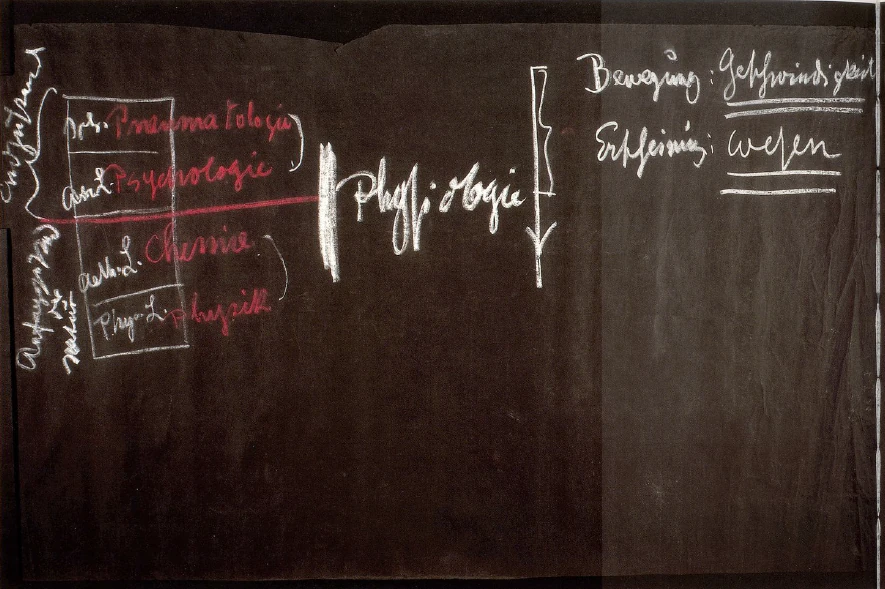
[ 4 ] Damit aber haben wir dasjenige erschöpft, was der Mensch durch seine Organisation innerlich zunächst erlebt hatte und dann nach außen geworfen hat. In diesem Prozesse des Nach-außen-Werfens hat sich ja alles entwickelt, von der Astronomie bis zu den spärlichen Anfängen des chemischen Wissens von heute. Dagegen wurde in älteren Zeiten dasjenige, was wir heute als den Inhalt der abstrakten Psychologie bezeichnen, was eigentlich nur etwas darstellt, was für die Leute nichts Reales mehr ist, Denken, Fühlen, Wollen, das wurde einstmals so erlebt, daß es eigentlich gar nicht im Menschen erlebt wurde, sondern daß der Mensch sich mit der Welt draußen außer sich fühlte, wenn er das Seelische erlebte. Also gerade das Körperliche erlebte man einstmals im Inneren; das Seelische erlebte man, indem man aus sich herausging und mit der Welt draußen lebte. So daß Psychologie einstmals eine Wissenschaft war von demjenigen in der Welt, was so auf den Menschen wirkt, daß er als seelisches Wesen sich selber erscheint. Dadurch, daß dieses mit der Außenwelt Erlebte in den Menschen hineingekommen ist, während die Physik und die Chemie herausgeworfen wurden, wurde die Psychologie und das Nächste, das ich gleich zu besprechen habe, die Pneumatologie, in den Menschen hineingestopft und verloren ihre Realität, wurden zu bloßen subjektiven Wahrnehmungen und so weiter, aus denen man nicht mehr herauskam. Dasjenige also, was der Mensch durch seinen astralischen Leib, der ja auch im Schlafe aus ihm heraus kann, mit der Welt erlebt, das ist nun Gegenstand der Psychologie. Dasjenige, was der Mensch einstmals als Geist erst recht im vollen Umfange der Welt mit dieser erlebte, das war einmal Pneumatologie. Heute ist dies, wie ich schon gesagt habe, zusammengeschrumpft zu der bloßen Ich-Vorstellung oder eigentlich nur Ich-Empfindung. So daß wir heute haben auf der einen Seite als Wissenschaft von der äußeren Natur dasjenige, was einstmals inneres Erlebnis war, und wir haben als Wissenschaft vom Inneren des Menschen dasjenige, was äußeres Erlebnis war. Also dasjenige, was heute äußere Wissenschaft ist, war einstmals Innenerlebnis, wenn auch körperhaft, im Körper gefühlt, in der eigenen Bewegung zum Beispiel gefühlt, während man heute die Bewegung nur äußerlich beschreibt. Dagegen dasjenige, was man heute bloß als Innerliches betrachtet, Empfindungen, Gedanken, Wahrnehmungen, das wurde einstmals außen mit der Welt erlebt. Das ist eben Psychologie, Pneumatologie.
[ 4 ] But with this, we have exhausted what human beings initially experienced internally through their own organization and then projected outward. It is in this process of projection outward that everything has developed, from astronomy to the meager beginnings of today’s chemical knowledge. In contrast, in earlier times, what we today call the content of abstract psychology—which is really just something that is no longer real for people: thinking, feeling, and willing—was once experienced in such a way that it was not actually experienced within the human being at all; rather, when a person experienced the soul, they felt themselves to be outside themselves, in the world outside. Thus, it was precisely the physical that was once experienced within; the soul was experienced by stepping outside oneself and living in the world outside. So psychology was once a science of that which in the world acts upon the human being in such a way that he appears to himself as a soul being. Because this experience of the external world was brought into the human being, while physics and chemistry were cast aside, psychology—and the next subject I am about to discuss, pneumatology—were crammed into the human being and lost their reality, becoming mere subjective perceptions and so on, from which one could no longer escape. So what a person experiences with the world through their astral body—which, after all, can leave them even during sleep—is now the subject of psychology. What a person once experienced as a spirit, and indeed to the full extent of the world, was once pneumatology. Today, as I have already said, this has shrunk to the mere concept of the “I”—or, more accurately, the mere sensation of the “I.” So that today, on the one hand, we have as the science of external nature what was once an inner experience, and we have as the science of the inner life of the human being what was once an external experience. Thus, what is today external science was once inner experience—albeit a physical one, felt in the body, felt in one’s own movement, for example—whereas today movement is described only externally. In contrast, what is today regarded merely as inner—sensations, thoughts, perceptions—was once experienced externally in relation to the world. That is precisely psychology, pneumatology.
[ 5 ] Nun müssen wir uns vor Augen rufen, was eigentlich auf der einen Seite der Physik und Chemie, auf der anderen Seite der Psychologie und Pneumatologie notwendig ist, wenn sie nun in bewußter Weise — denn der Mensch ist heute im Zeitalter der Bewußtseinsseelenentwickelung — weitergeführt werden sollen. Nehmen wir einmal zum Beispiel die Physik, die ja zum größten Teile in der neueren Zeit eigentlich abstrakt-mechanisch geworden ist, nehmen wir die Physik. Nun, aus meiner Darstellung ist Ihnen hervorgegangen, daß eigentlich die Betrachtungsweise in dem neuen naturwissenschaftlichen Zeitalter immer mehr und mehr sich gedrängt fühlte, die reine, angeschaute Mechanik des Raumes zu ihrem Inhalte zu machen im Physikalischen, die angeschaute Mechanik des Raumes. Erinnern Sie sich nur an das, was ich im letzten Vortrage gesagt habe: Bewegung wurde einstmals innerlich miterlebt, und man beurteilte die Bewegung nach dem, was man innerlich als Bewegung erlebte, schaute einen fallenden Stein an und erlebte seinen inneren Bewegungsimpuls im eigenen menschlichen Inneren, nämlich im physischen Leibe. Daraus ist geworden beim Hinauswerfen das Messen des Fallraumes in der ersten Sekunde. Das ist es, was heute in allen unseren Vorstellungen über die Natur steckt, daß durch dasjenige, was angeschaut wird, einfach vergegenwärtigt werden soll, was wirklich ist.
[ 5 ] Now we must consider what is actually necessary—on the one hand, in physics and chemistry, and on the other, in psychology and pneumatology—if these disciplines are to be carried forward in a conscious manner—for humanity is now in the age of the development of the consciousness soul. Let us take physics, for example—which, for the most part, has actually become abstract and mechanical in recent times—let us take physics. Well, as you have seen from my presentation, the approach in the new age of natural science has increasingly felt compelled to make the pure, observed mechanics of space its content in physics—the observed mechanics of space. Just recall what I said in the last lecture: Movement was once experienced inwardly, and people judged movement based on what they experienced inwardly as movement; they looked at a falling stone and experienced its inner impulse of movement within their own human being, namely in the physical body. This has evolved into measuring the distance fallen in the first second when the stone is thrown. This is what underlies all our conceptions of nature today: that what is observed is simply meant to bring to mind what truly is.
[ 6 ] Und was kann angeschaut werden in der äußeren Welt? Angeschaut werden kann die Bewegung, die Ortsveränderung. Die Geschwindigkeit lassen wir ja in der Regel verschwinden in einem Differentialquotienten, da wo wir sie recht nett verschwinden lassen können. Aber dasjenige, was wir beobachten können, ist die Bewegung, und die Geschwindigkeit drücken wir ja durch die Bewegung in einer Sekunde aus, also durch Räumlichkeit. Aber damit sind wir mit unserem Erleben gänzlich aus dem Naturkörper heraus. Wir sind mit nichts drinnen, wenn wir bloß seine Bewegung, das heißt seine Ortsveränderung im Raume betrachten. Wir kommen nur wieder hinein, wenn wir Mittel und Wege finden, durch Fortsetzung derselben Methode, durch die wir herausgekommen sind, auch den räumlichen Körper, den physischen Körper wieder innerlich zu ergreifen. Dann müssen wir anstelle der bloßen Bewegung, der Ortsveränderung im Raume, die Geschwindigkeit innerhalb der Körper als dasjenige betrachten, was den Körpern so eigen ist, daß wir wissen können, wie der Körper innerlich ist, weil wir die Geschwindigkeit auch in uns finden, wenn wir wieder auf uns zurückschauen.
[ 6 ] And what can be observed in the external world? What can be observed is motion, the change in position. We usually let speed disappear into a differential quotient, where we can make it disappear quite neatly. But what we can observe is motion, and we express speed in terms of motion per second—that is, in terms of spatiality. But with that, our experience takes us completely outside the natural body. We are not connected to anything within it if we merely observe its motion—that is, its change of position in space. We can only re-enter it if we find ways and means, by continuing the very method through which we left it, to grasp the spatial body—the physical body—internally once again. Then, instead of mere motion—the change of position in space—we must consider the speed within the bodies as that which is so inherent to them that we can know what the body is like internally, because we also find that speed within ourselves when we look back at ourselves.
[ 7 ] Also dasjenige, was notwendig ist, das ist, daß die Entwickelungsrichtung der Naturwissenschaft für die äußere physische Welt in dem Sinne fortgesetzt werde, daß man von der Betrachtung der Bewegung, der Ortsveränderung im Raume übergeht zu der Charakteristik der Geschwindigkeit, die der einzelne Körper hat. Also wir müssen von der Bewegung aufsteigen zu der Geschwindigkeit. Dadurch kommen wir in das Reale, in das Wirkliche hinein. Wenn wir einen Körper im Raume seinen Ort verändern sehen, kommen wir nicht in das Reale, in das Wirkliche hinein; wenn wir aber wissen, der Körper hat einen innerlichen Geschwindigkeitsantrieb, so ist das etwas, was im Wesen dieses Körpers oder Körperteiles und so weiter liegt. Wir sagen gar nichts aus über einen Körper, wenn wir seine Ortsveränderung angeben, aber wir sagen etwas aus über den Körper, wenn wir sagen: Er hat in sich den Antrieb zur Eigengeschwindigkeit. Das ist dann eine Figenschaft von ihm, das ist etwas, was zu seinem Wesen gehört. Sie können sich das auf eine triviale Weise klarmachen. Wenn ich einen Menschen sich bewegen sehe, so weiß ich nichts über ihn. Wenn ich aber weiß, der hat in sich einen starken Antrieb, sich schnell zu bewegen, da weiß ich etwas über ihn. Ebenso weiß ich etwas über ihn, wenn ich weiß, er hat einen Antrieb, sich langsam zu bewegen. Also, ich muß die Möglichkeit haben, in meine Vorstellungen etwas aufzunehmen, was im Inneren eines Körpers etwas bedeutet. Es ist weniger darum zu tun, ob zum Beispiel die neuere Physik von Atomen redet oder nicht, sondern darum ist es zu tun, wenn sie von Atomen redet, so muß sie diese als Geschwindigkeitsanläufe sehen. Das ist das Wesentliche.
[ 7 ] So what is necessary is that the direction of development in the natural sciences regarding the external physical world be continued in such a way that we move from the consideration of motion—the change of position in space—to the characterization of the velocity possessed by the individual body. So we must ascend from motion to velocity. In this way, we enter into the real, into reality. When we see a body changing its location in space, we do not enter into the real, into reality; but when we know that the body possesses an internal impulse toward velocity, this is something that lies in the very nature of this body or part of the body, and so on. We say nothing at all about a body when we describe its change in position, but we do say something about the body when we say: It possesses within itself the impulse toward its own velocity. That is then a property of it; it is something that belongs to its essence. You can illustrate this in a simple way. When I see a person moving, I know nothing about him. But if I know that he possesses a strong impulse to move quickly, then I know something about him. Likewise, I know something about him if I know that he possesses an impulse to move slowly. So, I must have the ability to incorporate into my concepts something that has meaning within a body. It is less a matter of whether, for example, modern physics speaks of atoms or not, but rather, if it does speak of atoms, it must view them as impulses of velocity. That is the essential point.
[ 8 ] Nun frägt sich aber: Wie kommt man zu einer solchen Anschauung? Man kann das am besten bei der Physik erörtern, die Chemie ist heute viel zu wenig weit dazu. Wie kommt man zu einer solchen Anschauung? Ja, sehen Sie, da muß man sich jetzt klar werden darüber, was man eigentlich tut, indem man in der Richtung denkt des Herauswerfens der innerlich erlebten Mechanik und Physik in den äußeren Raum. Man tut das, daß man sich sagt: Gleichgültig was da draußen im Raume ist seinem Wesen nach. Darum kümmere ich mich nicht. Ich schaue ja immer nur dasjenige an, was meßbar ist und in mechanische Formeln gebracht werden kann, das heißt, ich sehe ab von allem übrigen, was eben nicht mechanisch ist. — Wozu kommt man dann? Da kommt man dazu, in der Erkenntnis denselben Prozeß zu vollziehen, den ein Mensch vollzieht, wenn er stirbt — ich meine jetzt den physischen Menschen. Wenn er stirbt, geht das Leben aus ihm heraus, der tote Organismus bleibt übrig. Wenn ich anfange, mechanisch zu denken, geht aus meiner Erkenntnis das Leben heraus. Dann habe ich eine Wissenschaft vom Toten. Und dessen muß man sich radikal klar bewußt sein: Man präpariert sich eine Wissenschaft von nur Totem, indem man das Mechanisch-Physikalische allein zum Gegenstand der Weltenbetrachtung oder der Naturbetrachtung macht. Man muß dieses Bewußtsein in sich tragen: Ich gehe auf das Tote los. Ja, man muß sich sogar sagen können: Das ist das Große an der neueren Naturwissenschaft, daß sie sich unbewußt dazu entschlossen hat, nicht etwa wie die alten Alchimisten noch einen Rest von Leben in der äußeren Natur zu sehen, sondern geradewegs sich zu sagen: Was auch immer da in den Mineralien, Pflanzen, Tieren usw. ist, ich betrachte an ihnen überhaupt nur dasjenige, was das Tote ist, denn ich wende nur Vorstellungen und Begriffe an, die auf das Tote passen. Daher ist die Natur unserer Physik das Tote.
[ 8 ] But the question arises: How does one arrive at such a perspective? This can best be discussed in the context of physics; chemistry is still far too underdeveloped for that today. How does one arrive at such a view? Well, you see, one must now become clear about what one is actually doing when thinking in the direction of projecting the mechanics and physics experienced internally out into outer space. One does this by telling oneself: It doesn’t matter what is out there in space in terms of its essence. I don’t concern myself with that. I always look only at what is measurable and can be expressed in mechanical formulas; that is, I disregard everything else that is not mechanical. — What does this lead to? It leads to carrying out, in one’s understanding, the very same process that a human being undergoes when he dies—I am referring here to the physical human being. When a person dies, life leaves them; the dead organism remains. When I begin to think mechanically, life leaves my understanding. Then I have a science of the dead. And one must be radically and clearly aware of this: one constructs for oneself a science of nothing but the dead by making the mechanical-physical alone the object of one’s view of the world or of nature. One must carry this awareness within oneself: I am approaching the dead. Indeed, one must even be able to say to oneself: This is the greatness of modern natural science—that it has unconsciously resolved not to see, as the old alchemists did, a remnant of life in external nature, but to say straight out: “Whatever is in minerals, plants, animals, and so on, I regard in them only that which is dead, for I apply only ideas and concepts that apply to the dead.” Therefore, the nature of our physics is the dead.
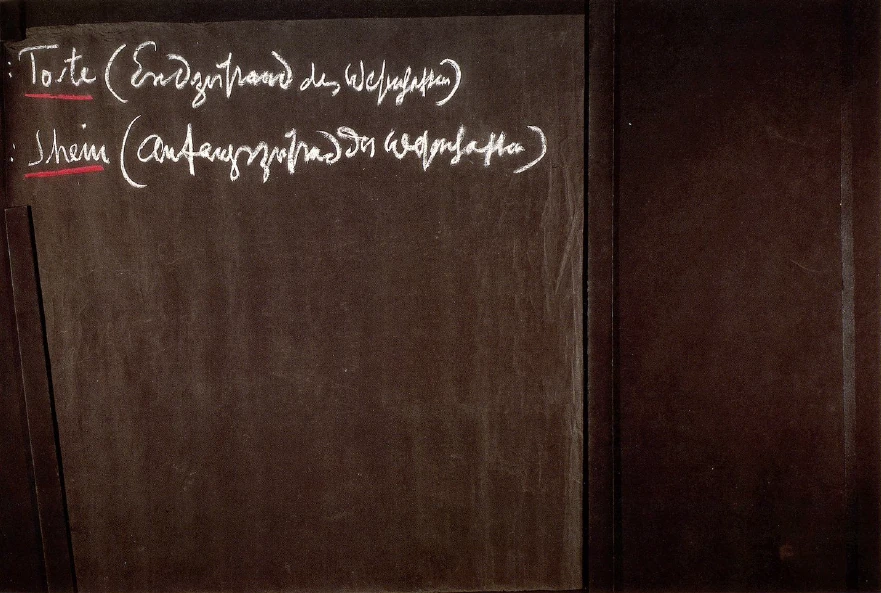
[ 9 ] Seien Sie sich klar darüber, daß erst dann die Naturwissenschaft auf einem guten Fundament stehen wird, wenn sie sich vollständig darüber aufgeklärt hat, daß sie mit dieser Denkweise das Tote ergreift. Bei der Chemie ist es ähnlich. Das kann ich heute der Kürze der Zeit wegen nicht ausführen. Aber dadurch, daß wir in dieser Weise die Bewegung betrachten, die Geschwindigkeit dabei zunächst verlieren und darauf eine Physik bauen, betrachten wir das Tote, das heißt den Endzustand des Wesenhaften, auf das wir unsere Betrachtung erstrecken. Denn der Tod kommt am Ende. Also wenn wir die Natur betrachten mit Hilfe der heutigen Mechanik und Physik, müssen wir uns unbedingt klar sein, wir betrachten einen Leichnam.
[ 9 ] Be aware that natural science will not rest on a solid foundation until it has fully realized that, with this way of thinking, it is grasping the inanimate. The situation is similar in chemistry. I cannot elaborate on this today due to time constraints. But by viewing motion in this way—first losing sight of its speed and then building a physics upon it—we are observing the dead, that is, the final state of the essential being to which we extend our observation. For death comes at the end. So when we observe nature with the help of modern mechanics and physics, we must be absolutely clear that we are observing a corpse.
[ 10 ] Die Natur war nicht immer so. Sie war einstmals anders. Es ist Torheit zu glauben, wenn ich einen Leichnam betrachte, der war immer so. Gerade daß ich erkenne, daß er ein Leichnam ist, beweist mir, daß er einstmals ein lebender Organismus war. In dem Augenblicke, wo Sie sich klar sein werden, daß Sie mit Hilfe der heutigen Mechanik und Physik die Natur so betrachten, wie sie ist — denn es paßt und wird immer mehr passen —, desto mehr werden Sie sich klar sein können: Die gegenwärtige Natur ist ein Leichnam, insofern sie in die Begriffe und die Ideen der gegenwärtigen Physik eingeschlossen ist. Also wird da ein Leichnam betrachtet.
[ 10 ] Nature was not always this way. It was once different. It is foolish to believe, when I look at a corpse, that it has always been this way. The very fact that I recognize it as a corpse proves to me that it was once a living organism. The moment you realize that, with the help of modern mechanics and physics, you are viewing nature as it is—for it fits and will fit ever more closely—the more clearly you will be able to see: Present-day nature is a corpse insofar as it is confined within the concepts and ideas of modern physics. Thus, it is a corpse that is being observed.
[ 11 ] Und wo ist nun die Möglichkeit, zum Anfangszustand des Wesenhaften zu kommen? Der Leichnam ist der Endzustand des Wesenhaften. Wo ist die Möglichkeit, zum Anfangszustand zu kommen? Ja, meine sehr verehrten Anwesenden und lieben Freunde, es gibt keine Möglichkeit, durch die Betrachtung der Bewegung wiederum die Geschwindigkeit zu entdecken. Da können Sie noch so lange die Differentialquotienten anstarren, so finden Sie sie nicht, sondern Sie müssen wiederum zum Menschen zurückgehen und müssen den Menschen jetzt, während er sich früher von innen erlebt hat, von außen nach seinem physischen Organismus betrachten und darauf kommen, daß Sie im Menschen, und vorzugsweise im unteren Menschen, den Anfangszustand des Wesenhaften in der Natur haben. Das heißt, Sie müssen hier im physischen und ätherischen Leib, in der physischen und ätherischen Organisation den Anfangszustand der Natur suchen.
[ 11 ] And where, then, is the possibility of returning to the initial state of the essential? The corpse is the final state of the essential. Where is the possibility of returning to the initial state? Yes, my esteemed audience and dear friends, there is no way to rediscover speed by observing motion. No matter how long you stare at the differential quotients, you will not find it there; rather, you must return to the human being and now, whereas you previously experienced the human from within, observe the human from the outside according to his physical organism—and come to realize that in the human being, and especially in the lower human, you have the initial state of the essential in nature. That is to say, you must seek the primordial state of nature here in the physical and etheric body, in the physical and etheric organization.
[ 12 ] Anders kommt kein Abschluß der Physik und Chemie zustande als durch wirkliche Menschenkunde. Aber ich mache ausdrücklich darauf aufmerksam, eine wirkliche Menschenkunde erreichen Sie nicht dadurch, daß Sie die gegenwärtigen physikalischen und chemischen Methoden nun auf den Menschen anwenden. Dadurch tragen Sie das Tote wiederum in den Menschen zurück, und Sie machen den physischen Leib des Menschen, also seine untere Organisation, von neuem tot. Sie betrachten dann eben nur das Tote am Menschen. Sie müssen sich klar sein darüber, daß es notwendig ist, das Lebendige am Menschen zu betrachten, also nicht wiederum rückwärts anzuwenden die physikalische und chemische Methode auf die menschliche Natur. Sondern dafür sind gerade die Methoden notwendig, die eben auf dem Wege der geisteswissenschaftlichen Forschung gefunden werden können. Das heißt, die geisteswissenschaftliche Forschung erfüllt die historische Forderung der Naturwissenschaft.
[ 12 ] Physics and chemistry cannot be brought to a conclusion in any other way than through true anthropology. But I would like to expressly point out that you will not achieve a true understanding of human nature by applying current physical and chemical methods to human beings. By doing so, you are once again bringing the dead back into human beings, and you are once again rendering the human physical body—that is, its lower organization—dead. You are then merely observing what is dead in human beings. You must be clear that it is necessary to observe what is alive in the human being—that is, not to apply physical and chemical methods retroactively to human nature. Rather, this requires precisely those methods that can be discovered through spiritual scientific research. In other words, spiritual scientific research fulfills the historical demand of natural science.
[ 13 ] Die historische Forderung der Naturwissenschaft läßt sich in die Worte fassen: Die Naturwissenschaft ist dazu gekommen, das Leichnamhafte an der Natur zu betrachten. Die anthroposophische Geisteswissenschaft muß zu diesem Leichnamhaftigen hinzufinden die Anfangszustände, die nur im Menschen selber erhalten sind und einstmals in älteren Epochen der Weltentwickelung, der Erdenentwickelung, auch äußerlich reale waren. Einstmals waren ganz andere Prozesse Naturprozesse, Prozesse, die auch ihren Anfang in sich hatten. Heute gehen wir auf den Leichnamen desjenigen herum, was anfangs war. Aber im unteren Menschen sind uns Anfangszustände bewahrt. Da kann man finden bis zum Saturnzustand hinauf, was einstmals war. Sehen Sie, da ergibt es sich eben, daß eine historische Betrachtungsweise uns über den gegenwärtigen Zustand der Naturwissenschaft einfach hinausführt. Warum? Das ist ja ganz klar. Wir stehen ja mitten drinnen in einer Entwickelungsepoche. Wenn wir, wie es so viele tun, einfach die heutige Art als die höchste ansehen und nicht wissen, wie der wirkliche Hergang etwas ganz anderes erfordert, dann betrachten wir auch historisch falsch, denn man kann zum Beispiel einen Menschen, der fünfundzwanzig Jahre alt geworden ist, nicht bloß so betrachten, daß man seine durchlebten fünfundzwanzig Jahre betrachtet, sondern muß auch das in ihm sehen, was ihm die Möglichkeit bietet, weiterzuleben. Das ist das eine.
[ 13 ] The historical task of natural science can be summed up as follows: Natural science has come to view the corpse-like aspect of nature. Anthroposophical spiritual science must find its way back to this “corpse-like” aspect—to the primordial states that are preserved only within the human being himself and that were once, in earlier epochs of world development and the Earth’s evolution, also externally real. Once upon a time, entirely different processes were natural processes—processes that also had their beginning within themselves. Today we walk around among the remains of what was in the beginning. But in the lower human being, these primordial states are preserved for us. There one can find, all the way back to the Saturn state, what once was. You see, it simply follows that a historical perspective leads us beyond the current state of natural science. Why? That is quite clear. We are, after all, right in the midst of an epoch of development. If, as so many do, we simply regard the present form as the highest and do not realize how the actual course of events demands something entirely different, then we are also taking a historically incorrect view; for one cannot, for example, regard a person who has lived to the age of twenty-five merely by looking at the twenty-five years they have lived, but must also see within them what offers them the possibility of continuing to live. That is one thing.

[ 14 ] Das andere ist, daß unsere Psychologie ganz dünn geworden ist, die Pneumatologie fast bis zum Verschwinden dünn. Auch für diese muß man wiederum wissen, wozu sie gekommen sind in der gegenwärtigen Epoche. Nun, wenn heute einer redet von Blau, Rot, von cis, von g, von Wärmequalitäten, so sagt er: Das sind subjektive Empfindungen. Das ist ja heute schon populäres Bewußtsein. Was ist aber eine bloße subjektive Empfindung? Sie ist Erscheinung, Schein in einem gewissen Sinne, sagen wir also Erscheinung. Geradeso wie wir in der äußeren Natur nur die Bewegung betrachten, so betrachten wir in der Psychologie und Pneumatologie bloß die Erscheinung. Und wie uns in der äußeren Beobachtung für die Bewegung die Geschwindigkeit fehlt, so fehlt uns für die heutige Beobachtung des inneren Seelenlebens das Wesentliche — das Wesen. Damit aber bekommen wir, weil wir die bloße Erscheinung betrachten, und das Wesen nicht mehr erleben, dadurch bekommen wir, wenn wir unser Inneres erleben, nicht mehr Sein, sondern Schein. Und so, wie erlebt werden heute Denken, Fühlen und Wollen, so sind sie Schein. Und an diesem Schein nagen ja unsere heutigen Erkenntnistheoretiker in einer entsetzlichen Weise herum. Sie kommen einem wirklich vor wie der berühmte Held, der sich an seinem eigenen Haarschopf in die Höhe ziehen will, oder wie ein Mensch, der im Inneren eines Eisenbahnwagens steht und fortwährend anschiebt im Inneren und gar nicht merkt, daß er da nicht weiterkommen kann, wenn er im Inneren anschiebt. So kommen einem die heutigen Erkenntnistheoretiker vor. Sie reden, aber es ist keine Kraft in ihren Reden, weil sie sich nur innerhalb des Scheins bewegen.
[ 14 ] The other point is that our psychology has become very thin, and pneumatology has become so thin as to be nearly nonexistent. Here, too, one must understand what purpose they have come to serve in the present era. Now, when someone today speaks of blue, red, C-sharp, G, or qualities of warmth, they are saying: “These are subjective sensations.” That is, after all, already part of popular consciousness today. But what is a mere subjective sensation? It is a phenomenon, an appearance in a certain sense; so let us call it a phenomenon. Just as we observe only movement in the external natural world, so too do we observe only the phenomenon in psychology and pneumatology. And just as we lack the concept of speed when observing movement in the external world, so too do we lack the essential—the essence—in our current observation of inner spiritual life. But because we observe mere appearance and no longer experience the essence, when we experience our inner life, we no longer experience being, but rather illusion. And just as thinking, feeling, and willing are experienced today, so they are illusion. And our contemporary epistemologists are gnawing away at this illusion in a truly appalling manner. They really do seem like the famous hero who wants to pull himself up by his own hair, or like a person standing inside a railroad car, constantly pushing from the inside, completely unaware that he cannot move forward by pushing from within. That is how today’s epistemologists strike one. They speak, but there is no power in their words, because they move only within the realm of illusion.
[ 15 ] Sehen Sie, diesem Reden habe ich zweimal versucht, ein gewisses Ende zu machen, das erste Mal in meiner «Philosophie der Freiheit», wo ich gezeigt habe, wie nun dieser Schein, der im reinen Denken liegt, wenn er innerlich vom Menschen im Denken erfaßt wird, gerade der Freiheitsimpuls ist. Denn wäre in dem, was man subjektiv erlebt, etwas anderes als Schein, so würde man nie frei sein können. Wird aber der Schein zu reinem Denken, dann kann man frei sein, weil dasjenige, was nicht ein Sein ist, einen eben nicht bestimmt, währenddem uns ein jedes Sein bestimmen müßte. Das war das erste Mal. Das zweite Mal war, wie ich auf dem philosophischen Kongreß in Bologna psychologisch die Sache analysiert habe. Da versuchte ich zu zeigen, daß in der Tat die Empfindungen und Gedanken der Menschen nicht innerlich erlebt werden, sondern äußerlich erlebt werden, daß man das auch aus einer jetzt aus dem Geiste der Gegenwart hervorgehenden Betrachtungsweise gewinnen kann.
[ 15 ] You see, I have tried twice to put an end to this line of reasoning; the first time in my *Philosophy of Freedom*, where I showed how this appearance, which lies in pure thought, is—when grasped inwardly by the human being in thought—precisely the impulse toward freedom. For if there were anything other than appearance in what one experiences subjectively, one could never be free. But when appearance becomes pure thought, then one can be free, because that which is not a being does not determine us, whereas every being would have to determine us. That was the first time. The second time was when I analyzed the matter psychologically at the philosophical congress in Bologna. There I attempted to show that, in fact, people’s sensations and thoughts are not experienced internally but externally, and that this insight can also be derived from a perspective now emerging from the spirit of the present.
[ 16 ] Diese Anläufe werden eben verstanden werden müssen. Dann wird man wissen, daß es sich darum handelt, in dem Schein wiederum das Sein zu finden, so wie in der Bewegung die Geschwindigkeit. Und dann wird man darauf kommen, was dieser innerlich erlebte Schein ist. Dieser innerlich erlebte Schein wird sich einen enthüllen als dasjenige, was der Anfangszustand des Wesenhaften ist. Denn der Mensch erlebt diesen Schein, lebt sich selbst als Schein in den Schein hinein und macht ihn dadurch zum Keim künftiger Welten. Aus unserer, aus der physischen Scheinwelt herausgeborenen Ethik und Moral, ich habe es oft gesagt, werden künftige physische Welten entstehen, wie aus dem Pflanzenkeim heute die Pflanze entsteht. So daß man es da zu tun hat mit dem Anfangszustand des Wesenhaften. Und erst dadurch, daß man darauf kommt, daß Psychologie und Pneumatologie, damit wir eine ordentliche Naturwissenschaft haben, darauf hintendieren müssen, dasjenige, was sie durch Beobachtung gewinnen, als einen Anfangszustand zu betrachten, werden sie tatsächlich von der anderen Seite her jenes Licht werfen, das zur Naturwissenschaft gehört. Aber, was ist denn dieser Anfangszustand?
[ 16 ] These attempts will simply have to be understood. Then one will know that it is a matter of finding being within appearance, just as one finds speed within motion. And then one will come to understand what this inwardly experienced appearance is. This inwardly experienced appearance will reveal itself as the primordial state of the essential. For human beings experience this appearance, live themselves as appearance within the appearance, and thereby make it the seed of future worlds. From our ethics and morality—born out of the physical world of appearance, as I have often said—future physical worlds will arise, just as the plant arises today from the plant seed. Thus, what we are dealing with here is the initial state of the essential. And only by realizing that psychology and pneumatology—if we are to have a proper natural science—must strive to regard what they gain through observation as an initial state will they actually shed, from the other side, the light that belongs to natural science. But what, then, is this initial state?
[ 17 ] Es ist dieser Anfangszustand im Äußeren, nicht im Inneren jetzt, das geht aus meiner ganzen Betrachtungsweise hervor, es ist der Anfangszustand im Äußeren, also wenn ich hinausschaue und die grüne Pflanzendecke da ist, die farbige Welt, das Rote und Grüne und Blaue, und wenn da draußen die Töne sind. Was sind denn nur diese flüchtigen Gebilde, die die heutige Physik und Physiologie und Psychologie nur als etwas Subjektives betrachten wollen? Sie sind dasjenige, woraus sich die Welten der Zukunft draußen schaffen. Und Rot ist nicht das von der Materie im Auge oder im Gehirn Erzeugte, sondern das Rot ist der allererste noch scheinhafte Keim zukünftiger Welten.
[ 17 ] It is this initial state on the outside—not on the inside, as my entire line of thought makes clear—it is the initial state on the outside; that is, when I look out and see the green carpet of vegetation, the colorful world—the red, green, and blue—and when the sounds are out there. What, then, are these fleeting formations that modern physics, physiology, and psychology insist on viewing merely as something subjective? They are the very substance from which the worlds of the future are created out there. And red is not something produced by matter in the eye or the brain; rather, red is the very first, still illusory seed of future worlds.
[ 18 ] Lernen Sie das aber kennen, dann werden Sie auch ein wenig anschauen wollen, was diesen künftigen Welten draußen einmal als Leichnam entsprechen wird. Es wird nicht der Leichnam sein, den wir früher durch unsere Physik und Chemie gefunden haben, sondern es wird ein Zukunftsleichnam sein. Man wird ihn erkennen, wenn man das, was da draußen als Zukunftsleichnam einmal entstehen wird, heute schon im oberen Menschen entdeckt, in demjenigen Menschen, in dem vorzugsweise astralischer Leib und Ich tätig sind. Indem man da für diesen Anfangszustand den Endzustand erlebt, versteht man endlich ordentlich das Nervensystem und das Gehirn, insofern sie tot sind, nicht insofern sie lebendig sind. Sie können sogar toter als ein Leichnam sein in einem gewissen Sinne, indem sie den Nullpunkt des Toten, gerade im besonderen für das Nervensystem, noch überwinden und toter werden als tot. Dadurch aber werden sie gerade zu Trägern des sogenannten Geistigen, daß in ihnen das Tote lebt, daß in ihnen der Endzustand lebt, den die äußere Natur noch nicht einmal erreicht hat; daß sie noch über diesen Endzustand hinausgehen. Man wird also, um Psychologie und Pneumatologie in der Welt draußen zu finden, entdecken müssen, wie im menschlichen Organismus, und zwar in der Kopforganisation und in der halben rhythmischen Organisation, vorzugsweise der Atmungsorganisation, das Tote west. Wir müssen hineinschauen in unseren Kopf und von ihm uns sagen: Der stirbt fortwährend. Denn wenn er lebte, würde die sprießende und sprossende Lebensmaterie nicht denken können. Weil er aber sich auslebt, weil er fortwährend tot wird, haben die seelisch-geistig wesenhaften Gedanken in ihm die Möglichkeit, über dem Toten sich als der neue lebendige Schein auszubreiten.
[ 18 ] But once you come to understand this, you will also want to take a brief look at what will one day correspond to these future worlds out there as a corpse. It will not be the corpse we have previously encountered through our physics and chemistry, but rather it will be a future corpse. One will recognize it by discovering today, in the higher human being—in whom the astral body and the “I” are primarily active—what will one day emerge out there as a future corpse. By experiencing the final state in relation to this initial state, one finally gains a proper understanding of the nervous system and the brain insofar as they are dead, not insofar as they are alive. In a certain sense, they can even be deader than a corpse, in that they still overcome the dead person’s zero point—especially with regard to the nervous system—and become deader than dead. Through this, however, they become very precisely the bearers of what is called the spiritual: that the dead lives within them; that the final state lives within them—a state that external nature has not even yet attained; and that they go even beyond this final state. Thus, in order to find psychology and pneumatology in the outside world, one will have to discover how the dead dwells within the human organism—specifically in the organization of the head and in the semi-rhythmic organization, particularly the respiratory system. We must look into our head and say to ourselves: It is constantly dying. For if it were alive, the sprouting and budding life matter would not be able to think. But because it is living out its life, because it is constantly becoming dead, the thoughts that are of a soul-spiritual nature have the possibility within it to spread out over the dead as the new living radiance.
[ 19 ] Sehen Sie, hier liegen die großen Aufgaben, die sich einfach durch die historische Betrachtungsweise aus der Naturwissenschaft selbst ergeben. Erfassen wir sie nicht, dann gehen wir als Gespenster durch die gegenwärtige Entwickelung der Naturwissenschaft und nicht mit dem Bewußtsein eines Menschen, der da weiß, daß eine Epoche, die begonnen hat, auch wiederum ihre Fortsetzung erfahren muß. Sie können sich denken, daß viel Unbewußtes schon lebt in demjenigen, was heute von der Naturwissenschaft gefunden worden ist, denn die Literatur gibt überall Anhaltspunkte. Aber die Menschen können noch nicht unterscheiden. Daher haben heute gewisse Leute eben das am allerliebsten, was möglichst chaotisch, pendelnd ist. Straff ausgehen auf Physik und Chemie auf der einen Seite, Psychologie und Pneumatologie auf der anderen Seite, das gefällt den Leuten nicht, denn da müßten sie wiederum Ernst machen mit dem Innen und Außen. Das gefällt den Leuten nicht. Daher möchten sie ja im unklaren zwischen der Psychologie und der Chemie herumplätschern. Und dadurch entsteht eine Zwitterwissenschaft, die heute das Lieblingskind der Naturforschung und sogar das Lieblingskind der Philosophen geworden ist, die Physiologie. Sobald man auf die Realität kommen wird, wird die Physiologie zerfallen auf der einen Seite in Psychologie, das heißt Psychologie, welche auch Welterkenntnis ist, auf der anderen Seite in Chemie, das heißt in Chemie, welche auch Menschenerkenntnis ist.
[ 19 ] You see, these are the major challenges that arise simply from the historical perspective inherent in the natural sciences themselves. If we fail to grasp them, we will wander like ghosts through the current development of the natural sciences, rather than with the awareness of a person who knows that an epoch that has begun must also continue. You can imagine that much of the unconscious already lives within what has been discovered by the natural sciences today, for the literature provides clues everywhere. But people are not yet able to distinguish between them. That is why certain people today prefer above all else that which is as chaotic and vacillating as possible. A strict focus on physics and chemistry on the one hand, and psychology and pneumatology on the other—that does not appeal to people, for then they would have to take the inner and the outer seriously once again. People don’t like that. That is why they prefer to flounder in the murky waters between psychology and chemistry. And this gives rise to a hybrid science that has become the darling of natural science today—and even the darling of philosophers—namely, physiology. As soon as one comes to terms with reality, physiology will disintegrate, on the one hand, into psychology—that is, psychology, which is also knowledge of the world—and, on the other hand, into chemistry—that is, chemistry, which is also knowledge of human beings.
[ 20 ] Wird man diese beiden Gebilde haben, so wird jenes Zwischengebilde verschwinden, das Physiologie ist. Weil heute ein wahrer Morast vorhanden ist, können Sie da drinnen alles finden, und weil jeder die Möglichkeit hat, je nachdem er nach links oder rechts jongliert, so ein bißchen was Seelisches oder ein bißchen was Körperliches zu meinen, dadurch kommt er gut weg. Das ist dasjenige, was vor allen Dingen als der letzte Rest des Unklarwerdens älterer Vorstellungen verschwinden muß: die Physiologie im heutigen Sinne. Denn so unklar sind die physiologischen Begriffe aus dem Grunde, weil immer in ihnen etwas Seelisches und etwas Körperliches steckt, was man nicht unterscheidet. Und es gefällt einem gerade, daß man nicht zu unterscheiden braucht, denn da kann man herumflunkern mit den Worten und auch sogar in den Tatsachen. Und das Wesentliche ist, wie gesagt, daß Physiologie für den, der klar anschauen und klar denken will, endet in einem Flunkern mit Worten und Tatsachen. Und ehe man sich das nicht zu gestehen getraut, nimmt man es nicht ernst mit der Historie der Naturwissenschaft. Denn die geht nicht bloß von unbestimmten Zeiten bis zur Gegenwart, sondern sie geht von der Gegenwart weiter, und man versteht die Historie nur, wenn man auch den Weiterlauf der Dinge versteht, nicht etwa im abergläubisch-prophetischen Sinne, sondern so, daß man von jetzt ab anfangen kann, das Richtige zu tun. Und unendlich viel Richtiges ist zu tun gerade auf dem Gebiete der Naturwissenschaft. Denn die Naturwissenschaft ist groß geworden. Sie ist, ich möchte sagen, ein guter Junge, der vielleicht heute gerade so ein bißchen in den Flegeljahren ist, aber der eben weiter gepflegt werden muß, damit er erwachsen wird. Und er wird weiterwachsen, wenn solche unklaren Gebilde wie die Physiologie verschwinden, und Physik, Pneumatologie in der angedeuteten Weise wiederum erstehen, die schon hervorgehen werden, wenn man im Ernste anthroposophische Denkweise auf diese Wissenschaften anwenden wird; wenn die Menschen wiederum die Meinung haben werden, sie lernen etwas, wenn ihnen irgend jemand spricht von einer wirklichen Physik, von einer wirklichen Chemie, von einer wirklichen Psychologie und Pneumatologie; wenn sie nicht mehr den Drang haben, alles durch solche Zwitterdinge und chaotisierte Wissenschaften wie die Physiologie für die Welt und für den Menschen zu begreifen. Dann werden wir wiederum auf einem gesunden Boden der menschlichen Erkenntnisentwickelung stehen.
[ 20 ] Once we have these two structures, that intermediate structure—which is physiology—will disappear. Because there is a veritable quagmire today, you can find anything in it, and because everyone has the opportunity—depending on whether they lean to the left or the right—to mean a little something psychological or a little something physical, they get off scot-free. This is precisely what, above all else, must disappear as the last remnant of the obscuring of older concepts: physiology in the modern sense. For the reason physiological concepts are so unclear is that they always contain both a psychological and a physical element, which are not distinguished from one another. And it’s precisely this—that one doesn’t need to make the distinction—that appeals to people, because then one can fudge things with words and even with facts. And the essential point is, as I said, that for anyone who wants to see clearly and think clearly, physiology amounts to fudging things with words and facts. And until one dares to admit this to oneself, one does not take the history of the natural sciences seriously. For it does not merely extend from indeterminate times to the present, but it continues from the present onward, and one understands history only if one also understands the future course of events—not in a superstitious or prophetic sense, but in such a way that one can begin, starting now, to do what is right. And there is an infinite amount of the right thing to do, especially in the field of natural science. For natural science has grown up. It is, I would say, a good boy who is perhaps going through a bit of a rebellious phase right now, but who must continue to be nurtured so that he may mature. And it will continue to grow when such unclear constructs as physiology disappear, and physics and pneumatology reemerge in the manner indicated—which will already come to pass when one seriously applies the anthroposophical way of thinking to these sciences; when people once again come to believe that they are learning something when someone speaks to them of true physics, true chemistry, true psychology, and true pneumatology; when they no longer feel the urge to understand everything about the world and humanity through such hybrid disciplines and chaotic sciences as physiology. Then we will once again stand on solid ground in the development of human knowledge.
[ 21 ] Insbesondere leidet natürlich die Therapie unendlich unter der gegenwärtigen Physiologie. Das kann man sich denken, weil sie mit lauter Dingen arbeitet, die einem beim klaren Denken überhaupt aus der Hand fallen. Mit ein bißchen anthroposophischen Redensarten geht es wirklich den großen Aufgaben der Zeit gegenüber heute nicht ab. Auch nicht damit geht es ab, daß man so ein bißchen an der Grenze zwischen Psychologie und Chemie physiologisch herumpfuscht, sondern allein damit, daß man Ernst macht, die sich aus der geisteswissenschaftlichen Anthroposophie ergebenden Methoden auch auf Physik und Chemie anzuwenden. Wenn man ein Faulpelz ist — verzeihen Sie den harten Ausdruck, er ist ja vielleicht in diesem Falle nicht ganz radikal gemeint —, dann sagt man: Man kann doch nur, wenn man hellsichtig ist, über diese Dinge sachgemäß urteilen. Also, bis ich hellsichtig bin, lasse ich mir Zeit, da lasse ich mich nicht darauf ein, die Physik und Chemie oder gar noch die Physiologie irgendwie zu tadeln.
[ 21 ] In particular, of course, therapy suffers immensely from current physiology. That’s not hard to imagine, since it deals with all sorts of things that are completely beyond one’s grasp when thinking clearly. A few anthroposophical platitudes are certainly not enough to address the great challenges of our time today. Nor is it enough to tinker a little with physiology on the border between psychology and chemistry; rather, it requires a serious commitment to applying the methods derived from anthroposophy—the spiritual science—to physics and chemistry as well. If one is a slacker—please forgive the harsh expression; perhaps it is not meant quite so radically in this case—then one says: One can only judge these matters properly if one is clairvoyant. So, until I am clairvoyant, I’ll take my time; I won’t get involved in criticizing physics and chemistry—or even physiology—in any way.
[ 22 ] Meine lieben Freunde, meine verehrten Anwesenden, man braucht wahrhaftig nicht Kenntnisse zu haben, die über das rein Anschauliche hinausgehen, wenn man einen Leichnam betrachtet, um zu wissen, daß er tot ist und daß er vom Leben kommen muß. Ebensowenig braucht man hellsichtig zu sein, um die heutigen wirklichen Tatsachen der Physik und Chemie sachgemäß zu analysieren und sie zurückzuführen auf dasjenige, was ihnen als Lebendiges zugrunde liegt, wenn man hingewiesen wird darauf: Du findest das Lebendige, du brauchst nur den unteren Menschen zu betrachten, du brauchst nur sachgemäß, ohne die Konfusion der heutigen Physiologie, den heutigen Menschen zu betrachten, dann hast du das notwendige Ergänzungsglied für Physik und Chemie. Versuche einmal im Menschen den Bewegungsmechanismus wirklich zu studieren, statt fortwährend Koordinatenachsen zu zeichnen und da hinein, abgesehen vom Menschen, die Bewegungen zu konstruieren. Versuche, statt fortwährend die Differentialquotienten und die Integrationen weiter zu vermehren, versuche einmal die Bewegungsmechanik am Menschen zu studieren von außen her, wie man sie einstmals von innen her erlebt hat, dann hast du dasjenige, was du brauchst für deine äußere Naturbeobachtung in Physik und Chemie.
[ 22 ] My dear friends, distinguished guests, one truly does not need knowledge that goes beyond the purely observable when looking at a corpse to know that it is dead and that it must have come from life. Nor does one need to be clairvoyant to properly analyze the actual facts of modern physics and chemistry and trace them back to the living principle that underlies them, once one is made aware that: You will find the living; you need only observe the lower human being; you need only observe modern humans properly, without the confusion of modern physiology—then you will have the necessary missing link for physics and chemistry. Try, for once, to truly study the mechanism of movement in humans, instead of constantly drawing coordinate axes and constructing movements within them, apart from the human being. Instead of constantly multiplying differential quotients and integrals, try studying the mechanics of movement in the human being from the outside—as it was once experienced from the inside—and then you will have what you need for your external observation of nature in physics and chemistry.
[ 23 ] In der äußeren Natur werden diejenigen, die den Atomismus behaupten, noch immer dir gegenüber Recht haben, sogar sich zu der sehr spirituellen Behauptung versteigen können: Wenn man im Sinne des heutigen Physikers spreche über die Materie, so sei die Materie für ihn ja gewiß nichts Materielles. Das sagen heute schon Physiker, das sagen unsere Gegner. Sie haben in diesem Falle das Richtige. Wenn wir diesem Richtigen in der Weise nur erwidern, daß wir wiederum dableiben, wo man die halben Wahrheiten hat, nämlich bloß die Endzustände des Wesenhaften, dann werden wir niemals demjenigen, was von den Gegnern kommt, gewachsen sein, was in der Gegenwart nötig ist.
[ 23 ] In the external natural world, those who advocate atomism are still right in your view; they can even go so far as to make the very spiritual claim: If one speaks of matter in the sense of today’s physicists, then for them, matter is certainly not something material. Physicists already say this today; our opponents say this. In this case, they are correct. If we respond to this correctness merely by remaining where half-truths prevail—namely, merely the final states of what is essential—then we will never be a match for what comes from our opponents, which is necessary in the present.
[ 24 ] Hier liegen die Aufgaben der Spezialisten. Hier liegen die Aufgaben derer, die auf dem einen oder anderen Gebiete der Wissenschaften die nötige Vorbildung haben. Dann aber werden wir nicht eine physizierte Anthroposophie, eine chemisierte Anthroposophie, sondern dann werden wir eine anthroposophische Chemie, eine anthroposophische Physik wirklich begründen. Dann werden wir nicht eine im Sinne der alten Medizin ein bißchen umgeänderte neuere Medizin begründen, sondern dann werden wir eine anthroposophische Medizin begründen. Die Aufgaben liegen durchaus da, und sie sind überall skizziert. Es handelt sich darum, daß geradeso, wie für das einfache Seelengemüt aufgenommen werden können die überall in den Vorträgen, in den Zyklen zerstreuten Bemerkungen, die den Menschen tragen können, auch überall die einzelnen Winke aufgefaßt werden, die zum notwendigen Fortschritt in den einzelnen Wissenschaften führen müssen.
[ 24 ] This is where the specialists come in. This is where those with the necessary training in one scientific field or another come in. But then we will not be establishing a “physicized” anthroposophy or a “chemized” anthroposophy; rather, we will truly establish an anthroposophical chemistry and an anthroposophical physics. Then we will not be establishing a newer form of medicine that is merely slightly modified in the spirit of traditional medicine; rather, we will establish an anthroposophical medicine. The tasks are certainly there, and they are outlined everywhere. The point is that, just as the simple soul can take in the remarks scattered throughout the lectures and lecture cycles—remarks that can sustain the human being—so, too, can the individual hints be grasped everywhere, hints that must lead to the necessary progress in the individual sciences.
[ 25 ] Aber es geht in der Zukunft nicht ab, ohne daß Mensch und Natur wiederum eins werden, daß dasjenige, was in der Natur als Endzustand des Wesenhaften durch Physik und Chemie erforscht wird, durch ein zur Physik und Chemie gehöriges Wesenhaftes im unteren Menschen ergänzt wird, im Menschen, der abhängig ist vom physischen Leib und Ätherleib. Es kommt darauf an, daß dies gesucht werde, nicht darauf, daß man Wertigkeitssysteme in der Chemie, daß man Strukturformeln oder daß man ein periodisches System als besonders Wesenhaftes hervorhebt, denn das ist ja auch nur ein Schema. Nicht darauf allein kommt es an — diese Dinge sind als Rechnungsmünzen oder als ganze Rechnungsweisen ganz nützlich —, sondern darauf kommt es an, daß man sich sagt: Studiere ich äußerlich die chemischen Vorgänge, so sind darinnen nicht die chemischen Gesetze, denn die liegen im Entstehen der chemischen Prozesse, die finde ich einzig und allein, wenn ich mich daran mache, in ernstlicher Arbeit die Prozesse im Menschen zu suchen, welche in seinem Säftekreislauf, welche in seiner Säftetätigkeit durch die Tätigkeit des ätherischen Leibes stattfinden. Die Erklärung der chemischen Vorgänge in der Natur liegt in den Vorgängen des ätherischen Leibes. Und diese sind wiederum abgebildet in dem Säftespiel im menschlichen Organismus, das genauem Studium zugänglich ist.
[ 25 ] But the future cannot unfold unless humanity and nature become one again; unless what is investigated in nature as the ultimate state of the essential—through physics and chemistry—is complemented by an essential aspect belonging to physics and chemistry within the lower human being, within the human being who is dependent on the physical body and the etheric body. What matters is that this be sought, not that one emphasize valence systems in chemistry, structural formulas, or the periodic table as particularly essential, for that, after all, is merely a schema. It is not that alone that matters—these things are quite useful as units of measurement or as entire methods of calculation—but what matters is that one says to oneself: If I study chemical processes from the outside, the chemical laws are not to be found there, for they lie in the emergence of the chemical processes themselves; I find them solely when I set out, through serious work, to investigate the processes within the human being—those that take place in the circulation of the humors and in the activity of the humors through the activity of the etheric body. The explanation of the chemical processes in nature lies in the processes of the etheric body. And these, in turn, are reflected in the interplay of humors in the human organism, which is accessible to close study.
[ 26 ] Anthroposophie, meine lieben Freunde und verehrten Anwesenden, ist nach dieser Richtung hin durchaus eine Aufgabe, und eine ernste Aufgabe, und das ist es, warum wir Forschungsinstitute begründet haben, in denen angefangen werden muß, intensiv zu arbeiten, damit diejenigen Methoden, die sich aus der Anthroposophie ergeben, auch wirklich gepflegt werden. Das ist es, was auch in unserer Therapie das Wesentliche ist, daß nun endlich die alte konfuse Physiologie aus ihr verschwinde, und an ihre Stelle eine reale Chemie und eine reale Psychologie treten. Aber ohne diese reale Chemie und ohne diese reale Psychologie, in die die Physiologie zerfallen muß, wird man auch niemals über die Erkrankungsprozesse und über die Heilprozesse in der menschlichen Natur etwas sagen können, weil einfach jeder Krankheitsprozeß ein abnormer psychologischer Prozeß ist und jeder Heilungsprozeß ein abnormer chemischer Prozeß. Und est wenn man wird sehen können, inwiefern der chemische Prozeß der Heilung zu beeinflussen ist, und inwiefern der psychologische Prozeß des Krankwerdens eben in richtiger Psychologie zu begreifen ist, dann wird man auch eine Pathologie und Therapie haben. Das geht aus dem Geiste anthroposophischer Betrachtungsweise hervor.
[ 26 ] Anthroposophy, my dear friends and esteemed guests, is certainly a task in this direction—and a serious one at that—and that is why we have established research institutes where we must begin to work intensively so that the methods arising from anthroposophy are truly cultivated. This is also the essence of our therapy: that the old, confused physiology finally disappear from it, and be replaced by a real chemistry and a real psychology. But without this real chemistry and without this real psychology—into which physiology must be broken down—we will never be able to say anything about the processes of disease and healing in human nature, because every disease process is simply an abnormal psychological process and every healing process is an abnormal chemical process. And only when we are able to see to what extent the chemical process of healing can be influenced, and to what extent the psychological process of becoming ill can be understood through true psychology, will we also have a pathology and a therapy. This follows from the spirit of the anthroposophical approach.
[ 27 ] Und wenn man das nicht drinnen sehen will, so will man nur auch bloß ein bißchen was, nun ja, was ein bißchen anders ist als die anderen Dinge, aber man will doch nicht ernstlich an die Arbeit gehen. Denn alles dasjenige, was ich hier skizziert habe, ist eigentlich nur eine Beschreibung dessen, wie gearbeitet werden soll, denn eine wirkliche Psychologie in dem Sinne, eine wirkliche Chemie in dem Sinne kommt durch Arbeit zustande. Und im Grunde genommen sind die Bedingungen dieser Arbeit vorhanden, weil in der Literatur sehr viele Tatsachen stehen, die die Leute, so wie ein blindes Huhn ein Korn, gefunden haben, aber nicht verstehen. Wenn diejenigen, die in unserem anthroposophischen Sinne arbeiten, die Tatsachen aufgreifen würden und etwas dazu beitragen würden, daß man es wirklich versteht, daß zum Beispiel das verstanden werde, was ich gestern in einem kleineren Kreise betont habe, daß das Wesentliche an der Milz dasjenige ist, daß sie eigentlich ein Ausscheidungsorgan ist, daß sie selber eine Ausscheidung ist von dem, worauf es ankommt, nämlich von dem Funktionieren im Ätherleib — und unermeßlich viele Tatsachen liegen in der medizinischen Literatur da, die nur verarbeitet zu werden brauchen, aber eben verarbeitet werden sollten —, dann kommen die Dinge durchaus zusammen, und es entsteht das daraus, was entstehen soll.
[ 27 ] And if one doesn’t want to see that within oneself, then one just wants something—well, something that’s a little different from other things—but one doesn’t really want to get down to work. For everything I have outlined here is really just a description of how one should work, because a true psychology in that sense, a true chemistry in that sense, comes about through work. And fundamentally, the conditions for this work are already in place, because there are a great many facts in the literature that people have stumbled upon—like a blind chicken finding a grain of corn—but do not understand. If those who work in our anthroposophical sense were to take up these facts and contribute to ensuring that they are truly understood—so that, for example, what I emphasized yesterday in a smaller circle is understood: that the essential aspect of the spleen is that it is actually an excretory organ, that it itself is an excretion of what matters, namely the functioning in the etheric body—and there are countless facts in the medical literature that simply need to be processed, but indeed should be processed—then things will certainly come together, and what is meant to emerge will emerge.
[ 28 ] Ein einzelner in einem einzelnen physischen Leben könnte das vielleicht machen, wenn dieses physische Leben sechshundert Jahre lang dauern würde. Aber dann würden schon wieder andere Aufgaben da sein, und man wäre längst veraltet mit demjenigen, was man erarbeitet hat. Was für die Menschheit geleistet werden soll, muß auch in menschlichem Zusammenarbeiten und Zusammenwirken geleistet werden. Also müssen Zusammenarbeiten und Zusammenwirken entstehen. Das ist dasjenige, was nun die zweite Aufgabe ist. Und ich glaube, am klarsten und radikalsten gehen diese Aufgaben der Anthroposophischen Gesellschaft gerade aus einer wirklichen realen Betrachtung der Geschichte der Naturwissenschaft in der neueren Zeit hervor.
[ 28 ] A single individual in a single physical lifetime might be able to do that, perhaps, if that physical life lasted six hundred years. But by then, other tasks would already be waiting, and what one had accomplished would long since be outdated. What is to be accomplished for humanity must also be accomplished through human cooperation and collaboration. Therefore, cooperation and collaboration must emerge. This is the second task. And I believe that these tasks of the Anthroposophical Society emerge most clearly and radically from a genuine, realistic examination of the history of natural science in modern times.
[ 29 ] Diese Geschichte der Naturwissenschaft der neueren Zeit zeigt uns auf jedem Blatte, daß damit etwas Großartiges heraufgekommen ist, denn man konnte niemals früher das wirkliche Tote betrachten, daher auch aus dem Toten nichts machen. Man konnte nie früher den innerlichen Schein wirklich betrachten, daher auch niemals einen innerlichen Schein durch Menschenkraft beleben, also auch nicht zur Freiheit kommen. Heute stehen wir vor einer grandiosen Welt, welche allein möglich geworden ist dadurch, daß die Naturwissenschaft das Tote betrachtet, das ist die Welt der Technik, die schon dadurch sich in ihrer besonderen Weise verrät, daß das Wort aus dem Griechischen genommen ist, wo es noch die «Kunst» bedeutet, daher Kunst verrät, wo die Technik noch Geist enthält. Heute ist sie die Verarbeitung des Geistes nur im Sinne der abstrakten, geistlosen Gedanken, und wir stehen gerade vor dem Technischen heute so, daß wir uns sagen müssen: Wir haben es erreichen können nur dadurch, daß wir eine richtige Erkenntnis von dem Toten erlangt haben. Dieses war notwendig, daß die Menschheitsentwickelung einmal ordentlich hinschaute auf das Reich des Toten. Dadurch ist sie eingetreten in das Reich der Technik. Jetzt steht aber der Mensch da innerhalb dieses Reiches der Technik, das ihn überall umgibt, jetzt steht er da, er blickt in dieses Reich der Technik: Das ist endlich einmal ein Gebiet, wo gewiß kein Geist im wirklichen Sinne drinnen ist. Daß man in der Technik, in bezug auf das Geistige der Technik auf jedem Gebiete jene innerliche Empfindung hat, die fast der Schmerzempfindung über das Hinsterben eines Menschen entspricht, darauf kommt es an. Denn wenn man in der Erkenntnis auch Empfindung und Gefühl entwickeln kann, so wird man ein, wenn auch ein andersgeartetes Gefühl haben, wie man es hat beim Hinsterben eines Menschen, wo aus dem lebendigen Organismus ein Leichnam wird, wie man es hat, wenn man einen Leichnam anschaut. Ein solches Gefühl wird man neben der abstrakten, gleichgültigen, kalten Erkenntnis bei der wirklichen Erkenntnis haben, daß die Technik die Verarbeitung des Toten ist. Dann wird dieses Gefühl der stärkste Antrieb sein, den Geist zu suchen auf neuen Wegen.
[ 29 ] This history of modern science shows us on every page that something magnificent has emerged, for it was never before possible to truly contemplate what is truly dead, and therefore it was never possible to create anything from the dead. One could never before truly contemplate inner appearance; therefore, one could never bring inner appearance to life through human power, and thus could not attain freedom either. Today we stand before a magnificent world that has become possible solely because natural science contemplates what is dead—this is the world of technology, which reveals itself in its own special way simply by the fact that the word is taken from Greek, where it still means “art,” thus revealing art wherever technology still contains spirit. Today, technology is the processing of the spirit solely in the sense of abstract, spiritless thought, and we stand before technology today in such a way that we must say to ourselves: We have been able to achieve it only by gaining a true understanding of the dead. It was necessary for human development to look properly at the realm of the dead. Through this, it has entered the realm of technology. But now humanity stands within this realm of technology that surrounds it on all sides; now it stands there, gazing into this realm of technology: this is, at last, a domain where there is certainly no spirit in the true sense. What matters is that, in technology—with regard to the spiritual aspect of technology in every field—one has that inner feeling which almost corresponds to the sense of grief experienced at the death of a human being. For even if one can develop feeling and emotion through knowledge, one will still have a feeling—albeit of a different kind—similar to what one feels at the passing of a human being, when a living organism becomes a corpse, or when one looks upon a corpse. One will experience such a feeling—alongside abstract, indifferent, cold knowledge—when one truly recognizes that technology is the processing of the dead. Then this feeling will be the strongest impetus to seek the spirit through new paths.
[ 30 ] Und eigentlich könnte ich mir vorstellen, daß ein Bild der Zukunft dieses ist, daß der Mensch steht über all den Schornsteinen, über all den Fabriken, über all den Telephonen, über all demjenigen, was in wunderbarer Weise die Technik hervorgebracht hat in der neuesten Zeit wie über einer großen bloß mechanischen Erde, daß er über diesem Grab alles Geistigen steht und seinen sehnsuchtsvollen Ruf hin erschallen läßt in das Weltenall — seine Sehnsucht würde ihm erfüllt. Denn geradeso wie aus dem toten Stein, der ganz gewiß tot ist, durch die richtige Behandlung herausschlägt das lebendige Feuer, so muß aus der toten Technik der lebendige Geist sich ergeben, wenn die richtig die Technik fühlenden Menschen da sind.
[ 30 ] And actually, I could imagine that a vision of the future is this: that humanity stands above all the smokestacks, above all the factories, above all the telephones, above all that which technology has miraculously brought forth in recent times—as if above a vast, purely mechanical earth—that he stands above this grave of all that is spiritual and lets his yearning cry resound into the universe—his longing would be fulfilled. For just as the living fire bursts forth from dead stone—which is certainly dead—through the right treatment, so must the living spirit emerge from dead technology when people who truly understand technology are present.
[ 31 ] Und auf der anderen Seite: Man muß sich nur klar sein, was das reine Denken, das heißt jener Schein ist, aus dem herausgeholt werden können die stärksten moralischen Antriebe, die individuellen moralischen Antriebe, wie ich sie in der «Philosophie der Freiheit» geschildert habe, dann wird der Mensch in einer neuen Weise vor jener Empfindung stehen, vor der einst Nikolaus der Kusaner, vor der Meister Eckhart gestanden haben. Sie sagten: Wenn ich mich erhebe über alles dasjenige, was ich zunächst zu beobachten gewohnt bin, komme ich zu dem «Nicht» mit allem, was ich gelernt habe. Aber in dem «Nicht» ersteht mir das «Icht», das Ich. — Wenn der Mensch nur ganz richtig zum reinen Denken vordringt, dann findet er in diesem reinen Denken das Nicht, das zum Icht wird, zum Ich wird, aus dem aber die ganze Fülle der ethischen Handlungen hervorgeht, die neu weltschöpferisch sind. Und ich könnte mir einen Menschen vorstellen, der zunächst, indem er alle Erkenntnis der Gegenwart, wie sie gerade durch die Naturwissenschaft inauguriert worden ist, auf sich wirken läßt und jetzt in der neueren Zeit, Jahrhunderte nach dem Meister Eckhart und nach Nikolaus Cusanus, den Blick in das Innere richtet und mit der heutigen Denkweise an diesem Nicht des Inneren ankommt, und wie er in diesem Nicht entdeckt, wie jetzt erst recht der Geist zu ihm spricht. Und ich könnte mir vorstellen, daß sich diese zwei Dinge vereinigen, daß der Mensch auf der einen Seite ginge an den Ort, wo die Technik in öder Weise allen Geist verläßt, und daß er da den Ruf hinaus richtet in die Weltenfernen nach dem Geiste; wenn er sich dann besänne und also in sein Inneres blickte, wie ich es jetzt eben bezeichnet habe, daß er dann aus dem Inneren heraus die göttliche Antwort auf seinen in die Weltenfernen hinausgesandten Ruf empfangen würde. Wenn wir lernen, durch eine neue, anthroposophisierte Naturwissenschaft die Rufe in die Welt hinaus in unendlicher Sehnsucht nach dem Geistigen in unserem Inneren erschallen zu lassen, dann wird das der richtige Ausgangspunkt sein, daß wir auch finden können durch eine anthroposophisierte Innenerkenntnis die Antwort auf diesen sehnsuchtsvoll in die Welten hinaus geschrieenen Ruf nach dem Geistigen.
[ 31 ] And on the other hand: One need only be clear about what pure thinking is—that is, that illusion from which the strongest moral impulses, the individual moral impulses, as I have described them in *The Philosophy of Freedom*, can be drawn—and then one will stand before that feeling in a new way, the same feeling before which Nicholas of Cusa and Meister Eckhart once stood. They said: When I rise above everything I am initially accustomed to observing, I arrive at the “Not” with everything I have learned. But in that “Nothing,” the “I-not,” the “I,” arises for me. — If a person only advances quite correctly to pure thought, then in this pure thought he finds the “Nothing” that becomes the “I-not,” becomes the “I,” from which, however, the entire fullness of ethical actions emerges—actions that are newly world-creating. And I could imagine a person who, at first, by allowing all the knowledge of the present—as it has just been inaugurated by the natural sciences—to take effect upon him, and now in more recent times, centuries after Meister Eckhart and Nicholas of Cusa, turns his gaze inward and, using today’s mode of thinking, arrives at this “nothingness” of the inner self—and how, in this “nothingness,” he discovers how the Spirit now speaks to him more than ever. And I could imagine that these two things might unite—that, on the one hand, a person might go to the place where technology, in a desolate way, abandons all spirit, and that there he might direct a cry out into the far reaches of the universe for the Spirit; and if he were then to reflect and thus look into his inner self, as I have just described, he would then receive from within the divine answer to his call sent out into the far reaches of the universe. If we learn, through a new, anthroposophically oriented natural science, to let the calls resound out into the world from within us in infinite longing for the spiritual, then that will be the right starting point for us to also find, through an anthroposophically oriented inner knowledge, the answer to this call for the spiritual that has been cried out longingly into the far reaches of the universe.
[ 32 ] Nicht bloß in einer dokumentarischen Weise wollte ich Ihnen die Entwickelung der Naturwissenschaft darstellen in der neueren Zeit, sondern darstellen wollte ich Ihnen, wie ein Mensch dasteht, der begreift diese naturwissenschaftliche Entwickelung und sich heute in einem schweren Moment der Menschheitsentwickelung für den Fortgang der Menschheit das Richtige zu sagen weiß.
[ 32 ] I did not merely wish to present to you the development of the natural sciences in modern times in a documentary manner; rather, I wanted to show you the perspective of a person who understands this scientific development and, at this critical juncture in human history, knows how to speak out for the right path forward for humanity.