The Emergence of Natural Science
in World History
and its Subsequent Development
GA 326
25 December 1922, Dornach
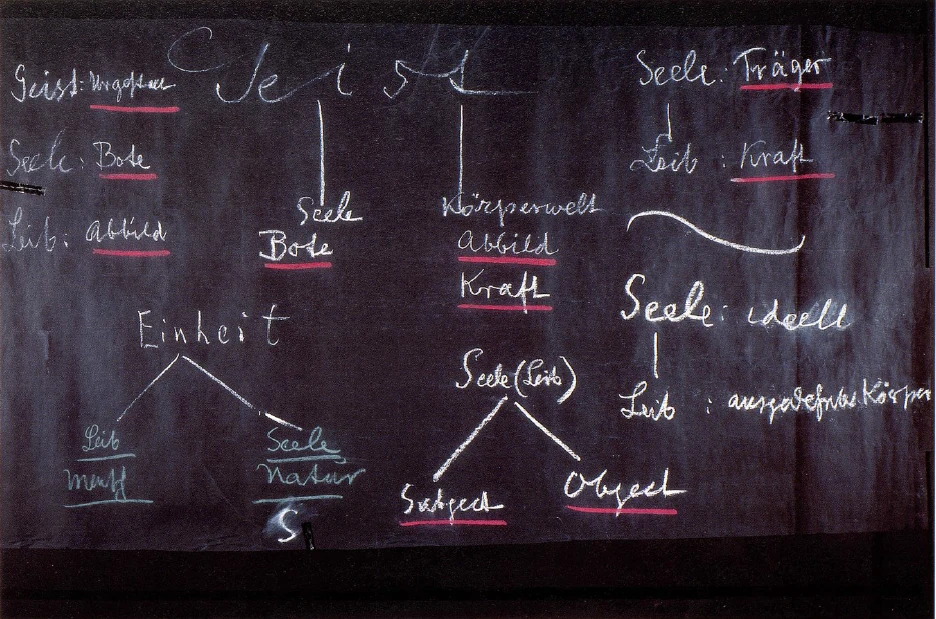
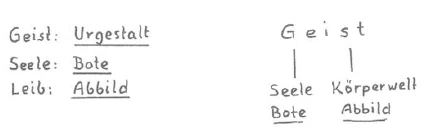
Translated by Steiner Online Library
Second Lecture
[ 1 ] The approach to history underlying these lectures is what I would call a “symptomatological” one; that is to say, the aim is to characterize, through such an approach, what is taking place in the depths of human development—as it were, through the waves raised by this stream of human development, which are the symptoms. This must actually be the case in any true historical analysis, because the events—the sum of the processes that actually lie at every point in time in the depths of human development—are so manifold and and so profoundly significant that one can only ever allude to what lies in the depths by describing the ripples it creates—ripples that symptomatically hint at what is actually taking place.
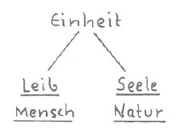
[ 2 ] I mention this today because yesterday, in describing the emergence of scientific modes of thought and research, I discussed two figures: Meister Eckhart and, in particular, Nicholas of Cusa. When such figures are described here, it is because what can be historically observed in the soul and in the entire demeanor of such figures is also regarded by me as symptoms of what is taking place in the depths of the general evolution of humanity. After all, there are always—I would say—only a few images brought to the surface that one can grasp by looking into one human soul or another. But in doing so, one describes the fundamental nature of the individual historical periods. This was my intention when I described Nicholas of Cusa yesterday, to indicate how everything that was actually taking place in the spiritual development of humanity at the beginning of the 15th century—pushing toward a scientific approach—is symptomatically revealed in his soul. Neither all the knowledge that one can, so to speak, accumulate in the soul by devoting oneself, on the one hand, to what theological inquiry had produced up to that point, nor the certain mathematical approach can lead one to grasp the spiritual world, so that one must come to a standstill with the entirety of human conceptual and intellectual knowledge before this spiritual world and, in the face of this spiritual world, can only speak of a “docta ignorantia”—this is precisely what finds such magnificent expression in Nicholas of Cusa. With this, however, he has, in a sense, drawn a line under the kind of worldview that had emerged up to his time in the course of human development. And I was able to point out how that spiritual disposition is already present in Meister Eckhart, who is thoroughly versed in the theological understanding of the Middle Ages and who, with this theological understanding, seeks to look into the human soul itself in order to find within it the path to the divine-spiritual foundations of the world. And he, this Meister Eckhart, arrives at a spiritual disposition that I hinted at to you yesterday with one of his statements. He said—and he said something similar repeatedly—: “I immerse myself in the nothingness of the Godhead and, out of this nothingness, become an ‘I’ in eternity.” — He feels he has arrived at this “nothingness” with his old knowledge and must, from this “nothingness”—that is, from the drying up of all the persuasive forces of his old knowledge—draw forth, through what I would call a “spring,” the certainty of his own “I” from within his soul.
[ 3 ] When one takes a closer look at such a matter, one comes to realize how someone like Meister Eckhart back then points to an older spiritual insight that had emerged in the course of human evolution up to his time—an insight that had given human beings something about which they could say: “This lives within me; this is something divine within me; this is something.” — But now the deepest minds of the age had arrived at the realization: If I seek that “something” here, if I seek that “something” there, then all knowledge of that “something” is not enough to find certainty about one’s own being. And I must go from that ‘something’ to nothingness in order to, as it were, let the consciousness of the ‘I’ spring to life within me from out of nothingness through a kind of origin.
[ 4 ] And now I would like to contrast these two figures with another who lived some two thousand years earlier—a figure who is just as characteristic of his era as, for example, Kusaner, drawing on Meister Eckhart, is of the early 15th century. We will need to go back to these earlier times in order to better understand what then emerged from the depths of human spiritual life as a quest for knowledge in the 15th century. The figure I wish to speak to you about today, however, is not mentioned in any history book or historical document, for these do not go back in such matters to around the 8th century B.C. Nevertheless, we can only gain insight into what characterizes the very origin of the natural sciences if we go further back through spiritual science—through purely spiritual observation—than external historical documents reveal to us. A figure who, as I said, can indeed only be discovered through spiritual vision, living more than two thousand years before this era, the starting point of which I described yesterday as lying in the first half of the 15th century. This is a figure from pre-Christian times who was initiated into one of the so-called mystery schools of southern Europe; there he received everything that these mystery teachers had to say to their students—these spiritual-cosmic teachings, spiritual-cosmic truths, truths about the spiritual beings that lived and continue to live in the cosmos. But this individual I am referring to heard from the mystery teachers even back then a wisdom that was, more or less, merely traditional—a retelling of much of much older visions of humanity—a retelling of what much older, discerning sages had beheld when they repeatedly directed their clairvoyant gaze out into the vastness of the cosmos, and when, as was indeed the case, the movements of the stars, the constellations of the stars, and many other processes in the vastness of the cosmos spoke to them from those expanses. To these ancient sages, the universe was not that machine or machine-like construct that it is to people today when they look out into space; rather, the vastness of the cosmos was something in which these sages felt themselves to be within an all-living, all-pervading, all-spiritual being that spoke to them in a cosmic language. They felt themselves to be within the cosmic being of the Spirit itself, and they felt how that in which they lived and moved spoke to them, how they could, as it were, pose to the world itself the questions that constitute the world’s mysteries, and how the phenomena from the vast expanses answered them. This was perceived as what we, in a very diluted and abstract sense, call “the Spirit” in our language. And the Spirit was actually perceived as that which is everywhere, yet which can also be perceived from everywhere. People gazed into the contents of the world that even the Greeks could no longer perceive with the eye of the soul—contents that had already become “nothing” for the Greeks. And this “nothingness” of the Greeks—which, however, was still a “something” full of content for the oldest sages of the post-Atlantean era—was named precisely with those words that were customary at the time, and which in our language would be called, in a weakened and abstract sense, “Spirit.” Thus, what later became unknown—the God who was later hidden—was called “spirit” when He was still known. That was the first thing in those earlier times.
[ 5 ] The second was that when a person looked within himself, he saw his soul with the gaze of the soul, with the inward-directed gaze of the spirit. And he perceived this soul as that which came from the spirit who later became the unknown God, and he perceived his own soul in this way—according to this most ancient wisdom— and with him, humanity, which professed this oldest form of wisdom—that the designation which, at that time, based on these conceptions, could have been given to the human soul—translated into our language—could be called a “spiritual messenger” or simply a “messenger.” Thus, if one wishes to present schematically what was regarded as a conception in those earliest times: The Spirit was regarded at that time as the all-encompassing reality, apart from which there is nothing else, and which is to be found in every single thing. And the Spirit, which in its primordial form was directly perceptible, was sought once more in the human soul, and it was found when this human soul recognized itself as the messenger of this Spirit. So that one can say: The soul was regarded as a messenger.
[ 6 ] And thirdly, one was surrounded by the external natural world, with what we today call the essence, the physical being. I said that apart from the spirit there was nothing else, for the spirit was perceived everywhere; it was recognized in its primordial form through direct perception. It was recognized in the human soul, which brought its message to life within its own existence. But it was also recognized in what we today call nature—the physical world. And this physical world was regarded as a reflection of the spirit.
[ 7 ] In those ancient times, people did not have the same conceptions of the physical world that we have today. Wherever one looked at any natural formation, one saw—precisely because one could perceive the spirit everywhere—an image of the spirit in every natural formation. The image of the spirit that was closest to one was the human body—this piece of nature. But since all other natural formations were images of the spirit, the human body, too, was an image of the spirit. Therefore, when this ancient human looked back upon himself, he recognized himself as a threefold being. First, the Spirit dwelt within him in its primordial form, as in one of its abodes. The human recognized himself as Spirit. Second, within the world, the human felt himself to be a messenger of this Spirit, and in this respect, a soul being. Third, the human being felt himself to be a body, and through the body, an image of the spirit. So that we can say: When the human being looked back upon himself, he recognized himself in the triunity of his being—as spirit, soul, and body; as spirit in its primordial form, as soul as God’s messenger, and as body as the image of the spirit.
[ 8 ] In this ancient human wisdom, there was no contradiction between body and soul, no contradiction between nature and spirit, for it was known that the spirit, in its primal form, resides within the human being; that which is the soul is nothing other than the spirit carried forward, transmitted as a message; the body is the image of the spirit. But people also felt no opposition between human beings and the surrounding natural world, for they carried within their own bodies the image of the spirit, and they saw in every body outside themselves an image of the spirit. Thus, one’s own body was perceived as kinship with all bodies in nature. One recognized an inner kinship when looking out into the physical world and when gazing upon the human body. Nature was not perceived as something separate. Human beings felt themselves to be one with the rest of the world as a unity, a monon. They felt this because they were able to perceive the primordial form of the spirit—because the vastness of the worlds spoke to them. And the consequence of this speech of the vastness of the worlds to human beings was that there could, in fact, be no natural science. Just as we cannot establish a science of external nature based on what lives in our memory, so too could these earlier members of humanity not establish an external natural science, for when they looked within themselves, they saw the image of the spirit, and they recognized this same image of the spirit again when they looked out into external nature. There was no contrast between himself as a human being and nature, nor was there any contrast between soul and body, for soul and body corresponded to one another in such a way that the body—I might say—was merely the shell, the image, the artistic representation of the spiritual archetype, and the soul was the mediating messenger between the two. Everything was in intimate unity. There could be no question of “comprehending,” for one comprehends that which lies outside one’s own life, whereas that which one carries within oneself is experienced directly, not first comprehended.
[ 9 ] Such wisdom, experienced through direct insight, was still alive in humanity’s oldest mysteries even before the Greek and Roman eras. The person I am referring to today heard of such wisdom. She heard of such wisdom, and she saw that the teachers of her mystery, when it came down to it, had nothing more to say about it than what had been handed down from earlier times. She no longer heard anything original—insights gained from listening to the mysteries of the cosmos. And this individual set out on long journeys, visited other mysteries, and, in essence, found something similar everywhere throughout the 8th century B.C. Everywhere, only the traditions of ancient wisdom remained. The students learned them from teachers who themselves could no longer see—at least not with the vividness of ancient times.
[ 10 ] But the individual I am referring to felt, from the depths of human nature, an immense longing for certainty, for knowledge. From the traditions, she heard that once upon a time one could actually hear the harmony of the spheres, that from this harmony of the spheres resounded the Logos—the Logos that was identical with the spiritual archetype of all things. But she heard only traditions. And just as, two thousand years later, drawing on the traditions of his own age, Master Eckhart, for example, sat in his quiet little chamber in search of the inner power of the soul and the “I,” and arrived at the statement: “I immerse myself in the nothingness of the Godhead and experience the ‘I’ in eternity within the nothing”—so that old, solitary disciple of the late mysteries said to himself: “I listen to the silent universe, and from that silence I draw the soul that bears the Logos. I love the Logos, for the Logos proclaims an unknown God.”
[ 11 ] This was the earlier parallel confession to that of Meister Eckhart. Just as Meister Eckhart immersed himself with the powers of his soul into the “nothingness” of the Divine—of which medieval theology spoke to him—and just as he drew the “I” out of this nothingness, so too did that ancient sage listen intently to a silent universe, for he no longer heard what traditional wisdom had told him. He could only listen into a silent cosmos. And just as the spirit-imbued soul of old had once drawn upon the ancient wisdom, he drew from the silent cosmos the soul that bears the Logos. And he loved the Logos, which was no longer the Divinity itself of ancient times, but merely an image of the Divinity of those times. In other words: The spirit had already vanished from the soul in those times, and just as Meister Eckhart later had to seek the “I” in the world stripped of its spirit, so too must the soul be sought in the world devoid of spirit.
[ 12 ] Oh, in earlier times, souls possessed, so to speak, the inner strength they needed to be able to say to themselves: “I myself am divine in the inner perception of the Spirit that dwells within me.” But now the Spirit no longer dwelt within them for direct perception; now the soul no longer felt itself to be the messenger of the Spirit. For to be a messenger of something, one must know it. Now the soul felt itself to be a bearer of the Logos, a bearer of the image of the Spirit, even though this image of the Spirit was fully alive within it, even though this image of the Spirit expressed itself in love for the God who still lived out His life in His image within the soul. But the soul no longer perceived itself as a messenger; the soul perceived itself as a bearer, a bearer of the image of the divine Spirit. And so one can say, if one wishes to present it schematically again: Now a different understanding of humanity arose when the human being looked into his inner being: soul—bearer. The soul became a bearer rather than a messenger:
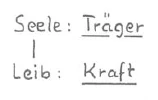
[ 13 ] But because, in a sense, the once-living spirit had been lost from perception, the body was no longer a reflection of that spirit. To recognize it as a reflection, one would have had to recognize the archetype. For this later perception, the body became something else. It became what I would like to call: the force. The concept of force now entered the picture. It was conceived as a system of forces, no longer an image that carries within itself the essence of what is depicted, no longer an image—a force that does not carry within itself the essence of that from which it springs; that is what the human body became. And, starting from the human body, one had to conceive of forces everywhere in nature as well. Whereas nature had previously been everywhere a reflection of the spirit, it had now become the forces flowing from the spirit. With this, however, nature began to be, to a greater or lesser extent, something foreign to human beings. One might say: The soul has lost something, for it no longer possesses direct spiritual consciousness within itself. — If I were to put it bluntly, I would have to say: The soul has become thinner within itself; the body, the external physical world, has gained in robustness. It used to possess the spirit-like quality of the image. Now it has become permeated by the forceful. The interplay of forces is more robust than the image in which the spiritual content is still visible. If I were to put it bluntly again, I would have to say: The physical world has become denser, while the soul has become thinner. This was what passed into the consciousness of those people, foremost among whom was that ancient sage who listened to the silent universe and, from the silence of the universe, drew the realization that his soul is, at the very least, a bearer of the Logos.
[ 14 ] And now, between the soul—which had become more ethereal—and the physical world—which had become more dense—a contrast arose that had not existed before. In the past, people saw the unity of the spirit in everything. Now a contrast arose between body and soul, between human beings and nature, so that a gulf emerged between body and soul—a gulf that had not existed at all before that ancient sage, of whom I have told you today, spoke—but human beings also felt themselves separated from nature, a feeling that was likewise unknown in ancient times. And this opposition essentially forms the core of all thought in the period between that ancient sage, of whom I have spoken to you today, and Nicholas of Cusa.
[ 15 ] Humanity is striving to comprehend, on the one hand, the connection between soul and body—the soul, which lacks spiritual reality, and the body, which has become dense and transformed into force, into a system of forces. And humanity is striving to develop a sense of the relationship between human beings and nature. But nature is force everywhere. A concept of what we today call the laws of nature is actually nonexistent in this age, particularly during its most characteristic periods. People did not think in terms of laws of nature; they sensed natural forces everywhere. They experienced natural forces in everything. And when one looked within oneself, one did not feel a soul that, as in later times, carries within itself a dull volition, an almost equally dull feeling, and abstract thinking; rather, one felt a soul that is the bearer of the living Logos—of which one knows that it is not dead, but is a divine, living image of God.
[ 16 ] One must be able to put oneself in the shoes of this contrast, which existed with great intensity right up into the 11th and 12th centuries, and which is entirely different from the contrasts experienced by humanity today. If one cannot, with a living consciousness, put oneself in the place of this entirely different kind of opposition from an earlier epoch of human history, then one falls into the same trap as all historians of philosophy: they describe the ancient Greek Democritus of the 5th century B.C. as if he had been an atomist in the modern sense, simply because he posited atoms. Even if words suggest a slight semblance of similarity, the similarity does not yet exist. There is a vast difference between the modern atomist and Democritus, because Democritus speaks entirely from within that very contrast I have just characterized—between human and nature, soul and body, so that his atoms are still, through and through, relationships of force, and as such, he sets these relationships of force in opposition to space in a way that the modern atomist cannot set his atoms in opposition to space. How could the modern atomist say what Democritus said: Being is no more than nothingness; the full is no more than the void. That is to say, Democritus assumes that empty space has a kinship with the space filled by the atom. This makes sense only within a consciousness that is not yet familiar with the modern concept of the body at all—and thus cannot speak of the atoms of a body, but naturally speaks only of points of force, which then have an inner kinship with that which lies outside of humanity. Today’s atomist cannot equate the void with the full. For if Democritus had conceived of the void in the way we speak of the void today, he would not have been able to equate it with being. He can equate it because within this void he seeks that which is the bearer of the soul—the soul, which is the bearer of the Logos. Even if he conceives of this Logos as a kind of necessity, it is the Greek notion of necessity, not our modern notion of natural necessity. This is what matters if one wishes to understand what exists today: that one be able to look into the nuances of imagination and perception of earlier times in the right way.
[ 17 ] And now came the era I described just yesterday—the era of Meister Eckhart, the era of Nicholas of Cusa—in which the awareness of the Logos living within the soul was also lost. Where the old master, listening to the universe, could only lament its silence, Meister Eckhart and Nicholas of Cusa found nothingness, and had to seek the “I” out of that nothingness. But it is with this that the modern era of human thought truly begins. Now the soul no longer has the living Logos within itself; now, when it looks within, it finds ideas and concepts—the representations, that which ultimately leads to abstractions. Now it has become even more ethereal. The third phase of human perception begins. Once, in the first phase, the soul experienced within itself the primordial form of the Spirit. It was the Spirit’s messenger. The second phase: The soul experiences within itself the living image of God in the Logos; it becomes a bearer of the Logos.
[ 18 ] Now, in the third phase, it becomes, as it were, a vessel for ideas and concepts that do indeed emerge within the safety of mathematics, but which are, after all, merely concepts and ideas. One might say that it feels most diluted internally. And once again, the physical world gains in robustness. A third way of feeling emerges for the human being. He cannot yet completely relinquish his soul life, but he perceives this soul life as the vessel of the ideal, and he no longer perceives the body merely as a force, but as an extended body.
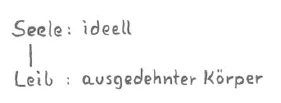
[ 19 ] The body has become even more robust. In our perception, it has become that which now completely denies the mind. It is here that we first encounter the body of which Hobbes, Bacon, and Locke spoke; it is here that we encounter the body that has become the most dense, and to which the inner self can no longer feel any kinship, but only an abstract relationship that emerges more and more clearly in the development of human perception.
[ 20 ] The former concrete opposition between soul and body, human and nature, is now replaced by another opposition that becomes increasingly abstract. That which formerly still appeared as concrete within itself—because it felt within itself the Logos-image of the Deity—gradually transformed itself into merely a vessel of the ideal; it became a subject and placed before itself as an object that with which it no longer felt any kinship—whereas it had felt complete kinship in the old age of the Spirit.
[ 21 ] The earlier human opposition between soul and body, between human and nature, increasingly became merely an epistemological opposition between the subject, which is within, and the object, which is outside. Nature was transformed into the object of knowledge. No wonder that knowledge, driven by its own needs, strove for the objective par excellence.
Translate text Select source language. Currently selected: English (detected) Select target language. Currently selected: German Toolbar Source text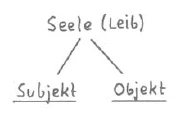 Translation results
Dictionary
Click on a word to look it up or to see alternative translations.
You’re logged in and have a DeepL Pro plan. Your content is secure.
Translation copied
Translation results
Dictionary
Click on a word to look it up or to see alternative translations.
You’re logged in and have a DeepL Pro plan. Your content is secure.
Translation copied
[ 22 ] But what is this “objective”? This “objective” is no longer what nature was to the Greeks; this “objective” consists of external physicality in which nothing spiritual is perceived anymore. It is nature that has become spiritless, that is to be understood from the outside, from the perspective of the subject. Because human beings first lost their connection with nature from within their own being, they sought a natural science from the outside. Here we are back at the point with which I was able to conclude yesterday, when I said that Kusaner looked upon what the divine world was to be for him, and he said: One must first pause in one’s understanding; when writing about the divine world, one must speak of a docta ignorantia. — And he sought only to quietly capture, in symbols drawn from mathematics, something of what appeared to him as the spiritual. But he was aware that one cannot capture the spiritual in mathematical symbols.
[ 23 ] And I said, about a hundred years later—*Docta ignorantia* was published in 1440, and *De revolutionibus orbium coelestium* in 1543 —that is, about a century later—Copernicus, with his mathematical mind, took hold, as it were, of the other, the outer aspect of that which Cusano could not fully grasp with mathematics, not even symbolically. And we see today how the application of this mathematical mind to nature actually becomes possible at the very moment when nature ceases to be part of human direct experience. This can be traced back into the history of language, for “nature” still points to something related to being born, whereas what is regarded as nature today is merely the physical world, which, however, contains within itself only the lifeless—I mean, of course, from the human perspective, for nature still naturally contains life and spirit today, but to human perception it has become a lifeless entity, the understanding of which must first and foremost rely on the most reliable conceptual knowledge—that of mathematics.
[ 24 ] Thus we see before us a development of humanity that unfolds according to an inner law: the first epoch, in which humanity perceived God and the world, but God within the world, the world within God—the Monon, the Unity; the second epoch, in which humanity perceived, in fact, soul and body, human and nature—the soul as the bearer of the living Logos, as the bearer of that which neither comes into being nor passes away, and nature as that which comes into being and dies; the third phase, in which humanity has risen to the abstract opposition: the subject, which is humanity itself, and the object, which is the external world. The object is the most robust; no attempt is even made to shed light on it through concepts; it is perceived as alien to man, examined from the outside using mathematics, which lacks the capacity to penetrate the inner realm as such—which is why even Kusaner applied it only symbolically to the inner realm, and even then only timidly.
[ 25 ] Thus, one must conceive of the striving to develop the natural sciences as having emerged from humanity’s earlier stages of development. The era in which these natural sciences were bound to arise simply had to come upon humanity. They were also bound to become what they are today. We see this clearly when we take a close look at the phases I have described in the spiritual development of humanity—when we consider how the first phase extends up to that ancient southern sage of the 8th century B.C.E. whom I have described to you today, and the second phase from him to Nicholas of Cusa. We are currently in the third phase. The first is pneumatological, oriented toward the Spirit in its primordial form; the second is mystical, if we take the word “mystical” in its broadest sense; the third is mathematical. So—if we consider the actual characteristic features—we trace the first phase up to the ancient southern sage whom I have described to you today; up to him, we trace the ancient pneumatology. From him to Meister Eckhart and Nicholas of Cusa, we trace the history of magical mysticism. From Cardinal Nicholas of Cusa to our own time and beyond, we trace the era of mathematized natural science.
[ 26 ] We'll build on that tomorrow.