

The Emergence of Natural Science
in World History
and its Subsequent Development
GA 326
28 December 1922, Dornach
Translated by Steiner Online Library
Fifth Lecture
[ 1 ] The separation of human ideas from immediate human experience—namely, as has been explained so far, mathematical ideas—has emerged as the most distinctive feature of the intellectual development from which the modern scientific way of thinking has arisen. Let us just imagine once more, in our mind’s eye, how it used to be.
[ 2 ] We have been able to look back to earlier times when human beings, in a sense, experienced together with the world what they had to discern in it, times when human beings inwardly experienced their threefold orientation—up-down, right-left, front-back—but did not experience this orientation as something they attributed solely to themselves; rather, they felt themselves to be part of the whole of the world, so that their front-back constituted the first, their up-down the second, and their right-left the third spatial dimension. He experienced what he conceived in his understanding together with the world. Therefore, there was no uncertainty in his being as to how he should apply his concepts and ideas to the world. This uncertainty had only emerged with modern civilization, and we see this uncertainty slowly creeping into all of modern thought, and we see the natural sciences developing under the influence of this uncertainty. One must simply be completely clear about this fact.
[ 3 ] Let’s illustrate what we’re dealing with here using specific examples. Let’s take a thinker such as John Locke, who lived from the 17th into the 18th century, and who, in his writings, articulated what a modern thinker of his time had to say about the scientific view of the world. John Locke divides everything that a person perceives in their physical environment into two parts. He divides the characteristics of bodies into so-called primary characteristics and secondary ones. The primary characteristics are those that he cannot help but attribute to the things themselves: shape, position, and motion. The secondary characteristics are those which he regards as not actually belonging to the physical objects outside, but merely representing an effect of these physical objects on human beings. Among these characteristics of things are, for example, color, sound, and heat—as something perceptible as warmth, as the experience of warmth. John Locke says: When I hear a sound, there is, apart from me, the vibrating air. I can, if I so choose, represent these movements in the air—which originate from the sound-producing body and propagate all the way to my ear—in a drawing. The shape—which, as they say, the waves in the vibrating air possess—I can represent through spatial figures; I can visualize it as it unfolds over time, that is, as motion. That which takes place in space—the shape, motion, and location of things—is certainly out there in the world. But everything that is out there in the world—those primary characteristics—is silent, devoid of sound. The quality of sound, that secondary quality, arises only when the air wave strikes my ear and that peculiar inner experience is present, which I carry within me as sound. The same is true of color, which is simply associated with light. There must be something out there in the world that is somehow physical, that has some form and movement, and that exerts an effect on me through my eye, thereby becoming the experience of light or color. The same is true of the other things that present themselves to our senses. The entire physical world must be viewed in such a way that we distinguish within it the primary qualities, which are objective, from the secondary qualities, which are subjective and represent the effects of the primary qualities on human beings. So, to put it in radical terms, one could say: In the sense of John Locke, the world outside of us—beyond human beings—consists of form, position, and movement; and everything that is actually the content of the sensory world is, in truth, somehow within us; it is actually woven within the human being. The real content of color as a human experience is nowhere out there—it weaves within me; the real content of sound is nowhere out there—it weaves within me; the real content of the experience of warmth or cold is nowhere out there—it weaves within me.
[ 4 ] In earlier times, when people experienced—together with the world—what has since become the content of knowledge, they could not hold this view; for, as I have described, they experienced mathematical content through the active participation of their own bodily orientation and the integration of that orientation into their own movement. But one experienced this together with the world. Thus, one’s experience also simultaneously provided the basis for accepting position, location, and movement as objective. Yet, for another aspect of inner human life—such as color, sound, and so on—one also shared this coexistence with the world. Just as one arrived at the concept of movement through the experience of one’s own movement as a human being, so one arrived at the concept of color by having a corresponding inner experience within one’s blood system and bringing this inner experience into harmony with what exists out there in the world—warmth, color, sound, and so on. Although people in earlier times also distinguished between position, location, movement, and the passage of time in relation to color, sound, and the experience of warmth, they distinguished these precisely as different kinds of experience that were also undergone together with different modes of being in the objective world. Now, in the age of natural science, people had come to no longer experience location, movement, position, form, and so on as direct experience, but only as something conceived in the mind that was identified with what was—and is—out there. And since it doesn’t quite work when one imagines the form of a cannon and says: “This shape of the cannon is actually somehow within me”—people simply identified these concepts with the external world. They related the conceptualized shape of the cannon to something objective. Since one could not exactly admit that when a shotgun pellet flies somewhere, it is actually flying within one’s own brain, people simply identified these conceptualized movements with the objective world.
[ 5 ] But what one saw in the flying shotgun pellet—the colorful glow through which one saw it, the sound one perceived—one pushed into one’s own human being, because one had no other place to put it. One no longer knew how to experience it together with things, so one absorbed it into one’s human being.
[ 6 ] It actually took quite a long time for people thinking in terms of the scientific age to realize the impossibility of this notion. For what had actually happened there? The secondary qualities— sound, color, and the sensation of warmth had, in their own right, become—I would say—simply out of bounds in the world, and they had to take refuge within human beings for the sake of cognition. As for how they dwelled there inside—well, people gradually ceased to have any concept of that at all. The experience, the experience of the self, was no longer there. A connection with external nature no longer arose, because it was no longer experienced. So people pushed these experiences inward into themselves. And there, as it were, they simply vanished from human awareness. In a sort of half-conscious state—half clear, half unclear—people imagined that, let’s say, there was an etheric movement out there in space that could be represented through form and movement, and that this exerted an effect on the eye and from there on the optic nerve. Somehow it makes its way into the brain. And internally, one first sought in thought that which, as an effect of the primary qualities, was to manifest itself as secondary qualities within the human being. It took a long time, I would say, before individual people pointed out with a certain decisiveness the peculiarity of this notion, and what the Austrian philosopher Richard Wahle wrote in his *Mechanism of Thought* is actually something extraordinarily striking, even though he by no means manages to fully exploit this statement of his own: “Nihil est in cerebro, quod non est in nervis — Nothing is in the brain that is not in the nerves.” Now, of course, even if it is not yet possible with our current means—but even if one were to search the nerves in every direction and from every angle—one would not find sound, color, or the sensation of warmth in the nerves. Therefore, they are not in the brain either. In fact, one would now have to admit that they disappear entirely from one’s perception. One examines the relationship between human beings and the world. One regards shape, position, place, time, and so on as objective; sound, the sensation of warmth, and color—they disappear; they slip one’s mind.
[ 7 ] After all, this led Kant to say in the 18th century that even the spatial and temporal qualities of things cannot in any way exist outside of human beings. But since there must be a relationship between human beings and the world—for this relationship cannot be denied if one is to conceive at all of living in the world—yet the coexistence of human beings’ spatial and temporal relationships with the world was no longer there—this gave rise to Kant’s idea: If a person is now to apply, for example, mathematics to the world, it must follow that he must first himself make the world mathematical, that he must superimpose the entire realm of mathematics onto the “things-in-themselves,” which themselves remain completely unknown. Nineteenth-century natural science, too, grappled intensely with this problem. If one considers the fundamental character of the human behavior in cognition just described, it is that an uncertainty has crept into one’s relationship to the world. One does not know how one is actually supposed to view what one experiences in the world. And this uncertainty gradually crept more and more into all of modern thought. We see this uncertainty creeping into modern intellectual life bit by bit.
[ 8 ] Now it is interesting to contrast this earlier phase of John Locke’s thought with an example from more recent times. A 19th-century biologist, Weismann, put forward the idea that, when one analyzes the organism of any living being biologically, one must assume that the interaction of the organs—or, in the case of lower organisms, the interaction of their parts—is the essential aspect; that through this one arrives at an understanding of how the organism lives; but that in the examination of the organism itself—in recognizing the organism through the interaction of its parts—no characteristic is found to indicate that the organism must also die. If one looks only at the organism, Weismann—who was active in the second half of the 19th century—told himself, then one finds nothing that can make death apparent. Therefore, he said, there is absolutely nothing within the living organism that could lead one to grasp, from the very nature of the organism, the idea that the organism must die. For Weismann, the only thing that can show one that the organism must die is the presence of the corpse. This means that one does not form the concept of death based on the living organism. One finds no feature, no characteristic in the living organism from which one could recognize that death is part of the organism; rather, one must first have the corpse. And when this event occurs—that there is a corpse for a living organism—then this corpse is what shows one: The organism also possesses the capacity to die.
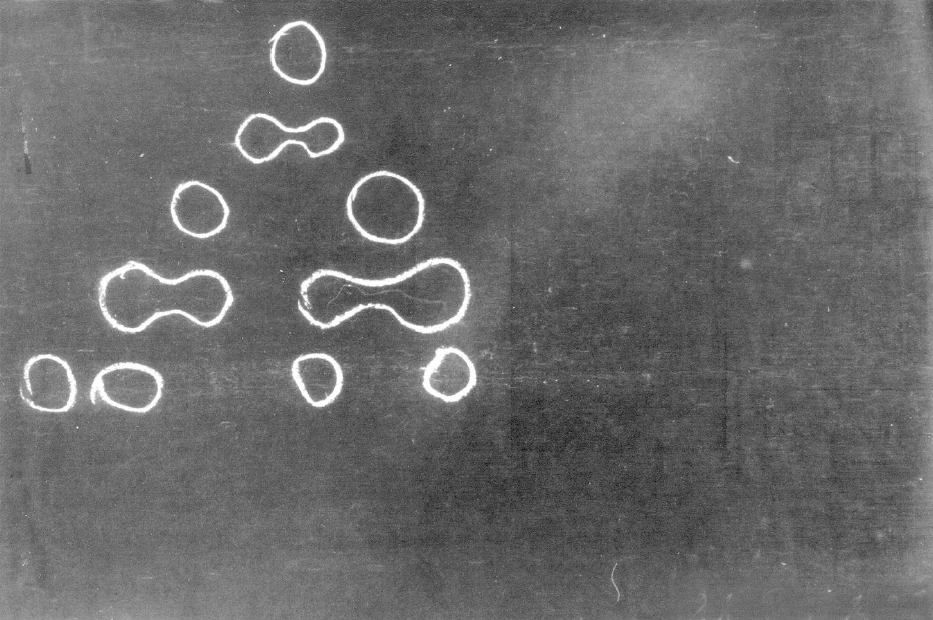
[ 9 ] Now, however, Weismann says that there is a realm of organisms in which one can never find corpses. These are the single-celled organisms. They simply divide; there are no corpses to be found. Suppose there is a single-celled organism in the process of reproduction. The process unfolds as follows. Such a single-celled organism divides into two, each of which divides into two, and so on. Development proceeds in this way; there is never a corpse. Therefore, Weismann argues, single-celled organisms are immortal. This is the famous “immortality of single-celled organisms” in 19th-century biology. And why are they regarded as immortal? Well, precisely because they never present a corpse, and because the concept of death cannot be applied to organic life if no corpse is present. Where, then, no corpse is present, the concept of death cannot be applied. Consequently, those living organisms that do not present a corpse are immortal.
[ 10 ] You see, it is precisely this kind of example that shows how far we have strayed in recent times from the interplay of our ideas—and indeed our inner experiences—with the world. The concept of the organism is no longer such that one can still perceive that it, too, must die. One must infer from the external existence of the corpse that the organism can die. Certainly, if one views a living organism merely from the outside—if one cannot experience what is within it, if one cannot, in other words, live one’s way into it—then one does not perceive death within the organism and requires an external sign to indicate it. But this testifies to the fact that one feels completely separated from things through one’s own conception of them.
[ 11 ] But let us now look beyond the uncertainty that had crept into all thinking about the physical world through this separation of the conceptual world from self-experience, and look back to that time when this self-experience was still present. Just as there was not merely an externally conceived concept of a triangle, a quadrilateral, or a pentagram, but an inwardly experienced concept, so too was there an inwardly experienced concept of coming into being and passing away, of being born and dying. And this inner experience of being born and dying contained within it a gradation. When one found the child becoming more and more animated from the inside out, when its initially indeterminate facial features took on an inner animation, and one immersed oneself in this process of the very small child’s development, it appeared to one as a continuation of being born—in a sense, as a weaker, less intense, yet ongoing process of being born. There were degrees in the experience of coming into being. And when a person began to develop wrinkles, to grow gray hair, to become frail, one experienced a lesser degree of dying—a less intense dying, a partial dying. And death was merely the sum total of many less intense experiences of dying, if I may use that paradoxical term. The concept was internally animated—the concept of becoming as well as the concept of passing away, the concept of being born and the concept of dying.
[ 12 ] But by experiencing this concept in this way, one experienced it together with the physical world, so that one did not actually draw a line between one’s own experience and the phenomena of nature; in a sense, the inner human realm merged without boundaries into the vast ocean of the world. By experiencing it in this way, one also immersed oneself in the physical world itself. And so those figures of earlier times—whose most characteristic thoughts and ideas are not actually followed with any attention in the external sciences, and are therefore not properly documented—had to form entirely different ideas about something like what Weismann here constructed—I say this now in quotation marks—as the “immortality of single-celled organisms.” For what would such an older thinker have made of his conception of coexistence with the world if, even back then, he had known something about the division of single-celled organisms through a microscope that might have existed at the time? He would have said: First, I have the single-celled organism. It divides into two. Speaking somewhat imprecisely, he might have said: It atomizes, it divides, and for a certain time the two parts are in turn indivisible as organisms, then they continue to divide. And when the division begins, when the atomization begins, then death sets in. So he would not have derived death from the corpse, but from atomization, from the disintegration into parts. For he imagined, for example, that what is viable is in a state of ongoing becoming—that it is unatomized—and when the tendency toward atomization arises, then the entity in question dies. In the case of single-celled organisms, he would simply have thought that for the two entities initially expelled by a single-celled organism—which are, at that moment, considered dead—the conditions exist for them to be brought back to life immediately, and so on. That would have been his line of thought. But with atomization, with fragmentation, he would have emphasized the idea of death; and in his view, if the case had been such that one had a single-celled organism that had divided, and if, as a result of the division, not two new single-celled organisms had arisen, but rather, due to a lack of conditions for life, these single-celled organisms had immediately turned into inorganic parts, then he would have said: Two atoms have arisen from the living monad. And he would have gone on to say: Wherever there is life, wherever one observes life, one is not dealing with atoms. If one finds atoms anywhere within a living being, then whatever portion contains atoms is dead within it. And wherever one finds atoms, there is death, there is the inorganic. This is how judgments would have been made in earlier times based on the living, inner experience of the sense of the world, the perception of the world, and concepts of the world.
[ 13 ] That this is not so clearly evident in our accounts of the spiritual life of earlier times—for those who can read correctly, however, there is really no reason to doubt it —but the reason it is not presented that way—particularly not in modern accounts of, say, early natural philosophy or early philosophy—is simply that the modes of thought in this older philosophy, this natural philosophy, are already so dissimilar to contemporary thought that anyone who writes history, for example, ends up projecting “the spirit of the masters” onto the minds of those in the past. But one cannot even write about Spinoza in this way, for Spinoza sets forth in his book—which he rightly calls an *Ethics*—his ideas using the mathematical method, not by practicing mathematics in the modern sense, but by applying the mathematical way of stringing idea upon idea to his philosophy. In doing so, however, he proves that there is still something within him of the earlier qualitative experience of quantitative mathematical concepts. Thus, even when extending the consideration to the qualitative aspects of human inner experience, one can still speak of the mathematical. To attempt today, using our concepts, to apply the mathematical to the psychological—or even to the ethical—would, of course, be utter nonsense.
[ 14 ] So you see, if we want to grasp an important point in modern thinking, we must point out this uncertainty in contrast to the greater certainty that certainly existed in the past—even if it is no longer appropriate for our current way of thinking. But this uncertainty has ultimately led to the point where, in the current phase of scientific thought, I would even say that theoretical justifications for these uncertainties have emerged. In this regard, a lecture given by the French thinker and researcher Henri Poincaré on recent ideas about matter is exceptionally interesting. In it, he discusses the ongoing debate or discussion over whether matter should be conceived of as continuous or as discrete—whether it should be conceived as a substantial essence that, in a sense, fills space and is nowhere truly separated within itself, or whether the substantial, the material, should be conceived atomistically, that is, more or less as empty space containing the smallest particles, which, through their specific arrangement, form atoms, molecules, and so on. And if one disregards certain—I would say—ornate embellishments in this justification of uncertainty, Poincaré’s lecture essentially conveys this: research and science simply pass through different eras. In one era, there are phenomena that lead the thinker to conceive of matter as continuous. It is convenient, precisely in light of the phenomena of this era, to conceive of matter as continuous and to remain with what also manifests itself as continuity in the external connections of sensory data. In another era, more research results emerge in light of which it is convenient to break matter down into atoms and allow them to recombine—that is, to conceive of it not as a continuous whole but as a discrete, atomistic entity. And now Poincaré believes that it will always be the case that, depending on whether research results tend in one direction or the other, there will be eras that think in a continuous manner and eras that think in an atomistic manner. He even speaks of an oscillation in the course of scientific development between continuism and atomism. And so it will always be, for, he says, the human mind simply has a need to form theories about phenomena in the way that is most comfortable for it. When it has formed a continuous theory for a while, then—well, these are not his words, but one can characterize what he actually means with these words—it grows weary of it. Other research results present themselves to him, one might say, unconsciously, and he begins to think atomistically, just as one exhales after inhaling. And so this oscillation is to continue indefinitely, alternating between continuism and atomism, continuism and atomism, and so on. This arises solely from a need of the human mind itself, and in reality we would not be saying anything at all about things. Whether we think in terms of continuism or atomism does not determine anything about things; rather, it is merely the human mind’s attempt to come to terms with the physical world outside.
[ 15 ] It is no wonder that an age which no longer perceives personal experiences as connected to world events, but rather regards them as something existing solely within the human being, is plunged into uncertainty. If one no longer experiences one’s oneness with the world, then one cannot experience continuism or atomism either, but can only impose the preconceived continuism or atomism onto the phenomena. Thus, in this way, one would gradually arrive at the notion that human beings form their theories according to their changing needs. Just as one must inhale and then exhale, so one must think in a continuist manner for a while and then in an atomist manner for a while. And in fact, one cannot catch one’s intellectual breath if one always thinks in a continuist way; one must think atomistically again in order to get some intellectual air. Thus, this merely establishes and justifies the uncertainty, which is even reinterpreted, half and half, as arbitrariness. One no longer lives in harmony with the world at all, but claims that one can live with it one way or another, depending entirely on one’s own subjective needs.
[ 16 ] But what would an older way of thinking—precisely the one I have cited on several occasions—have said in such a case? It would have said: Well, in an age in which the leading thinkers think in a continuist manner, they tend to think primarily of life. In an age when the leading thinkers think atomistically, they tend to focus on the dead, on inorganic nature, and even project the inorganic into the organic.
[ 17 ] You see, this is no longer unjustified arbitrariness, but rather it is based on an objective relationship to things. Of course, I can focus on a living being at one time and on a dead being at another; I can say: It follows from the inner nature of the living that I must conceive of it in a continuist manner, and I must say, based on the inner nature of the dead: I must conceive of it in an atomistic manner. But I cannot say that this merely corresponds to an arbitrary decision of the human mind. It corresponds to an objective relationship to the world, not to a mere subjective need of the human mind. The subjective aspect is, in fact, entirely disregarded in this process of cognition. For one perceives the living in nature in a continuous manner, and one perceives the dead in nature in an atomistic manner. And if one truly needs to alternate—in an oscillatory manner—between atomistic thinking and continuous thinking, then this must also be turned toward the objective; one must simply say: Sometimes you must think of the living, other times of the dead. But there is no justification for cramming this into the subjective realm through a mode of perception such as that of Poincaré, nor is there any justification for applying the subjective in the same way to a mode of perception such as the one I have now outlined for earlier phases of human development.
[ 18 ] The fact is that, since the matter reveals itself in an inner way, there has indeed been a shift in the phase of scientific thought that now lies behind us—a shift away from the living toward the dead, and thus also from continuism to atomism, which, when properly understood, is of course justified with regard to the inorganic, with regard to the dead. But once human beings wish to find themselves objectively and truly in the world again, they must seek a way to return from the magnificently developed, atomistically conceived, yet dead world to their own being and to perceive themselves as living organisms. For up to now, development has culminated in taking the direction toward the dead, that is, toward atomism. And when this utterly dreadful cell theory of Schleiden and Schwann emerged in the first half of the 19th century, it did not become the path to continuism, but rather the path to atomism—and this without anyone really admitting it, and without it ever occurring to anyone, even to this day, that one actually ought to admit it, because it corresponds to the entire methodological course of perception. And without realizing that, just as one conceived of the organism as fragmented into cells, one was actually atomizing it in thought—that is, effectively killing it—the fact remains that, from the atomist perspective, the concept of the organism has been lost altogether.
[ 19 ] That is precisely what is significant about the picture one gets when one compares, for example, Goethe’s conception of organic life with that of Schleiden or later botanists: with Goethe, one finds living, experienced ideas everywhere, whereas on the other hand—even though the cell is a living entity, and one is thus in reality pointed toward something living—the way one thinks is as if the cells were not alive at all, but were atoms. Of course, empirical research does not always align with the rational aspect of the matter, because that is simply not possible when dealing with living organisms. On the other hand, however, the understanding of the organic is not adapted to what actual observation reveals about cell theory. The non-atomistic view takes hold only because, when one studies the actual cell, one simply cannot help but characterize it as a living entity. But that is precisely what characterizes many contemporary accounts: that things are muddled together and clarity is not truly valued.
[ 20 ] I'll talk more about that in the next class, which will be on Monday.