

The Agricultural Course
Spiritual Science Foundations
for the Prosperity of Agriculture
GA 327
12 June 1924, Koberwitz
Translated by Steiner Online Library
Fourth Lecture
My dear friends!
[ 1 ] As you have seen, the development of humanities-based methods for agriculture involves, in a sense, viewing nature and the influence of the spirit in nature on a grand scale, within its comprehensive scope, whereas science with a materialistic bent has increasingly come to focus on the smaller spheres, on the minute details. Even in a field like agriculture, where one is not always immediately dealing with the very smallest, the microscopically small—as is so often the case in the other natural sciences—one is nevertheless dealing with that which operates within small spheres and can be inferred from the effects of those small spheres. But the world in which human beings and other earthly beings live is by no means something that can be assessed solely on the basis of small circles. To proceed in this way with regard to what actually matters—for example, in agriculture—as conventional science does today, would be just as if one wanted to understand the entire nature of a human being, say, from his little finger and the tip of his ear, and from there to construct an understanding of what matters on a larger scale. In contrast, we must once again—and this is as necessary today as it could possibly be—establish a true science that addresses the great interconnections of the world.
[ 2 ] Just how much science—in today’s common understanding or in the common understanding of a few years ago—must correct itself is evident from the scientific absurdities that prevailed not so long ago, for example, regarding human nutrition. Everything was entirely scientific; it was also scientifically proven, and if one relied solely on what was being considered at the time, there was absolutely nothing one could object to regarding the evidence. It was scientifically proven that a person with an average body weight of seventy to seventy-five kilograms needed approximately one hundred twenty grams of protein in their diet. Well, as I said, that was, so to speak, scientifically proven. Today, no one with a scientific outlook believes in this statement anymore. For science has corrected itself. Today, everyone knows that 120 grams of protein is not only unnecessary but actually harmful, and that people actually remain healthiest when they consume only 50 grams daily. Science has corrected itself on this point. Today we know that it is indeed true that when excess protein is consumed, the protein produces byproducts in the intestines that have toxic effects. And if one examines not only the immediate stages of a person’s life during which protein is administered, but the person’s entire life, one realizes that these toxic effects of excess protein are the primary cause of arteriosclerosis in old age. Thus, scientific studies concerning human beings, for example, are often misleading because they focus only on the present moment. But a human life, when normal, lasts longer than ten years, and the harmful effects of these seemingly beneficial causes—which are so eagerly sought after—often manifest themselves very late.
[ 3 ] The humanities are simply less prone to falling into such an error. Certainly, I have no intention of joining in the cheap criticism that is so frequently leveled simply because mainstream science must correct itself in the manner I have just described. It is easy to see that this cannot be otherwise and that it is necessary. But on the other hand, it is just as facile to attack the humanities when they seek to intervene in practical life, precisely because they are compelled to look at the broader contexts of life, and because what catches their eye there are those forces and substances that then enter into the spiritual realm—not merely the grossly material forces and substances. This certainly applies to agriculture as well, and it applies in particular when the question of fertilization arises in agriculture.
[ 4 ] As is so often the case—I would say—the very words used today by scientists when the issue of fertilization comes up already show that people actually have very little real understanding of what fertilization truly means in the balance of nature. Today one very often hears the phrase: “Fertilizer contains the nutrients for plants.” Well, I said those few sentences at the beginning to show you how, with regard to human nutrition—especially in recent times, in the immediate present—science has had to correct itself. It had to correct itself because it starts from a completely wrong view regarding the nutrition of any living being.
[ 5 ] You see, people used to believe that the most important thing about nutrition—please don’t take offense at my speaking so bluntly—was what you eat every day. Well, what you eat every day is certainly important. But most of what you eat every day isn’t actually meant to be absorbed by the body as substance and stored there. Rather, most of it is there to release the forces it contains to the body, to stimulate the body’s activity. And most of what we take in in this way is actually excreted again, so that we must say: it is not primarily a matter of weight-based balance in metabolism, but rather a matter of whether we can properly absorb the vitality of these forces into ourselves through our food. For we need this vitality, for example, when we walk or when we work—indeed, whenever we move our arms.
[ 6 ] On the other hand, what the body needs in order to store substances within itself—to enrich itself, so to speak, with substances—those substances that are then expelled when the body’s substance is renewed every seven to eight years—is absorbed for the most part through the sense organs, through the skin, and through respiration. Thus, what the body actually needs to take in substantively—what it must store—it absorbs in extremely fine doses, continuously, and only then condenses it within the organism. It takes it in from the air, then hardens and condenses it to such an extent that it must subsequently be shed in the form of nails, hair, and so on. It is entirely wrong to formulate the process as follows: ingested food, passage through the body, shedding of nails and skin, and the like; rather, one must formulate it as: breathing, the finest absorption through the sense organs—even through the eyes—passage through the organism, and expulsion. Whereas, in fact, what we take in through the stomach is important in that it possesses an inner vitality, like fuel, which introduces into the body the forces of the will that are at work within it.
[ 7 ] Now you see: One becomes quite desperate when one sees that the views of modern science—which advocate exactly the opposite of what the truth is, what simply emerges from spiritual research—are getting in the way of that truth. One becomes desperate because one realizes how difficult it is to even reach an understanding with modern science on the most important questions. And such an understanding must come; for modern science would lead absolutely nowhere, especially when it comes to practical life. And in its own ways, it simply cannot understand certain things that it practically stumbles upon. I’m not even talking about the experiments. What science says about this is generally true. The experiments are quite useful; what is then theorized, however, is problematic. Unfortunately, this gives rise to the practical guidelines for the various areas of life. When one looks at all of this, one sees the difficulty of reaching an understanding. But on the other hand, this understanding must be achieved in the most practical areas of life, which include agriculture.
[ 8 ] You see, one must have insight into the most diverse areas of agricultural life—into the workings of the material, the forces, and also the workings of the spiritual—if one wants to handle things in the right way. A child, as long as it doesn’t know what a comb is for, bites into it, using it in a completely inappropriate and absurd way. And so one will also use things in an inappropriate and absurd way if one does not know what their essence is, how things actually stand with regard to what really matters.
[ 9 ] To get a better idea, let’s consider a tree. You see, a tree differs from an ordinary annual plant, which remains merely a herb. It is surrounded by bark, and so on. What, then, is the true nature of this tree as opposed to an annual plant? Let’s compare such a tree to a mound of earth that has been heaped up and is exceptionally rich in humus—one that contains an extraordinary amount of plant matter in various stages of decomposition, and perhaps also animal decomposition products.
[ 10 ] Let’s assume this is the mound of earth into which I want to dig a crater-shaped depression—a mound rich in humus—and that this is the tree. On the outside is the more or less solid substance, and on the inside grows what will eventually shape the tree. It may seem strange to you that I am placing these two things side by side. But they are more closely related than you might think. For earth that is permeated in the way I have described—by humus-like substances that are in the process of decomposition—such earth contains an ethereal-living quality. And that is what matters. When we have such soil, whose particular nature reveals to us that it contains an ethereal-living quality, it is actually on its way to becoming the plant’s outer covering. Yet it does not remain that way. It does not come to become the plant’s outer covering that draws itself into the bark of the tree. And you can imagine that this does not happen in nature. What happens is that, instead of such a mound of earth being formed and humus-like material entering it—which acts in the soil through the special characteristic properties emanating from the ethereal-living—the mound simply closes around the plant in a higher form of development.
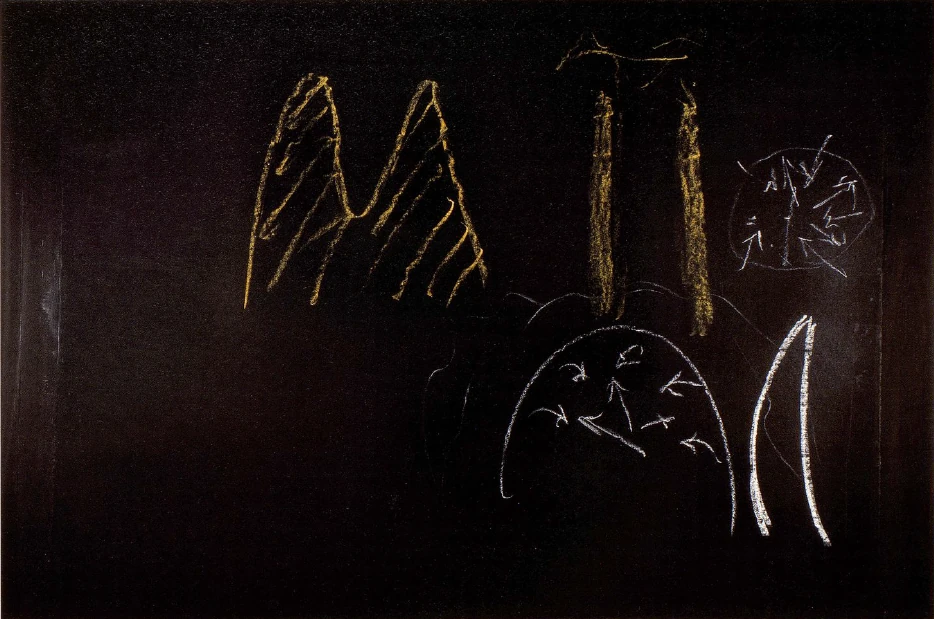
[ 11 ] For if, at any point on Earth, a level—the upper part of the Earth—is demarcated from the Earth’s interior, then everything that rises above this normal level in a given region will exhibit a particular affinity for the living, a particular tendency to become permeated with the etheric-living. You will therefore find it easier to enrich ordinary soil—inorganic, mineral soil—with humus-like substances or, more generally, with decomposing organic matter, if you build mounds of earth and infuse them with these materials. Then the earth itself will develop a tendency to become inwardly alive, akin to a plant. The same process occurs in tree formation. The earth forms a covering, surrounds the plant, and provides it with ethereal-living force all around the tree. Why?
[ 12 ] You see, I am saying all this for one reason: to give you an idea that there is a deep connection between what is enclosed within the contours of this plant and the soil surrounding it. It is not at all true that life ends with the outline, with the perimeter of the plant. Life as such continues, specifically from the plant’s roots into the soil, and for many plants there is no sharp boundary at all between the life within the plant and the life in the surrounding area where the plant lives. Above all, one must be thoroughly imbued with this understanding and grasp it deeply in order to truly comprehend the nature of fertilized soil or soil that has been cultivated in any other similar way.
[ 13 ] It is important to understand that fertilization must consist of revitalizing the soil so that the plant does not end up in dead soil and struggle to accomplish, through its own vitality, what is necessary for fruit formation. It accomplishes what is necessary for fruit formation more easily if it is already immersed in life. Essentially, all plant growth has this subtle parasitic quality, in that it actually develops on living soil like a parasite. And that is necessary. Since we cannot count on nature itself to incorporate enough organic waste into the soil in many regions of the world—which it would then decompose to the point where the soil is truly suffused with life—we must support plant growth through fertilization in certain regions of the world. Least of all in areas where there is so-called “black soil.” For in these areas, nature itself ensures that the soil remains sufficiently alive, at least in certain regions.
[ 14 ] As you can see, you really have to understand what this is all about. But there is something else you must understand: you must—and this is a difficult concept—develop a kind of personal relationship to everything involved in agriculture, above all a personal relationship to fertilizer and, in particular, to working with fertilizer. This may seem like an unpleasant task; but without this personal relationship, it simply won’t work. Why? You see, this will become immediately clear to you if you can attune yourself to the nature of any living being at all. When you attune yourself to its nature, the living being always has an outer side and an inner side. The inner side lies within some kind of skin; the outer side lies outside the skin. Now, let’s consider the inner side for a moment.
[ 15 ] The interior not only has streams of force that flow outward, in the direction of these arrows, but the inner life of an organic being also has streams of force that flow inward from the skin—which are pushed back. Now, the organic being is surrounded on the outside by all kinds of streams of force. There is something that expresses, in a very precise yet personal way, how the organic being must shape the relationship between its interior and exterior. All those forces at work within the organic being—and actually within the organism itself, that is, within the contours of its skin—that stimulate and sustain life must—forgive me again for the harsh expression—smell, or one might even say stink. And this is essentially what life consists of: that which would otherwise, if it were to evaporate, spread its scent is instead held together; that the things which give off a scent do not radiate too strongly outward, but rather that the things within which give off a scent are held back. Outwardly, the organism must live in such a way that it allows as little as possible of what the life-giving fragrance within it produces to pass through its boundary—the skin—to the outside, so that one could say: the more an organism smells from within and the less it smells outwardly, the healthier it is.
[ 16 ] For outwardly, the organism—specifically the plant organism—is predestined not to emit odors, but to absorb them. And when one perceives the life-sustaining power of an aromatic meadow interspersed with aromatic plants, one becomes aware of how life supports one another. This fragrance, which spreads out there and is distinct from the mere scent of life, emanates for reasons we will likely be able to explain, and is what now acts upon the plant from the outside. One must actually experience all these things vividly in a personal relationship; only then is one truly immersed in real nature.
[ 17 ] Now, the point is to recognize that fertilizing and all similar practices must consist of imparting a certain degree of vitality to the soil, but not merely to impart a certain degree of vitality, but also to enable what I specifically pointed out yesterday to take place within it—namely, that nitrogen can spread throughout it in such a way that life is carried along certain lines of force, as I have shown you, precisely with the help of nitrogen. So when we fertilize, we must supply the soil with enough nitrogen to carry the living force precisely to those structures within the soil—where the plant root system is to be—that must be nourished beneath the plant. That is the task at hand. But this task must be carried out in a precise and objective manner.
[ 18 ] Now you see, this can serve as a strong indication that when you use mineral substances—purely mineral substances—as fertilizer, you never actually reach the earthy element, but at most the watery element of the earth. You can produce an effect with mineral fertilizers in the watery aspect of the earth, but you do not penetrate to the vitalization of the earth itself. Therefore, plants that are under the influence of any mineral fertilizer will exhibit a type of growth that reveals it is supported only by stimulated wateriness, not by vitalized earthiness.
[ 19 ] If we truly want to study these things, the best approach is to start with the most unassuming fertilizer of all: compost, which is sometimes even looked down upon. Here we have a soil revitalizer into which is actually mixed everything that is in some way considered waste—things that are held in low regard, originating from agriculture and gardening, ranging from grass that has been left to rot to fallen leaves and the like, and even including what comes from dead animals and so on. Now you see, one really should not despise such things at all; they still contain something preserved—not only of the ethereal, but even of the astral. That is important. In the compost heap, we actually have—from everything that goes into it—the ethereal, the ethereal essence, the living, but also the astral. Specifically, we have essential etheric and astral elements in it—though not to the same degree as in manure or liquid manure—but they are, so to speak, more enduring; they settle within it, particularly the astral elements. And the only thing that matters is that we take this settling into account in an appropriate way. The astral aspect is immediately impaired in its effect on the nitrogen if there is an ethereal element that is growing too vigorously. An ethereal life that grows too vigorously prevents, so to speak, the astral aspect from emerging in the compost pile.
[ 20 ] Now there is something in nature whose excellence for nature I have already described to you from a wide variety of perspectives. That is the calcareous substance. If you therefore add calcareous material—such as quicklime—to the compost pile, a unique effect occurs: without exerting too strong an influence on the evaporation of the astral, the etheric is absorbed by the quicklime, so that oxygen is also absorbed and the astral is brought into play in a beautiful way. This achieves something very specific. This ensures that when you fertilize with compost, you impart to the soil something that tends to penetrate the astral with the earthly very strongly, without taking the detour through the etheric.
[ 21 ] So imagine that the astral, without first taking a detour through the etheric, will penetrate the earthly very strongly, so that the earthly is thereby made particularly, I would say, “astralized,” and, through this astralized state, is permeated by the nitrogenous realm in such a way that what arises there is truly very similar to a certain process in the human organism—one that is plant-like within the human organism—but so plant-like that it places little emphasis on bringing about fruit formation, leaving it, as it were, at the stage of leaf and stem formation. Specifically, we must have this process—which we impart to the earth—within ourselves so that we can guide the foodstuffs in the appropriate way toward the vitality that I have told you must be present. But we also stimulate this vitality in the soil when we treat it in the manner described. And in doing so, we prepare the soil so that it can produce what is particularly beneficial when consumed, for example, by animals, so that under its continued influence they develop inner vitality and invigorate their bodies from within. In other words: We will do well to fertilize our meadows and pastures with this compost, and if we carry this out rigorously, we will achieve—precisely through this process, especially when we carry out the other procedures in question—high-quality pasture forage, the kind that remains usable as dry feed even after it has been mowed. But I would like to say that in order to proceed correctly in such matters, one must look at the whole picture. For what one must do in each specific case depends, of course, largely on intuition. But this intuition develops when one truly understands the entire nature of this process.
[ 22 ] Now, on the other hand, if you simply leave the compost pile as I have described so far, it is very likely that it will spread its astral essence in all directions. And the point is to develop a personal relationship with these things—to ensure that such a pile emits as little odor as possible. This can easily be achieved by first laying down thin layers, then adding, say, peat moss on top, followed by another layer, and so on. This holds together what would otherwise evaporate. For nitrogen is indeed the element that tends to take flight in all manner of chemical compounds. It is now held in check. What I am trying to suggest by this is mainly that one must approach the entire agricultural process with the conviction that life—indeed, even the astral—must be poured out everywhere so that the whole endeavor may take effect.
[ 23 ] But starting from there, something else may become clear to you. Have you ever wondered why cows have horns or why certain animals have antlers? That is an extraordinarily important question. But what science has to offer on this subject is usually something extraordinarily one-sided and superficial. Let’s answer the question of why cows have horns. You see, I’ve said that the organic, the living, does not always have to have only outward-directed currents of force, but can also have inward-directed currents of force. Now imagine such an organic being that is lumpy in form, with outward-directed currents of force and inward-directed currents of force. The result would be quite irregular, and what would emerge would indeed be an organic, lumpy form—a lumpy living being. We would have cows with a very strange appearance if that were the case. They would all be lumpy, with small foot attachments, as they still are in the first embryonic stage. They would remain that way; they would look grotesque. But that is not how the cow is constructed; rather, the cow has horns and hooves. What happens at the points where the hoof and the horn grow? There a place is formed that directs the currents inward with particular intensity. There, the exterior is sealed off with exceptional strength. Not only is communication through the permeable skin or hair [blocked], but the gates for what flows outward are completely sealed off. Therefore, horn formation is connected to the animal’s entire form. Horn formation and hoof formation are connected to the animal’s entire structure.
[ 24 ] Antler formation is a completely different process. Antler formation is not a matter of currents being channeled back into the organism, but rather of certain currents being directed outward to a certain extent; there are valves through which certain currents—which need not always be liquid or gaseous, but can also be currents of force localized in the antlers—are discharged outward. The beauty of the stag lies in the fact that it maintains a strong connection with its surroundings by sending certain currents outward and living in harmony with its environment, thereby absorbing everything that has an organic effect on its nerves and senses. It becomes a nervous stag. In a certain sense, all animals with antlers are permeated by a subtle nervousness, which can already be seen in their eyes.
[ 25 ] The cow has horns to channel into itself that which is to take astral-etheric form—that which is to penetrate as it strives inward into the digestive system—so that a great deal of work is generated in the digestive system precisely through the radiation emanating from the horns and hooves. Therefore, anyone who wants to understand foot-and-mouth disease—that is, the effect of the peripheral on the digestive tract—must grasp this connection. And our foot-and-mouth disease remedy is based on an understanding of this connection. Now, you see, this means that in the horn you have something which, due to its special nature and essence, is well suited to radiating the living and astral back into the inner life. In the horn you have something that radiates life, and even astral radiance. It is indeed so. If you could crawl around inside the living cow’s organism, once you were inside the cow’s belly, you would smell how the astral-life force flows inward from the horns. The same is true of the hooves in a similar way.
[ 26 ] You see, this gives us a clue as to the kinds of measures we can recommend to further increase the effectiveness of what is currently used as ordinary barn manure. Ordinary stable manure—what exactly is it? Ordinary stable manure is that part of the external food that has entered the animal and, to a certain degree, up to a certain point, has been absorbed by the organism, giving rise to dynamic forces within the organism, but which is not primarily used to enrich the body with substance, but is instead excreted again. But it was within the organism; it became imbued with astral and etheric elements. In the astral realm, it became permeated with nitrogen-bearing forces; in the etheric realm, with oxygen-bearing forces. The mass that now appears as manure has been imbued with these forces.
[ 27 ] Now consider this: when we take this manure—and return it to the earth in some form (we will go into the details later)—we are actually giving back to the earth an etheric-astral substance that rightfully belongs in the animal’s gut, where it generates plant-like forces. For the forces we generate in our digestive tract are of a plant-like nature. We really ought to be tremendously grateful that manure remains; for it carries the etheric and astral out of the interior of the organs into the open. That is what remains in it. We need only preserve it in an appropriate manner so that what we have before us in the manure is something that is ethereal and astral. Through this, it already has a vitalizing and also astralizing effect on the soil, on the earthly realm. Not merely in the aqueous realm, but specifically in the earthly realm. It has the power to overcome the inorganic aspect of the earthly realm.
[ 28 ] Well, of course, whatever is returned to the earth must lose the original form it had before it was ingested as food, because it must have undergone an internal organic process within the metabolic system. In a certain sense, it will be in a state of decomposition, of dissolution. But it is best when it is at the point where it is in the process of dissolution through its own etheric and astral bodies. That is when the parasites—the tiniest living beings—appear. They find a good breeding ground there. That is why people believe that these parasitic organisms have anything to do with the quality of the fertilizer at all. But they are actually only signs that the fertilizer is in one state or another. Because they indicate this, they can be significant. But if we believe that we can radically improve the fertilizer by inoculating it with these bacteria and the like, then we are simply deluding ourselves. Outwardly, this may appear to be the case at first, but in reality, it is not. I will return to this later to explain to what extent these things are not actually the case. But let’s move on now.
[ 29 ] Let’s take some manure—whatever we can get—stuff it into a cow horn, and bury the horn in the ground at a certain depth—I’d say about three-quarters to one and a half meters deep, provided the soil below isn’t too clayey or too sandy. We can, of course, choose a good spot for this—one that isn’t sandy. You see, by burying the cow horn with its manure contents, we preserve within the horn the forces that the cow horn was accustomed to exerting within the cow itself—namely, to radiate back that which is life-giving and astral. Because the cow horn is surrounded by earth on the outside, all the rays that work toward etherization and astrification radiate into its inner cavity. And the manure inside the cowhorn, through these forces—which now draw from the surrounding earth everything that is vitalizing and astral—the entire contents of the cowhorn are internally vitalized throughout the winter, when the earth is most vitalized. The earth is most internally enlivened in winter. All that is living is preserved in this manure, and as a result, one obtains an extraordinarily concentrated, life-giving fertilizing power within the contents of the cowhorn.
[ 30 ] Then you can dig up the cow horn; you take out whatever manure is inside it. During our last experiments in Dornach, the participants saw for themselves that when we removed the manure, it no longer smelled at all. It was quite striking. It no longer had any odor, but of course it began to smell a bit again once it was treated with water. This proves that everything that gives off a smell is concentrated and processed within it. There is an immense power within it—both astral and etheric—which you can utilize by diluting what you remove from the cow’s horn, after it has spent the winter there, with ordinary water, which should perhaps be slightly warmed. It has always been the case—based on my first inspection of the area to be fertilized (which gives one an impression of the quantity required)—that if one wishes to apply such fertilizer to an area roughly the size of, say, from the third window to the first cross-aisle, one needs only one cowhorn, the contents of which are diluted in about half a bucket of water. Then you need to ensure that the entire contents of the cow horn are thoroughly mixed with the water. That means you must now begin stirring—and stir in such a way that you stir quickly along the edge of the bucket, moving around the periphery, so that a vortex forms inside, almost down to the bottom, so that the whole mixture is indeed rotating all around. Then you quickly turn it over so that the mixture now bubbles on the opposite side. If you continue this for an hour, you’ll achieve thorough blending.
[ 31 ] Yes, you just have to consider how little work is required. The workload won’t be very heavy for these tasks. Besides, I could imagine that the otherwise idle members of a farming household would take particular pleasure in, at least in the beginning, stirring up manure in this way. So if the daughters and sons of the household take care of this, it could be done in the most wonderful way. For it is a very pleasant feeling to discover how a faint scent gradually emerges from something that was completely odorless. This personal connection that you can develop with the task has an extraordinarily soothing effect on people who enjoy experiencing nature in general, not just as it’s described in the Baedeker.
[ 32 ] You see, then it will simply be a matter of—for small areas, you can do this with an ordinary sprayer—spraying the substance over tilled soil so that it mixes with the earth. It goes without saying that for larger areas, one will need to design special machines to carry out the process. But once we manage to combine ordinary fertilization with this kind of—I would say—“spiritual manure,” we will see what fertility can result from these things. In particular, one will see that these things can indeed be developed in a truly extraordinary way. For the measure I have just described can be immediately followed by another, which might consist of the following:
[ 33 ] Once again, cow horns are used, but this time they are not filled with manure; instead, they are filled with quartz—or pebbles, or even [orthoclase feldspar]—ground into a fine powder, which is then mixed into a paste about as thick as very thin dough, and used to fill the cow horn. Now, instead of letting the cow horn sit over the winter, it is left out over the summer; then, after it has spent the summer outdoors, it is removed in late fall, and the contents are stored until the following spring. At that time, the portion that was exposed to the summer conditions in the soil is removed and treated in a similar manner, except that much smaller quantities are now needed, So you can disperse a pea-sized piece by stirring it into a bucket of water—perhaps even just a pinhead-sized piece. You just have to stir it for an hour. If you use this to spray the plants themselves—it will prove particularly effective for vegetable plants and the like—not for heavy watering, but for light spraying, then you will see how it supports the effect that comes from the other side, from the cow horn manure in the soil.
[ 34 ] And even if—which, I would say, isn’t really that far-fetched—one were to actually extend this approach to fields—why shouldn’t it also be possible to have machines, they won’t be that difficult to manufacture—that simply dispense the very light spray we need across entire fields—then you would see how the cowhorn manure pushes up from below and the other pulls from above, neither too weakly nor too strongly. And this could work wonderfully, especially with seed crops.
[ 35 ] You see, things are—I would say—viewed from a broader perspective, not just in terms of what one is currently doing with that one thing, which is really just like trying to construct the entire human being theoretically from a single finger; and through that, of course, something is achieved that really shouldn’t be underestimated. You see, what is being studied today—what is said to be productive for the farmer—ultimately boils down to nothing more than examining how to make production as financially profitable as possible. Little else matters. Isn’t that right?—certainly, one doesn’t always think about it, but subconsciously that is the underlying premise—and as a farmer, one is then amazed when, through some measure, one achieves immediate great success: large potatoes, something that is big, something that swells. Yes, but one doesn’t take the investigation any further from there, because none of that is the most important aspect of the matter.
[ 36 ] The most important thing is that, when things come to a person, they be most beneficial to his existence. They may indeed produce some kind of fruit that looks splendid in the field or in the orchard, but it may serve only to fill a person’s stomach, without actually promoting their inner being in an organic way. But this science cannot yet reach the point where a person receives the best kind of nourishment for their organism, because it cannot find the way to do so.
[ 37 ] But you see, what is spoken of in this way from the perspective of spiritual science is, in fact, the very foundation of the entire order of nature. It is conceived from the whole; [therefore, the individual details that must be addressed are decisive for the whole.] When agriculture is practiced in this way, the result can be nothing other than that it provides the very best for both humans and animals. In fact, the human being is the starting point for every consideration; the human being is made the foundation. This gives rise to the guidelines that ensure human nature is sustained in the very best possible way. This is what distinguishes this form of consideration from those that are common today.
First Question and Answer Session
Does the dilution continue in an arithmetic progression?
[ 38 ] Rudolf Steiner: There will certainly be a lot to say about this. The likely outcome is that, as the area increases, we will need larger quantities of water and fewer cow horns, so that we will be able to fertilize large areas with relatively few cow horns. In Dornach, we had twenty-five cow horns and initially distributed them over a larger garden. We used one horn per half bucket. Then we prepared another batch using two cow horns per whole bucket. After that, we had another area to fertilize that was considerably larger: seven cow horns per seven buckets.
Is it okay to use a mixer to turn the manure on larger areas, or is that not allowed?
[ 39 ] Of course, this is something that can either be interpreted strictly, or where one might also decide to gradually slip into a sort of surrogate approach. There is no doubt at all that stirring by hand means something different from machine-like stirring. The mechanist, of course, will not admit this. But just consider what a tremendous difference there is between actually stirring by hand—incorporating all the subtle movements that the hand makes into the stirring, all the elements that might be introduced, perhaps even the sensations—and whether all of that is incorporated, or whether one simply stirs it mechanically. Of course, people today don’t believe that this difference matters, but you can definitely notice it in the medical field as well. Do you believe that it really does make a difference whether a remedy is prepared manually or mechanically? A person imparts something to things when they work on them themselves—you shouldn’t scoff at that. I’ve often been asked—some of you are probably familiar with Ritter’s remedies in medicine—what I think of them. You may have noticed that while some sing the praises of these remedies, others claim they have no particular effects. The effects are, of course, there, but I am also firmly convinced that if these very remedies were to be widely introduced into the market, they would then lose much of their effectiveness, because with these particular remedies, it does matter whether the doctor himself possesses the remedy and administers it directly to the patient. For when the doctor dispenses such a remedy to the patient—provided this all takes place within a small circle—he brings a certain enthusiasm with him. Now you might say that enthusiasm weighs nothing; it cannot be measured. But it resonates, and doctors are inspired when they are enthusiastic. Light has a very strong effect on the remedies—why shouldn’t enthusiasm also have an effect on them? But it conveys and has a powerful effect, so that today’s enthusiastic doctors can bring about great results. The Ritter remedy works very powerfully precisely because of this. One will be able to bring about great results through enthusiasm. But if you approach this in a mechanical, routine manner, the mode of action will likely dissipate. That is what comes into play with such matters: whether one does anything with all that emanates from the human hand—and much does emanate from the human hand—or whether one does it with a machine. But it might gradually turn out that this stirring is such a great pleasure that one will not even think of a machine-based operation requiring many cow horns. People will eventually come to simply make this for dessert on Sundays. Then, simply by inviting many guests over on Sundays and providing the necessary entertainment, the very best results will be achieved without machines.
Distributing half a bucket of water over an area of one-third of an acre will, technically speaking, present some minor difficulties. If the number of cow horns is increased, the problem doesn’t just increase proportionally with the number of cow horns—it increases much more rapidly. This would make the distribution even more difficult. Is it possible to dilute this amount of water with more water, or is it important to keep this ratio (of half a bucket) as it is? In other words, to use approximately half a bucket per one-third of an acre?
[ 40 ] I'm sure that's possible. But I think the mixing method would have to change. You can do it this way: first mix one cowhorn’s worth in half a bucket of water, then dilute this in the bucket—but you’ll have to stir it again; however, I think it would be better to calculate how much less substance you need to mix in half a bucket, and then mix it in half-bucket batches, even if it’s less than one cowhorn’s worth. It is of the utmost importance to ensure thorough mixing. Simply pouring the substance into the water and stirring it is by no means enough to achieve true mixing. One must bring about a thorough permeation, and whenever one pours in a substance that is even moderately thick, or if one does not stir vigorously, there is no thorough mixing. I believe it is easier for a person to stir as many half-buckets as possible with small amounts of substance than to have to stir the dissolved water again.
Could the liquid—which will still contain solid particles—be strained so that it can be distributed more effectively using a sprayer?
[ 41 ] I don't think that will be necessary. Because if you turn it over quickly, you'll end up with a pretty murky liquid, and then you won't have to worry about whether there are any foreign objects left inside. The manure will spread out evenly. Pure cow manure is best, but I don’t think you need to go to the trouble of cleaning it specifically, even if there are foreign objects in it. If there are foreign objects in it, under certain circumstances they may—far from being harmful—actually have a very beneficial effect, because during the concentration and subsequent dilution, it’s really nothing but the radiation that’s at work—not the substances anymore, just the dynamic radiation—so you’re not at risk of getting potatoes with long sprouts and no flesh at the spot where such a foreign object would be buried. potatoes with long sprouts and no flesh. This risk is unlikely to exist.
I was just thinking about using the sprayer.
[ 42 ] You can strain it; that won't do any harm. The best thing would be to design the machines so that they have a strainer in place before spraying.
It wasn't specified whether you should weigh the mixture out of the horn to get the right proportions. Is “half a bucket” a Swiss bucket, or is it a liter?
[ 43 ] I used a Swiss bucket—the milking bucket used in Switzerland—and the whole thing was tested based on direct observation. Now we need to calculate the weight ratios.
Can cow horns be reused, or do they always have to come from freshly slaughtered animals?
[ 44 ] I think—we haven’t tried this out yet—that, based on what we know about these things, you’ll be able to use the cow horns three or four times in a row, but after that, they won’t work quite as well anymore. It could be that, under certain circumstances, there might be a possibility—by storing the cow horns in the barn after using them for three to four years—that they could then be used for another year. However, I have no idea how many cow horns a farm has at its disposal, or whether one needs to be particularly frugal with them or not. That’s a question I can’t answer right now.
Where can I buy cow horns? Do they have to come from Eastern or Central Europe?
[ 45 ] It doesn’t matter where you get the cow horns from; you just have to make sure they’re not from Schindacker, and they need to be as fresh as possible. It is, however, curious—as paradoxical as it sounds—that life in the Western Hemisphere is completely different from life in the Eastern Hemisphere. Life in Africa, Asia, and Europe means something different than life in America. So it might be that, under certain circumstances, horns from American cattle will need to be prepared in a slightly different way to be effective. Perhaps it could turn out that, with these horns, one is forced to thicken the manure a bit, make it denser, and pack it more tightly together. Using horns from the area where you are is the very best option. There is an incredibly strong affinity between the forces present in the cow horns of a given region and the forces that are otherwise present in that region, whereas foreign horn forces can conflict with the elements found in the earth. Now, one must also take into account that it is very often the case that the cows that will provide horns in a given region do not originate directly from that region. One will have to get past this, [one will have to] take into account that if the cow has grazed—that is, lived—on a particular piece of land for about three to four years, then she belongs to that land, provided she is not Western cattle.
How old can these horns be? Do they have to come from an old or a young cow?
[ 46 ] I mean—all of this needs to be thoroughly tested—given the nature of the matter, horns from cows in their middle years would be the very best.
How big do the horns need to be?
[ 47 ] (Dr. Steiner draws the size of the horn on the board—about 30 to 40 cm long. This refers to the typical horn size of cattle from the Allgäu region.)
Doesn't it also matter whether the horn comes from a castrated bull or from a male or female animal?
[ 48 ] It is most likely that this method won't work at all with oxen, and that it will have a relatively weak effect on a bull. That's why I always say “cow horns”—cows are usually female! I'm referring to the female animal.
When is the best time to plant grain crops, such as bread grain?
[ 49 ] Isn't that right? The answer to this question will become clear when I discuss sowing in the lecture. Sowing is, of course, extremely important, and it makes a big difference whether one is close to the winter months or farther from them. If one is close to the winter months, this will result in strong reproductive capacity in the grain plants; if one is farther from the winter months, it will result in strong nutrient retention in the grain plants.
Can cow manure also be spread with sand? Does rain play a role in this?
[ 50 ] As for the sand, you might try that. We haven’t tried it ourselves. There’s nothing wrong with it. How natural the rain looks is something you’d have to try out for yourself. It seems to us that the rain doesn’t cause any changes—it might even help to stabilize the structure. But on the other hand, the concentration of forces is so great that one might think the slight impact caused by falling raindrops could cause too much of it to be scattered. It really is a subtle effect, and you have to take all of that into account. There should be no problem spreading it through the sand mixed with cow manure.
How can harmful influences be prevented when storing the cow horn and its contents?
[ 51 ] Generally speaking, when it comes to such matters, removing so-called harmful influences usually causes more harm than leaving them alone. Isn’t it true that, in recent times, people have become so obsessed with disinfecting everything? In this regard, we’re undoubtedly going too far in every area. Take our remedies, for example: if you want to prevent even the slightest possibility of mold growth, you end up having to use methods that actually inhibit their healing power. Now, I don’t have much concern about the harm that might arise from that. It isn’t really that harmful. It’s best not to go to great lengths to apply cleaning methods, but rather to leave them as they are. We’ve placed pig bladders over them so that soil doesn’t fall inside. A special cleaning procedure involving the horns themselves is not particularly recommended. One must come to understand that dirt is not always “dirt.” For example, if you smear your face with a thin layer of gold, that is dirt, but gold is not dirt. So dirt is not always dirt. Dirt is sometimes precisely what has a preservative effect.
Should we take any measures to help the sperm get as deep into the chaos as possible?
[ 52 ] One could support it, but it won’t be necessary. If seed formation occurs at all, then the maximum level of chaos will already set in. In that case, there will be no need to support it. Support will be needed specifically for fertilization. But when it comes to seed formation, I do not believe there will be a need to promote the chaos—if there is any fertile seed at all, then complete chaos is already present. Won’t it also be necessary to do something for the cosmic forces that should be preserved until new plant growth begins? One could, of course, do this by making the soil more siliceous than it is. For it is through the silica that what is absorbed into the earth from the truly cosmic realm actually takes effect. One could do it that way, but I do not believe it is necessary.
How large should the test plots be?
[ 53 ] One could conduct experiments on this in the following way. With these matters, it’s always relatively easy to lay out guidelines, but you really have to test for yourself to determine the appropriate scale for a given situation. Now, it should be relatively easy to set up experiments to address this question. Let’s say you plant wheat and sainfoin side by side in two test beds. You will then have the opportunity to observe that a plant which, by its very nature, tends easily toward seed formation—in the case of wheat, toward continuous seed formation—will show impaired seed formation if you apply gravel. With the sainfoin, you will see that seed formation is either completely suppressed or occurs in a delayed manner. Whenever one wishes to investigate these matters, one can always compare the characteristics inherent in the grain crop, wheat, with those similar characteristics found in sainfoin and other legumes, and in this way conduct very interesting experiments on seed formation.
Does it matter when you apply the diluted solution to the field?
[ 54 ] This is certainly not a trivial matter if you want to keep the cow horns as cow horns after removing them from the ground. However, you can generally leave them indoors until you need them; even if they are to be stored over the winter and remain indoors for a while during the summer, they will not deteriorate. If, however, you were forced to store them elsewhere, you would have to make a box lined with peat moss on the inside, so that there is a cushion of peat moss on all sides. Then you would have to place the cow horns inside so that their very strong concentration can be preserved. On the other hand, storing the already diluted water is not advisable under any circumstances. Stirring would need to be done if one intends to use the mixture within a relatively short time afterward.
If you want to treat winter grains, should you use the horns three months after pulling them out of the ground?
[ 55 ] It is always best—it doesn't matter—to leave them in the ground until you are ready to use them. If you plan to use them in early fall, leave them in the ground until you need them. This won't make the manure any worse.
Won't the ethereal and astral forces be lost as a result of the fine atomization of the liquid caused by these fine atomizing devices?
[ 56 ] Certainly not. They are very firmly bound. In fact, one has less reason to fear that the spiritual will slip away—unless one sends it away from the start—than one does with the material.
How do you treat the overgrown cow horns with the mineral ingredients?
[ 57 ] It won't hurt them if you take them out and store them somewhere. You can just toss them in a pile somewhere. It won't harm the plant that has survived the summer. They can be exposed to the sun; that might even be good for them.
Do you have to bury the horns exactly where you plan to apply fertilizer later in the field, or can you bury them side by side in some other location?
[ 58 ] The difference will be so slight that it’s not even worth considering. Practically speaking, the best approach is to choose a spot with relatively good soil—not soil that’s particularly mineral-rich, but rather soil with some humus—and then bury all the cow horns you need in that one spot.
What's it like to use machines in agriculture? Don't they say you shouldn't use machines?
[ 59 ] Yes, of course—you see, this is a question that, fundamentally speaking, cannot even be answered in purely agricultural terms. There is no doubt that, given our current social reality, asking whether one is allowed to use machines raises a rather outdated question. After all, it’s hardly possible to be a farmer today without using machines. Of course, not all processes are as closely related to the most intimate natural processes as, for example, this stirring and the like. Just as one shouldn’t approach such an intimate natural process with purely mechanical means, nature itself ensures—with regard to the other elements in question—that for those things machines have nothing to do with, there isn’t much one can do with machines either. When it comes to seed formation, machines can’t do much; nature takes care of that itself. I do believe, however, that this question isn’t particularly pressing at the moment. But the reality today is this: How is one supposed to manage without machines? We simply need to be mindful that one doesn’t need to have an obsessive fascination with machines when it comes to agriculture. It will certainly turn out that if anyone has such an obsession with machinery, they’ll fare much worse in farming—even if the new machine brings improvements—than if they continued to use their old machine until it’s no longer worth anything. But these are things that, strictly speaking, are no longer agricultural.
Can the specified amount of cow horn manure dissolved in water also be used on half the specified area?
[ 60 ] Then you’ll get overgrown crops, and that’s what I hinted at earlier on another occasion. If, for example, you use this method for growing potatoes or anything else, you’ll get overgrown crops, sprawling stems, and what you actually want won’t really take hold. You’ll end up with what people call “overgrown patches.” What you get with “overgrown spots” is the result of using too much.
What about food crops where you actually want them to grow vigorously, like spinach?
[ 61 ] I think we’ll just use that half-bucket with the cow horn there, too, just as we did ourselves in Dornach for an area that’s essentially just a vegetable garden. You’ll need much less for things built on larger areas. That’s really the optimal amount.
Does it matter what kind of manure you use—cow manure, horse manure, or sheep manure?
[ 62 ] The best material for this procedure is undoubtedly cow manure. However, it might be worth further investigating whether horse manure should also be used for this purpose. In that case, if one wishes to treat horse manure in this way, one will likely need to wrap the horn slightly with horsehair from the mane in order to harness the power of what is actually found in the mane of a horse—which, of course, has no horns.
Should you do it before or after sowing?
[ 63 ] It’s best to do this before sowing. We’ll see how it works. We got a little late into it this year, so some work will have to be done after sowing. We’ll see if that has any negative impact. But of course, it’s best to do it before sowing so that the soil is already prepared.
Can the cow horns also be used for mineral supplements?
[ 64 ] You can do that, but you shouldn't use them more than three or four times. They lose their effectiveness after just three or four uses.
Does it matter which individuals perform the work, or can any other individuals do it, or does it have to be an anthroposophist?
[ 65 ] That, of course, is the question. If raised today, it will surely be met with derision. Let me remind you that there are people for whom the flowers they grow on their windowsills thrive beautifully. For others, however, they do not thrive at all but wither away. Such things simply exist. But everything that happens in a way that is externally inexplicable yet internally very transparent through the influence of the human being themselves—this also happens because the human being, let’s say, engages in meditation and prepares themselves through the meditative life—as I described yesterday. When one meditates, one actually relates quite differently to the nitrogen that contains the imaginations. Through this, one places oneself in a state that causes all of this to be essentially effective; one then places oneself in such a state with regard to the entire process of plant growth. It’s just that today the matter is not as clear as it once was in times when these things were recognized. And there were such times when people actually knew that through certain practices they undertook, they simply made themselves suitable for nurturing plant growth. Today, when this is not taken into account, one’s character becomes tainted, and these subtle, delicate influences are lost when one constantly moves among people who do not pay attention to such things. That is why it is very easy to refute such practices when one applies them. I therefore still hesitate somewhat to speak freely about such matters even before a larger audience, because, given today’s living conditions, they can of course be very easily refuted. An extraordinarily delicate question was raised during the discussion in the Bock Hall by our friend Stegemann: ‘Can one combat parasitic beings in this way—through, let’s say, concentration and the like?’ There is no question at all that, if you do it the right way, it can be done. If, in particular, during the period from mid-January to mid-February—when the earth unfolds its greatest forces, which are most concentrated within the earth itself—if one were to set aside a specific time, so to speak, and carry out such concentrations then, effects would certainly begin to show. As I said, it’s a delicate question, but one that can be answered in the affirmative. However, you must carry it out in harmony with nature as a whole. You must realize that there is a significant difference between performing a concentration exercise in midwinter and doing so in midsummer.
[ 66 ] There is indeed a great deal contained in some folk sayings that can still offer important guidance to people today. You see, I could well have mentioned yesterday that, among the many things I was supposed to do in this incarnation but never got around to, I had the idea as a very young man to write what might be called a “peasant philosophy”—to document the peasants’ understanding of all the things that affect them. Something extraordinarily beautiful could have come of it; it would have refuted the count’s claim that farmers are stupid. It would have revealed a subtle wisdom, a philosophy that delves magnificently into the intimacies of life in nature—even in the very formation of words. One is truly amazed at what the peasant actually knows about what goes on within nature. To write such a “peasant philosophy” today is no longer possible; in our time, most of that has been completely lost. Today it is no longer as it was fifty or forty years ago. Yes, that was something extraordinarily significant, for back then one could learn much more from the peasants than at the university. But it was simply a very different time; people lived with the farmers in the countryside, and when the Calabrians arrived—who later initiated today’s socialist movement—they were a rarity. Today, the world has changed completely. The younger ladies and gentlemen present here have no idea at all how the world has changed over the course of the last thirty to forty years. And so much has already been lost today of the true beauty that existed in the vernacular dialects—even more has been lost of the true peasant philosophy, which was a kind of cultural philosophy. Even the peasant calendars of that time still contained things that are no longer found in them today. They also looked different; they had a cozy feel to them. I still remember farmers’ almanacs made of rough paper, but inside were the zodiac signs, drawn in color, and on the outside, on the title page, there was a tiny little candy—that’s what you saw first—a tiny piece of candy you could always lick whenever you used the book. That’s how they made the book even more appealing. People used them one after another.
When fertilizing larger areas, do you have to rely on intuition when it comes to determining the number of cow horns to use?
[ 67 ] I wouldn't recommend that. In such a case, I believe one really has to be reasonable. I would advise doing everything possible at first to achieve the best results through intuitive trial and error, and then, to take the world into account, begin to translate the matter into numbers so that you end up with accurate tables that people can then use. My advice is this: If anyone is naturally inclined to approach this intuitively, they should do so; but in their interactions with others, they shouldn’t act as if they don’t value the tables very much, and they should provide others with calculable numbers and tables. Everything should truly be transformed into calculable numbers and sums. That is what is truly needed today. We need cow horns to carry this out, but we do not need bull horns to advocate for it. That is precisely what so easily leads to resistance. I would advise moving toward compromises as much as possible and taking external judgments into careful consideration.
Can quicklime fertilizer be used in a compost pile in the percentages currently required by regulations?
[ 68 ] The old method will certainly prove to be effective. One will simply need to make some adjustments depending on whether the soil is peaty or sandy; sandy soil will require slightly less quicklime, while peaty soil requires a slightly higher quicklime content due to [oxygen binding].
What about having someone turn the compost pile?
[ 69 ] That doesn't hurt it at all. Of course, the point is simply that, after you've dug around the plant, you should protect it as much as possible by creating a ring of soil around it—that is, after digging, you should cover it with another layer of soil. It's especially good to use peat soil or peat compost for this.
What type of potash might be suitable for use in a transition economy?
[ 70 ] Kalimagnesia.
What is the best way to use the remaining fertilizer after the cow horns have been filled? Should it be spread on the field in the fall so it can go through the winter, or should it be left to sit until spring?
[ 71 ] [It is best to mix it with other fertilizer immediately after harvesting it.
There's a lot of fertilizer left over. Is it okay to compost this leftover fertilizer and maybe let it sit for a year first?
[ 72 ] Don't just leave it as is and use it the way you're using it now; but—since it is a bit too strong—try to mix it with something else as much as possible.
This refers to the excess fertilizer that remains after fertilization has been carried out using the new method. Surely this fertilizer has to be used as well?]
[ 73 ] You need to be clear about the fact [that I’ve only covered half of the lectures today], that this cow horn fertilization does not completely replace fertilization altogether, and that, of course, you still need to continue fertilizing. The idea is to view this new method of fertilization as a kind of supplemental fertilization that significantly enhances existing fertilization practices. The other methods of fertilization will remain in place.