

On Health and Illness
GA 348
27 January 1923, Dornach
Translate the original German text into any language:
Versions Available:
On Health and Illness, tr. SOL
Sechzehnter Vortrag
Sixteenth Lecture
[ 1 ] Guten Morgen, meine Herren! Ist Ihnen vielleicht noch etwas eingefallen, das Sie fragen wollen?
[ 1 ] Good morning, gentlemen! Has anything else come to mind that you'd like to ask?
Fragestellung: Es wird gefragt, wie es sich verhalte mit dem Zusammenhang der menschlichen Atmung mit den Pulsschlägen; das müsse doch in früherer Zeit ganz anders gewesen sein.
Question: The question is asked about the relationship between human breathing and the heartbeat; surely this must have been quite different in earlier times.
[ 2 ] Dr. Steiner: Sie meinen beim Menschen selber?
[ 2 ] Dr. Steiner: You mean in humans themselves?
[ 3 ] Nun, wollen wir uns noch einmal kurz ins Bewußtsein rufen, wie die Sache heute ist. Nicht wahr, wir haben auf der einen Seite die Atmung. Durch die Atmung hängt der Mensch mit der Außenwelt zusammen, denn er nimmt fortwährend die Luft auf und atmet sie wieder aus. So daß man also sagen kann: Der Mensch ist heute so, daß er die gesunde Atemluft aufnimmt und die krankmachende Atemluft ausstößt, In der ausgestoßenen Atemluft ist Kohlensäure enthalten. Die Blutzirkulation, die ist ein innerlicher Vorgang. Das Blut läuft im Körper selber herum. Ich will heute nicht davon sprechen, ob der Ausdruck ganz richtig ist: das Blut läuft im Körper herum - aber die Kraft des Blutes läuft im Körper herum. Und wenn man nun die Anzahl der Atemzüge nimmt, die der Mensch in einer Minute macht, so sind das ungefähr - es ist ja bei jedem Menschen anders — achtzehn Atemzüge. Und wenn man den Blutumlauf nimmt, so kann man den ja am Pulsschlag beobachten; der ergibt in der Minute zweiundsiebzig Stöße. So daß man sagen kann: Die Atmung verhält sich zu der Blutzirkulation so, daß die Blutbewegung beim heutigen erwachsenen Menschen viermal schneller vor sich geht als die Atmung.
[ 3 ] Well, let’s briefly remind ourselves once again of how things stand today. After all, on the one hand, we have breathing. Through breathing, human beings are connected to the outside world, for they continually inhale air and exhale it again. So one can say: Human beings today inhale healthy air and exhale air that causes illness. The exhaled air contains carbon dioxide. Blood circulation is an internal process. The blood circulates throughout the body. I do not wish to discuss today whether the expression “the blood circulates throughout the body” is entirely accurate—but the force of the blood circulates throughout the body. And if we consider the number of breaths a person takes in a minute, that amounts to approximately—though it varies from person to person—eighteen breaths. And if we consider blood circulation, we can observe it through the pulse; it registers seventy-two beats per minute. So we can say: The relationship between respiration and blood circulation is such that, in today’s adult human, blood circulation occurs four times faster than respiration.
[ 4 ] Nun müssen wir uns einmal klarmachen, wie es heute beim Menschen eigentlich ist, wenn die Atmung mit der Blutzirkulation in Verbindung tritt. Sehen Sie, da müssen wir uns darüber klar sein, daß der Mensch hauptsächlich durch die Lunge atmet: Nase, Mund, Lunge. Das ist aber nur hauptsächlich so. Das ist überhaupt beim Menschen so, daß der Mensch mit irgendeinem Teil seines Körpers hauptsächlich etwas ausübt, daß er aber dasjenige, was er hauptsächlich ausübt mit einem Teil seines Körpers, eigentlich wiederum mit dem ganzen Körper in geringerem Maße ausübt. So daß man durch die ganze Haut fortwährend auch die Luft beziehungsweise den Sauerstoff der Luft aufnimmt. Man atmet also auch durch die Haut, und man kann ganz gut neben der gewöhnlichen Lungenatmung von einer Hautatmung sprechen. Wenn also zum Beispiel die Löcher der Haut, die man Poren nennt, zu stark verstopft sind beim Menschen, so nimmt er durch die Haut zu wenig Luft auf. Es ist also die Hautatmung dadurch nicht in Ordnung. Überhaupt muß die Haut immer so weit in Ordnung sein, daß der Mensch durch die Haut auch atmen kann.
[ 4 ] Now we need to understand exactly how things actually work in humans today when breathing is linked to blood circulation. You see, we must be clear that humans breathe primarily through the lungs: nose, mouth, lungs. But that is only the primary way. It is generally the case with human beings that they perform a certain function primarily with one part of their body, but that what they do primarily with one part of their body is actually also performed to a lesser extent by the entire body. So that air—or rather, the oxygen in the air—is continuously absorbed through the entire skin as well. So we also breathe through the skin, and in addition to ordinary pulmonary respiration, we can quite rightly speak of “skin respiration.” If, for example, the openings in the skin—called pores—are too heavily clogged in a person, then they take in too little air through the skin. Consequently, skin respiration is impaired. In general, the skin must always be healthy enough to allow a person to breathe through it.
[ 5 ] Nun ist es beim Menschen so, daß er alles dasjenige, was er äußerlich hat - ich habe das schon einmal erwähnt -, gewissermaßen auch innerlich hat. Also wenn ich Ihnen einen Menschen aufzeichne - ich will ihn nur graphisch aufzeichnen —, so können wir sagen: Da durch die ganze Haut durch geht eine Atmung, und hauptsächlich geht aber diese Atmung durch die Lunge und bewirkt die achtzehn Atemzüge in der Minute. Dieses alles, was da geschieht, das braucht aber beim Menschen ein Gegengewicht. Und da kommt etwas sehr Interessantes zum Vorschein. Der Mensch kann nicht ordentlich atmen, weder durch die Lunge, noch durch die Haut, namentlich aber durch die Haut nicht, wenn nicht ein Gegengewicht da ist.
[ 5 ] Now, in the case of human beings, whatever they possess externally—as I have already mentioned—they also possess, in a sense, internally. So if I were to sketch a human being for you—I just want to sketch him graphically—we could say: Breathing takes place throughout the entire skin, but primarily this breathing occurs through the lungs and results in eighteen breaths per minute. Everything that happens there, however, requires a counterbalance in human beings. And this is where something very interesting comes to light. A person cannot breathe properly—neither through the lungs nor through the skin, and especially not through the skin—unless there is a counterbalance.
[ 6 ] Sie wissen, wenn man einen Magneten hat, dann hat man nicht nur einen Nordpol, einen positiven Magnetismus, sondern auch einen Südpol, einen negativen Magnetismus. Und der Mensch braucht, wenn er Lunge und Haut zum Atmen hat, auch das Gegenteil, und das Gegenteil liegt in der Leber. Wir haben die Leber schon von verschiedenen Seiten kennengelernt. Jetzt müssen wir sie auch kennenlernen als das Gegenteil von der Haut-Lungen-Tätigkeit. So daß sich die Leber- und die Haut-Lungen-Tätigkeit ausgleichen. Man möchte sagen: Die Leber ist dazu da, immerfort zu bewirken, dasjenige, was der Mensch in seiner Beziehung zur Außenwelt hat durch die Atmung, auch innerlich in Ordnung zu bringen. Dazu ist die Leber da.
[ 6 ] You know, when you have a magnet, you don’t just have a north pole—positive magnetism—but also a south pole—negative magnetism. And just as humans need lungs and skin to breathe, they also need the opposite, and that opposite is found in the liver. We’ve already explored the liver from various angles. Now we must also come to understand it as the counterpart to the activity of the skin and lungs. In this way, the activity of the liver and that of the skin and lungs balance each other out. One might say: The liver is there to constantly ensure that what a person experiences in their relationship with the outside world through breathing is also brought into balance internally. That is what the liver is for.
[ 7 ] Nun denken Sie sich, die Leber ist in irgendeiner Zeit des menschlichen Lebens — es kommt auch bei älteren Menschen vor — nicht ganz in Ordnung. Das ist sehr schwer zu konstatieren, wenn die Leber nicht ganz in Ordnung ist. Das weiß man nämlich meistens nicht, weil die Leber dasjenige Organ ist, das einzige Organ, das einem nicht weh tut, wenn es nicht in Ordnung ist. Darauf beruht das, daß der Mensch lange an einer Leberkrankheit leiden kann, und er weiß nichts davon. Niemand konstatiert es, weil einem die Leber gerade nicht weh tut. Sehen Sie, das kommt eben davon her, daß die Leber ein solches Organ ist, das mit dem Alleräußersten des Menschen, mit der Haut und mit der Lungentätigkeit zusammenhängt. Die Leber ist innerlich eigentlich eine Art Außenwelt. Der Mensch spürt nicht, wenn ein Stuhl zerstört wird, und der Mensch spürt nicht, wenn die Leber zerstört wird. Es ist gerade so, wie wenn sie ein Stück Außenwelt wäre. Und trotzdem ist sie furchtbar wichtig für den Menschen.
[ 7 ] Now imagine that, at some point in a person’s life—this can also happen to older people—the liver isn’t functioning quite right. It’s very difficult to tell when the liver isn’t functioning properly. In fact, people usually don’t know this because the liver is the only organ that doesn’t cause pain when it’s not functioning properly. That’s why a person can suffer from liver disease for a long time without even realizing it. No one notices it because the liver simply doesn’t hurt. You see, this is precisely because the liver is an organ that is connected to the very outer limits of the human body—to the skin and to lung function. Internally, the liver is actually a kind of external world. A person doesn’t feel it when a chair is destroyed, and a person doesn’t feel it when the liver is destroyed. It’s just as if it were a part of the external world. And yet it is incredibly important for humans.
[ 8 ] Nun denken Sie sich, es kommt die Leber in Unordnung. Wenn die Leber in Unordnung kommt, dann kommt die ganze Lungen- und Hauttätigkeit auch in Unordnung, und dann geschieht etwas ganz Besonderes. Sehen Sie, überall in die Lunge und Haut gehen die Adern vom Herzen hinein. Also in ganz feinen Adern geht die Blutzirkulation überall in die Haut hinein, in die Lungen auch, aber auch in die Leber. Nun kann folgendes geschehen. Es kann die Leber nicht in Ordnung sein. Die Folge davon ist, daß das Blut in der Leber nicht in der richtigen Weise aus- und einlaufen kann. Wenn das Blut dadurch, daß die Leber nicht in Ordnung ist, zu stark in die Leber einläuft und die Lebertätigkeit dadurch eine zu große wird, dann wird zu viel Galle erzeugt, und der Mensch bekommt die Gelbsucht. Die Gelbsucht bekommt der Mensch, wenn zu viel Galle erzeugt wird, wenn also die Lebertätigkeit eine zu große, eine zu starke wird. Die Gelbsucht also bekommt der Mensch, wenn zu viel Lebertätigkeit sich in den ganzen Körper hineinergießt.
[ 8 ] Now imagine that the liver becomes disrupted. When the liver becomes disrupted, the entire functioning of the lungs and skin also becomes disrupted, and then something very special happens. You see, veins from the heart extend throughout the lungs and skin. So, through very fine veins, blood circulation reaches everywhere in the skin, in the lungs as well, and also in the liver. Now the following can happen: The liver may not be functioning properly. The result is that blood cannot flow in and out of the liver properly. If, because the liver is not functioning properly, too much blood flows into the liver and liver activity becomes excessive as a result, then too much bile is produced, and the person develops jaundice. A person develops jaundice when too much bile is produced—that is, when liver activity becomes excessive or too intense. Thus, a person develops jaundice when excessive liver activity spreads throughout the entire body.
[ 9 ] Nun denken Sie sich aber, die Lebertätigkeit wird zu schwach, die Leber will nicht recht — was geschieht dann? Dann ist das Blut nicht an der Haut und an der Außenfläche schadlos gehalten. Das Blut, das überall hineinfließt, will sich schadlos halten, und es probiert gewissermaßen das Blut in der Leber, ob die Leber richtig verfährt. Wenn die Leber nicht richtig verfährt, geht das Blut flugs in die Außenseite des Körpers und will sich dort versorgen. Und was entsteht? Es entstehen die Pocken, die Blattern. Da haben Sie den Zusammenhang zwischen den Pocken und zwischen der Blutzirkulation, die durch einemangelnde Lebertätigkeit nicht in Ordnung ist.
[ 9 ] But just imagine: liver function becomes too weak, the liver isn’t working properly—what happens then? Then the blood is not kept in good condition on the skin and the outer surface. The blood, which flows everywhere, seeks to protect itself, and in a sense, it tests the blood in the liver to see if the liver is functioning properly. If the liver isn’t functioning properly, the blood quickly flows to the outer surface of the body and seeks to sustain itself there. And what happens? Smallpox develops. There you have the connection between smallpox and blood circulation, which is disrupted due to insufficient liver function.
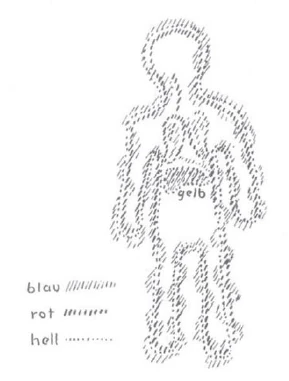
[ 10 ] Aber da überall, wo das Blut hinkommt (siehe Zeichnung), da, wo ich die bläuliche Linie gezeichnet habe, da ist auch die rötliche Linie, und die bezeugt, daß dort überall mit dem Sauerstoff die Luft hinkommt. Da berührt sich in einer richtigen Weise die Blutzirkulation mit der Atmung. Ob das nun in der Lunge ist oder in der Haut, das ist ziemlich gleichgültig, denn es gleicht sich aus. Aber wenn die Luft, die durch die Atmung einläuft, sich mit dem Blut nicht in der richtigen Weise berührt, dann kommen dadurch die Blattern zustande, die Pocken. Was sind also eigentlich die Pocken? Die Pocken bestehen eigentlich darinnen, daß an der Außenfläche des Körpers oder in der Lunge zu viel geatmet wird, daß dort zu viel Tätigkeit entwickelt wird. Der Mensch wird ganz tätig an der Oberfläche. Dadurch entzündet sich alles, durch diese Tätigkeit.
[ 10 ] But wherever the blood goes (see drawing)—wherever I have drawn the bluish line—there is also the reddish line, and that indicates that air, carrying oxygen, reaches those areas as well. This is where blood circulation and respiration properly interact. Whether this occurs in the lungs or in the skin is largely irrelevant, because it balances itself out. But if the air that enters through respiration does not interact with the blood in the proper way, this results in smallpox. So what exactly is smallpox? Smallpox essentially consists of excessive breathing on the body’s outer surface or in the lungs, resulting in excessive activity there. The person becomes highly active on the surface. As a result, everything becomes inflamed due to this activity.
[ 11 ] Und was kann man da unter Umständen machen? Nun ja, die Leute machen ja schon dasjenige, was sie allein machen können. Das ist nämlich, daß sie nun Kuhpockenlymphe einimpfen. Ja, was wird durch die Kuhpockenlymphe eigentlich bewirkt? Wenn ich sie ins Blut einimpfe, so bringe ich sie in das Innere des Körpers hinein, weil das Blut überall herumgeht. Und während sich sonst das Blut an der Außenseite schadlos hält, hat es dann etwas zu tun mit der eingeimpften Lymphe, und dadurch wird dieses Tätigsein an der Oberfläche verhindert. Also die Kuhpockenimpfung hat schon eine gewisse Bedeutung. Es wird dasBlut, das an der Leber nicht richtig beschäftigt wird, durch die Lymphe selber beschäftigt. Überhaupt ist das so, daß alle Impfungsmethoden eine ganz gute Bedeutung haben, und Sie haben ja vielleicht gehört, daß ein großer Teil unserer Heilmittel auch auf Einimpfung beruhen, weil man dadurch die Tätigkeit, die an einer falschen Stelle ist, an eine andere Stelle im menschlichen Körper hindirigieren kann.
[ 11 ] And what can be done in such circumstances? Well, people are already doing what they can do on their own. Namely, they are now administering cowpox lymph. Yes, what does cowpox lymph actually do? When I inoculate it into the blood, I introduce it into the body, because the blood circulates everywhere. And while the blood would otherwise remain unharmed on the surface, it then has to deal with the inoculated lymph, and this prevents that activity on the surface. So the cowpox vaccination does have a certain significance. The blood, which is not properly utilized by the liver, is utilized by the lymph itself. In general, all vaccination methods are quite significant, and you may have heard that a large portion of our remedies are also based on vaccination, because it allows us to redirect activity that is in the wrong place to another part of the human body.
[ 12 ] Da ist ja ganz besonders interessant die sogenannte Hundswutimpfung. Die Hundswut beruht zwar auf etwas ganz anderem, aber im Grunde genommen ist sie doch dasselbe, was ich Ihnen gerade erklärt habe. Nicht wahr, denken Sie sich, der Mensch wird von einem tollen Hund oder von einem tollen Wolf gebissen. Ja, solch ein tolles Tier hat in seinem Speichel schon wirkliches Gift drinnen. Dieses Gift wird nun in den Menschen hineinfließen beim Biß, und der Mensch ist damit beschäftigt, dieses Gift zu entgiften. Da kann er zu schwach sein dazu, und er kann daran zugrundegehen. Aber diesem Zugrundegehen liegt eigentlich noch etwas anderes zugrunde. Sie wissen, der Mensch bekommt ja zuerst selber die Hundswut. Er geht nicht nur an dem Wutgift zugrunde, sondern bekommt selber die Hundswut. Worauf beruht das?
[ 12 ] The so-called rabies vaccine is particularly interesting in this regard. Although rabies is caused by something entirely different, it is essentially the same thing I just explained to you. Isn’t that right? Just imagine: a person is bitten by a rabid dog or a rabid wolf. Yes, such a wild animal actually has real poison in its saliva. This poison then enters the human body through the bite, and the human is busy trying to neutralize this poison. He may be too weak to do so, and he may perish as a result. But there’s actually something else underlying this death. You know, the person first contracts rabies themselves. They don’t just die from the poison; they contract rabies themselves. What’s the reason for that?
[ 13 ] Nehmen Sie an, ich werde von einem tollen Hund hier gebissen. Jetzt muß ich meine innere Tätigkeit an die Stelle dahier herlenken, muß sie da herströmen lassen, damit das Gift verbraucht wird. Diese Tätigkeit, die wird empfunden von meinem Rückenmark, und es ist gerade so, wie wenn ich durch irgend etwas einen Schreck kriege. So ist es für mein Rückenmark. Weil ich plötzlich eine so starke Tätigkeit durch den Hundebiß entwickeln muß, erschrickt mein Rückenmark, kriegt, wie man sagt, einen Schock, und durch dieses Erschrecken werde ich selber krank.
[ 13 ] Suppose I’m bitten by a fierce dog here. Now I have to direct my internal activity to this spot, let it flow there so that the poison is neutralized. This activity is sensed by my spinal cord, and it’s exactly as if I were startled by something. That’s how it is for my spinal cord. Because I suddenly have to generate such intense activity in response to the dog bite, my spinal cord is startled—it goes into shock, as they say—and this shock makes me sick myself.
[ 14 ] Was muß man eigentlich jetzt tun, damit dieser Schreck aufhört? Sie wissen ja, wenn einer starr vor Schreck wird, so kommt er wieder zu sich, wenn man ihm ordentlich Püffe gibt. Also man muß dem Rückenmark ordentliche Püffe geben. Aber man muß erst ans Rückenmark herankommen. Und man kann ans Rückenmark herankommen, wenn man rasch ein Kaninchen tötet, das Rückenmark vom Kaninchen herausnimmt und bei etwa zwanzig Grad Celsius trocknet. Das Kaninchen muß man aber zuerst selber wütend gemacht haben; man muß ihm Wutgift gegeben haben. Dann nimmt man sein Rückenmark heraus, trocknet es so durch zwanzig Minuten bei zwanzig Grad Celsius. Und dieses getrocknete Rückenmark, das man hat, das impft man nun dem wutkranken Menschen ein.
[ 14 ] What exactly do you have to do now to make this fear go away? You know, when someone freezes in fear, they come to their senses again if you give them a good whack. So you have to give the spinal cord a good whack. But first you have to get to the spinal cord. And you can get to the spinal cord by quickly killing a rabbit, removing the spinal cord from the rabbit, and drying it at about twenty degrees Celsius. But first you have to make the rabbit rabid yourself; you have to give it rabies virus. Then you remove its spinal cord and dry it for about twenty minutes at twenty degrees Celsius. And this dried spinal cord that you have—you then inoculate it into the person with rabies.
[ 15 ] Nun haben die Stoffe die merkwürdige Art, daß jeder Stoff im Körper an eine bestimmte Stelle hingeht. Und dieses getrocknete Kaninchenrückenmark, das das Wutgift in sich enthält kurze Zeit es enthält nur etwa fünfzehn Minuten, eine Viertelstunde, das Wutgift in sich, dann ist es verraucht, aber in diesen fünfzehn Minuten, da ist es gut, da impft man es dem Menschen ein. Dann geht es in sein eigenes Rückenmark, und das kriegt einen Gegenschock. Es ist gerade so, wie wenn man den Menschen im Schreck ganz durchrüttelt, und der Mensch fängt nun wiederum an, nicht wütend zu sein, beziehungsweise er kann auch behütet werden dadurch, daß man sein Rückenmark vom Schreck heilt durch das eingeimpfte, vergiftete und ausgetrocknete Kaninchenrückenmark.
[ 15 ] Now, these substances have the curious property that each one goes to a specific location in the body. And this dried rabbit spinal cord, which contains the rabies toxin—it only contains it for a short time, about fifteen minutes, a quarter of an hour—then it’s gone, but during those fifteen minutes, that’s when it’s effective, and that’s when you administer it to a person. Then it goes into the person’s own spinal cord, and that triggers a counter-shock. It’s just like when you shake a person vigorously in a state of shock, and the person then begins to stop being angry—or rather, they can also be protected by healing their spinal cord from the shock through the injected, poisoned, and dried rabbit spinal cord.
[ 16 ] Also Sie sehen, man muß den Menschen, wenn er an einer falschen Stelle eine Tätigkeit entwickelt und dadurch krank ist, dadurch heilen, daß man an einer anderen Stelle fast dieselbe Tätigkeit entwickelt. Das sind so die komplizierten Zusammenhänge im menschlichen Organismus.
[ 16 ] So you see, if a person develops an activity in the wrong place and becomes ill as a result, one must heal them by developing almost the same activity in a different place. These are the complex interrelationships within the human organism.
[ 17 ] Nun aber, wenn Sie jetzt die Luftatmung und die Bluttätigkeit betrachten, so klingen gewissermaßen im heutigen erwachsenen Menschen fortwährend durcheinander im Tempo eins zu vier Atmungsströmung, Blutströmung. Der Blutstrom fließt schneller, und nachdem drei vergangen ist, stößt der Atem ein, nachdem wieder drei vergangen ist, stößt wieder der Atem ein, und so geht es in unserem Körper zu. Das Blut rollt durch den Körper: eins, zwei, drei — bei vier stößt der Atem ein; eins, zwei, drei — bei vier stößt wieder der Atem ein. So geht es durch unseren Körper durch,
[ 17 ] Now, however, if you consider breathing and blood circulation, in today’s adult human being the flow of breath and the flow of blood are, so to speak, constantly intertwined at a ratio of one to four. The blood flows faster, and after three have passed, the breath comes in; after another three have passed, the breath comes in again, and this is how it works in our body. The blood flows through the body: one, two, three—on four, the breath comes in; one, two, three—on four, the breath comes in again. This is how it flows through our body,
[ 18 ] Nun, dadurch aber wird Kohlensäure erzeugt. Ja, meine Herren, diese Kohlensäure, die geht zum größten Teile heraus. Aber wenn alle Kohlensäure aus uns herausgehen würde, dann wären wir Menschen wirklich die größten Dummköpfe. Denn ein Teil der Kohlensäure muß fortwährend gerade in unser Nervensystem hereingehen. Das braucht die Kohlensäure, denn das muß fortwährend gerade abgetötet werden. Das Nervensystem braucht diese totmachende Kohlensäure. Also ein Teil steigt als Kohlensäure einfach durch meine Innenluft fortwährend in mir auf und versorgt mein Nervensystem.
[ 18 ] Well, but that produces carbon dioxide. Yes, gentlemen, most of this carbon dioxide escapes from our bodies. But if all the carbon dioxide were to leave our bodies, then we humans would truly be the greatest fools. For a portion of the carbon dioxide must constantly enter our nervous system. The nervous system needs this carbon dioxide, because it must constantly be neutralized. The nervous system needs this neutralizing carbon dioxide. So a portion of it simply rises continuously within me as carbon dioxide through my internal air and supplies my nervous system.
[ 19 ] Ja, was heißt denn das aber, meine Herren? Das heißt nichts anderes, als: Ich muß, weil Kohlensäure ein Gift ist, zu meinem Denken fortwährend Gift in mir haben. Das ist eine sehr interessante Sache. Ich könnte, ohne daß fortwährend eine Vergiftung in mir stattfindet, die ich nur fortwährend bekämpfen muß, gar nicht mein Nervensystem gebrauchen. Ich könnte nicht denken. Der Mensch ist wirklich in der Lage, daß er durch die Atemluft fortwährend sich vergiften muß, und durch das Atemgift denkt er. Fortwährend strömt ja in meinen Kopf die Kohlensäure ein, das Atemgift, und mit diesem Atemgift denke ich.
[ 19 ] Yes, but what does that mean, gentlemen? It means nothing other than this: Because carbon dioxide is a poison, I must constantly have poison inside me in order to think. That is a very interesting point. Without this constant poisoning taking place inside me—which I must constantly fight off—I wouldn’t be able to use my nervous system at all. I wouldn’t be able to think. Human beings are truly in a situation where they must constantly poison themselves through the air they breathe, and it is through this “breathing poison” that they think. Carbon dioxide—the “breathing poison”—is constantly flowing into my head, and it is with this “breathing poison” that I think.
[ 20 ] Heute ist das so, daß der Mensch einfach durch die Luft atmet. Die Luft enthält Sauerstoff und Stickstoff. Der Mensch nimmt den Sauerstoff auf, den Stickstoff läßt er weg.
[ 20 ] Today, people simply breathe in the air. The air contains oxygen and nitrogen. People take in the oxygen and exhale the nitrogen.
[ 21 ] Meine Herren, wenn man jetzt den Menschen studiert, so kommt man nämlich auf folgendes. Der heutige Menschenkopf, der braucht die Kohlensäure. Die Kohlensäure ist eine Verbindung von Kohlenstoff, der ja im menschlichen Körper erzeugt wird, und Sauerstoff. Den Stickstoff aus der Luft läßt der Mensch weg. Studiert man nun den menschlichen Kopf heute, so kommt man darauf, daß dieser menschliche Kopf so veranlagt ist, daß er durch die Aufnahme von Kohlensäure, also Kohlenstoff und Sauerstoff, ganz gut denken kann. Aber wissen Sie, fortwährend wird dieser menschliche Kopf auch durch die Kohlensäure, weil die ja ein Gift ist und der menschliche Kopf schließlich auch aus Organen besteht, wieder ruiniert. Es ist gerade so, wie wenn Sie doch immer ein bißchen Kohlensäure statt Sauerstoff atmen würden. In den Kopf hinein atmen Sie wirklich immer ein bißchen Kohlensäure. Das ist von ungeheurer Bedeutung, denn wir atmen in unseren Kopf fortwährend dasjenige ein, was eigentlich unser Leben zerstört. Und das ist auch ein Grund, warum wir schlafen müssen, warum wir eine Zeit brauchen, wo der Kopf eben nicht dieses bißchen Kohlensäure so stark aufnimmt und seine Organe wieder herstellt.
[ 21 ] Gentlemen, if one studies human beings today, one arrives at the following conclusion: The modern human head requires carbon dioxide. Carbon dioxide is a compound of carbon—which is, after all, produced in the human body—and oxygen. Humans do not utilize the nitrogen in the air. If one studies the human head today, one comes to the conclusion that it is constituted in such a way that, by taking in carbon dioxide—that is, carbon and oxygen—it is able to think quite well. But you see, this human head is also constantly being ruined by the carbon dioxide, because it is, after all, a poison, and the human head, after all, consists of organs. It’s exactly as if you were constantly breathing in a little carbon dioxide instead of oxygen. You are actually always breathing a little carbon dioxide into your head. This is of immense importance, because we are constantly breathing into our head the very thing that actually destroys our life. And that is also one reason why we need to sleep—why we need a time when the head does not absorb that little bit of carbon dioxide so intensely and can restore its organs.
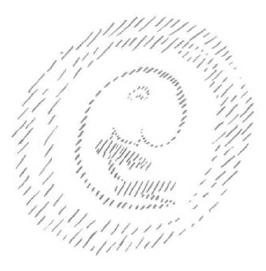
[ 22 ] Wenn man nun aber diesen Menschenkopf studiert, so sagt man sich: So wie er heute einmal ist, so kann er dieses Gift, die Kohlensäure, dazu verwenden, daß er immer ein bißchen zerstört wird, durch den Schlaf wieder aufgebaut wird, wieder ein bißchen zerstört wird, durch den Schlaf wieder aufgebaut wird und so weiter. Aber in sehr alten Zeiten hatte ja der Mensch noch keinen Kopf. Das ist ja alles in der Entwickelung begriffen gewesen. Wenn der Mensch nun immer nur Kohlensäure geatmet hätte, so hätte er nie einen Kopf gekriegt. Der fertige Kopf, der verträgt die Kohlensäure. Aber wenn der Mensch immer Kohlensäure geatmet hätte, so hätte er niemals einen Kopf gekriegt. Er muß also früher etwas anderes geatmet haben. Nun müssen wir uns fragen, was der Mensch früher eben geatmet haben kann. Und wenn man nun wirklich die ganze menschliche Entwickelung eingehend studiert, so kommt man darauf, daß der Mensch zum Beispiel schon während des Keimlebens im Leibe der Mutter noch etwas anderes braucht als bloß Kohlensäure. Und das Interessante ist: im Leibe der Mutter ist der Mensch fast ganz Kopf. Es ist ja so, daß der Menschenkeim, wenn Sie ihn in einem sehr frühen Stadium betrachten — ich habe Ihnen das schon vor längerer Zeit einmal aufgezeichnet -, fast ganz Kopf ist. Das andere ist ja furchtbar klein (siehe Zeichnung S. 291). Und das, was da hier noch dran ist, das ist auch fast Kopf, das ist umgeben dann von den Mutterhäuten.
[ 22 ] But when one studies the human head, one realizes: Just as it is today, it can use this toxin—carbon dioxide—in such a way that it is gradually broken down a little, rebuilt through sleep, broken down a little again, rebuilt through sleep, and so on. But in very ancient times, human beings did not yet have a head. All of this was still in the process of development. If human beings had always breathed only carbon dioxide, they would never have developed a head. The fully formed head can tolerate carbon dioxide. But if human beings had always breathed carbon dioxide, they would never have developed a head. So they must have breathed something else in the past. Now we must ask ourselves what humans might have breathed in the past. And if one really studies the entire course of human evolution in depth, one comes to the conclusion that humans, for example, even during the embryonic stage in the mother’s womb, need something other than just carbon dioxide. And the interesting thing is: in the mother’s womb, the human being is almost entirely head. The fact is that the human embryo, when viewed at a very early stage—I sketched this for you some time ago—is almost entirely head. The rest is terribly small (see drawing on p. 291). And what is still attached here is also almost entirely head; it is then surrounded by the amniotic membranes.
[ 23 ] Ja, sehen Sie, da ist der Mensch fast ganz Kopf. Aber er muß erst werden. Da braucht er auch den Stickstoff. Da braucht er den Stickstoff, der ihm aus dem Leibe der Mutter geliefert wird. Wenn der Mensch nicht im Mutterleibe den Stickstoff hätte, den er später in der Luft verschmäht, nicht an sich herankommen läßt, dann könnte er sich unmöglich entwickeln. Wir kriegten einfach keinen ordentlichen Kopf, wenn wir nicht durch den Stickstoff einen kriegten. Der Mensch muß also in einem früheren Erdenentwickelungszustande, wo sein Kopf sich erst entwickelt hat, nicht den Sauerstoff aufgenommen haben, sondern den Stickstoff. Es müssen also, statt daß Kohlenstoff und Sauerstoff für ihn das Wesentliche sind, wie heute, Kohlenstoff und Stickstoff das Wesentliche gewesen sein.
[ 23 ] Yes, you see, the human being is almost entirely head. But he must first come into being. That’s why he needs nitrogen. He needs the nitrogen supplied to him from his mother’s body. If the human being did not have the nitrogen in the womb—the very nitrogen he later spurns in the air and refuses to let near him—then he could not possibly develop. We simply wouldn’t have a proper head if we didn’t get one through nitrogen. So in an earlier stage of Earth’s development, when the human head was just beginning to form, humans must have absorbed nitrogen rather than oxygen. Therefore, instead of carbon and oxygen being essential for them, as they are today, carbon and nitrogen must have been essential.
[ 24 ] Also muß der Mensch einmal, so wie er heute atmet, Kohlenstoff mit dem Stickstoff verbunden geatmet haben, also den Stickstoff aufgenommen haben. Aber Kohlenstoff und Stickstoff, was ist denn das? Das ist nämlich Zyan. Und wenn es als Säure auftritt, so ist es die Blausäure, Zyansäure. Das heißt mit anderen Worten: Einmal muß es so gewesen sein, daß der Mensch aus der Luft nicht den Sauerstoff, sondern den Stickstoff aufgenommen hat, in sich Zyan entwickelt hat, ein noch stärkeres Gift. Und dieses noch stärkere Gift hat ihn befähigt, heute mit Kohlensäure zu denken. Dazumal hat er sich durch das noch stärkere Gift die Organe erst gemacht.
[ 24 ] So humans must once have breathed in carbon combined with nitrogen—just as they breathe today—meaning they must have absorbed nitrogen. But carbon and nitrogen—what are they, exactly? They are, in fact, cyan. And when it occurs as an acid, it is hydrocyanic acid, or cyanide. In other words: At one time, humans must have taken in nitrogen rather than oxygen from the air, developing cyanide—an even stronger poison—within themselves. And this even stronger poison enabled them to think with carbon dioxide today. Back then, it was through this even stronger poison that they first developed their organs.
[ 25 ] Wir kommen also jetzt zu einer alten Entwickelung, wo der Mensch, statt wie heute Kohlensäure zu entwickeln, Zyan entwickelt hat. Und wie er heute Kohlensäure ausatmet, so hat er dazumal Blausäure ausgeatmet, ein noch stärkeres Gift. Und da kommen wir von dem Menschen und seiner heutigen Atmung zu einem alten Zustande, wo die Luft ebenso, wie sie heute Kohlensäure enthält durch das Leben, dazumal voller Blausäure, voller Zyan war.
[ 25 ] So we now come to an ancient stage of development in which humans, instead of producing carbon dioxide as they do today, produced cyanide. And just as humans exhale carbon dioxide today, they exhaled hydrocyanic acid back then—an even more potent poison. And so we move from humans and their present-day respiration to an ancient state in which the air—just as it contains carbon dioxide today through living organisms—was back then full of hydrocyanic acid, full of cyanide.
[ 26 ] Sehen Sie, meine Herren, es war 1906, da habe ich in Paris Vorträge gehalten, und da bin ich durch verschiedene Andeutungen, die von den Zuhörern gekommen sind, dazu gekommen, den Leuten zu sagen, daß es auch heute noch solche Weltkörper gibt, die statt der Erdenluftatmosphäre die alte Zyanatmosphäre haben, die alte Zyanluft haben. Nämlich, wenn man heute die Erde anschauen würde vom Mond oder namentlich vom Mars, so würde man in der Erdenluft überall drinnen die Kohlensäurespuren wahrnehmen können durch das sogenannte Spektroskop. Nun aber, wenn man die alte Erde, wo der Mensch seinen Kopf erst gekriegt hat, von ferne ansehen würde, würde man Zyan, Blausäurespuren statt Kohlensäurespuren wahrnehmen. Nun gibt es heute noch Körper, die in dem Zustande sind, wie die Erde dazumal war. Das sind nämlich die Kometen. Die Kometen sind so, wie die Erde damals war, als der Mensch seinen Kopf gekriegt hat. Also müssen die Kometen Zyan enthalten. Und ich sagte dazumal 1906: Das Wesentlichste an den Kometen ist dasjenige, daß sie Zyan enthalten; wenn man also das Spektroskop auf sie richtet, muß man die Zyanlinie sehen. Und gleich darauf ist ein Komet erschienen. Die erscheinen ja selten. Und das Kuriose war, als ich dann nach einiger Zeit nach Norwegen kam und dort von dem erscheinenden Kometen viel die Rede war, haben die Leute tatsächlich die Zyanlinie bemerkt.
[ 26 ] You see, gentlemen, it was in 1906 that I gave lectures in Paris, and there, prompted by various hints from the audience, I came to tell people that even today there are still celestial bodies that, instead of Earth’s atmospheric air, possess the ancient cyan atmosphere—the ancient cyan air. Namely, if one were to look at the Earth today from the Moon or, in particular, from Mars, one would be able to detect traces of carbon dioxide throughout the Earth’s atmosphere using the so-called spectroscope. But if one were to view the ancient Earth—where humankind first developed its intellect—from a distance, one would detect traces of cyanide instead of carbon dioxide. Today there are still celestial bodies that are in the same state as the Earth was back then. These are, namely, the comets. Comets are just as the Earth was back then, when humankind first developed a head. Therefore, comets must contain cyanide. And I said back in 1906: The most essential thing about comets is that they contain cyan; so when you point a spectroscope at them, you must see the cyan line. And immediately afterward, a comet appeared. They do appear rarely. And the curious thing was that when I came to Norway some time later and there was much talk there about the appearing comet, people actually noticed the cyan line.
[ 27 ] Sehen Sie, immer sagen die Leute, wenn Anthroposophie etwas weiß aus dem Geiste heraus, so müßte man es nachher bestätigen können. Solche Dinge sind nämlich viele da, die nachher bestätigt worden sind. Nur wenn die Bestätigung kommt, dann gehen die Leute darüber hinweg, dann unterschlagen sie sie. Aber tatsächlich ist das so, daß ich auf Grundlage dieser Umänderung der Atmung eben, bevor es mit dem Spektroskop gesehen worden ist, gesagt habe, daß die Kometen Zyan enthalten, dasselbe Zyan, das einstmals, als die Erde selber noch in einem Kometenzustand war, der Mensch gebraucht hat, damit er seinen Kopf kriegte.
[ 27 ] You see, people always say that if anthroposophy knows something through the spirit, it should be possible to confirm it afterward. There are, in fact, many such things that have been confirmed later on. But when confirmation comes, people overlook it; they dismiss it. But the fact is that, based precisely on this change in breathing—even before it was observed with a spectroscope—I said that comets contain cyan, the very same cyan that humans once needed, back when the Earth itself was still in a cometary state, in order to develop their heads.
[ 28 ] Nun denken Sie sich einmal, wenn ich Stickstoff atme statt Sauerstoff, dann entsteht natürlich etwas anderes als das menschliche Blut. Denn Sie wissen, in der Lunge verbindet sich gerade das Blut, das blau geworden ist, mit dem Sauerstoff und wird zu dem roten Blut. Nun ist das so, daß wenn der Mensch Sauerstoff atmet, dann nimmt er ins Blut den Sauerstoff auf. Wenn er aber Stickstoff einatmet, dann nimmt er ins Blut den Stickstoff auf. So wie unser Blut, das richtige Blut, wirkt, in dem beim gesunden Menschen niemals Harnsäure ist, so kriegt man durch Aufnahme von Stickstoff ins Blut, wenn das nur ein bißchen nicht recht stimmt beim Menschen, Harnsäure ins Blut hinein.
[ 28 ] Now just imagine: if I breathe in nitrogen instead of oxygen, then naturally something different from human blood is produced. Because, as you know, in the lungs, the blood that has turned blue combines with the oxygen and becomes red blood. Now, the fact is that when a person breathes in oxygen, the body absorbs the oxygen into the blood. But when a person breathes in nitrogen, the body absorbs the nitrogen into the blood. Just as our blood—real blood—functions in such a way that there is never any uric acid in the blood of a healthy person, so too, when nitrogen is absorbed into the blood—even if there is just a slight imbalance in the person’s system—uric acid enters the bloodstream.
[ 29 ] Damals, als der Mensch seinen Kopf gekriegt hat, war sein Blut eigentlich nur Harnsäure, weil der Stickstoff also da fortwährend sich damit verbunden hat statt Sauerstoff. Sein Blut war nur Harnsäure. Und der Mensch, der heute noch als Menschenkeim da in dem schwimmt, was die Mutter um ihn herum bildet, schwimmt da gewissermaßen in dem, wo die Harnsäure leicht hinein kann. Da ist überall Harnsäure in seiner Umgebung. Die braucht er in seinem Keimzustande. Ja, früher, wo er seinen Kopf gekriegt hatte und Blausäure ausatmete, also die Blausäure für sich verwendete, und Stickstoff und Kohlenstoff verband, also innerlich Harnsäure hatte, da schwamm er ja in Harnsäure. Da war Harnsäure überall außer ihm. Die Welt war einmal so, daß Harnsäure und Blausäure eigentlich eine ebenso große Rolle gespielt haben wie heute etwa Wasser und Luft.
[ 29 ] Back when humans first developed a head, their blood was actually nothing but uric acid, because nitrogen was constantly binding to it instead of oxygen. His blood was nothing but uric acid. And the human being, who even today still floats as an embryo in what the mother forms around him, floats, so to speak, in a environment where uric acid can easily enter. There is uric acid everywhere in his surroundings. He needs it in his embryonic state. Yes, back when he had developed a head and exhaled hydrocyanic acid—that is, used hydrocyanic acid for himself—and combined nitrogen and carbon, thus having uric acid internally, he was indeed swimming in uric acid. Uric acid was everywhere except within him. The world was once such that uric acid and hydrocyanic acid actually played just as significant a role as water and air do today.
[ 30 ] Daß Lebewesen nicht bloß von Sauerstoff leben können, das zeigt sich noch heute. Es gibt zum Beispiel Lebewesen - sie sind allerdings winzig klein, weil alles das, was früher im Großen war, heute klein geworden ist, und die kleinsten, winzigsten Lebewesen von heute waren einstmals Riesen, heute sind es also winzige, kleine Lebewesen -, die können den Sauerstoff überhaupt nicht mehr vertragen, gar nicht vertragen, und die verkriechen sich überall vor dem Sauerstoff, und die nehmen in sich statt den Sauerstoff Schwefel auf. Das sind dieSchwefelbakterien; die leben vom Schwefel. Also man braucht zum Leben nicht unbedingt Sauerstoff. So hat man zum Leben früher nicht Sauerstoff gebraucht, sondern eben gerade Stickstoff, und dadurch ist der Mensch erst gebildet worden. Der Mensch ist also in einer kometenartigen Erdbildung gebildet worden. So daß also die Beziehung zwischen Atem und Blut in früheren Zeiten eine ganz andere war.
[ 30 ] The fact that living beings cannot survive on oxygen alone is still evident today. For example, there are living beings—though they are tiny, because everything that used to be large has now become small, and today’s smallest, tiniest living beings were once giants— so today they are tiny, small living beings—that can no longer tolerate oxygen at all, cannot tolerate it at all, and they hide from oxygen everywhere, and instead of oxygen, they absorb sulfur. These are the sulfur bacteria; they live on sulfur. So you don’t necessarily need oxygen to live. In the past, life didn’t require oxygen, but rather nitrogen, and that is precisely how human beings first came into being. Human beings were thus formed during a comet-like phase of Earth’s formation. Consequently, the relationship between breath and blood was quite different in earlier times.
[ 31 ] Und nun wollen wir einmal das, was man auf diese Weise kennenlernt, im Zusammenhang mit der Welt selbst betrachten. Wenn wir dieses ins Auge fassen, daß wir einen Atemzug haben auf vier Pulsschläge — also eins, zwei, drei, Atemzug; eins, zwei, drei, Atemzug; eins, zwei, drei, Atemzug -, ja, sehen Sie, diesen selben Rhythmus, den kann ich auch für die Natur Ihnen sagen: Frühling, Sommer, Herbst, Winter. Eins: Frühling, zwei: Sommer, drei: Herbst, vier: Winter. Da haben Sie draußen im Weltenall dieses Verhältnis, das Sie innerlich im Menschen haben. So daß wir sagen können: Wenn wir die ganze Erde anschauen, so haben wir unseren inneren Rhythmus auch draußen auf der Erde. Und was es eigentlich in dieser Beziehung mit der Erde für eine Bewandtnis hat, das beobachten die Leute gar nicht.
[ 31 ] And now let us consider what we learn in this way in relation to the world itself. If we consider this—that we take one breath for every four heartbeats—that is, one, two, three, breathe; one, two, three, breathe; one, two, three, breathe—yes, you see, I can tell you that this same rhythm applies to nature as well: spring, summer, fall, winter. One: spring; two: summer; three: fall; four: winter. Out there in the universe, you find this same relationship that you have within yourself as a human being. So we can say: When we look at the entire Earth, we see that our inner rhythm is also present out there on the Earth. And people don’t even notice what this actually means in relation to the Earth.
[ 32 ] Sehen Sie, jetzt liegt Schnee draußen. Im Sommer liegt kein Schnee draußen. Was heißt denn das? Ja, sehen Sie, das, was jetzt als Schnee draußen ist, das treffen Sie sonst auch als Wasser. Das Wasser ist ganz und gar von der Erde abhängig. Das muß ja der Mensch spüren. Nicht wahr, wenn man hier im Jura lebt, so haben wir im Jura kalkhaltiges Wasser. Alles, was in der Erde drinnen ist, ist im Wasser drinnen. Und Menschen, die dafür besonders empfindlich sind, bekommen von dem, was in der Juragegend im Wasser drinnen ist, ihre Kröpfe. Also das Wasser ist von der Erde abhängig. Im Frühling fängt es an, abhängig zu werden. Im Sommer ist es am abhängigsten. Im Herbst hört es ein bißchen auf. Und im Winter — ja, meine Herren, die Erde bildet nicht den Schnee; der Schnee, der aus lauter ganz feinen Kristallen besteht, der wird vom Weltenall, vom Kosmos herein gebildet. Da ist die Erde nicht wie im Sommer der Wärme der Welt hingegeben, sondern den Bildungskräften. Das Wasser entzieht sich der Erde im Winter, bekommt die Kälte vom Weltenraum. So daß wir sagen können: Da haben wir einen interessanten Rhythmus im Weltenall: eins: Frühling, zwei: Sommer, drei: Herbst, vier: Winter; das Wasser richtet sich nach dem Weltenall, nicht mehr nach der Erde. Wiederum eins, zwei, drei — Frühling, Sommer, Herbst; vier: das Wasser richtet sich nach dem Weltenall, nicht mehr nach der Erde.
[ 32 ] Look, there’s snow outside right now. In the summer, there’s no snow outside. What does that mean? Well, you see, what’s out there as snow right now—you’ll usually encounter it as water. Water is entirely dependent on the earth. People really need to feel that. Isn’t that right? When you live here in the Jura, we have calcareous water in the Jura. Everything that’s inside the earth is inside the water. And people who are particularly sensitive to it develop goiters from what’s in the water in the Jura region. So the water depends on the earth. In the spring, it begins to become dependent. In the summer, it’s at its most dependent. In the fall, this dependence subsides a little. And in the winter—yes, gentlemen, the earth does not create the snow; the snow, which consists entirely of very fine crystals, is formed by the universe, by the cosmos. There, the earth is not, as in summer, surrendered to the world’s warmth, but to the formative forces. The water withdraws from the earth in winter, drawing its cold from outer space. So we can say: Here we have an interesting rhythm in the universe: one: spring, two: summer, three: fall, four: winter; the water aligns itself with the universe, no longer with the Earth. Again, one, two, three—spring, summer, fall; four: the water aligns itself with the universe, no longer with the Earth.
[ 33 ] Jetzt probieren wir das beim Blut und bei der Atmung. Eins, zwei, drei: Blut, das Blut richtet sich nach dem Inneren des Körpers; vier: Atmung, das Blut richtet sich nach dem, was draußen ist. Eins, zwei, drei Blut-Pulsschläge: das Blut richtet sich nach dem Inneren des Körpers; vier: Atemzug, das Blut richtet sich nach außen. Da haben Sie bei der Erde dieselbe Tätigkeit wie beim Menschen. Wenn Sie das Blut nehmen, und das Wasser der Erde, so richtet sich das Blut darnach. Nehmen wir jetzt eins, zwei, drei Pulsschläge: innerlich ein bißchen Frühling, Sommer, Herbst; vier: jetzt kommt der Winter, aha, da atmen wir. Jetzt kommt der Atemzug, so wie bei der Erde selber. Der Mensch ist also innerlich ganz nach der Erdenatmung abgestimmt. Und die Sache ist so, daß wir sagen können: Beim Menschen geht das natürlich riesig schnell vor sich, achtzehnmal in einer Minute, was bei der Erde in einem Jahr vor sich geht. In einer Minute geht bei dem Menschen achtzehnmal das vor sich, was bei der Erde in einem Jahr vor sich geht.
[ 33 ] Now let’s try this with the blood and breathing. One, two, three: blood—the blood aligns with the inside of the body; four: breathing—the blood aligns with what is outside. One, two, three blood pulses: the blood aligns with the inside of the body; four: a breath—the blood aligns with the outside. Here you see the same process in the Earth as in humans. If you take the blood and the water of the Earth, the blood aligns with it. Now let’s take one, two, three heartbeats: internally, a little spring, summer, fall; four: now winter comes—aha—that’s when we breathe. Now comes the breath, just as with the Earth itself. So internally, the human being is completely attuned to the Earth’s breathing. And the fact is that we can say: In humans, this naturally happens extremely quickly—eighteen times in a minute—what takes place on Earth in a year. In one minute, what happens on Earth in a year takes place eighteen times in a human being.
[ 34 ] Nun ist der Mensch eigentlich immer voll von diesem Rhythmus, den die Erde auch vollzieht. Aber recht schnell macht er diesen Rhythmus. Wenn wir heute aber die Erde betrachten und durch das, was wir heute besprochen haben, darauf kommen, daß sie früher in einem ganz anderen Zustande war, dann bekommt die Erde für uns eine gewisse Ähnlichkeit mit den Kometen. Das haben Sie ja gerade gesehen. Die Kometen aber — das zeigt sich dann, wenn ein Komet zerfällt - fallen als Meteorsteine, als Eisen herunter. So ein ganzer Komet, der fällt als Eisenstücke herunter, wenn er zersplittert, enthält also Eisen.
[ 34 ] Actually, human beings are always filled with this rhythm that the Earth also follows. But they go through this rhythm quite quickly. However, when we look at the Earth today and, based on what we’ve discussed, come to the conclusion that it used to be in a completely different state, then the Earth begins to bear a certain resemblance to comets for us. You have just seen this. But comets—as becomes evident when a comet breaks apart—fall as meteorites, as pieces of iron. An entire comet like that, which falls as pieces of iron when it shatters, therefore contains iron.
[ 35 ] Das ist etwas, was wir auch noch in uns haben. Wenn wir als Leichen zerfallen, so sind die Eisenteilchen unseres Blutes auch da und bleiben. Da haben wir noch etwas bewahrt von unserer alten Kometennatur. Wir machen es eigentlich da geradeso wie der Komet. Das Eisen haben wir dadurch im Blut, daß wir die alte Zyantätigkeit entfalten. Das ist der äußere Körper, der darf nur nicht ins Blut herein, hat aber einstmals ins Blut hereindürfen. Das heißt aber nichts anderes als: Wir entziehen heute unserem inneren Frühling, Sommer, Herbst, Winter den äußeren Frühling, Sommer, Herbst, Winter. Und nur wenig sind wir heute abhängig von dem äußeren Frühling, Sommer, Herbst, Winter.
[ 35 ] That is something we still carry within us. When our bodies decay, the iron particles in our blood are still there and remain. In that way, we have preserved something of our ancient comet-like nature. We actually behave just like a comet in this respect. We have iron in our blood because we are unfolding the old cyan activity. This is the outer body; it must not enter the blood, but it was once allowed to do so. This means nothing other than that today we are separating the outer spring, summer, fall, and winter from our inner spring, summer, fall, and winter. And today we are only slightly dependent on the external spring, summer, fall, and winter.
[ 36 ] Aber Sie brauchen gar nicht furchtbar weit zurückzugehen. Jetzt nehmen ja diese Dinge ganz anderen Charakter an, aber wenn man auf dem Dorfe aufgewachsen ist wie ich, dann weiß man, daß es da Leute gegeben hat früher — jetzt werden sie immer seltener, weil sich alles uniformiert in der Erdenwelt -, die sehr abhängig waren von Frühling, Sommer, Herbst und Winter. Das hat man sogar an ihrem ganzen Seelenleben bemerkt. Sie waren im Sommer ganz anders gestimmt als im Winter. Im Winter kamen sie einem entgegen und waren eigentlich immer so ein bißchen außerhalb ihres Menschen; viel mehr Gespenster als Menschen waren sie da. Und im Sommer, da kamen sie erst so recht zu sich. Das heißt, sie waren so, daß sie abhängig waren von dem äußeren Frühling, Sommer, Herbst und Winter.
[ 36 ] But you don't have to go back very far at all. These things take on a completely different character now, but if you grew up in the countryside like I did, then you know that there used to be people—they’re becoming increasingly rare now, because everything in the material world is becoming uniform—who were very dependent on spring, summer, fall, and winter. You could even tell that from their entire inner life. They were in a completely different frame of mind in the summer than in the winter. In winter, they would come up to you and were actually always a little detached from themselves; they were much more like ghosts than people then. And in summer, that’s when they really came into their own. In other words, they were such that they were dependent on the external seasons of spring, summer, fall, and winter.
[ 37 ] Das aber weist uns darauf hin, wie der Mensch früher war. Der Mensch war früher, als er noch Stickstoff geatmet hat statt Sauerstoff, ganz abhängig von der äußeren Umgebung; er machte den Pulsschlag und die Atmung seines Kometenkörpers mit, den ich in meinem Buche «Geheimwissenschaft im Umriß» Mond genannt habe. Das war eine Art Kometenkörper. Das machte er mit. Er war ein Teil eines ganzen großen Organismus gewesen, der da auch atmete. Es ist so, wie wenn der Mensch ganz plötzlich heute anfangen würde, richtig im Frühling einen Pulsschlag, im Sommer einen Pulsschlag, im Herbst einen Pulsschlag zu haben, dann im Winter einen Atemzug und so weiter. So war aber der Mensch einmal, als er Stickstoff atmete: er war ein Glied des ganzen Erdenorganismus.
[ 37 ] But this shows us what humans used to be like. In the past, when humans still breathed nitrogen instead of oxygen, they were completely dependent on their external environment; they synchronized their heartbeat and breathing with that of their cometary body, which I called the “Moon” in my book *Outline of Esoteric Science*. It was a kind of cometary body. They moved in unison with it. They had been part of a vast organism that also breathed. It is as if human beings were to suddenly begin today to have one heartbeat in the spring, one in the summer, one in the fall, then one breath in the winter, and so on. But that is how human beings once were, when they breathed nitrogen: they were a part of the entire Earth organism.
[ 38 ] Sie sehen, wir kommen jetzt auf einem ganz anderen Weg auf dasselbe, worauf wir früher gekommen sind, als wir Megatherien und Saurier und so weiter betrachtet haben. Wir kommen auf ganz dasselbe auf einem ganz anderen Wege.
[ 38 ] As you can see, we are now arriving at the same conclusion by a completely different route than the one we took earlier when we were discussing megatheres, dinosaurs, and so on. We are arriving at exactly the same conclusion by a completely different route.
[ 39 ] Das ist gerade das Merkwürdige bei der Geisteswissenschaft. Nicht wahr, die heutige andere Wissenschaftstätigkeit, die fängt irgendwo an, geht Schritt vor Schritt, Trott, Trott, Trott, weiß nicht wohin zwar, geht aber in der geraden Linie weiter. Das ist bei der anthroposophischen Wissenschaft nicht der Fall. Die kann von verschiedenen Ausgangspunkten gehen, bald da gehen, bald da gehen und so weiter, und sie kommt immer wieder, so wie ein Wanderer, der von verschiedenen Punkten unten am Berge ausgehen kann, immer zum Gipfel kommt, so kommt sie immer zu demselben. Das ist gerade das Merkwürdige. Je mehr man die Welt ehrlich betrachtet, desto mehr schließen sich alle die einzelnen Betrachtungen zusammen zu einem Einzigen.
[ 39 ] That is precisely what is remarkable about Spiritual Science. Isn’t it true that other scientific endeavors today begin somewhere, proceed step by step—clack, clack, clack—not knowing where they’re going, yet continuing in a straight line? That is not the case with anthroposophical science. It can start from various points, going here one moment, there the next, and so on, and yet it always returns—just as a hiker who can set out from various points at the base of a mountain always reaches the summit—so it always arrives at the same point. That is precisely what is remarkable. The more one observes the world honestly, the more all the individual observations coalesce into a single whole.
[ 40 ] So haben Sie heute ein Beispiel durch Ihre Frage herausgefordert. Wir sind ausgegangen von ganz anderen Dingen, als wir einstmals ausgegangen sind, und wir kommen ebenso dazu, daß der Mensch im ganzen Erdenorganismus drinnen, wie der selber noch kometartig war, seinen Rhythmus gehabt hat, ihn nur herausgenommen hat. In der Erde war der Mensch einstmals, wie er heute als Keim in der Mutter ist. Da macht er auch Puls- und Atemtätigkeit mit.
[ 40 ] So today, your question has prompted an example. We started from entirely different premises than we did in the past, and we also arrive at the conclusion that within the entire Earth organism—even when humanity itself was still comet-like—humanity had its own rhythm; it simply withdrew from it. Humanity was once within the Earth just as it is today as a seed within the mother. There, too, it participates in the pulse and respiratory processes.
[ 41 ] Nun ist das zu beweisen, daß der Mensch eben heute in der Mutter die Mutter-Puls- und Atmungstätigkeit mitmacht. Das ist dadurch zu beweisen, daß ich Ihnen vorhin gesagt habe: von der Atemtätigkeit, die in Verbindung mit der Bluttätigkeit kommt, entwickeln sich die Pokken. Nun ist das Interessante: Wenn der Mensch im Mutterleibe wirklich die Blut- und Atemtätigkeit der Mutter mitmacht, so muß ein Kind schon im Mutterleibe, wenn die Mutter Pocken hat, auch die Pocken kriegen als Menschenkeim. Und die kriegt es auch. Wenn eine Mutter schwanger ist und pockenkrank ist, Blattern hat, so bekommt das Kind schon im Mutterleibe die Blattern, weil das Kind das alles mitmacht.
[ 41 ] Now we must prove that the human being, even today, participates in the mother’s heartbeat and breathing while in the womb. This can be proven by what I told you earlier: smallpox develops from the breathing activity that occurs in connection with blood circulation. Now here is the interesting point: If the human being in the womb truly participates in the mother’s blood and respiratory activity, then a child—as a human embryo—must also contract smallpox while still in the womb if the mother has smallpox. And indeed, the child does contract it. If a mother is pregnant and has smallpox, the child contracts smallpox while still in the womb because the child participates in all of this.
[ 42 ] Und so hat der Mensch einstmals, als die Erde noch seine Mutter war - allerdings war die Erde dazumal eine Art Komet -, alles mitgemacht, was die Erde gemacht hat. Da war sein Puls- und Atemschlag der Puls- und Atemschlag der Erde. Und deshalb kann man sagen: Es ist wiederum höchst merkwürdig, daß, wenn wir in alte Zeiten zurückgehen, wo die Menschen instinktiv gewußt haben, nicht so gescheit wie heute, sondern instinktiv gewußt haben, die Menschen die Erde ja immer die Mutter genannt haben, die Mutter Erde und so weiter. Sie haben von dem Uranos, das heißt vom Weltenall, und von der Gäa gesprochen, der Erde, und haben den Uranos als den Vater im Weltenall draußen betrachtet und die Erde als die Mutter.
[ 42 ] And so, long ago, when the Earth was still humanity’s mother—though at that time the Earth was a kind of comet—humanity went through everything the Earth went through. Their pulse and breath were the pulse and breath of the Earth. And that is why one can say: It is, again, most remarkable that, when we go back to ancient times, when people knew instinctively—not as intelligently as today, but instinctively—people always called the Earth “Mother,” “Mother Earth,” and so on. They spoke of Uranus—that is, the universe—and of Gaia, the Earth, and regarded Uranus as the father out in the universe and the Earth as the mother.
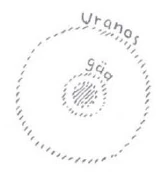
[ 43 ] So daß man sagen kann: Der Teil des menschlichen Organismus, wo das Kind gedeiht, der Uterus, der ist eigentlich eine kleine Erde, nur noch zurückgeblieben in dem alten Kometenstadium.
[ 43 ] So one could say: The part of the human organism where the child develops—the uterus—is actually a small earth, only still in its early, comet-like stage.
[ 44 ] Und in diesem alten Kometenstadium, da war die Atmung sowohl beim Menschen wie auch bei der Erde selber, sie war eine Atmung im Weltenall draußen. Nicht nur der Mensch hat den Stickstoff aufgenommen, sondern die ganze Kometenerde hat aus dem Weltenall den Stickstoff aufgenommen. Und damals war die Atmung zugleich eine ArtBefruchtung. Und von dieser Befruchtung ist die heutigeMenschenbefruchtung und Tierbefruchtung übriggeblieben. So daß wir sagen können: Beim Befruchten, da geschieht immer noch etwas vom Stickstoffatmen, denn das Wichtigste im menschlichen Samen ist der Stickstoff. Der wird da hineingetragen in den weiblichen Organismus und bewirkt als Stickstoffanregung eben dasjenige, was der Sauerstoff nie bewirken könnte: die Bildung der Organe. Denn später müssen sie da sein, wenn der Sauerstoff kommt. So sehen Sie, daß wir eigentlich unsere Atmung richtig aus dem Weltenall haben.
[ 44 ] And in this ancient comet stage, respiration occurred both in human beings and in the Earth itself; it was a respiration taking place out in the vastness of the cosmos. It was not only human beings who absorbed nitrogen, but the entire comet-Earth absorbed nitrogen from the cosmos. And back then, breathing was also a kind of fertilization. And what remains of that fertilization today is human and animal fertilization. So we can say: During fertilization, something of that nitrogen breathing still takes place, for the most important element in human semen is nitrogen. It is carried into the female organism and, as a nitrogen stimulus, brings about precisely what oxygen could never achieve: the formation of the organs. For later, when the oxygen arrives, they must already be there. So you see that we actually derive our breathing directly from the cosmos.
[ 45 ] Nun, meine Herren, jetzt wollen wir einmal etwas probieren. Sehen Sie, der Jahreslauf wird ja im Tageslauf schon ein bißchen nachgeahmt: 18 Atemzüge haben wir in der Minute, also in der Stunde sechzigmal so viel = 1080; und in 24 Stunden, im Tag, haben wir vierundzwanzigmal so viel = 25 920; also 25 920 Atemzüge haben wir in einem Tage.
[ 45 ] Well, gentlemen, let’s try something now. You see, the cycle of the year is already somewhat mirrored in the cycle of the day: we take 18 breaths per minute, so sixty times that in an hour = 1,080; and in 24 hours—a day—we take twenty-four times that = 25,920; so we take 25,920 breaths in a day.
[ 46 ] Jetzt will ich Ihnen etwas anderes ausrechnen. Ich will Ihnen ausrechnen, wieviele Tage wir im durchschnittlichen Menschenalter leben. Nicht wahr, das Jahr hat etwa 360 Tage. Das durchschnittliche Menschenalter rechne ich auf 71 oder 72 Jahre. Also sagen wir, 72 mal 360 = 25920.
[ 46 ] Now I want to calculate something else for you. I want to calculate how many days we live on average. After all, a year has about 360 days. I estimate the average lifespan to be 71 or 72 years. So let’s say, 72 times 360 = 25,920.
[ 47 ] Wir machen im Tag so viel Atemzüge als wir Tage im Menschenleben haben. Aber ein Tag ist auch in einem gewissen Sinne eine Atmung. Ein Tag ist auch eine Atmung. Nämlich ich atme meine Seele aus, wenn ich einschlafe, und ziehe sie wiederum herein, wenn ich aufwache: Ausatmung, Einatmung. Das Geistige atme ich aus und atme ich ein. Also dieser Rhythmus, den ich im Atem habe, den habe ich mein ganzes Erdenleben hindurch im Schlafen und im Wachen. Das ist furchtbar interessant: 25 920 Atemzüge im Tag, 25920 Lebenstage durchschnittlich in einem Menschenleben.
[ 47 ] We take as many breaths in a day as there are days in a human life. But a day is also, in a certain sense, a breath. A day is also a breath. Namely, I exhale my soul when I fall asleep, and inhale it again when I wake up: exhalation, inhalation. I breathe out the spiritual and breathe it in. So this rhythm that I have in my breath—I have it throughout my entire earthly life, whether asleep or awake. That is incredibly interesting: 25,920 breaths a day, an average of 25,920 days in a human life.
[ 48 ] Und jetzt sehen wir auf die Sonne. Wenn Sie die Sonne im Frühling heute beobachten, so geht sie im Frühling in den Fischen auf. Aber sie geht nicht jedes Jahr im Frühling an derselben Stelle auf. Am 21.März im Frühling nächstes Jahr ist sie wieder ein Stückchen verschoben. Wenn heute die Sonne im Sternbilde der Fische aufgeht, so geht sie nächstes Jahr ein Stückchen verschoben auf, das nächste Jahr wieder ein Stückchen verschoben, und dann wieder. Da verschiebt sich ja die Sonne in ihrem Aufgehen fortwährend. Und nach einer gewissen Zeit muß sie ja doch wieder da herum sein. Wenn also heute die Sonne im Sternbild der Fische aufgeht - die Astronomen denken: im Widder, weil sie heute noch nicht nachgekommen sind in ihren Bezeichnungen, früher ist sie im Widder aufgegangen —, dann muß sie in uralten Zeiten auch da aufgegangen sein. Und diese Stückchen Jahr, wenn man sie ausrechnet, so kriegt man heraus: 25920 Jahre. Es ist dieselbe Sache. So daß also auch der Weltenrhythmus zusammenstimmt mit dem schnellen Rhythmus von Atmung und Blutzirkulation. Denken Sie, wie der Mensch da im Weltenall drinnensteht! Der Mensch ist ganz herausgeboren aus dem Weltenall. Im Weltenall ist ursprünglich Vater und Mutter.
[ 48 ] And now let’s look at the sun. If you observe the sun today in the spring, it rises in Pisces. But it doesn’t rise in the same place every spring. On March 21 next spring, it will have shifted a little further. If the sun rises in the constellation Pisces today, it will rise a little further shifted next year, then a little further shifted the year after that, and so on. The sun’s rising position is constantly shifting. And after a certain amount of time, it must inevitably return to that area. So if the sun rises today in the constellation of Pisces—astronomers think it’s in Aries, because they haven’t yet updated their nomenclature; in the past, it rose in Aries—then it must have risen there in ancient times as well. And if you calculate these small annual shifts, you come up with 25,920 years. It is the same thing. So the rhythm of the universe also harmonizes with the rapid rhythm of breathing and blood circulation. Just think how the human being stands there within the universe! The human being is born entirely from the universe. In the universe, there is originally a father and a mother.
[ 49 ] Da kommt man natürlich darauf, den Menschen auf eine ganz andere Art im Zusammenhang mit dem Weltenall zu sehen, als wenn einem einer einfach sagt: Gott hat die Welt geschaffen, hat den Menschen geschaffen — alles Begriffe, bei denen man sich nichts denken kann. Aber Anthroposophie will damit anfangen, bei allem sich etwas zu denken. Das verübelt man ihr. Warum? Ja, um Worte zu sagen, bei denen man nichts zu denken braucht, braucht man sich nicht anzustrengen. Aber bei der Anthroposophie muß man sich anstrengen. Das macht die Leute fuchsteufelswild. Bei der heutigen Wissenschaft braucht man sich nicht anzustrengen. Nun, auf einmal kommt dieser Balg Anthroposophie, und man kann sich nicht ins Kino setzen und einfach gedankenlos den Film ablaufen lassen! Sie möchten selbst in die Schulen, damit die Kinder sich nicht anzustrengen brauchen, den Film hineinbringen. Ich wundere mich, daß sie noch nicht das Rechnen mit dem Film hineingebracht haben! Und nun kommt die Anthroposophie und verlangt: Ihr sollt überhaupt nicht so untätig dasitzen, sondern mit euren verflixten Schädeln mitmachen! — Und das will man nicht.
[ 49 ] Naturally, this leads one to view human beings in a completely different light in relation to the universe than when someone simply tells you: “God created the world, God created human beings”—all concepts that are impossible to grasp. But anthroposophy seeks to begin by trying to understand everything. People hold that against it. Why? Well, to utter words that require no thought, you don’t have to make an effort. But with anthroposophy, you have to make an effort. That drives people absolutely wild. With modern science, you don’t have to make an effort. Well, suddenly this nuisance called anthroposophy comes along, and you can’t just sit in the movie theater and let the film play out without thinking! They want to bring movies into the schools themselves, so the children don’t have to make an effort. I’m surprised they haven’t introduced math lessons via film yet! And now anthroposophy comes along and demands: You shouldn’t just sit there idly—you have to use your darned brains and participate! — And people don’t want that.