

What was the Purpose of the Goetheanum and of Anthroposophy?
GA 84
21 April 1923, Dornach
Translate the original German text into any language:
Versions Available:
What was the purpose of the Goetheanum, and of Anthroposophy?, tr. SOL
5. Die Physische Welt und die moralisch-geistigen Impulse vier Stufen des inneren Erlebens
5. The Physical World and Moral-Spiritual Impulses: Four Stages of Inner Experience
[ 1 ] Wir haben in den letzten Betrachtungen uns damit beschäftigt, wie dem Menschenwesen außer dem physischen Leib der ätherische und der astralische Leib innewohnt. Und wir haben auch darauf hingewiesen, wie der ätherische oder Bildekräfteleib erfaßt werden kann, wenn der Mensch sich bewußt wird des inneren Lebens des Denkens. Wenn der Mensch sich so dieser inneren Lebendigkeit des Denkens bewußt wird, daß er in diesem Denken leben kann, auch wenn er nicht von äußeren Sinneswahrnehmungen beeindruckt wird, und wenn dieses Denken nicht dadurch angeregt wird, daß es die äußeren Sinneswahrnehmungen kombiniert, sondern der Mensch sich aufrafft, aus der reinen inneren Kraft, ohne die Anregung, die das Denken sonst hat durch die äußeren Sinneswahrnehmungen, ein eigenes, in ihm bestehendes Weben und Wellen des Denkens zu erleben, dann kann dieser Bildekräfteleib erfaßt werden. Dieses Erleben des Denkens ist zu gleicher Zeit das Erleben der ätherischen Welt. Und ich habe ja gestern ausgeführt, wie dann, wenn man durch ein solches inneres Aufraffen und Denken, das eigentlich gar nicht so schwer zu erreichen ist, sich in seinem zweiten Menschen fühlt, man erlebt, daß man in diesem zweiten Menschen eine Art von Zeitleib hat, etwas, was nicht so in Ruhe im Raume abgeschlossen ist, wie der physische Leib, sondern etwas, das fortwährend fluktuiert, das fortwährend in Bewegung ist, das nur für einen Augenblick räumlich angeschaut werden kann, und auch da kaum in Konturen bestehend. Aber dieser Zeitleib, der enthüllt sich selber in seinem Erleben als das Lebenstableau, das uns Menschen unsere ganze bisherige Erdenlaufbahn als eine Einheit vor das Seelenauge stellt.
[ 1 ] In our recent reflections, we have examined how, in addition to the physical body, the human being is endowed with the etheric and astral bodies. And we have also pointed out how the etheric body—or body of formative forces—can be perceived when a person becomes aware of the inner life of thought. When a person becomes so aware of this inner vitality of thought that they can live within this thought even when they are not influenced by external sensory perceptions, and when this thinking is not stimulated by combining external sensory perceptions, but rather the person rouses themselves—out of pure inner strength, without the stimulation that thinking otherwise receives from external sensory perceptions—to experience a unique, inner weaving and undulation of thought existing within them, then this body of formative forces can be grasped. This experience of thinking is at the same time the experience of the etheric world. And as I explained yesterday, when, through such inner effort and thinking—which is actually not that difficult to achieve—one feels oneself within one’s second human being, one experiences that in this second human being one has a kind of time-body—something that is not enclosed in space in a state of rest, as the physical body is, but rather something that is constantly fluctuating, constantly in motion, something that can be perceived spatially only for a moment, and even then with barely discernible contours. But this “body of time” reveals itself in experience as the tableau of life that presents our entire earthly journey thus far as a unified whole before the eye of the soul.
[ 2 ] Nun ist es im Grunde genommen ein recht seelisch-geistiger Vorgang, in dem man da lebt, wenn man so durch innere Erfassung des Denkens in das Ätherleben des Universums sich hinein begibt. Man fühlt in diesem imaginativen Weben und Leben der Seele, das zum Erleben des Ätherischen wird, nicht jene innere Schattenhaftigkeit, die das Seelenleben des gewöhnlichen Bewußtseins hat, man fühlt nicht mehr das Traumhafte, das das Seelenleben des gewöhnlichen Bewußtseins hat. Man fühlt sich auch nicht mehr so abgeschlossen von der Welt, wie im physischen Leib, wo man sich in seiner Haut abgeschlossen fühlt. Man fühlt die äußere Welt in sich einströmen, das eigene Wesen in die Welt ausströmen. Man fühlt sich als ein bewegtes, und mit der Welt sich bewegendes Glied des ganzen ätherischen Universums. Aber immerhin, das, was man da erlebt, hat gerade etwas von einem stark bangemachenden Unwirklichen. Während sich der Mensch durch Gewöhnung in seinem physischen Leib feststehend auf der Erde fühlt, empfindet er in dem Erleben im Ätherischen eine gewisse Unsicherheit seines eigenen Daseins. Er fühlt sich hinausgehoben über die physische Welt und noch nicht fest begründet in der geistigen Welt.
[ 2 ] Essentially, it is a deeply spiritual and mental process in which one lives when, through an inner grasp of thought, one enters into the etheric life of the universe. In this imaginative weaving and living of the soul—which becomes an experience of the etheric—one no longer feels that inner shadiness characteristic of the soul life of ordinary consciousness; one no longer feels the dreamlike quality that characterizes the soul life of ordinary consciousness. Nor does one feel as cut off from the world as one does in the physical body, where one feels enclosed within one’s own skin. One feels the outer world flowing into oneself, one’s own being flowing out into the world. One feels oneself to be a moving part of the entire etheric universe, moving along with the world. But still, what one experiences there has something of a deeply unsettling unreality about it. While through habituation a person feels firmly anchored to the earth in their physical body, in the etheric experience they sense a certain insecurity regarding their own existence. They feel lifted above the physical world and not yet firmly grounded in the spiritual world.
[ 3 ] Dieses Fest-begründet-Sein in der geistigen Welt tritt aber ein, wenn von dem strebenden Menschen das erreicht wird, was ich gestern hier genannt habe: das tiefe Schweigen der Seele. Der Mensch muß dahin kommen, diejenige Kraft, die er sonst braucht als eine modifizierte Atemkraft, in Gemäßheit dessen, was ich in «Wie erlangt man Erkenntnisse der höheren Welten?» beschrieben habe, nicht dazu zu verwenden, um im Atmungsprozeß die äußeren Worte der äußeren Sprache erstehen zu lassen, sondern er muß das, was in Worten überfließen will, zurückhalten. Aber er muß dennoch innerlich jene Tätigkeit entfalten, die sonst in die Worte ausfließt, er muß die innerlichen Anstrengungen machen, wie sonst zum Lautreden, und dadurch muß er zum innerlichen Schweigen gelangen. Und wenn die Seele nicht nur bis zum Schweigen gleich Null kommt, sondern noch unter das Schweigen gleich Null hinuntergeht zu dem negativen Schweigen, zu dem, was unter das Niveau des Schweigens im Erleben hinuntersinkt, wenn wir uns gleichsam nicht selbst übertönen in unserem Geistigsein durch die Kräfte, die in den Atem hineinwollen, indem gesprochen wird, und wir dennoch innerlich den Impuls zum Sprechen entwickeln, aber das Sprechen zurückhalten, bevor es den Kehlkopf ergreifen will, wenn wir das Sprechen also zurückhalten und dennoch innerlich die Sprachfähigkeit entwickeln, so gelangen wir nicht bloß zu einer innerlichen Stille, sondern zu etwas, was eben das tiefe Schweigen der Seele ist. Zu diesem tiefen Schweigen der Seele gelangen wir, das sich zu der Entfaltung der Sprache, der Worte, die äußerlich in der physischen Welt ertönen, nicht nur so verhält, wie die Null, sondern wie die negative Größe. Dann tönt aus diesem tiefen Schweigen heraus das, was uns die geistige Welt, was uns, um ein altes Wort zu gebrauchen, der Logos aus dem Universum herein offenbaren will. Dann sprechen nicht wir, dann sind wir das Instrument geworden, durch das der Logos hier spricht. Und dann werden wir gewahr unseren eigenen astralischen Leib in uns und jene astralische Welt, von der ich gestern gesprochen habe. Diese astralische Welt ist eine wesentlich andere, als die Welt, die man durch die Sinne und den kombinierenden Verstand im gewöhnlichen Bewußtsein erlebt.
[ 3 ] This firm grounding in the spiritual world, however, occurs when the striving human being attains what I mentioned here yesterday: the deep silence of the soul. The human being must reach the point where, in accordance with what I have described in *How Does One Attain Knowledge of the Higher Worlds?*, he no longer uses that force—which he otherwise needs as a modified breath force—to bring forth the external words of external language through the breathing process; rather, he must hold back what is about to overflow into words. Yet they must still develop within themselves that activity which otherwise flows into words; they must make the inner efforts that are otherwise required for speaking aloud, and through this they must attain inner silence. And when the soul not only reaches a silence equivalent to zero but descends even below that silence—to negative silence, to that which sinks below the level of silence in experience—when, as it were, we do not drown out our own spiritual nature with the forces that seek to enter the breath through speech, and yet we still develop the impulse to speak inwardly, but hold back the speech before it seeks to take hold of the larynx—that is, when we hold back the speech and yet develop the capacity for speech inwardly—then we attain not merely an inner stillness, but something that is precisely the deep silence of the soul. We attain this deep silence of the soul, which relates to the unfolding of language—the words that resound outwardly in the physical world—not merely as zero, but as a negative quantity. Then, out of this deep silence, resounds that which the spiritual world—or, to use an ancient term, the Logos—wishes to reveal to us from the universe. Then it is not we who speak; then we have become the instrument through which the Logos speaks here. And then we become aware of our own astral body within us and of that astral world of which I spoke yesterday. This astral world is fundamentally different from the world experienced through the senses and the reasoning mind in ordinary consciousness.
[ 4 ] In dieser Welt der Sinne und des kombinierenden Verstandes im gewöhnlichen Bewußtsein nehmen wir in derber Dichtigkeit die stofflichen Dinge und stofflichen Vorgänge wahr, welche den Raum erfüllen, welche, wenn ich mich zwar ungenau, aber populär ausdrücken will, auf unsere Sinne drücken, so daß wir sie eben sinnlich wahrnehmen können. Wenn wir auf der einen Seite gewissermaßen stehen haben für unser Erleben durch die Sinne und durch den kombinierenden Verstand die derb stofflichen Dinge und Vorgänge der Außenwelt, dann stehen auf der andern Seite die unwirklichen Gedanken, die unwirklichen Empfindungen, wie wir sagen, jene unwirklichen Gedanken und unwirklichen Empfindungen, über die zu allen Zeiten philosophierende Menschen gestritten haben, wie sie sich zu der Wirklichkeit verhalten. Der Mensch, der nur des gewöhnlichen Bewußtseins sich bedient, möchte sozusagen immer, wenn vor seiner Seele bloß Gedanken und Empfindungen auftauchen, irgendwo in der stofflichen Welt mit seinen Händen anfassen, um sich des realen Daseins zu versichern.
[ 4 ] In this world of the senses and the combining intellect, as experienced in ordinary consciousness, we perceive—in a coarse, dense form—the material things and material processes that fill space; which, to put it imprecisely but in layman’s terms, press upon our senses, so that we are able to perceive them sensually. If, on the one hand, we have, as it were, the coarse material things and processes of the external world as the basis for our experience through the senses and the reasoning mind, then on the other hand there are the unreal thoughts, the unreal sensations—as we say, those unreal thoughts and unreal sensations—about which philosophers have always debated their relationship to reality. The person who relies solely on ordinary consciousness would, so to speak, always like—whenever mere thoughts and sensations arise before his soul—to reach out with his hands to touch something somewhere in the material world, in order to assure himself of its real existence.
[ 5 ] So steht also auf der andern Seite das Dasein in den Gedanken und Empfindungen, das nicht sogleich als ein reales wirkt, und aus diesen Gedanken und Empfindungen heraus kommt ja für den Menschen, gewissermaßen herausflutend, die moralische Welt, die Welt der moralischen Impulse. Wenn der Mensch die Welt in ihrer Zweiheit so anschaut — einmal das derb Materiell-Konkrete, was für ihn zunächst das Wirkliche ist, dann die in ihrer Wirklichkeit zweifelhaften Gedanken und Empfindungen, welche die moralischen Impulse enthalten —, so hat es für ihn etwas, man möchte sagen, Bedrückendes, wenn er nun hinschaut und naturwissenschaftlich bewiesen findet, daß durch die Erhaltung von Materie und Kraft das äußerlich Wirkliche eine gewisse Ewigkeit hat, daß aber das, was sich als moralische Weltordnung heraushebt aus den bloßen Gedanken und Empfindungen, dann vernichtet wird innerhalb eines gewissen großen Friedhofes im materiellen Dasein, der ja aus der hypothetischen Verfolgung der Naturerscheinungen unbedingt hervorgeht. Es steht vor dem gewöhnlichen Bewußtsein eben als eine Zweiheit da die materielle Welt auf der einen Seite, die moralisch-geistige Welt auf der andern Seite, und der Mensch steht innerhalb dieser Welt, oder eigentlich dieser zwei Welten, die so wenig miteinander zu tun haben. Er steht darinnen, er ist mit der einen Seite seines Wesens übergeben der materiellen Welt, in welcher seine Ernährungsvorgänge vor sich gehen, in welcher aus den Ernährungsvorgängen heraus sich seine Triebe erheben, in welcher seine Sinne Eindrücke empfangen, in welcher sein Verstand die Sinneseindrücke kombiniert. Der Mensch wird sich bewußt, daß er dieser materiellen Welt angehört, er wird sich aber auch bewußt, daß seine Menschenwürde nur erfüllt ist, wenn für ihn eine reale Bedeutung hat, was an moralisch-geistigen Impulsen ihm aus den in bezug auf ihre Wirklichkeit strittigen Gedanken und Empfindungen erfließt.
[ 5 ] On the other hand, then, there is existence in thoughts and feelings, which does not immediately appear as real; and from these thoughts and feelings the moral world—the world of moral impulses—emerges for human beings, as it were, flowing forth. When a person views the world in this duality—on the one hand, the coarse, material, concrete, which is initially the real for him; on the other, the thoughts and feelings, whose reality is doubtful, which contain the moral impulses—it has for him something one might say, oppressive about it when he then looks into the matter and finds, through scientific proof, that by virtue of the conservation of matter and energy, the outwardly real possesses a certain eternity, whereas that which emerges as a moral world order from mere thoughts and feelings is then annihilated within a certain vast graveyard of material existence—one that inevitably emerges from the hypothetical investigation of natural phenomena. To ordinary consciousness, it appears precisely as a duality: the material world on one side, the moral-spiritual world on the other, and man stands within this world—or rather, these two worlds—which have so little to do with one another. He stands within them; one aspect of his being is devoted to the material world, in which his processes of sustenance take place, in which his instincts arise from these processes, in which his senses receive impressions, and in which his intellect combines these sensory impressions. Human beings become aware that they belong to this material world, but they also become aware that their human dignity is fulfilled only when the moral and spiritual impulses that flow to them from thoughts and feelings—whose reality is disputed—have real significance for them.
[ 6 ] Da tritt an den Menschen des gewöhnlichen Bewußtseins die Forderung heran, den physischen Körper, durch den er in die physische Welt eingegliedert ist, zu erfüllen mit dem, dessen Wirklichkeit ihm zweifelhaft erscheinen muß. Er sieht, wie in der äußeren Natur nirgends zur Herrschaft gelangt, was in den Impulsen des Moralisch-Geistigen gegeben ist. Da sieht er die Steine, die nach ehernen Gesetzen ihre Vorgänge bewirken, da fließt in dieses Geschehen innerhalb der mineralischen Welt nichts von den moralisch-geistigen Impulsen hinein. Da sieht er die Pflanzenwelt in ihrer sanften Stille, er sieht sie zu ihrem blühenden Dasein aufgerufen durch das neutrale Sonnenlicht und die neutrale Sonnenwärme, und er wird auch da nicht gewahr, wie die moralischen Impulse irgendwie hineinströmen sollen in die weckende Wärme der Sonne, in das weckende Licht der Sonne, das die Pflanzendecke der Erde zur Entfaltung bringt.
[ 6 ] This presents people of ordinary consciousness with the challenge of filling the physical body—through which they are integrated into the physical world—with that whose reality must seem doubtful to them. They see that nowhere in the external natural world does that which is contained in the impulses of the moral-spiritual realm come to dominate. There they see the stones, which bring about their processes according to ironclad laws; nothing of the moral-spiritual impulses flows into these events within the mineral world. There he sees the plant world in its gentle stillness; he sees it called to its blossoming existence by the neutral sunlight and the neutral warmth of the sun, and even there he does not perceive how moral impulses are supposed to flow in any way into the awakening warmth of the sun, into the awakening light of the sun, which brings the Earth’s plant cover to full bloom.
[ 7 ] Und endlich, er sieht hin auf das dritte Reich des Natürlichen, auf die Tierheit, mit der er seiner physischen Organisation nach selber so viel gemein hat, und er muß sich sagen: In der Tierheit ist das Moralische in solche Formen hineingegangen, daß es nicht mehr als Moralisches erscheint. Da übt das Raubtier die Grausamkeit, ohne daß man ein Recht hat, das als Grausamkeit auch im moralischen Sinne zu bezeichnen, weil das Tier hinuntergegangen ist unter dasjenige Niveau, wo der moralische Impuls als ein moralisch-geistiger Impuls bezeichnet werden darf. Und dann schaut der Mensch wohl auf seine eigene physisch-materielle Natur hin und findet, daß er mit einem Teil seines Wesens ebenso hinuntergegangen ist. Dennoch steht vor ihm die Forderung, wenn er seine volle Menschenwürde erfüllen will, in diese heruntergesunkene Wesenheit, in sich selber einzuführen die moralischen Impulse. Da gibt es innerhalb des gewöhnlichen Bewußtseins keine Möglichkeit, einen harmonischen Einklang, ein Ineinanderschlagen der physisch-materiellen Impulse und der geistig-moralischen Impulse zu erkennen. Da fallen das Geistige und das Stoffliche auseinander. Und der Mensch blickt hin auf seinen vor ihm stehenden Erdenlauf bis zum Tode und sagt sich, er werde bis zum Tode in bezug auf sein eigenes Wesen in diesem Zwiespalte leben, daß er auf der einen Seite seine physisch-materielle Organisation hat, für welche die Forderung besteht, einzuführen die moralisch-geistigen Impulse, und auf der andern Seite ihm die Natur zeigt, daß überall die moralisch-geistigen Impulse in den unmittelbaren Naturgesetzen nicht zur Wirksamkeit gelangen können. In diesen Dualismus sieht er sich hineinversetzt bis zu seinem Tode.
[ 7 ] And finally, he looks upon the third realm of the natural world—the animal kingdom—with which he himself has so much in common in terms of his physical constitution, and he must admit to himself: In the animal kingdom, morality has taken on such forms that it no longer appears as morality. There, the predator exercises cruelty without one having the right to describe it as cruelty even in the moral sense, because the animal has descended below the level at which the moral impulse may be designated as a moral-spiritual impulse. And then the human being looks upon his own physical-material nature and finds that he, too, has descended to that level with a part of his being. Nevertheless, if he wishes to fulfill his full human dignity, he faces the demand to introduce moral impulses into this degraded nature—into himself. Within ordinary consciousness, there is no way to perceive a harmonious unity, a blending of the physical-material impulses and the spiritual-moral impulses. Here, the spiritual and the material diverge. And the human being looks upon the earthly course that lies before him until death and tells himself, he will live in this dichotomy with regard to his own being until death—that on the one hand he has his physical-material organization, which demands the introduction of moral-spiritual impulses, and on the other hand nature shows him that moral-spiritual impulses cannot take effect anywhere within the immediate laws of nature. He sees himself thrust into this dualism until his death.
[ 8 ] Dann aber, wenn der Mensch in der Weise, wie ich es beschrieben habe, aus dem tiefen Schweigen seiner Seele herauftönen vernimmt seinen astralischen Leib und diejenige Welt, der er angehört durch seinen astralischen Leib, dann tritt vor seinem Seelenerleben eine Welt auf, die er hier mit dem gewöhnlichen Bewußtsein nicht haben kann, eine Welt, die er aber hier mit seinem gewöhnlichen Bewußtsein ersehnt, wenn er die Dualität von PhysischMateriellem und Geistig-Moralischem vor sich hat. Dann gewinnt er den Ausblick in eine Welt, die nicht unwirklich ist, die ihm geradeso wirklich erscheint, wie ihm die derb-materiell konkrete Welt des Physisch-Sinnlichen wirklich erscheint, aber auch eine Welt, die überall da, wo Vorgänge stattfinden, einlaufen läßt in die physisch-materiellen Impulse die moralisch-geistigen Impulse. Da schaut der Mensch in eine Welt hinein, in der es auf einer höheren Stufe so ist, als wenn in dieser Erdenwelt dann, wenn chemische Prozesse vor sich gehen, in das chemische Verbinden und Zersetzen einlaufen würden moralische Impulse. Es schaut der Mensch in eine Welt hinein, in der es so etwas nicht gibt, daß sich Wasserstoff und Sauerstoff nur nach gleichgültigen neutralen Naturgesetzen verbinden, sondern in der sich Wasserstoff und Sauerstoff so verbinden, daß sie moralischen Impulsen folgen in ihrer Verbindung. Da gibt es keine Vorgänge, die nicht zu gleicher Zeit einen moralisch-geistigen Sinn haben.
[ 8 ] But then, when a person, in the way I have described, hears the sounds rising from the deep silence of his soul—his astral body and the world to which he belongs through his astral body—a world appears before his soul’s experience that he cannot have here with ordinary consciousness, a world that he nevertheless longs for here with his ordinary consciousness when he is confronted with the duality of the physical-material and the spiritual-moral. Then he gains a view into a world that is not unreal, that appears to him just as real as the gross, material, concrete world of the physical-sensory appears to him, but also a world in which, wherever processes take place, moral-spiritual impulses flow into the physical-material impulses. There, the human being looks into a world in which, on a higher level, it is as if—in this earthly world—when chemical processes take place, moral impulses were to flow into the chemical processes of combination and decomposition. Human beings look into a world in which there is no such thing as hydrogen and oxygen combining solely according to indifferent, neutral laws of nature, but rather a world in which hydrogen and oxygen combine in such a way that they follow moral impulses in their union. There are no processes there that do not simultaneously possess a moral-spiritual meaning.
[ 9 ] Jetzt aber kommt der Mensch darauf: Die Welt, in der das dort gesteigerte Materielle und das zu wirklicher schöpferischer Macht gelangte Moralisch-Geistige sich innerlich durchdringen, betrittst du, wenn du durch die Pforte des Todes gegangen bist. Aus dieser Welt bist du heruntergestiegen in die physische Erdenwelt, als du vom vorirdischen Leben in das irdische heruntergestiegen bist. Da lernt der Mensch wissen, daß nur diese physische Erdenwelt die Welt des Dualismus, die Welt der Zweiheit ist, wo sich Natur und Geist gegenüberstehen, wie wenn sie durch einen Abgrund getrennt wären, wo das eine nicht in das andere hinein kann. Da lernt der Mensch aber auch kennen, wie er versetzt werden mußte in diese physische Erdenwelt, damit er erleben kann, wie der Geist in dieser physischen Erdenwelt an die Materie nicht herankann, so daß er, dieser Mensch, das alleinige Wesen innerhalb dieser physischen Erdenwelt ist, das nun aus seiner eigenen Freiheit, aus seinem eigensten innersten individuellen Impulse diese Verbindung bewirken kann.
[ 9 ] But now the human being comes to realize this: You enter the world—where the material, which has been heightened there, and the moral-spiritual, which has attained true creative power, interpenetrate one another—when you have passed through the gate of death. You descended from this world into the physical earthly world when you descended from pre-earthly life into earthly life. There, human beings come to know that only this physical earthly world is the world of dualism, the world of duality, where nature and spirit stand opposed to one another, as if separated by an abyss, where one cannot enter into the other. But there, too, a person comes to understand how he had to be placed in this physical earthly world so that he might experience how the spirit in this physical earthly world cannot approach matter—so that he, this person, is the sole being within this physical earthly world who can now bring about this connection out of his own freedom, out of his very own innermost individual impulse.
[ 10 ] Würde in dieser physischen Welt irgendwo an einer Stelle ein moralisch-geistiger Impuls in einen chemischen Prozeß, in ein Pflanzenwachstum, in ein tierisches Triebleben durch objektive Gesetze hineinfließen, dann würde, weil der Mensch eine Zusammenfassung ist alles dessen, was im Kosmos ist, der Mensch innerlich niemals haben zur Freiheit kommen können, zu dem selbsteigenen Verbinden des Geistigen mit dem Materiellen.
[ 10 ] If, anywhere in this physical world, a moral-spiritual impulse were to flow—through objective laws—into a chemical process, into plant growth, or into the instinctual life of an animal, then—because human beings are a synthesis of everything that exists in the cosmos—human beings would never have been able to attain inner freedom, that self-determined union of the spiritual with the material.
[ 11 ] Nun aber stehen im menschlichen Erdenleben zwei Zustände einander entgegen: Der Zustand des Wachens vom Aufwachen bis zum Einschlafen, der Zustand des Schlafens vom Einschlafen bis zum Aufwachen. Während des Zustandes des Wachens lebt der Mensch durchaus in derjenigen Welt, wo sich Geist und Materie streng gegenüberstehen, wo der Geist nicht herankann an die Materie, um sie zu durchsetzen, wo die Materie ohnmächtig ist, sich zum Geistigen in ihren Vorgängen zu erheben. Dann aber, wenn der Mensch eingedrungen ist in jene Welt, von der ich gesagt habe, daß sie herauftöne aus dem tiefen Schweigen der Seele, dann erblickt der Mensch jene Tätigkeit, der er sich hingibt zwischen dem Einschlafen und Aufwachen, der Tätigkeit seines astralischen Leibes. Und dann weiß er, daß er das Erdenleben mit jedem Einschlafen verläßt und mit jedem Aufwachen wieder zurückkommt. Dann weiß er, daß er in diesen schlafenden Unterbrechungen des Erdenlebens in jener Welt lebt, in der er zunächst vorbereiten kann die Verbindung des Geistes mit der Materie. Aber in alledem, was da in den Schlafzuständen zwischen der Geburt und dem Tode in einem dünnen ätherisch-astralischen Elemente gewoben wird, so daß es wiederum eintritt beim Aufwachen in die Dualität zwischen Geist und Materie als das, was der Mensch lebt und webt in allen den Lebensperioden, die er schlafend zwischen der Geburt und dem Tode durchmacht: In alledem lebt dasjenige, was dann, wenn der Mensch sein Wesen durch die Pforte des Todes trägt, eintritt in jene Welt, in der es das nicht gibt, daß die Materie ohnmächtig ist, sich mit ihren Prozessen zur Geistigkeit zu erheben, daß der Geist nicht an die Materie herankommen kann. Sondern der Mensch tritt da mit alledem, was er sich im Schlaf gewoben hat, in diejenige Welt ein, in der alles der Materie Ähnliche sich zu geistigen Vorgängen erhebt, in der der Geist fortwährend in die Materie eingreift. Und er sieht, daß die Dualität zwischen Geist und Materie nur in der Welt vorhanden ist, die er episodisch durchmacht zwischen der Geburt und dem Tode. Er weiß ferner, daß er da in eine ganz andere Welt eintritt, die ihm nur wie im Spiegelbild, wie in einer Fata Morgana erscheint zwischen dem Einschlafen und Aufwachen, wo er sich vorbereitet für die Realität dieser Welt.
[ 11 ] Now, however, two states stand in opposition to one another in human life on Earth: the state of wakefulness, from the moment of waking until falling asleep, and the state of sleep, from the moment of falling asleep until waking. During the waking state, a person lives entirely in that world where spirit and matter stand in stark opposition to one another, where the spirit cannot approach matter to permeate it, and where matter is powerless to rise to the spiritual in its processes. But then, when a person has entered that world of which I have said that it resounds from the deep silence of the soul, then the person beholds that activity to which they devote themselves between falling asleep and waking up—the activity of their astral body. And then they know that with every falling asleep they leave earthly life, and with every waking up they return to it. Then they know that during these sleeping interludes of earthly life, they live in that world where they can first prepare the union of spirit with matter. But in all that which is woven there in the states of sleep between birth and death within a subtle etheric-astral element—so that it re-enters, upon waking, into the duality between spirit and matter as that which the human being lives and weaves throughout all the periods of life he undergoes while asleep between birth and death: In all of this lives that which, when a human being carries his or her being through the gate of death, enters that world in which there is no such thing as matter being powerless to rise to spirituality through its own processes, nor is there any such thing as the spirit being unable to reach matter. Rather, the human being enters that world—with all that he has woven for himself in sleep—where everything resembling matter rises to spiritual processes, where the spirit continually intervenes in matter. And he sees that the duality between spirit and matter exists only in the world he experiences episodically between birth and death. He further knows that he enters there into an entirely different world, which appears to him only as a mirror image, as a mirage, between falling asleep and waking up, where he prepares himself for the reality of this world.
[ 12 ] Aber wenn er durch die Pforte des Todes gegangen ist, tritt er in diese Welt wirklich ein, und er webt nun weiter an dem Leben, das er durchgemacht hat zwischen der Geburt und dem Tode. Aber er webt jetzt so weiter, daß nicht auf der einen Seite der materiefreie Geist steht, der gewärtig sein muß, daß er einmal verschwindet in seinen geistig-moralischen Impulsen, wenn die Erde zum Beispiel beim Wärmetod angekommen sein wird. Der Mensch tritt in eine Welt ein, wo das, was ihm zwischen dem Einschlafen und Aufwachen wie im Bilde, wie in einer geistig-seelischen Fata Morgana erschienen ist, in einer realen Welt drinnensteht, in der es keine Dualität zwischen Geist und Materie gibt, in der die geistige Substantialität fortwährend die materielle Substantialität, die materienähnliche Substantialität durchdringt, in der es keine bloßen Naturgesetze gibt, sondern in der die Naturgesetze nur die untersten geistigen Gesetze sind, in der es keine bloß abstrakten geistigen Geistgesetze gibt, sondern in der die unteren Geistesprozesse, Geistesgesetze schon hinüberspielen in die dort befindlichen, materienähnlichen Prozesse. In diese Welt tritt der Mensch ein, um nun durchzumachen, was zwischen dem Tod und einer zukünftigen Geburt liegt.
[ 12 ] But once he has passed through the gate of death, he truly enters this world, and he now continues to weave the life he lived between birth and death. But he now continues to weave it in such a way that, on the one hand, there is no matter-free spirit that must await the moment when it will one day vanish along with its spiritual-moral impulses—for example, when the Earth has reached heat death. Human beings enter a world where what appeared to them between falling asleep and waking up—as in a vision, as in a spiritual-psychic mirage—exists within a real world in which there is no duality between spirit and matter, in which spiritual substance continually permeates material substance—that substance resembling matter— in which there are no mere laws of nature, but rather the laws of nature are only the lowest spiritual laws; in which there are no merely abstract spiritual laws, but rather the lower spiritual processes and laws already spill over into the matter-like processes found there. The human being enters this world in order to now undergo what lies between death and a future birth.
[ 13 ] Mit dieser Welt macht sich der Mensch bekannt, indem er aus dem tiefen Schweigen der Seele heraus hört, wie der Geist, der universelle Logos — aber in seinen Individualitäten — zu ihm spricht; nicht in einer physisch hörbaren Sprache zu ihm spricht, sondern in einer Sprache, die nicht nur unhörbar, sondern weniger als unhörbar ist, und die eben deshalb gerade wiederum geistig wahrnehmbar ist. Und indem er das innere Wort gewinnt, das nicht äußeres Wort wird, und dennoch jene Kraft innerlich aufwendet, die sonst nur durch Vermittlung des Atems im äußeren Worte sich offenbart, arbeitet sich der Mensch durch, jene Welt kennenzulernen, aus der er heruntergestiegen ist als aus einer geistigen Welt, aber als einer solchen, bei deren Wirklichkeit nicht der geringste Zweifel mehr sein kann, daß der Mensch aus ihr heruntergestiegen ist zum physischen Erdendasein und zu ihr hinaufsteigen wird, nachdem er die Pforte des Todes durchschritten hat. In dieser Welt ist aller Geist zu gleicher Zeit so wirksam, wie hier auf der Erde das Materielle wirksam ist. In dieser Welt ist alles Materielle so weit hinaufgehoben, daß es nicht durch seine Derbheit, durch seine Dichtigkeit den Einflüssen der moralisch-geistigen Impulse Widerstand entgegensetzt.
[ 13 ] Human beings become acquainted with this world by listening, from the deep silence of the soul, to how the Spirit—the universal Logos, yet in its individual manifestations—speaks to them; not in a physically audible language, but in a language that is not only inaudible but less than inaudible, and which, precisely for that reason, is in turn perceptible to the spirit. And by attaining the inner word—which does not become an outer word—yet by applying inwardly that power which otherwise reveals itself only through the mediation of the breath in the outer word, human beings work their way toward knowing that world from which they have descended—a spiritual world, but one whose reality leaves no room for even the slightest doubt that human beings have descended from it into physical earthly existence and will ascend to it again after passing through the gate of death. In this world, all spirit is just as active as the material is here on Earth. In this world, everything material has been elevated to such an extent that it does not resist the influences of moral and spiritual impulses through its coarseness or density.
[ 14 ] Wenn man hineingelangen will in die ätherisch-imaginative Welt, da muß man gewissermaßen hinter das Denken, hinter das abstrakte tote Denken gelangen, zu dem innerlich lebendigen Denken. Wenn man hineingelangen will in die Welt des tiefen Schweigens, das heißt in die Welt, wo alles materienähnliche Wirken geistig, und alles geistige Leben in der Materie schöpferisch ist, so muß man nicht nur hinter das gewöhnliche tote Denken zum lebendigen Denken kommen, sondern hinter die hörbare Sprachfähigkeit zu der hinter ihr liegenden unhörbaren Sprachfähigkeit, die nicht Lautheit ist, die tiefes Schweigen ist, aus der nicht hörbare Worte, sondern der aus der Stille, gerade durch die verstärkte Stille wirkende Logos spricht.
[ 14 ] If one wishes to enter the ethereal-imaginative world, one must, so to speak, go beyond thinking—beyond abstract, lifeless thinking—to inner, living thinking. If one wishes to enter the world of deep silence—that is, the world where all matter-like activity is spiritual, and all spiritual life within matter is creative, then one must not only go beyond ordinary, lifeless thinking to living thinking, but also beyond audible speech to the inaudible speech that lies beyond it—which is not sound, but deep silence, from which inaudible words do not emerge, but rather the Logos speaks from the silence, acting precisely through the intensified silence.
[ 15 ] Will man aber noch weiter gelangen, dann muß man nicht nur aufsteigen von dem lebendigen Denken, was verhältnismäßig nur ein bildhafter Prozeß ist, zu demjenigen, was, wie ich sagen möchte, durch die Welt webt und fluter, was aber im Weben und Fluten aus dem tiefen Schweigen heraus spricht, so daß man sich darinnen fühlt als in etwas, was eben die Welt durchströmt und in dem man selber strömt mit dem Hören, mit seinem dritten Menschenwesen, sondern wenn man noch weiter gelangen will, muß man sich erheben zu einem anderen Prozesse, zu einem noch anderen Vorgange im Innern.
[ 15 ] But if one wishes to go even further, one must not only ascend from living thought—which is, relatively speaking, merely a figurative process—to that which, as I would like to say, weaves and flows through the world, yet speaks in its weaving and flowing from the deep silence, so that one feels oneself within it as in something that flows right through the world and in which one flows along with one’s hearing, with one’s third human being—but if one wishes to go even further, one must rise to another process, to yet another inner process.
[ 16 ] Man lebt in dem lebendigen Denken für das Ätherische. Man lebt in dem nicht von uns in Bewegung gesetzten, sondern durch den Logos erleuchteten Prozeß, der sonst nur in der physischen Luft beim Sprechen lebt, auf der zweiten Stufe. Auf der dritten Stufe muß man etwas erkennen, was das Gegenbild eines Zerstörungsprozesses im physischen Leben der Erde ist. Da muß man jetzt nicht nur durch eine Steigerung des Denkens, durch eine in die Stille hinein erfolgende Steigerung des Sprachvermögens, sondern da muß man durch eine Verinnerlichung desjenigen, was vorgeht, wenn wir als Menschen hier auf der Erde etwas tun, zu der dritten Stufe gelangen. Man muß sich nur klar sein darüber, daß mit «Tun» dabei nicht bloß gemeint ist das äußere physische Tun. Wir tun auch etwas, wenn wir bloß innerlich in Gedanken arbeiten, denn auch da entfaltet sich der Wille. Alles das, wodurch der Mensch sich zur Aktivität aufrafft, sei es ein innerlicher, sei es ein äußerer Prozeß, verfließt im Tun und nicht im bloßen Leiden. Aber jedesmal, wenn ein solches Tun erfolgt, selbst wenn es nur erfolgt im Denken, das eine Initiative hat für Aktivität, erfolgt in ihm ein physischer Prozeß. So wie im physischen Denken ein Gehirnprozeß erfolgt, wie im physischen Sprechen ein modifizierter Atmungsprozeß erfolgt, so erfolgt bei einer solchen in die Tat, in die Handlung überfließenden Willensinitiative ein innerlicher Prozeß, ein Prozeß, den wir vergleichen können mit jener Vernichtung materiellen Wesens, die wir in allen Verbrennungsprozessen gewahr werden. Sehen wir, wie eine Flamme die Kerzensubstanz zerstört, so sehen wir — ich will jetzt nicht auf irgendwelche feinere chemische Position eingehen, sondern eben nur in populärer Weise auseinandersetzen, was als sinnlich-physischer Vorgang angeschaut werden kann und soll —, wir sehen da, ganz gleichgültig, ob das sich metamorphosiert und in anderes, mehr Unsichtbares hineinverschwindet, wie die Flamme, wie das Verbrennen die Konstitution des Materiellen vernichtet.
[ 16 ] On the second level, one lives in the living thought directed toward the etheric. One lives in the process—not one set in motion by us, but one illuminated by the Logos—that otherwise exists only in the physical air when we speak. On the third level, one must recognize something that is the antithesis of a process of destruction in the physical life of the Earth. One must now reach the third level not only through an elevation of thought—through an elevation of the power of speech that takes place in silence—but also through an internalization of what occurs when we, as human beings here on Earth, do something. One must simply be clear that “action” here does not refer merely to external, physical action. We also do something when we are merely working inwardly in thought, for the will unfolds there as well. Everything through which a human being rouses themselves to activity—whether an inner or an outer process—flows into action and not into mere suffering. But every time such an act takes place—even if it occurs only in thought, which serves as an initiative for activity—a physical process takes place within the person. Just as a cerebral process takes place in physical thinking, and a modified respiratory process occurs in physical speech, so too does an inner process occur when such an initiative of the will flows into action—a process we can compare to the destruction of material substance that we observe in all combustion processes. When we see how a flame destroys the substance of a candle, we see—I do not wish to go into any finer chemical details here, but merely to explain in layman’s terms what can and should be regarded as a sensory-physical process— we see there—regardless of whether it undergoes a metamorphosis and disappears into something else, something more invisible—how the flame, how the act of burning, destroys the constitution of the material.
[ 17 ] Solche Prozesse, wo etwas erfaßt wird von etwas Ähnlichem, wie von der Flamme die Kerzensubstanz, solche Vorgänge sind es immer, wenn Willensinitiativen in uns vor sich gehen, jene dunklen Prozesse des Willens, die der Mensch sonst im gewöhnlichen Bewußtsein verschläft, zu denen er nicht hinuntersieht. Er weiß nichts davon, was geschieht zwischen der Absicht, die er für die Handlung einer Handbewegung hat, und dem Heben der Hand. Er weiß nicht, wie die Absicht, die im Gedanken lebt, hineinschießt in die Muskeln und dann die Hand zum Heben bringt. Er sieht erst wiederum die Entfaltung in der sich bewegenden Hand. Aber was dazwischen liegt, ist ein verbrennungsähnlicher Prozeß. Nur haben wir innerhalb des menschlichen Organismus nicht die Möglichkeit, so zu sprechen, wenn wir durch ein höheres Geistiges diesen Verbrennungsprozeß anschauen, der der materielle Prozeß ist für die menschliche Willensentfaltung. Wenn wir diesen Verbrennungsprozeß verfolgen, haben wir nicht die Möglichkeit, da festzustellen, daß nur Materie umgewandelt wird, sondern es kommt dabei auf die Vernichtung derjenigen Prozesse an, die erst angefacht werden, indem der Mensch sich der gewöhnlichen Ernährung unterzieht. Alle diejenigen physischen verbrennungsähnlichen Prozesse, welche sich abspielen als die Grundlage der Willensentfaltungen, alle diese Prozesse, die eben, wie gesagt, verbrennungsähnlich sind, spielen sich ab zwischen der Fortsetzung des Ernährungsvorganges und der Blutbildung.
[ 17 ] Such processes, in which something is grasped by something similar—as the flame grasps the substance of the candle—are always at work when acts of the will take place within us: those dark processes of the will that a person otherwise overlooks in ordinary consciousness, into which he does not look. He knows nothing of what happens between the intention he has for the action of a hand movement and the actual raising of the hand. He does not know how the intention, which lives in thought, shoots into the muscles and then causes the hand to rise. He only sees the unfolding of the movement in the moving hand. But what lies in between is a process akin to combustion. It is just that within the human organism we do not have the ability, so to speak, to observe this combustion process—which is the material process underlying the unfolding of human will—through a higher spiritual perspective. When we observe this combustion-like process, we cannot conclude that only matter is being transformed; rather, what matters is the destruction of those processes that are first kindled when a person engages in ordinary nutrition. All those physical, combustion-like processes that take place as the foundation for the unfolding of the will—all these processes, which, as mentioned, are combustion-like—occur between the continuation of the nutritional process and the formation of blood.
[ 18 ] Wo wir das Blut sich bilden sehen, sehen wir in diese verbrennungsähnlichen Prozesse hinein. Da sehen wir aber auch hinein, wie innerhalb dieser verbrennungsähnlichen Prozesse der menschliche Wille sprüht und kraftet. Wir sehen in einen absteigenden materiellen Prozeß hinein. Da sehen wir, zunächst populär gesprochen, wie Materie verschwindet. Aber da können wir etwas Ähnliches gewahr werden, wie wir es bei einer sorgfältigen Meditation gewahr werden, wenn wir von dem äußerlich angeregten Denken übergehen zu dem innerlich bewegten Denken. Wir haben dann im innerlich bewegten Denken etwas, was wir eben erst durch unsere eigene Aktivität gewahr werden. Wir haben in dem tiefen Schweigen der Seele etwas, was hinter unserem physischen Atmungsprozeß steckt und aus der geistig-seelischen Welt hereintönt in dem entgegengesetzt Negativen als der aus dem Schweigen heraustönende Logos.
[ 18 ] Where we see blood being formed, we gain insight into these combustion-like processes. But there we also see how, within these combustion-like processes, the human will sparks and exerts its power. We look into a descending material process. There we see—to put it simply—how matter disappears. But there we can perceive something similar to what we perceive during careful meditation, when we transition from externally stimulated thinking to internally moved thinking. In this inwardly moved thinking, we then have something that we become aware of only through our own activity. In the deep silence of the soul, we have something that lies behind our physical breathing process and resounds from the spiritual-soul world in the opposite negative as the Logos resounding forth from the silence.
[ 19 ] Wir kommen aber auch hinter diejenigen Prozesse, die als Verbrennungsprozesse in unserem Organismus wirken, wenn wir dasjenige schauen können, was in unserem Organismus dahinter ist, wenn wir schauen können, wie eben in dem Zerstören, in dem Entwickeln der Verbrennungen in unserem Organismus der Weltenwille wirkt: So wie die Kraft des Logos hinter der Atmungskraft des äußerlich hörbaren Wortes, so sprüht hinter dieser Verbrennungskraft, die fortwährend an unserem Organismus wirkt, die schöpferische Kraft des Weltenwillens, der in uns hereinwirkt. Lernen wir im modifizierten Atem (rot), der aus unserem Kehlkopf zum äußerlich hörbaren Worte sich entwickelt, das dahinterliegende Geistige (hellblau, weiß) kennen, das aus dem tiefen Schweigen heraus in entgegengesetzter Richtung der physischen Worte kommt, so aber, daß wir es nicht herauslassen dürfen über den Kehlkopf, lernen wir dieses Geistige kennen, das uns gegenwärtig macht die schweigsame, aber deshalb doch deutlich sprechende Stimme des Weltenlogos, so nehmen wir wahr in all den verbrennungsähnlichen Prozessen (rot, siehe Zeichnung Seite 127), die wir schauen können innerhalb unseres Organismus, den in ihnen flutenden und wellenden Weltenwillen (gelblich), an dem wir selber teilnehmen; nicht den Schopenhauerschen ge‘dankenlosen Willen, sondern einen überall vom Geiste sprühenden und durchsetzten Willen.
[ 19 ] But we also gain insight into those processes that function as combustion processes in our organism when we are able to see what lies behind them in our organism, when we can observe how the World Will is at work precisely in the destruction and in the development of these combustion processes within our organism: Just as the power of the Logos lies behind the breathing power of the outwardly audible word, so too does the creative power of the World Will, which works within us, sparkle behind this power of combustion that is constantly at work in our organism. If, in the modified breath (red) that develops from our larynx into the outwardly audible word, we come to know the spiritual element (light blue, white) lying behind it—which arises from the deep silence in a direction opposite to that of the physical words, yet in such a way that we must not allow it to pass through the larynx— if we come to know this spiritual element—which makes present to us the silent yet clearly speaking voice of the World Logos—then we perceive, in all the combustion-like processes (red; see illustration on page 127) that we can observe within our organism, the World Will (yellowish) surging and undulating within them, in which we ourselves participate; not Schopenhauer’s “thoughtless” will, but a will that is everywhere sparkling with and permeated by the Spirit.
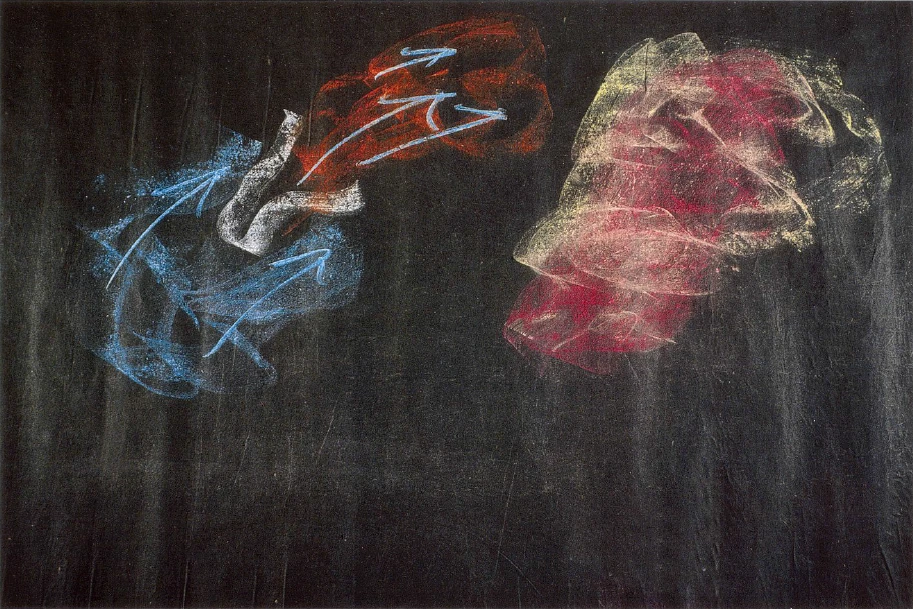
[ 20 ] Wir fühlen einen vierten Menschen nun in uns. Wir fühlen überall da, wo im physischen Organismus Verbrennungsprozesse, Prozesse des Abbaues walten, schöpferische Prozesse. Wir fühlen uns in der schöpferischen Welt drinnen. Und in dieser schöpferischen Welt werden wir nun gewahr alles das, was in uns selber schöpferisch ist.
[ 20 ] We now sense a fourth human being within us. We sense creative processes wherever processes of combustion and decomposition are at work in the physical organism. We feel ourselves to be within the creative world. And in this creative world, we now become aware of everything within ourselves that is creative.
[ 21 ] Und wenn wir vorher, indem wir unseren eigenen dritten Menschen, den astralischen Menschen, gewahr wurden, eine Welt kennengelernt haben, in der es den Unterschied von Materie und Geist nicht gibt, so lernen wir jetzt eine Welt kennen, in der der Geist nicht nur in allen Vorgängen lebt, sondern in der der Geist in allen Vorgängen das Schöpferische ist, in der es keine materienähnliche Substanz gibt, die nicht aus dem Geiste heraus geformt ist. Und wir lernen in uns selbst dasjenige kennen, was so schöpferischer Art ist, daß innerhalb seines Bereiches kein Materienähnliches ist, das nicht seine Schöpfung wäre, Und wenn wir eben vorher eine Welt kennengelernt haben, in der es die Dualität zwischen Geist und Materie nicht gibt, so lernen wir jetzt eine Welt kennen, in der die moralisch-geistigen Impulse selber das einzig Wirkliche sind. Und indem wir hineinschauen in diese Welt, von der eben der entsprechende Tropfen in uns selber waltet, indem wir hineinschauen in das, was als vierter Mensch unser Anteil an dieser Welt ist, zu der wir jetzt aufgestiegen sind, da lernen wir in diesem vierten Menschen kennen ein Schöpferisches in uns, aber ein solches Schöpferisches, von dem wir uns sagen: Das ist ja nirgends vorhanden hier in dieser Welt der natürlichen Umgebung, wo der Geist nicht an die Materie herankommt, das ist ja nirgends vorhanden zunächst in der Welt, die uns erscheint innerhalb unseres eigenen astralischen Leibes. Aber das macht sich überall geltend, wo noch ein Höheres, ein Wesenhaftes eintritt in diese astralische Welt. So wie der Mensch als physischer Mensch in die für ihn als physischen Menschen durchdringliche Luft eintritt, so werden wir das Astralleben gewahr, eine geistig-seelische Atmosphäre, und innerhalb dieser Atmosphäre herumwandelnde Geistwesen, wie wir hier als physische Menschen in der physischen Luftatmosphäre herumwandeln. Wir schauen hinein jetzt nicht nur in den im allgemeinen sprechenden Logos der astralischen Welt, wir schauen hinein in das, was als Geistwesen sich bewegt und west in dieser astralischen Welt.
[ 21 ] And if, earlier, by becoming aware of our own third human being—the astral human—we came to know a world in which there is no distinction between matter and spirit, we now come to know a world in which the spirit not only lives in all processes, but in which the spirit is the creative force in all processes—a world in which there is no matter-like substance that is not formed out of the spirit. And we come to know within ourselves that which is of such a creative nature that, within its realm, there is nothing matter-like that is not its creation. And just as we have previously come to know a world in which the duality between spirit and matter does not exist, so we now come to know a world in which the moral-spiritual impulses themselves are the only reality. And as we look into this world—of which the corresponding drop reigns within us—as we look into what, as the fourth human being, is our share in this world to which we have now ascended, we come to recognize within this fourth human being a creative force within us—but one of such a nature that we say to ourselves: “That is not to be found anywhere here in this world of the natural environment, where the spirit cannot reach matter; nor is it to be found, at first, in the world that appears to us within our own astral body.” But it makes itself felt wherever something higher, something essential, enters this astral world. Just as the human being, as a physical human being, enters the air that is permeable to him as a physical human being, so do we become aware of astral life—a spiritual-soul atmosphere—and of spiritual beings moving about within this atmosphere, just as we, as physical human beings, move about here in the physical atmosphere. We now look not only into the generally speaking Logos of the astral world, but we look into that which moves and dwells in this astral world as spiritual beings.
[ 22 ] Und da lernen wir unsere eigene Wesenheit erkennen als diejenige, die jetzt gar nicht da sein kann, die aber durchgegangen ist durch diese ätherische Welt im vorirdischen Dasein, und die in einem vorigen Erdenleben da war. Da werden wir gewahr, wie dem zerstörenden Verbrennungsprozesse die moralischen Impulse aus unserem vorigen, oder aus unseren verschiedenen vorigen Erdenleben innewohnen, wie dieser vierte Mensch in uns lebt, der zu gleicher Zeit der Schöpfer unseres grundlegenden Schicksals ist. Da entdecken wir hinter dem Brand unseres Leibes die schöpferische Macht des Inhaltes unseres vorigen Erdenlebens, das jetzt zu dieser Region hat aufsteigen können, wo es der zerstörenden Macht der Verbrennung als die schöpferische Macht entgegenwirkt, weil es eben nicht gegenwärtiges Dasein ist, sondern Jang vergangenes Erdenleben, das alles abgestreift hat, was mit der Dualität von Geist und Materie zusammenhängt, was durchgegangen ist durch die geistige Welt und in dieser geistigen Welt den Charakter des Geistig-Schöpferischen angenommen hat. Da entdecken wir gerade innerhalb desjenigen, was in den Tiefen unseres sonst so dunklen Willens heraufpulst in unserer Menschenwesenheit, das, was da hereinsprüht, hereinkraftet als etwas, was einmal so war, wie wir jetzt im Erdenleben dastehen, was aber anders geworden ist, indem es erst sich ätherisiert hat, dann in einer astralischen Welt gelebt hat, und in dieser astralischen Welt zu einer dritthöheren Stufe aufgestiegen ist. Und jetzt erscheint es in uns als das, was in unserem nur schattenhaften Ich der Gegenwart als der es erhärtende, mit Realität durchsetzende, schöpferische Kraftwille der vorangegangenen Erdenleben darinnen ist.
[ 22 ] And there we come to recognize our own being as one that cannot possibly be present now, but which has passed through this ethereal world in its pre-earthly existence, and which was present in a previous earthly life. There we become aware of how the moral impulses from our previous—or from our various previous—earthly lives are inherent in the destructive process of combustion, and how this fourth human being lives within us, who is at the same time the creator of our fundamental destiny. There we discover, behind the burning of our body, the creative power of the essence of our previous earthly life, which has now been able to ascend to this region, where it counteracts the destructive power of combustion as a creative force, precisely because it is not present existence, but rather a past earthly life that has shed everything connected with the duality of spirit and matter, that has passed through the spiritual world and, in this spiritual world, has taken on the character of the spiritual-creative. There, within that which pulses up from the depths of our otherwise so dark will in our human being, we discover precisely that which bursts in, surges in as something that was once just as we now stand in earthly life, but which has become different by first becoming etheric, then living in an astral world, and in that astral world has ascended to a third higher stage. And now it appears within us as that which, in our present, merely shadowy “I,” is the creative, will-filled force of the previous earthly lives—a force that hardens it and imbues it with reality.
[ 23 ] Da sind wir aufgestiegen von der physischen Wesenheit des Menschen zu seinen drei höheren Wesenheiten: zu der ätherischen Wesenheit oder der Bildekraftwesenheit, zu der astralischen Wesenheit, der eigentlich seelischen Wesenheit, und zu der eigentlichen Ich-Wesenheit, welche das Ergebnis früherer Erdenleben ist, während dasjenige, was als Ich im jetzigen Erdenleben in gleicher Art webt, in uns nur west zwischen dem Einschlafen und Aufwachen. Ich habe Ihnen vorhin beschrieben, wie zwischen dem Einschlafen und Aufwachen der astralische Leib in der Wesenheit der astralischen Welt drinnen webt und west; aber innerhalb dieses astralischen Leibes tragen wir noch an uns, zwischen dem Einschlafen und Aufwachen, das Ich, so wie ich es geschildert habe. Das ist aber noch nicht fähig, insofern es das Ich der Gegenwart ist, hineinzukraften in den physischen Leib. Denn hier teilt der Mensch das Schicksal der übrigen Natur, die Dualität des Geistes mit der Materie. Hier steht dem Menschen selber gegenüber der in der Materie noch nicht wirksame Geist, die Materie, die ohnmächtig ist und nicht an den Geist herankann.
[ 23 ] Here we have ascended from the physical nature of the human being to his three higher natures: the etheric body, or the formative power; the astral body, which is the true soul; and the true “I,” which is the result of previous earthly lives, while that which functions as the “I” in the present earthly life merely weaves within us between falling asleep and waking up. I described to you earlier how, between falling asleep and waking up, the astral body weaves and moves within the essence of the astral world; but within this astral body, we still carry within us, between falling asleep and waking up, the “I,” just as I have described it. However, insofar as it is the “I” of the present, it is not yet capable of exerting its power within the physical body. For here, human beings share the fate of the rest of nature: the duality of spirit and matter. Here, human beings themselves are confronted by the spirit—which is not yet active in matter—and by matter, which is powerless and cannot approach the spirit.
[ 24 ] Was da im Menschen in diesem Kampf zwischen Geist und Materie, der in ihn hereinleuchtet, der da besteht in dem Überwindenwollen des Dualismus von Geist und Materie in der äußeren physischen Erdenwelt, als ein innerer Konflikt hinter den Kulissen seines Daseins sich auch wachend im bloßen Willen abspielt, das spielt sich hinter den Kulissen des Daseins im Schlafe ab zwischen dem Einschlafen und Aufwachen. Das ist für den Menschen zunächst, wie er sich im gewöhnlichen Bewußtsein entfaltet, verdeckt durch den Schlaf. Da aber wird dasjenige im Schlafe verwoben, was nun, wenn es sich wiederum ätherisiert und astralisiert nach dem Tode, eben zu jener schöpferischen Kraft aufsteigt, was aber ein neues Glied hinzugefügt haben wird, wenn die nächste Zeit zwischen dem Tod und einer neuen Geburt verflossen sein wird, zu dem, was in unserem Willen kraftet aus den lang vergangenen Erdenleben her.
[ 24 ] What lies within a human being in this struggle between spirit and matter—which shines into his being and consists in the will to overcome the dualism of spirit and matter in the outer, physical world of the Earth— as an inner conflict behind the scenes of their existence, which also plays out in waking life as mere will—this takes place behind the scenes of existence during sleep, between falling asleep and waking up. For human beings, as they unfold in ordinary consciousness, this is initially veiled by sleep. But it is there, in sleep, that what is now woven together—and which, when it becomes etheric and astral again after death, rises to become that very creative force—will have added a new link, once the next period between death and a new birth has elapsed, to that which is active in our will from long-past earthly lives.
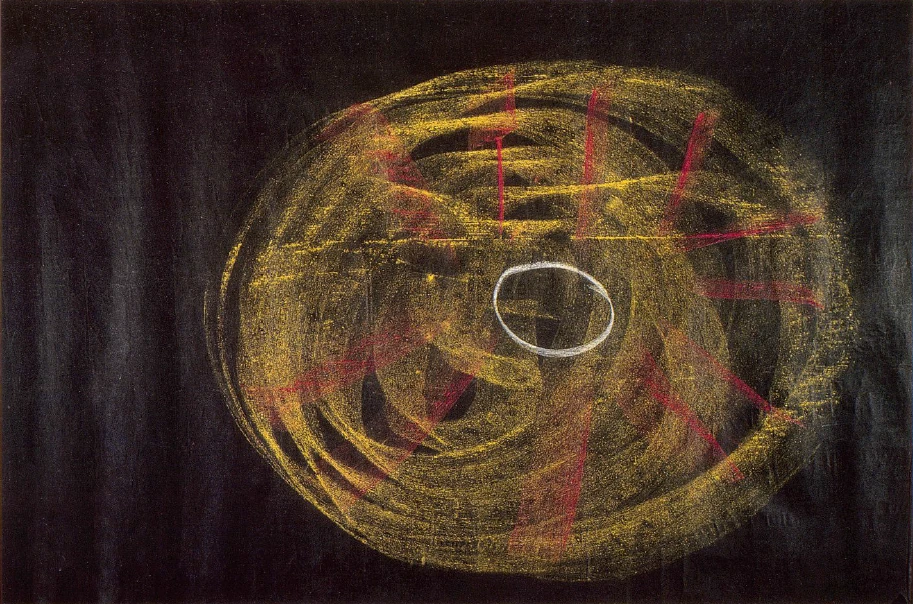
[ 25 ] Und so können wir hinschauen auf das menschliche Leben. Wir schauen zunächst nicht hinunter in den Willen, wir schauen nicht hinein in den Schlaf. Eine wirkliche Geistesschau aber enthüllt uns, was da eigentlich wirkt als schöpferisches, der Verbrennung entgegengesetztes Prinzip aus lang vergangenen Erdenleben. Und wir werden gewahr, wie durch unseren Willen pulsen, aus moralischen Impulsen unser Schicksal bereitend, die früheren Erdenleben, wie, wenn wir in den Schlaf hineingehen, das, was sonst aus seinen Trieben, Emotionen, aus den bewußten Absichten der menschliche Wille auch im Wachen schlafend vollbringt, wie das zwischen dem Einschlafen und Aufwachen sich webt zu dem Wesen, das dem Menschen in der Gegenwart verhüllt ist durch das Schlafen, das aber in unserem nächsten Erdenleben als wirksamer Wille unser Blut durchpulsend in dem Verbrennungsprozeß des künftigen Leibes sich als das schöpferische Ich entfalten wird — dieses schöpferische Ich, das dann wiederum um dasjenige Glied vermehrt worden sein wird, das wir in diesem Erdenleben zwischen Geburt und Tod entfaltet haben und hinzugefügt haben zu demjenigen, was in der geschilderten Weise aus den früheren Erdenleben zu uns herübergekommen ist.
[ 25 ] And so we can look at human life. At first, we do not look down into the will; we do not look into sleep. But true spiritual insight reveals to us what is actually at work there as a creative principle—opposed to combustion—from long-past earthly lives. And we become aware of how, through our will—preparing our destiny from moral impulses—our past earthly lives pulse within us; how, when we fall asleep, that which the human will otherwise accomplishes even while awake—through its instincts, emotions, and conscious intentions—weaves itself, between falling asleep and waking up, into the being which is veiled from the human being in the present by sleep, but which in our next earthly life, as an active will pulsing through our blood in the metabolic processes of the future body, will unfold as the creative “I”—this creative “I,” which will then in turn have been augmented by that element which we have developed in this earthly life between birth and death and added to that which has come to us from our earlier earthly lives in the manner described.
[ 26 ] In dieser Weise kann hineingeschaut werden in die Konstitution des Menschen aus vier Wesensgliedern. Und indem wir gewahr werden, wie diese vier Wesensglieder im Menschen real sind, blicken wir zu gleicher Zeit hin auf das gesamte menschliche Leben. Es erweitert sich, wie ich gestern gezeigt habe, das, was irdisches Leben ist, zu dem Leben im Weltenäther, der bis zu einer gewissen Kugelschale geht, aber das Kosmisch-Astralische überall zurückstrahlt. Wir leben mit unserem astralischen Leib mit diesem KosmischAstralischen, das für das irdische Beobachten unwahrnehmbar ist. Leben wir uns aber in dieses Kosmisch-Astralische so ein, wie ich es heute geschildert habe, dann tönt dieses Kosmisch-Astralische nicht nur als der Weltenlogos, sondern aus den Worten des Weltenlogos treten an uns heran, wie durch reale Untergründe des geistigen Lebens, die realen Wesenheiten der höheren und niederen Hierarchien, und unter diesen unsere eigene Geistwesenheit aus lang vergangenen Erdenleben.
[ 26 ] In this way, we can gain insight into the constitution of the human being, which consists of four elements. And as we become aware of how these four elements are actually present in the human being, we simultaneously look at human life as a whole. As I showed yesterday, earthly life expands into life in the world ether, which extends up to a certain spherical shell, but the cosmic-astral realm radiates back from all directions. With our astral body, we live within this cosmic-astral realm, which is imperceptible to earthly observation. But if we attune ourselves to this cosmic-astral realm as I have described today, then this cosmic-astral realm resounds not only as the World Logos, but from the words of the World Logos approach us—as if through real foundations of spiritual life—the real beings of the higher and lower hierarchies, and among them our own spiritual being from long-past earthly lives.
[ 27 ] So erweitert sich, indem wir den Menschen erkennen, zu gleicher Zeit unser geistig-seelisches Erkennen über den Kosmos, über das Universum, nicht nur über den Kosmos als einen physischen, als einen ätherischen, sondern über den Kosmos auch als einen geistig-seelischen. Es erweitert sich die Menschenerkenntnis zur Welterkenntnis. So wie wir im physischen Erdenleben niemals einseitig haben können Einatmung und Ausatmung, wie die Einatmung in stetiger Wechselwirkung mit der Ausatmung uns durchdringen und durchwellen muß, wie wir in der Einatmung und Ausatmung rhythmisch leben, so können wir nicht einseitig auf einer höheren Stufe bloß Menschenerkenntnis oder Welterkenntnis erwerben, sondern Menschenerkenntnis fordert, wie die Einatmung die Ausatmung, die Welterkenntnis, und Welterkenntnis fordert, wie die Ausatmung die Einatmung, Menschenerkenntnis. Systole und Diastole des großen physisch-seelisch-geistigen Weltenlebens ist Welterkenntnis und Menschenerkenntnis, die nicht nebeneinander sein können auf einer höheren Stufe, sondern nur ineinander, auseinander, ineinander, auseinander, in ewig wechselndem Rhythmus einander durchdringend und wirkend, wie das un sterbliche Leben des Kosmos selbst, dem auch der unsterbliche Mensch angehört.
[ 27 ] Thus, as we come to know the human being, our spiritual and soul-based understanding of the cosmos—of the universe—expands at the same time, not only of the cosmos as a physical or etheric entity, but also of the cosmos as a spiritual and soul-based entity. Our understanding of humanity expands into an understanding of the world. Just as we can never have inhalation and exhalation in isolation in our physical earthly life—just as inhalation, in constant interaction with exhalation, must permeate and flow through us, and just as we live rhythmically through inhalation and exhalation— so on a higher level we cannot acquire merely knowledge of humanity or knowledge of the world in isolation; rather, knowledge of humanity demands—just as inhalation demands exhalation—knowledge of the world, and knowledge of the world demands—just as exhalation demands inhalation—knowledge of humanity. The systole and diastole of the great physical-psychic-spiritual life of the world are knowledge of the world and knowledge of humanity, which cannot exist side by side on a higher level, but only within one another, apart from one another, intertwining and influencing one another in an eternally changing rhythm, just like the immortal life of the cosmos itself, to which the immortal human being also belongs.