

Cosmology
GA 94
3 November 1906, Munich
Translated by Steiner Online Library
Theosophy Based on the Gospel of John V
[ 1 ] You know the passage in the Gospel of John: “For the law was given through Moses; grace and truth came through Jesus Christ.” Consider, furthermore, how Christ Jesus contrasts his mission with the events in the wilderness: “Your fathers ate manna in the wilderness and died. I give you a different kind of bread; I am the bread of life.” Moses gave bread in the wilderness; Christ gives the bread of life.
[ 2 ] Let us recall once more how the four members of the human being developed at different times. The “I,” as consciousness, does not appear until the end of the Atlantean epoch. It is not until our fifth root race that the Manasic faculties emerge; specifically, Manas appears internally in the sensory body during the Proto-Indian epoch. In a higher form, Manas enters the sensory soul among the Proto-Persians. Among the Chaldeans and Egyptians, Manas enters the intellectual or emotional soul.
[ 3 ] Let’s be clear about what this means. Unlike today’s astronomers, the Chaldean-Babylonian priest-sages viewed the stars differently. They saw in them living, spirit-filled worlds. When they spoke of the planet Mercury, they did not mean merely a material entity, but the spirit of Mercury—just as we do when we give a person a name. The movement of the stars, their “stellar script,” was for them the expression of something spiritual. This is manasic insight, a permeation of the cosmos with thought.
[ 4 ] What their Chaldean predecessors had limited to celestial contexts, the Egyptian sages increasingly applied to earthly affairs and animalistic needs; they placed the manasic entity at the service of matter.
[ 5 ] Keep that in mind. One example of this is the construction of the artificial Lake Moeris. The Egyptians built it as a reservoir to regulate the Nile flood. The development of all of Egypt was carried out according to Manasic knowledge. Manasic means: purely spiritual. Manasic entities were placed at the service of the highest human needs. This is precisely the nature of the intellectual soul: that it makes use of manasic wisdom and thereby seeks to satisfy external needs and desires.
[ 6 ] Today, this development—“the Egyptian darkness,” the eclipse of Manas—has progressed even further. But does it really matter whether a person grinds his grain between two stones or orders it via cable from New York? In Theosophy, such a connection between higher consciousness and animalistic, earthly, material purposes is called Kama Manas. The ancient religions would have looked down upon the achievements of all our technology, our transportation, and our trade with very mixed feelings. They saw it as a defilement of sacred things when humans placed their higher mental faculties in the service of lower, natural needs. This was worse than when an animal uses its instinct—which, after all, is good for nothing better—to satisfy its needs. It was perceived as a fall, an abuse of the Manas—which is called to higher tasks—a falling away of the spirit from itself. This fall is expressed in a curious term: “Egypt.” This refers not only to the country, but the term is a symbol for such a fall; for it first occurred on a grand scale in Egypt. The word “Egypt” is therefore meant here not merely as the name of the country, but as a symbol for a specific spiritual state—the delusion of the manas—in which the higher nature is placed in the service of the lower. This is not meant as a criticism, but as a description of facts in the evolution of spiritual history.
[ 7 ] This stage had to be passed through; Manas had to sink into lower forces over the course of three sub-races in order to then rise again from its own nature. Within Egypt, however, the people who were called upon to, so to speak, purify Manas—to elevate it to a higher consciousness—also arose. The Israelite people were called upon to carry out the task of extracting Manas from within their own people. And the great missionary for this cause is Moses. The Israelites were transplanted to Egypt, where they received the inspiration for Manas. The Exodus from Egypt is at the same time the emergence of Manas into the higher reality.
[ 8 ] To achieve this, something had to happen that would transform the “I.” Moses first became the lawgiver of Israel. The Ten Commandments had to begin by working toward the development of the conscious “I.” God must reveal Himself as the expression of the “I” within human beings.
[ 9 ] The third chapter of Exodus recounts how Moses, while tending Jethro’s sheep, saw a burning bush from which the voice of Yahweh spoke: “I am the God of your father, the God of Abraham, the God of Isaac, and the God of Jacob.” This marks the birth of the Manas in self-awareness. Moses says to God: “Who am I to go to Pharaoh and lead the children of Israel out of Egypt?” God replies: “I will be with you. And this shall be the sign to you that I have sent you: When you have led my people out of Egypt, you shall offer sacrifices to God on this mountain.” Moses asks further: “When I come to the children of Israel and say to them, ‘The God of your fathers has sent me to you,’ and they say, ‘What is His name?’ what shall I say to them?” And God replied to him, “I am the I Am. Thus you shall say to the children of Israel: ‘I Am has sent me to you.’” This is the birth of clear self-awareness, which had previously been dim.
[ 10 ] Now the task will be to comprehend God in His spirituality; to truly hold sacred the God who reveals Himself within. For the law already applies to something higher. The God Jehovah speaks to the people: “I am the Lord your God, who brought you out of Egypt. You shall have no other gods before me.” But the people nevertheless made an image for themselves and worshiped the golden calf, even though they had been commanded not to make any image and not to misuse the Name. Yet God—the formless God, who has no shape—wanted to be that for them.
[ 11 ] If we wish to understand this entire process more thoroughly, we must now turn our attention to another aspect. The “I” has, in fact, a long history of development within humanity. In order for the “I” to emerge, the human body—which was developing in tandem with it—had to undergo transformation in many respects.
[ 12 ] Among the ancient Atlanteans, part of the etheric head was still outside the physical head. This part corresponds to our forebrain. The head had to grow toward the etheric body; it had to mature toward spirituality. That was the prerequisite for the
[ 13 ] The Dawn of Self-Awareness. Self-reliance emerged at the moment in physical evolution when a skeletal system first developed in humans. The stability that humanity thereby gained is connected to its predisposition toward spirituality. And when we look to the future of humanity, it becomes all the more clear to us how important the formation of this skeletal system was. How will the human race transform itself—in its body, not in its soul? It will become increasingly solidified. Just as the oyster controls its shell, human beings will control their bodies—their instruments—from the outside. To understand this, you need only consider the state of sleep, in which the soul controls the physical organism from the outside. In the future, the soul will consciously control the body as its instrument from the outside. Bone formation is therefore the foundation for something great and magnificent. Hence the ancient religious precepts: “Preserve your skeletal system. Do not break your bones.”—The sacrifice performed in Egypt to commemorate the deliverance there during the stranglehold on the Egyptian firstborn served as a symbolic expression of this. As an outward sign, a lamb is to be eaten, and thus the words are significant: “And you shall not break any of its legs!” Thus, at the point where liberation through Manas begins, this importance of bone formation is emphatically indicated in the ritual prescription for the Passover lamb. — And in the case of the great Lamb, the representative of humanity, in whom Christ Jesus was incarnate, the legs were not broken, as was otherwise customary for all those crucified. “... that the Scripture might be fulfilled: ‘You shall not break any of his legs.’”
[ 14 ] So the Jews were led out of Egypt. Let us see if our interpretation is confirmed in the Bible itself. Indeed, it is—literally! This is one of the great achievements of spiritual science: the ability to read the accounts in religious texts about ancient symbolic acts in their literal sense. The people of Israel set out into the desert. What is the desert? When the “I” turns inward to seek God within itself, it must go into the desert, into solitude; and after the awakening of Manas, the human being must then revive this desert within itself. When the children of Israel grumbled because they were close to starving to death, the Lord promised them that the next morning they would have bread in abundance. The next morning, “it lay in the desert, round and small like frost on the ground.” Then the Israelites asked one another, “Man hu—what is this?” This is the question a person asks himself when he is to recognize something. They called the food that came from the sky “manna.” It is the same word as “manas.” Certainly, philologists will raise many objections to this explanation, but that is how it is. The task of the Jewish people was to carry pure “manas” into the future.
[ 15 ] To understand this better, we must approach the edge of a mystery—the fourth of the seven unspeakable mysteries. Yesterday we spoke of the mystery of numbers; today we will touch on the fourth, that of birth and death.
[ 16 ] Birth and death—what are they in the occult sense? We must make this clear to ourselves. Are they always necessarily linked to life? Let us think back to pre-Lemurian times, before humanity descended into coarse physical matter.
Translate text Select source language. Currently selected: English (detected) Select target language. Currently selected: German Toolbar Source text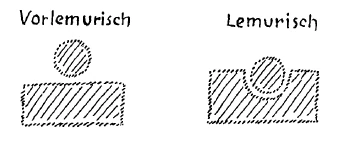 Translation results
Dictionary
Click on a word to look it up or to see alternative translations.
You’re logged in and have a DeepL Pro plan. Your content is secure.
[ 17 ] He had a kind of body of light and fire; he was embodied in etheric matter. His contemporaries on Earth are beings who stand somewhat above the animals, in physical bodies. A kind of cavity forms within the animal body. The etheric human descends into this cavity and fills the physical body. The light human had condensed into the air human, who then entered the physical body. This is the moment depicted in the story of creation with the words: “And God breathed into him the breath of life, and he became a living soul.” With each breath, we actually draw our etheric body into ourselves. The etheric human had condensed to the level of air by the time its union with the physical body could be accomplished, and it entered the lungs. With every breath, we actually draw our etheric body into ourselves.
[ 18 ] The entire way of life for the early Lemurians was different from that of later times. Parts were constantly being shed from their etheric bodies, and new etheric substance was constantly flowing in: renewal and elimination took place. There were also constant, intense changes taking place within it, corresponding to the greater subtlety of the etheric body; this occurred continuously without the abrupt alternation of birth and death. Thus, there was no birth and death—only a transformation took place. Death and birth could only occur after the etheric body had entered into matter.
[ 19 ] Birth and death are, strictly speaking, a change in the state of consciousness. Death can and must occur only where a soul dwells in a body that is essentially foreign to it and uses foreign organs. The soul’s former purpose in life dissolves when the physical body is cast off. These two bodies are subject to two entirely different laws and worlds, for the body belongs to the Earth, while the soul belongs to the astral realm. The higher spiritual being who dwells within the body receives it upon entering the world, and the Earth takes it back from him. It is as if I were renting a home on Earth: the rental property is subject to property regulations and laws—so too is the earthly body. Through it, a person can look outward. This looking outward is a prerequisite for knowledge; therefore, birth and death are inseparable from the emergence of knowledge. The Bible expresses this with the words: “Your eyes will be opened, and you will know what is good and what is evil.”
[ 20 ] Thus, ever since Lemuria, Manas has been prepared and organized in opposition to what was developing in the lower realms. Manas enters the physical body through the senses; death is conditioned by Manas; without Manas, there would be no death. This is the passage in the Gospel of John that reads: “Your fathers ate manna and died.” One cannot die from the bread of life. It is Christ who brings about the development of the etheric realm once again. The Christ impulse is the penetration of Budhi.
[ 21 ] Manas, then, is a transitional stage that occurred when, in Lemuria, the etheric body entered the physical body. Budhi is brought into the etheric body by Christ, but from within. Christianity introduces this principle of animation from within. “I am the bread of life.” As long as the world has been ruled by bondage to the physical body—the principle of heredity—human beings have no way of looking beyond death. But this happens the moment his life body—his etheric body—can be animated from within by Budhi, when Manas receives Budhi. Moses is thus the messenger for Manas, Christ the bringer of Budhi. At this stage, the initiate can exist outside his body.
[ 22 ] Now let us ask ourselves one more question: A people is made the vessel of the development of the manas; the entire collective consciousness of the people is condensed within a single initiate. When the Jewish people were on the verge of forfeiting their mission, the Lord said: “I will destroy them, but you, Moses, I will make into a great nation.”—This passage is to be taken literally; it is a higher initiation of Moses. Through this, Moses’ mission is entrusted to him in such a way that he is made into an initiate embodying the collective consciousness of a people.
[ 23 ] Another deeply significant aspect is the role that blood plays in the Manas process, for the higher process must naturally be reflected in the blood. Moses takes the blood of the sacrifice and sprinkles it upon the people. This is the sign of the truth of the covenant through the bond of blood. Once Manas has absorbed the blood, and Budhi as well, we can understand the passage in the Gospel of John that reads: “Whoever eats my flesh and drinks my blood abides in me, and I in him.” If Christ is to be able to work upon humanity, He must enter into a covenant with it through His blood. If Christ is to instill Budhi in a person, that person must receive Christ’s blood in the Lord’s Supper.
[ 24 ] Now we must consider a few more cosmic-human truths—the world is truly very complicated. The beings that are today stones, plants, and animals are closely connected to human beings. Human beings are not the latest creatures in creation, but the earliest. Today, let us set aside earlier incarnations on Earth and focus on human beings.
[ 25 ] When the Earth emerged from Pralaya and condensed into the etheric Earth, it actually consisted entirely of etheric human bodies and can be figuratively compared to the shape of a giant blackberry. At that time, the human being was a completely spiritualized being, endowed solely with an etheric body.
[ 26 ] The next stage consists of the etheric beings dividing, as it were, into two currents: one ascending and one descending. Animals emerge from the descending current. Just as if we had two brothers, one of whom becomes more like the father and the other less so, so too do human beings divide into two groups: human beings and degenerate human beings—the animals. Later, these two groups became three: plants were added. Then a fourth group branches off: the minerals.
[ 27 ] Whenever a new aspect of being emerges, the human being develops within themselves a different, new innate disposition. At the moment the animal branch diverges, astral sensation arises in the human being; at the moment the plant branch diverges, etheric growth arises. At the moment when minerals branch off, the microcosm forms bones. Every time a new form of life develops, a corresponding correlate arises in human beings, so that one can say of every animal, every plant, and every mineral what corresponds to them in human beings. The lion is also present in human beings, but it has been overcome. Hence the correspondences and analogies between bodily organs and earthly objects, be it the lion, belladonna, or asbestos. Paracelsus says: Out there in the earthly world, there are nothing but letters; the human being is their coherent inner meaning, their word. All of nature is merely the human being laid out; within the human being, the word of it is formed.
[ 28 ] Those who have been cast aside by the current of human evolution have not remained entirely without development; on the contrary, they have even reached certain developmental goals earlier than non-specialized humans. For example: the future hardness of the human body is in the process of developing; the woody plant has long since attained this in its inferior form. Certain poisons also represent a developmental advantage over humans. Toxins found in plants were once present within humans as well. Had humans evolved in the same way as these substances, they would, for example, be able to excrete arsenic from their bodies. When a person contracts cholera, the same symptoms appear as if they had ingested arsenic. This is why Paracelsus referred to a cholera patient as an “arsenicus.”
[ 29 ] Just as with wood and poisons, plant sap—wine—is a substance that has outpaced human development. We can examine this in even greater detail. Wine—the sap that flows through the grapevine—is a one-sided development of blood. What the blood breathes out is carbon dioxide and alcohol. Alcohol is, so to speak, the blood of the future. The plant sap that exhales carbon dioxide stands in contrast to today’s blood as the blood of the future. Through cosmic insight, we experience the kinship between wine and blood. Christ may say of the wine: “This is my blood.”—For Christ is the representative of future humanity. His teaching itself is a living spring toward which humanity is evolving. Let us consider the parable of the vine and the branches, and the parable of the transformation of water into wine. The vine represents merely a preliminary stage of development, analogous to the anticipated hardening of wood. Just as the plant today transforms its watery sap into wine, so humanity cannot do so today, but will later transform its blood.
[ 30 ] From here, light is shed on the mystery of the transformation of water into wine at the wedding in Cana. Why specifically at Cana in Galilee? Galilee (= el gojim) is the land of the mixed-race, of those who are not racially pure. There, racial mixing had always been prevalent—that is, the breaking down of barriers separating peoples; it was there that the wedding of those of different bloodlines took place. Jesus’ mother, it is said, is also present, just as she was later at the cross. She is never called “Mary” in the Gospel of John. On the contrary, the other two women at the foot of the cross are explicitly named “Mary,” and one of them, Mary, is identified as the sister of Jesus’ mother. Jesus’ mother is not Mary.