

Mystery Truths and Christmas Impulses
Ancient Myths and Their Significance
GA 180
12 January 1918, Dornach
Translate the original German text into any language:
Versions Available:
Mystery Truths and Christmas Impulses, tr. SOL
Dreizehnter Vortrag
Thirteenth Lecture
[ 1 ] Die Dinge, die wir jetzt besprechen, hängen zusammen mit einer Tatsache, die paradox klingt, wenn man sie so einfach hinspricht, die aber doch einer bedeutsamen, tiefen Wahrheit entspricht: Der Mensch wandelt auf der Erde herum, aber der Mensch versteht sich selbst eigentlich sehr schlecht. Nun gilt dieser Ausspruch, man könnte sagen, in unmittelbarer Anwendung am meisten gerade für unser Zeitalter. Wir wissen ja, daß die große, bedeutsame Aufschrift des Apollotempels, «Erkenne dich selbst», wie eine Aufforderung an die geistige Zusammenhänge suchenden Menschen einstmals im alten Griechenlande war. Und diese Aufschrift auf dem delphischen Tempel, «Erkenne dich selbst», ist ja — das geht aus unseren verschiedensten Betrachtungen hervor — in jener Zeit nicht etwa nur eine Phrase gewesen, sondern es war schon möglich auch noch in dieser Griechenzeit, eine tiefere Erkenntnis des Menschen herbeizuführen, als das in der Gegenwart der Fall ist. Aber diese Gegenwart ist auch eine Aufforderung an uns, nach wirklicher Menschenerkenntnis wieder zu streben, nach der Erkenntnis dessen, was der Mensch eigentlich auf der Erde ist.
[ 1 ] The things we are now discussing are connected to a fact that sounds paradoxical when stated so simply, but which nevertheless corresponds to a significant, profound truth: Human beings walk the earth, yet they actually understand themselves very poorly. Now, one might say that this saying applies most directly to our own age. We know, after all, that the great, significant inscription on the Temple of Apollo, “Know thyself,” once served as a call to those seeking spiritual connections in ancient Greece. And this inscription on the Temple at Delphi, “Know thyself,” was—as our various reflections show—not merely a phrase in those days; rather, even in that Greek era, it was already possible to attain a deeper understanding of the human being than is the case today. But the present day also calls upon us to strive once more for a true understanding of humanity—for an understanding of what it actually means to be human on Earth.
[ 2 ] Nun scheint es, als ob die Dinge, die man im Zusammenhange mit dieser Frage sagen muß, schwer verständlich wären. Sie sind es in Wirklichkeit nicht, trotzdem sie sich so anhören, wie wenn sie schwer verständlich wären. Sie sind es nur deshalb für die Gegenwart, weil man nicht gewöhnt ist, sein Denken, sein Empfinden in solche Strömungen zu leiten, wie sie notwendig sind, damit man so etwas richtig versteht. Es handelt sich darum, daß alles dasjenige, was wir in der Gegenwart Verstehen nennen, eigentlich darauf hinauskommt, daß wir immer durch abstrakte Begriffe zu verstehen suchen. Man kann aber nicht alles durch abstrakte Begriffe verstehen. Vor allen Dingen kann man nicht den Menschen durch abstrakte Begriffe verstehen. Man braucht etwas anderes zum Verständnisse des Menschen als abstrakte Begriffe. Man muß sich in die Lage versetzen, den Menschen so, wie er auf der Erde herumwandelt, gewissermaßen als ein Bild zu nehmen, als ein Bild, welches etwas ausspricht, welches etwas verrät, welches uns etwas offenbaren will. Man muß wieder auffrischen das Bewußtsein, daß der Mensch ein Rätsel ist, das gelöst werden will. Man wird aber das Menschenrätsel nicht lösen, wenn man wird fortfahren wollen, so bequem zu sein im Denken, so theoretisch zu sein im Denken, wie man es jetzt liebt. Denn der Mensch ist, das haben wir ja immer wieder und wiederum betonen müssen, ein kompliziertes Wesen. Der Mensch ist mehr, reichlich mehr als das physische Gebilde, das vor unseren Augen als Mensch herumwandelt; reichlich mehr ist der Mensch. Aber dieses physische Gebilde, das vor unseren Augen als Mensch herumwandelt, und alles, was zu diesem physischen Gebilde gehört, das ist doch ein Ausdruck für die ganze umfassende Wesenheit des Menschen. Und man kann sagen: Nicht nur dasjenige kann man erkennen an der menschlichen Gestalt, an dem physischen Menschen, der unter uns herumwandelt, nicht nur das kann man in ihm erkennen, was der Mensch ist zwischen seiner Geburt und seinem Tode hier in der physischen Welt, sondern auch das kann man, wenn man nur will, am Menschen erkennen, was er ist als unsterbliche, als ewige Seelenwesenheit. — Man muß nur ein Gefühl dafür entwickeln, daß diese menschliche Gestalt etwas Kompliziertes ist. Unsere Wissenschaft, die ja heute populär gemacht wird und so zu allen Menschen kommt, ist nicht geeignet, ein Gefühl davon hervorzurufen, was für ein Wunderbau dieser Mensch eigentlich ist, der auf der Erde herumwandelt. Man muß den Menschen ganz anders ansehen.
[ 2 ] Now it seems as if the things one must say in connection with this question are difficult to understand. In reality, they are not, even though they sound as if they were difficult to understand. They are only difficult to understand at present because people are not accustomed to directing their thinking and feeling along the lines necessary to truly grasp such matters. The point is that everything we currently call “understanding” actually boils down to always trying to understand through abstract concepts. But one cannot understand everything through abstract concepts. Above all, one cannot understand human beings through abstract concepts. One needs something other than abstract concepts to understand human beings. One must put oneself in a position to take human beings—as they walk about on Earth—as a kind of image, an image that expresses something, that reveals something, that seeks to reveal something to us. We must rekindle the awareness that human beings are a mystery that demands to be solved. But we will not solve the mystery of human beings if we continue to be so complacent in our thinking, so theoretical in our thinking, as we are now inclined to be. For human beings are—as we have had to emphasize time and again—complex beings. Human beings are more—far more—than the physical form that walks among us as a human being; human beings are far more than that. Yet this physical form that walks among us as a human being, and everything that belongs to this physical form, is nonetheless an expression of the entire, all-encompassing being of the human being. And one can say: Not only can one recognize in the human form—in the physical human being who walks among us—not only can one recognize in him what a human being is between birth and death here in the physical world, but one can also, if one so wishes, recognize in the human being what he is as an immortal, eternal soul-being. — One need only develop a sense that this human form is something complex. Our science, which is popularized today and thus reaches everyone, is not suited to evoking a sense of what a marvelous structure this human being actually is, walking upon the earth. One must view the human being in an entirely different way.
[ 3 ] Erinnern Sie sich einmal — Sie haben gewiß schon alle ein menschliches Skelett gesehen —, erinnern Sie sich nur, daß ein solches menschliches Skelett eigentlich zweifach ist, wenn man von allem übrigen absieht. Man kann viel genauer darüber sprechen, aber wenn man von allem übrigen absieht, so ist dieses Skelett eine Zweiheit. Sie können ja sehr leicht vom Skelett den Schädel abheben, der eigentlich nur daraufgesetzt ist, dann bleibt der übrige Mensch schädellos übrig. Der Schädel läßt sich sehr leicht abheben. Dieser übrige Mensch außer dem Schädel ist noch immer ein recht kompliziertes Wesen; allein wir wollen ihn jetzt als eine Einheit auffassen, wir wollen von seiner Komplikation absehen. Aber diese Zweiheit wollen wir zunächst ins Auge fassen, die uns eben vor Augen tritt, wenn wir den Menschen betrachten, sagen wir als Kopfmenschen und als übrigen Menschen, als Rumpfmenschen. So ist er ja auch nicht nur im Skelett, so ist er, obwohl das weniger deutlich hervortritt, auch als ganzer fleischlicher Mensch eine Zweiheit.
[ 3 ] Just think back—you’ve surely all seen a human skeleton before—just remember that such a human skeleton is actually twofold, if you disregard everything else. One could speak about this in much greater detail, but if you disregard everything else, this skeleton is a duality. You can very easily separate the skull from the skeleton—it is, after all, merely placed on top of it—and what remains is the rest of the human being without a skull. The skull can be removed very easily. This remaining part of the human being, apart from the skull, is still a rather complex being; but let us now regard it as a single unit and set aside its complexity. But let us first consider this duality, which immediately presents itself to us when we regard the human being—let us say—as a “head-human” and as the “rest of the human being,” as a “torso-human.” Thus, this duality is not limited to the skeleton; although it is less clearly evident, it also exists in the human being as a whole, in the flesh.
[ 4 ] Nun brauchen wir auf geisteswissenschaftlichem Boden Vergleiche nicht zu lieben in der Form, daß wir sie etwa verabsolutieren, metaphysisch ausbauen. Das wollen wir nicht, aber verdeutlichen wollen wir uns allerlei Dinge, indem wir Vergleiche gebrauchen. Und da ist es naheliegend, weil es wirklich der Anschauung entspricht, sich zu sagen, der Mensch ist in bezug auf seinen Kopf hauptsächlich durch die Kugelform beherrscht. Will man irgendwie schematisch das ausdrücken, was das menschliche Haupt, der menschliche Kopf ist, so können wir sagen, der Mensch ist durch die Kugelform beherrscht.
[ 4 ] Now, in the realm of the humanities, we need not love comparisons to the extent that we, for example, treat them as absolute or expand them metaphysically. We do not want that, but we do want to clarify all sorts of things by using comparisons. And so it is natural—because it truly corresponds to our perception—to say that, with regard to the head, the human being is primarily characterized by the spherical form. If we want to express in some schematic way what the human head is, we can say that the human being is characterized by the spherical form.
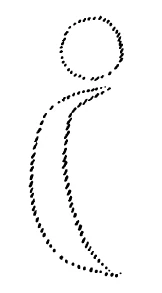
[ 5 ] Wollten wir für den übrigen Menschen ein schematisches Bild haben, so würden wir natürlich die Komplikationen ins Auge fassen müssen, allein das wollen wir heute nicht tun. Sie werden aber leicht einsehen: von gewissen Kompliziertheiten abgesehen, ebenso wie man schematisch den menschlichen Kopf als eine Kugelform auffassen kann, so kann man den übrigen Menschen als eine solche Form auffassen (siehe Zeichnung: Mondform), wobei nur selbstverständlich in der Stellung dieser zwei Kreise je nach der Korpulenz der einzelnen unterschieden werden muß.
[ 5 ] If we wanted to have a schematic representation of the rest of the human body, we would of course have to take the complexities into account, but that is not what we intend to do today. However, you will easily see that, apart from certain complexities, just as one can schematically represent the human head as a sphere, so too can one represent the rest of the human body as such a shape (see drawing: moon shape), although, of course, the position of these two circles must be adjusted according to the individual’s build.
[ 6 ] Aber so können wir schon den Menschen auffassen gewissermaßen als Kugelform und als Mondenform. Das hat eine tief-innerliche Berechtigung; über diese wollen wir aber heute nicht sprechen, sondern wir wollen nur eingedenk des Umstandes sein, daß der Mensch in diese zwei Glieder zerfällt.
[ 6 ] But in this way we can already conceive of the human being, so to speak, as having the shape of a sphere and the shape of the moon. There is a profound, inner justification for this; but we will not discuss that today. Instead, we will simply bear in mind the fact that the human being is divided into these two parts.
[ 7 ] Nun ist das Haupt des Menschen ein wirklicher Apparat zunächst für die geistige Betätigung. Für alles dasjenige, was der Mensch aufbringen kann an menschlichen Gedanken, menschlichen Empfindungen ist das Haupt, der Kopf der Apparat. Aber wenn wir angewiesen wären auf dasjenige, was der Kopf als Apparat leisten kann im Denken, Empfinden, würden wir niemals imstande sein, das Wesen des Menschen wirklich zu verstehen. Wenn wir überhaupt angewiesen wären, nur den Kopf als Werkzeug unseres Geisteslebens zu benützen, würden wir niemals imstande sein, zu uns wirklich Ich zu sagen. Denn, was ist dieser Kopf? Dieser Kopf ist in Wahrheit, so wie er uns in seiner Kugelform entgegentritt, ein Abbild des ganzen Kosmos, wie Ihnen der Kosmos zunächst erscheint mit all seinen Sternen, Fixsternen, Planeten und Kometen, sogar Meteorsteinen — die Unregelmäßigkeiten spuken ja in manchen Köpfen. Der menschliche Kopf ist ein Abbild des Makrokosmos, ist ein Abbild der ganzen Welt. Und nur das Vorurteil unserer Zeit — ich habe das schon in anderem Zusammenhang angedeutet — weiß nichts davon, daß die ganze Welt daran beteiligt ist, daß ein menschliches Haupt zustande kommt.
[ 7 ] Now, the human head is, first and foremost, a true apparatus for mental activity. For everything that a human being is capable of producing in the way of human thoughts and human feelings, the head is the apparatus. But if we were to rely solely on what the head, as an apparatus, is capable of in terms of thinking and feeling, we would never be able to truly understand the essence of the human being. If we were to rely solely on the head as the instrument of our spiritual life, we would never be able to truly say “I” to ourselves. For what is this head? This head is, in truth—just as it appears to us in its spherical form—a reflection of the entire cosmos, just as the cosmos first appears to you with all its stars, fixed stars, planets, and comets, even meteorites—for irregularities do indeed haunt some minds. The human head is a reflection of the macrocosm; it is a reflection of the entire world. And only the prejudice of our time—as I have already hinted at in another context—is unaware that the entire world is involved in the formation of a human head.
[ 8 ] Aber wenn dieses menschliche Haupt nun durch die Vererbung, durch die Geburt auf die Erde versetzt ist, so kann dieses menschliche Haupt kein Apparat sein, um die Wesenheit des Menschen selbst zu begreifen. Uns wird gewissermaßen in unserem Haupte ein Apparat gegeben, der wie ein Extrakt der ganzen Welt ist, der aber nicht imstande ist, den Menschen zu begreifen. Warum? Ja, aus dem Grunde, weil der Mensch mehr ist als alles dasjenige, was wir sehen, denken können durch unsern Kopf. Heute sagen viele Leute, das menschliche Erkennen hätte Grenzen, man könne nicht weiter über diese Grenzen hinauskommen. Das rührt aber nur davon her, weil diese Menschen bloß die Weisheit des Kopfes gelten lassen wollen, und die Weisheit des Kopfes geht allerdings nicht über gewisse Grenzen hinaus. Diese Weisheit des Kopfes hat aber auch gemacht dasjenige, was wir vor einigen Tagen beschrieben haben als die griechischen Götter. Die griechischen Götter sind aus der Weisheit des Kopfes hervorgegangen. Sie sind die oberen Götter; sie sind daher nur Götter für alles dasjenige, was der Kopf des Menschen mit seiner Weisheit umspannen kann.
[ 8 ] But once this human head has been brought onto Earth through heredity and birth, it cannot serve as an instrument for comprehending the very essence of the human being. We are, so to speak, given an apparatus within our head that is like an extract of the entire world, but which is incapable of comprehending the human being. Why? Precisely because the human being is more than everything we can see or think through our head. Today, many people say that human cognition has limits, that one cannot go beyond these limits. But this stems solely from the fact that these people wish to accept only the wisdom of the head, and the wisdom of the head does indeed not go beyond certain limits. Yet this wisdom of the head is also what created what we described a few days ago as the Greek gods. The Greek gods emerged from the wisdom of the mind. They are the higher gods; they are therefore gods only for everything that the human mind, with its wisdom, can encompass.
[ 9 ] Nun habe ich Sie öfter darauf aufmerksam gemacht: die Griechen hatten außer dieser äußeren Götterlehre ihre Mysterien. In den Mysterien verehrten die Griechen außer den himmlischen Göttern noch andere Götter, die chthonischen Götter. Und von demjenigen, der in die Mysterien eingeweiht wurde, sagte man mit Recht: Er lernt kennen die oberen und die unteren Götter. — Die oberen Götter, das waren diejenigen des Zeuskreises; aber sie haben nur Herrschaft über dasjenige, was vor den Sinnen ausgebreitet ist und was der Verstand begreifen kann. Der Mensch ist mehr als dieses. Der Mensch wurzelt mit seiner Wesenheit im Reiche der unteren Götter, im Reiche der chthonischen Götter.
[ 9 ] I have pointed this out to you on several occasions: in addition to this external doctrine of the gods, the Greeks had their mysteries. In the mysteries, the Greeks worshipped not only the heavenly gods but also other gods—the chthonic gods. And of the one who was initiated into the mysteries, it was rightly said: He comes to know the upper and the lower gods. — The upper gods were those of the circle of Zeus; but they have dominion only over that which is spread out before the senses and which the intellect can grasp. Man is more than this. Man is rooted in his very being in the realm of the lower gods, in the realm of the chthonic gods.
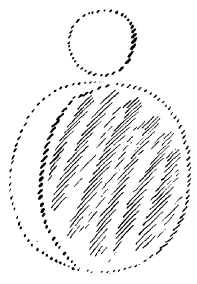
[ 10 ] Aber man kommt nicht zurecht, wenn man nur dasjenige vom Menschen ins Auge faßt, was ich schematisch hier aufgezeichnet habe. Wenn man das Wurzeln des Menschen im Bereiche der unteren Götter ins Auge fassen will, dann muß man schon diese Zeichnung vervollständigen und muß sie so machen: Man muß auch gewissermaßen den nicht belichteten Mond einbeziehen (siehe Zeichnung S. 234). Man muß, mit andern Worten, den Kopf des Menschen anders betrachten als den übrigen Organismus. Beim übrigen Organismus muß man viel mehr ins Auge fassen dasjenige, was geistig ist, was übersinnlich, was unsichtbar ist. Der Kopf des Menschen ist äußerlich, so wie er uns entgegentritt, gewissermaßen eine Vollkommenheit. Alles, was geistig ist, hat sich ein Abbild geschaffen im Kopfe. Im übrigen Menschen ist das nicht der Fall. Der übrige Mensch ist nur ein Fragment als physischer Mensch, und man kommt nicht zurecht mit dem übrigen Menschen, wenn man dieses fleischliche Fragment nimmt, das sichtbarlich auf der Erde herumwandelt.
[ 10 ] But one cannot come to terms with this if one focuses only on what I have schematically outlined here regarding human beings. If one wishes to consider the roots of the human being in the realm of the lower gods, then one must complete this diagram and do so as follows: One must also, in a sense, include the unlit moon (see diagram on p. 234). In other words, one must view the human head differently from the rest of the organism. With regard to the rest of the organism, one must focus much more on what is spiritual, what is supersensible, and what is invisible. The human head, as it appears to us externally, is, in a sense, a perfection. Everything that is spiritual has created an image of itself in the head. This is not the case with the rest of the human being. The rest of the human being is only a fragment as a physical human being, and one cannot come to terms with the rest of the human being by taking this physical fragment that visibly walks the earth.
[ 11 ] Nun, das zeigt uns schon, daß wir den Menschen kompliziert nehmen müssen. Aber tritt das irgendwie im l.eben hervor, was ich jetzt gesagt habe? Es scheint abstrakt zu sein, was ich jetzt gesagt habe, es scheint paradox und schwer verständlich zu sein, aber die Frage muß doch auftauchen: Tritt es im leben irgendwie hervor? Das ist das Wichtige: es tritt im l.eben nämlich ganz klar hervor. Der Kopf ist der Apparat unserer Weisheit; er ist der Apparat unserer Weisheit so stark, daß mit seiner Entwickelung unsere zunächstige Weisheit zusammenhängt. Aber selbst die äußere anatomisch-physiologische Betrachtung zeigt — sehen Sie sich an, wie ein Haupt sich entwickelt, wie ein Mensch aufwächst —, daß der Kopf eine ganz andere Entwickelung durchmacht als der übrige Organismus. Der Kopf entwickelt sich rasch, der übrige Organismus langsam. Verhältnismäßig ist der Kopf schon ganz ausgebildet beim Kinde, entwickelt sich viel weniger weiter. Der übrige Organismus ist noch wenig ausgebildet, macht langsam seine Stadien durch. Das hängt zusammen damit, daß wir in der Tat ein Doppelmensch auch im Leben sind. Nicht nur unser Skelett zeigt den Kopf und den übrigen Menschen, sondern unser Leben zeigt selbst diese Zwienatur unseres Wesens: unser Kopf entwickelt sich schnell, unser übriger Organismus entwickelt sich langsam. Unser Kopf macht in unserer Zeit ungefähr schon bis zu unserem achtundzwanzigsten oder siebenundzwanzigsten Jahre seine Entwickelung durch, der übrige Organismus braucht dazu das ganze Leben bis zum Tode. Erleben nämlich kann man dasjenige, was der Kopf verhältnismäßig in kurzer Zeit sich aneignet, nur im ganzen Leben. Es hängt das mit vielen Geheimnissen zusammen.
[ 11 ] Well, that already shows us that we have to view human beings as complex beings. But does what I’ve just said come to light in any way in real life? What I’ve just said may seem abstract; it may seem paradoxical and difficult to understand, but the question must surely arise: Does it manifest itself in any way in real life? That is the important point: it does, in fact, manifest itself quite clearly in real life. The head is the organ of our wisdom; it is the organ of our wisdom to such an extent that our initial wisdom is linked to its development. But even an external anatomical and physiological observation shows—just look at how a head develops, how a human being grows up—that the head undergoes a completely different development than the rest of the organism. The head develops rapidly, while the rest of the organism develops slowly. Relatively speaking, the head is already fully formed in a child and develops much less further. The rest of the organism is still underdeveloped and slowly passes through its various stages. This is connected to the fact that we are, in fact, a dual human being even in life. Not only does our skeleton reveal the head and the rest of the human being, but our very life itself reveals this dual nature of our being: our head develops quickly, while the rest of our organism develops slowly. In our time, our head completes its development by about the age of twenty-seven or twenty-eight, while the rest of the organism requires our entire life, right up until death, to do so. For what the head acquires in a relatively short time can only be experienced over the course of a whole lifetime. This is connected to many mysteries.
[ 12 ] Der Geistesforscher erkennt diese Dinge insbesondere dann, wenn er einmal den Blick richtet auf einen Unglücksfall. Es klingt wiederum paradox, aber es entspricht der völligen Wahrheit. Denken Sie sich einmal, ein Mensch wird erschlagen, er geht durch einen Unglücksfall zugrunde. Nehmen wir an, ein Mensch wird in seinem dreiBigsten Jahre erschlagen. Für die äußere physische Betrachtung ist solch ein plötzlicher Tod eine Art Zufall; aber es ist vor der geisteswissenschaftlichen Betrachtung einfach lächerlich, eine solche Sache als Zufall zu betrachten. Denn in dem Momente, wo durch eine äußere Veranlassung, von außen her, ein Mensch plötzlich in den Tod kommt, geht rasch ungeheuer viel mit ihm vor sich. Denken Sie sich, im gewöhnlichen Zusammenhange der Dinge wäre dieser selbe Mensch, der mit dreißig Jahren erschlagen worden ist, vielleicht siebzig, achtzig, neunzig Jahre alt geworden. Da hätte er dadurch, daß er vom dreißigsten bis neunzigsten Jahre noch gelebt hätte, langsam hintereinander mancherlei im I.eben zugenommen an Lebenserfahrung. Das, was er so in sechzig Jahren durchgemacht hätte an Lebenserfahrung, macht er, wenn er im dreißigsten Jahre erschlagen wird, kurz, vielleicht in einer halben Minute könnte es sein, durch. Die Zeitverhältnisse sind, wenn die geistige Welt in Betracht kommt, eben andere als sie uns hier im physischen Plan erscheinen. Ein rascher Tod, der durch äußere Verhältnisse herbeigeführt wird — man muß die Sache ganz genau nehmen —, kann unter Umständen rasch die Erfahrung, die Erfahrung sage ich, die Lebensweisheit des ganzen Lebens durchmachen lassen, das noch hätte kommen können.
[ 12 ] The spiritual researcher recognizes these things especially when he turns his attention to an accident. It sounds paradoxical again, but it is the absolute truth. Imagine, for example, that a person is killed; he perishes in an accident. Let us assume that a person is killed in his thirties. From an external, physical perspective, such a sudden death is a kind of coincidence; but from the perspective of spiritual science, it is simply ridiculous to regard such an event as a coincidence. For at the very moment when, due to an external cause—coming from outside—a person suddenly meets their death, an immense amount is rapidly taking place within them. Consider this: under normal circumstances, this same person, who was killed at the age of thirty, might have lived to be seventy, eighty, or ninety years old. Had he lived from the age of thirty to ninety, he would have gradually accumulated a great deal of life experience over the course of those years. The life experience he would have gained over sixty years, he goes through—if he is killed at the age of thirty—in a short time; perhaps in half a minute. When it comes to the spiritual world, the concept of time is simply different from how it appears to us here on the physical plane. A sudden death brought about by external circumstances—and one must be very precise here—can, under certain circumstances, allow a person to rapidly experience—and I say “experience”—the wisdom of an entire lifetime that might otherwise have been yet to come.
[ 13 ] Daran kann man studieren, wie das ist, was der Mensch sein Leben hindurch an Lebensweisheit, an Lebenserfahrung sich aneignet. Und man kann daran studieren, wie sich verhält dasjenige, was der Kopf leisten kann mit seiner kurzen Entwickelung, gegenüber dem, was der übrige Mensch leisten kann mit seiner langen Entwickelung im sozialen Leben. Es ist wirklich so, daß der Mensch während seiner Jugendzeit gewisse Begriffe, gewisse Vorstellungen aufnimmt, die er lernt; aber er lernt sie eben da nur. Sie sind dann Kopfwissen. Das übrige Leben, das langsamer verläuft, ist dazu bestimmt, das Kopfwissen umzuwandeln allmählich in Herzwissen — ich nenne jetzt den andern Menschen nicht den Kopfmenschen, ich nenne ihn den Herzensmenschen —, umzuwandeln das Kopfwissen in Herzenswissen, in Wissen, an dem der ganze Mensch beteiligt ist, nicht nur der Kopf.
[ 13 ] This allows us to study how a person acquires wisdom and life experience throughout their life. And it allows us to study how what the mind is capable of achieving through its brief development compares to what the rest of the person is capable of achieving through their long development in social life. It is indeed true that during their youth, people absorb certain concepts and ideas that they learn; but they learn them only there. These then become intellectual knowledge. The rest of life, which unfolds more slowly, is intended to gradually transform this intellectual knowledge into heart-based knowledge—I will now refer to the other kind of person not as the “intellectual,” but as the “heart-centered person”—to transform intellectual knowledge into heart-based knowledge, into knowledge in which the whole person is involved, not just the intellect.
[ 14 ] Um das Kopfwissen in Herzenswissen umzuwandeln, brauchen wir viel länger, als um uns das Kopfwissen anzueignen. Um uns das Kopfwissen anzueignen — wenn es schon ein ganz besonders gescheites Wissen ist, braucht man heute die Zeit bis in die Zwanzigerjahre hinein. Nicht wahr, dann wird man ein ganz gescheiter Mensch, akademisch ganz gescheiter Mensch, aber um dieses Wissen wirklich mit dem ganzen Menschen zu vereinigen, muß man beweglich bleiben sein Leben hindurch. Und man braucht, um das Kopfwissen in Herzenswissen umzuwandeln, eben um so viel länger, als man länger lebt als bis zum siebenundzwanzigsten oder sechsundzwanzigsten Jahre. Insofern ist man auch als Mensch eine Zwienatur. Man eignet sich rasch das Kopfwissen an und kann es dann umwandeln im Laufe des Lebens in Herzenswissen.
[ 14 ] It takes us much longer to transform intellectual knowledge into knowledge of the heart than it does to acquire that intellectual knowledge in the first place. To acquire intellectual knowledge—even if it is particularly sophisticated knowledge—one needs to spend time on it well into one’s twenties these days. Isn’t that right? By then, one becomes a very intelligent person, academically very intelligent, but to truly integrate this knowledge with one’s whole being, one must remain flexible throughout one’s life. And to transform intellectual knowledge into heartfelt knowledge, one needs just as much more time as one lives beyond the age of twenty-seven or twenty-six. In this respect, as human beings, we are also dual in nature. We quickly acquire intellectual knowledge and can then transform it into heartfelt knowledge over the course of our lives.
[ 15 ] Zu wissen, was das eigentlich bedeutet, ist nicht ganz leicht. Und ich darf, wir sind ja unter uns, für diese Sache vielleicht eine Erfahrung des Geistesforschers anführen, durch die leichter über diese Dinge etwas gewußt werden kann als durch andere geistesforscherische Arbeiten. Man kann, wenn man sich bekannt macht mit der Sprache, welche die Menschenseelen sprechen, die durch den Tod hindurchgegangen sind, die in der geistigen Welt leben nach dem Tode, man kann, wenn man die Sprache der Toten, der sogenannten Toten einigermaßen versteht, dann die Erfahrung machen, daß die Toten sich über manche Dinge, die im Zusammenhange mit dem Menschenleben stehen, in ganz besonderer Weise ausdrücken. Die Toten haben heute schon eine Sprache, die wir Lebenden noch nicht ganz gut verstehen können. Es gehen die Verständnisse der Toten und der Lebenden heute ziemlich weit auseinander. Der Tote hat durchaus ein Bewußtsein davon, daß der Mensch sich als Kopfmensch rasch entwickelt, als Herzensmensch langsam entwickelt. Und der Tote sagt, wenn er ausdrücken will, was da eigentlich geschieht, wenn sich allmählich das rasch erworbene Kopfwissen in das langsamer verlaufende Herzenswissen einlebt: Das bloße Weisheitswissen wird umgewandelt durch die aus dem Menschen aufsteigende Herzenswärme oder Liebe. Weisheit wird im Menschen von der Liebe befruchtet. — So sagt der Tote.
[ 15 ] It is not entirely easy to know what this actually means. And since we are among ourselves, I might perhaps cite an experience from the field of spiritual research that makes it easier to gain some understanding of these matters than through other works in this field. If one familiarizes oneself with the language spoken by human souls who have passed through death—those who live in the spiritual world after death—and if one understands, to some extent, the language of the dead, the so-called dead, then one can experience that the dead express themselves in a very special way regarding certain matters connected with human life. Even today, the dead have a language that we living people cannot yet fully understand. The perspectives of the dead and the living today diverge quite widely. The dead are fully aware that human beings develop rapidly as “head-oriented” beings, but slowly as “heart-oriented” beings. And the dead say—when they wish to express what is actually happening as the rapidly acquired knowledge of the head gradually becomes integrated into the slower-developing knowledge of the heart—that mere wisdom is transformed by the warmth of the heart or love rising from within the human being. Wisdom is fertilized by love within the human being. — So say the dead.
[ 16 ] Und das ist in der Tat ein tiefes, bedeutsames Lebensgesetz. Man kann das Kopfwissen rasch erwerben, man kann ungeheuer viel wissen gerade in unserer Zeit, denn die Naturwissenschaft — nicht die Naturwissenschafter, aber die Naturwissenschaft — ist in unserer Zeit recht sehr fortgeschritten und hat reichen Inhalt. Aber dieser Inhalt ist so, daß er nicht umgewandelt ist in Herzenswissen, daß das Kopfwissen überall geblieben ist; weil die Menschen — ich habe schon gestern darauf aufmerksam gemacht — das andere, was dann anrückt im Leben nach dem siebenundzwanzigsten Jahre, nicht mehr beachten, weil die Menschen nicht verstehen, alt zu werden, beziehungsweise könnte ich auch sagen: jung zu bleiben, indem sie alt werden.
[ 16 ] And this is indeed a profound, significant law of life. One can quickly acquire intellectual knowledge; one can know an immense amount, especially in our time, because natural science—not the natural scientists, but natural science itself—has advanced quite significantly in our time and is rich in content. But this content is such that it has not been transformed into knowledge of the heart; the intellectual knowledge has remained just that—intellectual—because people—as I already pointed out yesterday—no longer pay attention to what then emerges in life after the age of twenty-seven, because people do not understand how to grow old, or rather, I might also say: how to remain young while growing old.
[ 17 ] Weil die Menschen die innerliche Lebendigkeit sich nicht erhalten, da erkaltet ihr Herz; es strömt die Herzenswärme nicht nach dem Kopfe hinauf, es befruchtet die Liebe, die aus dem übrigen Organismus kommt, den Kopf nicht. Das Kopfwissen bleibt kalte Theorie. Aber es braucht nicht kalte Theorie zu bleiben, es kann alles Kopfwissen umgewandelt werden in Herzenswissen. Und das ist gerade die Aufgabe der Zukunft, daß das Kopfwissen allmählich in Herzenswissen umgewandelt wird. Da wird ein wirkliches Wunder geschehen, wenn das Kopfwissen in Herzenswissen umgewandelt wird.
[ 17 ] Because people do not maintain their inner vitality, their hearts grow cold; the warmth of the heart does not flow up to the head, and the love that comes from the rest of the organism does not nourish the head. Intellectual knowledge remains cold theory. But it need not remain cold theory; all intellectual knowledge can be transformed into knowledge of the heart. And that is precisely the task of the future: that intellectual knowledge be gradually transformed into knowledge of the heart. A true miracle will occur when intellectual knowledge is transformed into knowledge of the heart.
[ 18 ] Man hat vollständig Recht, wenn man heute nach allen Noten die materialistische Naturwissenschaft oder namentlich die materialistische Naturphilosophie abkanzelt. Man hat vollständig Recht, aber trotzdem ist noch etwas anderes wahr: diese Naturwissenschaft, die in Haeckel, in Spencer, in Huxley und so weiter bloßes Kopfwissen geblieben ist und daher Materialismus ist, die wird, wenn sie Herzenswissenschaft werden wird, wenn sie aufgenommen werden wird vom ganzen Menschen, wenn die Menschheit verstehen wird, älter zu werden oder jünger zu werden im Ältersein, wie ich das gestern gemeint habe, dann wird diese, gerade diese Wissenschaft der Gegenwart der reinste Spiritualismus werden, die reinste Bekräftigung für den Geist und sein Dasein werden. Es gibt keine bessere Grundlage als die Naturwissenschaft der Gegenwart, wenn sie sich umwandelt in dasjenige, was dem Kopf des Menschen zufließen kann aus dem übrigen Organismus, aber jetzt aus dem geistigen Teil des übrigen Organismus. Das Wunder wird sich vollziehen, indem die Menschen lernen werden, die Verjüngung ihres Ätherleibes auch zu fühlen, so daß die materialistische Naturwissenschaft der Gegenwart Spiritualismus werden wird. Sie wird um so eher Spiritualismus werden, je mehr Leute sich finden werden, ihr ihren gegenwärtigen Materialismus, ihre materialistische Torheit vorzuhalten.
[ 18 ] One is entirely correct today in roundly condemning, on every count, materialist natural science—or, more specifically, materialist natural philosophy. One is entirely correct, but nevertheless something else is also true: this natural science, which in Haeckel, Spencer, Huxley, and so on has remained mere intellectual knowledge and is therefore materialism—this science will, when it becomes a science of the heart, when it is embraced by the whole human being, when humanity comes to understand to grow older or to grow younger in old age, as I meant yesterday—then this very science of the present will become the purest spiritualism, the purest affirmation of the spirit and its existence. There is no better foundation than contemporary natural science, if it transforms into that which can flow into the human mind from the rest of the organism—but now from the spiritual part of the rest of the organism. The miracle will come to pass as people learn to feel the rejuvenation of their etheric body as well, so that today’s materialistic natural science will become spiritualism. It will become spiritualism all the more quickly the more people there are who confront it with its current materialism, its materialistic folly.
[ 19 ] Damit wird aber eine vollständige Umwandlung verknüpft sein, die derjenige, der nur einigermaßen Empfindung für das hat, was in der Gegenwart vorgeht, empfinden kann: damit wird verknüpft sein eine vollständige Umwandlung des Erziehungs- und Unterrichtswesens. Wer könnte sich verhehlen, wenn er ein offenes Auge hat für die sozialen, sittlichen, geschichtlichen Verhältnisse der Gegenwart, wer könnte sich verhehlen, daß wir heute gar nicht in der Lage sind als ganze Menschheit — nun, wenn man es grotesk ausdrücken will —, den Kindern eine angemessene Erziehung, insbesondere einen angemessenen Unterricht zu geben. Gewiß, wir können die Kinder zu Beamten, wir können sie zu Industriellen machen, wir können sie sogar zu Pastoren und so weiter machen, aber wir sind wenig in der Lage, die Kinder heute zu vollständigen Menschen, zu allseitig entwickelten Menschen zu machen. Denn es ist eine tiefe Forderung der Zeit: Wenn der Mensch ein vollständiger, ein allseitig entwickelter geistig-seelischer Organismus sein soll, dann muß er in die Lage kommen, dasjenige, was er als Kind aufnimmt, schnell, rasch aufnimmt, das umzuwandeln sein ganzes Leben hindurch. Das ganze Leben hindurch muß der Mensch frisch bleiben, um umzuwandeln dasjenige, was er aufgenommen hat.
[ 19 ] This, however, will be linked to a complete transformation that anyone with even a modicum of sensitivity to what is happening in the present can perceive: it will be linked to a complete transformation of the education and school system. Who, with an open eye to the social, moral, and historical conditions of the present, could fail to see that we today—as humanity as a whole, if one wishes to put it grotesquely—are not at all in a position to provide children with an adequate education, and in particular, adequate schooling? Certainly, we can turn children into civil servants; we can turn them into industrialists; we can even turn them into pastors and so on; but we are hardly in a position today to make children into complete human beings, into well-rounded individuals. For it is a profound demand of our time: If a human being is to be a complete, all-around developed spiritual and soul organism, then he must be able to transform—throughout his entire life—what he absorbs as a child, what he takes in quickly and readily. Throughout his entire life, a human being must remain fresh in order to transform what he has absorbed.
[ 20 ] Was tun wir denn heute — man sieht diese Dinge nur nicht unbefangen genug an —, was tun wir denn heute eigentlich im späteren Leben? Wir haben in der Jugend etwas gelernt, der eine viel, der andere weniger. Nicht wahr, man ist ja stolz darauf, daß man keine Analphabeten mehr hat in Westeuropa. Einer lernt viel, der andere weniger, aber alle lernen etwas in der Jugend. Und was tut man im späteren Leben mit dem, was man gelernt hat, gleichgültig, ob man viel oder wenig gelernt hat? Es ist ja alles so veranlagt, daß man sich nur erinnert an das, was man gelernt hat; es ist so im Menschen vorhanden, daß man sich erinnert daran. Was arbeiten denn die Menschen da? Es ist nicht so der Menschenseele beigebracht, daß es in der Menschenseele arbeitet, daß aus Kopfinhalt Herzensinhalt wird. Dazu ist es gar nicht veranlagt. Da muß auch noch manches Wasser den Rhein hinunterfließen, wenn das, was wir heute der Jugend geben können — betrachten wir es nur auf einem Felde, aber es ist auf alle Felder anwendbar —, etwas werden soll, was geeignet ist, wirklich in Herzenswissen umgewandelt zu werden. Was muß das sein? Wir haben ja heute gar keine Möglichkeit, unsern Kindern etwas zu geben, was wirklich Herzenswissen werden könnte. Dazu fehlen zwei Bedingungen. Diese zwei Bedingungen kann nur die wirklich richtig verstandene Geisteswissenschaft herbeiführen.
[ 20 ] What do we actually do today—we just don’t look at these things with enough objectivity—what do we actually do later in life? We learned something in our youth; some learned a lot, others less. Isn’t that right? We’re proud, after all, that there are no longer any illiterate people in Western Europe. Some learn a lot, others less, but everyone learns something in their youth. And what do we do in later life with what we’ve learned, regardless of whether we learned a lot or a little? It’s all arranged in such a way that we only remember what we’ve learned; it’s inherent in human nature to remember it. What, then, are people actually doing? It’s not instilled in the human soul in such a way that it works within the soul, transforming the contents of the mind into the contents of the heart. It is not predisposed to that at all. Much water will have to flow down the Rhine before what we can give to young people today—let us consider just one field, though it applies to all fields—can become something capable of truly being transformed into knowledge of the heart. What must that be? After all, we have no way today of giving our children anything that could truly become knowledge of the heart. Two conditions are missing for this. Only spiritual science, truly and correctly understood, can bring about these two conditions.
[ 21 ] Zwei Bedingungen fehlen, um heute den Kindern wirklich etwas Lebenerfrischendes zu geben, etwas zu geben, was das ganze Dasein hindurch ein Quell von Lebensfreude und Lebensgetragenheit sein kann. Zwei Dinge fehlen. Das eine ist, daß der Mensch heute nach allen gangbaren Begriffen, die wir haben, die die heutige Bildung dem Menschen anweisen kann, keine Vorstellung gewinnen kann über seine Stellung zum Weltenall. Bedenken Sie nur einmal alles dasjenige, was einem in der Schule überliefert wird. Den kleinsten Kindern wird ja das heute schon überliefert, wenigstens wird das, was ihnen gesagt wird, in solchen Worten gesagt, daß das drinnen liegt, was wir nun aussprechen wollen. Bedenken Sie, daß der Mensch heute heranwächst unter den Vorstellungen: Da ist die Erde; sie schwebt mit so und so viel Geschwindigkeit durch den Weltenraum, und außer der Erde die Sonne und Planeten, Fixsterne. Und was nun von der Sonne, den Planeten, den Fixsternen gesagt wird, das ist höchstens eine Art Weltenphysik, mehr ist es nicht, Weltenmechanik, Weltenphysik.
[ 21 ] Two conditions are missing if we are to truly give children something that refreshes their lives today—something that can be a source of joy and a sense of being carried through life throughout their entire existence. Two things are missing. The first is that, by all the conventional concepts we have—the ones that today’s education can impart to people—human beings today cannot form a conception of their place in the universe. Just consider for a moment everything that is taught in school. Even the youngest children are already taught this today; at least, what is said to them is expressed in such terms that it contains what we now wish to articulate. Consider that people today grow up with the following ideas: There is the Earth; it travels through space at such-and-such a speed, and besides the Earth, there are the Sun, the planets, and the fixed stars. And what is said about the Sun, the planets, and the fixed stars is, at most, a kind of cosmic physics—nothing more—cosmic mechanics, cosmic physics.
[ 22 ] Dasjenige, was da der Astronom heute sagt, was unsere Bildung überhaupt heute sagt über das Weltengebäude, hat das etwas zu tun mit diesem Menschen, der hier auf der Erde unten heramwandelt? Doch gewiß nicht! Nicht wahr, für die naturwissenschaftliche Weltanschauung geht der Mensch als ein etwas höher entwickeltes Tier herum, wird geboren, stirbt, wird begraben, ein anderer kommt, wird geboren, stirbt, wird begraben und so weiter. So geht es von Generation zu Generation. Draußen im großen Weltenraume spielen sich die Ereignisse ab, die rein mathematisch berechnet werden wie in einer großen Weltenmaschinerie. Aber was hat das alles zu tun für den heutigen gescheiten Menschen, was sich da draußen in der großen Welt abspielt, mit dem, daß hier auf der Erde dieses etwas höher entwickelte Tier geboren wird und stirbt? Priester, Pastoren wissen keine andere Weisheit an die Stelle dieser trostlosen Weisheit zu setzen. Und weil sie das nicht wissen, so sagen sie, sie befassen sich überhaupt nicht mit dieser Wissenschaft, sondern der Glaube muß einen ganz andern Ursprung haben.
[ 22 ] Does what astronomers say today—what our current understanding of the structure of the universe tells us—have anything to do with this human being walking here on Earth? Certainly not! Isn’t it true that, according to the scientific worldview, human beings are simply somewhat more highly developed animals who walk around, are born, die, are buried, and then another comes along, is born, dies, is buried, and so on. This continues from generation to generation. Out there in the vast expanse of the universe, events unfold that are calculated purely mathematically, as if within a vast cosmic machinery. But what does all of this—what is happening out there in the vast world—have to do for today’s intelligent human being with the fact that here on Earth this somewhat more highly developed animal is born and dies? Priests and pastors know of no other wisdom to substitute for this bleak wisdom. And because they do not know this, they say they do not concern themselves with this science at all; rather, faith must have an entirely different origin.
[ 23 ] Na ja, das brauchen wir nicht weiter auszuführen. Aber es sind einmal zwei recht verschiedene Dinge: das, wovon die atheistische Wissenschaft redet, und die notdürftig das theistische Element aufrechterhaltende sogenannte Gläubigkeit dieser oder jener Bekenntniskirche. Es war notwendig, daß gegenüber der früheren Anschauung über das Weltenall die jetzige eine Zeitlang in der Menschheitsentwickelung Platz gegriffen hat. Wir brauchen nicht weit zurückzugehen — man denkt heute nur nicht daran —, da hatten die Menschen noch ein Bewußtsein, daß sie nicht bloß als höhere Tiere hier unten herumwandeln auf der Erde, geboren werden und begraben werden, sondern sie brachten sich in Zusammenhang mit der Sternenwelt, in Zusammenhang mit dem ganzen Weltenall, wußten in ihrer Art, in anderer Art, als das jetzt angestrebt werden muß, aber wußten in ihrer Art von dem Zusammenhang mit dem Weltenall. Da mußte man aber das Weltenall auch anders vorstellen.
[ 23 ] Well, we don’t need to go into that any further. But these are, after all, two quite different things: what atheistic science talks about, and the so-called “faith” of this or that denominational church, which barely maintains the theistic element. It was necessary for the current view of the universe to take hold for a time in human development, in contrast to the earlier view. We need not go far back—people simply don’t think about it today— back then people still had an awareness that they were not merely higher animals wandering here on Earth, being born and buried, but they saw themselves in connection with the world of the stars, in connection with the entire universe; they knew, in their own way—in a different way than we must now strive for—but they knew, in their own way, of this connection with the universe. But back then, one had to imagine the universe differently as well.
[ 24 ] Eine solche Weltanschauung, wie sie heute schon den Kindern beigebracht wird, war im 12., 13. Jahrhundert undenkbar; man konnte gar nicht daran denken, solch eine Anschauung von der Sternenwelt irgendwie zu haben. Man blickte hinauf zu den Sternen, man blickte auf, wie heute zu den Planeten, aber man rechnete nicht nur, wie heute der mathematische Astronom das tut, die Planetenbahnen aus und hatte die Vorstellung: Da oben ist eine Kugel, die da durch den Weltenraum geht —, sondern die mittelalterliche Wissenschaft sah in jeder Kugel den Leib eines geistigen Wesens. Es wäre ein einfacher Unsinn gewesen, sich eine bloße materielle Kugel vorzustellen unter einem Planeten. Lesen Sie nach bei Thomas von Aquino. Sie werden überall finden, daß er in jedem Planeten die englische Intelligenz sieht nicht engländische, die engelische Intelligenz. Und so in den übrigen Sternen. Ein Weltenall, wie es die heutige Astronomie fabriziert, stellte man sich nicht vor. Man mußte aber, um fortzuschreiten, eine Zeitlang, ich möchte sagen, die Seele aus dem Weltenall heraustreiben, um das Skelett, die reine Maschinerie des Weltenalls, vorzustellen. Die Kopernikanische, die Galileische, die Keplersche Weltanschauung mußte kommen. Aber nur Toren sehen sie als etwas letztlich Gültiges an. Sie sind ein Anfang, aber ein Anfang, der sich weiter entwickeln muß.
[ 24 ] Such a worldview, as it is already taught to children today, was unthinkable in the 12th and 13th centuries; it was simply inconceivable to have such a view of the celestial world. People looked up at the stars, just as we look up at the planets today, but they did not merely calculate the planetary orbits—as the mathematical astronomer does today—and imagine: “Up there is a sphere traveling through space”—rather, medieval science saw in every sphere the body of a spiritual being. It would have been sheer nonsense to imagine a mere material sphere as a planet. Look it up in Thomas Aquinas. You will find everywhere that he sees in every planet the “angelic” intelligence—not the “English” intelligence, but the “angelic” intelligence. And so it was with the other stars. No one imagined a universe as modern astronomy constructs it. But in order to make progress, for a time—I would say—one had to drive the soul out of the universe in order to envision its skeleton, the pure machinery of the universe. The Copernican, Galilean, and Keplerian worldviews had to emerge. But only fools regard them as ultimately valid. They are a beginning—but a beginning that must develop further.
[ 25 ] Manche Dinge weiß heute schon die Geisteswissenschaft, die die äußere Astronomie noch nicht weiß. Aber wichtig ist, daß gerade diese Dinge, welche die Geisteswissenschaft weiß, die äußere Astronomie noch nicht weiß, übergehen in das allgemeine Menschheitsbewußtsein. Und wenn sie auch heute noch schwierig erscheinen, diese Begriffe, sie werden so werden, daß man sie den Kindern schon beibringen kann; sie werden gerade für die Kinder ein wichtiges Gut sein, um die Seele lebendig zu erhalten. Wir müssen allerdings diese Dinge noch in schwierigen Begriffen besprechen. Denn so lange die Geisteswissenschaft so genommen wird von der äußeren Welt, wie sie jetzt genommen wird, hat sie keine Gelegenheit, die Dinge in solche Begriffe, in solche Vorstellungen zu gießen, wie sie gebraucht werden, wenn sie Gegenstand der Kindererziehung werden sollen.
[ 25 ] There are some things that spiritual science already knows today that external astronomy does not yet know. But it is important that precisely these things—which spiritual science knows but external astronomy does not yet know—find their way into the general consciousness of humanity. And even if these concepts still seem difficult today, they will eventually become so accessible that they can be taught to children; they will be an important asset, especially for children, in keeping the soul alive. We must, however, still discuss these matters in complex terms. For as long as spiritual science is viewed by the external world in the way it is now, it has no opportunity to cast these matters into the kinds of concepts and ideas that are needed if they are to become part of children’s education.
[ 26 ] Von etwas zum Beispiel weiß die heutige Astronomie nichts: sie weiß nichts davon, daß die Erde, indem sie durch das Weltenall rast, zu schnell rast. Sie rast zu schnell, die Erde. Und weil sie zu schnell rast, weil die Erde schnell sich bewegt, können wir auch unsere Kopfentwickelung schneller haben, als wir sie hätten, wenn die Erde sich so langsam bewegen würde, daß sie dem entsprechen würde, was unserer ganzen Lebensdauer entspricht. Die Schnelligkeit unserer Kopfentwickelung hängt einfach damit zusammen, daß die Erde zu schnell durch den Weltenraum rast. Unser Kopf macht mit diese Schnelligkeit der Erde, unser übriger Organismus macht sie nicht mit; unser übriger Organismus entzieht sich den kosmischen Ereignissen. Unser Kopf, welcher als eine Kugel nachgebildet ist dem Himmelsbau, der muß auch mitmachen dasjenige, was die Erde mitmacht im Himmelsraume.
[ 26 ] There is one thing, for example, that modern astronomy knows nothing about: it knows nothing of the fact that the Earth, as it races through the universe, is racing too fast. The Earth is racing too fast. And because it is racing too fast—because the Earth moves so quickly—we are also able to develop our minds more rapidly than we would if the Earth moved so slowly that its speed corresponded to the duration of our entire lives. The speed of our mental development is simply related to the fact that the Earth races too fast through space. Our mind keeps pace with the Earth’s speed, but the rest of our organism does not; the rest of our organism remains aloof from cosmic events. Our mind, which is modeled after the celestial structure as a sphere, must also participate in whatever the Earth experiences in outer space.
[ 27 ] Unser übriger Organismus, der nicht nachgebildet ist dem ganzen Weltenbau, macht das nicht mit, der macht seine Entwickelung langsamer. Würde unser ganzer Organismus die Schnelligkeit der Erde heute mitmachen, würde er sich so entwickeln, daß es der Schnelligkeit der Erde entsprechen würde, so würden wir alle niemals älter werden können als siebenundzwanzig Jahre. Da würden siebenundzwanzig Jahre so im Durchschnitt das Lebensalter der Menschen sein. Denn in der Tat: unser Haupt, unser Kopf, ist mit siebenundzwanzig Jahren fertig; wenn es auf ihn ankäme, könnte der Mensch mit siebenundzwanzig Jahren sterben. Nur dadurch, daß der übrige Mensch für eine längere Lebensdauer angelegt ist und dem Kopfe nach dem siebenundzwanzigsten Jahre fortwährend seine Kräfte zuführt, leben wir, so lang wir eben leben. Das ist der geistige Teil des übrigen Menschen, der dem Kopfe seine Kräfte zuführt. Es ist der Herzensteil, der mit dem Kopf seine Kräfte tauscht.
[ 27 ] The rest of our organism, which is not modeled after the entire structure of the universe, does not keep pace; it develops more slowly. If our entire organism were to keep pace with the Earth’s speed today—if it were to develop in a way that corresponded to the Earth’s speed—then none of us would ever be able to live past the age of twenty-seven. In that case, twenty-seven years would be the average human lifespan. For in fact, our head is fully developed by the age of twenty-seven; if it were up to the head alone, a person could die at twenty-seven. It is only because the rest of the human being is designed for a longer lifespan and continuously supplies the head with its vital forces after the age of twenty-seven that we live as long as we do. This is the spiritual part of the rest of the human being that supplies the head with its vital forces. It is the heart that exchanges its vital forces with the head.
[ 28 ] Wird die Menschheit einmal erkennen, daß sie eine Zwienatur hat, eine Kopfnatur und Herzensnatur, dann wird sie auch erkennen, daß der Kopf ganz andern Weltengesetzen gehorcht als der übrige Organismus. Dann steht der Mensch wiederum drinnen im ganzen Makrokosmos; dann kann der Mensch gar nicht anders, als sich Vorstellungen bilden, die so gehen, daß er sich sagt: Ich stehe nicht bloß als ein höheres Tier hier auf der Erde, werde geboren und sterbe, sondern ich bin ein Wesen, das aus dem ganzen Weltenall heraus gebaut ist. Mein Haupt, das mir aufgebaut ist, ist aus dem ganzen Weltenall heraus; die Erde hat mir den übrigen Organismus angegliedert, der die Bewegungen des Weltenalls in dieser Weise zunächst nicht mitmacht, wie sie der Kopf in anderer Weise mitmacht.
[ 28 ] Once humanity comes to realize that it has a dual nature—a nature of the head and a nature of the heart—it will also realize that the head obeys laws of the world that are entirely different from those governing the rest of the organism. Then the human being will once again stand within the entire macrocosm; then the human being cannot help but form ideas that lead him to say to himself: I do not merely stand here on Earth as a higher animal, born and destined to die, but I am a being fashioned from the entire universe. My head, which has been formed within me, is drawn from the entire universe; the Earth has attached to me the rest of my organism, which does not initially participate in the movements of the universe in the same way that the head participates in a different way.
[ 29 ] So, wenn man den Menschen nicht abstrakt betrachtet, wie es die gegenwärtige Wissenschaft macht, sondern wenn man ihn als Bild in seiner Zweiheit betrachtet: als Kopfmenschen und Herzensmenschen im Zusammenhange mit dem Weltenall, da stellt sich der Mensch wiederum in das Weltenall hinein. Und ich weiß, und andere, die so etwas beurteilen können, wissen es auch: Wird man sich herzenswarme Vorstellungen machen können darüber, daß, wenn man hinschaut auf das menschliche Haupt, man in dem menschlichen Haupte ein Abbild des ganzen sternbesäten Weltenraumes mit seinen Wundern sieht, dann werden in die menschliche Seele hereinkommen alle Bilder über den Zusammenhang des Menschen mit dem weiten, weiten Weltenall. Und diese Bilder werden zu Erzählungsformen, die wir heute noch nicht haben; und diese Erzählungsformen werden nicht abstrakt, aber empfindungsgemäß zum Ausdruck bringen dasjenige, was wir in die Herzen der jüngsten Kinder gießen können, so daß diese Herzen der jüngsten Kinder empfinden: Hier auf der Erde stehe ich als Mensch, aber als Mensch bin ich ein Ausdruck des ganzen sternbesäten Weltenraumes; in mir spricht sich aus die ganze Welt. Empfindungsgemäß wird der Mensch erzogen werden können zu einem Mitgliede des ganzen Kosmos. Das ist die eine Bedingung.
[ 29 ] So, if one does not view human beings abstractly, as contemporary science does, but rather considers them as a duality—as beings of the head and beings of the heart in connection with the universe—then human beings once again find their place within the universe. And I know—and others who are qualified to judge such matters know it as well—that if we can form heartfelt visions of this: that when we look at the human head, we see in it a reflection of the entire star-studded cosmos with all its wonders, then all the images of humanity’s connection to the vast, vast cosmos will enter the human soul. And these images will take the form of narratives that we do not yet possess; and these narratives will express—not abstractly, but in a way that speaks to the senses—what we can instill in the hearts of the youngest children, so that these hearts of the youngest children may feel: Here on Earth I stand as a human being, but as a human being I am an expression of the entire star-studded universe; the whole world finds its voice within me. Through sensory experience, human beings will be able to be educated to become members of the entire cosmos. That is the one condition.
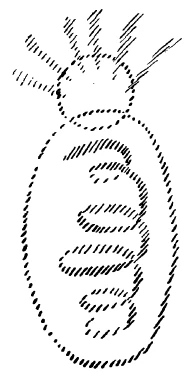
[ 30 ] Die andere Bedingung ist die folgende. Wenn wir die ganze Erziehung, wenn wir alles Unterrichtsgemäße so imstande sind zu veranlagen, daß der Mensch gewahr wird: in seinem Haupte ist er ein Abbild des Weltenalls, mit seinem übrigen Organismus entzieht er sich diesem Weltenall; er hat mit seinem übrigen Organismus dasjenige, was wie ein Seelenregen herabträufelt, das ganze Weltenall zu verarbeiten, so daß es selbständig wird hier auf der Erde im Menschen —, dann wird dieses ein besonderes inneres Erlebnis sein. Denken Sie sich diesen zwiefachen Menschen, den ich jetzt in dieser kuriosen Form zeichnen will. Wenn er wissen wird: Da kommt aus dem ganzen Weltenall in sein Haupt unbewußt dasjenige, was die Geheimnisse aller Sterne sind; dies aber, indem es die Kräfte seines Hauptes anregt, hat er sein ganzes Leben hindurch zu verarbeiten mit seinem übrigen Organismus, damit er es hier auf Erden konserviere, es durch den Tod trage und in die geistige Welt wieder zurücktrage — wenn dies eine lebendige Empfindung wird, dann wird sich der Mensch wissen als eine Zwienatur, er wird sich wissen als Kopf- und Herzensmensch. Denn verbunden ist das, was ich jetzt sage, damit, daß der Mensch lernen wird, sich selber zu enträtseln, sich zu sagen: Indem ich Herzensmensch werde immer mehr und mehr, indem ich jung bleibe, sehe ich, wenn ich altere, durch das, was mein Herz mir gibt, dasjenige an, was ich als Kind in der Jugend gelernt habe durch den Kopf. Das Herz blickt zum Kopfe auf, und das Herz wird im Kopfe sehen ein Abbild des ganzen Sternenhimmels. Der Kopf aber wird zum Herzen blicken, und wird im Herzen die Geheimnisse des Menschenrätsels finden, wird lernen, das eigentliche Wesen des Menschen im Herzen zu ergründen.
[ 30 ] The other condition is as follows. If we are able to structure the entire educational process—if we are able to organize all instruction in such a way that the human being becomes aware that, in his head, he is an image of the universe, while with the rest of his organism he withdraws from this universe; and with the rest of his organism, he is able to process that which drips down like a shower of the soul—the entire universe—so that it becomes autonomous here on Earth within the human being—then this will be a special inner experience. Imagine this twofold human being, whom I now wish to sketch in this curious form. When he comes to know: Here, from the entire universe, enters his head unconsciously that which constitutes the mysteries of all the stars; but that, by stimulating the powers of his head, he must process this throughout his entire life with the rest of his organism, so that he may preserve it here on Earth, carry it through death, and carry it back into the spiritual world—if this becomes a living sensation, then the human being will know himself as a dual nature; he will know himself as a being of head and heart. For what I am saying now is connected to the fact that human beings will learn to unravel themselves, to say to themselves: As I become more and more a person of the heart, as I remain young, I see—as I grow older—through what my heart gives me, that which I learned as a child and in my youth through the head. The heart looks up to the head, and the heart will see in the head a reflection of the entire starry sky. The head, however, will look toward the heart, and will find in the heart the mysteries of the human enigma; it will learn to fathom the true essence of the human being in the heart.
[ 31 ] Der Mensch wird sich so erzogen fühlen, daß er sich sagen wird: Gewiß, ich kann mit meinem Kopfe mancherlei lernen. Aber indem ich lebe, indem ich dem Tode entgegenlebe, der mich in die geistige Welt hineintragen soll, wird dasjenige, was ich mit dem Kopfe erlerne, dereinst von der aus dem übrigen Organismus aufsteigenden Liebe befruchtet, wird etwas ganz anderes. Es gibt etwas in mir als Menschen, das es nur in mir als Menschen gibt; ich habe etwas zu erwarten. — In diesen Worten liegt viel, und viel bedeutet es, wenn der Mensch so erzogen wird, daß er sagt: Ich habe etwas zu erwarten. Ich werde dreißig, vierzig, fünfzig, sechzig Jahre alt werden, und indem ich von Jahrzehnt zu Jahrzehnt älter werde, kommt durch das Älterwerden etwas vom Geheimnis des Menschen mir entgegen. Ich habe etwas zu erwarten von dem, daß ich lebe.
[ 31 ] Human beings will feel so conditioned that they will say to themselves: Certainly, I can learn many things with my mind. But as I live, as I live toward death, which is to carry me into the spiritual world, what I learn with my mind will one day be fertilized by the love rising from the rest of my organism and will become something entirely different. There is something within me as a human being that exists only within me as a human being; I have something to look forward to. — There is much in these words, and it means a great deal when a person is brought up to say: I have something to look forward to. I will live to be thirty, forty, fifty, sixty years old, and as I grow older from decade to decade, something of the mystery of the human being comes to meet me through the process of aging. I have something to look forward to in the very fact that I am alive.
[ 32 ] Denken Sie sich, wenn das nicht bloße Theorie ist, wenn das TLebensweisheit ist, soziale Lebensweisheit, dann wird das Kind so erzogen, daß es weiß: Ich kann etwas lernen; aber derjenige, der mich erzieht, der hat etwas in sich, was ich nicht lernen kann, wozu ich erst so alt werden muß wie er, damit ich es in mir selber finden kann. Wenn er es mir erzählt, dann gibt er mir etwas, was ein heiliges Geheimnis für mich sein muß, weil ich es aus seinem Munde hören, in mir aber nicht finden kann. — Denken Sie sich, was daraus wiederum für ein Verhältnis zwischen den Kindern und den Alten geschaffen wird, das in unserer Zeit vollständig verwischt ist, wenn der Mensch wissen wird: Die Lebensalter bieten etwas, was zu erwarten ist. In mir kann, wenn ich noch nicht vierzig Jahre alt bin, nicht jene Summe von Geheimnissen sitzen, welche sitzen können in demjenigen, der schon vierzig Jahre alt geworden ist. Und teilt er es mir mit, so bekomme ich es eben als Mitteilung, ich kann es nicht durch mich selber wissen. — Welches Band menschlicher Gemeinschaft wird dadurch geknüpft, daß in dieser Weise ein neuer Ernst, eine neue Tiefe in das Leben hineinkommt!
[ 32 ] Just imagine: if this isn’t mere theory, if it’s wisdom about life—social wisdom—then the child is raised to know that: I can learn something; but the one who raises me has something within them that I cannot learn—something for which I must first grow as old as they are so that I can find it within myself. When they tell me this, they give me something that must be a sacred mystery to me, because I hear it from their lips but cannot find it within myself. — Imagine what kind of relationship this in turn creates between children and the elderly—a relationship that has been completely erased in our time—when people come to realize: The different stages of life offer something to look forward to. If I am not yet forty years old, I cannot possess within myself that sum of mysteries that can be found in someone who has already reached the age of forty. And if he shares it with me, I receive it merely as information; I cannot know it through myself. — What a bond of human fellowship is forged when, in this way, a new seriousness, a new depth enters into life!
[ 33 ] Dieser Ernst, diese Tiefe ist es gerade, die unserem Leben fehlt, die unser Leben nicht hat, weil unser Leben nur Kopfwissen vorläufig achtet. Dadurch aber wird das wirkliche Soziale sterben, der Auflösung entgegengehen; denn hier auf der Erde wandeln Menschen dann herum, die gar nicht wissen, was sie sind, die eigentlich nur dasjenige ernst nehmen, was bis zum siebenundzwanzigsten Jahre ist, und das übrige Leben dazu benützen, um den Kadaver in sich zu tragen für den Rest, aber nicht umzuwandeln den ganzen Menschen in etwas, was die Jugend noch durch den Tod tragen kann.
[ 33 ] It is precisely this seriousness, this depth, that our lives lack—that our lives do not possess—because our lives currently value only intellectual knowledge. As a result, however, true social life will die and head toward dissolution; for then people will walk around here on earth who do not know at all what they are, who actually take seriously only what lasts until the age of twenty-seven, and use the rest of their lives to carry the corpse within themselves for the remainder, but not to transform the whole human being into something that youth can still carry through death.
[ 34 ] Weil man dies nicht versteht, weil ein Zeitalter gekommen ist, das dies nicht verstehen konnte, deshalb blieben alle die Dinge, die sich auf Geistiges bezogen, so unbefriedigende Dinge, wie ich es gestern sagen mußte von Friedrich Schlegel. Er war ein genialer Kopf, er hat vieles verstanden, aber er wußte nicht, daß eine neue Geistoffenbarung notwendig ist. Er glaubte einfach, das alte Christentum nehmen zu können. Mit Worten, mit wörtlichem Schallklang konnte er sogar in vieler Beziehung das Richtige aussprechen. Denken Sie nur einmal, eine Stelle aus dem letzten Vortrage von Friedrich Schlegel vom Jahre 1828 will ich Ihnen doch mitteilen. Er versuchte zu beweisen, so sagt er, «daß in dem Gange derselben» — nämlich der Weltgeschichte — «eine göttlich führende Hand und Fügung zu erkennen ist, daß nicht bloß irdisch sichtbare Kräfte in dieser Entwickelung und in dem sie hemmenden Gegensatze mitwirkend sind, sondern daß der Kampf zum Teil auch unter dem göttlichen Beistande gegen unsichtbare Mächte gerichtet ist; davon hoffe ich die Überzeugung, wenn auch nicht mathematisch erwiesen, was hier gar nicht angemessen, noch anwendbar wäre, doch bleibend erweckt und lebendig begründet zu haben».
[ 34 ] Because people do not understand this—because an age has come that was unable to understand it—that is why all matters relating to the spiritual remained so unsatisfactory, as I had to say yesterday regarding Friedrich Schlegel. He was a brilliant mind; he understood many things, but he did not realize that a new spiritual revelation was necessary. He simply believed he could take the old Christianity as it was. Through words, through their literal sound, he was even able to express the truth in many respects. Just consider this: I would like to share with you a passage from Friedrich Schlegel’s last lecture in 1828. He attempted to prove, as he put it, “that in the course of the same” — namely, world history — “a divinely guiding hand and providence can be recognized, that not only earthly, visible forces are at work in this development and in the opposing forces that hinder it, but that the struggle is also, in part, directed against invisible powers with divine assistance; and I hope to have aroused this conviction—even if not mathematically proven, which would be neither appropriate nor applicable here—and to have grounded it in a lasting and living way.”
[ 35 ] Daß der Mensch also, indem er die Geschichte durchlebt, sich hereinzuleben hat in die Geschichte göttlicher Kräfte und mit diesen göttlichen Kräften zusammen gegen widerstrebende geistige Mächte—er sagt ausdrücklich: widerstrebende geistige Mächte — kämpft, davon hatte er eine Ahnung, aber es fehlte jedes lebendige Bewußtsein. Denn die wirkliche Wissenschaft vom Geiste, die flieht man ja in gewisser Beziehung. Seit dem 3. Jahrhundert unserer Zeitrechnung, als im Abendlande entstanden ist das Vorurteil, wie man es nannte, gegen die Einrede der falschen Gnosis — so nannte man es: die Einrede der falschen Gnosis —, da kam man allmählich dazu, abzulehnen alles dasjenige, was der Mensch wissen kann über die geistigen Welten. Und so ist es denn gekommen, daß auch die religiösen Impulse den Materialismus zubereitet haben, daß diese religiösen Impulse nicht verhindern konnten, daß wir eigentlich heute nichts haben, was wir der Jugend wirklich geben können. Unsere Wissenschaft dient nicht der Jugend, denn man kann sich im späteren Alter nur an sie erinnern, sie kann nicht Herzensweisheit werden.
[ 35 ] He had a vague sense that, in living through history, human beings must immerse themselves in the history of divine forces and, together with these divine forces, fight against opposing spiritual powers—he explicitly says: opposing spiritual powers—but he lacked any living awareness of this. For the true science of the spirit—one tends to shy away from it in a certain sense. Ever since the third century A.D., when the so-called “prejudice” arose in the West as a response to the “objection of false Gnosticism”—that is how it was called—people gradually came to reject everything that human beings can know about the spiritual worlds. And so it has come to pass that even religious impulses have paved the way for materialism, that these religious impulses could not prevent the fact that today we actually have nothing that we can truly give to the youth. Our science does not serve the youth, for one can only recall it in later life; it cannot become wisdom of the heart.
[ 36 ] Selbst auf religiösem Gebiete ist es so. Schließlich ist ja die Menschheit nur, ich möchte sagen, zu zwei Extremen gekommen. Den übersinnlichen Christus zu fassen hat ja die Menschheit ziemlich verlernt. Sie will nichts wissen von jener kosmischen Macht, von der die Geisteswissenschaft wieder sprechen muß als der Macht des Christus Jesus. Auf der einen Seite ist ja eine ganz liebliche, wirklich liebliche Vorstellung all dasjenige, was sich im Laufe des Mittelalters und der neueren Zeit durch Dichter, durch Musiker entwickelt hat, eine liebliche poetische Vorstellung, was sich in Anlehnung an das Jesuskind entwickelt hat; aber, religiös ausfüllen kann es doch nicht den Menschen sein ganzes Leben hindurch, was sich an Vorstellungen anknüpft an das liebe Jesulein! Es ist ja schon charakteristisch, daß eine geradezu paradoxe Liebe in unzähligen Liedern und dergleichen für das liebe Jesulein sich ausdrückt. Dagegen ist gar nichts einzuwenden, aber es kann nicht das einzige bleiben.
[ 36 ] This is true even in the religious sphere. After all, humanity has, I would say, arrived at only two extremes. Humanity has largely forgotten how to grasp the supersensible Christ. It wants nothing to do with that cosmic power of which spiritual science must once again speak as the power of Christ Jesus. On the one hand, there is a very lovely—truly lovely—conception of all that has developed over the course of the Middle Ages and modern times through poets and musicians: a lovely, poetic conception that has evolved in connection with the infant Jesus; but the ideas associated with the dear little Jesus cannot, after all, provide a person with religious fulfillment throughout their entire life! It is, after all, characteristic that a downright paradoxical love for the dear little Jesus is expressed in countless songs and the like. There is nothing wrong with that, but it cannot remain the only thing.
[ 37 ] Das ist das eine, wo sich der Mensch, weil er sich zu dem Großen nicht erheben kann, an das Kleinste gemacht hat, um wenigstens etwas zu haben. Aber ausfüllen kann es das Leben nicht. Und auf der andern Seite der «bon dieu citoyen», wie wir ihn zu Weihnachten mit den Worten Heinrich Heines kennengelernt haben, der gute Bürgergott Jesus, der aller Göttlichkeit entkleidet ist, der Gott der liberalen Pastoren und liberalen Priester. Glauben Sie, daß er nun wirklich das Leben ergreifen kann? Glauben Sie insbesondere, daß er die Jugend gefangennehmen kann? Er ist vom Anfange an ein totes Theologieprodukt, nicht einmal ein Theologieprodukt, sondern ein Theologiegeschichteprodukt. Aber die Menschheit ist auch auf diesem Gebiete weit davon entfernt, die Blicke hinzurichten auf dasjenige, was geistige Macht in der Geschichte ist.
[ 37 ] That is the one in which man, unable to rise to greatness, has turned to the smallest things in order to have at least something. But it cannot fill a life. And on the other hand, there is the “bon dieu citoyen,” as we came to know him at Christmas through the words of Heinrich Heine—the good civic god Jesus, stripped of all divinity, the god of liberal pastors and liberal priests. Do you believe that he can truly grasp life? Do you believe, in particular, that he can capture the hearts of the youth? From the very beginning, he has been a dead product of theology—not even a product of theology, but a product of the history of theology. But humanity is also far from directing its gaze, in this realm as well, toward that which constitutes spiritual power in history.
[ 38 ] Warum ist das so? Weil eben eine Zeitlang die Menschheit das schon durchmachen mußte, rein materiell in die Welt zu blicken. Es ist auch die Zeit herangekommen, wo die Umwandlung gerade des zur Spiritualität tauglichen Naturwissens der Gegenwart in Herzenswissen sich vollziehen muß. Unsere Naturwissenschaft ist entweder spottschlecht, wenn sie so bleibt, wie sie ist, oder sie ist etwas ganz außerordentlich Großartiges, wenn sie sich umwandelt in Herzensweisheit. Denn dann wird sie Geisteswissenschaft. Die alte, ältere Wissenschaft, die in mancherlei Traditionen befangen ist, hatte schon die Kopfwissenschaft in Herzenswissenschaft umgewandelt. Die neuere Zeit hat keine Begabung gehabt, das, was sie als Wissenschaft neu gewonnen hat bis jetzt, in Herzenswissenschaft umzuwandeln. Und so ist es denn gekommen, daß insbesondere auf sozialem Gebiete die Kopfwissenschaft die einzige wirkliche Arbeit geleistet hat und daher das einseitigste Produkt zustande gebracht hat, das es geben kann.
[ 38 ] Why is that? Because for a time, humanity simply had to go through the experience of viewing the world from a purely material perspective. The time has also come when the transformation of contemporary natural science—which is capable of spiritual development—into wisdom of the heart must take place. Our natural science is either utterly worthless if it remains as it is, or it is something truly extraordinary if it transforms into wisdom of the heart. For then it becomes spiritual science. The older science, which is bound by various traditions, had already transformed intellectual science into wisdom of the heart. More recent times have lacked the ability to transform what it has newly gained as science up to now into wisdom of the heart. And so it has come to pass that, particularly in the social sphere, intellectual science has done the only real work and has therefore produced the most one-sided result imaginable.
[ 39 ] Der Kopf des Menschen kann vom Menschenwesen überhaupt nichts wissen. Wenn der Kopf des Menschen daher über das Menschenwesen, wie es sich im sozialen Zusammenhange auslebt, nachdenkt, so muß der Kopf etwas ganz Fremdes in dem sozialen Zusammenleben zustande bringen, und das ist der moderne Sozialismus, wie er sich als sozialdemokratische Theorie ausdrückt. Es gibt nichts, was so rein Kopfwissen ist, wie die marxistische Sozialdemokratie, nur weil die übrige Menschheit versäumt hat, sich überhaupt mit Weltproblemen zu beschäftigen, und man in diesen Kreisen sich allein mit sozialen Theorien beschäftigt hat. Die übrigen haben nur — na, ich will höflich sein — die Professorengedanken sich vorsagen lassen, die nur traditionell sind. Aber die Kopfweisheit, das ist Sozialtheorie geworden. Das heißt, mit einem Instrumente hat man versucht, eine soziale Theorie zu begründen, das gerade am allerwenigsten geeignet ist, über die Menschenwesenheit etwas zu wissen. Das ist ein Fundamentalirrtum der gegenwärtigen Menschheit, der nur ganz aufgedeckt werden kann, wenn man wissen wird, wie es mit dem Kopf- und Herzenswissen ist. Niemals wird der Kopf widerlegen können den Sozialismus, marxistischen Sozialismus, weil der Kopf hinausdenken muß in unserem Zeitalter. Widerlegen können wird ihn nur die Geisteswissenschaft, weil die Geisteswissenschaft durch das Herz umgewandelte Kopfweisheit ist.
[ 39 ] The human mind can know absolutely nothing about human existence. Therefore, when the human mind reflects on human existence as it manifests itself in a social context, it must produce something entirely foreign to social life, and that is modern socialism, as expressed in the form of social democratic theory. There is nothing that is as purely intellectual as Marxist social democracy, simply because the rest of humanity has failed to engage with global problems at all, and those in these circles have concerned themselves solely with social theories. The rest have merely—well, I’ll put it politely—had the professors’ ideas recited to them, ideas that are merely traditional. But intellectual wisdom has become social theory. That is to say, an attempt has been made to establish a social theory using a tool that is, of all things, the least suited to understanding human existence. This is a fundamental error of contemporary humanity, one that can only be fully uncovered when we come to understand the nature of knowledge derived from the head and the heart. The intellect will never be able to refute socialism—Marxist socialism—because in our age, the intellect must think beyond itself. Only spiritual science can refute it, because spiritual science is intellectual wisdom transformed through the heart.
[ 40 ] Das ist außerordentlich wichtig, daß man diese Dinge ins Auge faßt. Sie sehen, warum untaugliche Mittel vorhanden waren selbst bei einem solchen Menschen wie Schlegel, weil er Altes nehmen wollte, trotzdem er einsah: der Mensch muß wiederum sich einen Blick aneignen für das Unsichtbare, das unter uns herumgeht. Aber unsere Zeit ist eine Aufforderung, den Blick hinzurichten auf dieses Unsichtbare. Unsichtbare Mächte waren immer da, so wie Schlegel das ahnt; unsichtbare Mächte haben mitgearbeitet und mitgewirkt an dem, was in der Menschheit sich vollzieht. Die Menschheit aber muß sich entwickeln. Das ging bis zu einem gewissen Grade, daß in den letzten Jahrhunderten die Menschen keine Rücksicht genommen haben auf die übersinnlichen, unsichtbaren Kräfte zum Beispiel im sozialen Leben. In Zukunft wird das nicht gehen. In der Zukunft wird das gegenüber den realen Verhältnissen nicht gehen. Viele Beispiele könnte ich dafür anführen; eines will ich anführen.
[ 40 ] It is extremely important to take these things into account. You see why inadequate means were available even to a man like Schlegel, because he wanted to draw on the old, even though he realized that human beings must once again develop an eye for the invisible that is at work among us. But our time calls on us to direct our gaze toward this invisible realm. Invisible forces have always been there, just as Schlegel sensed; invisible forces have worked alongside and contributed to what is unfolding within humanity. Humanity, however, must evolve. This has gone so far that, in recent centuries, people have paid no heed to the supersensible, invisible forces—for example, in social life. In the future, this will no longer be possible. In the future, this will not be sustainable in light of real circumstances. I could cite many examples of this; I will cite just one.
[ 41 ] Ich habe von andern Gesichtspunkten aus im Laufe der letzten anderthalb Jahrzehnte darüber gesprochen. Wer das soziale Verhältnis in Europa betrachtet, wie es sich herausgebildet hat seit dem 8., 9. Jahrhundert, der weiß, daß verschiedenes in die Struktur des europäischen Lebens hineingearbeitet hat, in dieses komplizierte europäische I,eben, das im Westen sich behalten hat das athanasianische Christentum, das zurückgeschoben hat, wie ich das vor Wochen hier gesagt habe, nach dem Osten ein älteres Christentum, das urverwandt ist mit asiatischen Traditionen: das russische Christentum, das orthodoxe Christentum; das im Westen ausgebildet hat — indem es allmählich einen Gliedkörper geschaffen hat aus dem konservierten Romanentum mit dem neu auflebenden Germanentum und Slawentum in Europa — die verschiedenen europäischen Glieder dieses europäischen sozialen Ganzen, einen komplizierten Organismus. Man konnte sich bis jetzt in ihm bewegen, indem man dasjenige, was unsichtbar in ihm lebte, unberücksichtigt ließ; denn die Konfiguration Europas, sie hat viel Kraft in ihrer Struktur. Aber eine wichtige, wesentliche Kraft in dieser Struktur ist unter anderem das Verhältnis, in dem Frankreich zum übrigen Europa gestanden hat. Ich meine jetzt nicht bloß das politische Verhältnis, ich meine das ganze Verhältnis von Frankreich zum übrigen Europa und verstehe darunter alles dasjenige, was irgendein Europäer irgendeinem, der sich zum französischen Wesen rechnet, gegenüber fühlen konnte im Laufe der Jahrhunderte, seit dem 8., 9. Jahrhundert. Es besteht das Eigentümliche, daß, soweit das Verhältnis des übrigen Europa zu Frankreich in Betracht kommt, das Verhältnis des übrigen Europa zu Frankreich in Sympathie- und Antipathiegefühlen sich ausdrückt. Wir haben es zu tun mit Sympathie und Antipathie. Aber so ist es mit einem reinen Phänomen des physischen Planes. Man kann verstehen, was in Europa hereingespielt hat zwischen Frankreich und dem übrigen Europa in bezug auf Menschenverhältnisse, wenn man studiert, was Herzen, was Menschenseelen ausleben auf dem physischen Plan. Was jedenfalls außerhalb Frankreichs sich für Frankreich entwickelt hat, ist zu verstehen nach Verhältnissen des physischen Planes. Daher hat es nichts geschadet — andere Verhältnisse in Europa waren in den letzten Jahrhunderten ähnlich —, wenn man versäumt hat zu sehen, was an übersinnlichen Mächten in die Dinge hineingespielt hat, weil die Sympathien und Antipathien nach den Verhältnissen des physischen Planes eingestellt waren.
[ 41 ] I have spoken about this from other perspectives over the course of the last decade and a half. Anyone who considers social relations in Europe as they have developed since the 8th, 9th centuries, knows that various factors have shaped the structure of European life—this complex European reality, which in the West has preserved Athanasian Christianity, which, as I said here weeks ago, has pushed back toward the East an older form of Christianity that is intrinsically linked to Asian traditions: Russian Christianity, Orthodox Christianity; which has taken shape in the West—by gradually creating a composite body out of the preserved Roman heritage combined with the newly revived Germanic and Slavic traditions in Europe—the various European components of this European social whole, a complex organism. Until now, it was possible to navigate within it by disregarding what lived invisibly within it; for the configuration of Europe possesses great strength in its structure. But one important, essential force within this structure is, among other things, the relationship that France has maintained with the rest of Europe. I am not referring merely to the political relationship; I mean the entire relationship between France and the rest of Europe, and by this I mean everything that any European might have felt toward anyone who identified with the French spirit over the course of the centuries, beginning in the 8th and 9th centuries. What is peculiar is that, as far as the relationship of the rest of Europe to France is concerned, this relationship is expressed in feelings of sympathy and antipathy. We are dealing with sympathy and antipathy. But this is a phenomenon purely of the physical plane. One can understand what has been at play in Europe between France and the rest of Europe in terms of human relationships by studying what hearts and human souls experience on the physical plane. In any case, what has developed for France outside of France itself can be understood in terms of conditions on the physical plane. Therefore, it did no harm—other circumstances in Europe were similar in recent centuries—if one failed to see what supersensible forces were at work in these events, because the sympathies and antipathies were determined by the conditions of the physical plane.
[ 42 ] Vieles von dem, was durch Jahrhunderte so gespielt hat, wird anders werden. Wir stehen vor mächtigen Umwälzungen, auch in bezug auf die innersten Verhältnisse, die über die europäische soziale Struktur hingehen. Man darf nicht glauben, daß es leichten Herzens hingesprochen war, wenn ich jetzt wiederholt darauf aufmerksam gemacht habe, daß die Dinge wichtiger zu nehmen sind, als man heute geneigt ist, es zu tun. Wir stehen vor mächtigen Umwälzungen, und notwendig wird es sein, daß in der Zukunft die Menschen ihr Auge, ihr Seelenauge richten auf geistige Verhältnisse; denn man wird nach bloßen Verhältnissen des physischen Planes nicht mehr verstehen können, was sich abspielt. Man wird es nur verstehen können, wenn man geistige Verhältnisse wird in Betracht ziehen können. Was sich im März abgespielt hat — der Sturz des Zarentums —, das hat einen metaphysischen Charakter. Man kann es nur verstehen, wenn man den metaphysischen Charakter ins Auge faßt.
[ 42 ] Much of what has been the norm for centuries will change. We are facing powerful upheavals, including in the most fundamental aspects that underlie the European social structure. One must not think that I spoke lightly when I have repeatedly drawn attention to the fact that these matters must be taken more seriously than people are inclined to do today. We are facing powerful upheavals, and it will be necessary in the future for people to turn their gaze—the eye of their soul—toward spiritual conditions; for it will no longer be possible to understand what is taking place based solely on conditions of the physical plane. One will be able to understand it only if one is able to take spiritual conditions into account. What took place in March—the fall of the tsarist regime—has a metaphysical character. One can understand it only by focusing on its metaphysical character.
[ 43 ] Wir sind unter uns, solche Dinge können unbefangen besprochen werden. Warum gab es denn überhaupt ein Zarentum? Die Frage kann in einem höheren Sinne aufgefaßt werden als im äußeren trivial-historischen Sinne. Warum gab es denn überhaupt ein Zarentum? Wenn man absieht von einzelnen pazifistischen Querköpfen, die in den Firlefanzereien des zaristischen Friedensmanifestes etwas Ernsthaftes gesehen haben, dann muß man sagen: Selbst diejenigen, welche aus allerlei Gründen mit dem russischen Reiche sich [gut] gestellt haben —, das Zarentum haben sie nicht geliebt! Und diejenigen, die es geliebt haben, bei denen war die Liebe sicherlich nicht sehr echt. Warum gab es denn überhaupt ein Zarentum? Es gab ein Zarentum — ich will es jetzt paradox ausdrücken, etwas extrem —, damit Europa etwas zu hassen hatte. Diese Kräfte des Hasses waren notwendig aufzubringen. Es gab ein Zarentum, und das Zarentum benahm sich so, wie es sich benahm, damit Europa etwas zu hassen hatte. Diesen Haß brauchte Europa als den Vorspann zu etwas anderem. Der Zar mußte dasein, um zunächst den Punkt abzugeben, auf den sich der Haß konzentrierte; denn eine Welle des Hasses bereitete sich vor, die nach diesen Tagen auch schon äußerlich beurteilt werden kann. Dasjenige, was sich jetzt abspielt, wird sich in mächtige Hassesgefühle umwandeln, die nicht mehr zu verstehen sein werden, wie die Sympathie und Antipathie von früher, wie ich auseinandergesetzt habe, nach dem physischen Plane zu verstehen sind. Denn es werden nicht bloß Menschen hassen. Mittel- und Osteuropa wird gehaßt werden, nicht von Menschen, sondern von gewissen Dämonen, die in Menschen wohnen werden. Die Zeit, wo Osteuropa vielleicht noch mehr gehaßt wird als Mitteleuropa, die wird schon kommen.
[ 43 ] We’re among ourselves here, so we can discuss such matters freely. Why did the tsarist regime exist in the first place? This question can be understood in a higher sense than in the superficial, trivial-historical sense. Why was there a tsarist regime at all? If one disregards a few pacifist mavericks who saw something serious in the frills of the tsarist peace manifesto, then one must say: Even those who, for all sorts of reasons, were on [good] terms with the Russian Empire—they did not love the tsarist regime! And as for those who did love it, their love was certainly not very genuine. Why did the tsarist regime exist at all? It existed—and I’ll put this paradoxically, somewhat extremely—so that Europe would have something to hate. These forces of hatred had to be mobilized. There was a tsarist regime, and the tsarist regime behaved as it did so that Europe would have something to hate. Europe needed this hatred as a prelude to something else. The tsar had to exist, first and foremost, to serve as the focal point on which the hatred was concentrated; for a wave of hatred was gathering momentum, one that can already be assessed from the outside in the days following these events. What is now unfolding will transform into powerful feelings of hatred that will no longer be comprehensible in the same way that the sympathy and antipathy of the past—as I have explained—can be understood on the physical plane. For it will not merely be people who hate. Central and Eastern Europe will be hated—not by people, but by certain demons that will dwell within people. The time when Eastern Europe will perhaps be hated even more than Central Europe is already coming.
[ 44 ] Diese Dinge müssen verstanden werden, diese Dinge dürfen nicht leicht genommen werden. Sie können nur verstanden werden, wenn die Menschen sich dazu aufschwingen, Zusammenhang zu suchen mit der geistigen Welt. Denn das muß doch kommen, was solche Geister wie Friedrich Schlegel schon ein wenig geahnt haben, aber wofür sie die Grundlagen und die Wurzeln eben nicht gesehen haben. Das muß kommen, daß die Dinge unbefangen ins Seelenauge gefaßt werden, damit der Mensch zurückschauen kann auf die letzten Jahrhunderte, auf das, was sie gebracht haben — und dann wird er mitarbeiten können an dem, was begründet werden muß.
[ 44 ] These things must be understood; they must not be taken lightly. They can only be understood if people rise to the task of seeking a connection with the spiritual world. For what must surely come is what spirits such as Friedrich Schlegel had already sensed to some extent, but for which they simply did not see the foundations and roots. It must come to pass that these things are perceived impartially by the eye of the soul, so that human beings can look back on the past centuries and on what they have brought about—and then they will be able to contribute to what must be established.
[ 45 ] Unter den schönen Sätzen, die sich zuweilen in den Schlegelschen Vorlesungen finden, ist auch der, daß es in der Entwickelung der Menschheit ankommt auf das Innere der Seele und auf die Wahrhaftigkeit im Innern der Seele, und daß schädlich ist vor allem jede politische Abgötterei. Das ist ein schöner Satz von Friedrich Schlegel. Diese politische Abgötterei, wie hat sie unsere Zeit erfaßt! Wie beherrscht sie unsere Zeit! Und die politische Abgötterei hat sich selber ein schönes Symptom geschaffen, an dem man erkennen konnte, was da ist.
[ 45 ] Among the beautiful sentences that are sometimes found in Schlegel’s lectures is the one stating that the development of humanity depends on the inner life of the soul and on the truthfulness within the soul, and that, above all, any form of political idolatry is harmful. That is a beautiful statement by Friedrich Schlegel. This political idolatry—how it has taken hold of our time! How it dominates our time! And political idolatry has created for itself a beautiful symptom by which one can recognize what is happening.
[ 46 ] Aber man muß Zusammenhänge durchschauen. Man muß es empfinden, was in unserer Zeit lebt. Wir haben nicht die Möglichkeit — wir verstehen es, sobald wir hinblicken auf das wahre Wesen des Kopf- und Herzensmenschen —, wir haben heute nicht die Möglichkeit, wenn wir das Wissen nicht herzlich vertiefen, den Kindern dasjenige zu geben, was sie brauchen, um das Leben lebensfähig jung hindurchzuerhalten. Wir haben diese Möglichkeit noch nicht. Das muß begründet werden, das muß kommen. Wir können sagen, wenn wir die Dinge in ein paar Worte zusammenfassen wollen: ganz und gar nicht kann die Schulmeisterei ihre Aufgabe heute erfüllen. Was Schulmeisterei ist, das ist weltenfremd dem wahren Wesen des Menschen. Die Welt aber droht beherrscht zu werden von einem politisch abgöttisch verehrten Schulmeister. Die Schulmeisterei, das Ungeeignetste zur Menschenlenkung in dem heutigen Zeitabschnitte, soll große Politik werden.
[ 46 ] But one must see through the connections. One must sense what is alive in our time. We do not have the ability—as we understand when we look at the true nature of the head-and-heart human being— we do not have the ability today—unless we deeply internalize this knowledge—to give children what they need to sustain a vibrant, youthful approach to life. We do not yet have this ability. It must be established; it must come to pass. To summarize in a few words: schoolmasterliness is utterly incapable of fulfilling its task today. What “schoolmasterliness” is, is utterly alien to the true nature of the human being. Yet the world is in danger of being dominated by a schoolmaster who is idolized politically. Schoolmasterliness—the most unsuitable means of guiding humanity in the present era—is set to become high politics.
[ 47 ] Diese Dinge sollten wenigstens einige Menschen einsehen, denn das sind Dinge, die tief zusammenhängen mit den tiefen Erkenntnissen, die man sich allein erwerben kann, wenn man ein wenig hineinzudringen versucht in die Geheimnisse der Menschheit. Mit Trieben und Instinkten, mit Chauvinismen und Nationalismen läßt sich heute die Welt weder begreifen noch irgendwie regieren — allein mit dem guten Willen, der eindringen will in die wahre Wirklichkeit. Davon wollen wir dann morgen weitersprechen.
[ 47 ] At least some people should realize these things, for they are deeply connected to the profound insights that one can acquire only by attempting to delve a little into the mysteries of humanity. Today, the world can be neither understood nor governed in any way through drives and instincts, chauvinism, and nationalism—but only through good will that seeks to penetrate true reality. We will continue this discussion tomorrow.