The Bridge Between the Spiritual and
Physical Realms of Human Beings
GA 202
18 December 1920, Dornach
Translate the original German text into any language:
Versions Available:
The Bridge Between the Spiritual and Physical Realms of Human Beings, tr. SOL
Elfter Vortrag
Eleventh Lecture
[ 1 ] Ich habe gestern versucht, einiges vorzubringen über die gesamte Konstitution des Menschen, so daß es möglich war, am Schlusse darauf aufmerksam zu machen. wie durch eine sachgemäße Totalbetrachtung der menschlichen Natur eine Brücke gebaut werden kann zwischen dem, was wir im Menschen als äußere Organisation finden, und demjenigen, was wir durch das Selbstbewußtsein in unserem Inneren entwickeln. Diese Brücke wird ja gewöhnlich nicht oder nur in sehr mangelhafter Weise, insbesondere mangelhaft von der gegenwärtigen äußeren Wissenschaft, geschaffen. Und wir haben gesehen, daß, um diese Brücke zu bauen, man sich klar sein muß, wie man die menschliche Organisation zu betrachten hat. Wir sahen, daß wir alles, was eigentlich einzig und allein heute betrachtet wird, wenigstens was von der äußeren Wissenschaft ernsthaft betrachtet wird als organisiert, das Feste oder Fest-flüssige, nur als den einen Organismus betrachten dürfen; daß wir aber ebenso eine flüssige Organisation, eine luftförmige Organisation und eine Wärmeorganisation anerkennen müssen. Wir erlangen dadurch die Möglichkeit, auch einzusehen, wie in diese feinere Organisation eingreifen diejenigen Glieder der menschlichen Wesenheit, die wir eben gewöhnt sind, als solche zu betrachten. Natürlich ist alles bis zur Wärme hinauf physischer Leib. Aber in den Flüssigkeitsleib, in all das, was im Organismus als Flüssigkeit organisiert ist, greift der Ätherleib vorzugsweise ein; in all das, was als Luft organisiert ist, greift der astralische Leib ein, und in all das, was als Wärme organisiert ist, greift das Ich vorzugsweise ein. Dadurch gelangen wir dazu, gewissermaßen im Physischen stehenzubleiben, aber innerhalb dieses Physischen bis herauf ins Geistige zu kommen.
[ 1 ] Yesterday I tried to say a few things about the overall constitution of the human being, so that it would be possible to draw attention to this point at the end. How, through a proper, comprehensive view of human nature, a bridge can be built between what we find in human beings as external organization and what we develop within ourselves through self-consciousness. This bridge is usually not built at all, or only in a very inadequate way—particularly by contemporary external science. And we have seen that, in order to build this bridge, one must be clear about how to view the human organism. We saw that everything that is actually considered today—at least what is seriously regarded as organized by external science—namely, the solid or solid-liquid, must be regarded solely as a single organism; but that we must equally acknowledge a liquid organization, an air-like organization, and a thermal organization. This enables us to understand how those aspects of the human being that we are accustomed to regarding as such interact with this finer organization. Of course, everything up to and including warmth is the physical body. But the etheric body primarily interacts with the liquid body—with everything in the organism that is organized as liquid; the astral body primarily interacts with everything organized as air, and the ego primarily interacts with everything organized as warmth. In this way, we are able, so to speak, to remain within the physical realm while, within that physical realm, ascending into the spiritual.
[ 2 ] Auf der anderen Seite haben wir das Bewußtsein betrachtet. Gewöhnlich sieht man nur, sagte ich gestern, auf dasjenige Bewußtsein hin, das wir aus dem Zustande heraus kennen, den wir durchmachen vom Aufwachen bis zum Einschlafen. Da nehmen wir die Gegenstände um uns herum wahr, kombinieren sie mit unserem Verstande, fühlen auch wohl über sie, leben in unseren Willensimpulsen; aber wir erleben diesen ganzen Bewußtseinskomplex als etwas, was seinen Eigenschaften nach ganz verschieden ist von all dem Physischen, das die äußere physische Wissenschaft ganz allein betrachtet. Und es läßt sich nicht ohne weiteres eine Brücke schaffen zwischen diesen ganz unkörperlichen Erlebnissen, die man im Bewußtsein hat, und den anderen Anschauungen, den anderen Wahrnehmungsobjekten, die man durch physische Physiologie oder physische Anatomie betrachtet. Aber auch in bezug auf das Bewußtsein kennen wir ja schon im gewöhnlichen Leben außer dem gewöhnlichen Tagesbewußtsein das Traumbewußtsein, und wir haben gestern ausgeführt, wie die Träume im wesentlichen Bilder oder Sinnbilder sind von inneren organischen Vorgängen. Es geht immer in uns etwas vor, und bildhaft drückt sich das, was da vorgeht, aus in den Träumen. Wir träumen, sagte ich, von Schlangen, die sich winden, wenn wir irgendwelche Schmerzen in den Gedärmen haben; wir träumen von einem kochenden Ofen, wachen nachher mit Herzklopfen auf; der kochende Ofen hat uns das unregelmäßig gehende Herz symbolisiert, die Schlangen haben uns die Gedärme symbolisiert und so weiter. Es weist uns der Traum in unseren Organismus hinunter, und das Bewußtsein im Schlafe, es ist dumpf, es ist sozusagen für den Menschen eigentlich ein Null-Erlebnis. Aber ich habe gestern ausgeführt, wie man dieses Null-Erlebnis haben muß, um gerade sich verbunden zu fühlen mit seiner Körperlichkeit. Man würde sich nicht als Ich verbunden fühlen mit seiner Körperlichkeit, wenn man nicht den Körper verließe, ihn wiederum aufsuchte beim Aufwachen und auf diese Weise gerade aus dem Entbehren, das man erlebt zwischen dem Einschlafen und Aufwachen, sich als eins mit seinem Körper fühlte. Da werden wir von dem gewöhnlichen Bewußtsein, das ja nichts mit uns selber zu tun hat, als daß es uns die Wahrnehmung, die Vorstellung gibt, in das Traumbewußtsein geführt, welches mit dem zu tun hat, was nun schon im Leibe ist. Wir werden also zum Leibe hingeführt. Und wir werden noch mehr zum Leibe hingeführt, wenn wir in das traumlose Schlafbewußtsein eindringen. So also können wir sagen: Wir betrachten auf der einen Seite das Seelische so, daß es uns zum Leibe hinführt. Und wir betrachten das Leibliche so, daß es, indem es durch die Organisation des Flüssigen, die Organisation des Luftförmigen, die Organisation der Wärme auftritt, indem sich die Organisation also immer mehr verfeinert, uns zum Seelischen hinführt. — Diese Dinge muß man durchaus in Erwägung ziehen, wenn man zu einer wirklich den Menschen befriedigenden Weltanschauung kommen will.
[ 2 ] On the other hand, we have considered consciousness. As I said yesterday, people usually focus only on the consciousness we experience in the state that spans from waking up to falling asleep. In that state, we perceive the objects around us, process them with our intellect, form feelings about them, and act on our impulses of will; but we experience this entire complex of consciousness as something whose characteristics are entirely different from all the physical phenomena that external physical science considers on its own. And it is not easy to build a bridge between these entirely non-physical experiences that we have in consciousness and the other phenomena, the other objects of perception, that are studied through physical physiology or physical anatomy. But even with regard to consciousness, we are already familiar in ordinary life—besides ordinary waking consciousness—with dream consciousness, and we explained yesterday how dreams are essentially images or symbols of inner organic processes. Something is always going on within us, and what is happening there is expressed figuratively in dreams. We dream, as I said, of snakes writhing when we have some kind of pain in our intestines; we dream of a boiling stove and wake up afterward with a pounding heart; the boiling stove symbolized our irregular heartbeat, the snakes symbolized our intestines, and so on. The dream directs our attention down into our organism, and consciousness during sleep is dull; it is, so to speak, essentially a “zero experience” for the human being. But yesterday I explained how one must have this “zero experience” in order to feel connected to one’s physicality. One would not feel connected to one’s physicality as “I” if one did not leave the body, return to it upon waking, and in this way—precisely through the sense of absence experienced between falling asleep and waking—feel at one with one’s body. There, we are led by ordinary consciousness—which, after all, has nothing to do with ourselves other than providing us with perception and imagination—into dream consciousness, which has to do with what is already within the body. We are thus led toward the body. And we are led even more toward the body when we enter the dreamless state of sleep. So we can say: On the one hand, we regard the soul in such a way that it leads us toward the body. And we regard the physical in such a way that, as it manifests through the organization of the fluid, the organization of the airy, and the organization of warmth—that is, as the organization becomes ever more refined—it leads us toward the soul. — These things must certainly be taken into consideration if one wishes to arrive at a worldview that truly satisfies human beings.
[ 3 ] Die große Frage, die uns nun seit Wochen beschäftigt, sie ist ja, wie wir wiederholt versuchten zu erkennen, die Kardinalfrage der menschlichen Weltanschauung zunächst: Wie hängt das Moralische, die moralische Weltordnung zusammen mit der physischen Weltordnung? Wir haben es oft gesagt: Die gegenwärtige Weltanschauung, die sich für die äußere Sinneswelt auf die Naturwissenschaft stützt, die, wenn es um ein umfassendes Seelisches geht — denn die Psychologie enthält ein solches nicht mehr —, nur zu den älteren religiösen Bekenntnissen Zuflucht nehmen kann, diese Weltanschauung enthält keine Brücke. Da ist auf der einen Seite die physische Welt. Sie ist hervorgegangen nach dieser Weltanschauung aus einem Urnebel. Aus dem hat sich alles herausgeballt; zu einer Art Weltenschlacke wird das alles wieder zurückkehren. Das ist, was uns als äußeres Bild durch die gegenwärtige wissenschaftliche Richtung vorgehalten wird innerhalb dieses ganzen Werdens, das ja schließlich, wenn man ehrlich ist als Wissenschafter der heutigen Zeit, als das allein Reale erscheinen kann. Innerhalb dieses Bildes hat das Moralische, die moralische Weltordnung keinen Platz. Sie steht dann für sich da. Der Mensch empfängt in seiner Seele die moralischen Impulse als Seelenimpulse. Aber wenn das so ist, wie es die Naturwissenschaft sagt, dann ist eben aus dem Urnebel hervorgegangen alles das, was sich regt und lebt, und zuletzt der Mensch, und dem Menschen steigen auf die moralischen Ideale. Und wenn einmal die Welt zurückgekehrt sein soll zum Schlackenzustand, dann wird das der große Friedhof sein auch für alle moralischen Ideale. Sie werden verschwunden sein. Eine Brücke kann gar nicht geschaffen werden, und was noch schlimmer ist, es kann nicht einmal, wenn der Mensch nicht inkonsequent wird, die wirkliche Moralität der Weltenordnung von seiten der heutigen Wissenschaft zugegeben werden. Nur wenn diese Wissenschaft inkonsequent ist, läßt sie die moralische Weltenordnung gelten. Aber wenn sie konsequent ist, kann sie das eigentlich nicht. Das alles rührt davon her, daß man eben auf der einen Seite im Grunde genommen nur eine Art Anatomie des Festen hat, daß man nicht berücksichtigt, daß der Mensch auch in sich trägt eine Organisation des Flüssigen, eine Organisation des Luftförmigen, ja auch eine Organisation des Wärmehaften. Wenn Sie sich vorstellen, daß, ebenso wie Sie in sich, meinetwillen zu den Knochen, zu den Muskeln, zu den Nervensträngen konfiguriert, die Organisation des Festen haben, Sie auch eine Organisation des Flüssigen, des Luftförmigen haben, allerdings fluktuierend, in sich beweglich, dann wieder eine Wärmeorganisation haben, so werden Sie das schon eher verstehen, was ich nun aus geisteswissenschaftlichen Beobachtungen vorzubringen habe.
[ 3 ] The big question that has been occupying us for weeks now—and as we have repeatedly tried to recognize—is, first and foremost, the cardinal question of the human worldview: How are morality and the moral world order related to the physical world order? We have often said: The current worldview, which relies on the natural sciences for the external sensory world, and which—when it comes to a comprehensive understanding of the soul (for psychology no longer encompasses such a thing)—can only take refuge in the older religious creeds, this worldview contains no bridge. On the one hand, there is the physical world. According to this worldview, it emerged from a primordial nebula. Everything coalesced from it; and everything will return to a kind of cosmic slag. This is the external picture presented to us by the current scientific paradigm within this entire process of becoming—which, if one is honest as a scientist of our time, ultimately appears to be the only reality. Within this picture, the moral—the moral world order—has no place. It then stands on its own. Human beings receive moral impulses in their souls as soul impulses. But if things are as natural science says, then everything that moves and lives—and ultimately human beings—has emerged from the primordial nebula, and moral ideals arise within human beings. And once the world is said to have returned to a state of waste, that will be the great graveyard for all moral ideals as well. They will have vanished. A bridge cannot be built at all, and what is even worse, unless humanity becomes inconsistent, the true morality of the world order cannot even be acknowledged by today’s science. Only when this science is inconsistent does it allow the moral world order to hold. But if it is consistent, it cannot actually do so. All of this stems from the fact that, on the one hand, we essentially have only a kind of anatomy of the solid; we do not take into account that human beings also carry within themselves an organization of the fluid, an organization of the gaseous, and indeed even an organization of the thermal. If you imagine that, just as you possess within yourself—for the sake of argument—the organization of the solid, configured into bones, muscles, and nerve strands, you also possess an organization of the fluid, of the airy—albeit fluctuating and mobile within you—and then again an organization of the warm, you will be better able to understand what I now have to present based on observations from the spiritual sciences.
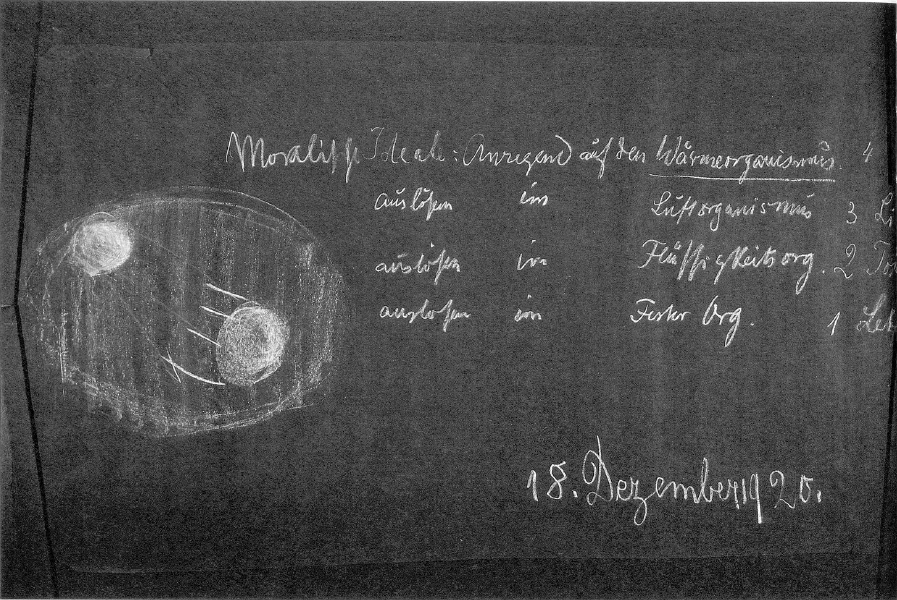
[ 4 ] Stellen wir uns einmal vor, der Mensch wird begeistert von einem hohen moralischen Ideal. Der Mensch kann sich wirklich innerlich seelisch begeistern für ein moralisches Ideal, für das Ideal des Wohlwollens, für das Ideal der Freiheit, das Ideal der Güte, der Liebe und so weiter. Er kann sich begeistern in konkreten Fällen für dasjenige, was durch diese Ideale angedeutet ist. Daß aber das, was da in der Seele als Begeisterung vor sich geht, in die Knochen oder in die Muskeln fährt, so wie Knochen oder Muskeln von der heutigen Physiologie oder heutigen Anatomie betrachtet werden, das kann sich natürlich niemand vorstellen. Aber Sie werden darauf kommen, wenn Sie nur mit sich selbst innerlich ordentlich zu Rate gehen, daß Sie sich sehr wohl vorstellen können — und es ist auch so —, daß, wenn der Mensch begeistert ist für ein hohes moralisches Ideal, dann ein Einfluß ausgeübt wird von dieser inneren Begeisterung auf den Wärmeorganismus. Und dann ist man schon im Physischen drinnen vom Seelischen aus! So daß man sagen kann, wenn wir dieses Beispiel herausgreifen: Moralische Ideale drücken sich aus durch eine Erhöhung der Wärme im Wärmeorganismus. — Der Mensch wird nicht nur seelisch wärmer, der Mensch — wenn das auch nicht so leicht mit irgendeinem physikalischen Instrument nachweisbar ist — wird wirklich durch dasjenige, was er erlebt an moralischen Idealen, innerlich wärmer. Also es wirkt anregend auf den Wärmeorganismus.
[ 4 ] Let us imagine, for a moment, that a person becomes inspired by a lofty moral ideal. A person can truly feel an inner, spiritual enthusiasm for a moral ideal—for the ideal of benevolence, for the ideal of freedom, the ideal of goodness, love, and so on. In specific situations, they can be inspired by what these ideals represent. But of course, no one can imagine that what is happening in the soul as enthusiasm actually penetrates into the bones or muscles—as bones or muscles are understood by modern physiology or anatomy. But if you simply consult your inner self properly, you will realize that you can very well imagine—and it is indeed the case—that when a person is inspired by a lofty moral ideal, this inner enthusiasm exerts an influence on the thermal organism. And then the spiritual has already penetrated into the physical realm! So that we can say, taking this example: Moral ideals express themselves through an increase in warmth within the thermal system. — A person does not merely become warmer in their soul; a person—even if this is not easily measurable with any physical instrument—truly becomes warmer on the inside through the moral ideals they experience. So it has a stimulating effect on the thermal organism.
[ 5 ] Das müssen Sie sich nun als einen konkreten Vorgang vorstellen: Begeisterung für ein moralisches Ideal: Belebung des Wärmeorganismus. — Es geht im Wärmeorganismus lebhafter zu, wenn ein moralisches Ideal die Seele durchglüht. Aber es bleibt auch für die übrige Organisation des Menschen nicht ohne Wirkung. Außer dem Wärmeorganismus, der gewissermaßen sein höchster physischer Organismus ist, hat ja der Mensch den Luftorganismus. Er atmet die Luft ein, er atmet die Luft aus; aber während des Ein- und Ausatmens ist die Luft in ihm. Sie ist allerdings innerlich in Bewegung, in Fluktuation; aber das ist auch eine Organisation, das ist ein wirklicher Luftorganismus, der in ihm lebt, geradeso wie der Wärmeorganismus. Indem nun durch ein moralisches Ideal die Wärme belebt wird, wirkt sie, weil ja die Wärme im ganzen Organismus, in allen Organismen wirksam ist, wiederum auf den Luftorganismus. Diese Wirkung auf den Luftorganismus ist aber nicht bloß eine erwärmende, sondern wenn die Wärme, welche regsam wird im Wärmeorganismus, auf den menschlichen Luftorganismus wirkt, so teilt sie ihm all dasjenige mit, was ich nicht anders benennen kann als eine Lichtquelle. Gewissermaßen Keime des Leuchtens teilen sich dem Luftorganismus mit, so daß also moralische Ideale, die auf den Wärmeorganismus anregend wirken, im Luftorganismus Lichtquellen auslösen. Diese Lichtquellen werden für das äußere Bewußtsein, für die äußere Wahrnehmung allerdings nicht leuchtend, aber in dem menschlichen astralischen Leib erscheinen diese Lichtquellen. Sie sind zunächst gebunden, wenn ich mich dieses physikalischen Ausdruckes bedienen darf, durch die Luft selber, die der Mensch in sich trägt. Sie sind gewissermaßen noch dunkles Licht, wie ja der Pflanzenkeim auch noch nicht die ausgebildete Pflanze ist. Aber der Mensch trägt dadurch, daß er sich begeistern kann für moralische Ideale oder für moralische Vorgänge, einen Lichtquell in sich.
[ 5 ] You must now imagine this as a concrete process: enthusiasm for a moral ideal: the revitalization of the thermal organism. — The thermal organism becomes more lively when a moral ideal sets the soul ablaze. But this also has an effect on the rest of the human organism. In addition to the thermal organism—which is, in a sense, the human being’s highest physical organism—the human being also has the air organism. He inhales air, he exhales air; but during inhalation and exhalation, the air is within him. It is, of course, in internal motion, in fluctuation; but this, too, is an organism—a real respiratory system that lives within him, just as the thermal system does. Now, as the thermal system is enlivened by a moral ideal, it in turn acts upon the respiratory system, since heat is active throughout the entire organism, in all systems. This effect on the air organism, however, is not merely one of warming; rather, when the heat—which becomes active within the heat organism—acts upon the human air organism, it imparts to it what I can only describe as a source of light. In a sense, seeds of luminosity are imparted to the air organism, so that moral ideals, which have a stimulating effect on the warmth organism, trigger sources of light in the air organism. These sources of light do not, however, appear luminous to the outer consciousness or to outer perception; rather, they appear in the human astral body. They are initially bound—if I may use this physical term—by the air itself that the human being carries within. They are, so to speak, still dark light, just as the plant seed is not yet the fully developed plant. But by being able to be inspired by moral ideals or moral processes, the human being carries a source of light within.
[ 6 ] Als weiteren Organismus haben wir in uns den Flüssigkeitsorganismus. Indem die Wärme im Wärmeorganismus wirkt und, vom moralischen Ideal ausgehend, im Luftorganismus dasjenige auslöst, was man eine Lichtquelle nennen kann, die zunächst gebunden bleibt, verborgen bleibt, löst sich im Flüssigkeitsorganismus, weil sich alles in der menschlichen Organisation, wie gesagt, mitteilt, dasjenige aus, wovon ich gestern gesprochen habe, daß es eigentlich dem äußeren Lufttönen zugrunde liegt. Die Luft ist ja nur der Körper des Tones, sagte ich gestern, und wer etwa das Wesen des Tones in den Luftschwingungen sucht und von nichts weiter spricht, der spricht vom Tönen so, wie man vom Menschen spricht, wenn man nur vom äußeren sichtbaren Leibe spricht. Die Luft mit ihren schwingenden Wellen ist nichts anderes als der äußere Körper für den Ton. Im Menschen wird dieser Ton nicht im Luftorganismus ausgelöst, dieser geistige Ton, sondern er wird gerade im Flüssigkeitsorganismus ausgelöst durch das moralische Ideal. Also hier werden die Tonquellen ausgelöst. Und gewissermaßen als den festesten Organismus, als den, der alle übrigen Organismen stützt und trägt, betrachten wir den festen Organismus. Auch in ihm wird etwas ausgelöst, so wie in den anderen Organisationen; nur wird in dem festen Organismus dasjenige ausgelöst, was wir Lebenskeim nennen können, aber ätherischen Lebenskeim, nicht physischen Lebenskeim, wie er sich dann durch die Geburt loslöst von der menschlichen weiblichen Organisation, sondern es wird der ätherische Lebenskeim losgelöst. Das, was da als ätherischer Lebenskeim lebt, es ist ja im tiefsten Unterbewußtsein unten; schon dasjenige, was die Tonquellen sind, ja in gewissem Sinne sogar das, was Lichtquelle ist. Das ist für das gewöhnliche Bewußtsein verborgen, aber es ist im Menschen.
[ 6 ] Another organism within us is the fluid organism. As heat acts within the heat organism and—proceeding from the moral ideal—triggers within the air organism what might be called a source of light, which initially remains bound and hidden, what I spoke of yesterday—that which actually underlies external air sounds—is set in motion within the fluid organism, because, as I said, everything in the human organism communicates with one another. Air is, after all, merely the body of sound, as I said yesterday, and anyone who seeks the essence of sound in the vibrations of air and speaks of nothing else is speaking of sound in the same way one speaks of a human being when referring only to the outer, visible body. Air, with its vibrating waves, is nothing other than the outer body of sound. In human beings, this sound—this spiritual sound—is not triggered in the air organism, but rather in the fluid organism through the moral ideal. So this is where the sources of sound are triggered. And in a sense, we regard the solid organism as the most solid of all, the one that supports and sustains all the other organisms. Something is also triggered within it, just as in the other organisms; only in the solid organism is that which we might call the life germ triggered—but an etheric life germ, not a physical life germ, as the latter is then separated from the human female organism through birth; rather, it is the etheric life germ that is separated. That which lives there as the etheric life germ is, after all, deep down in the subconscious; indeed, it is the very source of sound, and in a certain sense even the source of light. This is hidden from ordinary consciousness, but it is within the human being.
[ 7 ] Stellen Sie sich alles vor, was Sie im Leben durchlebt haben an Hinwendungen Ihrer Seele an die moralischen Ideen, sei es, daß Sie diese moralischen Impulse sympathisch gefunden haben, indem Sie sie bloß als Ideen erfaßten, sei es, daß Sie sie gesehen haben an anderen, sei es, daß Sie in der Ausführung in einer gewissen Weise innerlich befriedigt sein konnten mit Ihrem eigenen Tun, indem Sie dieses Tun durchglüht sein lassen von den moralischen Idealen, all das geht hinunter in die Luftorganisation als Lichtquelle, in die Flüssigkeitsorganisation als Tonquelle, in die feste Organisation als Lebensquelle. All das löst sich in einer gewissen Weise von dem, was im Menschen bewußt ist, ab. Aber der Mensch trägt es in sich. Es wird frei, wenn der Mensch seine physische Organisation mit dem Tode ablegt. Was so durch unsere moralischen Ideale, was gerade durch die reinsten Ideen in unserer Organisation ausgelöst wird, das wird zunächst nicht fruchtbar. Für das Leben zwischen Geburt und Tod fruchtbar werden eben die moralischen Ideen selber, insofern wir im Ideenleben bleiben und indem wir eine gewisse Genugtuung haben über dasjenige, was wir moralisch vollbracht haben. Das hat aber lediglich mit der Erinnerung zu tun, das hat nichts zu tun mit dem, was hinuntergedrängt wird in die Organisation dadurch, daß wir moralische Ideale sympatisch finden.
[ 7 ] Imagine everything you have experienced in life in terms of your soul’s turning toward moral ideas—whether you found these moral impulses appealing simply by grasping them as ideas, or whether you observed them in others, or whether you were able to find a certain inner satisfaction in your own actions by allowing them to be imbued with moral ideals—all of this flows down into the air organization as a source of light, into the liquid organization as a source of sound, and into the solid organization as a source of life. All of this detaches itself, in a certain sense, from what is conscious in the human being. But the human being carries it within. It becomes free when the human being sheds their physical organization at death. What is thus triggered through our moral ideals—what is triggered precisely by the purest ideas in our organization—does not bear fruit at first. It is precisely the moral ideas themselves that become fruitful for life between birth and death, insofar as we remain in the life of ideas and derive a certain satisfaction from what we have accomplished morally. But this has to do solely with memory; it has nothing to do with what is pushed down into the organism by our finding moral ideals appealing.
[ 8 ] Wir sehen also hier, wie tatsächlich unsere ganze Organisation, ausgehend von unserem Wärmeorganismus, durchdrungen wird von den moralischen Idealen. Und wenn wir mit dem Tod herauslösen aus unserer physischen Organisation unseren ätherischen Leib, unseren astralischen Leib, unser Ich, dann sind wir in diesen höheren Gliedern der Menschennatur durchdrungen von Eindrücken, die wir gehabt haben. Wir waren mit unserem Ich in unserem Wärmeorganismus, indem die moralischen Ideale belebt haben unsere eigene Wärmeorganisation. Wir waren in unserem Luftorganismus, wo Lichtquellen gepflanzt worden sind, die nun nach unserem Tod in den Kosmos mit uns hinausgehen. Wir haben in unserem Flüssigkeitsorganismus den Ton angeregt, der zur Sphärenmusik wird, mit der wir hinaustönen in den Kosmos. Wir bringen Leben hinaus, indem wir durch die Pforte des Todes gehen.
[ 8 ] So here we see how our entire being, starting with our thermal organism, is in fact permeated by moral ideals. And when, upon death, we separate our etheric body, our astral body, and our “I” from our physical body, we are then, in these higher aspects of human nature, permeated by the impressions we have experienced. We were present with our “I” in our thermal organism, where moral ideals animated our own thermal constitution. We were in our air organism, where sources of light were planted that now, after our death, go out into the cosmos with us. In our liquid organism, we have stirred up the sound that becomes the music of the spheres, with which we resonate out into the cosmos. We carry life out as we pass through the gate of death.
[ 9 ] Sie ahnen an dieser Stelle, was das Leben, das ausgegossen ist in der Welt, eigentlich ist. Wo liegen die Quellen des Lebens? Sie liegen in dem, was die moralischen Ideale anregt, die im Menschen begeisternd wirken. Wir kommen darauf, uns sagen zu müssen, daß, wenn wir heute uns durchglüht sein lassen von moralischen Idealen, diese Leben und Ton und Licht hinaustragen und weltenschöpferisch werden. Wir tragen das Weltenschöpferische hinaus, und der Quell des Weltenschöpferischen ist das Moralische.
[ 9 ] At this point, you begin to sense what life—which has been poured out into the world—actually is. Where are the sources of life? They lie in that which inspires the moral ideals that have an uplifting effect on human beings. We come to the realization that when we allow ourselves today to be consumed by moral ideals, these ideals carry forth life, sound, and light and become world-creating. We carry forth that which is world-creating, and the source of the world-creating is the moral.
[ 10 ] Sie sehen, wir finden eine Brücke, wenn wir den ganzen Menschen betrachten, zwischen den moralischen Idealen und demjenigen, was draußen in der physischen Welt belebend, auch chemisch wirkt. Denn der Ton ist es, der chemisch wirkt, der die Stoffe zusammenbringt und auseinanderanalysiert. Und das Leuchtende in der Welt, es hat seinen Quell in den moralischen Erregungen, in den Wärmeorganismen der Menschen. Wir blicken in die Zukunft hinein, da bilden sich Weltgestalten. Und wie wir bei der Pflanze zurückgehen müssen auf den Keim, so müssen wir bei den zukünftigen Welten, die sich gestalten werden, zurückgehen auf die Keime, die als moralische Ideale in uns selber liegen.
[ 10 ] You see, when we consider the whole human being, we find a bridge between moral ideals and that which, out there in the physical world, has a vitalizing—and even chemical—effect. For it is sound that has a chemical effect, bringing substances together and breaking them down. And the radiance in the world has its source in moral impulses, in the warmth-generating forces within human beings. We look into the future, where world forms are taking shape. And just as we must go back to the seed in the case of a plant, so too must we, in the case of the future worlds that will take shape, go back to the seeds that lie within us as moral ideals.
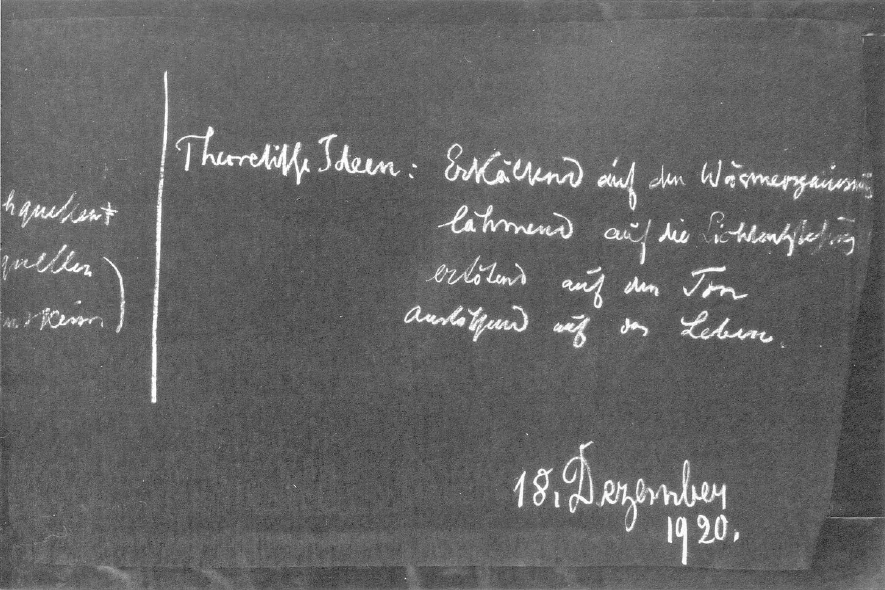
[ 11 ] Betrachten Sie jetzt theoretische Ideen im Gegensatz zu moralischen Idealen. Mit theoretischen Ideen, und wenn sie auch noch so bedeutsam sind, verhält es sich ganz anders. Bei theoretischen Ideen haben wir tatsächlich eine Abregung, eine Erkühlung des Wärmeorganismus zu verzeichnen. So daß wir also sagen müssen: Theoretische Ideen wirken erkältend auf den Wärmeorganismus. — Das ist der Unterschied in der Wirkung auf die menschliche Organisation. Moralische oder nach dem Moralisch-Religiösen hingeordnete Ideen, diejenigen, die uns in Begeisterung versetzen, indem sie Impulse unseres Handelns werden, sie wirken in dieser Weise weltschöpferisch. Theoretische Ideen wirken zunächst abregend, erkältend auf den Wärmeorganismus. Dadurch, daß sie erkältend auf den Wärmeorganismus wirken, wirken sie auch lähmend auf den Luftorganismus und wirken lähmend auf die Lichtquelle, auf die Lichtentstehung. Sie wirken weiter ertötend auf den Weltenton, und sie wirken auslöschend auf das Leben. Es kommt zu Ende dasjenige, was in der Vorwelt geschaffen worden ist, in unseren theoretischen Ideen. Indem wir theoretische Ideen fassen, erstirbt in ihnen ein Weltenall. Wir tragen in uns das Ersterben eines Weltenalls, wir tragen in uns das Aufgehen eines Weltenalls.
[ 11 ] Now consider theoretical ideas as opposed to moral ideals. With theoretical ideas—no matter how significant they may be—the situation is quite different. In the case of theoretical ideas, we actually observe a dampening, a cooling of the warmth-organism. So we must say: Theoretical ideas have a cooling effect on the warmth organism. — That is the difference in their effect on the human organism. Moral ideas, or those aligned with the moral-religious, the ones that fill us with enthusiasm by becoming impulses for our actions—they have a world-creating effect in this way. Theoretical ideas initially have a dampening, cooling effect on the warmth organism. Because they have a cooling effect on the warmth organism, they also have a paralyzing effect on the air organism and on the source of light, on the generation of light. They further have a destructive effect on the world tone, and they have an extinguishing effect on life. That which was created in the pre-world comes to an end within our theoretical ideas. As we conceive theoretical ideas, a world-universe dies within them. We carry within us the dying of a world-universe; we carry within us the dawning of a world-universe.
| Moralische Ideale: | Theoretische Ideen: | |
|---|---|---|
| anregend auf den Wärmeorganismus | (4) | erkältend auf den Wärmeorganismus |
| auslösend im Luftorganismus | (3) | lähmend auf die Lichtentstehung Lichtquellen |
| auslösend im Flüssigkeitsorganismus | (2) | ertötend auf den Ton Tonquellen |
| auslösend im festen Organismus Lebenskeime (ätherisch) | (1) | auslöschend auf das Leben |
| Moral ideals: | Theoretical ideas: | |
|---|---|---|
| stimulating to the heat organism | (4) | cooling effect on the heat organism |
| triggering effect in the air organism | (3) | paralyzing effect on light generation and light sources |
| stimulating in the liquid organism | (2) | killing the clay and clay sources |
| triggering in the solid organism: seeds of life (etheric) | (1) | extinguishing life |
[ 12 ] Hier ist auch der Punkt, wo derjenige, der in die Weltengeheimnisse eingeweiht ist, nicht sprechen kann, wie heute so viele sprechen, von der Konstanz der Kraft oder der Konstanz des Stoffes. Das ist einfach nicht wahr, daß der Stoff konstant bleibt. Der Stoff vergeht bis zum Nullpunkt hin. Die Kraft vergeht bis zum Nullpunkt in unserem eigenen Organismus dadurch, daß wir theoretisch denken. Und wir wären ja nicht Menschen, wenn wir nicht theoretisch denken würden, wenn nicht das Weltenall fortwährend in uns erstürbe. Durch das Ersterben des Weltenalls sind wir eigentlich selbstbewußte Menschen, die zu Gedanken über das Weltenall kommen können. Aber indem das Weltenall sich in uns denkt, ist es schon Leiche. Der Gedanke über das Weltenall ist die Leiche des Weltenalls. Erst als Leiche wird uns das Weltenall bewußt und macht uns zum Menschen. Eine vergangene Welt also erstirbt in uns bis zum Stoff, bis zur Kraft. Und nur weil gleich wiederum eine neue aufgeht, merken wir nicht, daß der Stoff vergeht und wieder entsteht. Im Menschen wird zu Ende geführt die Stofflichkeit durch sein theoretisches Denken; es wird neu belebt die Stofflichkeit und die Weltenkraft durch sein moralisches Denken. So greift dasjenige, was innerhalb der menschlichen Haut geschieht, in Weltenvergehen und Weltenentstehen ein. So gliedern sich zusammen Moralisches und Natürliches. Das Natürliche vergeht im Menschen; im Moralischen entsteht neues Natürliches.
[ 12 ] This is also the point where one who is initiated into the mysteries of the world cannot speak, as so many do today, of the constancy of force or the constancy of matter. It is simply not true that matter remains constant. Matter decays down to zero. Force decays down to zero within our own organism through our theoretical thinking. And we would not be human beings if we did not think theoretically, if the universe did not continually die within us. It is through the dying of the universe that we are, in fact, self-conscious human beings capable of thinking about the universe. But as the universe thinks itself within us, it is already a corpse. The thought about the universe is the corpse of the universe. Only as a corpse does the universe become conscious to us and make us human. A past world, then, dies within us down to its matter, down to its force. And only because a new one immediately dawns again do we fail to notice that matter perishes and is reborn. In human beings, materiality is brought to an end through their theoretical thinking; materiality and the power of the universe are revitalized through their moral thinking. Thus, what takes place within the human body intervenes in the passing away and the arising of worlds. Thus, the moral and the natural are interwoven. The natural passes away within the human being; within the moral, a new natural arises.
[ 13 ] Weil man auf diese Dinge nicht hinschauen wollte, erfand man die Ideen von der Unvergänglichkeit des Stoffes und der Kraft. Wenn die Kraft unvergänglich wäre, wenn der Stoff unvergänglich wäre, gäbe es keine moralische Weltordnung. Das will man nur heute verdecken, und die heutige Weltanschauung hat alle Ursache, das zu verdecken, denn sie müßte eigentlich die moralische Weltordnung auslöschen, und sie wird ausgelöscht, wenn man von dem Gesetz der Erhaltung des Stoffes und der Kraft spricht. Denn erhält sich irgendwie der Stoff, erhält sich irgendwie die Kraft, dann ist die moralische Weltordnung nichts weiter als eine Illusion, ein Scheingebilde. Erst dadurch kommt man dazu, den gesamten Gang der Welt zu verstehen, daß man einsieht, wie aus diesem «Scheingebilde» — das ist es ja zunächst, weil es in Gedanken lebt — der moralischen Weltordnung neue Welten erstehen. Das alles aber ergibt sich nicht, wenn man nur die festen Bestandteile der menschlichen Organisation betrachtet, sondern wenn man hinausgeht durch den Flüssigkeits- und Luftorganismus bis zum Wärmeorganismus. Den Zusammenhang des Menschen mit der Welt, man wird ihn nur verstehen, wenn man gewissermaßen das Physische bis zu jener Verfeinerung, Verdünnung verfolgt, wo unmittelbar das Seelische in dieses verdünnte Physische, wie bei der Wärme, eingreifen kann. Dann findet man den Zusammenhang zwischen dem Körperlichen und dem Seelischen. Noch so viele Psychologien, Seelenlehren können geschrieben werden: Wenn sie ausgehen von dem, was heute durch die Anatomie und Physiologie betrachtet wird, so wird man bei diesen festen oder fest-flüssigen, weich-fest gedachten Körpern keinen Übergang finden können zum Seelischen, das überhaupt nicht seelisch erscheint. Wenn man aber das Körperliche bis zur Wärme verfolgt, dann wird man eine Brücke schlagen können von dem, was in den Körpern als Wärme existiert, zu demjenigen, was von der Seele aus in die Wärme des eigenen menschlichen Organismus hineinwirkt.
[ 13 ] Because people did not want to face these realities, they invented the ideas of the immortality of matter and energy. If energy were immortal, if matter were immortal, there would be no moral world order. People simply want to conceal this today, and today’s worldview has every reason to do so, for it would actually have to abolish the moral world order—and it is abolished when one speaks of the law of conservation of matter and energy. For if matter is somehow conserved, if energy is somehow conserved, then the moral world order is nothing more than an illusion, a figment of the imagination. It is only by realizing how new worlds arise from this “illusory construct”—which is what it is at first, since it exists in thought—of the moral world order that one comes to understand the entire course of the world. But all this does not become apparent by considering only the solid components of the human organism; rather, it becomes apparent when one moves outward through the fluid and air organisms to the heat organism. One can only understand the connection between the human being and the world by, so to speak, tracing the physical realm to that point of refinement and dilution where the soul can directly intervene in this diluted physical realm, as in the case of heat. Only then does one find the connection between the physical and the soul. No matter how many works on psychology or the study of the soul are written: if they proceed from what is currently considered in anatomy and physiology, one will not be able to find a transition from these bodies—conceived as solid or solid-liquid, soft-solid—to the soul, which does not appear to be spiritual at all. But if one traces the physical back to heat, then one will be able to build a bridge from what exists in the bodies as heat to that which acts from the soul into the heat of one’s own human organism.
[ 14 ] Wärme ist äußerlich in den Körpern, Wärme ist innerlich im menschlichen Organismus, und indem die Wärme selbst im Menschen organisiert ist, greift die Seele, das Seelisch-Geistige, in diesen Wärmeorganismus ein, und auf dem Umwege durch die Wärme greift ein alles das, was wir innerlich moralisch erleben. Ich meine jetzt natürlich mit dem Moralischen nicht nur, was sich der Philister unter moralisch allein vorstellt, sondern ich meine die Gesamtheit alles Moralischen, also auch diejenigen Impulse, die wir zum Beispiel gewinnen, wenn wir die Herrlichkeit des Kosmos betrachten, wenn wir uns sagen: Wir sind aus dem Kosmos heraus geboren, wir sind verantwortlich für das, was in der Welt vorgeht, wenn wir uns begeistern lassen, in die Zukunft hineinzuwirken aus den Erkenntnissen der Geisteswissenschaft heraus. — Und wenn wir die Geisteswissenschaft selber als einen Quell des Moralischen betrachten, dann können wir am meisten begeistert sein für dasjenige, was moralisch ist, dann wird solche Begeisterung, die aus geisteswissenschaftlicher Erkenntnis wirkt, zu gleicher Zeit ein Quell des im höheren Sinne Moralischen sein. Aber, was man gewöhnlich moralisch nennt, ist nur eine Unterabteilung des Moralischen im allgemeinen. Alle diejenigen Ideen, die wir uns über die äußere Welt machen, über fertige Naturanordnungen, sind theoretische Ideen. Wir können uns noch so stark mathematisch-mechanisch eine Maschine vorstellen, noch so stark mathematisch-mechanisch uns das Weltenall im Sinne des kopernikanischen Systems vorstellen, was wir so als theoretische Ideen gewinnen, ist Sterbekraft in uns, ist dasjenige, was Leiche des gesamten Weltalls in uns ist als Gedanke, als Vorstellung.
[ 14 ] Heat is external to the body; heat is internal to the human organism; and because heat itself is organized within the human being, the soul—the soul-spiritual—intervenes in this heat organism, and indirectly, through heat, everything we experience internally on a moral level takes effect. Of course, by “moral” I do not mean only what the philistine imagines “moral” to be, but rather the totality of all that is moral—including, for example, those impulses we gain when we contemplate the splendor of the cosmos and say to ourselves: ‘We were born out of the cosmos; we are responsible for what happens in the world,’ and when we allow ourselves to be inspired to work toward the future based on the insights of spiritual science. — And when we regard spiritual science itself as a source of morality, then we can be most inspired by that which is moral; then such inspiration, arising from spiritual scientific insight, will at the same time be a source of morality in the higher sense. But what is usually called “moral” is only a subdivision of morality in general. All the ideas we form about the external world—about pre-existing natural arrangements—are theoretical ideas. No matter how strongly we may imagine a machine in mathematical-mechanical terms, or how strongly we may imagine the universe in the sense of the Copernican system, what we gain as theoretical ideas is a force of death within us; it is the corpse of the entire universe within us as thought, as conception.
[ 15 ] Diese Dinge schaffen immer mehr und mehr eine Einsicht in die Gesamtheit, in die totale Welt. Und es stehen nicht zwei Ordnungen, eine Naturordnung und eine moralische Ordnung, nebeneinander, sondern beide sind eines, und das ist es, was der Mensch der Gegenwart braucht, sonst wird er immer dastehen und sagen: Was mache ich mit meinen moralischen Impulsen in einer Welt, die doch nur eine natürliche Ordnung hat? — Das war ja die auf den Gemütern des 19. Jahrhunderts, des beginnenden 20. Jahrhunderts furchtbar lastende Frage: Wie ist ein Übergang denkbar von dem Natürlichen ins Moralische, von dem Moralischen ins Natürliche? — Nichts anderes wird zur Lösung dieser bangen schicksalsschweren Frage beitragen können, als allein das geisteswissenschaftliche Durchschauen sowohl der Natur auf der einen Seite wie des Geistes auf der anderen Seite.
[ 15 ] These things provide an ever-deepening insight into the whole, into the total world. And there are not two orders—a natural order and a moral order—existing side by side; rather, both are one, and that is what people today need; otherwise, they will always stand there and say: “What am I to do with my moral impulses in a world that has only a natural order?” — That was, after all, the question that weighed so heavily on the minds of the 19th century and the early 20th century: How is a transition conceivable from the natural to the moral, and from the moral to the natural? — Nothing other than a humanities-based understanding of both nature on the one hand and the spirit on the other will be able to contribute to the solution of this anxious, fateful question.
[ 16 ] Wenn man die Voraussetzungen hat, die aus solchen Erkenntnissen kommen, dann wird man mit ihnen nun sich auch entgegenstellen können dem, was einem auf gewissen Gebieten als äußere Wissenschaft erscheint, und was ja auch heute schon in das populäre Bewußtsein hinübergegangen ist. Wir haben als eine Grundlage unseres Weltbildes heute die kopernikanische Weltanschauung anzusehen. Diese kopernikanische Weltanschauung, die dann Kepler weiter ausgebildet, Newton vertheoretisiert hat, sie wurde ja allerdings verpönt bis zum Jahre 1827 von der katholischen Kirche. Kein rechtgläubiger Katholik durfte sie bis dahin glauben. Seither ist es ihm erlaubt, sie zu glauben. Aber sie ist so sehr in das populäre Bewußtsein übergegangen, daß natürlich heute jemand als ein Tropf gelten würde, der nicht die Welt im Sinne dieses kopernikanischen Weltbildes anschauen würde.
[ 16 ] If one possesses the prerequisites that arise from such insights, then one will now be able to use them to counter what, in certain fields, appears to be “external science”—and which has, in fact, already found its way into popular consciousness. We must regard the Copernican worldview as a foundation of our worldview today. This Copernican worldview—which Kepler later developed and Newton theorized—was, in fact, frowned upon by the Catholic Church until 1827. No orthodox Catholic was allowed to believe in it until then. Since then, Catholics have been permitted to believe in it. But it has become so deeply ingrained in popular consciousness that, naturally, anyone today who did not view the world in accordance with this Copernican worldview would be considered a fool.
[ 17 ] Was ist dieses kopernikanische Weltenbild? Es ist eigentlich etwas, was nur nach mathematischen Grundsätzen, nach mathematischen Prinzipien und Anschauungen ausgebildet ist, nach mathematisch-mechanischen Anschauungen, können wir sagen. Und wir können dann vergleichen dieses Weltenbild, das sich ja langsam innerhalb der griechischen Weltanschauung vorbereitet hat, die noch immer die Reste früherer Gedankenrichtungen, zum Beispiel im ptolemäischen Weltenbilde gehabt hat, dann aber sich weiter ausgebildet hat zu dem, was eben heute jedem Kinde gelehrt wird als kopernikanisches Weltbild; wir können von diesem Weltbild zurückschauen in alte Zeiten der Menschheit. Da haben wir ein anderes Weltbild. Von dem ist nur zurückgeblieben, was heute jene Traditionen bewahren, die ja auch auf recht dilettantischer Basis stehen, so wie sie heute unter den Menschen figurieren, was als Astrologie und dergleichen existiert. Das ist als Reste alter Astronomie zurückgeblieben, oder es ist wohl auch zurückgeblieben dasjenige, was verknöchert, erstarrt gewisse Geheimgesellschaften, Freimaurergesellschaften und dergleichen in ihren Symbolen haben. Die Leute wissen gemeiniglich nicht, daß das Reste alter Astronomie sind. Aber es war eine andere Astronomie, es war eine Astronomie, welche nicht in demselben Sinne auf bloß mathematischen Prinzipien aufgebaut war, wie es die heutige Astronomie ist, sondern diese alte Astronomie war aus alten hellseherischen Anschauungen heraus entstanden. Man macht sich heute ganz falsche Vorstellungen von der Art und Weise, wie die ältere Menschheit zu ihren astronomischastrologischen Vorstellungen gekommen ist. Sie kam durch gewisse instinktiv-hellseherische Anschauungen des Weltenalls dazu. Es nahmen die ältesten nachatlantischen Völker ebenso Geistgebilde, Geistwesen in den Weltenkörpern wahr, wie heute der Mensch in den Weltenkörpern bloße physische Gebilde sieht. Wenn unter alten Völkern von Weltenkörpern, von Planeten oder Fixsternen gesprochen wurde, wurde von Geistwesen gesprochen. Heute stellt man sich vor, daß die Sonne irgendein brennender Gasball ist, daß sie Licht in die Welt hinausstrahlt, weil sie ein brennender Gasball ist. Die alten Völker haben sich vorgestellt, daß die Sonne ein lebendiges Wesen ist, und sie sahen in dem, was ihren Augen als Sonne erschien, im Grunde genommen nur den äußeren leiblichen Ausdruck für dieses Geistwesen, das sie da draußen, wo die Sonne steht, vermuteten; ebenso für die anderen Himmelskörper. Geistwesen sahen sie. Wir müssen uns vorstellen, daß es eine Zeit gab, welche ziemlich lange vor dem Eintreten des Mysteriums von Golgatha schon zu Ende gegangen ist, wo alles dasjenige, was da draußen im Weltenall eine Sonne, was in den Sternen war, als Geistwesen vorgestellt worden ist; daß dann, ich möchte sagen, eine Zwischenzeit war, wo man nicht recht wußte, wie man sich das vorzustellen habe, wo man auf der einen Seite allerdings die Planeten, die da sind, schon wie etwas Physisches ansah, sie aber doch sich belebt dachte von Seelen. In diesen Zeiten, in denen man nicht mehr gewußt hat, wie das Physische nach und nach in das Seelische übergeht, wie das Seelische nach und nach in das Physische übergeht, wie im Grunde genommen beides eines ist, statuierte man auf der einen Seite ein Physisches, auf der anderen Seite ein Seelisches. Und man dachte es sich ebenso zusammen, wie sich heute die meisten Psychologen noch, wenn sie überhaupt ein Seelisches annehmen, das Seelische und das Physische im Menschen zusammendenken, was ja natürlich zu nichts anderem als zu einem absurden Denken führt; oder wie der psychophysische Parallelismus es annimmt, was ja wiederum nichts anderes ist als ein törichtes Auskunftsmittel über etwas, was man nicht weiß.
[ 17 ] What is this Copernican worldview? It is, in fact, something that is based solely on mathematical principles and concepts—on mathematical-mechanical concepts, we might say. And we can then compare this worldview—which gradually took shape within the Greek worldview, which still retained remnants of earlier schools of thought, for example in the Ptolemaic worldview, but which then developed further into what is taught to every child today as the Copernican worldview—we can look back from this worldview to the ancient times of humanity. There we find a different worldview. All that remains of it today are the traditions that preserve it—traditions that, as they exist among people today, are based on a rather amateurish foundation, such as astrology and the like. These are remnants of ancient astronomy, or perhaps what has also survived is what has become ossified and rigid in the symbols of certain secret societies, Masonic lodges, and the like. People generally do not realize that these are remnants of ancient astronomy. But it was a different kind of astronomy; it was an astronomy that was not built on purely mathematical principles in the same sense as modern astronomy is, but rather this ancient astronomy had arisen from ancient clairvoyant insights. Today, people have completely false ideas about the way in which ancient humanity arrived at its astronomical and astrological concepts. It arrived at them through certain instinctive, clairvoyant perceptions of the universe. The oldest post-Atlantean peoples perceived spiritual forms and spiritual beings in the celestial bodies just as modern humans see mere physical forms in them today. When ancient peoples spoke of celestial bodies, planets, or fixed stars, they were speaking of spiritual beings. Today, people imagine that the Sun is some kind of burning ball of gas, and that it radiates light into the world simply because it is a burning ball of gas. The ancient peoples imagined that the sun was a living being, and what appeared to their eyes as the sun was, in essence, merely the outer physical expression of this spiritual being they supposed to exist out there where the sun stands; the same was true for the other celestial bodies. They saw spiritual beings. We must imagine that there was a time—which had already come to an end quite a long time before the Mystery of Golgotha took place—when everything out there in the universe, whether a sun or the stars, was conceived of as a spiritual being; that then, I would say, there was an interim period when people did not quite know how to conceive of these things—a time when, on the one hand, they certainly regarded the planets as something physical, yet imagined them to be animated by souls. In those times, when people no longer knew how the physical gradually transitions into the spiritual, how the spiritual gradually transitions into the physical, and how, fundamentally, the two are one, they posited the physical on the one hand and the spiritual on the other. And people conceived of them in the same way that most psychologists still do today—if they assume the existence of a spiritual realm at all—by conceiving of the spiritual and the physical in human beings as a single entity, which of course leads to nothing other than absurd thinking; or as psychophysical parallelism assumes, which in turn is nothing other than a foolish means of explaining something that is unknown.
[ 18 ] Dann kam die Zeit, in der man die Weltenkörper als physische Wesenheiten ansah, die nach mathematischen Gesetzen kreisen oder stillstehen, sich anziehen und abstoßen und so weiter. Allerdings, es ging durch alle Zeiten, in den älteren Zeiten mehr instinktiv, ein Wissen davon, wie die Dinge wirklich sind. Jetzt kommt es so, daß das instinktive Wissen nicht ausreicht, daß mit vollständigem Bewußtsein dasselbe errungen werden muß, was früher instinktiv gewußt wurde. Und wenn wir anfragen, wie diejenigen, die nun in totaler Anschauung, das heißt, in physischer, seelischer und geistiger Anschauung das Weltenall erkennen konnten, sich vorstellten die Sonne, so können wir etwa folgendes sagen: Sie stellten sich die Sonne zunächst als Geistwesen vor (Zeichnung I). Dieses Geistwesen, das dachten sich die Initiierten als den Quell alles Moralischen. Dasjenige also, wovon ich in meiner «Philosophie der Freiheit» sagte, daß die moralischen Intuitionen aus diesem Quell herausgenommen werden, sie werden innerhalb der Erde herausgenommen; von den Menschen erglänzen sie, von dem, was in den Menschen als moralische Begeisterung leben kann (II).
[ 18 ] Then came the time when the celestial bodies were viewed as physical entities that orbit or remain stationary according to mathematical laws, attracting and repelling one another, and so on. However, throughout the ages—more instinctively in earlier times—there has been a knowledge of how things really are. Now it is the case that this instinctive knowledge is no longer sufficient; what was once known instinctively must now be attained through full consciousness. And if we ask how those who were able to perceive the universe in its entirety—that is, through physical, soul, and spiritual perception—imagined the sun, we might say something like this: They initially imagined the sun as a spiritual being (Drawing I). The initiates conceived of this spiritual being as the source of all morality. This is, in other words, what I referred to in my Philosophy of Freedom when I said that moral intuitions are drawn from this source; they are drawn from within the Earth; they shine forth from human beings, from that which can live within them as moral enthusiasm (II).
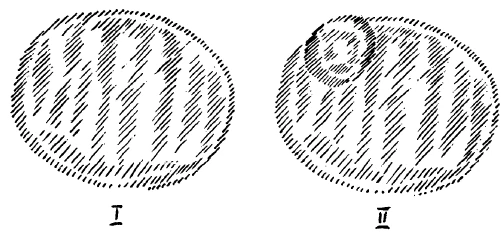
[ 19 ] Denken Sie einmal, wie unsere Verantwortlichkeit erhöht wird, wenn wir wissen: Wäre niemand auf der Erde, der für wahrhafte, echte Moral oder überhaupt geistige Ideale erglühen kann in seiner Seele, so würden wir nicht beitragen zu einem Fortgange unserer Welt, zu einer Neuschöpfung, sondern zu einem Absterben unserer Welt. Diese Leuchtekraft (Zeichnung III), die hier auf der Erde ist, wirkt ins Weltenall hinaus. Das ist allerdings eben für das gewöhnliche menschliche Wahrnehmen zunächst unwahrnehmbar, wie da hinausstrahlt von der Erde, was in dem Menschen Moralisches lebt. Ja, wenn über die ganze Erde heraufziehen würde ein trauriges Zeitalter, in dem Millionen und aber Millionen von Menschen nur in Ungeistigkeit vergehen würden — das Geistige zu gleicher Zeit hier einschließlich des Moralischen gedacht, denn so ist es ja auch —, dann würde, wenn nur ein Dutzend Menschen mit heller moralisch-geistiger Begeisterung da wären, doch die Erde erstrahlen geistig-sonnenhaft. Dasjenige, was da ausstrahlt, das strahlt nur bis zu einer gewissen Entfernung. In dieser Entfernung spiegelt es sich gewissermaßen in sich selbst, und es entsteht hier die Spiegelung desjenigen, was von dem Menschen ausstrahlt. Und diese Spiegelung, die sahen die Initiierten aller Zeiten als die Sonne an. Denn da ist nichts Physisches, ich habe es oft gesagt. Wo die äußere Astronomie davon redet, daß ein glühender Gasball ist, da ist nur die Widerspiegelung eines Geistigen, das physisch erscheint (IV).
[ 19 ] Just think how our responsibility increases when we realize: If there were no one on Earth whose soul could burn with passion for true, genuine morality or spiritual ideals of any kind, we would not be contributing to the continuation of our world, to a new creation, but rather to the demise of our world. This radiant power (Drawing III), which is here on Earth, extends out into the universe. However, it is initially imperceptible to ordinary human perception—the way in which what lives as morality within human beings radiates out from the Earth. Indeed, if a sorrowful age were to descend upon the entire Earth, in which millions upon millions of people would perish in spiritual darkness—the spiritual, including the moral, being considered here at the same time, for that is indeed the case—then, if there were only a dozen people with bright moral and spiritual enthusiasm, the Earth would still shine with a spiritual, sun-like radiance. That which radiates from them shines only to a certain distance. At this distance, it is reflected, as it were, within itself, and here the reflection of that which radiates from the human being arises. And this reflection was regarded by the Initiates of all ages as the sun. For there is nothing physical there; I have often said so. Where external astronomy speaks of a glowing ball of gas, there is only the reflection of a spiritual reality that appears physical (IV).
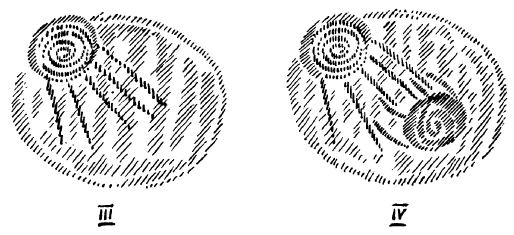
[ 20 ] Sie sehen, wie weit die kopernikanische Weltanschauung und schließlich auch die alte Astrologie entfernt sind von dem, was nun wiederum das Geheimnis der Initiation war. Wie diese Dinge zusammenhängen, das spricht sich wohl am besten darin aus, daß in einer Zeit, in der diejenigen Menschengruppen schon sehr starke Macht hatten, die solche Wahrheiten, wie sie sagten, für die Menge gefährlich fanden und sie ihr nicht mitteilen wollten, daß in einer solchen Zeit ein Idealist wie Julian, den man deshalb den «Abtrünnigen» genannt hat, das der Welt mitteilen wollte und dann auf einem Umwege getötet worden ist. Es gibt eben durchaus Gründe, welche gewisse Geheimgesellschaften dazu veranlassen, die durchdringenden Geheimnisse der Welt nicht mitzuteilen, weil sie dadurch eine gewisse Macht ausüben können. Wenn zu Kaiser Julians Zeiten gewisse Geheimgesellschaften so stark ihre Geheimnisse hüreten, daß sie Julian töten ließen, dann brauchen wir uns nicht zu verwundern, wenn die Behüter gewisser Geheimnisse, die sie aber nicht herausgeben, sondern auch zur Ausgestaltung ihrer Macht vor der Menge hüten wollen, es hassen, wenn nun wenigstens die Anfänge gewisser Geheimnisse enthüllt werden. Und Sie sehen hier wohl etwas von den tieferen Gründen, warum sich in der Welt ein so furchtbares Hassen erhebt gegen dasjenige, was Geisteswissenschaft sich verpflichtet fühlt, in der gegenwärtigen Zeit an die Menschheit heranzubringen. Wir leben aber in einer Zeit, in der entweder die Erdenzivilisation zugrunde gehen wird, oder die Menschheit der Erde gewisse Geheimnisse ausgeliefert bekommt: diese Dinge, die in einer gewissen Weise bisher als Geheimnisse gehütet worden sind, die einmal der Menschheit zugekommen sind. durch instinktives Hellsehen, die jetzt aber wiederum errungen werden müssen durch vollbewußtes Schauen nicht nur des Physischen, sondern auch des Geistigen, das in ihm ist! Was wollte schließlich Julian der Abtrünnige? Er wollte den Leuten begreiflich machen: Ihr gewöhnt euch immer mehr und mehr an, nur die physische Sonne zu sehen; aber es gibt eine geistige Sonne, von der die physische nur der Spiegel ist! — Er wollte auf seine Art das Christus-Geheimnis der Welt mitteilen. Aber man will die Zusammenhänge des Christus, der geistigen Sonne, mit der physischen Sonne verdecken. Daher werden gewisse Machthaber am wütendsten, wenn von dem Christus-Geheimnis im Zusammenhange mit dem Sonnengeheimnis gesprochen wird. Da werden alle möglichen Verleumdungen dann vorgeführt. Aber Sie sehen, Geisteswissenschaft ist in der gegenwärtigen Zeit eine wichtige Angelegenheit. Nur wer sie als wichtige Angelegenheit betrachtet, betrachtet sie in dem vollen Ernste, der ihr gebührt.
[ 20 ] You can see how far the Copernican worldview—and ultimately, ancient astrology as well—are removed from what, in turn, was the mystery of initiation. How these things are connected is perhaps best illustrated by the fact that, at a time when certain groups of people already wielded great power—people who considered such truths, as they put it, dangerous to the masses and did not wish to share them—at such a time, an idealist like Julian, who was therefore called the “Renegade,” wanted to reveal them to the world and was subsequently killed in a roundabout way. There are indeed reasons that prompt certain secret societies not to reveal the profound mysteries of the world, because doing so allows them to exercise a certain power. If, in Emperor Julian’s time, certain secret societies guarded their secrets so fiercely that they had Julian killed, then we need not be surprised if the guardians of certain secrets—who do not reveal them but rather wish to keep them hidden from the masses in order to consolidate their power—resent it when even the beginnings of certain secrets are now being unveiled. And here you can probably see some of the deeper reasons why such terrible hatred is rising in the world against that which spiritual science feels obligated to bring to humanity at the present time. But we live in a time when either earthly civilization will perish, or humanity will be granted access to certain secrets: these things that, in a certain sense, have been guarded as secrets until now—secrets that once came to humanity through instinctive clairvoyance, but which must now be regained through fully conscious perception not only of the physical, but also of the spiritual that is within it! What, after all, did Julian the Apostate want? He wanted to make people understand: You are becoming more and more accustomed to seeing only the physical sun; but there is a spiritual sun, of which the physical sun is merely a mirror! — He wanted, in his own way, to reveal the mystery of Christ to the world. But people want to conceal the connections between Christ—the spiritual sun—and the physical sun. That is why certain people in power become most furious when the mystery of Christ is spoken of in connection with the mystery of the sun. Then all manner of slanders are brought forth. But you see, spiritual science is an important matter in the present age. Only those who regard it as an important matter treat it with the full seriousness it deserves.