

Human-Becoming, World-Soul and World-Spirit I
Human Beings as Physical and Spiritual Entities
in Their Relationship to the World
GA 205
9 July 1921, Dornach
Translate the original German text into any language:
Versions Available:
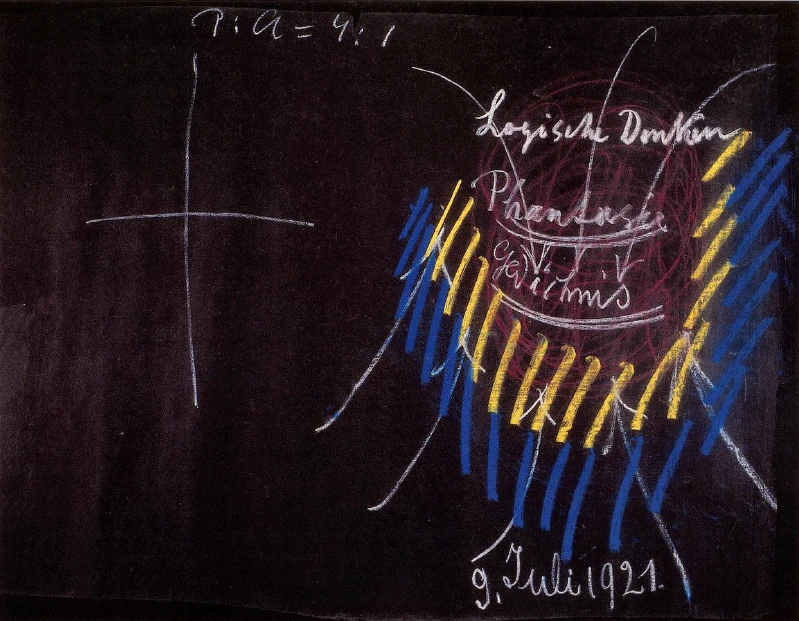
Human-Becoming, World-Soul and World-Spirit I, tr. SOL
Neunter Vortrag
Ninth Lecture
[ 1 ] Den Menschen in das Weltenall erkenntnismäßig hineinzustellen, das war ja in den letzten Wochen die Aufgabe, die hier gestellt worden ist in diesen Betrachtungen. Nun hatte ich gestern versucht anzudeuten, wie der Mensch auf der einen Seite hineingestellt ist in die kosmische Gedankenwelt, aus der er auch herausgebildet ist seiner ganzen Organisation nach, so daß der Mensch auf der einen Seite, indem er hinblickt auf dasjenige, was in seiner sinnlichen Anschauung, seiner gewöhnlichen Erfahrung von ihm selbst nicht erfaßt wird für das gewöhnliche Bewußtsein, in bezug auf diese seine Organisation sich als dem Kosmos angehörig zu denken hat und nur sich gewissermaßen als dem eigenen Selbst angehörig zu denken hat in bezug auf das gewöhnliche Vorstellungsleben, das, wie ich gezeigt habe, sich hineinstellt auf der einen Seite zwischen das kosmische Denken und jenes Denken, von dem ich gesagt habe, daß es bemerkt werden kann als ein Unterstrom des gewöhnlichen Bewußtseins. Dieses letztere würde nun auch zu dem gehören, was der Mensch gewissermaßen als seinem eigenen Selbst angehörig zu betrachten hat. Damit haben wir gestern versucht, einiges Licht zu werfen auf den Menschen, insofern er ein Gedankenerlebnis hat, oder in die Gedankenwelt hineingestellt ist.
[ 1 ] To place human beings within the cosmos through knowledge—that has been the task set forth here in these reflections over the past few weeks. Now, yesterday I attempted to suggest how human beings, on the one hand, are situated within the cosmic world of thought—from which their entire constitution is also formed—so that, on the one hand, by looking toward that which is not grasped by ordinary consciousness through their sensory perception or their ordinary experience of themselves, with regard to this organization of his, he must conceive of himself as belonging to the cosmos, and must, so to speak, conceive of himself as belonging to his own self only in relation to the ordinary life of imagination, which, as I have shown, interposes itself on the one hand between cosmic thinking and that thinking which I have described as an undercurrent of ordinary consciousness. The latter would now also belong to what a person must, in a sense, regard as belonging to his own self. With this, we attempted yesterday to shed some light on the human being insofar as he has a thought experience or is situated within the world of thought.
[ 2 ] Je mehr man sich aufschwingt zu dieser Anschauung, desto mehr wird man lernen, den Menschen hineinzustellen in alles Weltenwerden, in alles das, was ihn erscheinen läßt als ein Stück des kosmischen Werdens. Und wenn man so aufmerksam wird auf jenes Stück des Menschen, das sich nun aus dem gewöhnlichen Gedankenerleben und aus der Unterströmung, die ich gestern charakterisiert habe, zusammensetzt, dann gerade wird man auch begreifen, wie der Mensch durch den Besitz dieses gewissermaßen aus dem Kosmos herausgestellten Stückes eine freie, auf sich gestellte Wesenheit ist.
[ 2 ] The more one rises to this perspective, the more one will learn to place the human being within the entire process of the world’s becoming—within everything that causes him to appear as a part of cosmic becoming. And when one becomes so attentive to that part of the human being that is now composed of ordinary thought life and the undercurrent I characterized yesterday, it is precisely then that one will also understand how the human being, by possessing this part—which is, so to speak, set apart from the cosmos—is a free, self-standing being.
[ 3 ] Diese Betrachtung des Menschen kann man noch weitertreiben, und wir wollen heute einmal versuchen, den Menschen hineinzustellen in den Zusammenhang der übrigen Naturreiche. Da brauche ich ja nur darauf aufmerksam zu machen, daß ich schon öfter gesagt habe, wie unrichtig es ist, bloß im Sinne der heutigen Anatomie und Physiologie das Verhältnis des Menschen, sagen wir zum tierischen Reiche zu betrachten. Gewiß, wenn man den Menschen zunächst seiner Gesamtform nach betrachtet, wie sich diese Gesamtform zusammensetzt aus den einzelnen Organen, dann wird man bemerken, daß der Mensch ungefähr dieselbe Zahl von Knochen, von Muskeln und so weiter hat wie die höheren Tiere, daß diese Organe oder Organsysteme umgestaltet, metamorphosiert sind. Man wird den Menschen anschließen können an die Tierreihe. Etwas ganz anderes aber ergibt sich — und ich habe ja das oft auseinandergesetzt —, wenn man das ins Auge faßt, was den Menschen in einer ganz besonderen Weise hineinstellt in den Kosmos. Da muß bemerkt werden: Des Tieres Rückensäule, die Rückgratsäule, liegt im wesentlichen horizontal, parallel der Erdoberfläche; des Menschen Rückgratsäule steht senkrecht auf der Erdoberfläche. Wenn man nun nicht der Meinung ist, daß alles auf dem Grobmateriellen beruht, sondern wenn man sich durchringt zu der Anschauung, daß dasjenige, was ist, in seiner Wesenheit auf dem ganzen Hineingestelltsein in ein zusammenhängendes Weltensystem beruht, dann wird man schon dieser besonderen Lage des menschlichen Rückgrats eine entsprechende Bedeutung beimessen. Dadurch ist ja auch das Haupt des Menschen in eine ganz andere Lage zu der gesamten Organisation gebracht. Und wenn man sich nur einmal aufgeschwungen hat zu der Anschauung: Der Kosmos ist durchwirkt und durchwebt von Gedanken —, dann wird man, insoferne der Kosmos als räumlich zu gelten hat, in den Gedankenströmungen, die durch den Kosmos gehen, ein Wesentliches sehen, und man wird bemerken können, daß es nicht einerlei ist, ob diejenige Strömung, die beim Menschen längs des Rückgrates geht, sich hineinstellt in die radiale Richtung der Erde, oder ob sie wie beim Tiere parallel läuft mit der Oberfläche der Erde.
[ 3 ] This view of human beings can be taken even further, and today we will try to place human beings within the context of the other kingdoms of nature. I need only point out that I have often said how incorrect it is to view the relationship of human beings—say, to the animal kingdom—solely in terms of modern anatomy and physiology. Certainly, if one first considers the human being in terms of its overall form—how this overall form is composed of the individual organs—one will notice that the human being has roughly the same number of bones, muscles, and so on as the higher animals, and that these organs or organ systems have been transformed, metamorphosed. One could thus place the human being within the animal kingdom. But something quite different emerges—and I have often elaborated on this—when one considers what places human beings in the cosmos in a very special way. Here it must be noted: the animal’s spinal column lies essentially horizontal, parallel to the Earth’s surface; the human spinal column stands vertically to the Earth’s surface. Now, if one does not hold the view that everything is based on the grossly material, but instead brings oneself to the perspective that what exists is, in its very essence, grounded in being fully integrated into a coherent world system, then one will naturally attribute corresponding significance to this particular position of the human spine. This also places the human head in a completely different position within the entire organism. And once one has risen to the perspective that the cosmos is interwoven and permeated by thoughts—then, insofar as the cosmos is to be regarded as spatial, see something essential in the streams of thought that flow through the cosmos, and one will be able to observe that it is not a matter of indifference whether the stream that runs along the human spine aligns itself with the Earth’s radial direction, or whether, as in animals, it runs parallel to the Earth’s surface.
[ 4 ] Dieses Hineingestelltsein des Menschen in einer gewissen Weise in den Kosmos, das hat man dann anzuschauen mit Bezug auf die Gesamtorganisation, also auch für die einzelnen Organe. Jedes Organ und jedes Organsystem liegt ja im Verhältnis zum Kosmos beim Menschen anders als beim Tiere. Das wird nicht beeinträchtigt dadurch, daß etwa jemand sagt, beim Schlafen liege auch die Rückgratsäule des Menschen horizontal, denn es kommt nicht darauf an, wie die einzelne Lage zufällig ist, sondern es kommt darauf an, wie das ganze Wachstum veranlagt ist, wie gewissermaßen ein Organsystem eingesetzt ist in den ganzen Organismus. Und wenn man dies einmal ins Auge faßt, daß wir also da haben tierisches Rückgrat: parallel zur Erdoberfläche, menschliches Rückgrat: senkrecht zur Erdoberfläche, dann wird man auch andere Vorgänge, die im Menschen zu betrachten sind, erst in der rechten Weise zu würdigen verstehen. Und da lenke ich zunächst Ihre Aufmerksamkeit auf ein anderes seelisches System als dasjenige, das wir gestern betrachtet haben. Wir haben gestern das Gedankensystem betrachtet; wir wollen heute das Willenssystem betrachten.
[ 4 ] This way in which human beings are, in a certain sense, situated within the cosmos must be considered in relation to the overall organization—and thus also in relation to the individual organs. After all, the relationship of every organ and every organ system to the cosmos is different in humans than in animals. This is not affected by the fact that, for example, someone might say that when sleeping, the human spine also lies horizontally; for what matters is not the chance position of an individual part, but rather how the entire growth process is structured—how, so to speak, an organ system is integrated into the whole organism. And once we take this into account—that is, that we have the animal spine, which is parallel to the Earth’s surface, and the human spine, which is perpendicular to the Earth’s surface—then we will also be able to properly appreciate other processes that can be observed in human beings. And here I would first like to draw your attention to a different psychological system than the one we considered yesterday. Yesterday we examined the system of thought; today we will examine the system of will.
[ 5 ] Auch dieses Willenssystem, wir können es so betrachten, daß wir uns bewußt werden: Des Menschen Leben zerfällt in seiner Aufeinanderfolge rhythmisch in die Zustände des Schlafens und des Wachens. Im Wachen ist der Mensch ganz hingegeben seiner Leiblichkeit; im Schlaf ist das Ich und der astralische Leib außer der Leiblichkeit, sowohl der physischen wie der ätherischen Leiblichkeit. Wenn wir des Morgens aufwachen, sagte ich Ihnen gestern, bringen wir aus den Gedanken des Weltenalls höchstens eine leise Erinnerung mit. So daß wir uns bewußt werden können: In der ganzen Zeit vom Einschlafen bis zum Aufwachen waren wir untergetaucht in einem wogenden Meer von Weltengedanken. Aber was wir uns mitbringen beim Aufwachen und was uns dann den ganzen Tag über bestimmt während des Wachens, das ist der Wille, das ist das Heraussteigen aus diesem nächtlichen, oder sagen wir, während unseres Schlafes unser Element bildenden Gedankenmeer des Kosmos. Wir tauchen mit dem Willen auf, der, wie ich Ihnen charakterisiert habe, Logik hineinbringt in unser inneres Seelenleben. Wir merken eventuell noch, indem wir aufwachen, in den Träumen, die sich herandrängen, wie unser Seelenleben wäre, wenn nicht dieser Wille, den wir uns mitbringen beim Aufwachen, logisch hineindringen würde.
[ 5 ] We can also view this system of the will in such a way that we become aware: A person’s life, in its rhythmic succession, breaks down into the states of sleep and wakefulness. When awake, a person is wholly immersed in their physicality; during sleep, the “I” and the astral body are outside of physicality—both the physical and the etheric aspects of it. As I told you yesterday, when we wake up in the morning, we bring with us, at most, a faint memory of the thoughts of the universe. So that we can become aware: During the entire time from falling asleep to waking up, we were immersed in a surging sea of cosmic thoughts. But what we bring with us upon waking—and what then determines us throughout the day while we are awake—is the will; it is the emergence from this nocturnal sea of cosmic thoughts—or, shall we say, the sea of thoughts that constitutes our element during sleep. We emerge with the will, which, as I have described to you, brings logic into our inner soul life. As we wake up, we may still notice—in the dreams that press upon us—what our soul life would be like if this will, which we bring with us upon waking, did not logically penetrate it.
[ 6 ] Dieser Wille schlägt also gewissermaßen ein in das, was da wogt und wirbelt in dem menschlichen Organismus. Fassen wir dieses Einschlagen des Willens einmal recht genau ins Auge. Werden wir uns bewußt, wo hinein der Wille da schlägt: Es ist eben das chaotische Durcheinanderwirbeln von Traumbildern und eben auch von jenen Traumgeweben, die wir als Unterströmungen des gewöhnlichen Bewußtseins haben. So daß wir sagen können: Während wir schlafen, entlöst sich dem organischen Getriebe in uns dieses Gedankengewebe, das ganz übertönt ist von dem logikdurchwobenen Gedankengewebe des wachenden Zustandes vom Aufwachen bis zum Einschlafen. Es ist also dieses chaotische Durcheinanderwogen der Traumesbilder und Traumesvorstellungen, in das der Wille einschlägt, den wir beim Aufwachen aus dem Kosmos mitbringen in unseren Organismus hinein. Sehen wir zu, was dieser Wille zunächst mitbringt.
[ 6 ] This will, so to speak, strikes into what is surging and swirling within the human organism. Let us take a very close look at this impact of the will. Let us become aware of what the will is penetrating: it is precisely the chaotic swirling of dream images and also of those dream fabrics that we have as undercurrents of ordinary consciousness. So we can say: While we sleep, this web of thoughts—which is completely drowned out by the logic-interwoven web of thoughts of the waking state, from waking up to falling asleep—is released from the organic machinery within us. It is, therefore, this chaotic surging of dream images and dream concepts into which the will—which we bring into our organism from the cosmos upon waking—intervenes. Let us see what this will initially brings with it.
[ 7 ] Dieser Wille, der da hineinschlägt, bewirkt zunächst, daß die Gedanken nicht so heraufkommen, wie sie in diesem träumerischen Chaos sind. Wir würden schlecht wegkommen im Leben, wenn die Gedanken so heraufkommen würden, wie sie in diesem träumerischen Chaos sind. Wie müssen denn Gedanken sein, wenn sie im normalen Seelenleben heraufkommen? Sie müssen irgendwie zusammenhängen mit unserem Leben. Sie müssen in irgendeiner Weise sich erinnern können. Das ist gewissermaßen das erste, oder das auf erster Stufe Stehende, was dieser einschlagende Wille mit unseren Gedanken vornimmt. Er ordnet sie so, daß wir das richtige Erinnerungsbild in uns tragen. Wir können also sagen: Wir haben gewissermaßen da, aus unserem Organismus aufwirbelnd, das chaotische Gedankengewebe (siehe Zeichnung, rot). — Es ist das also etwas, was besonders stark ist bei träumerischen Naturen, die ja oftmals gar nicht damit zufrieden sind, sich den normalen Erinnerungen des Lebens hinzugeben, die Freude, Wohlgefallen daran haben, wenn nach allerlei Anklängen und Verwandtschaften die Gedanken sich zusammenfinden, sich wieder voneinander trennen. Die träumerischen Naturen werden von diesem chaotischen Gedankengewebe überwältigt. Aber auch der seiner selbst ordentlich bewußte Mensch wird immer bemerken, wenn er sich nur ein wenig während des Wachens, ich möchte sagen, aus der Hand gibt, daß dieses Durcheinanderwirbeln der Gedanken im Hauptuntergrunde eben als ein Unterstrom vorhanden ist. Der Wille, der da einschlägt beim Aufwachen, er trifft dieses Gedankengewebe. Woraus kommt es?
[ 7 ] This will, which breaks into that state, first of all prevents thoughts from arising as they do in this dreamlike chaos. We would fare poorly in life if thoughts arose as they do in this dreamlike chaos. What, then, must thoughts be like when they arise in normal soul life? They must be connected in some way to our lives. They must be able to recall things in some way. This is, so to speak, the first thing—or what occurs at the first stage—that this intervening will does with our thoughts. It arranges them so that we carry the correct mental image within us. So we can say: We have, as it were, this chaotic web of thoughts (see drawing, red) swirling up from within our organism. — This is something that is particularly strong in dreamy personalities, who are often not at all content to simply indulge in the normal memories of life, but who take joy and pleasure in it when, after all sorts of echoes and connections, thoughts come together and then separate again. Dreamy personalities are overwhelmed by this chaotic web of thoughts. But even the person who is quite self-aware will always notice—if they let go just a little while awake, so to speak—that this swirling confusion of thoughts is present in the background as an undercurrent. The will that takes hold upon waking encounters this web of thoughts. Where does it come from?
[ 8 ] Nun, im Bette lag der physische Leib (blau) und der Atherleib (gelb). Was ich Ihnen hier schematisch auf die Tafel gezeichnet habe, das ist im Grunde genommen das, was wir abends im Bette liegen lassen, wenn wir einschlafen, und des Morgens wieder antreffen. Wir lassen unseren Willen da hineinschlagen. Diesen einschlagenden Willen will ich durch diese Linien hier charakterisieren (siehe Zeichnung, Pfeile von oben). Das erste also, was da der Wille zu tun hat, ist, dieses chaotische Gedankengewebe umzugestalten zu unserem normalen Gedächtnis. Wir können also sagen, zunächst gestaltet dieser einschlagende Wille das Gedankengewebe um zu dem normalen Gedächtnis. Man möchte sagen: Da ist das, was wir des Morgens antreffen, Atherleib, physischer Leib, noch sehr mächtig in dem Gedächtnis. Die spiegeln uns diese Gedanken zurück. — Aber es ist doch der Wille, der da einschlägt und der wirklich etwas zu tun hat, indem er da einschlägt. Man kann das schon bemerken. Versuchen Sie nur einmal, ganz ordentlich daraufzukommen, wie, wenn Sie des Morgens aufwachen, alles wie wirbelnde Ströme herauf will aus der Seele wie ein Ereignis, das Sie erlebt haben im fünften, im siebenten Jahre, wiederum im sechsten Jahre, wiederum im fünfzehnten Jahre, meinetwillen im fünfundsechzigsten Jahre, dann im einundzwanzigsten, siebzehnten Jahre, wiederum im achten Jahre, wie das alles bunt durcheinander wirbelt und wurlt. Da hinein hat der Wille zu schlagen. Dann gliedert er gewissermaßen das alles wiederum so, daß es ein ordnungsmäßiges Gedächtnis ist, daß Ihnen ein Ereignis, das im neunten Jahre sich abgespielt hat, sich nicht vorne hinwurlt vor das, was sich im achten Jahre abgespielt hat und dergleichen. Da schlägt also der Wille hinein, und er formt aus diesem chaotischen Traumgewebe das Gedächtnis. Im Gedächtnis merken Sie noch wenig den Willen. Die meisten Menschen werden überhaupt noch nicht im Gedächtnis den Willen erblicken wollen. Aber er ist darinnen, es ist nur dieses Einschlagen des Willens, insofern er das Gedächtnis formt, viel unbewußter.
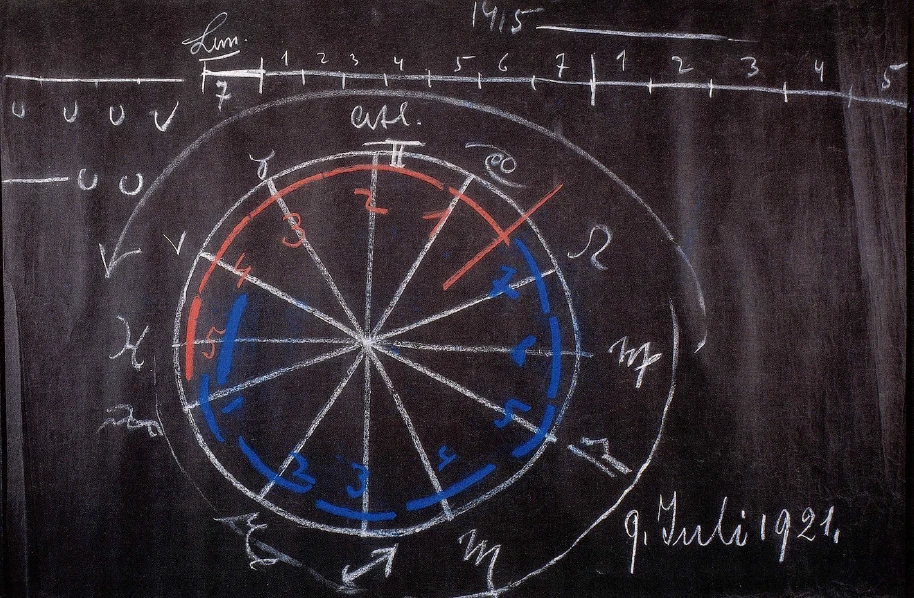
[ 8 ] Well, lying in bed were the physical body (blue) and the etheric body (yellow). What I have drawn here schematically on the board is, essentially, what we leave behind in bed at night when we fall asleep, and find again in the morning. We allow our will to penetrate into it. I want to characterize this penetrating will with these lines here (see drawing, arrows from above). So the first thing the will has to do there is to transform this chaotic web of thoughts into our normal memory. We can therefore say that, first of all, this penetrating will reshapes the web of thoughts into normal memory. One might say: What we encounter in the morning—the etheric body, the physical body—is still very powerful in our memory. These thoughts reflect back to us. — But it is, after all, the will that intervenes there and that truly has a task to perform by intervening. One can already notice this. Just try once to really grasp how, when you wake up in the morning, everything surges up from the soul like swirling currents—an event you experienced in the fifth, in the seventh year, again in the sixth year, again in the fifteenth year, for all I care in the sixty-fifth year, then in the twenty-first, seventeenth year, again in the eighth year—how it all swirls and churns in a colorful jumble. This is where the will must intervene. Then, in a sense, it reorganizes all of this so that it becomes an orderly memory—so that an event that took place in the ninth year does not jostle its way to the front ahead of what happened in the eighth year, and so on. So the will intervenes, and it shapes memory out of this chaotic web of dreams. In memory, you are still barely aware of the will. Most people do not even want to perceive the will in their memory at all. But it is there; it is just that this intervention of the will—insofar as it shapes memory—is much more unconscious.
[ 9 ] Das zweite ist etwas, an dem der Mensch schon merkt, wie sein Wille drinnen ist. Das ist dasjenige, was nun dieser Wille, den wir uns mitbringen beim Aufwachen, aus diesem Gedankengewoge auch macht: das ist die Einbildungskraft, das ist die Phantasie (siehe Zeichnung). Das ist das zweite Element. Da merken Sie schon, daß Sie sich mit Ihrer Willkür drinnen bewegen können. Indem das Gedächtnis geformt ist, müssen Sie noch gezwungen werden durch Ihren Organismus, da wirkt physischer Leib, Atherleib stark; in der Phantasie weniger stark, da können Sie sich mit Ihrem Willen darinnen bewegen. Aber es ist doch ein gewaltiger Unterschied zwischen einem Menschen, der phantasievoll ist und einem träumenden Menschen, der sich diesem Gewoge des willkürlichen Denkens einfach hingibt. Ein Mensch, der seine Phantasie walten läßt, der weiß, wie sein Wille waltet in diesen ineinanderwogenden Bildern, und er formt sie nach seinem Willen.
[ 9 ] The second element is something through which a person can already perceive how their will is at work within them. This is what the will—which we bring with us upon waking—creates from this wave of thoughts: it is the power of imagination, it is the fantasy (see drawing). That is the second element. Here you already realize that you can move within it using your will. Since memory is already formed, you must still be guided by your organism; the physical body and the etheric body exert a strong influence here; in the imagination, this influence is less strong, and you can move within it using your will. But there is, after all, a tremendous difference between a person who is imaginative and a dreamer who simply surrenders to this surging tide of arbitrary thought. A person who lets their imagination run free knows how their will governs these intermingling images, and they shape them according to their will.
[ 10 ] Nun aber das dritte. Das dritte, das ist nun schon etwas, was auf der einen Seite wirklich ganz und gar dem Willen hingegeben ist und auf der andern Seite doch wiederum so ist, daß der Wille sich nicht so frei bewegt wie in der Phantasie. Es ist das logische Denken, von dem wir im Leben und in der Wissenschaft ja abhängig sind. Da, in diesem logischen Denken, ist durchaus unser Wille tätig; aber er begibt sich seiner eigenen Freiheit und unterwirft sich den Gesetzen der Logik. Doch ist es sein Tun, daß er sich dem Gesetze der Logik unterwirft. Das ist also das dritte: das logische Denken.
[ 10 ] But now for the third. The third is something that, on the one hand, is truly and completely surrendered to the will, yet on the other hand, the will does not move as freely as it does in the imagination. It is logical thinking, on which we depend in life and in science. There, in this logical thinking, our will is certainly active; but it relinquishes its own freedom and submits to the laws of logic. Yet it is the will’s own act to submit to the laws of logic. So this is the third: logical thinking.
[ 11 ] Warum ist das logische Denken auf der einen Seite durchaus dem Willen unterworfen? Würden wir nicht aus unserem Willen heraus unser logisches Denken bilden, so wären es Zwangsgedanken. Wir müssen durchaus aus unserem Willen heraus unsere logischen Gedanken bilden. Aber wir bilden sie so, daß wir uns nach der Außenwelt richten, die ja im wesentlichen die große Lehrmeisterin auch der Logik zunächst ist. Wir durchtränken die chaotische Bilderwelt mit den Gesetzen der Logik. Wir geben uns also durch den Willen hin an diese Gesetze der Logik; wir begeben uns in gewissem Sinne des willkürlichen Waltens. Der Wille ist auf der einen Seite frei im Denken, auf der andern Seite begibt er sich seiner Freiheit zugunsten eben des Logischen. Aber in diesen drei Etappen, Gedächtnis, Phantasie, logisches Denken, ist der Wille tätig; jener Wille, der vom Einschlafen bis zum Aufwachen eben nicht in dem menschlichen physischen und Atherorganismus wirkt und der des Morgens beim Aufwachen einschlägt in den physischen und den ätherischen Organismus, und der dieses, ich möchte sagen, unbestimmte Feuer des ätherischen und physischen Leibes, das in dem Gedankengewoge sich entfacht, durchgliedert in Gedächtnis, Phantasie, logisches Denken.
[ 11 ] Why is logical thinking, on the one hand, entirely subject to the will? If we did not shape our logical thinking out of our own will, it would consist of obsessive thoughts. We must indeed form our logical thoughts through our will. But we form them in such a way that we orient ourselves toward the external world, which is, after all, essentially the great teacher of logic in the first place. We imbue the chaotic world of images with the laws of logic. We thus surrender ourselves through the will to these laws of logic; in a certain sense, we submit to their arbitrary rule. On the one hand, the will is free in thinking; on the other hand, it relinquishes its freedom in favor of logic itself. But in these three stages—memory, imagination, and logical thinking—the will is active; that will which, from falling asleep until waking, does not act within the human physical and etheric organism, and which, upon waking in the morning, strikes into the physical and etheric organism, and which structures this—I might say—indeterminate fire of the etheric and physical body, which flares up in the surge of thought, into memory, imagination, and logical thinking.
[ 12 ] Es ist im logischen Denken schon so, daß wir nun nicht mehr ganz in uns waltend sind mit unserem Willen. Das sind wir nicht. Wenn wir unsere Phantasie walten lassen, in der wir unseren Willen deutlich merken, dann wissen wir, wie wir in uns sind; wenn wir unser logisches Denken walten lassen, so sind wir nicht mehr völlig in uns. Wir wissen, daß wir uns da ganz und gar dem Kosmos anpassen, aber nicht nur etwa dem außermenschlichen Kosmos, sondern dem ganzen Kosmos, der den Menschen mit umschließt. Denn selbstverständlich gilt die Logik nicht nur für den außermenschlichen Kosmos, sondern sie gilt auch für den Kosmos plus dem Menschen. Logik ist weder subjektiv noch objektiv, sondern Logik ist beides zu gleicher Zeit.
[ 12 ] In logical thinking, it is indeed the case that we are no longer fully in control of ourselves through our will. We are not. When we let our imagination run free—in which we clearly perceive our will—then we know how we are within ourselves; when we let our logical thinking take over, we are no longer fully within ourselves. We know that we are adapting ourselves completely to the cosmos—but not just to the non-human cosmos, but to the entire cosmos, which encompasses human beings as well. For, of course, logic applies not only to the non-human cosmos, but also to the cosmos including human beings. Logic is neither subjective nor objective; rather, logic is both at the same time.
[ 13 ] Wir sehen da also gewissermaßen, welchen Anteil dasjenige hat, was wir uns am Morgen aus der Schlafeswelt in unser Seelenleben herein mitbringen. Und wir können ungefähr auch wissen: Wenn dasjenige, was da als Wille eingetaucht ist, wiederum sich zurückzieht in die kosmische Gedankenwelt, waltet in uns wiederum nur dasjenige, was aus dem physischen Leib und Ätherleib aufsteigt.
[ 13 ] So, in a sense, we can see the role played by what we bring with us into our inner life each morning from the world of sleep. And we can also surmise that when that which has entered as will withdraws back into the cosmic world of thought, only that which rises from the physical body and the etheric body reigns within us once more.
[ 14 ] Nun ist dieses die eine Seite des Willens, die in uns da waltet. Es ist gewissermaßen die kosmische Seite des Willens, diejenige Seite, die wir abends aus uns herausnehmen, morgens wiederum in uns zurückbringen. Aber Selbstbesinnung wird ja den Menschen lehren, daß nicht nur dieser Wille in ihm vorhanden ist, von dem ich eben jetzt gesprochen habe, denn dieser Wille äußert sich im wesentlichen im sogenannten Seelenleben, im Gedächtnis, in Phantasie, in logischem Denken. Aber wenn wir gehen, wenn wir greifen, wenn wir irgendwie uns eines Instrumentes bedienen, da ist ja auch der Wille tätig. Da ist dieser Wille nicht so bloß seelisch tätig, wie ich es jetzt beschrieben habe, da faßt dieser Wille in sich unsere physische Organisation und unsere Atherorganisation. Ich darf also nicht bloß den Willen in diesen Pfeilen hier charakterisieren, sondern ich muß den Willen auch den physischen und den Ätherleib durchziehend darstellen (siehe Zeichnung Seite 157, Pfeile von unten). So daß ich sagen muß: Der Wille ist auch in dem vorhanden, was beim Schlafen im Bette liegen bleibt. — Der Wille, der in diesem letzteren Sinne charakterisiert werden muß, der kommt gewissermaßen entgegen dem andern Willen, der während des Schlafens nicht in dem physischen Leib des Menschen ist. Und zu einer äußeren Tätigkeit wird im Grunde genommen dieser letztere Wille. Also dieser Wille, der in den Organen lebt, der in der physischen und in der Ätherorganisation lebt, wird dadurch aufgerufen, daß der andere Wille ihm entgegenkommt. Aber wenn wir als wacher Mensch tätig sind, so können wir deutlich diese zwei Willenssphären unterscheiden.
[ 14 ] Now this is one aspect of the will that reigns within us. It is, so to speak, the cosmic aspect of the will—the aspect that we take out of ourselves in the evening and bring back into ourselves in the morning. But self-reflection will teach us that it is not only this will—of which I have just spoken—that is present within us, for this will essentially manifests itself in what is called the life of the soul: in memory, imagination, and logical thinking. But when we walk, when we grasp something, when we use an instrument in any way, the will is also at work there. There, this will is not merely active in the soul, as I have just described; there, this will encompasses our physical organization and our etheric organization. I must therefore not merely characterize the will within these arrows here, but I must also depict the will as permeating the physical and etheric bodies (see drawing on page 157, arrows from below). So I must say: The will is also present in what remains in bed while we sleep. — The will that must be characterized in this latter sense, so to speak, comes to meet the other will, which is not in the human physical body during sleep. And this latter will essentially becomes an outward activity. So this will, which lives in the organs, which lives in the physical and etheric organization, is called forth by the fact that the other will comes to meet it. But when we are active as waking human beings, we can clearly distinguish between these two spheres of the will.
[ 15 ] Beachten Sie, daß da auf der einen Seite Wille wirkt, der dem Willen, der von der andern Seite kommt, entgegenwirkt. Wir haben gewissermaßen das Zusammenwirkende zweier Willensströmungen. Die eine Willensströmung durchwirbelt den menschlichen Organismus und der ganze Zusammenhang zeigt Ihnen, daß Sie sie ansehen müssen als von unten nach oben wirbelnd. Die andere Strömung durchwirbelt von oben nach unten. Da kommen die Richtungen im Kosmos zur Geltung, da merken wir, daß es beim Tiere anders sein muß, indem die Hauptrichtung seiner Leibesorganisation gerade senkrecht auf die Hauptrichtung der Leibesorganisation des Menschen steht. Anders eingegliedert in den Kosmos sind die Richtungen des Willens. Also auch wenn wir, ich möchte sagen, auf die Differenzierungen des Menschen eingehen, wenn wir uns klarmachen, wie dieses menschliche Wesen aus einzelnen Strömungen sich zusammensetzt, dann merken wir die Wichtigkeit des Hineingestelltseins des Menschen in den Kosmos.
[ 15 ] Note that on one side there is a will at work that counteracts the will coming from the other side. In a sense, we have the interaction of two streams of will. One current of will swirls through the human organism, and the entire context shows you that you must regard it as swirling from the bottom up. The other current swirls from the top down. Here the directions in the cosmos come into play; here we realize that it must be different in animals, in that the main direction of their physical organization is precisely perpendicular to the main direction of the human physical organization. The directions of the will are integrated into the cosmos in a different way. So even when we—I would say—examine the distinctions of the human being, when we make clear to ourselves how this human being is composed of individual currents, we realize the importance of the human being’s place within the cosmos.
[ 16 ] Nun betrachten wir etwas weiter diese zwei Willensströmungen. Sie werden, wie bei vielen Dingen der Geisteswissenschaft, nicht in der Weise vorgehen können, daß Sie, ich möchte sagen, wie in der mathematischen Ableitung eins aus dem andern geben, sondern in der Geisteswissenschaft stellt sich die Sache, wie man zu den Wahrheiten kommt, so: eine Wahrheit stellt sich neben die andere hin und man muß nachher den Zusammenhang suchen. Bei oberflächlichen Tröpfen führt dann das sehr leicht zu dem Einwande, daß man nicht «beweist». Es ist gerade so, wie wenn jemand verlangen würde, wenn er irgendwo auf dem Felde ein Pferd und eine Kuh sieht, die nebeneinanderstehen und die ganz gewiß aus irgendeiner Ursache nebeneinander stehen, man solle ihm aus dem Pferd heraus beweisen, daß die Kuh danebensteht. Man kann natürlich nicht aus der Wesenheit des Pferdes beweisen, daß die Kuh danebensteht. Diesen Inhalt hat ungefähr der Einwand, den sehr viele Leute in bezug auf das Beweisen in der Geisteswissenschaft machen.
[ 16 ] Now let us examine these two currents of the will in a little more detail. As with many aspects of spiritual science, you will not be able to proceed in such a way that—I might say—you derive one from the other, as in a mathematical derivation; rather, in spiritual science, the way one arrives at truths is as follows: one truth stands alongside another, and one must subsequently seek the connection between them. For superficial fools, this very easily leads to the objection that one does not “prove” anything. It is just as if someone, upon seeing a horse and a cow standing side by side in a field—and they are certainly standing there side by side for some reason—were to demand that one prove, based on the horse alone, that the cow is standing next to it. Of course, one cannot prove from the nature of the horse that the cow is standing next to it. This is roughly the substance of the objection that many people raise regarding proof in spiritual science.
[ 17 ] Ich möchte Ihnen nun eine andere Tatsache neben diejenige stellen, die ich eben jetzt angeführt habe und die Sie nach und nach versuchen müssen mit dem, was ich eben auseinandergesetzt habe, in den gehörigen Zusammenhang zu bringen.
[ 17 ] I would now like to present another fact alongside the one I just mentioned, and you will need to gradually try to place it in the proper context in light of what I have just explained.
[ 18 ] Alles, was seelisch im Menschen ist, drückt sich auch in der Körperlichkeit aus, prägt sich der Körperlichkeit ein. Der Mensch ist organisiert dazu, daß er durch das Aufwachen anfacht Gedächtnis, Phantasie, logisches Denken, daß er sie gewissermaßen wiederum in sich ruhen läßt während des Schlafens. Das ist eine Art Rhythmus. Dieser Rhythmus stellt sich einem andern gegenüber: der Willensströmung, die ich hier als in den Organen befindlich angegeben habe. Was sich da einander gegenübersteht als zwei Strömungen, Sie können es, ich möchte sagen, abgebildet im Menschen wiederfinden: Sie können es finden, indem Sie hinblicken auf jenes System, das gegeben ist durch den menschlichen Atmungsrhythmus. Ich habe schon vor einigen Tagen darauf aufmerksam gemacht, wie der Atmungsrhythmus wirklich im Zusammenhang gedacht werden kann mit dem Einschlafen und Aufwachen. Wenn auch das Atmen natürlich das Schlafen überdauert, so merkt man den Zusammenhang dennoch in alldem, was zum Beispiel während des Schlafens irgendwie eine Beeinträchtigung des ruhigen Atmens bewirkt. Es liegt dieser Zusammenhang zwischen dem Atmen und dem Rhythmus des Aufwachens, Einschlafens, Aufwachens, Einschlafens nicht so offen, aber es ist dieser Zusammenhang, dieses Verhältnis doch da. Und wir haben, wenn wir den Menschen in bezug auf sein Nach-aufwärts-Streben betrachten, als etwas Wesentliches, was mit diesem Aufwärtsstreben zusammenhängt, den Atmungsrhythmus ins Auge zu fassen, das ganze Atmungssystem, auch insofern es sich ausdrückt in dem Sprechsystem. Wir atmen, wir sprechen als Menschen nach oben im wesentlichen, wenn auch das sich gerade durch die Lage unseres Halses umformt zum Sprechen nach vorne. Da haben wir den einen Rhythmus, einen einheitlichen Rhythmus.
[ 18 ] Everything that is spiritual in a human being is also expressed in the physical realm and imprints itself upon it. Human beings are organized in such a way that, upon waking, they stir into action their memory, imagination, and logical thinking, and then, in a sense, allow these faculties to rest within them again during sleep. This is a kind of rhythm. This rhythm stands in contrast to another: the flow of the will, which I have described here as residing in the organs. What stands in opposition to one another as two flows—you can, I would say, find it reflected in the human being: you can find it by looking at that system which is given by the human respiratory rhythm. I pointed out a few days ago how the breathing rhythm can truly be understood in connection with falling asleep and waking up. Even though breathing naturally continues beyond sleep, one nevertheless notices the connection in everything that, for example, somehow disrupts peaceful breathing during sleep. This connection between breathing and the rhythm of waking up, falling asleep, waking up, and falling asleep is not immediately obvious, but this connection, this relationship, is indeed there. And when we consider human beings in relation to their striving upward, we must focus on the breathing rhythm—the entire respiratory system, including as it is expressed in the speech system—as something essential connected to this upward striving. As human beings, we essentially breathe and speak upward, even if this is transformed into speaking forward due to the position of our throat. There we have a single rhythm, a unified rhythm.
[ 19 ] Wir haben einen andern Rhythmus, wir haben den Rhythmus der Zirkulation, den Rhythmus, der uns im Pulsschlag gegeben ist, und wir wissen ja, daß der Pulsrhythmus zum Atmungsrhythmus sich ungefähr verhält wie vier zu eins. Sie brauchen nur ein wenig im Sinne des Anatomischen, Physiologischen nachzudenken, so werden Sie sich sagen: Im Pulsrhythmus, im Rhythmus der Zirkulation haben wir dasjenige, was sich nach unten innig zusammenschließt mit dem StoffwechselGliedmaßensystem des Menschen. Das eigentliche rhythmische System haben wir für sich, ich möchte sagen, herausgegliedert in dem Atmungssystem. Je mehr man sich einläßt auf eine Charakteristik des Atmungssystems einerseits und auf eine Charakteristik des Pulssystems andererseits, um so mehr merkt man, daß man alles dasjenige, was da als Organ vorhanden ist für die Bildung von Gedächtnis, Phantasie, von logischem Denken sogar, in Zusammenhang bringen darf mit dem Atmungsrhythmus, und daß man all das andere, was da zusammenhängt mit dem Willen, der die Organe durchströmt, in Zusammenhang bringen darf mit dem Pulsrhythmus, indem es sich nach oben äußert. So wie der Wille, der in unseren Organen ist, zusammenschlägt mit dem Willen, den wir beim Aufwachen aus dem Kosmos heraus mitbringen, so schlägt der Atmungsrhythmus mit dem Pulsrhythmus, mit dem Zirkulationsrhythmus zusammen. Und da haben wir in dem Ineinanderwirken von Atmungsrhythmus und Pulsrhythmus förmlich leiblich gegeben dasjenige, was dem Menschen von unten heraufstößt und was von oben herunterschlägt, aber so, daß das von oben Herunterschlagende viermal langsamer ist als das von unten Heraufschlagende. Würde ich diesen Strich machen als die Zeitbetrachtung für den Atmungsrhythmus, so müßte ich für den Pulsrhythmus vier annehmen.
[ 19 ] We have a different rhythm; we have the rhythm of circulation, the rhythm given to us by our pulse, and we know, of course, that the pulse rhythm is roughly four to one compared to the respiratory rhythm. You need only reflect a little on the anatomical and physiological aspects, and you will say to yourself: In the pulse rhythm, in the rhythm of circulation, we have that which is intimately connected, at a deeper level, with the human metabolic-limb system. The actual rhythmic system, I would say, is distinct and set apart in the respiratory system. The more one delves into the characteristics of the respiratory system on the one hand and the characteristics of the pulse system on the other, the more one realizes that everything that exists there as an organ for the formation of memory, imagination, and even logical thinking, may be related to the respiratory rhythm, and that everything else connected with the will—which flows through the organs—may be related to the pulse rhythm, as it manifests itself upward. Just as the will that is within our organs merges with the will we bring with us from the cosmos upon waking, so the respiratory rhythm merges with the pulse rhythm, with the circulatory rhythm. And there, in the interplay of the respiratory rhythm and the pulse rhythm, we have—in a very physical sense—that which surges up in the human being from below and that which beats down from above, but in such a way that what beats down from above is four times slower than what surges up from below. If I were to draw this line to represent the time interval for the respiratory rhythm, I would have to assume a value of four for the pulse rhythm.
[ 20 ] In der Tat beruht alles, was der Mensch an Kunst, an rhytmischer Kunst entwickelt, auf diesem Verhältnis des Pulsrhythmus zum Atmungsrhythmus. Ich habe das bei Gelegenheit der Auseinandersetzung über Rezitationskunst schon gesagt. Sie können noch mehr ins einzelne gehen. Sie können denken, wenn Sie den Pulsrhythmus mehr zugrunde legen, so bekommen Sie: kurze Silbe, lange Silbe. Wenn Sie den Atmungsrhythmus kombinieren mit dem Pulsrhythmus, bekommen Sie zum Beispiel das Versmaß des Hexameters und so weiter. Alle Versmaße beruhen auf diesem Verhältnisse der Rhythmen, die im Menschen selber sind.
[ 20 ] In fact, everything that human beings develop in the realm of art—particularly rhythmic art—is based on this relationship between the pulse rhythm and the breathing rhythm. I have already mentioned this in the context of the discussion on the art of recitation. You can go into even greater detail. You can think of it this way: if you base your rhythm more on the pulse, you get short syllables and long syllables. If you combine the breathing rhythm with the pulse rhythm, you get, for example, the meter of the hexameter, and so on. All meters are based on this relationship between the rhythms that exist within human beings themselves.
[ 21 ] Nun sieht man, wenn man auf den Blutrhythmus sieht, gewissermaßen mehr auf das Körperliche, wenn man mehr auf den Atmungsrhythmus sieht, sieht man auf das Seelische. Der Atmungsrhythmus ist mit dem Seelischen viel mehr verwandt als der Blutrhythmus. Der Atmungsrhythmus öffnet sich auch nach außen, wie sich die Logik, das logische Denken nach außen öffnet. Nun, auf Unregelmäßigkeiten dieser Rhythmen beruhen Unregelmäßigkeiten des menschlichen Lebens. Sie können sich ja denken, wenn wirklich ein solches Verhältnis des Rhythmus vier zu eins besteht oder eins zu vier, dann muß es etwas bedeuten, wenn, sagen wir, der Atmungsrhythmus zu lang oder der Pulsrhythmus zu kurz wird. Und dennoch kann das beim Menschen der Fall sein. Es kann sogar in einer sehr unbedeutenden Weise der Fall sein; dann äußert es sich gleich.
[ 21 ] Now, when one focuses on the blood rhythm, one is, in a sense, focusing more on the physical; when one focuses more on the breathing rhythm, one is focusing on the soul. The respiratory rhythm is much more closely related to the soul than the blood rhythm. The respiratory rhythm also opens outward, just as logic and logical thinking open outward. Well, irregularities in these rhythms are the basis for irregularities in human life. You can imagine that if such a four-to-one or one-to-four ratio of rhythms truly exists, then it must mean something if, say, the breathing rhythm becomes too long or the pulse rhythm too short. And yet this can be the case in human beings. It can even be the case in a very insignificant way; in that case, it manifests itself immediately.
[ 22 ] Nun will ich einmal die radikalen Fälle hinstellen. Denken Sie sich, ein Mensch gerät in Aufregung. Er fängt an, leidenschaftlich zu werden. Über irgend etwas fängt er an zu schimpfen. Das kann gehen bis zum Toben. Oder ein Mensch gerät in den Zustand, den man so bezeichnet: die Gedanken, sie wollen nicht, sie stehen still; man kann nicht recht denken, sie bleiben aus. So wie das Toben vorhin der radikalste Aufschluß war, wie es vom Leidenschaftlichwerden durch Schimpfen, durch Fauchen zum Toben kommt, so kommt es, wenn die Gedanken stillstehen, nach und nach zu einer Art von Ohnmacht. Das erstere, das Leidenschaftlichwerden, das Emotionellwerden, das beruht auf einem Zuschnellwerden des Pulsrhythmus. Das Gedankenaufhalten, das Ohnmächtigwerden beruht auf einem Zulangsamwerden des Atmungsrhythmus.
[ 22 ] Now let me describe the most extreme cases. Imagine a person getting worked up. He begins to get carried away. He starts ranting about something. This can escalate to the point of raging. Or a person enters a state that is described as follows: the thoughts—they won’t cooperate, they come to a standstill; one cannot think properly, they fail to come. Just as the raging mentioned earlier was the most extreme example—how becoming passionate through ranting and snarling leads to raging—so too, when thoughts come to a standstill, a kind of fainting gradually sets in. The former—becoming passionate, becoming emotional—is based on the pulse rate becoming too fast. The halting of thoughts, the loss of consciousness, is based on the breathing rhythm becoming too slow.
[ 23 ] Sie sehen also, der Mensch selber ist eingesponnen in den ganzen Weltenrhythmus, und von dem, wie er dadrinnen ist in diesem Weltenrhythmus, hängt es ab, wie er uns körperlich, seelisch entgegentritt. Das Emotionelle drückt sich ja auch körperlich aus: die Strömung, die durch den Organismus von unten nach oben geht, wird zu schnell, sie durchschüttelt die Organe, und wenn es zum Toben kommt, sieht man, wie die Organe durchschüttelt werden. Die Strömung, die von oben nach unten geht, wird zu langsam, die Gedanken wollen nicht von oben nach unten gehen. Sie sehen da wiederum, wie es darauf ankommt, daß wir uns eine Vorstellung machen können, wie der Mensch drinnensteht in dem ganzen Weltenzusammenhang, wie er sich eingliedert, wie es nur eine kindische Vorstellung ist, wenn man die Knochen, die Muskeln und so weiter abzählt und sagt: Der Mensch ist nur ein höheres tierisches Gebilde —, und nicht Rücksicht nimmt darauf, daß es auf dieses Hineinstellen in den ganzen kosmischen Zusammenhang ankommt.
[ 23 ] So you see, human beings themselves are woven into the entire rhythm of the world, and the way they are situated within this rhythm determines how they present themselves to us physically and emotionally. Emotions are, after all, also expressed physically: the current that flows through the organism from bottom to top becomes too fast, it shakes the organs, and when it reaches a frenzy, you can see how the organs are being shaken. The current flowing from top to bottom becomes too slow; thoughts refuse to flow from top to bottom. Here, too, you can see how crucial it is that we be able to form a conception of how the human being is situated within the entire cosmic context, how they integrate into it—and how it is merely a childish notion to count the bones, muscles, and so on and say: “Human beings are merely a higher form of animal”—without taking into account that what matters is this placement within the entire cosmic context.
[ 24 ] Nun werde ich Ihnen etwas sagen, das scheinbar sehr weit weg liegt von dem, was ich jetzt ausgeführt habe, das sich aber trotzdem in dem morgigen Vortrage mit dem, was ich eben ausgeführt habe, zusammengliedern wird zu einem Ganzen. Gehen wir jetzt über vom menschlichen Sein zum menschlichen Werden. Sie wissen, daß wir jetzt leben im sogenannten fünften nachatlantischen Zeitraum, der begonnen hat etwa 1415 oder 1413 und der da weitergehen wird. Ihm geht der vierte voran, der begonnen hat etwa 747 vor dem Mysterium von Golgatha, und diesem der dritte, der wiederum weiter zurückgeht bis in das 4. Jahrtausend.
[ 24 ] Now I am going to tell you something that seems very far removed from what I have just explained, but which will nevertheless, in tomorrow’s lecture, come together with what I have just explained to form a whole. Let us now move from human being to human becoming. You know that we are now living in what is called the fifth post-Atlantean epoch, which began around 1415 or 1413 and will continue from there. It is preceded by the fourth, which began around 747 before the Mystery of Golgotha, and that by the third, which in turn goes back even further to the 4th millennium.
[ 25 ] Nun, wenn wir diese Zeiträume betrachten, so können wir uns von ihrer Aufeinanderfolge folgendes schematisches Bild machen. Sie denken sich, bitte, daß dem atlantischen Zeitraum vorangegangen ist der, den ich in meiner «Geheimwissenschaft im Umriß» den lemurischen genannt habe. Ich will hier nur die letzten Phasen dieses lemurischen Zeitraumes annehmen, will jetzt die sieben aufeinanderfolgenden Kulturzustände der atlantischen Zeit zeichnen: und jetzt haben wir dann daranschließend urindische, urpersische, ägyptisch-chaldäische, griechisch-lateinische, und jetzt unsere fünfte Zeit; das würde der letzte Zeitraum sein. Ich habe Ihnen da die aufeinanderfolgenden Zeiträume schematisch dargestellt.
[ 25 ] Now, when we consider these periods, we can form the following schematic picture of their sequence. Please imagine that the Atlantean period was preceded by the one I called the Lemurian period in my Outline of the Occult Science. I will consider here only the final phases of this Lemurian epoch and will now outline the seven successive cultural stages of the Atlantean era: and following that, we have the Proto-Indian, Proto-Persian, Egyptian-Chaldean, Greek-Latin, and now our fifth era; that would be the most recent epoch. I have presented the successive periods to you schematically here.
[ 26 ] Sie wissen nun auch aus meiner «Geheimwissenschaft» und aus andern Darstellungen, die ich gegeben habe, daß ein solcher Zeitraum ungefähr so lange dauert, bis der Frühlingspunkt der Sonne den ganzen Durchgang durch den Tierkreis vollendet hat. Es ist das nur ungefähr, aber für dasjenige, was wir jetzt in Betracht ziehen wollen, wird dieses Ungefähr seine gute Bedeutung haben. 747 vor dem Ereignis von Golgatha trat der Frühlingspunkt in das Tierkreiszeichen des Widders. Er blieb in diesem Tierkreiszeichen bis ins 15. Jahrhundert. Da ging er über und ist jetzt im Tierkreisbild der Fische. Vor 747 war der Frühlingspunkt im Zeichen des Stieres, also die ganze ägyptisch-chaldäische Kulturzeit hindurch ging die Sonne im Frühling im Sternbild des Stieres auf; daher der Stierdienst. Dann die urpersische Zeit; die verlief so, daß die Sonne aufging im Sternbilde der Zwillinge. Im Sternbilde des Krebses ging die Sonne auf während der urindischen Zeit. Dann kommen wir schon in die atlantische Zeit zurück und haben die sieben Kulturzeiträume in der atlantischen Zeit. Nun bitte ich Sie, einmal folgendes ins Auge zu fassen und es vor Ihre Seele hinzustellen als eine Frage, die wir uns heute zunächst einmal vorlegen.
[ 26 ] You now know from my Occult Science and from other explanations I have given that such a period lasts approximately as long as it takes for the vernal equinox to complete its entire passage through the zodiac. This is only an approximation, but for the purpose we now wish to consider, this approximation will serve its purpose well. In 747 B.C., the vernal equinox entered the zodiac sign of Aries. It remained in this sign until the 15th century. Then it moved on and is now in the zodiac sign of Pisces. Before 747, the vernal equinox was in the sign of Taurus; thus, throughout the entire Egyptian-Chaldean cultural period, the Sun rose in the constellation of Taurus in the spring—hence the cult of Taurus. Then came the Proto-Persian period, during which the Sun rose in the constellation of Gemini. During the ancient Indian period, the sun rose in the constellation of Cancer. Then we return to the Atlantean period, which comprises the seven cultural epochs of that era. Now I ask you to consider the following and to hold it before your soul as a question that we must first address today.
[ 27 ] Zeichnen wir uns einmal die Folge der Tierkreisbilder ein. Da haben wir also: Widder, Stier, Zwillinge, Krebs, Löwe, Jungfrau, Waage, Skorpion, Schütze, Steinbock, Wassermann, Fische. Wir werden nun hier schematisch einzeichnen, wie es mit den aufeinanderfolgenden Kulturperioden steht. Wir wissen, jetzt stehen wir im Fischezeichen in dem Frühlingspunkte, haben den fünften nachatlantischen Kulturzeitraum. Wir gehen zurück (siehe Zeichnung, Seite 165, dunkel schraffiert): Widder vierten nachatlantischen Kulturzeitraum, Stier dritten nachatlantischen Kulturzeitraum, Zwillinge zweiten nachatlantischen Kulturzeitraum, Krebs ersten nachatlantischen Kulturzeitraum. Wir kommen nun schon in die atlantische Zeit zurück. Die sieben Zeiträume der atlantischen Zeit (hell schraffiert): Löwe der siebente, Jungfrau der sechste, Waage der fünfte, Skorpion der vierte, Schütze der dritte, Steinbock der zweite, Wassermann der erste; und nun kommen wir in die lemurische Zeit zurück und wir sind wiederum bei den Fischen.
[ 27 ] Let’s take a look at the sequence of zodiac signs. So here we have: Aries, Taurus, Gemini, Cancer, Leo, Virgo, Libra, Scorpio, Sagittarius, Capricorn, Aquarius, Pisces. We will now sketch out schematically how this relates to the successive cultural periods. We know that we are currently in the sign of Pisces at the vernal equinox, in the fifth post-Atlantean cultural epoch. Let’s go back (see diagram, page 165, darkly hatched): Aries—the fourth post-Atlantean cultural epoch; Taurus—the third post-Atlantean cultural epoch; Gemini—the second post-Atlantean cultural epoch; Cancer—the first post-Atlantean cultural epoch. We are now returning to the Atlantean era. The seven periods of the Atlantean era (light hatching): Leo—the seventh, Virgo—the sixth, Libra—the fifth, Scorpio—the fourth, Sagittarius—the third, Capricorn—the second, Aquarius—the first; and now we return to the Lemurian era and find ourselves once again in Pisces.
[ 28 ] Sie sehen, wenn Sie den wichtigen Zeitpunkt der letzten Kultur, des letzten Kulturzeitalters der lemurischen Zeit ins Auge fassen, und wenn Sie sich einmal durchlesen, was ich über diesen wichtigen Zeitraum der Erden-Menschheitsentwickelung in meiner «Geheimwissenschaft» dargestellt habe, dann werden Sie vor eine große Frage treten. Wenn Sie das nehmen, was ich in meiner «Geheimwissenschaft im Umriß» dargestellt habe, namentlich auch in den Darstellungen, die dann separat erschienen sind als «Unsere atlantischen Vorfahren», dann werden Sie sehen, wie man eigentlich von der Menschheit, insofern sie heute Menschheit ist, erst von diesem Zeitraum an sprechen kann, und dieser Zeitraum ist derjenige, wo der Frühlingspunkt in demselben Tierkreiszeichen war, in dem er jetzt wiederum ist. Wir haben als Menschheit einen vollständigen Kreislauf um den Himmel durchgemacht und sind in einer gewissen Beziehung wiederum angekommen beim Ausgangspunkt.
[ 28 ] You see, when you consider the significant period of the last culture—the last cultural epoch of the Lemurian era—and when you read through what I have described about this important period in the development of humanity on Earth in my Occult Science, you will be faced with a major question. If you take what I have described in my Outline of Esoteric Science, particularly in the sections that were later published separately as Our Atlantean Ancestors, you will see that one can actually speak of humanity—insofar as it is humanity today—only from this period onward, and this period is the one in which the vernal equinox was in the same zodiac sign in which it is now once again. As humanity, we have completed a full cycle around the heavens and, in a certain sense, have returned to the starting point.
[ 29 ] Dieses, was ich jetzt sagte, bezieht sich auf das menschliche Werden. Wir haben öfter versucht darzustellen, wie sich das menschliche Seelenleben geändert hat in der Zeit bis zur atlantischen zurück. Wir wissen, wie anders dieses ganze menschliche Seelenleben in der urindischen Zeit etwa war, wie es noch anders war in der atlantischen Zeit. Aber wenn Sie meine Schrift über die atlantischen Vorfahren lesen, so werden Sie sehen, daß wir da schon in der atlantischen Zeit zurückkommen in eine solche Zeit, in der sich die menschliche Konfiguration auch körperlich so äußert, wie der Mensch seelisch dazumal war. Während in der nachatlantischen Zeit wesentlich das Seelenleben anders wirkt, wird ja während der atlantischen Zeit der ganze Körper metamorphosisch umgestaltet. Wir kommen also immer mehr und mehr, ich möchte sagen, zurück von der Region, die ich hier oben als die seelische charakterisiert habe, zu derjenigen, die hier unten als die leibliche ist, die von der andern Willensströmung durchsetzt wird. Und indem wir in der Atlantis weiter zurückkommen, kommen wir zurück auf die Metamorphosen, die sich auf die Leibesgestaltung beziehen. So daß wir sagen, während des Durchganges des Frühlingspunktes durch die Fische waren die Menschen in der Leibesgestalt, wie sie ist, kaum erst da (hell schraffiert). Hier gestaltet es sich immer mehr und mehr leiblich aus. Und hier beginnt es sich erst seelisch auszugestalten, um hier wiederum zu dem Punkte, von dem sie einstmals in bezug auf ihre Leibesgestaltung ausgegangen [sind], zurückzukommen. So daß Sie sagen können, den Tierkreiszeichen von den Fischen, Wassermann, Steinbock, Schütze, Skorpion, Waage bis hierher zur Jungfrau (hell schraffiert) entspricht die Umgestaltung der menschlichen Leibesform; und erst diesen oberen Tierkreiszeichen entspricht für uns die Umgestaltung des seelischen Wesens des Menschen.
[ 29 ] What I have just said refers to human development. We have often attempted to describe how human soul life changed in the period leading up to the Atlantean era. We know how different this entire human soul life was in the Proto-Indian era, for example, and how it was still different in the Atlantean era. But if you read my work on the Atlantean ancestors, you will see that even in the Atlantean era we are already returning to a time when the human physical form also manifested itself in a way that corresponded to the state of the human soul at that time. While in the post-Atlantean era the life of the soul operates in a fundamentally different way, during the Atlantean era the entire body undergoes a metamorphic transformation. So we are moving more and more—I would say—back from the region I have characterized above as the soul region to the one below, which is the physical region, permeated by the other current of will. And as we go further back in time in Atlantis, we return to the metamorphoses relating to physical form. So that we can say: during the vernal equinox’s passage through Pisces, human beings had only just begun to take on their present physical form (light hatched area). Here, the physical form takes shape more and more. And here it begins to take shape in the soul, only to return to the point from which they once set out in terms of their physical form. So you can say that the zodiac signs from Pisces, Aquarius, Capricorn, Sagittarius, Scorpio, Libra, up to Virgo here (light hatched) correspond to the transformation of the human physical form; and only these upper zodiac signs correspond, for us, to the transformation of the human soul.
[ 30 ] Diese Dinge muß man sich zunächst aus der Geisteswissenschaft heraus vorhalten, und man wird sehen, daß man da eigentlich erst an dem Punkt steht, wo man sich Begriffe und Vorstellungen bilden kann über die Wesenhaftigkeit des Menschen. Auf der andern Seite aber dürfte schon wenigstens ahnungsgemäß ein Licht fallen auf das, was ich oftmals hier gesagt habe, daß wir in einem wichtigen Zeitalter leben. Denn während wir uns als Menschheit auf der Erde entwickelt haben, ist der Frühlingspunkt der Sonne herumgegangen im ganzen Weltenraume und ist in unserem Zeitalter wieder zurückgekommen. Wir müssen also Aufgaben erfüllen, die gewissermaßen sich daher leiten, daß die Menschheit an ihren Ausgangspunkt zurückgekommen ist, daß sie in ihrem Seelenleben etwas unternehmen muß, was entspricht diesem Zurückkommen an den Ausgangspunkt. Ich wollte heute nur hindeuten auf dasjenige, was auf unsere Empfindungen sich abladen kann aus einer solchen Betrachtung über die Wichtigkeit des gegenwärtigen menschlichen Zeitenraumes. Allerdings gilt das, was ich gesagt habe, für die fortgeschrittensten Glieder der zivilisierten Menschheit; aber auf die kommt es ja im Grunde genommen für die Entwickelung der Menschheit eigentlich an.
[ 30 ] One must first consider these things from the perspective of spiritual science, and one will see that it is only then that one actually reaches the point where one can form concepts and ideas about the essential nature of the human being. On the other hand, however, at least a glimmer of insight may now be shed on what I have often said here: that we are living in an important age. For while we as humanity have developed on Earth, the vernal equinox of the Sun has traveled throughout the entire cosmos and has returned in our age. We must therefore fulfill tasks that, in a sense, arise from the fact that humanity has returned to its starting point—that it must undertake something in its spiritual life that corresponds to this return to the starting point. Today I simply wanted to point out what such a reflection on the importance of the present era in human history might evoke in our feelings. Admittedly, what I have said applies to the most advanced members of civilized humanity; but, after all, it is they who are truly crucial for the development of humanity.
[ 31 ] Wie sich diese Dinge dann gerade mit Bezug auf das letztere verhalten, davon wollen wir dann morgen weitersprechen.
[ 31 ] We'll talk more tomorrow about how these things relate specifically to the latter.