Anthroposophy as Cosmosophy I
GA 208
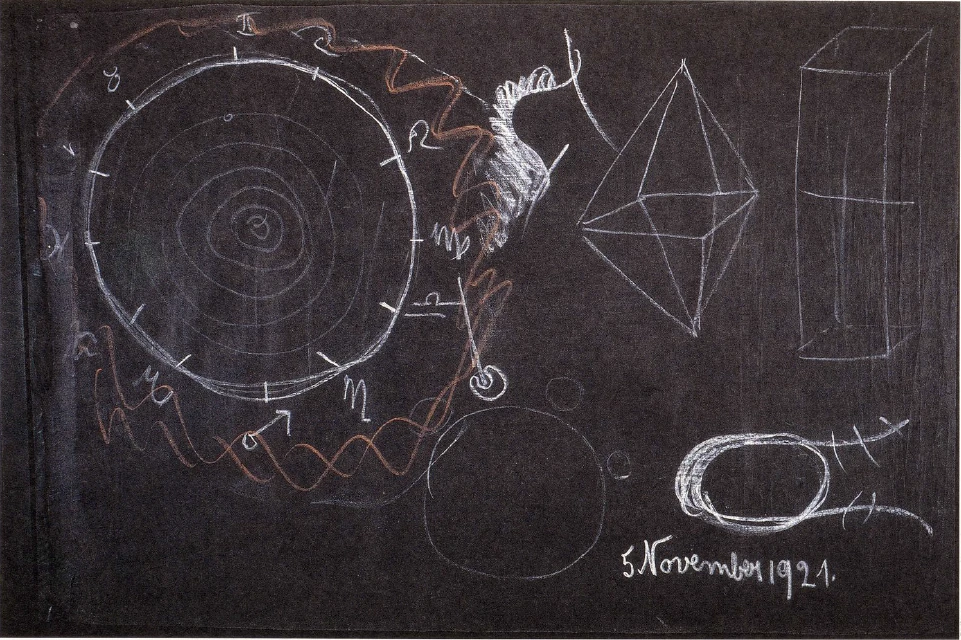
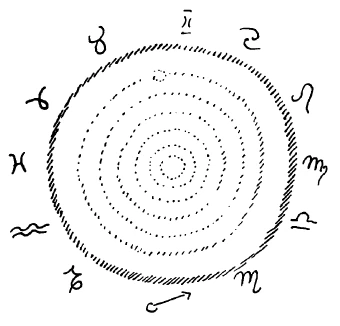
5 November 1921, Dornach
Translate the original German text into any language:
Versions Available:
Anthroposophy as Cosmosophy II, tr. SOL
Neunzehnter Vortrag
Nineteenth Lecture
[ 1 ] Wir haben in der letzten Zeit Betrachtungen angestellt über den Menschen und seinen Zusammenhang mit dem Kosmos. Es erscheint denjenigen, die nur in der heutigen Weltauffassung drinnenstehen, gegenwärtig noch als etwas, man möchte sagen, ziemlich Absurdes, wenn in einer solchen Art das Wesen des Menschen angeknüpft wird an das Wesen des Kosmos, und man wird wohl in weitesten Kreisen heute ein solches Anknüpfen nicht für wissenschaftlich halten. Dennoch, es ist gegenüber den Geistesströmungen der Gegenwart heute schon dringend notwendig, gerade auf solche Dinge, wie wir sie jetzt in diesen Betrachtungen vor uns gehabt haben, mit aller Energie hinzuweisen. Denn man kann sagen: Diese Dinge liegen durchaus auf dem Wege des heutigen Denkens. Nur werden sie von diesem heutigen Denken zu gleicher Zeit mit aller Heftigkeit zurückgewiesen. Dadurch aber wird dem Geistesleben der Menschheit unsäglicher Schaden zugefügt.
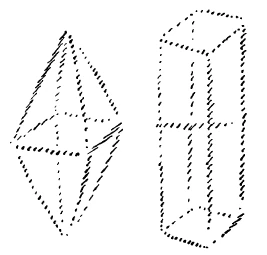
[ 1 ] We have recently been reflecting on human beings and their relationship to the cosmos. To those who are immersed solely in today’s worldview, it still seems—one might say—quite absurd to link the nature of human beings to the nature of the cosmos in this way, and in the broadest circles today, such a connection is unlikely to be considered scientific. Nevertheless, in the face of contemporary intellectual trends, it is already urgently necessary today to draw attention with all our energy to precisely such matters as we have now considered in these reflections. For one can say: These matters are very much in line with contemporary thinking. Yet at the same time, they are vehemently rejected by that very same contemporary thinking. This, however, inflicts unspeakable harm on the spiritual life of humanity.
[ 2 ] Wir wollen uns zunächst einmal eine Art Zusammenfassung bilden von demjenigen, was ich in der letzten Zeit hier vorgebracht habe. Wir haben ja die Form des Menschen angesehen als ein Ergebnis dessen, wofür die Ursachen gesucht werden müssen im Fixsternhimmel, namentlich in seinem Repräsentanten, in dem Tierkreis. Wir haben also gesehen: Nach dem Tierkreis als dem Repräsentanten des Fixsternhimmels müssen wir zunächst blicken, wenn wir des Menschen Form, Formung, Gestaltung verstehen wollen. Da haben wir also den zwölfgliedrigen Tierkreis und finden, indem wir diesen zwölfgliedrigen Tier menschliche Form bis in ihre Einzelheiten hinein zu verstehen.
[ 2 ] Let us first try to form a kind of summary of what I have presented here recently. We have, after all, considered the form of the human being as a result whose causes must be sought in the fixed-star sky, namely in its representative, the zodiac. So we have seen: We must first look to the zodiac—as the representative of the fixed-star sky—if we want to understand the human form, its formation, and its structure. There we have the twelve-part zodiac, and by studying this twelve-part zodiac, we can understand the human form down to its finest details.
[ 3 ] Wenn wir dann die Lebensstufen des Menschen verstehen wollen, dann müssen wir zu dem Planetensystem sehen und finden in dem Planetensystem die Elemente zum Verständnis der menschlichen Lebensstufen.
[ 3 ] If we want to understand the stages of human life, we must look to the planetary system and find within it the elements necessary for understanding those stages.
[ 4 ] Wir haben dann unseren Weg genommen von dem Verständnis der Lebensstufen zu dem Verständnis des Seelischen. Da mußten wir aber schon an den Menschen selbst herantreten, an das, was in ihm gestaltet ist, an das, was in ihm lebt. Und wir haben dann versucht, das Seelische nach dem Vorstellen, Fühlen und Wollen zu finden in der Gestalt des Menschen und in den Lebensstufen. Und gestern haben wir ja auch versucht, das Geistige des Menschen wiederum im Seelischen zu finden.
[ 4 ] We then moved from an understanding of the stages of life to an understanding of the soul. But to do that, we had to approach the human being himself—what is formed within him, what lives within him. And we then attempted to identify the soul—in terms of imagination, feeling, and will—within the human form and across the stages of life. And yesterday, we also tried to find the spiritual aspect of the human being within the soul.
[ 5 ] Nun kommen wir also mit dem Seelischen, das wir betrachten, ich möchte sagen, von dem Umkreis der Welt herein ins eigentliche irdische Leben, wenn wir nämlich das Seelische betrachten in dem Leben des Menschen zwischen Geburt und Tod. Wir können es ja betrachten, wenn wir es in seinem wahren Verhältnis zu der menschlichen Gestalt und zu dem menschlichen Leben ins Auge fassen.
[ 5 ] So now, by considering the spiritual realm—or, I might say, from the sphere of the world—we enter into actual earthly life, namely when we consider the spiritual realm in the life of the human being between birth and death. We can indeed observe it when we consider it in its true relationship to the human form and to human life.
[ 6 ] Wiederum den Geist, von dem wir gestern gesehen haben, daß ihn der Mensch ja eigentlich nur bildhaft erlebt, wir müssen ihn im Seelischen suchen. Wir kommen da, wenn ich mich so ausdrücken darf, aus den Himmeln auf die Erde herunter. Wenn wir die Form des Menschen betrachten, müssen wir bis an die Fixsterne gehen; wenn wir das Leben des Menschen betrachten, müssen wir bis an die Planetensphäre gehen; wenn wir die Seele des Menschen in ihren Verhältnissen zwischen Geburt und Tod betrachten, müssen wir zum Irdischen zunächst heruntersteigen. Es wird für uns in dieser Betrachtung ein Ganzes aus dem Menschen in seinem Zusammenhang mit dem Kosmos.
[ 6 ] Once again, the spirit—which, as we saw yesterday, human beings actually experience only figuratively—we must seek within the soul. There, if I may put it that way, we descend from the heavens to Earth. When we consider the form of the human being, we must go as far as the fixed stars; when we consider human life, we must go as far as the planetary sphere; when we consider the human soul in its relationship between birth and death, we must first descend to the earthly realm. In this contemplation, the human being, in its connection with the cosmos, becomes a whole for us.
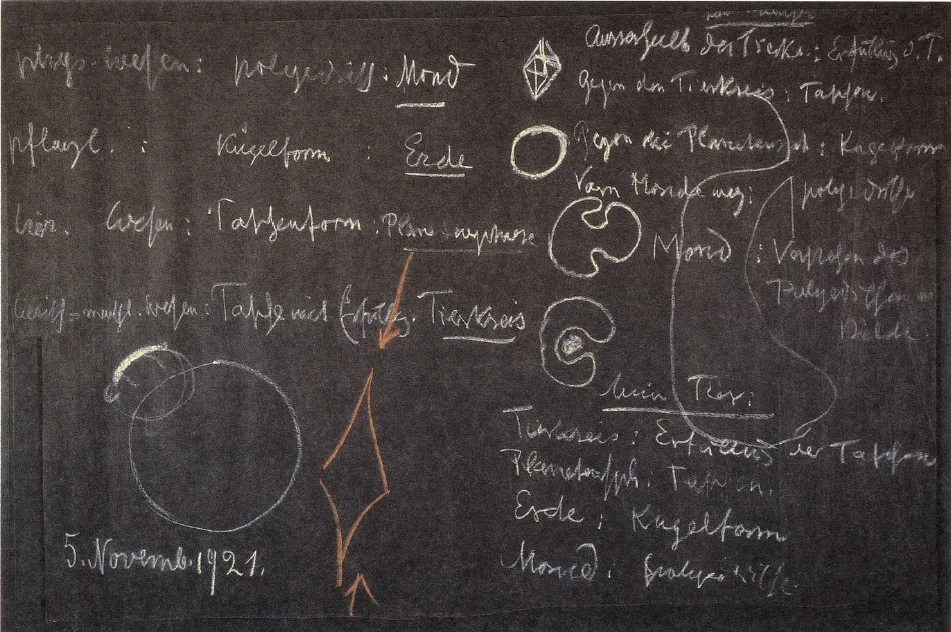
[ 7 ] Nun, wenn wir diesen Tatbestand gehörig würdigen, dann sind wir auch imstande, aus ihm heraus die Grenzlinie zu ziehen zwischen dem Tierischen und dem Menschlichen. Und das kann nämlich in der folgenden Weise geschehen. Betrachten wir zunächst das, wofür wir uns Verständnis durch den Tierkreis erringen können, betrachten wir das beim Menschen und beim Tiere, so stellt es sich uns eigentlich in einer verschiedenartigen Weise dar. Aber wir müssen, damit wir diesen ganzen Zusammenhang erfassen können, ausgehen davon, wie diese verschiedenen Elemente: Tierkreis, Planetensphäre, die Erde mit alldem, was wir auch gestern betrachteten, auf den Menschen und auf das Tier wirken.
[ 7 ] Now, if we give this fact its due consideration, then we are also able to use it to draw the line between the animal and the human. And this can be done in the following way. If we first consider what we can come to understand through the zodiac—and observe this in both humans and animals—it actually presents itself to us in different ways. But in order to grasp this entire context, we must start by examining how these various elements—the zodiac, the planetary sphere, and the Earth with everything we considered yesterday—affect humans and animals.
[ 8 ] Wir haben ja im Menschen zunächst seinen physischen Leib. Dieser physische Leib des Menschen, er tritt uns ja nicht in derjenigen Gestalt entgegen, die wir sonst außerhalb des Menschen als die physische kennen. Das Physische tritt uns außerhalb des Menschen im Mineralreich und seinen Gestaltungen entgegen. Was uns im Mineralreich und seinen Gestaltungen entgegentritt, ist ja allerdings sehr unähnlich dem physischen Leib des Menschen. Aber es ist nur deshalb unähnlich dem physischen Leib des Menschen, weil beim Menschen das Physische eingekleidet ist in Ätherisches, Astralisches und das Ich-Wesen, die alle das Physische verändern, die alle das Physische sich anpassen, während im äußeren Physischen uns dieses Physische ohne die Durchdringung mit Ätherischem, mit Astralischem, mit dem Ich-Wesen im Mineralreiche entgegentritt.
[ 8 ] After all, the first thing we encounter in a human being is his physical body. This physical body of the human being does not, however, appear to us in the form that we otherwise recognize as “physical” outside of the human being. The physical appears to us outside of human beings in the mineral kingdom and its forms. What we encounter in the mineral kingdom and its forms is, however, very dissimilar to the physical body of a human being. But it is only dissimilar to the human physical body because, in human beings, the physical is clothed in the etheric, the astral, and the I-being—all of which transform the physical and adapt it to themselves—whereas in the external physical world, this physical appears to us in the mineral kingdom without being permeated by the etheric, the astral, or the I-being.
[ 9 ] Wenn wir die ureigene Gestalt des Mineralischen ins Auge fassen, so ist sie die Kristallgestalt, die polyedrische Gestalt (siehe Zeichnung); oben halbrechts irgendwie polyedrisch tritt uns das Mineral entgegen. Diese polyedrische Gestalt, die uns bei dem einen Mineral in der einen Form, bei dem anderen Mineral in einer anderen Form entgegentritt, die können wir nicht anders begreifen, als wenn wir zunächst auf das Materielle sehen, das sich aus den Kräften heraus gebildet hat, die eben innerhalb des Raumes des Minerals tätig sind. Wir müssen uns vorstellen: Wenn wir irgendein langgestrecktes Mineral haben, dann sind die Kräfte, welche in dieser Richtung wirken (Zeichnung rechts), eben dazu geeignet, das Mineral nach der Länge zu ziehen. Die Kräfte, welche nach °P "ht dieser Richtung wirken (rechts, horizontaler Strich in der Mitte), entfalten dann vielleicht eine geringere Stärke — oder wie wir das dann ausdrücken wollen —, die das Mineral nach dieser Richtung hin schmäler machen und so fort. Kurz, wir müssen uns, damit wir überhaupt von den Mineralien sprechen können, gleichgültig ob diese Kräfte von außen hereinwirken oder von innen heraus, wir müssen uns vorstellen, daß diese Kräfte in Winkeln zueinander stehen, in gewissen Richtungen wirken, und wir müssen uns vor allen Dingen vorstellen, daß diese Kräfte eben da sind im Weltenall, wenigstens daß sie wirksam sind innerhalb des Erdenbereiches.
[ 9 ] When we consider the intrinsic form of the mineral, it is the crystalline form, the polyhedral form (see drawing); in the upper right corner, the mineral appears to us as a sort of polyhedron. This polyhedral form, which appears to us in one form in one mineral and in another form in another mineral, we cannot understand in any other way than by first looking at the material substance that has been formed out of the forces active within the mineral’s space. We must imagine: If we have any elongated mineral, then the forces acting in this direction (drawing on the right) are precisely suited to pulling the mineral along its length. The forces acting at an angle to this direction (right, horizontal line in the middle) may then exert a lesser force—or, as we might put it—that causes the mineral to narrow in that direction, and so on. In short, in order to speak of minerals at all—regardless of whether these forces act from the outside in or from the inside out—we must imagine that these forces are at angles to one another, act in certain directions, and, above all, we must imagine that these forces simply exist in the universe, or at least that they are active within the Earth’s sphere.
[ 10 ] Dann aber, wenn sie wirksam sind, dann müssen sie auch auf den physischen Leib des Menschen wirken, und der physische Leib des Menschen muß in sich die Tendenz haben, polyedrisch zu werden. Er wird nur nicht in Wirklichkeit polyedrisch, weil er noch seinen Ätherleib, seinen astralischen Leib hat, die den Menschen nicht dazu kommen lassen, ein Würfel oder ein Oktaeder oder ein Tetraeder oder Ikosaeder zu werden und so weiter. Aber die Tendenz ist im Menschen, so etwas zu werden, so daß wir schon sagen können: Insofern der Mensch ein physisches Wesen ist, strebt er darnach, polyedrisch zu werden. Wenn Sie froh sind, daß Sie nicht als Würfel herumwandern oder als Tetraeder oder als Oktaeder, so rührt das eben davon her, daß gegen die oktaedrischen oder die Würfelkräfte, die in Ihnen sind, die anderen Kräfte, die des Ätherleibs, Astralleibs wirken.
[ 10 ] But then, if they are effective, they must also act upon the human physical body, and the human physical body must have within itself the tendency to become polyhedral. It simply does not actually become polyhedral because it still has its etheric body and its astral body, which prevent the human being from becoming a cube, an octahedron, a tetrahedron, an icosahedron, and so on. But the tendency to become such a thing is present in the human being, so that we can already say: Insofar as the human being is a physical being, he strives to become polyhedral. If you are glad that you do not wander around as a cube, a tetrahedron, or an octahedron, it is precisely because the other forces—those of the etheric body and the astral body—counteract the octahedral or cubic forces within you.
[ 11 ] Nun ist aber der Mensch eben nicht bloß ein physischer Leib, sondern er trägt in sich seinen Ätherleib. Was er durch seinen Ätherleib ist, das macht ihn wiederum als ein Wesen eins mit der Pflanzenwelt. So wie er durch seinen physischen Leib gewissermaßen die Umwelt repräsentiert, insofern diese mineralisch-physisch ist, so repräsentiert er durch das, was er durch seinen Ätherleib ist, die Umwelt, insofern diese pflanzlich ist.
[ 11 ] But human beings are not merely physical bodies; rather, they carry their etheric bodies within themselves. What they are through their etheric bodies is what, in turn, makes them, as beings, one with the plant world. Just as, through his physical body, he represents the environment—insofar as it is mineral and physical—so, through what he is by virtue of his etheric body, he represents the environment—insofar as it is plant-like.
[ 12 ] Die Pflanze hat natürlich deshalb, weil sie auch ins Physische eingeschaltet ist, schon die Tendenz, polyedrisch zu sein, aber sie bringt zu dieser Tendenz, polyedrisch zu sein, noch eine andere dazu, nämlich diese: kugelig zu sein. Das Mineral kann ja durch allerlei Vorgänge auch einmal in Kugelform auftreten, aber die Kugelform ist ihm nicht eigentlich eigen. Es muß schon irgendein Gerölle oder so etwas sein, wenn es kugelförmig auftreten soll. Seine ureigene Gestalt ist die polyedrische. Aber bei der Pflanze haben wir die Kugelform, und jede einzelne Zelle der Pflanze will sich eigentlich kugelig gestalten. Dieses Streben nach der Kugelform — der Mensch macht es ein wenig erst in seinem Haupte mit — ist also dem Pflanzlichen eigen. Also demjenigen, was das pflanzliche Wesen ist, dem verdankt auch der Mensch die Kugelform. Daß die Pflanzen nicht alle Kugeln sind, das verdanken sie dem Umstande, daß erstens in ihnen die Kugelform kämpft gegen die polyedrische Form, und dadurch ein Resultierendes herauskommt, aber es kämpft auch die Pflanzenform gegen ein Kosmisch-Astralisches. Sie wissen ja aus früheren Vorträgen, daß oben ein KosmischAstralisches auf die Pflanze drückt. Dadurch wird die Kugelform modifiziert. Es lagern sich auch Kugeln übereinander. Aber die Urgestalt des Pflanzlichen, die ist eigentlich das Kugelige.
[ 12 ] Since the plant is also integrated into the physical realm, it naturally has a tendency to be polyhedral, but in addition to this tendency, it exhibits another one: that of being spherical. A mineral can, of course, take on a spherical shape through various processes, but the spherical form is not actually inherent to it. It must be a pebble or something similar for it to appear spherical. Its true, inherent form is the polyhedral one. But in plants we find the spherical form, and every single cell of the plant actually strives to take on a spherical shape. This striving toward the spherical form—which humans only begin to experience to a small extent in their minds—is thus inherent to the plant kingdom. It is to this plant essence, then, that humans also owe their spherical form. The fact that plants are not all spheres is due to the circumstance that, first of all, the spherical form struggles against the polyhedral form within them, resulting in a compromise; but the plant form also struggles against a cosmic-astral force. As you know from earlier lectures, a cosmic-astral force presses down on the plant from above. This modifies the spherical form. Spheres also stack on top of one another. But the primordial form of the plant is, in fact, the spherical.
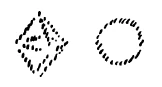
[ 13 ] Damit aber nimmt die Pflanze, indem sie nach der Kugelform strebt, die Form der Erde selber an. Die Form der Erde nimmt die Pflanze an. Die Erde, sie ist ja, wie Sie wissen, im Kosmos kugelförmig gestaltet. Kugelförmig ist auch jeder Wassertropfen gestaltet. Nur die Teile der Erde, ihre mineralischen Teile, sind polyedrisch gestaltet. Die ganze Erde ist im Kosmos kugelig gestaltet. So daß wir sagen können: Die Kugelform hat die Pflanze gemeinschaftlich mit der Erde selbst. So daß die Pflanze oder das Lebendige nach der Kugelform strebt und eigentlich nachzubilden sucht in der Kugelform dasjenige, was die Erde als Form hat.
[ 13 ] But in this way, as the plant strives toward a spherical shape, it takes on the very form of the Earth itself. The plant takes on the form of the Earth. The Earth, as you know, is spherical in shape within the cosmos. Every drop of water, too, is spherical in shape. Only the parts of the Earth—its mineral parts—are polyhedral in shape. The entire Earth is spherical in the cosmos. So we can say: The plant shares the spherical form with the Earth itself. Thus, the plant—or the living being—strives toward the spherical form and actually seeks to replicate in that form what the Earth itself is shaped like.
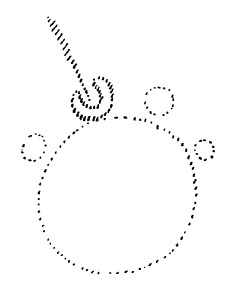
[ 14 ] Gehen wir jetzt aber zu dem herauf, was der Mensch durch seinen astralischen Leib ist. Da ist er etwas, wodurch er repräsentiert, was in der tierischen Welt vorhanden ist, das tierische Wesen. Wenn wir also die polyedrische Form suchen beim physischen Wesen, beim mineralischen Wesen, so finden wir beim pflanzlichen die der Erde nachgebildete Kugelform (siehe Zeichnung).
[ 14 ] But let us now turn to what a human being is through his astral body. There, the human being is something through which he represents what exists in the animal world: the animal nature. So when we look for the polyhedral form in the physical being and in the mineral being, we find in the plant being the spherical form modeled after the Earth (see drawing).

[ 15 ] Nun, das tierische Wesen wird uns verständlich, wenn wir nicht bei der Kugelform stehenbleiben, sondern wenn wir zu etwas anderem vorschreiten, wenn wir also in der Gestaltung zu der kugeligen Form nun etwas hinzufügen. Was ist das, was wir zu der kugeligen Form dazufügen müssen? Das ist die Taschenform, ich könnte auch sagen: Sack-form, die Tasche. Nämlich das Tierische zeigt die Eigentümlichkeit, daß es die Kugelform überall durchbricht durch das Taschige. Es bilden sich überall in der Kugel taschenförmige Einbuchtungen. Das ist das Wesen der tierischen Bildung, daß sich von außen nach innen Taschen einsacken. Betrachten Sie ihre Augenhöhlen — zwei Taschen, die von außen nach innen gehen. Betrachten Sie ihre Nasenhöhlen: zwei Taschen. Betrachten Sie schließlich den ganzen Verdauungsapparat, vom Mund angefangen bis in den Magen hinein: Sie können ihn bekommen, wenn Sie vom Munde ausgehen lassen eine Tasche, die bis hinuntergeht, Überall ist es die Taschenform, die zu der Kugelform dazutritt, wenn es sich darum handelt, den Übergang zu bilden vom Pflanzlichen zum Tierischen. Es ist die Taschenform.
[ 15 ] Well, the animal nature becomes understandable to us when we do not stop at the spherical form, but when we move on to something else—that is, when we add something to the spherical form in its configuration. What is it that we must add to the spherical form? It is the pouch-like form—I could also say: the sack-like form, the pouch. For the animal realm exhibits the peculiarity that it breaks through the spherical form everywhere with this pouch-like quality. Pouch-like indentations form everywhere within the sphere. This is the essence of animal formation: that pouches sink inward from the outside. Look at their eye sockets—two pockets that extend from the outside to the inside. Look at their nasal cavities: two pockets. Finally, consider the entire digestive system, starting from the mouth and extending into the stomach: you can visualize it as a pouch extending downward from the mouth. Everywhere, it is the pouch-like form that is added to the spherical form when it comes to making the transition from the plant kingdom to the animal kingdom. It is the pouch-like form.
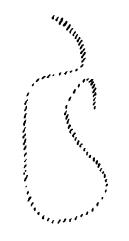
[ 16 ] Diese Taschenform, die wird uns verständlich, wenn wir von der Erde aufblicken zu dem Planetensystem. Sie können sich ja leicht vorstellen: Die Erde hat das Bestreben, allem auf ihr Lebendigen ihre eigene Form zu geben. Wenn aber der Planet von außen einwirkt, so wirkt er den Erdenkräften entgegen und sackt ein, was von der Erde als die Kugelform gegeben wird, und die verschiedenen tierischen Wesen sind in der verschiedensten Weise mit solchen Säcken, Taschen, gestaltet. Schauen wir die Planeten an in ihren verschiedenen Wirkungen. Der Saturn sackt in anderer Weise ein als der Jupiter oder Mars. Der Löwe ist einfach mit einer anderen Art von innerer Sackartigkeit ausgestattet, weil auf ihn nicht dieselben planetarischen Wirkungen geübt werden, wie zum Beispiel auf das Kamel und so weiter. Wir haben also da die Einsackungen.
[ 16 ] This “pouch-like” shape becomes clear to us when we look up from Earth toward the planetary system. You can easily imagine it: Earth strives to give its own form to everything living on it. But when a planet exerts an influence from the outside, it counteracts the Earth’s forces and causes what the Earth has given as a spherical form to sag, and the various animal beings are shaped in the most diverse ways with such sagging or pouch-like features. Let us look at the planets in their various effects. Saturn collapses in a different way than Jupiter or Mars. The lion is simply endowed with a different kind of inner “sack-like” quality because the same planetary influences are not exerted upon it as, for example, upon the camel and so on. So there we have the collapses.
[ 17 ] Nun tritt aber beim Tiere und auch beim Menschen — nämlich vor allem beim höheren Tiere, bei den niederen Tieren wird es etwas anders —, aber bei den höheren Tieren, da tritt etwas auf, was nun nicht bloß vom Planetarischen kommt, sondern wir können sagen: Beim tierisch-menschlichen Wesen — weil die höheren Tiere etwas Ähnliches zeigen — tritt nun nicht bloß die Taschenform auf. Die würde auftreten, wenn es nur Planeten gäbe, wenn der Fixsternhimmel nicht wirken würde. Aber zu der Taschenform kommt noch etwas dazu. Unter gewissen Verhältnissen ist der Mensch ganz zufrieden, wenn er nicht bloß eine Tasche hat, sondern auch noch etwas drinnen, und das tritt in der Tat beim tierisch-menschlichen Wesen auf, indem die Tasche mit der Füllung auftritt. Das heißt: Kugelformtasche, und die Tasche ist erfüllt.
[ 17 ] Now, however, in animals and also in humans—namely, above all in higher animals; in lower animals it is somewhat different—but in higher animals, something occurs that does not come solely from the planetary realm; rather, we can say: In the animal-human being—because higher animals exhibit something similar—it is not merely the “pocket” form that appears. That would occur if only the planets existed, if the fixed-star sky had no influence. But something else is added to the “pocket” form. Under certain circumstances, a human is quite content not only to have a pouch but also to have something inside it, and this does indeed occur in the animal-human being, in that the pouch appears with its contents. That is to say: a spherical pouch, and the pouch is filled.

[ 18 ] Sie brauchen nur die Sinnesorgane zu betrachten, das Auge, da haben Sie eine Tasche zunächst: die Augenhöhlen; dann die Erfüllung. Und diese Erfüllung, die namentlich bei den Sinnesorganen eintritt, die hängt nun, ebenso wie die Taschenform mit der Planetensphäre zusammenhängt, mit dem Tierkreis zusammen. Der Mensch, der in dieser Beziehung die vollkommenste tierische Organisation hat, hat deshalb auch, wenn sie auch in der verschiedensten Weise maskiert sind, zwölf Taschen mit Erfüllung. Daher habe ich in meiner «Anthroposophie» die zwölf Sinnesorgane aufzählen müssen.
[ 18 ] You need only consider the sense organs—the eye, for example—and there you have a “pocket” to begin with: the eye sockets; then there is the “filling.” And this “filling,” which occurs particularly in the sense organs, is connected—just as the shape of the pocket is connected to the planetary sphere—to the zodiac. Human beings, who in this respect possess the most perfect animal organization, therefore also have twelve cavities filled with substance, even though they are masked in the most varied ways. That is why I had to list the twelve sense organs in my book Anthroposophy.
[ 19 ] Nun können wir zurückfragen: Mit welchem Kosmischen hängt denn das Polyedrische zusammen? Sehen Sie, indem die Erde uns entgegentritt, hat sie als Ganzes eigentlich die Lebeform, und sie würde nur diese Form zeigen, wenn sie nur Wasser wäre. Aber in das Wasser kommt in der mannigfaltigsten Weise Störung hinein. Sie können die Störungen beobachten zum Beispiel bei Ebbe und Flut. Da wird das Wasser gestaltet.
[ 19 ] Now we can ask in return: To what cosmic principle is the polyhedral form related? You see, as the Earth confronts us, it actually has the form of life as a whole, and it would only display this form if it were nothing but water. But disturbances enter the water in the most varied ways. You can observe these disturbances, for example, during high and low tides. That is when the water takes on form.
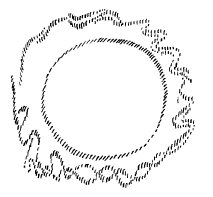
[ 20 ] Und jetzt blicken wir zurück auf frühere Zeiten der Gestaltung der flüssigen Erde, wo sie die festen Einschläge bekommt. Heute noch kann man ja wissen, wie Ebbe und Flut zusammenhängt mit dem Monde. Ebenso hängt alles Polyedrische, alles das, was sich als Polyedrisches in die Erde hineingestaltet, mit dem Monde zusammen. So daß wir sagen können: Das polyedrische oder physische Wesen des Menschen hängt mit dem Monde zusammen, sein pflanzliches oder ätherisches Wesen mit der Erde, sein astralisches Wesen, das die Taschenform hervorbringen würde, mit der Planetensphäre, und die Erfüllung der Tasche mit dem Tierkreis.
[ 20 ] And now let us look back to earlier times in the formation of the liquid Earth, when it was subjected to solid impacts. Even today, we know how the tides are connected to the Moon. Likewise, everything polyhedral—everything that takes on a polyhedral form within the Earth—is connected to the Moon. So we can say: The polyhedral or physical nature of the human being is connected to the Moon; his plant-like or etheric nature to the Earth; his astral nature, which would give rise to the “pocket” form, to the planetary sphere; and the filling of the “pocket” to the zodiac.
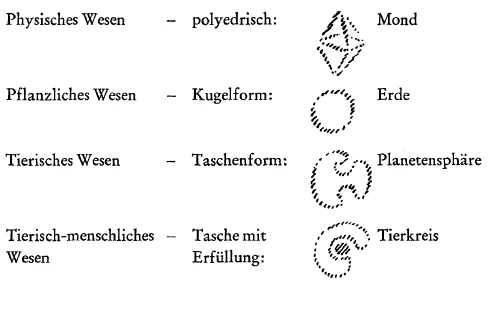
[ 21 ] Nun aber ist dieses, was ich hier aufgeschrieben habe, für den Menschen in anderer Weise zutreffend als für die Tiere. Sehen Sie, beim Tier ist es wirklich so, daß der Himmel nur bis zum Tierkreis, nämlich das, was da drinnen liegt, nur bis zum Tierkreis eine Bedeutung hat. Was außerhalb des Tierkreises liegt, hat für das Tier keine Bedeutung. Die alte Weisheit hat daher sehr richtig das den Tierkreis genannt, denn sie hat hinzufügen können: Alles, was da draußen im Weltenall ist außer dem Tierkreis, das könnte auch nicht da sein, und die Tiere auf der Erde würden ebenso sein, wie sie sind. Nur was unter dem Tierkreis ist mit der Erde zusammen, dem Mond, hat für das Tier eine Bedeutung. Für den Menschen hat aber das, was außerhalb des Tierkreises ist, eine Bedeutung. Und zwar hat das, was außerhalb des Tierkreises liegt, für den Menschen Bedeutung, insofern es auf die Erfüllungen der Taschen wirkt. Also auf das, was unsere Taschen erfüllt, auf das wirkt auch noch, was außerhalb des Tierkreises ist. Beim Tier ist das nicht der Fall. Das ist nur so beim Menschen: Was außerhalb des Tierkreises vorhanden ist, wirkt auf die Erfüllung der Taschen.
[ 21 ] But what I have written here applies to humans in a different way than it does to animals. You see, for animals, it is truly the case that the heavens—that is, everything within the zodiac—have meaning only up to the zodiac. What lies outside the zodiac has no significance for animals. Ancient wisdom was therefore quite correct in calling it the zodiac, for it could add: Everything that exists out there in the universe beyond the zodiac could just as well not be there, and the animals on Earth would be exactly as they are. Only what lies beneath the zodiac—together with the Earth and the Moon—has significance for animals. For humans, however, what lies outside the zodiac does have significance. Specifically, what lies outside the zodiac is significant for humans insofar as it affects the contents of their pockets. In other words, what fills our pockets is also influenced by what lies outside the zodiac. This is not the case with animals. It is only true for humans: what exists outside the zodiac influences the contents of our pockets.
[ 22 ] Beim Tier müssen wir sagen: Alles, was im Tierkreis liegt, wirkt auf die Erfüllung der Taschen. So daß wir also beim Tier in den Tierkreis selber hineingehen müssen; dann können wir erklären, wie die Erfüllungen seiner Taschen sich ausnehmen. Beim Menschen müssen wir über den Tierkreis hinausgehen, wenn wir uns erklären wollen, was zum Beispiel in seinen Sinnen vor sich geht. Dadurch rückt der Mensch mit seinem Verhältnis zum Kosmos über den Tierkreis hinaus. Das Tier nicht. Beim Tier ist es weiter so, daß die Planetensphäre als solche unmittelbar wirkt auf die Taschen. Also wir können sagen: Auf die Taschen wirkt sie. Dadurch, daß die Planetensphäre unmittelbar auf die Taschen beim Tiere wirkt — und die Taschen, die erstrecken sich nach innen und bilden nach innen die Organe —, dadurch bekommt das Tier seine inneren Organe ganz vollkommen, adäquat nachgebildet dem, was der Planetensphäre entspricht. Der Mensch rückt wiederum um ein Stückchen hinaus. Und wir können sagen: Beim Menschen ist es schon die Gegend gegen den Tierkreis zu, die auf seine Taschen wirkt.
[ 22 ] In the case of animals, we must say: Everything within the zodiac influences the filling of their pockets. So, when it comes to animals, we must enter the zodiac itself; only then can we explain what the filling of their pockets looks like. In the case of humans, we must go beyond the zodiac if we want to explain, for example, what is happening in their senses. As a result, humans, through their relationship to the cosmos, transcend the zodiac. Animals do not. In animals, the planetary sphere as such continues to act directly on the “pockets.” So we can say: It acts upon the pouches. Because the planetary sphere acts directly upon the pouches in animals—and the pouches extend inward and form the internal organs—the animal’s internal organs are thus perfectly formed, adequately mirroring what corresponds to the planetary sphere. Human beings, in turn, move a little further out. And we can say: In human beings, it is already the region toward the zodiac that acts upon their “pockets.”
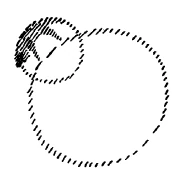
[ 23 ] Beim Tiere wirkt die Erde unmittelbar auf alles das, was in ihm kugelig sein will, unmittelbar auf seine Kugelform. Beim Menschen geht das nicht. Der Mensch würde sonst auch ein Tier sein und sein Kugelstreben würde so sein wie beim Tiere. Das Tier will ja in einem gewissen Sinne eigentlich kugelig werden. Hier (siehe Zeichnung) hat es sein Rückgrat, dann Beine. Es wird nur daran gehindert, eine vollständige Kugel zu bilden. Ein Stück von dieser Kugel ist das Rückgrat. Der Mensch aber strebt von dem Irdischen so weg, wie er schon weggestrebt hat vom Tierkreis, von der Planetensphäre gegen den Tierkreis hin. Wir können sagen: Gegen die Planetensphäre wird des Menschen Kugelform gebildet. Er wird ein aufrechtes Wesen. Er strebt von der bloßen Anpassung an das Irdische hinweg.
[ 23 ] In animals, the earth acts directly on everything within them that seeks to be spherical—directly on their spherical form. This is not the case with humans. Otherwise, humans would also be animals, and their striving for sphericity would be the same as that of animals. After all, in a certain sense, the animal actually wants to become spherical. Here (see drawing), it has its spine, then its legs. It is only prevented from forming a complete sphere. A part of this sphere is the spine. The human being, however, strives away from the earthly realm just as he has already striven away from the zodiac, from the planetary sphere toward the zodiac. We can say: The human being’s spherical form is shaped in opposition to the planetary sphere. He becomes an upright being. He strives away from mere adaptation to the earthly realm.
[ 24 ] Und wenn wir nach dem Polyedrischen sehen, so müssen wir beim Tiere sagen: Direkt der Mond ist es, der ihm das Polyedrische gibt. Der Mensch strebt auch aus den Einflüssen des Mondes heraus, wir können sagen, vom Monde weg, und bekommt dort das, was ihm das Polyedrische gibt, zwischen der Erde und dem Monde. Man muß also gewissermaßen zwischen der Erde und dem Monde suchen, was dem Menschen das Polyedrische gibt. Dadurch ist aber der Mond noch immer wirksam auf den Menschen. Als Mond bleibt er trotzdem wirksam. Wir müssen also beim fünften suchen den Mond selber, der ja beim Tiere das Polyedrische bewirkt. Was tut er denn beim Menschen? Er bewirkt auch das Polyedrische, aber im Bilde, und während das Tier das Polyedrische in seiner Konfiguration hat, kommt der Mensch dazu, es herauszuheben aus seinem Organismus. Und dieses mathematisch-geometrische Vorstellen, es wird zum Bilde, es rückt heraus aus dem Leibe, und der Mensch stellt vorzugsweise heute mathematisch vor und möchte alles mathematisch begreifen, weil er durch den Mondeneinfluß sein eigenes Polyedrisches herausheben kann, und dadurch rückt es ins Bewußtsein herein. So daß wir sagen können: Vom Mond kommt das Verstehen des Polyedrischen im Bilde.
[ 24 ] And if we look at the polyhedral aspect, we must say of the animal: It is the Moon itself that gives it its polyhedral nature. Human beings, too, strive out of the Moon’s influences—we might say, away from the Moon—and receive there, between the Earth and the Moon, that which gives them their polyhedral nature. So, in a sense, we must look between the Earth and the Moon for what gives human beings their polyhedral nature. Through this, however, the Moon still exerts an influence on human beings. As the Moon, it remains effective nonetheless. So in the fifth, we must look to the Moon itself, which, after all, brings about the polyhedral quality in animals. What does it do in human beings? It also brings about the polyhedral quality, but in the form of an image; and while the animal possesses the polyhedral quality in its physical structure, human beings are able to extract it from their organism. And this mathematical-geometric imagination becomes an image; it emerges from the body. Today, human beings tend to think mathematically and wish to understand everything mathematically because, through the influence of the Moon, they can bring their own polyhedral nature to the fore, and in this way it enters their consciousness. So we can say: The understanding of the polyhedral in the form of an image comes from the Moon.
| Für den Menschen: | Außerhalb des Tierkreises Gegen den Tierkreis Gegen die Planetensphäre Vom Monde weg Mond |
Erfüllung der Taschen Taschen Kugelform Polyedrisch Verstehen des Polyedrischen im Bilde |
| Beim Tier: | Tierkreis Planetensphäre Erde Mond |
Erfüllung der Taschen Taschen Kugelform Polyedrisch |
| For human beings: | Outside the zodiac Against the zodiac Against the planetary sphere Away from the Moon Moon |
Filling the pockets Pockets Spherical Polyhedral Understanding the polyhedral in the image |
| In animals: | Zodiac Planetary sphere Earth Moon |
Filling of the pockets Pockets Spherical shape Polyhedral |
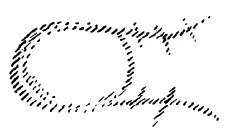
[ 25 ] Sie sehen, indem wir den Zusammenhang des Menschen mit dem Kosmos verfolgen, kommen wir nicht nur zu dieser Art von Gestaltung, die wir schon studiert haben in den letzten Jahren, sondern wir begreifen auch, wie er sich nach innen hinein zum Beispiel gestaltet, wie er seine Nasenhöhle als einen Sack, als eine Tasche bildet, wie er seinen Magen als eine Tasche bildet. Würden wir noch weiter gehen, so würden wir die Organe überhaupt begreifen, wie sie sich da hineinbilden aus dem ganzen Kosmos heraus. Aber überall müssen wir den Kosmos zu Hilfe nehmen, wenn wir den Menschen verstehen wollen. Überall müssen wir sozusagen den Kosmos zu Hilfe nehmen, wenn wir fragen: Warum hat denn der Mensch dieses oder jenes Organ, seine Lunge zum Beispiel, die im Grunde genommen auch nur verstanden werden kann, wenn man sie zunächst, solange der Mensch noch Embryo ist, als eine sackartige Einstülpung begreift, an die sich hier Materielles anlegt; und dann reißt nach außen die sackartige Einstülpung, und das Organ schließt sich als ein solches im Inneren ab. Wir lernen, warum die Lunge oder überhaupt irgendein Organ im Inneren des Menschen ist, wenn wir dieses Organ auffassen als hervorgehend aus einem Sack, und das innere Ende des Sackes, wo der Sack also blind ausläuft, sich verdickend, durch andere Umstände sich besonders konfigurierend. Wenn wir ein solches Organ haben wie den Magen, da geht der Sack nach innen. Wenn wir ein solches Organ haben wie die Lunge, das Herz oder die Niere, und sehen, wie es sich bildet: das ist zunächst auch sackartig gebildet, dann aber verdickt sich der Sack, reißt sich ab mit seinem äußeren Ende — der Sack verdickt sich hier (siehe Zeichnung), reißt sich hier ab und das Organ ist da als innerlich abgeschlossenes Organ.
[ 25 ] You see, by tracing the connection between the human being and the cosmos, we not only arrive at this kind of structure—which we have already studied in recent years—but we also come to understand how the human being is structured internally, for example, how the nasal cavity is formed as a sac, as a pouch, and how the stomach is formed as a pouch. If we were to go even further, we would come to understand the organs themselves—how they form from within the entire cosmos. But everywhere we must turn to the cosmos for help if we want to understand the human being. Everywhere, so to speak, we must turn to the cosmos for help when we ask: Why does the human being have this or that organ—the lungs, for example—which, strictly speaking, can only be understood if we first conceive of them, while the human being is still an embryo, as a sack-like invagination to which material substance attaches; and then the sack-like invagination tears outward, and the organ closes off as such on the inside. We learn why the lungs—or indeed any organ—are located inside the human body when we conceive of this organ as emerging from a sac, and the inner end of the sac—where the sac ends blindly—thickens and takes on a specific configuration due to other factors. When we have an organ such as the stomach, the sac turns inward. When we have an organ such as the lung, the heart, or the kidney, and observe how it forms: it is initially also sac-like in structure, but then the sac thickens, tears off at its outer end—the sac thickens here (see drawing), tears off here, and the organ is present as an internally enclosed organ.
[ 26 ] Aber auch diese geschlossenen Organe, wenn wir uns fragen: Warum liegen sie an einem bestimmten Orte des Menschen, warum haben sie diese oder jene Form? — überall müssen wir dazu kommen, den Menschen im Zusammenhang mit dem ganzen Weltenall zu betrachten. Und verstehen können wir den inneren Aufbau des Menschen auch nur, wenn wir ihn im Zusammenhang mit dem Weltenall betrachten. Nun wird der heutige Naturwissenschafter sagen, wenn er hört, daß die Anthroposophie Lunge, Herz, Leber und so weiter aus dem Kosmos heraus erklären will: Total verrückt! — Total verrückt —, sagt der heutige Naturforscher. Insbesondere der Mediziner wird das sagen: Total verrückt! — Aber er sollte das eigentlich nicht, denn er sollte einsehen, wie ihm auf seinen Wegen, die er nur mit gewissen Scheuledern behaftet gehen will, eigentlich entgegenkommt, was Anthroposophie ist. Und dafür möchte ich Ihnen eine Art kleinen Beweises liefern.
[ 26 ] But even with these enclosed organs, when we ask ourselves: Why are they located in a specific place within the human body, why do they have this or that shape? — we must always come to view the human being in connection with the entire universe. And we can only understand the inner structure of the human being if we view it in connection with the universe. Now, today’s natural scientist will say, when he hears that anthroposophy seeks to explain the lungs, heart, liver, and so on in terms of the cosmos: “Totally crazy!”—“Totally crazy,” says today’s natural scientist. Doctors, in particular, will say: “Totally crazy!” — But they really shouldn’t, because they should realize how anthroposophy actually meets them halfway on the paths they wish to follow, paths they are determined to take only with certain preconceptions. And to that end, I would like to provide you with a sort of small proof.
[ 27 ] Da liegt vor mir eine Broschüre, welche der schon öfters vor Ihnen hier erwähnte Arzt, Mediziner und Biologe, Kriminalanthropologe Moriz Benedikt 1894 geschrieben hat. Ich zitiere öfters Moriz Benedikt, obwohl ich es eigentlich gar nicht gern tue, denn erstens ist der Mann wirklich, man möchte sagen, auf jeder Seite, die er schreibt, eitel. Er ist ein außerordentlich eitler Mann, der sich sehr selbst gefällt. Zweitens ist er ein verbohrter Kantianer. Allerdings kommt als mildernder Umstand in Betracht, daß er sich nach seinem eigenen Kopf einen Kantianismus zurechtformte und den dann vertritt mit einer gewissen Starrheit. Aber der Mann ist doch außerordentlich begabt. Obwohl er von alldem, was an Anthroposophisches und Ähnliches herankommt, nicht das geringste wissen will, kann man doch sagen, daß der Mann einfach durch sein Drinnenstehen in der Medizin und in der Naturwissenschaft zu einem gewissen unbefangenen Urteil über den Wert seiner Wissenschaftlichkeit kommt. Er kann nicht heraus; aber in einer merkwürdigen Weise lugt er heraus. Die anderen sitzen auch in ihrer Wissenschaft wie in einem Gefängnis, aber sie gucken nicht einmal heraus. Der guckt aber immerfort heraus, und da kommt er doch zu außerordentlich interessanten Dingen. Und da ihm seine Eitelkeit sehr viele Feinde gemacht hat, so sagt er manches über andere, die sich ihm als Feinde ohne Maske zeigen; sonst ist man ja immer «gut Freund» untereinander. Da sagt er etwas über seine Kollegen, unter denen er ja deshalb auch niemals so recht hat aufkommen können, da sagt er etwas, was aber außerordentlich charakteristisch ist. Natürlich weiß er ja gar nichts von Anthroposophie, aber dennoch, Anthroposophie kann man ja auch in bezug auf ihre Qualitäten nehmen und kann sagen, er ist jedenfalls antianthroposophisch gesinnt. Aber dieser Antianthroposoph, der sagt doch zum Beispiel in einer Broschüre, die da vor mir liegt: «Das Pharisäertum ignoriert oder verleugnet alle Lehren und Tatsachen, die in seine Anschauungsweise nicht hineinpassen, und es verfolgt nicht nur die Lehre, sondern mit noch größerer Erbitterung die Lehrer. Der Pharisäismus ist ein ganz eigentümlicher Braten. Er duftet für die Nasen der Pharisäer und verbreitet einen scharfen, reizenden Geruch für andere. Das Pharisäertum ist so naturgemäß mit dem Gelehrtenhandwerk verflochten, daß ich mich trotz meines Pharisäerhasses oft frage: Wie oft warst du schon und in wie vielen Fällen bist du Pharisäer? Ich wäre jedem sehr dankbar, der mir diese Frage exakt beantworten würde.»
[ 27 ] I have before me a pamphlet written in 1894 by Moriz Benedikt, the physician, medical scientist, biologist, and forensic anthropologist whom I have mentioned here on several occasions. I often quote Moriz Benedikt, although I actually don’t like doing so at all, because, first of all, the man is truly—one might say—vain on every page he writes. He is an extraordinarily vain man who is very pleased with himself. Second, he is a die-hard Kantian. However, one mitigating factor is that he shaped Kantianism to suit his own ideas and then defends it with a certain rigidity. But the man is, after all, extraordinarily gifted. Although he doesn’t want to know the slightest thing about anything related to anthroposophy or similar fields, one can still say that simply by being immersed in medicine and the natural sciences, he arrives at a certain unbiased judgment regarding the value of his own scientific approach. He cannot break free; yet, in a curious way, he peeks out. The others are also trapped in their science as if in a prison, but they don’t even peek out. He, however, is constantly peeking out, and that’s how he arrives at extraordinarily interesting insights. And since his vanity has made him many enemies, he says quite a bit about others who reveal themselves to him as unmasked enemies; otherwise, everyone is always “good friends” with one another. So he says something about his colleagues—among whom he has, after all, never really been able to make a name for himself—and what he says is extraordinarily revealing. Of course, he knows absolutely nothing about anthroposophy, but even so, one can consider anthroposophy in terms of its qualities and say that he is, in any case, anti-anthroposophical in his outlook. But this anti-anthroposophist, for example, says in a pamphlet lying here before me: “Pharisaism ignores or denies all teachings and facts that do not fit into its worldview, and it persecutes not only the teaching but, with even greater bitterness, the teachers. Pharisaism is a very peculiar dish. It smells good to the noses of the Pharisees and gives off a sharp, pungent odor to others. Pharisaism is so naturally intertwined with the scholarly craft that, despite my hatred of the Pharisees, I often ask myself: How often have you been a Pharisee, and in how many instances are you one? I would be very grateful to anyone who could answer this question precisely.”
[ 28 ] Ich bin allerdings meinerseits überzeugt, daß er nicht dankbar wäre, sondern ordentlich schimpfen würde, wenn man ihn auf seinen eigenen Pharisäismus aufmerksam machen würde, wenn man ihn also selber daran fassen würde. Aber in seiner eigentümlichen Art erblickt er das Pharisäertum bei den anderen ausgezeichnet gut.
[ 28 ] I, for one, am convinced, however, that he would not be grateful, but would instead launch into a good rant if someone were to point out his own pharisaism to him—that is, if he were caught out on it himself. But in his own peculiar way, he is exceptionally good at spotting pharisaism in others.
[ 29 ] Nun aber kommt er zu sprechen auf seine eigene Entwickelungsgeschichte, durch die er begreiflich machen will, daß er eben ein anderer Mediziner geworden ist als die Herren Kollegen. Da sagt er: «Für meine Entwickelungsgeschichte und auch für die wissenschaftliche Stellung in dieser Frage, die uns hier beschäftigt, waren zwei schwere Schicksalsschläge verhängnisvoll.»
[ 29 ] But now he turns to his own personal history, through which he seeks to explain that he has become a different kind of physician than his colleagues. He says: “Two severe blows of fate were decisive for my personal development and also for my scientific position on the issue that concerns us here.”
[ 30 ] Sie werden natürlich auch gleich ein bißchen ein starkes Stückchen Eitelkeit aus der Darstellung verspüren: «Der erste ist, daß ich, bevor ich Mediziner wurde, Mathematik und Mechanik studierte. Wir hatten damals an der Wiener Universität einen hochbedeutenden Mathematiker, Professor von Ettingshausen, der uns die schwierigsten Probleme der mathematischen Physik vortrug und uns dafür einnahm. Von ihm hörte ich die Lehren von Cauchy und Poisson entwickeln, und von Petzval lernten wir, mechanische Probleme in mathematische Formeln zu gießen. Es wird nun aber leicht zu zeigen sein, wie verhängnisvoll mathematisches Denken für einen Mediziner, besonders aber für einen Kliniker ist.»
[ 30 ] Of course, you will immediately sense a touch of vanity in this account: “The first is that, before I became a physician, I studied mathematics and mechanics. Back then, at the University of Vienna, we had a highly distinguished mathematician, Professor von Ettingshausen, who presented the most difficult problems in mathematical physics to us and captivated us with them. From him I heard the teachings of Cauchy and Poisson unfold, and from Petzval we learned to cast mechanical problems into mathematical formulas. However, it will now be easy to show just how disastrous mathematical thinking is for a physician—and especially for a clinician.”
[ 31 ] Das wollen wir abwarten. Wir werden es auch schon sehen, warum das verhängnisvoll ist, besonders wenn er etwas von der Medizin versteht! Nun erzählt Professor Benedikt weiter. Man sollte ja glauben, daß das für ihn ein guter Schicksalsschlag war, wenn er Mathematiker war, aber er nennt es einen schlechten Schicksalsschlag, aus dem Grunde, weil er nun dadurch denken gelernt hat. Das konnten andere Kliniker nicht. Darum haßten sie ihn. Daher haßten sie ihn, weil er das studiert hatte, denn sonst hätte er auch nichts anderes verstanden, als was die anderen Kliniker von der Medizin verstanden hatten. «Der zweite Schicksalsschlag, der mich in jungen Jahren traf, war, daß ich ein Schüler Skodas war und noch heute an seinen Lehren hänge. Er war der Kant der medizinischen Erkenntnislehre, und er entwickelte den Höhepunkt seines Geistes nicht in Büchern, sondern in der Besprechung von Diagnosen, von therapeutischen Indikationen und besonders in den Epikrisen nach vorgenommenen Sektionen. Skoda war in seiner Jugend Mathematiker gewesen» — was also auch ein Schicksalsschlag war! — «und hatte aus derselben die wichtigste, die fundamentalste Lehre der medizinischen Denkmethodik in die Medizin hineingetragen, aber leider nur für einzelne Fragen dauernd; diese wichtige Lehre, die ich von Skoda empfing und schon von meinen mathematischen Studien her mir eingeprägt hatte, ist: daß man sich bei jedem wissenschaftlichen Beweisverfahren nicht nur dessen bewußt sein muß, was man weiß, sondern auch dessen, was noch unbekannt ist.» Also Benedikt war auch mit Skoda zusammen. Man soll sich bei dem gegenwärtigen naturwissenschaftlichen Verfahren — denn von dem redeten sie — ja nur bewußt sein nicht nur dessen, was man weiß, sondern auch dessen, was noch unbekannt ist. Diesen Grundsatz hat nun tatsächlich Benedikt in zahlreichen Abhandlungen mit einem gewissen Fanatismus vertreten; daß man nicht nur Rücksicht nehmen muß auf das, was man weiß, sondern auch auf das, was man nicht weiß. Er sagt darüber weiter: «Aber diese Grundregel in der Medizin ist der großen Mehrzahl der Biologen unbekannt, ja, selbst unverständlich. Als ich zum Beispiel vor einigen Jahren einem berühmten auswärtigen Anatomen ein Manuskript in fremder Sprache mit der Bitte zusandte, er möge es sprachlich korrigieren, schrieb er, als ich obigen Satz anführte, an den Rand, er verstehe den Sinn desselben nicht.» Also der Benedikt hat geschrieben, man solle auch ins Auge fassen das, was man nicht weiß, und er wollte, daß der andere ihm den Sinn des Satzes richtig ins Französische übersetze. Da hat dieser geschrieben, das verstehe er nicht.
[ 31 ] Let’s wait and see. We’ll soon find out why that’s disastrous, especially if he knows anything about medicine! Now Professor Benedikt continues his story. One might think that this was a stroke of good fortune for him, given that he was a mathematician, but he calls it a stroke of bad fortune, for the reason that it taught him to think. Other clinicians were unable to do that. That is why they hated him. They hated him because he had studied that; otherwise, he would have understood nothing more than what the other clinicians understood about medicine. “The second stroke of fate that befell me in my youth was that I was a student of Skoda’s and still adhere to his teachings today. He was the Kant of medical epistemology, and he did not develop the pinnacle of his intellect in books, but rather in the discussion of diagnoses, therapeutic indications, and especially in the postmortem reports following autopsies. Skoda had been a mathematician in his youth”—which was, in itself, a stroke of fate!—“and from that discipline he had brought into medicine the most important, the most fundamental principle of medical methodology, though unfortunately only on a lasting basis for individual questions; this important principle, which I received from Skoda and had already internalized through my mathematical studies, is: that in any scientific process of proof, one must be aware not only of what one knows, but also of what is still unknown.” So Benedikt had also been with Skoda. In the current scientific method—for that is what they were discussing—one should indeed be aware not only of what one knows, but also of what is still unknown. Benedikt has in fact advocated this principle with a certain fanaticism in numerous treatises: that one must take into account not only what one knows, but also what one does not know. He goes on to say: “But this fundamental rule in medicine is unknown to the vast majority of biologists—indeed, it is even incomprehensible to them. For example, a few years ago, when I sent a manuscript in a foreign language to a famous anatomist abroad, asking him to correct the language, he wrote in the margin—when I quoted the above sentence—that he did not understand its meaning.” So Benedict wrote that one should also take into account what one does not know, and he wanted the other person to correctly translate the meaning of the sentence into French. The other person then wrote that he did not understand it.
[ 32 ] «Als ich die Randbemerkung einem Professor an der Technik zeigte, lächelte er. Für jeden Mann der exakten Wissenschaft ist doch der Satz selbstverständlich.»
[ 32 ] “When I showed the marginal note to a professor at the technical university, he smiled. For anyone in the exact sciences, that sentence goes without saying.”
[ 33 ] Der lächelte, denn der versteht mathematische Denkmethode; er lächelte, weil er innerlich sich lustig machte über die Mediziner, die da glauben, sie brauchten das, was sie nicht wissen, nicht zu berücksichtigen. Der Techniker muß das wissen, denn er hat ja mathematische Vorbildung.
[ 33 ] He smiled because he understands mathematical reasoning; he smiled because, deep down, he was making fun of the doctors who believe they don’t need to take into account what they don’t know. The engineer must know this, since he has a background in mathematics.
[ 34 ] «Als ich aber einem berühmten medizinischen Gelehrten in Wien die Bemerkung des auswärtigen Kollegen als Kuriosum mitteilte, sagte er naiv: Ja, wie sollte man denn das Unbekannte kennen? — Diese historische Anekdote wirft ein grelles Licht auf die noch heute allgemein herrschende medizinische Denkmethodik und auf die kolossalen Irrtümer, die täglich und stündlich in der medizinischen Literatur begangen werden.»
[ 34 ] “But when I shared the remark made by my colleague from abroad with a renowned medical scholar in Vienna as a curiosity, he said naively: ‘Yes, how could one possibly know the unknown?’ — This historical anecdote sheds a harsh light on the medical way of thinking that still prevails today and on the colossal errors committed daily and hourly in the medical literature.”
[ 35 ] Ich lese Ihnen die Sätze eines Mediziners vor! Nun aber kommt etwas außerordentlich Wichtiges. Nämlich Moriz Benedikt schreibt, wie es in der medizinischen Wissenschaft hergeht deshalb, weil man nie auf das Unbekannte Rücksicht nimmt: «Die Probleme sind in der Biologie zumeist gegeben, zum Beispiel die Funktion eines Organs. Die Bedingungen dieser Funktion sind zum Teile unbekannt und noch zu suchen.»
[ 35 ] I’ll read you the words of a physician! But now comes something extraordinarily important. Namely, Moriz Benedikt writes that this is how things are in medical science because the unknown is never taken into account: “In biology, the problems are mostly given—for example, the function of an organ. The conditions for this function are partly unknown and still to be discovered.”
[ 36 ] Nun führt er ein Beispiel an: «Die Leber zum Beispiel sondert Galle ab. Der Grund dieser Absonderung sind vor allem die spezifisch-biochemischen Eigenschaften der Zellen.»
[ 36 ] He then gives an example: “The liver, for example, secretes bile. This secretion is primarily due to the specific biochemical properties of the cells.”
[ 37 ] Wir wollen davon absehen, daß er hier von den biochemischen Eigenschaften der Zellen spricht, was keinen rechten Sinn hat. Aber da stehen wir eben auf demselben Standpunkt, von dem aus er über die Leber spricht.
[ 37 ] We will set aside the fact that he is discussing the biochemical properties of cells here, which doesn't really make sense. But that is precisely the same standpoint from which he discusses the liver.
[ 38 ] «Es ist der Grund zu suchen, wie diese differentiellen Eigenschaften entstehen» — das heißt, er will den Grund suchen, wodurch sich die Leber abdifferenziert von anderen Organen; also er will das Unbekannte jetzt ins Auge fassen. Das Bekannte ist, daß die Leber Galle absondert. Aber jetzt kommt das Unbekannte, und da zählt er, geben Sie acht, recht viel auf.
[ 38 ] “The cause of these differential characteristics must be sought”—that is, he wants to find the reason why the liver is differentiated from other organs; in other words, he now wants to focus on the unknown. What is known is that the liver secretes bile. But now comes the unknown, and—mark my words—he places quite a lot of importance on it.
[ 39 ] «Es ist der Grund zu suchen, wie diese differentiellen Eigenschaften entstehen, wie sich aus den Elementen das Organ aufbaut, wie es auf seinen Platz gelangt, warum es gerade in der bestehenden Verbindung mit den umgebenden Organen ist, wie es mit Hilfe spezifischer, hämodynamischer Kräfte und hämostatischer Verhältnisse die Spezifität seiner Zellen aufrecht erhält, wie es mit Hilfe des reflektorischen, zentralen und zentrifugalen Nervensystems zur rechten Zeit und in rechter Intensität zur Funktion angeregt wird, welches die Bedingungen der Gesamternährung seien, um die Funktion und ihre Rechtzeitigkeit zu erhalten, welche Bedingungen schädlich auf dieselbe wirken, so daß momentane oder bleibende Störungen der Funktionen eintreten, et cetera.»
[ 39 ] “We must seek to understand how these differential characteristics arise, how the organ is constructed from its elements, how it comes to occupy its place, why it exists precisely in its current connection with the surrounding organs, how it maintains the specificity of its cells with the help of specific hemodynamic forces and hemostatic conditions, and how it stimulates the function of the central and centrifugal nervous systems at the right time and with the right intensity through reflex mechanisms, central, and centrifugal nervous systems to perform its function at the right time and with the right intensity, what the conditions of overall nutrition are for maintaining the function and its timely performance, and what conditions have a harmful effect on it, leading to temporary or permanent functional disturbances, et cetera.”
[ 40 ] Das alles ist unbekannt. Dieses Unbekannte muß man sich vorhalten. Dann aber sagt Moriz Benedikt weiter: «Der Wissenschaft stoßen diese Fragen im Laufe großer Zeiträume nacheinander auf.» — Also es stoßen nur die Fragen auf! — «Die Literatur jeder Zeit aber rechnet mit dem Bekannten ohne Frage nach dem Unbekannten und stellt sich, als ob das Grundproblem bereits völlig gelöst wäre.» — Das heißt, redet nicht vom Unbekannten. Solche Leute wie Moriz Benedikt kommen wenigstens dazu, diese Unbekannten alle aufzuzählen. «Darum sind die zeitgenössischen herrschenden Lehren in jeder Epoche nur zum kleinen Teile wahr, und sie enthalten einen kolossalen Prozentsatz zeitgenössischer und überkommener Irrtümer, die sich lange als Erbsünde auch auf die kommenden Geschlechter fortpflanzen.»
[ 40 ] All of this is unknown. We must bear this unknown in mind. But then Moriz Benedikt goes on to say: “Science encounters these questions one after another over the course of long periods of time.” — So it’s only the questions that arise! — “The literature of every era, however, takes the known for granted without questioning the unknown and acts as if the fundamental problem had already been completely solved.” — That is to say, it does not speak of the unknown. People like Moriz Benedikt at least go so far as to list all these unknowns. “That is why the prevailing doctrines of each era are true only to a small extent, and they contain a colossal percentage of contemporary and inherited errors, which are passed down as original sin to future generations.”
[ 41 ] Was sagt denn eigentlich dieser Mediziner? Er sagt: Wir haben eine medizinische Literatur, aber sie berücksichtigt eigentlich nur das, was bekannt ist, Aber das Unbekannte, das taucht nach langen Zeiträumen immer wieder auf. Was will denn der Benedikt? Er will, daß man sich immer bewußt sei des Unbekannten. Was würde also zum Beispiele-mit der Leber geschehen? Wer nun als richtiger Mediziner von der Gegenseite des Benedikt die Leber beschriebe, der würde versuchen, die biochemischen Eigenschaften der Leberzellen zu suchen, wird versuchen, die Tatsache hinzustellen, daß die Leber Galle absondert. Dann ist er zufrieden, denn er redet von dem Unbekannten nicht. Der Benedikt würde sagen: Gut, die Leber sondert Galle ab; das rührt von der biochemischen Beschaffenheit der Leberzellen her. Aber ich bin ein gewissenhafter Forscher, daher muß ich alles das, was ich nicht weiß von der Leber und Galle, auch sagen. Er wird also in sein Buch hineinschreiben: Das weiß man; aber man weiß nicht, wie die Leber an ihren Platz kommt, wie die Blutstatik, das heißt, die Kreislaufstatik und -dynamik auf die Leber wirken, was das Nervensystem mit der Leber zu tun hat, das Gesamtnervensystem und die einzelnen Nerven, und wie der Beitrag der Leber zu der Ernährung zustande kommt. Davon würde überall stehen: Das weiß man nicht. Dadurch würden sich die Benediktschen Bücher von den anderen unterscheiden. Wissenschaftlich würde er also sehr bescheiden sein.
[ 41 ] What exactly is this physician saying? He says: We have medical literature, but it really only takes into account what is known. Yet the unknown keeps reappearing after long periods of time. What does Benedikt want? He wants us to always be aware of the unknown. So what would happen, for example, with the liver? A proper physician on the opposite side from Benedikt who were to describe the liver would try to identify the biochemical properties of the liver cells and would try to highlight the fact that the liver secretes bile. Then he would be satisfied, because he isn’t talking about the unknown. Benedikt would say: Well, the liver secretes bile; that stems from the biochemical nature of the liver cells. But I am a conscientious researcher, so I must also mention everything I do not know about the liver and bile. So he will write in his book: “This is known; but we do not know how the liver comes to be in its place, how blood statics—that is, circulatory statics and dynamics—affect the liver, what the nervous system has to do with the liver—both the nervous system as a whole and the individual nerves—and how the liver contributes to nutrition.” Throughout the book, it would state: “That is not known.” This is what would set Benedikt’s books apart from the others. Scientifically speaking, he would thus be very modest.
[ 42 ] Aber diese Frage, sagt er, diese Frage nach dem Unbekannten, die taucht im Laufe der Jahrhunderte auf; aber so, wie sie hier gestellt werden, die Fragen, wenn man sie auf ihre wirklichen Grundlagen zurückführt, da könnte man, wenn die Gesinnung auch von Benedikt vorhanden bleibt, bis zum jüngsten Tag warten, und man würde immer das Bekannte registrieren und dann das Unbekannte mit den vielen Fragen. Die Benediktschen Bücher würden sich von den anderen immer nur dadurch unterscheiden, daß da immer das Unbekannte steht, denn der Benedikt würde nie darauf eingehen, daß ein Unbekanntes in den Kosmos hinausgeführt werden muß; daß es so lange ein Unbekanntes sein wird, bis man es aus dem Kosmos heraus erklärt.
[ 42 ] But this question, he says—this question about the unknown—has arisen over the centuries; but the way these questions are posed here—if one traces them back to their true foundations—even if Benedict’s mindset remains, one could wait until Judgment Day and would always end up noting the known and then the unknown, along with its many questions. Benedict’s books would differ from the others only in that they always contain the unknown, for Benedict would never concede that an unknown must be carried out into the cosmos; that it will remain unknown until it is explained away from the cosmos.
[ 43 ] Sie sehen, ein vernünftiger Mediziner sagt aus seiner Medizin heraus: Mit dem, was uns zur Verfügung steht, können wir den Menschen nicht erklären, wir können nur Unbekanntes registrieren. Nur versteift er sich darauf, sich nicht einzulassen auf das, was nun, allerdings auch natürlich langsam und allmählich, Antwort gibt auf diese Fragen, die er als Unbekanntes hinstellen muß.
[ 43 ] You see, a reasonable physician states, based on his medical knowledge: With the means at our disposal, we cannot explain human beings; we can only record the unknown. Yet he stubbornly refuses to engage with what is now—albeit naturally, slowly, and gradually—providing answers to these questions, which he must treat as unknowns.
[ 44 ] Die Fragen sind also da in der gewöhnlichen Wissenschaft. Anthroposophie kommt den Fragen der gewöhnlichen Wissenschaft entgegen. So ist es. Das sollte mit aller Energie immer wieder und wiederum betont werden. Moriz Benedikt findet, daß gerade alle die Unarten, die namentlich in seiner Wissenschaft vorhanden sind, davon herrühren, daß die Leute vom Unbekannten nichts wissen, und mit dem, was sie konstatieren aus dem rein Sinnenfällig-Tatsächlichen heraus, nun an die Menschheit herangehen. Da wird er wiederum eben ganz sarkastisch, wo er das weiter charakterisiert: «Diese wissenschaftliche Mißwirtschaft ist heute noch ebenso in Flor... .» — es ist nicht seine, es ist eine von den Herren Kollegen! —, «diese wissenschaftliche Mißwirtschaft ist heute noch ebenso in Flor als vor tausend Jahren, ja sie ist ärger als je, da die Produktion an Schnelligkeit zugenommen hat.»
[ 44 ] So these questions do exist in conventional science. Anthroposophy addresses the questions of conventional science. That is how it is. This should be emphasized again and again with all our energy. Moriz Benedikt believes that all the shortcomings present in his field of science, in particular, stem from the fact that people know nothing of the unknown and approach humanity based solely on what they observe from the purely sensory and factual realm. Here he becomes quite sarcastic again as he characterizes this further: “This scientific mismanagement is still just as rampant today... .” — it is not his own, it is that of his colleagues! — “this scientific mismanagement is still just as rampant today as it was a thousand years ago; indeed, it is worse than ever, since the pace of production has increased.”
[ 45 ] Früher, meint der Benedikt, konnte man nicht so schnell seine Unarten in die Öffentlichkeit hinausbringen.
[ 45 ] In the past, Benedikt says, people couldn't get their bad habits out into the open so quickly.
[ 46 ] «Jeder flüchtige Einfall, jede flüchtige Unternehmung wird heute so rasch publiziert, daß nur noch «Telegraphische Mitteilungen> in der medizinischen Journalistik fehlen, und daß wir es vielleicht noch erleben, daß telephonische Sprechzellen errichtet werden, nur damit wissenschaftliche «Ideen» nicht neun Minuten brach liegen. In früheren Zeiten gingen einer Publikation mehr Jahre voraus als jetzt Stunden.»
[ 46 ] “Every fleeting thought, every fleeting endeavor is published so quickly today that the only thing missing from medical journalism is ‘telegraphic reports,’ and that we may even live to see telephone booths installed, just so that scientific ‘ideas’ do not lie dormant for nine minutes. In earlier times, a publication was preceded by more years than there are now hours.”
[ 47 ] Nun, auch schließlich auf das Publikum, das den Medizinern zuhört und auf sie schwört, ist ja Moriz Benedikt durchaus in einer richtigen Weise zu sprechen! Er charakterisiert einfach durch einen Spruch dieses Publikum, indem er sagt: «Meier, Müller, Schulze, Schmidt, machen jede Schandtat mit.»
[ 47 ] Well, after all, Moriz Benedikt is certainly right to address the audience that listens to the doctors and swears by them! He simply characterizes this audience with a saying, stating: “Meier, Müller, Schulze, Schmidt—they’ll go along with any misdeed.”
[ 48 ] Dann aber kommt er wiederum — die Schandtaten sind nämlich die seiner Kollegen — auf das, was er nun dieser Kollegenschaft vorzuwerfen hat, zu sprechen, und da kommt er dazu, folgendes zu sagen: «Diese Übelstände in der Biologie werden sich nicht bessern, bis die große Reform der medizinischen Erziehung bei den Lehrern beginnen wird. Wer nicht den Beweis liefert, daß er ernste mathematische und mechanische Studien gemacht hat, ist zum Denker und Forscher nicht reif und also noch weniger zum Lehrer geeignet. Das persönliche Genie hat viel geleistet; es hinkt aber und wird immer hinken, so lange es nicht in der mathematischen Gehschule war.»
[ 48 ] But then he returns—for the misdeeds are, in fact, those of his colleagues—to the subject of what he now has to reproach this group of colleagues for, and there he goes on to say the following: “These problems in biology will not improve until the great reform of medical education begins with the teachers. Anyone who cannot prove that he has undertaken serious studies in mathematics and mechanics is not mature enough to be a thinker or researcher, and is therefore even less suited to be a teacher. Personal genius has achieved much; yet it limps—and will always limp—as long as it has not been through the school of mathematics.”
[ 49 ] Es gehört natürlich nicht Mathematik dazu für jeden, der auf vernünftige Dinge hinhorchen will. Aber zur Behandlung, zur wirklichen Behandlung einer wirklichen Wissenschaft gehört durchaus mathematisch geschulte Denkmethode. Daher hat auch schon Plato — den übrigens Moriz Benedikt weidlich beschimpft — an die Türe, an die Pforte geschrieben: Nur für mathematisch Gebildete ist hier Einlaß —, nämlich in der Platonischen Akademie, was aber natürlich die nicht mathematisch geschulten Philosophen der Neuzeit nicht hindert, über Plato zu schreiben. So daß man wirklich sagen kann: Über Plato schreiben heute meistens Leute, die, wenn der Plato mit seiner Schule noch da wäre, nur vor dem Tor draußen sitzen dürften.
[ 49 ] Of course, mathematics is not a prerequisite for anyone who wants to listen to reasonable arguments. But the study—the true study—of a genuine science certainly requires a mathematically trained method of thinking. That is why even Plato—whom, incidentally, Moriz Benedikt has thoroughly disparaged—wrote on the door, on the gate: “Admission here is reserved for those with a mathematical education”—namely, to the Platonic Academy—which, of course, does not prevent modern philosophers without mathematical training from writing about Plato. So one can truly say: Most of those who write about Plato today are people who, if Plato and his school were still around, would be allowed to sit only outside the gate.
[ 50 ] Aber aus dem, was ich Ihnen aus der Broschüre von Moriz Benedikt mitgeteilt habe, werden Sie sehen, wie das Verhältnis der heutigen Wissenschaftlichkeit zu demjenigen ist, was sie selber wünschen müßte, und wie einer, der zwar nicht Anthroposoph ist, dem aber, nur gerade, weil er etwas eitel ist und mit seinen Kollegen durch seine Eitelkeit etwas in Konflikt gekommen ist, dann doch ein Loch im Hirnkästchen aufgegangen ist für die Schäden — wie ein solcher urteilt. Seien wir uns also durchaus klar: Die Lage ist heute schon so, wie sie unbefangene anthroposophische Erkenntnis schildern muß, und die Beweise können überall geholt werden in dem äußeren Wissenschaftsbetrieb selber, wenn man nur will.
[ 50 ] But from what I have shared with you from Moriz Benedikt’s brochure, you will see how the current state of scientific inquiry compares to what it ought to aspire to be, and how someone who, while not an anthroposophist, has—precisely because he is somewhat vain and has come into conflict with his colleagues due to his vanity—finally had a lightbulb moment regarding the damage—how such a person judges the matter. So let us be absolutely clear: The situation today is already as it must be described by unbiased anthroposophical insight, and the evidence can be found everywhere within the scientific community itself, if one is only willing to look.
[ 51 ] Was man aber holen muß, das ist das, daß man wirklich den Menschen betrachten lernt so, wie man es in der Physik ganz vernünftig findet. Ich habe Ihnen den Vergleich auch schon in diesen Tagen gesagt: Wenn man die Magnetnadel studiert und wollte sie nur so studieren, daß man sagt, sie richtet sich durch ihre inneren Kräfte, so würde man niemals die nord-südlichen Kräfte der Magnetnadel verstehen. Man muß sich klar sein darüber, daß die ganze Erde zwei Kräfte hat, daß von außen die Pole der zwei Kräfte bestimmt werden. So ist es auch ein Unding, den Menschen auf den Seziertisch hinzulegen und sein ganzes Wesen aus dem, was innerhalb seiner Haut ist, erklären zu wollen. Man braucht die ganze Welt, um das, was im Menschen und am Menschen ist, wirklich verstehen zu können.
[ 51 ] But what we must grasp is that we really learn to observe human beings in the same way that we find entirely reasonable in physics. I have already given you this analogy in recent days: If one studies the magnetic needle and were to study it only in such a way as to say that it aligns itself through its internal forces, one would never understand the north-south forces of the magnetic needle. One must be clear that the entire Earth has two forces, and that the poles of these two forces are determined from the outside. Similarly, it is absurd to lay a human being on the dissection table and attempt to explain his entire being based solely on what lies within his skin. One needs the whole world to truly understand what is within and around the human being.