Anthroposophy as Cosmosophy I
Human Traits in the Earthly and Cosmic Realms
GA 205
21 October 1921, Dornach
Translated by Steiner Online Library
Twelfth Lecture
[ 1 ] Today we want to consider the connection between human beings and the world in terms of their physical, soul, and spiritual aspects. We have seen, after all, how—in a certain way—what a human being experiences in the entire universe, in the entire cosmos, between death and a new birth, then finds its way into their inner being during their earthly life. We have seen how what a human being experiences—let us say, as external experiences—before birth or before conception, then manifests itself in its effects within their organs, within their inner being, within their organic inner being. Today we want to look at the other side of the human being—his relationship to the world—specifically how what a person experiences between birth and death then passes with him through the gate of death and becomes experiences of a renewed life between death and a new birth.
[ 2 ] We must, after all, distinguish within the human being between what constitutes his inner life during his earthly existence and that which stands apart from him as a kind of outer life. Inner life—we can, of course, point first to the feelings, to the inner emotional content that a person experiences between birth and death. That is their actual inner life. What a person feels—in response to the impressions the external world makes on them, in response to their own inner experiences, and in response to approval or reproach regarding their expressions of will and their actions—all of this is something a person more or less settles with themselves during their earthly life; while they may allow others to glimpse into it, but the essence of it all is still the way a person comes to terms with it within themselves.
[ 3 ] What human beings experience in perception—as we already know from our recent reflections—is not actual, real experience; it is an illusory world that spreads out around us. This is the world—which, fundamentally speaking, is neither internal nor external—in which we participate, and which we make part of our inner world only by forming thoughts about it, by developing feelings toward it, and by allowing it to inspire us to do this or that. How we relate to it is essentially the result of the abilities we bring with us into existence at birth. So how we relate to the external world—including the place where we stand, the people into whose midst we were born, and so on—all of this is determined by our previous earthly and spiritual lives. This therefore points us backward rather than forward.
[ 4 ] But we must consider something else that connects us to the outside world: Whatever is rooted in our will and finds expression in our actions becomes a part of the outside world. Everything that happens through our actions changes the outside world. Even the smallest thing we do contributes something to the outside world that changes it.
[ 5 ] But now we can say: This external world, which we ourselves create through our actions, this external world, which is rooted in our will. It therefore stands in the same relationship to us as the events that occur during sleep. After all, with our consciousness—with ordinary consciousness—we cannot see into the depths of our world of will any more than we can see into the states that occur during sleep. What actually takes place in the world of will thus remains outside of consciousness. I have often said this: When we move even just one arm, when we move a hand—the entire process of volition, that unfolding of force at work in the moving arm and in the moving hand—all of this eludes our consciousness. But we look at our moving hand. We see the change we bring about. When we simply move an object from one place to another, we take in the change through our perceptions. We can therefore say: Through our world of perception, we know of our own expressions of will. In a sense, our will and its effects flow into our world of perception.
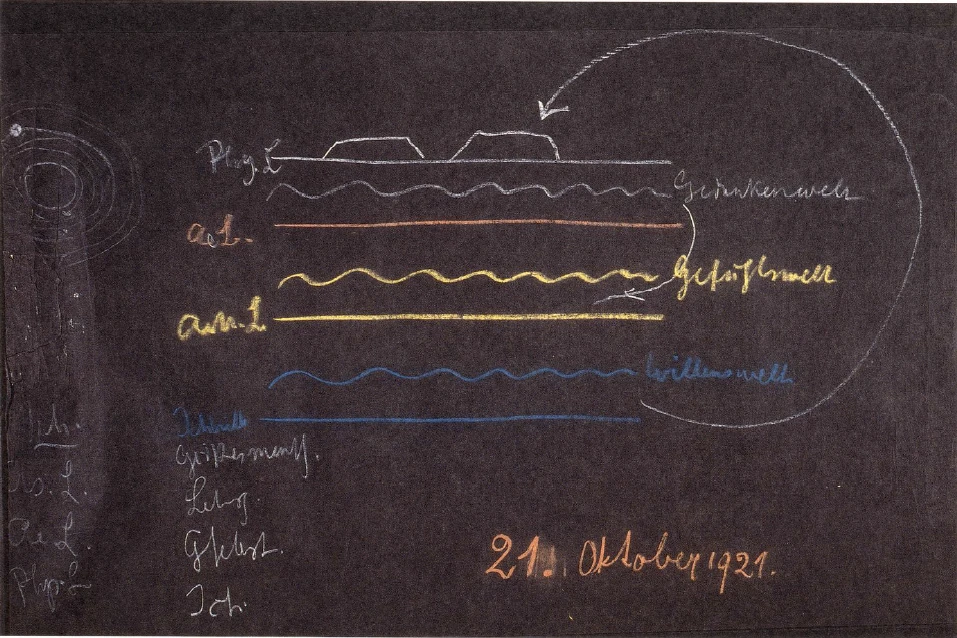
[ 6 ] Let us recall what we have discussed recently. We have said: First, there is the human physical body (see diagram, light-colored); then there is the human etheric body (red). Between the two lies the weaving world of thought, insofar as it is integrated into our organism. Between the etheric body and the astral body (green) lies the world of feeling, and between the astral body and the “I”-sheath (blue) lies the world of will.
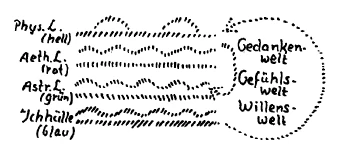
[ 7 ] This world of the will cannot, in fact, be distinguished from the “I” in ordinary consciousness. It is completely united with the “I.” But everything that takes place within the “I”—when the “I” wills or acts—does not enter directly into ordinary consciousness. As I said, this lies, just like the events of the sleeping state, beneath ordinary consciousness.
[ 8 ] In the physical body we have the sense organs, and the sense organs are responsible for perceptions. Through these perceptions, we also perceive the expressions of our will. So in the physical body there are eyes and ears, and what develops there from the “I” and the world of the will is actually perceived through the senses. Thus, what is most external in the human being—perception—connects with what the human being experiences there through their will and through the “I” (large arrow).
[ 9 ] Just consider this: when we take a few steps through our “I”—what lives in the will, what is happening in the depths of the human organism, what drives our legs forward—all of that eludes our consciousness. But as we take a few steps forward, we see a different surroundings—or at least the same surroundings from a different perspective. In this different perspective, our sensory perception provides us with what, in ordinary consciousness, gives us the idea—an image—of what is otherwise actually down in the depths of a waking sleep. By rousing our “I” to will, by translating the impulses of the will into actions, we thus experience these actions—whether they are brought about by walking, grasping, striding, or any kind of work—we experience all these things through perception. In fact, with our will, we belong to our external world of perception. Let us hold fast to this: With our will, we belong to our external world of perception. As we develop what we observe there in terms of expressions of the will, in our manifestations of the will, we do not enter into our true inner self. Thus, although the will flows from our deepest inner self, for our consciousness we are actually carrying out an external process—or rather, a sum of external processes within the body. .
[ 10 ] Let us now consider the inner world, by contrast. There we first have the weaving world of thought. How this weaving world of thought appears to the outside world is not really of interest to us in this context. Externally, this world of thought functions in such a way that it introduces a certain logical, law-like connection into our perceptions. We classify nature. We see plants that are similar to one another and place them in a class; we see animals that are similar to one another and place them in a class. We seek out other laws of nature. Everything we organize in this way does not actually belong to our true inner life. It is what, as science, is common to all people. It does not belong to our inner life.
[ 11 ] But we cannot simply say that everything related to thought does not belong to our inner life. Just imagine how, once you have taken in a beautiful landscape through external perceptions—let’s say—and have reflected on it, you can recall it from memory at any time, even if the image has faded. Thus, what takes the form of a thought based on the external world constitutes a part of your inner world. The same is true of other experiences drawn from the external world that are transformed into thoughts and form a part of the inner world.
[ 12 ] These thoughts first permeate the etheric body. But they also continue to connect with the feelings all the way to the astral body. All of this takes place internally. This inner aspect of thought life, along with the world of feelings associated with it, constitutes the true inner world of the human being. We cannot, in fact, seek in the outer world anything of what we experience in the inner aspect of our world of thought, or what we experience in our feelings. We must always look within ourselves if we wish to come to know this. As I said earlier: We can speak with people; we can allow others to gain insight into us at will; but the essence of it all is precisely this: inner life. — And we can now clearly distinguish between what, in a certain sense, is “outer life”—in which a person continually projects their inner world into the external world—and what is “inner life.”
[ 13 ] When we travel by train one night from western Switzerland to eastern Switzerland, we find ourselves in a completely different environment of will the next morning and take in this environment of will through our perception. We have carried our inner self with us. It is the same inner self that we had in one place and that we have in the next place, modified at most by that which, in turn, has moved inward toward us from our thoughts—that which has just become part of our inner self.
[ 14 ] We can therefore distinguish quite precisely, if we wish, between what constitutes the human being’s true inner self—woven psychically from thoughts and feelings, and physically woven from the interplay of rhythms between the etheric body and the astral body — we can distinguish this from what is, in a certain sense, the external world—woven psychically from the content of the will and the content of perception, and physically woven from the “I” and the physical body. For we take our physical body with us, observe it, and it enters into different relationships with its surroundings. We can distinguish between the inner and the outer in the way I have just described.
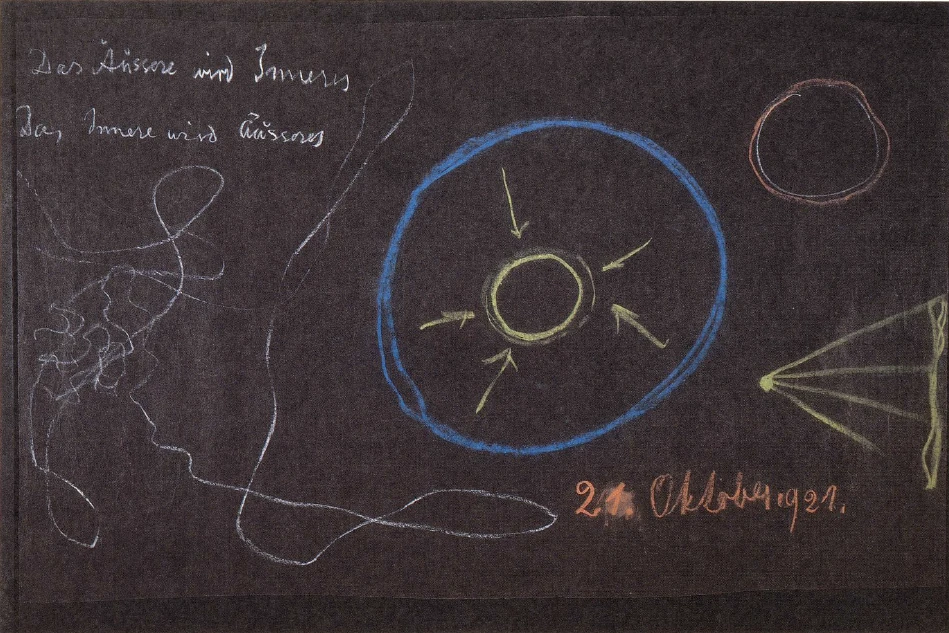
[ 15 ] This distinction, however, is very important when we consider the life that a human being carries through the gate of death. We can summarize in a very concise way how what we have just characterized as the inner and the outer will behave after death, for we can say:
The exterior becomes the interior.
The interior becomes the exterior.
[ 16 ] This is indeed the profound transformation that takes place through death. The outer becomes the inner. Just as we now perceive the innermost part of our soul—we can picture how this inner soul is interwoven with thoughts and feelings—and just as we speak of this inner self, so after death everything we have experienced in terms of perceptions of our actions becomes our inner self. But what we now experience as our inner self is, I would say, condensed into a single point—or rather, into a single sphere: the vision of what we have done here on Earth. What we have done—we carry through death, as our inner memory, the images of our entire earthly existence, and that then becomes our inner self. So it is like a complete reversal: what was external—what we could only perceive through the vision of what we do—that then becomes our inner self. Just as we now live in the sensations and feelings of external impressions, so we will then live in our deeds. Our deeds are, in fact, our inner self. So whoever has done something good or something evil to anyone is then that very thing—the good or the evil they have done. They truly are that very thing after death. One must not imagine these things so abstractly that some indefinite “I” slips through death and then becomes something else, or is a little different; rather, we are, down to the very details, what we have done. After death, we are each of our actions. We are each of our experiences, and we call all of this “I.”
[ 17 ] In contrast, the inner world becomes the outer world. All thoughts, and the entire world of thoughts and feelings, become part of the outer world. Just as now, all around us, there is either the shining sun with the clouds or, at night, the starry sky with its movements, so after death, our thoughts and feelings surround us as our outer world. Thus, what we carry intimately within us becomes part of the external world after death; it appears to us in powerful images in the external world. After death, we see a heaven in which our present inner human being shines forth, just as the sun shines from the present heaven.
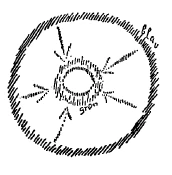
[ 18 ] If I am to describe it in detail, it is as follows: I said earlier that we experience our deeds as a sphere, as our inner self. We go through what we have accomplished in the world again and again; just as we have walked, so we walk once more. In a sense, after death we become something that experiences our own deeds in an ever-expanding sphere (see diagram, blue). And we always look back toward the Earth (green). Just as we now look out into space toward the stars and the Sun, so we then look back toward the Earth (arrows). And the Earth is surrounded by the images of our former inner world. Not as though we were experiencing merely the appearance of our inner world, but rather, from the place we have left behind, we experience—as if shining back at us—those things that were once our inner world, like cloud formations, star formations, and so on, radiating from that place. We feel ourselves to be within the former peripheral world, and we perceive the former world of the Earth, upon which we stood, as our central external world. We look toward it. We ourselves are then the ones orbiting, and the Earth, situated in the center, is what we look toward—and as it unfolds, it unravels our entire inner life in powerful images.
The exterior becomes the interior.
The interior becomes the exterior.
[ 19 ] That is what happens, down to the last detail.
[ 20 ] When one then looks down from this ever-expanding sphere back toward Earth, one sees all the feelings—and even the sensations—that one has directed toward other people flowing back from Earth. What one has experienced inwardly—except in relation to people—appears more like cloud formations, but the feelings one has had for people appear like stars. But the people themselves—whom one sees in life between birth and death as figures, the people themselves whom one experiences in this way as experiences brought about by one’s actions—these become a world. Thus, all the people with whom you have had a relationship become part of your inner world.
[ 21 ] This is, of course, entirely mutual. Just as each person now carries within themselves their feelings, or even their heart and stomach, between death and a new birth they carry within themselves everything that has taken place externally in space and otherwise between them and other people, along with the image of those other people. Of two people who were close to one another, one, A, carries the image of B within, and B carries the image of A as part of his own inner being. The external becomes internal; the internal—the feelings we have experienced—becomes external, becoming cosmic content. What we have felt for people, everything we have received from them, radiates back to us from the Earth.
[ 22 ] In this way, a person truly becomes a kind of creator of what surrounds them after death. During life, it is like this: Isn’t it true that we are always standing at some point in the world—I don’t mean just the ordinary, trivial act of standing in Basel or Dornach, but I mean, in general, any point, any vantage point in the world that we occupy, both physically and morally. From there, we then view the world. So that we can say: We stand at a specific point and view the world from that point in perspective. This is something subjective. Everyone else, of course, has their own different vantage point.
[ 23 ] After death, things are different. Then people do have something in common. Namely, they share the same sphere. But each person has had a different inner life. That is why the Earth appears to them in a different way, with different clouds and different constellations. It is as if all people were standing at a single point on Earth, but here one person would see one image, while another would see a different one. That is roughly how I can visualize the states after death.
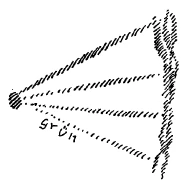
[ 24 ] Upon death, a human being sheds his physical body. This physical body is—as I have already discussed here in connection with earlier presentations over the past few weeks—dissolved by the earthly realm itself. But what remains is that fabric that arises from our actions, as we track our actions—the manifestations of our will—through our perceptions. Just imagine all the paths you have taken on Earth—let’s say, as a child, when you were crawling around, then walking, then going on a long journey, all sorts of things, right?—all of that then becomes your inner life. But that is only the outermost framework.
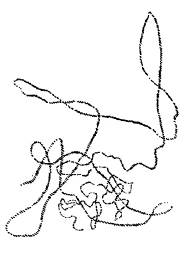
[ 25 ] Well, everything you have done there in detail—all of that weaves itself together into a fabric; it expands, it becomes a sphere, it becomes inner life. It becomes an inner life, and the fact that it becomes an inner life is what guarantees a person’s “I” during their earthly existence. For it is from the earth that they have their “I,” or through the earth that they have their “I.” The fact that everything they do on earth is preserved after death, woven together into such a perceptual-memory image, is what enables them to carry their “I” through death. In contrast, the actual inner experiences are relived for a short time after death, since the etheric body does not dissolve until somewhat later. The etheric body, however, dissolves out into the space of the worlds, and this provides the basis for everything that has been woven from thought and feeling—not only from the etheric body but also with the astral influence—to become that cloud formation or, as I have indicated, that stellar formation that surrounds the Earth. What falls away from us in two directions—toward the Earth and, so to speak, out into the air—constitutes our inner and outer selves as we pass through the life between death and a new birth.
[ 26 ] Try to vividly imagine what kind of environment you have between death and a new birth. Your actions—insofar as they flow from the Will—constitute your inner life. Your emotional and mental life constitutes the cosmos, the outer world. But do not look out into outer space; instead, look in from outer space toward the Earth, which reflects back to you these aspects of your inner thoughts. When we live here between birth and death, we have, on the one hand, the solar life. The sun is out there. We stand on Earth. We look at the sun. After death, the sun disappears immediately. For we are the sun itself, and we do not see what we ourselves are. We simply pass over into the solar life, and what I described earlier is precisely this transition into the solar life. The fact that our deeds become us is connected to our passing over into the solar life. And as we move away from the Earth, what we have experienced through the Earth becomes precisely what we now look upon. Here we stand on the Earth, looking toward the Sun. We see the Earth below us. This is due to the Earth’s peculiar material nature. The Sun has no material nature. What physicists say about it—as I have often stated—is nothing but mere fantasy. When we are, so to speak, within the Sun ourselves and look back, we have the entire spiritual world, the world of the hierarchies, behind us. So just as we here on Earth look at solid matter by looking down below us, so too, between death and new birth, we have the world of hierarchies behind us. Thus, we are the Sun and see the true Sun, which is, of course, spiritual. We could call the Earth “heaven.” Only this is now the very heaven that people create from what they experience inwardly. That will indeed be the future; that will also be the Jupiter existence. I have explained this in detail. Everything that people weave around the Earth through their feelings and thoughts will remain. What will disappear is what exists today as the material Earth, for that is coming to an end. Today, human beings can see—between death and a new birth—what they are weaving within themselves. Later, when the Earth is heading toward its demise, this will become reality; it will itself become a new Earth. Then the old Earth will melt away, and everything that human beings have experienced inwardly will become the future of the Earth.
[ 27 ] This is how the true metamorphosis takes place. After all, it is only an external abstraction when we say that the Earth transforms into Jupiter. We can only understand the process when we know this: what is external Earth matter melts away into outer space, dissipating; what weaves itself around us from our feelings becomes the future Earth—it grows ever denser and denser—and this actually becomes the Jupiter plane.
[ 28 ] Isn’t it true that just as we today, so to speak, dig down through the Earth’s lower layers via geology and occasionally unearth this or that layer that formed a very, very long time ago, so too will it be possible in the future, in the Jupiter state of existence, to explore the individual layers that have formed there. People will then also find all kinds of layers made up of the superimposed human feelings and thoughts. For example, as a Jupiter geologist, one will dig away one layer after another and—just as an Earth geologist says, “Here is the Rotliegend, these are the Tertiary layers”—so the Jupiter geologist will one day say: “Ah yes, that’s a layer that takes us back to a time—on Earth it was called the 20th century, the early 20th century—that’s the layer formed by all the ‘Schiebers’ who developed their feelings and thoughts across nearly the entire Earth during the 20th century.” — Just as we now speak of the Silurian, so in the future people will be able to speak of the “Slider Layer.” Of course, people will also be able to speak of other layers. But these are very real phenomena.
[ 29 ] Human beings are not permitted to let what they experience within themselves pass away. That becomes the world; that is the world-in-the-making. That becomes the world. And it is precisely what will be the world in the future that human beings can already perceive now through their consciousness between death and a new birth.
[ 30 ] When we stand here on Earth, among the many things that surround us, we also observe the Moon. It takes its place in our surroundings in a very special way. It reflects the sunlight back to us. In a sense, we see its surface only insofar as the sunlight weaves a garment for it. So that, even when the moon shines, it is actually the sun that shines upon us; the sun’s rays simply reach us indirectly. As a satellite of the Earth, it stands in a very special relationship to us, so to speak.
[ 31 ] When we are in the life between death and a new birth, we first have our inner world—the effect of all our actions, insofar as they are rooted in the will—as the sphere of the inner world, the central core, surrounded by our feelings and thoughts, which radiate out into the cosmos. But something like the moon is also there. I would say that we then see the moon from the other side. This life in that sphere is, after all, governed by different laws of perspective than our life here on Earth, and some of these laws of perspective are, of course, difficult to describe, precisely because the laws of Earth are so different. For between death and a new birth, we are, in a certain sense, not outside the moon but inside it. We are always connected in some way to the interior of the moon. We are, so to speak, inside the moon. Just as we constantly see this reflected sunlight here on Earth, so between death and a new birth we continually see the interior of the moon (see drawing).
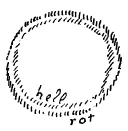
[ 32 ] Well, as I said, the perspective is different here. It might be easiest for you to understand if I explain it as follows: Suppose this were the Earth (see diagram on Plate 1, page 26, inner circle); the Moon orbits around it (the point and the darker outer circle on the left inside). Now, when it comes to the conditions we will be discussing regarding the vision after death, it is not this sphere here that is relevant, but rather the entire lunar sphere. This entire sphere in which it orbits is what matters (hatched area), and we actually perceive it from the inside. First, we move away from Earth within the sphere. Naturally, we remain within the lunar sphere for a long time. At first, aren’t we inside the lunar sphere—here and there and so on—always within the lunar sphere? But now we also move outside the lunar sphere. There we can no longer see it from the inside. Yet we do not see it from the outside either; rather, it ceases to be visible to us, to be perceptible to us. It remains with us, however, as a memory.
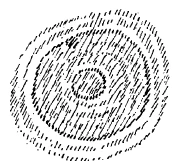
[ 33 ] And what we see there at first—what is, in a sense, a visual perception on the inner wall of the Moon, the lunar sphere—as we move outward, we see it: What we then retain in our memory is what we retain as the effects of a previous earthly life in a later earthly life. In fact, it is this Moon that preserves the events of one earthly life as effects for subsequent earthly lives. For the continuation of the content of one earthly life into the next earthly lives is connected with the Moon and its entire mystery in the cosmos.
[ 34 ] Here we have a perspective in which we stand on Earth and look out into outer space; this is the perspective between birth and death. We have another aspect between death and a new birth, in which we are in the sphere and look back toward the central core. There we find the world that is, in a certain sense, the opposite of our own. But what is, so to speak, preserved and concentrated by the Moon on our behalf is carried through both worlds. In a certain sense, the Moon is already an extraordinarily important celestial body for us. It is the mediator between individual earthly lives; of course, not that slag we see here in the Earth’s glow, but in its entire mysterious cosmic being, it is that.
[ 35 ] You see, in this way the life of the individual human being is woven together with the life of the entire cosmos. As we live here between birth and death, we see, in a sense, what earlier worlds have left behind for us—what remains of our existence on Saturn, the Sun, and the Moon, and of our earlier existence on Earth. We see all of this while we are here, bathed in the radiance of the phenomena that surround us. This points us, to a greater or lesser extent, toward the past. Everything we carry within us and everything we ourselves carry out on this Earth points us toward the future. And, in a sense, we already see this future reflected in the present through our experiences between death and a new birth, as the inner becomes outer and the outer becomes inner.
[ 36 ] If you take the full meaning of the descriptions I have given here in previous weeks—how a human being brings his or her life from between death and a new birth into this earthly existence—it was, in fact, something similar. I said: What a person experiences externally with the outer cosmos, right down to the constellations of the planets, reappears in their physical constitution; it reappears within them, and what they had as their inner world becomes their outer world. Now, after death, it is the case in a similar way: What they establish as the external world, emanating from themselves, becomes their inner world; what they experience inwardly—whether through their surroundings or, as I said, as satisfying feelings or as self-reproach for their actions—this inner world becomes their outer world, their outer world that now gazes out at them into the vastness of space, like their firmament—but it is central.
[ 37 ] One could also say—if such a thing is not misunderstood—that a person’s outer life becomes their inner life, becomes their life in the sun, for they become an inhabitant of the sun; a person’s inner life, insofar as it has been experienced on Earth, becomes their heaven. Only now, heaven is what he preserves from below. The earth becomes heaven, the sun becomes earth in the life between death and a new birth.
[ 38 ] The fact is: When this other side of the world—based on genuine perception—is added to the worldview that today’s intellectualistic earthly human being regards as the only one, only then will the complete picture of the world emerge before humanity. Then human beings will indeed feel quite differently in the world. This other worldview is, in fact, what is described in anthroposophy—what I always describe—in contrast to the passive worldview that people form through external observation—as an active worldview, as the one in which one must take an active part. After all, when you read anthroposophical books, you have to set your thoughts in motion. When you listen to an anthroposophical lecture, you must set your thoughts in motion. Those who are accustomed only to the present day do not want to go along with this; they want everything presented to them in a calm manner, so that even their thoughts are merely calm, passive reflections of it—so that they can, in a certain sense, “sleep” in their surroundings.
[ 39 ] Here in life, between birth and death, human beings have a physical body, an etheric body, an astral body, and an “I.” The “I” is what we can identify as the highest aspect of our earthly existence. When a human being passes into solar existence after death, the “I” is actually the lowest level, and the next level from below is what emerges as the “spirit self,” followed by the “life spirit” and the “spirit human”—which will not physically exist until later stages of development, but which the human being develops spiritually between death and a new birth.
[ 40 ] It is indeed the Spiritual Self that radiates out into the cosmos as an image of the Earth. The “I” lives in the Sun, in the solar existence, and the Spiritual Self radiates back from the Earth, just as I have described. The other forms are higher forms that then come to the human being from the cosmos; they initially have nothing to do with his own inner being. That which radiates toward him appears in a new life; through this, it becomes the spirit of life. And what he has as his deeds is permeated and vibrated through by a high spiritual substance—the spiritual human being. This is something that is then added to him from the cosmos, something he receives, so to speak, from out there. Just as, when he descends through birth, he receives his physical body and his etheric body, so he receives his life spirit, his spiritual human being, when he has passed through the gate of death, as that with which he is then clothed. In contrast, what is then the “I” truly originates from him—I have sketched this out a bit here. And what radiates out from the Earth to him—this spiritual self—is in fact, between death and a new birth, a finely woven planetary existence, something one then perceives as a transformed Earth, upon which one looks back, which one continues to weave from life to life. So that when the Earth has reached the end of its development, the human being will pass over with it to Jupiter, and precisely through what he has woven there, he will be able to physically develop his spiritual self on Jupiter as well, for he has laid the foundation for this during his earthly existence through his own inner being.
[ 41 ] This is how things really happen. This is truly how development unfolds. You see, there is no need to string together external words—such as “earthly existence,” “Jupiterian existence”—and describe things abstractly from the outside; rather, if one grasps the human being in their entirety, one can certainly describe the transition from one to the other. One need only be able to shape one’s concepts in such a way that they themselves can encompass such perceptions: how our feelings and thoughts, spreading within us, radiate outward from the Earth in a planetary, star-like manner into outer space, with which we then live ourselves; how we now carry within us the other people with whom we have entered into a relationship.
[ 42 ] Human life is complicated. But those who try to construct a worldview based on a few rigidly defined concepts have very little understanding of the truth. Such a worldview can only be built on the basis of an understanding of life as a whole. Now, even in the tiniest little beetle, life is something very complicated, and one should certainly not imagine that in the entire universe—with which humanity is connected as a microcosm—life is structured in such a way that it could be encompassed by a few rigidly defined concepts.
[ 43 ] We’ll talk more about that tomorrow.
| in earthly life | in the life between death and rebirth |
|---|---|
| I | |
| Astral body, spiritual human | Etheric body, life spirit |
| ether body | life spirit |
| Physical Body | Spirit Self |
| I |