

Nordic and Central European Spiritual Influences
The Feast of the Epiphany
GA 209
23 December 1921, Dornach
Translate the original German text into any language:
Versions Available:
Nordische und mitteleuropäische Geistimpulse, tr. SOL
Der Mensch Als Erdenwesen Und Himmelswesen III
Man as an Earthly and Celestial Being III
[ 1 ] Des öfteren habe ich im Verlauf dieser Vorträge auseinandergesetzt, wie der Schlafzustand des Menschen nicht nur vorhanden ist für den gewöhnlichen Schlaf, sondern wie er hereinspielt in das bewußte Alltagsleben, und zwar so, daß wir auch innerhalb des bewußten Alltagslebens unterscheiden müssen den vollständigen Wachzustand, der nur vorhanden ist mitBezug auf das Vorstellungsleben, von dem, was wir als Gefühlsleben in uns tragen. Dieses ist nicht in demselben Sinne in unseren Wachzustand eingegliedert wie das Vorstellungsleben, sondern für den unbefangenen Betrachter erweist sich das Gefühlsleben gleich dem Traumleben, nur daß das Traumleben in Bildern verläuft und das Gefühlsleben eben in der Art, wie wir es kennen. Doch wird man sehr leicht gewahr werden, wie man auf der einen Seite das Traumleben, das in der bekannten Weise die Bilder von unbekannten Tatsachen, für dasgewöhnliche Bewußtsein unbekannten Tatsachen, hereinzaubert in das Alltagsleben, nur wird beurteilen können mit unserem vorstellenden Unterscheidungsvermögen. Ebenso können wir, und zwar genau so, die Tragweite, die Bedeutung des Gefühlslebens nur beurteilen durch dieses unterscheidende Vorstellungsleben. Und dasjenige, was verläuft bei einem Willensimpuls, bei dem Ausleben, bei dem Wirken eines Willensimpulses, das ist genauso dem gewöhnlichen Bewußtsein verborgen wie dasjenige, was mit dem Menschen als einem seelisch-geistigen Wesen geschieht vom Einschlafen bis zum Aufwachen im traumlosen Schlafzustande. Was da eigentlich vorgeht, wenn wir nur die einfachste Willenshandlung vollziehen, sagen wir, wenn wir nur durch einen Willensimpuls unsere Arme oder unsere Beine heben, das bleibt tatsächlich so verborgen wie die Vorgänge des Schlafens. Nur dadurch, daß wir gewissermaßen den Erfolg der Willenshandlung sehen, tritt die Willenshandlung in unser gewöhnliches Bewußtsein herein. Wir sehen, nachdem wir den Gedanken gefaßt haben, den Arm zu heben — das ist aber ein bloßer Gedanke —, und nachdem der Erfolg eingetreten ist, wie der Arm eben sich hebt. Und diesen Erfolg der Willenshandlung lernen wir wiederum durch das Vorstellungsleben kennen. Dasjenige aber, was sich als eigentliche Willenstatsache abspielt, bleibt dem gewöhnlichen Bewußtsein verborgen, so daß wir alles dasjenige, was Willensimpuls ist, als einen Schlafzustand auch im gewöhnlichen Tagesleben benennen müssen. Und alles dasjenige, was sich als Gefühlsleben abspielt, verläuft gleich dem Traume.
[ 1 ] Throughout these lectures, I have often discussed how the human state of sleep is not limited to ordinary sleep, but how it plays a role in conscious everyday life, and specifically in such a way that even within our conscious daily life, we must distinguish between the fully awake state—which exists only in relation to our life of imagination—and what we carry within us as our emotional life. This is not integrated into our waking state in the same sense as the life of the imagination; rather, to the impartial observer, the life of feeling appears to be akin to the life of dreaming, except that the life of dreaming unfolds in images, whereas the life of feeling unfolds in the way we know it. Yet one will very easily realize that, on the one hand, the dream life—which, in the familiar way, conjures up images of unknown facts, facts unknown to ordinary consciousness, into everyday life—can only be assessed using our imaginative powers of discernment. Likewise, and in exactly the same way, we can assess the scope and significance of emotional life only through this discerning imaginative life. And what takes place during a volitional impulse—during its unfolding and its effect—is just as hidden from ordinary consciousness as what happens to a human being, as a soul-spiritual being, from the moment of falling asleep until waking up in a dreamless state of sleep. What actually takes place when we perform even the simplest act of will—say, when we raise our arms or legs through a single impulse of will—remains just as hidden as the processes of sleep. It is only because we see, as it were, the result of the act of will that the act of will enters our ordinary consciousness. We see—after we have formed the thought of raising our arm (though this is merely a thought)—and after the result has occurred, how the arm actually raises itself. And we come to know this result of the volitional act, in turn, through our imaginative life. But what actually takes place as a volitional act remains hidden from ordinary consciousness, so that we must describe everything that is a volitional impulse as a state of sleep, even in ordinary daily life. And everything that takes place as emotional life unfolds just like a dream.
[ 2 ] Nun handelt es sich darum, daß diese Summe von Tatsachen, die ich eben vorbereitend angeführt habe, ja dem gewöhnlichen Bewußtsein durchaus einleuchten kann. Wenn man in abstracto dieses andeutet, so wird es vielleicht da oder dort nicht gleich verständlich erscheinen. Aber beim Verfolgen der Bewußtseinstatsachen wird man eben finden, daß das Gesagte durchaus richtig ist. Nun aber kann das entwickelte Bewußtsein diese Tatsachen weiter verfolgen, kann namentlich verfolgen, wie das Vorstellungsleben und das Willensleben für den menschlichen Lebenslauf sich im genaueren gestalten. Wir wissen ja, daß aufgestiegen werden kann durch diejenigen Übungen, die ich geschildert habe in verschiedenen Schriften, von der gewöhnlichen, gegenständlichen Erkenntnis zu der imaginativen Erkenntnis. Diese imaginative Erkenntnis zeigt durch ihre Beobachtung erst, wie es sich eigentlich in Wahrheit mit dem Menschen als einer Totalität verhält. Aber es wird noch nützlich sein, sich an gewisse Tatsachen des gewöhnlichen Bewußtseins zu erinnern, bevor ich dasjenige anführe, was die imaginative Erkenntnis zunächst über den Menschen in bezug auf Vorstellen und Wollen zu sagen hat.
[ 2 ] The point is that this set of facts, which I have just outlined as a prelude, can indeed make perfect sense to ordinary consciousness. If one suggests this in the abstract, it may not seem immediately understandable here and there. But upon examining the facts of consciousness, one will find that what has been said is entirely correct. Now, however, the developed consciousness can explore these facts further; in particular, it can examine how the life of imagination and the life of will take on a more precise form in the course of human life. We know, after all, that it is possible to ascend—through the exercises I have described in various writings—from ordinary, concrete cognition to imaginative cognition. It is only through this imaginative cognition, by means of its observation, that we can see how things actually stand in truth with regard to the human being as a totality. But it will still be useful to recall certain facts of ordinary consciousness before I present what imaginative cognition has to say, first of all, about the human being in relation to imagination and will.
[ 3 ] Betrachten wir einmal unser eigentliches Denkleben, das Vorstellungsleben. Sie werden sich ohne weiteres sagen müssen: Dieses Vorstellungsieben wird eigentlich nicht bei einem unbefangenen Erleben als Realität empfunden. Die Vorstellungen treten in unserem Seelenleben auf, und es ist ja zweifellos, daß für den äußeren Verlauf einer Tatsache der innere Vorstellungsverlauf des Menschen etwas Hinzugekommenes ist. Der äußere Verlauf der Tatsache verlangt nicht unmittelbar, daß er begleitet werde von dem inneren Erlebnis des Vorstellens. Dieselbe Tatsache, die wir vorstellen, könnte sich auch abspielen, ohne daß wir sie vorstellend erleben. Aber auch das Sich-Versenken in die Vorstellungen lehrt uns, wie wir im Vorstellungsleben in etwas Unrealem zunächst gegenüber der Außenwelt leben. Dagegen gerade mit Bezug auf das Willensleben, das sich für das gewöhnliche Bewußtsein wie im Schlafe erlebt ausnimmt, werden wir uns unserer eigenen Realität und der realen Beziehungen von uns zur Welt bewußt. Indem wir bloß vorstellen, müssen wir immer mehr und mehr darauf kommen: Die Vorstellungen leben in uns, wie Bilder von Gegenständen im Spiegel vorhanden sind. Und so wenig wir mit Bezug auf das, was wir gewöhnlich die reale Welt nennen, die Bilder im Spiegel als etwas auch Reales empfinden, ebenso wenig können wir bei gesunder Vernunft die Vorstellungen als solche als etwas Reales empfinden.
[ 3 ] Let us consider our actual life of thought, the life of imagination. You will have to admit without hesitation: This life of imagination is not actually perceived as reality in an unbiased experience. Imaginations arise in our inner life, and there is no doubt that, with regard to the external course of an event, the inner process of imagination is something added to it. The external course of the event does not directly require that it be accompanied by the inner experience of imagination. The very same event that we imagine could also take place without us experiencing it through imagination. But immersing ourselves in these mental images also teaches us how, in the life of imagination, we initially live in something unreal in relation to the external world. In contrast, it is precisely in relation to the life of the will—which, to ordinary consciousness, appears as if experienced in sleep—that we become aware of our own reality and of the real relationships between ourselves and the world. As we simply imagine, we must increasingly come to realize: ideas exist within us just as images of objects exist in a mirror. And just as we do not perceive the images in the mirror as something real in relation to what we usually call the real world, so too, with sound reason, we cannot perceive ideas as such as something real.
[ 4 ] Es hindert uns aber noch etwas, die Vorstellungen als etwas Reales aufzufassen. Das ist unser Freiheitsgefühl. Denken Sie sich einmal: Indem wir vorstellen,lebten wir in unseren Vorstellungen so, daß dieseVorstellungen in uns wie Naturwirkungen abliefen. Das Vorstellungsleben wäre so etwas wie ein äußeres Geschehen der Natur, das sich als Notwendiges abspielt. Wir würden da eingesponnen sein in eine Kette von Notwendigkeiten. Wir würden nur dasjenige denken können, was in der Kette der äußeren Naturnotwendigkeiten drinnensteht. Wir würden niemals das Gefühl der Freiheit, das aber als solches eine Tatsache ist, haben können. Als freieMenschen können wir uns nur empfinden, wenn dasjenige, was als freie Impulse in uns lebt, aus Bildern entspringt, die sich heraussetzen aus der gewöhnlichen Kette der notwendigen Naturtatsachen. Nur weil wir in unseren Vorstellungen in Bildern leben, die nicht in die Reihe der notwendigen Naturerscheinungen eingegliedert sind, können wir aus diesen Vorstellungen heraus die freien Willensimpulse erleben.
[ 4 ] But there is still something that prevents us from regarding our ideas as something real. That is our sense of freedom. Just imagine: If we were to live out our ideas in such a way that these ideas unfolded within us like natural phenomena. Our life of imagination would be something like an external natural process unfolding as a necessity. We would be entangled in a chain of necessities. We would be able to think only what is contained within the chain of external natural necessities. We would never be able to have the feeling of freedom, which is, however, a fact in itself. We can perceive ourselves as free human beings only if what lives within us as free impulses springs from images that stand apart from the ordinary chain of necessary natural facts. It is only because we live in our imaginations through images that are not integrated into the series of necessary natural phenomena that we can experience free impulses of will arising from these imaginations.
[ 5 ] Wenn wir also das Vorstellungsleben in dieser Art betrachten, empfinden wir es überall als etwas Irreales. Dagegen ist eben das Willensleben dasjenige, was uns unsere Realität versichert. Dasjenige, was als Willenshandlung zutage tritt, bringt Veränderungen in der äußeren Welt hervor, die wir als Realitäten ansehen müssen. Wir greifen durch unseren Willen real in die äußere Welt ein. Deshalb können wir auch nur die Empfindung haben, daß, indem wir Willenswesen sind, wir real in der Außenwelt drinnenstehen. Wenn wir nun von diesen schon durch das gewöhnliche Bewußtsein leicht zu konstatierenden Tatsachen vorschreiten zu dem, was uns die Imagination sagen kann, so gelangen wir zu folgendem: Es ist wirklich so, daß wenn wir die imaginative Erkenntnis uns aneignen und dann von dieser aus versuchen, zu einer Selbsterkenntnis des Menschen zu kommen, dann nimmt sich der Mensch vor dieser imaginativen Erkenntnis zunächst in zweifacher Art als ein ganz anderes Wesen aus, als er es für das gewöhnliche Bewußtsein ist. Für das gewöhnliche Bewußtsein steht unser physischer Leib so vor uns, daß er gewissermaßen eine in sich abgeschlossene, ruhende Wesenheit ist. Wir unterscheiden am physischen Leibe seine einzelnen Organe, und wir bekommen, indem wir so mit dem gewöhnlichen Bewußtseinszustand diese einzelnen Organe des physischen Leibes betrachten, den Eindruck, es mit abgeschlossenen Leibesgliedern zu tun zu haben, die wir aufzeichnen können, die also festgeschlossene Konturen haben, die ein in sich Ruhendes sind.
[ 5 ] So when we consider the life of the imagination in this way, we perceive it everywhere as something unreal. In contrast, it is precisely the life of the will that assures us of our reality. That which manifests as an act of the will brings about changes in the external world that we must regard as realities. Through our will, we intervene in the external world in a real sense. That is why we can only have the feeling that, as beings of will, we are truly present in the external world. If we now proceed from these facts—which can be easily ascertained even through ordinary consciousness—to what the imagination can tell us, we arrive at the following: It is indeed the case that when we acquire imaginative knowledge and then, on this basis, attempt to arrive at a self-understanding of the human being, the human being initially appears, in the light of this imaginative knowledge, in two respects as a completely different being than he is to ordinary consciousness. To ordinary consciousness, our physical body appears as a self-contained, static entity, so to speak. We distinguish the individual organs of the physical body, and by observing these individual organs of the physical body in this way with ordinary consciousness, we gain the impression that we are dealing with distinct bodily parts that we can map out—that is, parts with clearly defined contours that are at rest within themselves.
[ 6 ] Das hört in dem Augenblicke auf, wo wir zur imaginativen Erkenntnis aufsteigen und dann unser Leibesleben von dem Gesichtspunkte der imaginativen Erkenntnis aus betrachten. Da gibt es also kein Ruhendes, das wir, wenn wir nicht schematisch werden wollen schematisch kann man natürlich alles zeichnen —, als in sich abgeschlossene Figuren zeichnen können. Wir können dasjenige, was uns die imaginative Erkenntnis gibt über Lunge, Herz, Leber und so weiter nicht in abgeschlossenen Konturen aufzeigen, sondern dasjenige, was uns über den physischen Leib die imaginative Erkenntnis gibt, ist ein fortwährendes in sich Bewegliches, ist ein Geschehen, ist kein Ruhendes. Es ist ein Prozeß, ein Werden. Es ist ein Fluß, den wir gewahr werden, wenn wir zur imaginativen Erkenntnis aufsteigen. Alles brodelt, möchte ich sagen, alles bewegt sich innerlich, und zwar nicht nur räumlich, sondern auch in intensivem Sinne; das eine fließt in das andere über. Wir haben nicht mehr ruhende Organe, nicht mehr in sich geschlossene Organe vor uns, wir haben ein lebendiges Werden, ein Leben und Weben vor uns. Wir können nicht mehr sprechen von Lunge, Herz und Leber, sondern wir müssen sprechen von dem Lungenprozeß, von dem Herzensprozeß, von dem Leberprozeß. Und wiederum, diese einzelnen Prozesse setzen sich zusammen zu dem Gesamtprozeß Mensch. Das ist das Eigenrümliche, daß sich der Mensch in dem Augenblicke, wo er vom Gesichtspunkt der imaginativen Erkenntnis aus betrachtet wird, sich ausnimmt als ein in sich Bewegliches, als ein fortdauernd in jedem Augenblicke Werdendes.
[ 6 ] This ceases the moment we ascend to imaginative cognition and then view our physical life from the perspective of imaginative cognition. There is therefore nothing static that we—if we do not want to become schematic (though, of course, one can draw everything schematically)—can depict as self-contained figures. We cannot depict what imaginative cognition reveals to us about the lungs, heart, liver, and so on within closed contours; rather, what imaginative cognition reveals to us about the physical body is a continuous, self-moving process—it is a happening, not something static. It is a process, a becoming. It is a flow that we become aware of when we rise to imaginative insight. Everything is bubbling, I would say; everything is moving internally—not only spatially, but also in an intense sense; one thing flows into the other. We no longer have static organs, self-contained organs before us; we have a living process of becoming, a life and a weaving before us. We can no longer speak of the lungs, the heart, and the liver; rather, we must speak of the process of the lungs, the process of the heart, and the process of the liver. And in turn, these individual processes come together to form the overall process of the human being. This is the peculiarity: that the moment the human being is viewed from the perspective of imaginative insight, he appears as a being in motion within himself, as a being that is constantly becoming in every moment.
[ 7 ] Beachten Sie aber, welche Bedeutung dieser veränderte Anblick des Menschen hat. Wenn wir den menschlichen Leib mit seinen festkonturierten Gliedern betrachten und dann den Seelenblick werfen auf unser inneres Seelenleben, dann sehen wir im Seelenleben niemals etwas, was wir mit festen Konturen aufzeichnen könnten. Wir sehen im Seelenleben etwas, was in der Zeit verläuft, was immer wird und niemals ruhend ist. Das Seelenleben stellt sich uns zwar dar als ein nur innerlich geistig-seelisch anschaubarer, aber doch deutlich vorliegender Prozeß. Dieser Prozeß des Seelenlebens, der schon für das gewöhnliche Bewußtsein bei einer unbefangenen Innenschau des Menschen da ist, dieses Werden des Seelenlebens ist sehr wenig ähnlich dem in sich ruhenden Leibesleben. Gewiß, das Leibesleben zeigt uns auch Bewegung, die Atmungsbewegung, die Zirkulationsbewegung; allein ich möchte sagen, da haben wir einen Übergang zu dem Beweglichen, als das sich uns der Mensch darstellt vor der imaginativen Erkenntnis. Aber gegenüber den feinen, subtilen Bewegungen, die der imaginativen Erkenntnis sich ergeben von dem menschlichen physischen Leibe, verhält sich dasjenige, was uns als Blutzirkulation, als Atmungsbewegung, als sonstige Bewegung im Leibe auftritt, doch wie ein etwas verhältnismäßig Ruhendes. Kurz, dasjenige, was man mit dem gewöhnlichen Bewußtsein in der gegenständlichen Erkenntnis als den menschlichen Leib wahrnimmt, das ist sehr verschieden von dem, was man wahrnimmt als das Seelenleben, das ein immerwährendes Werdendes, ein in sich Bewegliches, ein nie Ruhendes ist. Wenn wir aber imaginativ den menschlichen Leib betrachten, dann wird er innerlich beweglich, das heißt, er wird in seinem Anblicke dem Seelenleben ähnlicher. So liefert uns die imaginative Erkenntnis die Möglichkeit, ich möchte sagen, den Anblick des physischen Leibes in das Seelische heraufzuheben. Seele und Leib nähern sich. Der Leib, der physische Körper wird seelenähnlicher für die imaginative Erkenntnis.
[ 7 ] But consider the significance of this changed perspective on the human being. When we look at the human body with its clearly defined features and then turn our soul’s gaze to our inner soul life, we never see anything in that soul life that we could depict with clear contours. In the life of the soul, we see something that unfolds over time, that is always becoming and never at rest. The life of the soul presents itself to us as a process that is visible only inwardly, in a spiritual-soul manner, yet is clearly present. This process of the soul life—which is already present to ordinary consciousness in an unbiased introspection of the human being—this becoming of the soul life bears very little resemblance to the bodily life, which rests within itself. Certainly, bodily life also reveals movement to us—the movement of breathing, the movement of circulation; yet I would say that here we have a transition to the dynamic, as the human being presents itself to us in imaginative perception. But compared to the fine, subtle movements that imaginative perception reveals in the human physical body, what appears to us as blood circulation, respiratory movement, and other movements within the body is, after all, relatively still. In short, what is perceived by ordinary consciousness in objective cognition as the human body is very different from what is perceived as the life of the soul, which is a ceaseless becoming, something in motion within itself, something that never rests. But when we regard the human body imaginatively, it becomes inwardly mobile; that is to say, in our perception of it, it becomes more like the life of the soul. Thus, imaginative perception provides us with the possibility—I would say—of elevating the vision of the physical body into the realm of the soul. Soul and body draw closer together. The body—the physical body—becomes more soul-like to imaginative perception.
[ 8 ] Aber ich habe Ihnen jetzt eigentlich zwei Dinge vorgeführt, welche auf ganz verschiedenen Feldern liegen. Ich habe Ihnen vorgeführt den Anblick, den der physische Leib für die imaginative Erkenntnis bietet, habe Ihnen vorgeführt, daß er da ein in sich Bewegliches, ein fortwährend Werdendes ist, und ich habe Ihnen dann gezeigt, wie schon für das gewöhnliche Bewußtsein in der Innenschau das gewöhnliche Seelenleben ein solches Werdendes, ein nie Ruhendes, ein in der Zeit Verlaufendes, ein Leben ist, das wir eben nicht in feste Konturen fassen und etwa in solchen aufzeichnen können.
[ 8 ] But I have actually shown you two things that lie in quite different fields. I have shown you the image that the physical body presents to imaginative cognition; I have shown you that it is something that moves within itself, something that is constantly becoming, and I have then shown you how, even for ordinary consciousness in introspection, ordinary soul life is such a process of becoming—never at rest, unfolding in time—a life that we simply cannot grasp within fixed contours or record within them.
[ 9 ] Wenn wir aber zur imaginativen Erkenntnis aufsteigen, so verändert sich auch für die Innenschau dieses Seelenleben, und es verändert sich in der entgegengesetzten Richtung wie das Leibesleben. Das ist ja das Merkwürdige, daß, indem wir uns mit imaginativen Erkenntnissen durchtränken, wir nicht mehr fühlen diese freie Beweglichkeit in den Gedanken, diese freie Beweglichkeit in der Verbindung des einen Gedankens mit dem andern. Wir fühlen auch, daß, indem wir zur imaginativen Erkenntnis aufsteigen, unsere Gedanken etwas unser Seelenleben Bezwingendes haben. Im gewöhnlichen Bewußtsein können wir einen Gedanken zu dem andern hinzufügen. Wir können ganz mit innerlicher Freiheit ein Subjekt mit einem Prädikat verbinden. Wir können es auch unterlassen, und wir fühlen uns frei in dieser Verbindung der einen Vorstellung mit der andern.
[ 9 ] But when we ascend to imaginative cognition, this inner life of the soul also changes in our introspection, and it changes in the opposite direction from that of bodily life. That is indeed the remarkable thing: as we immerse ourselves in imaginative insights, we no longer feel that free fluidity in our thoughts, that free fluidity in the connection between one thought and another. We also feel that, as we ascend to imaginative cognition, our thoughts have something about them that subdues our inner life. In ordinary consciousness, we can add one thought to another. We can connect a subject with a predicate with complete inner freedom. We can also refrain from doing so, and we feel free in this connection of one idea with another.
[ 10 ] Das ist nicht so, wenn wir zur imaginativen Erkenntnis aufsteigen. Da fühlen wir uns in der Gedankenwelt wie in etwas, das sich durch seine eigenen Kräfte abspielt. Da fühlen wir uns wie eingesponnen in das Gedankennetz, so daß sich nicht durch uns, sondern durch die eigenen Kräfte ein Gedanke mit dem andern verbindet. Wir können gar nicht mehr sagen, wenn wir zur imaginativen Erkenntnis aufsteigen: Ich denke. — Wir müssen beginnen dann zu sagen: Es denkt. — Und wir sind in dieses «Es denkt» eingesponnen. Wir fangen an, das Denken als einen realen Prozeß zu empfinden. Wir fühlen es so als einen realen Prozeß in uns, wie wir etwa im gewöhnlichen Alltagsleben fühlen, daß uns dieser Schmerz ergreift und wieder verläßt, diese Lust kommt und wieder geht. Wir fühlen Realität in der Gedankenwelt, indem wir uns zur imaginativen Erkenntnis erheben. Wir fühlen etwas in unserer Gedankenwelt, was ähnlich wird dem Erleben, das wir gegenüber dem physischen Leibe sonst haben. Daraus ersehen Sie, daß durch die imaginative Erkenntnis das vorstellende Seelenleben noch mehr ähnlicher wird dem Leibesleben, als das Seelenleben ähnlich diesem Leibesleben ist, das für das gewöhnliche Bewußtsein in Innenschau ergriffen wird. Kurz, für die imaginative Erkenntnis wird der Leib sehr seelenähnlich. Die Seele aber wird leibesähnlich, allerdings ähnlich den Leibesvorgängen, wie sie sich als Werdendes dem imaginativen Bewußtsein enthüllen. So nähert sich das Seelische dem Leiblichen für die imaginative Erkenntnis, und das Leibliche dem Seelischen. Wir sehen gewissermaßen ineinanderdringen, einander ähnlich werden Seelisch-Geistiges und Körperlich-Physisches, indem wir zur imaginativen Erkenntnis aufsteigen. Wir werden gewissermaßen im Erleben des Seelischen von einem Materialismus ergriffen, und unser Anschauen des Leibeslebens, des physischen Lebens überhaupt, wird spiritualisiert. Das ist eine wichtige Tatsache, die sich für die imaginative Erkenntnis ergibt.
[ 10 ] This is not the case when we rise to imaginative cognition. There, in the world of thought, we feel as though we are in something that unfolds through its own forces. There, we feel as though we are entangled in the web of thought, so that one thought connects with another not through us, but through its own forces. When we ascend to imaginative cognition, we can no longer say, “I think.” — We must then begin to say, “It thinks.” — And we are woven into this “It thinks.” We begin to perceive thinking as a real process. We feel it as a real process within us, just as we feel in ordinary everyday life that this pain seizes us and then leaves us, that this pleasure comes and goes. We feel reality in the world of thought as we rise to imaginative cognition. We feel something in our world of thought that becomes similar to the experience we otherwise have in relation to the physical body. From this you can see that, through imaginative insight, the imaginative life of the soul becomes even more like bodily life than the life of the soul is like this bodily life, which is grasped by ordinary consciousness in introspection. In short, for imaginative cognition, the body becomes very much like the soul. The soul, however, becomes like the body—though similar to bodily processes only insofar as they reveal themselves to imaginative consciousness as processes of becoming. Thus, for imaginative cognition, the soul approaches the body, and the body approaches the soul. We see, as it were, the soul-spiritual and the bodily-physical interpenetrating and becoming similar to one another as we ascend to imaginative cognition. In a sense, we are seized by a form of materialism in our experience of the soul, and our perception of bodily life—of physical life in general—is spiritualized. This is an important fact that emerges for imaginative cognition.
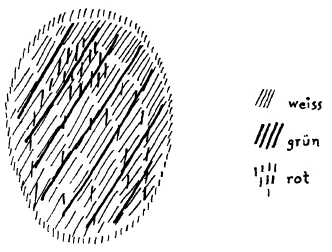
[ 11 ] Und wenn dann weiter vorgeschritten wird zur inspirierten Erkenntnis, dann enthülltsich uns ein weiteres Geheimnis über die menschliche Wesenheit. Wir lernen nachher durch die inspirierte Erkenntnis das Denken, das Vorstellen nach seinem materiellen Charakter noch mehr kennen. Wir durchschauen, was eigentlich sich abspielt, indem wir denken. Ich sagte: Wir kommen heraus aus der Freiheit des Gedankenlebens. Es denkt, und wir sind in dieses «Es denkt» eingesponnen. Es sind unter Umständen dieselben Gedanken, die wir in freier Weise im gewöhnlichen Bewußtsein verbinden und trennen, und die wir im imaginativen Erleben wie in innerer Notwendigkeit sich abspielend verspüren. Daraus ersehen wir, daß nicht im Gedankenleben als solchem Freiheit und Notwendigkeit liegt, sondern in unserem Zustande, in unserem Verhältnisse zu dem Gedankenleben im gewöhnlichen physischen Bewußtsein. Aber wir lernen erkennen, wie es eigentlich steht mit dem im gewöhnlichen Bewußtsein vorhandenen Erleben der Irrealität der Gedanken. Wir lernen verstehen, warum wir die Gedanken als irreal erleben. Folgendes nämlich stellt sich heraus: Der organische Prozeß, der in uns vorgeht, verläuft ja so, daß unser Organismus sich Stoffe aneignet und auch Stoffe abscheidet. Aber nicht allein diejenigen Stoffe, welche sich aus dem organischen Prozesse unseres Leibes heraussondern, werden durch die Abscheidungsorgane nach außen gestoßen, sondern es lagern sich fortwährend in uns selber solche Stoffe ab. Die bleiben gewissermaßen längs unserer Nervenbahn und an sonstigen Orten unseres Organismus liegen; die werden ausgestoßen aus dem Lebensprozeß. Wir haben es fortwährend in unserem Lebensprozeß damit zu tun, daß sich Lebloses aussondert. Wer im Genauen verfolgen kann den menschlichen Lebensprozeß, der wird wahrnehmen können, daß sich überall im Organismus unorganische Stoffe ablagern. Die groben Massen werden ausgeschieden; aber in feiner Weise lagern sich überall Stoffe ab. So daß wir sagen können: Der menschliche Organismus lebt so, daß er zunächst den organischen Prozeß in sich trägt, den ich Ihnen hier mit weißer Kreide schematisch darstellen will. Aber innerhalb dieses organischen Prozesses sehen wir überall unorganische, leblose Stoffe, die nicht ausgeschieden werden, sondern sich überall ablagern, die ich hier mit roter Kreide schematisch einzeichnen will. Ich zeichnete oben die roten Punkte besonders dicht, weil hauptsächlich diese sich nicht ausscheidenden leblosen Stoffe in dem Kopforgan des Menschen sich absondern, wo sie liegen bleiben. Nun ist der ganze menschliche Organismus von dem Ich durchdrungen. Ich zeichne mit grüner Kreide dieses Ich in die schematische Zeichnung ein. Es kommt innerhalb unseres Organismus das Ich mit den leblos ausgeschiedenen Stoffen in Berührung. Es durchdtringt sie. Es gibt also in unserem Organismus etwas, das sich so ausnimmt, daß auf der einen Seite das Ich durchdringt den organischen Prozeß, den Prozeß, innerhalb welchem die Stoffe als lebendige Stoffe enthalten sind, daß aber das Ich auch durchdringt dasjenige, was Lebloses, ich möchte sagen, Mineralisiertes in unserem Organismus ist. Wenn wir denken, so geht fortwährend das vor sich, daß, angeregt durch die äußeren Sinneswahrnehmungen oder auch durch die Erinnerungen, das Ich gewissermaßen sich bemächtigt dieser leblosen Stoffe und sie im Sinne der äußeren Sinnesanregungen oder der Anregung durch die Erinnerungen aufpendelt, mit ihnen in uns, ich darf schon sagen, zeichnet. Denn es ist keine bildliche Vorstellung, sondern es entspricht durchaus der Realität, daß dasIch diese unorganischen Stoffe wirklich so verwendet, wie wenn ich etwa jetzt, vergleichsweise gesprochen, mir hier Kreide pulverisieren würde und dann mit dem Finger das Kreidepulver nehmen würde und dann mit diesem bekreideten Finger allerlei Figuren hinzeichnete. Es ist so, daß tatsächlich das Ich diese leblosen Stoffe aufpendelt, sich ihrer bemächtigt und in uns Figuren einzeichnet, die allerdings den Figuren, die wir gewöhnlich äußerlich aufzeichnen, nicht ganz ähnlich sehen. Aber es wird in uns durch das Ich mit Hilfe des leblosen Stoffes tatsächlich gezeichnet, kristallisiert, wenn auch nicht in den Kristallgestalten, die wir im mineralischen Reiche finden (siehe Schema, rot). Dasjenige, was sich so abspielt zwischen dem Ich und dem, was in uns mineralisch geworden ist, und zwar sich als sogar fein-feste, mineralisierte Substanzen absondert, das ist dasjenige, was als Materielles unserem Denken zugrunde liegt. Der inspirierten Erkenntnis ergibt sich also der Denkprozeß, der Vorstellungsprozeß tatsächlich als eine Behandlung des Mineralisierten im menschlichen Organismus durch das Ich. Das ist die genauere Schilderung desjenigen; was ich oftmals abstrakt charakterisiert habe, wenn ich sagte: Indem wir denken, sterben wir fortwährend ab. Das in uns Ersterbende, das sich aus dem Leben Heraushebende, das sich Mineralisierende ist dasjenige, mit dem das Ich in uns zeichnet, und mit dem das Ich tatsächlich die Summe unserer Gedanken zeichnet. Es ist ein Wirken und Weben des Ich im mineralischen Reiche, in jenem mineralischen Reiche, das in uns erst wird, das wir als unser Denken haben.
[ 11 ] And as we proceed further toward inspired insight, another mystery concerning the human being is revealed to us. Through inspired insight, we come to understand thinking and imagination—in terms of their material nature—even more deeply. We come to see what is actually taking place when we think. I said: We emerge from the freedom of the life of thought. It thinks, and we are entangled in this “It thinks.” Under certain circumstances, these are the very same thoughts that we freely connect and separate in ordinary consciousness, and which we experience in imaginative experience as unfolding out of an inner necessity. From this we see that freedom and necessity do not lie in the life of thought as such, but in our state, in our relationship to the life of thought within ordinary physical consciousness. But we learn to recognize the true nature of the experience of the unreality of thoughts present in ordinary consciousness. We learn to understand why we experience thoughts as unreal. For the following becomes clear: The organic process taking place within us proceeds in such a way that our organism absorbs substances and also excretes them. But it is not only those substances that are secreted from our body’s organic processes that are expelled outward through the excretory organs; such substances are also continually deposited within us. These substances, so to speak, remain along our nerve pathways and in other parts of our organism; they are expelled from the life process. We are constantly confronted in our life process with the fact that non-living matter is being excreted. Anyone who can closely observe the human life process will be able to perceive that inorganic substances are deposited throughout the organism. The coarse masses are excreted; but in a subtle way, substances are deposited everywhere. So we can say: The human organism lives in such a way that it first carries within itself the organic process, which I will now illustrate schematically for you here with white chalk. But within this organic process, we see inorganic, lifeless substances everywhere that are not excreted but instead accumulate throughout the body; I will sketch these schematically here with red chalk. I drew the red dots particularly densely at the top because it is mainly these non-excreted, lifeless substances that accumulate in the human head, where they remain. Now, the entire human organism is permeated by the “I.” I will draw this “I” into the schematic diagram with green chalk. Within our organism, the “I” comes into contact with the lifeless, excreted substances. It permeates them. There is, therefore, something in our organism that takes the form such that, on the one hand, the “I” permeates the organic process—the process within which these substances are contained as living substances—but on the other hand, the “I” also permeates that which is lifeless, or, I might say, mineralized, within our organism. When we think, what is constantly happening is that, stimulated by external sensory perceptions or by memories, the “I,” so to speak, takes possession of these lifeless substances and, in accordance with the external sensory stimuli or the stimulation from memories, balances them out—I might even say, draws with them—within us. For this is not a figurative notion, but corresponds entirely to reality: the “I” truly uses these inorganic substances just as if, for example, I were now—to use a comparison—to pulverize chalk here and then take the chalk powder with my finger and use that chalk-covered finger to draw all sorts of figures. The fact is that the “I” does indeed balance out these inanimate substances, takes possession of them, and draws figures within us—figures that, admittedly, do not look quite like the ones we usually draw externally. But within us, through the “I” and with the help of the lifeless substance, these figures are indeed drawn and crystallized, even if not in the crystalline forms we find in the mineral kingdom (see diagram, red). What takes place in this way between the “I” and that which has become mineral within us—and which separates itself as fine, solid, mineralized substances—is precisely what underlies our thinking as material substance. To the inspired insight, therefore, the thought process and the process of imagination actually appear as the “I” working upon the mineralized substance within the human organism. This is a more precise description of what I have often characterized in abstract terms when I said: “As we think, we are continually dying off.” That which first dies within us, that which rises out of life, that which becomes mineralized—this is what the “I” uses to draw within us, and with which the “I” actually draws the sum total of our thoughts. It is an activity and weaving of the “I” in the mineral realm—in that mineral realm which first comes into being within us, which we possess as our thinking.
[ 12 ] Sehen Sie, das, was ich Ihnen hier charakterisiere, ist es, was, ich möchte sagen, in einer irrtümlichen Ahnung dem Materialismus des 19. Jahrhunderts aufgegangen ist. Dieser Materialismus kam in seinen besten Vertretern — einer der besten Vertreter dieses Materialismus war ja Czolbe —, zu der Ahnung davon, daß, während in uns Gedanken abfließen, physische Prozesse sich vollziehen; nur vergaß dieser Materialismus, und deshalb war die Ahnung eine irrtümliche, daß es das rein geistige Ich ist, das mit dem Mineralisierten in uns innerlich zeichnet. Gerade das also, was wir als das eigentliche Aufwachen des gewöhnlichen Bewußtseins erkennen, das beruht auf diesem innerlichen Zeichnen mit den in uns mineralisierten Stoffen.
[ 12 ] You see, what I am describing here is what, I would say, emerged—in a mistaken intuition—from 19th-century materialism. This materialism, in its finest representatives—one of the finest representatives of this materialism was, after all, Czolbe—came to the intuition that, while thoughts flow through us, physical processes are taking place; but this materialism forgot—and that is why the intuition was erroneous—that it is the purely spiritual “I” that draws inwardly with the mineralized substances within us. It is precisely what we recognize as the actual awakening of ordinary consciousness that is based on this inner drawing with the mineralized substances within us.
[ 13 ] Sehen wir jetzt nach der andern Seite des Menschen hin, nach der Seite der Willensimpulse. Wenn Sie auf dasjenige noch einmal zurückblicken, was ich eben charakterisiert habe, so sehen Sie darinnen vielleicht ein Gefangennehmen des Ich durch das Mineralisierte in uns. Unser Ich ist eben in der Lage, mit diesem Mineralisierten zu hantieren, innerlich zu zeichnen. Das Ich kann sich hineinversenken in dasjenige, was in uns mineralisiert wird.
[ 13 ] Let us now turn our attention to the other side of the human being—the side of the impulses of the will. If you look back once more at what I have just described, you may see in it a kind of captivity of the “I” by the mineralized element within us. Our “I” is precisely capable of working with this mineralized aspect, of drawing within it. The “I” can immerse itself in that which is mineralized within us.
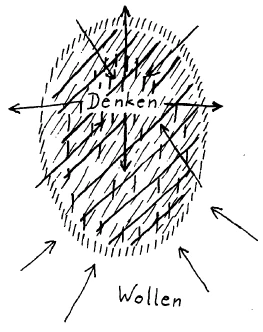
[ 14 ] Betrachten wir auf der andern Seite jene Lebensprozesse, in denen eben die nichtmineralisierten, die im lebendigen Prozesse befindlichen Stoffe sind, dann kommen wir, ich möchte sagen, auf das Materielle der Willenswirkungen. Im Schlafe ist ja das Ich aus dem physischen Leibe heraus. Im Wollen ist das Ich aus gewissen Orten unseres Organismus heraus. Das ist dadurch der Fall, daß an diesem Orte sich in gewissen Zeitaugenblicken eben nichts mineralisiert, sondern daß da alles lebt. Aus denjenigen Stellen unseres Organismus, in denen alles lebt, in denen in dem entsprechenden Augenblicke nichts Mineralisiertes sich ablöst, abscheidet, da entfalten sich die Willensimpulse. Da wird aber das Ich ausgestoßen. In das Mineralische wird das Ich hineingezogen. Mit dem Mineralischen kann es hantieren; mit demjenigen, was lebendig ist, kann es nicht hantieren. Aus dem wird es herausgetrieben, wie in der Nacht, wenn wir schlafen, dieses Ich aus dem ganzen physischen Leibe herausgetrieben wird. Nun ist aber dann das Ich außerhalb des Leibes. Durch das Mineralisieren wird das Ich in den Leib hineingetrieben. Durch das Vitalisieren wird das Ich aus Teilen des Leibes herausgetrieben. Es ist dann gerade so außerhalb dieser Teile, wie es im Schlafe ganz außerhalb des physischen Leibes ist. Und wir können daher sagen: bei einer Willensbetätigung sind immer Teile des Ich außerhalb derjenigen Orte des physischen Leibes, denen sie eigentlich zugeteilt sind. Und wo sind dann diese Teile des Ich, die außerhalb der ihnen entsprechenden Teile des physischen Leibes sind? Nun, sie sind eben außerhalb, im übrigen Raume. Sie sind eingegliedert in die Kräfte, welche diesen Raum durchweben. Wir sind, indem wir unseren Willen betätigen, mit einem Teil unseres Ich außerhalb unser. Wir gliedern uns Kräfte ein, die durch die Welt gelegt sind. Wenn ich einen Arm bewege, so bewege ich ihn nicht durch etwas, was im Inneren des Organismus entspringt, sondern durch eine Kraft, die außerhalb meines Armes ist, und in die das Ich hineinkommt dadurch, daß es aus gewissen Orten meines Armes herausgetrieben wird. Im Wollen komme ich außerhalb meines Leibes, und durch Kräfte, die außerhalb meiner liegen, bewege ich mich. Man hebt das Bein nicht durch Kräfte, die im Inneren sind, sondern man hebt das Bein durch Kräfte, die tatsächlich von außerhalb wirken; ebenso den Arm. Während man also im Denken nach innen getrieben wird durch das Verhältnis des Ich. zu dem mineralisierten Teil des menschlichen Organismus, wird man im Wollen geradeso wie im Schlafe. nach außen getrieben. Und niemand versteht das Wollen, der nicht den Menschen als kosmisches Wesen auffaßt, der nicht hinausgeht aus den Grenzen des menschlichen Leibes, der nicht weiß, daß der Mensch im Wollen sich außerhalb seines Leibes liegende Kräfte eingliedert. Wir versenken uns in die Welt, wir geben uns an die Welt hin, indem wir wollen. So daß wir sagen können: Die materielle Begleiterscheinung des Denkens ist ein mineralischer Prozeß in uns, ein Zeichnen des Ich in mineralisierte Teile des menschlichen Organismus. Das Wollen in uns stellt dar ein Vitalisieren, ein Herausbreiten des Ich, ein Eingliedern des Ich in die geistige Außenwelt, und ein Wirken auf den Leib vom Ich aus, aus der geistigen Außenwelt herein.
[ 14 ] If, on the other hand, we consider those life processes in which the substances are precisely those that are not mineralized—those that are in the midst of the living process—then we arrive, I would say, at the material aspect of the effects of the will. During sleep, after all, the “I” is outside the physical body. In the act of willing, the “I” is outside certain parts of our organism. This is because, at those locations, nothing is mineralizing at certain moments in time; rather, everything there is alive. From those parts of our organism where everything is alive—where, at the corresponding moment, nothing mineralized is being shed or separated—the impulses of the will unfold. But there, the “I” is expelled. The “I” is drawn into the mineral realm. It can interact with the mineral realm; it cannot interact with that which is alive. It is driven out of it, just as at night, when we sleep, this “I” is driven out of the entire physical body. But then the “I” is outside the body. Through mineralization, the “I” is driven back into the body. Through vitalization, the “I” is driven out of parts of the body. It is then just as much outside these parts as it is completely outside the physical body during sleep. And we can therefore say: whenever the will is active, parts of the “I” are always outside those parts of the physical body to which they are actually assigned. And where, then, are these parts of the “I” that are outside the corresponding parts of the physical body? Well, they are simply outside, in the surrounding space. They are integrated into the forces that permeate this space. When we exercise our will, we are, with a part of our “I,” outside ourselves. We incorporate forces that are spread throughout the world. When I move an arm, I do not move it through something that arises from within the organism, but through a force that is outside my arm, and into which the “I” enters by being driven out of certain parts of my arm. In willing, I go outside my body, and I move through forces that lie outside me. One does not lift a leg through forces that are within, but rather through forces that actually act from without; the same applies to the arm. Thus, while in thinking one is driven inward by the relationship of the “I” to the mineralized part of the human organism, in willing one is driven outward, just as in sleep. And no one understands volition who does not conceive of the human being as a cosmic being, who does not go beyond the boundaries of the human body, who does not know that in volition the human being incorporates forces lying outside the body. We immerse ourselves in the world; we give ourselves over to the world through volition. So that we can say: The material accompaniment of thinking is a mineral process within us, an imprinting of the “I” onto mineralized parts of the human organism. Willing within us represents a vitalizing, a spreading out of the “I,” an incorporation of the “I” into the spiritual outer world, and an influence on the body from the “I,” from the spiritual outer world inward.
[ 15 ] Wollen wir schematisch das Verhältnis des Denkens zum Wollen zeichnen, so müssen wir das in der folgenden Weise tun. Sie sehen, man kann durchaus den Weg machen von der Innenschau des Seelenlebens zu dem physischen Korrelat dieses Seelenlebens, ohne daß man dadurch versucht wird, in einseitiger Weise in den Materialismus zu verfallen. Man lernt erkennen dasjenige, was sich materiell abspielt im Denken und im Wollen. Aber man verliert niemals das Ich, indem man erkennt, wie das Ich innerlich aktiv wird mit dem Unorganischen im Denken, und auf der andern Seite erkennt, wie das Ich in den Geist hineingetrieben wird durch das organische Vitalisieren im Leib. Indem das Ich aus dem Leibe herausgetrieben wird, wird es mit den Kräften des Kosmos zusammengebracht, und von dem geistigen Teil des Kosmos aus, also von außerhalb herein, entfaltet das Ich das Wollen.
[ 15 ] If we wish to schematically illustrate the relationship between thinking and willing, we must do so in the following manner. As you can see, it is entirely possible to trace the path from introspection into the life of the soul to the physical correlate of that life of the soul without thereby being tempted to fall into materialism in a one-sided way. One learns to recognize what takes place materially in thinking and willing. But one never loses the “I” by recognizing how the “I” becomes inwardly active with the inorganic in thinking, and, on the other hand, by recognizing how the “I” is driven into the spirit through the organic vitalizing force in the body. As the “I” is driven out of the body, it is brought into contact with the forces of the cosmos, and from the spiritual part of the cosmos—that is, from outside—the “I” unfolds the will.
[ 16 ] Dadurch ist auf der einen Seite der Materialismus gerechtfertigt, und auf der andern Seite zugleich überwunden. Dilettantisch bleibt es immer, wenn man den Materialismus bloß bekämpft. Denn dasjenige, was er im positiven Sinne zu sagen hat, das ist ein durchaus Berechtigtes. Falsch ist an ihm nur, wenn er einseitig sich zu dem ganzen Um und Auf der Weltanschauung des Menschen machen will. Überhaupt kommt man immer mehr und mehr darauf, wenn man geistig innerlich die Welt und ihr Geschehen verfolgt, daß dasjenige, was die einzelnen menschlichen Standpunkte als Positives zu sagen haben, ein Berechtigtes ist, daß sie unberechtigt erst werden, wenn sie Negatives sagen wollen. Und in dieser Beziehung ist der Spiritualismus oftmals ebenso einseitig wie der Materialismus. In dem, was der Materialismus Positives zu sagen hat, hat er recht; in dem, was der Spiritualismus Positives zu sagen hat, hat er recht. Erst wenn sie beide negativ werden, verfallen sie in das Unrecht und in den Irrtum. Und es ist kein geringer Irrtum, wenn in laienhaft dilettantischer Weise Leute, die sich einbilden, eine spirituelle Weltanschauung sich errungen zu haben, ohne irgend etwas zu verstehen von den materiellen Vorgängen, auf den Materialismus herabsehen. Die materielle Welt ist durchgeistigt; aber man muß sie auch in ihren materiellen Eigentümlichkeiten kennenlernen, nicht einseitig werden, sondern wissen, daß man die Wirklichkeit von den verschiedensten Seiten ansehen muß, um zur vollen Bedeutung dieser Wirklichkeit zu kommen.
[ 16 ] In this way, materialism is justified on the one hand, and at the same time overcome on the other. It is always amateurish to merely oppose materialism. For what it has to say in a positive sense is entirely valid. The only thing wrong with it is when it seeks to make itself the sole focus of a person’s worldview. In general, as one follows the world and its events with inner spiritual awareness, one comes to realize more and more that what individual human perspectives have to say in a positive sense is valid, and that they become invalid only when they seek to express something negative. And in this regard, spiritualism is often just as one-sided as materialism. Materialism is right in what it has to say that is positive; spiritualism is right in what it has to say that is positive. Only when both take a negative stance do they fall into error and fallacy. And it is no small error when people—in a layman’s, dilettantish manner—who imagine they have attained a spiritual worldview, yet understand nothing of material processes, look down on materialism. The material world is imbued with spirit; but one must also come to know it in its material particularities, avoid becoming one-sided, and recognize that one must view reality from its most diverse angles in order to grasp its full significance.
[ 17 ] Das ist dasjenige, was uns als ein Bestes lehren kann eine Weltanschauung wie diejenige, die als anthroposophische gemeint ist.
[ 17 ] This is what a worldview such as the one known as anthroposophy can best teach us.