The Mystery of the Sun
and
The Mystery of Death and Resurrection
Exoteric and Esoteric Christianity
GA 211
1 April 1922, Dornach
Translate the original German text into any language:
Versions Available:
The Mystery of the Sun and The Mystery of Death and Resurrection, tr. SOL
6. Die Erkundung und Formulierung des Weltenwortes in der Ein- und Ausatmung
6. The Exploration and Formulation of the Word of the World in Inhalation and Exhalation
[ 1 ] Gewisse Dinge können nur dargestellt werden, wenn man versucht, durch Bilder an die entsprechende Wirklichkeit heranzukommen. Man muß gewissen Dingen gegenüber darauf verzichten, in jener abstrakten, intellektualistischen Weise zu sprechen, in der zu sprechen man heute gewöhnt ist. Man würde in dieser intellektualistischen Weise dasjenige, von dem ich Ihnen heute gerade sprechen will, gar nicht darstellen können. Das also sei durchaus vorausgesetzt für die ganze Art der Darstellung, die ich heute geben will.
[ 1 ] Certain things can only be depicted if one tries to approach the corresponding reality through images. When dealing with certain things, one must refrain from speaking in that abstract, intellectualistic manner to which we have become accustomed today. Using that intellectualistic approach, one would not be able to describe at all what I intend to speak to you about today. This, then, is a fundamental prerequisite for the entire manner of presentation I intend to offer today.
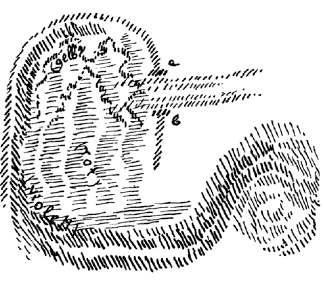
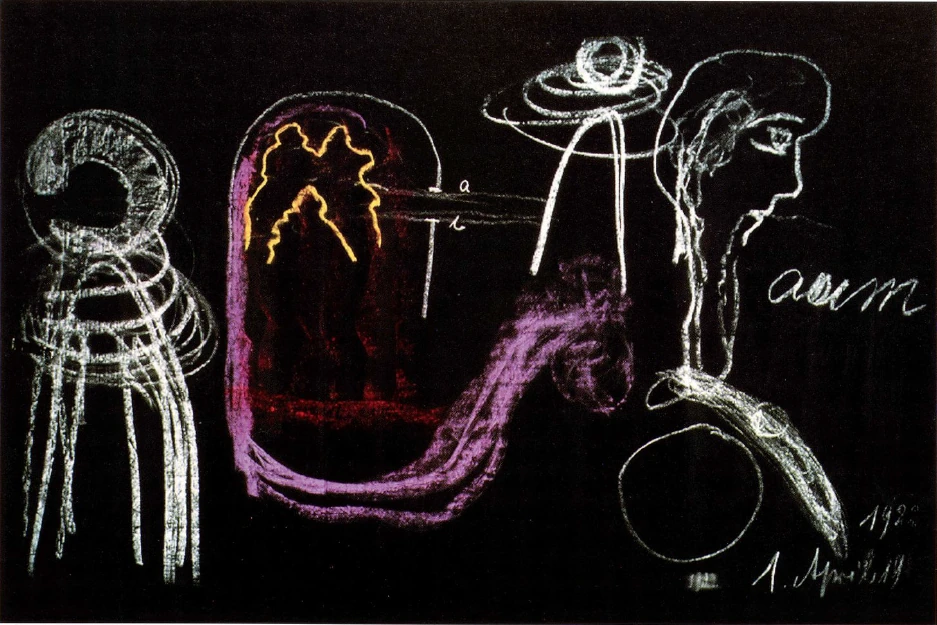
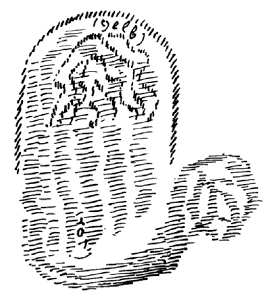
[ 2 ] Nehmen Sie einmal, sagen wir, einen gewissen Innenraum. Ich will die Sache so einfach wie möglich machen. Nehmen wir einen Innenraum, der vielleicht hier ein Fenster hat (siehe Zeichnung a, b). Durch dieses Fenster, nehmen wir an, fiele in diesen Innenraum Licht herein, dieses Licht breitete sich in verschiedener Weise innen aus. Aber der Innenraum, nehmen wir an, sei ausgefüllt mit allerlei durchlässigen Wänden, einer Art durchlässigem Gewölbe. Wir hätten also einen Innenraum, der in der verschiedensten Weise ausgefüllt wäre mit solchen Gewölben, wodurch in der verschiedensten Weise das Licht zum Teil durchgelassen, zum Teil zurückgeworfen wird, so daß dieser Innenraum erfüllt wäre mit einem in der verschiedensten Weise aufgehaltenen, zurückgeworfenen Lichte.
[ 2 ] Let’s take, say, a certain interior space. I want to keep things as simple as possible. Let’s take an interior space that perhaps has a window here (see drawings a, b). Let’s assume that light enters this interior space through this window, and that this light spreads throughout the interior in various ways. But let’s assume the interior is filled with all sorts of permeable walls—a kind of permeable vault. We would thus have an interior filled in various ways with such vaults, through which the light is partly transmitted and partly reflected in various ways, so that this interior would be filled with light that is held back and reflected in various ways.
[ 3 ] Nun denken Sie sich, ich würde durch diesen Innenraum Dämpfe strömen lassen, würde sie dann hinaufströmen lassen (rot). Dieser Dampf aber, der wäre lebendig, der wäre ein lebendiges, fühlendes Wesen. Der strömt hinauf und hätte wiederum, sagen wir, einen Abzugskanal, würde also wiederum wegströmen können. Er strömt also durch dieses Licht hindurch und strömt hinein in diesen Innenraum, in glitzerndes Licht, in verschiedentlich durch diese Gewölbe hier verändertes, durchfallendes, zurückgeworfenes, glitzerndes Licht. Der Dampf, der würde also fühlen, was er da in dem Lichte wahrnehmen würde, und dann abströmen. Das heißt aber mit anderen Worten: Dieser Dampf würde abtasten mit seinem Gefühl das, was da als Lichtglitzern in dem Innenraum vorhanden wäre, und er würde auf diese Weise ein inneres Bild bekommen. Er würde in seiner Empfindung ein Bild bekommen von dem, was da lichtglitzernd im Innern ist.
[ 3 ] Now imagine that I were to let vapors flow through this interior space, allowing them to rise upward (red). But this vapor would be alive; it would be a living, sentient being. It flows upward and would, in turn, have—let’s say—an exhaust channel, so it could flow away again. It thus flows through this light and into this interior space, into glittering light—light that is altered in various ways by these vaults here, light that falls through, is reflected back, and glitters. The vapor would thus perceive what it senses in that light and then flow away. But in other words, this means: This vapor would use its senses to explore what is present there as a glittering light within the interior, and in this way it would form an inner image. It would form an image in its perception of what is there, glittering with light, within.
[ 4 ] Nehmen wir nun an, der Dampf würde nach einiger Zeit, indem er wiederum ausströmt, wiedergeben können, was er da drinnen erfahren hat (violett). Wir könnten eine Art von Instrument haben, durch das der Dampf irgendwie, sagen wir durch Anschlagen von musikalischen Tönen oder dergleichen, zum Ausdrucke bringen würde, was er da drinnen im glitzernden, glimmenden Lichte erfahren hat. Stellen Sie sich dieses Bild vor.
[ 4 ] Let’s now suppose that, after some time, as the steam flows out again, it could convey what it experienced in there (violet). We could have a kind of instrument through which the steam would somehow—say, by producing musical tones or the like—express what it experienced in there amid the glittering, glowing light. Imagine this scene.
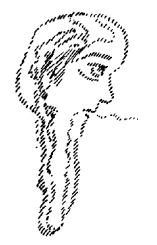
[ 5 ] Und nun will ich Ihnen dieses Bild auf eine andere Art aufzeichnen. Sie sehen, ich habe Ihnen statt desGewölbes hier das Innere des menschlichen Hauptes aufgezeichnet, statt des Fensters das Auge, durch das gesehen wird, durch das also die Lichteindrücke kommen. Das, was ich da als Gewölbe gezeichnet habe, sind die Windungen des Gehirnes, die sich ausbreitenden Nerven. Das Licht kommt da herein und breitet sich aus. Statt des Dampfes, den ich dort gezeichnet habe (siehe Seite 92), denken Sie sich die eingeatmete Luft, die heraufströmt und die abtastet, was im Gehirn durch das Licht glitzern, glimmen kann, was im Gehirn sich dann zu Gedanken gestaltet. Die Luft strömt wiederum durch den Rückenmarkskanal herunter. Statt daß da ein Instrument ist, ist der menschliche Kehlkopf da und kann zum Ausdrucke bringen, was erlebt worden ist. Da haben Sie ein Bild von dem, was tatsächlich vorgeht im menschlichen Haupte./
[ 5 ] And now I want to draw this image for you in a different way. You see, instead of the vault, I have drawn the interior of the human head here; instead of the window, the eye through which we see—through which, in other words, light impressions enter. What I have drawn there as a vault are the convolutions of the brain, the spreading nerves. The light enters there and spreads out. Instead of the steam I drew there (see page 92), imagine the inhaled air flowing upward and scanning what may glimmer or glow in the brain as a result of the light—what then takes shape in the brain as thoughts. The air then flows back down through the spinal canal. Instead of an instrument being there, the human larynx is present and can give expression to what has been experienced. There you have a picture of what actually takes place in the human head./
[ 6 ] Nun aber sagen wir: Jetzt machen wir das nicht so, sondern wir machen einmal das Fenster hier zu, stellen ein innerlich ganz finsteres Gewölbe her. Wir machen also das Fenster zu, haben nun diese inneren Gewölbe hier, und lassen wiederum Dampf hinaufströmen (rot). Jetzt wird nicht das Licht wahrgenommen, was hereinfällt (siehe erste Zeichnung) und in der verschiedensten Weise abgeschwächt wird, zurückfällt, sondern jetzt werden die Formen, die da drinnen sind, als solche wahrgenommen. Und indem der empfindende Dampf aufströmt, wird er da drinnen die Formen wahrnehmen können, die jemand einmal gemacht hat, sagen wir, die einmal ein Baumeister gemacht hat. Es wird also dieser Dampf empfinden können die Taten dieses Baumeisters. Wenn der Dampf dann abströmt, so kann er wiederum zum Ausdrucke bringen (rot), was da wahrgenommen worden ist als die Taten des Baumeisters.
[ 6 ] But now let’s say: We won’t do it that way this time; instead, let’s close this window and create a completely dark interior vault. So we close the window, now have this interior vault here, and let steam flow upward again (red). Now it is not the light that enters (see first drawing)—which is attenuated in various ways and reflected back—that is perceived, but rather the forms that are inside are perceived as such. And as the perceiving vapor rises, it will be able to perceive the forms inside that someone once created—let’s say, that a master builder once created. This vapor will thus be able to perceive the work of this master builder. When the vapor then flows out, it can in turn express (red) what has been perceived there as the work of the master builder.
[ 7 ] Aber nehmen wir an, dieser Baumeister hätte in einer ganz besonderen Weise gebaut. Nehmen wir an, dieser Baumeister wäre ein ganz außerordentlich universeller Baumeister, und er hätte das, was er da hineingebaut hat, zu einem Abbild des ganzen Weltenalls gemacht. Dann würde, wenn man nur das Fenster zuschließt, der Dampf da drinnen abtasten die Geheimnisse des ganzen Weltenalls. Sonst nimmt er wahr, was da von außen hereinglitzert; wenn man aber zuschließt, _ nimmt er dasjenige wahr, was innerlich ein Abbild des ganzen Weltenalls ist.
[ 7 ] But let’s suppose this architect had built in a very special way. Let’s suppose this architect were an extraordinarily universal architect, and that he had made what he built there a reflection of the entire universe. Then, if one were to simply close the window, the steam inside would explore the mysteries of the entire universe. Otherwise, it perceives what glitters in from the outside; but when the window is closed, _ it perceives that which is, inwardly, a reflection of the entire universe.
[ 8 ] Stellen Sie sich also vor, wir haben hier ein Abbild des Weltenalls (siehe Zeichnung). Im menschlichen Haupte, in den wunderbaren Windungen des Gehirnes haben wir ja wirklich ein Abbild des ganzen Weltenalls. Und wenn wir die Sinne zuschließen und dann die Atemluft, die ja durch den Rückenmarkskanal in das Haupt geht, durchströmen lassen, so gibt es eine Möglichkeit, die Geheimnisse dieses Gehirn-Innenraumes abzutasten. Nur darf man da nicht die Atemluft einfach in einer ungeordneten, chaotischen Weise tasten lassen — dann bekommt man nichts heraus —, sondern das muß in einer geordneten Weise geschehen.
[ 8 ] So imagine that we have here a reflection of the entire universe (see drawing). In the human head, in the marvelous convolutions of the brain, we truly do have a reflection of the entire universe. And if we close off our senses and then allow the breath—which, after all, enters the head through the spinal canal—to flow through, there is a way to explore the mysteries of this inner space of the brain. However, we must not simply let the breath explore in a disorderly, chaotic manner—for then we will gain nothing—but rather, this must be done in an orderly way.
[ 9 ] Sie wissen, wenn man, sagen wir, Seide konstatieren will, so muß man ja auch in einer bestimmten Weise tasten. Man muß entgegenkommen dem, was man ertasten will. Aber wenn man das kann, wenn man entgegenkommen kann dem, was man ertasten will, dann kann man eben durchaus dasjenige finden, was da zu ertasten ist.
[ 9 ] You know, if you want to identify, say, silk, you have to feel it in a certain way. You have to approach what you want to feel. But if you can do that—if you can approach what you want to feel—then you can certainly find exactly what is there to be felt.
[ 10 ] In der Zeit, von der ich Ihnen gesprochen habe in diesen Tagen, wo die Menschen durch eine Regulierung ihres Atemprozesses zu den höheren Erkenntnissen kommen wollten, in der Zeit, in der das alte JogaSystem des Orients nun wirklich in seiner Blüte stand — denn das, wovon heute als der Joga-Übung gesprochen wird, das ist ja vielfach ein bloß Sekundäres —, da war tatsächlich das Bewußtsein vorhanden: Wenn du einatmest, wenn du die Atemluft in dein Haupt schickst, so kannst du die Geheimnisse des Weltenalls in dem Abbild dieses Weltenalls, in der besonderen Ausbreitung des Nervensystems in deinem Haupte ergreifen. Du mußt nur in der entsprechenden Weise dich mit dem Einatmungsprozesse verhalten.
[ 10 ] In the era I have been speaking to you about—those days when people sought to attain higher insights by regulating their breathing, the era when the ancient Eastern system of yoga was truly in its heyday—for what is referred to today as “yoga practice” is, in many cases, merely a secondary matter— there was indeed a consciousness present: When you inhale, when you direct the inhaled air into your head, you can grasp the mysteries of the universe in the reflection of that universe, in the specific configuration of the nervous system within your head. You need only relate to the inhalation process in the appropriate manner.
[ 11 ] Ich spreche jetzt nicht von dem, was später in einer dekadenten Weise da war, sondern von dem Ursprünglichen. Und das Ursprüngliche war dieses. Man sagte sich: Wenn man einatmet und den Atem so gestaltet, daß man ihn hinaufschickt in dieses innere Gewölbe des Hauptes, das ein Abdruck des ganzen Weltenalls ist, aber so, daß man in die Atemluft hineinlegt einen Laut, der zwischen a und o ist oder zwischen a und u, wenn man also a-u hineingibt in die Atemluft, dann formt man sie so, daß so, wie die Hand geeignet ist außen etwas abzutasten, der Ton geeignet wird, das Weltengeheimnis da drinnen abzutasten. Und man bekommt es in das Bewußtsein herein, wenn man dann diesen Atemprozeß so fortsetzt, daß man ihn auslaufen läßt in absolut devotionelle Stimmung gegenüber dem, was man da abgetastet hat. Wenn man also das hat, was man erlangt, indem man einatmet, indem man die Atemluft ausschickt und in dem a-u mit ihr abtastet, wenn man dann in die devotionelle Stimmung sich versetzt, hingebungsvoll zur Welt wird, und dasjenige, was man da erkundet hat, ausgießt in eine absolute Hingabe, dann den Atmungsprozeß auslaufen läßt in «m», so hat man in einem solchen Atmungsprozeß, der sich innerlich formt zu dem «aum», dann aufgefangen — aus der Nachbildung, aus der Nerven-Nachbildung des Weltenalls im Innern — das Geheimnis des Weltenalls. Und man hat es zum Leben gebracht, das bewußt werden kann in der, in dem Laute «m» ausgehauchten Luft. Sie haben in dem, was ich jetzt auseinandergesetzt habe, einen Hinweis darauf,wovon ausgegangen ist einmal die ursprüngliche Joga-Schulung.
[ 11 ] I am not speaking now of what later existed in a decadent form, but of the original. And the original was this: People used to say to themselves: When you inhale and shape your breath so that you send it up into this inner vault of the head, which is an imprint of the entire universe, but in such a way that you imbue the breath with a sound that lies between “a” and “o” or between “a” and “u”—that is, when you infuse the breath with “a-u”—then you shape it so that, just as the hand is suited to feel something externally, the sound becomes suited to feel the mystery of the universe within. And one brings it into consciousness by continuing this breathing process in such a way that it culminates in a state of absolute devotion toward what one has perceived there. So when one has what one attains by inhaling, by sending out the breath and probing with it through “a-u,” when one then enters this devotional mood, becomes devoted to the world, and pours out what one has explored there into absolute devotion, then allows the breathing process to culminate in “m,” then in such a breathing process—which takes shape inwardly as “aum”—one has captured—from the replica, from the nervous replica of the universe within—the mystery of the universe. And one has brought it to life, so that it can become conscious in the air exhaled in the sound “m.” In what I have now explained, you have an indication of what once formed the basis of the original yoga training.
[ 12 ] Diese Joga-Schulung sagte sich: In meinem Haupte ist das Geheimnis des ganzen Weltenalls. Ich kann es abtasten, indem ich einatme. Im Einatmen wird das Geheimnis des Weltenalls durch mich selbst enthüllt. Ich erfasse es, dieses Geheimnis des Weltenalls. Aber ich kann es nur behalten — es bleibt sonst im Unbewußten liegen —, wenn ich in absolut devotioneller Hingabe an das Weltenall mich dann auslebe. Und so wird denn erkannt, indem gestaltet wird der Einatmungsprozeß zu dem Weltenworte, zu dem, was schöpferisch schaffend die Welt durchwellt und durchwebt, und indem das erfaßt wird und in der absoluten Hingabe an das Weltenall ausgehaucht wird: Einatmung, das ist Offenbarung des Weltenwortes, Ausatmung, das ist innerliche Verdichtung des Weltenwortes, das Bekenntnis zum Weltenwort. So wird zusammengefaßt die Erkundung des Weltenwortes durch den Menschen und die Formulierung des Weltenwortes durch den Menschen, indem erkannt wird: Einatmung ist Offenbarung, Ausatmung ist Bekenntnis, und «aum» ist die Zusammenfassung von Offenbarung und Bekenntnis, das Beleben des Weltengeheimnisses in sich, das Sichbekennen zu diesem Weltengeheimnis in sich.
[ 12 ] This yogi said to himself: “The secret of the entire universe lies within my head.” I can perceive it by inhaling. As I inhale, the secret of the universe is revealed through me. I grasp it—this secret of the universe. But I can only retain it—otherwise it remains in the unconscious—if I then live my life in absolute, devotional surrender to the universe. And so it is realized by shaping the process of inhalation into the Word of the Universe—that which creatively ripples through and weaves through the world—and by grasping it and exhaling it in absolute devotion to the universe: Inhalation is the revelation of the World Word; exhalation is the inner condensation of the World Word, the affirmation of the World Word. Thus is summarized humanity’s exploration of the World Word and humanity’s articulation of the World Word, through the realization that: Inhalation is revelation, exhalation is confession, and “aum” is the synthesis of revelation and confession—the enlivening of the mystery of the universe within oneself, the affirmation of this mystery of the universe within oneself.
[ 13 ] Bei uns heute, in unserer gegenwärtigen Epoche, ist der Ton weiter heraufgerückt. Der Ton lebt sich aus in den wirklichen, konkreten, nicht in den intellektualistischen Gedanken. So daß wir sagen können: Die Einatmung wird zum Gedanken, und die Ausatmung wird zu dem willentlichen Ausleben des Gedankens. Das heißt, wir zerlegen dasjenige, was einstmals Einatmung als Offenbarung, Ausatmung als Bekenntnis war, in Gedankenübung und Willensübung, und bekommen dadurch — ebenfalls in Gedanken, aber in dem in der Meditation erübten Gedanken — die Offenbarung, und in den Willensübungen, die ja auf der anderen Seite ausgeführt werden, das Bekenntnis zu dem Geoffenbarten.
[ 13 ] For us today, in our present era, the tone has shifted even further upward. The tone finds its expression in real, concrete thoughts, not in intellectualistic ones. So that we can say: Inhalation becomes thought, and exhalation becomes the volitional living out of that thought. That is to say, we break down what was once inhalation as revelation and exhalation as confession into exercises of thought and will, and thereby receive—also in thought, but in the thought cultivated through meditation—the revelation, and in the exercises of will, which are carried out on the other side, the confession of what has been revealed.
[ 14 ] Für die neuere Menschheit ist es so: Was vorher im bloßen AtmungsProzesse erlebt worden ist, und was im Einatmungsprozesse zum Vokalton, im Ausatmungsprozesse zum Konsonantenton geformt worden ist, das lebt sich auf mehr seelische Art aus in dem innerlich kontemplierten Gedanken, der aber vom Willen durchdrungen wird in devotioneller Hingabe an das Weltenall. So ist der Prozeß derselbe, nur verseelischt, verinnerlicht. Aber auch hier besteht der Prozeß darin, daß wahrgenommen wird das innerliche Erleben des Weltenalls in seinen Geheimnissen und das Bekennen zu diesem Weltenall, zu der geistigen Grundlage dieses Weltenalls.
[ 14 ] For modern humanity, it is as follows: What was previously experienced in the mere process of breathing—and what was formed into a vowel sound during inhalation and a consonant sound during exhalation—now finds expression in a more spiritual way in the inwardly contemplated thought, which is, however, permeated by the will in devotional surrender to the universe. Thus, the process is the same, only made more spiritual and internalized. But here, too, the process consists in perceiving the inner experience of the universe in its mysteries and in professing one’s commitment to this universe, to the spiritual foundation of this universe.
[ 15 ] Wir können auch noch folgende Gedanken vor uns hinstellen. Wir können sagen: Der Mensch wird aus dem Lichte heraus geboren, und sein Inneres, das Innere seines Hauptes ist Ergebnis des Lichtes. Das ganze Nervensystem ist ja Ergebnis des Lichtes. Nicht bloß durch das Auge, sondern auch durch die anderen Sinne wird Licht vermittelt. Das Auge ist nur dasjenige, was im hauptsächlichsten Sinne Licht vermittelt. Wir können von blinden Menschen nicht sagen, daß sie vom Lichte ganz abgeschlossen sind. Das Licht arbeitet in ihnen; es ist nur ihre bewußte Wahrnehmung des Lichtes weg.
[ 15 ] We can also consider the following thoughts. We can say: Human beings are born out of light, and their inner being—the innermost part of their head—is the result of light. The entire nervous system is, after all, the result of light. Light is conveyed not only through the eye, but also through the other senses. The eye is merely the sense through which light is conveyed in the most primary sense. We cannot say that blind people are completely cut off from light. Light is at work within them; it is only their conscious perception of light that is absent.
[ 16 ] Und der Ton, der lebt eigentlich im ganzen Organismus. Der Ton lebt in uns. Der Ton lebt nicht nur im Ohre, das Ohr ist nur ein Wahrnehmungsorgan für den Ton. Indem wir einen Ton erleben, erleben wir ihn mit dem ganzen Organismus. Eine Symphonie erleben wir immer mit dem ganzen Organismus. Wenn wir einem Musikstück zuhören, so ist eigentlich der innere Vorgang der folgende: Wir versetzen unseren ganzen Atmungsprozeß in eine ganz bestimmte Rhythmik, in ganz bestimmte musikalische Vorgänge, die eben durch die Komposition veranlaßt werden. Diese Gestaltungen unseres luftförmigen Inneren schlagen an die Formen des Gehirnes an; wie sie da zurückgestoßen werden, das gibt uns den musikalischen Eindruck. Es ist eigentlich immer in uns ein Abtasten des Lichtes durch den Ton.
[ 16 ] And sound actually lives within the entire organism. Sound lives within us. Sound does not live only in the ear; the ear is merely an organ of perception for sound. When we experience a sound, we experience it with our entire organism. We always experience a symphony with our entire organism. When we listen to a piece of music, the inner process is actually as follows: We attune our entire breathing process to a very specific rhythm, to very specific musical processes that are precisely brought about by the composition. These formations within our air-filled interior resonate with the structures of the brain; the way they are reflected back from there gives us the musical impression. In fact, there is always within us a process of probing the light through sound.
[ 17 ] Halten Sie das fest, daß in uns fortwährend stattfindet ein Abtasten des Lichtes durch den Ton. Die Tonwelt in uns, der tönende Organismus, der ist eigentlich ein Tastorgan für das Licht. Das Licht ist eigentlich immer das Äußere, der Ton ist eigentlich immer das Innere.
[ 17 ] Keep in mind that within us there is a constant process of exploring light through sound. The world of sound within us—the resonant organism—is actually a sensory organ for light. Light is, in fact, always the external aspect; sound is, in fact, always the internal aspect.
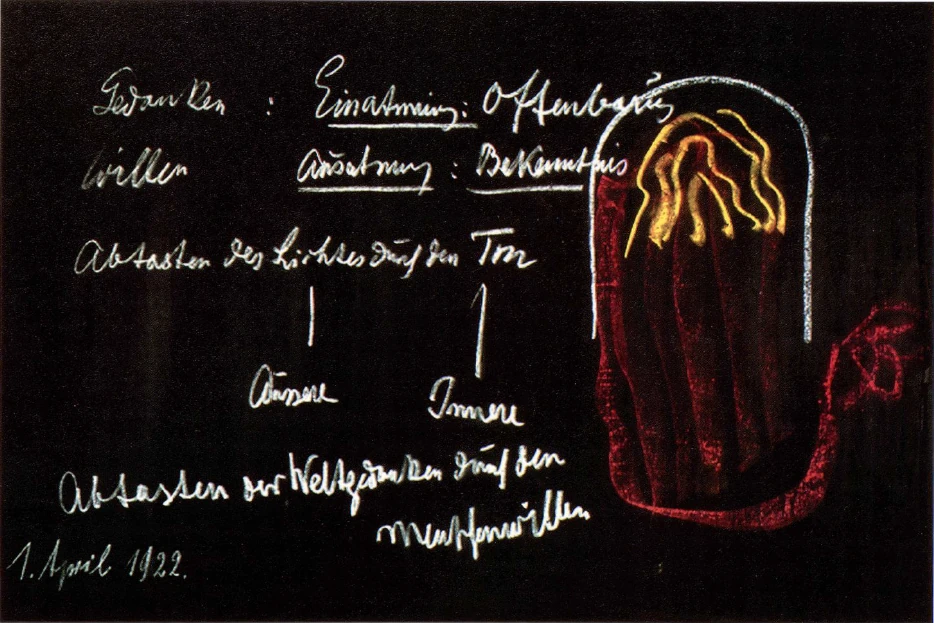
[ 18 ] Gedanken — Einatmung: Offenbarung
[ 18 ] Thoughts — Inhalation: Revelation
[ 19 ] Willen — Ausatmung: Bekenntnis
[ 19 ] Will — Exhalation: Confession
[ 20 ] Abtasten des Lichtes -> Äußeres durch den Ton -> Inneres
[ 20 ] Exploring Light -> The External Through Sound -> The Internal
[ 21 ] Abtasten der Weltgedanken durch den Menschenwillen.
[ 21 ] Exploring the thoughts of the world through human will.
[ 22 ] Das Innere tastet das Außere ab. Wir fassen uns unserem Wesen nach eigentlich auch nur in der richtigen Weise, wenn wir uns als ein Spezialwesen, herausgehoben aus der Sphärenharmonie der Welt, erfassen. Dieses Wesen, das tastet im Lichte herum, und in den Konfigurationen des Lichtes erkennt der Ton das Wesen der Welt. Nur in unserer Epoche ist es so, daß wir eigentlich ein Abtasten der Weltgedanken durch den Menschenwillen haben (siehe Schema). Wir tasten mit dem Willen die Weltgedanken ab. Der Wille steht hier statt des Tones. Der Gedanke steht nach der anderen Seite statt des Lichtes. Wie gesagt, diese Dinge sind sehr schwer in intellektualistisch-abstrakte Formen zu bringen. Aber das, was ich bildlich vor Sie hinzustellen versuchte, das wird Sie in diese Dinge hineinbringen, wenn Sie ein wenig darüber nachsinnen, wenn Sie sich klar werden, daß das Darinnenstehen des Menschen in der Welt wirklich so ist, daß der Mensch in seinem Haupte ein Abbild hat des ganzen Kosmos. Der Mensch ist in der Tat in bezug auf sein Haupt ein Abbild des ganzen Kosmos.
[ 22 ] The inner world probes the outer world. In fact, we can only truly grasp our own nature in the right way when we perceive ourselves as a unique being, set apart from the harmony of the world’s spheres. This being feels its way in the light, and in the configurations of the light, sound recognizes the nature of the world. It is only in our epoch that we actually have a “feeling out” of the world’s thoughts through the human will (see diagram). We feel out the world’s thoughts with our will. Here, the will takes the place of sound. Thought, on the other hand, takes the place of light. As I said, these things are very difficult to express in intellectual, abstract terms. But what I have tried to present to you in a pictorial way will draw you into these matters if you reflect on them a little, if you realize that humanity’s innermost being in the world is truly such that the human being has, within his head, an image of the entire cosmos. The human being is, in fact, with regard to his head, an image of the entire cosmos.
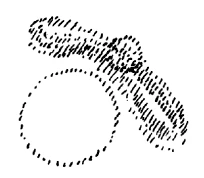
[ 23 ] Indem der menschliche Embryo im Mutterleibe gebildet wird, wird er auch zunächst als ein Abbild des Kosmos gebildet. Das erste ist, daß ja im Leibe der Mutter der Mensch als ein Abbild des Kosmos gebildet wird. Zuerst ist der Mensch im Grunde genommen Gehirn, Abbild des Kosmos. Sie können den Kosmos studieren, indem Sie den menschlichen Embryo in seinen ersten Stadien studieren. Erst später kommt über ihn das, was nun nicht mehr ein Abbild des Kosmos ist, sondern was man so beschreiben muß: Wenn Sie hier die Erde haben, darauf den Menschen, so tritt — indem ein Stück genommen wird vom Embryo — hinzu das, was an Kräften, parallel der Oberfläche, die Erde in Rhythmen umkreist. Es wird der Brustorganismus gebildet, der eigentlich aus Strömungen geschaffen wird, die um die Erde herumkreisen. Sie haben ja, wenn Sie wollen, diese Strömungen noch in den Rippen nachgebildet. Zuallerletzt kommt die Wirkung des Erdenorganismus selber. Da werden die Strömungen von unten heraufgeschickt: Sie haben ja in den beiden Beinen ganz genau den Ausdruck davon, wie diese Strömungen verlaufen. So daß ich den Menschen zeichnen kann als Strömungen, die von der Erde ausgehen, als Strömungen, die die Erde umkreisen, die mit seiner Brustorganisation zusammenhängen, und oben als Kopf, das Abbild des ganzen Weltenalls.
[ 23 ] As the human embryo develops in the womb, it is initially formed as a reflection of the cosmos. The first point is that, indeed, within the mother’s womb, the human being is formed as a reflection of the cosmos. At first, the human being is, in essence, a brain—a reflection of the cosmos. You can study the cosmos by studying the human embryo in its earliest stages. Only later does something emerge that is no longer a reflection of the cosmos, but rather—to put it this way—if you have the Earth here, with the human being upon it, then—as a part of the embryo is taken—what is added are the forces that, parallel to the surface, circle the Earth in rhythms. The chest organism is formed, which is actually created from currents that circle around the Earth. You can, if you like, still see these currents reflected in the ribs. Last of all comes the effect of the Earth organism itself. Here, the currents are sent up from below: you can see in the two legs a very precise expression of how these currents flow. So that I can depict the human being as currents emanating from the Earth, as currents circling the Earth, which are connected to his chest organism, and at the top as the head, the image of the entire universe.
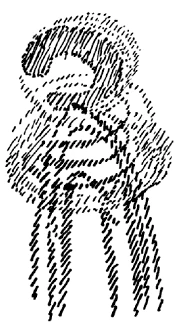
[ 24 ] Was sich im Kopfe abspielt, ist eigentlich immer ein Abbild des ganzen Weltenalls, durch das ganze Leben hindurch. Der Mensch, indem er die Kopforganisation hat, trägt in sich ein Abbild des ganzen Weltenalls. Er muß es nur wahrnehmen. Er würde es nicht wahrnehmen, wenn er nicht von der Erde aus dazu organisiert wäre. Eigentlich nimmt die Erde das Weltenall durch den Menschen wahr: der Brustorganismus ist die Vermittelung. Vom Kosmos herein wird die Einatmung bewirkt, von der Erde wird die Ausatmung bewirkt. Der Kosmos gibt uns den reinen Sauerstoff, die Erde bewirkt, daß sich dieser Sauerstoff durchdringt mit Kohlenstoff und so zu der totmachenden, ausgeatmeten Luft formiert wird. Aber indem diese Totenluft da gebildet wird, wird begriffen.
[ 24 ] What takes place in the mind is, in fact, always a reflection of the entire universe, throughout one’s entire life. Because human beings possess a mental organization, they carry within themselves a reflection of the entire universe. They need only perceive it. They would not perceive it if they were not organized for this purpose by the Earth. In fact, the Earth perceives the universe through human beings: the chest organism serves as the mediator. Inhalation is brought about by the cosmos; exhalation is brought about by the Earth. The cosmos gives us pure oxygen; the Earth causes this oxygen to combine with carbon, thus forming the deadly exhaled air. But it is through the formation of this dead air that understanding arises.
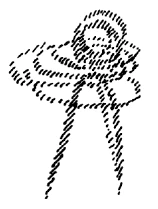
[ 25 ] Das Begreifen hat immer zu tun mit dem Absterbenden im Menschen. Wir sterben eigentlich durch unser Begreifen, wir leben durch den Kosmos. Aber wir würden sehr rasch leben, wenn wir nur dem Kosmos hingegeben wären. Der Kosmos versorgt uns am meisten mit Leben noch während unseres Embryozustandes, dann nimmt uns allmählich der Umkreis der Erde in Arbeit, später das, was von der Erde heraufströmt. Dadurch wird dasjenige vermittelt, was der Kosmos unserem Organismus an Leben gibt, bis das Quantum von Leben, das uns der Kosmos gibt, eben aufgezehrt ist. Der Kosmos belebt uns, die Erde tötet uns als physischen Organismus und auch als ätherischen Organismus. Nur ist es so, daß an unserem ätherischen Organismus vorzugsweise der Kosmos seinen Anteil hat, an unserem physischen Organismus hat vorzugsweise unsere Erde ihren Anteil.
[ 25 ] Understanding is always connected to what is dying within us. We actually die through our understanding; we live through the cosmos. But we would live very quickly if we were simply surrendered to the cosmos. The cosmos provides us with the most life while we are still in our embryonic state; then the Earth’s atmosphere gradually takes over, and later what flows up from the Earth. Through this process, the life that the cosmos gives to our organism is mediated until the amount of life the cosmos gives us is precisely exhausted. The cosmos animates us; the Earth kills us as physical organisms and also as etheric organisms. However, it is the case that the cosmos primarily influences our etheric organism, while our Earth primarily influences our physical organism.
[ 26 ] Wenn Sie das alles bedenken und sich sagen: Einmal wurde zur Pflege des höheren Wissens ein geregelter Atmungsprozeß vollzogen, zu dem Zwecke vollzogen, um die Geheimnisse des Weltenalls im Menschen zu erkunden, dann werden Sie darauf kommen, wie in den Zeiten ursprünglicher Menschenbestrebungen der Mensch innerlich fühlte, wie er zusammenhängt mit dem ganzen Weltenall, und wie er erleben wollte das Weltenwort durch den Einatmungsprozeß, opfern wollte dem Weltenworte durch den Ausatmungsprozeß; wie er sich hineinstellen wollte im Joga-Atmen in den Weltenprozeß mit seinem Bewußtsein. Unbewußt steht er ja natürlich stets drinnen in diesem Weltenprozeß. Aus der äußeren Beschreibung, die heute gegeben wird von diesem Joga-Atmen, erlangt man keine wirkliche Erkenntnis darüber, was damit eigentlich angestrebt worden ist. Aber man erlangt eine solche wirkliche Erkenntnis dadurch, daß man sich durch die heutige anthroposophische Geisteswissenschaft zu solcher Erkenntnis durchringt. Die Menschen haben keine Dokumente über die Art und Weise, wie das ursprünglich war. In den Zeiten, aus denen man Dokumente darüber hat, da waren diese Dinge schon nicht mehr in der ursprünglichen Weise vorhanden. Auf die eigentlichen Geheimnisse des Menschenursprungs auf der Erde muß man ohne Dokumente kommen, sonst muß man darauf verzichten. Wer also nur durch äußere Dokumente, die sich erhalten haben aus älteren Zeiten, auf die Dinge kommen will, der kommt eben nicht darauf, sondern lediglich der wird darauf kommen, der zurückschauen kann auf viel ursprünglichere Zustände als diejenigen, die durch äußere Dokumente bekundet werden. Auf das Geheimnis des orientalischen Aum-Gebetes, wenn ich es so nennen darf — ich könnte ebensogut sagen: der Aum-Erkenntnisformel, denn beides war darinnen —, kommt man nur, wenn man den Zusammenhang des Menschen mit der Welt in Ein- und Ausatmen wirklich kennt. Wenn man weiß, daß, wie die Luft, die sonst eben durchaus nicht bestimmte Töne gibt, zu bestimmten Tönen geformt wird, sobald man verschieden gestimmte Saiten hat, daß ebenso die eingeatmete Luft, die man mit dem Aum-Laute durch das Gehirn schickt, innerlich das ganze Weltengeheimnis ausdrückt, wenn man das weiß, dann kennt man den Menschenzusammenhang mit dem Weltenall. Man tastet ab, wie man eigentlich geworden ist. Indem der Mensch vor seiner Empfängnis in der geistig-seelischen Welt gelebt hat, war er ja eben in der Geistwelt. Aber indem er jetzt heruntersteigt, geht er durch die ganze Konfiguration des Kosmos im Äther durch, sammelt sich den Äther. In diesem Momente nimmt er alle Geheimnisse des Weltenalls auf, prägt sie dann nach und nach in sein Gehirn ein. Und das ganz kleine Kind prägt eigentlich noch das, was die Seele vom Gesamtgeheimnis des Weltenalls erlebt hat, nach und nach in das Gehirn hinein. Und später findet man wiederum dieses Geheimnis, wenn man — in alten Zeiten in der Atemluft und jetzt mit dem Gedanken — innerlich dieses Weltengeheimnis wiederum zu erleben strebt.
[ 26 ] When you consider all of this and say to yourself: Once upon a time, a regulated breathing process was practiced to cultivate higher knowledge—a process carried out for the purpose of exploring the mysteries of the universe within the human being—then you will come to understand how, in the days of humanity’s earliest aspirations, people felt inwardly how they were connected to the entire universe, and how they sought to experience the Word of the Universe through the process of inhalation, and to offer a sacrifice to the Word of the Universe through the process of exhalation; how, through yogic breathing, they sought to place their consciousness within the cosmic process. Unconsciously, of course, they are always already within this cosmic process. From the external description given today of this yogic breathing, one gains no real insight into what was actually intended by it. But one does gain such real insight by striving to attain it through today’s anthroposophical spiritual science. People have no documents describing how things were originally. In the times from which we have documents on this subject, these things no longer existed in their original form. One must arrive at the true mysteries of humanity’s origins on Earth without documents; otherwise, one must do without them. So anyone who seeks to understand these things solely through external documents that have survived from earlier times will not arrive at them; rather, only those who can look back to states far more primordial than those attested to by external documents will arrive at them. The mystery of the Eastern “Aum” prayer—if I may call it that—I might just as well say: the “Aum” formula of knowledge, for both were contained within it—can only be grasped if one truly understands the connection between the human being and the world in the act of inhaling and exhaling. If one knows that, just as the air—which otherwise produces no specific tones at all—is shaped into specific tones as soon as one has strings tuned to different pitches, so too the inhaled air, which one sends through the brain with the Aum sound, inwardly expresses the entire mystery of the world—if one knows this, then one understands humanity’s connection to the universe. One begins to sense how one actually came to be. Since the human being lived in the spiritual-soul world before conception, he was, after all, in the spiritual world. But as he now descends, he passes through the entire configuration of the cosmos in the ether, absorbing the ether. At this moment, he takes in all the mysteries of the universe and gradually imprints them upon his brain. And the very young child is actually still gradually imprinting upon its brain what the soul has experienced of the total mystery of the universe. And later on, one rediscovers this mystery when one strives—in ancient times through the air one breathed, and now through thought—to experience this mystery of the universe anew within oneself.
[ 27 ] Es konfiguriert sich auch die Gedankenkraft, die ja nichts anderes ist als eine verdünnte Atemkraft, wenn sie wirklich durch das Gehirn geleitet wird. Der moderne Mensch tut das nicht. Der moderne Mensch leitet eigentlich nicht Gedankenkraft durch das Gehirn, sondern er hört überall die Worte, die in seiner Sprache gesprochen werden und in denen auch so die Gedanken drinnen leben, und dann leitet er das, was er innerlich nachplappert aus seinem Nationalbestand, durch sich durch. Und dabei erobert er sich gar nichts an inneren Erkenntnissen, sondern schreibt höchstens dann Bücher darüber, daß man ja nur die Sprache hat, und durch die Sprache nichts erkennen kann. Er schreibt dann eine Kritik der Sprache, weil er keine Ahnung davon hat, worauf die Gedankenkraft stößt, weil er nur weiß, was gewissermaßen aufgezeichnet ist in den Worten. Der moderne Mensch ist ja nur ein Resonanzboden für die Worte. Und wenn er dann scharfsinnig ist, wie Fritz Mauthner, dann schreibt er eben Bücher darüber, daß die Worte ja eigentlich nichts vom Wesen der Welt enthalten.
[ 27 ] The power of thought—which is, after all, nothing more than a diluted form of the breath’s power—also takes shape when it is truly channeled through the brain. Modern humans do not do this. Modern humans do not actually channel the power of thought through the brain; rather, they hear everywhere the words spoken in their language—words in which thoughts also dwell—and then they channel through themselves what they inwardly parrot from their national heritage. And in doing so, they gain no inner insights whatsoever; at most, they write books about how we have only language and cannot gain any insight through it. He then writes a critique of language because he has no idea what the power of thought encounters, since he knows only what is, so to speak, recorded in the words. Modern man is, after all, merely a sounding board for words. And if he is astute, like Fritz Mauthner, then he simply writes books about how words actually contain nothing of the essence of the world.
[ 28 ] Aber damit kommt man dem Menschen nicht nahe. Und man kommt der Welt nicht nahe, insbesondere nicht dem Verhältnis des Menschen zur Welt. Man muß sich schon klar darüber sein, daß es ein tiefes Wahrwort ist, daß der Mensch «Mensch» ist durch den göttlichen Odem, durch die eingeatmete Luft. Denn dadurch, durch diese eingeatmete Luft, entdeckt er die ganze Welt in sich, entdeckt er, wie er ein Mikrokosmos ist.
[ 28 ] But that does not bring one closer to human beings. Nor does it bring one closer to the world, especially not to the relationship between human beings and the world. One must be clear that it is a profound truth that a human being is “human” through the divine breath, through the air they breathe in. For through this—through this inhaled air—they discover the entire world within themselves; they discover how they are a microcosm.
[ 29 ] Wenn Sie das, was ich gerade heute dargelegt habe, nach allen Seiten durchsinnen, dann werden Sie sehen, daß Sie auf ganz bedeutsame Zusammenhänge nach und nach gestoßen werden. Sie müssen nur nicht glauben, es sei so eine Schrulle, daß ich zunächst bloß ein Bild hingemalt habe. Es ist schon notwendig, daß man nicht mit unseren abstrakten Worten diese Dinge charakterisiert, sondern daß man dem Tatbestande durch Bilder nahezukommen sucht.
[ 29 ] If you think through what I have just explained today from every angle, you will see that you will gradually come across some very significant connections. You just mustn’t think it’s some kind of quirk that I started out by merely painting a picture. It is indeed necessary not to characterize these things with our abstract words, but to try to approach the facts through images.
[ 30 ] Damit habe ich Ihnen, wie ich glaube, ein sehr wichtiges Kapitel der anthroposophischen Geisteswissenschaft angedeutet und werde es dann morgen weiter ausgestalten.
[ 30 ] With this, I believe I have given you a glimpse into a very important chapter of anthroposophical spiritual science, and I will elaborate on it further tomorrow.