Human Questions and Cosmic Answers
GA 205
9 July 1922, Dornach
Translated by Steiner Online Library
Eighth Lecture
[ 1 ] This time, I wanted to use a personal example to illustrate how what we currently call anthroposophy had to emerge from the entire spiritual life. After all, the objection is certainly valid: When such matters are discussed, one is actually moving within a rather narrow circle. One considers individual people engaged in scientific, philosophical, or other pursuits who have not become known to the broader masses of humanity, and one then effectively places oneself outside of what lives within the great masses of people. But if you look at things with a more open mind, you will not be able to view the matter in this way. One need only consider that everything that lives as the inner life of the soul—and also as the impulses behind all actions and inactions—among the masses stems from the influence of certain leading figures, who may not yet have gained insight into what personalities of the kind we have just considered experience in their quiet study, as the saying goes.
[ 2 ] But one must bear in mind that in such personalities, their thinking and their feelings are constantly pulsating; that, after all, a large number of people—namely, those who acquire a higher education—absorb what such personalities experience and then carry it back to those places where the leading figures of humanity, who influence the masses, are being formed. Thus, what one observes in the experiences of such people living in quiet study rooms constitutes the impulses that will eventually come to life within the great masses of people. One simply does not usually notice the channels through which these spiritual impulses flow into the great masses. And so, what truly and actually lives within the culture of the times can ultimately only be viewed in the way we have once again done so in these days, and it is indeed justified to say that something like anthroposophy had to gradually emerge from the deepest spiritual experience of the 19th century, because what constituted the culture of the time actually crushed human souls, as we have just seen in the outstanding example of Franz Brentano.
[ 3 ] And to take what I actually hope to achieve with these reflections a step further into the general, I would like to extend this observation to a somewhat broader scope.
[ 4 ] We find Franz Brentano, still a devout Catholic, teaching philosophy in Würzburg. Based on what I explained yesterday and the day before, we can form a rough idea of the philosophical problems that Franz Brentano—still thoroughly committed to Catholicism, yet with a sharp intellect—presented from his lectern in Würzburg. He sought to justify everything through his sharp intellect, but in the background there always lived within him what he had faithfully accepted from Catholic theology. Many extraordinarily significant ideas emerged from this. For example, Franz Brentano was already aware of the modern scientific theory of evolution, which is based on the idea that the human brain is not entirely dissimilar to that of higher apes. This purely naturalistic theory of evolution concluded that a kinship exists between humans and higher mammals. Franz Brentano also accepted this assertion positively; indeed, he never rejected scientific findings but always embraced them. He said: “Very well, natural science can show that the human brain is not very different from that of the anthropoids. But when one looks at the inner life of the anthropoids and that of human beings, one finds a tremendous difference.” Above all, one finds the difference that even the highest species of apes cannot develop abstract concepts. Humans can develop abstract concepts. Therefore, Franz Brentano argued, if the human brain is so similar to the ape’s brain, one must conclude that the thoughts humans develop for themselves cannot originate from the brain alone; otherwise, they would also have to originate from the ape’s brain. One must therefore conclude that humans possess something that constitutes a special substance of the soul, from which the thoughts that anthropoids cannot grasp originate.
[ 5 ] Thus, Franz Brentano deduced the independence of the substance of the soul precisely from scientific knowledge. This was during the years 1866 through 1870, when he was a professor of philosophy in Würzburg, because underlying his philosophical developments was still the comprehensive worldview he had retained from Catholic theology. However, when Franz Brentano later moved further and further away from Catholic theology and delved deeper and deeper into what had been peculiar to him from the very beginning—though it was initially still illuminated by Catholic theology—and as he increasingly embraced a purely scientific understanding of even the phenomena of the soul, he lost the concept of the substance of the soul; and he could no longer say anything about the substance of the soul. His capacity for cognition simply faltered when he sought to rise from the mere association and separation of ideas to the problem of inner soul life itself.
[ 6 ] Now, I have already told you that this scientific way of thinking, no matter how much individual adherents may resist it, is nevertheless nothing other than a direct continuation of scholastic thought. Scholastic thinking led to the assertion that revelation concerns the supersensible world; the sensible world, along with certain conclusions drawn from sensory observation, can be the sole object of human knowledge. — And what was so rigorously cultivated among the Scholastics—namely, taking, on the one hand, what was accessible to human sensory cognition as science, and, on the other hand, what was available as knowledge of the supersensible world through revelation—this also developed further
[ 7 ] Throughout the 16th, 17th, 18th, and 19th centuries, there was a shift toward a view in which natural phenomena were studied according to the principles actually laid down by the school, and in which the doctrine of revelation was simply abandoned in favor of science. Thus, modern natural science can indeed be called a true child of medieval scholasticism in the sense I have just expressed here, and therefore it should not particularly surprise us when we see how people who continue to hold fast to revelation, just as Franz Brentano did in his youth and as Catholic scholars still do today, fully accept natural science—which is limited solely to the sensory world—and merely insist that one must not strive for knowledge that extends into the supersensible; for this supersensible realm must remain the object of revealed faith. Thus, it is quite conceivable that natural scientists and Catholic theologians could collaborate at an institution without any dispute arising over the sphere in which the Catholic theologian wishes to operate and the sphere he concedes to the natural scientist. I would like to cite an example of this.
[ 8 ] Let’s take a look at how Franz Brentano taught logic, metaphysics, ethics, and the history of philosophy in Würzburg from 1867 to 1870. Now, to make the matter quite clear to you, I would like to remain for the time being in that same place, in Würzburg, and paint a picture for you of Brentano’s lecture hall, around the year 1869, where he expounded the teachings I have just described, where he spoke of how, given the similarity between the human brain and that of higher apes, there must be a substance of the soul that gives rise to ordinary human thought.
[ 9 ] Let us now consider another chapter that he also presented at that time: On the Existence of God, on the Proofs of God’s Existence. There he astutely presented everything that human reason can offer in support of God’s existence, pointing out, of course, in the end that human knowledge can only bring us closer to this existence of God, and that the truth about God’s existence must ultimately be given through revelation. Now let us vividly recall how, before a large audience at that time, Franz Brentano presented his metaphysics and his philosophy from a Catholic perspective, taking full account of the natural sciences, and how he approached, so to speak, all of humanity’s highest problems in this manner, and let us move from Franz Brentano’s lecture hall at the University of Würzburg to the lecture hall of the physiologist Adolf Fick. For at the very same time that Brentano was lecturing on metaphysics and philosophy, Adolf Fick was lecturing on physiology in Würzburg.
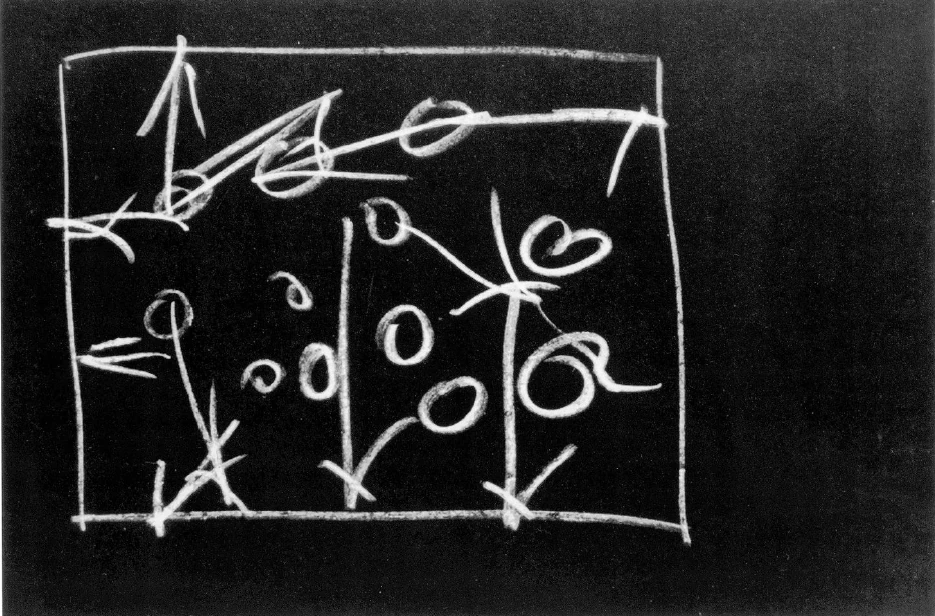
[ 10 ] Now I would like to give you a sense of what a student might have heard in Adolf Fick’s physiology lecture hall—a student who had perhaps just attended Franz Brentano’s philosophy lectures, and who was imbued with the very spirit I have just described to you. The following view, for example, was presented there. I am merely quoting, for what I am telling you now is contained almost verbatim in the lectures that Adolf Fick gave at the University of Würzburg at that time. He said something that could be summarized in the following sentences: Let us consider, for example, heat, which we first perceive through our senses. When we touch a body, it feels warm or cold to us; we have sensations of heat. But what corresponds to these sensations of heat in the external world is a movement of the smallest parts of the body—a movement carried out within the atoms and molecules, or by the atoms and molecules in space. If, for example, we consider a gas, this gas must be contained within a space that is closed on all sides; inside it, however, are the atoms and molecules of that particular gas. These are not at rest, but rather they move back and forth, colliding with one another and with the walls. Everything inside is in motion and in turmoil (see diagram). And when we touch with our skin what is essentially just movement inside, we experience the sensation of heat.
[ 11 ] This view was, after all, commonplace in the natural sciences at the time; it was the view that had emerged in particular from the work of Julius Robert Mayer, Helmholtz, Clausius, and other scientific minds of the modern era. Jose, the English brewer who was also a natural scientist, had discovered that water can be heated by a motion—for example, that of a paddlewheel moving through the water. It was then possible to measure how much work the paddlewheel performed and how much heat was generated, which made it possible to conclude: Heat is produced by motion, by mechanical work. — Heat, therefore, must be nothing other than a transformation of the visible movements performed by the paddlewheel turning in the water; these are simply transformed into movements that are invisible but are then perceived as heat. Thus, heat was understood as a kind of movement.
[ 12 ] But by that time, it had been discovered that not only could heat be converted into motion, but that other natural forces could also be converted into motion. And so a physiologist like Adolf Fick was able to proclaim at that time that all natural forces—magnetism, electricity, and chemical forces—are interchangeable, that one can be converted into another, and that, fundamentally, the only difference lies in the fact that we perceive the various forms of motion differently with our senses. So if we set aside what we experience within ourselves—such as the sensation of heat, the sensation of light, and so on—and look at what is out there in space, we see nothing but motion everywhere. This physiologist then continued this line of thought by saying: Even when we consider the human body, the highest organism—and here Adolf Fick entered his true domain, physiology— we cannot assume the existence of a special life force that, for example, sets the parts—the molecules—of the human organism into a particular motion; rather, whatever is moving out there—whether it be heat, tensile forces, electricity, or magnetism—is also at work within the human body. — He then explained how, in the human body, carbon is burned into carbon dioxide through the absorption of oxygen, how hydrogen is burned into water, and thus how the oxygen that is absorbed causes what the human being carries within to undergo a combustion process. He then discussed how one can determine how a certain amount of oxygen is absorbed and how the human body releases heat. Experiments had already been conducted at that time using a calorimeter to determine the amount of heat released by this or that animal; they had also been performed on humans, and it was discovered that the results were indeed incorrect. But people told themselves that errors had simply been made in the experiments, and they had nevertheless found approximate figures indicating that what corresponded to the uptake of a certain amount of oxygen was then released as heat. It was assumed that part of what is processed internally is converted into muscle movement; that is to say, the heat generated in the human body through the combustion of carbon into carbon dioxide or hydrogen into water manifests itself as such movements in the human body. The human being inhales oxygen. Hydrogen burns to form water; carbon burns to form carbon dioxide. What warms the human being internally—and what he then radiates—is merely the movement of his smallest parts. It is only after the transformation of these forces that certain parts are transformed into what then underlies muscular performance—when the human being not only radiates heat but, for example, performs work with his muscles or even simply moves his limbs. So one can say: The human being is, on the whole, a kind of complex physical-chemical system that radiates heat and performs work through the oxygen inhaled.
[ 13 ] Adolf Fick continued along these lines, saying: “But if humans constantly inhale oxygen and consume it by using it as fuel for combustion, then the history of the Earth’s development should have long since shown that oxygen levels would have decreased.” But that is not the case. This can be explained, however, by the fact that oxygen is constantly being produced anew. Plants are exposed to sunlight, and as they absorb sunlight, they release oxygen. This makes the oxygen available again. Humans can then breathe it in once more. The oxygen consumed by humans and animals is thus constantly being replenished by the plant kingdom.
[ 14 ] Adolf Fick went on to say in his lectures: Since the Sun constantly radiates light and heat, it, at the very least, would have to become colder. He then explained how one could calculate by how much the Sun would have to become colder. Julius Robert Mayer had, in fact, calculated this before him and had already shown that the Sun should actually have cooled down long ago—that, given the amount of heat it radiates, it should in fact no longer be able to radiate any heat at all. Therefore, Julius Robert Mayer assumed—and Fick presented this in his lectures—that cometary masses, of which, according to Kepler’s statement, there must be far more in the universe than fish in the ocean, were constantly crashing into the Sun. When something strikes a body, new heat is generated. Through this continuous influx, the Sun’s heat—and thus also its light—is constantly being recreated. As Adolf Fick assured us, the only problem was that one would have had to assume that such masses were always available. Thus, one would have to assume that the masses flying into the Sun are ejected again so that they could fly in once more later. But he found a way out of this as well by showing that, according to the so-called second law of mechanical thermodynamics, it is not at all necessary for solar heat to be constantly present, for it is a law of development that can indeed be proven in the strictest sense—Clausius had, after all, already published the second law of mechanical thermodynamics at that time —that through the conversion of forces, forces are continually transformed into heat, but heat cannot be converted back into forces, so that heat always remains; consequently, ultimately, all phenomena in the world must be transformed into thermal states that balance each other out. Then nothing will remain of what happens in the world except what is known as “heat death.” And everything must converge toward this so-called “heat death.”
[ 15 ] This is how Adolf Fick described how the Earth, along with everything that happens on it—including human beings—is evolving toward this heat death, and how all events will one day come to an end in this heat death. A strictly physical worldview!
[ 16 ] We can imagine how Adolf Fick, the physiologist, presented this doctrine as a physical worldview, while Brentano, over in his lecture hall, presented what I described to you earlier. But now I would also like to share with you two conclusions from these two lectures. Let’s suppose that Brentano, in his lecture hall, had once concluded his lecture as follows: When we consider the scientific view of the world’s development, we must start from an initial stage that can be understood scientifically. We arrive at a final state that even natural science today describes as heat death. But all of this is permeated and animated by divine-spiritual events. We are led back to the beginning, where a creative act of God brings into being what can then be observed through the natural sciences. We arrive at heat death, from which, in turn, only a creative act of God can carry development forward. — This is roughly what Franz Brentano might have said at the end of one of his lectures, and indeed he did say it.
[ 17 ] Let’s suppose the two lectures had been held one after the other, not at the same time, and that a student, having just heard Franz Brentano’s lecture, had gone over to Adolf Fick’s class to listen to the final lecture on physiology. What would he have heard there?
[ 18 ] Well, I am merely quoting; I am simply repeating what Adolf Fick himself said during those years—around 1869—at the same university where Brentano taught. After introducing a whole series of lectures with reflections such as those I have just outlined for you, he said: We come to the conclusion that one day all events—those around us and within us—will culminate in heat death, that is, in the end of the world. But if we can assume such an end of the world according to all the principles of natural science that we now possess—assuming nothing has been overlooked—if we must presuppose such an end of the world according to rigorous natural science, then it is inconceivable that this world did not also have a beginning at some point; for one cannot imagine that a world that has existed from eternity with scientific processes would not have long since reached heat death. Since this heat death must therefore develop only after some time, this world must also have had a beginning; that is to say, as Adolf Fick concluded, it must have originated from a creative act of God.
[ 19 ] So one could listen to Catholic theological philosophy by Franz Brentano in one lecture hall—with the conclusion I just described to you—and then walk over to a physiologist, though not one of the “Fat Vogt” type or the like, who simply did not think things through to the end, but rather to a physiologist who did think things through to the end— and who said the same thing, merely by standing on the ground of the natural sciences.
[ 20 ] This is an extraordinarily interesting fact. It means that if one did not go beyond pointing to a creative act of God based on the natural sciences, one was entirely in harmony with what was being lectured on in the neighboring lecture hall from the perspective of Catholic theology.
[ 21 ] What could a student have done who had heard this view from Adolf Fick—who had, for example, learned about the physical nature of the world, but also that it could even be proven that it arose from a creative act of God? Adolf Fick would simply have told him: “If you want to know anything about this act of God, go over to the other lecture hall, where Catholic theology is being taught!” At any rate, that is how a student would have had to feel.
[ 22 ] And now put yourself back in the mind of Franz Brentano. At that time, it was still possible for him, with his scientific mindset, to reach such a final conclusion directly, because what seemed certain to him about the supersensible world came from Catholic theology. Ten years later, this was no longer the case. Ten years later, as I have explained to you, he could no longer find the supersensible world to be fully grounded in the doctrine of revelation as understood by Catholicism. In other words: When the listener turned from natural science to the realm where he was supposed to hear the complement that natural science itself demands, the one who could no longer hold fast to the old traditions of revelation had nothing more to say to him. And that was essentially already the case when Franz Brentano lectured in Vienna. He had recently left the Church. He came to Vienna in 1874; he had not actually left the Church completely until 1873, although he had already broken with the Church inwardly after the dogma of infallibility. But he was so attached to the Catholic Church that he spent years thoroughly reflecting on the matter.
[ 23 ] So now we can no longer imagine that, as in the 1860s, a student could have gone over from the lecture hall—let’s say, instead of Adolf Fick in Würzburg, perhaps to Brücke in Vienna or some other physiologist, since they all said the same thing, of course—he could not have gone over to Franz Brentano and found the missing piece there. For with Franz Brentano, he certainly heard extraordinarily significant and interesting things about ethical and psychological problems, but nowhere did Brentano find the possibility of moving on to the supersensible through direct knowledge. We see precisely in this example the possibility fading away of moving from the old spiritual culture to the supersensible, unless one were to return once again to the old belief in revelation. This is the most important fact of spiritual culture in our recent times. For it was out of the moods that could be aroused by such things that the souls of leading figures grew. And through what these leading figures have brought about, we have entered into the entire cultural chaos of our time.
[ 24 ] Now I would like to show you the problem from a different angle. Among those who were still students at the time when Franz Brentano was performing his brilliant academic feats was Richard Wahle. In 1894, Richard Wahle wrote his book, which is actually far more significant than is generally recognized in philosophical circles: *The Whole of Philosophy and Its End, Its Legacies to Theology, Physiology, Aesthetics, and Political Pedagogy*. Anyone who looks impartially at the development of intellectual life must point to this very book as one of the most significant works. I would like to briefly describe the way in which Richard Wahle viewed the world. For this worldview was born entirely out of what Richard Wahle undoubtedly received as powerful inspiration from Franz Brentano, and from whatever else was available in intellectual culture at that time.
[ 25 ] Richard Wahle says: What is it, really, that we experience of the world? Well, what we experience of the world is that “events” occur before us. I stand there; before my eyes, the walls, the light, the lamps, and the people appear. Through my ideas, I must transform these occurrences into my personal experiences. Everywhere, occurrences that are given to me through ideas. I carry nothing within me but the ideas of these occurrences. The world is a sum of events that are represented to me through my ideas. But let us consider impartially what we actually have here. Do we ever have a table before us? We have an event that is represented to us through the idea of the table. Do we have a person before us? We have an event that is represented to us through the idea of the person. We have nothing but the representations of events. — It is extraordinarily insightful at the moment when one was so influenced by Franz Brentano that one perceived how he, as I told you yesterday, dismissed the will and accepted only the life of the imagination and, at most, the life of the emotions. This life of the imagination provides only subjective representations of events. And what are these events like? They are powerless, utterly powerless! For, if I have the event—I’ll choose a drastic example—of one person slapping another—it is an event or a sum of events—I do not know what lies behind it! Richard Wahle is quite correct in his own way: We have only the events, represented by subjective ideas. We cannot access the primordial factors. — He fully admits that primordial factors are hidden behind what we, as human beings, experience, but we cannot reach them. Therefore, we arrive at nothing other than agnosticism. We must admit to ourselves that when one person stands there and slaps another, my conception of the moving hand is powerless—it does not actually rest on the other person’s cheek. I am given only the idea. Thus, Wahle reduces everything accessible to human beings to the subjective representations of events. Even what we perceive internally are events that arise solely from within, rather than events being given from without. Again, we know nothing of the primary factors that lie within ourselves. We do not even have a conception of which underlying factors lie at the root of the event when my own hand—arising from my thought, which is, after all, powerless and cannot itself slap the other person—rises to deliver a slap. We do not know what factors underlie this; we do not know what lies at the root within us. But we cannot possibly admit that the thought, which is given to us alone, slaps the other person, for the thought is entirely powerless, and even if we take the greatest heroes of history, they are given to us only through subjective thoughts. Take Bismarck, for example: he exists only as a subjective representative of events. The contents of his inner life—and indeed those of even the greatest heroes—did not perform the deeds. The deeds were accomplished by the primordial factors. But human beings cannot penetrate to these primordial factors.
[ 26 ] In Brentano, you see the striving to move away from a form of intuition that still reaches toward reality—but toward a reality that is given only through revelatory faith—toward the pure intellectualism of the life of the imagination, at which point he comes to a standstill, so that he cannot even continue writing his “Psychology” beyond the first volume. And you see how Richard Wahle, who comes from the same intellectual current, feels compelled to remain with the powerless concepts, the content of the intellect. Everything becomes powerless. Human beings merely form intellectual concepts and finally realize: they are powerless.
[ 27 ] It was a significant experience for me when, after my first lecture in Vienna a short while ago, Richard Wahle said to me: “I, too, have my own ideas about the primordial factors, but when it comes down to it, compared to what the ancient philosophers were, we are really just a kind of gravediggers.” — It is precisely in Richard Wahle that one finds something extraordinarily unsettling, for he was condemned to make, in the most profound way, the final confession that, from modern culture, man can gain nothing in his soul but something that is devoid of vitality and substance. I then quietly mentioned the names of those who had been his teachers back when Wahle was still a student in Vienna—namely Zimmermann and Franz Brentano. To which he replied: “Yes, at least they still dared to assert something; we can’t even do that anymore.”
[ 28 ] And look at what was published as a book in 1894: “The Whole of Philosophy and Its End, Its Legacies to ‘Theology, Physiology, Aesthetics, and Political Pedagogy.’” Theology! Is the theological tradition to be taken up again? Is humanity to completely renounce its own quest to penetrate the supernatural? Are we simply to return to what Franz Brentano had to abandon in such a significant way? How, then, is the process to take place whereby what philosophy once offered is to be partially passed on to theology as a legacy? How is what philosophy has offered to be passed on to physiology as a legacy?
[ 29 ] Just think about it for a moment—physiology, as understood by Adolf Fick, leads us to an act of divine creation at the beginning of evolution. This legacy, then, could not possibly provide anything satisfactory. Aesthetics, at any rate, would not be accepted according to the demands of contemporary science as something capable of leading us in any way into the realms of truth. And state pedagogy? Well, it is quite understandable that someone who cannot establish a connection between himself and the spiritual world would appeal to the ideas formed by people within human societies, that he would thus wish to incorporate into state pedagogy—in the broadest sense—that which is intended to lead to action; that everything which leads a person—be they a child or an adult—to action should be determined by state laws, so that certain directions are given to them through state laws. We see agnosticism reaching its most spirited, most energetic, and most conscientious flowering in this book, *The Whole of Philosophy and Its End*.
[ 30 ] And how could it actually have been any different? I want to express in a metaphor what I wish to say now. Philosophy is the love of wisdom; one can only love something that one knows to be alive. As long as one knew Sophia to be something alive, one could speak of “philosophia.” Now that Sophia is supposed to be merely an aggregate of all manner of concepts about the inanimate gathered from across the universe, the “Philo” too had to fade away.
[ 31 ] Essentially, this revolutionary, Richard Wahle, did the most consistent thing one could possibly do in the realm of philosophy. He simply stated what philosophy has become under the influence of the mere intellect. One can no longer love that. It must disintegrate into things of no consequence. It must have reached “its end.” Now that Sophia has died, there can be no more love for the dead Sophia—at most, in memory. But then one could only write a history of philosophy, now that it has passed away. One could dedicate a fond remembrance to it. Of course, the history of philosophy could still be written. One could still breathe new life into old systems. After all, this has essentially become the most common practice among the new philosophers. There have been Neo-Kantians, Neo-Fichteans, and Haeckelians; everything has emerged that can remind one of the love for a deceased beloved. And when we consider the feeble and insipid subjective representations of events—which, after all, are the intellectualist conceptions—then we will understand the entire course of events. But then we will also understand that, in fact, the old philosophical way of thinking has come to an end, must have come to an end.
[ 32 ] That is why, in my *Riddles of Philosophy*, after tracing the entire course of philosophy from the ancient Greek philosophers through to the second half of the 19th century, I attempted to show how what philosophy was must give way to anthroposophy. The final chapter is therefore a sketchy presentation of anthroposophy.
[ 33 ] The fact that, in today’s historiography of philosophy, anthroposophy must be included as the final chapter is not the result of subjective considerations; it is the result of the objective course of historical development itself. And precisely when one considers the most characteristic figures of recent times, they compel one to view the matter in this way. For, now that humanity has truly arrived at concepts that are lifeless and devoid of vitality, containing nothing of reality, and since humanity has forgotten that these concepts are the corpses of what was once life—before we descended from the spiritual worlds into earthly existence—it is necessary that we, through what you will find described in my book *How Does One Attain Knowledge of the Higher Worlds?*, through meditation and concentration, breathe new life into these concepts and ideas. And we are faced with the task not of remaining, as Franz Brentano did, for example, at the level of scientific concepts, but of taking them up and enlivening them through that inner spiritual work that consists of meditation and concentration. And then it is precisely the scientific concepts of the most recent era that will most surely lead us up into the supersensible world. Then they lead precisely to the development of the method that is the method of anthroposophy; then the method of anthroposophy develops out of natural science. This method, in turn, can then infuse the lifeless and powerless representations of events with essence and vitality, for this essence and vitality must, for a humanity that has advanced as far as the intellect, arise from the intellect itself.
[ 34 ] And I would like to say: Even with regard to the more intimate aspects of the problem, Franz Brentano again strikes me as particularly characteristic. When he was still a fairly young man, he wrote a letter to an acquaintance about meditation, for he was attached to the form of meditation he had been taught as part of his Catholic upbringing—a practice that, however, never led him to the independent development of an inner spiritual life. Franz Brentano wrote something like this about the meditation he had come to know: “I do advise you not to give up meditation.” Whoever leads only an active life and not a contemplative, meditative one lives, in fact, only a quarter of life; three-quarters of life must be lived by devoting oneself to meditative contemplation. Everything that can bring one closer to God can only come from meditative contemplation.” — He then concludes with the characteristic statement: “I would rather die than give up meditation.”
[ 35 ] But it was a form of meditation that had been cultivated from an ancient spiritual life. And we sense the tragedy of a personality who loves meditation so much and yet, because he is bound by the natural sciences, cannot develop toward a free meditation that would lead him into a renewed experience of spiritual, supersensory life. Perhaps it is precisely in this passage of the letter that we can see how Franz Brentano was led, by an inner necessity, to the gates of anthroposophy, yet how he could not open them because he rejected everything that he believed must be rejected by the scientific mindset and way of thinking.
[ 36 ] It is a simple fact that the natural sciences have certain limits. If they do not merely say, “There is nothing more to be achieved here”—but, in the spirit of Adolf Fick, Franz Brentano’s colleague at the university, must say: ‘There is a creative act of God, a creative deed’—then one can also say: Just as it is justified to conduct one’s investigations across the entire scope of the physical realm, so too must it be possible to conduct these investigations here. The physical realm does not merely set limits; rather, it points to the fact that there is something that must also be considered in a positive light. It is truly not a matter of subjective arbitrariness when one points out these things today, when one points out the necessity of anthroposophy for the general culture of humanity; rather, anyone who views the history of spiritual life with an open mind can recognize the necessity of anthroposophy precisely from within that history.
[ 37 ] Suppose, for a moment, that anthroposophy were recognized for its scientific merit; then it would simply be the case that people like Adolf Fick would teach: “This is as far as physical research goes; I have nothing to say about what lies beyond, but there is a continuation—that is, anthroposophical research.” — However, what will eventually take place physically at the end of the world’s evolution— something like the heat death—will only be seen in the proper light when the entire evolution is viewed as it is, for example, in my *Outline of Esoteric Science*, where the Saturn stage is traced backward to the beginning, where you also find that natural existence at the beginning consisted solely of heat, and then, in turn, the volcanic stage also consisted of heat. But the creative act of the spirit is not merely considered at the beginning and the end; rather, throughout the entire course of evolution, the physical is always viewed in connection with the spiritual forces and spiritual deeds of those spiritual beings who do not undergo physical incarnation. Thus, of course, what is anthroposophical and what is physical will not merely stand side by side; rather, the two will interpenetrate one another. When, for example, one considers individual physical facts, one will have to take into account to a great extent what acts as spiritual forces within sensory-physical existence. Then one will no longer speak merely of events and unknown factors, but rather of how, in what appears as events, one can find the unknown primary factors not only at the beginning and end of development, but continuously throughout the entire course of development.
[ 38 ] I’d like to illustrate this with an image. Suppose you have a mirror and you see what I described to you earlier. We can stick with this visual analogy, even though it’s a bit drastic. You see in the mirror what I described to you—one person slapping the other across the face. There you have the entire process reflected in the mirror. You certainly have images there, and you won’t be able to say that this image is so powerful that it slaps the other image across the face. But this is roughly how the modern philosopher must think about his ideas. They are as powerless as the mirror images. One mirror image cannot slap the other. But the philosopher—Richard Wahle, for example—takes this a step further in a very insightful way. He says: We cannot reach the primary factors; even if I have, so to speak, two people in front of me, one of whom slaps the other, I still have only the idea of it, and the idea of Person A cannot slap Person B. And I cannot reach the primary factors—that which actually delivers the slap.
[ 39 ] This picture helps you visualize it quite well: the reflection of A cannot slap the reflection of B. But take a close look at the reflections—you’ll see all kinds of movements. You probably won’t believe, however, that this slap hurt B very much; nor will you be able to feel particularly sorry for this image just because it received a slap. But keep looking! Look at the face of this image afterward, after it has received the slap—you will find something in that face that would be inexplicable if it were merely a lifeless, insipid image.
[ 40 ] In other words: Philosophy had reached a point in Richard Wahle’s thought where it could only speak of events, but could no longer read into them, because all the ancient, atavistic clairvoyant power—which alone had made such reading possible—had been lost. They read in the image of the person receiving the slap—in the forms the face takes on—that it points to primordial factors. When you open a book, you read it—if you know how to read—without being able to say, for example: “Yes, I don’t see the primordial factors there.”—For what you read does, after all, lead you to a certain understanding of the primordial factors. We must, once again, learn to read what the phenomena, the appearances, are. We can readily admit that in the intellectualistic age, only the representations of events are present; but if we are able to approach these subjective representations with inner strength, then we will once again understand how to read them. Then we will not become Kantians, but rather anthroposophists who say to themselves: Certainly, from the ideas that are initially before us, we cannot gain anything about the primary factors. But if we know how to read the world, then, by reading the events, we will gradually work our way toward an understanding of the primary factors.
[ 41 ] But this can only happen if we restore inner strength to our spiritual life. And that can only be attained through the paths outlined in meditation, concentration, and so on. Thus, we may say: Modern philosophy has squeezed out of itself everything that gives life to the imagination and the intellect. It was due to human beings themselves that they could not find the path into the supersensible worlds, and in light of the era in which these people lived, we must learn to strive for such inner development that this path into the supersensible worlds may be rediscovered.
[ 42 ] I wanted to explain this to you through a somewhat detailed historical analysis of the second half of the 19th century. Through this analysis, I wanted to lay the groundwork for some of the points I will elaborate on in my next lectures.