Human Questions and Cosmic Answers
GA 205
8 July 1922, Dornach
Translated by Steiner Online Library
Seventh Lecture
[ 1 ] I have spoken about Franz Brentano in somewhat greater detail because of the fact that the first work by this important philosopher—published by his students from his posthumous papers—was a work on the life and teachings of Jesus. That provided the outward point of reference. But in presenting this philosopher’s life, I wanted to convey something even “deeper.” I wanted to use the example of a person who was a seeker of truth not merely with his intellect or his scholarship, but truly as a whole human being, to show how a personality of this kind had to position himself within the intellectual life of the second half of the 19th century.
[ 2 ] Franz Brentano was born in 1838, so he was a student precisely during the period when the scientific mindset was emerging within modern civilization, and Franz Brentano was a student who, as you have seen, was a devout Catholic who, as a devout Catholic, held fast to the spiritual world—though only in the way that is possible within Catholic religious practice and Catholic “theology.” Yet this man, who had thus grown up with a certain intuitive understanding of the spiritual world—the immortality of the soul, the existence of God, and so on—emerged as a scientist—indeed, as the most conscientious scientist imaginable—into an era in which scientific thinking was everything. So that, more than with any other figure—especially if one is familiar with Franz Brentano—one cannot help but feel: Here is a man of profound spirituality who, however, was unable to hold his own against the 19th-century scientific mindset with his spirituality, unable to penetrate to a true grasp of spiritual life. I actually know of no other figure of modern times in whom the necessity of the anthroposophical worldview stands out so characteristically. One is tempted to say at every turn regarding Franz Brentano: “Actually, he only needed to take one or two more steps, and he would have arrived at anthroposophy.” He did not arrive at it because he simply wanted to remain within the confines of what was standard practice in the natural sciences. Precisely through what I described yesterday as the defining characteristics of his personality—even in his outward appearance—through the dignity of his demeanor, and through the seriousness present in everything he said, Franz Brentano already gave the impression that he could have become a kind of leading figure in the second half of the 19th century.
[ 3 ] You will now rightly ask: But how is it, then, that this figure has remained completely unknown to the wider public? Franz Brentano actually became known only within a small circle of students. All of these students are people who received the most profound inspiration from him. This is still evident in the work of those who are, in turn, the students of those students, for it is they who are still with us today. Franz Brentano made a significant impression on a small circle of students. And certainly, within this circle, most hold him in such high regard that they consider him one of the most inspiring and significant figures in centuries.
[ 4 ] Yet it is precisely the fact that Brentano remained unknown to the broadest circles that is characteristic of the entire development of 19th-century civilization. One could, of course, cite many figures who, in one way or another, are also representatives of intellectual life in the 19th century. But one cannot really find a figure as significant, as emblematic, as Franz Brentano, no matter how hard one searches. That is why I would like to say: It is precisely in Franz Brentano that it becomes evident that, while the natural sciences—in the form they took in the 19th century—can establish great authority for themselves, they cannot, despite this great authority, exercise intellectual leadership within the broader context of culture. To achieve this, the natural sciences must first be elevated to the level of the humanities; only then will they possess everything necessary to, together with the humanities, assume a certain leadership role in the intellectual life of humanity.
[ 5 ] To understand this, we need to take a broader perspective today. If we look back to the earliest times of humanity, we know that a kind of dreamlike clairvoyance existed everywhere as a general human ability, and that to this dreamlike clairvoyance the initiates of the mysteries added higher supersensory knowledge as well as insights into the sensory world.
[ 6 ] If we were to go back to the very earliest times of human development, we would find no distinction in how the physical and the supersensible were treated. All spiritual life originated in the mystery schools, which were, in essence, both churches and institutions of art. But in ancient times, this spiritual life influenced all human life in the deepest sense—including political and economic life. Those active in political life sought counsel from the mystery priests, as did those who wished to provide impetus to economic life in some way; and in those ancient times, there was actually no separation between the religious and scientific elements. The leaders of religious life were the leaders of spiritual life in general and were also the leading figures in the sciences. But more and more, the development of humanity has taken such a course that those currents of human life which originally formed a unity have become separated. Religion has become separated from science and from art.
[ 7 ] This process took place only slowly and gradually. If we look back at Greece, we find that there was not a natural science in our sense alongside, say, a philosophy; rather, Greek philosophy also dealt with natural science, and there was no separate natural science. But as philosophy emerged in Greece as something independent, the truly religious element had already separated itself from this philosophy. Although truths about the deepest realities were still drawn from the mysteries, what the mysteries offered in Greece—particularly in later Greece—was already being criticized from the standpoint of philosophical reason. Yet religious revelation continued to take root, and even when the Mystery of Golgotha appeared, it was essentially religious revelation that set out to understand this Mystery. People today no longer have a true conception of what sensible theology still existed within European civilization during the early centuries; they disparagingly call it “Gnosis” and the like. But within this Gnosis there was a profound spiritual understanding, and people were fully aware that one must understand spiritual matters just as one today, for my sake, understands gravity or the phenomena of light or any other physical phenomenon. They did not have the awareness that there is a science separate from religious life. Even within Christianity, this was certainly the attitude of the early Church Fathers, the first great teachers of Christianity, who treated knowledge as a unified whole. Certainly, the Greek separation of religious life was already present, but in their treatment of all spiritual matters, they included both religious contemplation and rational considerations of the purely physical. This only changed in the Middle Ages. The Middle Ages saw the emergence of Scholasticism, which now made a strict distinction—as I already pointed out yesterday—between human science and what constitutes true knowledge of the spiritual. This could not be attained through the application of independent human powers of cognition; it could only be attained through revelation, through the acceptance of revelations. And it had come to the point, more and more, where people said to themselves: Human beings cannot penetrate the highest truths through their own powers of cognition; they must accept them as they are provided by the Church as revelation. Human science can only extend itself beyond what the senses provide and draw certain conclusions from what the senses present as truths, as I already said yesterday.
[ 8 ] Thus, a strict distinction was made between a science that encompassed the sensory world and the content of revelation. Now, in many respects, the last three to five centuries have become extraordinarily significant for the development of modern humanity. If one had told a person from those earlier times, when religion and science were one and the same, that religion was not based on human knowledge, he would have regarded that as nonsense; for all religions originally arose from human knowledge. However, it was said: If a person limits himself to his consciousness as it is given to him in everyday life, then he cannot attain the highest truths; one must first elevate this consciousness to a higher level. From the old point of view, people said exactly what we are compelled to say today—roughly in accordance with what I have described in my book *How Does One Attain Knowledge of the Higher Worlds?* and in the second part of my *Outline of Esoteric Science*—namely, that human beings must ascend through the special cultivation of their soul faculties in order to attain higher knowledge. — That is how it was expressed in ancient times as well. People were aware that with ordinary consciousness one can perceive only what lies around the human being; but one can further develop this consciousness and thus attain supersensible truths. So in those ancient times, no one would have spoken of a revelation coming to a person from somewhere without any effort on their part. That would have been regarded as nonsense. And so all the dogmas contained in the various church teachings do, after all, originally stem from such initiatory truths. Today, people are quick to say: Dogmas such as the Trinity or the Incarnation must have been revealed; they cannot be reached through human powers of cognition. But they did, after all, originally arise from human powers of cognition.
[ 9 ] And in the Middle Ages, people had begun to make greater use of their intellect. This is, for example, a defining characteristic of Scholasticism: that the intellect was employed in a magnificent way, but was applied only to the sensory world, and that at this stage of human development, people no longer felt capable of developing higher powers of cognition—at least not in those circles where the old dogmas had been perpetuated as revelatory doctrine. Thus, they refused to pave the way for human beings to the supersensible world through higher powers of cognition. So they adopted what had indeed been attained in ancient times through genuine human cognition—through tradition and historical transmission—and declared that it simply could not be investigated by human science.
[ 10 ] People had gradually come to accept this view of knowledge. Little by little, they grew accustomed to calling “faith” what had once been “knowledge”—but which they no longer dared to claim as such—and they called “knowledge” only that which is gained about the sensory world through human cognitive faculties. This doctrine had become increasingly established, particularly within Catholicism. But as I told you yesterday: Fundamentally, the entire modern scientific mindset is nothing other than a product of this scholasticism. People have simply stopped at asserting that the human intellect can only acquire knowledge about nature, and have paid no attention to supersensory knowledge. It was said that human beings could not attain such knowledge through their own faculties. But it was then left to faith to decide whether or not to accept the ancient teachings as traditional dogmas.
[ 11 ] Since the 18th century had already led the way in proclaiming purely sensory knowledge and what can be derived from it through rational inferences, a tendency emerged—particularly in the 19th century—to regard as science only that which can be obtained in this way by applying human faculties to the sensory world. And in this regard, the 19th century achieved an immense amount, and even now, great advances continue to be made in the field of scientific research through the application of scientific methods.
[ 12 ] I would like to say that the last public attempt to ascend into the spiritual world was made around the turn of the 18th to the 19th century by the movement known as German Idealism. This German Idealism had, of course, been preceded by a philosopher like Kart, who now also sought to articulate, philosophically, the separation between knowledge and faith. Then came those energetic thinkers—Fichte, Schelling, and Flegel—and they stand there, at the end of the 18th and the beginning of the 19th centuries, like the last mighty pillars, because they still wanted to go further with human cognitive capacity than merely to sensory perception and what can be deduced from it.
[ 13 ] Fichte, Schelling, and Hegel are very different from one another. Fichte took the human “I” as his starting point, developed an immense power precisely in his grasp of the human “I,” and sought to conquer the world epistemologically from the perspective of the human “I.” Schelling developed a kind of imaginative construction of a worldview. This surge in imaginative conceptual construction even brought him close to an understanding of the mysteries. Hegel believed in thought itself, and he believed that the eternal lives directly within the thought that human beings can grasp. It is a beautiful thought when Hegel said he wanted to recognize the Spirit and conquer it from the standpoint of thought. However, only those who grasp Hegel’s overarching aspiration—this striving toward the Spirit—can truly appreciate him. For when one reads Hegel—though most people soon stop reading him—he is, when he sets forth his ideas, a terribly abstract mind, despite his belief in the spiritual nature of thought. And it is indeed true that, although the impulse toward the Spirit that lived within Hegel was an immensely powerful one, Hegel left humanity nothing more than an inventory of abstract concepts.
[ 14 ] Why was that? It is, after all, something incredibly tragic that these robust, formidable thinkers—Fichte, Schelling, Hegel—did not actually penetrate to the realm of the spiritual.
[ 15 ] This is because, in civilization as a whole, humanity at that time was not yet ready to truly open the gates to the spiritual world. Fichte, Schelling, and Hegel merely got as far as the idea. But what is the idea that lives within a person in ordinary consciousness?
[ 16 ] Remember what I said some time ago. When we trace a person’s life from birth to death, we see that person before us as a living being; the soul and spirit warm and illuminate what stands before us as a physical being. When a person has died to the physical world, what remains in the physical world is the corpse. We bury or cremate this corpse. Just think what an enormous difference there is, from an unbiased human perspective on life, between a fully living person and a corpse. Take this difference to heart just once, and you will be able to appreciate what the spiritual scientist must say regarding another phase of life—when we consider the human being between death and a new birth, how he exists as a soul- -spiritual being in a soul-spiritual world, how he develops there, how—while one grows old here on Earth—he becomes younger and younger in the spiritual world until the moment when he finds his way down to a physical incarnation. What lives within the human being there can be perceived just as clearly with the higher spiritual powers as that which lives within a physical human being. And then one may ask: What remains of what was revealed to the human being’s perception in the spiritual world above before the soul-spiritual aspect descended, once the human being has been born? What remains in the human being—and is perceptible—are their thoughts. But these thoughts, which the human being then carries within themselves here on Earth through the physical body, are the corpse of those thoughts that come to the human being when they live in the spiritual and soul worlds between death and a new birth. The abstract thoughts we have here are, in comparison to the living reality that exists within a human being between death and a new birth, truly a corpse—just as the physical corpse is in comparison to the living human being before he or she has died to the physical world.
[ 17 ] Whoever does not wish to make the leap toward the revitalization of abstract thought allows nothing else to live within himself through the ordinary world of thought but the corpse of what was within him before he descended to earth. And only this corpse of thought lived on in Fichte, Schelling, and Hegel, however magnificent those thoughts may be. One might say: In ancient times, when religion, science, and art were still one, something of the living essence that belongs to human beings in the spiritual world still lived on in earthly thought. Even in Plato, one can perceive in the sweep of his ideas how something supernatural lived on within him. This is becoming less and less common. People retain knowledge of the supernatural as revelation. But otherwise, human beings could not have become free; they could not have developed freedom. Human beings are increasingly coming to have nothing in their thinking but the corpse of their prenatal inner life. And just as one sometimes finds, in the case of certain people after they have died, an immense freshness still present in the corpse for a few days, so it was with the “corpse-thoughts” of Fichte, Schelling, and Hegel: they were fresh, but they were nevertheless precisely those corpses of the supersensible of which a true spiritual science must speak.
[ 18 ] But now I ask you: Do you believe that we could ever encounter a human corpse in this world if there were no living people as well? Anyone who encounters a human corpse knows that this corpse once lived. And so, anyone who truly and impartially observes our thinking—our abstract, our dead, our “corpse-like” thinking—will come to realize that it, too, once lived, namely before the human being descended into a physical body.
[ 19 ] But even this insight had already been lost to humanity, and so people were merely the recipients of dead thought; and whatever came to them from living thought, they revered as revelation—if they attached any value to it at all. This had been reinforced in particular by the great advances in the natural sciences that occurred during the period I have already mentioned to you, when Franz Brentano was young.
[ 20 ] I must add two more points today regarding some of Franz Brentano’s peculiarities. Yesterday I sought to characterize his personality; today I wish to focus more on the historical development. Therefore, today’s discussion must be somewhat more general.
[ 21 ] In addition to all the characteristics I mentioned to you yesterday regarding Franz Brentano—who emerged from Catholicism but later became a philosopher in the general sense—he was marked by an immense antipathy toward Fichte, Schelling, and Hegel. He did not rail against them as Schopenhauer railed against Fichte, Schelling, and Hegel—perhaps because he had a better upbringing—but Franz Brentano did indeed utter harsh words about Fichte, Schelling, and Hegel, albeit expressed in a more refined manner—not in Schopenhauer’s sometimes truly abhorrent tone. One must simply recognize, however, that a person who grows out of Catholicism into a new worldview cannot, fundamentally speaking, take any other stance toward Fichte, Schelling, and Hegel than the one Franz Brentano took. For example, what Hegel regards as the highest human faculty of cognition—thinking—is something that, once one has outgrown scholasticism, one wishes to see applied only to the sensory world, and in that context, this thinking is merely a tool.
[ 22 ] Just think about it for a moment: With this “corpse of thought,” one approaches the sensory world; one first grasps inanimate nature. In any case, one cannot grasp living nature with this “carcass of thought.” For inanimate nature, this “carcass of thought” is just right. But Hegel wanted to encompass the entire world, with all its mysteries, using this “carcass of thought.” Therefore, you will not find any doctrine of immortality or God in Hegel; rather, what you will find is something that will actually strike you as quite strange.
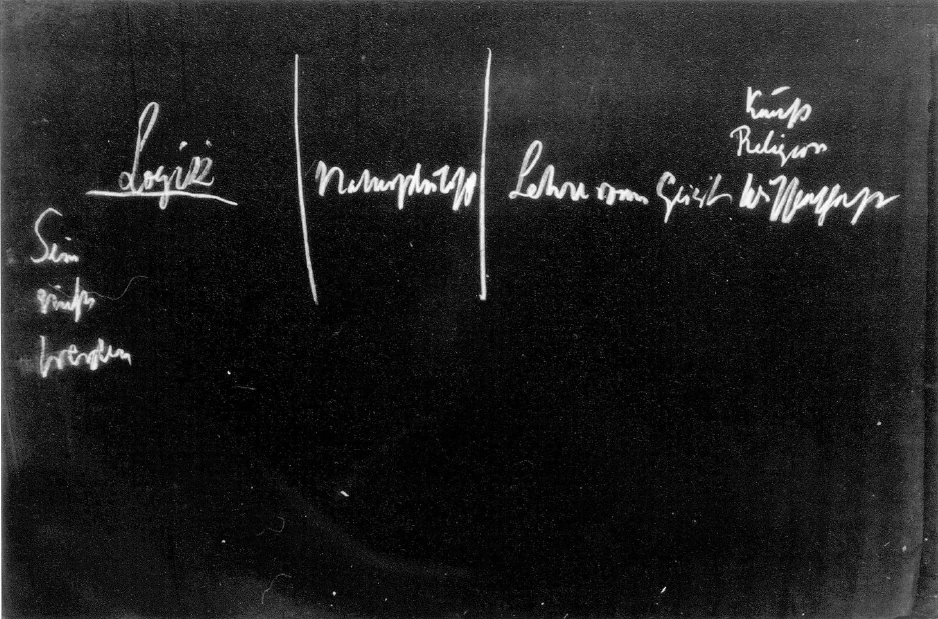
[ 23 ] Hegel divides his system into three parts:
[ 24 ] Logic, philosophy of nature, philosophy of mind = art, religion, science
[ 25 ] Logic is an inventory of all the concepts that human beings can develop, but only those concepts that are abstract. This logic begins with Being, moves on to Nothingness, and then to Becoming. I already know that if I were to list them all, you would be beside yourself, because you would find nothing in all these things that you are actually looking for. And yet Hegel says: What reemerges in human beings when they develop Being, Nothing, Becoming, Existence, and so on as abstract concepts—that is God before the creation of the world.
[ 26 ] Take Hegel’s logic: it consists entirely of abstract concepts from beginning to end, for the final concept is that of purpose. You can’t really make much of that yet either. There’s absolutely nothing there about the immortality of the soul or the existence of God in the sense that you would recognize as valid—just a collection of nothing but abstract concepts. But now imagine these abstract concepts as existing before nature existed, before humans existed, and so on. That is God before the creation of the world, says Hegel. Logic is God before the creation of the world. And this logic then created nature and came to self-consciousness within nature.
[ 27 ] So first there is logic, which, according to Hegel, is God before the creation of the world. Then it transitions into its otherness and comes to itself, to its self-consciousness; there it becomes the human spirit. And the entire system then culminates, at its highest point, in art, religion, and science. These are the three highest manifestations of the Spirit. Thus, in religion, art, and science, God continues to live right here on earth. Hegel records nothing other than what is found on earth in ordinary experience. So he is actually proclaiming only the Spirit that has died, not the living Spirit.
[ 28 ] This must be rejected by those who now seek science in the modern sense, based on a scientific education. It must be rejected because, when one ventures out into nature with these dead concepts, things do not, after all, work in such a way that one can remain confined to abstractions. Even if your botanical education is so poor that you reduce all the beautiful flowers to a count of stamens, a description of the seed, the ovary, and so on—even if you have such abstract concepts in your head and then go out with your botanical collection bag and bring back nothing but abstract concepts—at least the wilted flowers are still there, and they are still more concrete than even the most abstract concepts. And when you stand in the laboratory as a chemist—yes, no matter how much you might fantasize about all sorts of atomic processes and the like—you still cannot help but describe what is happening in the retort when you have a specific substance inside it and the lamp below it that causes that substance to evaporate, melt, and so on. You must still describe something that is a tangible thing. And finally, when physicists in the field of optics draw for you how light rays refract and describe everything that, in the physicists’ view, the light rays still do, you will still, time and again—when that beautiful drawing is made showing how light rays pass through a prism and are deflected in various ways—be reminded of the colors. And even though all color has long since evaporated from the physical explanation of color, you will still be reminded of the colors. But if one attempts to grasp the spiritual realm using a purely abstract conceptual system and purely abstract logic, one is left with nothing but that abstract logic. A man like Franz Brentano could not accept this as a true description of the spirit—nor, for that matter, could the other scholastics, for they at least still regarded it traditionally as revelation. Thus, as a student in the mid-19th century, Brentano—with a truly unbridled thirst for truth and knowledge and an unparalleled inner scientific rigor—was so deeply immersed in his own time that he could receive nothing from those who were still the last great philosophers of modern civilization. He could only value the strict scientific method. In his heart, he carried what Catholicism, with its theology, had given him. Yet he did not bring all of this to bear in a new understanding of the spiritual.
[ 29 ] But what is particularly compelling here is just how infinitely genuine this person was. For—and this brings me to the other point I mentioned—when we observe a human being as he is born into the physical world, as he makes his first wriggling movements as a child, and as we see in those first clumsy movements the unfolding of what was immensely wise before it descended into the physical world, then, if we understand spiritual science correctly, we say to ourselves: We see how the child’s head organism is born. In it we have an image of the cosmos. Only at the base of the skull do the earthly forces, so to speak, exert their counterforce. If the base of the skull were just as rounded as the top of the head is rounded, then the head would indeed be an image of the cosmos. This is what the human being brings with them. We can certainly regard the head—when we consider it as a physical body—as a reflection of the cosmos. That is truly what it is.
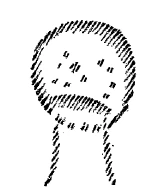
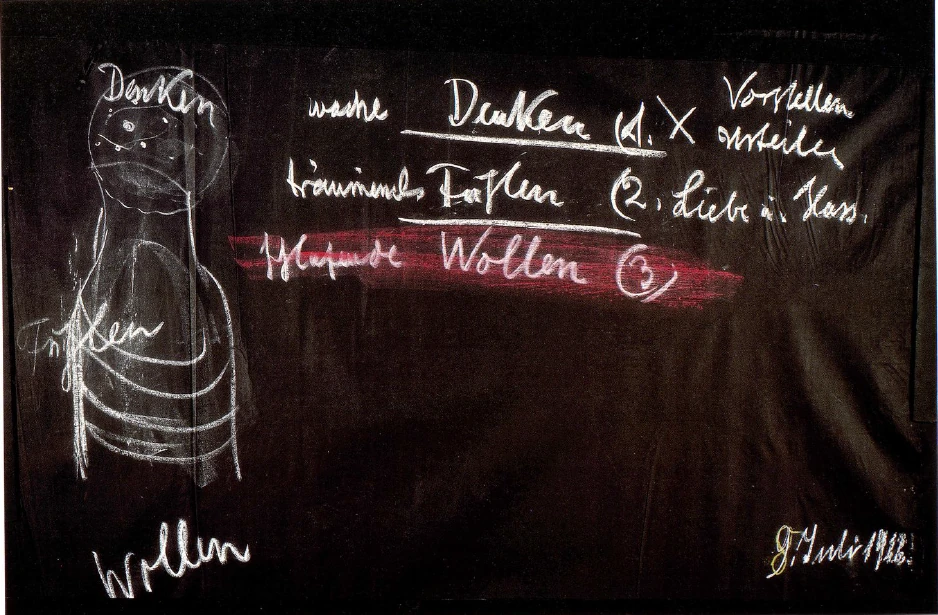
[ 30 ] People took offense at my publicly mentioning an important fact, but without mentioning such facts, one cannot truly grasp the interconnections of the world: I have publicly described how the human brain has a certain arrangement of sulci, certain centers, and so on. Even down to these smallest details, the human brain is a reflection of the starry sky at the moment of a person’s birth. Essentially, we see a reflection of the cosmos that we also perceive externally through our senses, even though most people do not perceive its spiritual aspect. In the chest organism—which primarily underlies the rhythmic system—we see how the curvature of the cosmos is already somewhat overcome through adaptation to the Earth, but anyone who observes the chest organism with its distinctive formation of the spine and ribs, and sees how this chest organism is connected to the cosmos through breathing, can still perceive—albeit in a greatly altered form—something like an afterimage of the cosmos in the chest, in the rhythmic organism. But not in the metabolic-limb organism. There you cannot possibly see anything that is modeled after the cosmos. Now, the formation of the head is connected to thinking, the thoracic organism—the rhythmic organism—to feeling, and the metabolic-limb organism to willing.

[ 31 ] Why is it that the metabolic-limb organism—which actually represents the most earthly aspect of the human being—is the bearer of the will? The connection is as follows: In the human head, we have a very faithful reflection of the cosmos. The soul-spiritual has flowed into the head, into the formative forces. One might say: Before descending to Earth, the human being learned from the cosmic forces and formed his head accordingly. To a small extent, he still forms the chest organism accordingly, but no longer the limb organism at all. It is in the limb organism that volition resides. So that, when one looks at the human external organism, thinking must be assigned to the head, feeling to the middle part of the human being, and willing to the metabolic-limb organism. Yet it is in what is truly the lowest—the metabolism and the limbs—that the spiritual is best preserved, so that in our thinking we have only a corpse of what we were before we descended. In our feeling we already have a little more, but feeling, as you know, remains dreamlike, and as for willing—that is completely overlooked by ordinary consciousness. Will remains entirely in the unconscious, but within it lies the most life-giving aspect of what we were before we descended to Earth. As we develop as children, it is in the will that the greatest part of our immortal soul resides. Now, most people do not give this much thought; they say: Human beings possess within themselves the three soul forces—thinking, feeling, and willing. You know, these three soul activities are listed as if they were present in ordinary consciousness, whereas in anthroposophy we must first point out: In reality, only thinking is something that is fully awake. Feeling is already like the dreams within a person, and a person knows absolutely nothing about the will. I must emphasize again and again: Even when we want to raise just one arm—as the thought “I am raising my arm” flows into the organism and becomes a volition, so that the raising of the arm actually takes place—the human being knows nothing of this; they sleep through it in the waking state just as they otherwise sleep through everything from falling asleep to waking up. So instead of people saying, “We have within us waking thinking, dreaming feeling, and sleeping willing,” they say, “We have thinking, feeling, and willing, which are supposed to exist side by side as entirely equivalent.”
[ 32 ] Now imagine a person who has an infinite sense of truth and who follows modern natural science—that is, who relies solely on reason. The modern natural scientist—whether examining specimens under a microscope, observing the cosmos through a telescope, or conducting astrophysics with a spectrometer—always relies solely on conscious thought. Consequently, it became an axiom for Franz Brentano that everything unconscious had to be rejected. He wanted to stick solely to ordinary conscious thinking, and for that purpose he did not wish to develop higher cognitive faculties. What could we actually expect from such a person when he speaks of the soul, when he seeks to speak as a psychologist? One might actually expect—if he adheres solely to the conscious—that he would not speak of volition at all in psychology. One might expect him to omit volition entirely, to become quite uncertain regarding feeling, and to treat only thinking properly.
[ 33 ] Other, more superficial minds did not come to this conclusion. Franz Brentano’s psychology does not divide the faculties of the soul into thinking, feeling, and willing, but rather into imagining, judging, and the phenomena of love and hate—that is, into the phenomena of sympathy and antipathy, or, in other words, of feeling. You will find no concept of volition in his work at all. True active volition is absent from Brentano’s psychology because he was, after all, a fundamentally honest seeker of truth, and he must have had to admit to himself: “I simply cannot find volition.”
[ 34 ] There is, once again, something incredibly moving about seeing just how infinitely sincere and honest this person actually is. There is a lack of volition in Brentano’s psychology, for he separates judgment and imagination, thereby establishing three elements of mental life; but judgment and imagination are, in fact, one and the same in terms of mental capacity, so that he actually has only two.
[ 35 ] Now consider the consequences of what is happening with Brentano. What does he actually have in reality? In human beings? By becoming a modern natural scientist and attaching no value to anything that does not present itself to conscious thought according to the scientific method, he thereby eliminates volition from the human soul. And what does he thereby eliminate? Precisely that which we bring with us as a living entity from our state before we descend into a physical body.
[ 36 ] Brentano was confronted with a science that effectively eliminated the eternal aspect of the soul for him. The other psychologists did not feel this. He did feel it, and that is why an immense chasm opened up for him between what had once been his doctrine of revelation—which spoke to him of the eternal in the human soul—and what he could discover solely through his scientific method, which even stripped away the will—and with it, the eternal—from the human soul.
[ 37 ] Thus, Brentano is already a figure who epitomizes everything that the 19th century simply could not offer humanity. For the gates to the spiritual world had to be opened. And that is why I have just spoken to you about Franz Brentano, who died in Zurich in 1917—because I see in him the most characteristic of all those 19th-century philosophers who already possessed a serious quest for truth, but who were held back by the shackles of a natural-scientific mindset that refused to rise to a spiritual understanding of the world, yet who demonstrate everywhere that the time has come when this spiritual understanding is needed. What, then, is ultimately the difference between what spiritual science in the anthroposophical sense truly aims for, and the tragic striving of a man such as Franz Brentano? That Franz Brentano, with immense acumen, brought forth everywhere the concepts that can be derived from ordinary consciousness, and said: “One must stop there.” — But knowledge is not complete; one strives in vain for true knowledge in this way. Yet he was never satisfied with this; time and again he wanted to break free. His natural science simply prevented him from doing so. And that remained the case until his death. One might say: The science of the spirit had to begin where Brentano had left off; it had to take the leap from ordinary consciousness into higher consciousness. That is why he is so extraordinarily interesting—indeed, the most interesting philosopher of the second half of the 19th century—for in his case, the quest for truth was truly a personal matter. One must certainly say: If one wishes to study, through a single symptom, what a human being had to experience in the development of science and in intellectual development in recent times, then one can turn one’s attention to this nephew of Clemens Brentano, the philosopher Franz Brentano. He is characteristic of everything that one must seek as a human being and that one simply cannot find using the ordinary scientific method. He is characteristic of this because one must go beyond what he strove for with such an honest sense of truth. The more closely one examines him—right down to the structure of his psychological theories—the more this becomes apparent. He, in particular, is one of those minds who demonstrate that humanity once again needs a spiritual life capable of permeating everything. This cannot come from the natural sciences. But this natural science is, in fact, the fate of the modern era, just as it became Brentano’s fate. For, like the true modern Faust of the nineteenth century, Brentano first resided in Würzburg, then in Vienna, then in Florence, then in Zurich, wrestling with humanity’s greatest problems. He does not admit to himself, “that we can know nothing,” but he would actually have to admit it if he were fully aware of his own method. In fact, he would have to say to himself: Natural science is what prevents me from embarking on the path into the spiritual world.
[ 38 ] But this natural science speaks in a strong, authoritative voice. And that is indeed the case in public life today as well. Natural science itself cannot offer people what they need for their souls. The greatest achievements of the 19th century and those of the 20th century could not give people what constituted a kind of guiding spiritual force. And this scientific mindset, with its powerful authority, is a major obstacle; for wherever anthroposophy appears, science initially opposes it, and even though science itself cannot give people anything, people still ask of anthroposophy: Does it agree with science? — because even those people who do not know much about natural science today have the authoritative feeling that natural science is right, and if it says that anthroposophy is nonsense, then it must be true. — As I said, people don’t need to know much about natural science at all, for what do the monistic speakers really know about natural science? As a rule, they have in their minds only the general notions of natural science that were accepted three decades ago! Yet they act as if they were speaking from the very heart of contemporary natural science. That is why this is regarded as authoritative by many people.
[ 39 ] One can indeed see in Brentano’s inner destiny the outer destiny—not the inner, but the outer destiny—of the anthroposophical worldview.