Human Questions and Cosmic Answers
GA 205
16 July 1922, Dornach
Translated by Steiner Online Library
Eleventh Lecture
[ 1 ] During the last reflection, I had to repeatedly point out how, during the heyday of the Middle Ages within European civilization, two spiritual currents flowed through the finest souls—those two spiritual currents that I characterized in more detail yesterday as revelatory knowledge and rational knowledge within Scholasticism. Now, we had to emphasize that knowledge of revelation, in the sense in which it appears within Scholasticism, is by no means something mystical or abstractly indeterminate, but rather that it is a body of knowledge that appears in sharply defined, clearly formed concepts. The only difference is that these concepts are not considered to be directly accessible through human cognition; rather, it is pointed out that they must be derived from the tradition of the Churches by every individual who is to acquire them, for it is precisely in their traditions and in their continuous existence that the Churches have the right, so to speak, to preserve such cognitive content.
[ 2 ] The second body of knowledge was open to human inquiry and human endeavor; but those who were truly within the true scholastic tradition had to acknowledge that no knowledge of the supersensible world could be gained through this body of rational knowledge.
[ 3 ] Thus, even at the height of the Middle Ages’ intellectual flowering, it was acknowledged that, in a sense, those aspects of knowledge that were no longer accessible to people in the present had to be preserved for posterity. However, I have also already indicated that this was not always the case. If we go further back, through the Middle Ages to the early Christian centuries, we find that this particular character of revelatory knowledge is not emphasized as sharply as it was in the later Middle Ages. And if one had presented to a Greek—say, from the Athenian school of philosophy—such a distinction between knowledge based on pure reason and knowledge given solely through revelation—revelation understood in the sense in which it was understood in the Middle Ages—the Greek philosopher would simply not have understood it at all. He would not have been able to conceive of the idea that, once the content of knowledge concerning the supersensible had been communicated to a human being by an otherworldly power, it would remain fixed and could not be communicated anew. The Greek understood that one could not arrive at the higher spiritual content through the ordinary method of cognition; but he understood that, through spiritual training and the path of initiation, one could ascend from the cognitive faculties that one possesses as a human being to higher cognitive faculties. Then one simply enters that world in which one is able to perceive what constitutes truth and knowledge regarding the supersensible.
[ 4 ] And precisely with regard to this matter, a turning point has occurred in the entire history of Western civilization—between what existed during the centuries when Greek philosophy was still flourishing in Plato and Aristotle, and what then emerged around the end of the 4th century A.D. I have, in fact, emphasized one aspect of this matter on several occasions. I have emphasized that the event of Golgotha took place at a time when much of the ancient wisdom of initiation and ancient initiatory knowledge still existed. And indeed, a sufficient number of people applied this ancient wisdom of initiation to comprehend the event of Golgotha through the means of supersensible knowledge, drawing upon their own initiation. Initiates strove to draw upon all the initiatory knowledge they could gather in order to understand how a being such as the Christ—who, prior to the time of the Golgotha Mystery, had not been united with earthly evolution—could unite with an earthly body and now remain united with human evolution. What kind of being this is, how this being behaved before descending into the earthly realm—all these were questions to which the highest initiatory abilities were applied even at the time of the Mystery of Golgotha.
[ 5 ] But now we see that the ancient wisdom of initiation—which was certainly present in the Near East, in North Africa, and also within Hellenic culture, and which extended across to Italy and even further into Europe—has been understood less and less since the 5th century A.D. People then spoke of certain names in such a way as to portray the bearers of those names within Western Christian civilization as rather contemptible figures—or at least as figures with whom a true Christian should not associate. Efforts were also made, however, to erase as much as possible any traces of earlier knowledge regarding what such figures actually represented.
[ 6 ] It is curious that a figure such as Franz Brentano, drawing from his medieval tradition, still inherited for his own soul a deep hatred for everything that was embodied at that time in figures such as PJozin—about whom, admittedly, very little was known, but who was regarded as a philosopher with whom a true Christian believer should not concern himself. Brentano extended this hatred to Plotinus. He allowed it to be passed down to him. He wrote a treatise titled “What Kind of Philosopher Sometimes Marks an Epoch,” and by this he meant Plotinus, the philosopher of the 3rd century A.D., who was part of those intellectual currents that actually dried up completely by the 4th century and of which later Christian development sought to retain no memory.
[ 7 ] What is said in the standard philosophies of history about the truly outstanding minds of that era—the first Christian centuries—is, for the most part, not merely the bare minimum; rather, it is such that not even the slightest coherent picture of these minds can be derived from it. It is, of course, the case that even today it is still very difficult to form a proper understanding of the first three or four Christian centuries. For example, regarding the way in which the legacy of Plato and Aristotle continued to exert an influence—a legacy that was, in a certain sense, already alienated from the deeper wisdom of the Mysteries, yet which figures such as those I have in mind still possessed during the first three to four Christian centuries. In fact, there is hardly any proper understanding of Plato to be found today in the standard histories of philosophy. If you are interested in this, do take a look, for example, at the chapter on Plato in Paul Deussen’s History of Greek Philosophy, where Deussen discusses how Plato actually conceived of the Idea of the Good in relation to the other Ideas. There you will find statements such as this: Plato did not assume a personal God; otherwise, the Ideas he posited would not have been independent in themselves; Plato could not acknowledge an essential God because the Ideas are independent. — However, Deussen notes, Plato does place the Idea of the Good above the other Ideas. However, | this does not mean that the Idea of the Good stands above the other Ideas as something essentially independent; for what the Idea of the Good expresses is merely a certain family resemblance present in all Ideas.
[ 8 ] Please, sit down properly in your chairs now and take a closer look at Deussen’s logic—the logic of this outstanding contemporary philosopher. Plato has his Ideas. They are independent. Now Plato also has the Idea of the Good. But this cannot be just anything that directs the other Ideas; rather, the Ideas share a family resemblance among themselves. The Idea of the Good merely expresses this family resemblance. Yes, but where do family resemblances come from? If there is a family resemblance anywhere, it must come from descent from a superior entity—at least, if one were to use that expression. The Idea of the Good points to a family resemblance; so one would have to trace it back to the progenitor all the more!
[ 9 ] Yes, that’s what you’ll find in today’s outstanding histories of philosophy! The people who write such things become authorities in the present day. People learn this and don’t realize that it’s pure nonsense. Of course, you can’t trust someone who spouts such nonsense about Greek philosophy to have much to say about Indian wisdom either. But still, if you’re looking for an authoritative source on Indian wisdom anywhere today, people point to Paul Deussen. Things are really bad.
[ 10 ] I simply wanted to say that, at present, there is not much point even in attempting to understand Platonic philosophy itself. Contemporary intellectualism is simply too incapable of doing so. Consequently, something like this—which, after all, still belongs to the traditional body of knowledge—cannot be understood either. Namely, that Plotinus, the Neoplatonic philosopher—as he is always called—was a student of Ammonius Saccas, who lived at the beginning of the 3rd century CE but wrote nothing, teaching only a few individual students. The most outstanding minds of that very era wrote nothing at all, because they believed that the content of wisdom must exist as a living entity, that it could not be transmitted from one person to another through writing, but must be conveyed only from person to person through direct, personal interaction. Now there is another story told about Ammonius Sakkas, the significance of which, once again, is not clear to people. It is said that he strove to achieve unity in the face of the terrible disputes between the followers of Aristotle and those of Plato by showing how Plato and Aristotle were, in fact, entirely in harmony with one another.
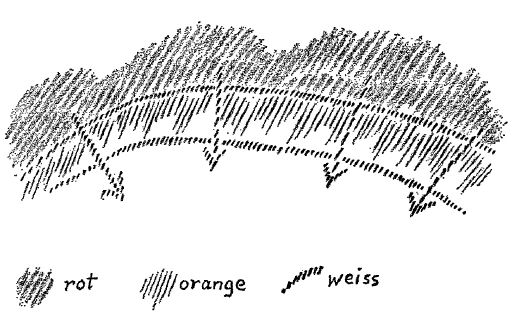
[ 11 ] I would like to briefly outline how Sakkas might have spoken about Plato and Aristotle, for example. He characterized it as follows: Plato still belonged to that age in which many people found their direct spiritual path upward into the spiritual world—in other words, in which people were still well acquainted with the principle of initiation. But in earlier times, as Ammonius Sakkas might have said, logical-abstract thinking was not yet developed at all. Only the first traces of this are present now—I mean “now” at the beginning of the 3rd century A.D. Thoughts, as formed by human beings, did not actually exist even in Plato’s time. But while the older initiates conveyed everything they had to give to humanity solely through images and imaginations, Plato was one of the first to transform these imaginations into abstract concepts. If one imagines the powerful imagery (red) toward which Plato, too, wanted people to look up, it was certainly the case that in earlier times this imagery was expressed merely in imaginations (orange), but for Plato it was already expressed in concepts (white). Yet these concepts flowed down, as it were, from the divine-spiritual content (arrows). Plato said: The lowest revelation—in a sense, the most diluted revelation—of the divine-spiritual content is the Forms; Aristotle no longer had such an intense capacity to elevate himself to this spiritual content. Therefore, he had, so to speak, only what lay below the visual content; he had only the content of the Forms. But he could still conceive of this as something revealed. There is no difference between Plato and Aristotle, as Sakkas, for example, said, other than that Plato looked higher up into the spiritual world, and Aristotle looked less high up into the spiritual world.
[ 12 ] In this way, Ammonius Sakkas believed he could sweep away the disputes that existed among the followers of Aristotle and Plato. And even though the content of wisdom had already begun to approach an intellectualist conception under Plato and Aristotle, there were still possibilities in those ancient times for one person or another to actually ascend very far into the realm of spiritual vision through personal experience. And so one must imagine that such people as Ammonius Sakkas and his student Plotinus were in fact still filled with direct inner spiritual experiences and, above all, had such spiritual experiences that their perception of the spiritual world had a fully concrete content. Of course, one could not have spoken to such people of an “outer nature” in the way we do today. In their schools, such people spoke of a spiritual world, and the nature below—which today is regarded by many as the be-all and end-all—was merely the lowest figurative expression of what they were conscious of as the spiritual world. One can get an idea of how such people spoke by considering one of Sakkas’s successors, who still possessed deep insights and carried them over into the 4th century: Iamblichus.
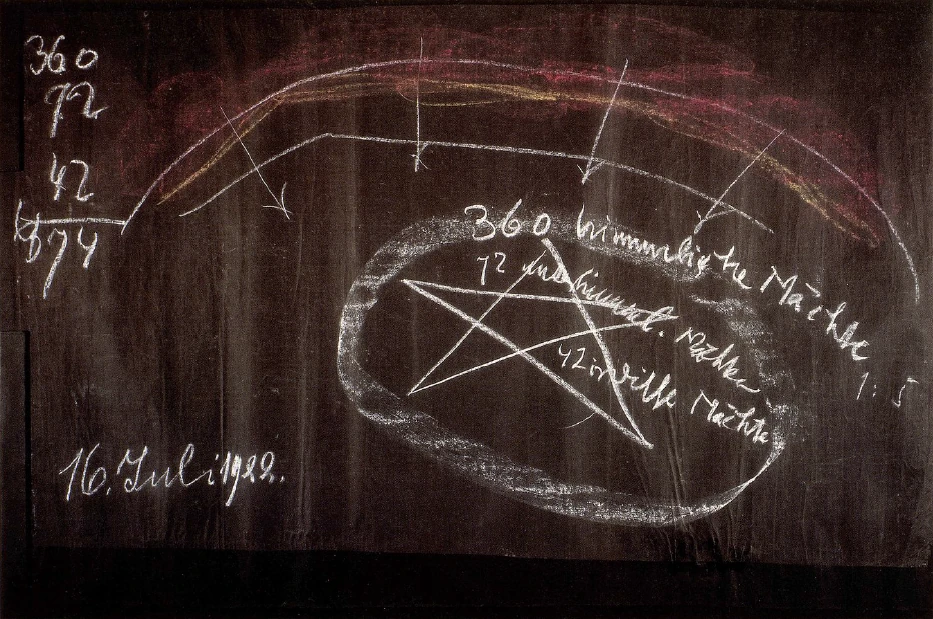
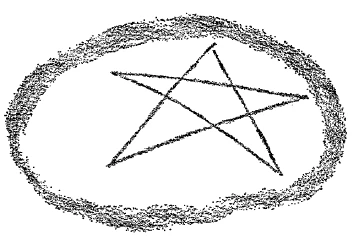
[ 13 ] Let us now consider Jamblichus’s worldview. He spoke to his students in roughly the following manner. He said: “If one wishes to understand the world, one must not look to space, for space contains only the outer expression of the spiritual world. Nor should one look to time, for time merely presents the illusion of what is the real, true content of the world. One must look up to those powers in the spiritual world that shape time and the relationship between time and space. Look out into the entire cosmos. Every year, the cyclical movement repeats itself, manifesting visibly in the sun. But this sun circles through the zodiac, through the 12 constellations. One should not merely stare at this. For within it, 360 heavenly powers are at work and weaving, and it is they who bring about everything that emanates from the sun’s activity over the course of a year for the entire world accessible to human beings, and they repeat the cycle every year. If they alone ruled, the year would have 360 days—or so Iamblichus had told his students. But that leaves 5 days remaining. These 5 days are governed by 72 subcelestial powers, the planetary spirits. I draw this pentagon within the circle because 72 to 360 is in the same ratio as 1 to 5. The five remaining world-days of the year—during which, so to speak, the 360 celestial powers would leave a void—are governed by the 72 subcelestial powers. Now, as you know, the year has not just 365 days, but a few more hours as well; according to Iamblichus, there are 42 earthly powers for these hours.
[ 14 ] Jamblichus went on to say to his students: The 360 celestial powers are connected to everything that constitutes the human head. The 72 subcelestial powers are connected to everything that constitutes the chest, respiratory, and cardiac systems, and the 42 earthly powers are connected to everything in the human being that constitutes the purely earthly systems of digestion, metabolism, and so on.
[ 15 ] Thus, human beings were placed within a spiritual system, a spiritual world system. Today, we begin our studies of physiology by learning how much carbon, hydrogen, nitrogen, sulfur, phosphorus, calcium, and so on the human body absorbs. We relate human beings to what is inanimate nature. In his schools, Iamblichus would have depicted human beings in relation to the 42 earthly, the 72 intercelestial or planetary, and the 360 celestial powers. Just as human beings are portrayed today as something composed of the elements of the earth, so were they portrayed in those days as something flowing down from the forces, from the agents of the spiritual universe. One can only say that it was an immense, a lofty wisdom that was taught in those schools at that time. One can understand that Plotinus, who did not become a student of Ammonius Saccas until he was twenty-eight years old, felt as if he were in another world because he was able to absorb something of this wisdom. And this wisdom continued to be cultivated in many places during the first four centuries following the Mystery of Golgotha. With this wisdom, people also sought to understand how the Christ had descended to become Jesus of Nazareth. They sought to understand how the Christ placed himself within this entire mighty world of spiritual hierarchies, within this spiritual edifice of the worlds.
[ 16 ] And now I would like to discuss another chapter of Jamblichus’s wisdom, which he taught in his schools. He said: There are, then, 360 celestial powers, 72 planetary powers, and 42 earthly powers. So there are a total of 474 divine beings of the most diverse ranks. “You can now,” Jamblichus said to his students, “look to the farthest East, where you will see that there are peoples there who will tell you the names of their gods. Then go to the Egyptians; they, in turn, will tell you the names of their gods; go to other peoples, and they, too, will tell you the names of their gods. Then go to the Phoenicians, then to the Hellenes—there, too, you will find names of gods. And if you go over to the Romans, you will again find names of gods. If you take these 474 names of gods, all these different gods of the various peoples are included among them: Zeus, Apollo, as well as Baal, Amun, the Egyptian god—all the gods belong to these 474. The fact that the peoples have different gods is simply because one people has selected 12 or 17 from the 474 gods, another 20 or 25, yet another 3 or 4, and so on. But if one correctly understands these various deities of the different peoples, then one arrives at 473. And the highest, the most noble—the one who descended to Earth at a specific time—that is Christ.
[ 17 ] It was precisely in this wisdom that there lay a profound tendency to foster peace among the most diverse religions—not out of some vague sentiment, but by seeking to recognize how, for those who truly came to know the 474 gods from within the structure of the world, the various deities of different peoples fit into a grand system; and one sought to understand the entire Olympian pantheon of all the peoples of antiquity in such a way that it all culminated in Christianity. This edifice was to be crowned by the realization of how Christ had found his place in Jesus of Nazareth for his earthly mission.
[ 18 ] When one looks into that spiritual science—which, admittedly, is no longer valid today, for today we must practice spiritual science in a different way—one develops an immense respect for what was taught there about the supersensible universe, about the supersensible cosmos. But knowledge of this universe was made contingent upon the principle that wisdom should always be transmitted through direct discipleship under the guidance of older initiates; that wisdom should be imparted only to those whom one had first truly prepared, in terms of their cognitive abilities, to the appropriate level at which they were required to comprehend the essence of one god or another.
[ 19 ] One could say: Everywhere—in Greece, in Egypt, in the Near East—this was viewed in this way within the circles that mattered in terms of spiritual culture, but not within the Roman world. The Roman world, however, still retained remnants of that ancient wisdom. Plotinus himself taught for a long time in Italy, within the ancient Roman world. But an abstract spirit had taken hold in the ancient Roman world—a spirit that could no longer comprehend, in the former sense, the value of the human personality or the value of the essential in general. The spirit of conceptualization had taken hold in Roman culture—the spirit of abstraction; though not yet to the extent seen in later times, precisely because it was still in its elementary forms, it was, I might say, clung to all the more vigorously.
[ 20 ] And so, as the 4th century A.D. begins, we see emerging on Italian soil a kind of school that takes up the struggle against the ancient principle of initiation—indeed, that takes up the struggle against the very preparation of the individual for initiation. We see a school emerging that collects and carefully records everything that has been handed down from the ancient initiations. This school, which continues to develop from the third into the fourth century, aims to immortalize the Roman essence itself, to replace the immediate individual striving of each person with historical tradition. And Christianity now grows into this Roman principle. It was precisely this school—which stands at the starting point of that Christianity that did not begin until around the 4th century CE—that sought to obscure, in particular, everything that could still be found within the ancient initiation regarding the indwelling of Christ in the personality of Jesus.
[ 21 ] This Roman school adhered to the principle: Nothing like what Ammonius Sakkas taught, or what Iamblichus taught, must be passed on to posterity. — Just as they had set about, on the broadest scale, destroying the ancient temples, eradicating the ancient altars, and annihilating what remained of the old paganism, so, in a certain sense, they set about spiritually to eradicate everything that constituted the principles of discovery of the higher world. And so, to take one example, in place of what was still known from Iamblichus and Ammonius Saccas—namely, that the individual human being can develop upward to comprehend how Christ takes his place in the body of Jesus—in place of that, the dogma of the single divine nature or the two natures in the person of Christ was substituted. The dogma was to be fully preserved, and the insight—the very possibility of insight—was to be buried. Within ancient Rome, the transformation of the ancient paths of wisdom into dogma was taking place. And efforts were made to destroy, as far as possible, all records—everything that reminded people of the past—so that of figures such as Ammonius Saccas and Iamblichus, only their names remain. Of the many others who were teachers of wisdom in the southern regions of Europe, not even their names have survived. Just as all the altars were toppled, just as all the temples were razed to the ground and burned to the ground, so too was ancient wisdom eradicated, so that people today have no idea what wisdom still lived on in southern Europe during the first four centuries after the Mystery of Golgotha.
[ 22 ] But news of what had happened did, after all, reach the other people who were interested in such matters—those who saw how, at a breakneck pace, the old Roman world was crumbling and how Christianity was spreading. But after what I would call the glorious reception given to the Mystery of Golgotha had been eradicated, the union of Christ with Jesus could be seen only as a dogma, which was then defined more or less abstractly by the councils out of the Roman-Catholic spirit. The living wisdom was eradicated, and abstraction—which then continued to operate as the content of revelation—took its place.
[ 23 ] The history of these things has, as it were, been erased, but back then, in the early Christian centuries, there were many people who said: Yes, there are such initiates as Iamblichus was. These are the ones who spoke of true Christianity. For them, the Christ is “the Christ.” But what did the Romans do more and more? The Romans turned Christianity into what can only be called “the Galileans.” For a time, at the beginning of the 3rd and 4th centuries, this was a term used to cover up a great misunderstanding. As Christianity was understood less and less, people spoke more and more of the Galileans; the less people knew about the Christ, the more they focused on the human personality of the “Galilean.”
[ 24 ] It was from this spiritual milieu that Julianus, the so-called Apostate, emerged; he had absorbed much from the disciples of Iamblichus and still knew something of the existence of a spiritual universe that extends down into the individual elements of nature. From the disciples of Iamblichus, Julian the Apostate had heard how the forces of the 360 heavenly powers, the 72 intermediate powers, the planetary powers, and the 42 earthly powers work their way down into every individual animal and every individual plant. People in those days still understood such things, as is wonderfully expressed in a legend told about Plotinus that carries profound significance. This legend goes as follows: There were already many who no longer wanted to believe that anyone could be inspired by the divine Spirit, and who claimed that anyone who asserted to know anything about the divine-spiritual world was possessed by a demon. For this reason, Plotinus was dragged before the Egyptian Temple of Isis, where it was to be determined which demon had possessed him. And when the Egyptian priests arrived—who still possessed knowledge of these matters—and tested Plotinus before the altar of Isis using all the ritual practices available at that time, behold, instead of a demon, the deity herself appeared! — So in those days, at least, there was still the possibility of acknowledging that one could test whether anyone harbored within themselves the good God or a demon.
[ 25 ] Julian the Apostate still heard of such things. But on the other hand, something like that writing—which had circulated widely in the Roman Empire during the early Christian centuries and was called a sermon by the Apostle Peter, though it was a forgery—also rang in his ears. This text stated: “Look upon the godless Hellenes, who see something divine and spiritual in every single creature of nature. This is godless; you must not do this! You must not see anything divine or spiritual in nature, in animals, or in plants; you must not stoop to the belief that there is anything divine in the course of the sun or the moon.” — This is how it sounded to Julian the Apostate, coming from both sides. And he developed a deep love for Hellenism. He became the tragic figure who sought to speak about Christianity in the spirit of Iamblichus.
[ 26 ] It is impossible to imagine what might have happened in Europe, for example, if not Roman culture but the Christianity of Julian the Apostate had prevailed—if his desire to reestablish the schools of initiation had succeeded, so that people could have seen for themselves how Christ dwelt within Jesus and how Christ related to the gods of other peoples. Julian the Apostate did not want to destroy the pagan temples. He even wanted to restore the temple in Jerusalem, the Jewish temple. He wanted to restore the pagan temples, and he also took the Christians under his wing. He simply wanted the truth. Above all, he was disturbed by that school in ancient Rome I have spoken of—the one that sought to eradicate the ancient principle of initiation and, in fact, did eradicate it—and which sought merely to replace it with traditions, the recorded ancient wisdom of initiation.
[ 27 ] And they managed to arrange it so that Julian was struck by a Persian lance at just the right moment. At that moment, the words were spoken—words that have never since been understood, not even by Ibsen, but which can be understood in the context of the tradition of that time: “Alas, it is not the Christ; the Galilean has triumphed!” — For in that moment of death, in that dying moment, the prophetic gaze of Julian the Apostate beheld the prospect that the vision of the divine Christ would now fade more and more, and that the “Galilean”—the man who was merely of Galilean descent—would gradually come to be worshiped as a god. The entire development that then continued to unfold, until in more recent times, in the 19th century, theology had completely lost the Christ in Jesus—Julian the Apostate foresaw this, with an immense visionary insight at that time, when he was thirty years old. He was an apostate in relation to what was actually yet to come. The Apostate was, in fact, an apostle with regard to what was—and must once again become—a spiritual grasp of the Mystery of Golgotha.
[ 28 ] Newer geological strata always cover the older ones, and one must first pass through the newer strata if one wishes to reach the older ones. One might find it hard to believe just how thick the layers are that have historically been deposited in the process of human development. For what has been laid down there since the 4th century under the influence of Romanism—as layers covering the earliest conceptions of the Mystery of Golgotha—is very thick. But we must once again find a way to penetrate these layers through original spiritual insights, in order to rediscover that which is time-honored—that which, as a spiritual reality, has been swept away just as the old pagan altars were.
[ 29 ] The Egyptian priests further observed that Plotinus did not harbor a devil or a demon within himself, but rather a god. In Western Europe, however, it was observed that he certainly had a demon within him. If you read through the text up to Brentano’s essay “What Kind of Philosopher Sometimes Marks an Epoch,” you will find: The Egyptian temple priests observed that within Plotinus, the philosopher of the 3rd century A.D., there lived not a demon but a god; Brentano observed that there lived within him not a god but a demon.
[ 30 ] And that is precisely what happened in the 19th century: gods were regarded as demons and demons as gods, so that it was no longer possible to distinguish between gods and demons in the universe. But this continues to live on in the chaos of our civilization.
[ 31 ] Yes, it certainly gives one pause when one considers these things objectively. I just wanted to present a chapter of history to you today, completely objectively, because, of course, everything that has become history had to be that way. But it must also be the case that, if it was necessary for people to remain uninformed about certain things throughout a certain era, they will subsequently be enlightened about them and truly embrace that enlightenment.