The Secret of the Trinity
GA 214
23 July 1922, Dornach
Translated by Steiner Online Library
First Lecture
[ 1 ] It has already been pointed out that the spiritual life of the first four Christian centuries has, in essence, been completely buried; that everything recorded today about the views and insights of the people who lived at the time of the Mystery of Golgotha—and who also lived during the four subsequent centuries— has, in essence, only been passed down to posterity through the writings of their opponents; so that the spiritual researcher’s retrospective gaze is already necessary to sketch a more accurate picture of what took place during these first four Christian centuries. And I have, in fact, recently attempted to sketch a brief portrait of Julian the Apostate.
[ 2 ] However, we cannot say that, according to conventional historical accounts, the following centuries are presented to people today in a clearer light. From the 5th century through roughly the 12th, 13th, and 14th centuries, what one might call the inner life of the European population remains, according to conventional historical accounts, entirely unclear. What, after all, is actually contained in these conventional historical accounts? And what is actually there, even when one looks at the works of quick-witted so-called dramatists or poets—such as those of the caliber of Herr von Wildenbruch—who, in their writings, essentially dressed up the various family histories of Louis the Pious or similar figures as superficial spectres, which are then passed down as history?
[ 3 ] Nevertheless, it is of extraordinary importance to take a look at the reality of European life during those times—from which so much in the present still stems—and which, fundamentally, one must understand, particularly with regard to the spiritual life of the European people, if one wishes to understand anything at all about the deeper cultural currents of later periods as well. And here I would like to begin with something that will likely seem somewhat foreign to many of you, but which today can only be properly understood in the light of the spiritual sciences and therefore belongs here.
[ 4 ] As you know, there is now something called theology. This theology, as we view it today—essentially all contemporary theology in the European world—actually took shape in its basic structure and inner essence during the 4th and 5th centuries A.D., continuing through the subsequent centuries, which remain rather obscure, up to the 12th, 13th centuries, when it then reached a certain culmination through Scholasticism. If we now consider this theology, which essentially only began to take shape in its true essence in the period following Augustine—for Augustine cannot be understood, or at most can only barely be understood, with the help of this theology, whereas everything that preceded it, such as what was put forward regarding the Mystery of Golgotha, can no longer be understood with this theology— if one looks at the essence of this theology, which arose precisely during the darkest times of the Middle Ages—dark for our understanding, for our external understanding—then it must become clear above all else that this theology is something entirely different from, say, the theology—or whatever else one might call it—that existed before. What was theology before is, in fact, merely—I would say—like an inheritance transplanted into the times in which the theology I have just characterized then arose. And you can get a sense of what that which later became theology looked like beforehand simply by reading the short essay on Dionysius the Areopagite in this week’s issue of *Goetheanum*, which will also be continued in one of the upcoming issues. There you will find described a completely different way of relating to the world in the early Christian centuries than was the case later, say, during the 9th and 10th centuries and in the centuries that followed.
[ 5 ] If one were to sketch out, in a general way, the entire contrast—let us call it “old theology” for now—between the theology as expressed, one might say, in a late work such as that of Dionysius the Areopagite, and the later “new theology,” one would have to say: The older theology views everything related to the spiritual world as if from within, as if through a direct gaze at what takes place in the spiritual worlds. If one wishes to gain insight into how this older theology thought, how it viewed things inwardly and spiritually, one can really only seek this, in turn, using the methods of today’s anthroposophical spiritual science. This leads to the following conclusion. I already characterized similar ideas yesterday from a different perspective.
[ 6 ] As one ascends to imaginative knowledge, one becomes increasingly aware that, throughout this entire process of ascending to imaginative knowledge, one is floating within spiritual processes. This state of floating within, with one’s entire soul life, during the ascent to imaginative knowledge presents itself as if one were coming into contact with beings who do not live on the physical plane. Perception through the sense organs ceases, and one experiences that, in a sense, everything that constitutes sensory perception vanishes. But the entire process appears to one as if beings from a higher world were assisting one in this, and one comes to realize that these beings are to be understood as the very same ones regarded in older theology as the Angeloi, Archangeloi, and Archai. So I could say that these beings help one to ascend to imaginative knowledge. Then, just as clouds part, the sensory world parts, and one looks beyond the sensory world. And beyond the sensory world, what one might call inspiration opens up; beyond this sensory world, the second hierarchy—the hierarchy of the Exusiai, Dynamis, and Kyriotetes—is revealed. These ordering, creative beings present themselves to the soul’s inspired insight. And when one then ascends further to intuition, the first hierarchy appears—the Thrones, Cherubim, and Seraphim. These are ways to arrive, through direct spiritual training, at an understanding of what terms such as “first,” “second,” and “third hierarchy” actually meant in older theologies.
[ 7 ] Well, especially when one looks back at the theology of the first Christian centuries—which has, for the most part, been eradicated—one notices that, in a certain sense, it still retains something of the idea that, in fact, when a person directs their senses toward the ordinary sensory external world, they do indeed see things and must believe in them, but they do not truly recognize them. There is a very specific awareness present in this older theology: the awareness that one must first have experienced something in the spiritual world, and that it is only through what one has experienced in the spiritual world that the concepts arise with which one can then approach the sensory world and, in a sense, illuminate the sensory world with these ideas gained from the spiritual world. Only then does something emerge from the sensory world.
[ 8 ] In a certain sense, this also corresponds to what has emerged from an older, dreamlike, atavistic form of clairvoyance. After all, even in dreamlike visions, people first looked into a spiritual world and then applied what they experienced there to their sensory perception. If these people had had only sensory perception before them, they would have felt like someone standing in a dark room with no light. But when they had their spiritual insight—the result of pure gazing into the spiritual world—and applied it to the sensory world; when they first beheld, say, the creative forces of the animal world and then applied that to the external animals, they felt as if they were stepping into a dark room with a lamp. That is how they felt when they placed spiritual insight before sensory perception and illuminated it. Only then is it truly recognized. This was indeed the consciousness of those earlier theologies. That is why the entire Christology of the first Christian centuries was, in fact, always viewed from within. Essentially, the process that took place—the descent of Christ into the earthly world—was not viewed from the outside; it was viewed from the inside, from the spiritual perspective. First, Christ was sought out in the spiritual worlds, and then his descent into the physical, sensory world was traced. This was the consciousness of the older theology.
[ 9 ] Now the following event occurred: The Roman world, toward which the Christian impulse had spread the farthest westward, was, in its intellectual outlook, permeated by a tendency—a penchant—for the abstract and for translating what were intuitive perceptions into abstract concepts. But this Roman world was, in fact, as Christianity gradually spread westward, in a state of decline and decay. And the Nordic peoples were advancing from eastern Europe toward the west and south. Now it is a curious thing that, while on the one hand the Roman way of life was decaying and the fresh peoples were approaching from the north, that college was forming on the Italian peninsula—the one I have already spoken of here in these times—which actually set itself the task of to use all these events to eradicate the old views root and branch and to allow only those writings to survive for posterity that were convenient for this college.
[ 10 ] History actually says nothing at all about this event, and yet it is a real event. If a historical account of it existed, one would simply point to that college which formed in Italy as the heir to the Roman College of Pontiffs, which thoroughly did away with everything that did not suit it, and which modified the rest and handed it down to posterity. Just as the will was invented in Rome with regard to economic processes—to ensure that what the will decrees would take effect beyond the individual human will—so, within this college, the impulse arose to allow the Roman essence to live on as a mere legacy, as nothing more than a sum of dogmas, throughout the subsequent period of historical development spanning many generations. “As long as possible, nothing new should be perceived in the spiritual world,” this college declared. “The principle of initiation must be eradicated root and branch. What we are now modifying is to be passed on to posterity as written works.”
[ 11 ] If one were to describe it objectively, it would have to be presented in this factual light. And Christianity would have faced a very different fate; it would have become completely stagnant had it not been for the arrival of the Nordic peoples, who pushed their way in, both to the west and to the south. For these peoples brought with them a certain natural disposition that was quite different from that of the southern, Greek, and Roman peoples.
[ 12 ] The disposition of the southern peoples was, at least in earlier times—to a lesser extent among the Romans, but to a greater extent among the Greeks—such that from among the peoples as a whole, individual beings would always emerge who underwent initiation and were able to glimpse into the spiritual world; so that theologies could then arise that were a direct perception of the spiritual world, as preserved in its final phase in the theology of Dionysius the Areopagite.
[ 13 ] But the peoples coming down from the north initially had none of this impulse, which, as I said, was very strong among the Greeks. These Nordic peoples, however, had something else. To truly understand what it was that entered into European development in the times that followed—specifically through the Nordic peoples, the Gothic and Germanic peoples, the Anglo-Saxons, the Franks, and so on—one must keep the following in mind.
[ 14 ] Historically, there are no records of this, but from a humanities perspective, one can find such things. Let us take an early theologian, living a short time—say, in the 1st or 2nd century—after the Mystery of Golgotha, one of those theologians who still drew upon the ancient science of initiation. If he had wanted to describe what the core—I would say, the principles—of his theology were, he would have said: First, in order to have any relationship with the spiritual world at all, a person must gain knowledge of the spiritual world, either directly, through his own initiation, or as a student of the initiated. Then, once he has gained concepts and ideas from the spiritual world, he can apply these concepts and ideas to the sensory world.
[ 15 ] Please keep this firmly in mind. This older theology sought concepts and ideas first through direct penetration into the spiritual world. Then, it assumed, one could apply the concepts and ideas drawn from the spiritual world to the sensory world. These were, in essence, the abstract principles of such an older “theologian.”
[ 16 ] Now, the dispositions of the Gothic and Germanic peoples were not such that such a theological mood could have arisen directly; for this theological mood was, after all, entirely inclined to perceive inwardly the processes that are to be seen in the world—to perceive the spiritual first and to acknowledge that the sensible can only be perceived when one proceeds from the spiritual. Such a theology could, after all, only emerge from the ancient atavistic clairvoyance as its most mature product, because atavistic clairvoyance was itself an inner contemplation, albeit one of dreamlike imaginings. Such initiates, who looked directly into the spiritual world in order to then survey the sensory world from there, could not arise within these peoples—given the overall dispositions of these peoples who were sweeping in from the north. These peoples were also still somewhat atavistically clairvoyant; they were, in fact, still at an earlier, more primitive stage of human development. These Goths, Lombards, and others had brought with them remnants of this ancient clairvoyance. But this ancient clairvoyance did not at all pertain to inner contemplation; rather, although it was a form of spiritual perception, it involved looking more toward the outside. They viewed the spiritual world, so to speak, from the outside, whereas the southern peoples were predisposed to view the spiritual world from within.
[ 17 ] What does it mean that these peoples viewed the spiritual world from the outside? It means, for example, that they saw: A person is brave in battle; he dies in battle. Now, for them, life—as they observed the outward appearance of this person—was not over; rather, they continued to follow this person as he entered into the spiritual world. But they did not merely follow how this person entered into the spiritual world; they also observed how he continued to be active on behalf of the people on Earth. And so these Nordic peoples can say: Someone has passed away, whether after this or that significant deed, after having been the leader of a people or a tribe. We see his soul continuing to live on—how, if he was a warrior, for example, he was received by the “Einherjar,” or how he lives on in some other way. But in reality, this soul—this person—is still here. He is here; he lives on. Death is merely an event that took place here on Earth. And what has been virtually buried over the centuries—from the 4th and 5th centuries through the 12th and 13th centuries—is that the belief was actually always present: the souls of people who were greatly revered are still present for earthly human beings; they even lead them into battle. People imagined: These souls still exist; they have not vanished from the sight of those on Earth; in a certain sense, using the powers bestowed upon them by the spiritual world, they continue to fulfill the roles they held during their earthly lives. This atavistic clairvoyance of the Nordic peoples was such that they saw, as it were, the goings-on of human beings here on Earth, but immediately above that they perceived a kind of shadow world. In this shadow world were the departed. One need only look—so these people felt—and those who lived in the previous and the generation before that actually live on; they are there, and we share a bond with them; we need only listen upward, and there they are. — This feeling that the dead are present was incredibly strong in the period following the 4th century, when Nordic culture mingled with Roman culture.
[ 18 ] You see, the Nordic peoples incorporated Christ into this view. They first looked upon this world of the dead, who were, in fact, the truly living ones. They saw entire populations of the dead floating above them, who were, in fact, the living ones. Here on earth, among the people walking in the physical world, they did not seek Christ; but they sought Christ where these living dead were—there they truly sought him as present above the earth. And you will only gain the proper sense of the *Heliand*, which is said to have been composed by a Saxon clergyman, when you develop these perspectives. Then you will grasp the entirely concrete aspect: how Christ is depicted there among the men—and portrayed entirely in the German tradition—when you understand that all of this is actually set partly within the realm of shadows, where the living dead dwell. But you will understand much more if you properly take in this framework, which then developed through the intermingling of the Nordic peoples with the Roman people. For example, in the history of literature, there is always something recorded that people should actually reflect upon; yet people today have almost entirely lost the ability to reflect on such phenomena, which are recorded as particularly striking in historical life. For instance, you will find works of literature recorded in literary history in which Charlemagne is mentioned as a leader of the Crusades. Charlemagne is simply portrayed as a leader within the Crusades; indeed, throughout the entire period from the 9th century through the following centuries, Charlemagne is depicted everywhere as a living person. People refer to him everywhere. He is portrayed as if he were actually there. And as the Crusades approach—which, as you know, took place centuries later—poems are written that depict Charlemagne as if he were marching alongside the Crusaders against the infidels.
[ 19 ] What underlies this can only be understood if one realizes that during these so-called “Dark Ages” of the Middle Ages—whose true history has been completely erased—there existed an awareness of the living dead, who continue to live on as shadows. It was only later that people placed Charlemagne inside the Untersberg. After a long time, when the spirit of intellectualism had become so strong that this shadow life had ceased, they placed him inside the Untersberg, and Barbarossa inside the Kyffhäuser Mountain. Until then, they had known him to be alive among them.
[ 20 ] But in what, then, did these people—who thus viewed a living world as existing atavistically among themselves—in what, then, did these people seek their Christianity, their Christology, their Christian worldview? Yes, they sought them by turning their gaze to what emerged when the living dead—who had been revered in life—appeared before their souls, along with all those who still followed him. And so, for a long time, Charlemagne was seen as having undertaken the first crusade against the unbelievers in Spain; but he was seen in such a way that, in fact, this entire crusade was transposed into the shadow world. People saw this crusade in the shadow world after it had been undertaken on the physical plane; they allowed it to continue its work in the shadow world, but as a reflection of the Christ active in the world. Hence it is described that Christ rode down to Spain accompanied by twelve paladins, among whom was a Judas, and how this Judas then betrayed the whole undertaking. Thus we see how the clairvoyant gaze was directed toward the outer side of the spiritual world—not, as before, toward the inner side—but now toward the outer side, toward what emerges when one views the spirits from the outside just as one used to view them from the inside. Now, for the most important matters, everything that took place in the shadow world appeared as a reflection of the Christ event.
[ 21 ] And so, from the 4th through the 13th and 14th centuries, the idea prevailed in Europe that people who had died after accomplishing important deeds in life would arrange their posthumous actions in such a way that they could be viewed as a reflection, as an image of the Christ event. Everywhere, people saw the continuation of the Christ event—if I may put it that way—as a shadow in the air. If people had put into words what they felt, they would have said: The Christ current still hovers above us; Charlemagne undertook to immerse himself in this Christ-current, and together with his paladins he created an image of Christ with his twelve apostles; he continued the deeds of Christ in the real spiritual world.” — This is how these people imagined it during the so-called dark ages of the Middle Ages. The spiritual world was viewed from the outside—I would say, as a reflection of the sensory world, like shadows of the sensory world—whereas in earlier times, of which ancient theology was a lingering glow, it had been viewed from within. In short, for purely intellectual people, the difference between this physical world and the spiritual world is such that an abyss exists between the two. This difference did not exist in the early centuries of the Middle Ages for the people of the so-called “dark ages.” I would say that the dead remained with the living, and especially outstanding, revered personalities—in the early period after their death, that is, in the early period after they were born into the spiritual world—underwent, so to speak, a novitiate toward sainthood.
[ 22 ] And you see, a number of these people, who were the living dead—it was not at all unusual for the people of that time to speak of these living dead as real personalities after they had been born into the spiritual world—were appointed, if they were specially chosen, as guardians of the Holy Grail. Particularly chosen living dead were appointed as guardians of the Holy Grail. And one will never fully understand the Grail legend unless one knows who the guardians of the Grail actually were. To say, for example, “So the guardians of the Grail weren’t real people”—that would have seemed utterly ridiculous to the people of that time. For they would have said: “Do you shadow figures, who walk upon the earth, believe that you are more than those who have died and now gather around the Grail?” — That would have seemed utterly ridiculous to those who lived in those times, if these figures here on earth had considered themselves more real than the living dead. One must truly empathize with the souls of that time: that is how it was for those souls. And everything that this could mean for the world—by virtue of having an awareness of such a connection with the spiritual world—also took place within the souls. Therefore, people said to themselves: “Yes, the people who are here on Earth are certainly, at first, shaped by their immediacy.” But a person of the present only becomes truly human when they take into themselves what a living dead person can give them. — In a certain sense, physical human beings on Earth were regarded as if they were actually only the shell for living dead in their outward activities. It was a peculiarity of those centuries that people said: When these living dead wish to accomplish something here on Earth that requires hands, they enter into a physically living human being and accomplish it through that person.
[ 23 ] But that’s not all. There were indeed people at that time who said to themselves: There is nothing better one can do than to provide a vessel for those who were revered here on earth and are now such significant beings in the world of the living dead that they are permitted to guard the Grail. And there was certainly this view among the people at that time, who said: “He has dedicated himself, let’s say, for example, to the Order of the Swan.” Those who wanted the Knights of the Grail to be able to work here in the physical world through them dedicated themselves to the Order of the Swan. And such a person, through whom a Knight of the Grail worked here in the physical world, was called a swan.
[ 24 ] And now think of the legend of Lohengrin. Consider how this legend recounts that, when Elsa of Brabant is in great distress, the swan appears. It is the swan—that is, a member of the Order of the Swan Knights—it is the swan who has taken in a fellow knight from the Circle of the Holy Grail, who appears there; one must not ask him about his true secret. And the happiest, for example, in that century—but also in the centuries that followed—were even princes such as Henry of Saxony, who, during his campaign in Hungary, was able to have this Knight of the Swan, this Lohengrin, within his army.
[ 25 ] But there were many such knights who, in essence, saw themselves merely as the outer shell of those who were still fighting in the armies from beyond the grave. People wanted to be connected to the dead; they knew they were connected to them. One can only begin to grasp the significance this legend—which has today become entirely abstract—held for the living if one immerses oneself in the state of mind of that time. And this view—which initially focused solely on the physical world, on how the spiritual human being, who then belongs to the living dead, rises out of the physical human being—this view dominated the minds of people at that time; it was the essential thing that lived in the soul: One must first have known a person on earth before one can ascend to his or her spirit. It was indeed the case that, in contrast to an older view, the situation had now been reversed even in outward, popular life. In ancient times, people had first looked into the spiritual world. They had, if possible, sought to see the human being as a spiritual being before he had descended to Earth, and then, it was said, one could understand what he is on Earth. Now, among these Nordic peoples, after they had intermingled with the Romans, the following view developed: One understands the spiritual after first tracing it within the physical world, and then seeing it emerge from the physical world as something spiritual. It was the reverse of what had been the case earlier.
[ 26 ] Medieval theology is a reflection of this view. The ancient theologies held that one must first have the ideas; one must first recognize the spiritual. The concept of faith would have been something utterly absurd to these ancient theologies, for the spiritual was recognized first, before one could even think of recognizing the physical. One had to illuminate the physical with the spiritual first. But now, having adopted the broader worldview that one must first come to know the physical, people had come to think this way in theology as well: One must begin with knowledge of the sensory world and then distill concepts from sensory objects; not apply concepts from the spiritual world to sensory objects, but rather distill concepts from sensory objects.
[ 27 ] And now imagine the Roman world in decline, and then what still remained in that world as a struggle carried over from ancient times: that concepts were still experienced in the spiritual world and applied to sensory things. This is how people such as, say, Martianus Capella felt—who wrote his treatise *De nuptiis Philologiae et Mercurii* in the 5th century, in which he strives to seek, within the spiritual world, that which tends to become ever more and more abstract in ideas. But this ancient view is fading away because the Roman conspiracy against the spirit—within that consortium I have spoken to you about—eradicated everything that constitutes a direct human connection to the spirit.
[ 28 ] We see how this gradually becomes blurred, how the old view ceases to hold. That old view had still known: When I pass over into the spiritual world, the angels accompany me. — Or, as the Greeks put it, they called them “guardians.” Such a person, who had set out on the path of the spirit, knew that they were accompanied by a guardian.
[ 29 ] What in ancient times was a true spiritual entity—the Guardian—had, by the time Capella was writing, already become grammar, the first stage of the seven-part so-called liberal arts. In earlier times, people knew that what lives in grammar—what lives in words and their contexts—is something that then leads further upward into the imagination. They knew that the angel, the Guardian, was at work in the context of words.
[ 30 ] If we were to look for depictions from earlier times, we would find no straw-man definition anywhere. It is indeed interesting that Capella does not describe grammar in the same way as the later Renaissance did; rather, grammar is still portrayed there as a real person, and rhetoric, as the second stage, is likewise a person. There they are already mere allegories; earlier, they were spiritual visions that did not merely teach something—as, for example, in Capella’s work—but were creative entities, and entering into the spirit was felt as a penetration into creative entities. Now they had become allegories, but at least they were still allegories. Even if they are no longer very stately, even if they have become quite frail, they are still, after all, ladies—this grammar, rhetoric, and dialectic. They are, of course, very thin and really have nothing left but, let’s say, the bones of intellectual effort and the skin of concepts, but they are still, after all, respectable ladies who carry Capella—the oldest writer on the seven liberal arts—into the spiritual world. He gradually becomes acquainted, so to speak, with these seven ladies; first with Lady Grammar, then with Lady Rhetoric, with Lady Dialectic, with Lady Arithmetic, with Lady Geometry, with Lady Music, and finally with the all-surpassing heavenly Lady Astrologia. They are indeed ladies through and through. As I said, there are seven of them. “The sevenfold feminine draws us upward”—so Capella might have concluded as he described his path to wisdom. But think of what has become of it! Think of the later medieval monastic schools. When they were cramming for grammar and rhetoric, they no longer felt: “The eternal feminine draws us upward!” In fact, it was the case that the allegorical emerged first from the living, and then the intellectual.
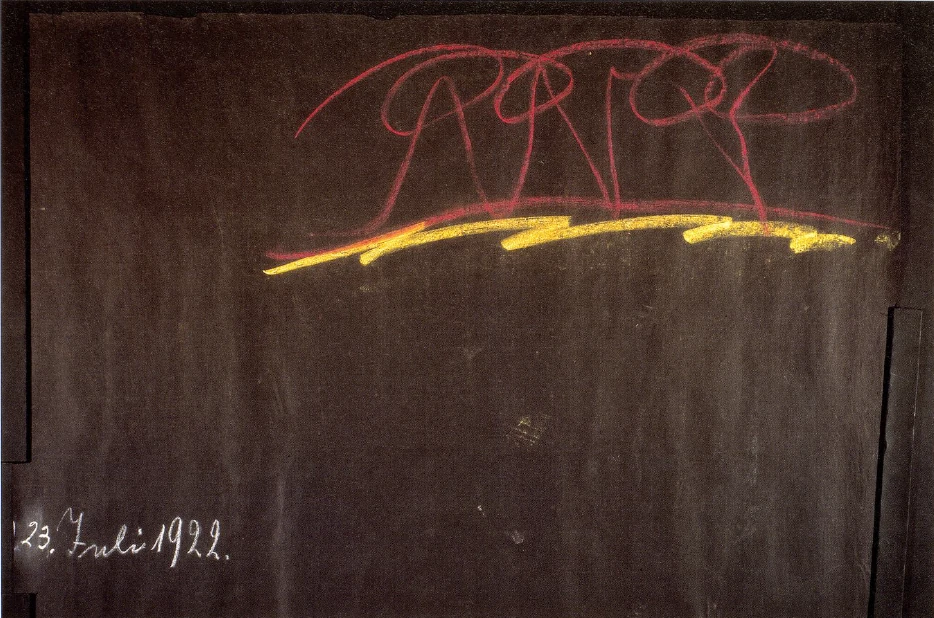
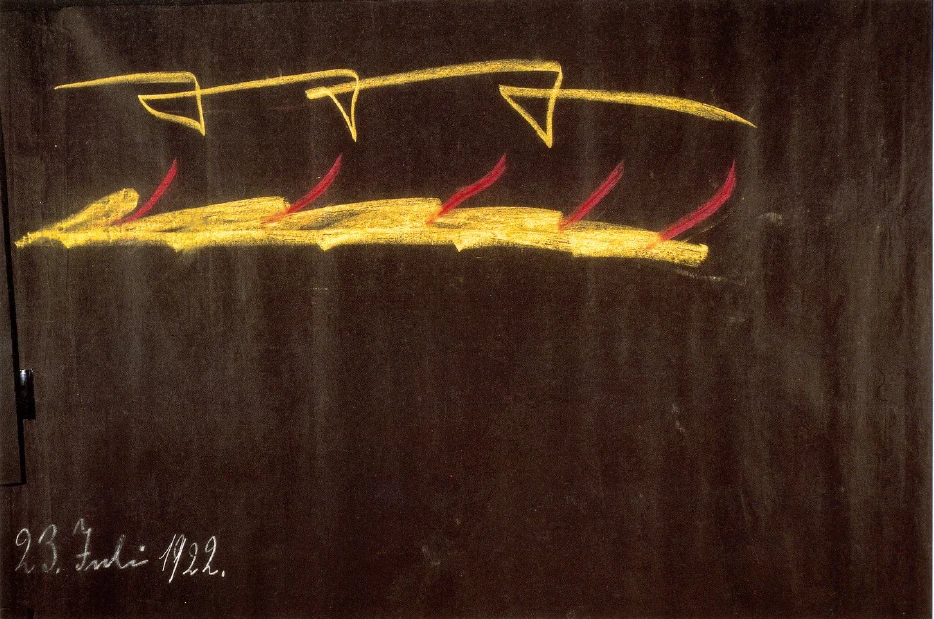
[ 31 ] Of that muse-like being who still worked within the one who, in ancient times, sought the path from the human spoken word to the Word of the World, so that it might flow through him, so that he was compelled to say: “Sing, O Muse, of the wrath of Achilles, son of Peleus … .” —from this encounter with the Muse, who leads the human being into the spiritual world so that it is no longer he who sings, but the Muse who sings of the wrath of Achilles, son of Peleus—from this stage to the one where rhetoric itself spoke within the Roman spirit, and later in its fusion with the spirit coming from the north—that is indeed a long journey; there everything becomes abstract, there everything becomes conceptual, there everything becomes intellectual. But the closer we come to the East and to ancient times, the more we find everything in concrete spiritual life. And so it was indeed the case that the ancient theologian turned to the spiritual beings to draw his concepts. He then applied these to this world here. But the theologian who had already outgrown what arose from the convergence of the Nordic peoples with Roman culture said: “Here in the sensory world, knowledge must be sought; that is how one gains the concepts.” — But one could not ascend to a spiritual world. Now, however, the Roman College had ensured that, while people down below were fishing around in the sensory world, they did not go beyond this sensory world. Whereas in the past they certainly had this sensory world as well, but up here (as is illustrated) they sought out concepts and ideas in the spiritual world and then shed light on the physical world, they now drew concepts out of the physical world itself. They did not ascend very far; they arrived only at an interpretation of the physical world. But the legacy was still there. People no longer reached that height through their own path of knowledge, but the legacy was still there. It had been written down or preserved through tradition, embodied in dogmas and set in stone. So that was up there (in the drawing), and its preservation now became the denomination. Within it, what needed to be said about the spiritual realm was preserved. It was there. And more and more, people came to realize: What has been said there regarding the higher realm through various revelations—which can no longer be verified—must remain untouched. Knowledge, however, must remain down here: everything conceptual must be extracted from it.
[ 32 ] And so, little by little, the legacy of what still existed in the early, dark centuries of the Middle Ages began to take shape. You see, it was, after all, a different time, when medieval, atavistic clairvoyance was still present in Europe—a time when, for example, the Saxon—he is called a peasant, but as the *Heliand* itself shows, he was in any case a clergyman born of peasant stock—where this Saxon peasant clergyman simply looked upon the people around him and had the ability to see how, with death, the spiritual-soul aspect departs and becomes a dead-yet-living human being. And so, in the course of this, which hovers above the earthly realm, he describes what he develops as a vision of the Christ event in the *Heliand*.
[ 33 ] But what lives here on earth was drawn more and more—I would say—down into the merely inanimate. The atavistic abilities ceased, and in the sensory realm, people sought only concepts. And what view emerged from this? This view emerged: We need not concern ourselves particularly with knowledge of the supersensible. After all, it is preserved in the scriptures and traditions; we need only open the ancient books, only look into the ancient traditions. Everything one needs to know about the supersensible is contained there. Now we are not misled when, within the realm of the sensory world, we consider for the sake of knowledge only those concepts that lie within the sensory world itself.
[ 34 ] And so the realization became increasingly clear: The supersensible remains something to be preserved; if one wishes to conduct research, one must confine oneself to the sensory world.
[ 35 ] And such a spirit—one who was completely immersed in it, who, I might say, continued this process of extricating himself from the sensory world of the Saxon peasant clergyman who wrote the *Heliand*—was, even in the 19th century, Gregor Mendel. Why bother with anything concerning heredity, as it had been studied in ancient times! It’s right there in the Old Testament. Just look down at the sensory world—how the red peas and the white peas mix together, how that then produces red, white, and mottled peas again, and so on. You can become a great natural scientist that way, and what there is to say about the supersensible doesn’t lead to any kind of disharmony, because that remains completely untouched.
[ 36 ] Thus, precisely this modern theology—by transforming itself into what I have described to you, emerging from the old theology—has driven people to study nature in the way that, for example, Gregor Mendel, a true Catholic priest, studied nature.
[ 37 ] And what happens? Those natural scientists who practice science without any preconceptions now elevate Gregor Mendel—after having treated him with disrespect for some time—they retroactively elevate him—it is not the language of such people, but we can still describe it with this expression—to their saint in their own way, by calling him a great natural scientist at all the academies. There is a clear internal connection here. Contemporary natural science is possible only because it is structured in such a way that it regards precisely someone who stands thoroughly on the standpoint of medieval theology as an authoritative natural scientist. Contemporary natural science is, in every respect, the continuation of the very essence of scholastic theology; the other is merely something that has been dragged along, but it is the true continuation right up to our own time—it is a continuation of the scholastic era.
[ 38 ] And that is why it is perfectly fine that Johann Gregor Mendel is now recognized as a great naturalist; he certainly is one, but in the true Catholic sense. For him, it made sense to focus solely on the peas that intermingle, because that is the Catholic principle—since everything that is supernatural is contained precisely in tradition and in the books; for natural scientists, it makes no sense, not the slightest bit, except perhaps if one stops at “Ignorabimus” and surrenders to agnosticism.
[ 39 ] This is the fundamental contradiction of our present age. This is what we must pay attention to. If we do not look closely at these things, we will not understand at all where all the confusion and contradictions in our current activities come from. But the complacency of the present prevents people from delving into these matters.
[ 40 ] Just think: when what is said today about world events becomes history—future generations will inherit this history! Do you believe that it will contain much truth? Certainly not! But for us, history has simply been shaped in this way. These historical figures, as portrayed in conventional histories, do not reflect what actually happened in the course of human development. But we have now reached a point in our time when it is urgently necessary for people to learn to recognize what constitutes real history. It is not enough that all the legends of Attila, Charlemagne, and Louis the Pious—that’s where history already begins to take on a completely mythical character—be recorded in history the way they are today. That overlooks the most important thing of all. What actually makes the present understandable, what we need, are stories of the soul. Anthroposophical spiritual science must shed light into the developing souls of human beings. Because we have forgotten how to look toward the spiritual, we no longer have any history. And for every sensitive person, one can actually say: Well, in Martianus Capella’s work, the ancient guides and guardians who led people into the spiritual world have already become rather frail, slender ladies; but what we ultimately come to know today as Henry I, Otto I, Otto II, Henry II, and so on—as recorded in history—are, in essence, historical puppets modeled after those who have evolved into the frail ladies known as Grammar, Rhetoric, Dialectic, and so on. For, when it comes down to it, there is nothing particularly substantial about the personalities presented one after another as history!
[ 41 ] Things simply must be viewed as they really are. And actually, people today should be yearning to see things as they really are. That is why it is indeed a duty to present these things wherever possible, and today they can be presented in the Anthroposophical Society. — Yes, I hope that at least this society will one day awaken in the future!