

Spiritual Connections
in the Structure of the Human Organism
GA 218
22 October 1922, Dornach
Translate the original German text into any language:
Versions Available:
Spiritual Connections in the Makeup of the Human Organism, tr. SOL
4. Geistige Zusammenhänge in der Gestaltung des menschlichen Organismus II
4. Spiritual Connections in the Structure of the Human Organism II
[ 1 ] Ich möchte heute einmal zeigen, wie dasjenige, was am Menschen zu begreifen ist, als Grundlage dienen kann, um auch größere geschichtliche Zusammenhänge ins Auge zu fassen, damit wir dann vielleicht morgen dazu übergehen können, etwas nach dieser Richtung hin gerade aus der Gegenwart zu begreifen. Ich habe ja schon vorgestern über den Menschen selber in seiner Konstitution gesprochen. Ich möchte das heute von einem anderen Gesichtspunkte aus tun.
[ 1 ] Today I would like to show how our understanding of the human being can serve as a foundation for grasping broader historical contexts, so that perhaps tomorrow we can move on to understanding something along these lines, drawing specifically from the present. I already spoke the day before yesterday about the human being himself in his constitution. Today I would like to approach this from a different perspective.
[ 2 ] Betrachten wir den Menschen einfach so, wie er im Leben Tag für Tag drinnensteht, und zwar zunächst heute einmal von der alleralltäglichsten Seite. Der Mensch muß sich, um sich zu erhalten, ernähren. Er muß dasjenige, was wir gewöhnlich Stoffe der Natur nennen, aus dem tierischen, pflanzlichen und zum Teil auch aus dem mineralischen Reich in seinen eigenen Organismus herein aufnehmen. Aber dasjenige, was der Mensch aus der äußeren Umgebung aufnimmt, das unterliegt im menschlichen Organismus einer ganz gewaltigen Umänderung. Zunächst, wenn wir Nahrungsmittel aufnehmen auf dem gewöhnlichen Wege, so bekommen wir sie, höchstens vorbereitet durch die Kochzubereitung, in unseren Organismus herein so, wie sie zunächst draußen in der umgebenden Natur, vielleicht eben etwas zugerichtet, sind. Wir bekommen außerdem durch unsere Atmung die Luft auch wiederum in demjenigen Zustand in uns herein, wie sie eben in unserer Umgebung vorhanden ist. Sehen wir jetzt zunächst ab von anderem, was im Grunde genommen noch wichtiger ist, zum Beispiel das Licht, das wir auch aus der Umgebung so hereinbekommen, wie es zunächst als Licht ist; aber auch die Nahrungsmittel und die Luft müssen in unserem Organismus einer gewaltigen Umänderung unterzogen werden, damit sie diesen unseren Organismus erfüllen können, damit sie gewissermaßen in unserem Organismus menschlich werden.
[ 2 ] Let us simply consider human beings as they are in their day-to-day lives, starting today with their most ordinary aspects. In order to sustain themselves, human beings must nourish themselves. They must take into their own organism what we usually call natural substances—from the animal, plant, and, to some extent, mineral kingdoms. But what human beings take in from their external environment undergoes a tremendous transformation within the human organism. First of all, when we consume food in the usual way, we take it into our organism—at most prepared through cooking—in the same state as it initially exists in the surrounding natural world, perhaps just slightly processed. Furthermore, through our breathing, we take in air in the same state as it exists in our environment. Let us now set aside for the moment other factors that are, in fact, even more important—such as light, which we also take in from our surroundings just as it is in its original form as light; but even food and air must undergo a tremendous transformation within our organism so that they can fill it, so that they can, so to speak, become human within our organism.
[ 3 ] Außerlich beschrieben, ist der Vorgang heute ein ganz bekannter. Wir nehmen die Nahrungsmittel auf, wenn wir zunächst bei diesen stehenbleiben, wie gesagt, vielleicht schon etwas zubereitet. Wir verarbeiten sie zunächst, namentlich durch die Absonderung der Drüsen, des übrigen Verdauungsapparates, wir nehmen sie herein, bespülen sie, durchtränken sie mit einem Stoff, den man Ptyalin nennt, der abgesondert wird von den Mundspeicheldrüsen. Wir bringen dann die Speisen weiter in unseren Verdauungsapparat hinein. Den Weg, der da gemacht wird, habe ich hier nicht zu charakterisieren. Aber den ganzen Vorgang muß ich Ihnen charakterisieren. Dadurch, daß wir die Nahrungsmittel in uns aufnehmen, in uns verarbeiten, werden sie schon etwas verändert gegenüber dem, was sie draußen in der Umgebung sind. Dasjenige, was die Nahrungsmittel in uns werden, das könnten sie niemals durch äußere Vorgänge werden. Wir können in dem chemischen Laboratorium die Stoffe, die unsere Nahrungsmittel darstellen, in der verschiedensten Weise bearbeiten. Das geht dort nicht vor, was mit den Nahrungsmitteln vorgeht, wenn wir sie bis in unseren Magen und von da in unseren Verdauungsapparat bringen. Da werden die Nahrungsmittel in der Tat zu etwas ganz anderem, als sie zunächst äußerlich sind.
[ 3 ] Described in general terms, the process is quite well known today. We ingest food—which, as mentioned, may already be somewhat prepared—when we first come into contact with it. We first process it—namely through secretions from the glands and the rest of the digestive system—we take it in, wash it over, and saturate it with a substance called ptyalin, which is secreted by the salivary glands. We then move the food further into our digestive system. I do not need to describe the path it takes here. But I must describe the entire process to you. By taking food into our bodies and processing it there, it is already somewhat altered compared to what it is out in the environment. What the food becomes inside us could never be achieved through external processes. In a chemistry laboratory, we can process the substances that make up our food in a wide variety of ways. However, what happens to the food when we bring it into our stomach and from there into our digestive system cannot be replicated there. There, the food actually becomes something entirely different from what it initially appears to be on the outside.
[ 4 ] Erstens tritt dasjenige ein für sie, daß sozusagen jede Spur des äußeren Lebens aus ihnen herausgetilgt wird. Die Menschen genießen Fleisch. Das ist entnommen der äußeren Umgebung, dem Tierreiche. Aber indem die Menschen es genießen, treiben sie erst gerade durch die Vorverdauung, möchte ich sagen, und die weitere Verdauung dann alles dasjenige heraus, was diese Nahrungsmittel in den 'Tierkörpern darstellen. Auch noch alles das, was die pflanzlichen Nahrungsmittel dadurch, daß sie einem lebendigen Wesen in der Pflanze angehörten, in sich an Leben haben, muß erst ausgetrieben werden. Nur die eigentlich mineralischen Bestandteile nehmen wir als äußere stoffliche Substanzen auf. Wenn wir unseren Speisen Salz zusetzen, das also schon äußerlich mineralischer Natur ist, wenn wir Zucker zusetzen, der auch schon durch die äußere Zubereitung, wenn er auch vielleicht dem organischen Reiche entstammt, dennoch so weit getrieben ist, daß er bereits tot gemacht worden ist, so haben wir da etwas schon Totes aufgenommen. Das erfährt die wenigste Umgestaltung in uns; das erfährt wirklich bloß eine Umgestaltung, die man schon auch äußerlich laboratoriumsmäßig vollziehen könnte. Aber alles, was aus dem Tier- und Pflanzenreiche in unseren Organismus hineinkommt, das muß zunächst gründlich, wenn ich mich so ausdrücken will, getötet werden.
[ 4 ] First, what happens to them is that, so to speak, every trace of external life is eradicated from them. People eat meat. This is taken from the external environment, the animal kingdom. But as people consume it, they first expel—through predigestion, so to speak—and then through further digestion, everything that these foods represent in the “animal bodies.” Furthermore, all the life that plant-based foods contain—by virtue of having belonged to a living being within the plant—must first be expelled. We absorb only the truly mineral components as external material substances. When we add salt to our food—which is already of a mineral nature externally—or when we add sugar, which, even though it may originate from the organic kingdom, has nevertheless been processed to such an extent through external preparation that it has already been rendered dead, we have ingested something that is already dead. This undergoes the very least transformation within us; it really undergoes only a transformation that could just as well be carried out externally in a laboratory setting. But everything that enters our organism from the animal and plant kingdoms must first be thoroughly—if I may put it that way—killed.
[ 5 ] Wir machen auch in unserem Kochen sozusagen eine Art Vortötung, indem wir die Speisen der Wärme unterwerfen und so weiter. Das wird gründlich von unserer Verdauung besorgt, so daß, wenn unsere Nahrungsmittel eine gewisse innere Entwickelung durchgemacht haben bis zum Darm, wenn sie herangekommen sind in diese unteren Verdauungsorgane, in ihnen wesentlich alles dasjenige ausgetrieben ist, was sie äußerlich dadurch sind, daß zum Beispiel die tierischen Nahrungsmittel unterworfen sind dem astralischen Leib und dem Ätherleib des Tieres, daß die pflanzlichen Nahrungsmittel unterworfen sind dem ätherischen Leib bei den Pflanzen und so weiter. Also es muß zunächst auf dem Wege vom Mund bis in den Darm das besorgt werden, daß alle Nahrungsmittel tot sind.
[ 5 ] In our cooking, too, we engage in a kind of “pre-killing,” so to speak, by subjecting the food to heat and so on. This is thoroughly carried out by our digestive system, so that when our food has undergone a certain internal transformation on its way to the intestines—when it has reached these lower digestive organs— essentially everything that constitutes their external nature has been expelled from them—for example, animal foods are subjected to the astral body and the etheric body of the animal, while plant foods are subjected to the etheric body of the plant, and so on. So, on the journey from the mouth to the intestines, it must first be ensured that all food is dead.
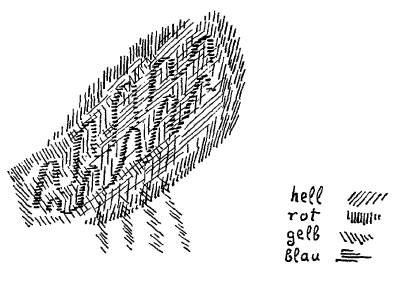
[ 6 ] Denn indem jetzt die Nahrungsmittel herankommen an diejenigen drüsigen Organe, welche dann überleiten die Nahrungsmittel von dem Darm in die Lymphgefäße und in die Blutgefäße, da muß auf diesem Wege zurück eine Belebung der Nahrungsmittel stattfinden. Die Nahrungsmittel müssen zunächst tot werden in uns und müssen dann wiederum belebt werden. Wir könnten nicht in unserem menschlichen Organismus eine Fortsetzung desjenigen Lebens vertragen, das im Tiere, dem wir die Nahrungsmittel entnehmen, vorhanden ist, oder das in der Pflanze vorhanden ist. Wir können höchstens die unorganische Natur so aufnehmen, daß sie uns unsere eigenen Gesetze darbietet. Wir könnten nicht, sagen wir, Kohl essen, könnten ihn nicht bei der Verdauung an unsere Darmzotten so herankommen lassen, daß da drinnen noch dieselben ätherischen Kräfte vorhanden wären, die der Kohl hat, indem er einer Pflanze angehört. Das Ätherische, das Astralische, das die Nahrungsmittel haben, das muß erst weggemacht sein. Und dann muß von unserem eigenen Ätherleib aufgenommen und wieder belebt werden können dasjenige, was wir also aufnehmen. Das Leben der Nahrungsmittel in uns muß von uns kommen. Und das geschieht auf dem Wege von der Darmorganisation durch die Gefäße zum Herzen hin. So daß wir also sagen können: indem die Nahrungsmittel in das Blut gelangen, das Blut das Herz durchsetzt, wird von unserem Atherleib dasjenige aufgenommen, was an erst ertöteten Nahrungsmitteln in uns hineinversetzt wird. So daß Sie sich also vorstellen können: Wenn die Nahrungsmittel vom Mund in den Darm dann gelangen, gehen allmählich die letzten Spuren der Außenwelt verloren, aber hier (siehe Zeichnung, rot) werden sie neu belebt bis zum Herzen hin. Das Neubeleben bedeutet eben, daß sie von unserem eigenen Ätherleib aufgenommen werden. Sie würden nun aber zu wenig den Charakter des Irdischen haben, wenn bloß das geschehen wäre, was ich Ihnen bis jetzt beschrieben habe. Wir würden nämlich Wesen sein müssen, die bis zum Herzen hin bloß Mund- und Verdauungsapparat haben und dann müßten wir anfangen, Engel zu sein, denn es würde unser Ätherleib die Nahrungsmittel aufnehmen und ganz auflösen. Wir würden nicht irdisch sein können. Wir müßten dann so herumfliegende Münder mit anhängenden Schlünden sein, und Magen und Darm und Herz noch haben, und dann, nicht wahr, würde das alles von unserem Ätherleib aufgenommen werden. Aber sonst müßten wir dann Atherleib sein, und in dem Ätherleib würden dann die Nahrungsmittel sich verflüchtigen. Wir würden nicht Erdenmensch sein können. Daß wir es sein können, das wird dadurch bewirkt, daß nun der Sauerstoff der Luft aufgenommen wird. Es wird also in das, was durchdrungen ist an Nahrungsmitteln vom Ätherleib, der Sauerstoff der Luft hereingenommen, und dadurch bleibt weiter für uns die Möglichkeit, daß wir irdische, fleischliche Menschen sind hier auf Erden zwischen Geburt und Tod (siehe Zeichnung, hell). Also der Sauerstoff macht wiederum dasjenige, was sich sonst in unserem ätherischen Leib verflüchtigen würde, zu dem Irdisch-Lebendigen. Der Sauerstoff ist derjenige Stoff, der etwas, das sich sonst nur als ein Atherisches bilden würde, ins Irdische hereinversetzt. Jetzt sind wir bis zu der Verbindung von Herz und Lunge gekommen. Das Herz würde uns noch nicht zum irdischen Menschen machen, sondern es würde uns nur so weit bringen, daß wir nun an das Herz unseren Atherleib anschließen würden und als solche Engel auf der Erde herumfliegen würden, die also vielleicht manchem wenig schön vorkommende Ingredienzien hätten, wie Mund, Schlund, Gedärme und Gefäße bis zum Herzen hin. Aber dadurch, daß das Herz mit der Lunge in Verbindung ist, den Sauerstoff aufnimmt, wird die Nahrungsaufnahme nicht nur ätherisiert, sondern auch verirdischt.
[ 6 ] For when the food reaches those glandular organs—which then transport the food from the intestines into the lymphatic vessels and blood vessels—the food must be revitalized along this path. The food must first become “dead” within us and then be revitalized again. We could not tolerate within our human organism a continuation of the life that exists in the animal from which we derive our food, or that exists in the plant. At most, we can absorb inorganic matter in such a way that it presents us with our own laws. We could not, for example, eat cabbage; we could not allow it to reach our intestinal villi during digestion in such a way that the same ethereal forces would still be present there that the cabbage possesses by virtue of belonging to a plant. The etheric and astral aspects of the food must first be removed. And then what we take in must be able to be absorbed and revitalized by our own etheric body. The life of the food within us must come from us. And this occurs as it travels from the intestinal system through the vessels toward the heart. So we can say: as the food enters the blood and the blood flows through the heart, our etheric body absorbs what has been transferred into us from the food that was initially killed. So you can imagine: When the food passes from the mouth into the intestines, the last traces of the external world are gradually lost, but here (see drawing, red) they are revitalized all the way to the heart. This revitalization means precisely that they are absorbed by our own etheric body. However, we would possess too little of the character of the earthly realm if only what I have described to you so far were to happen. For we would then have to be beings who, all the way up to the heart, have nothing but a mouth and digestive system—and then we would have to begin to be angels, because our etheric body would absorb the food and completely dissolve it. We could not be earthly beings. We would then have to be nothing more than flying mouths with attached throats, and still possess a stomach, intestines, and heart—and then, wouldn’t you agree, all of that would be absorbed by our etheric body. But otherwise, we would have to be nothing but an etheric body, and within that etheric body the food would simply evaporate. We could not be earthly human beings. The fact that we can be so is made possible by the absorption of oxygen from the air. Thus, the oxygen from the air is taken into that part of the etheric body which is permeated by foodstuffs, and through this we retain the possibility of being earthly, physical human beings here on Earth between birth and death (see illustration, light-colored). Thus, oxygen transforms that which would otherwise evaporate from our etheric body into something earthly and living. Oxygen is the substance that brings something—which would otherwise form only as an etheric entity—into the earthly realm. We have now reached the connection between the heart and the lungs. The heart alone would not yet make us earthly human beings; rather, it would only bring us to the point where we would connect our etheric body to the heart and, as such, fly about the earth as angels—who might therefore possess certain features that some might find unattractive, such as a mouth, throat, intestines, and vessels leading up to the heart. But because the heart is connected to the lungs and absorbs oxygen, the intake of food is not only etherized but also earthified.
[ 7 ] Jetzt kommt die Notwendigkeit, daß dasjenige, was nun von unserem Ätherleib aufgenommen ist, vom Sauerstoff durchtränkt ist, so daß wir irdische Menschen sein können, dem astralischen Leib eingefügt werden muß. Das ist jetzt noch nicht vom astralischen Leib aufgenommen, das ist erst vom Ätherleib aufgenommen. Es muß jetzt die Tätigkeit entwickelt werden, daß alles das, was sich da bis zur HerzLungentätigkeit herausgebildet hat, von dem ganzen Organismus aufgenommen wird, aber so, daß auch der astralische Organismus dabei etwas zu tun hat. Diese Tätigkeit vermittelt das Nierensystem des Menschen, das nun dasjenige absondert, was unbrauchbar ist von den Stoffen, die aufgenommen werden, aber das übrige in den ganzen Organismus auf Wegen leitet, die die heutige Physiologie gar nicht eigentlich beschreibt, die aber vorhanden sind.
[ 7 ] Now comes the necessity that what has been taken up by our etheric body—which must be saturated with oxygen so that we can be earthly human beings—must be incorporated into the astral body. This has not yet been taken up by the astral body; it has only been taken up by the etheric body. The activity must now be developed whereby everything that has developed up to the level of heart and lung function is absorbed by the entire organism—but in such a way that the astral organism also plays a role in this process. This activity is mediated by the human renal system, which now secretes what is unusable from the substances that are absorbed, but channels the remainder throughout the entire organism via pathways that modern physiology does not actually describe, but which do exist.
[ 8 ] Und da wird nun, wenn ich mich so ausdrücken darf, der ganze Brei, der aber jetzt schon lebendig bleibt — er ist nur im Darmkanal ganz ertötet worden, ist dann belebt und von Sauerstoff durchtränkt worden —, durch die Tätigkeit des Nierensystems, das sich über den ganzen Organismus erstreckt und überall hinstrahlt, in den astralischen Leib hineinbefördert, so daß dieser jetzt mitarbeiten kann an der weiteren Gestaltung dessen, was durch die Nahrungsmittel in uns bewirkt wird (siehe Zeichnung, gelb).
[ 8 ] And there, if I may put it this way, the entire mass—which, however, remains alive even now—it has merely been completely killed off in the intestinal tract, only to be revived and saturated with oxygen— is transported into the astral body through the activity of the renal system, which extends throughout the entire organism and radiates everywhere, so that the astral body can now participate in the further shaping of what is brought about within us by the food we eat (see illustration, yellow).
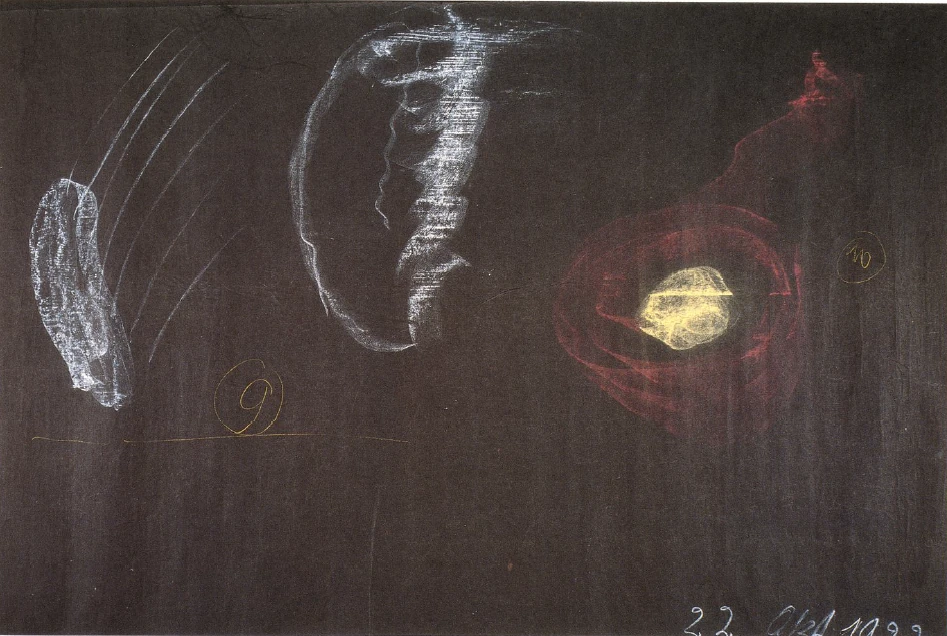
[ 9 ] Dieser astralische Organismus, insofern er vom Nierensystem aus seine Anstöße erfährt, steht jetzt wiederum in Verbindung mit dem Kopf-Sinnessystem, das gewissermaßen wie eine Decke darüber ist. Und Nieren- und Kopfsystem zusammen, die wirken nun fortwährend so, daß dasjenige, was eigentlich durch die Herztätigkeit flüssig, verschwimmend ist, nun zu den besonderen Organen geformt wird. Wir würden, wenn bloß Mund, Magen, Därme, Herz und Lunge da wären, gar nicht feste Organe haben, sondern der Magen selber müßte ein verschwimmendes, ein in sich bewegliches Organ sein, ebenso die Lunge, ebenso das Herz. Das könnte alles nicht fest sein. Gestaltet werden diese Organe von den Nieren aus, und den Nieren kommt zu Hilfe dasjenige, was vom Kopfe ausgeht.
[ 9 ] This astral organism, insofar as it receives its impulses from the kidney system, is now in turn connected to the head-sense system, which, in a sense, lies over it like a blanket. And the kidney and head systems together now act continuously in such a way that what is actually fluid and diffuse due to the activity of the heart is now shaped into specific organs. If only the mouth, stomach, intestines, heart, and lungs were present, we would not have any solid organs at all; rather, the stomach itself would have to be a fluid, internally moving organ, as would the lungs and the heart. None of this could be solid. These organs are shaped by the kidneys, and the kidneys are aided by that which emanates from the head.
[ 10 ] Die Organe müssen nämlich nicht nur während der Kindheit gestaltet werden, sondern fortwährend; denn unsere Organe werden fortwährend zerstört. Im Laufe von sieben bis acht Jahren wird solch ein Organ, wie der Magen zum Beispiel, vollständig vernichtet. Seine Substanz kommt ganz weg und wird immer wieder erneuert. Da müssen immer formgebende Kräfte vorhanden sein, die diese Organe erneuern. In der Kindheit muß noch viel mehr daran gearbeitet werden. Später sind aber diese formgebenden Kräfte auch noch da.
[ 10 ] In fact, the organs must be formed not only during childhood, but continuously; for our organs are constantly being destroyed. Over the course of seven to eight years, an organ such as the stomach, for example, is completely destroyed. Its substance is entirely depleted and is constantly renewed. Formative forces must therefore always be present to renew these organs. Much more work must be done on this during childhood. Later in life, however, these formative forces are still present.
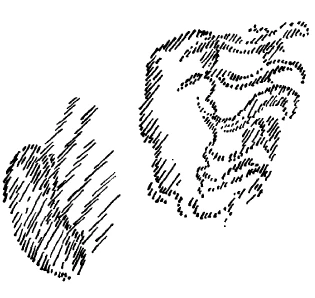
[ 11 ] Das geht so vor sich (siehe Zeichnung Seite 74): Das Nierensystem, das auf der einen Seite diese Kräfte ausstrahlt, würde nur einseitig die Organe zustande bringen. Es würde zum Beispiel einen Lungenflügel so gestalten — von der Seite angesehen —, daß er rückwärts ganz nett begrenzt wäre, aber nach vorne würde er verschwimmen, er würde da herausschwimmen. Nun muß ihm die Kraft vom Kopfe entgegenkommen, so daß die vordere Fläche vom Kopfe aus gebildet wird, so daß immer die einzelnen Formen des Menschen so geformt werden, daß gewissermaßen die Niere die Kräfte ausstrahlt, und vom Kopf dann die Kräfte kommen, welche so eindämmen, daß die Organe Konturen bekommen, gerundet werden. Vom Kopfe aus werden die Flächen äußerlich gebildet. Die Niere aber liefert so eine Art Strahlung in den Organismus hinein. Es ist ungefähr so, sagen wir, wie wenn ich irgend etwas plastisch bilden wollte. Ich nehme in die eine Hand Mörtel oder irgendeine weiche Substanz, und nun lerne ich mir an, mit der einen Hand den Mörtel hinaufzuwerfen (siehe Zeichnung, gelb, rot) und mit der anderen Hand abzuglätten. Das eine, das Hinaufwerfen, seien die Nieren, das könnte ich so machen, daß ich irgendeinen Bottich habe, wo ich die Substanz nehme (siehe Zeichnung); das schleudere ich herauf, oben glätte ich ab und bekomme auf diese Weise diese Organe, die eigentlich ausstrahlen und abgeformt sind. So werden die Organe im Zusammenhang von Nierensystem und Kopfsystem gebildet, und da drinnen wirken die Kräfte des astralischen Leibes. Das ist also etwas, was unter einer außerordentlich starken Veränderung des Stickstoffes vor sich geht. Der Stickstoff ist da schon nicht mehr das, was er äußerlich ist, denn der Stickstoff, der also noch die Ähnlichkeit behält mit dem äußeren Stickstoff, geht dann durch die Harnsäure und den Harnstoff weg. Aber dasjenige, was da ausstrahlt von der Niere und verarbeitet wird, das ist eigentlich ein innerlich bis in die wirksamen Kräfte des astralischen Leibes hinein veränderter Stickstoff. Das ist etwas ganz anderes als der äußere Stickstoff.
[ 11 ] This is how it works (see illustration on page 74): The kidney system, which radiates these forces on one side, would only form the organs on that one side. For example, it would shape a lung—viewed from the side—so that it would be neatly defined toward the back, but toward the front it would become blurred; it would seem to float out of place. Now the force from the head must meet it, so that the front surface is formed from the head, ensuring that the individual forms of the human being are always shaped in such a way that, so to speak, the kidney radiates the forces, and forces then come from the head that contain them, so that the organs acquire contours and are rounded. The surfaces are formed externally from the head. The kidneys, however, provide a kind of radiation into the organism. It is roughly like, let’s say, when I want to sculpt something. I take mortar or some other soft substance in one hand, and then I teach myself to throw the mortar upward with one hand (see drawing, yellow, red) and smooth it out with the other hand. Let the act of throwing upward represent the kidneys; I could do this by using a tub of some kind from which I take the substance (see drawing); I fling it upward, smooth it out at the top, and in this way obtain these organs, which are actually radiating and shaped. This is how the organs are formed in connection with the kidney system and the head system, and within them the forces of the astral body are at work. This is therefore a process that takes place amid an extraordinarily intense transformation of nitrogen. The nitrogen there is no longer what it is externally, for the nitrogen—which still retains a resemblance to external nitrogen—is then excreted via uric acid and urea. But what radiates from the kidney and is processed there is actually nitrogen that has been internally transformed to the point of becoming part of the active forces of the astral body. This is something entirely different from external nitrogen.
[ 12 ] Da haben Sie dasjenige, was der Mensch als Nahrungsmittel empfängt, getrieben bis zu dem Punkt, wo es in die Astralität, in den Astralleib des menschlichen Organismus aufgenommen wird. Diese Vorgänge, wie ich sie Ihnen jetzt geschildert habe, etwas verändert, finden auch im Tiere statt. Das Tier hat auch diese, ja sogar bei den höheren Tieren noch weitergehende Vorgänge. Bei den niederen Tieren aber finden höchstens noch Andeutungen desjenigen statt, was jetzt kommt. Die höheren Tiere haben es aber, weil sie von dem Menschengeschlecht abgezweigt sind; sie haben es noch, aber es ist bei ihnen deformiert und degeneriert.
[ 12 ] There you have what the human being receives as food, processed to the point where it is absorbed into the astral realm, into the astral body of the human organism. These processes, as I have just described them to you—albeit in a somewhat modified form—also take place in animals. Animals also undergo these processes, which go even further in the case of higher animals. In lower animals, however, there are at most only hints of what is about to be described. Higher animals possess these processes because they branched off from the human race; they still possess them, but in their case they are deformed and degenerated.
[ 13 ] Nun, in all das, was da gebildet wird, strahlt nun noch etwas anderes hinein. Wir haben also zunächst dieses Treiben der Nahrungsmittel bis zur Ertötung. Da kommen wir ungefähr so weit, daß wir die Bauchspeicheldrüse als eine der letzten Drüsen haben, welche die Dinge soweit bringt, daß sie dann, indem sie der Lymphe entgegentreiben, belebt und in den Ätherleib aufgenommen werden können; dann durch die Kommunikation vom Herzen zu den Nieren hin wird das ganze in den astralischen Leib hineingetrieben. Nun muß aber auch noch das Ich engagiert werden. Alles, was in unserem Organismus ist, muß vom Ich in Anspruch genommen werden.
[ 13 ] Well, something else now shines into all that is being formed there. So, first we have this process of the food moving along until it is broken down. We reach a point where the pancreas is one of the final glands to bring the process to the stage where, as these substances flow toward the lymph, they are vitalized and can be absorbed into the etheric body; then, through the connection from the heart to the kidneys, the whole process is propelled into the astral body. But now the ego must also become involved. Everything that is in our organism must be taken up by the ego.
[ 14 ] Nun habe ich Ihnen gezeigt, wie das, was sich mit uns vereinigt, von dem ätherischen und astralischen Organismus in Anspruch genommen wird, wie es vom Nierensystem aufgenommen und ins Astralische hineingestrahlt, wie es da mit Hilfe des Stickstoffes zum Irdischen gemacht wird. Wir würden sonst wiederum Engel werden müssen, wenn nicht der Stickstoff in uns wirken würde, der uns wiederum vom Nierensystem aus den astralischen Leib innerhalb des Irdischen erhält. Aber das ganze würde uns nicht so gestalten, daß auch das Ich an dem Ganzen teilnimmt, wenn nun nicht das Lebersystem da wäre (siehe Zeichnung Seite 71, blau). Das Lebersystem treibt das ganze in das Ich hinein. Sie sehen, es ist die Fortsetzung der Herzwirkung, denn selbst bis in die Därme hinein geht die Herzwirkung.
[ 14 ] Now I have shown you how that which unites with us is utilized by the etheric and astral organisms, how it is absorbed by the renal system and radiated into the astral realm, and how it is transformed there into the earthly realm with the help of nitrogen. Otherwise, we would have to become angels again if nitrogen were not at work within us, which, through the kidney system, maintains our astral body within the physical realm. But the whole process would not shape us in such a way that the “I” also participates in the whole if the liver system were not there (see diagram on page 71, blue). The liver system drives the whole process into the “I.” You see, it is the continuation of the heart’s action, for the heart’s action extends even into the intestines.
[ 15 ] Das Aufsaugen durch die Lymphgefäße, das ist noch etwas, was zum Herzen gehört. Das Herz ist in der Regel dasjenige Organ, das mit der Lunge zusammen die äußeren Substanzen in unser eigenes Atherisches hineintreibt. Von da aus ist es dann das Nierensystem, das es in unser Astralisches hineintreibt. Und das Lebersystem mit seiner Gallenabsonderung treibt das ganze erst in unser eigentliches Ich hinein. Das Gallen- und Lebersystem findet sich auch nur im höheren Tierreiche; bei niederen Tieren nicht, nicht einmal Gallensäure wird da in den körperlichen Substanzen gefunden. Das Lebersystem also mit seiner eigentümlichen Konstruktion der Pfortader und so weiter — man kann das auch anatomisch in jedem Stück belegen —, führt nun das ganze so, daß es ergriffen wird von dem Ich. Wenn alles das, was durch die Niere im Körper ausgestrahlt wird, allein vorhanden wäre, so würde es bloß vom Astralleib aufgenommen sein. Dadurch, daß die Leber vorhanden ist, von der Leber die Galle abgesondert wird und dem Speisebrei schon in dem Darm beigemischt ist, und so das ganze schon durchsetzt ist von Lebererzeugnissen (siehe Zeichnung Seite 71, blau), dadurch wird es dann in den Ich-Organismus hineingetrieben. So also auch beteiligt sich unser Ich-Organismus durch die Leber, die im wesentlichen den Wasserstoff zu ihrem physischen Repräsentanten hat, an dem ganzen Aufbau der menschlichen Organisation. Der Mensch hat eigentlich von außen nichts Lebendiges, nichts Astralisches aufzunehmen; was er von außen aufnimmt, das hat er erst in seinem eigenen Organsystem alles so umzubilden, daß es in sein eigenes Astralisches und in sein eigenes Ätherisches und in sein Ich-System aufgenommen werden kann.
[ 15 ] Absorption through the lymphatic vessels is another process associated with the heart. The heart is generally the organ that, together with the lungs, drives external substances into our own etheric body. From there, it is the renal system that drives it into our astral body. And the hepatic system, with its secretion of bile, drives the whole process into our actual “I.” The biliary and hepatic systems are found only in the higher animal kingdom; in lower animals, not even bile acid is found in the bodily substances. The liver system, then, with its unique structure of the portal vein and so on—which can be demonstrated anatomically in every specimen—now directs the whole process in such a way that it is taken up by the “I.” If all that is radiated through the kidneys into the body were the only substance present, it would be absorbed solely by the astral body. Because the liver is present, because bile is secreted by the liver and is already mixed with the chyme in the intestine, and because the whole process is thus already permeated by liver products (see diagram on page 71, blue), it is then driven into the ego-organism. Thus, through the liver—which essentially has hydrogen as its physical representative—our ego-organism also participates in the entire structure of the human organism. Human beings actually have nothing living, nothing astral, to take in from the outside; whatever they take in from the outside must first be transformed within their own organ system so that it can be absorbed into their own astral, etheric, and ego systems.
[ 16 ] Da haben wir die ganze, ich möchte sagen, normale Organisation des Menschen. Denken Sie, wie das alles zusammenstimmen muß. Es darf zum Beispiel die Nierentätigkeit nicht unterbrochen sein; wenn die Nierentätigkeit unterbrochen ist durch eine Stau- oder eine Schrumpfniere, dann wird der astralische Leib nicht in Anspruch genommen. In Wirklichkeit ist es sogar umgekehrt: wenn der astralische Leib nicht in Ordnung ist, dann entsteht die Stau- oder die Schrumpfniere. So daß wir in der Beschaffenheit der Niere, wenn also eine Stau- oder Schrumpfniere vorhanden ist, ein deutliches Abbild von dem haben, was eigentlich im astralischen Leib des Menschen vor sich geht, ebenso wie wir bei einem degenerierten Herzen ganz genau ein Abbild haben von dem, was im ätherischen Leib des Menschen vor sich geht. Ich habe Ihnen das letzte Mal gesagt, daß da sogar ein Zusammenstimmen des Rhythmus ist. In demjenigen, was von der Niere heraufstrahlt (siehe Zeichnung Seite 71, gelb) sind immer vier Stöße vorhanden, während in dem, was von oben, vom Kopf, abrundend geschieht, nur ein Stoß vorhanden ist. Da ist dasselbe Verhältnis, wie es in dem Verhältnis von Atemzug zu Puls sich ausdrückt. Ich müßte also, wenn ich diesen Vergleich noch einmal gebrauchen darf, hier mit der Hand viermal langsamer runden. So macht es nämlich der Organismus (siehe Zeichnung Seite 74, unten).
[ 16 ] There we have the entire—I would say—normal organization of the human being. Think about how all of this must work in harmony. For example, kidney function must not be disrupted; if kidney function is disrupted by a congested or atrophic kidney, then the astral body is not being utilized. In reality, it is actually the other way around: if the astral body is not in order, then a congested or atrophic kidney develops. Thus, in the condition of the kidney—that is, when there is a congested or atrophic kidney—we have a clear reflection of what is actually taking place in the human astral body, just as we have a precise reflection of what is taking place in the human etheric body when the heart is degenerate. I told you last time that there is even a correspondence in the rhythm. In what radiates upward from the kidney (see drawing on page 71, yellow), there are always four pulses, whereas in what flows downward from above, from the head, there is only one pulse. The same ratio applies here as is expressed in the relationship between the breath and the pulse. So, if I may use this comparison once more, I would have to make a circular motion with my hand four times more slowly here. That is precisely how the organism functions (see illustration on page 74, bottom).
[ 17 ] Das muß nun alles in der feinsten Weise stimmen, sonst geht das nicht. Krank sein heißt, daß das eben nicht stimmt. Nehmen Sie also zum Beispiel an: der ätherische Leib ist ganz in der Ordnung; der astralische Leib aber, der ist nicht mächtig genug, um alles das, was vom Herzen zu den Nieren herüberströmt, aufzunehmen und in der richtigen Weise zu bearbeiten. Das kann nun auf die Weise geschehen, daß der ätherische Leib zu stark arbeitet. Ich sagte, er sei in Ordnung, aber nehmen wir jetzt an: er arbeitet zu stark. Wenn der ätherische Leib zu stark arbeitet und der astralische Leib normal ist, so kann die Stauniere entstehen mit ihren eigentümlichen Folgen. Ist der ätherische Leib richtig und der astralische arbeitet zu stark, so wird die Niere zu wenig in Anspruch genommen. Dasjenige, was herüberstrahlt, wird, weil der astralische Leib zu stark arbeitet, von ihm in Anspruch genommen, ohne daß die Niere in der richtigen Regulierung in ordentlicher Weise mitarbeitet. Dadurch wird die Niere ausgeschaltet, und es entsteht die Schrumpfniere, die zu gleicher Zeit, weil sie zurückwirkt, zu einer Entartung der Herzfunktion und des Herzens selber führt.
[ 17 ] Everything must be in perfect harmony; otherwise, it won’t work. Being sick means that this harmony is simply not there. So let’s take an example: the etheric body is perfectly fine; but the astral body isn’t powerful enough to absorb everything that flows from the heart to the kidneys and process it properly. This can happen when the etheric body is working too hard. I said it was in order, but let’s now assume it is working too hard. If the etheric body is working too hard and the astral body is normal, then kidney stagnation can arise with its characteristic consequences. If the etheric body is functioning correctly and the astral body is working too hard, the kidneys are not being utilized sufficiently. Because the astral body is working too hard, whatever radiates over is absorbed by it without the kidney cooperating properly in the correct regulatory process. As a result, the kidney is bypassed, and a shrunken kidney develops, which, at the same time—because it has a retroactive effect—leads to a degeneration of heart function and of the heart itself.
[ 18 ] Sie sehen, daß man auf diese Weise zusammenschauen kann dasjenige, was im menschlichen Organismus vor sich geht, und daß man an der Entartung der Organe sehen kann, wie die Glieder der menschlichen Wesenheit, physischer Leib, ätherischer Leib, astralischer Leib und Ich eben nicht in der richtigen Weise zusammenwirken.
[ 18 ] You can see that in this way it is possible to gain an overall view of what is taking place within the human organism, and that the degeneration of the organs reveals how the members of the human being—the physical body, the etheric body, the astral body, and the I—are not interacting in the proper way.
[ 19 ] Man muß sich nur klar sein darüber, daß alle diese Dinge aufeinander abgestimmt sein und in der richtigen Weise zusammenwirken müssen. Nehmen Sie zum Beispiel an, es wird irgendein Organsystem in falscher Weise von irgendeinem Gliede des menschlichen Organismus, vom astralischen Leibe etwa, nicht richtig durchsetzt, dann kann das in zweifacher Weise geschehen. Entweder es wird dasjenige, was vom Nierensystem ausgeht — also vom Kopf aus geschieht die Abrundung, vom Nierensystem die Ausstrahlung —, zu stark angeregt, so daß also eigentlich alles das, was vom Herzen gegen das Nierensystem hin arbeitet, eine zu starke Anregung für das Nierensystem ist. In dieser zu starken Anregung haben Sie eigentlich zu suchen die letzten Urgründe für alle Entzündungen, für alles das, was Entzündungen und Geschwürhaftes im menschlichen Organismus ist. Man muß nur dann den Weg suchen, wie irgendwo im Organismus so eine Entzündung entsteht, und man muß dann versuchen, durch das Heilmittel die Sache so auszugleichen, daß man diese zu starke Wirkung auf die Nierentätigkeit einschränkt.
[ 19 ] One must simply be aware that all these things must be coordinated and must interact in the proper way. Take, for example, the case where a particular organ system is not properly permeated by some part of the human organism—the astral body, for instance—in the wrong way; this can happen in two ways. Either what emanates from the renal system—that is, the head provides the rounding-off, while the renal system provides the outflow—is stimulated too strongly, so that everything working from the heart toward the renal system actually constitutes excessive stimulation for the renal system. It is in this excessive stimulation that you must actually seek the ultimate root causes of all inflammations—of everything that constitutes inflammation and ulceration in the human organism. One need only then seek to understand how such an inflammation arises somewhere in the organism, and one must then attempt, through the remedy, to balance the situation in such a way as to limit this excessive effect on kidney function.
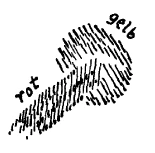
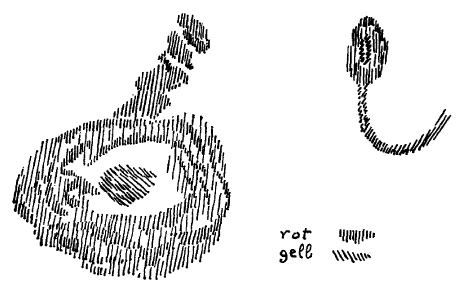
[ 20 ] Das einfachste Mittel, wodurch man das erreicht, ist, daß man versucht, die zu starke Entwickelung von strahlender innerer Körperwärme, die ja immer im Gefolge ist, in irgendeiner Weise dadurch einzudämmen, daß man etwa durch Zufuhr gerade derjenigen Stoffe, die sich in den Blütenorganen der Pflanzen entwickeln, eine innerliche Abkühlung herbeiführt. Das ist das Eigentümliche derjenigen Stoffe, die sich gerade in den Blütenorganen der Pflanzen entwickeln, daß man mit ihnen Entzündungen entgegenarbeiten kann dadurch, daß man eine innere Abkühlung herbeiführt. Oder aber es kann auch so sein, daß die plastische Kopftätigkeit, die der Nierentätigkeit entgegenwirkt, zu stark wirkt. Dann entstehen geschwulstartige Bildungen. Bei denen ist eben die plastische, die abrundende Tätigkeit, ich möchte sagen, die kristallisierende Tätigkeit zu groß. Da muß man dann dadurch, daß man von außen Wärme herankriegt — aber man muß sie in der richtigen Weise heranbringen —, gewissermaßen äußerlich die Geschwulst durch Wärme umhüllen, so daß sie von außen allmählich geheilt wird (siehe Zeichnung, gelb, rot). Alle Geschwülste werden eigentlich von außen geheilt, man muß nur im Organismus, sagen wir, durch Injektion von Stoffen, die sich in einer gewissen Weise ausbreiten, die Möglichkeit herbeirufen, durch einen bestimmten Stoff es auf irgendeinem Weg bis zu einem Umstrahlen der Geschwulst zu bringen (rot). So daß allmählich, wenn Sie es dahin bringen, daß von außen eingestrahlt wird und umstrahlt wird die Geschwulst, sie zur Auflösung gebracht wird; dann zerbröckelt sie, hört auf. Wenn Sie eine Entzündung haben, müssen Sie dagegen durch den Verdauungsapparat das Mittel in das Organ hereinbringen, wo die Entzündung sitzt, von dem Verdauungsapparat aus ein Abkühlendes bringen. Eine Entzündung muß von innen aus behandelt werden (siehe Zeichnung rechts).
[ 20 ] The simplest way to achieve this is to try to curb the excessive development of radiant internal body heat—which always accompanies such conditions—by inducing internal cooling, for example, through the intake of precisely those substances that develop in the floral organs of plants. This is the distinctive feature of the substances that develop specifically in the floral organs of plants: they can be used to counteract inflammation by inducing internal cooling. Or it may also be the case that the plastic mental activity, which counteracts kidney activity, is too strong. This leads to the formation of swellings. In these cases, the plastic, the rounding-off activity—I would say, the crystallizing activity—is simply too great. In such cases, one must—by applying heat from the outside (though it must be applied in the correct manner)—in a sense envelop the tumor externally with heat, so that it is gradually healed from the outside (see diagram, yellow, red). All tumors are actually healed from the outside; one simply has to create the possibility within the organism—let’s say, through the injection of substances that spread in a certain way—to use a specific substance to, in some way, cause the tumor to be enveloped by a radiating force (red). So that gradually, once you’ve managed to have the tumor irradiated from the outside and surrounded by radiation, it is brought to dissolution; then it crumbles and ceases to exist. If you have an inflammation, on the other hand, you must introduce the remedy into the organ where the inflammation is located via the digestive system, delivering a cooling agent from the digestive system. Inflammation must be treated from the inside (see illustration on the right).
[ 21 ] Man muß da nur die Wege finden. Jede Substanz hat eine spezifische Ausbreitung im menschlichen Organismus. Es gibt zum Beispiel Substanzen, die, indem sie durch den Mund dem Menschen zugeführt werden, sich nicht kümmern um die Speiseröhre; es ist ihnen ganz gleich, das ganze Pepsin, Ptyalin und so weiter, sie kümmern sich zum Beispiel bloß um das Herz. Anderen ist auch wieder das Herz gleich; die werden erst durch Magen, durch Herz zu den Nieren geführt, werden erst da regsam. So hat jede Substanz ihre innere Affinität. Man muß nur die richtigen Substanzen anwenden. So gibt es aber auch solche Substanzen, die, wenn Sie sie einimpfen, sich um ein Magenkarzinom gar nicht kümmern würden. Sie haben gar keine Affinität dazu, kümmern sich aber sehr wohl, sagen wir, um ein Brustkarzinom.
[ 21 ] One just has to find the right pathways. Every substance has a specific distribution within the human organism. For example, there are substances that, when administered orally, do not affect the esophagus; they are completely indifferent to it—all the pepsin, ptyalin, and so on—and are concerned, for example, only with the heart. For others, the heart is also irrelevant; they are first carried through the stomach and heart to the kidneys, where they become active. Thus, every substance has its own intrinsic affinity. One simply has to use the right substances. However, there are also substances that, if you administer them, would not affect gastric cancer at all. They have no affinity for it whatsoever, but they do, let’s say, affect breast cancer.
[ 22 ] Man muß also den Weg finden, wie man ein Geschwür oder eine Entzündung innerlich angreift, oder wie man etwas von außen nimmt, belagert gewissermaßen. Die Geschwülste muß man belagern von außen. So müssen die Dinge im Organismus studiert werden und müssen eben durchaus zusammenstimmen. Dazu muß man natürlich diese höheren Glieder der Menschennatur kennen. Es ist unmöglich, überhaupt über die Niere zu reden, wenn man den Menschen einfach auf den Seziertisch legt und aufschneidet, nachdem er gestorben ist. Dann liegt die Niere neben der Leber meinetwillen; aber was weiß man über die Niere und Leber anders, als daß beide aus Zellen bestehen, in verschiedener Weise aus Zellen aufgebaut sind. Denn die Niere hat eine innige Beziehung zum astralischen Leib, und die Leber zum Ich. Das gibt ihnen erst den Charakter. Ohne das ist die ganze Sache überhaupt sinnlos, zu definieren oder zu betrachten.
[ 22 ] One must therefore find a way to attack an ulcer or inflammation from within, or to approach it from the outside, so to speak, and lay siege to it. Tumors must be besieged from the outside. This is how the processes within the organism must be studied, and they must be in perfect harmony. To do this, of course, one must understand these higher aspects of human nature. It is impossible to speak of the kidney at all if one simply places a person on the dissection table and cuts them open after they have died. Then the kidney lies next to the liver, for all I care; but what do we know about the kidney and the liver other than that both consist of cells and are structured from cells in different ways? For the kidney has an intimate relationship with the astral body, and the liver with the “I.” That is what gives them their character. Without that, the whole thing is completely meaningless to define or consider.
[ 23 ] Wenn Sie nun ein solches Organ wie die Milz nehmen, da weiß die gewöhnliche Physiologie und Medizin nicht viel darüber zu sagen. Sie finden in allen entsprechenden Lehrbüchern überall die Anmerkung: Über die Milz weiß man heute noch nichts zu sagen. — Sie werden das überall finden, lesen Sie es nur nach. Das ist auch gar nicht zu verwundern. Sehen Sie, der Sprachgenius ist da eigentlich weiser als dasjenige, was Wissenschaft auf diesem Gebiete ist. In diesem Falle in anderen Fällen ist ja gerade der deutsche Sprachgenius ein außerordentlich weiser — ist es sogar der englische Sprachgenius, der die Milz als «Spleen» bezeichnet. Und das ist eine außerordentlich günstige Bezeichnung, denn die Milz hängt zusammen mit all denjenigen Betätigungen des Menschen, die über das Ich hinausgehen, die schon an das Geistselbst herankommen, und die Milz ist sogar geradezu das Organ des Geistselbstes. Das geht schon ganz ins Geistige hinein. Nur ist das so, daß man das vertragen muß. Die meisten Menschen können das wirklich Geistige nicht vertragen, und sie werden daher durch die Milztätigkeit nicht etwa angeregt zur Betätigung im Geistigen, zum Spirituellen, sondern sie werden «spleenig». Sie werden gerade heruntergestimmt. Der «Spleen» ist ja nichts anderes als ein Geist, der, statt daß er in den Kopf geht, in die Gedärme sich verschlingt. Es ist also «Spleen» eine außerordentlich gute Bezeichnung, die gerade auf das Geistige hinweist, für das die Milz das entsprechende Organ ist.
[ 23 ] If you take an organ such as the spleen, for example, conventional physiology and medicine don’t have much to say about it. In all the relevant textbooks, you’ll find the same note everywhere: “We still know nothing about the spleen today.” — You’ll find this everywhere; just look it up. That’s not at all surprising. You see, the genius of language is actually wiser in this regard than what science has to offer in this field. In this case—and in others—it is precisely the genius of the German language that is extraordinarily wise—and indeed, it is the genius of the English language that refers to the spleen as “spleen.” And that is an exceptionally apt term, for the spleen is connected to all those human activities that go beyond the ego, that already approach the spiritual self, and the spleen is, in fact, the very organ of the spiritual self. This already delves quite deeply into the spiritual realm. The thing is, one has to be able to handle it. Most people cannot handle what is truly spiritual, and so the activity of the spleen does not stimulate them to engage in the spiritual realm; rather, they become “spleenish.” They are actually brought down. “Spleen” is, after all, nothing other than a spirit that, instead of going to the head, burrows into the intestines. “Spleen” is therefore an exceptionally apt term that points directly to the spiritual realm, for which the spleen is the corresponding organ.
[ 24 ] Daher wirkt die Milz auch in der Weise ausgleichend, wie das dargestellt ist in der Broschüre, die von unserem Stuttgarter Physiologischen Institut ausgearbeitet worden ist, namentlich von Frau Dr. Kolisko, wo die Milztätigkeit im Zusammenhange mit der Plättchenentstehung und der ganzen Verdauungstätigkeit dargestellt wird. Da ist nun wirklich einmal eine wissenschaftlich-systematische Darstellung der Milztätigkeit im ersten Anhub unternommen. Würde irgendwo in einem anderen Forschungsinstitute eine solche Arbeit gemacht werden, so würde man das sehr bald als etwas außerordentlich Epochemachendes ansehen. Aber nun ist es eben so, daß, wenn in unserem Kreise, in dem Schoße unserer Gesellschaft etwas entsteht, es nicht in die Welt hinausdringt. Man redet nicht davon. Es ist ja nicht notwendig, daß man, um es zu rühmen, redet, sondern weil es wohltätig wirken könnte im Zusammenhange der ganzen Zeitführung. Aber der Anfang dazu, daß man über die Sache nicht redet, wird ja schon in unserer Anthroposophischen Gesellschaft gemacht, Ich möchte abstimmen darüber, wie viele unserer Mitglieder Gelegenheit gehabt haben, daß die ganze Bedeutung der Sache wirklich zu ihnen gedrungen ist! Es ist dann nicht weiter zu verwundern, daß, wenn die Anthroposophische Gesellschaft schon anfängt, sich um dasjenige, was bei uns geschieht, nicht zu kümmern, das natürlich auch nach außen hin wirkt. Wir arbeiten ja in der Tat nicht bioß mit Ausschluß der Öffentlichkeit, sondern in den wichtigsten Dingen auch mit Ausschluß des Interesses der Anthroposophischen Gesellschaft! Aber das ist dasjenige, was ich — heute wenigstens — nur in Parenthese sagen will. Wichtig aber ist, daß wir tatsächlich nur den menschlichen Organismus verstehen können, wenn wir seine höhere Gliederung verstehen.
[ 24 ] Therefore, the spleen also exerts a balancing effect, as described in the brochure prepared by our Physiological Institute in Stuttgart—specifically by Dr. Kolisko—which details the spleen’s activity in relation to platelet formation and the entire digestive process. This is truly the first time a scientific and systematic description of spleen function has been undertaken. If such work were carried out at any other research institute, it would very quickly be regarded as an extraordinarily groundbreaking achievement. But the fact is that when something emerges within our circle, within the bosom of our society, it does not make its way out into the world. We do not speak of it. It is not necessary to speak of it merely to boast, but because it could have a beneficial effect in the context of the overall course of events. But the first step toward not speaking of the matter is already being taken within our Anthroposophical Society. I would like to gauge how many of our members have had the opportunity for the full significance of the matter to truly sink in! It is therefore not surprising that, when the Anthroposophical Society begins to neglect what is happening among us, this naturally has an effect on the outside world as well. In fact, we do not merely work behind closed doors, but in the most important matters we also exclude the interest of the Anthroposophical Society! But that is something I—at least today—wish to mention only in passing. What is important, however, is that we can truly understand the human organism only if we understand its higher structure.
[ 25 ] Sie sehen, wie fein diese Dinge zusammenstimmen müssen. Es ist sogleich irgend etwas im Organismus nicht in Ordnung, wenn im geringsten in den astralischen Organismus etwas hineinwirkt, was nicht richtig vor sich geht, denn in dem Augenblicke arbeiten die Nieren nicht in Ordnung, und dann treten alle die Folgeerscheinungen einer nicht ordentlichen Nierentätigkeit auf.
[ 25 ] You can see how precisely these things must be in harmony. Something in the organism immediately goes wrong if even the slightest irregularity affects the astral organism, because at that very moment the kidneys cease to function properly, and then all the consequences of impaired kidney function set in.
[ 26 ] Aber das ist nicht so für den Menschen im allgemeinen, sondern das ändert sich von Zeitalter zu Zeitalter. Der Mensch ist eine ungemein feine Organisation; aber diese ist nicht immer gleich. Wenn wir nur ein paar Jahrhunderte zurückgehen — nicht wahr, für die Gesamtentwickelung sind ein paar Jahrhunderte nicht viel —, da kommen wir zum Beispiel in die Zeit, in welcher das jetzige Zeitalter, die eigentliche Epoche der Bewußtseinsentwickelung begonnen hat. Wir kommen hinter das 15., 14., 13, Jahrhundert zurück in der nachchristlichen Zeit. Da ist es in der Tat so gewesen, daß gerade in der zivilisierten Welt — so grotesk das heute auch für die Menschen erscheint —, ungefähr durch die ganze Zeit vom 4. Jahrhundert bis ins 14. Jahrhundert, die Nierentätigkeit das Wichtigste war; und seither ist es die Lebertätigkeit geworden für die Gesamtmenschennatur.
[ 26 ] But this is not true of human beings in general; rather, it changes from age to age. Human beings are an extraordinarily delicate organism, but this is not always the same. If we go back just a few centuries—after all, a few centuries are not much in the grand scheme of development—we arrive, for example, at the time when the present age, the actual epoch of the development of consciousness, began. We go back beyond the 15th, 14th, and 13th centuries in the Christian era. It was indeed the case that, particularly in the civilized world—as grotesque as this may seem to people today—from roughly the 4th century through the 14th century, kidney function was the most important; and since then, liver function has become the most important for human nature as a whole.
[ 27 ] Ich möchte sagen: die Anatomie und Physiologie des Menschen ändert sich eben im Laufe der Jahrhunderte, und namentlich der Jahrtausende, und man kann Geschichte nicht studieren, wenn man nicht auf die feine Struktur des Menschen eingeht und weiß, wie solche Umwandlungen der äußeren Zivilisationserscheinungen, wie die vom Mittelalter in die neue Zeit, auch verknüpft sind mit einer Umwandlung der ganzen Menschheitsorganisation.
[ 27 ] I would like to say: human anatomy and physiology do indeed change over the course of centuries—and especially millennia—and one cannot study history without delving into the subtle structure of the human being and understanding how such transformations in the external manifestations of civilization, such as those from the Middle Ages to the modern era, are also linked to a transformation of the entire organization of humanity.
[ 28 ] Zu solchen Dingen muß man wieder kommen, sonst bleibt immer auf der einen Seite die Wissenschaft stehen, die immer irreligiöser und antireligiöser wird, weil sie schließlich nur herumtappst mit dem Seziermesser und mit der Sonde und so weiter, und auf der anderen Seite das religiöse Leben, das gar nichts mehr über die Welt zu sagen hat, sondern sich nur noch an die egoistischen Instinkte des Menschen für das Leben nach dem Tode richtet. Die Dinge stehen nebeneinander da. Unsere heutige Religiosität hat ja ganz vergessen, daß Gott die Welt geschaffen hat. Sie spricht noch vom Göttlichen, aber sie hat vergessen, daß Gott die Welt geschaffen hat, und daß man in den Dingen der Welt die Spuren des göttlichen Schaffens überall finden kann. Man muß nicht nur reden von abstrakten wolkenkuckucksheimartigen Verwandlungen der Zivilisation in der Geschichte, sondern man muß wissen, wie gerade durch die zarte Menschenorganisation hindurch, durch dieses Abstimmen des unendlich feinen Uhrwerkes der menschlichen Organisation, die göttlichen Schöpferkräfte den Menschen umwandeln, wie dadurch, daß sie einmal, ich möchte sagen, die Saite der Nierentätigkeit etwas stärker anziehen, dann nachlassen, und dann die Saite der Lebertätigkeit anziehen, eine ganz andere Zivilisationsmusik herauskommt.
[ 28 ] One must return to such matters; otherwise, on the one hand, science will continue to stand still, becoming ever more irreligious and anti-religious because, in the end, it is merely groping around with its scalpel and probe and so on; and on the other hand, religious life, which no longer has anything to say about the world but is directed solely toward people’s selfish instincts regarding life after death. The two stand side by side. Our religiosity today has completely forgotten that God created the world. It still speaks of the divine, but it has forgotten that God created the world, and that one can find traces of divine creation everywhere in the things of the world. One must not merely speak of abstract, pie-in-the-sky-like transformations of civilization throughout history; rather, one must understand how, precisely through the delicate human organism—through this fine-tuning of the infinitely delicate clockwork of human organization—the divine creative forces transform human beings; how, for instance, by I might say, tightening the string of kidney activity a little more, then loosening it, and then tightening the string of liver activity—a completely different music of civilization emerges.
[ 29 ] Nur wenn wir uns nicht darauf beschränken, einen abgesonderten Gott zu betrachten, sondern den Gott verfolgen bis in seine einzelne Tätigkeit hinein, haben wir dasjenige, was die Menschheit der Zukunft braucht; sonst wird sie endlich das Abstrakte ganz pflegen und zu der rein materialistischen Wissenschaft kommen. Einzig und allein wenn wir durchdringen können bis in die konkreten Einzelheiten der Stoffwirksamkeiten im göttlichen Schaffen, kommen wir dazu, Religion mit Wissenschaft zu durchdringen und Wissenschaft wiederum zur Religion zurückzuführen.
[ 29 ] Only if we do not limit ourselves to contemplating a God who is separate from the world, but instead trace God down into his specific actions, will we have what the humanity of the future needs; otherwise, it will ultimately embrace the abstract entirely and arrive at purely materialistic science. Only if we can penetrate to the concrete details of the material effects in divine creation will we be able to infuse religion with science and, in turn, lead science back to religion.
[ 30 ] Und sehen Sie, es tritt so um die Wende des 12., 13., 14. Jahrhunderts in Europa eine Anschauung auf, die ich von den verschiedensten Seiten her schon charakterisiert habe, und die sich ausspricht in der Gralssage, in der Parzival-Sage, in alldem, was solche Dichter gedichtet haben wie Wolfram von Eschenbach, Hartmann von Aue, Gottfried von Straßburg und so weiter. Da tauchen die Motive auf. In der Parzival-Dichtung, in der echten Parzival-Dichtung, da taucht besonders ein Motiv auf, das besteht darin, daß man plötzlich einmal darstellen will, wie der Mensch sich hinentwickeln soll zu demjenigen, was man dazumal «saelde» nannte. Das ist das Gefühl eines gewissen inneren Glücksempfindens, saelde, verwandt mit unserem Seligkeit, aber nicht dasselbe, saelde ist Durchzogensein mit einem gewissen inneren Glücksgefühl. Das taucht auf und beherrscht eigentlich die ganze Zivilisation des 13. und 14. Jahrhunderts. Alle poetischen Motive, auch alle prosaischen Motive, aber insbesondere das Parzival-Motiv, die werden durchdrungen von dem, und es strebt alles dahin. Man strebt nach dieser saelde, nach diesem innerlichen Glücksgefühl, das aber nicht irreligiös, nicht etwa ein innerliches Glücksbehagen sein soll, sondern ein Durchseeltsein mit den göttlichen Schöpferkräften.
[ 30 ] And you see, around the turn of the 12th, 13th, 14th centuries in Europe, a worldview emerges that I have already characterized from various angles, and which finds expression in the Grail legend, in the Parzival legend, and in everything composed by poets such as Wolfram von Eschenbach, Hartmann von Aue, Gottfried von Straßburg, and so on. That is where these motifs emerge. In the Parzival epic—the authentic Parzival epic—one motif in particular emerges: the sudden desire to depict how human beings are to develop into what was called “saelde” at that time. This is the feeling of a certain inner sense of happiness, *saelde*, related to our concept of “bliss,” but not the same thing; *saelde* is being permeated by a certain inner sense of happiness. This emerges and actually dominates the entire civilization of the 13th and 14th centuries. All poetic motifs, as well as all prose motifs—but especially the Parzival motif—are permeated by this, and everything strives toward it. People strive for this “saelde,” for this inner sense of happiness, which, however, is not meant to be irreligious or merely a sense of inner contentment, but rather a state of being imbued with the divine creative forces.
[ 31 ] Warum kommt das herauf? Das kommt herauf, weil dieser Übergang stattfindet von Nierentätigkeit zur Lebertätigkeit. Sie können das begreifen, wenn Sie zur Physiologie Ihre Zuflucht nehmen. Die früheren Physiologen waren, in einer gewissen Beziehung natürlich, bessere Physiologen als die materialistischen Physiologen der Gegenwart; das waren nämlich die Schreiber des Alten Testamentes, wo man zum Beispiel sagte, wenn man schlechte Träume gehabt hat — ich habe darauf schon aufmerksam gemacht —: Der Herr hat mich durch meine Nieren in dieser Nacht gestraft. — Dieses Wissen von gewissen Zusammenhängen einer unnormalen Nierentätigkeit mit den schlechten Träumen, das setzte sich dann fort, und davon war man zum Beispiel im 8., 9., 10. Jahrhundert noch tief durchdrungen, daß man schwer wird durch die Nierentätigkeit. Die Nierentätigkeit war allmählich den Menschen zu etwas Schwerem geworden. Natürlich redet man im Äußeren nur von etwas, was einem schwer geworden war. Man kam nicht so recht hinaus. Man klebte an dem Irdischen. Und da empfand man dieses Durchsetzen mit Galle von der physischen Seite her, das aber verbunden war mit einer Durch-saeld-ung, als eine Erlösung, eine innerliche Erlösung — ein innerliches, aber gotterfülltes Glücksgefühl, ein Hinwegstreben von dem Dumpfen der Niere. Die Niere entwickelt ja auch eine Denktätigkeit; die Niere entwickelt die dumpfe Denktätigkeit im Menschen auf dem Umwege durch das Gangliensystem, was dann durch Induktion verbunden ist mit dem Rückenmarkssystem und mit dem Gehirnsystem, sie entwickelt namentlich dasjenige Denken, das gerade auch im Mittelalter eine große Rolle gespielt hat. Man nannte es dazumal «tumpheit». Und diese Entwickelung von der tumpheit bis zur Erhellung, saelde, das war ja etwas, was zum Parzival-Motiv wurde. Der Parzival entwickelt sich von der tumpheit bis zur saelde.
[ 31 ] Why does this come up? It comes up because this transition is taking place from kidney activity to liver activity. You can understand this if you turn to physiology. The earlier physiologists were, in a certain sense, of course, better physiologists than the materialistic physiologists of today; for they were, in fact, the writers of the Old Testament, where it was said, for example—as I have already pointed out—that if one had bad dreams: “The Lord has punished me through my kidneys this night.” This knowledge of certain connections between abnormal kidney function and bad dreams persisted, and people in the 8th, 9th, 10th centuries, that one becomes heavy as a result of kidney activity. Kidney activity had gradually become a burden to people. Of course, outwardly one speaks only of something that had become a burden. One could not quite escape it. People clung to the earthly. And so they experienced this permeation with bile from the physical side—which was, however, connected to a permeation with salt—as a redemption, an inner redemption—an inner yet God-filled sense of bliss, a striving away from the dullness of the kidney. The kidney, after all, also develops a thinking activity; the kidney develops the dull thinking activity in human beings indirectly through the ganglionic system, which is then connected by induction to the spinal cord system and the brain system; it develops, in particular, the very kind of thinking that played a major role in the Middle Ages. At that time, it was called “dullness.” And this development from dullness to enlightenment—salvation—was, after all, something that became the Parzival motif. Parzival develops from dullness to salvation.
[ 32 ] Man darf das nicht bloß in der abstrakten Weise betrachten, sondern man muß das auch anschauen mit etwas Gefühl und Empfindung. Anfangs ist der Parzival so, wie er hervorgeht aus seiner schwer gewordenen Kultur. Man kriegt ihn nicht recht in Bewegung. Erst später kommt die saelde in ihn, nachdem er durch den Zweifel hindurchgegangen ist. Der Zweifel ist in ihm, das Durchrütteltwerden mit dem Herz-Lungensystem. Nachdem er da hindurchgegangen ist, findet er den Einzug in die saelde.
[ 32 ] One must not merely view this in an abstract way, but must also look at it with some feeling and sensitivity. At first, Parzival is just as he emerges from his culture, which has become burdensome. It’s hard to get him moving. Only later does the saelde enter him, after he has passed through doubt. Doubt is within him—the shaking of his heart and lungs. After he has passed through this, he finds his way into the saelde.
[ 33 ] Und es gibt eine solche Möglichkeit, bis in die Glieder des menschlichen Organismus hinein zu verfolgen, was an Stimmungen in der großen Weltgeschichte vorgeht. Man kann sagen: Bei den tonangebenden Menschen, bei denjenigen, die solch ein Parzival-Motiv ausgestaltet haben, bei denen ist es so, daß sie die Pioniere, die ersten Vorläufer waren dieser neuzeitlichen Menschheitsorganisation, die übergegangen ist von der alten Nierentätigkeit zu der neueren Lebertätigkeit.
[ 33 ] And there is such a possibility: to trace, right down into the very fibers of the human organism, the moods that are at work in the grand history of the world. One could say: Among the influential figures—those who developed such a “Parzival” motif—it is the case that they were the pioneers, the first forerunners of this modern organization of humanity, which has transitioned from the old “kidney activity” to the newer “liver activity.”
[ 34 ] Man muß so etwas nicht verachten. Man muß nicht sagen: Das ist das niedere Sinnliche. — Gott hat es auch nicht verachtet, die niedere Materie zu schaffen, sondern er hat sie eben geschaffen. Ebenso obliegt es der Erkenntnis, bis in die äußersten Ausläufer des Materiellen hinein die göttliche Schöpfertätigkeit zu verfolgen, und nicht nur ein vornehmer Historiker zu sein, der den Parzival schildert und der sagt: Wenn man den Parzival schildert, darf man nicht zugleich etwas so Niedriges wie die physiologische Tätigkeit des Menschen ins Auge fassen.
[ 34 ] One must not look down on such things. One must not say: “This is base sensuality.” — God, too, did not look down on creating base matter; rather, He simply created it. Likewise, it is the task of knowledge to trace the divine creative activity all the way to the outermost reaches of the material world, and not merely to be a distinguished historian who describes Parzival and says: “When describing Parzival, one must not at the same time consider something as base as human physiological activity.”
[ 35 ] Die Welt ist eines, und man muß, um die großen geschichtlichen Zusammenhänge zu verstehen, zu gleicher Zeit wirklich hineinleuchten können von da aus in die einzelnen menschlichen Zusammenhänge. Davon haben ältere Zeiten noch durchaus, auch im Mittelalter, Spuren von Erkenntnissen gehabt. Sie können das in Beschreibungen hinein verfolgen, wie in die des «Armen Heinrich», wo wir sehen, wie noch moralische Heilungen stattfinden und so weiter.
[ 35 ] The world is one, and in order to understand the great historical contexts, one must at the same time be able to truly shed light from that vantage point onto the individual human contexts. Earlier times, including the Middle Ages, still possessed traces of such insights. You can trace this in descriptions, such as those in *Poor Henry*, where we see how moral healing still takes place, and so on.
[ 36 ] Diese Dinge, die sollten Sie zunächst einmal heute vorläufig hinweisen darauf, daß alles menschliche Erkennen eine große Einheit darstellt, daß man von dem, was mit den höchsten religiösen Ideen erfaßt werden muß, heruntersteigen kann bis zu dem, was die Menschen oftmals für so Niedriges halten, daß sie es nicht betrachten wollen. Schuld daran ist eben die Gestalt, welche die Wissenschaft der Gegenwart angenommen hat, die gar nicht weiß, daß man eben den Geist bis in die äußersten Verzweigungen der Materie hinein verfolgen muß; aber dann erst lernt man allmählich die Welt verstehen. Dann erst lernt man auch sich emporringen zu einer wirklich religiösen Auffassung der Welt; während sie sonst eben vielfach nur eine egoistische ist, eine Auffassung, die auf die egoistischen Motive des Menschen spekuliert, die aber nicht in die Erkenntnis hineingeht, wodurch wir durchaus in einen Verfall, nicht in einen Aufschwung der Zivilisation kommen.
[ 36 ] These points—which I would like to briefly mention today—serve to highlight that all human knowledge constitutes a great unity; that one can descend from what must be grasped through the highest religious ideas down to what people often consider so base that they refuse to consider it. The fault lies precisely in the form that contemporary science has taken, which is completely unaware that one must trace the spirit all the way into the outermost ramifications of matter; but only then does one gradually learn to understand the world. Only then does one also learn to rise to a truly religious conception of the world; whereas otherwise it is often merely a selfish one—a conception that speculates on human selfish motives but does not delve into the knowledge that would lead us not to a decline but to an upsurge in civilization.
[ 37 ] Der Aufschwung der Zivilisation ist denn doch damit verknüpft, daß die Leute das Licht in sich hineinbekommen und die Welt im Lichte betrachten und nicht in der Dunkelheit. Die heutige Physiologie und Anatomie, die die Menschen bloß auf den Seziertisch legt, bloß die Symptome betrachtet, die sich auch noch mit materialistischer Wissenschaft am kranken Menschen beobachten lassen, die kommt eben nicht dahin, wirklich innerlich den Menschen zu verstehen.
[ 37 ] The rise of civilization is, after all, linked to people letting the light into themselves and viewing the world in the light rather than in darkness. Today’s physiology and anatomy, which merely lay people on the dissection table and merely observe the symptoms that can be observed in sick people—even through materialistic science—simply do not manage to truly understand the human being from within.
[ 38 ] Man kann sagen: aufgenommen die Nahrungsstoffe, getötet, belebt, astralisiert, in das Ich umgewandelt, dann erst versteht man Ptyalin, Pepsin in der aufgenommenen, ertöteten Nahrung. Übergeführt in die Lymphdrüsen, zum Herzen übergeführt, vom Herzen befeuert, von den Nieren durchstrahlt, alles astralisch gemacht, von der Leberfunktion aufgenommen und in das Ich übergeführt. Dann kann das ganze von der Milztätigkeit aufgefangen werden, und dann wird der Mensch durch die Milztätigkeit unter Umständen zu einem Enthusiasten gemacht, zu einem, der Kraft empfängt aus der geistigen Welt, oder aber auch er wird durch die Milztätigkeit zum spleenigen, kopfhängerischen Menschen gemacht, der nur auf seinem Stuhl sitzen will, der sich am liebsten nicht vom Geiste durchdringen lassen will, nicht denken will. Solche Menschen gibt es heute zahlreiche. Sie bringen einen zur Verzweiflung, weil sie auf ihren Stühlen sitzen, nur eine schwere Masse eigentlich, wie wenn sie gar keinen Kopf hätten. Die Milztätigkeit, die etwas Hohes sein könnte im Menschen, wirkt eigentlich zerdrückend auf diese Menschen. Statt Enthusiasmus haben sie Spleen, und der tritt schon in den verschiedensten Formen heute auf.
[ 38 ] One might say: once the nutrients have been absorbed, killed, enlivened, astralized, and transformed into the “I”—only then can one understand ptyalin and pepsin in the absorbed, killed food. Transferred to the lymph glands, carried to the heart, ignited by the heart, permeated by the kidneys, made astral, absorbed by the liver, and transformed into the “I.” Then the whole process can be taken up by the activity of the spleen, and then, under certain circumstances, the spleen’s activity may transform a person into an enthusiast—one who receives strength from the spiritual world—or, conversely, the spleen’s activity may turn them into a moody, listless person who just wants to sit in their chair, who would prefer not to let the spirit penetrate them, who does not want to think. There are many such people today. They drive one to despair because they sit in their chairs—really just a heavy mass, as if they had no head at all. The activity of the spleen, which could be something lofty in a human being, actually has a stifling effect on these people. Instead of enthusiasm, they have spleen, and this manifests itself in a wide variety of forms today.
[ 39 ] Aber man braucht heute jene Arbeit, welche möglichst viel Spleen in Enthusiasmus, in Feuer umwandelt, so daß die Menschen eben nicht nur eine schläfrige, sondern eine wache Zivilisation haben. Das ist dasjenige, was eigentlich von Anthroposophie ausgehen soll, wach sein, Enthusiasmus haben, die Erkenntnis in wirkliche Tätigkeit, in Tat überführen, so daß der Mensch nicht nur etwas weiß, sondern etwas wird durch Anthroposophie. Dann erst hat die Anthroposopbie ein Ziel und kann ein solches Ziel auch wirklich erreichen. Aber durch Anthroposophie schläfrig werden, heißt eben, der physischen Qualität der Milz viel zu viel Respekt zuerkennen und die hohen geistigen Eigenschaften der Milz nicht fruktifizieren. Das aber weist hin auf etwas, was die gegenwärtige Menschheit gar sehr braucht. Feuer braucht sie, Enthusiasmus braucht sie, begeistert sein können für irgend etwas. Solange wir das nicht können, so lange werden wir immer nur an uns selbst denken, und das bedeutet, zu großen Wert legen auch auf dasjenige, was in uns abgesondert wird als Harnsäure, Harnstoffe, die eigentlich dazu bestimmt sind, nicht in einen Kreis — Zelle, Eiweiß —, sondern in jenes fluktuierende Eiweiß übergeführt zu werden, das wir eigentlich ganz sind. Wir sind im Grunde genommen ein in lebhafter Bewegung fortwährend begriffenes lebendiges, aber großes Zellenhaftes; denn wir haben den Kohlenstoff in uns, wir bekommen den Sauerstoff, indem die Nahrungsmittel ätherisiert werden, wir bekommen den Stickstoff, indem die Nahrungsmittel durchstrahlt werden von der Nierentätigkeit, wir bekommen den Wasserstoff, indem die Leberfunktion hineinspielt im Zusammenhange mit der Sinnestätigkeit, wir bekommen auf diesem Wege schon auch den Schwefel, entweder den unangemessenen, der heute zumeist geredet wird, oder den ordentlichen Schwefel. Aber wir bekommen schon dasjenige, was notwendig ist, damit wir ein lebendiges Wesen sind, das aus Eiweiß, Kohlenstoff, Sauerstoff, Stickstoff besteht, und auch aus Schwefel, aber wie gesagt, es muß eben ordentlicher Schwefel sein. Heute ist noch zuviel von der anderen Sorte vorhanden, von der Sorte, wie es die Studenten meinten von jenem Philosophieprofessor in Würzburg. Der war so langweilig geworden, daß er zuletzt noch zwei Studenten hatte; da konnte er sein Kollegium nur noch zu dreien lesen, aber man ist dann selbst der dritte. Und endlich war keiner mehr da. Und dann hat er an seiner Türe geschrieben gefunden «Schwefelbude». Die Sorte meine ich nicht; die ist heute zu sehr verbreitet. Aber was der Mensch sein muß, das ist ein durch und durch Lebendiges, durch und durch Durchseeltes, Durchgeistigtes. Und das kann man schon auch lernen, gerade wenn man es bis in die äußersten Verzweigungen des Stofflichen betrachtet. Dann werden wir erst eine Physiologie bekommen, dann werden wir auch erst etwas bekommen, was auch therapeutisch an die Menschennatur wirklich heran kann.
[ 39 ] But what we need today is work that transforms as much whimsy as possible into enthusiasm, into passion, so that people may have not just a sleepy civilization, but an alert one. That is precisely what should emanate from anthroposophy: being awake, having enthusiasm, transforming knowledge into real activity, into action, so that through anthroposophy, a person does not merely know something but becomes something. Only then does anthroposophy have a goal and can it truly achieve such a goal. But to become drowsy through anthroposophy means, in fact, to accord far too much respect to the physical qualities of the spleen and to fail to bring the spleen’s higher spiritual qualities to fruition. This, however, points to something that present-day humanity needs very much indeed. It needs fire; it needs enthusiasm; it needs to be able to be inspired by something. As long as we are unable to do this, we will always think only of ourselves, and that means placing too much value on what is excreted from us as uric acid and urea—substances that are actually intended not to be incorporated into a closed system—cell, protein—but rather to be transformed into that fluctuating protein that constitutes our very being. We are, in essence, a living, yet vast, cellular entity in constant, lively motion; for we have carbon within us, we obtain oxygen as food is etherized, we obtain nitrogen when food is processed by kidney activity, we obtain hydrogen through liver function in conjunction with sensory activity, and in this way we also obtain sulfur—either the “inappropriate” kind, which is mostly discussed today, or the “proper” sulfur. But we do obtain what is necessary for us to be living beings consisting of protein, carbon, oxygen, nitrogen, and also sulfur—but as I said, it must be proper sulfur. Today there is still too much of the other kind, the kind the students were referring to when they spoke of that philosophy professor in Würzburg. He had become so boring that in the end he had only two students left; he could only hold his lectures to a group of three, but then you yourself become the third one. And finally, no one was left. And then he found the words “Sulfur Shack” written on his door. I don’t mean that kind; that’s far too widespread today. But what a human being must be is a being that is thoroughly alive, thoroughly imbued with soul, and thoroughly imbued with spirit. And that is something one can indeed learn, especially when one considers it down to the outermost ramifications of the material world. Only then will we have a true physiology; only then will we have something that can truly address human nature in a therapeutic way.