

Humanity as the harmony of the
creative, formative, and shaping Word of the World
GA 230
2 November 1923, Dornach
Translate the original German text into any language:
Versions Available:
Humanity as the harmony of the creative, formative, and shaping Word, tr. SOL
Siebenter Vortrag
Seventh Lecture
[ 1 ] Zu der äußerlich wahrnehmbaren, sichtbaren Welt gehört die unsichtbare, die mit ihr zusammen ein Ganzes bildet. Zunächst tritt in aller Deutlichkeit hervor, wie sehr das der Fall ist, wenn wir unseren Blick nun von den Tieren abwenden zu den Pflanzen.
[ 1 ] The outwardly perceptible, visible world includes the invisible world, which together with it forms a whole. This becomes strikingly clear when we turn our attention from animals to plants.
[ 2 ] Das pflanzliche Dasein, das den Menschen zunächst erfreut, sproßt und sprießt aus der Erde heraus und bildet eigentlich den Anlaß zu etwas, was als geheimnisvoll empfunden werden muß. Beim Tier kann sich der Mensch, wenn ihm auch der Wille des Tieres, die ganze innere Aktivität des Tieres zunächst etwas Geheimnisvolles schon ist, dennoch sagen: Dieser Wille ist eben da, und aus diesem Willen heraus ist dann die Gestalt, sind die Außerungen des Tieres eine Folge. — Aber an der Pflanze, die in einer so mannigfaltigen Gestalt an der Oberfläche der Erde erscheint, die in einer so geheimnisvollen Art aus dem Samen mit Hilfe der Erde und mit Hilfe des Luftkreises zunächst sich entwickelt, muß der Mensch empfinden, wie ein anderes vorhanden sein muß, damit diese Pflanzenwelt ihm eben in der Gestalt entgegentreten kann, in der sie ihm entgegentritt.
[ 2 ] The existence of plants, which initially delights human beings, sprouts and shoots up from the earth and actually provides the occasion for something that must be perceived as mysterious. In the case of animals, even though the animal’s will—its entire inner activity—is already something mysterious to the human being at first, the human can nevertheless say: This will is simply there, and the animal’s form and outward expressions are a consequence of this will. — But in the case of the plant, which appears in such a manifold form on the surface of the earth, which initially develops in such a mysterious way from the seed with the help of the earth and the atmosphere, human beings must sense that something else must exist so that this plant world can indeed appear to them in the form in which it does.
[ 3 ] Die geistige Anschauung führt uns dann, wenn wir auf die Pflanzenwelt blicken, gleich zu einer Fülle von Wesenheiten, die in den alten Zeiten des instinktiven menschlichen Hellsehertums auch gewußt worden sind, erkannt worden sind, dann aber vergessen worden sind, und heute nur noch Namen darstellen, welche die Dichter verwenden, denen eigentlich eine Realität von der heutigen Menschheit nicht zugeschrieben wird. Aber in demselben Maße, in dem den Wesen, welche die Pflanze umschwirren und umweben, keine Realität zugeschrieben wird, verliert man das Verständnis für die Pflanzenwelt; dieses Verständnis für die Pflanzenwelt, das zum Beispiel so notwendig wäre für die Heilkunst, ist ja eigentlich der heutigen Menschheit ganz verlorengegangen.
[ 3 ] When we look at the plant world, spiritual contemplation immediately leads us to a wealth of beings that were also known and recognized in the ancient times of instinctive human clairvoyance, but were later forgotten, and today are merely names used by poets—names to which modern humanity does not actually attribute any reality. But to the same extent that no reality is attributed to the beings that swarm around and weave themselves into the plant, we lose our understanding of the plant world; this understanding of the plant world—which, for example, would be so necessary for the art of healing—has, in fact, been completely lost to modern humanity.
[ 4 ] Nun haben wir schon einen sehr bedeutsamen Zusammenhang der Pflanzenwelt mit der Schmetterlingswelt erkannt; allein der wird uns auch erst so recht vor die Seele treten, wenn wir noch tiefer hineinschauen in das ganze Weben und Treiben der Pflanzenwelt.
[ 4 ] We have already recognized a very significant connection between the plant world and the world of butterflies; yet this connection will truly come to life for us only when we look even more deeply into the entire fabric of life and activity within the plant world.
[ 5 ] Die Pflanze streckt ihre Wurzel in den Boden. Wer das verfolgen kann, was da eigentlich von der Pflanze in den Boden hineingestreckt wird, der kann mit dem geistigen Blick, und ein solcher muß es ja sein, der die Wurzel richtig durchschaut, zugleich verfolgen, wie überall das Wurzelwesen der Pflanze von Naturelementargeistern umgeben und umwoben wird. Und diese Elementargeister, die eine alte Anschauung als Gnomen bezeichnet hat, die wir Wurzelgeister nennen können, können wir mit einer imaginativen und inspirierten Weltanschauung wirklich so verfolgen, wie wir im Physischen das Menschenleben und das Tierleben verfolgen. Wir können gewissermaßen hineinschauen in das Seelenhafte dieser Elementargeister, dieser Wurzelgeisterwelt.
[ 5 ] The plant extends its root into the soil. Anyone who can observe what the plant is actually extending into the soil—and this must be done with the spiritual gaze, for only such a gaze can truly penetrate the root—can at the same time observe how the plant’s root system is everywhere surrounded and interwoven by elemental spirits of nature. And these elemental spirits—which an ancient view referred to as gnomes, and which we can call root spirits—we can truly observe with an imaginative and inspired worldview, just as we observe human and animal life in the physical world. We can, so to speak, look into the soul-life of these elemental spirits, this world of root spirits.
[ 6 ] Diese Wurzelgeister sind ein ganz besonderes Erdenvolk, für den äußeren Anblick zunächst unsichtbar, aber in ihren Wirkungen um so sichtbarer; denn keine Wurzel könnte entstehen, wenn nicht zwischen der Wurzel und dem Erdreich vermittelt würde durch diese merkwürdigen Wurzelgeister, die das Mineralische der Erde in Strömung bringen, um es an die Wurzeln der Pflanze heranzubringen. Natürlich meine ich dabei den geistig zugrundeliegenden Vorgang.
[ 6 ] These root spirits are a very special race of earth beings, initially invisible to the naked eye, but all the more visible in their effects; for no root could form if these remarkable root spirits did not act as mediators between the root and the soil, setting the earth’s mineral substances in motion to bring them to the plant’s roots. Of course, I am referring here to the spiritual process underlying this.
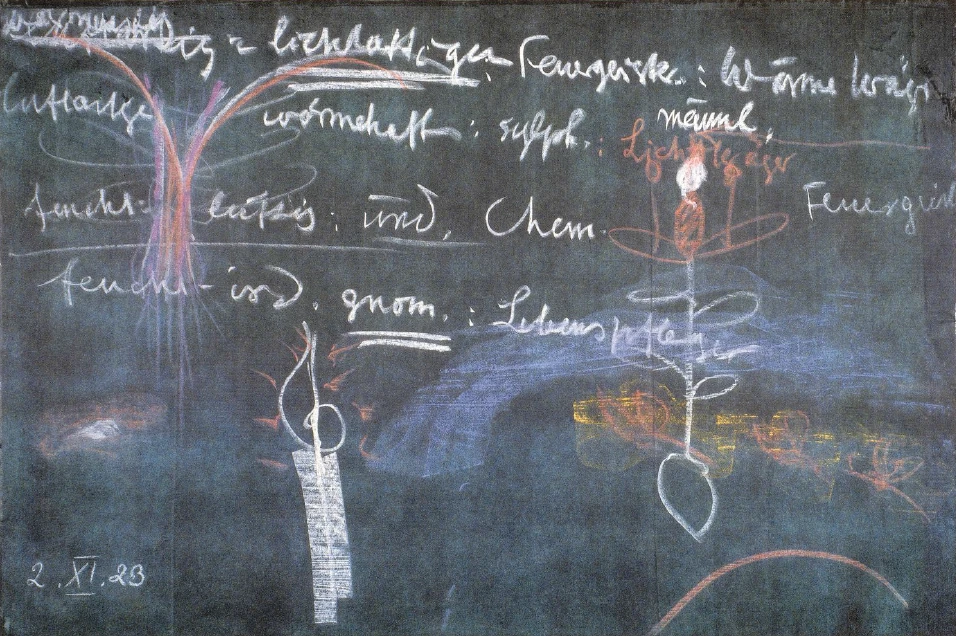
[ 7 ] Diese Wurzelgeister, die überall im Erdreich vorhanden sind, die sich ganz besonders wohl fühlen innerhalb der mehr oder weniger durchsichtigen oder auch metallisch durchsetzten Gesteine und Erze, die aber sich am wohlsten fühlen, weil da ihr eigentlicher Platz ist, wenn es sich darum handelt, das Mineralische der Pflanzenwurzel zu vermitteln, diese Wurzelgeister sind ganz erfüllt von einem innerlich Geisthaften, das wir nur vergleichen können mit dem, was wir erfassen können im innerlichen Geisthaften des menschlichen Auges, des menschlichen Ohres. Denn diese Wurzelgeister sind in ihrer Geisthaftigkeit ganz Sinn. Sie sind eigentlich sonst gar nichts, als aus Sinn bestehend, sie sind ganz Sinn, und ein Sinn, der zugleich Verstand ist, der nicht nur sieht und nicht nur hört, der sogleich im Sehen und im Hören das Gesehene und Gehörte versteht, der überall nicht bloß Eindrücke empfängt, sondern überall Ideen empfängt. — Ja, wir können auch hinweisen auf die Art und Weise, wie diese Wurzelgeister ihre Ideen empfangen. Sehen Sie, da sproßt aus der Erde die Pflanze heraus (Tafel 11, links oben / Zeichnung S. 114). Die Pflanze kommt, wie ich gleich nachher zeigen werde, in Verbindung mit dem außerirdischen Weltenall, und zu gewissen Jahreszeiten besonders strömen gewissermaßen Geistströme (lila) von oben, von der Blüte, von der Frucht der Pflanze bis hinunter zur Wurzel, strömen in die Erde hinein. Und wie wir das Auge dem Lichte entgegenstrecken und sehen, so wenden die Wurzelgeister ihre Wahrnehmungsfähigkeit dem entgegen, was durch die Pflanzen von oben herunter in die Erde hineinträufelt. Was ihnen da entgegenträufelt, das ist das, was das Licht in die Blüten hineingeschickt hat, was die Sonnenwärme in die Pflanzen hineingeschickt hat, was die Luft im Blatte angerichtet hat, ja, was ferne Sterne in der Gestaltung der Pflanzen bewirkt haben. Die Pflanze sammelt die Geheimnisse des Weltenalls, senkt sie in den Boden, und die Gnomen nehmen diese Geheimnisse des Weltenalls aus dem, was ihnen durch die Pflanze geistig zuträufelt, in sich auf. Und indem sie, namentlich vom Herbste an durch den Winter hindurch, auf ihren Wanderungen durch Erz und Gestein tragen, was ihnen durch die Pflanzen zugeträufelt ist, werden sie dadurch zu denjenigen Wesen innerhalb der Erde, die die Ideen des ganzen Weltenalls durch die Erde hindurchströmend wandernd tragen. Wir sehen hinaus in die weite Welt. Die Welt ist aus dem Weltengeiste gebaut, eine Verkörperung der Weltenideen, des Weltengeistes. Die Gnomen nehmen durch die Pflanzen, die ihnen dasselbe sind, was uns die Lichtstrahlen sind, die Ideen des Weltenalls auf und tragen sie im Inneren der Erde in voller Bewußtheit von Erz zu Erz, von Stein zu Stein.
[ 7 ] These root spirits, which are present everywhere in the earth, feel particularly at home within rocks and ores that are more or less transparent or even interlaced with metal; yet they feel most at home—because that is their true place—when it comes to conveying the mineral essence of the plant root—these root spirits are entirely filled with an inner spiritual quality that we can only compare to what we perceive in the inner spiritual nature of the human eye and the human ear. For in their spiritual nature, these root spirits are entirely sense. They are, in fact, nothing other than sense; they are entirely sense—and a sense that is at the same time intellect, which not only sees and not only hears, but which, in the very act of seeing and hearing, immediately understands what is seen and heard; which everywhere receives not merely impressions, but ideas. — Yes, we can also point to the way in which these root spirits receive their ideas. You see, there the plant sprouts from the earth (Plate 11, top left / drawing on p. 114). As I will show shortly, the plant comes into connection with the extraterrestrial cosmos, and at certain times of the year, spiritual currents (purple) flow, as it were, from above—from the flower and the fruit of the plant—all the way down to the root, flowing into the earth. And just as we turn our eyes toward the light and see, so do the root spirits turn their powers of perception toward what trickles down from above through the plants into the earth. What trickles down to them is what the light has sent into the blossoms, what the sun’s warmth has sent into the plants, what the air has wrought in the leaves—indeed, what distant stars have brought about in the formation of the plants. The plant gathers the mysteries of the universe, sinks them into the ground, and the gnomes absorb these mysteries of the universe from what trickles down to them spiritually through the plant. And as they carry—especially from autumn through winter—what has been poured into them through the plants on their wanderings through ore and rock, they thereby become the beings within the Earth who carry the ideas of the entire universe as they wander, flowing through the Earth. We look out into the vast world. The world is built from the world spirit, an embodiment of the world ideas, of the world spirit. Through the plants—which are to them what rays of light are to us—the gnomes absorb the ideas of the universe and carry them within the Earth, in full consciousness, from ore to ore, from stone to stone.
[ 8 ] Wir schauen in die Tiefen der Erde hinunter, nicht indem wir da unten abstrakte Ideen suchen für irgendwelche bloß mechanisch wirkenden Naturgesetze, sondern wir schauen hinunter in die Tiefen der Erde und sehen die wandernden und wandelnden Gnomen, welche die lichtvollen Bewahrer des Weltenverstandes sind innerhalb der Erde. Weil daher diese Gnomen das, was sie sehen, zugleich wissen, haben sie im Vergleich zu den Menschen ein zwar gleichgeartetes Wissen; sie sind die Verstandeswesen katexochen, sie sind ganz Verstand. Alles ist an ihnen Verstand, aber ein Verstand, der universell ist, der daher auf den menschlichen Verstand eigentlich heruntersieht als auf etwas Unvollkommenes. Die Gnomenwelt lacht uns eigentlich aus mit unserem würgenden, ringenden Verstande, mit dem wir so dies oder jenes manchmal erfassen, während die Gnomen gar nicht nachzudenken brauchen. Sie sehen das, was verständig ist in der Welt, und sie sind insbesondere dann ironisch, wenn sie merken, daß der Mensch sich abmühen muß, um erst auf dieses oder jenes zu kommen. Wie kann man das — sagen die Gnomen —, wie kann man erst sich Mühe geben, nachzudenken? Man weiß ja alles, was man anschaut. Die Menschen sind dumm — so sagen die Gnomen —, denn sie müssen erst nachdenken.
[ 8 ] We look down into the depths of the Earth, not to seek abstract ideas down there for some purely mechanical laws of nature, but rather we look down into the depths of the Earth and see the wandering and transforming gnomes, who are the luminous guardians of the world’s intellect within the Earth. Because these gnomes simultaneously know what they see, they possess a kind of knowledge that is, in a sense, similar to that of humans; they are beings of intellect par excellence—they are pure intellect. Everything about them is intellect, but an intellect that is universal, and which therefore actually looks down upon the human intellect as something imperfect. The world of the gnomes actually laughs at us and our stifled, struggling intellect, with which we sometimes grasp this or that, while the gnomes do not need to think at all. They see what is intelligible in the world, and they are particularly ironic when they notice that humans must struggle just to arrive at this or that. “How can one—” say the gnomes—“how can one even bother to think? After all, one knows everything one looks at. Humans are stupid—so say the gnomes—because they have to think first.”
[ 9 ] Und ich möchte sagen, bis zur Ungezogenheit ironisch werden die Gnomen, wenn man ihnen von Logik spricht. Denn wozu soll man so ein überflüssiges Ding brauchen, eine Anleitung zum Denken? Die Gedanken sind doch da. Die Ideen strömen durch die Pflanzen. Warum stecken die Menschen nicht ihre Nase so tief in die Erde hinein, wie die Wurzel der Pflanze ist, und lassen sich in die Nase hineinträufeln das, was die Sonne zu den Pflanzen sagt? Dann würden sie etwas wissen! Aber mit Logik — sagen die Gnomen —, da kann man eigentlich immer nur ganz kleine Stücke von Wissen haben.
[ 9 ] And I’d like to say that the gnomes become downright rude—even to the point of rudeness—when you talk to them about logic. After all, why would anyone need such a superfluous thing as a guide to thinking? Thoughts are just there, after all. Ideas flow through the plants. Why don’t people stick their noses as deep into the earth as a plant’s roots go, and let what the sun says to the plants drip into their noses? Then they would know something! But with logic—say the gnomes—you can really only ever have very small bits of knowledge.
[ 10 ] So sind die Gnomen eigentlich innerhalb der Erde die Träger der Ideen des Universums, des Weltenalls. Aber die Erde selbst haben sie gar nicht gerne. Sie schwirren herum in der Erde mit Ideen vom Weltenall, hassen aber eigentlich das Irdische. Das ist ihnen etwas, dem sie am liebsten entrinnen möchten. Sie bleiben allerdings dennoch bei diesem Irdischen — Sie werden gleich nachher sehen warum —, aber sie hassen es, denn das Irdische bildet für die Gnomen eine fortwährende Gefahr, und zwar deshalb, weil dieses Irdische fortwährend den Gnomen droht, sie sollten eine gewisse Gestalt annehmen: nämlich die Gestaltungen derjenigen Wesen, die ich Ihnen in der letzten Stunde hier beschrieben habe, die Gestaltungen der Amphibien, der Frösche und Kröten namentlich. Und die Empfindung der Gnomen in der Erde ist eigentlich diese: Wenn wir zu stark mit der Erde verwachsen, bekommen wir Frosch- oder Krötengestalt. Und sie sind fortwährend auf dem Sprunge, zu vermeiden, mit der Erde zu stark zu verwachsen, um nicht diese Gestalt zu bekommen; sie wehren sich fortwährend gegen diese Erdengestalt, die ihnen eben in der Weise drohen würde in dem Elemente, in dem sie sind. In dem irdisch-feuchten Elemente halten sie sich auf; da droht ihnen fortwährend die Amphibiengestaltung. Aus der reißen sie sich fortwährend heraus und erfüllen sich ganz mit den Ideen des außerirdischen Universums. Sie sind eigentlich innerhalb der Erde dasjenige, was darstellt das Außerirdische, weil es fortwährend vermeiden muß, mit dem Irdischen zusammenzuwachsen; sonst bekämen die Einzelwesen eben die Gestalt der Amphibienwelt. Und gerade aus diesem, ich möchte sagen Haßgefühl, Antipathiegefühl gegenüber dem Irdischen gewinnen die Gnomen die Kraft, die Pflanzen aus der Erde herauszutreiben. Sie stoßen fortwährend mit ihrer Grundkraft vom Irdischen ab, und mit diesem Abstoßen ist die Richtung des Wachstums der Pflanzen nach oben gegeben; sie reißen die Pflanzen mit. Es ist die Antipathie der Gnomen gegenüber dem Irdischen, was die Pflanzen nur mit ihrer Wurzel im Erdreiche sein läßt, aber dann herauswachsen läßt aus dem Erdreiche, so daß also eigentlich die Gnomen die Pflanzen aus ihrer ureigenen Gestalt der Erde entreißen und nach oben wachsen machen.
[ 10 ] Thus, within the Earth, the gnomes are actually the bearers of the ideas of the universe, of the cosmos. But they don’t like the Earth itself at all. They flit about inside the Earth with ideas of the cosmos, but they actually hate all things earthly. For them, it is something they would most like to escape. Nevertheless, they remain with these earthly things—you’ll see why in a moment— but they hate it, because the earthly realm poses a constant danger to the gnomes, namely because this earthly realm constantly threatens the gnomes with having to take on a certain form: namely, the forms of those beings I described to you here in the last lecture, specifically the forms of amphibians, frogs, and toads. And the gnomes’ feeling within the earth is actually this: If we become too closely intertwined with the earth, we take on the form of a frog or a toad. And they are constantly on the verge of avoiding becoming too closely intertwined with the earth, so as not to take on this form; they constantly resist this earthly form, which would threaten them precisely in the element in which they dwell. They dwell in the earthy-moist element; there, the amphibian form constantly threatens them. They constantly tear themselves away from it and fill themselves entirely with the ideas of the extraterrestrial universe. Within the Earth, they are actually that which represents the extraterrestrial, because they must constantly avoid merging with the earthly; otherwise, the individual beings would indeed take on the form of the amphibian world. And it is precisely from this—I would say—feeling of hatred, this feeling of antipathy toward the earthly realm, that the gnomes draw the strength to drive the plants out of the earth. They constantly repel the earthly realm with their fundamental force, and this repulsion determines the upward direction of the plants’ growth; they pull the plants along with them. It is the gnomes’ antipathy toward the earthly realm that allows plants to remain in the earth only with their roots, but then causes them to grow out of the earth, so that, in effect, the gnomes tear the plants from their very own earthly form and cause them to grow upward.
[ 11 ] Ist dann die Pflanze nach oben gewachsen, hat sie den Bereich der Gnomen verlassen und ist übergetreten aus dem Reiche des Feucht-Irdischen in das Reich des Feucht-Luftigen, dann entwickeln die Pflanzen das, was in den Blättern zur äußeren physischen Gestaltung kommt. Aber in alldem, was nun im Blatte tätig ist, wirken wiederum andere Wesenheiten, Wassergeister, Elementargeister des wäßrigen Elementes, welche eine ältere instinktive Hellseherkunst zum Beispiel Undinen genannt hat. Geradeso wie wir die Wurzel umschwirrt und umwebt von den Gnomenwesen finden, so in der Nähe des Bodens, wohlgefällig das Aufwärtsstreben, das die Gnomen gegeben haben, beobachtend, sehen wir diese Wasserwesen, diese Elementarwesen des Wassers, diese Undinenwesen.
[ 11 ] Once the plant has grown upward, it has left the realm of the gnomes and crossed over from the realm of the moist-earthly into the realm of the moist-airy; then the plants develop what takes on its outer physical form in the leaves. But in all that is now at work within the leaf, other beings are active in turn—water spirits, elemental spirits of the watery element—which an older, instinctive form of clairvoyance, for example, called Undines. Just as we find the root surrounded and interwoven by gnomic beings, so too, near the ground—pleased to observe the upward striving that the gnomes have imparted—do we see these water beings, these elemental beings of water, these undine beings.
[ 12 ] Diese Undinenwesen sind anders ihrer inneren Natur nach als die Gnomen. Sie können sich nicht wie ein Sinnesorgan, wie ein geistiges Sinnesorgan hinauswenden an das Weltenall. Sie können sich eigentlich nur hineinergeben in das Weben und Walten des ganzen Kosmos im luftig-feuchten Elemente, und dadurch sind sie nicht solche helle Geister wie die Gnomen. Sie träumen eigentlich fortwährend, diese Undinen, aber ihr Träumen ist zu gleicher Zeit ihre eigene Gestalt. Sie hassen nicht so stark die Erde wie die Gnomen, aber sie sind sensitiv gegen das Irdische. Sie leben im ätherischen Elemente des Wassers, durchschwimmen und durchschweben es. Und sie sind sehr sensitiv gegen alles, was Fisch ist, denn es droht ihnen die Fischgestalt, die sie auch zuweilen annehmen, aber gleich wieder verlassen, um in eine andere Metamorphose überzugehen. Sie träumen ihr eigenes Dasein. Und im Träumen ihres eigenen Daseins binden sie und lösen sie, binden sie und trennen sie die Stoffe der Luft, die sie auf geheimnisvolle Art in die Blätter hineinbringen und herantragen an dasjenige, was die Gnomen nach aufwärts gestoßen haben. Die Gnomen stoßen das Pflanzenwesen nach aufwärts. (Tafel 11, links oben / Zeichnung S. 114, hell.) Es würde hier verdorren, wenn nicht die Undinenwesen von allen Seiten gewissermaßen herankämen und nun in dieser traumhaften Bewußtheit, in der sie die Pflanzen umschwirren, sich erwiesen, man kann nicht anders sagen, als der Weltenchemiker. Die Undinen träumen das Verbinden und Lösen der Stoffe. Und dieser Traum, in dem die Pflanzen leben, in den die Pflanze hineinwächst, wenn sie nach aufwärts den Boden verläßt, dieser Undinentraum ist der Weltenchemiker, der die geheimnisvolle Verbindung und Lösung der Stoffe, vom Blatte ausgehend, in der Pflanze bewirkt. So daß wir sagen können, die Undinen sind die Chemiker des Pflanzenlebens. Sie träumen von Chemie. Es ist in ihnen eine ungemein zarte Geistigkeit, eine Geistigkeit, die eigentlich ihr Element da hat, wo Wasser und Luft sich berühren. Die Undinen leben ganz im feuchten Elemente; aber ihr eigentliches inneres Wohlgefallen haben sie, wenn sie irgendwo an eine Oberfläche, wenn auch nur an die Oberfläche eines Tropfens oder sonst irgendeines Wäßrigen kommen. Denn ihr ganzes Streben besteht darin, sich davor zu bewahren, ganz die Gestalt, die bleibende Gestalt der Fische zu bekommen. Sie wollen in der Metamorphose bleiben, in der ewigen, der immerwährenden Verwandelbarkeit. Aber in dieser Verwandelbarkeit, in der sie von Sternen und von der Sonne, vom Lichte und von der Wärme träumen, werden sie die Chemiker, die vom Blatte aus nun die Pflanze weiterbringen in ihrer Gestaltung, die Pflanze, die von der Gnomenkraft nach oben geschoben worden ist. Und so entwickelt denn die Pflanze das Blattwachstum (Tafel 11, links oben / Zeichnung S. 114), und das Geheimnisvolle enthüllt sich als Undinentraum, in den die Pflanze hineinwächst.
[ 12 ] These Undine beings differ in their inner nature from the gnomes. They cannot turn themselves outward toward the universe like a sensory organ—like a spiritual sensory organ. In fact, they can only surrender themselves to the weaving and unfolding of the entire cosmos within the airy-moist element, and because of this, they are not as luminous spirits as the gnomes. These undines are, in fact, constantly dreaming, but their dreaming is at the same time their own form. They do not hate the earth as strongly as the gnomes do, but they are sensitive to all that is earthly. They live in the ethereal element of water, swimming and floating through it. And they are very sensitive to everything that is fish-like, for they are threatened by the form of a fish, which they sometimes assume but immediately abandon to undergo another metamorphosis. They dream their own existence. And as they dream their own existence, they bind and unbind, bind and separate the substances of the air, which they mysteriously bring into the leaves and carry up to that which the gnomes have pushed upward. The gnomes push the plant being upward. (Plate 11, top left / drawing p. 114, light.) It would wither away here if the Undine beings did not, as it were, approach from all sides and now, in this dreamlike consciousness in which they flit about the plants, reveal themselves—one cannot say it any other way—as the World Chemist. The Undines dream of the binding and dissolving of substances. And this dream, in which the plants live, into which the plant grows as it leaves the ground and reaches upward—this Undine dream is the world chemist who brings about the mysterious combination and dissolution of substances within the plant, beginning at the leaf. So we can say that the Undines are the chemists of plant life. They dream of chemistry. There is within them an exceedingly delicate spirituality, a spirituality that actually finds its element where water and air meet. The Undines live entirely within the watery element; but they find their true inner delight when they come into contact with a surface anywhere—even if it is only the surface of a drop or any other body of water. For their entire striving consists in guarding themselves against taking on the form—the permanent form—of fish. They wish to remain in metamorphosis, in eternal, everlasting transformability. But in this mutability, in which they dream of stars and the sun, of light and warmth, they become the chemists who, starting from the leaf, now advance the plant in its formation—the plant that has been pushed upward by the power of the gnomes. And so the plant develops its leaf growth (Plate 11, top left / drawing on p. 114), and the mystery reveals itself as an Undine dream into which the plant grows.
[ 13 ] In demselben Maße aber, in dem die Pflanze in den Undinentraum hineinwächst, gerät sie nach oben nun in ein anderes Bereich, in das Bereich derjenigen Geister, die nun ebenso im luftartig-wärmehaften Elemente leben, wie die Gnomen im feucht-irdischen, die Undinen im feucht-luftigen leben. So im luftartig-wärmehaften Element leben diejenigen Wesenheiten, die eine ältere, instinktive Hellseherkunst als die Sylphen bezeichnet hat. Diese Sylphen, die im luftartig-warmen Elemente leben, dringen aber, weil die Luft überall durchsetzt ist vom Lichte, zum Lichte vor, werden lichtverwandt, und sind namentlich empfänglich für dasjenige, was die feineren, aber größeren Bewegungen innerhalb des Luftkreises sind.
[ 13 ] But to the same extent that the plant grows into the realm of the Undines, it now enters another realm above—the realm of those spirits who live in the airy-warm element, just as the Gnomes live in the moist-earthly element and the Undines in the moist-airy element. Thus, in the airy-warm element live those beings whom an older, instinctive art of clairvoyance has designated as the Sylphs. These Sylphs, who live in the airy-warm element, however, because the air is permeated everywhere by light, advance toward the light, become akin to light, and are particularly receptive to the finer but larger movements within the airy sphere.
[ 14 ] Wenn Sie im Frühling oder Herbst einen Schwalbenschwarm sehen, der in seinem Hinfliegen zugleich den Luftkörper in Schwingungen bringt, einen bewegten Luftstrom hervorruft, so bedeutet dieser bewegte Luftstrom, der aber dann bei jedem Vogel vorhanden ist, für die Sylphen etwas Hörbares. Weltenmusik ertönt daraus den Sylphen. Wenn Sie irgendwo, sagen wir, auf dem Schiffe fahren, und die Möwen heranfliegen, dann ist in dem, was durch den Möwenflug erregt wird, ein geistiges Ertönen, eine geistige Musik, die das Schiff begleitet.
[ 14 ] If, in spring or fall, you see a flock of swallows whose flight sets the air in vibration and creates a moving air current, this moving air current—which is present with every bird—is something audible to the sylphs. From it, the music of the worlds resounds to the sylphs. If you are traveling somewhere—say, on a ship—and the seagulls fly toward you, then what is stirred by the seagulls’ flight contains a spiritual resonance, a spiritual music that accompanies the ship.
[ 15 ] Wiederum sind es die Sylphen, welche in diesem Tönen drinnen sich entfalten und entwickeln und in diesen erregten Luftströmen ihre Heimat finden. Im dem geistig-tönend bewegten Luftelemente finden sie ihre Heimat und nehmen dabei dasjenige auf, was die Kraft des Lichtes in diese Luftschwingungen hineinschickt. Dadurch aber fühlen sich diese Sylphen, welche im Grunde genommen für sich mehr oder weniger schlafende Wesenheiten sind, überall dort am heimischsten, am meisten zuhause, wo der Vogel die Luft durcheilt. Wenn eine Sylphe gezwungen ist, die vogellose Luft zu durchschwirren, dann ist es für sie so, als ob sie sich selbst verloren hätte. Wenn ihr der Anblick des Vogels in der Luft wird, dann kommt etwas ganz Besonderes über die Sylphe. Ich mußte oftmals einen gewissen Vorgang für den Menschen darstellen, jenen Vorgang, der die Menschenseele dazu führt, zu sich «Ich» zu sagen. Ich habe immer aufmerksam gemacht auf den Ausspruch Jean Pauls, daß da der Mensch, wenn er zum ersten Male zu der IchVorstellung kommt, wie in das verhangenste Allerheiligste der Seele hineinsieht. Die Sylphe sieht nicht in ein solches verhangenes Allerheiliges der eigenen Seele hinein, sondern sie sieht den Vogel, und die IchEmpfindung überkommt sie. In dem, was der Vogel, durch die Luft fliegend, in ihr erregt, findet die Sylphe ihr Ich. Und damit, daß das so ist, daß sie am Außeren ihr Ich entzündet, wird die Sylphe die Trägerin der kosmischen Liebe durch den Luftraum. Die Sylphe ist zugleich, indem sie etwa so wie ein menschlicher Wunsch lebt, aber das Ich nicht im Inneren hat, sondern in der Vogelwelt hat, die Trägerin der Liebeswünsche durch das Universum hindurch.
[ 15 ] Once again, it is the sylphs that unfold and develop within these sounds and find their home in these agitated air currents. In the spiritually resonant, vibrating air element, they find their home and thereby absorb what the power of light sends into these air vibrations. As a result, however, these sylphs—which are, in essence, more or less dormant beings—feel most at home, most in their element, wherever a bird soars through the air. When a sylph is forced to flit through birdless air, it is as if she has lost herself. When she catches sight of a bird in the air, something very special comes over the sylph. I have often had to describe a certain process to people—the process that leads the human soul to say “I” to itself. I have always drawn attention to Jean Paul’s statement that when a human being first arrives at the concept of the “I,” it is as if they were looking into the most veiled Holy of Holies of the soul. The Sylph does not look into such a veiled Holy of Holies of her own soul, but rather she sees the bird, and the sense of “I” overwhelms her. In what the bird, flying through the air, stirs within her, the Sylph finds her “I.” And because this is so—because she kindles her “I” through the external world—the Sylph becomes the bearer of cosmic love through the air. At the same time, by living much like a human desire—yet having her “I” not within herself but in the world of birds—the Sylph is the bearer of loving desires throughout the universe.
[ 16 ] Deshalb ist zu schauen die tiefste Sympathie der Sylphe mit der Vogelwelt. Wie der Gnom die Amphibienwelt haßt, wie die Undine sensitiv ist und sich gewissermaßen nicht nähern mag dem Fische, weg will vom Fisch, ein Grauen in gewissem Sinne empfindet, so will die Sylphe zum Vogel hin, fühlt sich wohl, wenn sie an sein Gefieder herantragen kann die schwebend-tönende Luft. Und wenn Sie den Vogel fragen würden, von wem er singen lerne, dann würden Sie von ihm hören, daß er seinen Inspirator in der Sylphe hat. Die Sylphe hat ein Wohlgefallen an der Vogelgestalt. Aber sie ist abgehalten durch die kosmische Ordnung, Vogel zu werden, denn sie hat eine andere Aufgabe. Sie hat die Aufgabe, in Liebe das Licht an die Pflanzen heranzutragen (Tafel 11, links oben / Zeichnung S. 114, hell und rot). Geradeso wie die Undine der Chemiker ist, ist dadurch die Sylphe für die Pflanze der Lichtträger. Sie durchsetzt die Pflanze mit Licht; sie trägt in die Pflanze das Licht hinein.
[ 16 ] That is why we must observe the Sylph’s deepest affinity with the world of birds. Just as the Gnome hates the world of amphibians, and just as the Undine is sensitive and, in a sense, does not wish to approach fish—wishing to stay away from them and feeling a certain horror toward them—so the Sylph is drawn to birds, feeling at ease when she can carry the floating, resonant air toward their plumage. And if you were to ask the bird from whom it learned to sing, it would tell you that its inspiration comes from the Sylph. The Sylph takes delight in the form of the bird. But she is prevented by the cosmic order from becoming a bird, for she has a different task. Her task is to carry the light to the plants in love (Plate 11, top left / drawing on p. 114, light and red). Just as the Undine is to chemists, the Sylph is the bearer of light for the plant. She permeates the plant with light; she carries the light into the plant.
[ 17 ] Dadurch, daß die Sylphe in die Pflanze das Licht hineinträgt, wird etwas ganz Eigentümliches in der Pflanze geschaffen. Sehen Sie, die Sylphe trägt fortwährend das Licht in die Pflanze hinein. Das Licht, das heißt die Sylphenkraft in der Pflanze, wirkt auf die chemischen Kräfte, welche die Undine in die Pflanze hineinversetzt. Da geschieht das Zusammenwirken von Sylphenlicht und Undinenchemie (Tafel 11, links oben / Zeichnung S. 114, rot). Das ist eine merkwürdige plastische Tätigkeit. Aus dem Lichte heraus weben die Sylphen mit Hilfe der Stoffe, die da hinaufströmen und von den Undinen bearbeitet werden, da drinnen eine ideale Pflanzengestalt. Die Sylphen weben eigentlich die Urpflanze in der Pflanze aus dem Lichte und aus dem chemischen Arbeiten der Undinen. Und wenn die Pflanze gegen den Herbst hin abwelkt und alles, was physische Materie ist, zerstiebt, dann kommen diese Formen der Pflanzen eben zum Herunterträufeln, und die Gnomen nehmen sie jetzt wahr, nehmen wahr, was die Welt, die Sonne durch die Sylphen, die Luft durch die Undinen, an der Pflanze bewirkt hat. Das nehmen die Gnomen wahr. So daß die Gnomen unten den ganzen Winter hindurch beschäftigt sind, wahrzunehmen, was von den Pflanzen hinunterträufelt in den Erdboden. Da fassen sie die Ideen der Welt in den Pflanzenformen, die mit Hilfe der Sylphen plastisch ausgebildet sind, und die in ihrer Geist-Ideengestalt in den Erdboden hineingehen.
[ 17 ] The fact that the Sylph carries light into the plant creates something quite unique within the plant. You see, the Sylph continuously carries light into the plant. This light—that is, the Sylphic force within the plant—acts upon the chemical forces that the Undine introduces into the plant. This is where the interaction between Sylphic light and Undine chemistry takes place (Plate 11, top left / drawing on p. 114, red). This is a remarkable formative activity. Out of the light, the Sylphs weave an ideal plant form within the plant, with the aid of the substances that flow upward and are processed by the Undines. The Sylphs are actually weaving the primordial plant within the plant out of the light and out of the chemical work of the Undines. And when the plant withers toward fall and all that is physical matter disintegrates, these plant forms begin to drip down, and the gnomes now perceive them—they perceive what the world, the sun through the sylphs, and the air through the undines have wrought upon the plant. The gnomes perceive this. Thus, the gnomes are busy down below throughout the entire winter, perceiving what drips down from the plants into the earth. There they grasp the ideas of the world in the plant forms, which have been sculpted with the help of the sylphs and which enter the earth in their spiritual-ideational form.
[ 18 ] Von dieser Geist-Ideengestalt wissen ja diejenigen Menschen natürlich nichts, die die Pflanze nur materiell, als Materielles betrachten. Daher tritt hier an dieser Stelle für die materielle Pflanzenbetrachtung etwas ein, was nichts anderes ist als ein grandioser Irrtum, ein furchtbarer Irrtum. Diesen Irrtum will ich Ihnen skizzieren.
[ 18 ] Of course, those who view the plant solely in material terms, as something physical, know nothing of this spiritual-ideal form. Therefore, in this context, the material view of the plant leads to what is nothing less than a colossal error, a terrible error. I would like to outline this error for you.
[ 19 ] Sie werden von der materialistischen Wissenschaft überall beschrieben finden: da wurzelt die Pflanze im Boden, darüber entfaltet sie ihre Blätter, zuletzt ihre Blüte, in der Blüte die Staubgefäße, dann den Fruchtknoten, und dann wird in der Regel von einer anderen Pflanze der Staub von den Antheren, von den Staubgefäßen, herangetragen, und der Fruchtknoten wird befruchtet, und dadurch entsteht der Same der neuen Pflanze. So wird das überall beschrieben. Es wird gewissermaßen der Fruchtknoten als das Weibliche und das, was von den Staubgefäßen kommt, als das Männliche angesehen, kann auch nicht anders angesehen werden, solange man im Materialistischen steckenbleibt, denn da sieht dieser Prozeß wirklich aus wie eine Befruchtung. Aber so ist es nicht, sondern wir müssen, um überhaupt die Befruchtung, also die Fortpflanzung des Pflanzlichen einzusehen, uns bewußt sein, daß zunächst aus dem, was die großen Chemiker, die Undinen in den Pflanzen bewirken, was die Sylphen bewirken, die Pflanzenform entsteht, die ideale Pflanzenform, welche in den Erdboden sinkt und von den Gnomen bewahrt wird. Da unten ist sie, diese Pflanzenform. Da drinnen ist sie in der Erde gehütet nun von den Gnomen, nachdem sie sie gesehen haben, geschaut haben. Die Erde wird zum Mutterschoß desjenigen, was da hinunterträufelt. Und hier ist etwas ganz anderes, als was die materialistische Wissenschaft beschreibt.
[ 19 ] You will find this described everywhere in materialistic science: the plant takes root in the soil, above which it unfurls its leaves, then its flower, within the flower the stamens, then the ovary, and then, as a rule, pollen is carried from the anthers—from the stamens—of another plant, and the ovary is fertilized, thereby producing the seed of the new plant. This is how it is described everywhere. In a sense, the ovary is regarded as the feminine and what comes from the stamens as the masculine; it cannot be viewed any other way as long as one remains stuck in materialism, for from that perspective this process truly looks like fertilization. But that is not how it is; rather, in order to understand fertilization—that is, the reproduction of plants—at all, we must be aware that the plant form—the ideal plant form—arises first from what the great chemists, the Undines, bring about in the plants, and from what the Sylphs bring about; this form sinks into the earth and is preserved by the Gnomes. There it is, down below—this plant form. There, deep within the earth, it is now guarded by the gnomes, after they have seen it and observed it. The earth becomes the womb of that which trickles down there. And this is something entirely different from what materialistic science describes.
[ 20 ] Hier oben (Siehe Zeichnung $. 121) kommt die Pflanze, nachdem sie durch den Sylphenbereich gegangen ist, in die Sphäre der Elementar-Feuergeister. Und die Feuergeister, sie sind die Bewohner des Wärmeartig-Lichtartigen; sie sammeln, wenn dieErdenwärme am höchsten gestiegen oder eben geeignet geworden ist, nun die Wärme auf. Ebenso wie dieSylphen das Licht aufgesammelt haben, so sammeln die Feuergeister die Wärme auf und tragen sie in die Blüten der Pflanzen hinein.
[ 20 ] Up here (see illustration $121), after passing through the realm of the Sylphs, the plant enters the sphere of the elemental fire spirits. And the fire spirits—they are the inhabitants of the warm and luminous realm; when the earth’s heat has risen to its highest point or has become just right, they gather up the heat. Just as the sylphs have gathered up the light, so the fire spirits gather up the heat and carry it into the flowers of the plants.
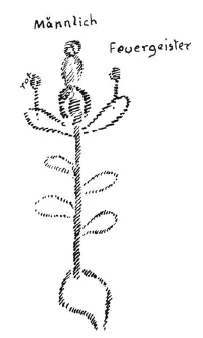
[ 21 ] Undinen tragen die Wirkungen des chemischen Äthers in die Pflanzen hinein, Sylphen tragen die Wirkungen des Lichtäthers in die Pflanzen hinein, die Feuergeister tragen die Wirkungen des Wärmeäthers in die Blüten der Pflanzen hinein. Und der Blütenstaub, der ist dasjenige, was nun gewissermaßen das kleine Luftschiffchen abgibt für die Feuergeister, um hineinzutragen die Wärme in den Samen. Die Wärme wird überall gesammelt mit Hilfe der Staubfäden und von den Staubfäden aus übertragen auf den Samen in dem Fruchtknoten. Und dieses, was hier im Fruchtknoten gebildet wird, das ist im Ganzen das Männliche, das aus dem Kosmos kommt. Nicht der Fruchtknoten ist das Weibliche, und die Antheren des Staubfadens wären das Männliche! Da geschieht überhaupt in der Blüte keine Befruchtung, sondern da wird nur der männliche Same vorgebildet. Was als Befruchtung wirkt, das ist nun dasjenige, was von den Feuergeistern in der Blüte als der der Wärme des Weltenalls entnommene weltenmännliche Same ist, der zusammengebracht wird mit dem Weiblichen, das aus der Formung der Pflanze, wie ich Ihnen gesagt habe, schon früher als Ideelles hinuntergeträufelt ist in den Erdboden, da drinnen ruht. Für die Pflanzen ist die Erde Mutter, der Himmel Vater. Und alles das, was außerhalb des Irdischen geschieht, ist für die Pflanze nicht Mutterschoß. Es ist ein kolossaler Irrtum, zu glauben, daß das mütterliche Prinzip der Pflanze im Fruchtknoten ist. Da ist gerade das mit Hilfe der Feuergeister aus dem Universum herausgeholte Männliche. Das Mütterliche wird aus dem Kambium der Pflanze, welches sich sowohl gegen die Rinde wie gegen das Holz hin verbreitet, hinuntergetragen als Idealgestalt in der Pflanze. Und dasjenige, was nun entsteht aus dem Zusammenwirken von Gnomenwirkung und Feuergeisterwirkung, das ist Befruchtung. Im Grunde genommen sind die Gnomen die geistigen Hebammen der Pflanzen-Fortpflanzung. Und die Befruchtung findet statt während des Winters drunten in der Erde, wenn der Samen in die Erde hineinkommt und auftrifft auf die Gestalten, die die Gnomen empfangen haben von den Sylphen- und Undinenwirkungen und hintragen, wo diese Gestalten auftreffen können auf den befruchtenden Samen.
[ 21 ] Undines carry the effects of the chemical ether into the plants; sylphs carry the effects of the light ether into the plants; and the fire spirits carry the effects of the heat ether into the flowers of the plants. And the pollen is, so to speak, the little airship that the fire spirits use to carry the warmth into the seed. The warmth is gathered from all around with the help of the stamens and transmitted from the stamens to the seed within the ovary. And what is formed here in the ovary is, as a whole, the masculine principle that comes from the cosmos. It is not the ovary that is the feminine, and the anthers of the stamen that are the masculine! No fertilization takes place in the flower at all; rather, only the male seed is preformed there. What acts as fertilization is, in fact, that which is brought into the flower by the fire spirits—the world-masculine seed drawn from the warmth of the universe—which is united with the feminine principle that, as I have told you, has already dripped down earlier as an ideal from the plant’s formative process into the earth, where it rests. For plants, the earth is the mother, the sky the father. And everything that happens outside the earthly realm is not the plant’s womb. It is a colossal error to believe that the plant’s maternal principle lies in the ovary. That is precisely where the masculine principle, drawn from the universe with the help of the fire spirits, resides. The maternal principle is carried down from the plant’s cambium—which extends toward both the bark and the wood—as the ideal form within the plant. And what now arises from the interaction of the gnomes’ influence and the fire spirits’ influence is fertilization. Essentially, the gnomes are the spiritual midwives of plant reproduction. And fertilization takes place during the winter down in the earth, when the seed enters the earth and encounters the forms that the gnomes have received from the influences of the sylphs and undines and carry along, where these forms can come into contact with the fertilizing seed.
[ 22 ] Sie sehen: dadurch, daß man das Geistige nicht kennt, daß man nicht weiß, wie mitweben und mitleben mit dem Pflanzenwachstum Gnomen, Undinen, Sylphen und Feuergeister — was früher Salamander genannt worden ist —, dadurch ist man sich sogar ganz unklar über den Vorgang der Befruchtung in der Pflanzenwelt. Also da, außerhalb der Erde geschieht eben gar keine Befruchtung, sondern die Erde ist Mutter der Pflanzenwelt, der Himmel ist Vater der Pflanzenwelt. Das ist in ganz wörtlichem Sinne der Fall. Und die Befruchtung der Pflanzen geschieht dadurch, daß die Gnomen von den Feuergeistern dasjenige nehmen, was die Feuergeister in den Fruchtknoten hineingetragen haben auf den kleinen Luftschiffchen des Antherenstaubes als konzentrierte kosmische Wärme. So sind die Feuergeister Wärmeträger.
[ 22 ] As you can see, because people are unaware of the spiritual realm—because they do not know how gnomes, undines, sylphs, and fire spirits (what used to be called salamanders) interweave and live in harmony with plant growth—they are completely unclear about the process of fertilization in the plant world. So, outside the Earth, no fertilization takes place at all; rather, the Earth is the mother of the plant world, and the heavens are the father of the plant world. This is the case in the most literal sense. And the fertilization of plants occurs when the gnomes take from the fire spirits what the fire spirits have carried into the ovary on the tiny airships of pollen as concentrated cosmic warmth. Thus, the fire spirits are carriers of warmth.
[ 23 ] Jetzt werden Sie natürlich leicht einsehen, wie eigentlich das ganze Pflanzenwachstum zustande kommt. Erst beleben unten mit Hilfe dessen, was ihnen von den Feuergeistern wird, die Gnomen die Pflanze und stoßen sie nach aufwärts. Sie sind die Lebenspfleger. Sie tragen heran den Lebensäther an die Wurzel; jenen Lebensäther, in dem sie selber leben, den tragen sie an die Wurzel heran. Weiter pflegen in der Pflanze die Undinen den chemischen Äther, die Sylphen den Lichtäther, die Feuergeister den Wärmeäther. Dann verbindet sich wiederum die Frucht des Wärmeäthers mit dem, was unten Leben ist. Und so kann man die Pflanze nur verstehen, wenn man sie im Zusammenhange betrachtet mit alledem, was sie umschwirrt, umwebt und umlebt. Und sogar auf die richtige Interpretation des bei der Pflanze wichtigsten Vorganges kommt man erst dann, wenn man in diese Dinge eindringt, auf geistige Art eindringt.
[ 23 ] Now, of course, you will easily see how the entire process of plant growth actually comes about. First, with the help of what they receive from the fire spirits, the gnomes enliven the plant from below and propel it upward. They are the nurturers of life. They carry the life ether to the root; that life ether in which they themselves live, they carry it to the root. Furthermore, within the plant, the Undines nurture the chemical ether, the Sylphs the light ether, and the fire spirits the warmth ether. Then, in turn, the fruit of the warmth ether unites with what constitutes life below. And so one can only understand the plant by viewing it in connection with all that surrounds, envelops, and animates it. And one can only arrive at the correct interpretation of the most important process in the plant by delving into these things—delving into them in a spiritual way.
[ 24 ] Es ist interessant, wenn dies einmal erkannt wird, jene Notiz bei Goethe wiederzusehen, wo Goethe in Anknüpfung an einen anderen Botaniker sich so furchtbar ärgert, daß die Leute da reden von den ewigen Hochzeiten da oben auf den Pflanzen. Goethe ärgerte sich, daß über eine Wiese da lauter Hochzeiten ausgebreitet sein sollen. Es erschien ihm das als etwas Unnatürliches. Aber das war ein instinktiv sehr sicheres Gefühl. Goethe konnte nur noch nicht wissen, um was es sich eigentlich handelt, aber es war instinktiv sehr sicher. Er konnte aus seinem Instinkt heraus nicht begreifen, daß da oben in den Blüten die Befruchtung vor sich gehen sollte. Er wußte nur noch nicht, was da unten, unterhalb des Bodens vor sich geht, daß die Erde der Mutterschoß ist für die Pflanzen. Aber daß das, was da oben ist, das nicht ist, wofür es alle Botaniker ansehen, das ist etwas, was Goethe instinktiv gefühlt hat. Nun erkennen Sie auch den innigen Zusammenhang zwischen der Pflanze und der Erde einerseits. Aber noch etwas anderes müssen Sie ins Auge fassen.
[ 24 ] Once this is recognized, it is interesting to revisit that passage in Goethe where, referring to another botanist, he is so terribly annoyed that people talk about “eternal weddings” up there among the plants. Goethe was annoyed that a meadow was supposed to be filled with nothing but weddings. It struck him as something unnatural. But that was an instinctively very certain feeling. Goethe simply could not yet know what it was actually about, but it was instinctively very certain. Based on his instinct, he could not comprehend that fertilization was supposed to take place up there in the flowers. He simply did not yet know what was going on down there, beneath the soil—that the earth is the womb for the plants. But the fact that what is up there is not what all botanists take it to be—that is something Goethe sensed instinctively. Now you, too, recognize the intimate connection between the plant and the earth on the one hand. But there is something else you must take into account.
[ 25 ] Sehen Sie, wenn nun da oben die Feuergeister herumschwirren, namentlich wenn sie den Antherenstaub vermitteln, dann haben sie nur ein Gefühl. Das ist ein gesteigertes Gefühl gegenüber dem Sylphengefühl. Die Sylphen empfinden ihr Selbst, ihr Ich, indem sie die Vögel schwirren sehen. Die Feuergeister haben dieses noch gesteigert gegenüber der Schmetterlingswelt und überhaupt der ganzen Insektenwelt. Und sie sind es, diese Feuergeister, welche am liebsten der Insektenspur folgen, um eben die Vermittlung der Wärme zu bewirken für den Fruchtknoten. Um das konzentrierte Warme, das hineinkommen muß in die Erde, um sich da zu verbinden mit der ideellen Gestalt, um das hinzutragen, fühlen sich die Feuergeister innig verwandt mit der Schmetterlingswelt und auch überhaupt mit der gesamten Insektenwelt. Sie folgen überall den Spuren der Insekten, die von Blüte zu Blüte schwirren. Und so hat man eigentlich das Gefühl, wenn man diese von Blüte zu Blüte schwirrenden Insekten verfolgt: jedes solche von Blüte zu Blüte schwirrende Insekt hat eigentlich eine ganz besondere Aura, die nicht recht erklärlich ist aus dem bloßen Insekt. Insbesondere die Bienen mit ihrer hellglänzenden, wunderbar leuchtenden, schimmernden, schillernden Aura, die von Pflanze zu Pflanze schwirren, sind außerordentlich schwierig ihrer Aura nach zu erklären. Warum? Weil das Insekt Biene überall begleitet ist von dem Feuergeist, der sich ihm so verwandt fühlt, daß da die Biene ist, und die Biene für das geistige Schauen überall in einer Aura drinnen ist, die eigentlich der Feuergeist ist. Wenn die Biene durch die Luft fliegt von Pflanze zu Pflanze, von Baum zu Baum, so fliegt sie mit einer Aura, die ihr eigentlich von dem Feuergeiste gegeben wird. Der Feuergeist fühlt nicht nur in der Anwesenheit des Insektes sein Ich, sondern er will mit dem Insekt ganz verbunden sein.
[ 25 ] You see, when the fire spirits are flitting about up there—especially when they are conveying pollen—they have only one sensation. This is a heightened sensation compared to that of the sylphs. The sylphs perceive their self, their “I,” by watching the birds flit about. The fire spirits have heightened this sensation even further in relation to the world of butterflies and, indeed, the entire insect world. And it is these fire spirits who most readily follow the trail of insects in order to convey warmth to the ovary. In order to carry the concentrated warmth—which must enter the earth to unite there with the ideal form—the fire spirits feel deeply connected to the world of butterflies and, indeed, to the entire insect world. They follow the trails of insects everywhere as they flit from flower to flower. And so, when one observes these insects flitting from flower to flower, one actually has the feeling that each such insect has a very special aura that cannot really be explained by the insect alone. Bees in particular, with their bright, wonderfully luminous, shimmering, iridescent aura as they flit from plant to plant, are extraordinarily difficult to explain in terms of their aura. Why? Because the bee is accompanied everywhere by the fire spirit, which feels so closely connected to it that the bee is there, and to spiritual vision, the bee is everywhere enveloped in an aura that is, in fact, the fire spirit itself. When the bee flies through the air from plant to plant, from tree to tree, it flies with an aura that is actually bestowed upon it by the fire spirit. The fire spirit not only feels its own self in the presence of the insect, but also wishes to be completely united with the insect.
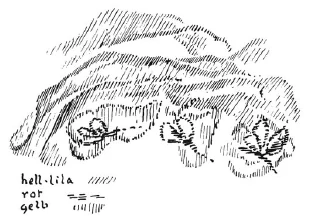
[ 26 ] Dadurch bekommen aber auch die Insekten jene Kraft, von der ich Ihnen gesprochen habe, die sich selbst im Hinausschimmern in den Kosmos zeigt. Die Insekten bekommen dadurch diese Kraft, die physische Materie, die sich mit ihnen vereinigt, ganz zu durchgeistigen und das durchgeistigte Physische in den Weltenraum hinausstrahlen zu lassen. Aber geradeso wie bei einer Flamme die Wärme es zunächst ist, die das Licht zum Scheinen bringt, so sind es auf der Oberfläche der Erde, wenn die Insekten in den Weltenraum hinausschimmern lassen, was dann den Menschen anzieht, wenn er zur physischen Verkörperung herunterkommen soll: es sind die Insekten (Tafel 11, rechts / Zeichnung, rot und gelb), sind diejenigen Wesenheiten, die entflammt sind zu diesen Taten durch den Kosmos, durch die Feuergeister, die sie umschwirren. Und während die Feuergeister auf der einen Seite tätig sind dafür, daß in den Kosmos die durchfeuerte Materie hinausströmt, sind sie auf der anderen Seite dafür tätig, daß ins Innere der Erde hinein das konzentrierte Feurige, das konzentrierte Warme geht, um aufzuerwecken mit Hilfe der Gnomen die Geistgestalt, die von Sylphen und Undinen hinuntergeträufelt ist in die Erde.
[ 26 ] But this also gives the insects that power I have spoken to you about, which manifests itself even as it radiates out into the cosmos. Through this, the insects gain the power to fully spiritualize the physical matter that unites with them and to allow the spiritualized physical matter to radiate out into outer space. But just as with a flame, where it is the heat that first causes the light to shine, so too on the surface of the Earth, when the insects let their light shine out into the cosmos, it is this that attracts human beings when they are to descend into physical embodiment: it is the insects (Plate 11, right / drawing, red and yellow)—those beings who are inspired to these deeds by the cosmos, by the fire spirits that swarm around them. And while the fire spirits work, on the one hand, to ensure that the fire-pervaded matter flows out into the cosmos, they work, on the other hand, to ensure that the concentrated fiery and warm forces flow into the interior of the Earth to awaken, with the help of the gnomes, the spiritual form that has been dripped down into the Earth by the sylphs and undines.
[ 27 ] Sehen Sie, das ist der geistige Vorgang des Pflanzenwachstums. Und weil eigentlich das Unterbewußte des Menschen es ahnt, daß mit der blühenden, sprossenden Pflanze es etwas Besonderes ist, erscheint das Pflanzenwesen als ein so Geheimnisvolles. Das Geheimnis wird natürlich nicht zerklüftet, denn den wunderbaren Mysterien wird nicht der Schmetterlingsstaub abgestreift; aber, ich möchte sagen, in einer noch erhöhteren Wunderbarkeit erscheint dasjenige, was sonst in der Pflanze den Menschen entzückt und erhebt, wenn nun eigentlich nicht nur die physische Pflanze da ist, sondern dieses wunderbare Arbeiten da unten der unmittelbar verständigen, ganz Intellekt-bildenden Gnomenwelt, die die Pflanzenkraft zunächst hinaufstoßen. So wie gewissermaßen der menschliche Verstand nicht der Schwerkraft unterworfen ist, wie der Kopf getragen wird, ohne daß wir seine Schwere fühlen, so überwinden die Gnomen mit ihrer Lichtintellektualität das Erdenhafte und stoßen die Pflanze herauf. Sie bereiten unten das Leben. Aber das Leben würde ersterben, wenn es nicht vom Chemismus angefacht würde. Den bringen die Undinen heran. Und das Licht muß das durchströmen.
[ 27 ] You see, this is the spiritual process of plant growth. And because the human subconscious actually senses that there is something special about the flowering, sprouting plant, the plant world appears so mysterious. The mystery is not, of course, unraveled, for the wonderful mysteries are not stripped of their enchantment; but, I would say, what otherwise delights and uplifts people in the plant appears in an even greater wonder when it is not merely the physical plant that is present, but also this marvelous work taking place down below—the work of the gnome world, which is immediately intelligent and entirely intellect-forming, and which initially propels the plant’s life force upward. Just as, in a sense, the human mind is not subject to gravity—just as the head is supported without our feeling its weight—so the gnomes, with their light-filled intellect, overcome the earthly and propel the plant upward. They prepare life from below. But life would wither away if it were not kindled by chemistry. The Undines bring that about. And the light must flow through it.
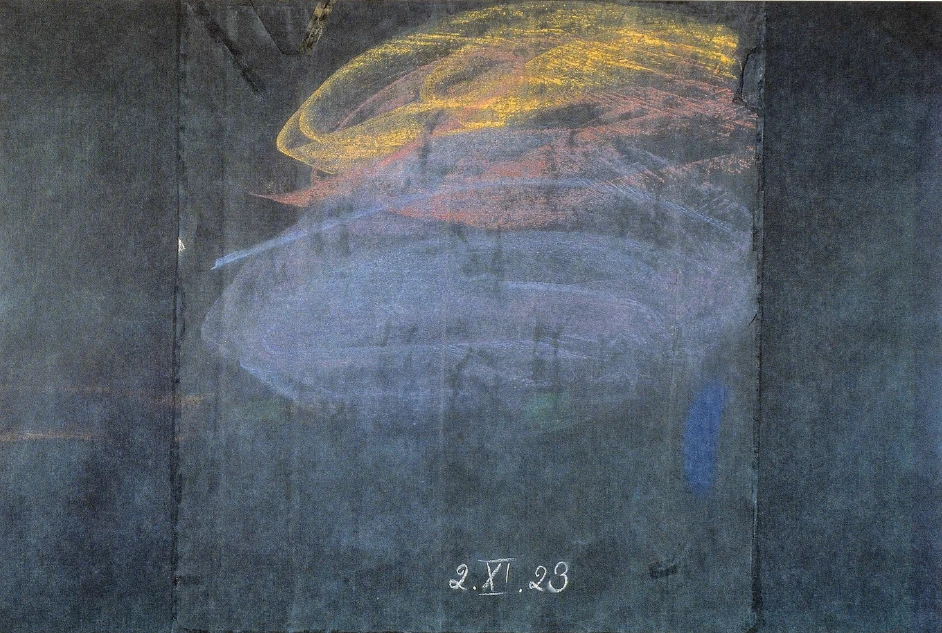
[ 28 ] So sehen wir von unten herauf, ich möchte sagen, im BläulichSchwärzlichen die Schwerkraft (Tafel 12 / Zeichnung S. 126), der der Schwung nach oben hin gegeben wird, von den Gnomen ausgehend, und, rings die Pflanze umschwirrend, angedeutet in den Blättern, die Undinenkraft, welche Stoffe mischt und entmischt, indem die Pflanze hinaufwächst. Von oben herunter, von den Sylphengeistern wird hineingeprägt in die Pflanze das Licht, die nun eine plastische Gestalt bilden, die wiederum idealisiert hinuntergeht und vom Mutterschoße der Erde aufgenommen wird. Und dann wiederum wird die Pflanze umschwirrt von den Feuergeistern, die in den kleinen Samenpünktchen konzentrieren die Weltenwärme, die dann mit der Samenkraft den Gnomen hinuntergegeben wird, so daß die Gnomen aus Feuer und Leben da unten die Pflanzen entstehen lassen können.
[ 28 ] So we look up from below, I would say, in the bluish-black hue, the force of gravity (Plate 12 / Drawing p. 126), which is given upward momentum originating from the gnomes; and, swirling around the plant, indicated in the leaves, the undine force, which mixes and separates substances as the plant grows upward. From above, the Sylph spirits imprint light into the plant, which now forms a three-dimensional shape; this, in turn, descends in an idealized form and is absorbed by the Earth’s womb. And then, in turn, the plant is surrounded by the fire spirits, who concentrate the warmth of the world into the tiny seed points; this warmth is then passed down to the gnomes along with the seed’s power, so that the gnomes, with fire and life down below, can bring the plants into being.
[ 29 ] Wiederum sehen Sie, wie die Erde ihre abstoßende Kraft, ihre Dichtigkeit, im Grunde genommen der Antipathie der Gnomen und Undinen gegen Amphibien und Fische verdankt. Wenn die Erde dicht ist, so ist die Dichtigkeit diese Antipathie, durch welche Gnomen und Undinen ihre Gestalt aufrecht erhalten. Wenn sich Licht und Wärme heruntersenkt auf die Erde, so ist das zu gleicher Zeit der Ausdruck jener Sympathiekraft, der tragenden Sylphen-Liebekraft, die durch den Luftraum getragen wird, und der tragenden Feuergeist-Opferkraft, welche das Sich-Herunterneigende bringt. So daß man sagen kann: Es wächst über der Erde zusammen dasjenige, was Erdendichte, Erdenmagnetismus, Erdenschwere ist, indem es nach aufwärts strebt, zusammen mit der abwärts strebenden Liebe- und Opferkraft. Und in diesem Ineinanderwirken der abwärtsströmenden Liebe-Opferkraft und der aufwärtsströmenden Dichtigkeit, Schwerekraft und magnetischen Kraft, in diesem Zusammenwirken entwickelt sich über dem Erdboden, wo die beiden sich begegnen, das Pflanzenwesen, das ein äußerer Ausdruck des Zusammenwirkens von Weltenliebe, Weltenopfer, Weltenschwere und Weltenmagnetismus ist.
[ 29 ] Once again, you can see how the Earth owes its repulsive force—its density—essentially to the antipathy of the gnomes and undines toward amphibians and fish. If the Earth is dense, then this density is the very antipathy through which gnomes and undines maintain their form. When light and warmth descend upon the Earth, this is at the same time the expression of that force of sympathy—the sustaining, loving force of the Sylphs, carried through the air—and the sustaining, sacrificial force of the fire spirits, which brings about this descent. So that one can say: What constitutes earth’s density, earth’s magnetism, and earth’s gravity coalesces above the earth as it strives upward, together with the downward-striving force of love and sacrifice. And in this interplay between the downward-flowing power of love and sacrifice and the upward-flowing density, gravitational force, and magnetic force—in this interplay—the plant being develops above the earth’s surface, where the two meet; it is an outward expression of the interplay of world love, world sacrifice, world gravity, and world magnetism.
[ 30 ] Damit haben Sie gesehen, um was es sich handelt, wenn wir unseren Blick auf die uns so entzückende, erhebende und anmutende Pflanzenwelt richten. Durchschauen können wir sie erst, wenn wir imstande sind, das Geistige, das Übersinnliche zu dem Physischen, zu dem Sinnlichen hinzuzuschauen. Das macht auch zu gleicher Zeit möglich, den Kapitalirrtum der materialistischen Botanik zu korrigieren, als ob da oben die Befruchtung vor sich gehe. Was da vor sich geht, ist nicht die Befruchtung, sondern die Zubereitung des männlichen Himmelssamens der Pflanze für dasjenige, was im Mutterschoße der Erde für die Pflanze vorbereitet wird.
[ 30 ] You have now seen what is at work when we turn our gaze to the plant world that so delights, uplifts, and enchants us. We can only truly understand it when we are able to look beyond the physical and the sensory to the spiritual and the supersensible. This also makes it possible to correct the fundamental error of materialistic botany, which assumes that fertilization takes place up there. What is happening there is not fertilization, but the preparation of the plant’s male heavenly seed for what is being prepared for the plant in the womb of the Earth.