Humanity as the Harmony of the creative, formative, and shaping Word of the WorldGA 230
10 November 1923, Dornach
Translated by Steiner Online Library
Eleventh Lecture
[ 1 ] From what has been described so far, you will have gathered that the relationships between the human being’s environment and the human being himself are, after all, different from what is often imagined according to today’s concepts. It is all too easy to think that whatever lives in the human environment—whatever belongs to the mineral, plant, and animal kingdoms and is then taken in by human beings—continues, as it were, its processes, its external material processes (which physicists, chemists, and so on study), within the human being itself. But that is not the case at all; rather, one must realize that within the human skin, everything is different from what lies outside it, that within these skin processes there exists a completely different world than outside. As long as one is not aware of this, one will repeatedly ponder how this or that—which one examines in a retort or in some other way—continues within the human organism, and one will regard the human organism itself merely as a more complex arrangement of retort processes.
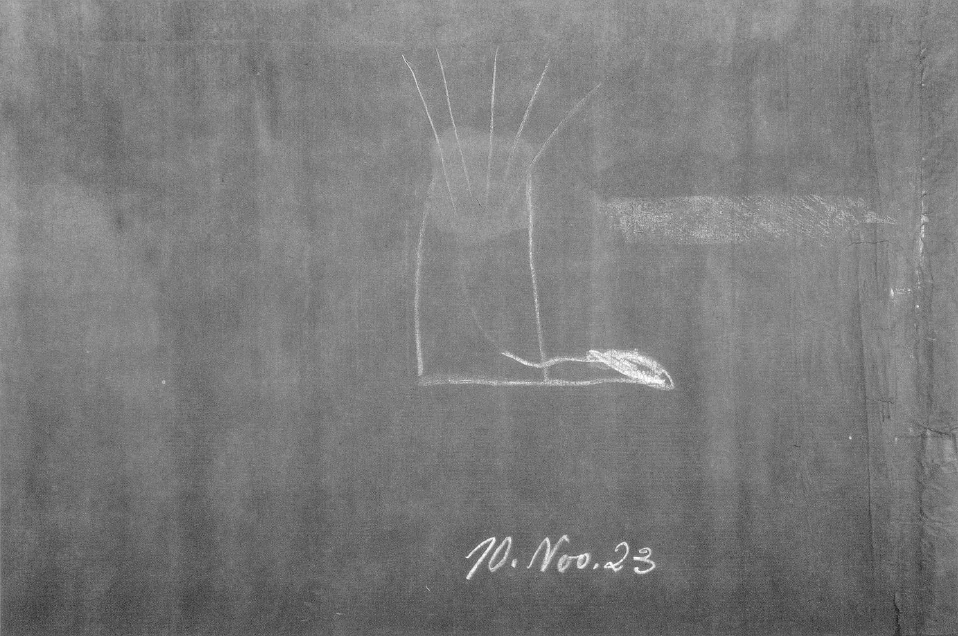
[ 2 ] Just remember what I already said in yesterday’s lecture: everything mineral must be transformed within the human being all the way to the warmth ether. This means that everything mineral that enters the human organism must be metamorphosed and transformed to such an extent that, at least for a certain period of time, it becomes pure warmth—and indeed, one with the warmth that the human being develops as his own warmth, beyond the warmth of his surroundings. Whether we take in a salt or any other mineral substance into our organism, it must somehow assume the warmth-etheric form—and it must do so before it is used within the human organism itself for its own building and shaping.
[ 3 ] So if we take any mineral outside the human organism and imagine that this mineral simply migrates into it and forms some part of its bones, teeth, and so on, that is pure nonsense; rather, whatever reappears in the human form must first have been transformed into a completely volatile, heat-etheric form and then reconverted into the substance as which it then appears in living form within the human organism.
[ 4 ] But there is something quite different connected with this; it is connected with the fact that, for example, something that has a solid form—which is already transformed into a watery substance in the mouth—is then further transformed all the way up to the warmth-ether; that it gradually loses its heaviness within the human being as it first passes into the watery form; that it becomes more and more alien to the earth; and by the time it ascends into the warmth-etheric form, it is fully prepared to receive within itself the spiritual that comes from above, that comes from the vastness of the worlds.
[ 5 ] So if you want to imagine how a mineral substance is used in the human being, you must tell yourself the following: There is the mineral substance (white); this mineral substance enters the human being. Within the human being, it is transformed through the liquid and so on until it becomes warmth-ether; there it is warmth-ether. This warmth-ether has the greatest tendency to absorb the forces that radiate and flow in from the vastness of the worlds. It thus absorbs the forces of the universe. These forces of the universe then take the form of the spiritual forces that animate the heat-etherized earth matter here. And from there, with the help of the heat-etherized earth substance, that which the body now needs for its formation then penetrates into the body.
[ 6 ] So consider this: if we refer to warmth as fire in the traditional sense, we can say that whatever is absorbed by the human being from the mineral realm is carried upward within the human being to the fiery nature. The fiery nature is inclined to absorb the influences of the higher hierarchies, and it is this fire that then flows out again into all the inner regions of the human being and, as it solidifies anew, forms what constitutes the substantial foundation of the individual organs within the human being. Nothing that the human being takes in remains as it is; nothing remains earthly. Everything is transformed—particularly from the mineral kingdom—to the extent that it can absorb the spiritual-cosmic within itself and, with the help of the spiritual-cosmic, solidifies it once again into the earthly.
[ 7 ] So take any piece of phosphoric lime from a bone; this is not the same phosphoric lime that you find out in nature or that you might produce in a laboratory, but rather it is the phosphoric lime that has arisen from what was taken in from the outside with the help of forces which—after the externally taken-in substance had passed into the warm-etheric state—penetrated and only then intervened in human formation.
[ 8 ] You see, this is why human beings need a wide variety of substances throughout their lives in order to transform the inanimate into warmth-etheric, depending on how their organism is organized at each stage of life. A child is not yet capable of transforming the inanimate into warmth-etheric at all—it does not yet have enough strength in its organism. It must therefore consume milk, which is still so closely attuned to the human organism itself, in order to transform it into warmth-etheric energy and to be able to use its forces to carry out the extensive shaping process that is necessary during childhood with regard to physical development. One can only truly understand human nature when one realizes that everything taken in from the outside must be thoroughly transformed. Therefore, if you take an external substance and wish to assess its value for human life, you cannot do so at first using ordinary chemistry, because you must know how much energy the human organism must expend to transform an external mineral substance into the volatile state of the heat-ether. If it cannot do so, then this external mineral substance is deposited within it, becoming heavy earth substance before it has been transformed into heat, and, as an inorganic substance that remains foreign to the human organism, permeates the human tissues.
[ 9 ] This can occur, for example, when a person is unable to transform that which is mineralized—which is, after all, originally organic—but appears within them as sugar, into the volatility of the warm-etheric. Then it settles in the organism prior to the state that must be reached if the entire organism is to participate in all that is within it, and the dreaded sugar fever, diabetes mellitus, arises. One must therefore consider, with regard to every substance, to what extent the human organism is capable of bringing the inanimate—which the substance either already constitutes, as when we eat table salt, for example, or which it becomes, as in the case of sugar—up to the level of heat matter, where the organism, rooted on Earth, then finds its connection to the spiritual cosmos.
[ 10 ] Any such deposit in a person that remains unprocessed—such as that which occurs in diabetes—means that the person is unable to establish a connection within themselves between the substances present in their body and the spiritual realm of the cosmos. This is, I would say, merely a specific application of the general principle that whatever approaches a person from the outside must be fully processed within the person. If one wishes to care for a person’s health, one must above all ensure that nothing enters the person that remains as it is—that cannot be processed by the human organism down to the very smallest atom. This applies not only to substances but also, for example, to forces.
[ 11 ] External heat—the heat we feel when we touch things, the external heat present in the air—must, when absorbed by the human organism, be transformed so that, in fact, the heat itself within the human body, if I may put it that way, exists at a different level than it does on the outside. If I denote the heat level of the external heat with this symbol (it is drawn here), then when it is absorbed by us, it must be transformed internally to some extent, so that the organism intervenes everywhere in that which is not part of us—in the external heat. The organism must intervene even in every tiniest quantum of heat.
[ 12 ] Now imagine this: I am walking through the cold, and because the cold is too intense, or because the cold flickers in moving air or in a draft, I am unable to transform the world’s warmth into my own warmth as quickly as would be necessary. In doing so, I run the risk of being warmed by the world’s heat like a piece of wood or even a stone, which are heated from the outside. That must not happen. I must not be exposed to the danger of simply allowing external heat to flow into me like an object. I must be able at every moment to immediately absorb the warmth through the surface of my skin and make it my own. If I am unable to do so, I catch a cold.
[ 13 ] This is the internal process of a cold. A cold is a form of poisoning caused by external heat that has not been assimilated by the body.
[ 14 ] You see, everything that exists out there in the world is poison for human beings—true poison—and it only becomes something useful to human beings when they take possession of it through their own powers. For it is only from human beings that these forces then ascend in a human way to the higher hierarchies, whereas outside they remain with the elemental beings of nature, with the elemental spirits. This wondrous transformation must take place within the human being so that the elemental spirits can hand over their work to the higher hierarchies within the human organism. For the mineral realm, this can only occur when the mineral substance is completely transformed into warmth-etheric substance.
[ 15 ] Let’s take a look at the plant world. This plant world truly has something enchanting for human beings in many ways when they begin to observe the Earth’s vegetation with the eye of the spirit. We go out into a meadow or somewhere into the forest. Let’s say we dig up a plant, roots and all. If we look at what we’ve dug up with the eye of the spirit, we actually see a wondrous, magical composition. The root reveals itself as something about which one can truly say: it has become completely absorbed into the earthly realm. Ah, a plant root—the more rugged it appears before us—is actually something so terribly earthly. For a plant root—especially, let’s say, a beet root—actually always reminds one of a well-fed banker. Yes, it’s true; the plant root is so immensely sedate, so content with itself. It has absorbed the salts of the earth and feels so at ease in this sense of having drawn the earth into itself. Among all earthly things, there is actually nothing more content than such a beetroot; it is the epitome of the root-like.
[ 16 ] Let us, on the other hand, look at the flower. When we gaze upon it with the eye of the spirit, we cannot help but perceive it as our own soul when it harbors its most tender desires. Just take a look at a true spring blossom; it is, after all, a breath of longing; it is the embodiment of yearning. And if we possess enough tender sensitivity of soul, something wonderful actually pours forth from the world of blossoms that surrounds us.
[ 17 ] In the spring we see the violet—or, if you will, the March cup, the lily of the valley, or some other little plant with yellow flowers—and we are moved by them, just as if all these spring-blooming plants were trying to tell us: Oh, human, how pure and innocent you can actually direct your longings toward the spiritual! — The spiritual nature of desire—I would say, the nature of desire steeped in piety—sprouts and blossoms from every spring flower.
[ 18 ] When the later blooms appear—let’s take the extreme example, let’s take the autumn crocus—well, can one truly gaze at the autumn crocus with a spiritual sensibility without feeling a slight sense of shame? Does it not remind us that our desires can become impure, that our desires can be permeated by the most varied forms of impurity? One might say that the autumn crocuses speak to us from all sides, as if they were constantly whispering to us: Look upon the world of your desires, O human being, and see how easily you can become a sinner.
[ 19 ] And so, in fact, the plant world is the external mirror of human conscience. One cannot imagine anything more poetic than to conceive of this inner voice of conscience—emerging as if from a single point—as being distributed across the most diverse forms of plant blossoms, which speak to our souls throughout the seasons in the most varied ways. The plant world is the expanded mirror of conscience, if only we know how to view it in the right way.
[ 20 ] When we consider this, it becomes particularly important for us to observe the flowering of plants, to see how the flower is, in fact, a yearning for the vast expanses of light in the universe, how the flower literally grows upward so that the earth’s desires may flow toward the vast expanses of light in the universe, and how, on the other hand, the stately root anchors the plant to the earth; how it is the root that constantly wrests the plant’s heavenly longings from it and seeks to transform them into earthly comfort.
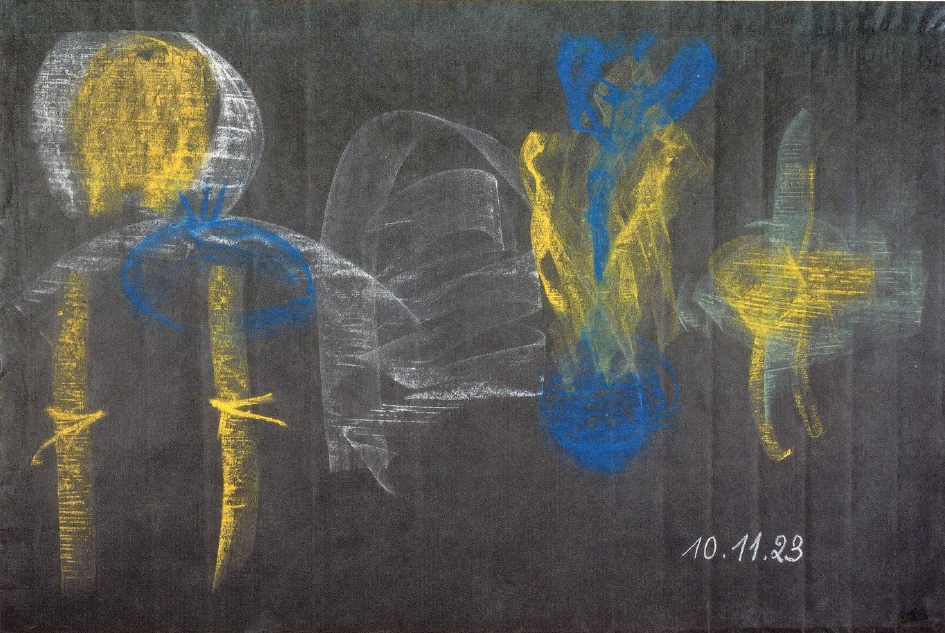
[ 21 ] We come to understand why this is so when, in studying the Earth’s evolutionary history, we realize that what is present in the root of a plant was always predetermined during the time when the Moon was still near the Earth. During the time when the Moon was still attached to the Earth, the forces anchored in the Moon acted so strongly within the Earth’s body that they caused the plants to develop almost exclusively as roots. When the Moon was still attached to the Earth and the Earth still had a completely different substance, the root-like structure spread powerfully downward. And one can illustrate this by saying that the plant’s root system spread powerfully downward, while the plants themselves peered upward into the cosmos (Plate 19, left, blue). I would say that the plants extended their shoots outward into the cosmos like fine little hairs. So that one has the feeling: while the Moon is still near the Earth, this Moon—these lunar forces contained within the Earth’s body itself—binds the plant realm to the earthly realm. And that which once entered into the plant realm remains latent within the root system.
[ 22 ] But ever since the time when the Moon left the Earth, a longing has been unfolding in those once tiny, minuscule shoots that peered out toward the universe; a longing for the vastness, for the luminous expanses of the universe, and thus the flower-like form came into being. So, in a sense, the moon’s departure was a kind of liberation for the plant kingdom—a true liberation.
[ 23 ] But we must nevertheless recognize how everything that is earthly has its origin in the spirit. During the ancient Saturn era—just take the description I gave in my *Outline of Esoteric Science*—the Earth was entirely spiritual, existed solely in the warmth-etheric element, and was wholly spiritual. It was from the spiritual realm that the earthly realm first took shape.
[ 24 ] Now let us look at the plant. Its form carries within it the living memory of evolution. In its root system, it carries within itself the process of becoming earthbound, of becoming physical and material. If we look at the plant’s root, we further find that it tells us it has only become possible because the earthly-material has developed out of the spiritual. But no sooner is the Earth relieved of its lunar influence than the plant once again strives back toward the expanses of light.
[ 25 ] When we consume plant life as food, we give the plant the opportunity to properly continue what it has already begun in the outer world of nature—to strive not only toward the light-spaces of the cosmos, but also toward the spirit-spaces of the cosmos. That is why, as I said yesterday, we must transform the plant realm into something air-like, into something gaseous, so that the plant realm can follow its yearning for the light-spirit realms.
[ 26 ] I go out into the meadow. I observe how the flowers and plants, as they bloom, reach toward the light. Human beings find joy in plants. They possess within themselves a world entirely different from the one outside them. They can bring to fulfillment within themselves what the plant expresses outwardly as a longing in its bloom. We see the world of longing spread out in nature through the plants. We take pleasure in the plants. We draw this longing of the spiritual world toward ourselves. To do this, we must lift the plants into the realm of air, so that in the lighter realm of air they have the opportunity to strive toward the spiritual.
[ 27 ] The plant undergoes a peculiar process. When a person partakes of the plant, the following occurs: If we consider here, schematically, the root-like part (Plate 19, center right), then that which strives toward the flower through the leaf—then, in this process of the plant becoming air-like, we must experience internally a complete reversal of the plant’s being. The root, which is bound to the earth precisely because it lives in the earth, strives upward; it strives most powerfully upward toward the spiritual and leaves the flowering process behind. It is indeed as if you were to imagine the plant unfolding downward in this way, and you could pierce through the lower part here inside, so that the upper part becomes the lower part and the lower part becomes the upper part [an inverted handkerchief]. The plant turns itself completely inside out. Within itself, it shapes itself so that the lower part is above and the upper part is below. What has already flourished up to the point of flowering has, so to speak, enjoyed the light in its material striving; it has raised matter up to the light. As a result, it must suffer the consequence of now having to remain below as well. The root has been the slave of the earthly; but, as you can already see from Goethe’s theory of plant metamorphosis, it simultaneously carries the entire nature of the plant within itself. It strives upward.
[ 28 ] Yes, once a person is a stubborn sinner, he wants to remain one. The root of the plant, which—as long as it is bound to the earth—gives the impression of a wealthy banker, is immediately transformed when a person eats it and strives upward, while that which has brought the matter into the light—the flower—must remain below. Thus, in what is root-like in the plant, we have something that, when consumed, actually strives by its very nature toward the human head, while that which is closer to the flower remains in the lower regions; in the overall metabolism, it does not rise as far as the formation of the head.
[ 29 ] And so we have the strange, wondrous spectacle that when a person consumes a plant—of course, they do not need to consume the entire plant, for every single part of the plant contains the whole plant; as I said, take a look at Goethe’s theory of metamorphosis—when a person consumes the plant, it transforms within them into air, an air that proceeds from top to bottom in a plant-like manner, that, so to speak, blossoms from top to bottom.
[ 30 ] In times when such things were known through the ancient, instinctive clairvoyance, people examined plants based on their outward appearance to determine whether they were of a nature that could benefit the human head, whether they already showed, even in their roots, a longing for the spiritual. Then what we consume from them will, so to speak, seek out the human mind upon full digestion and penetrate into the head, striving upward toward the spiritual cosmos and establishing the necessary connection with it.
[ 31 ] In plants that are already heavily permeated with astral energy—such as legumes—even the fruit will remain in the lower regions and will not rise up to the head; this, in turn, dulls sleep and, consequently, the mind when the person awakens. The Pythagoreans wanted to remain pure thinkers, not to rely on digestion to aid mental function; that is why they prohibited beans.
[ 32 ] In this way, one can gain a sense of the relationship between what exists in nature and the human condition, as well as what takes place within human beings. In fact, if one has knowledge of spiritual initiatory science, one has no idea how materialistic science manages to explain human digestion—certainly, it is different with cow digestion, which we will also discuss later—given that it assumes that plant matter is simply absorbed. It is not merely absorbed; it is completely spiritualized. It is transformed within itself in such a way that the lowest becomes the highest and the highest becomes the lowest. One cannot imagine a greater transformation. And a person immediately becomes ill if they consume even the smallest amount of a plant in which the lowest has not been turned into the highest and the highest into the lowest.
[ 33 ] From this, however, you can see that human beings possess nothing within themselves that is not created by the spirit, for whatever a person takes in materially must first be given a form so that the spirit can exert its influence upon it.
[ 34 ] When we approach the animal realm, we must be clear that the animal realm itself is primarily concerned with digestion, that the animal realm first takes in the plant realm. Let us consider herbivores. The animal realm takes in the plant realm. This, in turn, is a very complicated process, for as the animal takes in the plant matter, it cannot counter it with a human form. Therefore, within the animal, the plant matter cannot turn itself from bottom to top and from top to bottom. The animal’s spine runs parallel to the Earth’s surface. As a result, the process that is meant to take place during digestion is completely disrupted within the animal. (Plate 19, right.) The lower part wants to move upward, and the upper part wants to move downward, and the process becomes blocked, blocked within itself, so that animal digestion is something fundamentally different from human digestion. In animal digestion, what lives in the plant becomes congested. The consequence of this is that the plant being is given a promise by the animal: “You may satisfy your longing for the vastness of the worlds”—but this promise is not kept. The plant is, in turn, cast back to the earth.
[ 35 ] However, because in the animal organism the plant is cast back to the earth, certain elemental spirits immediately penetrate the plant—unlike in humans, where, when this reversal takes place, the world spirits penetrate from above with their forces. And these elemental spirits are spirits of fear, bearers of fear. Thus, from a spiritual perspective, this remarkable phenomenon can be observed: The animal itself enjoys its food, savoring it with inner contentment; and while the flow of food moves in one direction, a current of fear—carried by elemental spirits of fear—flows in the opposite direction. Continuously, in the direction of digestion, the comfort of food intake flows through the animal’s digestive tract, and in the opposite direction to digestion, a terrible current of fear-elemental spirits flows.
[ 36 ] This is also what animals leave behind when they die. When animals—not only those that do not belong to the orders I have already described in other ways, but also those that belong, for example, to the four-legged mammals—die, a being composed entirely of fear always dies; or, one might actually say, comes to life in their death. With the animal, fear dies—that is to say, fear comes to life. In the case of predators, they actually partake in this fear. The predator that tears its prey apart savors the flesh with pleasure. And flowing toward this pleasure in the enjoyment of the flesh is the fear—the dread—that the herbivorous animal only releases at the moment of death, but which the predator already radiates during its lifetime. Therefore, animals such as lions and tigers are permeated in their astral bodies by fear—a fear they do not initially feel during their lives, but which, after their “death,” drives these animals back, precisely because it is the opposite of that sense of well-being; so that carnivorous animals even have an afterlife within their group soul—an afterlife that represents a far more terrible Kamaloka, one might say, than humans could ever experience, simply because predators possess this nature, which they have always had.
[ 37 ] Of course, when it comes to things like this, you have to imagine that they are experienced within a different state of consciousness. So if you immediately revert to a materialistic mindset and start thinking about what the predator must be experiencing by putting yourself in its place, and then ask yourself: What must such a Kamaloka be like for me? — and then begin to judge the predator based on what such a Kamaloka might be like for you, then you are, of course, being materialistic—or rather, animalistic; you are then placing yourself within the animal nature. Of course, one must understand these things if one wants to understand the world, but one must not, so to speak, immerse oneself in them in the same way that the materialist immerses himself in lifeless matter when considering the entire world.
[ 38 ] Here begins a chapter about which I can only speak from the heart, for anthroposophy should never take an agitational stance, advocating neither one side nor the other, but simply presenting the truth. What consequences a person then draws for their way of life is their own business, for anthroposophy does not issue prescriptions but simply states the truths. Therefore, I will never, as it were, lay down commandments for the fanatics themselves based on what an animal derives from plant food. So from this perspective, I will not speak in a prescriptive manner about vegetarianism, meat-eating, and the like, for these matters must certainly be left to one’s own consideration and actually have value only when placed within the sphere of one’s own experience. I mention this so that the impression is not created that anthroposophy means advocating for this or that diet and the like, whereas in fact it merely makes every kind of diet understandable.
[ 39 ] But what I was just trying to show was that we must drive the mineral element up to the warmth-etheric so that it can absorb the spiritual; then, after absorbing the spiritual, the human being is built up from the mineral. As I said, when a person is still very young, they do not yet have the strength to transform the purely mineral into the warmth-etheric. This work is done for them by the milk they consume, in which a transformation has already taken place; this makes it easier to transform what must be converted into the warmth-etheric, so that in the child, the milk consumed, with its forces, rapidly flows to the head and, from the head, can develop the form-building impulses necessary for the child. For the child’s entire organism originates from the head.
[ 40 ] If a person wishes to preserve these formative forces into later life, it is not advisable to promote this through the consumption of milk; for what in a child flows to the head—and, through the head’s forces that remain active until the teeth are replaced, is able to radiate form-giving energy throughout the entire body—is no longer present in later, older people. In that case, the entire rest of the organism must radiate the formative forces. And these formative forces for the rest of the organism can be particularly stimulated in their impulsiveness by consuming something that acts differently than the head.
[ 41 ] You see, the head is enclosed on all sides. Within this head are the childlike impulses for shaping the body. In the rest of the body, we have bones on the inside, while the formative forces are on the outside. (Plate 19, left, yellow/white.) Therefore, these formative forces must be stimulated from the outside. When we feed milk to a child, these formative forces in the head are stimulated as long as we are children. Once we are no longer children, they are no longer present. What, then, should we actually do to stimulate these formative forces more from the outside?
[ 42 ] It would obviously be good if we could have, in external form, what the head does—enclosed as it is by the skull—what it does deep inside; if what the head does inside could be done from the outside somewhere. The forces present inside are beneficial for the enjoyment of milk; when milk is present there in its ethereal transformation, it provides a good foundation for the development of the head forces. We would need, for example, something like milk—but not something produced inside the human being, rather something produced from the outside.
[ 43 ] There is something in nature that is a head without a skull—where, therefore, the same forces act from the outside as act inside the head, where they need milk and even produce it anew; for the child must first transform the milk into a warm, ethereal state and then produce it again. — Well, a head that is open on all sides is the beehive. (Plate 19, center left.) What the bees do is actually the same—only in the outer world—as what the head does internally; we merely provide them with the beehive as support. The only difference is that it is not enclosed there, but is brought about from the outside. We then have inside the beehive, under the already external spiritual influence, the same thing we have here in the head under the spiritual influence. We have the honey inside the beehive, and when we take the honey and enjoy it as older people, it gives us—for what must now be provided more by the formative forces from the outside—the same power and strength that milk gives us for the head during childhood.
[ 44 ] So while we are children, we stimulate the plastic forces through the consumption of milk; if we still need plasticizing forces later in life, then we must eat honey, and we do not need to eat it in enormous quantities, because what matters is simply having those forces from it.
[ 45 ] So one can discern from the external natural world how to provide stimulating impulses for human life, if one fully understands this external natural world. And if one were to imagine a country where there are beautiful children and beautiful elderly people, what kind of country would that have to be? It would have to be a country where “milk and honey flow”! So you see, an ancient, instinctive insight was not at all wrong when it spoke of such countries that people longed for: these are the ones “where milk and honey flow.”
[ 46 ] Some such simple words contain immensely profound wisdom, and there are truly no more beautiful experiences than first striving with all one’s might to seek out the truth and then finding somewhere an ancient, sacred saying that brims with deep wisdom, such as that of the land where “milk and honey flow.” For that is truly a rare land: there are only beautiful children and only beautiful elders.
[ 47 ] As you can see, understanding human beings requires understanding nature. Understanding nature provides the foundation for understanding human beings. The path always leads from the lowest material realm up to the highest spiritual realm: the realms of nature—the mineral, animal, and plant kingdoms—at one, lower pole, and the hierarchies at the other, higher pole.