Anthroposophy
A Summary After Twenty-one Years
GA 234
27 January 1924, Dornach
Translated by Steiner Online Library
Third Lecture
[ 1 ] Today I would like to give another of these lectures, in which I intend to highlight—from a certain perspective—the relationship between exoteric life and esoteric life, or, I might also say, the transition from ordinary knowledge to initiatory knowledge—and in this regard, what I have already stated in my description of the School of Spiritual Science in the newsletter for members certainly applies: namely, that everything that constitutes initiatory science, when expressed in the appropriate terms, can certainly be understood by anyone who is open-minded enough. So one cannot say that one must first undergo initiation oneself in order to grasp what can be said from the perspective of initiatory science. But today I would like to discuss the relationship between what appears as anthroposophy and what is its source—the source of anthroposophy, which is the actual science of initiation—and then the three lectures that I am now to give, together with today’s, will form a kind of introduction to what will follow next time as lectures in the General Anthroposophical Society: the division of the human being into the physical body, the etheric body, and so on.
[ 2 ] When we look at human consciousness today, we must say: Human beings stand here on Earth, gazing out into the vastness of the cosmos, without feeling within themselves any connection between what surrounds them on Earth and themselves, on the one hand, and these vast expanses of the cosmos, on the other. For just consider, for a moment, how abstractly the nature of the Sun is described by all those who claim today to represent valid knowledge. Consider how these same people describe what the Moon is—how little thought is actually given to whether, apart from the fact that the Sun warms us in summer and leaves us cold in winter, and that the Moon is a beloved companion of lovers in certain circumstances, any thought is given to the relationship between the human being walking here on Earth and the celestial bodies.
[ 3 ] And yet, to recognize these connections, one need only develop a little of that inner perspective I spoke to you about in the penultimate lecture here—an eye for what people once knew, people who were closer to the greater world than people are today, people who possessed a naive awareness, possessed more of an instinct for insight than intellectual knowledge, yet who nevertheless knew how to reflect on the relationship of the individual celestial bodies to the essence and life of human beings.
[ 4 ] Well, this relationship of human beings to the celestial bodies—and thus to the entire universe—must find its way back into human consciousness. And it will do so if anthroposophy is practiced in the right way.
[ 5 ] People today believe that their destiny, their karma, lies here on Earth; they do not look up at the stars to find in them hints of what human destiny is. Anthroposophy is intended precisely to take into account humanity’s connection to the supersensible world. But everything that initially surrounds human beings actually belongs only to their physical body and, at most, to their etheric body. And no matter how far out we look into the worlds of the stars, we see the stars through their light. Light is an etheric phenomenon. Everything we perceive in the world through light is an etheric phenomenon. So no matter how far out into the universe we may gaze, we do not go beyond the etheric realm simply by letting our gaze wander.
[ 6 ] But the human being extends into the supersensible realm. Human beings carry their supersensible nature from their pre-earthly existence into their earthly life, and after death they carry it out again—this supersensible nature, which is part of both their physical and etheric beings.
[ 7 ] Essentially, none of the worlds that humans have entered before descending to Earth—or that they will enter once they have passed through the gate of death—exist within the vast expanse that surrounds us here on Earth or out in the cosmos.
[ 8 ] But there are two gates that lead out of the physical world and out of the etheric world and into the supersensible world. One gate is the Moon; the other gate is the Sun. And we can only understand the Moon and the Sun in the proper sense when we become aware that they are gateways to the supersensible world—gateways to the supersensible world that have a great deal to do with what human beings experience as their destiny here on Earth.
[ 9 ] From this perspective, let us first consider the nature of the moon. The physicist knows nothing about this lunar existence other than that the sunlight reflected by the Moon appears as moonlight. He knows: Moonlight is reflected sunlight. But that is as far as he goes. He does not take into account that what appears to our physical eye as the Moon—a celestial body in its own right—was once connected to our earthly existence.
[ 10 ] The Moon was once part of the Earth’s existence; it was a piece of the Earth. In primeval times, it separated from the Earth and became a celestial body of its own out in space. But it is not merely the case that it became a separate celestial body in outer space—which, after all, can ultimately be interpreted as a physical fact—but something else entirely.
[ 11 ] Anyone who looks back with complete seriousness at human civilization and culture will discover how, in ancient times, a primordial wisdom was widespread across the earth—a wisdom from which much of what still extends into our own times actually derives, and which is, in fact, far wiser than what can be explored by science today. And anyone who, from this perspective, considers, for example, the Vedas of India or the philosophy of yoga will, above all, feel a deep sense of awe toward what confronts them there—more in a poetic form, in a form unfamiliar today—but which must actually inspire all the more awe the more one delves into it. And if one does not approach these things with today’s dry, sober manner, but rather allows them to take effect in all their inwardly stirring and yet profound way, then one will come to find it understandable—even from external documents—when spiritual science, anthroposophy, must say, based on its insights: “There once was a primordial wisdom that spread across our Earth, not in the form of the intellect, but rather in a poetic form.”
[ 12 ] But modern human beings, because of their physical bodies, are compelled to comprehend whatever wisdom comes their way in such a way that the brain serves as the instrument of this comprehension. This brain, as an instrument of comprehension, developed only over the course of a long period of time. At the time when primordial wisdom was present on Earth, a brain as we know it today did not exist. Wisdom was then inherent in beings who did not live in physical bodies.
[ 13 ] There were once companions of humankind on Earth who did not live in physical bodies. These were the great primordial teachers of humanity who have vanished from Earth. Not only did the physical Moon depart into outer space, but these beings also departed into the cosmos along with the Moon. So that anyone who looks up at the Moon with true insight says to themselves: Up there is a world that contains beings who once lived here on Earth among us, who taught us in our earlier earthly lives, and who have now withdrawn to the lunar colony. Only when one views things in this way does one arrive at the truth.
[ 14 ] Well, today, human beings within their physical bodies can, if I may put it that way, really only perceive—in a very faint form—what was once primordial wisdom. They possessed some of this primordial wisdom in ancient times, when it was precisely these teachers of primordial wisdom who were the teachers of humankind. At that time, through instinct—not through the intellect—he absorbed this primordial wisdom through the very channels by which higher beings could reveal themselves to him, as beings distinct from those who are merely in a physical body.
[ 15 ] And so everything connected with the Moon points us to the human past. This human past has been shed by modern human beings. They no longer possess it. Yet they still carry it within themselves. And while between our birth and our death we do not actually encounter those beings I have just spoken of—who were once earthly beings and have now become lunar beings—in our present state between birth and death, we do indeed encounter them in our pre-earthly existence, in the existence between death and a new birth. And that which we carry within us—and which always points us beyond our birth to a former existence, which resonates from our subconscious without reaching full intellectual clarity, and which therefore often has to do with the human heart and emotions— that points not only to the instinct of lovers toward the moonlight, but it points precisely to the moonlight for those who can appreciate these subconscious impulses of human nature.
[ 16 ] That which we unconsciously carry within us points us toward the Moon. And the very fact that the Moon was once united with the Earth—and that the beings who inhabit it were also once united with the Earth—may serve as evidence of this. In this way, the Moon is a gateway to the supersensible. And anyone who studies it properly will also find evidence in its external physical nature that it is a gateway to the supersensible.
[ 17 ] Just try to imagine the way the Moon is described, with its mountains and so on. All of this points to the fact that these mountains—this entire lunar configuration—cannot be the same as they are on Earth. After all, it is always emphasized that the Moon has no air or water, for example. It’s different. The fact is that the Moon’s configuration is just as the Earth’s configuration once was, before it became entirely mineral.
[ 18 ] I am presenting this to you today in aphoristic form. I would have to read aloud from quite a number of my books, and from various cycles, if I were to summarize what I am now presenting as the result of what has already been developed here. But first, by way of introduction, I simply want to describe how anthroposophy proceeds. As I have shown, it leads from the physical realm back into the spiritual. And through anthroposophy, human beings learn to think in a natural way, whereas today they are completely unable to think naturally.
[ 19 ] You see, people today know that the physical substance of their body is frequently replaced during their earthly life. We constantly shed skin. We cut our nails. But in this way, everything moves from the inside to the surface, and eventually what is at the center of our body ends up on the surface. We shed it. And none of you, my dear friends, should believe that what is made of flesh and blood—indeed, of physical substance—sitting here in this chair today would have been sitting there if you had been here ten years ago. All of that has been replaced. What, then, has remained? Your soul-spiritual nature has remained. We know this today, at least—even if we do not always consider it—that all the people sitting here in their chairs today would not have had the same muscles and the same bones ten or twenty years ago, had they been sitting here then.
[ 20 ] When people look up at the moon, they have roughly the following realization: the moon’s outer physical substance has been that way for millions of years. It was just as different from what it is now as a person’s physical body today is from what it was twenty years ago. Admittedly, the physical substances of the stars do not change that quickly. But it does not take as long as physicists today calculate for the Sun. These calculations are absolutely accurate, but they are wrong. I have mentioned this many times before. You see, I said that you can calculate how the internal configuration of your heart, for example, changes—let’s say, from month to month. Now calculate this over a period of three years. And then you calculate very precisely what this configuration of the heart was like three hundred years ago, or what it will be like in three hundred years. You’ll come up with very nice numbers. The calculation is absolutely correct. Calculations can be completely correct, but the heart wasn’t there three hundred years ago, nor will it be there three hundred years from now.
[ 21 ] But that’s how geologists do their calculations today. They observe the Earth’s strata, calculate how these strata change over the centuries, extrapolate the data, and say: Well, that’s how it was twenty million years ago! It’s exactly the same calculation with the same meaning—only, none of that existed on Earth twenty million years ago, and it won’t exist again twenty million years from now.
[ 22 ] But quite apart from that: just as human beings are subject to metabolism, so too are all celestial bodies subject to metabolism. And when you look up at the moon: a certain number of millennia ago, the substance we see today was no more present in the moon than your own substance was sitting on this chair ten years ago. What sustains the moon are the beings, the spiritual-soul element within it; just as the spiritual-soul element within you is what sustains you.
[ 23 ] And only when we know that the physical Moon has once gone out into outer space! But that which has physically gone out into space is constantly changing its substance, whereas the beings who inhabit the Moon remain on it; they are the enduring ones, quite apart from their own transformation through repeated lunar lives and so on; but we will not go into that today.
[ 24 ] When one looks at the moon in this way, one gains a kind of knowledge of the moon that is inscribed not only in the mind but also in the human heart. One develops a connection to the spiritual cosmos, viewing the moon as one of the gateways to the spiritual cosmos. Everything that exists in the depths of our being—not only the vague feelings of love, to mention it once more, but everything that exists in the subconscious depths of the soul, which is the result of previous earthly lives—is connected to the lunar existence. Through our present existence, we tear ourselves away from the lunar existence. We are constantly breaking free from the lunar existence. When we see or hear outwardly through our senses, when we think with our intellect—that is, when we do not focus on what does not arise from the depths of our soul life and what we clearly recognize as a past that was active within us, but instead focus on what repeatedly draws us into the present— then we are pointed just as much toward the solar existence as we are pointed toward the lunar existence through the past. Except that the sun acts upon us indirectly through the physical human body. If we wish to appropriate for ourselves, of our own free will, what the sun gives us, then we must stir up precisely this free will, this intellect. And with what we humans today comprehend through our active intellect, through our reason, we do not come nearly as far as we do instinctively simply because there is a sun in the universe.
[ 25 ] Everyone knows—or at least can know—that the sun not only wakes us up every morning to call us out of darkness into the light, but that the sun is a source of the forces of growth within us, as well as a source of the forces of spiritual growth.
[ 26 ] That which influences us from the past through these spiritual forces is connected to the Moon; that which influences us in the present—but which we will actually develop in the future through our own free will—depends on the Sun.
[ 27 ] Just as the moon points to our past, so the sun points us toward the future. And we look up at these two celestial bodies—the one of the day and the one of the night—and contemplate the connection between them, for they both send us the same light. And we look within ourselves, at all that is woven into our destiny through what we have experienced in the past as human beings, and in this—our destiny as something woven from the past—we perceive our inner lunar existence. And we perceive, in what continually emerges as a determining force of destiny in the present, the solar aspect—not only that which is active in the present, but also that which exerts an influence into the future. And we see how the past and the future are interwoven in human destiny.
[ 28 ] And we can examine this more closely in human life—namely, how the past and the future are connected. Let’s suppose two people come together to form some kind of partnership at a certain age. Someone who doesn’t think about such things, who doesn’t reflect on them, well, that person says: There I was, there was the other person, there was the place—Müllheim, for example—and in Müllheim we found each other. — They don’t think any further about it.
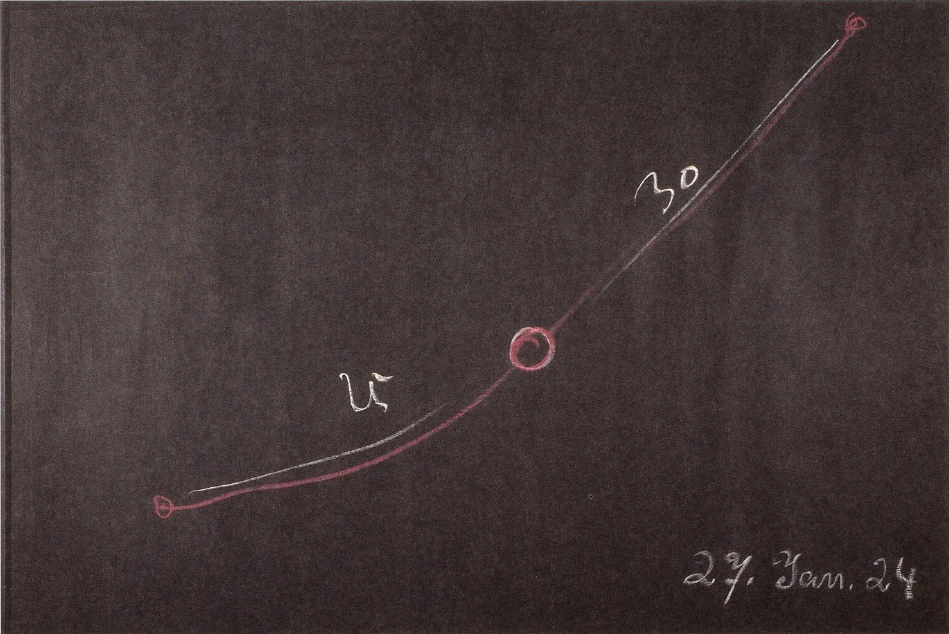
[ 29 ] Those who reflect more deeply trace the life of one who may have lived to be thirty years old, and that of the other, who may have lived to be twenty-five, when they found each other. They will be able to see how remarkable, how wonderful it is that the lives of these two people, from the moment of their birth on earth, have unfolded step by step in such a way that they ultimately came together in this place. One might even say: People from the most distant places eventually come together somewhere in the middle of their lives. And it is as if they had all arranged their paths so that they might find one another.
[ 30 ] But they couldn’t have done all this consciously, because they hadn’t even met yet—or at least hadn’t assessed each other in a way that would lead them to find one another in such a manner. All of this takes place in the unconscious. We chart the paths to important stages of life, to important turning points, in the deepest unconscious. And it is from this unconscious that fate is first woven.
[ 31 ] When we hear someone like Goethe’s friend Knebel, who said in his old age: “When I look back on my life, it seems to me as if every step had been arranged in such a way that I was bound to arrive at a certain point in the end”—then we begin to understand such people who have lived through a great deal.
[ 32 ] But then comes the moment when what is now unfolding between these people takes place with full awareness. They get to know each other; they come to understand each other’s traits, temperaments, and personalities; they develop feelings of sympathy or antipathy toward one another, and so on.
[ 33 ] If we now examine how this relates to the universe, we find that the forces of the Moon were at work in the paths that human beings took up until the moment they found themselves. Then the influence of the Sun begins. There, they step, as it were, into the bright light of the sun’s influence. There, they are always present with their own consciousness, and there the future begins to illuminate the past, just as the sun illuminates the moon out in the universe. And as the future illuminates the past, the past in turn illuminates humanity’s future, just as the moon illuminates the Earth with reflected light.
[ 34 ] But the question arises as to whether we can also distinguish in life between the things in a person that are sun-like and those that are moon-like. Even our feelings can distinguish between many things, if we consider them more deeply rather than superficially. Even in childhood, even in one’s youth, a person encounters others who enter into only a superficial relationship with him—people he passes by, who pass him by—yet who may nevertheless have quite a lot to do with him. You were all in school; only a very small number of you can say that you had teachers with whom you had deeper relationships; but there will surely be one or the other who will say to themselves: Oh yes, there was a teacher who made such an impression on me that I wanted to become like him; or, he made such an impression on me that I would have liked nothing better than to see him vanish from the face of the earth. It may be antipathy; it may be sympathy.
[ 35 ] And this is also true later in life. We meet other people. They occupy our minds, so to speak, or at most our aesthetic sense. Just think how often it happens that someone has met another person; then, when they encounter people here and there who also know that person, they communicate with one another by declaring him to be a splendid fellow or a despicable fellow. It is either an aesthetic judgment or an intellectual judgment. But there is more to it. There are human relationships that are not limited to the intellect or aesthetic judgment, but that appeal to the will—and indeed appeal very strongly to the will—where we do not merely say in childhood, “We’d like to be like this person,” or “We’d like to wish him off the face of the earth”—to cite the most extreme examples—but where we are touched in the deepest recesses of our subconscious will, where we say: The person we encounter there has not merely been viewed by us in such a way that we find him good or evil, wise or foolish, and the like; rather, we would like to do, of our own accord, what his will desires, and we do not wish to strain our intellect to judge him at all; we would like to take into our will everything that he has impressed upon us.
[ 36 ] There are these two kinds of relationships with people. Some affect our intellect or, at most, our aesthetic sense; others affect our will, penetrating into the deeper essence of our soul. What does this testify to? You see, when people affect our will—when we not only feel a strong antipathy or sympathy but also wish to act upon what we perceive as sympathy or antipathy—then these people were somehow connected to us in a previous earthly life. If people merely make an impression on our intellect or aesthetic sense, then they enter our lives without having been connected to us in a previous earthly life.
[ 37 ] But you can already see from this: In human life—and in human destiny, in particular—the past and the present interact to shape the future. For what we now experience with other people, even though they do not influence our will, will find expression again in the next, future earthly life.
[ 38 ] Just as the sun and moon orbit along the same path and are connected to one another, so too in the human being are the past—that which is moon-like—and the future—that which is sun-like—interconnected. And we can come to look up at the sun and the moon and see in them not only the outer luminous bodies, but also what, in the vastness of the cosmos out there, reflects our own destiny as it becomes interwoven. Just as, at certain times, moonlight merges into sunlight and sunlight into moonlight, so too do the past and the future in our destinies always merge into one another, weaving themselves together. Indeed, in the specific case of human relationships, they weave themselves together.
[ 39 ] Let us consider the paths that people have traveled—one for thirty years, the other for twenty-five. Their paths converge. Everything they have experienced—one up to the age of twenty-five, the other up to the age of thirty—belongs to the lunar aspect within the human being. But now, as they get to know one another, as they consciously face each other, they enter into the fateful, solar aspect and now interweave the future and the past, in order to continue weaving their destiny for future earthly lives.
[ 40 ] And so one can see, from the way in which fate approaches human beings—how, in one case, one person’s influence on another affects only the intellect and the aesthetic sense, while in another case it affects the human will and the emotion associated with the will.
[ 41 ] You see, as far as I have told you so far—as I said, I want to speak only in aphorisms today in order to outline for you the path of anthroposophy and the path of its source, the science of initiation; we will go into all the details precisely in the future—to this extent, this can be experienced by everyone through direct knowledge. And one can look upon one’s destiny with insight. That peculiar, inner, intimate emergence of another human being within oneself points to past karma. When I perceive a person in such a way that they actually touch me inwardly—not merely through the senses and the intellect, but in a way that captures me inwardly, so that my will is engaged by how they affect me—they are karmically linked to me from the past. With a somewhat more subtle, more intimate sense, a person can thus feel how another is karmically linked to them.
[ 42 ] But when that which can occur as a certain stage in a person’s development sets in—when he goes through what I have described in How to Attain Knowledge of the Higher Worlds or in the second part of my Outline of Esoteric Science—then he experiences the whole matter in a fundamentally different way. Thus, when initiation takes place in a person, they do not merely experience the other person with whom they were karmically linked in such a way that they say to themselves: “This person influences my will, this person acts within my will”—but rather, they actually experience the other person personally within themselves. And when an initiated person encounters another person with whom they are karmically connected, that other person is present within them with an independent voice, with independent utterances and revelations, so that they speak through them just as a person standing next to us would otherwise speak to us. Thus, what is otherwise only felt in the will—the karmic connection—manifests for the initiate in such a way that the other person speaks from within him, just as a person standing next to him would. Thus, for one endowed with the science of initiation, a karmic encounter means that the other person not only acts upon his will but acts within him as strongly as a person standing next to him would.
[ 43 ] You see, what otherwise presents itself to ordinary consciousness in an indefinite, purely volitional and emotional manner is elevated to complete concreteness for the higher consciousness. You might say: Yes, but then the initiated person goes about within himself with the whole group of people to whom he is karmically connected. — And that is indeed the case. Gaining insight does not merely consist in learning to speak a little more than other people do, while speaking just as they do; rather, it is truly the acquisition of another part of the world.
[ 44 ] If, then, one wishes to speak about how karma works within people, shaping their shared destiny, one must be able to draw support for one’s words from the knowledge of how other people speak within oneself—how they truly become a part of one’s own being.
[ 45 ] But when this is explained, it need not remain something otherworldly for the uninitiated; rather, he can say to himself—and, with sound judgment, will say: “True, I do not hear the voice of the one who is karmically connected to me within myself; but I feel him.” I feel him in my will and in the way my will is stirred by him. — And one learns to understand this stirring of the will. One learns to understand what one experiences in ordinary consciousness, and what can be understood by nothing other than hearing it described in its true, concrete meaning through the science of initiation.
[ 46 ] But what was particularly important to me today is this: that what otherwise enters consciousness in a somewhat nebulous way—this feeling of karmic connection with others—becomes a concrete experience for the initiate. And just as this can be described in relation to karma—to human destiny—so too can it be described in relation to everything that the science of initiation can bring about.
[ 47 ] There are many other ways to tell how a person is karmically connected to another. Some of you will know, when you reflect on life: You meet people in life whom you do not dream about; you can live with them for a long time, yet you do not dream about them. Then there are other people you meet—you simply cannot get them out of your dreams. No sooner have you seen them than you dream about them the very next night, and they appear in your dreams again and again.
[ 48 ] Dreams are what feature most prominently in the subconscious. People we dream about immediately after encountering them are certainly those with whom we have a karmic connection. People we cannot dream about make only a superficial impression on our senses; we encounter them in life without being karmically connected to them.
[ 49 ] What lives in the depths of our will is like a waking dream. And for the initiate, this waking dream becomes a fully realized consciousness. Therefore, he hears the voice of the one who is karmically connected to him speaking from within himself. Of course, he always remains rational, so that he does not go around speaking through all sorts of people who speak to him as an initiate; but under certain circumstances, he also gets used to addressing, in a very concrete way—even when he is not physically facing them—the people who are karmically connected to him and speak through him, as if in a dialogue, whereby things certainly come to light that also have real significance. But these are things that I will describe at some point in the future.
[ 50 ] Just as one can deepen one’s consciousness by gazing up into the vastness of the cosmos, so too can one deepen it by looking into the human being. And the more one looks into the human being itself, the more one learns to understand what lies within the vastness of the cosmos. One then says to oneself: I no longer look into the world of the stars merely in such a way that I see luminous discs or luminous spheres there, but rather what lies out there in the cosmos appears to me as a fate woven by the cosmos. Human destinies on Earth are then the reflections of these cosmically woven destinies. And when one thoroughly understands that the substance within a celestial body changes and is renewed, just as the substance of a human being does, then one will realize that it makes no sense at all to speak merely of abstract laws of nature. These laws are certainly valid, but not for the purpose of true understanding. One must not regard the laws of nature as something that provides insight. It is just like with insurance companies. There, one insures one’s life. How can such insurance companies exist? By calculating a person’s probable lifespan. Based on the number of people—out of, say, a certain number of twenty-five-year-olds—who reach the age of thirty, and so on, one can then calculate how many more years a thirty-year-old is likely to live; the insurance is based on that. And the insurance works out just fine. The law of insurance holds true. But it would never occur to anyone to reconcile this with their innermost being. Otherwise, they would have to say: I was insured at the age of thirty because my probable death will occur at fifty-five. They would have to tell themselves: Now I must die at fifty-five. They will never draw that conclusion, even though the calculation is entirely correct; but the conclusion means nothing at all for real life.
[ 51 ] The laws of nature are merely calculated. They are useful for our technical applications; they are useful for building machines and for insuring people according to insurance laws; but they do not lead us into the essence of things. Only the true knowledge of the entities themselves leads us into the essence of things.
[ 52 ] What astronomers deduce from the natural laws of the heavens is like the laws of insurance in human life. What a true initiatory science explores regarding the nature of what we call the sun and the moon is like finding, after ten years, someone who, according to his insurance policy, should have been dead long ago. It was in his nature to continue living.
[ 53 ] What actually happens has, in essence, nothing to do with the laws of nature. The laws of nature are useful for applying forces. But the essence must be understood through the science of initiation.
[ 54 ] Well, with this I have presented to you the third of the lectures, through which I really only wanted to hint at what the tone should be in anthroposophy. We will now begin to describe the constitution of the human being in a somewhat different way than I did in my Theosophy, building up an anthroposophical science, an anthroposophical understanding, from the very foundations. Please regard the three lectures I have given so far, in a sense, as a sample of how the consciousness that leads into the true essence of things speaks differently from ordinary consciousness.