

Anthroposophy
A Summary After Twenty-one Years
GA 234
8 February 1924, Dornach
Translated by Steiner Online Library
Seventh Lecture
[ 1 ] In my recent lectures, I have already pointed out how the science of initiation must draw attention to the transitional states between sleep and wakefulness, which human beings experience from within their ordinary consciousness and through which they can truly find a path—one of many paths—toward the mysteries of human existence. Out of sleep emerges life—soul life, the life of dreams—a life that is certainly, and quite rightly, not taken seriously at first by ordinary consciousness, unless that ordinary consciousness possesses some kind of mystical or similar disposition. The dream life is, with some justification, not taken seriously by the down-to-earth person, for he sees how this dream life presents him with all sorts of images and reminiscences from ordinary life. And when he then compares what he experiences in ordinary life with this dream life, he must stick to ordinary life and, of course, call this ordinary life his reality. Then the dream life comes along with its combinations of ordinary experiences of reality, and the person cannot make sense of it in ordinary consciousness when he asks himself: “Well, what does this dream life actually mean for the total being of the human person?”
[ 2 ] Now let’s consider this dream life as it actually is. Here we can distinguish between two types of dreams that are quite distinct from one another. One type of dream conjures up images of external experiences before our soul. We experienced this or that years ago or recently, just a few days ago. We experienced it in a certain way. The dream conjures up from sleep an image that is more or less similar to the external experiences—or one that is dissimilar, indeed, in most cases, quite dissimilar. If a person then does come to realize that such a dream image has some connection to an external experience, they immediately notice how altered that external experience is in the dream. Most often, however, what happens is that a person experiences the dream image without relating it at all to this or that experience in the external world, because the resemblance does not strike them at all. But if one examines dream life more closely, that aspect of dream life which conjures up altered images of external experiences before the soul, one finds that something within the person grasps these experiences, seizes upon them, but cannot hold onto them as firmly as the person does when, in the waking state, they make full use of their bodily organs and images arise in memory that are now identical to—or as close as possible to—external life. In our memories, we have faithful images of external life—at least more or less faithful images. There are also people who dream in their memories, but this is regarded as an abnormality. In our memories, we have more or less faithful images of life. In dream images, we have transformed images of external life. That is one way of dreaming.
[ 3 ] However, another kind of dreaming is actually much more characteristic of understanding the life of dreams. This is the kind where, for example, a person dreams that they see a row of white pillars, one of which is damaged, perhaps dirty. The person wakes up from this “dream” and realizes they have a toothache. And it occurs to them that this row of pillars symbolically represents their row of teeth. The one tooth that hurts is represented by the pillar that is damaged or perhaps even dirty. Or a person wakes up from a dream about a burning stove and realizes they have heart palpitations. Or a person is tormented in a dream by a frog approaching their hand; the hand clutches the frog, which is soft. The person shudders in their dream; they wake up, holding the corner of their blanket in their hand—they had grabbed it in their sleep. But it can go much further. The person dreams of all kinds of serpentine forms: they wake up with intestinal pain.
[ 4 ] He then comes to realize that there is another kind of dream—dreams that express a person’s internal organs in a pictorial and symbolic way. And once a person has grasped how certain dreams, with their strange images, represent symbols of internal organs, they will learn to interpret many of these dream images precisely in this way.
[ 5 ] One walks, as if in a dream, into a vaulted cellar. It is pitch black above, and cobwebs spread out. It is a hideous sight. One wakes up and feels a headache. This headache—that is, the interior of the skull—is expressed in the vaulted cellar. One even notices how the convolutions of the brain are symbolized in the peculiar formations that make up the vaulted cellar. If one continues one’s studies in this direction, one will find that all organs can appear to one in such a pictorial manner in dreams.
[ 6 ] Here we even have something that, I would say, points very strongly to a person’s entire inner life through dreams. There are people who, while still dreaming, create motifs for truly beautiful paintings directly from their dreams.
[ 7 ] Anyone who has studied these matters knows which internal organ is depicted, transformed, or symbolized in such paintings. There is sometimes an extraordinary beauty contained in such a painting. And when the person in question hears which organ he has actually symbolized in such beautiful paintings, he is quite startled, for he does not respect that organ in the same way as he respects his paintings.
[ 8 ] These two types of dreams can be easily distinguished if one simply engages in an intimate exploration of the dream world. In one type of dream, we are dealing with images of external experiences that we, as human beings, have gone through in the world. In the other type of dream, we are dealing with imagery representing our own inner human world.
[ 9 ] Well, up to this point, observing the dream world is relatively easy. And most people, once made aware that these two types of dreams exist, will recall that their own experiences support this classification of dreams.
[ 10 ] But what does this structure of dreams point to? You see, if one examines the first type of dreams and considers them a little in terms of the specific nature of the images, one realizes that a wide variety of external experiences can be represented by the same dream, and conversely, that one and the same experience can be depicted by different dreams in different people.
[ 11 ] Let’s suppose someone has a dream in which they approach a mountain. The mountain has a sort of entrance, a cavity. The sun still seems to shine into this cavity. The person walks inside, still dreaming. Soon it begins to grow dark, then pitch-black. The dreamer feels his way forward. He comes to an obstacle. He senses that there is a small lake inside. He is in great danger. The dream takes a dramatic turn.
[ 12 ] A dream like this can represent a wide variety of external experiences. The very same dream image I have just described may refer to the fact that someone once experienced, say, a train accident. What that person experienced may, years later, be expressed in the dream experience I’ve described—one whose imagery is quite different from what they actually went through. They may also have experienced a shipwreck. They may also have experienced a friend being unfaithful to them, and so on. If you compare the dream image with the actual experience and proceed in this way with close, intimate observation, you will find that the content of the dream images is actually not of great significance; but the drama, the course of events, is of great significance: whether there is anticipation, whether the anticipation leads to a resolution, or whether an anticipation leads into a crisis. The entire emotional context, I would say, is reflected in the dream life.
[ 13 ] And if, starting from there, one examines a person’s dreams of the first kind—provided one does not do so in the same way as psychiatrists, who treat everything the same—then one finds that these dream images derive their character, above all, from the person’s overall nature, from the individuality of their ego. If one understands dreams—not in the sense of interpreting them, but in the sense of truly understanding them—one often comes to know a person better through their dreams than one does by observing them solely in their external life. But when we look at everything that the human being perceives in a dream, it always points back to what the person’s “I” experiences in the external world.
[ 14 ] In contrast, when we consider the second type of dreams, we can say: What is conjured up in the soul’s dream images is something a person experiences only in a dream. For while awake, at most, a person experiences the form of their organs through scientific anatomy and physiology. But that is not a real experience; rather, it is an external observation, just as one observes stones and plants. So there is no need to take that into further consideration. Thus, in the consciousness with which a person goes through life, they experience extremely little or nothing at all of their inner organism. But the second kind of dream conjures up, albeit in altered images—but images nonetheless—essentially his entire organism.
[ 15 ] When we then observe human beings in their lives, we find that this life is indeed dominated by the “I,” to a greater or lesser extent depending on the strength of the person’s will and character; however, the intervention of this “I” into human life bears an extraordinary resemblance to the first type of dream experience. Just try once to examine closely whether someone has dreams in which their external experiences are drastically and vehemently altered. If someone has such dreams, you will find in them a person of strong will. If someone dreams their life almost as it is—without altering it in their dreams—then they will be a person of weak will.
[ 16 ] So you see: The way a person shapes their dreams expresses the ego’s intervention in their life. Based on these very insights, we will have to connect the dreams of the first kind with the human ego. And when we recall that in our recent reflections we have noted how, during sleep, the ego and the astral body are separate from the physical and etheric bodies, it will come as no surprise to us that spiritual science ultimately leads to the conclusion that the “I,” which is outside the physical and etheric bodies during sleep, seizes upon the images of life in the dream that it otherwise seizes upon through the physical and etheric bodies in external reality. The dream of the first kind is an activity of the “I” outside the physical and etheric bodies.
[ 17 ] What is the second kind of dream? It must, of course, be something related to what exists outside the physical and etheric bodies during sleep. It cannot be the “I,” for the “I” knows nothing of what the dream conjures up as symbolic representations of the organs. One is led to recognize that it is the human astral body that shapes these symbolic images of the internal organs in the dream, just as the “I” shapes the images of external experiences. And so, through these two types of dreams, we have an indication of the workings of the “I” and the astral body from the moment of falling asleep until waking up.
[ 18 ] We can go further. When we see what a weak person and what a strong person do in their dreams—how a weak person dreams almost exactly as they have experienced things, while a strong person reshapes everything, turns everything upside down, and shapes things so that they strongly take on the character of his own personality—if we study this properly through to the end, then we can compare what we arrive at with the way a person behaves in waking life. And that leads us to something tremendously interesting. Namely, we come to realize that the following is true: Let someone tell you about their dreams; observe how one dream image follows another, how these dreams take shape; and then, after you have formed an idea of the nature of their dreaming, look at the person themselves through the lens of that idea—then, inspired by what you can imagine from their dreams, you will be able to form a good picture of how they act in life. For this is how one uncovers remarkable secrets about human beings. One observes a person acting in life; one gets to know them in terms of their individuality. One says: Of all that happens through this person, only a part stems from their true human nature, from their “I.” If it were up to their “I,” then the person would actually do what they dream. A violent character, if it were up to his “I,” would be as violent in life as he is in his dreams, and someone who leaves his life almost unchanged in his dreams would withdraw from everything in life, let life be life, let things happen, intervene in life as little as possible—intervening only as much as he does in his dreams.
[ 19 ] The other things that happen to a person beyond this—where do they come from? My dear friends, one might well say: God does that; the spirits of the world do that. — For a person does not actually do everything he does on his own; in fact, he does exactly as much as he actually dreams. The rest is done through him and in him. It’s just that people usually don’t learn to train themselves in life to be attuned to these things. If one were to learn to train oneself, one would come to realize that one has just as much an active part in one’s actions in life as one has in one’s dreams. In the case of a violent person, the world prevents him from becoming as violent as he is in his dreams; in the case of a weak person, instincts come into play, and life itself adds what happens through him and what he would not dream.
[ 20 ] It is interesting to observe a person in the course of their life and ask oneself: What comes from them, and what comes from the world? — What comes from them is exactly as much as they are capable of dreaming about the matter. The world either adds something in the case of a weak person or subtracts something in the case of a violent person. Viewed in this light, however, the dream begins to become extraordinarily interesting and offers a deep insight into the nature of the human being.
[ 21 ] Admittedly, some of what I am saying here has been interpreted by psychoanalysts in a distorted, caricatured way, but they are unable to look into the actual fabric and essence of human nature; that is why they distort everything, turning it into caricatures. But you can see from the analysis I am conducting today—entirely from an external perspective—that if one wants to address these matters at all, one must delve into a very subtle understanding of the soul. Without this, one simply cannot know anything about the relationship between the life of dreams and the external reality in which a person lives. That is why I once said: Psychoanalysis is dilettantism, because it knows nothing of a person’s external life. But it is also dilettantism because it knows nothing of a person’s inner life. And these two forms of dilettantism do not merely add up; they multiply, because ignorance of the inner life corrupts the external, and ignorance of the external corrupts everything internal. If you multiply d by d, you get dilettantism squared. So psychoanalysis is dilettantism squared: \(d \times d = d^2\).
[ 22 ] One can gain such insight into the human being by intimately engaging with the alternating states of waking and sleeping life that this contemplation truly leads one to the science of initiation.
[ 23 ] Now consider another point I have made in these reflections: the fact that through spiritual exercises and meditation, a person can strengthen and develop their spiritual powers, thereby advancing beyond ordinary, more or less empty, abstract thinking to an inner, vivid, pictorial form of thinking—to imagination. Now I had to tell you that a person does indeed advance with this imagination toward grasping their entire life—but as it is established through birth and conception—actually even before birth, before conception—as an etheric impulse into earthly life. Through dreams, one receives reminiscences of what one has experienced externally since first setting foot on Earth in this earthly life. Through imagination, one receives images that, in terms of the nature of the experience, can be very similar to dream images; only they do not contain reminiscences of this life, but rather reminiscences of what existed before earthly life.
[ 24 ] It is utterly ridiculous when those who are unfamiliar with spiritual science say that imaginations can also be dreams. They should just consider for a moment what is actually dreamed in these imaginations. After all, what is dreamed is not what the senses present, but rather the very content that represents the human being before it had senses. Through imagination, the human being is introduced into a new world.
[ 25 ] But there is something very similar between the second type of dreams and what one experiences in the imagination when this imagination first develops in the soul through exercises. For there one experiences images—and with the utmost clarity; one might even say with precision—one experiences images, powerful images. I would say that one experiences a whole universe—wonderful images, richly colored images, images so immense that nothing else exists in one’s consciousness but these images. If one were to paint these images, one would paint a magnificent tableau; but one would only be able to capture a single moment, just as one cannot paint a flash of lightning, but can only capture the moment of it; for all of this unfolds in time. But if one captures just a single moment, one obtains a magnificent image.
[ 26 ] Let’s illustrate this schematically. Of course, it is by no means an exaggerated representation of what is actually seen. But so that we can bring to mind what this is all about, let’s sketch it out schematically.
[ 27 ] Now consider this image, which I have sketched out only schematically. It is self-contained. It contains a wide variety of formed images. It is something magnificent, both internally and externally. If one becomes increasingly adept at concentrating and holding onto this image, it does not appear merely for a moment—one must seize it with presence of mind when it appears even for a moment; otherwise, it flits away before one has even grasped it in the present; One needs presence of mind for spiritual observation in general—if one is able not only to apply enough presence of mind to catch the thing so that one is even aware of it, but can also hold onto it, then this image contracts; then, instead of I might say, being all-encompassing, smaller and smaller, and one sees how it advances through time. And, I might say, it snaps into something. From one part comes the human head, from another the human lung, from yet another the human liver. The physical matter that comes from the mother’s body merely fills out what is coming in from the spiritual world. The human being is formed from this. One ultimately says to oneself: Yes, what the liver is, one sees spiritually in a magnificent image in pre-earthly existence; one sees the lung spiritually in this magnificent image in pre-earthly existence. And now, afterward, one compares this with what is found in the second kind of dream. There, as I said earlier, an organ appears—perhaps even in a very beautiful image—but it is still amateurish compared to what the imagination provides.
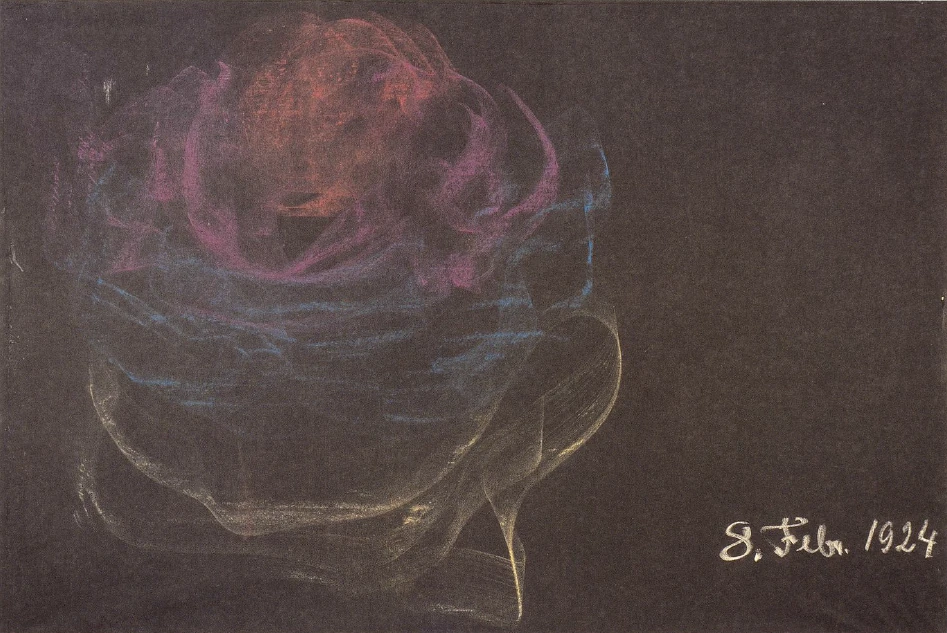
[ 28 ] And so one gets the impression that the imagination provides something created by the world spirit, while the dream provides something that is amateurish. But both point to the same thing. And they are what, in the spiritual realm, constitute the inner organization of the human being.
[ 29 ] From there, it is not far to another, very valid conception. One arrives at this when, through imagination, one perceives this pre-earthly human being as a powerful etheric image, and notices how this powerful etheric image crystallizes, as it were, into the physical human being; one is led to ask: Well, what if the dream images relating to the internal organs were now to begin to develop the same activity? One is led to say to oneself: A caricature of a liver would arise. — The human liver, perfect in itself, is formed by the image of imagination that points to pre-earthly existence. If the dream image were to take the form of a liver, then from this dream image the human being would not receive a human liver, not even a goose liver, but rather a caricature of a liver.
[ 30 ] This does indeed provide a deep insight into the whole of human existence. For you see, there is something similar—and this becomes quite clear—between the dream image and the imaginative image. And one must ask oneself: Where does this similarity come from?
[ 31 ] But we can go even further. Consider the dream images of the first kind, which are linked to external experiences. At first glance, there is nothing similar to these in imaginative thinking. But imaginative thinking transitions into a pre-earthly experience of the human being, in which the human being has no contact with other physical human beings; imaginative contemplation transitions into a representation of pre-earthly spiritual experiences. Try to picture what is characterized by this.
[ 32 ] When we look at the inner life of the human being, we get the impression that certain symbolic images—whether they arise through imagination or through dreams—refer to the inner life of the human being, to the human constitution; that, in contrast, the imaginations that relate to external experiences are not connected to a person’s inner organization, nor are they connected to external earthly life; they point to experiences of pre-earthly existence. And only alongside these can one place the dream experiences that relate to external experiences of earthly life, yet are not in any inner connection with them. This inner connection exists for the dreams of the second kind.
[ 33 ] Well, what am I trying to achieve by presenting all of this? By presenting all of this, I would like to point out that there is an intimate way of looking at human life that raises real mysteries of life. The fact is that people today view life in a rather superficial way. If they were to look at it more closely, more intimately, they would notice the things I have spoken of today. But in a certain sense, they do notice them—only they are not actually aware of how they notice them. People are not really conscious of just how strongly their dreams influence their lives. They regard dreams as something fleeting, because they do not know that in one type of dream their “I” intervenes, and in another type of dream their astral body intervenes. But when we grasp life in relation to even more profound phenomena, the mysteries I have hinted at become even more pressing.
[ 34 ] For those who have been here for some time, such facts have already been mentioned. I would like to point out once again that there is a pathological condition in human beings that consists in the person losing, in terms of memory, the sense of coherence in their life. I cited this example in connection with an acquaintance of mine who, one day—without being consciously aware of it—left his apartment and his family, went to the train station, bought a ticket, and traveled to a certain station like a sleepwalker. At the transfer station, he bought another ticket, continued on, and traveled around for a long time. He had set out on his journey from a city in southern Germany. It was later determined, after the case was investigated, that he had been in Budapest, Poland, Lemberg, and so on. He finally came to his senses—that’s when his consciousness began to function again—in a homeless shelter in Berlin, where he had ultimately ended up. The moment he arrived at the homeless shelter had been preceded by a few weeks that had been erased from his memory. He remembered the last thing he had done at home; everything else had been erased. One had to trace the entire journey from the outside.
[ 35 ] You see, the “I” is not present in what the person is doing. If you review the relevant literature, you will find hundreds and hundreds of cases of this kind of suspended sense of self. What is actually going on here? If you were to undertake a study of the dream world of such a person who has fallen into this pathological state, you would discover something remarkable. You would first find that, at least at certain times in their life, they had the most vivid dreams imaginable—dreams characterized in particular by the fact that they set out to do something in the dream and have intentions within the dream.
[ 36 ] If you study the dreams of a healthy person, you will find that this very interplay of intentions in the dream is either very weak or does not occur at all. People dream all sorts of wonderful things, but intentions generally play no role. If they do play a role in a dream, the person usually wakes up from such dreams in a way that makes them laugh at themselves for having had those intentions. But if you study people with intermittent consciousness—whose consciousness is temporarily suspended—with regard to their dreams, you will see that these are people who harbor intentions in their “dreams” and take these intentions incredibly seriously upon waking—so seriously, in fact, that they feel pangs of conscience if they cannot carry out the intentions they harbored in their “dreams.” Sometimes these intentions are so absurd in relation to the external physical world that they cannot carry them out; then this torments them, and it makes them terribly agitated. This is the flip side of this suspended consciousness—taking the dream seriously, particularly with regard to the dream of intention, not a wishful dream, but the dream of intention.
[ 37 ] Someone with a keen eye for observing people may, under certain circumstances, be able to tell just by looking at a person whether something like a loss of consciousness could ever happen to them. Such people have a certain quality that indicates they never fully awaken in relation to certain inner and outer experiences: As one observes such a person, one gradually comes to realize that every night, while asleep, their ego ventures too far out of the physical and etheric bodies, moving too far away so that they can no longer bring back everything they experience out there. They delve too deeply into the spiritual realm to carry back into the physical and etheric bodies all that they experience in the spiritual world. And finally, because they so often fail to carry it all back completely, it ultimately holds them outside. What they experience too deeply in the spiritual realm ultimately keeps the “I” out of the physical body altogether, and they enter this state where the “I” is not inside the physical body.
[ 38 ] In such a radical case, where a disturbance of consciousness occurs in the manner described, it is particularly interesting to examine the dream life of such a person. It is different from the dream life of ordinary people; let’s say, it is much more interesting. Of course, this interest has its downside. But ultimately, just as illness—when viewed from the outside—is more interesting than health—though not when viewed from the inside by the person concerned; I mean, not for ordinary life, but for the understanding of the human being—so it is indeed the case that what presents itself as the dream life of such a pathological person, as I have described him, is much more interesting than the dream life, I won’t say of a philistine, but of a contemporary.
[ 39 ] Yes, there you can already see a kind of connection emerging between the “I” and the entire world of dreams. I would say you can grasp this connection between the “I” and the dream world. And the following questions arise: What about dream images that relate to internal organs, in comparison to imaginations that relate to internal organs—how does that work?
[ 40 ] Well, even outwardly it is evident that what is presented in the imaginations as images of the inner organization points to what is within the human being before he has his earthly body, before he is here on earth; the dream images appear once he is here. The imaginations, then, point backward; the dream images point to the present. But even if it is the case that, when we take an ordinary dream image that points to an internal organ, it corresponds to a caricature of that internal organ, whereas the imagination corresponds to the perfect internal organ, we can still say: This caricature nevertheless has within it the potential to develop into an organ; we tell ourselves, when we consider the caricature, that it could grow into a perfect organ.
[ 41 ] Well, here is the starting point for the reflection we intend to undertake tomorrow, one that stems from the question: Does what the imagination presents perhaps relate to a person’s past life, and is the dream the beginning of the imagination of the future? Will the dream images we cherish today perhaps become the imagination we can look back upon in a future earthly life? Is the content of the dream perhaps the seed of the content of the imagination?
[ 42 ] This significant question lies before us. We see here a convergence between what we can gain from the study of dreams and the question of the human being’s repeated earthly lives. But you also see that one must truly look deeper into human life than is usually convenient in order to find a connection to what the science of initiation then says about the nature of the human being.
[ 43 ] Through a lecture such as today’s, I would like, in particular, to convey an idea of how superficial human observation is within today’s civilization, and how intimacy of observation must be introduced everywhere. This intimacy of observation, however, already leads toward spiritual science.