Esoteric Considerations of Karmic Connections
Volume I
GA 235
22 March 1924, Dornach
Translated by Steiner Online Library
Eleventh Lecture
[ 1 ] The reflections on karma that we have undertaken here—and which have recently led us to examine very specific individual cases of karmic connections—are intended to gather material for an assessment not only of individual human connections but also of historical connections. And for this reason, I would like to add a few more details to the examples I have discussed today and tomorrow—some preparatory remarks today, and then the karmic considerations tomorrow.
[ 2 ] You will have seen that any examination of the connection between one earthly life and another must, in fact, always be based on very specific symptoms—specific individual facts that serve as a starting point and which then lead one to perceive the concrete connections. And for the challenging cases I have cited, I have also shown you where, in particular, these individual clues are to be found.
[ 3 ] As I mentioned, I would like to present certain cases to you today in preparation for tomorrow’s lecture; however, these cases will not be resolved until tomorrow.
[ 4 ] First, I would like to point out the special interest that certain individuals can arouse. I will cite historical figures as well as people from everyday life. The special interest that such individuals can arouse in us can, in a sense, provide us with the impetus to seek out the connections in life. And those who know how to search for them properly will, in fact, be able to find them. For you will have noticed, precisely from the way I have presented this, that searching correctly is of essential importance.
[ 5 ] Now—let us certainly press on with what we have ventured to do, and not allow ourselves to be deterred from making these bold observations—yet there is no doubt, regardless of one’s general stance toward this figure, that Garibaldi was an interesting European figure of the 19th century, who, of course, inserted himself into the historical context of the 19th century in a quite remarkable way. Let us consider him today, as I said, as a preliminary, and I would like to present to you in particular those aspects that can lead the observer of the humanities to the connections we intend to examine tomorrow.
[ 6 ] Garibaldi is, after all, a figure who, so to speak, witnessed the entire 19th century in an extraordinarily significant way—born in 1807 and active in a prominent role well into the second half of the 19th century. This in itself represents a characteristic expression of the human spirit, particularly for this period of the 19th century.
[ 7 ] If we now consider the essential spiritual characteristics of this life, we find: he is the son of a poor man in Nice, a poor man who works in the shipping industry; a child with little inclination to participate in what conventional education typically offers; a child who is not really a good student, but who has a keen interest in the most diverse matters of human life. What was offered to him in school led him, to a fairly large extent, not so much to pay attention in class as to skip school. But if he could get his hands on any book that piqued his interest, then—even though he otherwise much preferred to run around, playing on the riverbank or in the woods while the teacher tried to teach the children about the world in his own way—he, on the other hand, could not be pried away from such a book that had particularly captured his interest. He could lie there for a long time with his back on the ground and his stomach turned toward the sun, skipping even his meals, and become completely absorbed in such a book.
[ 8 ] But what interested him most of all was the world. He set out early to learn his father’s trade, and he took part—first as an employee, then as a self-employed man—in sailing the seas on ships; he sailed the Adriatic Sea extensively and experienced everything that was still possible back then, in the first half of the 19th century. It was, after all, a time when liberalism and democracy had not yet codified everything into police regulations—even at sea—but when there was still a bit more freedom and vitality in people’s lives. So, as is often the case when one can—well, more or less—do as one pleases, he also experienced situations where, I believe it happened to him three or four times—the ship was captured by pirates and he was taken captive by them. But besides being a genius, he was also clever and managed to escape time and again—and very quickly at that.
[ 9 ] And so he grew up, essentially always living in the wider world—as I said, I do not intend to provide a biography, but only to highlight certain characteristic traits that may then lead to a substantive reflection tomorrow—and he gained a particularly vivid impression of what could emerge from his very nature as an inner relationship to the world when, once he had already matured quite a bit, his father took him ashore—specifically in Rome, from where he then viewed Italy. Something special must have stirred within his soul precisely during this contemplation of Italy from Rome. After all, when he sailed across the sea with his sailors, he sometimes received an impression from the people—who were for the most part very lively but lacked a certain specific interest, namely, they were asleep to the realities of the times— he may well have sometimes received an impression that could drive him to despair, because the people lacked enthusiasm for genuine humanity—a quality that had actually come to the fore in him at an early age in a warm and ingenious way.
[ 10 ] And so something—one might almost say a vision—must have stirred his soul at that time when he set foot in Rome, foreshadowing his later role in the liberation of Italy. And given the circumstances of his life, he became, in the first half of the 19th century, what was easier for people to become back then: He actually became a fanatical anti-Catholic, an anti-clericalist, and a fanatical Republican—a man who clearly resolved to do everything in his power to bring about the happiness of humanity in whatever way he could, and who truly set out to do just that.
[ 11 ] When he later became involved in all sorts of movements—which, after all, were always present in Italy even during the first half of the 19th century, movements within smaller circles—it so happened that, for the first time—I believe he was already thirty years old or thereabouts—he saw his name in the newspaper. Back then, seeing one’s name in the newspaper meant much more than it does today. But he had a particularly unique experience regarding seeing his name in the newspaper, because he read it on the very occasion when his death sentence was announced in the paper. So he first “read” himself when he saw his death sentence published in the newspaper. It is, after all, a characteristic trait, because not everyone experiences something like that, does it?
[ 12 ] Well, he was not granted that opportunity—and this is very characteristic, because even back then his enthusiasm was certainly present—he was not granted the opportunity to intervene in the affairs of Italy or Europe at that time, but fate decreed that he should first go to America and participate in all sorts of freedom movements there until around the year 1848. But he always remained a truly remarkable person, endowed with very special individual qualities. If what I just mentioned—that he first saw his name in the newspaper in the announcement of his own death sentence—is already a rather singular feature of his life, he also experienced another, one might even say, unique biographical event, something that happens to very few people. Namely, he met the woman with whom he would go on to build the happiness of his life for many years in a very peculiar way: from far out at sea, where he was on a ship, looking toward the shore through a pair of binoculars. That, too, is not exactly a common way for most people to fall in love: through a pair of binoculars.
[ 13 ] But then again, fate made it particularly easy for him to soon get to know the woman he had identified as his own at first glance—though, as mentioned, this was just a first glance through binoculars. For, of course, he immediately headed toward the countryside, following the line he had seen through his binoculars, and there he was invited to lunch by a man. And lo and behold, it turned out right afterward—after he had accepted the invitation—that this was the father of the person he had seen through his binoculars. Now, she spoke only Portuguese, and he only Italian; but the biographer assures us—and it seems to be true—that the young lady, even though she spoke only Portuguese, understood his very brief declaration of love, which he now also made verbally and which seems to have consisted only of the words: “We must unite for life”—spoken in Italian—that she understood this declaration of love immediately. And indeed, it led to a lifelong partnership.
[ 14 ] This woman took part in all the terribly adventurous journeys he undertook in South America, and there are episodes that make a profound impression. For example, one such episode is that a rumor spread that Garibaldi had been killed in battle. His wife then rushed onto the battlefield and lifted every head to see if it was Garibaldi. After a long time, and after a perilous search, she finally found him alive.
[ 15 ] But what is truly heart-wrenching is that, during this adventurous journey in search of Garibaldi—which lasted a long time—she gave birth to her child without any help, and that, to keep it warm, she tied it to her neck with a ribbon and held it close to her own chest for long periods of time. Garibaldi’s activities in America have indeed revealed some of the most deeply moving aspects of his character.
[ 16 ] When the time came in Europe around the middle of the 19th century, as various movements for freedom swept through the nations, Garibaldi could no longer bear to stay in America, so he returned to his homeland. And it has become quite widely known how he contributed in the most intense and active way—by recruiting volunteer forces under the most difficult circumstances—to what Italy eventually became; indeed, he did not merely contribute, but was the very architect of what came to pass.
[ 17 ] And here a trait stands out particularly strongly in his life and character. He was, after all, a man who was independent in every respect—indeed, a man who, I would say, in a rather naive way, always thought on a grand scale in all circumstances of life and concerned himself only with what sprang from his innermost impulses. And so it is truly very strange how he did everything in his power to enable the dynasty of Victor Emmanuel to preside over the Kingdom of Italy, even though the entire unification of Italy—the liberation of Italy—had actually originated with him. These things—how he conquered Naples and Sicily with a relatively small, undisciplined, yet enthusiastic force; how the future King of Italy then merely had to move into the territories Garibaldi had conquered for the monarchy; and yet, fundamentally, how nothing was done on the part of the royal family and its entourage to properly acknowledge what Garibaldi had accomplished—all of this is something that can make a deep impression. For, when it comes down to it—to put it bluntly—one would have to say: the House of Savoy owed everything to Garibaldi, and it was supremely ungrateful toward him, offering him only those courtesies that it simply could not avoid, those that were strictly necessary.
[ 18 ] Take, for example, the entry into Naples. Garibaldi had, after all, conquered Naples for the dynasty and was regarded by the Neapolitans as the true liberator; his appearance sparked a storm of jubilation everywhere. It would have been unthinkable for the future King of Italy to enter Naples without Garibaldi. It would have been completely unthinkable. But his advisors were firmly opposed to it. Certainly, there is a great deal of short-sightedness among some such advisors; but if Victor Emmanuel had not possessed a certain instinct and had not allowed Garibaldi, in his red blouse, to sit beside him during the entry into Naples, he would most certainly have been booed instead of being greeted with the jubilation that was actually reserved for Garibaldi, not the King of Italy. This is something that can be stated with absolute, precise certainty: had he entered Naples without Garibaldi.
[ 19 ] That’s basically how it was at every turn. During one of the campaigns, more in central Italy, Garibaldi actually did everything on his own. The royal generals, along with the king, were—I don’t know, in such cases people say, to put it mildly, that they arrived too late: Garibaldi had already taken care of everything. But when the army, with its generals decked out in medals, appeared and encountered Garibaldi’s army—which wore no medals and was otherwise quite unpretentious in its attire—the generals declared: “Well, we certainly can’t ride alongside them; that’s out of the question; it simply can’t be.” But Victor Emmanuel, as I said, had a certain instinct. He called Garibaldi to his side, and the generals, who had been turning up their noses, now had to mingle, for the time being, with those lining up as Garibaldi’s army. These generals seem to have become terribly ill; they appear to have suffered stomach cramps. And then there was simply no other way: When the time came to enter a city, Garibaldi—who had actually done everything—had to bring up the rear as the rearguard. They had to let the others march ahead. It’s a case where the people had actually done nothing at all, yet they were the first to enter, followed by Garibaldi and his Garibaldians.
[ 20 ] What matters most are these strange chains of fate. It is precisely in these chains of fate that you must see what points to karmic connections. For, isn’t it true, it doesn’t really have anything directly to do with human freedom or lack thereof that one first finds one’s name printed on one’s death sentence, or that one finds one’s wife through a pair of binoculars. These are indeed connections of fate that run parallel to what is nevertheless always present as freedom within the human being. But these things—which we can be certain are chains of fate—are at the same time the great stimuli for studying the very nature of karma in practice.
[ 21 ] Well, with such personalities, even—I would say—the trivialities of life are characteristic. For such personalities, they are genuine, powerful trivialities. You see, Garibaldi was what one calls a handsome man. He had very beautiful dark-blond hair; he was, in fact, very handsome. His hair was curly, dark-blond, and much admired by women. Well, as I said, even from the few traits I’ve mentioned about the woman chosen through the telescope, one can say only the very best, most interesting, and most devoted things about her; but she does seem to have been jealous! That doesn’t seem to have been entirely absent from her character.
[ 22 ] What did Garibaldi do when, it seems, his jealousy had finally reached a critical point one day? He had his beautiful blond hair cut off right down to the roots; he had himself shaved bald. This happened while he was still in America. These are all traits that truly show how the necessities of fate simply take their place in life.
[ 23 ] Garibaldi became a European figure of great stature because of what he had done in Italy, and anyone traveling through Italy today knows that, just as one travels from city to city, one also travels from Garibaldi monument to Garibaldi monument. But there were times in Europe when, even everywhere outside Italy, the name Garibaldi was spoken with immense interest and great devotion—times when, let’s say, even the ladies in Cologne or Mainz or elsewhere wore red blouses in honor of Garibaldi, because the red blouse was, after all, the uniform of the Garibaldians—not to mention London, where the red blouse had become quite the fashion.
[ 24 ] But this move is interesting: When the Franco-Prussian War broke out in 1870, Garibaldi—who was now an old man—offered his services to the French. And it is interesting that he was actually the only one who, on a certain occasion—even though he had only been trained in the guerrilla wars he had fought in Italy and America—managed to capture a German flag in a relatively conventional war in such a way that it had to be pulled out from a crowd of people who had completely covered it, trying to protect it with their own bodies. Garibaldi captured the flag. But because he, in turn, had immense respect for the fact that the people had thrown themselves with their own bodies onto the flag, he returned it to its owners after he had captured it. However, when he appeared at a rally, he was booed for this act.
[ 25 ] Isn’t it true that he was not only an interesting figure, but actually a person who stands out in an extraordinarily distinctive way from all the other great figures who emerged in the 19th century! The others in this field were certainly not as genuine, as fundamental, or as driven by impulses that were both primitive and yet, at the same time, ingenious. They may have been capable of leading larger armies and acting in a more methodical manner, but such genuine, unadulterated enthusiasm for the goals pursued in this way was probably absent in anyone during that era, which was already so deeply mired in materialism.
[ 26 ] Well, that's one of the figures I'd like to introduce to you. As I said, I'll go over the preparatory steps today and try to work out the solutions tomorrow.
[ 28 ] I would like to say that Lessing’s life circumstances, in particular, have always interested me immensely. Lessing is, in fact—one might say—the founder of better journalism: the kind of journalism that has substance, the kind of journalism that also aims to achieve something.
[ 29 ] In doing so, Lessing sought to introduce bourgeois life into drama—in contrast to that supra-bourgeois element which, prior to him, had constituted the sole subject matter for poets and playwrights within his cultural circle—namely, the very life that is connected to the fates of human beings as human beings, not to the fates of human beings insofar as they hold a social position or the like. Lessing wanted to bring purely human conflicts to the stage.
[ 30 ] In doing so, he tackled many major problems, such as his attempt to define the boundaries of painting and poetry in his Laocoon. But what is most interesting is the—I would say—forceful manner in which Lessing championed the idea of tolerance. You need only take a look at his Nathan the Wise to see how the idea of tolerance lives in Lessing in the most eminent way, how, by weaving in the fable of the three rings in his Nathan to show how the various religions have gone astray, how the three major religions have strayed from their original form, how all three are, in fact, inauthentic, and how one must seek the authentic one—which has been lost. Thus, here tolerance is linked to an extraordinarily profound idea.
[ 31 ] But what is interesting in Lessing’s work is this Masonic dialogue, “Ernst and Falk,” and other works that stem from Freemasonry. What Lessing accomplished as a historical researcher of religious life—and as a critic of religious life—is something that is truly profound for anyone capable of assessing what such a thing meant within the 18th century. One need only be able to visualize Lessing’s entire personality in one’s mind.
[ 32 ] However, that is not possible if, for example, one were to read Erich Schmidt’s two-volume work on Lessing, which is considered definitive, because it does not depict Lessing; but rather a puppet composed of various human parts, who is claimed to have written Nathan and Laocoon. But these are mere assertions that the person being discussed here wrote those works. And the other Lessing biographies are written in a similar vein.
[ 33 ] One gets a rough sense of Lessing when one considers the force with which he hurls his sentences to strike his opponent. He actually begins by directing a refined, yet at the same time universally incisive, polemic against Central European civilization. In doing so, one must take into account a peculiar nuance in his character, especially when seeking to understand the context of his life. On the one hand, those who have a sense for the sharpness—often caustic—that comes to light in writings such as the Hamburg Dramaturgy, for example, will not easily find their way across — but one must find it in order to understand Lessing — to what Lessing writes in a letter upon the birth of his son, who died immediately after birth. Something like this: “Yes, he has already taken his leave of this world of sorrow. In doing so, he has done the best thing a human being can do.” — That’s roughly what it says; I can’t quote it verbatim. It means expressing pain in an immensely bold way, yet one that feels the pain no less deeply than someone who is only capable of weeping over it. That he expressed pain in this way—this ability to withdraw into himself in the midst of pain—was at the same time characteristic of the man who knew how to press forward with the greatest intensity when he wanted to develop his polemics. That is why it is so heart-wrenching to read the very letter Lessing wrote when his child died immediately after birth and the mother lay gravely ill.
[ 34 ] This Lessing now had this remarkable fate—and this is particularly telling if one wishes to look for a karmic connection in his life—to become friends in Berlin with a man who, one might say, was in every respect the opposite of Lessing: Nicolai.
[ 35 ] You see, Lessing—of whom it can be said—even if it is not entirely true, it is nonetheless characteristic of him—that he never daydreamed because his intellect was so sharp—is, as we shall see tomorrow, an extraordinarily significant figure for the scholar of the mind precisely because of his intellectual connections. But there was something about Lessing that made every sentence truly delightful in the way it was crafted, in the precision with which his opponent was put in his place. The opposite was true of Nicolai. Nicolai is the archetype of a philistine, a true philistine. He was, after all, friends with Lessing, but he was a peculiar philistine—a philistine who had visions, the strangest of visions.
[ 36 ] Lessing, the genius, had no visions at all—not even dreams. But the philistine Nicolai suffered from visions. They came, and they would only go away when leeches were applied to him. When things became completely unbearable, leeches were simply applied to him—the philistine Nicolai—so that he would not be constantly besieged by the spiritual world.
[ 37 ] Fichte wrote a very interesting treatise against Nicolai. He actually intended to use Nicolai’s character as a symbol of German philistinism. But Nicolai was, after all, a friend of Lessing’s.
[ 38 ] Well, there is another aspect of Lessing that is quite remarkable. With regard to his worldview, Lessing devoted a great deal of attention to two philosophers: Spinoza and Leibniz. Now I must say that I had sometimes chosen such side pursuits as reading the writings that prove, on the one hand, that Lessing was a Leibnizian, and, on the other, those that repeatedly prove—with even more solid arguments—that he was a Spinozist. These two stand in opposition to one another in the world. And one might well say that, in fact, it is difficult to distinguish whether Lessing—that astute man—was a Leibnizian or a Spinozist—which are opposites of one another. Spinoza: pantheistic, monistic; Leibniz: monadistic, that is, composed entirely of individual entities, thoroughly individualistic. But one cannot distinguish whether Lessing was a Leibnizian or a Spinozist. So that, when examining Lessing from this perspective, one does not actually arrive at a definitive judgment. One cannot arrive at a definitive judgment.
[ 39 ] Toward the end of his life, Lessing wrote the remarkable treatise The Education of the Human Race, in which, one might say, the idea of repeated earthly lives appears in a state of complete isolation. The work discusses the education of the human race in such a way that humanity successively undergoes epochs of development, of the development of civilization: how the gods place the first elementary book, the Old Testament, into the hands of humankind; how the second elementary book, the New Testament, then comes; and how, in the future, a third book will come for the education of the human race.
[ 40 ] But then the text concludes with a brief statement that human beings live through repeated earthly lives. And then again, in a manner entirely characteristic of Lessing, he says: “Should this idea of repeated earthly lives—he does not use this expression, but that is what is meant—be so absurd simply because it arose among people in the early days, when they had not yet been corrupted by academic wisdom?” — The text then culminates in a true panegyric on repeated earthly lives and concludes with the beautiful words, pointing out how human beings pass from one earthly life to the next, which then end with: “Is not all eternity mine?”
[ 41 ] When living among people—and perhaps this is still the case today—one repeatedly encountered, and perhaps still encounters, individuals who actually held Lessing in high esteem but distanced themselves from his work The Education of the Human Race. It’s actually impossible to understand what kind of mindset such people have. They hold such a brilliant man in the highest regard, yet reject precisely what he offers humanity in the prime of his life. He’s simply grown old, senile—so they say—and one can no longer keep up with him—so they say. Yes, isn’t it true that everything can be dismissed in this way!
[ 42 ] But no one really has the right to acknowledge Lessing unless they also acknowledge this work, which he wrote at the height of his intellectual maturity. And with Lessing, there is really no way to ignore such a succinct statement as this idea of repeated earthly lives.
[ 43 ] You will understand, my dear friends, that this particular individual is of the utmost interest when it comes to karma and her own journey through various earthly lives. For the idea of repeated earthly lives was by no means a widely accepted concept in the second half of the 18th century. It practically burst forth from Lessing like a flash of genius. And one cannot say that it could in any way be explained by his upbringing or by anything else that might have influenced this particular life of Lessing—and, in turn, this life of Lessing in his old age. This naturally leads one to ask: What might be the case with the previous earthly life of a person in whom, at a certain age, the idea of repeated earthly lives—which is otherwise foreign to the civilization surrounding him—suddenly emerges, and emerges in such a way that the person himself points out how it once existed in primeval times; that is, who actually cites inner emotional reasons connected to references to his own past lives stretching far back in time, even though Lessing, in his ordinary conscious mind, certainly had no inkling of such connections? But the things we do not know are, after all, still there. If only those things were there that some people know, then the world would be very poor in events and beings. This is the second question that should occupy us in a karmic context.
[ 44 ] I would like to raise a third question, because it may prove particularly instructive in the context of karma when viewed through the lens of these specific circumstances, Among the figures who were close to me as teachers during my youth, I have described one whom I portrayed there only as he had to be portrayed in that particular context; however, today I would like to describe him to you with a few characteristics that may prove symptomatic and significant for the study of karma.
[ 45 ] I was led to study the karma of this particular personality in the following way. It is once again a bold move for me to recount this, but I do not believe that, given the context in which spiritual life—which is to spring from anthroposophy—finds itself today, such bold statements can be avoided.
[ 46 ] You see, what I’m telling you only really became clear to me after I hadn’t seen the person in question—who had been a very dear teacher to me—for several years, up until I turned eighteen. But I had always kept track of his life; I had, in fact, always remained close to him. Now, at a certain point in my own life, I had reason to follow his life for a very specific reason.
[ 47 ] At a certain point, in fact, due to a different set of circumstances, I became extraordinarily interested in the life of Lord Byron. And at that time, I also met people who were extraordinary Byron enthusiasts. Among them was, for example, the poetess Marie Eugenie delle Grazie, about whom I will have much to say in my autobiography. She was a Byron enthusiast during a certain period of her life.
[ 48 ] Then there was a Byron enthusiast who was a curious figure, a peculiar mixture of all sorts of characteristics: Eugen Heinrich Schmitt. Some who have also studied the history of anthroposophy will likely have come across the name Eugen Heinrich Schmitt.
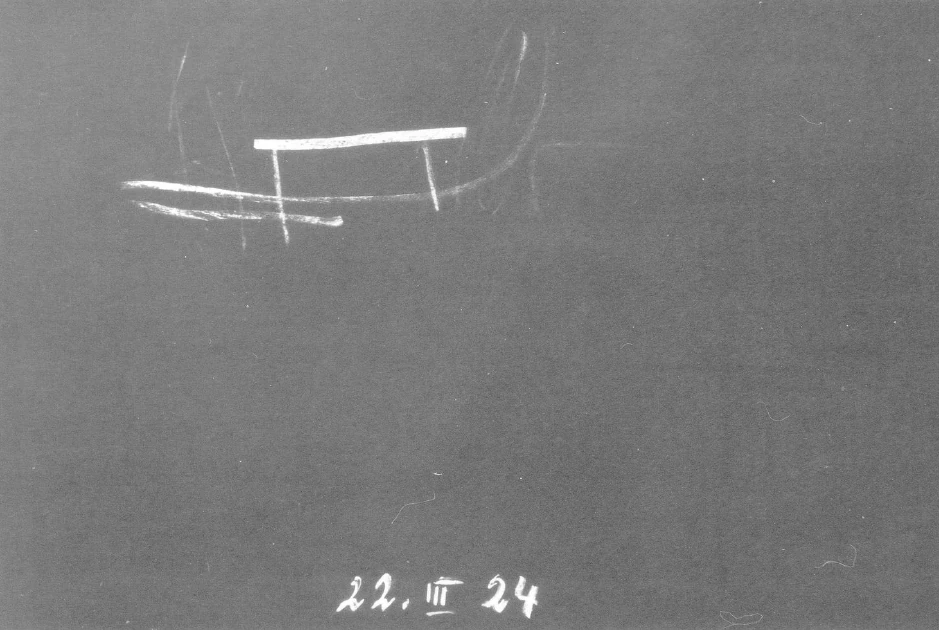
[ 49 ] Well, Eugen Heinrich Schmitt first became known in Vienna in the 1980s—and I became acquainted with him at that time as well—when he wrote his award-winning essay on Hegel’s dialectic, for which the Berlin Hegel Society had issued a call for submissions. Then this tall Eugen Heinrich Schmitt—he was slender and tall—came to Vienna, a man who was truly, even if outwardly in a somewhat very ostentatious manner, imbued with a strong enthusiasm, an enthusiasm that at times, as I said, also took on very strong outward forms, but he was simply an enthusiast. That’s something that perhaps just gave me a nudge. I thought I’d like to do Eugen Heinrich Schmitt a favor, and since he had just written his enthusiastic article about Lord Byron at that time, I introduced him to the other Byron enthusiast, Marie Eugenie delle Grazie. Then a terribly enthusiastic discussion about Byron broke out. They actually agreed, but they debated animatedly. Everyone else sitting there remained silent. A whole group of theologians from the Catholic Faculty in Vienna had gathered there; they came every week, and I got to know them very well and became very good friends with them. The rest of us all remained silent. But those two were now talking about Byron like this: There was the table, somewhat oblong; delle Grazie was sitting there, and Eugen Heinrich Schmitt was sitting here, gesturing wildly. Suddenly, the chair gave way beneath him; he fell under the table, his feet extending all the way to where delle Grazie was sitting. I suppose I can say it was quite a shock. But this shock triggered something very special in me—I really want to recount this quite objectively and historically—it triggered something very special in me: Everything that had been said there about Byron had such an effect that I felt the most vivid need to know what the karmic connections might be in Byron’s case! Of course, that wasn’t so easy. But it really was as if the image of that conversation had stood there with Eugen Heinrich Schmitt, who was being offensive with his foot, and as if that image had led me to Byron’s foot, which, as you know, was club-footed: he dragged his foot because it was shorter. And from there I said to myself: My beloved teacher also had a foot like that, and—one must investigate the karmic connections. — I have already shown you, using the example of Eduard von Hartmann’s leg injury, how one is led back through such characteristics. I was now able to more easily visualize the fate of this person close to me, who also happened to have just such a foot, and what was, of course, most remarkable of all was that this one characteristic—having a clubfoot—was present in both Byron and the other man. But otherwise they were quite different: Byron, the brilliant poet, who was adventurous by nature despite his genius—or perhaps because of it—and the other man, who was an outstanding geometer, the likes of whom are rarely found in such academic circles, and whom one could truly admire for his geometric imagination and his mastery of descriptive geometry.
[ 50 ] In short, I was able to apply the karmic problem to this seemingly trivial physical matter involving two people who were completely different in terms of their emotional makeup; but this led me to actually address both problems—one person and the other, Byron and my geometry teacher—in context and thereby solve the problem.
[ 51 ] I wanted to present these cases to you today as representative examples, and tomorrow we will move on to a karmic analysis of them.