Esoteric Considerations of Karmic Connections
Volume II
GA 236
16 May 1924, Dornach
Translated by Steiner Online Library
Tenth Lecture
[ 1 ] Last time, we discussed how, in a sense, the seed of karma is formed during the period immediately following a person’s passage through the gate of death. And I tried to illustrate how, with great vividness and a powerful inner force, the very experiences a person undergoes during this period—which encompasses about one-third of their lifetime—how these experiences affect them with tremendous intensity, and how they affect the observer who follows the person’s life during this time. Now we must consider how the earthly world—within which the fulfillment and formation of karma actually take place—affects the human being, and how differently the extra-earthly world affects them.
[ 2 ] If we look, so to speak, at the stage of our karma—which is, of course, the Earth—we will find that what belongs to the Earth—all the beings of the various kingdoms of nature—has a real influence on the human being who is there; this influence makes itself felt in human life, and makes itself felt even when the human being does not direct his awareness toward what is in his earthly surroundings. The human being must nourish himself; the human being must grow; to do so, he must take in the substances of the Earth. They act upon him through their qualities, they act upon him through their inner forces, and they act upon him entirely independently of his awareness. And one could say—even if this is put somewhat radically—that regardless of how a person relates in their soul life to the various realms surrounding them in earthly existence, they come into contact with, and form a relationship to, these facts of their physical-earthly environment.
[ 3 ] One really has to take this into account in the most diverse areas of life. For example, one might ask: What if, in determining the quantity of food we consume, we were guided by what we know about the effects of human food on the organism? We cannot afford to wait to learn anything about this; rather, we are driven by a relationship to the earthly environment that is entirely independent of our knowledge—and, in a certain sense, entirely independent of our inner life as well. But just consider the stark contrast to the world of the stars. There can be no question of an influence from the world of the stars within the same instinctive framework in which we speak of the influence of the earthly realms. Human beings can admire the world of the stars. They can receive all manner of inspiration from it. But just consider how much they depend on their inner life in relation to everything concerning the world of the stars, and how this world of the stars must affect their inner life. Take the nearest celestial body that stands in a relationship to human beings in the outer world—take the Moon. You know from everyday life that the Moon has a certain influence on people’s imaginative life. And even those who wish to deny every other aspect of the celestial bodies’ influence on human beings will not deny the effect that—quite unconsciously—is exerted on human imaginative activity by the “moonlit enchanted night,” to quote a famous Romantic phrase.
[ 4 ] But one cannot imagine that even this most immediate and grossest effect exerted on human beings by the world of the stars could take place without involving human soul life—that a relationship could arise similar to that between human beings and their earthly environment, where it really does not depend greatly on what a person knows about the effect of cabbage on their various organs, or whether they admire cabbage or not—they simply have to eat it. And in fact, all knowledge comes into play as something that certainly elevates human soul life above natural life; but human beings live their own lives within nature, and spiritual life is merely an addition to that. On the other hand, if we exclude spiritual life, we cannot even conceive of an influence of the celestial world on human beings, let alone that world which lies beyond the celestial world—the world of the hierarchies, the world of the higher spiritual beings. Now, standing, so to speak, on the lowest rung of the ladder of hierarchies are those beings of whom I told you last time that they actually shape human experiences after death—by living within them themselves—making them so intense, so powerful, so strong. If these lunar beings—who were once the great primordial teachers of humanity on Earth—did not, so to speak, live within what a person experiences after passing through the gate of death, then those experiences after death would be dreamlike. But they are anything but dreamlike. These are experiences that are more intense than the so-called normal experiences of earthly life. Karma is prepared through these experiences, because we live intensely within all the others—not within ourselves—and must balance it out. We experience things as the other person experiences them—the one to whom we have inflicted them—and we experience them with tremendous intensity. So during these experiences, we prepare our karma. In the time between death and a new birth, the transition then takes place from sharing in the experiences of these lunar beings to what is now experienced together with human beings by entities that have never been on Earth. The lunar beings I spoke of last time were, after all, present during earthly existence. I have characterized that. But then, at a later stage between death and a new birth, the human being ascends to beings who have never been on Earth.
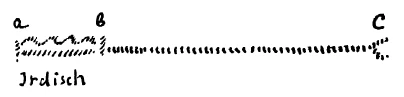
[ 5 ] First, there is a group of beings within the higher hierarchies whom we have named Angeloi. These beings are, so to speak, our guides from one earthly life to the next. They accompany us from one earthly life to the next. They are the beings to whom we are closest in the higher realms, and to whom we are actually always very close even during our earthly lives. The fact is: When we reflect on external circumstances—that is, when we reflect on what we have seen, what we have heard, what we have absorbed from nature or history, or what other people have told us—when we reflect on these things that come to us from the outside during our earthly lives, if we give ourselves over solely to these thoughts imposed from the outside, then the being from the hierarchy of the Angeloi, to which we belong, has little to do with our thoughts. For these beings from the hierarchy of the Angeloi were themselves never inhabitants of the Earth like human beings or like those primordial teachers, who, though they existed only in the etheric body, were nonetheless inhabitants of the Earth. Such inhabitants of the Earth are not the beings we refer to as Angeloi, so our relationship to them is already different from our relationship to the lunar beings I just spoke of.
[ 6 ] But at any rate, as we travel after death along paths that, in a certain sense, lead past the planets and bring us into the realm of the lunar beings, we are at the same time, within the lunar region, in the realm of the Angeloi. So, in fact, already during the time when we live together with the primordial teachers of humanity who have become lunar beings, we also live together in a conscious way with the beings we call the Angeloi. Then we proceed further. And as we proceed, we enter the realm that, in all spiritual science that has ever existed, is designated as the realm of Mercury. There, in this region, there are no longer beings who were once on Earth. Only beings who have never been on Earth dwell there. As we enter the Mercury region—in the time between death and a new birth—we enter the realm of the Archangels, and as we then enter the Venus region, we enter the realm of the Archai.
[ 7 ] As we pass through these realms of the third hierarchy in this way, we thus draw closer to what is actually the spiritual essence of the Sun. And the spiritual essence of the Sun during this passage through life between death and a new birth is, in the highest sense, the dwelling place of those beings whom we have designated in the hierarchy of the higher realms as Exusiai, Dynamis, and Kyriotetes. Thus, it is the second hierarchy that is, in fact, the soul, the spirit of solar life. It is into this realm that we enter. It is in this realm that we spend the greater part of the time between death and a new birth. Now, these beings can truly be understood only when we consider how their existence is entirely separate from everything that makes us human beings on Earth—everything that binds us within the sphere of the laws of nature. Natural laws, as we recognize them on Earth, do not exist in the realm of true solar life. In the realm of true solar activity, spiritual laws—including, for example, laws of the will—and natural laws are one and the same; they are entirely one and the same. There, natural laws do not in any way contradict spiritual laws; rather, natural law and spiritual law form a complete unity.
[ 8 ] And, my dear friends, please be fully aware of the consequences of such a thing. We live here in earthly life. In earthly life, we experience one thing and another. Within earthly life, we experience how we strive to do good, how we strive, perhaps, not to stray from whatever path we consider morally appropriate for us. We perform certain actions based on such intentions. We see someone else whom we cannot help but attribute such intentions to—or rather, whom we are simply compelled to attribute evil intentions to. We wait a few years after having, as we believe, developed our good intentions alongside the other person’s evil intentions. We see that our good intentions, as we say, have not prevailed; that not only have they had no effect, but that we may have fallen into what we call earthly misfortune, while the other person—whom we believe had no good intentions at all—lives alongside us in apparent, at least outward, happiness.
[ 9 ] This is precisely what leads so many people—who view earthly life in isolation—to struggle with this earthly life, to say that earthly life does not reveal a power that deals with good and evil in an appropriate manner. And no one who observes life impartially will be able to say that those who speak this way are entirely wrong. For who, when standing firmly in the reality of life, would say that everything that befalls a person in life is somehow connected—in terms of merit or fault—to what has flowed from their intentions in this earthly life? We have this earthly life, and when we consider its course, we can really say nothing else but that it is impossible to find any compensation in this earthly life for what flows from our soul in spiritual and moral terms. Why not?
[ 10 ] Yes, because we are not able to control our intentions—the innermost forces that govern our moral and spiritual life—of our own accord and of our own free will; because we are not able to translate these directly into the reality in which we live on Earth. Out there, the laws of nature unfold; out there, the events that take place under the influence of various people unfold. We must, after all, be clear that, at least as far as earthly life is concerned, there is a gulf—let’s say from a to b—between what takes place in our soul as impulses of the will and what we see realized in our outer life as our destiny.
[ 11 ] You need only ask yourself once: How much of this external life, how much of what constitutes destiny—and is therefore significant for human life—arises directly from the intentions you hold in your soul as a reality? — This world, this earthly one, is precisely not the one in which the spiritual laws by which a person allows themselves to be governed or governs themselves are also directly natural laws; they are not natural laws; they operate solely within the human being. And if one looks at the world impartially, one can only say this: If anyone were to reinterpret the good intentions I have as bad ones—if, knowing my good intentions, and perhaps because my fate in a few years will be an unhappy one despite my good intentions, he were to interpret them in such a way that he calls them bad and then, for example, were to say: “This has now come to pass; I told you back then that your intentions were bad!” — then this would represent an impossible way of thinking. The spiritual must work from soul to soul. But in the outer earthly world, the spiritual does not yet operate in accordance with destiny.
[ 12 ] And so we must clearly face the fact that there is a gulf in earthly life between the moral-spiritual and the natural-physical. This gulf exists because the spiritual laws do not align with the laws of nature.
[ 13 ] If people completely disregard the world that follows the earthly one—from b to c, from death to a new birth—by not considering this world at all, by thinking that we cannot know anything about it because of the limits of our knowledge—what can such people say? They might say: Yes, the laws of nature and what human beings do and experience because they are subject to these laws—that is a reality; that is real, and that is the extent of our understanding and knowledge; but what happens to the intentions that exist within us as soul-spiritual experiences—that we cannot know. — If one does not look at “b through c,” one cannot know anything about them. One can therefore only believe that these things, which live within our soul, also come to fruition in some way. To the same extent that, since the ancient times of human development, knowledge of b through c has declined and faded away, to that same extent did this separation between knowledge and belief come about.
[ 14 ] But to the same extent that one speaks of knowledge and belief, one can no longer speak of karma. For karma expresses a law, not merely something that is believed, just as any natural phenomenon expresses a law.
[ 15 ] But if we now look back—say, from the very earliest time I have described to you—on our passage through life between death and a new birth, we thereby enter, in our contemplation, a world in which the beings of the second hierarchy—Exusiai, Dynamis, Kyriotetes—now live, and instead of earthly existence, we have a solar existence (see illustration on page 188); for even when we move beyond the region of the stars, the Sun continues to shine—not in the physical sense, but it continues to shine as we pass through the time between death and a new birth. While here on Earth the sun shines down upon us with its physical effects, in the life between death and a new birth the sun, so to speak, shines up toward us—that is, we are carried by the beings of the sun, the Exusiai, Dynamis, and Kyriotetes. But in the world where we then find ourselves, the laws of nature that govern earthly life no longer have any meaning at all; instead, everything there takes place in accordance with spiritual laws—laws that are entirely spiritual and soul-related. After all, no grass needs to grow there, nor does any cow need to eat grass, for there are no cows or grasses there. Everything there is spiritual. And within this spiritual realm lies the possibility for us to realize the intentions we hold in our souls—intentions that cannot be realized here in the earthly realm, so much so that good can even lead to misfortune, and evil, in extreme cases, to happiness. For since everything there is realized and lived out entirely according to its inner value and inner nature, it is impossible for any good not to have an effect commensurate with the measure of its power of good, and for any evil not to have an effect commensurate with the measure of its power of evil—and this in a very special way, namely the special way—you see—that emanates from the solar existence—that is, from that existence which actually embodies the second hierarchy, the Exusiai, Dynamis, Kyriotetes—there emanates, I would say, a thoroughly gracious reception of all the good intentions we have here on Earth in our inner lives.
[ 16 ] One could also put it this way: Everything that a person experiences in their soul with a nuance of goodness is joyfully received into this solar existence, but evil is rejected entirely. It cannot enter into this solar existence.
[ 17 ] In that course—which I was still allowed to teach over at the burned-down Goetheanum, the so-called “French Course”—I pointed out how a person must leave their bad karma behind before entering a certain period between death and a new birth. Evil cannot enter into solar existence. There is a certain proverb that, admittedly, in the consciousness of people today refers only to the physical effects of the sun. This proverb states that the sun shines equally upon the good and the evil. It does indeed do that; but it does not absorb evil. If you see spiritually what is good in a person’s soul, it is as bright as sunlight—but bright in a spiritual sense. But if you see what is evil in a person, it is as dark as a place where no sunlight reaches. And so all evil must be left behind by a person when they enter the solar realm. They cannot take it with them.
[ 18 ] But just think about it: A human being, in his earthly life, is, after all, a unified whole. His physical and soul-spiritual existence are interconnected; they form a unity. In the veins of a person who harbors only evil intentions—even if this cannot be proven with crude instruments—the blood not only flows differently, but is even composed differently than in a person who carries goodness in their soul!
[ 19 ] Now imagine that a truly evil person arrives at the state of being in the light—that phase of life between death and a new birth. He must leave behind everything that is evil. Yes, but in doing so, a significant part of himself remains behind, for evil is, after all, connected to him. It is one with him. At least insofar as it is one with him, he must leave behind that part of himself which lived within him as evil.
[ 20 ] Well then, if at this point a human being must leave behind something of himself, of his own being, what is the consequence of this? That he withers away and enters into the solar existence, as it were, as a spiritual cripple. And solar existence can, of course, only make use of what a person brings with them into this solar existence. They must leave the rest behind.
[ 21 ] Now, the Sun’s existence will draw near to it those beings who can work together with it, who can interact with it between death and rebirth.
[ 22 ] But let’s take a truly extreme case, my dear friends—let’s take the case of a person who was so evil, so inhuman, that he wished harm upon all people from the depths of his heart. Let’s assume he was as evil as such evil does not actually exist—but hypothetically, let’s assume a completely evil person. What will become of a thoroughly evil person who has completely identified with evil—what will become of him when he reaches this point here, let’s say Alpha (see diagram on page 188), and must leave behind everything connected with evil? He will have to leave himself behind! He will thus have gone through that period between death and a new birth that I described to you recently; he will have passed through this world in the realm of the lunar beings; he will indeed have encountered the being from the hierarchy of the Angeloi who belongs specifically to him, as well as other beings from the hierarchy of the Angeloi who, in turn, are connected to this one. But now he is reaching the end of this world. He approaches the Sun via Mercury and Venus, but before he enters the actual solar existence, he must leave his former self behind, because he was, on the whole, a villain. What follows from this? He does not enter into the solar existence at all. If he does not wish to disappear from the world entirely, he must immediately prepare to be reincarnated, to begin a new earthly life. So that in the case of a thoroughly wicked person, you would find that very soon after his death, he begins a new earthly life.
[ 23 ] Well, such thoroughly evil villains don’t really exist. All people are, in a certain sense, a little bit good. That is why all people do enter into the solar existence at least to a certain extent. But depending on how much a person has allowed their spiritual and soul nature to wither away, they will enter the solar existence to a greater or lesser extent; and depending on that, they will also draw from the solar existence the strength to shape and build up their next earthly life, for what a person carries within themselves can only be built up from within the solar existence.
[ 24 ] You are familiar with that scene from the second part of Faust in which Wagner creates the homunculus in a flask. The point is this: in order to actually create something like a homunculus, Wagner would have to possess knowledge of the solar beings. Well, Goethe doesn’t exactly portray Wagner in his Faust as if he possessed knowledge of the solar beings; otherwise, he wouldn’t be the “dry, sly fellow” that Goethe depicts him as, would he? Wagner is certainly a very intelligent person, but he does not possess knowledge of the solar beings. That is why Mephistopheles, a spiritual being who already possesses knowledge of the solar beings, helps him; only through this does anything come of it. Goethe sensed this very well: that only in this way can something like a homunculus emerge from the retort, which can then also develop into something.
[ 25 ] One must be absolutely clear about this: what is human does not arise from the earthly, but only from the solar. And the earthly aspect of the human being is, in the sense described in the “Guiding Principles,” merely an image. The human being carries the solar within. The earthly is only an image in the human being.
[ 26 ] So you see, between death and a new birth, we are, so to speak, entrusted to the high solar beings by the world order. And these high solar beings work with us to develop that part of us which we are able to bring into solar existence at all. The rest remains behind. And so, when a human being returns to earthly life, what remains behind must, in a sense, be retrieved again.
[ 27 ] Human beings go out into the existence of the world—I will describe the rest of the process the day after tomorrow—but they come back again. On the return journey, he passes through the lunar region once more. There he finds the evil he left behind. He must reintegrate this into himself. He integrates it in the same way he experienced it immediately after passing through the gate of death. He integrates it in such a way that it is now realized in earthly existence.
[ 28 ] So let’s stick with the somewhat off-putting example I mentioned the other day: If I slapped someone in my earthly life, I immediately feel—as I travel backward after passing through the Gate of Death—how much that hurt him, the other person. This seems to me—and I find it again when I return—to be what I strive to realize. So if what emanates from what the other person experienced is to affect me, then I myself sought that out on my way there; I carry that tendency back into earthly life when I return. But let us set that aside for now; I will speak about this fulfillment of karma the day after tomorrow. Yet you can see: what I find there again has not passed through the solar life; it has not gone through the solar life. I have brought through the solar life only that which was connected with the good.
[ 29 ] Now that I have essentially built up a stunted human being within the solar region, I am reabsorbing into myself what I left behind. But what I am now absorbing is, after all, the foundation for my earthly, physical organization. Thus, since I have brought only a part of myself—namely, the part that was able to enter the solar region—into that solar region, I can also, having been fertilized by the solar region and spiritualized by it, bring back only that part of my human being which I have passed through the solar region.
[ 30 ] This part of a person—that is the first part. But let’s consider these two parts:
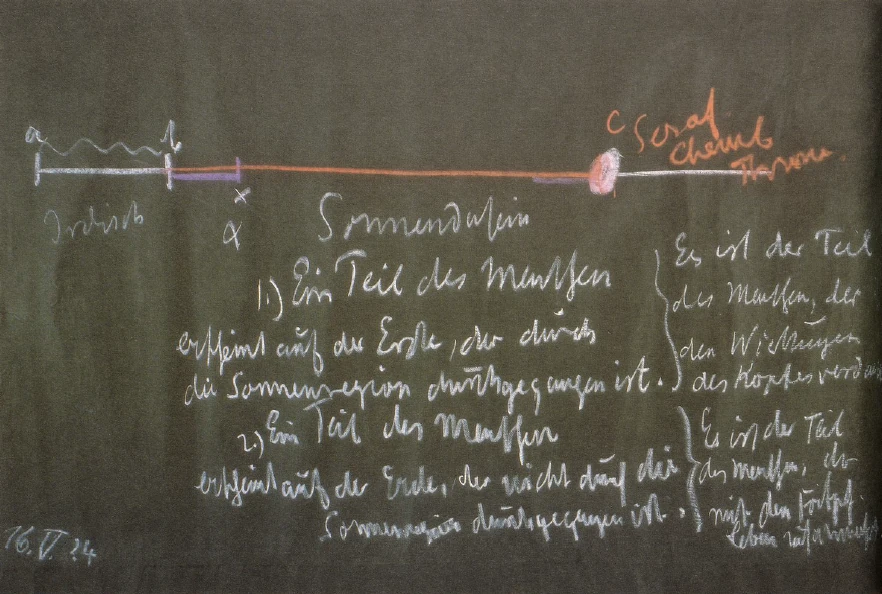
[ 31 ] 1. A part of the human being appears on Earth that has passed through the solar region.
[ 32 ] 2. A part of the human being appears on Earth that has not passed through the solar region.
[ 33 ] You see, this refers to a person’s life between death and a new birth and its aftereffects on earthly life. But the sun also influences a person while he is on Earth. The Sun certainly also influences human beings while they are on Earth. And that realm—specifically the lunar realm—also influences human beings to the extent that they are on Earth. We always have two kinds of influences on human beings: first, the influence of the solar life between death and a new birth, and second, the influence of the solar life during a person’s earthly life. Similarly, we have the influence of the Moon—let us say, by grouping together the Moon, Mercury, and Venus—the influence of the lunar life on human beings between death and a new birth, and secondly, the influence of the lunar life on human beings while they are on Earth.
[ 34 ] During our earthly life, we need the sun so that our mental life as earthly human beings is possible at all. What the sun conveys to us through its rays is actually what brings forth our mental life from within our organism. It is this very part of the human being that is conditioned by the existence of the sun. It is this part of the human being that is responsible for the functions of the head. I write: of the head (see summary on page 186). I actually summarize everything that constitutes sensory life and imaginative life under the term “head life.”
[ 35 ] The other part—the one that, in earthly life, depends on the influences of the Moon, Mercury, and Venus—is the part of the human being that is connected not with the life of the head but, in the broadest sense of the word, with the reproductive life.
[ 36 ] Here is something curious. The life of the Sun has an effect on the human being between death and rebirth by actually making him human—by developing within him that which is connected to the good. During earthly life, however, it can only act upon everything connected to the head. And, strictly speaking, this life of the head has very little to do with goodness, for one can also use one’s life of the head to become a cunning scoundrel. One can be very clever and yet use that cleverness to become a villain.
[ 37 ] Everything that develops in the course of earthly life is based on the life of reproduction. This reproductive life, which is under the influence of the Moon, is the part of the human being that, in the life between death and a new birth, is connected to the part that does not participate at all in the human being’s journey through the worlds.
[ 38 ] If you keep this connection in mind, you will easily be able to understand how everything related to this manifests itself in human beings as they stand here on Earth.
[ 39 ] First, there is the part of the human being that appears on Earth and has passed through the solar region. It is the head alone that is influenced by the solar region during earthly life, but what is connected to this solar region remains within the whole human being, and it remains as the person’s constitutional predispositions (see compilation). Therefore, these constitutional predispositions are also connected to the life of the head. The head becomes ill only when the digestive life or the rhythmic life pushes the illness up into it.
[ 40 ] In contrast, everything that constitutes the part not affected by the life of the Sun is connected to a person’s predisposition to illness.
[ 41 ] And so you see that illness is woven within the region below the Sun, and that, within this region, illness is connected to what evil represents in its effects as soon as a human being enters the life between death and a new birth. And the region of the Sun itself is connected to the faculties of healing. And only when influences from the lunar region penetrate into the human being’s solar region can that which on Earth is connected to the solar region—the head organization—experience any states of illness. You see, we can only gain insight into these vast karmic connections if we truly follow the human being into the region where spiritual laws are natural laws, and natural laws are spiritual laws.
[ 42 ] 1. A part of the human being appears on Earth that has passed through the solar region } It is the part of the human being responsible for the functions of the head } Health predispositions
[ 43 ] 2. A part of the human being appears on Earth that has not passed through the solar region } It is the part of the human being associated with reproductive life } Predispositions to disease
[ 44 ] Allow me to express myself—I would say—in everyday terms in a realm that is anything but ordinary, but to speak as one does in everyday life. It is not at all unnatural for someone who is immersed in the spiritual world. When you speak with people here, you see, you can tell from the way they speak that they are immersed in nature. Their language reveals this. When one enters the region that I described to you in detail by name in the last lecture—the one that follows a person’s passage through the Gate of Death—and speaks with the beings who were once the primordial teachers of humanity, that is, with the beings from the hierarchy of the Angeloi, there is something strange about this speech; for these—how shall I put it — people, well, these people speak only of natural laws, which, however, are imbued with magical power and are at the same time governed by the spirit. These beings understand magic. But they know natural laws only insofar as they realize: human beings have natural laws on Earth; these natural laws have nothing to do with them.
[ 45 ] But what is happening there still appears in forms that are similar to the processes on Earth. Therefore, the spiritual effects still look like natural phenomena on Earth; in fact, they are even stronger, as I have described.
[ 46 ] But when one leaves this region and enters the solar region, one hears nothing at all about the Earth’s natural laws. There, in the language of these beings, everything is such that one hears only of spiritual effects and spiritual causes. There are no natural laws there.
[ 47 ] You see, my dear friends, this is something that simply must be said at least once. For when people here on earth constantly speak of the universal validity of the laws of nature—or even, in a rather foolish way, of their eternity—one is always tempted to reply: Yes, but there are realms in the world—the realms through which a human passes between death and a new birth—where people simply laugh off the laws of nature altogether, because they have no significance there; because there they exist, so to speak, at most as news from Earth, not as something within which one lives. And when a person then passes through this region between death and a new birth and has lived long enough in a world where there are no laws of nature, but where there are only spiritual laws, then at first they actually lose the habit of thinking of the laws of nature as something serious. One does not do that between death and a new birth either. There, one simply lives in a region where the spiritual—which one has intended—can be realized, where it is moving toward realization.
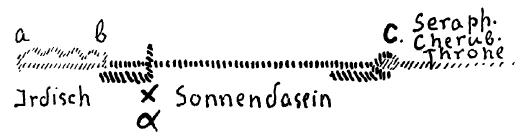
[ 48 ] But, you see, if that were all there were—if there were only this second hierarchy in the solar region, and if we experienced in that solar region the kind of realization that we can experience there—then, after passing through this life, we would arrive there again before our earthly life (c), and if we were now to enter earthly life, we would first stand there, burdened with our karma. We would know that we can only progress further if we can now also translate into the physical realm what has been fully realized spiritually. For spiritually, our karma is realized when we descend there. At the moment we arrive at earthly existence, the spiritual laws and spiritual aspects must once again be transformed back into the physical. This is the region where Seraphim, Cherubim, and Thrones transform the spiritual back into the physical.
[ 49 ] So that in the next earthly life, what has been realized spiritually is also realized physically through karma. This is the progression of karma.