

Esoteric Considerations of Karmic Connections
Volume V
GA 239
14 June 1924, Wrocław
Translated by Steiner Online Library
Fifteenth Lecture
[ 1 ] You have already been able to see from various considerations related to the shaping of human destiny and the formation of karma that this human life is actually viewed incompletely if one does not include the life of sleep in one’s self-observation. But sleep actually remains outside of consciousness. When a person reflects on themselves in the consciousness that is characteristic of modern life, they look back and see only the days; since the nights pass unconsciously, they are left out. Thus, for normal sleepers—since we are not hibernators today—one-third of life is left out. But for the consideration of the supersensible, of the human being’s participation in the spiritual world, it is precisely this one-third that is of immense significance. Let us schematically illustrate what is actually meant using a few simple lines (a drawing is made). When someone has reached a certain age, they first look back to the first day they can remember, then piece together what lies in between—the second-to-last day, the third-to-last day, and so on, as far back as their memory extends. The nights in between remain; people leave them out of consideration. They do not recall things in such a way that they say to themselves: “There are always intervals in between.”—They really ought to do that. Even in today’s life, people do not manage to look back with such precision. They pay far too little attention to life to be able to look back with such precision. But if they were to do so, it would be precisely through what they do not see in that retrospective—what is missing from their life—that they would gain a guide, a clue to their karma. And it is precisely the observation of sleep that provides significant clues to one’s individual karma. One need only truly engage with this once, observing how different the two moments are in human life: that of waking up and that of falling asleep. This difference can be sensed intuitively with ordinary consciousness, but only the science of initiation can shed light on what appears to be intuitively different there. The moment of waking and the moment of falling asleep prove to be particularly different in people who are somewhat ill or frail. They have noticed, more easily than healthy people, that the moment of falling asleep has something of a gentle sense of pleasure about it—at least often. The moment of waking, when a person feels drawn back into themselves, has something of a gentle sense of unease about it. The moment of waking is actually accompanied by joy only when a person immediately becomes aware of the external world and when the external world in their consciousness drowns out what is rising within them. For many people, the moment of waking has a twilight-like quality; so does the moment of falling asleep. But at the moment of falling asleep, a person has the feeling that they are carrying the day’s events they have experienced along with them just a little, that these events then become increasingly nebulous and hazy, and that they, so to speak, leave them behind; they become lighter and lighter for them. The moment of waking has something of a feeling of heaviness to it, a sense of rising as if from certain depths, from which one ascends and from which one takes something with them—something they carry into the day, something they only gradually shed during the day—which is precisely why the sensation of feeling oneself again upon waking can be somewhat uncomfortable. We have an unpleasant sensation in the mouth, which can extend into an unpleasant feeling of a dull head. Certainly, people do not usually distinguish these finer experiences they can have within themselves, but it is precisely these finer experiences that point to many aspects of human life as a whole in a very clear way. What is actually happening to a person? We do, in fact, describe quite correctly—and from a certain point of view, very precisely—exactly what happens to a person: the physical and etheric bodies remain in bed, while the “I” and the astral body go out into the spiritual world upon falling asleep; in turn, the “I” and the astral body return to the physical and etheric bodies in the morning upon waking. But how does this actually take place? Precisely in order to make progress in our consideration of karma, let us today clearly visualize in our minds how this process actually takes place—a process that we have, with some justification, described somewhat abstractly at first.
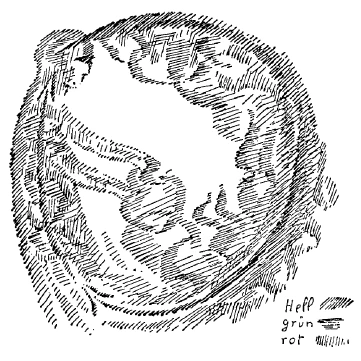
[ 2 ] You see, this process of the “I” and the astral body leaving the physical and etheric bodies can be schematically illustrated as follows (it is drawn). Let’s assume this is a human being. If these are the physical body and the etheric body, then in the evening, as one falls asleep, the I and the astral body emerge in such a way that they move outward toward the head. And we draw, very schematically, how the two become larger and larger while describing a sort of circle. And in the morning, upon waking, the “I” and the astral body actually re-enter the physical body through the limbs, through the fingers, and through the toes. So the fact is that a circle is actually described, and this—that a circle is described—is to be taken more literally than one might think. For in reality, when we wake up in the morning as normal human beings, we do not immediately have, before our clairvoyant consciousness, the image that the entire astral body and the entire “I” are now inside the physical body and the etheric body; rather, they slowly move toward that state from morning until around noon and into the afternoon. The “I” and the astral body slowly move into the physical body. You will say: Well, then the process must be highly peculiar; we would have to gradually feel our “I” and astral body moving from the fingertips and toes toward the head. — From an extraordinarily precise clairvoyant perspective, this is indeed the case, but a person does not perceive it that way inwardly. For the mode of action of these higher members of the being is simply different from that of any physical objects. You see, when a locomotive pushes a car, it always exerts its force at the very spot where it happens to be. And if a track is thirty meters long and the locomotive is pushing, at first it pushes the first meter, then the second, and so on; and at the fifteenth meter, there is still no effect from the locomotive if the locomotive is not yet there. It is not like that with spiritual things, however; rather, spiritual things also exert their influence in places other than where they are. So that, in fact, the waking day—the day spent fully awake—is used so that we can slowly bring our “I” and our astral body into our physical body and our etheric body, starting from the tips of our fingers and toes; yet they are already active within us from the very beginning, from the moment of waking, so that one has the inner feeling of being completely filled by them. To the clairvoyant eye, however, it becomes apparent that there is a proper cycle throughout the day as well; the other, complementary cycle then takes place throughout the night. Such a cycle also takes place—though it does not depend very much on the time of day—when you take an afternoon nap: then, too, it moves in a circle. Then you should really imagine that the ego and the astral body leave the body once again, and that this process adjusts itself according to your need for sleep. For sleep already knows within itself when the sleeper will wake up. Sleep is a prophet, and everything proceeds exactly as it should at the very same pace at which it unfolds. You know nothing of this, but sleep knows it; the astral body knows it under all circumstances. It knows it even when, due to some disturbance, you sleep less than you intend to; even when, for example, you say before falling asleep that you want to sleep only half an hour and then end up sleeping three hours instead of half an hour: the sleeping astral body knows exactly how long you will sleep. It is a very accurate prophet, because the inner spiritual conditions are simply different from the outer conditions that one experiences.
[ 3 ] From this alone, you will realize that falling asleep is one thing, and waking up is another. For when you wake up, you have just been in the spiritual world, and when you fall asleep, you leave the physical world and enter the spiritual world. There one perceives the current through which one, so to speak, swims in the spiritual world between falling asleep and waking up, but one also has experiences within it. It’s just that ordinary consciousness is not capable of knowing what one experiences there; it is experienced in the unconscious. But one does have experiences there, and one even experiences things there in a similar way to how one experiences them during the day—only in a much more striking way, in a much more intense way. For the following is true:
[ 4 ] When you observe this active inner life during the day, you will initially find within it those experiences that are thought experiences, brought about by the various impressions of life. They are there. But what is always intermingled with them are the memories from your past earthly life. Just try to examine what gets mixed together in all situations—the immediate memories and what wells up from within. One can indeed gain a vivid picture of how these elements intermingle, especially when one truly becomes aware of how life, at various moments, is a veritable jumble—a mixture of memories and fleeting impressions. Well, these are two entirely different elements of inner life: the thoughts that arise, and the thoughts that, so to speak, enter through the senses. These two distinct streams of inner life are also present during sleep. For what is primarily present as we fall asleep continues during sleep, and this is, in a sense, constantly flowing toward it, so that in the morning, upon waking, it completely eludes us because what we experience upon waking flows toward the head (see the illustration on page 238).
[ 5 ] These two currents flow in opposite directions. One current, the nature of which is experienced particularly when falling asleep, is the one already mentioned—the one that is consciously, intensely, and powerfully experienced in the first decades after death, when one relives one’s life, but in such a way that everything is experienced in the opposite manner. As I have told you in no uncertain terms: that if you slapped someone, you would not, when reliving this experience after death, feel the anger you felt during your conscious earthly life when you delivered the slap—nor the satisfaction, perhaps, of having been able to vent that anger—but rather you would experience what the other person felt during that slap: their physical pain and also their emotional suffering. You would experience this figuratively—not in reality—if you were to consciously continue the state of consciousness you are just entering as you fall asleep, when everything is already growing dim. If you were to immerse yourself fully and with clear awareness into that state, you would experience the opposite of daily life—but only figuratively. In the first decades after death, one experiences it in reality.
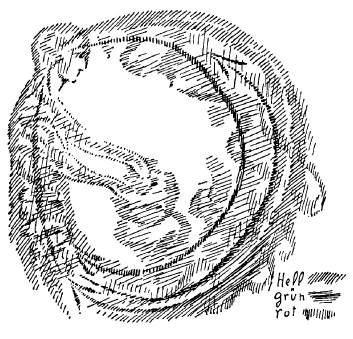
[ 6 ] The way I’ve described it roughly corresponds to the life one leads during the day while awake, when one is simply absorbed in external life through one’s thoughts. But there is also the other current. And this other one has something truly immense about it. One experiences it upon waking, as I have explained. Yet it carries a certain heaviness that one carries into the day and overcomes only gradually; then one becomes free of it. When this is fully understood through the insight of initiation, one realizes that the entire human karma is contained within this second current. The entire karmic past passes before the person with every sleep. While a person has, primarily in what they experience as they fall asleep, a small foretaste of the karma in the making that is taking shape there for the future, when they wake up with this feeling I have described, they have a faint—albeit very faint—sensation of the karma they carry. The moment of waking is one of those moments about which one must say: it signifies a faint hint of everything a person carries within from their past earthly lives. This is, however, absorbed by everything through which the astral body and the “I” radiate as they spread into the person from the fingertips and the tips of the toes. But it is indeed the case that very burdensome karma—karma that weighs heavily upon one—has the peculiarity of causing all the unhealthy, accumulated substances to radiate upward into the head, as it were, whereas good karma actually radiates the good, accumulated substances upward. And that is where the spiritual and the natural meet. The good in a person’s karma radiates the healthy states of the organism up into the head in the morning, clearing the mind; not as much that is pathological rises up into the head from good karma. From bad karma—the residue of everything we have done in a negative sense—all manner of unhealthy deposits in the human organism are brought up into the head as a kind of vapor. One then feels the head buzzing and dull from what constitutes bad karma. One can already sense the workings and interplay of karma—right down to the physical level—simply through the states one experiences in the morning. And karma, after all, takes shape through the interplay of sleep and wakefulness. Just as the karma in the making—which is composed of what we have accomplished every day until the end of our lives—just as all this karma, worked out until the end of our lives, means the same to us for the night as the thoughts formed in the moment mean for the day, so that immense force that flows toward us—what we encounter when we have, so to speak, fallen asleep from evening until morning—represents the world’s memories of our past karma. Just as we have personal memories when we are awake, so too, when our consciousness expands to encompass them, do we have our karmic memories from the moment we fall asleep until we wake up. There we are met by the memories of the various earthly lives we have lived. Soon after falling asleep, those who know how to comprehend such things through the wisdom and insights of initiation may encounter the last and the second-to-last earthly lives, and so on up to those earthly lives that become indistinct, because the human being himself was still living in the cosmos at that time with an indistinct, dreamlike, plant-like consciousness. Thus, sleep is truly the window through which a person looks into their karma. They immerse themselves in their karma, and they continue to weave—through their deeds and thoughts, which form the content of their waking life—they continue to weave at the shaping of their karma precisely during sleep. This is the first weaving of karma: during sleep. We have already considered a second weaving; this takes place in the first decades after death.
[ 7 ] We will once again gain a more serious outlook on life if we keep the significance of sleep in mind in this way, if we tell ourselves that we sink into sleep every night because, from the moment we fall asleep until we wake up, we are weaving the fabric of our karma, and because that is where our karma from past earthly lives finds the starting point to influence our daily lives. From the night, karma gradually intervenes in a person’s daily life, and we carry something very specific from the night into the day. Anyone who can truly reflect on how they experience a particularly significant event in their life on any given day—and who possesses a more intimate, subtle self-observation—will then easily sense, when they experience this significant event in their life in the afternoon, for example, that a restlessness had already been within them since the morning, propelling them toward this event. Most people who are capable of sensing such things will actually have the feeling that, starting in the morning, they were already moving toward such an event that holds significance in life. The entire preceding part of the day was, in a sense, colored by such an event—even if it is a completely unexpected one, even if it is a truly fateful, unexpected event. On days when we go through something significant in life, we wake up differently than on days that just carry on in the usual routine. It’s just that people don’t notice it. The simple people who used to live in rural farming communities—something that’s becoming increasingly rare these days—knew about such things, and that’s why they didn’t want to be jolted awake right away; because when you’re jolted awake and thrown into waking life without a transition, you’re torn away from those intimate experiences. That is why the farmer says that when you wake up, you should never look out the window right away, but rather look away from the window, so that you still have the darkness, so that you can still observe what is emerging from sleep. The farmer does not want to look out the window right away, nor does he like to be awakened by something shocking at that moment; he likes to wake up in step with the rhythm of nature, with the church bell that wakes him up at the same time every day, so that he can prepare himself for it throughout his entire sleep. Then dawn breaks for him; the church bell slowly rings him back into life, and then, in the morning, he has his premonitions of fate—of events of fate, not of events of free will. He likes this, and he will hate it—even if the cultured person loves being woken by an alarm clock—for the alarm clock drives one thoroughly, with deadly certainty, out of everything spiritual, much more so, of course, than the window one looks out of just upon waking. But our modern cultural development has, after all, thoroughly embraced materialism in the conditions of life and continues to do so. There is much in modern life that makes it virtually impossible for people to truly observe the spiritual that weaves and lives in the world. The more a person observes that indefinable—one might say semi-mystical—quality that can radiate into their life from sleep, the more they become aware of their karma.
[ 8 ] And now you will understand why I was able to say: It is easy to dream about people you encounter in life—people toward whom sympathy or antipathy immediately wells up from within, quite regardless of the specific impressions they make on you outwardly. What happens then? These are the kinds of people with whom one has already been together in previous earthly lives. So, let’s say, on the afternoon of June 14, 1924, one had this experience: one met a person who might be disagreeable to one. Now one carries this experience—which has stirred up feelings within us—into sleep. But there, within the dream, lies karma; there he stands as he was in the second-to-last and last earthly lives, and you encounter him in the form of his former earthly life. You encounter everything you went through with the person who has appeared there—the one who, during the day, merely reminded you of something. You encounter him in a vivid, spiritual presence. No wonder one dreams of him at first; with ordinary consciousness, one can do nothing else. But when one meets a person for the first time in life—no matter how much one’s nose or eyes may interest one, whether they are beautiful or ugly—if one falls asleep now, one will not encounter him anywhere, for one was not with him in previous earthly lives. No wonder one cannot dream of them! You see how such things become transparent when observed spiritually and properly.
[ 9 ] Now, what takes place there—between sleep and wakefulness—in the formation of karma can proceed normally, truly normally; in that case, a person will experience how his destiny unfolds as the fulfillment of what he has accumulated in previous earthly lives. Or they will experience the future karmic significance of the things they think or do in this earthly life. As a rule, this will play out in what a person thinks or does. But something else can also occur.
[ 10 ] You see, one may have committed some act or thought of a serious nature during an earthly life. So let’s assume that some person living on Earth today had committed something serious in a previous earthly life. That which manifests as a karmic consequence does not reside in the physical body one receives from one’s parents, nor in the etheric body one receives from one’s parents, but rather it resides in the astral body and in the “I”; it resides in that which is present at night outside the physical and etheric bodies. But let us suppose that what weighs karmically upon a person is so powerful that it cannot wait until that stage of life when the astral body is permitted to be weak, because in old age muscles and bones have already become brittle. Let’s assume, shall we, that the normal lifespan of a human being is seventy years—the age of the patriarchs. During these seventy years that a human being can normally live on Earth, the astral body and the “I” also undergo a process of development. In a child, the astral body is such that it can exert a strong, powerful influence on the entire physical and etheric organism; in a child, it can, so to speak, “hammer away” at the muscles and bones. It can no longer do this in old age; there, the astral body also becomes relatively weak. The “I” becomes stronger, but it withdraws into the weaker astral body and thus exerts a weaker influence; yet this is due primarily to the astral body, which in old age is no longer truly suited to “hammering” into muscles and bones. Now imagine that someone is living today—let’s say in the twentieth century—and had previously lived in the fourteenth and eleventh centuries. But back when he lived in the eleventh century, he committed a rather grave deed—a deed that made a very, very strong impression on the astral body; now that impression remains embedded within the astral body. When the person returns in the twentieth century, that impression wants to play itself out; it wants to provide the impetus, from within this astral body, to act out. Indeed, if what stems from the experience in the eleventh century is so grave that it cannot be satisfied with a weak, aged astral body—one that can barely move its legs forward to accomplish great deeds—then it must make use of an astral body at an earlier stage of life. And if the event was so significant that it outshines all other life events, then much must be condensed into the youthful age of the astral body. What does that mean? It means nothing other than this: the person will have a short lifespan in the incarnation that begins in the twentieth century. Here you can see how the duration of life is determined by the way in which the results of earlier earthly thoughts and deeds are anchored in the astral body. They are anchored in the astral body.
[ 11 ] Now let’s move on. Consider, for example, an astral body that has been virtually inflated by significant deeds in some past earthly life—namely, by evil deeds; these inflate the astral body to such an extent that it exerts a strong influence on the physical body and the etheric body. This influence is not healthy. Only a certain normal relationship between the astral body and the physical and etheric bodies is healthy. The strong impact—which can be caused, for example, by evil karma—wears down the organs, exhausts them, and causes disease in the organs. Now we come to the second point. Such corresponding actions or thoughts in the eleventh century can inflate the astral body, thereby bringing about death at an early age. But this inflation also makes the person ill; the person may suffer from a serious illness and die as a result of that illness. That is speaking in physical terms. For when we observe what is happening in a person’s physical body, we say: The person is ill, and the illness leads to death; the person dies. They fall ill at the age of twenty-five and die at the age of thirty as a result of the illness.
[ 12 ] Is this also meant in a spiritual sense? Is this also meant in the sense of the science of initiation? No. In fact, the opposite must be said. It is precisely the grave experience that a person undergoes or thinks that becomes death for the next earthly life; the deed in the eleventh century becomes death for the twentieth. And death is preceded by illness. One becomes ill so that one may die at the right moment. The consequence of the later death, which must occur karmically, is, as you now see, the illness that precedes it. That is speaking in spiritual terms. In fact, when one ascends from the physical world into the spiritual world, everything is actually reversed; it takes the opposite course, and we see how, in this way, illness is karmically brought into the human being. This is the karmic aspect of illness. This karmic aspect of illness can be extraordinarily important, even for diagnosis. You don’t necessarily have to discuss this with the patient right away, but it can still be important. If you consider that what lies in karma is determined in a very specific, localized way, then you will inevitably come to this conclusion.
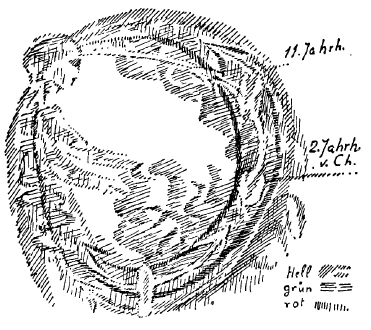
[ 13 ] You see, if in an immediately preceding incarnation—let’s say, in the eleventh century—a significant event in one’s actions and thoughts occurred in relation to a person or a thing, then when one drifts off to sleep, one encounters what was present in the eleventh century before one encounters what comes from an even earlier incarnation—let’s say, for example, from the second century B.C. One thus gradually encounters what one has experienced in previous earthly lives. But you see (referring to the drawing), when one enters here, what one first encounters is that which has made its way from here to here; what was there earlier has only made its way from here to here. Karma comes right toward one; but this indicates that what is up here comes from down there, what is down here perhaps comes from the heart; but what is at the very bottom of the organism—what was experienced in the previous incarnation—comes from the head. So, based on karma, if one can discern how far back the decisive events lie, one can say regarding illnesses that arise: What manifests as illness in the legs stems from a relatively recent earthly life, while what manifests as illness in the head stems from a relatively distant earthly life. Thus, one can already assess the transition from the spiritual to the physical on the basis of karma.
[ 14 ] Well, what is essential, however, is what follows from this in terms of therapy. Where, then, must one look for remedies for what is diseased in the head, and where must one look for remedies for what is diseased in the legs? For what is diseased in the head, one must seek the remedies in what already existed as far back as possible in the development of nature, — that is, in what recalls earlier natural processes; for example, in fungi, which in their present imperfect plant form repeat, so to speak, what earlier plant formation was, or in algae and lichens, or in the roots of perfect plants, which represent what remains from the earliest period. Whatever is diseased in the lower abdomen—specifically, in the lower abdomen toward the periphery—must be healed with what appeared later in the development of nature: with flowers, with flowering plants, or even from the mineral kingdom with what appeared later. Everything that appeared late in human development must also be healed with what appeared late in nature. This applies right down to the details. Of course, there are also organs in the head that emerged relatively late. During the Earth’s evolution—when the Earth was still in its lunar and solar stages—human beings lived without the eyes we have today, indeed without any sense organs at all, even though the sense organs were already present in their earliest form during the ancient Saturn stage. As they are now—reflecting the external world internally—they developed relatively late, at the same time as, for example, the appearance of silica on Earth in its present form. Silica, in its present form, naturally dates back very far in the development of nature; it is a late product of nature. Geology confuses everything here and does not understand how things actually stand. Therefore, when applied correctly as a remedy, silicic acid acts throughout the entire human organism on everything pertaining to the sensory and nervous systems—namely, the senses. The senses, in their present form, were formed quite recently, at a time when the rocks containing silicic acid also took on their present form. In our first incarnation—the only one that can truly be called an incarnation—we were, in accordance with our karma, still more fully merged with nature through our entire physical body, together with other forms of plant and animal life that have successors today. So the fungi and plant roots do not look the way they did back then, but in a certain sense, what exists today in fungi, lichens, algae, and plant roots is similar to what we experienced back then in our first decisive incarnation. In all that is present today in the flowers and flowering plants, and in the minerals of equivalent formation... (gap in the postscript). I mention this to you only so that you may see how a proper consideration of karma also leads quite appropriately into the development of nature. And from the relationship between nature and human beings, one can already discern from the perspective of karma how one must heal. Ultimately, everything in life must be expanded in such a way that it gradually flows into spiritual science. For anything else is groping and fumbling through life, like living in spiritual darkness, and that is what has brought humanity into its present situation. If humanity wishes to emerge from this situation, it must also work its way into the light; that is to say, the physical must expand into the spiritual. And I would say that nothing leads one as appropriately into the spiritual as precisely all that one can conceive of regarding karma.
[ 15 ] If one imagines how karma is woven from sleep, how it is woven back into sleep as one falls asleep, how normal karma drives a person to actions, and how those actions are in turn incorporated into karma—and how, in the process, a person lives out the ordinary karma of life—or if one considers how life must be compressed, how a person must die prematurely, and therefore karma inflates the astral body—which it must draw heavily upon due to past deeds—contributing to the person’s illness: everywhere we see how karma works. Or let us suppose a person has an accident and becomes ill as a result. Then, under certain circumstances, such an accident—which may or may not be karmically determined—will have an effect on the further course of karma throughout subsequent earthly lives. Illness can also be the beginning of karma. Here, too, one will perceive that such illnesses, which are the beginning of karma, make falling asleep unpleasant and, in particular, difficult. But if illnesses are the beginning of karma, then they actually have something ‘comforting’ about them. And we must certainly tell ourselves this when faced with certain illnesses: Illnesses that are fulfilled karma, which are unpleasant when waking up, are what point to previous, earlier experiences; illnesses that are karma in the making and that are unpleasant when falling asleep—that prevent us from falling asleep—are the beginning of good karma. For what one suffers in such an illness will be balanced out. One experiences the pain now, and afterward, so to speak, one receives the compensation for the pain—the uplifting and joyful experience. Here, too, many things in life appear different when viewed from a spiritual perspective than from a physical one. From a physical standpoint, it is sometimes quite painful to be unable to fall asleep; a proper contemplation of the spiritual realm can then console one over this. And if one does not prioritize one’s immediate physical life over one’s spiritual life, one can actually say: Thank God that I so often have difficulty falling asleep, for this proves to me that I will experience much that is uplifting in my future earthly life; much from my present earthly life is meant to flow into the next. — Insomnia can sometimes be a source of comfort, and if insomnia arising from the spiritual realm were not karmically a good thing, it would harm people far more. For some people tell one entire tales about their insomnia, to the point where, from an external medical perspective, one might ask: “How is this person still alive?” — Normal sleep is necessary for a normal life. Now people tell you how long they haven’t slept. One cannot help but be amazed that they are still alive, for they ought actually to be dead, yet they are not. But there is that fresh spiritual force which, sustained by the “I,” works into life as a balancing influence. And if one surveys life a little, one sees that even true, peaceful sleep is sometimes a burden to bear after a hard struggle and hard work in life; but to lie in complete stillness without sleeping—and, while fully awake, to spend the night, as it were, calmly keeping vigil—that is what is nevertheless more enchanting, precisely because it is a matter of will, because there the human being is increasingly immersing themselves in the eternal. It simply must be a matter of will. It must not, at least for the most part, depend on mere physiological factors. Nevertheless, there is a karmic consolation for difficulty falling asleep and insomnia, for it actually points to future karma; it points to the future with regard to certain things.